A cackle, a hoot, a snort
You wish the group across the room was laughing about your book.
The Deadline for the Mark Twain Book Awards is fast approaching!
It might seem odd, but Franz Kafka and his friends reportedly sat around at bars reading excerpts of The Metamorphosis with tears of laughter streaming down their faces.

While he might not seem like a natural pairing with Mark Twain, Kafka certainly had a sense of humor. We may not quite understand his early 1900s thought process that would cause him to need to stop in the middle of reading “The Trial” due to laughing so hard (read more from The Guardian here), but we definitely can still appreciate a healthy dose of humor.
Fun Fact: Franz Kafka’s writing was known to deal with modernism, existentialism, Surrealism, and is considered a precursor to magical realism. Despite his fame, he never finished a single novel (unless you count The Metamorphosis as a short novel).
The Mark Twain Awards, named after the famous satirist, are still a fairly new division of The Chanticleer Int’l Book Awards. You can see a full write up on Mark Twain’s relationship with Bellingham, WA here.
Do you have a book that features Humor, Satire, or Allegory? Submit it here before the end of November to be entered into the 2021 Mark Twain Book Awards!
Let’s do a quick breakdown on the three main categories of Mark Twain books.
Satire: The Dangerous Tool
Probably one of the most difficult genres to write in, Satire can have trouble with rubbing people the wrong way. One of the most commonly known pieces of satire is “A Modest Proposal” by Jonathan Swift, made ubiquitous by English courses teaching it for decades. You can read the full essay here.

The essence of it is that Swift proposes eating Irish children instead of feeding them, as it will save more money for England in the long run, and cause less suffering for the kiddos in the long run. This obvious, garish suggestion highlights the ways in which England may as well be eating the children in a way that both shames those who have acted poorly, and serves as a call to action to offer better care to the poor.
Of course, MasterClass.com has an excellent definition at the ready for us:
Satire in literature is a type of social commentary. Writers use exaggeration, irony, and other devices to poke fun of a particular leader, a social custom or tradition, or any other prevalent social figure or practice that they want to comment on and call into question.
Contemporary writers have used satire to comment on everything from capitalism (like Brett Easton Ellis’s American Psycho, which uses extreme exaggerations of consumption, concern with social status, and masculine anger and violence to skewer American capitalism) to race (Paul Beatty’s The Sellout, for example, features a young black male protagonist in Southern California who ends up before the Supreme Court for trying to reinstate slavery).

As you can see, satire is a sharp tool that must be wielded carefully to avoid cutting yourself on accident. A good rule of thumb when writing satire to always aim at those who are in power. Trying to poke fun or ridicule people who are already disadvantaged or targeted in some way will often leave a bad taste in your audience’s mouth, and that’s the fastest way to have your book closed.
Here are some classic examples of Satire:
- Matt Groening – The Simpsons, Futurama
- David Sedaris – Naked, Me Talk Pretty One Day
- Chuck Palahniuk – Fight Club
- Douglas Adams – The Hitchhiker’s Guide to the Galaxy
- Kurt Vonnegut – Slaughterhouse-Five
- Evelyn Waugh – Brideshead Revisited

Now let’s talk allegory.
Allegory: Not Just for Kids!
When you want to talk around something or use a stand in to describe it you might try allegory.

Of course, MasterClass.com has yet another definition at the ready for us:
The word “allegory” comes from the Latin “allegoria,” meaning speaking to imply something else. An allegory is a simple story that represents a larger point about society or human nature, whose different characters may represent real-life figures. Sometimes, situations in the story may echo stories from history or modern-day life, without ever explicitly stating this connection.
Allegories are similar to metaphors in that both illustrate an idea by making a comparison to something else. However, allegories are complete stories with characters, while metaphors are brief figures of speech.
Note: We are not affiliated with MasterClass in any way, we simply believe in sharing our sources, and they do great work with genre definitions.

One popular example of allegory is Aesop’s Fables. As you may know, the fables tend to follow animals as they make decisions regarding moral dilemmas, and then face the consequences – whatever those may be. Of course, those moralistic fables directed at children always run the risk of sounding paternalistic. Here are some great examples of allegory:
Allegory examples
- Chaucer’s The Canterbury Tales
- George Orwell – Animal Farm, 1984
- Frank Baum’s – The Wonderful Wizard of Oz
- Arthur Miller – The Crucible
- C.S. Lewis – The Chronicles of Narnia
Finally, we have Humor.
Humor Writing
The key to humor writing is simple: it should make you laugh! There are countless different takes on what makes something funny – just try watching someone explain humor to the android Data in Star Trek.

So rather than go on too long, we’ll share our Editorial Reviews of books that make us laugh!
Arnold Falls
By Charlie Suisman
Grand Prize Winner in Mark Twain Awards
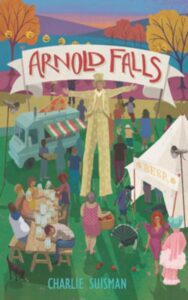
Charlie Suisman’s debut novel is a wonderful escape to a small fictional community in upstate New York. Here a melting pot of quirky residents brings Arnold Falls to life, a town with a unique history and charming inhabitants whose lives are intimately intertwined.
Settled in 1803 by the unscrupulous Hezekiah Hesper, the town for unknown reasons was named after Benedict Arnold. Adding to the oddities, the closest waterfall is twenty miles away. The area is known for sudden bursts of crab apple-size hail pelting the landscape without any scientific explanation. Hence the incentive for “Hail Pail Day,” a neighborly tradition surrounding the distribution of galvanized bucket head-coverings.
My Only Sunshine
By Lou Dischler

Lou Dischler delivers an intricately woven story about one well-meaning boy who tries to make sense of the crazy he’s been born into. Get ready for one belly laugh of an adventure in My Only Sunshine.
Welcome to the Louisiana low country, home of 9-year-old Charlie Boone, a kid growing up in 1962. Charlie, a most unreliable narrator, concerns himself with giant wingless wasps and biting red velvet ants. Combine his critter-concerns with the legend of the giant slugs, the story of his mother taken up by a hurricane, and the episode of the puddle he and his brother dug that grew into a pond, then turned into a lake, and we have one wildly imaginative ride well-worth taking.
Elephants in my Room
By Christie Nicholls

A bitingly funny collection of life-stories from Christie Nicholls – stand-up comedian, actor, and writer – made all the more piquant by her repeated insistence that she has no short-term memory. Fortunately for us, her long-term reminiscences more than make up the deficit.
Nicholls has divided the book into four parts. In the first, “A Broad Abroad,” she recalls her experiences of traveling to far-flung places, beginning with a summer in Belém, Brazil as a child. She and her brother, for some reason nicknamed Beluga, slept in hammocks and played in a swimming pool, but much of her cherished time involved a German Shepherd named Ferdinand, from whom she learned dog talk. Raucous family bowling in Bologna, Italy, is contrasted with attendance at a staid English wedding. At a later period, Nicholls and her mother went to Sweden, where the budding comic tried her hand at stand-up in newly acquired Swedish, leading to an amusing mix-up of jargon.
Blazing Bullets in Deadwood
By Jacquie Rogers

Honey Beaulieu is going to get her man–no matter how many tries it takes. Determined to capture the elusive Boyce McNitt, Honey is off to Deadwood Gulch despite the warnings that the dangerous road is plagued by thieves and natives. But before she can pursue the $500 bounty, she needs to take care of issues at home, including finding a shop for a pregnant seamstress, sixteen-year-old Emma, a home for eight-year-old Myles Cavanaugh, his two younger sisters, and their pregnant mother. Between her do-gooding, denying her blossoming feelings for Deputy US Marshal Sam Lancaster, and a run-in with a herd of escaped pigs determined to destroy Fry Pan Gulch, Honey barely has time to get out of town before she gets trapped by winter. Once on the road, she comes face-to-face with Sean Chaney, the Badger Claw Kid, a bounty worth $400, and is intent on capturing him, as well. With a little otherworldly, albeit not entirely helpful, advice from her ghost guide Roscoe, Honey will have to take down two dangerous fugitives. But, when she runs into a fireball-throwing ghost bent on revenge, her real adventure begins.
Kiffer loves the undercurrent of a Shakespearean slant to Jacquie Rogers’ works. Sublime.
Ruth 66
By Elizabeth Barlo

When a banged-up old bus pulls into his family’s driveway, Charlie has no idea that the rattling junker would be his ride to freedom. For years he’d been suffering under the thumb of a cold-hearted mother and a vindictive twin sister, while his father languished behind bars for tax fraud. The only family member with whom the young man held a loving bond was his grandfather, Opa Bill. Since Bill’s recent death, Charlie has been holding it together by listening to the music he and his grandfather loved. That musical thread weaves its way throughout the story as a sort of narrative jukebox.
Now Charlie’s respectable Oma Ruth has careened back into his life in a shocking new incarnation: a freewheeling hippie in kaftan and beads, unafraid to swap barbed words with her appalled daughter, nor to insist that Charlie accompany her on her road trip. He’s dead-set against it – he’d just found his dream job at a record store – and is disgusted when his mother dumps him on her mother without hesitation.
Have a laugh out loud story? Submit before the end of Novemberfor the 2021 CIBAs!
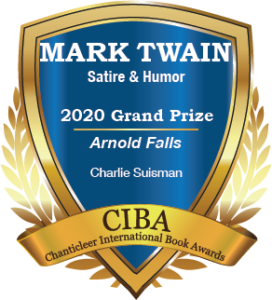
See the 2020 Mark Twain Book Award Winners here!
When you’re ready, did you know that Chanticleer offers editorial services? We do and have been doing so since 2011.
Our professional editors are top-notch and are experts in the Chicago Manual of Style. They have and are working for the top publishing houses (TOR, McMillian, Thomas Mercer, Penguin Random House, Simon Schuster, etc.).
If you would like more information, we invite you to email Kiffer or Sharon at KBrown@ChantiReviews.com or SAnderson@ChantiReviews.com for more information, testimonials, and fees.
We work with a small number of exclusive clients who want to collaborate with our team of top-editors on an on-going basis. Contact us today!
Chanticleer Editorial Services also offers writing craft sessions and masterclasses. Sign up to find out where, when, and how sessions being held.
A great way to get started is with our manuscript evaluation service, with more information available here.
And we do editorial consultations for $75. Learn more here.
If you’re confident in your book, consider submitting it for a Editorial Book Review here or to one of our Chanticleer International Awards here.
Also remember! Our 10th Anniversary Chanticleer Authors Conference (CAC22) will be April 7-10, 2022, where our 2021 CIBA winners will be announced. Space is limited and seats are already filling up, so sign up today! CAC22 and the CIBA Ceremonies will be hosted at the Hotel Bellwether in Beautiful Bellingham, Wash. Sign up and see the latest updates here!
Featuring Cathy Ace and Robert Dugoni!

Writer’s Toolbox
Thank you for reading this Chanticleer Writer’s Toolbox article.
Writers Toolbox Helpful Links:
Kafka’s Jovial Side Revealed from The Guardian
The MARK TWAIN Book Awards for Satire and Allegorical Fiction
A Modest Proposal by Jonathan Swift
What Is Satire? by MasterClass
What Is Allegory? by MasterClass
The traditional publishing tool that indie authors can use to propel their writing careers to new levels? The Seven Must-Haves for Authors – Unlocking the Secrets of Successful Publishing Series by Kiffer Brown
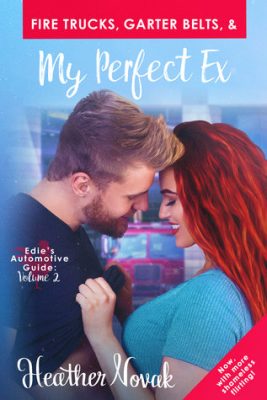
 The old adage “You can’t go home again” is often very real, but for Vera Eastman, it is a massive understatement. Vera left home eleven years ago after losing her mother to breast cancer, changed her name, and began a very successful career as a porn star. Her seven-figure salary and multimillion-dollar, female-owned porn business might be acceptable in SoCal, but in her hometown of Grenadine, Michigan, she is a pariah. After a breast cancer scare, Vera goes back home to fulfill her mother’s bucket list. With an estranged father, a grandmother she believes is dead, and a sexy ex-boyfriend who haunts her dreams, Vera wants to get in, keep a low profile, and run back to her best friends and fellow porn stars, Jasmine and Payton. But when she discovers her grandmother is still alive and her ex is now an even sexier fireman, Vera knows leaving may be easier said than done.
 Congratulations to the First Place Category Winners and the Grand Prize Winner of the CHATELAINE Book Awards for Romance and Romantic Fiction novels, a division of the 2019 CIBAs.