Author: hari-hyde

  • BIOCHEMISTRY For POETS LIVING In A CELL by Hari Hyde – Poetry Collections, Physiology, Nature Poetry

    BIOCHEMISTRY For POETS LIVING In A CELL by Hari Hyde – Poetry Collections, Physiology, Nature Poetry


    Hari Hyde’s Biochemistry for Poets Living in a Cell encourages readers to reach beyond the scientific discourse and explore humanity through this collection of poems for creative intention.

    Written for lovers of science who enjoy poetry with a lyrical word play focused on all the interconnected workings of our physiology, these poems discover at the core of every one of us all the minutia of functions through the lens of a scientist. They create a conversation with the substructures that drive our nervous system as in, “Nerve Storm of GABA,” say, or our circulatory system, “L-asparaginase: Juggler in Bondage,” for example, or a virus such as the flu as it enters our body and proceeds to infect, as in “Influenza Virus Traitor.”

    This collection stands as a love poem that, within each vignette, explores the building blocks of what it is to be human, cell by cell.

    These poems meld science with poetic form in a way that only a talented scientist can achieve, and his mastery of both science and writing craft shine in this thoughtful assembly.

    Hyde’s latest collection of poems was written to explore the science behind what it means to be human beginning at the cellular level with “A Night in New Orleans with L10A Protein” and “The Inner Outpost of the Cell.”

    Hyde’s poems imagine the world at a subatomic level. He populates this world with actually occurring phenomena, as in “Microbiome Gangland,” or “Enzymes: Militant Maniacs.” Readers will enjoy the fun he has with his subject matter and witness his mastery in biotechnology shining through each stanza.

    Readers will see the poetic beauty in “Keratin, Fur, and Fun,” or the reality of aging in “The Heart’s Cold Clock.” Hyde’s expertise as poet coupled with his career as a research director in the biotechnology industry for three decades shines through each line as he explores the science behind the cellular structure of the average human as seen through the eyes of a poet.

    As a seasoned-published author, Hyde has honed his craft of short stories and poetry to deliver satisfying reads in several genres. This work will not disappoint. Fans of poetry, science, or fans of Hari Hyde himself will count this as another valuable addition to their collection. Five-Stars


  • Labor Day Book Review Sale: Get Ready for Autumn Marketing!

    Labor Day Book Review Sale: Get Ready for Autumn Marketing!

    Labor Day Editorial Review Sale:

    Professional Marketing Power for Your Book

    August 29 – September 5 Only

    Transform your book marketing with professional Editorial Reviews that work as hard as you do. For one week only, save big on the industry credibility that turns browsers into buyers.

    The Chanticleer Editorial Reviews Difference

    The 2025 CIBA Grand Prize Winners at CAC25
    We know the best when we see them!

    Robust SEO Package That Keeps Working

    Your review doesn’t just get published and forgotten. Each Chanticleer Editorial Review comes with our comprehensive All-In-One SEO (AIOSEO) package that maximizes your book’s digital footprint across Google, Bing, and other search engines. When algorithms change, we update your review to maintain high rankings, ensuring long-term marketing value that compounds over time.

    Human Expertise in Your Genre

    Every review is read and written by a professional reviewer who specializes in your target audience. No AI shortcuts – just expert analysis from someone who understands what makes your genre tick.

    Marketing-Ready Content

    We craft each review to provide at least three quotable lines you can use across all your marketing channels. From Amazon Author Central to book covers to social media, you’ll have professional endorsements ready to deploy wherever you need credibility.

    Complete Marketing Package Included

    Every Editorial Review comes with:

    • Mini-Marketing Kit featuring shelf-talkers and eye-catching silver-foil book stickers
    • Social media promotion across our channels with strong engagement rates
    • Newsletter promotion to our subscriber base
    • Direct links to Amazon, independent bookstores, and your author website
    • Author approval process for you to have final say before publication

    The Review Itself:

    • 450 words of professional analysis for full-length books
    • 6-9 weeks standard turnaround (3-5 weeks expedited available)
    • Triple the engagement of our competitors on social media
    • Years of ongoing SEO value as we maintain and update your review’s search rankings

    Limited-Time Labor Day Savings

    A typewriter with Chanticleer Reviews advertising Editorial Book Reviews

    Sale runs August 29 through September 5, 2025

    What Authors Say About Chanticleer

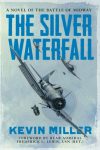
    The Silver Waterfall CoverThank you for this superb review! I am very pleased with it as it captures both the complexity of the battle and the human emotions and cost. I will leverage it in all my social media, with props to Chanticleer!

    – Kevin Miller, The Silver Waterfall: A Novel of the Battle of Midway

    A Gold Ribbon dividing this section from the next

    Chasing the Daylight Cover

    This review has found me humbled and speechless. I have no corrections, please publish as is. I will include it on my book’s website in the Reviews section. I’m honored and truly appreciate this magnificent review.

    – Joanna Rakowski, Chasing the Daylight

    A Gold Ribbon dividing this section from the next


    Minnesota Poems from the Outposts

    Thanks for your insightful review of my book, Minnesota Poems from the Outposts. I really enjoyed reading all your comments, which highlighted perceptions that I’d not entirely assembled in my own mind.

    – Hari Hyde, Minnesota Poems from the Outpost

    A Gold Ribbon dividing this section from the next

    Sea Tigers & Merchants Audiobook Cover

    I am ecstatic about the book review for “Sea Tigers.” It’s amazing when a reviewer is so attuned to the story and the process of writing it.

    – Sandra Wagner Wright, Sea Tigers and Merchants

    A Gold Ribbon dividing this section from the next

    Unlike one-and-done review services, Chanticleer Editorial Reviews become permanent marketing assets. We continue promoting selected reviews through blog posts, social media features, and newsletter highlights, ensuring your investment keeps paying dividends.

    Ready to Elevate Your Book Marketing?

    Professional recognition provides the third-party validation that turns curious browsers into confident buyers. In a crowded marketplace, editorial credibility makes the difference between getting noticed and getting overlooked.

    Your book deserves professional marketing tools that match the quality of your writing. This week only, get them at our lowest prices of the year.

    Sale Price is good on Expedited Reviews and on Bulk Purchases!

    Don’t wait—this limited-time offer ends September 5th. Get the professional marketing power your book needs to succeed.

  • MINNESOTA POEMS From The OUTPOSTS by Hari Hyde – Poetry Collections, Spirituality, Natural World

    MINNESOTA POEMS From The OUTPOSTS by Hari Hyde – Poetry Collections, Spirituality, Natural World


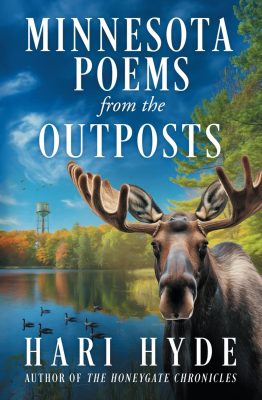
    Hari Hyde reveals the mysticism of exploring chaotic nature and our human need to connect with it. He takes readers to sites of wonder, physical and conceptual, in his collection Minnesota Poems from the Outposts.

    “Part 1: Middle Rivers” illustrates the shared liminal states of people and the natural world.

    Aligning symbols of the turning seasons with people growing up in their communities, “Middle River, Minnesota” establishes our innate kinship with nature—as individuals and collectives. “School Bus” follows the transient days of childhood, while “Unruffled Railway” looks back from the end of an era, as the rails are now overgrown and unused. But, to be overgrown is to find life, and a new way of being after the end of that old cycle.

    Meanwhile, “Moon Over Thief Lake” illustrates the need to commune with nature through beautiful but distant imagery.

    Part 1 maintains a childlike playfulness in its use of language.

    “Goose Capital” and “Young’s Store” give in to flights of fancy about the little details of rural life, while a trio of poems “Ye Olde Depot Theater,  River Avenue”, and “Church Bell” fully immerse themselves in the charm of small communities.

    But Part 1 also touches on the difficult challenge of maturity. “Milking Holsteins” and “Angus Cattle” find peace in a world where each creature has a role to play. But, matching the use of rivers as a thematic force of eternal change, “Minnesota Highway 59” reckons with the fact that there are some deep yearnings a person will never be able to satisfy.

    These first poems open the book well, introducing both the setting of rural Minnesota and a focus on living in relation to its natural forces. Some of the themes in Part 1 could be expanded upon, but the warm poetic voice beckons readers to continue on.

    “Part 2: Smalltown Outposts” broadens its scope to include a variety of notable locations, embracing the culture and history of Minnesota.

    A mixture of compelling imagery and unique tones give each new location a sense of identity, especially in poems like “Split Rock Lighthouse (Lake Superior)”.

    This combines with whimsical renditions of local mythology in “Paulette Bunyan” and “Mankato Man and Nature’s Plan” to instill in readers Minnesota’s vital, defiant soul.

    Hyde also explores the human shadow of Minnesota’s history—the inner lives of those who made it—in “Minnesota’s Ten Millennial Girl” and “Blue Mounds State Park”. These poems describe the personality that history leaves to its locations but, at the same time, exposes the complexities that can’t be preserved over a long period of time.

    Where Part 1 embraced communion with nature, Part 2 creates a thematic duality by highlighting our inherent conflict with it.

    “Mankato Man and Nature’s Plan” puts this conflict in stark relief. The central figure defies his place as a tool in Nature’s hand. But “Red River Flood” shows how futile that fight can be, with the narrator choosing to become like the river itself rather than try to live in spite of it.

    The rhyming can create awkward lines sometimes, but this section’s beauty is in its clear familiarity with its locations, which maintain their grandeur.

    “Part 3: Inner Outposts” and “Part 4: Family and Faith” create another dichotomy—the inner self and its struggle to fit in with the outer world.

    “Private Ponds”, “Secret Snow Bones”, and “The Outside” encourage trusting the inner self, finding meaning beyond societal expectations and dogma. But “The Believable Distance” and “Last Love” both recognize the pain in being distant from others.

    These sections make playful use of metaphors, but in poems like “Guard Dog”, those become more complex and conflicted. The animal part of one’s mind tears and recoils at the chains that bind it.

    As a whole, Parts 3 & 4 step into darker territory. Pain and suffering are reframed as the necessary teachers of survival—from the mundane to the divine—in “Ancient Apathy”. “Corporal Counselor” grapples with pride and envy as truly inescapable sins, innate to the inner self.

    While there’s a return to some of the mysticism of childhood from Part 1, these later parts offer a more nuanced perspective on relationships.

    This is particularly true among the poems most concerned with death, “Elegy for a Nobody”, “Get Well Cards (Calibrated)”, and “A Little Light”. While the themes of family and faith don’t interact much in general, these death poems find interesting connections between how death changes our relationships to each other and the deep desire to understand one’s meaning in the universe.

    “Jonah and the Great Fish” stands out as a unique take on this section’s view of God. Here, animals are to humans as humans are to the divine. But the might of nature tests the boundaries of this metaphor. A great and terrible sturgeon reigns as a bloody demon, and it’s only through the help of nature’s small and wriggling things that the fish can be bested.

    This poem serves well as a transition point to the fifth and final part of the collection, “The Wild.” Here, the core ideas and writing style of Minnesota Poems from the Outposts both shine at their brightest.

    “Moose Head” grants intention and emotion to the forces of the natural world, while reinforcing its incompatibility with human society. This poem and “Arrowhead Northern Lights” create a compelling combination of descriptive language and poetic contrasts. All underscored by a palpable appreciation for the wilderness of Minnesota.

    “Into the Woods” and “Lake of the Woods” experiment most with structure and poetic flow, to fascinating effect.

    Both are much longer than any other poems in the collection, with lines and paragraphs shifting in size as they explore new parts of the wilds. They take this time to fully immerse a reader in their contrasting views of wilderness.

    The narrator finds that, to truly go “Into the Woods” and become a part of them, one has to give themselves up to the beautiful ways of nature. It’s a welcoming of the raw, physical world.

    “Lake of the Woods”, on the other hand, seeks divinity in the beasts of the water. Recurring symbolism aligns the lakes with the sky—a celestial realm, where humans can touch and even enter, but will find themselves reflected back in challenging ways.

    And yet, for all of the woodlands’ chaos and strangeness, people come.

    Here, in these final poems, Hyde returns to the incessant yearning. The distance between a person and the worlds of men and trees alike might be vast, but the quest to cross it is equally as meaningful.


     

    Chanticleer Book Reviews 4 star silver foil book sticker

  • OUR BRAIN by Hari Hyde – Satire, Absurdist Fiction, Adventure

    OUR BRAIN by Hari Hyde – Satire, Absurdist Fiction, Adventure


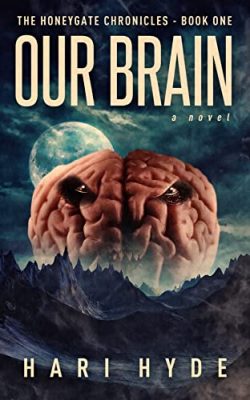
    Our Brain, the first in a three-volume series, is an epic fantasy adventure in a bizarre, allegorical world.

    This world is ruled by Our Brain, also known as The Guv’ner, a huge pinkish mass seated in a mountain range that came about through the collective will of its people. It leaped into reality from the realm of thought. And the particular thoughts that birthed Our Brain were, in the novel’s language, to “ever grow and strengthen the righteous power of government to control our lives for the common good.”

    The people that benefit from this collective thinking are the Soose. Yes, pigs, but a mutated form that, while still loving mud baths, walk on their hind legs, go to college, and carry “snappers” or what we might call personal computers. Their opposite numbers are the Nags, descended from horses, who champion individualism and want to wipe out the collective sentiments of the ruling tribe.

    Four Nags hatch a plan to change the direction of Our Brain and create a world of their liking.

    The hero of the book, a Soose named Hennie Honeygate, sets out to discover their plan and, to his great surprise, finds himself following them inside the fleshy mass of Our Brain. Hennie and the Nags embark on a picaresque adventure.

    Be prepared to have an illustrated anatomy source at hand as Honeygate chases the villains through the neurological pathways. Portions of the brain take on personalities of their own, such as a demon named Obex, labeled here as the “fabled ruler of hell” in the mythology of the Soose. The obex, in anatomy, is a canal-like structure in the upper part of the brainstem that connects the fourth ventricle to the third.

    Our Brain offers political thought, social satire, and sheer nuttiness.

    This story will likely appeal to those with conservative political views. Readers will find fantasy adventure mingling with satire such as that of Orwell’s Animal Farm, Swift’s Gulliver’s Travels, and traces of George Will, Michael Crichton, and Terry Gilliam in these pages.