Do you have an early historical fiction manuscript or recently released novel? Submit your work to the CIBA 2019 CHAUCER Awards by
June 30, 2020, and see how your work stacks up against others.
We know you want to – because we never tire of promoting our authors’ achievements!

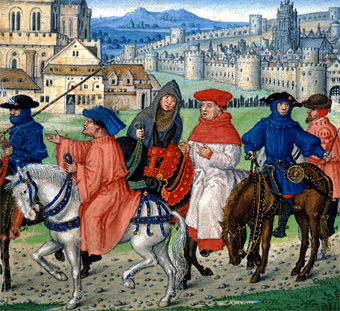
As in Chaucer’s words in the Nun’s Priest Tale of the Canterbury Tales,
“For crowing there was not his equal in all the land.”
Click here to find out more.
We titled the Chanticleer International Book Awards (CIBAs) division for Pre-1750s Historical Fiction the Chaucer Awards, after the English poet and author of the Canterbury Tales, because #CHAUCER.
But seriously, did you know that The Canterbury Tales is considered one of the greatest works in the English language? In fact, it was among the first non-secular books written in Middle English to be printed. So, yeah, #Chaucer
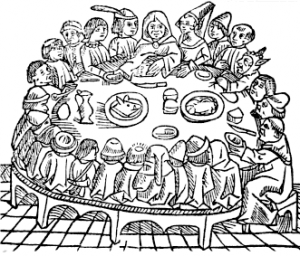
Some interesting tidbits about Geoffrey Chaucer
- born c. 1342/43 probably in London. He died on October 25, 1400
- his father was an important London vintner
- His family’s finances were derived from wine and leather
- Chaucer spoke Middle English and was fluent in French, Latin, and Italian
- He guided diplomatic missions across the continent of Europe for ten years where he discovered the works of Dante, Petrarch, and Boccaccio whose The Decameron had a profound influence on Chaucer’s later works
- He married well as his wife received an annuity from the queen consort of Edward III
- His remains are interred in the Westminster Abbey

As our deadline draws near, don’t miss this opportunity to earn the distinction your historical fiction deserves! Enter today!
Welcome to the CHAUCER BOOK AWARDS HALL OF FAME
Click on the links below to read the Chanticleer Review of the award-winning work!
The 2018 Chaucer Book Awards Grand Prize Winner:
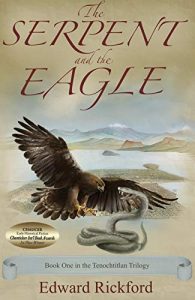
The SERPENT and The EAGLE by Edward Rickford
2018 Chaucer Book Awards for Pre-1750s Historical Fiction First in Category Winners:
- Rebels against Tyranny: Civil War in the Crusader States by Helena P. Schrader
- Mistress of Legend Book 3 by Nicole Evelina
- Michael – Book Three of The Triptych Chronicle by Prue Batten
- Pelsaert’s Nightmare by Gregory Hansen
- Under the Approaching Dark by Anna Belfrage
- Stone Circle by Kate Murdoch
- David & Avshalom — Life and Death in the Forest of Angels by Bernard Mann
The 2017 Chaucer Book Awards Grand Prize:

The Traitor’s Noose: Lions and Lilies Book 4 by Catherine A. Wilson and Catherine T. Wilson
2017 Chaucer Book Awards for Pre-1750s Historical Fiction First in Category Winners:
- The Serpent and the Eagle by Edward Rickford
- Slave to Fortune by DJ Munro
- Feast of Sorrow by Crystal King
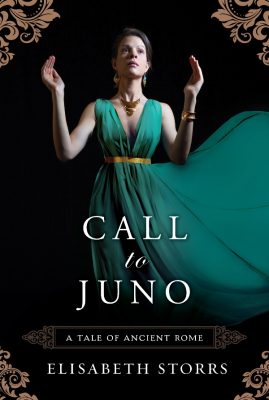
- Call to Juno: A Tale of Ancient Rome by Elisabeth Storrs
- The Chatelaine of Montaillou by Susan E Kaberry
- Guillaume: Book Two of The Triptych Chronicle by Prue Batten
The 2016 Chaucer Book Awards Grand Prize Winner:
(Chaucer Book Awards was the Historical Fiction division until we divided it for the 2016 CIBAs into two divisions because of the number of entries:
Goethe Book Awards for post-1750s Historical Fiction and Chaucer Book Awards for pre-1750s Historical Fiction).

The Towers of Tuscany by Carol M. Cram

2016 Chaucer Book Awards for Pre-1750s Historical Fiction First in Category Winners:
- Envoy of Jerusalem: Balian d’Ibelin and the Third Crusade by Helena P. Schrader
- The Gilded Crown by Catherine T and Catherine A Wilson
- Hope of Ages Past by Bruce Gardner
- 1381: The Forgotten Revolt by Gina M. Bright
- The Serpent’s Crown: A Novel of Medieval Cyprus by Hana Samek Norton
The 2015 Chaucer Book Awards Grand Prize Winner:
(Chaucer Book Awards was the Historical Fiction division until we divided it into two divisions for the 2016 CIBAs because of the number of entries:
Goethe Book Awards for post-1750s Historical Fiction and Chaucer Book Awards for pre-1750s Historical Fiction).
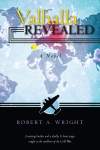
Valhalla Revealed by Robert A Wright
2015 Chaucer Book Awards for Pre-1750s Historical Fiction First in Category Winners:
- Antebellum U.S. History: Jay W. Curry – Nixon and Dovey
- Legacy/Legend: Edmond G. Addeo – Uzumati – A Tale of the Yosemite
- Ancient History: Christian Kachel – Spoils of Olympus: By the Sword
- Middle-Ages: Helena Schrader – Defender of Jerusalem
- Middle-Ages: Glen Craney –The Spider and the Stone: A Novel of Scotland’s Black Douglas
- Elizabethan/Tudor – Anna Castle – Death by Disputation
- Turn of the Century: James Conroyd Martin – The Warsaw Conspiracy
- Young Adult: K.S. Jones – Shadow of the Hawk
- World Wars History: Nicki Chen – Tiger Tail Soup, A Novel of China at War
-
-
-
-
-
-
- World/International History – Robert A. Wright – Valhalla Revealed
-
-
-
-
-
-
The 2014 Chaucer Book Awards Grand Prize:
(Chaucer Book Awards was the Historical Fiction division until we divided it into two divisions because of the number of entries:
Goethe Book Awards for post-1750s Historical Fiction and Chaucer Book Awards for pre-1750s Historical Fiction).
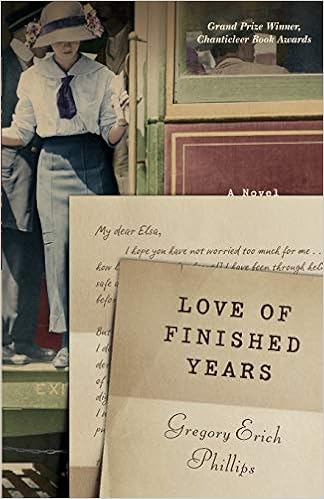
The Love of Finished Years by Gregory Erich Phillips
2014 Chaucer Book Awards for Pre-1750s Historical Fiction First in Category Winners
 Women’s Fiction: J. L. Oakley for Timber Rose
- Legend: Kevin Allen and Emma Rose Millar for Five Guns Blazing
- Legacy: Michael D. McGranahan for Silver Kings and Sons of Bitches
- Pre-History: Mary S. Black for Peyote Fire
- Ancient History: Rebecca Locklann for The Thinara King
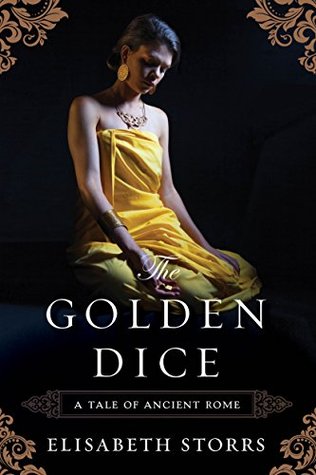
- Roman/Grecian Classical: Elisabeth Storrs for The Golden Dice: A Tale of Ancient Rome
- Middle-Ages: Helena P. Schrader for St. Louis’ Knight
- Late Middle Ages: Lilian Gafni for The Alhambra Decree: Flower from Castile
- Elizabethan/Tudor: Syril Levin Kline for Shakespeare’s Changeling: A Fault Against the Dead
- The 1600’s: Donna Scott for Shame the Devil (manuscript – published 2020)
- The 1700s & 1800s: Karleene Morrow for Destinies
- Turn of the 19th Century: Ruth Hull Chatlien for The Ambitious Madame Bonaparte
- Twentieth Century: David Brendan Hopes for The One with the Beautiful Necklaces (manuscript)
- Young Adult: Sharon Short for My One Square Inch of Alaska
- U. S. History: J. P. Kenna for Beyond the Divide
- World History: Michelle Rene for I Once Knew Vincent
The 2013 Chaucer Book Awards Grand Prize Winner:
Propositum by Sean Curley
2013 Chaucer Book Awards for Pre-1750s Historical Fiction First in Category Winners:
- Adventure/Young Adult: I, Walter by Mike Hartner
- N.A. Western: Crossing Purgatory by Gary Schanbacher
- World War II (European): Deal with the Devil by J. Gunner Grey
- Adventure/Romance/YA: “Lady Blade” by C.J. Thrush
- Nordic History: The Jøssing Affair by J.L.Oakley
- Regency: Traitor’s Gate by David Chacko & Alexander Kulcsar
- Women’s Fiction/WWII: Wait for Me by Janet K. Shawgo
- Medieval/Dark Ages: Divine Vengeance by David Koons
- Women’s Fiction/World History: Daughters of India by Kavita Jade
What are you waiting for? Before long the CHAUCER Book Award deadline will be history.
Submit your manuscript or recently released Historical Fiction (pre-1750s) to the Chanticleer International Book Awards!
Want to be a winner next year? The deadline to submit your book for the Chaucer awards is June 30, 2020. Enter here!
Grand Prize and First Place Winners for 2019 will be announced on September 5, 2020.
Any entries received on or after June 30, 2020, will be entered into the 2021 Chaucer Book Awards. The Grand Prize and First Place for 2020 CIBA winners will be held on April 17, 2021.
As our deadline draws near, don’t miss this opportunity to earn the distinction your historical fiction deserves! Enter today!
The CHAUCER Book Awards is a division of the Chanticleer International Book Awards – the CIBAs.
The 2020 winners will be announced at the CIBA Awards Ceremony on September 5, 2020, which will take place during the 2020 Chanticleer Authors Conference. All Semi-Finalists and First Place category winners will be recognized, the first-place winners will be whisked up on stage to receive their custom ribbon and wait to see who among them will take home the Grand Prize. It’s an exciting evening of dinner, networking, and celebrations!