Author: debu-majumdar

  • The Eternal Radiance of a Diwali Celebration in Indian Literature

    The Eternal Radiance of a Diwali Celebration in Indian Literature

    Celebrating the good things in life,

    with hope of happiness and prosperity for you!

    Diwali, or the “Festival of Lights”, is celebrated around the world with family gatherings, prayers, and festivities that transcend geographical and cultural boundaries. The festival marks the victory of light over darkness and good over evil, and has been a profound source of inspiration in Indian literature throughout history.

    Diwali, Festival of Lights, flame, Indian, candle, lantern

     From ancient epics to contemporary novels, Diwali has been depicted India’s rich cultural significance and the deep-rooted traditions. 

    The origins of Diwali come from within the deep cultural history of Indian literature. Ancient Indian texts, particularly the Ramayana describes the festival as a celebration to honor Lord Rama’s return to Ayodhya after his victory over the demon king Ravana. In Valmiki’s epic, the joy of the citizens lighting oil lamps (diyas) to welcome Rama symbolizes the triumph of righteousness and good over evil, light over darkness. This theme of victory is echoed in various forms across different literary genres, capturing the essence of hope and renewal in the original story.

    Hands, flame, lantern, diwali, Hindi The stories that keep it alive!

    Diwali is steeped in and immortalized in various forms of literature. Tales of goddess Lakshmi, the embodiment of wealth and prosperity, and Lord Ganesha, the remover of obstacles, are recounted in regional literature and oral traditions. These stories emphasize the spiritual significance of Diwali, reminding readers of the importance of virtues such as generosity, compassion, and humility.

    Moreover, regional tales often present a more localized version of Diwali, reflecting the diverse customs and rituals practiced across India. Each region brings its unique flavor to the festival, enriching the literary landscape and showcasing the country’s cultural pluralism.

    Diwali in Poetry

    Indian poetry has beautifully encapsulated the spirit of Diwali, often intertwining personal emotions with collective celebrations. Poets like Rabindranath Tagore have used the festival as a lens for enlightenment and spiritual awakening. In his works, the lighting of lamps becomes a symbol of the inner light that guides individuals through darkness, echoing the belief that each person carries the potential for goodness.

    Contemporary poets have also embraced Diwali, infusing it with modern sensibilities. For instance, in urban settings, Diwali is portrayed not just as a festival but as a time of reflection on social issues, consumerism, and environmental concerns. This nuanced representation enriches the literary tapestry of the festival, making it relevant to today’s world.
    Indian, girl, thought bubbles, elephant, man, dancers, books

    Fiction and Diwali

    In novels, Diwali often serves as a backdrop for significant plot developments and character arcs. Writers like Salman Rushdie and Arundhati Roy have woven Diwali celebrations into their narratives, using the festival to explore themes of identity, community, and belonging. For instance, in The God of Small Things, the chaotic yet joyous atmosphere of Diwali reflects the complexities of familial relationships and societal norms.

    Short stories also find a place for Diwali, where the festival acts as a catalyst for change. Authors like Ruskin Bond capture the essence of childhood nostalgia and innocence associated with Diwali, portraying the festival as a time of discovery and learning. These narratives often highlight the values of love, forgiveness, and unity that the festival embodies.

    Diwali, rainbow, flame, lantern


    A New Perspective on the Festival of Lights

    In recent years, contemporary Indian authors have begun to explore the complexities of Diwali in a globalized world. Novels set against the backdrop of migration, urbanization, and multiculturalism depict how the festival is celebrated away from home. This exploration reveals the challenges of maintaining traditions while adapting to new environments, highlighting the ongoing relevance of Diwali in a changing society.

    It’s time to light up the night during Diwali!

    Diwali is more than just a festival; it is a profound cultural phenomenon whose roots in ancient text continue to be explored and expanded upon in today’s literature. It symbolizes hope, unity, and the enduring human spirit, giving light to even the darkest of themes. As we celebrate Diwali, let’s reflect on contemporary Indian authors who continue to share their cultural heritage with the world with stories that illuminate the human condition and the need for hope, happiness, and love.

    Fireworks, Indian, Family, firelight, sparklers, garlands, presents, mandala

    Interested in exploring the wonderful storytelling of Indian authors? Check out these amazing Indian authors!

    Operation Mom

    Master storyteller Reenita Malhotra Hora’s YA romance Operation Mom: My Plan to Get My Mom a Life and a Man takes us on a charming journey through the life of one teen, Ila Isham.

    Hora introduces Ila and her best friend Deepali, two boy-crazy teens on a summer quest. Readers will fall in love with the smart, sassy, angst-filled, rebellious Ila. A typical teenage girl, Ila lives in Mumbai with her mom and Sakkubai, their house manager. Ila’s mother calls her obsessed, but that seems unfair. Is she obsessed just because her every waking minute is spent thinking of Ali Zafar, famous pop icon, singer, and heartthrob? Or is she obsessed with fellow classmate Dev?
    Read more!

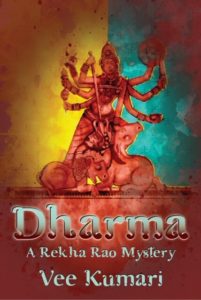
    Dharma, A Rekha Rao Mystery
    By

    A complex murder mystery always requires a little spice. In Dharma, A Rekha Rao Mystery, that extra seasoning is provided by the casting of an Indian American woman as the amateur sleuth, despite her realistic fears for her personal safety.

    Professor Rekha Rao is no Bollywood Mighty Girl. She’s a whip-smart American-born 32-year-old college instructor who must deal with her own PTSD after the murder of her father and her unstoppable passion for releasing the man wrongly convicted of her father’s slaying. That obsession is the reason Rekha was dismissed from her old teaching position. The scene is set for deep, personal involvement in the murder of a colleague, a fellow professor who is killed. And a rare, centuries-old statue excavated from an archeological dig in India is the murder weapon.

    Read more!

    Inner Trek Cover

    Inner Trek
    By

    A disinclined traveler journeys into the heartland of the revered Mount Kalash Parikarma in Tibet. Inner Trek by Mohan Ranga Rao follows a voyage that culminates in self-discovery and spiritual enlightenment.

    Mohan Ranga Rao, a retired Indian businessman, finds himself between a rock and a hard place when a ruthless Bangalore mob boss threatens him to sell his land at a throwaway price. The situation escalates when he discovers that his trusted lawyer has joined forces with the enemy. He can only turn to his wife for solace.

    With nothing for him to do about his land, Rao vows to trek around Mount Kailash, a holy Tibetan Mountain. This travel memoir traces his and his wife’s journey to the deified Himalayas, the land of Lord Shiva. Rao shares intimate details of his experience, including the spiritual transformation that he went through during his challenging high-altitude trek.

    Read more!

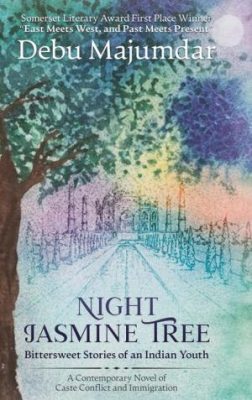
    Night Jasmine Tree Book Cover Image

    Night Jasmine Tree
    By

    Shankar, a recently retired professor of physics, and his wife, Durga, have left Michigan to resettle on Long Island with their son’s family in Debu Majumdar’s award-winning novel, Night Jasmine Tree.

    While the migration from the Midwest to the East Coast is a small one, considering both characters moved from India decades before, the move spurs Shankar to ponder the life he left behind and to reassess his relationship with his sisters and parents.

    In India, there are many different cultures, the main sprouting from the Hindu faith and political structure, the caste system.

    In the West, we may be familiar with this caste system, we mostly are all aware of the ‘untouchables.’ However, what we may not understand, is how rigid the caste systems truly are. Durga and Shankar are not from the same caste. Shankar is Brahmin, his wife is of a lower caste. This difference is enough for Shankar’s family to reject her outright and disown him.

    Read more!


    In the sparkling tradition of Diwali, the Festival of Lights

    May the light of Diwali illuminate your home and heart with happiness and prosperity.

    Happy Diwali from Sharon, Kiffer, David, Dena, Scott, Anya, Andy, and the whole Chanticleer Team!

    Thank you for being part of the Chanticleer Family! 
    lights, lanterns, flames, Happy Diwali, 2024

    You can always submit your book for an Editorial Review with Chanticleer!

    Chanticleer Editorial Review Packages are optimized to maximize your digital footprint. Reviews are one of the most powerful tools available to authors to help sell and market their books. Find out what all the buzz is about here.

    Have an Award Winner?

    The tiers of achievement for the CIBAs

    Submitting toBook Awards is a great way to get your book discovered! Anytime you advance in the Chanticleer Int’l Book Awards, your name and book are promoted right here on our website, through our newsletter, and across social media. One of the best ways to engage in long tail marketing!

    To stay up to date with exciting news about our conference, your next great read, or contest deadlines, sign up for our Newsletterhere!
    Your book deserves to be discovered!

  • NIGHT JASMINE TREE by Debu Majumdar – Asian American Literature, Multi-Cultural and Interracial, Multi-Cultural Romance

    NIGHT JASMINE TREE by Debu Majumdar – Asian American Literature, Multi-Cultural and Interracial, Multi-Cultural Romance


    Somerset Blue and Gold First Place Badge


    Shankar, a recently retired professor of physics, and his wife, Durga, have left Michigan to resettle on Long Island with their son’s family in Debu Majumdar’s award-winning novel, Night Jasmine Tree.

    While the migration from the Midwest to the East Coast is a small one, considering both characters moved from India decades before, the move spurs Shankar to ponder the life he left behind and to reassess his relationship with his sisters and parents.

    In India, there are many different cultures, the main sprouting from the Hindu faith and political structure, the caste system.

    In the West, we may be familiar with this caste system, we mostly are all aware of the ‘untouchables.’ However, what we may not understand, is how rigid the caste systems truly are. Durga and Shankar are not from the same caste. Shankar is Brahmin, his wife is of a lower caste. This difference is enough for Shankar’s family to reject her outright and disown him.

    The pain he sustains by their rigid beliefs hurts him deeply, and that pain sustained years of estrangement. Now, however, a letter from his sister causes him to reassess his own role in the dissolution of his family even as he enjoys spending time with his son, daughter-in-law, and young grandchildren.

    Carefully organized, the novel is arranged into five parts with the chapters designating a time and place.

    Since the plot occurs on two continents, this framework is helpful to the reader. The author adroitly dovetails the past and present by having Shankar share stories of his own childhood with his grandchildren. And what stories they are! Sweet and funny, often involving animals, and the children are riveted by their grandfather’s tales of a childhood spent in India. Shankar was a good student but not above getting into mischief or naively causing trouble. India comes alive for the children as they hear about an encounter with a tiger, the annual celebration involving kite fights, and a haunting but hilarious ghost story. The reader turns the pages as eagerly as the children beg to hear another story.

    Consideration of Shankar’s past also involves his having grown up in a household in which the ancient traditions of Hinduism are sacred duties, and any failure to adhere to them is a moral failing.

    It is difficult for Shankar to come of age wanting to do what makes him happy but feeling tremendous fear that he won’t live up to his father’s exacting standards. Will he become a “tejya putra,” a son who is rejected by his own father? There’s no worse fate for a Brahmin male. And, yet, shouldn’t his father love him simply because children deserve love, and not because Shankar will one day perform the essential funeral rites for his parents?

    Regardless of how affectionate and attentive Shankar’s mother is toward him, he knows that she will always defer to her husband. She will let him dictate the terms of his sisters’ marriages, and she will never allow Shankar to disobey his father. The classic tension between duty and desire is artfully and affectingly rendered. All readers will be able to relate to the hold the past has on us. And like us, until Shankar resolves old animosities with his family, he’ll never indeed be free.

    The author is a master craftsman of descriptive writing, especially when contemplating natural settings.

    Debu Majumdar deepens characterization by connecting Shankar’s interior and exterior worlds. While contemplating existence through his main character’s eyes, the author gives us a work of lush and searing beauty, wondrously told with compassion, empathy, and truth. Night Jasmine Tree is a highly recommended reading for all.

    Night Jasmine Tree won 1st Place in the 2018 CIBAs in the Somerset Awards for Literary Fiction.


    Somerset Literary and Contemporary Chanticleer International Book Awards 1st Place Winner oval Gold Foil sticker

    Chanticleer Book Reviews 5 Star Best Book silver foil sticker


  • Five Essential Book Cover Elements by Kiffer Brown

    Five Essential Book Cover Elements by Kiffer Brown

    Or Effective Book Covers Deconstructed

    A  few weeks ago, a wonderful and talented author named Debu Mujumdar contacted me about how to begin creating an effective book cover. Effective cover meaning one that will sell itself to readers, bookstores, agents, distributors, librarians…He knows that his current cover is not serving his novel well, but where to start. “What are the first steps to create an effective book cover? Where do I begin?” he asked.

    You see, Debu’s novel, Sacred River: A Himalayan Journey, has won multiple prestigious awards. You can read the Chanticleer review by clicking this link.  He published it in 2016. However, from what I could surmise from his email, he isn’t pleased with its sales or readership reach.  The story is unique and exceptionally well written and has a suspenseful climax. It is filled with tense sub-plots that are engrossing and the stakes are high!

    But the cover he now has reflects very little about the story within. We discussed his cover at last year’s Chanticleer Authors Conference session on book covers. I think I will call the session this year THE GREAT CHANTICLEER COVER “Bake-Off” (with a nod and a hat tip to The Great British Bake-Off TV show). At these sessions in the past, brave authors (self-published) have lain their books on the Cover Altar to be scrutinized—and not just by me, which would be tough enough, but by their peers.  Debu was one of the brave authors who laid his book on the Cover Altar for judgment.

    I then would hold up the targeted book for about 3 to 5 seconds to the group and ask the following question: “What is the genre of this book?”

    Notice, that I did not ask, “Do you like this cover?”  An effective book cover is not necessarily “pleasing.”

    An effective book cover communicates information. And not just the basics—that is a given.

    Most of the time (99% I’d say), not one person in the group could tell the genre of the (self-published) books laid on the Cover Altar —much to the chagrin of the books’ authors.

    Village Books Bellingham, Wa

    Why 3 – 5 seconds? That is the time that the cover has to attract a potential readers’ attention.

    Potential Readers being booksellers at tradeshows, librarians at the ALA shows, shoppers on Amazon, shoppers at your local bookstore, shoppers at WalMart or Barnes & Nobles or at the airport … Well, you get the picture.

    In this 3 to 5 seconds, your cover must communicate quickly and effectively the following 5 Elements:

    1. The Genre (Historic? Thriller? SciFi? Romance? Cozy Mystery? Literary? etc.)
    2. The Primary Targeted Age Group (Adult for the Trade? Guys? (think Tom Clancy) or Gals? (think Rebecca Wells), General Audience? Young Adult? Middle-Grade? Clean reads market? (think Jan Karon) etc.)
    3. Mood (Humorous? Suspenseful? Adventurous? Dark? Light-hearted? Romantic? Horror? Spiritual? etc.)
    4. Timeframe (Current? Futuristic? Regency? WWI? Western? Classic Roman? etc.)
    5. Place or Cultural Reference (India? New York? Africa? Outer Space? California? Paris? Russia? Japan? etc.)

    An effective book cover will convey all of this information (or enough of it) to capture a potential reader’s attention in less than 5 seconds—three seconds really. It will garner enough interest to have the potential reader to pick it up or click on the link to find out more. If it does not, your book is invisible to potential readers. And yes, that is a publishing industry’s insider’s term.

    Invisible books rarely sell.

    Effective covers sell the first book. The content between the covers sells the second book. And you can quote me on that.

    Here are some examples of before and after covers that have been lain upon the Book Cover Altar:

    Example No. 1

    James R. Wells Awarded the Cygnus Grand Prize for THE GREAT SYMMETRY


    James Wells’ The Great Symmetry, a Cygnus Grand Prize Book Award for Science Fiction:

    BEFORE                                                        AFTER

    The Great Symmetry from James R Wells


    The comments regarding the original cover were:

    • Is it a biology book? Is it a math biology book? I dunno? Is it a non-fiction book?

    Point made.

    Bookbub picked up The Great Symmetry with its new cover. ‘Nuff said.

    Does the new cover  communicate quickly the 5 Elements above:

    1. Genre – yes. Clearly Science Fiction
    2. Primary Age Target Group – yes. General Audience for the Trade (i.e. commercially viable, a plus!)
    3. Mood – yes. Suspenseful with Action — Is that a black hole? Looks scary!
    4. Timeframe – yes. Futuristic with high technology
    5. Place or Cultural Reference – yes. OuterSpace — possibly intergalactic.

    Example Number 2

    Sara Dahmen’s Doctor Kinney’s Housekeeper, Laramie Grand Prize Winner for Western Fiction

    Sara Dahmen awarded Laramie Grand Prize for DR. KINNEY’S HOUSEKEEPER


    BEFORE                                         AFTER


    The comments made during the Great Cover Bake-Off regarding the original cover were:

    • Is it a cookbook for baking? Is it a book about a baker? Again: I dunno? Is it a non-fiction book?

    Point made.

    Dr. Kinney’s Housekeeper was picked up by a publisher because it had an interesting storyline and commercial potential (read, TV series). After some rewriting to pose the book as a series, a new cover was created that reflected the storyline along with a new title Widow 1881: Flats Junction Series

    Does the new cover communicate quickly the 5 Elements above:

    1. Genre – yes. Clearly Historical Fiction, the late 1800s
    2. Primary Age Target Group – yes. General Audience for the Trade – female-focused
    3. Mood – yes. Change is coming. The fancy wallpaper from city life Back East to the map of the territory clearly shows this. The cultured young woman standing in front of fancy wallpaper is wearing clothes that do not allow for much movement or made for working.  Note the tiny waist from wearing a corset, her fine gloves, the fine wool flannel, and her hair arrangement, her hat. This young woman is heading out alone to a place where there will be little refinements that she has become accustomed to. Will she survive? What awaits her?
    4. Timeframe – yes. 1881 (And what was it like being a young widow in 1881 going out to unknown territory alone)
    5. Place or Cultural Reference – yes. North America West against Back East culture in the late 1800’s

    Sara is happy to report that book sales are brisk and the novel (first in the Flat Junction series) is under consideration for film options.

    Example No. 3

    Now let’s go back to Debu‘s award-winning novel, Sacred River:   A Himalayan Journey

    Click on the link above if you want to visit Debu’s website.

    The tags for the book are Literary Fiction, Multiculturalism Issues, Mystery, Thriller/Suspense, India.

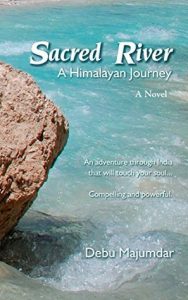
    Here is the novel’s cover:

    Now let’s apply the 5 Elements. What does the cover tell you in less than 5 seconds?

    1. The Genre:  Travel? Non-fiction?
    2. The Primary Targeted Age Group:  General Audience? Probably. Literary audience? Probably not. Suspense/Thriller audience? No way.
    3. Mood: Don’t know.
    4. Timeframe: No idea.
    5. Place or Cultural Reference: No idea?

    Does the cover convey any of the following (blurbs from the Chanticleer Review of it)?

    “A tour de force of India’s history, religion, culture, philosophy, anthropology, sociology, and politics are neatly packaged as a mystery…”

    “…As speculation of a golden hoard hidden in the sacred temples arises, Chetti and his associate scheme to locate and plunder treasure for a noble cause…”

    “An engrossing and tense subplot unfurls, one that will ensnare a temple swami along with some of the pilgrims to the Ganges. This adventure, which culminates in an enormously suspenseful climax…”

    “Readers will feel they are in a marketplace, on the side of the mountain, in a temple, and bathed in light and water. Especially lovely are the passages noting religious rituals and the spiritual significance of the Ganges. The author weaves in Indian legends and morality stories, artfully juxtaposing parallels between ancient tales and his characters’ modern lives.”

    Nope.

    How to Increase Book Sales
    Make your book stand out in a sea of books!

    Debu’s award-winning novel deserves a cover worthy of the time and writing craft that he invested into it. His cover has to intrigue potential readers and booksellers to pick it up wherever it is displayed. The cover must convince the web surfer to click on the image.

    But how?

    My advice to Debu is to begin collecting visual elements of people, objects,  paintings, locations, symbols, ideas, etc. that reflect the content of the work. Take several weeks to do this. Enlist friends, family, and readers to help with this. Gathering visual elements would make a great social media campaign. Ask readers to post photos or graphics of images that remind them of the novel.

    Dig deep. Come up with at least 30 elements, if not more.

    Lay the visual printouts where you can see the elements from far away, close up, upside down. Such as writing the novel, exploring the cover concepts will take time. Deciding on the cover concept will take more time and feedback.

    In a few weeks of letting ideas percolate, particular visual elements will begin to resonate. Then you will have something to explore.

    Update! Debu has re-released his book with this cover

    Don’t let your book become invisible to its potential readers!

    Effective covers sell the first book. The content between the covers sells the second book. And you can quote me on that. (And yes, I am repeating myself. )

    I will continue with another blog post that discusses what comes next—How to Put the Elements Together for an Effective Book Cover.

    Here is a link to Canva. It is a FREE graphic-design tool website that is easy to use. It is a great way to explore cover ideas and to play with visual elements to discover what will resonate cover-wise with your readers.

    Meanwhile, keep on writing! ~ Kiffer

    Click here if you would like information about the Chanticleer Authors Conference

    Or here for more information about the Chanticleer International Book Awards. 


  • SACRED RIVER: a HIMALAYAN JOURNEY by Debu Majumdar – Mystery, Literary, Multicultural, Spiritual Journey

    SACRED RIVER: a HIMALAYAN JOURNEY by Debu Majumdar – Mystery, Literary, Multicultural, Spiritual Journey

    A tour de force of India’s history, religion, culture, philosophy, anthropology, sociology, and politics are neatly packaged as a mystery, await the lucky readers of Debu Majumdar’s latest novel, Sacred River: A Himalayan Journey. All elements of this foundational novel are experienced through a well-developed cast of characters, wealthy and poor, educated and illiterate, as they make pilgrimages to the source of Ganges River.

    The River itself is a character in that it exerts the greatest influence on those who travel to its origin in the Himalayan mountains. In its waters, truths are revealed, and those who ponder its depths must acknowledge how they have lived their lives. The Ganges is the great equalizer; she washes the indigent and the affluent alike. Characters learn that money cannot buy enlightenment, and those who have lived the simplest lives may be much further down the spiritual path than those who’ve had every material advantage.

    Majumdar does a splendid job of giving each character a complete history before individual plots merge into a full and rich narrative. It’s as if he has taken tributaries of a river and studied their routes before entwining them with the flow, force, and beauty of a majestic river. From bonded servant to landed gentry, foreigner to outcast, all will be deeply affected by their journeys.

    This is the set up to a fascinating mystery. It unfolds as the reader learns about the SMS, the Sarva Mangal Society, a philanthropic organization that advocates education for all Indians and the removal of social barriers. Its staff believes that implementing the ancient ideals of India will lay the foundation for a new society, one in which the constant injustices done to the poor will finally halt. Its chief financial officer, Sevanathan Chetti, despairs, however, as to whether enough funds can be raised to continue its important work. He and his associate wonder where the wealth of India has gone. As speculation of a golden hoard hidden in the sacred temples arises, Chetti and his associate scheme to locate and plunder treasure for a noble cause.

    An engrossing and tense subplot unfurls, one that will ensnare a temple swami along with some of the pilgrims to the Ganges. This adventure, which culminates in an enormously suspenseful climax, is an effective counterpoint to the serene and meditative aspects of the novel.

    Majumdar’s prose is rich and spectacularly vivid. Locations are very important in this novel, and his descriptive writing is superb. Readers will feel they are in a marketplace, on the side of the mountain, in a temple, and bathed in light and water. Especially lovely are the passages noting religious rituals and the spiritual significance of the Ganges. The author weaves in Indian legends and morality stories, artfully juxtaposing parallels between ancient tales and his characters’ modern lives. There’s such a breadth of consideration for every aspect of Indian culture that it’s easy to imagine this novel being included on college syllabi for classes related to Hinduism.

    This book is a must-read for anyone with interest in Indian life and culture. Indeed, the author joyfully admits that one could read the book as a travelogue, and we agree! When readers finish this novel, we predict they will experience a deep longing to journey to the Himalayas to see “the maiden in the mountains,” that most sacred river, the Ganges.


    “Money cannot buy enlightenment, but for those who struggle to reclaim one nation’s equality, gold is the currency that will drive two overzealous men on a journey to uncover hidden treasure for the benefit of all. A rich and spectacularly vivid, multi-faceted literary mystery for seekers and skeptics alike.”  – Chanticleer Reviews