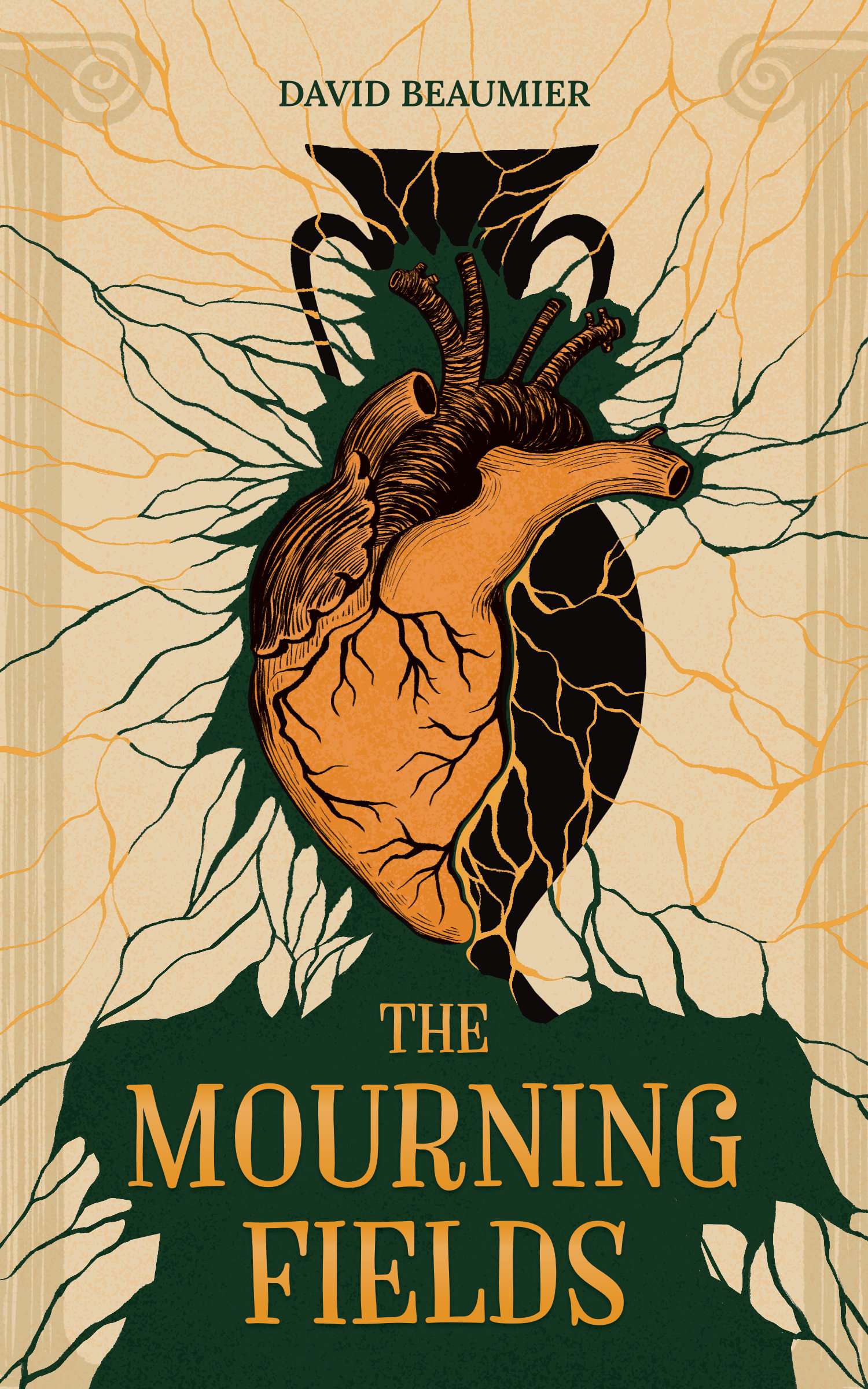
Ancient Greek myths resonate across millennia for their keen yearnings, tragedies, and refrains on human fragility. The contemporary short stories of David Beaumier’s collection, The Mourning Fields, echo these myths in both symbol and pathos.
Ranging from homage to magical realism, The Mourning Fields keeps a loose relationship to its Ancient Greek inspirations. These are fresh and intimate stories of trauma, loss, survival, and desire, rooted in modern life. These page-turning stories deliver genuine catharsis, drawing readers into characters whose struggles feel both timeless and urgently contemporary.
The Mourning Fields approaches violence and bigotry with a careful mix of social commentary and mythic allusion. The collection thoughtfully handles difficult subject matter including sexual assault and domestic abuse.
“Charon’s Crossing”, “Medusa”, “The White Pine”, and “Siren” confront violence against women, casting mythical powers as manifestations of trauma or justice. But even as Beaumier re-interprets these ancient myths, his stories don’t shy away from the more grounded subject matter. Their central characters hold readers close with the gravity of their fear, hope, and anger.
Where allusion lays thinner, The Mourning Fields maintains its own thematic coherence. “Just Say Yes” and “The College Experience” emphasize self-deception’s capacity for harm, as in each story the hero blinds themselves to sexual assault under their own roof.
Much of this collection’s tragedy springs from those characters who paint an ideal mirage over the real people around them.
“Kalanchoe” shows the violation of autonomy inherent to anti-queer bigotry, but also how difficult it can be to leave an abuser whose love has been genuine in the past. The collection’s titular story mirrors the form of a classic Greek tragedy, its hero driven to pursue someone who seems so perfect for him if not for her polyamory and his own irrepressible jealousy. Each piece appreciates the nuances of its characters, even around those motivations that drive them to hurt others.
Beaumier draws mounting pressure from the fault lines in close relationships. Characters warp love into frightening forms, calling into question what they might do when reality finally crashes down on them.
Fitting for its chosen pantheon of myth—and especially its particular namesake—The Mourning Fields illustrates many facets of desire.
Selfish and unchecked, desire burns through the heroes of “The Mourning Fields”, “Just Say Yes,” and “Hera”, leaving a painful emptiness in its wake. But shared freely between people, desire can bring light and even peace to their lives. In the darkness between an alley and balcony, two men welcome each other’s trespass (“Juliet on His Balcony”). The gift of music illuminates a father’s lost memories of reconciliation with his daughter and her wife (“Orpheus”). An adopted son’s academic passion helps him accept the love his parents offer (“Last Wish”).
Many of these stories explore the terrible consequences of a person trying to possess someone else in the supposed name of love. The Mourning Fields shows that true connection can only be made with an open hand.
Beaumier’s prose builds a strong sense of place, rooting characters in their moment.
Sensory description flows through them, taking on the weight of their emotion. The perpetual stickiness of a dive bar that glows in strange orange light, its signature drink stained by the taste of decay. Familiar streets and hallways become an exhausting labyrinth. Whether drawn from locations real or mystical, these settings feel lived-in, as if they’ve seen the cycles of their myths play out before.
Rich in its contemporary setting, mythic parallel, and characters walking between the two, The Mourning Fields by David Beaumier stirs empathy and delivers catharsis. Readers of mythology and contemporary fiction will find each of these short journeys affecting both in their own right and as a collection.
Narrative writing is one of the most powerful ways to tell stories.
Giving your story a voice that readers connect with creates a world for them to become a part of as the story unfolds. Whether you’re crafting a novel, penning a memoir, or writing a short story, telling it as narrative will bring readers closer to your characters.
What is Narrative Writing?
This can be thought of simply as any type of writing that follows a plot and story bounded by time. It may be easiest to think of Narrative writing in terms of what it isn’t, which is prescriptive writing. Prescriptive writing is how-to, sometimes self-help, and cookbooks – anything that tells you how to do something rather than relating a sequence of events. Narrative writing, each with its own unique approach and purpose, are effective tools for crafting an interesting, compelling story. Understanding the purpose of the different types of narrative writing can help you fine-tune your storytelling skills and choose the right type to propel your story’s plot along.
In this post, we’ll break down four types of narrative writing, explore its key characteristics, and offer tips on how to each type effectively in your writing. Whether you’re a seasoned writer or just starting out, mastering these different approaches will deepen your ability to captivate your readers and communicate your ideas with clarity and impact.
1.Linear Narrative.
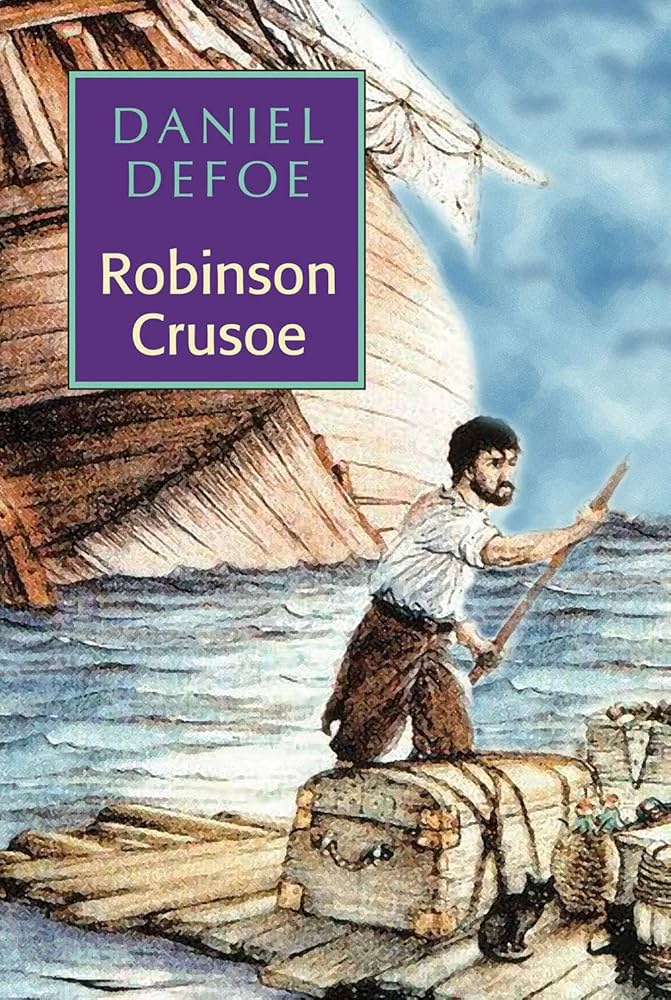
A linear narrative presents events in the order they happen, taking the reader on a straightforward journey through time. This structure can be found in personal essays, autobiographies, and novels where clarity and progression are paramount. Robinson Crusoe by Daniel Defoe serves as a solid example as readers follow Crusoe’s daily life and struggles chronologically, experiencing his survival and growth in real time.
Why choose linear storytelling?
Linear narratives are perfect for stories where clarity and immersion are key. They allow readers to step into the protagonist’s shoes and experience events as they happen, fostering a sense of immediacy and intimacy. For authors, this structure helps maintain a steady pace and ensures that every event naturally builds upon the last, making it easier to keep the narrative focused and cohesive. Linear storytelling is probably the most common type of narrative, which makes it particularly effective for readers.
2.Non-linear Narrative.
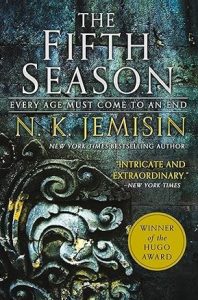
Non-linear narratives present events out of chronological order, using flashbacks, flash-forwards, and shifts in perspective. This structure allows readers to piece together the story like a puzzle, often uncovering thematic connections and emotional truths along the way. These stories, which we’re about to talk about, are often rife with spoilers. A stunning example of this storytelling style is N.K. Jeminsin’s The Fifth Season, which intertwines timelines and perspectives to reveal more about that world than a linear viewpoint could and culminates in a groundbreaking twist that will drive readers to turn the pages again and again. The fragmented structure mirrors the fractured realities of the story’s characters, creating an emotionally resonant and intellectually stimulating story for readers.
Why choose Non-Linear Storytelling?
Authors can be drawn to non-linear narratives for the opportunity to build suspense, deliver surprises, and exploring intricate themes without being hampered by a strict timelines. For readers, this style can draw them in as they actively work to piece together the narrative. It invites them to experience the story on multiple levels, often increasing the joy of not only reading the book, but re-reading it. Other great examples of non-linear narratives in media are the TV show Lost and the movie Pulp Fiction.
3.Quest Narrative.
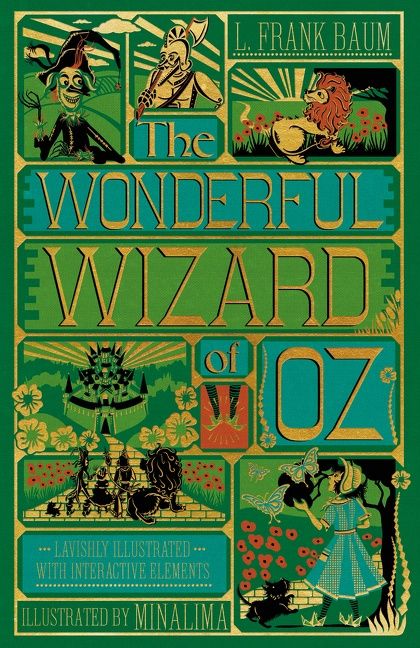
A quest narrative centers on a protagonist who embarks on a journey to achieve a specific goal. This structure can be see in Frank Baum’s The Wizard of Oz, where Dorothy travels through strange lands, faces challenges, and learns valuagle lessons, all in pursuit of returning home to Kansas. As her journey unfolds, she makes friends, finds mentors, and confronts her fears, all leading to a story of transformation.
Why choose Quest Storytelling?
Similar to linear narratives in many ways a quest narrative could be considered our first “subset” of narrative style. However, quest storytelling, like the romance genre, has a few key points that must be touched upon. The protagonist must overcome external obstacles and internal struggles to achieve their goal, and at the end they must have gone through a transformation. Quests fit best for stories where growth is a central theme. Readers connect deeply with quest narratives because of the way they mirror universal experiences of striving, learning, and triumphing against all odds. This timeless framework excels at emotional resonance and a satisfying payoff.
4.Viewpoint Narrative.
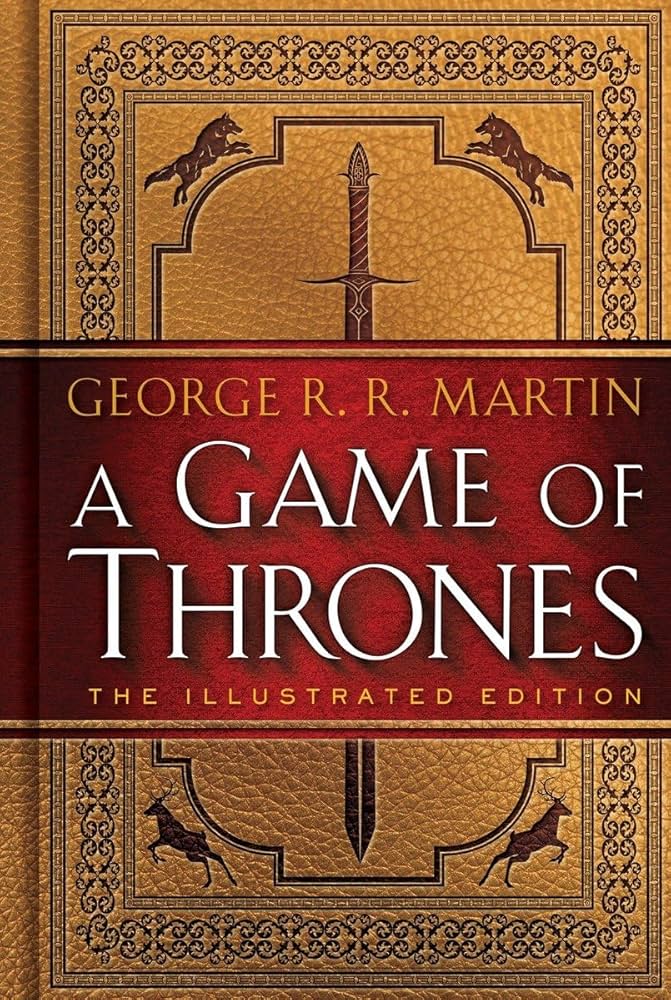
Viewpoint narratives delve into the lives and perspectives of multiple characters, offering a kaleidoscopic view of the story. George R.R. Martin’s A Game of Thrones shines as an example of this structure, with each chapter revealing events and motives from the point of view of difference characters. This multifaceted approach allows for a deeper view of plot that reveals layers of intrigue as the readers are able to see what happens through a diverse variety of lenses.
Why choose Viewpoint Storytelling?
Viewpoint narratives create rich, multifaceted worlds where the reader can explore the depth of multiple characters and storylines. For authors, this structure adds a layer of complexity to their tales as the shifting perspectives can unveil hidden truths, add suspense, and explore contrasting ideologies. Readers are drawn into the intricacy of the narrative, finding their loyalties and perceptions constantly tested, making for an immersive and dynamic storytelling experience.
Why Narrative Style Matters
First off, this is hardly a comprehensive list of narrative styles, just examples of some of the ones most commonly seen today. There’s plenty of overlap as well between these, as you could have a non-linear, quest focused story with multiple viewpoints.
Each narrative structure—linear, non-linear, quest, or viewpoint—shapes the way readers connect with your story. By experimenting with different styles, you can tailor your storytelling to match the themes and emotions you want to evoke.
As an exercise, we recommend trying to write the same scene following different styles. Including quest adds a fun element of tone to explore as you go through it! If you don’t have a story, you can try rewriting parts from our own David Beaumier’s short story Medusa, which you can read here.
Think of the exercises like balancing the universes in Everything Everywhere All At Once
Linear Narrative: Your story may already be like this, but if not, remember to focus in on moving from one point to another, and exploring what it would mean for a non-linear story to come out in order.
Non-Linear Narrative: Here the question is what comes first and what comes last? Does it need to overlap in different ways (possibly with multiple perspectives) to make this story work? Thinking of Medusa would we need to see Melody’s interrogation from her perspective first and then have a flashback to the attack with her brother?
Quest Narrative: Thinking of a classic story like The Hobbit, what is the call to action for this story? What is the external and internal adversity faced by the main character, and then how do they transform by the end? Medusa would need to be expanded to do that, but Allison could be well on her way to creating a home and safe place for people with strange and unusual powers where they won’t be harmed by the mysterious Visitation.
Viewpoint Narrative: What does everyone in the scene think? If way your story is written only has one character is there an object that could have a viewpoint? Is someone listening in? Or is there another scene that can be added from the point of view of the person who the characters are talking about?
Understanding these narrative techniques will help maximize your creativity and craft stories that captivate, surprise, and stay with your readers long after “The End.”
Chanticleer Editorial Services – We’re ready when you are ready!
Did you know that Chanticleer offers editorial services?
We do and have been doing so since 2011!
Tools of the Editing Trade
Our professional editors are top-notch and are experts in the Chicago Manual of Style. They have and are working for the top publishing houses (TOR, McMillian, Thomas Mercer, Penguin Random House, Simon Schuster, etc.).
For more information, please reach out to us at info@ChantiReviews.com.
We work with a small number of exclusive clients who want to collaborate with our team of top-editors on an on-going basis. Contact us today!
Chanticleer Editorial Services also offers writing craft sessions and masterclasses. Sign up to find out where, when, and how sessions being held.
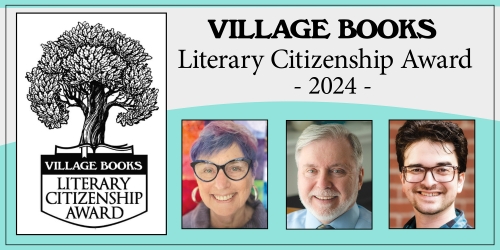
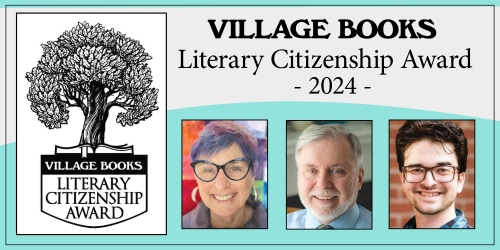
Announcing the Recipients of the 2024 Village Books Literary Citizenship Award!
The annual Literary Citizenship Award with the first recipients being recognized on Thursday, July 11, 2024 at Village Books, Fairhaven Village, Bellingham, Wash.
Recipients of this award are of diverse backgrounds and professions, but each have demonstrated a commitment to engage with the literary community with the intent of giving as much, if not more so, than they receive. This can take many different forms such as giving back to the literary community in a meaningful way, making yourself available to other writers as time allows to provide your knowledge and expertise, championing other people’s successes, and involving yourself in the local literary landscape of independent bookstores, libraries, and writing organizations.
Village Books, our local independent bookstore (and Chanticleer Authors Conference Book Room Manager) was founded in June 1980 and is a pillar of the pacific northwest writing community.
“Our literary world is a social ecosystem that relies on others: readers, writers, editors, reviewers, publishers, booksellers, and so on. The writing and publishing world is one made of relationships. Writing itself may be a somewhat solitary activity, but once the story or poem is ‘done’ we rely on others to read, share, and publish our work. Yet there are so many levels of participation from others in this community.” ~ Lori May, author of The Write Crowd: Literary Citizenship & The Writing Life
We invite you to join us to honor this year’s Literary Citizenship Award Ceremony recognizing the following three recipients.
Throughout both her personal and professional life, Linda has combined her passions for research and creative writing.
Linda is known for her roles as Library Director for both Whatcom Community College and La Conner Swinomish Library, though it’s her master’s degree in journalism that explains her curious nature to all who know her. An ardent friend to readers and writers, you’ll find Linda present at many book events, and she can always be relied upon to offer insightful questions. She is an active member of Red Wheelbarrow Writers, two book clubs, two critique groups, and you’ll find her work in anthologies including Whatcom Writes annual publications, the Salish Current, I Sing the Salmon Home, and co-editor of 52 Women of Whatcom. Linda helped found both Whatcom Reads and the Chuckanut Writers Conference, community institutions that bring readers and writers together.
Seán Dwyer writes nonfiction and fiction, both novels and stories.
He’s a Spanish professor in the Modern and Classical Languages & Literatures department at Western Washington University, speaks four other languages fluently, and is a songwriter. In 2015, a publisher was waiting for his debut novel manuscript when, in a matter of seconds, Seán’s teaching and writing careers were put on hold. Rear-ended at 50 mph while stopped at a crosswalk, Seán suffered two concussions in two seconds. His memoir, A Quest for Tears, chronicles his recovery from the brain injury that left him unable to read or write for more than a few minutes at a time. Before and since, he’s generously given so much to his community of writers through The Red Wheelbarrow Writers Group, as the president of Whatcom Writers and Publishers, regular contribution to anthologies, and as the ever-supportive host of Village Books’ Open Mics. He has branched out into boutique publishing, and the authors in his list have won multiple awards. Wherever you find him, you’ll experience firsthand his generous spirit.
David always holds true to his first love of Argentine tango, but when he’s not dancing, he writes.
The dance metaphor also holds true in his literary life as it’s a dance of relationships and cooperation. His work has appeared in EWU’s Inroads, WWU’s Suffix, Whatcom Writes, and HamLit but it’s his work with his fellow writers that seems to truly fuel him. He’s worked as the assistant publishing director at Village Books and is the current project manager for The Writers Corner Anthologies, which grew out of his many years as the skillful facilitator of the VB Writes Fiction Writing Group. David helps writers find their voices as an editor and coach and serving as the Communications and Marketing Manager for Chanticleer Book Reviews. He’s a tireless supporter of writers, wherever they are on their journey, and the most frequent question he asks is, “How can I help?”
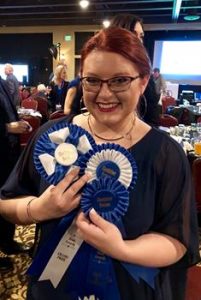
We’re extra excited to celebrate Chanticleer’s own David Beaumier! David has been with Chanticleer for almost four years, not counting his time interning with us a decade ago. Seán Dwyer is also a usual suspect you can find at Chanticleer events, including our annual authors conference. We’re proud to support such amazing community members! Congratulations again to all recipients!
Village Books’ Literary Citizenship Award celebrates and thanks these three talented and dedicated community builders, community mentors, and community defenders.
They have each demonstrated, in their own unique way, the virtues that embody a Good Literary Citizen. For this, Village Books is awarding $1000 to each of them and hereby induct them into the Village Books Literary Citizen Hall of Fame which will be on permanent display in Village Books, Fairhaven.
One of our favorite Writing Communities meets annually at the Chanticleer Authors Conference!
How to Form a Writing Community
No matter where you are in the writing journey, it’s never too late to join a Writing Community or form a Critique Group. We’ve talked to people who have ran book groups at our own local Village Books, those who ran the Skagit Valley Writers League, and those who have gone through graduate-level writing classes to bring you the best tips and tricks for your community needs.
Writing Communities and Critique Groups are often a wonderful and necessary step on the journey to becoming a professional author, not just someone scribbling into the void.
So my Writing Community will fulfill all of my authorly needs?
Commander Tuvok and Ensign Kim of the USS Voyager. Kim is usually wrong.
Probably not. Just like one person can’t fulfill all our needs for friendship, writing communities are diverse and can include your local bookstore to the writing group you found online during quarantine. It isn’t just one thing, but here we’ll talk about how to build one if you notice your needs aren’t getting met as well as they could be.
First, we’ll focus on where to begin, then we’ll dive into actually running a critique group.
Starting your Group
Pick who you want to be in your Writing Community
When putting together a group it can be important to consider both experience and demographic. If you’re hoping to publish by the end of the year, it’s important to work with like-minded people as opposed to writers who are just discovering their voice. Of course, even a writer who is still working through their craft may be an excellent reader, so don’t be afraid to take a chance on someone!
Likewise, while it’s helpful to have a variety of readers, ask yourself who the audience for your book is. Lee Child’s The Killing Floor has a pretty different audience from The City of Glass by Cassandra Clare. The best feedback will come from the people who would be interested in grabbing your work at the bookstore.
If you’re looking for more on connecting with readers, and less on connecting with other writers, check out this article on reader engagement from Kiffer Brown here.
Decisions in a Critique Group
There are plenty of ways to run a writing group, but knowing if it’s open or closed and whether people come prepared to give feedback or if they’re expected to give feedback in the moment is key
For a critique group though, startby asking if it’s going to be a closed or an open group. Even with an open group, it helps to recruit people to join it initially, so you set the tone and hopefully create something that will really serve your needs.
For an open group, you’ll have the great pleasure of extraordinary writers coming into your sphere, though on the other hand, you will also find writers whose work needs desperate help beyond what you can give to the work just being plain offensive. Despite that, the rewards of working in an open group are innumerable, as are the connections that will help expand your circle of influence.
In a closed group you don’t have the same level of variety in the people you work with, but the consistency can make up for that. Of course, if the people you invite in end up feeling hurt, this can negatively affect friendships that have been brought into the group.
Regardless of who you have in a group, it’s worth remembering that writing is a sensitive art, and it does well to treat people kindly, even when giving direct feedback.
When is Feedback done?
Whether or not you choose to do an open or closed group, you also need to pick whether or not work will be read in advanced so feedback can be ready to present at group. The other natural option is that the author will present their work at the group and receive feedback immediately after.
I ran a group for 7 years that sent work in advance, and I found the extra time to comment and think about a book really helped! That said, the maximum word count suggestions and number of members we had meant we critiqued approximately 40,000 words a month! That’s a lot of novels!
In contrast, Janet Oakley, a Chanticleer Overall Grand Prize Winner, is still in a group where the author reads the work aloud and then receives feedback in the moment. That group saves a lot of time and effort by keeping the focus on just what can be shared in the time that they meet. Both have great merits! – David
Regardless of the choice you make, writers will be able to get a huge benefit from however feedback is delivered!
Community is something we make at Chanticleer
Here at Chanticleer we have our usual (or unusual) suspects in terms of people who live near us and are guaranteed to show up at our local events ready to cheer us on.
To facilitate this, we’ve created The Roost, a private online community for serious authors looking for support. Not only does The Roost offer steep discounts on many Chanticleer services, there are weekly write ins, monthly workshops, author promotion projects, NaNoWriMo support, and of course pictures of our beloved pets (always a must).
If you’re interested in joining the Roost, please reach out to AuthorOutreach@ChantiReviews.com
One of Kiffer’s adorable kitty cats
The Roost is a social community where authors can share their expertise and knowledge with fellow writers who take the craft and business of being an author seriously. Make posts and share photos just like any other social media, but better since the community is intentionally curated for writers!
Thank you for joining us for this Writer Toolbox Article
There is so much to learn and do with Chanticleer!
From our Book Award Program that has Discovered the Best Books since the early 2010s to our Editorial Book Reviews recognizing and promoting indie and traditional authors, Chanticleer knows your books are worth the effort to market professionally!
When you’re ready,did you know that Chanticleer offers editorial services?We do and have been doing so since 2011.
Our professional editors are top-notch and are experts in the Chicago Manual of Style. They have and are working for the top publishing houses (TOR, McMillian, Thomas Mercer, Penguin Random House, Simon Schuster, etc.).
If you would like more information, we invite you to email us at info@ChantiReviews.com for more information, testimonials, and fees.
We work with a small number of exclusive clients who want to collaborate with our team of top-editors on an on-going basis.Contact us today!
Chanticleer Editorial Services also offers writing craft sessions and masterclasses. Sign up to find out where, when, and how sessions being held.
A great way to get started is with our manuscript evaluation service, with more information availablehere.
And we do editorial consultations for $75. Learn morehere.
You have an idea. Not just any idea, a big idea! We’re talking ten thousand pages, hundreds of thousands of words, the next Great Doorstop of a novel!
Consider breaking that up into a series!
It might be easier to split up the book digitally
Smaller books are more accessible, and a series keeps you in the front of your readers’ minds. With books consistently coming out, winning awards, and receiving reviews, the marketing for those happens much more naturally than having to bring out a backlist of unrelated novels. When a book takes place in a series, a reader who read an earlier book already knows they’re going like what they pick up.
Theme is the central idea of the series. Your theme informs the main character’s goal, their motivation to pursue that goal, and the threats to their success.
Your stories are grounded in the theme. A hero who saves the world from evil plans will experience different challenges than two teenage friends who love to solve small-town mysteries. The theme helps you maintain the tone of each book in the series. If one book is filled with irony and another is deadly serious, your readers will be disappointed and stop reading. That’s why your theme is important to the success of the entire series.
There’s no guaranteed formula, but you can start out by doing some serious research into great series that have already succeeded. The tools you discover will help fashion unique work for you and your voice.
Let’s Dive in!
Research and Read
All good story research starts somewhere
Everyone will tell you to be a great writer, you should be a great reader. Think about the series you want to write, and ask yourself: What authors do I admire who are doing something similar? You’re going to want to look through their books for all that we will discuss here, as well as comparing it to your own understanding of structure and what makes a good story.
Now that you have your list and a running understanding of what’s making the books work, you can take notes on what your favorite series are doing that makes them your favorite series! Your notes should cover the important events in each book, and then ask yourself what the overall point of the book was, and finally how did that book fit into the series as a whole.
With regards to character, you’ll want to examine which central characters return, and how many new characters come on the scene (these are named characters where you receive background on them and they have a non-trivial impact on your main cast).
At the end, do a comparison of themes between books and ask how they relate to other books in the series.
Here are some of our favorite series that also won First Place in the Series Awards! you could look through for ideas. Let us know if any of them are similar to what you want to write!
Every Author Needs an Effective Website, But What Should You Do to Manage Yours?
Now is the time to freshen your website or seriously consider creating one dedicated to your author brand.
The internet is confusing enough without having to look at the back end of a webpage that’s supposed to draw others in. For many authors, their website will be the first thing online readers will come across, and it should represent the best parts of you and your work.
AUTHOR BRAND – Your website your reflects your author brand
Like a Resume, the Author Website should highlight what’s special about you
If your book receives a positive review or award, crow about it on your website. You can see Nancy Thorne doing that on her site here for her book Victorian Town, which won a First Place blue ribbon in the Dante Rossetti Awards. Having that digital badge can be the difference between someone purchasing your book and passing on it.
Where else will people find information about you?
Aside from your author website, most readers will find out about you from bookstores, social media, through your publisher, or through Reviews and Awards as described above.
The only place you fully control is your Author Website
The Bones (wireframe) of Your Website
These are the key subjects your author website should touch on for readers:
Your AUTHOR BRANDING – this will be a blogpost to itself – please see links at the end of this article,
What do you write – Fantasy? Historical Fiction? Non-Fiction? Children’s Books?
Do you have an elevator pitch for each of your works? If so, this is where you put it. Then drill down with more info.
What information or services you provide?
Are you available to present?
Are you available for Book Clubs? (You do have a Book Club page—right?)
Do you promote/support any causes? Humane Society? Autism? Wildlife? Lover of Libraries? Board Games?
Schedule of where people can meet you? Author Events, Wine Tastings/Lavender Days, Comic-Cons?
Products (books) to sell –
Can they be purchased directly from your website?
Can they be purchased from your fav Indie bookseller? Amazon? Barnes and Noble? Bookchain?
Kudos given your works
Digital badges, links to awards and accolades
Access to your Blog – it should be easily available AND with at least once a week posts.
Blogposts do not have to be long – a short paragraph will do to keep it fresh and earning “browser love” i.e. ranking on search engines
An outdated blog suggests that you are not interested in what you are doing (writing/written).
BIO – why readers should READ your books rather than another author’s works in the same genre
Please have easily downloadable photos, short and snappy bio with an invitation to contact you (see below) if a more in-depth one is needed, and graphics of your book covers available for those who want to promote you and your work. For example – you are going to do a book signing at your local bookseller – they will want to be able to create posters, social media posts, mailings, etc. and will need this basic info easily and readily available.
Also, have links or a listing to where you have presented, been interviewed, and/or published, accolades and awards
Contact info – Social Media Links, a secure way of contacting you, and a place to subscribe to your newsletter .
Social media links – especially LinkedIn and Twitter
Subscribe to your newsletter (yes, you read that correctly)
Secure way of contacting you while allowing for your privacy
However you go about making your website, the first thing to check is that it’s presented cleanly. Simple is going to be better than an over complicated landing page with too many buttons to look at. There should be a natural progression to your website to help visitors navigate it with ease.
Also, it’s worth mentioning that Chanticleerian Rochelle Parry does a deep dive into this subject here here.
1. Communicating What you Write
Readers should automatically know what genre you write in when they look at your website. Ideally this is done with design and by saying it directly. Consider what images are important to the work you do and how you describe the genre of your work. Both should be front and center. Again, the design doesn’t need to be over the top or fancy, but rather focused on communicating directly to the reader to let them know if they’ve landed in the right space. For example, these are the first big buttons anyone who comes to ChantiReviews.com sees:
Obviously we consider our Newsletter, Awards, and Reviews to be fairly important. Ask yourself what the main purpose of your website is—selling books? Selling copyediting services? Providing reviews? Whatever that is, it needs to be the main focus.
2. About Page
This is where you’ll want a professional head shot and a little bit about you and your story. You can ease up on the advertising here, and talk more about why you’re passionate about the subjects you write about.
We’re all about giving this rooster some love here.
An author page that puts the author front and center is Janice S Ellis, PhD’s website here. You get a good sense of who Dr. Ellis is and the reason that she is a reliable authority for her books. A different route is to be a website that primarily highlights your book, like Avanti Centrae’s website here. You can see the difference in focus, especially since Dr. Ellis’s work tends to have a wider range of subjects, while Centrae’s focuses exclusively on VanOps novels and thriller series.
3. Books
Your books will undoubtedly be an important part of your author website. If you’ve won any awards, such as from our Chanticleer International Book Awards (CIBAs), you should include your digital badge to help the book stand out to those who visit your site. Likewise, if you’ve received a good Editorial Book Review from us, you’ll want to make a note of that and link to the review.
The goal is to show readers that your book stands out, and that it’s well connected enough to receive widespread recognition.
One of the biggest things we see with author websites is they forget to list those awards. Your website is a storefront among millions of digital storefronts, and something needs to be there to make your product stand out beyond what other authors have.
4. Contact
The Contact page is where you have a chance to let your audience reach out to you. It’s a great spot for people to request your presence at their book club, writing group, author’s conference, or upcoming Awards Ceremonies.
Your Contact page is also an excellent place to gather information for your Newsletter. Your Newsletter lets you speak directly to your audience, cutting through the algorithms of social media and the whims of the internet to land directly in their inbox. Make sure you share information that’s fun and to the point of what might interest an audience.
5. Interact
If you have a blog and people interact with it, take a little bit of time to respond to them. Likewise, if you have emails from you contact page or responses from your Newsletter, you can take the time to let people know you heard them and respond in a positive way.
Your interactions may not be this cute
This is part of the business side of being a writer, so set up some dedicated time each week to deal with it rather than letting it bother you a little bit every day. Schedules can be the best way to avoid the death of a thousand cuts.
One of the big ways we promote interaction is through The Roost. The Roost is our personally curated social media site that allows authors to network and ask each other questions, while at the same time taking advantage of some extraordinary discounts. Learn more about The Roost here.
6. Avoid Sales Resistance
Sales Resistance is when the design of your website prevents readers from following you or buying your products. This is a huge personal pet peeve of Kiffer herself. To avoid this double check all your buttons and links, and even consider setting up multiple buttons for one product that your visitor can click on to buy your work. It can help here to have a friend explore your website and test it out. A second pair of eyes (or more) can’t hurt!
Hand in hand with that, share your brand! Promote your new book, promote new merchandise, and remind people of the services you offer If you have a new book? Advertise it! Win a new Award or receive a good review? Advertise it! Make sure it’s clear how to contact you, and that your SEO is up to date. What’s SEO you ask?
7. SEO and Publishing Alphabet Soup (How you and your works are found in the Internet of Things)
Possibly the most confusing element to the world wide web is the idea of Search Engine Optimization (SEO). Tags and Keywords are the first start to this. Rather than go with the first idea that comes to mind, so a little bit of searching. The word “raffle” has nearly 90 million searches on Google while “giveaway” has 335 million. Generally, you’ll want to focus on the one that’s more common. The exception to this rule is what makes you shine should be a keyword more unique to you. You can read more about SEO here.
SEO is all about driving traffic back to your website, and you can do this by referencing your website frequently and generously. Have it ready when people ask where to find you on podcasts or guest blogs, and double check to make sure that information is posted to send their audience back to you.
8. Social Media
Links to your social media help so much, because that’s a good way to stay in your reader’s mind throughout the day. You can link individually to your Twitter, Facebook, Instagram, and anything else, but what happens when you need to link to multiple sites (including your author website) from a space like Instagram?
No need to fear Social Media!
At the recent Chanticleer Authors Conference, VCAC21, Chelsea Bennett of LuLu and Alexa Bigwarfe talked about different ways to put up multiple links using Linktree and Shopify.
The big difference between the two is that Linktree is just for sharing links, whereas Shopify also doubles as a storefront, much like Squarespace, but it’s an all in one paid tool. If navigating multiple platforms is a challenge for you, Shopify may be worth the expense.
8. Newsletter
Your Newsletter is one of the best ways to connect with readers. Unlike social media, which is always filtered through automatic algorithms, people have signed up for and chosen to receive your newsletter. You don’t have to pay extra for it, just send it out to regularly tell your readers that you’re thinking of them, and to let them know how best to support you!
Newsletters can seem overwhelming, but you can break them down into a few simple steps. Here are a few possible choices:
Recent Publications
Status of Current Works in Progress
What You’re Reading
Writing Thoughts
Links to your Social Media
You know yourself best, so choose what works best. The other big question with a Newsletter is how often to send one out. Luckily, the answer is you can send it out as little as twice a year. While there should always be a way for your readers to support you in the letter, it’s important that the main thrust of it is in connecting with them.
Your newsletter is a chance to give your books a big hug
What is the Author Website, in the end?
Your website is the hub of your part of the community of writers you’ve joined. It’s like a small inn where you invite readers in and can provide resources and support to your fellow authors. Be kind and excellent to each other.
Thank you for joining us and please stay tuned for the next Chanticleer’s Business of Writing Tools and Tips Article!
Seating is Limited. The esteemed WRITER Magazine (founded in 1887) has repeatedly recognized the Chanticleer Authors Conference as one of the best conferences to attend and participate in for North America.
If you are partaking in NaNoWriMo, then you are over a third of the way done! Congratulations!
We hope that this article will provide prompting to spur you on to the finish line.
If you are on your time schedule, we hope this article will help keep you focused and spur you on!
The best fiction touches the deep layers in us. A writer achieves this effect by embedding dozens of techniques into his or her story. — Jessica P. Morrell
Dramatic Question
Compelling fiction is based on a single, powerful question that must be answered by the story climax. This question will be dramatized chiefly via action in a series of events or scenes.
This scene from Miss Fisher’s Mysteries could be powered by several Dramatic Questions
For example, if you are writing a romance, the question always involves whether the couple will resolve their differences and declare their love. Then in a mystery the dramatic question might be will Detective Smith find the serial killer in time to prevent another senseless death? In The Old Man and Sea, the dramatic question is will Santiago catch the big fish and thus restore his pride and reputation?
Consider the following:
What is the dramatic question in Harry Potter and the Sorcerer’s Stone?
What is the dramatic question in Stephanie Myers’ Twilight Saga?
Understanding the dramatic question in other writer’s work can better help you approach your novel. To make it the best we can, let’s turn to world building.
An Intimate, Simmering World
An intimate world isn’t created by merely piling on details. It means your story world has the resonance of childhood memories, the vividness of a dream, and the power of a movie. An intimate, simmering world is filled in with shadows and corners and dogs and ice cubes and the sounds and smells of a dryer humming on wash day and a car blaring past, with pop music shaking the windows. These details lend it authority, potency, and a palpable physical existence.
Diana Gabaldon’s The Outlander Series simmering details make this time-travel, fantasy, horror, science fiction extremely believable and immersive fiction.
Outlander – Diana Gabaldon’s details make for immersive fiction
An intimate story takes us to a specific place and coaxes us to remain there. An intimate story is lifelike and feels as real and complicated as the world the reader inhabits. When he finishes the final pages, and leaves the story world, he should feel the satisfaction of the ending, but also a huge sense of loss. Like a friend has moved to another town just when the friendship had reached a level of closeness and trust. — Jessica P. Morrell
Characters Built from Dominant Traits
Create main characters with dominant and unforgettable traits as a foundation of personality. These traits will be showcased in the story events, will help him achieve or fail at goals, and will make the story person consistent. For example, Sherlock Holmes’ dominant traits are that he is analytical, Bohemian, opinionated and intelligent. These traits are showcased in every story he appears in along with secondary and contrasting traits. When the character first appears in the first scene, he arrives in the story with his dominant traits intact.
Henry Cavill as the Witcher from Andrzej Sapkowski’s series of the same title
Who can forget Henry Cavil’s portrayal of Geralt of Rivia? He enters the scene as a hardened warrior with an iron code of honor. As the series progresses, he becomes softer and allows a few friends to become closer to him, taking responsibility for individuals’ happiness, not just their safety. Even as he grows, his core character elements remain unchanged. The interiority of a character is often one of those elements.
Emotional Need & Significance
The protagonists and main characters are people with baggage and emotional needs stemming from their pasts. These needs, coupled with motivation cause characters to act as they do.
For example, in Silence of the Lambs Clarisse Starling is propelled by childhood traumas to both succeed and heal the wounds caused by the death of her father. Likewise, Robert Dugoni’s Tracy Crosswhite is searching for her sister’s murderer, and Craig Johnson’s Sheriff Walt Longmire is trying to find out who killed his wife. That’s a lot of character baggage.
Motivation Entwined with Backstory
Motivation, the why? of fiction, is at the heart of every scene, fueling your character’s desires and driving him to accomplish goals. This provides a solid foundation for the often complicated reasons for your character’s behaviors choices, actions, and blunders. Motivating factors provide trajectories for character development, as a character’s past inevitably intersects with his present. Your character’s motivations must be in sync with their core personality traits and realistically linked to goals so that readers can take on these goals as their own.
Desire to drive your NaNoWriMo project
Desire is the lifeblood of fictional characters. Not only do your characters want something, but they also must want something badly. You can bestow on your character flaming red hair, an endearing, crooked grin and a penchant for chocolate and noir movies, but if she doesn’t want something badly, she’s merely a prop in your story, not a driving force. But if she wants to win the Miss Florida contest, take over her boss’ job, or become the first female shortstop for the Atlanta Braves, then you’ve got a character who will make things happen and a story that will be propelled by desire.
The Ring from Lord of the Rings is a perfect example of a symbol of desire on so many different levels.
Frodo and The Ring – LOTR by J.R.R. Tolkein
Threat
Fiction is based on a series of threatening changes inflicted on the protagonist. In many stories, these threats force him or her to change or act in ways he or she needs to change or act. Often too, what the protagonist fears most is what is showcased in a novel or short story. It can be fear of losing his family, job, or health with a dreaded outcome. Fear of losing to a threat or threats provide interest, action, and conflict.
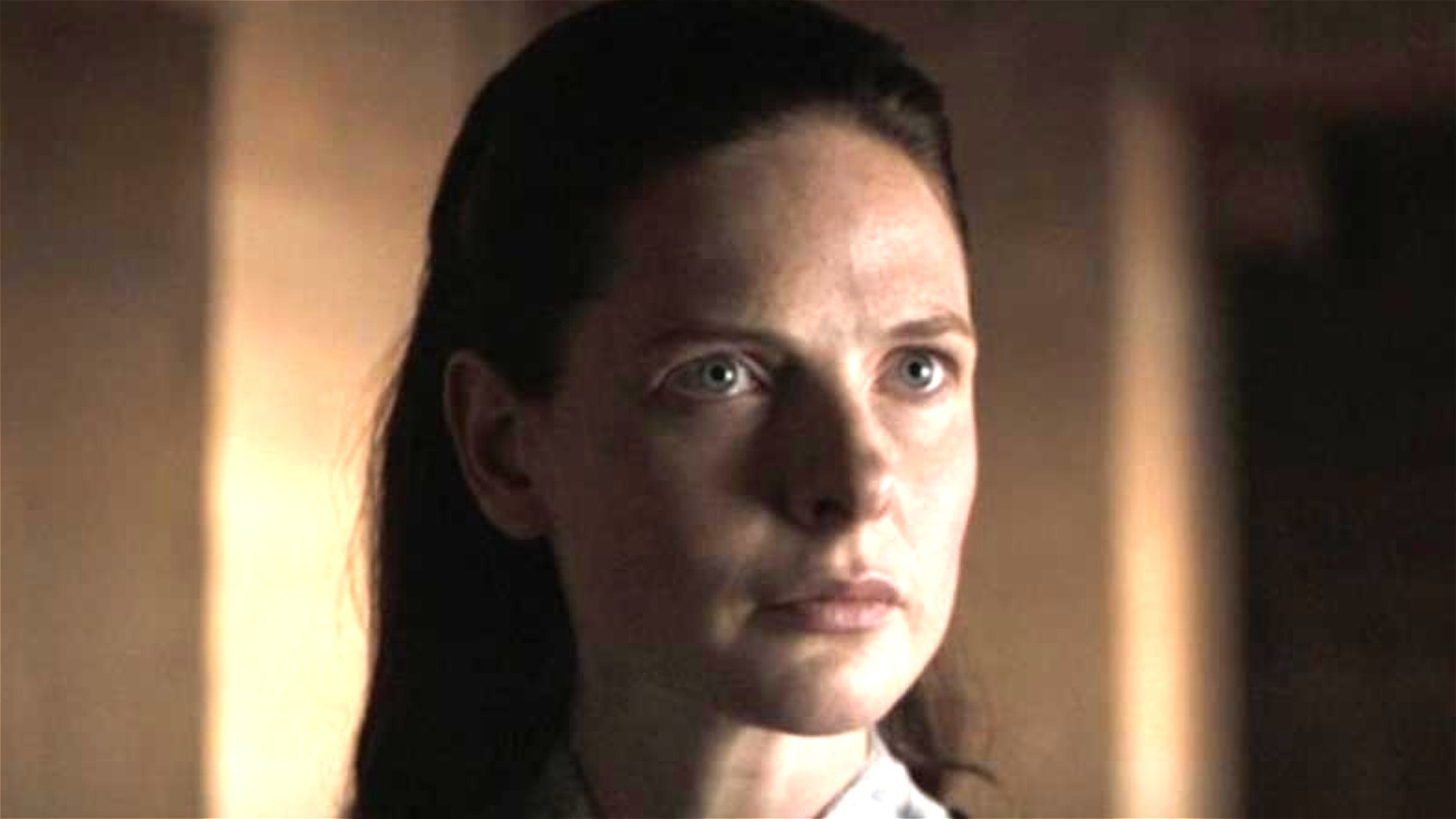
“Fear is the Mind Killer” – Rachel Ferguson as The Lady Jessica in the 2021 Dune often repeats this litany against fear
Inner Conflict
A fictional character doesn’t arrive at easy decisions or choices. Instead, they are burdened by difficult or impossible choices, particularly moral choices, that often make them doubt and question their actions. Inner conflict works in tandem with outer conflict – a physical obstacle, villain or antagonist–to make the story more involving, dramatic, and events more meaningful.
Causality
Events in fiction are never random or unconnected. They are always linked by causality with one event causing more events later in the story, which in turn causes complications, which cause more events, which cause bad decisions, etc. Visit our blog post on The Inciting Incident to learn more!
The inciting incident of the Wizard of Oz
Complications
A story builds and deepens by adding complications, twists, reversals, and surprises that add tension and forward motion. Plots don’t follow a straight path. Instead, there are zigzags, dead ends, and sidetracks. Complications create obstacles and conflict, cause decisions to be made, paths to be chosen.
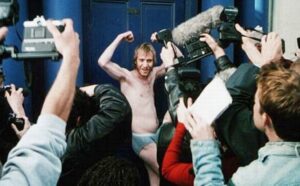
My favorite complication is one from Notting Hill when Spike is standing outside in his underwear strutting around with the paparazzi going wild for a peek at Anna Scott. How could Anna and William ever expect that complication? — Kiffer Brown
A complication from Notting Hill
Midpoint Reversal | A NaNoWriMo Must
The middle of a novel comprises more than half its length. At about the midpoint of most novels, a dramatic reversal occurs. The hunter becomes the hunted; a second murder occurs proving the detective has been wrong in his suspicions; a former lover arrives in town to complicate a budding romance. In Jessica Brody’s Save the Cat! Writes a Novel, she describes the midpoint as either the false victory or the false defeat. No matter what happens, the hero is in for a surprise! This reversal keeps the middle from bogging down and becoming predictable and also breathes new life and often a new direction into the story.
Every story needs an ending that satisfies the reader while concluding the plot. A satisfying ending does not have to be “happy” or victorious or riding off into the sunset. The final scenes, when the tensions are red hot and the character has reached a point of no return, must deliver drama, emotion, yet a logical conclusion. This is not to suggest that every plot ends with a shoot-out or physical confrontation. Some endings are quieter, more thoughtful. Some endings are ambivalent, some a dramatic or a violent clash of wills. However, there is always a sense that all the forces that have been operating in your story world have finally come to a head and the protagonist’s world is forever changed.
We are cheering you on to the NaNoWriMo Finish Line! You can do it!
Jessica Page Morrell
Keep writing, keep dreaming, have heart. Jessica
Jessica Morrell is a top-tier developmental editor and a contributor to Chanticleer Reviews Media and to the Writer’s Digest magazine. She teaches Master Writing Craft Classes at the Chanticleer Authors Conference that is held annually along with teaching at Chanticleer writing workshops that are held throughout the year.
Kiffer Brown
Keep creating magic! Kiffer
Kathryn (Kiffer) Brown is CEO and co-founder of Chanticleer Reviews and Chanticleer Int’l Book Awards (The CIBAs) thatDiscover Today’s Best Books. She founded Chanticleer Reviews in 2010 to help authors to unlock the secrets of successful publishing and to enhance book discoverability. She is also a scout for select literary agencies, publishing houses, and entertainment producers.
When you’re ready, did you know that Chanticleer offers editorial services? We do and have been doing so since 2011.
Our professional editors are top-notch and are experts in the Chicago Manual of Style. They have and are working for the top publishing houses (TOR, McMillian, Thomas Mercer, Penguin Random House, Simon Schuster, etc.).
If you would like more information, we invite you to email Kiffer or Sharon at KBrown@ChantiReviews.com or SAnderson@ChantiReviews.com for more information, testimonials, and fees.
We work with a small number of exclusive clients who want to collaborate with our team of top editors on an on-going basis. Contact us today!
Chanticleer Editorial Services also offers writing craft sessions and masterclasses. Sign up to find out where, when, and how sessions being held.
A great way to get started is with our manuscript evaluation service, with more information available here.
And we do editorial consultations for $75. Learn more here.
If you’re confident in your book, consider submitting it for a Editorial Book Review here or to one of our Chanticleer International Awards here.
Our 10th Anniversary Chanticleer Authors Conference (CAC22) will be April 7-10, 2022, where our 2021 CIBA winners will be announced. Space is limited and seats are already filling up, so sign up today! CAC22 and the CIBA Ceremonies will be hosted at the Hotel Bellwether in Beautiful Bellingham, Wash. Sign up and see the latest updates here!
Writer’s Toolbox
Thank you for reading this Chanticleer Writer’s Toolbox article.
You’re handing your precious book over to a beta reader to see if it’s worthwhile, ready, perhaps, for a Chanticleer Book Review or to be entered into the Chanticleer Int’l Book Awards. They look at you over the cover that you worked so many long hours on with your designer and say with all the authority of fate: “I just don’t think your main character is very likeable,” they say. “Can’t you make them more likeable? All characters should be likeable.”
Are your grumpy readers right?
Writer, they are wrong
You can of course have an unlikeable main character! If they were only willing to read for ten minutes though, you may have a more difficult problem on your hands than whether or not your character is someone they want to be friends with. Some of the most compelling characters in literature aren’t someone I’d want to share a hotel room with anytime soon.
We can sleep in separate bedrooms. Really, it’s okay.
The key isn’t to worry about whether or not your protagonist is “likeable” (which is a tricky word to define), but about whether or not they are interesting.
Are the actions they take moving the plot forward while engaging the reader at the same time? Those two things must be true of anything that happens in your story.
Manuscript Overviews and Editing
Now, if the majority of your readers are coming back to you and letting you know these early drafts aren’t working, we highly recommend a Manuscript Overview.A manuscript overview (MOV) is a broad overview of your manuscript – what’s working and what isn’t from all aspects of your story: structure, plot, pacing, character development, dialogue, etc. We are here to offer our guidance on what you need next. Save time and money by honing your work before you begin the editorial process.
Here, we’ll go through a few basic checks to make sure that your character is compelling.
On Writing Compelling Characters
There are a few questions you’ll want to ask to see if your complex character is someone who will grab your reader’s attention.
What is the Status Quo your character inhabits?
What is your character’s Desire?
How does the Conflict impede the character’s Desire?
Speaking of Secondary Characters, Severus Snape, Professor of Potions from the Harry Potter series is a prime example of uncompelling compelling character.
Severus Snape
Status Quo
This is the classic way you engage readers with your story. The story is introduced, and something happens to break the status quo. One story where this jumps to mind is Neal Stephenson’s Seveneves. With cannibalism and the end of the world, there’s no lack of unlikeable characters in this book, but all the characters rivet your attention.
Seveneves begins with the moon blowing up. Well, more accurately, with it being split into four pieces. Up until the catalyst (the breaking of the status quo), the four chunks of the moon are a point of fascination, friendly enough to have one chunk named “The Bean.” Then the status quo changes when one of the moon chunks hits another and they start to fragment even more. This gives all the characters a goal to work for: Save the Human Race. Having a strong focus for your characters will help readers empathize with them and want to know what’s happening.
Our favorite editor Jessica Morrell has an excellent article detailing even more ways to stir up trouble for your characters here.
Character Desire
Similar to the breaking of the status quo, your characters will all want something different out of the world you’ve written them in. Of course, like the breaking of the status quo, this problem won’t be easy for them to solve.
Tom Ellis as Lucifer from Netflix
There are two common methods of frustrating your character’s ability to achieve their desire. The first is simply to make it difficult to do. Anything that takes a lot of work and will make them struggle. The other excellent choice is to have them try to solve the wrong thing. So often characters misunderstand what will make them happy or they struggle to find the correct solution to their problem. By having them do the wrong thing, the reader will be able to enjoy a much more interesting story than an unlikeable person succeeding at everything they do and never growing or developing.
Cats
Who doesn’t love cats? We love cats at Chanticleer, that’s for sure!
The newest additions to the Chanticleer family: Tiefen and Biscuit at 15-weeks-old
Now the connection between cats and what to do with your unlikeable character might not be immediately clear, and it might sometimes be a metaphor rather than an actual cat. The tried and true advice is you have a character who might be a little rough around the edges save a cat early on in the story. This shows that, despite their flaws, they do care about the world around them, and they will help a creature in need. Of course, this doesn’t have to be a literal cat, but it’s something sweet the character chooses to do without being pressured.
For those of you in The Roost, Chanticleer’s online community, you know that we have been reading SAVE THE CAT, WRITES a NOVEL by Jessica Brody (based on the screenwriting books by Blake Snyder) in our Writing Craft Book Group. There is even a reading guide by Chanticleer’s David Beaumier uploaded to the activity feed.
The opposite can happen too! In Lower Decks, the irreverent Star Trek cartoon that’s currently playing on Paramount+, Beckett Mariner kills a holographic character to establish herself as the villain in a fantasy program she designed.
Beckett Mariner as Vindicta in “Crisis Point” from Star Trek Lower Decks
It’s fairly easy to flip through the first pages of your book to see if there’s a cat who your narrator can save in the early pages of your work, and then see if you can find a few beta readers to poll on their feelings.
To consider more of the timing and development of plot in relation to your characters, review this article here.
“There’s no such thing as writer’s block or plotter’s block. There’s only perfectionist’s block.” Jessica Brody
Go forth and write!
When you’re ready,did you know that Chanticleer offers editorial services?We do and have been doing so since 2011.
Our professional editors are top-notch and are experts in the Chicago Manual of Style. They have and are working for the top publishing houses (TOR, McMillian, Thomas Mercer, Penguin Random House, Simon Schuster, etc.).
If you would like more information, we invite you to email Kiffer or Sharon at KBrown@ChantiReviews.com or SAnderson@ChantiReviews.com for more information, testimonials, and fees.
We work with a small number of exclusive clients who want to collaborate with our team of top-editors on an on-going basis.Contact us today!
Chanticleer Editorial Services also offers writing craft sessions and masterclasses. Sign up to find out where, when, and how sessions being held.
A great way to get started is with our manuscript evaluation service, with more information availablehere.
And we do editorial consultations for $75. Learn morehere.
If you’re confident in your book, consider submitting it for a Editorial Book Reviewhereor to one of our Chanticleer International Awardshere.
Also remember! Our 10th Anniversary Chanticleer Authors Conference (CAC22) will be April 7-10, 2022, where our 2021 CIBA winners will be announced. Space is limited and seats are already filling up, so sign up today! CAC22 and the CIBA Ceremonies will be hosted at the Hotel Bellwether in Beautiful Bellingham, Wash. Sign up and see the latest updates here!
Writer’s Toolbox
Thank you for reading this Chanticleer Writer’s Toolbox article.
This Chanticleer article is a little more personal than most. Normally we speak generally, but sometimes you can’t replace a good ol’ personal anecdote.
Haruki Murakami:“Writing a long novel is like survival training.”
Barbara Kingsolver: “I have to write hundreds of pages before I get to page one.”
Jodi Picoult: “You might not write well every day, but you can always edit a bad page. You can’t edit a blank page.”
Diane Gabaldon:“Writing is an active skill; the only way to learn is to do it, to actually sit down and write every day.”
With all this in mind, I want to talk here about my experience taking the advice of Rachel Aaron/Rachel Bach from her article “How I Went From 2,000 Words a Day to 10,000 Words a Day.” Whenever I see a new idea for improving writing, I try to play Peter Elbow’s “The Believing Game.” The Believing Game, in short, is an exercise where you ask yourself what would happen if you accepted a particular suggestion as true, and then practice acting as if it were true and seeing what happens as a result.
This man believes!
1. Track where you write.
This was the one I thought was the silliest. During a pandemic, I don’t write anywhere except my bedroom/office, the kitchen, or the living room. However, when I really pay attention to where I write best, I notice a few things.
First, I write well in groups, even if that’s just online at the Roost (Chanticleer’s Online Community) doing writing sprints with friends and the help of Sprinto. Generally, timers help me quite a bit in my writing, because they give me permission to ignore the rest of the world until the timer goes off.
Coffee Klatch Write In is held at the Roost on ZOOM. The next Write-Ins are currently scheduled for Tuesday mornings. However, any Roost member can set up a Write In group to accommodate their time zones—which is handy since Roost members live across North America and around the globe.
Check us out!
We meet up once a week to do some writing. Usually folks join, we chat about what we’re working on for 10-15 minutes, and then dive in to work! Light conversation and the Chat are excellent ways to check in.
Tuesday, Sept. 28, 2021 from 10 a.m. – Noon PST
Tuesday, Oct. 5, 2021 from 10 a.m. – Noon PST
Tuesday, Oct. 12, 2021 from 10 a.m. – Noon PST
I also found out, weirdly enough, that my most productive space is not my desk where I work from home and play videogames, but rather on my futon with plenty of pillows for back support using my laundry basket as a desk.
I don’t know what the magic is, but I really like working on this laundry basket. -DB
I have no idea what it is about these factors. Maybe it’s the giant stuffed pig that’s my quarantine companion, but that’s where I am happiest and most productive. The second-best place is at the dining room table with the roommate’s dog hanging out.
Maya Angelou passed away on May 28, 2014. She preferred writing lying down and leaning on one elbow.
Maya Lou Angelo rented hotel rooms for a few months at a time in her hometown. She would have the management move all of the paintings and decorations out of the room. Also, they were not allowed in to clean or straighten just in case she had thrown away piece of paper with writing on it that might later prove to be useful. Ms. Angelo said that she would head to around 6:30 in the morning and hang out there until about 2:30 then she would head home to edit. The hotel room was creating and writing only. She would average 10-12 pages of written material a day. She would then edit these pages down to three or four pages in the evening at her home.
“Nothing will work unless you do.” Maya Angelou
2. Track when you write.
This next suggestion helps you learn when you are most productive. I have always dreamed of being that person who wakes up at 5am, reads for two hours, writes about what I read for another two hours, and then eats breakfast and jumps into amazing creative work. It would help if I didn’t need at the very least thirty minutes to drag myself out of bed.
NaNoWriMo this year gave me a strong reset to my writing habits. Having the regular goals made me prioritize my work, and being in quarantine removed many of the distractions I usually have. The deep dive even gave me some great community locally and on The Roost that I’m still holding onto.
Things that I ask myself when tracking:
What Project am I working on?
When did I start?
When did I finish?
What was my general mood?
How many pages/words did I get through?
Where did I write?
Additional notes
Doing NaNoWriMo this last November, I’ve finally discovered that while I can sit down and do paid work at almost any time, I do my best creative writing between 8-11pm. This is tricky, because that’s when most people want to hang out, but I can usually make late afternoon work well, too. The times that don’t work for me?Anytime before 11am. I can always do brainstorm work, but if I want to do writing I’m happy with and make progress in a story, I need to set aside some time in the evening.
This isn’t so much how much time you make to write (though that can help). It’s also about how much writing you do in a particular amount of time. Generally, I write 250 words every 15 minutes. I also write about 250 words every 30 minutes. Depending on how I time myself, I come out with a different amount. Likewise, if Aaron/Bach (from the opening paragraph) sits down to write for only an hour, she writes about 500 words. However, if she sits down to write for 5 hours, she can manage 1500 words in that same hour! The amount of time we know we can get lost in the work affects us each differently.
Looking for more advice regarding what to do with your NaNoWriMo? See this article Chanticleer posted in November here.
3. What do you write on?
Rather than the material (desk, floor, laundry basket), this means more to the tools you use to write. Referring back to Aaron/Bach, I write different places for different things. When I first started at Chanticleer (and I still do), took and kept notes in a journal about how things work here. There are a lot of moving parts and “under the hood” technology here at Chanticleer. I’ve noticed that Kiffer carries around a small black notebook and old school small planning calender even though we use Google Calendar apps and the latest digital management apps (hat tip to Argus Brown) here at the home office of Chanticleer.
Using my journal is also handy for our weekly brainstorming meetings. I find that I can generate 7 “ideas” in ten minutes if I am utilizing my trusty journal instead of my laptop. Now, very little of a full article or project would come out this exercise. It’s just brainstorming and laying out my ideas some place where I can keep track of them until I can work on the details. But it works! I’ve noticed that I have much more trouble brainstorming on a computer where the cursor blinks at me with menace and mocking intent.
The mocking cursor and time flying by.
The other thing that drives me up the wall when trying to brainstorm on a computer is there are so many distractions. If I have an idea, I can focus in, but if I’m casting around for thoughts, I’m open to the world, and the internet adores it when I’m open to suggestion. Somehow social media rarely helps me generate ideas for any type of writing.
Now, of course, once I’m running with an idea, I love the speed that I can put words down and edit when I type rather than scribble. Plus, my writing is always legible on a computer.
4. Mood
You know how it is, you’re in a bad mood, you need to do your writing, you sit down to do the work, and you get maybe half what you usually do done. What if that’s a pattern that you can predict? For me, knowing that when I sit down and I’m grumpy that my roommates haven’t wiped down the counters after cooking spaghetti (my first thought always being there has been a murder in my house), or maybe someone has said something mean on social media (somehow social media always features as an obstacle to writing).
5. Where will the story go next?
EL Doctorow famously said, “Writing is like driving at night in the fog. You can only see as far as your headlights, but you can make the whole trip that way.”
While you probably have written down the broad strokes of what happens at the beginning, middle, and end of your story, it’s important to keep other ideas in mind.
I felt good seeing Aaron/Bach suggest this, as it’s been a longtime habit of mine to sketch out what I want to happen next after I bring a writing session to a close. Since I write late, often this is the point where I feel like I really need to sleep, I’ll do a brief summary of how I see the rest of the text going, and if any strong images come to mind, I’ll write those down as well, hoping to use them as the story goes on.
When I return and see those notes, I simply delete them as I write the scene it suggests, keeping my notes clean and easy to read for what comes next. With the images I can even copy and paste them directly into the work as the place I think they’ll fit best appears on the page.
6. What are you excited about in the story?
I just started editing the first draft of a novel I finished in October. One of the big critiques my writing group gives me is that the conflict doesn’t start soon enough, which I thought was ridiculous!
In the first chapter, my YA protagonist has the 3-person panel for his high school senior project possessed by a conduit of 100 dead souls who he has promised to guide from Limbo into Heaven! What could be more intense than that?!
However, in rereading the work with fresh eyes I notice that my characters eat. A lot.
Now, this is probably from my great love of all breakfast foods and missing going out to restaurants, but everyone in this book can’t get to any scenes because they’re too busy giving light exposition at The Old Spaghetti Factory. As I go through, I find myself skipping these scenes to get to the next on, which tells me that, yes, they are not exciting. If as the writer I don’t care about a scene, it needs to go. If there’s key information I feel like is in that scene, I write it down separately and keep an eye out for the right place to insert it, rather than dragging the reader through yet another pointless meal—even if I am craving a Dutch baby with powdered sugar, cinnamon, maple syrup, and fresh fruit. Maybe with a side of breakfast sausage. Mmm. And hmmm.
Dutch Baby with fruit and powdered sugar on it
7. Review your information
So, for me, what I’ve learned is that I write best in areas where I can be comfortable and don’t have easy access to videogames. I like having friends, either virtual, stuffed, or furry, because then I feel like I’m accountable to someone, even if they only want to listen to me brainstorm when I’m giving them pets.
I am officially an evening person. I love mornings for relaxing, watching the bay, drinking coffee, and making extravagant breakfasts. If you haven’t made yourself Spanish tortilla, it’s easier than you’d expect—give it a try.
A few times a week I need to set aside my evenings for creativity, and that means no Mandalorian with the roommates (sorry Baby Yoda) or virtual game night with friends. If they want to hang out, they can come co-work (write) with me.
I do my starting work in a journal of some sort, and then I do the writing work on a computer. Editing and marketing work also happen on computers, mostly out of necessity and the predominance of the internet.
I am gentle with myself when in a bad mood. Rather than lamenting that I couldn’t do as much as the day before or the week before, I remind myself that creativity is a process, and that even though I was in a bad mood I put in the time today, and that habit counts for more than any single day worth of word count.
I write best when I can work from notes that show me what scene I’m most drawn to write about next in my story. That lets me stay focused on excitement as I go through the work.
Finally, now that you can figure all this out for yourself, protect the things that let you write. They’re the loveliest tools you can give yourself.
8. Set goals
Nailed it
Ask yourself what your stretch goals are, and what goals are you confident you can meet. Go back to your goals periodically. Do they need to be adjusted for where you are in your w-i-p (work in progress). Editing requires a different focus than plotting. Plotting requires a different mind set than creating your characters or atmosphere.
What are your methods and writing habits?
We’d love to hear from you! What spurs you on? What trips you up?
Examine your own life to best see how you can maximize your own productivity and be the author you want to be!
Maybe this is getting something to the point where you can use one of our many Chanticleer services, from the Manuscript Overview, to the Editorial Book Review, to testing the mettle of your work in the Chanticleer Awards. Whatever goals you set, make sure that you keep your gaze on meeting them as you write!
Speaking of the Chanticleer Awards, did you know that we’ll be announcing the Finalists, First Place Winners, and Grand Prize Winners at our Tenth Anniversary Chanticleer Authors Conference (CAC22)? The CIBA Ceremonies will run in tandem with them from April 7-10, 2022! We’re optimistic we will be able to see you in person at the beautiful Hotel Bellwether here in Bellingham, WA.
Writer’s Toolbox
Thank you for reading this Chanticleer Writer’s Toolbox article.
Structure, Conflict, & Beats — Bringing it All Together
Conflict is key to any story. Even if the stakes are low and the show is purportedly about nothing, like in Seinfeld, the characters are motivated and pushed through new changes. As writers continually produce work, we are always revisiting the ways in which we understand writing.
The Cast of Seinfeld – A Series about Nothing
One of the newest, most popular writing craft books is Jessica Brody’s Save the Cat! Writes a Novel, which promises to be the last book you’ll ever need for novel writing, but one can never have too many books, especially on craft.
At Chanticleer, We Love to See Story Come to Life
The biggest feedback we give to authors in our Awards or for our Editorial Reviews is that, while the story was well-written and error-free, there was not much actual story that happened in it. For that reason, we always recommend that authors commit to a Manuscript Overview to make sure they’re heading in the right direction with their Work in Progress. Read more about those here.
So We’re Talking About Dialogue Beats Here?
If you’re interested in making your dialogue sing, that’s wonderful, and we recommend you do work to make sure all that interstitial tissue in your book is doing what it needs to do, but this toolbox article will focus on the overarching structure questions in terms of beats. If you’re interested in reading more about dialogue mechanics this article here from Margie Lawson has some great suggestions on language and beats!
Beats not beets!
We Are Talking About Conflict
Conflict is the engine that motivates a book. It doesn’t need to be zombies coming to destroy the world, but it has to be your main character’s desire for change (which often isn’t really their true desire at the start of the story). What we’re going to look at here is the way characters are motivated and approach the ending theme as they move through the book.
Save the Cat really shines in the way it points out that characters are often given the answer to all their life’s troubles early on, but they resist it throughout the story. One great example is Benjamin Sisko at the start of Star Trek: DS9.
When Sisko arrives on Deep Space Nine to take command of the station, all he wants is to keep running from the past with his son Jake. He doesn’t realize that this assignment is the beginning of his journey to healing from the terrible trauma of losing his wife two years ago. All the tools are there for him to create a home where he is, but he doesn’t understand this until maybe Season 5 of the show, and by that point, his desires have totally morphed in response to the environment he found himself in.
Captain Benjamin Sisko of Deep Space Nine (of the Star Trek Universe)
As Sisko moves from season to season, we see each point of growth and story structure as beats from which he grows and changes.
Story Structure as Beats
First off, what are beats?
Think about white space in a sketch for a painting. All the lines that make up the body of the work are the dialogue of your piece–it gives the plot, characters, and conflict a structure to work within. The beats are the color that fills it in, showing the reader a complete picture of what’s taking place. As you write, ask yourself if you’re better at overwriting and then trimming back or underwriting and fleshing out. Play to your strengths for your first draft, and then come back ready to adjust for any areas you know you’ll be weak.
Worth Repeating
As you write, ask yourself if you’re better at overwriting and then trimming back or underwriting and fleshing out. Play to your strengths for your first draft, and then come back ready to adjust for any areas you know you’ll be weak. David B.
Let’s look at the overall structure of a book
Let’s start out with Save the Cat. In this book, Brody breaks out most plots to follow the following Structure:
Opening Image
Theme Stated
Catalyst
Break into 2
B Story
Midpoint
All is Lost
Break into 3
Final Image
Each of these big sections is subdivided into categories based on how many scenes move it forward, which are further defined as multi-scene beats or single scene beats. Some of them are obvious, like the Opening Image and Closing Image tend to be a single scene beat where we get in and fulfill that need for the writing, and then get out. While most of these make sense just by glancing at them (or you can figure out that Catalyst is another way of saying The Inciting Incident), here’s a quick guide to some of the wonkier names from Save the Cat.
Break Into 2 & Break Into 3
This refers to Acts 2 and 3 of your story. Brody focuses on the 3 Act structure for novel writing, which does fit the majority of work out there. For differing ideas on how to structure a book, be sure to check out our article here.
The focus for the Break Into parts is on marking a clear delineation between your Acts. An example Brody uses is Jane Eyre, with Act I being her mistreatment and time at school, Act II being her role as governess for Mr. Rochester, and Act III being her escape from St. John and return to Mr. Rochester as an independent woman.
B Story
Often the introduction of B Story introduces the character who will help your protagonist learn the theme or lesson that they will need in order to grow properly by the end of the story. They are a helper-character who represents the new world of Act II that your main character enters. Keeping with Jane Eyre, Mr. Rochester is a foil to Jane’s meekness that forces her to stand up for herself and push back against his rude brashness, pushing her to change.
Mia Wasikowska and Michael Fassbender in the 2011 Jane Eyre film – Charlotte Bronte 1847
Clear as Mud?
Rather than write out all of Save the Cat, Jessica Brody has already mostly done it for you here. And Brody isn’t alone in having great ideas of how to look at the intersection of conflict and structure!
Click on the link above to read more about Brody’s 15 Beats of Story Telling. We are not affiliates of Brody or Wolf 359, but we are passionate about sharing the best tools with Chanticleerians. Kiffer
There is a wonderful breakdown of story structure that is quite similar written by Gabriel Urbina to describe the story structure for the brilliant SciFi podcast Wolf 359, written by Urbina, Sarah Shachat, and Zach Valenti. You can read his breakdown of the story structure here and learn more about Wolf 359 here.
Our own Jessica Morrell, of course, has a brilliant take on Story that focuses more on different aspects such as character, structure, and plot which can be found here.
Beat Sheets Will Meet You Where You Are
The great thing about this tool is you can use it to plot out the work you’re planning or to analyze the work that you have. Brody’s cheat sheet linked above even offers general percentages on how long each section of the Save the Cat structure should take. Remember that different genres have different typical lengths, and keep those lengths in mind as your write and plot. And, as always, the work is yours; these are just guidelines, not hard and fast rules for success.
Chanticleer Editorial Services – when you are ready
Did you know that Chanticleer offers editorial services?We do and have been doing so since 2011.
Tools of the Editing Trade
Our professional editors are top-notch and are experts in the Chicago Manual of Style. They have and are working for the top publishing houses (TOR, McMillian, Thomas Mercer, Penguin Random House, Simon Schuster, etc.).
If you would like more information, we invite you to email Kiffer or Sharon at KBrown@ChantiReviews.com or SAnderson@ChantiReviews.com for more information, testimonials, and fees.
We work with a small number of exclusive clients who want to collaborate with our team of top editors on an ongoing basis.Contact us today!
Chanticleer Editorial Services also offers writing craft sessions and masterclasses. Sign up to find out where, when, and how sessions being held.