Author: christie-nicholls

  • Spotlight on the 2021 MARK TWAIN Book Awards for Satire & Allegory

    Spotlight on the 2021 MARK TWAIN Book Awards for Satire & Allegory

    A cackle, a hoot, a snort

    You wish the group across the room was laughing about your book.

    The Deadline for the Mark Twain Book Awards is fast approaching!

    It might seem odd, but Franz Kafka and his friends reportedly sat around at bars reading excerpts of The Metamorphosis with tears of laughter streaming down their faces.

    Franz Kafka staring seriously into the camera
    Franz Kafka (1883-1924)

    While he might not seem like a natural pairing with Mark Twain, Kafka certainly had a sense of humor. We may not quite understand his early 1900s thought process that would cause him to need to stop in the middle of reading “The Trial” due to laughing so hard (read more from The Guardian here), but we definitely can still appreciate a healthy dose of humor.

    Fun Fact: Franz Kafka’s writing was known to deal with modernism, existentialism, Surrealism, and is considered a precursor to magical realism. Despite his fame, he never finished a single novel (unless you count The Metamorphosis as a short novel).

    The Mark Twain Awards, named after the famous satirist, are still a fairly new division of The Chanticleer Int’l Book Awards. You can see a full write up on Mark Twain’s relationship with Bellingham, WA here.
    Do you have a book that features Humor, Satire, or Allegory? Submit it here before the end of November to be entered into the 2021 Mark Twain Book Awards!

    Let’s do a quick breakdown on the three main categories of Mark Twain books.

    Satire: The Dangerous Tool

    Probably one of the most difficult genres to write in, Satire can have trouble with rubbing people the wrong way. One of the most commonly known pieces of satire is “A Modest Proposal” by Jonathan Swift, made ubiquitous by English courses teaching it for decades. You can read the full essay here.

    Gulliver being held down by the Lilliputians
    Jonathan Swift is best known as the author of Gulliver’s Travels. Above, Gulliver is restrained by the Lilliputians

    The essence of it is that Swift proposes eating Irish children instead of feeding them, as it will save more money for England in the long run, and cause less suffering for the kiddos in the long run. This obvious, garish suggestion highlights the ways in which England may as well be eating the children in a way that both shames those who have acted poorly, and serves as a call to action to offer better care to the poor.

    Of course, MasterClass.com has an excellent definition at the ready for us:

    Satire in literature is a type of social commentary. Writers use exaggeration, irony, and other devices to poke fun of a particular leader, a social custom or tradition, or any other prevalent social figure or practice that they want to comment on and call into question.

    Contemporary writers have used satire to comment on everything from capitalism (like Brett Easton Ellis’s American Psycho, which uses extreme exaggerations of consumption, concern with social status, and masculine anger and violence to skewer American capitalism) to race (Paul Beatty’s The Sellout, for example, features a young black male protagonist in Southern California who ends up before the Supreme Court for trying to reinstate slavery).

    The word Satire filled with newspaper clippings

    As you can see, satire is a sharp tool that must be wielded carefully to avoid cutting yourself on accident. A good rule of thumb when writing satire to always aim at those who are in power. Trying to poke fun or ridicule people who are already disadvantaged or targeted in some way will often leave a bad taste in your audience’s mouth, and that’s the fastest way to have your book closed.

    Here are some classic examples of Satire:

    • Matt Groening – The Simpsons, Futurama
    • David Sedaris – Naked, Me Talk Pretty One Day
    • Chuck Palahniuk – Fight Club
    • Douglas Adams – The Hitchhiker’s Guide to the Galaxy
    • Kurt Vonnegut – Slaughterhouse-Five
    • Evelyn Waugh – Brideshead Revisited
    Newspaper Clipping of Grandpa Simpson Yelling at a cloud
    “Get outta my sky!”

    Now let’s talk allegory.

    Allegory: Not Just for Kids!

    When you want to talk around something or use a stand in to describe it you might try allegory.

    Margritte's painting of a pipe, appropriately labeled as not a pipe
    What is Allegory? Not quite this…

    Of course, MasterClass.com has yet another definition at the ready for us:

    The word “allegory” comes from the Latin “allegoria,” meaning speaking to imply something else. An allegory is a simple story that represents a larger point about society or human nature, whose different characters may represent real-life figures. Sometimes, situations in the story may echo stories from history or modern-day life, without ever explicitly stating this connection.

    Allegories are similar to metaphors in that both illustrate an idea by making a comparison to something else. However, allegories are complete stories with characters, while metaphors are brief figures of speech.

    Note: We are not affiliated with MasterClass in any way, we simply believe in sharing our sources, and they do great work with genre definitions.

    Cover of Aesop's fables, featuring donkies, mice, lions, and foxes to name a few

    One popular example of allegory is Aesop’s Fables. As you may know, the fables tend to follow animals as they make decisions regarding moral dilemmas, and then face the consequences – whatever those may be. Of course, those moralistic fables directed at children always run the risk of sounding paternalistic. Here are some great examples of allegory:

    Allegory examples

    • Chaucer’s The Canterbury Tales
    • George Orwell – Animal Farm, 1984
    • Frank Baum’s – The Wonderful Wizard of Oz
    • Arthur Miller – The Crucible
    • C.S. Lewis – The Chronicles of Narnia

    Finally, we have Humor.

    Humor Writing

    The key to humor writing is simple: it should make you laugh! There are countless different takes on what makes something funny – just try watching someone explain humor to the android Data in Star Trek.

    Data laughing at his ops console
    Data experiencing laughter for the first time as a gift from the omnipotent being Q

    So rather than go on too long, we’ll share our Editorial Reviews of books that make us laugh!

    Arnold Falls
    By Charlie Suisman
    Grand Prize Winner in Mark Twain Awards
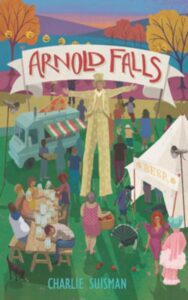
    Cover of Arnold Falls by Charlie Suisman

    Charlie Suisman’s debut novel is a wonderful escape to a small fictional community in upstate New York. Here a melting pot of quirky residents brings Arnold Falls to life, a town with a unique history and charming inhabitants whose lives are intimately intertwined.

    Settled in 1803 by the unscrupulous Hezekiah Hesper, the town for unknown reasons was named after Benedict Arnold. Adding to the oddities, the closest waterfall is twenty miles away. The area is known for sudden bursts of crab apple-size hail pelting the landscape without any scientific explanation. Hence the incentive for “Hail Pail Day,” a neighborly tradition surrounding the distribution of galvanized bucket head-coverings.

    Read more here!


    My Only Sunshine
    By Lou Dischler

    Lou Dischler delivers an intricately woven story about one well-meaning boy who tries to make sense of the crazy he’s been born into. Get ready for one belly laugh of an adventure in My Only Sunshine.

    Welcome to the Louisiana low country, home of 9-year-old Charlie Boone, a kid growing up in 1962. Charlie, a most unreliable narrator, concerns himself with giant wingless wasps and biting red velvet ants. Combine his critter-concerns with the legend of the giant slugs, the story of his mother taken up by a hurricane, and the episode of the puddle he and his brother dug that grew into a pond, then turned into a lake, and we have one wildly imaginative ride well-worth taking.

    Read more here!


    Elephants in my Room
    By Christie Nicholls

    A bitingly funny collection of life-stories from Christie Nicholls – stand-up comedian, actor, and writer – made all the more piquant by her repeated insistence that she has no short-term memory. Fortunately for us, her long-term reminiscences more than make up the deficit.

    Nicholls has divided the book into four parts. In the first, “A Broad Abroad,” she recalls her experiences of traveling to far-flung places, beginning with a summer in Belém, Brazil as a child. She and her brother, for some reason nicknamed Beluga, slept in hammocks and played in a swimming pool, but much of her cherished time involved a German Shepherd named Ferdinand, from whom she learned dog talk. Raucous family bowling in Bologna, Italy, is contrasted with attendance at a staid English wedding. At a later period, Nicholls and her mother went to Sweden, where the budding comic tried her hand at stand-up in newly acquired Swedish, leading to an amusing mix-up of jargon.

    Read more here!


    Blazing Bullets in Deadwood
    By Jacquie Rogers

    Honey Beaulieu is going to get her man–no matter how many tries it takes. Determined to capture the elusive Boyce McNitt, Honey is off to Deadwood Gulch despite the warnings that the dangerous road is plagued by thieves and natives.  But before she can pursue the $500 bounty, she needs to take care of issues at home, including finding a shop for a pregnant seamstress, sixteen-year-old Emma, a home for eight-year-old Myles Cavanaugh, his two younger sisters, and their pregnant mother. Between her do-gooding, denying her blossoming feelings for Deputy US Marshal Sam Lancaster, and a run-in with a herd of escaped pigs determined to destroy Fry Pan Gulch, Honey barely has time to get out of town before she gets trapped by winter. Once on the road, she comes face-to-face with Sean Chaney, the Badger Claw Kid, a bounty worth $400, and is intent on capturing him, as well. With a little otherworldly, albeit not entirely helpful, advice from her ghost guide Roscoe, Honey will have to take down two dangerous fugitives. But, when she runs into a fireball-throwing ghost bent on revenge, her real adventure begins.

    Kiffer loves the undercurrent of a Shakespearean slant to Jacquie Rogers’ works. Sublime.

    Read more here!


    Ruth 66
    By Elizabeth Barlo

    When a banged-up old bus pulls into his family’s driveway, Charlie has no idea that the rattling junker would be his ride to freedom. For years he’d been suffering under the thumb of a cold-hearted mother and a vindictive twin sister, while his father languished behind bars for tax fraud. The only family member with whom the young man held a loving bond was his grandfather, Opa Bill. Since Bill’s recent death, Charlie has been holding it together by listening to the music he and his grandfather loved. That musical thread weaves its way throughout the story as a sort of narrative jukebox.

    Now Charlie’s respectable Oma Ruth has careened back into his life in a shocking new incarnation: a freewheeling hippie in kaftan and beads, unafraid to swap barbed words with her appalled daughter, nor to insist that Charlie accompany her on her road trip. He’s dead-set against it – he’d just found his dream job at a record store – and is disgusted when his mother dumps him on her mother without hesitation.

    Read more here!


    Have a laugh out loud story? Submit before the end of Novemberfor the 2021 CIBAs! 
    A blue and gold badge for the 2020 Grand Prize Winner for Mark Twain Humor and Satire Arnold Falls by Charles Suisman

    See the 2020 Mark Twain Book Award Winners here!

    When you’re ready, did you know that Chanticleer offers editorial services? We do and have been doing so since 2011.
    Our professional editors are top-notch and are experts in the Chicago Manual of Style. They have and are working for the top publishing houses (TOR, McMillian, Thomas Mercer, Penguin Random House, Simon Schuster, etc.).

    If you would like more information, we invite you to email Kiffer or Sharon at KBrown@ChantiReviews.com or SAnderson@ChantiReviews.com for more information, testimonials, and fees.

    We work with a small number of exclusive clients who want to collaborate with our team of top-editors on an on-going basis. Contact us today!

    Chanticleer Editorial Services also offers writing craft sessions and masterclasses. Sign up to find out where, when, and how sessions being held.

    A great way to get started is with our manuscript evaluation service, with more information available here.

    And we do editorial consultations for $75. Learn more here.  

    If you’re confident in your book, consider submitting it for a Editorial Book Review here or to one of our Chanticleer International Awards here.
    Also remember! Our 10th Anniversary Chanticleer Authors Conference (CAC22) will be April 7-10, 2022, where our 2021 CIBA winners will be announced. Space is limited and seats are already filling up, so sign up today!  CAC22 and the CIBA Ceremonies will be hosted at the Hotel Bellwether in Beautiful Bellingham, Wash. Sign up and see the latest updates here!

    Featuring Cathy Ace and Robert Dugoni!

    Writer’s Toolbox

    Thank you for reading this Chanticleer Writer’s Toolbox article.

    Writers Toolbox Helpful Links: 

    Kafka’s Jovial Side Revealed from The Guardian

    The MARK TWAIN Book Awards for Satire and Allegorical Fiction

    A Modest Proposal by Jonathan Swift

    What Is Satire? by MasterClass

    What Is Allegory? by MasterClass

    The traditional publishing tool that indie authors can use to propel their writing careers to new levels?  The Seven Must-Haves for Authors – Unlocking the Secrets of Successful Publishing Series by Kiffer Brown
  • April Fools’ Day — Humor, Satire, and Reading Recommendations | A Chanticleer Toolbox Article

    April Fools’ Day — Humor, Satire, and Reading Recommendations | A Chanticleer Toolbox Article

    April Fools’ Day is this week! Will you be a prankster or end up with egg on your face?

    An April Fools' Day Jester

    A surprisingly old tradition, historians trace the April Fools’ Day Celebration to the change in the calendar after the Council of Trent in 1563, moving the start of the New Year to January and beginning to celebrate Spring in late March rather than at the beginning of April. Those who were slow to adapt and celebrated the wrong holidays at the wrong time were knows as April Fools. For those of you who love a deep dive, you can read more here.

    Of course, there have been other traditions of dressing up in costumes and pranking people, but the real question we want to look at is what’s funny in writing?

    Humor Writing

     FREE Girl Hipster in Bright Clothes Laughing and Smiling

    At first blush, Chanticleer only has The Mark Twain Award that appears to cater to humor writing, but we all know that humor is key for almost any story. What better way to keep the reader engaged than those laugh out loud moments?

    Interested in learning more about the Mark Twain Awards? Click here for more information and here to submit!

    We can think of a few common times of humor in writing:

    • Satire (obviously)
    • Dark Humor
    • Situational Humor
    • Self-Deprecating Humor

    Let’s go deeper!

    Satire

    One of the big keys to Satire is to always punch up. Making fun of people who are already having a tough time often leaves a bad taste in the reader’s mouth.

    One classic example of Satire is George Orwell’s Animal Farm which critiques the fascist re-envisioning of Communism by Joseph Stalin through the lens of barnyard animals. This is a darkly told satire with the intention of speaking truth to power.

    For lighter Satire, you can always look at Saturday Night Live and see their most recent jokes about whoever holds political power in the US.

    Jim Carrey as Joe Biden from SNL

    Satire often ends up with someone adopting a role they don’t actually believe to expose parts of that belief that don’t hold up well, such as Jonathan Swift’s “A Modest Proposal.”

    Dark Humor

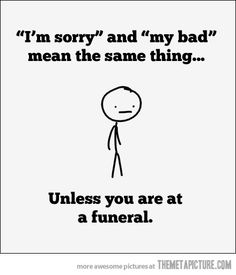
    Also known as Gallows Humor, Dark Humor looks at terrible situations and finds the irony in them.

    A stick figure saying "I'm Sorry" and "my Bad" mean the same thing...Unless you are at a funeral

    This often pops up when someone says “Well, at least it can’t get any worse!”

    Situational Humor

    This happens when the character’s position in a scene happens to be very funny. For example, in Who Mourns for Morn from Star Trek: Deep Space 9, the Ferengi bartender Quark is harangued by 4 different thieves, all looking for a cut of the estate of Quark’s best customer (now deceased). At one point, all four of them, not knowing the others are there, arrive in Quark’s quarters where he hides each of them from the previous until he has a full house!

    Quark at the center of attention with 4 phaser pistols pointed at his head
    Quark at the center of attention with 4 phaser pistols pointed at his head

    Self-Deprecating Humor

    This often can be seen in Non-Fiction work. Self-Deprecation can make people feel less intimidating and put the reader at ease with a speaker. Possibly one of the best examples of this comes from the prologue of a 1910 Calculus Textbook.

    Considering how many fools can calculate, it is surprising that it should be thought either a difficult or a tedious task for any other fool to learn how to master the same tricks. Some calculus-tricks are quite easy. Some are enormously difficult. The fools who write the textbooks of advanced mathematics—and they are mostly clever fools—seldom take the trouble to show you how easy the easy calculations are. On the contrary, they seem to desire to impress you with their tremendous cleverness by going about it in the most difficult way. Being myself a remarkably stupid fellow, I have had to unteach myself the difficulties, and now beg to present to my fellow fools the parts that are not hard. Master these thoroughly, and the rest will follow. What one fool can do, another can.

    Be careful though! A little Self-Deprecating Humor is a lovely introduction, but too much will quickly tire a reader out.

    Final Tips:

    Be Personal:

    You know what’s funny in your own life. Start there with retelling those stories to see how it works out.

    Subvert expectations:

    We’ve all seen cliches, and those have their place in all stories, but think about times when a scene did not go the way you expected. One great example is in The Last Jedi when Rey returns Luke’s lightsaber and he immediately tosses it.

    Rey offers Luke the Lightsaber
    Such hope immediately dashed

    Rule of Three

    This is one of the big places to subvert expectations. You offer two regular, expected ideas, and then follow it up with a third option that surprises

    Ex: “What are you up to today? Work? Day off? World domination?”

    Obviously, there’s often a little more time between the appearances.

    For more information on charging up your writing, consider this article on Rhythm and Cadence and Beats by Margie Lawson. 

    Chanticleer Book Reviews to make you laugh and cry

    INSYNNIUM by Tim Cole

    Grand Prize Winner for the Cygnus Awards

    The dramatic premise explored in a new novel, Insynnium, is a wild, immersive leap into a world-changing (but fictional) drug. In other hands, what could be a dystopian thriller goes one step further in author Tim Cole’s capable hands. He focuses on the humans who first discover and use the drug and weaves his story with a devilish charm.

    This is somewhat Bill Murray/“Groundhog Day” territory, a film exploring one man’s reliving a day in his life over and over until he learned new behaviors, new skills and came out of it a better man. Unlike “Groundhog,” Max McVista takes multiple doses of the drug against all advice, then somehow expands time itself in what he calls an “AUE” or “Alternative Universe Experience,” enabling him to spend months and sometimes years becoming or experiencing whatever he wishes. When returning real-time, he’s only missed a day or two. (For E=MC squared fans, it’s basically reverse engineering of Einsteinian physics.)

    Continue Reading Here

    EVIL UNDER the STARS by C.A. Larmer

    First Place Winner for the Mystery & Mayhem Awards

    Who commits a murder in a crowd of a hundred people relaxing in a park, and how did the Agatha Christie Book Club miss the entire thing from only a few feet away? In the trendy Sydney suburb of Balmain, Kat Mumford, social media interior design star, has been murdered during the inaugural Cinema Under the Stars. Her distraught husband, Eliot, is clearly the prime suspect, but at the time of Kat’s strangulation, he is nowhere near her. In fact, no one was sitting near Kat, and the crowd seems to have been so absorbed by the movie, Agatha Christie’s Evil Under Sun, that no one saw a thing out of the ordinary. 

    When Alicia Finlay and her book club realize the murder occurred right under their noses, there is no way they can just let the police handle it. When Alicia’s boyfriend, Detective Inspector Liam Jackson, actually calls her for information, she and her club decide to do a little investigating of their own. Despite being told to butt out, Alicia, Lynette, Claire, Missy, and Perry go undercover to find the killer, but the twists, in this case, will lead them down a strange path to find a crafty killer. The club must sift through the suspects: a smarmy barman, a detestable reverend, a pregnant domestic abuse victim, a mystery mustached man, a dead junky, and a hipster hubby. With few clues but many dead ends, the club will meet their most challenging mystery yet!

    Continue Reading Here

    ELEPHANTS IN MY ROOM by Christie Nicholls

    A bitingly funny collection of life-stories from Christie Nicholls – stand-up comedian, actor, and writer – made all the more piquant by her repeated insistence that she has no short-term memory. Fortunately for us, her long-term reminiscences more than make up the deficit.

    Nicholls has divided the book into four parts. In the first, “A Broad Abroad,” she recalls her experiences of traveling to far-flung places, beginning with a summer in Belém, Brazil as a child. She and her brother, for some reason nicknamed Beluga, slept in hammocks and played in a swimming pool, but much of her cherished time involved a German Shepherd named Ferdinand, from whom she learned dog talk. Raucous family bowling in Bologna, Italy, is contrasted with attendance at a staid English wedding. At a later period, Nicholls and her mother went to Sweden, where the budding comic tried her hand at stand-up in newly acquired Swedish, leading to an amusing mix-up of jargon.

    Continue Reading Here


    Chanticleer Editorial Services – when you are ready

    Did you know that Chanticleer offers editorial services? We do and have been doing so since 2011.

    Tools of the Editing Trade

    Our professional editors are top-notch and are experts in the Chicago Manual of Style. They have and are working for the top publishing houses (TOR, McMillian, Thomas Mercer, Penguin Random House, Simon Schuster, etc.).

    If you would like more information, we invite you to email Kiffer or Sharon at KBrown@ChantiReviews.com or SAnderson@ChantiReviews.com for more information, testimonials, and fees.

    We work with a small number of exclusive clients who want to collaborate with our team of top-editors on an on-going basis. Contact us today!

    Chanticleer Editorial Services also offers writing craft sessions and masterclasses. Sign up to find out where, when, and how sessions being held.

    A great way to get started is with our manuscript evaluation service. Here are some handy links about this tried and true service: https://www.chantireviews.com/manuscript-reviews/

    And we do editorial consultations. for $75.  https://www.chantireviews.com/services/Editorial-Services-p85337185

    Writer’s Toolbox

    Thank you for reading this Chanticleer Writer’s Toolbox article.

    Writers Toolbox Helpful Links: 

    Submit to the Mark Twain Awards

    The full list and calendar of all our CIBAs

    The Mark Twain Spotlight

    Rhythm and Cadence and Beats, Oh Yes! by Margie Lawson

    The traditional publishing tool that indie authors can use to propel their writing careers to new levels?  https://www.chantireviews.com/2016/05/15/the-seven-must-haves-for-authors-unlocking-the-secrets-of-successful-publishing-series-by-kiffer-brown/


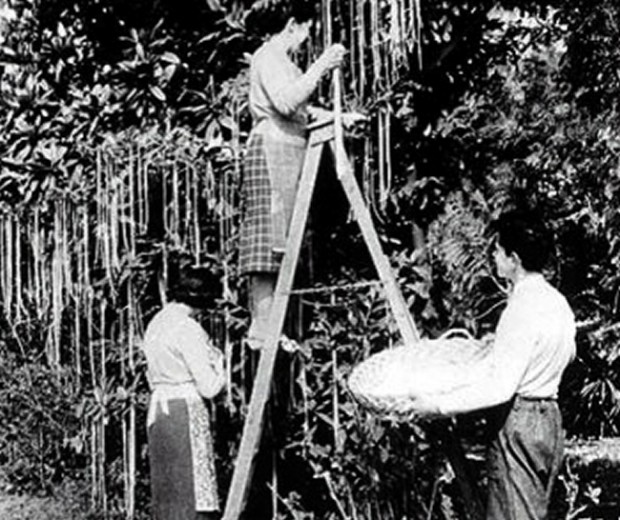
    You made it to the end! Enjoy this extraordinary report from the BBC on Spaghetti Trees:

  • HOMAGE to the SUFFRAGE CENTENNIAL – Women’s Rights, Voting Rights, Suffrage, the 19th Amendment

    HOMAGE to the SUFFRAGE CENTENNIAL – Women’s Rights, Voting Rights, Suffrage, the 19th Amendment


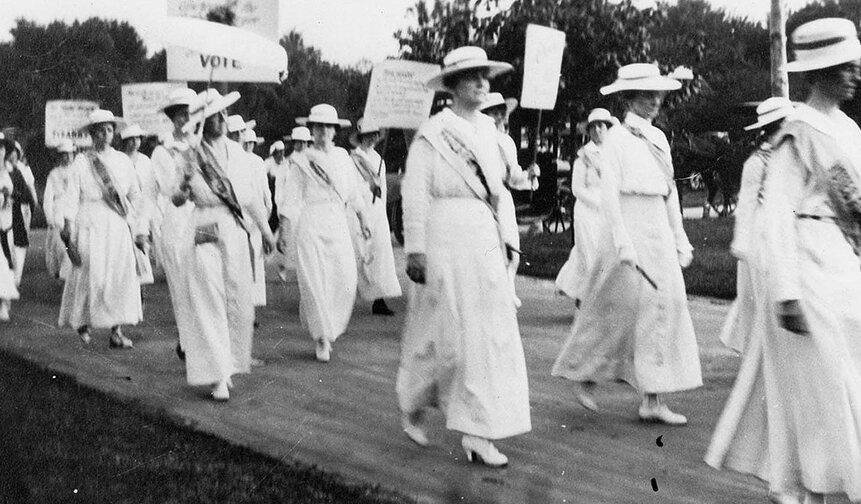
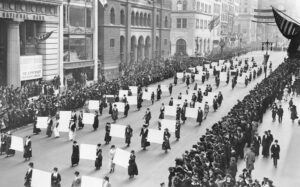
    Suffragists parade down Fifth Avenue, 1917.
    Advocates march in October 1917, displaying placards containing the signatures of more than one million New York women demanding the vote. The New York Times Photo Archives.

    On August 18, 1920, the Nineteenth Amendment to the United States of America Constitution was ratified and signed into law on the 26th that same month.

    We are celebrating the 100th anniversary of the Nineteenth Amendment’s adoption into the U.S. Constitution: the amendment that guarantees citizens the right to vote regardless of their gender, and the victory of the American Suffrage Movement. It took more than seventy years of protesting, picketing, and struggles for women to gain the civil right to vote in US elections. And many more decades passed before other disenfranchised groups  were systematically denied the right to vote.

    The Nineteenth Amendment was the capstone of that fight, but it took over seventy years to achieve it.

    And still, the vote was not granted to Black women and men. That right came about much later than most people realize, June 6, 1965, when President Lyndon Johnson signed the Voting Rights Act, which outlawed the discriminatory voting practices that some Southern states adopted after the Civil War.

    During this election season, we call all Chanticleerians to Vote Your Conscious and to not let anything get in your way!

    Women’s suffrage was not just a long fight, but one taken on by many pivotal figures. But the story of the suffrage movement is best told by remembering many of its impactful suffragists, such as Alice Stone Blackwell, Elizabeth Cady Stanton, Matilda Joslyn Gage, Ida B. Wells, Mary Church Terrel, and Josephine St. Pierre Ruffin.

    Suffragists were physically attacked by mobs of angry men and boys while police looked the other way. They’d been roughly arrested; been held in fetid, cold, vermin-infested cells; been shackled to the wall; and endured abuse and even torture in jail. When they went on hunger strikes, they were force-fed, tubes rammed up their noses. The Christian Science Monitor. 

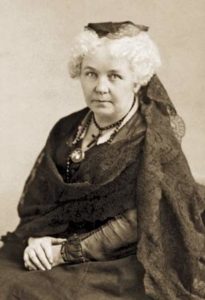
    Elizabeth Cady Stanton, c. 1880

    Elizabeth Cady Stanton was one of the women who first crystallized the Suffrage Movement, having helped organize the Seneca Falls Convention. Her unique background was pivotal in formulating the first demand for women’s suffrage in 1848.

    As the movement grew and drew public attention, Stanton proved herself to be a skilled orator and writer, working closely with Susan B. Anthony throughout the years; Stanton actually wrote some of the speeches that Anthony delivered, and– along with Anthony– was one of the founders of the National Woman Suffrage Association. Stanton wrote for a more equitable future in more than voting; in addition to the question of suffrage, she championed a broader view of women’s freedoms, supporting labor rights, property rights, and the right to divorce. She saw that women should have the chance to lead their own lives, taking part in all aspects of society equally to men.

    Movements don’t just happen, they come alive when a group of people decides to take action against injustice, and even small beginnings can lead to sweeping change.

    Elizabeth Cady Stanton came from a privileged background and used her position and means to propel her views. Her father was a prominent attorney, Congressman, and a judge. He also was a slave owner. Elizabeth was exposed to the study of law and the government mechanisms that govern by her father. She was particularly against how religion was used to justify the oppression of women. She penned The Woman’s Bible to tackle misogynistic traditions rooted in religious dogma after being sent to a seminary at the age of sixteen.

    She became an adamant abolitionist to end the practice of slavery in the United States in 1839 at the age of 24. Many historians believe that the Abolitionist Movement to End Slavery experiences and lessons were essential to pave the way for the Women’s Suffrage Movement.

    Stanton wasn’t the only suffragist who saw the reality of sexist injustice throughout her society, and one of her contemporaries joined her in drawing attention to these wrongs. Matilda Joslyn Gage was considered a radical in her time, having fought against traditionalist views as Stanton had. Matilda was on the revising and editing committee for Elizabeth’s  highly controversial The Woman’s Bible. 

    Matilda Electa Joslyn
    March 24, 1826

    This right to vote was a battle, fought and won 100 years ago by women we will never know, but by what they have written, what others have written about them, and what they have done for all of us.

    Alice Stone Blackwell

    One of the women who played a significant role in uniting these two groups was Alice Stone Blackwell. She was in a position to do so because of her connection to the AWSA: her mother was Lucy Stone. Along with Alice’s father, Henry Browne Blackwell, they were some of the primary organizers of the group. As Alice Stone Blackwell grew up, she worked with her parents on their paper, the Woman’s Journal, and eventually ran the paper. Once the AWSA and NWSA had merged, Blackwell served as the NAWSA’s recording secretary.

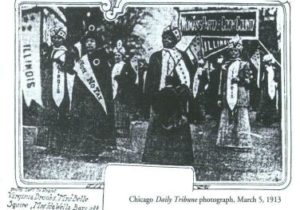
    While the centennial celebrates the federal adoption of women’s suffrage, we shouldn’t forget the smaller victories and works that punctuated the movement’s length, those who spoke out against injustice in many forms, while seeking the vote. One such woman was Ida B. Wells, who played an active role in the suffrage movement of Chicago. The city had given partial suffrage to women. Wells, along with a fellow suffragist Belle Squire, started the Alpha Suffrage Club to advance women’s suffrage further and educate women on civic involvement.

    Wells & Squire marching in 1913

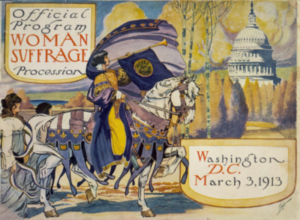
    The club especially supported African American candidates for the city’s elections, working to break down multiple unjust barriers in politics. Wells participated in one of the NAWSA’s best-remembered marches, set in Washington D.C. the day before the inauguration of President Woodrow Wilson. At the beginning of the rally, she was told to walk at the back, but she refused. Ida B. Wells marched with her sister suffragists from Illinois at the front. The power of social change comes from unified work between many people, and Wells refused the idea that she, as a suffragist, could be divided from anyone else.

    Along with women like Wells and Ruffin, Mary Church Terrel was an advocate for racial equality. She was entwined with gender equality, which shows throughout her work with the NAWSA, where she frequently met with Susan B. Anthony and Elizabeth Cady Stanton. She insisted that the movement fight for the rights of black women alongside those of white women, and spoke highly of the suffragists who fought for everyone oppressed by the political and social systems of the time. She spoke at NAWSA meetings, delivered speeches, and called for the suffragists to remember all of the women whose vote they worked so hard to gain.

    Ida B. Wells

    Let’s not allow their work to be forgotten – and let us never give up our full Rights as U.S. Citizens to carry out this all-too-important privilege.

    Despite the NAWSA’s issues with racism, some black women did act within that organization, such as Mary Church Terrel, who was an advocate for racial equality entwined with gender equality, which shows throughout her work with the NAWSA, where she frequently met with Susan B. Anthony and Elizabeth Cady Stanton. Mary insisted that the movement fight for the rights of black women alongside those of white women, and spoke highly of the suffragists who fought for everyone oppressed by the political and social systems of the time. She spoke at NAWSA meetings, delivered speeches, and called for the suffragists to remember all of the women whose vote they worked so hard to gain.

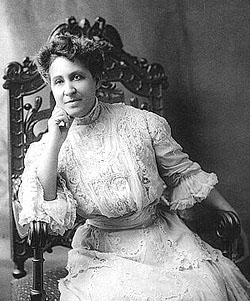
    Mary Church Terrel September 23, 1863

    Women’s suffrage had a complex relationship with black civil rights in large part thanks to the period of history in which the suffrage movement began: the Seneca Falls Convention took place in 1848, seventeen years prior to the abolition of slavery. This meant that the women’s rights movement was progressing and focusing at the same time that black people across were achieving freedom and directing themselves in a country that, while changing dramatically, still marginalized them.

    Harriet Tubman’s work is an example of how black women fought on both fronts; she’s a figure best remembered for her work as a liberator, freeing slaves prior to and during the civil war, but she took part in the suffrage movement as well. During the time of the NAWSA, she traveled to meetings and demonstrations to give speeches, telling of her experiences fighting for freedom and facing down oppressive and dangerous power structures during the time of slavery, and how important the struggle for freedom is. She bridged her advocacy for equality into the fight for the vote, and during this time, Ruffin’s The Woman’s Era wrote a profile on Tubman, as the country’s attention was once again drawn to her fight.

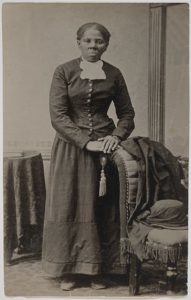
    Harriet Tubman after the Civil War

    All of these histories show that the suffrage movement’s victory– the adoption of the nineteenth amendment– was the result of disparate people, dedicated and idealistic people coming together and fighting hard for their rights. They gave time, energy, and passion to a movement that would, eventually, provide them with the right to participate in the democracy of their country. The fact that the suffrage movement stayed strong for 70 years united its two significant organizations, tackled legislation at both the national and local levels, is a testament to the people who refused to give up, and whose worked– together– to win the fight.

    It’s been a century since women won the right to vote, and more than 170 years since the American suffrage movement started in earnest. This movement has a lot it can teach us: the value of working together, across the country, to bring about change; the importance of remembering that there is always more than one fight for progress and rights, that we should listen to the voices of everybody who’s been pushed down and denied their rights and opportunities; and, of course, that even in the face of a power structure that calls rebellion and the fight for equal freedoms’ radical’, that fight is a good one, and worth taking on.

    At the Seneca Falls Convention, the call for women’s suffrage rang out in America, whereas before it had been considered a fringe idea, or even impossible. The fight was long, but after seventy-two years, the suffragists made what was ‘radical’ a reality.

    So, in the spirit that the right to vote is something that all people deserve, and should never have been restricted to any one group over another, let’s celebrate the centennial of a victory that brought America one step closer to the ideals of equality, freedom, and the rights of all. The power of the vote has shaped America’s history. We must all understand the importance of voting, and today we recognize those who fought for our rights. We are thankful for those brave suffragettes, for it is their struggle that has given us the right to participate in our democracy regardless of gender.

    It required three generations of fearless activists over a span of more than seven decades working in more than 900 state, local, and national campaigns to finally win the vote for American women. And that active verb – win – is important: Women were not given the vote; they were not granted the vote. As one commentator so aptly describes it: “They took it.” Christian Science Monitor

    Links to articles and sources are listed at the end of this blog post.

    We want to thank Scott Taylor, our newest member of the Chanticleer Team, for his research for the blog post in this collaborative effort of honoring and remembering the women who struggled and worked for ratifying the 19th Amendment on August 18, 1920.


    We thought you might enjoy viewing some of our very favorite books about Suffrage and Strong Women we admire: 

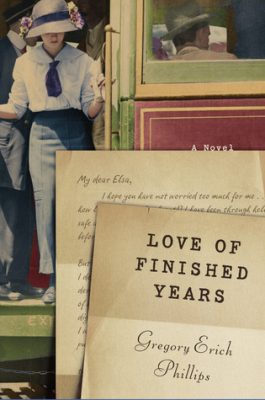
    Love of Finished Years by Gregory Erich Phillips

    Love of Finished Years is one of Kiffer’s favorite novels as it tackles workers rights, women’s suffrage, the looming shadow of World War One, the plight of immigrants, and the horrors of wars from the trenches. Phillips reminds us that love, light, and perseverance can help us find a way to overcome almost any obstacle. Love of Finished Years won the Chanticleer Overall  Grand Prize for Best Book while it was still in manuscript form. 

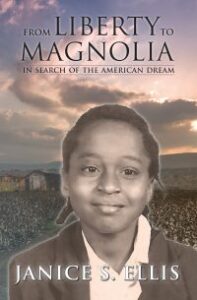
    From Liberty to Magnolia: In Search of the American Dream by Dr. Janice S. Ellis

    This pivotal work serves as an historical record which serves as a historical record amid one of the most tumultuous yet empowering eras in American history. Complete with a discussion guide in the Appendix, the book can serve as a text for a college course or a community book club exploring themes of race and gender.

     Janice’s overarching message is to stay true to oneself and continue to follow your heart, no matter how unpopular or uncomfortable your choices. From Liberty to Magnolia was awarded the Journey Book Awards Grand Prize. 


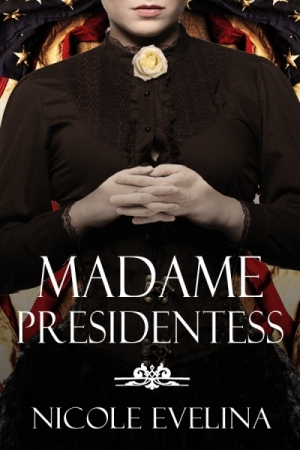
    Madame Presidentess by Nicole Evelina

    A story based on the mysterious, mystical Victoria Woodhull, a free-thinking woman well ahead of her time with a rags to riches story. Woodhull was the first woman to run for president of the United States, at a time when, with the full support of the law, most American men did not even regard their mothers, wives and daughters as citizens. She was also the first woman to own a brokerage firm on Wall Street. Nicole Evelina brings Victoria Woodhull vividly to life in this award winning novel. 

    Chanticleer Non-fiction Award-winning Books — just click on the link to read our reviews.

    The Romance Diet: Body Image and the Wars We Wage on Ourselves by Destiny Allison


    Wounded Warrior, Wounded Wife: Not Just Surviving, but Thriving by Barbara McNally


    Inside: One Woman’s Journey Through the Inside Passage by Susan Marie Conrad


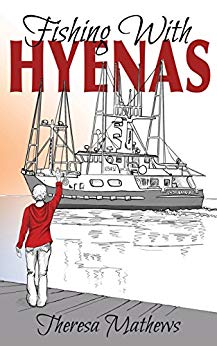
    Fishing With Hyenas  by Teresa Matthews


    Links to Sources and Resources:

    A Timeline of Voting Rights Actshttps://www.businessinsider.com/when-women-got-the-right-to-vote-american-voting-rights-timeline-2018-10#1965-congress-passes-the-historic-voting-rights-act-removing-discriminatory-barriers-that-kept-many-people-of-color-from-voting-12

    Sources: US Department of Justice Brennan Center for Justice, Business Insider

    19th Amendment: The six-week ‘brawl’ that won women the vote https://www.csmonitor.com/USA/Politics/2020/0803/19th-Amendment-The-six-week-brawl-that-won-women-the-vote

    Why Celebrate the Centennial of the 19th Amendment?

    Britannica https://www.britannica.com/biography/Elizabeth-Cady-Stanton

    History.com

    https://www.history.com/topics/black-history/abolitionist-movement

    https://www.history.com/topics/womens-history/elizabeth-cady-stanton

    https://www.history.com/topics/womens-history/the-fight-for-womens-suffrage?li_source=LI&li_medium=m2m-rcw-history

    Brooklyn Museum – Alice Stone Blackwell: https://www.brooklynmuseum.org/eascfa/dinner_party/heritage_floor/alice_stone_blackwell

    Americans Who Tell the Truth – Elizabeth Cady Stanton   

    https://www.americanswhotellthetruth.org/portraits/elizabeth-cady-stanton

    https://socialwelfare.library.vcu.edu/woman-suffrage/gage-matilda-joslyn/

    NPS – Ida B. Wells

    https://www.nps.gov/people/idabwells.htm

    Blackpast – Josephine St. Pierre Ruffin

    https://www.blackpast.org/african-american-history/ruffin-josephine-st-pierre-1842-1924/

    Wikipedia – Josephine St. Pierre Ruffin

    https://en.wikipedia.org/wiki/Josephine_St._Pierre_Ruffin

    National Womens’ History Museum – Mary Church Terrell

    https://www.womenshistory.org/education-resources/biographies/mary-church-terrell

    Blackpast.org – Mary Church Terrell

    https://www.blackpast.org/african-american-history/terrell-mary-church-1863-1954/

    Harriet Tubman Historical Society – Harriet Tubman

    http://www.harriet-tubman.org/women-rights-suffrage/

    National Parks Foundation – Harriet Tubman

    https://www.nationalparks.org/connect/blog/beacon-resilience-and-love-harriet-tubman

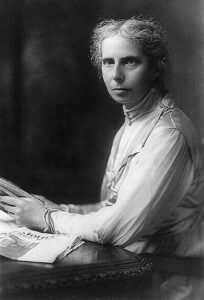
    Alice Stone Blackwell, between 1880 and 1900
  • ELEPHANTS IN MY ROOM by Christie Nicholls – Dark Humor, Love, Sex & Marriage Humor, Actor & Entertainer Biographies

    ELEPHANTS IN MY ROOM by Christie Nicholls – Dark Humor, Love, Sex & Marriage Humor, Actor & Entertainer Biographies

    A bitingly funny collection of life-stories from Christie Nicholls – stand-up comedian, actor, and writer – made all the more piquant by her repeated insistence that she has no short-term memory. Fortunately for us, her long-term reminiscences more than make up the deficit.

    Nicholls has divided the book into four parts. In the first, “A Broad Abroad,” she recalls her experiences of traveling to far-flung places, beginning with a summer in Belém, Brazil as a child. She and her brother, for some reason nicknamed Beluga, slept in hammocks and played in a swimming pool, but much of her cherished time involved a German Shepherd named Ferdinand, from whom she learned dog talk. Raucous family bowling in Bologna, Italy, is contrasted with attendance at a staid English wedding. At a later period, Nicholls and her mother went to Sweden, where the budding comic tried her hand at stand-up in newly acquired Swedish, leading to an amusing mix-up of jargon.

    “Odd Jobs” highlights employment, from babysitting to trying to sell magazines by phone and getting the ax for her admirable refusal to inveigle a woman who was going blind to buy a subscription. Nicholls’ recollections of those “Dearly Departed” includes lessons learned from a singularly inspiring music teacher, and time spent with her grandparents – with the pain of watching them slowly “disappear” from failing health and dementia.

    In “Boys to Man,” she confesses a few of her more outstanding, and hilarious, meet-ups with the opposite sex, revealing her youthful whims and desires. The final episode, and the book’s closing, is a comedy of errors that gradually reveals itself as a well-crafted salute to her partner and their quirky manner of demonstrating mutual respect.

    Nicholls is a charming yarn spinner, revealing much about herself in this lively aggregation, and not all of it merely for laughs. She expresses her self-doubts and her struggles with schooling and recalls the year she did not win a prize from her music teacher. The experience of not being acknowledged for her effort spurred her to try even harder next time. Nicholls admits her many flaws in a characteristic satirical manner, almost certainly dramatized for comic effect. But poignant moments arise frequently. After feeling frustrated in her early relationship with her grandfather Poppop, who could be, and often was, sarcastic and bombastic, she took up his cause. She protected him when he became wheelchair-bound, rewarded by his beaming smiles.

    Anyone familiar with the author’s significant talents will be happy to learn that she can write as well. Indeed, those getting to know her through this debut writing romp will want to see her show, follow her on social media, stalk her at the grocery store… well, we discourage stalking. What you will come away with is a genuine respect and admiration for Nicholls, a smart modern comedian, who brings her audience joy and quite possibly makes the world a brighter place to reside.