Author: carol-cram

  • June SPOTLIGHT on CHAUCER AWARDS – Early Historical Fiction, Historical Fiction, Historical Romantic Fiction, Crusades, Medieval

    June SPOTLIGHT on CHAUCER AWARDS – Early Historical Fiction, Historical Fiction, Historical Romantic Fiction, Crusades, Medieval

    Pre 1750 Historical Fiction Award

    Do you have an early historical fiction manuscript or recently released novel? Submit your work to the CIBA 2019 CHAUCER Awards by
    June 30, 2020, and see how your work stacks up against others. 


    We know you want to – because we never tire of promoting our authors’ achievements!

    As in Chaucer’s words in the Nun’s Priest Tale of the Canterbury Tales,

    “For crowing there was not his equal in all the land.”
     

    Click here to find out more. 

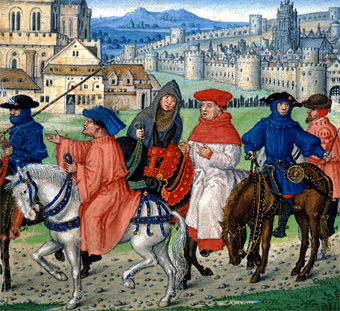
    We titled the Chanticleer International Book Awards (CIBAs) division for Pre-1750s Historical Fiction the Chaucer Awards, after the English poet and author of the Canterbury Tales, because #CHAUCER.

    But seriously, did you know that The Canterbury Tales is considered one of the greatest works in the English language? In fact, it was among the first non-secular books written in Middle English to be printed. So, yeah, #Chaucer
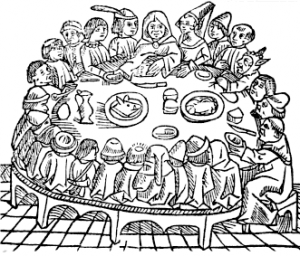
    A woodcut from William Caxton’s second edition 0f the Canterbury Tales printed in 1483

    Some interesting tidbits about Geoffrey Chaucer

            • born c. 1342/43 probably in London. He died on October 25, 1400
            • his father was an important London vintner
            • His family’s finances were derived from wine and leather
            • Chaucer spoke Middle English and was fluent in French, Latin, and Italian
            • He guided diplomatic missions across the continent of Europe for ten years where he discovered the works of Dante, Petrarch, and Boccaccio whose The Decameron had a profound influence on Chaucer’s later works
            • He married well as his wife received an annuity from the queen consort of Edward III
            • His remains are interred in the Westminster Abbey


     As our deadline draws near, don’t miss this opportunity to earn the distinction your historical fiction deserves!  Enter today!

    Welcome to the CHAUCER BOOK AWARDS HALL OF FAME

    Click on the links below to read the Chanticleer Review of the award-winning work!
    Pre 1750 Historical Fiction Award


    The 2018 Chaucer Book Awards Grand Prize Winner:
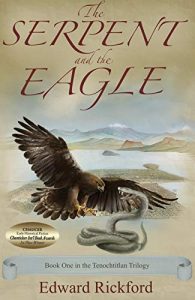
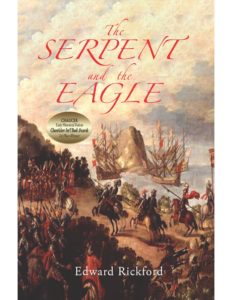
    The SERPENT and The EAGLE  by Edward Rickford 


    2018 Chaucer Book Awards for Pre-1750s Historical Fiction First in Category Winners:


    The 2017 Chaucer Book Awards Grand Prize:

    The Traitor’s Noose: Lions and Lilies Book 4 by Catherine A. Wilson and Catherine T. Wilson

    2017 Chaucer Book Awards for Pre-1750s Historical Fiction First in Category Winners:


    The 2016 Chaucer Book Awards Grand Prize Winner:

    (Chaucer Book Awards was the Historical Fiction division until we divided it for the 2016 CIBAs into two divisions because of the number of entries:

    Goethe Book Awards for post-1750s Historical Fiction and Chaucer Book Awards for pre-1750s Historical Fiction).

    The Towers of Tuscany by Carol M. Cram


    2016 Chaucer Book Awards for Pre-1750s Historical Fiction First in Category Winners:


            The 2015 Chaucer Book Awards Grand Prize Winner:

            (Chaucer Book Awards was the Historical Fiction division until we divided it into two divisions for the 2016 CIBAs because of the number of entries:

            Goethe Book Awards for post-1750s Historical Fiction and Chaucer Book Awards for pre-1750s Historical Fiction).

            Valhalla Revealed by Robert A. Wright

            Valhalla Revealed by Robert A Wright


            2015 Chaucer Book Awards for Pre-1750s Historical Fiction First in Category Winners:


            The 2014 Chaucer Book Awards Grand Prize:

            (Chaucer Book Awards was the Historical Fiction division until we divided it into two divisions because of the number of entries:

            Goethe Book Awards for post-1750s Historical Fiction and Chaucer Book Awards for pre-1750s Historical Fiction).

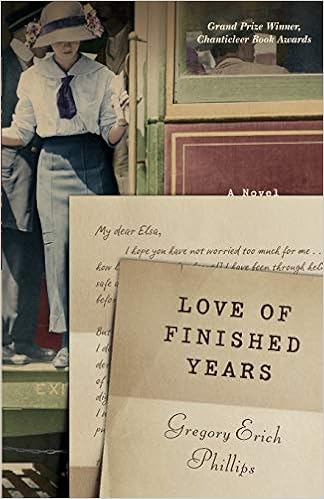
            The Love of Finished Years  by Gregory Erich Phillips

            2014 Chaucer Book Awards for Pre-1750s Historical Fiction First in Category Winners


            The 2013 Chaucer Book Awards Grand Prize Winner:

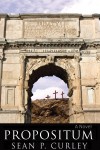
            Propositum - Front Cover 2

            Propositum by Sean Curley

            2013 Chaucer Book Awards for Pre-1750s Historical Fiction First in Category Winners:

            • Adventure/Young Adult:  I, Walter by Mike Hartner
            • N.A. Western:  Crossing Purgatory by Gary Schanbacher
            • World War II (European):  Deal with the Devil by J. Gunner Grey
            • Adventure/Romance/YA: “Lady Blade” by C.J. Thrush
            • Nordic History:  The Jøssing Affair by J.L.Oakley
            • Regency:  Traitor’s Gate by David Chacko & Alexander Kulcsar
            • Women’s Fiction/WWII: Wait for Me  by Janet K. Shawgo
            • Medieval/Dark Ages: Divine Vengeance by David Koons
            • Women’s Fiction/World History: Daughters of India by Kavita Jade

            What are you waiting for? Before long the CHAUCER Book Award deadline will be history.

            Submit your manuscript or recently released Historical Fiction (pre-1750s) to the Chanticleer International Book Awards!

            Want to be a winner next year? The deadline to submit your book for the Chaucer awards is June 30, 2020. Enter here!

            Grand Prize and First Place Winners for 2019 will be announced on September 5, 2020.

            Any entries received on or after June 30, 2020, will be entered into the 2021 Chaucer Book Awards. The Grand Prize and First Place for 2020 CIBA winners will be held on April 17, 2021.

             As our deadline draws near, don’t miss this opportunity to earn the distinction your historical fiction deserves!  Enter today!

            The CHAUCER Book Awards is a division of the Chanticleer International Book Awards – the CIBAs.

            The 2020 winners will be announced at the CIBA  Awards Ceremony on September 5, 2020, which will take place during the 2020 Chanticleer Authors Conference. All Semi-Finalists and First Place category winners will be recognized, the first-place winners will be whisked up on stage to receive their custom ribbon and wait to see who among them will take home the Grand Prize. It’s an exciting evening of dinner, networking, and celebrations! 

            Don’t delay! Enter today! 

          • The CHAUCER Book Awards for Pre-1750s Historical Fiction Grand Prize and First Place Category Winners – 2018 CIBAs

            The CHAUCER Book Awards for Pre-1750s Historical Fiction Grand Prize and First Place Category Winners – 2018 CIBAs

            Pre 1750 Historical Fiction AwardWe are excited and honored to officially announce the Grand Prize Winner and the First Place Category Winners for the 2018 Chaucer Book Awards at the annual Chanticleer Authors Conference and the 2018 Chanticleer International Book Awards ceremony. This year’s ceremony and banquet were held on Saturday, April 27th, 2019 at the Hotel Bellwether by beautiful Bellingham Bay, Wash.

            We want to thank all of those who entered and participated in the  2018 Chaucer Book Awards for Pre-1750s Historical Fiction, a division of the Chanticleer International Book Awards.

            Carol Cram, the author of The Towers of Tuscany announced the Grand Prize Winner of the 2016 CHAUCER Book Awards for Historical Fiction (CIBAs),  announced the CHAUCER Award Winners at the Chanticleer International Book Awards Banquet and Ceremony.

             PublishDrive and Hindenburg Systems awarded additional prizes to the 2018 CHAUCER  Book Award winners. Thank you!

            Congratulations to the 2018 CHAUCER Book Awards for Pre-1750s Historical Fiction First in Category Winners

            • Rebels against Tyranny: Civil War in the Crusader States by Helena P. Schrader
            • Mistress of Legend Book 3 by Nicole Evelina
            • Michael – Book Three of  The Triptych Chronicle by Prue Batten
            • Pelsaert’s Nightmare by Gregory Hansen
            • Under the Approaching Dark by Anna Belfrage
            • Stone Circle by Kate Murdoch 
            •  David & Avshalom — Life and Death in the Forest of Angels by Bernard Mann

            And now for the CHAUCER Book Awards  GRAND PRIZE WINNER for Pre-1750s Historic Fiction

            The SERPENT and The EAGLE  by Edward Rickford took home the CHAUCER Book Awards Grand Prize Blue Ribbon
            An email will go out to all First Place Category Winners and Grand Prize Winners with more information, the timing of awarded reviews, links to digital badges, and more before May 31st, 2019 (approximately four weeks after the awards ceremony). Please look for it in your email inbox.

            When we receive the digital photographs from the Official CAC19 professional photographer, Dwayne Rogge of Photo Treehouse, we will post the CHAUCER award winners on this page.

            Click here for the link to the 2018 CHAUCER Semi-Finalists.

            This post will be updated with photos and more information. Please do visit it again!

            The deadline for submissions into the 2019 Chaucer Book Awards is June 30, 2019 Midnight (PST).

            Our next Chanticleer International Book Awards Ceremony will be held on Saturday, April 18th, 2020, for the 2019 CIBA winners. Enter your book or manuscript in a contest today!

            As always, please contact me directly at KBrown@ChantiReviews.com with any questions, concerns, or suggestions.

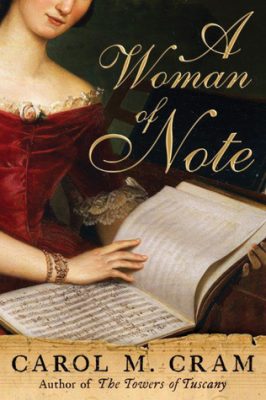
          • A WOMAN of NOTE by Carol Cram – Historical Fiction, Literary, Vienna

            A WOMAN of NOTE by Carol Cram – Historical Fiction, Literary, Vienna

            Isabette Gruber is in a panic. If only her sister were still with her to steady her hands on the keyboard as she plays Beethoven’s Eighth Sonata, known as the “Pathetique,” in her first public concert at Vienna’s Hofburg Palace. Then she hears Johanna’s voice in her head, and her poise and confidence return. The nineteen-year-old Isabette raises her hands, shapes her fingers above the keyboard, and launches into the “Pathetique.” Her powerful performance thrills the audience, whose applause continues through a third bow, and does honor to its composer, Ludwig van Beethoven, whose funeral took place in Vienna that very day, March 29, 1827.

            Filling Isabette’s heart more than the applause, however, are the words of praise from her beautiful, new American friend, eighteen-year-old Amelia Mason, who received four bows for her extraordinary vocal performance. Afterward, Amelia asks the young virtuoso pianist to become her accompanist. Isabette is eager to hear more about this enticing proposition, but Mama arrives with her cloak. Herr Dietrich (her indecorous manager) is waiting with their carriage. “Hurry, Isabette!”

            In A Woman of Note, Carol Cram has crafted a second brilliant female artist, this time a pianist and composer in 19th-century Vienna. Isabette must fight to establish her position in the male-dominated European world of classical music, much as Cram’s Sofia had to do in 14th-century Italy’s world of painting, in The Towers of Tuscany (2014). Cram’s precise, colorful writing enables us to hear the young Isabette playing the “Pathetique” in Hofburg Palace, see her enjoying a stroll with Amelia in the Prater, feel her pain over the loss of father and sister, and appreciate her determined efforts to convince music publisher Herr Weissel to accept her compositions, under the pseudonym of Anson Kruetzer. (Weissel roars with laughter, but agrees!)

            Once home from the Hofburg, Isabette thinks back to her practice session that morning in the small, dusty parlor of the apartment where she lives with her mother. With a heavy heart, she remembers what a happy home this had been when her sister Johanna and she shared both a talent and a love for music and were skillfully taught to play and compose by their proud father. Now Papa is dead, Johanna is in an asylum, and Mama seems to think of Isabette more as a means to an income than as her younger daughter. The tall, lanky girl with a plain face and dull, straight hair never gives a thought to her social life or the possibility of marriage and children. Her every moment is devoted to practicing. Tonight, though, she thinks of a new life with Amelia in it. Soon, they are together every day practicing, but also developing their friendship as they go for long walks around Vienna.

            When piano teacher Josef Hauser, who fancies himself a superior composer, meets the two young women, the story’s complexity grows. Josef is enamored with Amelia’s beauty but enthralled with Isabette’s talent. (In fact, he agrees to become her teacher if she revises his compositions so they will be accepted for publication.) Isabette treasures every minute she spends with the vibrant, cheerful Amelia, but feels uncomfortable when Amelia strokes her arms and kisses her neck. Amelia is jealous of Josef’s attention to Isabette during her piano lessons. Isabette realizes she could love Josef but knows that he is passionate about Amelia and could never feel that way about her. Then Josef’s flutist/poet friend Daniel Leitner joins the threesome. Gentleman that he is, he maintains a discreet distance from the ladies at least for a time.

            Readers will love Carol Cram’s colorful writing and attention to the minute details of daily life at this time in European history. Even more enjoyable, however, will be finding out where her intertwining love stories lead as the characters mature. The book never loses its pace. and readers will be rapidly turning the pages until the very end.

            While the cameo appearances and mentions of such famous musicians as Johann Hummel, Carl Czerny, Franz Schubert, Fredric Chopin, Robert Schumann and his wife Clara, and Louise Farrenc are of course fictional, they add drama and reality to the story, which is based on Cram’s meticulous research. An Author’s Note provides background on actual women composers of the time and place.

            A young virtuoso pianist rises above the many musicians of her time, blazing a path of passion for music and love that is hers and hers alone in nineteenth-century Vienna.

            5 Star Best Book Chanticleer Reviews round silver sticker

          • The TOWERS of TUSCANY by Carol Cram – Literary, Historical Fiction, Pre-Italian Renaissance

            The TOWERS of TUSCANY by Carol Cram – Literary, Historical Fiction, Pre-Italian Renaissance

            Powerful written and richly depicted, historical fiction novel, The Towers of Tuscany by Carol Cram brings to life 14th century Sophia, a talented artist who must find a way to continue her art in secret or have her life put in danger.

            “The bells for nones caught her by surprise…,” drawing Sofia’s mind away from the panel of the Nativity she is painting. She rises, steps over to the narrow tower window, and gazes out across the towers of San Gimignano, in central Tuscany. It is mid-afternoon of a day in March 1338.

            In little more than a page, Carol Cram’s expertly crafted prose transports us across time and space to Sofia’s world. But what we find is not exactly what we might have expected—at least, not I. Sofia is assailed by the pounding of hammers and clanging of iron tools deriving from the endless construction in this rapidly growing town. The air is filled with dust, causing her to squint. Her tower view is so filled with other towers that she has but a tiny, oblique view of the countryside beyond the city walls. She longs to escape the cacophony.

            Hearing her husband below, Sofia does not smile. He was once her Romeo, but not after their marriage. Now she longs to escape Giorgio’s brutish sexual assault on her body night after night, as well as his rigid control over her daily life. At this moment, his angry voice assaults her sensibility: “Wife! What the devil are you doing up there?” She gasps, fearful that Giorgio will learn she is painting and destroy her work! (In the fourteenth century, well-married women were forbidden to engage in “manual” activities.) She hurriedly wipes her hands and scrambles down the tower ladder.

            Thus begins the saga of Sofia, daughter of a master painter who, behind closed doors, taught her from early childhood how to draw and paint. Still in secret, she now works as his apprentice. While Maestro Antonio Barducci is often overtly critical of her work, he is aware that her skill might one day surpass his own, though how she could continue to employ it after he is gone is a quandary contemplated by both. That time arrives sooner than either expected when local political violence leads to Barducci’s death.

            Her father’s dying words reveal a way forward for Sofia, though it turns out to be not an easy one. Leaving Giorgio through subterfuge, she escapes to Siena disguised as a boy (named Sandro, from Alessandro), and her artistry continues in the painting workshop of her father’s friend, Maestro Manzini. Sofia/Sandro lives with few amenities and no small danger of discovery, which could end her life. But, she is painting again, and nothing else matters—at least not for the time being.

            Cram cleverly takes advantage of the workshop setting to share with us some of the techniques and practices of pre-Renaissance painting, which was usually done on wooden panels (carefully smoothed and prepared with gesso), rather than canvas. Paints were made with pigments from natural substances—usually plants—mixed with urine and other materials, some of them poisonous. Painting in 14th century Italy could be dangerous work! Certain techniques are described by Maestro Barducci, whose fatherly voice Sofia often hears in her head, guiding her work as well as her life.

            The best and worst parts of this dramatic, spellbinding work of historical fiction, with its many intriguing characters, deserves of your private reading—every word of it. Readers will find delight in a delicious love story, horror in a representation of the deadly bubonic (black) plague that decimated a large part of the European population of that time, and, in the end, a hint of peace and hope for the future.

            Carol Cram, the author of The Towers of Tuscany and A Woman of Note, is lauded for her skillful and colorful writing, intricate weaving of a many-faceted plot, and minute attention to the details of daily life in a Europe approaching the Renaissance—all in a read you’ll not forget.

            One woman clandestinely practices her art, risking not only her reputation but her life, in pre-renaissance Italy. Carol Cram presents a masterpiece in prose with historical fiction novel, The Towers of Tuscany. A must read!

            5 Star Best Book Chanticleer Reviews round silver sticker