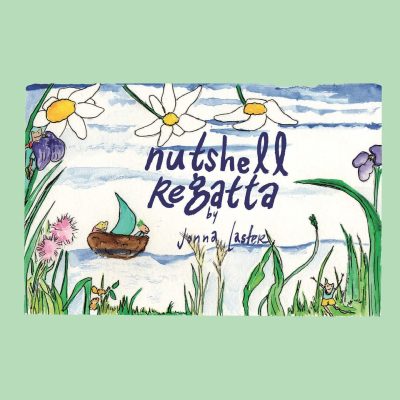
In Nutshell Regatta by Jonna Laster, the narrator’s grandmother reveals adventures in nature that could easily be missed without her watchful eye.
With her wise guidance, clouds turn into campers, dandelions hold moon yokes, leaves sing, and a broken branch takes on the form of a fox. Most importantly, twigs and pebbles become sailors who embark on a grand regatta in their nutshell sloops and sailboats.
Three ships come to the forefront of the story. Two of them sink, their twig sailors swimming safely to a nearby lily pad, while one continues on. Its passengers Burt the pebble and Betula the birch twig encounter what appears to be disaster, but when they fall over a waterfall, the grandmother guides the narrator to listen close. When they hear a faint “yipeeeeee” from the bottom of the waterfall, it’s clear that all has turned out well.
The narrator takes more ownership over the fantasy in the end, wondering aloud to their grandmother about where Burt and Betula might end up—downstream or even all the way to sea. The grandmother doesn’t miss a beat, suggesting the twig and pebble passengers might send a postcard. And indeed, the final illustration of the book is just that—a postcard from Burt and Betula!
From beginning to end, Nutshell Regatta is an imaginative poem.
Laster takes mundane aspects of nature—like twigs, pebbles, and common flowers—and turns them into lyrical images and dramatic adventures sure to captivate any child or child-like heart. The tension of Burt and Betula falling over the waterfall is just the right touch of stress, with a valuable resolution.
Laster could have resolved the story with the grandmother or narrator scooping the nutshells out of the water to save them. Instead, she takes a different and more developmentally helpful direction: the little sloops fall down the waterfall, and the grandmother coaches the child on creating a happy outcome for the event (the passengers going on a new adventure). This resolution could help guide anxious children to find positive meanings in change and transition.
The illustrations are wholesome and sweet, with little twig people peeking out of each picture even before they are introduced into the story.
The images serve the story immensely by bringing to life the cheerful adventurers in all shapes and sizes.
Regardless of what children take away on a conscious level, they will be delighted by the fantastical lens through which we see Burt and Betula’s adventures.
But for discerning young readers, Laster’s direct message is that “there are passengers everywhere,” if only you might look for them.
Children will surely come away from Nutshell Regatta inspired to make twig people and shell boats of their own the next time they find themselves in nature.
Pride Month is back, and it’s time to celebrate the beautiful diversity of the people of the LGBTQ+ community!
Over the last few decades, the LGBTQ+ community has made significant progress in legitimizing their cultural significance in the literary world. A 2022 report from NPD BookScan shows that print book sales of U.S. LGBTQ+ fiction are continuing to surge in the adult, children’s, and YA categories, and in 2021, sales reached 5 million units, more than double than in 2020!
There is no question that representation of the LGBTQ+ community is a vital asset to the writing community, and we want to celebrate their contributions by examining one of their most notable symbols; the rainbow flag!
The original 1978 Pride Flag as designed by Gilbert Baker.
The LGBTQ+ Rainbow Flag
In 1978, gay rights activist Harvey Milk asked Gilbert Baker, an openly gay artist and a drag queen, to design a symbol of pride for the gay community to promote their cause and have a unifying symbol for the many diverse cultures that are part of the LGBTQ+ community.
When asked later in an interview, Baker said, “Our job as gay people was to come out, to be visible, to live in the truth, as I say, to get out of the lie. A flag really fit that mission, because that’s a way of proclaiming your visibility or saying, ‘This is who I am!’” Viewing rainbows as natural flags found in the sky, he adopted eight colors for the stripes, with each color representing a specific aspect of gay life; pink for sex, red for life, orange for healing, yellow for sunlight, green for nature, turquoise for art, indigo for harmony, and violet for spirit.
The most recent version of the Intersex Equality Rights pride flag, as designed by Valentine Vecchietti.
Intersex-Inclusive Progress Pride Flag
After a number of redesigns, a new flag was commissioned in 2021 to fully represent the growing diversity of the LGBTQ+ community. Called the Intersex-Inclusive Progress Pride Flag, it was created byValentino Vecchietti of the UK’s Intersex Equality Rights organization and is now universally recognized as the flag that represents the larger LGBTQ+ community.
The new flag was designed to represent the many groups of people fighting for inclusivity within their community, incorporating the original colors of the pride flag and adding six more colors. Along with the original six colors, it now sports a chevron with colors to represent the marginalized LGBTQ+ communities of color, HIV/AIDS patients, and trans and non-binary persons. A purple circle on a yellow background is representative of the belief that all people, regardless of sexual orientation, are unbroken, whole, and have the right to make decisions about their own bodies.
The evolution of the LGBTQ+ rainbow flag is a visual record of the gay pride movement as well as the community’s growing diversity and its goal of inclusivity. We salute all those who fight for the rights of the LGBTQ+ community and wish them a great Pride Week as they celebrate the advances they’ve made in being seen!
The LGBTQ+ writing community is thriving in 2024, and Chanticleer is proud of the many great authors we get to work with throughout the year!
We invite you to take a look at the work of just a few of the amazing authors we’ve worked with and their writing that touches on the LGBTQ+ community!
ABOMINATION CHILD
By Erika Shepard
Abomination Child is a coming-of-age novel, a piece of historical fiction, and a lesson to us all. Erika Shepard tells the story of Brianna, a young girl growing up in Missouri during the 1960s, struggling to be accepted.
Within her community, Brianna is seen on the outside as a boy, and everyone knows her as Brian. She confides in her older sister Liz, who supports her and helps her face a world that doesn’t understand. Spanning many years, Abomination Child follows Brianna’s journey of survival, hoping that one day she’ll be able to live freely as herself.
Brianna’s – known then as Brian – troubles start after his father learns that he dressed in girl’s clothes at a school Halloween dance. Deeply conservative and religious, Brian’s father hits him for what he believes is an abominable perversion caused by the Devil. For Brian, it’s as simple as knowing he is really a girl, a girl named Brianna.
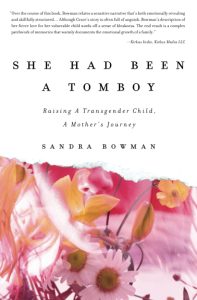
She Had Been a Tomboy: Raising a Transgender Child, a Mother’s Journey by Sandra Bowman is a deeply revealing memoir about a protective mother who watches her sensitive child grow into someone who is familiar, yet new.
This moving narrative tells the story of her two children: how they were born and how they grew. She Had Been a Tomboy hops from one period of the children’s lives to another, showing how the elder child matures and how the female within slowly blooms into being, little by little revealing herself.
But the long journey to realization and understanding of self was not easy, nor was it gentle.
In The Moonstone Girls, award-winning author Brooke Skipstone unravels a story about seventeen-year-old Tracy Franks. Tracy has a secret that in 1968 could have deadly consequences. You see, Tracy is gay.
In her hometown of San Antonio, Tracy is forced to hide behind the “girl next door” facade, never allowing her true identity to emerge. Her only confidante is her brother, Spencer. He understands her turmoil exactly because Spencer is also gay.
Neither teenager feels free to talk about their true feelings with their family, especially their father, Art. Art constantly scolds his son for his feminine behavior, his desire to become a pianist instead of joining the military. Though he also shows his displeasure with Tracy, she, unlike her brother, fights back, but only in the privacy of their home.
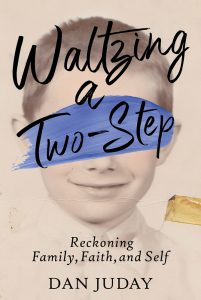
Dan Juday’s memoir Waltzing A Two-Step is a humble and compassionate look at his formative years.
Born a few years after the second world war, Dan experiences a peaceful and happy childhood in rural Indiana, moving frequently before the family settles on a rural area of land named Springwood in Clinton County, Indiana. The Juday family were devout Catholics and enrolled Dan and his siblings in Catholic schools until the family moved to Springwood. Public school became the only option for the siblings. There Dan does his best to fit in but his status as a minority Catholic in a mostly Protestant community in the 1950s brings its own challenges.
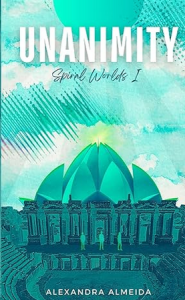
UNANIMITY: Spiral Worlds Book 1 By Alexandra Almeida
Alexandra Almeida probes the philosophical and ethical depths of wealth, technology, pop culture, and religion in a world ravaged by global warming through her sci-fi adventure,Unanimity: Spiral Worlds #1.
Readers will delight in the gradual reveal of both the technology within the story and the dramatic history between many of those involved with the creation and evolution of that technology.
Tom, a screenwriter, works with Harry, the genius inventor of the world’s most popular AI (artificial intelligence) app, to create a simulation that will nudge people toward acting morally.
UNSIGHTLY BULGES (A Trailer Park Princess Cozy Mystery, Book 2) By Kim Hunt Harris
Salem Grimes has a lot of goals – lose more weight than her friend Trisha, find a dress for the upcoming date she doesn’t really want to go on, and keep her dog, Stump, from throwing up on the kitchen floor. Unfortunately, solving a murder (again) isn’t on her to-do list, but Salem is thrown into another mystery completely against her will when she sees a body in a Sonic dumpster.
When her BFF Viv, an 80-ish firecracker of a woman with a penchant for expensive shoes, hears about it, she can’t wait to get started cracking the case. After all, she and Viv have already solved one mystery, and Viv is convinced their unofficial PI firm, Discreet Investigations, can find the murderer. But the ladies quickly realize they have their work cut out for them when the victim is identified as CJ Hardin, golden boy physician and local Hope for Homes organizer who recently “came out” in a very public way and stirred up a huge controversy in Lubbock, Texas.
Controversy and theories swirl since CJ was thought to have run off days earlier with the $200K in funds from a recent Hope for Homes fundraising effort. When the murder is labeled a hate crime, Salem, Viv, and their newest partner Dale find themselves in some scary situations, including an altercation with Rambo the fighting rooster. Between being laughed at by one hot police detective she’s had crushed on since fourth grade, fighting her urge to drink herself “cool” in order to keep from throat-punching Dale, Salem has to find a killer before the community implodes.
We would like to wish all the people of the LGBTQ+ community, and those who love and care for them, a very Happy Pride Week!
Thank you for joining us in celebrating the people of the LGBTQ+ community!
Do you have a LGBTQ+ themed book that deserves to be discovered? You can always submit your book for an Editorial Review with Chanticleer!
Chanticleer Editorial Review Packages are optimized to maximize your digital footprint. Reviews are one of the most powerful tools available to authors to help sell and market their books. Find out what all the buzz is about here.
Have an Award Winner?
Submitting toBook Awards is a great way to get your book discovered! Anytime you advance in the Chanticleer Int’l Book Awards, your name and book are promoted right here on our website, through our newsletter, and across social media. One of the best ways to engage in long tail marketing!
Thank you again to the authors who wrote these wonderful books, and to the LGTBQ+ people around the world! You are so loved and appreciated!
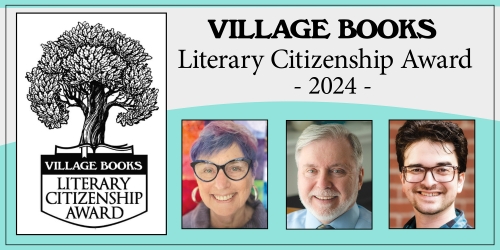
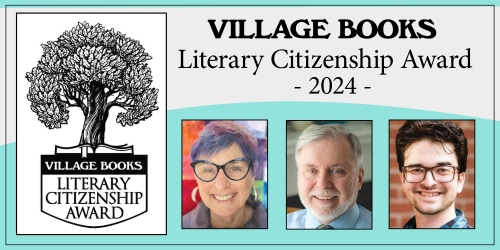
Announcing the Recipients of the 2024 Village Books Literary Citizenship Award!
The annual Literary Citizenship Award with the first recipients being recognized on Thursday, July 11, 2024 at Village Books, Fairhaven Village, Bellingham, Wash.
Recipients of this award are of diverse backgrounds and professions, but each have demonstrated a commitment to engage with the literary community with the intent of giving as much, if not more so, than they receive. This can take many different forms such as giving back to the literary community in a meaningful way, making yourself available to other writers as time allows to provide your knowledge and expertise, championing other people’s successes, and involving yourself in the local literary landscape of independent bookstores, libraries, and writing organizations.
Village Books, our local independent bookstore (and Chanticleer Authors Conference Book Room Manager) was founded in June 1980 and is a pillar of the pacific northwest writing community.
“Our literary world is a social ecosystem that relies on others: readers, writers, editors, reviewers, publishers, booksellers, and so on. The writing and publishing world is one made of relationships. Writing itself may be a somewhat solitary activity, but once the story or poem is ‘done’ we rely on others to read, share, and publish our work. Yet there are so many levels of participation from others in this community.” ~ Lori May, author of The Write Crowd: Literary Citizenship & The Writing Life
We invite you to join us to honor this year’s Literary Citizenship Award Ceremony recognizing the following three recipients.
Throughout both her personal and professional life, Linda has combined her passions for research and creative writing.
Linda is known for her roles as Library Director for both Whatcom Community College and La Conner Swinomish Library, though it’s her master’s degree in journalism that explains her curious nature to all who know her. An ardent friend to readers and writers, you’ll find Linda present at many book events, and she can always be relied upon to offer insightful questions. She is an active member of Red Wheelbarrow Writers, two book clubs, two critique groups, and you’ll find her work in anthologies including Whatcom Writes annual publications, the Salish Current, I Sing the Salmon Home, and co-editor of 52 Women of Whatcom. Linda helped found both Whatcom Reads and the Chuckanut Writers Conference, community institutions that bring readers and writers together.
Seán Dwyer writes nonfiction and fiction, both novels and stories.
He’s a Spanish professor in the Modern and Classical Languages & Literatures department at Western Washington University, speaks four other languages fluently, and is a songwriter. In 2015, a publisher was waiting for his debut novel manuscript when, in a matter of seconds, Seán’s teaching and writing careers were put on hold. Rear-ended at 50 mph while stopped at a crosswalk, Seán suffered two concussions in two seconds. His memoir, A Quest for Tears, chronicles his recovery from the brain injury that left him unable to read or write for more than a few minutes at a time. Before and since, he’s generously given so much to his community of writers through The Red Wheelbarrow Writers Group, as the president of Whatcom Writers and Publishers, regular contribution to anthologies, and as the ever-supportive host of Village Books’ Open Mics. He has branched out into boutique publishing, and the authors in his list have won multiple awards. Wherever you find him, you’ll experience firsthand his generous spirit.
David always holds true to his first love of Argentine tango, but when he’s not dancing, he writes.
The dance metaphor also holds true in his literary life as it’s a dance of relationships and cooperation. His work has appeared in EWU’s Inroads, WWU’s Suffix, Whatcom Writes, and HamLit but it’s his work with his fellow writers that seems to truly fuel him. He’s worked as the assistant publishing director at Village Books and is the current project manager for The Writers Corner Anthologies, which grew out of his many years as the skillful facilitator of the VB Writes Fiction Writing Group. David helps writers find their voices as an editor and coach and serving as the Communications and Marketing Manager for Chanticleer Book Reviews. He’s a tireless supporter of writers, wherever they are on their journey, and the most frequent question he asks is, “How can I help?”
We’re extra excited to celebrate Chanticleer’s own David Beaumier! David has been with Chanticleer for almost four years, not counting his time interning with us a decade ago. Seán Dwyer is also a usual suspect you can find at Chanticleer events, including our annual authors conference. We’re proud to support such amazing community members! Congratulations again to all recipients!
Village Books’ Literary Citizenship Award celebrates and thanks these three talented and dedicated community builders, community mentors, and community defenders.
They have each demonstrated, in their own unique way, the virtues that embody a Good Literary Citizen. For this, Village Books is awarding $1000 to each of them and hereby induct them into the Village Books Literary Citizen Hall of Fame which will be on permanent display in Village Books, Fairhaven.
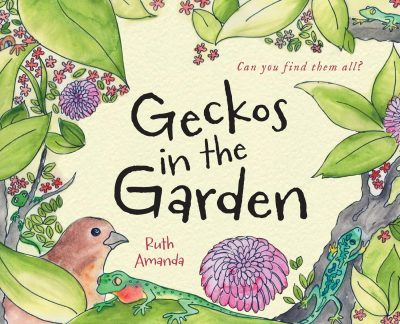
Geckos in the Garden by Ruth Amanda is a children’s counting book that takes readers through a delightful, rhythmic, aesthetically pleasing romp past a series of hidden geckos.
Amanda starts out with just one gecko in the garden. Every page after, one more is added amongst myriad natural details such as flowers, a snail, a palm tree, garden taps, rocks, a mango tree, leaves, a gate, a bird’s nest, a pond, and more.
Amanda demonstrates a natural sense of narrative arc even within a counting book—readers will feel the climax of the adventure when they arrive at the ninth gecko and read the line, “I spot one—two—no, six—no, more! Nine!” The escalation of the words’ momentum makes the ninth and tenth geckos more dramatic. Furthermore, the clever dénouement includes the narrator realizing the geckos might watch them just as much as they watch the geckos, and this is written alongside an adorable picture of a gecko looking in the window of the narrator’s home.
The rhyme and rhythm of the story are extremely satisfying and feel natural, making the book effective at engaging children learning to count.
The counting practice is not just in the words of the story, but in a scavenger hunt for each of the geckos in the illustrations. When a gecko is hidden in a challenging spot, hints like “I bet I’d find more geckos/If I hunted in the hedge” are integrated into the story. This is sure to create a game out of counting that will please children and adults alike. The images are beautiful and clear at the same time—perfect for ease in counting as well as maintaining interest.
Pristine formatting helps the excellent writing style and lovely images to shine.
The font serves the rhythm of the story, with bold words to guide readers toward the correct emphasis in the line. The images are balanced around the words in such a way that the pleasing layout draws the eye in the correct direction down the page. And finally, the consistent placement and slight tilt to the number on each page (“One!” and “Two!” etc.) creates a predictable and comforting routine for young readers to follow, even making it possible for them to anticipate the number that’s coming next.
Geckos in the Garden is the perfect book for a child learning to count through playful means. Amanda makes it easy for an adult reader to read with a satisfying beat because of the balanced arrangement of words. Any child will surely be inspired to count geckos or other creatures like them upon sight even when the book’s covers have been closed for the day.
You’ve arrived at the last page of your story and written those crucial, beautiful words: “The End.”
Finished at last!
Well done! You deserve some time to rest before you dive into the next step of editing your story.
Now, one key piece of advice here is there isn’t a wrong time to put your work in front of a professional for feedback. While this article will take you through steps that will bring your book to be as strong as you can possibly make it on your own, we all are of different skillsets, so if something isn’t for you, that’s when you bring in a professional editor.
It is an objective evaluation of a story idea that is fully formed with a beginning, middle, and end, but still in an early draft stage. The MOV comes before Line Editing and Copy Editing.
No matter who you pick to perform a Manuscript Overview for your book, you should get one. The amount of time and money it saves on editing by being more general and help you go further with your own writing is on thing, but the most important part is it helps keep your book focused and your narrative strong. Traditional Publishing Houses use them, and it makes sense to follow suit.
Typically, an MOV will cover
compelling nature of story
dialogue
character development
does the scenery and setting work with the story
backstory issues
professionalism of editing & formatting
continuity of storyline
plotting and plot-hole issues
writing craft
So, the question remains, how do you get your book to that point: fully formed with a beginning, middle, and end. How do you get it to the best point you can do on your own?
The Reverse Outline
Once you’ve finished your manuscript, even if you already have an outline, you can create one that reflects the actual book you’ve written. From this point, you can edit that outline of your book as is. Working within the outline to create a roadmap to revision often feels much more approachable.
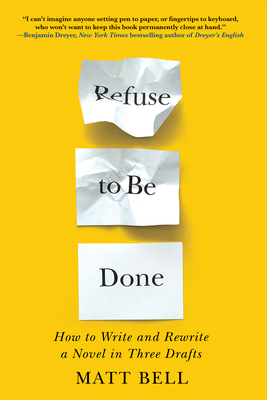
Next off, we have a recommendation from Matt Bell, author of Refuse to Be Done.
Rewrite your book.
You can have the draft you wrote printed out, off to the side, on a separate monitor, whatever feels comfortable, but rewrite it using your new outline as a guide.
Bell’s theory behind this is that you will copy and paste a bad line (or duplicate scene). But you won’t rewrite a bad line.
Not sure where to start in creating your outline? Jessica Brody’s beat sheet from Save the Cat! Writes a Novel can help. Brody breaks down the story into actionable beats you can aim for to keep your book flowing along. Check out her breakdown of story beats here!
Once you’re done rewriting the book, it helps to go through and check to see if you’ve met the goals of a new outline. Ask yourself if your story has a beat and if you can dance to it.
A standard Chanticleer MOV takes 6-9 weeks to finish. While that’s going on, we recommend following D.D. Black’s critical advice whenever you’re in writing limbo: Write the next thing.
Not only will that get you out of your head and allow you to be more objective with your manuscript when it comes back, but it will put you ahead of the game for the next book.
What do our authors say about our MOVs? Read recent testimonials here!
Wow, huge thank you for this second review! It’s so detailed and very much what I was hoping for. The specifics about moving content and clarity are spot on. I knew it needed structural improvements but I was too close to do it. Please pass on my sincere thanks for this work! I’ve only started some of it & already feel a better flow. I’m hoping to possibly even cut about 10k words to make it tighter. – Sheridan Genrich author of REWIRED: Optimise Your Genetic Potential
I’m writing to gratefully acknowledge receipt of the Manuscript Overview of my book. I am so pleased to have this close reading and incredibly helpful insights. These comments are far more beneficial than anything I had expected. It will be a pleasure addressing the editor’s critiques and trying out his concrete suggestions. Please extend to him my genuine gratitude. Chanticleer crows again! – John Feist, author of Edged in Purple and many more
I finally got this copied and read. It’s just what I wanted it to be—a skillful job. I knew there were the kind of holes the editor mentioned, but he’s given me a plan for the revisions. Please pass on my thanks. – Linda Brugger, columnist and accidental author
Please thank the reviewer for a very relevant and detailed review of my manuscript, ANKANAM. I plan to incorporate all his notes! – Vee Kumari, author of Ankanam.
This was just what I needed. I am looking at the book with a new focus and have already started working up the suggested changes. The first thing I did was remove those items the editor mentioned should be deleted. It was a bit painful but necessary. There was plenty of meat in his review, which took me a while to digest, but changes are on the way. These will take some time, but I will likely be interested in the Manuscript Reconciliation process. I can tell the editor spent quite some time researching some of the issues raised in the book, which I greatly appreciated. It helped me see the book more from the reader’s perspective than mine. Please pass along my sincere thanks. – Jim Leonard
Thank you for joining us for this Writer Toolbox Article
There is so much to learn and do with Chanticleer!
From our Book Award Program that has Discovered the Best Books since the early 2010s to our Editorial Book Reviews recognizing and promoting indie and traditional authors, Chanticleer knows your books are worth the effort to market professionally!
When you’re ready,did you know that Chanticleer offers editorial services?We do and have been doing so since 2011.
Our professional editors are top-notch and are experts in the Chicago Manual of Style. They have and are working for the top publishing houses (TOR, McMillian, Thomas Mercer, Penguin Random House, Simon Schuster, etc.).
If you would like more information, we invite you to email us at info@ChantiReviews.com for more information, testimonials, and fees.
We work with a small number of exclusive clients who want to collaborate with our team of top-editors on an on-going basis.Contact us today!
Chanticleer Editorial Services also offers writing craft sessions and masterclasses. Sign up to find out where, when, and how sessions being held.
A great way to get started is with our manuscript evaluation service, with more information availablehere.
And we do editorial consultations for $75. Learn morehere.
Lisa Voelker’s historical fiction novel, The Spoon, takes us back to the 1950s in Hungary during the daring student uprising, and attempted revolution, in Buda and Pest. The author weaves historical facts with fiction in the form of family lore that has been handed down for generations.
We follow scores of people whose lives intersected during this uprising of 1956. The revolution was, at its inception, a time of joyous upheaval, but in less than two weeks became one of devastating dissolution. People fled Hungary by the thousands, but not before giving the Soviet Union a taste of their discontent.
Voelker introduces Rebeka, a member of the Varga family with old ties to the bourgeoisie, who lived a life of privilege on a farm east of Buda and Pest. As well as Peter, a member of the Turea family who attends Budapest Technical University, where students began demonstrating against the Hungarian Government that was under Soviet control.
Voelker’s cast of characters stems from over a dozen families, some involving four generations, so even as this story focuses on Rebeka and Peter, we get the sense that it is truly the story of a nation. It’s the story of a people who are embroiled in the ramifications of a revolution attempt that was less than two weeks long but reverberated for decades.
The national pride and courage of the demonstrators stands out.
Their resilience and continued opposition against the Soviet super-power, pushed forward by the resistance fighters, never wavered. Voelker captures that loyalty and bravery on every page, just as her well-researched novel captures the imagination.
The ultimate mystery of the book is based on actual family lore, and Voelker keeps us turning the pages to find out what the significance and importance of a particular object is. She gives clues that whet our appetites, and with perfect timing reveals the satisfying conclusion.
Rebeka and Peter move through the uprising along with friends, family, and people they meet along the way. Voelker’s mastery in developing these interesting individuals keeps us invested in their stories and their successes— and yes, sometimes their failures.
There are tragedies, as with any war-like situation, and this is an underdog story, much like many international news stories that we see today.
As philosopher George Santayana wrote: “Those who cannot remember the past, are condemned to repeat it.” This idea has been paraphrased and passed down in many variations, but the truth behind it remains, and we commit this error at our own peril.
Voelker plays with themes of liberty, freedom, nationality, family bonds, first love, war, and more.
Her ambitious novel delivers an excellent read while also making connections between the past and the present, and showing us the strength of the family myth— stories that we pass down through generations.
Lisa Voelker’s The Spoon matches the interest of any history buff, any war novel aficionado, or any reader who loves learning while they enjoy a good book.
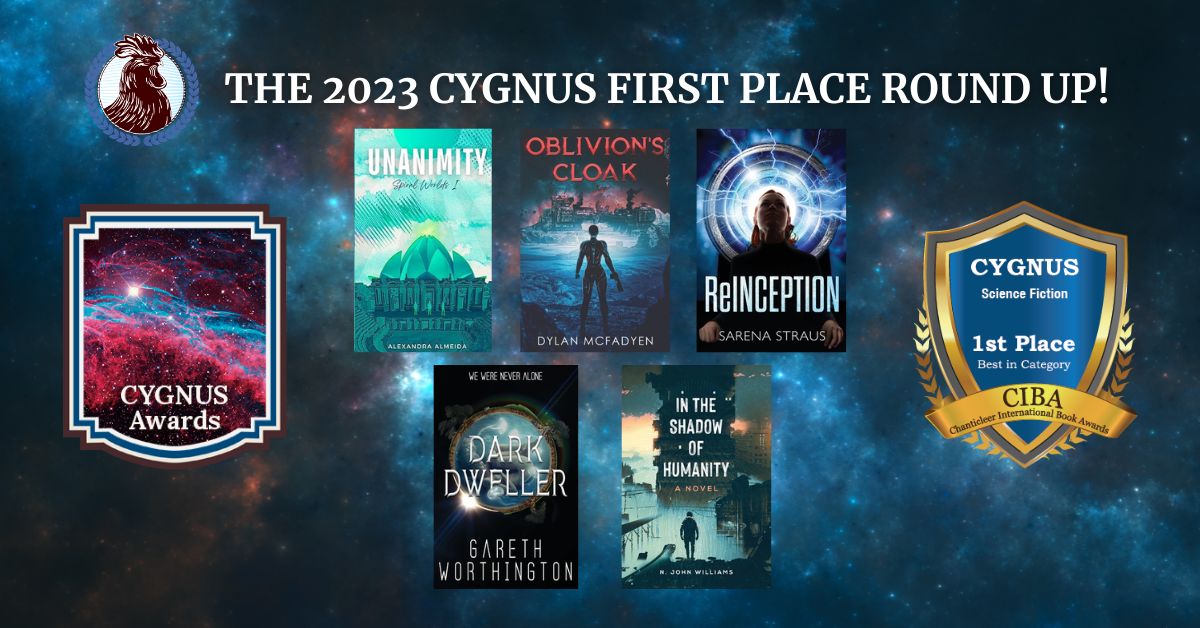
The Cygnus Book Awards recognize emerging new talent and outstanding works in the genre of Science Fiction, Steampunk, Alternative History, and Speculative Fiction. The Grand Prize Winner, Timothy S. Johnston’s book, The Shadow of War will be promoted for years to come in our annual Hall of Fame article, as well as be featured on the Cygnus contest page year round!
The best part about being a Chanticleer Int’l Book Award Winner is the love and attention you get all year ‘round!
Unanimity is a literary, sci-fi novel for the fans of Becky Chambers’s A Closed and Common Orbit, Alex Garland’s DEVS and Ex Machina, and Charlie Brooker’s Black Mirror. Weaving near-future sci-fi elements with social commentary and queer romantic suspense, the Spiral Worlds series explores the nature of consciousness and how it’s connected to a not-so-secret ingredient-story. As AI consumes the world, intelligence is nothing but the appetizer; the human heart is the main course.
From Chanticleer:
Alexandra Almeida probes the philosophical and ethical depths of wealth, technology, pop culture, and religion in a world ravaged by global warming through her sci-fi adventure, Unanimity: Spiral Worlds #1.
Readers will delight in the gradual reveal of both the technology within the story and the dramatic history between many of those involved with the creation and evolution of that technology.
Tom, a screenwriter, works with Harry, the genius inventor of the world’s most popular AI (artificial intelligence) app, to create a simulation that will nudge people toward acting morally.
What if A.I. had a soul? Could it find redemption?
In a near-future where entire worlds spring from thought, minds struggle to define reality—and claim it. Human colonization of the Metaverse brings us face-to-face with a new class of artificial being, made in our image and yet utterly unknown.
What is a person? Our answer will reshape the universe.
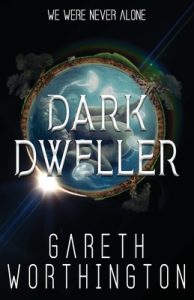
Captain Kara Psomas was pronounced dead when her research vessel slammed into Jupiter.
More than a century later, the crew of the Paralus, a helium mining freighter, find a pristine escape pod with a healthy young girl nestled inside. A girl who claims to be Kara—and she brings a message of doom.
She says she has been waiting in the dark for that exact moment. To be found by that particular crew. Because an ancient cosmic being has tasked her with a sacred responsibility. She claims she must alter the Fulcrum, a lever in time—no matter the cost to the people aboard—or condemn the rest of civilization to a very painful and drawn-out demise.
She sounds convincing. She appears brave. She might well be insane.
Her captain is furious at her. She wasted company resources getting herself killed, and it’s coming out of her paycheck. Now, she’s sitting across from the first other human being she’s seen in six years. His name is Adnan. He claims to come from Earth-but that’s impossible. Earth died a long time ago. If Adnan’s telling the truth, he and the decaying ship the captain pulled him off are nearly a thousand years old.
Wherever he’s from, he’s Shaara’s responsibility now. Which is the last thing she needs. But it’s either that, or the captain sells Adnan into slavery. Shaara knows what that would mean. Most humans do. And something inside her won’t let her abandon Adnan to it: revenant memories, stabbed awake by the look in his eyes.
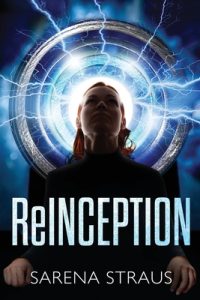
ReInception will change your mind…whether you want it or not
A hundred years in the future, ReInception is used to modify the brain and eliminate unwanted behaviors, everything from overeating to the worst criminal impulses. Unmodified 20-year-old Leandrea Justus feels ordinary compared to her perfect friends, who like living in a ReInception regulated world.
ReInception is a fiction debut, the first in a new, action-filled sci-fi trilogy with surprising twists, and a story that may be closer to reality than we think.
These are two of the oldest mainstays of the Chanticleer Int’l Book Awards, and the quality improves every year!
Only 10 days left to submit your books to the prestigious CIBAs and embark on an extraordinary journey to success. With over $30,000 in prizes awarded annually, now is the time to make your mark!
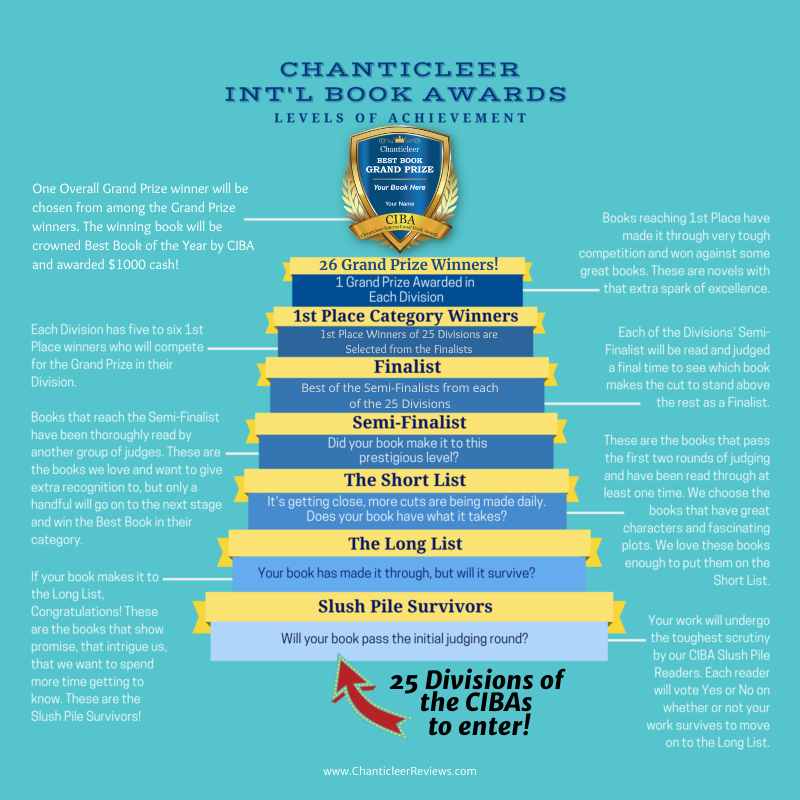
The CIBAs offer more than just recognition — they provide a ladder to success with a range of achievement tiers and expert long tail marketing strategies. From the highly anticipated Long List to the prestigious Overall Grand Prize Winner, the CIBA lists energize both authors and readers, maximizing your digital footprint and expanding your fan base.
We are always eager to support the Best Books through the CIBAs. Join the ranks of celebrated authors who have already taken this critical step in their publishing.
Your book deserves to be discovered, celebrated, and shared with the world. Don’t miss the chance to showcase your talent and gain valuable exposure at the Chanticleer Authors Conference (April 3-6, 2025) where Winners from all 25 Book Award Divisions will be announced and honored.
In a world hungry for good books, your story deserves to be heard. Submit now and leave a lasting impression.
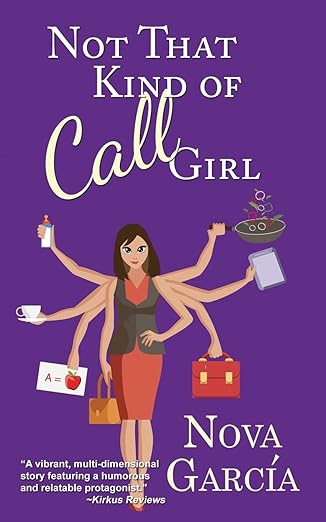
In Nova Garcia’s novel, Not That Kind of Call Girl, Julia Navarro-Nilsson balances a lot heavy responsibilities on her plate. She’s the supervisor of the Cascade City Chronicle call center, has just had her first child, and is dead set on saving her newest employee from a lifetime of abuse.
As a Mexican-American, Julia knows first-hand how difficult life can be for a minority woman, so when Carmen Cooper shows up for a job interview, Julia is determined to hire the young college student even though her story and answers to Julia’s question are sketchy. This reluctance to share her personal information intrigues Julia, but Carmen’s life turns out to be much more challenging than Julia would have ever dreamed.
Sussing out the truth behind the timid young woman’s clearly fictional story, Julia turns detective with the help of her reporter friend, Jerry. The two are dogged in their search and discover a secret so deep that it will rock Hollywood — that is, if she can juggle her new baby, her neglected husband, her sexually harassing boss, and an unending visit from her critical mother.
Julia’s detailed character makes her easy to empathize with, especially as she faces issues that many women confront in the real world.
Her biggest personal struggle is with motherhood. After the birth of Trey, Julia expects to be overwhelmed with her love and devotion to this tiny person. However, when she doesn’t feel those things — feeling almost the opposite actually — she is shocked and disappointed in herself. She has no immediate connection, instead suffering from postpartum depression.
To add to her fears of motherly inadequacy, she endures multiple bouts of mastitis — landing her in the hospital on one occasion— and she finds that maternity leave feels like a prison sentence rather than a chance to bond with Trey. She hates that she is missing work and hates that she hates that! Julia’s muddled feelings leave her frightened and uncertain, far from her sense of self pre-motherhood.
Like many women, Julia has a hard time accepting her body for what it is.
She has never been a petite size four, like her still-attractive mother, who always pressures her to conform to a different standard of beauty. Julia is tall and full-figured, a curvy, sensual woman. Post-birth, she feels “fat” and unattractive. Because she has to continue wearing her maternity pants (another very common experience), Julie feels as though she has failed again in some way. Though her adorable, loving husband Charlie still tells her she is beautiful and shows her that he continues to find her desirable, Julia has a hard time engaging in any physical contact. Her mother’s comments don’t help the situation, and with her confidence in tatters, Julia stress eats, continuing an unhealthy cycle.
Julia takes great pride in her position as call center manager for the local newspaper, but that position comes with near-constant harassment from her boss.
She cares about her employees, knows their problems, and is fighting for their jobs as the newspaper owners negotiate a sale of the business. In fact, it’s this level of concern that leads to her involvement in Carmen’s tragic life. Julia takes her job seriously and maintains high expectations for herself, but at every turn her boss Carlton Cressey epitomizes a villain to all of womankind. He makes jokes about various body parts and propositions Julia directly for sex. Even though she is a hard-working employee, likely his best, he can only see her body and face, so not only is Julia worried about her employees losing their jobs, she is also worried about losing her own if she reports him to HR.
Julia is a strong, normal woman. She’s not a superhero or a rich Country Club wife. She’s real, and many readers will identify with the problems she faces.
In 1974, Lori Lee Peters was an impressionable thirteen-year-old growing up in the suburban town of Lodi, California. The wider world—from which her parents sheltered her and her sisters—fascinated Lori. She was curious about everything, informed about little, and dependent on friends to fill gaps with the knowledge she craved.
Religion was a topic rarely discussed in her household. So when friends shared their beliefs about God as fact, Lori thought her days on Earth were numbered. She carried this news with her for decades as a deadly secret she couldn’t share with her family. Little did she know that her father—her hero—had a secret of his own.
From Chanticleer:
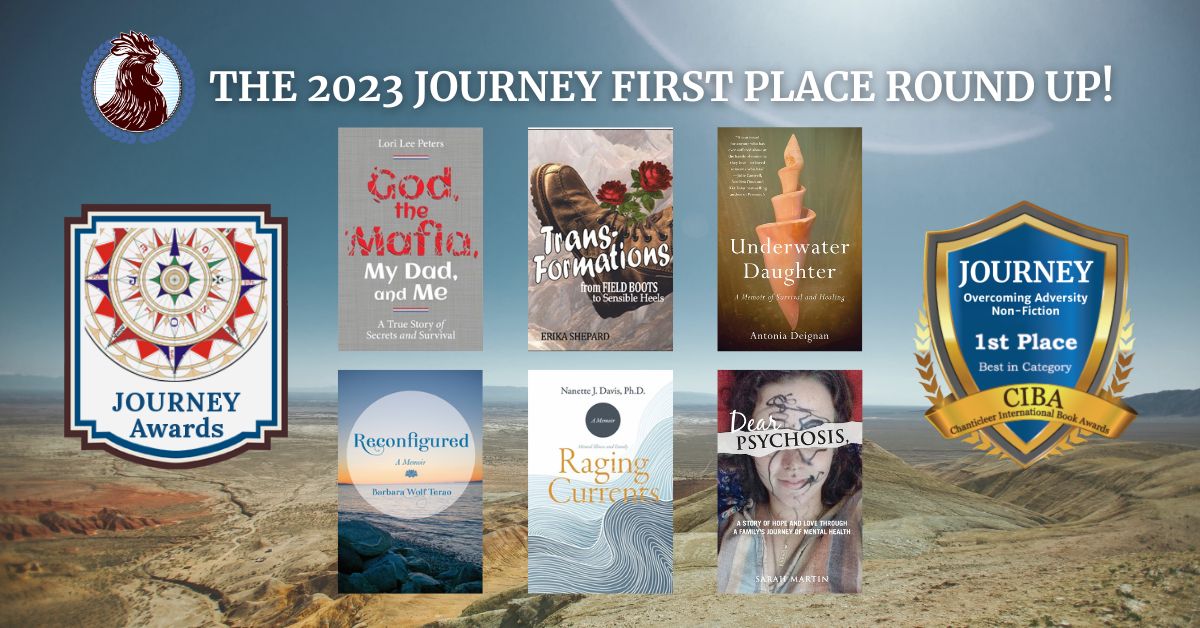
God, the Mafia, My Dad, and Me by Lori Lee Peters begins in the voice of a child, compelling not just for its narrative honestly, but for the fact that it might not be reliable. As the book opens, we learn that this narrator firmly believes she will be killed.
Readers can easily see through the childlike hyperbole, but that doesn’t detract from the intrigue. How did a kid come to such an extreme conclusion? Is there any seed of truth to it? These questions will hook readers from the start.
Author Peters set out to write a book about her dad. God, the Mafia, My Dad, and Me tells the true story of her father, and his fascinating work helping the FBI tackle Mafia activity in Lodi, California. Yet in the end, this is a memoir in which the compelling lead character – young Lori – overshadows her father in many ways.
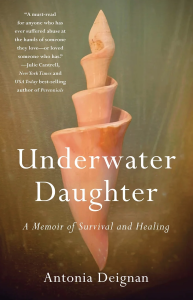
In the spirit of The Glass Castle and The Burning Light of Two Stars, Antonia Deignan delivers what New York Times best-selling author Julie Cantrell calls a “a heart-shattering memoir of painful truth and soulful healing.”
As a child, Antonia perceived her father’s nighttime visits as special acts of love. On some deeper level, though, she knew what was happening wasn’t right. To escape, she began creating imaginary worlds and used dreams to transport her away from her fears. As she got older, Antonia traded those fantasies for dance—but despite her outlets she remained trapped underwater, without a lifeline to make her feel fundamentally safe.
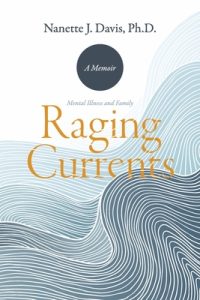
Nanette J. Davis Ph.D. – Raging Currents: Mental Illness and Family
A surprise sink-or-swim lesson at the tender age of nine opens this gripping memoir of love, mental illness, and care giving. A swirling narrative carries readers from pre-WWII Illinois to the infamous Oregon State Mental Hospital of the 80s and forward along a harrowing chasm carved by dysfunctional parents, inhumane social systems, and driven by Dr. Nanette Davis’s powerful love for her mentally-ill sister and son. Raging Currents spans mental health therapies from sedation and isolation, to twelve-step programs, tough love, and modern neuroscience-driven treatments.
From the childhood of a strong-willed, fiercely independent, and curious girl to the roles of supportive sister, wife, and mother, Davis shares her life’s foundation, development, and endless devotion to those she loves. Expertly weaving social norms in compelling prose, Davis offers the wisdom and reflection of age through the clear-eyed recollections of a trained sociologist. Her ever-increasing understanding of compassion is the bedrock of this insightful and vulnerable telling. Raging Currents offers more than an inspiring memoir: it provides practical advice and solace for modern caregivers, friends, family, and people living with mental illness.
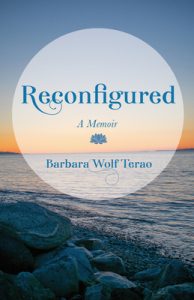
When Barbara Terao moves into a new home in Washington, two thousand miles from her husband in Illinois, she doesn’t know when—or if—she’ll ever live with him again. Her diagnosis of breast cancer three months later changes both of them in ways they never imagined.
In the ensuing months, Barbara’s husband and adult children show up to help her through a year of difficult treatments and surgery, and Barbara, in her Whidbey Island cottage, learns to listen to her heart and intuition. Nurtured by Douglas fir forests, the Salish Sea, and her community, she changes her life from the inside out. Her journey, she realizes, wasn’t about leaving her husband so much as finding herself. Reconfigured in body, mind, and spirit, Barbara finally has words for what she wants to say—and the strength to be a survivor.
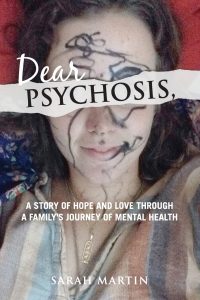
What would you do if you received a message from a stranger telling you that your daughter, who is traveling alone in Turkey, is having some sort of mental health episode?
Dear Psychosis, is a confronting, dramatic and no-holds-barred account of a family’s experience following their daughter’s first-ever psychotic episode in Istanbul, and her later diagnosis of bipolar disorder.
To some, it may be a warning, to others a story of hope. Most of all, it shows how the love and care given by strangers and family alike paved the way for their daughter’s recovery and inspired the family to break the silence around mental illness.
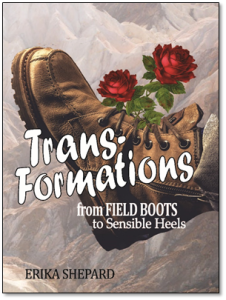
On a blazing summer day in Missouri, 1956, eight-year-old Richard discovers a sparkling rock on the railroad tracks near his home—and is fascinated. In that same year, he makes another unexpected discovery—an aching, forbidden desire to be a girl. A lifetime of secrecy follows until, at the edge of a cliff in remote southern Idaho, he faces a decision—to die as a man or live as a woman.Transformations is more than a memoir of transgenderism. It reflects important crossroads we all encounter in our lives—times of self-doubt and failure, other moments of great success and joy. It is a journey all of us share, one leading to that profound question we, at some point in our lives, must ask ourselves: Who am I?

 In Nutshell Regatta by Jonna Laster, the narrator’s grandmother reveals adventures in nature that could easily be missed without her watchful eye.



















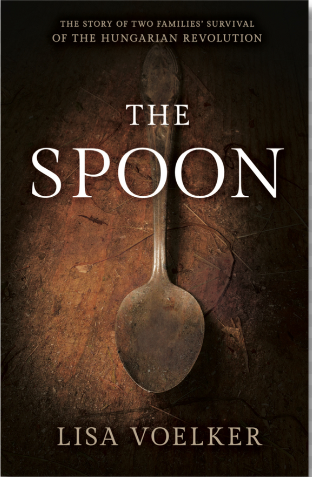
 Lisa Voelker’s historical fiction novel, The Spoon, takes us back to the 1950s in Hungary during the daring student uprising, and attempted revolution, in Buda and Pest. The author weaves historical facts with fiction in the form of family lore that has been handed down for generations.


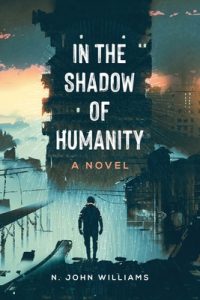







 In Nova Garcia’s novel, Not That Kind of Call Girl, Julia Navarro-Nilsson balances a lot heavy responsibilities on her plate. She’s the supervisor of the Cascade City Chronicle call center, has just had her first child, and is dead set on saving her newest employee from a lifetime of abuse.