Blog

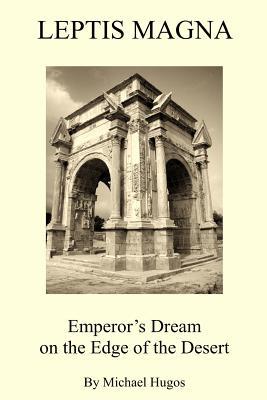
  • An Editorial Review of “Leptis Magna” by Michael Hugos

    An Editorial Review of “Leptis Magna” by Michael Hugos

    Have you ever had an experience of déjà vu so strong that you not only see, but also hear, feel, and even smell a scene from an earlier time and place? Michael Hugos tells us that a series of such experiences inspired this book. For him, Leptis Magna, an ancient port city in the Roman province of Tripolitania (present-day Libya), is “a lens through which I see a period in history when one world died and another world emerged.” Leptis rivaled Alexandria and Carthage in its beauty and buildings. It is now considered one of the most grand and unspoiled Roman ruins sites in the Mediterranean.

    For historical dates, names, and events, Hugos draws on the legacy of Ammianus Marcellinus. Marcellinus, a Roman soldier and historian (325/330-post-391 A.D.), served several Roman emperors.  Some of his records still exist, providing the most comprehensive and accurate historical account of Late Antiquity in existence. The latest edition of Leptis Magna includes maps.

    However, Michael Hugos tells us a more intimate story, that of another source for his book. It came in the form of  a presence and a voice that he first encountered when he was eight, visiting the ruins of Leptis Magna with his family in 1961. The presence that only Michael Hugos was aware of  followed his family through the ruins. Hugos even heard a whispering voice, which seemed to be saying something important, but he could not understand.

    The Hugos family visited Leptis several times during their two-year stay in Libya, and each time the presence joined Michael. He came to sense that it was a man who had lived in Leptis a long time ago. After the family returned to the United States, Michael didn’t feel that presence for more than a decade. One autumn day, while walking along the shore of Lake Michigan, the sound of the waves  washing up on the beach draws him back to Leptis. He becomes obsessed with discovering who that man was. Once into his research, relevant clues practically throw themselves at him, often invading his unconscious mind.

    Michael learns who the man was, what he stood for, and the trajectory of his life, and comes to see him and the ruined city of Leptis as “a bridge to another time.” The story of what happened in Leptis and to the Roman Empire that gave the city reason to exist becomes an allegory for understanding what is happening in the world today.

    After letting his knowledge rest for awhile,  like the dough for good bread, Hugos gives voice to Septimius Lucius (b. 341 A.D.), descendent of former Roman Emperor Septimius Severus and surviving heir of the leading family in Leptis Magna. In 384 A.D., Lucius begins to write his autobiography—the story of his life and the role of Leptis Magna in the history of the later Roman Empire.

    Lucius’s autobiographical narration is replete with stories of his happy young years in the family’s Villa  Selene on the Mediterranean Sea, the colorful years of his formal education in the Forum of Severus  at Leptis Magna, and his training in the family business exporting olive oil, wheat, slaves, ivory, and gold under the tutelage of his uncle, Jovinus.

    The youth’s coming of age, unfortunately, begins  during the time of African tribal raids against Leptis, corrupt Roman officials, and the fading of the Roman Empire.

    “Any civilization, whether that of the Roman Empire or that of our world today, exists first and foremost to channel the strivings of powerful people into socially constructive ends. When a civilization no longer performs that function, it must, and will die.”

    Michael Hugos suggests that this is the important message Lucius sought to give him, as a child and then as a young man: Rome didn’t have to fall, and neither does the world of today, if its citizens can learn the lessons offered by history.

    Hugos vividly brings to life the upheaval of those caught in the decline of one of the world’s most powerful empires. This is no dry read of ancient history. Leptis Magna is an account of one family’s history during this time. He reveals how civilization can be altered by deals made with the devil one at a time, one incriminating act a time, one lie at a time, one act of desperation at a time. Hugos draws marvelously intriguing parallels that show patterns that have repeated themselves time and time again in history.

    Elegant prose and impressive accumulation of knowledge focused on one thread of history  guides the readers through this fast-paced read of imperial Roman history: its cultural fascination with death; the depth and breadth of its bureaucracy; the military machine with its soldier emperors; and the use of force and intimidation to hold the empire together that fueled Rome’s insatiable need for taxation to maintain its bureaucracy and power base.

    For those who saw the film Gladiator and want to know more about the Roman Empire after Aurelius Commodus  inherited the title of Roman Emperor (at the age of 18 rather than earn the position as his father Marcus Aurelius had), or for those who want understand more about this pivotal time in Western civilization, you will be pleased to discover Leptis Magna, an enlightening work by Michael Hugos.
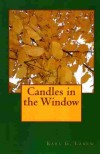
     

  • An Editorial Review of “Candles in the Window” by Karl G. Larew

    An Editorial Review of “Candles in the Window” by Karl G. Larew

    Candles in the Window, by Karl G. Larew, follows a group of college students as they make their way through a year of school at the University of Connecticut in the 1950s. The military draft was in full swing, young women were pursuing college degrees in more than negligible numbers,  wives still had to have their husbands sign contracts for them, and homosexuality was considered a heinous crime.

    Candles in the Window is brilliantly told in a non-traditional manner rather like the storyline of the Mad Men TV series. (Keep in mind that Mad Men script was first aired in 2007 while Candles in the Window was originally published in 1999.) There is no typical plot line of rising action, climax, and quick resolution. Rather, the story takes place over the course of one academic school year at the University of Connecticut (or UCONN as it is called throughout the novel).

    This work chronicles what happens to a group of students who attend school there. The focus of the narrative is shifted regularly between eight to ten characters. The author makes the characters come alive with spot-on dialogue and pieces of reality from this era when society’s social norms are about to experience a great upheaval.

    There is one character who serves as the axis for the story, and that is the alluring character of “Silky” (aka Susan Schreiber). However, no one really seems to know her or her whole story, in fact, no one even seems to be able to agree on what her first name is. Nevertheless, she’s beloved by everyone despite, or perhaps because of, the mystery surrounding her.  Her story comes through in bits and pieces.

    When tragedy strikes part way through the school year, the students must learn to cope and several of them find they need to reevaluate what they hold dear along with how they define relationships and love. The conversations between them often wax philosophical, as conversations between college students are wont to do.

    Readers should be aware that the novel’s prologue sets the stage and framework for the story. We get the opportunity to see Silky through the different perspectives of the other characters as the story progresses.  Be advised by this reviewer to read Candles in the Window’s epilogue for a more satisfying conclusion and for tying up most of the threads.  Again, if you are a fan of Mad Men, (which I am) and how its characters grapple with rapidly changing realities and social norms, then Candles in the Window comes highly recommended.

    The novel cleverly documents the contradictory and conservative morals of the 1950s.  Readers will experience a world where female college students have curfews and male students don’t, unmarried individuals are expected to know nothing about sex, and religious tension is often swept under the rug. This novel intelligently and authentically explores the true nature of humans against the standard of this era’s “traditional family values” that come on the heels of the two great wars.

    Candles in the Window by Karl G. Larew is a captivating and intriguing account of young people who find themselves increasingly at odds with the dictates and mores of “The Greatest Generation” as they contend with new advents just on the horizon: civil rights, war protests, equal rights, and the sexual revolution.


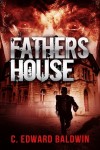
  • An Editorial Review of “Fathers House” by C. Edward Baldwin

    An Editorial Review of “Fathers House” by C. Edward Baldwin

    Fathers House by C. Edward Baldwin is written for an uncommon reader: the thoughtful thrill-seeker. Often times the grotesque scenes are juxtaposed with people simply living life, dealing with paperwork, or stuck on a stagnate case they don’t understand. The villain’s motivations of power and control are clearly presented, and the number one antagonist holds at least one insanity card in his hand. The push and pull of villains in the shadows gives the reader a sense that the main characters lack free will and are rudderless. All these elements make this an engrossing novel, but some may find the horrific-ness of some of the scenes difficult to read.

    Fathers House centers on the dealings of a crime syndicate and its infiltration at all levels of what seems like a pleasant, law-abiding city in the South. The reader is quickly introduced to Fathers House, a halfway home for delinquent and orphaned youth in Duraleigh, N.C.

    Baldwin introduces a large cast of characters who will weave the plot twists and turns in his opening chapters.  Reading the first few chapters that set-up the story may be daunting, but do read on.  However, once the reader pushes through, the story picks up pace while the tension ratchets up at breakneck speed.

    Our protagonist is Ben Lovison, an assistant district attorney who is touted as a community role model, in part due to his humble beginnings as an orphan in Fathers House and a shining example of Mayo Fathers’ community work. Lovison, who was abandoned by his father, is now an expecting father of twins. The reader receives brief flashes of what Lovision tries to expect parenthood to be like without the benefit of parents to emulate except for Mayo Fathers.  Fatherhood in one way or another is a central theme throughout the work.

    The plot initially focuses on Lovison’s investigation of Cain Simmons, a teenage rapper at Fathers House indicted in the murder of another young man.  Lovison is half detective, half lawyer, and more than competent at his job. But after Cain’s apparent suicide, Lovison begins wandering without direction, unsure now that he has no one to prosecute.

    The narrative slides between adults working for Fathers Disciples, adults supposedly working for the good of society, adults working for the law, and finally the children who are at their mercy.  Each character is trapped in a world where no one is trustworthy once their illusions are shattered.

    Ben Lovison’s world is crushed as he discovers the dark truth behind his boyhood foster home, his mother’s murder, and the disappearance of his own father.  As the novel continues, it becomes clear that it is not about any one character, but the effects the Fathers Disciples have on those whose lives they try to control and wield power over.

    The Fathers Disciples’ development as a crime syndicate works well. The disciples decide which youths they will use for the syndicate and which are the ones who will go out into the world as Lovison did, thereby, keeping up the façade for Mayo Fathers, the owner of the house and its hidden torture chamber. Lovison somehow stays on the Fathers Disciples’ radar as a potential threat, but they deem Lovison as just a fly on the wall.

    The twists and turns of Fathers House will satisfy readers who find non-obvious connections connecting devilishly amusing. Juxtaposition of the bribery, murders, and power plays against Baldwin’s subliminal questioning of free will and what really drives all of our lives is not highlighted in an initial reading, but in the undercurrent subtext. This is yet another example of how Baldwin’s story engages the reader in unexpected ways. Parts like the end, which will not satisfy all readers (blink and you will miss it), are balanced by a well thought-out story arc, and the slow reveal of the darkness everyone is capable of holding in their secret heart.

    Fathers House is a bloody and suspenseful debut thriller by C. Edward Baldwin that deals with the brutal undercurrents of crime in modern society.

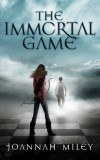
  • An Editorial Review of “The Immortal Game” by Joannah Miley

    An Editorial Review of “The Immortal Game” by Joannah Miley

    Love bursts forth like Athena from the head of Zeus after a shy college student meets Ash, a guy who plays chess at the local bookstore. Ruby, a quiet pre-med student struggling with her coursework at a university in Portland, Oregon, hangs out at Athenaeum Books to study and indulge in the barista’s irresistible ambrosia bars. When handsome Ash challenges her to a game of chess, she demurs. She has work to do, and chess stirs memories of her late father, a medic killed in the war. Ruby wants to follow in his footsteps, but she finds it hard going.

    She finally accepts the undefeated Ash’s challenge to play. When Ruby checks his king, Ash is baffled and is insistent to discover how she beat him. The aloof Ash finds himself attracted to Ruby’s intelligence, natural allure, and lack of guile. Although Ruby embodies all of these attributes, she doesn’t seem to know it. Their friendship blooms. Against her usual caution, Ruby accepts Ash’s compelling dares of outdoor adventures that push her beyond her comfort zone, and these experiences change her in an indefinable way. She’s finding courage and she is falling in love with Ash. He reciprocates and begins to open up to Ruby.

    Now it is Ruby who is baffled. Ash has a first-hand way of talking about historical events, and he has wounds that mysteriously appear and then strangely disappear as quickly. Also puzzling is his relationship to Sage, the barista and owner, and Langston, an aloof poet who also frequents the bookstore. When Ash finally reveals his true identity—he not only looks like a Greek god, he is one—Ruby hesitates, but not for long. After all, Ash—now Ares, the god of war—has promised that their marriage will stop all wars on Earth. Already peace is ensuing as Ares’ obsession for war is replaced by his love for Ruby.

    Ares transports Ruby to Olympus, where he declares his love for the mortal Ruby and they petition Zeus to allow them to marry. It is here that the story’s rapid unfolding and unveiling of secrets is taken to a new level when Ruby is introduced to the various gods and nymphs and the opulent splendor of their homes and adornments. Here Miley has created an intriguingly flawed Olympus, one where vainglory and selfishness prevail; where Zeus is lecherous, Apollo scornful, Persephone apathetic. She makes these characters and their interactions come alive on the page.

    The story gathers speed when Ruby discovers that Zeus has forbidden the gods from meddling in the affairs of mortals or with mortals, for that matter. Zeus sets about thwarting Ruby’s marriage to Ares by going back to his old ways—he starts making deals with the other immortals. The immortals intervene, once again, in mortal affairs and stirring up the ages-old status quo amongst themselves. Before long, mankind becomes the expendable pawn in the immortals’ plots and schemes as the immortals form alliances for dominance of Mount Olympus.

    It is up to Ash and Ruby to save mankind and to restore order. Their quest takes them to Tartarus, a sunless abyss, where they encounter ordeals and the most fantastical creatures from Greek mythology: Charon and Cerebus, Chimera and the fifty-headed Hecatoncheires. The heroes’ ordeals are suspenseful and their journey adventurous as they experience challenges that lead to a thoughtfully crafted conclusion. This reviewer is looking forward to reading Miley’s next work in the End Game series.

    Adults, new and otherwise, will be entertained with Ruby’s experiences as she negotiates the intertwined worlds of mortals and immortals. Miley takes you from Portland, Oregon in a war-torn future to opulent Mount Olympus to the darkest halls of Hades as she keeps you turning the pages in this entertaining novel that successfully intertwines ancient Greek mythology with a contemporary story line that has just the right amount of romance, action, and adventure.

    A mythic twist on New Adult college romance and a rousing tale of personal courage, The Immortal Game has deservedly earned a place as a First in Category in the Dante Rossetti Awards for Young Adult Fiction 2013, a division of Chanticleer Writing Competitions.

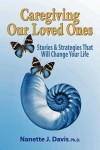
  • An Editorial Review of “Caregiving Our Loved Ones” by Nanette Davis, Ph.D.

    An Editorial Review of “Caregiving Our Loved Ones” by Nanette Davis, Ph.D.

    With its compassionate, yet no-nonsense approach, Caregiving Our Loved Ones will be appreciated by anyone who must navigate the turbulent waters of looking after an ill loved one. I count myself among them, having served as caregiver for my mother, who has suffered from dementia since 2004. Dr. Nanette Davis discusses numerous caregiving topics, from transitioning into the role of caregiver and advocate to dealing with medical misdiagnosis and overmedication, even survivors’ guilt. She offers expert advice intertwined with practical tips and strategies that she has gleaned from her own caregiving journey, along with relating the experiences of sixty other caregivers who have shared their experiences with her.  Each chapter ends with key ‘Lessons Learned’—helpful takeaways for the reader.

    What I particularly appreciate about Dr. Davis’ guide is that she covers the complexity of family dynamics and its inherent conflicts. It was especially heartening for me to know that I am not alone in feeling (sometimes) less-than-altruistic in my caregiving role. She identifies the stages and transitions that caregivers go through (or may remain in), and in doing so, explores the forces that form our thoughts, actions, and reactions. She also reminds us of the emotions that our loved one may be experiencing, so we may have a better understanding of their perspective.

    Dr. Davis doesn’t shy away from the dysfunctional free-for-alls that can and do take place when siblings and family members are in conflict over what to do when they find themselves in the trenches of caregiving.

    Her suggestions for “parenting the parent” are particularly invaluable. Dr. Davis also discusses more taboo subjects that most of us would feel awkward about broaching, such as the difficulties of becoming a caregiver for one’s spouse. And she takes the time to inform her readers about the symptoms of Parkinson’s, Alzheimer’s, dementia, cancer, and other ailments, so they can be better prepared for their journey.

    From my own personal experience and reading, I would emphasize that Dr. Davis’ accounts and insights of the complex relationships between caregivers and their loved ones are right on target. Caregivers could gain much from her tips for dealing with the ongoing emotional, financial and health toll of taking care of someone who will never get better.

    Caregiving Our Loved Ones is a positive tome that left me feeling more empowered and energized in my role of caregiver. It has helped me set boundaries and given me new tools that I can implement today and in the days ahead. Dr. Davis’ reminds us that chronic diseases tend to have two victims—the patient and the caregiver—unless steps are taken by the caregiver to prevent losing herself and, ultimately, her health.

    I highly recommend this informative and compassionate book to anyone who finds herself at the crossroads of taking on the caregiver mantle.

  • The Official List of the Somerset Awards 2013 Finalists

    The Official List of the Somerset Awards 2013 Finalists

    The Somerset Awards recognize emerging new talent and outstanding works in Contemporary, Mainstream, and Literary Fiction.

    Finalists will compete for 1st place category positions. 1st Place Category winners will compete for The Somerset Awards Grand Prize for Overall Best Book 2013 and a Chanticleer Book Review and SEO package, a $250 purse, and promotional opportunities. The grand prize winners of ten genres will compete for the Chanticleer Blue Ribbon Grand Prize 2013 and a $1,000 purse.

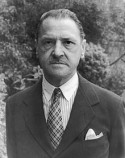
    220px-Maugham_retouchedThe Somerset Awards is a division of Chanticleer Blue Ribbon Writing Competitions. The contest divisions is  named after W. Somerset Maugham, author of The Moon and Sixpence, Of Human Bondage, Razor’s Edge, and other literary masterpieces.


    These finalists have made it through the first three rounds of competition. The first sixty to ninety pages of each work have been read by CBR judges. They are presently making the next circuit of rounds. From here on out each round is more competitive as the judges determine if works will continue to move forward to best of category.

    We are honored to announce the Official Finalists of the Somerset Awards 2013:

    • Stormy Weather by Dermot Davis
    • Mother Teresa’s Advice for Jilted Lovers by Donna Barker
    • Individually Wrapped by Jeremy Bullian
    • In Search of Sticks by Randy Kaneen
    • Opposite of Everything by David Kalish
    • Cheating the Hog by Rae Ellen Lee
    • The Devil Wears Scrubs by Freida McFadden
    • Morning Star by Roger Schick
    • Surviving 26th Street by Carol June Stover
    • Sparrows Cannot Catch Me by R. Mursell
    • Midlife Fanilow by J. M. Holder
    • The Prodigal by Michael Hurley
    • Chocolates on the Pillow by Sean Dwyer
    • Tarnished Hero by Jim Gilliam
    • How to Make a Pot in 14 Easy Lessons by Nicola Pearson
    • The Botanist’s Daughter by Angela Belcaster
    • Family Bonds by Kate Vale
    • Color of Lies by Abbe Rolnick
    • The Orbiter by Jana Krause
    • The Fosters, a Novel by C. Alease
    • Never Turn Your Back on a Wolf by Jennifer Mueller
    • Take the Pilgrim Road by Frank T. Klus
    • Saving Faith by Patrick M. Garry
    • The Apprentice by Jana Barkley
    • Brain, the Man Who Wrote the Book that Changed the World by Dermot Davis
    • Sacred Mountain by Ken Farmer & Buck Stienke
    • Freak Story by Jim Musgrave

    From the this list, only six First in Category award winners will be chosen.  

    Congratulations to the Finalists and Good Luck in the next rounds of the Somerset 2013 Competition.

    • 1st Place Category winners will be announced in approximately two months.
    • We are now accepting entries into the 2014 Somerset Awards.

     https://www.chantireviews.com/services/#!/~/product/category=5193080&id=21521214


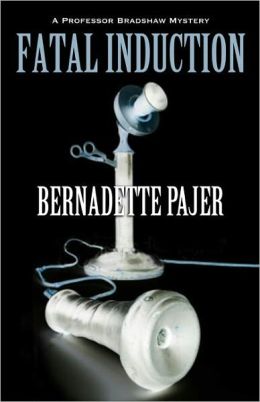
  • An Editorial Review of “Fatal Induction” by Bernadette Pajer

    An Editorial Review of “Fatal Induction” by Bernadette Pajer

    Set against the backdrop of a national tragedy—the assassination of President McKinley—Fatal Induction by Bernadette Pajer follows Professor Benjamin Bradshaw as he scrambles to catch a killer. The year is 1901 and Seattle is a vibrant and up-and-coming city. Bradshaw, a professor of electrical engineering and a passionate inventor, has entered a new invention competition for a  device that will carry the sounds of a musical theater production through telephone wires to listeners in the comfort of their own homes.

    Bradshaw is unaware that a seemingly trivial domestic concern at home is about to sweep him into the underworld of Seattle. With the needling of his housekeeper, Mrs. Prouty, Bradshaw inspects a peddler’s cart that has been abandoned near his house. “Ralph’s Redeeming Restorative” is emblazoned across the side and upon further investigation, Bradshaw discovers a small and well-loved doll inside the cart that must surely belong to a young girl.

    Bradshaw turns to good friend Detective James O’Brien for help in locating the girl and her father. He discovers the missing peddler’s body in his own neighborhood and quickly realizes that the only witness to his murder may be his missing daughter, Emily, which puts her in grave danger.

    When Bradshaw finds that solving the murder of a roving peddler is not high on the police department agenda, he must rely on his own skills of deduction to locate Emily. Bradshaw finds himself delving into the seedy underbelly of Seattle, the wicked tenderloin district. Death threats are quick to follow and Bradshaw finds himself embroiled in something much larger and more far-reaching than he ever suspected. Bradshaw has something else to cope with as well—his growing affection for a young woman named Missouri, the niece of his best friend and a woman Bradshaw feels he can never be with.

    Pajer’s vivid writing takes readers to this exciting time that is in the crossroads of scientific investigation and innovation, when automobiles and horse drawn carts compete for the same streets, and the United States reels with political unrest and social upheaval. Readers will warm to the curmudgeonly and reserved professor who has a heart of gold and a penchant for investigation. All four books in the series have earned the peer reviewed Washington Academy of Sciences Seal of Approval for scientific accuracy.

    Like all important novels, this mystery has wider implications for the larger world than the story is set in. We posit that the Professor Bradshaw series is on its way to being considered a classic in the mystery genre.

    “Fatal Induction” by Bernadette Pajer was awarded the Overall Grand Prize for Best Book in the Mystery and Mayhem Awards 2013, a division of Chanticleer Blue Ribbon Writing Competitions.


  • Paranormal Awards 2013 Finalists – Official List

    Paranormal Awards 2013 Finalists – Official List

    The Paranormal Awards recognize emerging new talent and outstanding works in the genre of  Gothic and Paranormal Fiction as defined as stories that are set in a normal world where there are supernatural or speculative characters  or elements that are beyond the range of scientific explanation that interact in what is otherwise considered a normal construct. Gothic fiction (also known as literary horror i.e., Frankenstein, Dracula, and Poe’s works (not graphic horror) is also another sub-genre of Paranormal Fiction.

    Strawberryhill

    Finalists will compete for 1st Place Category positions. First Place Category winners will compete for The Paranormal Awards Overall Best Book 2013.

    The Paranormal  Awards 2013 is a division of Chanticleer Blue Ribbon Awards Writing Competitions.

    These Finalists have made it through the first 3 rounds of competition. The first sixty to ninety pages of these works have been read; they are presently competing in the next series of rounds. From here on out, each round is increasingly more competitive as the judges determine if the works will move forward to best of category.

    ParanormalWe are honored to announce the Finalists of the Paranormal Awards  2013. 


    CBR Official List of Titles & Authors Finalists for the Paranormal  Awards 2013  are:

    • The Immortal American by L.B. Joramo
    • Third Eye Witness by Kathi Bjorkman
    • Death Sword by Pamela Turner
    • Montana Mustangs by Danica Winters
    • The Dream Jumper’s Promise by Kim Hornsby
    • Dark Dancer by Maureen Fisher-Fleming
    • Spirit Legacy by E.E. Holmes
    • The Witch’s Malice by David Hutchison
    • Bayview by Penny Page
    • The Third Option by Ben A. Sharpton
    • Second Sight by Ben A. Sharpton
    • The Watcher by Lisa Voisin
    • The Djinn Master’s Legacy by Emily Ford
    • Poe, Nevermore by Rachel Martens
    • Azriel, The Angel Chronicles by Mark D. Chevalier
    • Three Squared by Koko Nervelli

    Now this is something to CROW about!

    Congratulations to the all those whose works made it to the Paranormal Awards 2013 Shortlist!

    • Good luck to all in the next competitive rounds for 1st Place Categories!
    • 1st Place Category winners will be announced in approximately two months.

    We are now accepting entries into the Paranormal Awards for 2014. Click here for more info.

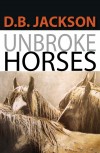
  • An Editorial Review of “Unbroke Horses” by D. B. Jackson

    An Editorial Review of “Unbroke Horses” by D. B. Jackson

    I read the early pages of D.B. Jackson’s Unbroke Horses with a heavy heart. If anything could be considered even partial mitigation for the senseless evil, cruelty, and disregard for life displayed by Jackson’s first-carved characters—Civil War deserters Brevet General Ike Smith and his dull-witted brother, Private Raymond Smith—one might seek an explanation in the gruesome experience of the war itself. Yet General Ike shows no inclination to change his postwar life. He seems to have no different thought for their future than living off the blood of others. After killing two farmers for fresh horses and an elderly man for his purse, the two take on a partner, a silent mulatto named Sandoval—thenceforth, Private Sandoval Smith.

    The murderous violence reaches its apex when the monstrous Smiths kidnap the slightly built, fair-haired Matthew Stanford, whose preacher father they had senselessly murdered on the trail. Though only fourteen years old, Matthew grows up all too quickly in their cruel hands.

    On one hand, this is a coming of age story of a boy, Matthew, who must survive by his wits when he is kidnapped by the three vicious men. It is also an epic account of the heroic battle waged by one of the trio’s badly injured victims, J.D. Elder, who must fight a deadly wrenching conflict as he tries to rescue the boy from the sadistic threesome. It is a powerful, un-blinking telling of the hard-fought war between the bravery of J.D. Elder who refuses to give up against the cunning cruelty of the malevolent trio.

    Caught up by his own part in the violence, Matthew is convinced that he has become as evil as his captors. Matthew’s destructive attitude becomes his worst enemy. The question becomes, will he find a way back from the darkness that has taken over him or will he be forever doomed to the cold, ugly life of violence and killing?

    While Jackson’s excellent prose and poetic sketches help balance the harshness of the first part of his story, in the second part these are played to advantage in portraying the majestic beauty of Montana’s mountains, the peace of a flowered meadow, the fury of the white-water streams, the camaraderie of cowboy life on a cattle ranch, the dangerous power of “unbroke horses,” and the spiritual wisdom that an old Indian draws upon.

    D. B. Jackson’s Unbroke Horses has carefully chiseled characters and is written with unflinching clarity in short, powerful chapters dominated by taut dialogue and hard hitting action.  If you’re a Cormac McCarthy fan who appreciates western literary thrillers, this masterfully written novel is a must-read.

    Unbroke Horses by D. B. Jackson was awarded the 1st Place for Western Literary Category in the Laramie Awards 2013 for Western fiction, Pioneer, and Civil War fiction, a division of Chanticleer Blue Ribbon Writing Competitions.

  • PubSmart 2014, Here We Come!

    PubSmart 2014, Here We Come!

    large1.-PubSmart_logo

    Come celebrate the new golden age of publishing and learn how to PubSmart!

    In April, the first ever PubSmart publishing conference will be held in beautiful Charleston, S.C.  

    “I can’t wait for PubSmart and the unparalleled opportunity to catch up on recent developments in this HughHoweyever-changing industry of ours. Conferences like PubSmart remind us of the need to continue sharing and learning from one another… we will have a chance to take stock together, to learn from one another, to see what tomorrow might hold. I don’t know what we’ll find there, but I promise the journey will be rewarding.”  PubSmart Keynote Speaker, Hugh Howey

    Click here for more information about  PubSmart 2014  April 16, 17, & 18, 2014 in beautiful Charleston, S.C.

    You will find Chanticleer Book Reviews participating in PubSmart’s collective brainstorming sessions, conversations, and education of the new publishing models and opportunities in today’s market place.

    • “Cultivating Influencers, Reviewers, and Book Clubs” panel on Thursday, April 17th.
    • “Dish and Dialog Brunch” on Friday, April 18th.
    • Look for our booth in the PubSmart Digital Discovery Zone
    • Stop by to find out the time and place for Chanticleer’s Happy Hour Rendezvous.

    WHO SHOULD ATTEND PUBSMART 2014?

    • Traditionally published authors who want to improve sales and discover new markets and avenues  for their work
    • Self-published authors who want to reach more readers
    • Aspiring authors seeking guidance from industry professionals
    • Independent publishers who want to better serve their authors and improve their performance

    Here are just a few of PubSmart’s Keynote Speakers and Presenters:

    Hugh Howey, author;  Jane Friedman, Publishing Industry Specialist; Laura Dawson, Bowker; Mitchell Davis, BiblioBoard; Brenda Copeland, St. Martin’s Press; C. Hope Clark, author; Rachelle Gardner, Literary Agent; Eric Liebetrau, Kirkus Reviews; Kathy Meis, Bublish; Will Murphy, Penguin Random House; Kristine Monroe, Kobo Writing Life; Amy Quale, Wise Ink Creative Publishing; Maya Ziv, Harper Collins

    Now this is something to CROW about! See you there!  Kiffer Brown 

    Kiffer Brown in Dresden