
 “Thank you for the wonderful review! Please pass on my thanks to your editor, who not only read the book carefully, but also took the effort to pass on her recommendations to me. It’s been a pleasure working with you, and I’ll recommend your service to others!”
Blog
-

Fiona Rawsontile, author of “Starlight Fortress”
-

Dale B. Jackson, author of “Unbroke Horses”
“Chanticleer’s editorial review is excellent and I appreciate the time you have taken to do such a great job with it.”
-

Register for the Chanticleer Awards Banquet, Conference, & Book Fair
We are excited to announce Chanticleer’s Awards Banquet, Book Fair, and Mini-Conference!
Register Today! Please visit our CBR Awards & Conference Page.
Saturday & Sunday, Sept. 20th & 21st at the Bellwether Hotel, by beautiful Bellingham Bay, Wash.

Meet other members of the Chanticleer Community of Authors and Readers at this fun and informative two-day event featuring:
- CBR Awards Banquet
- Books By the Bay BookFair at the Bellwether
- Mini-conference with workshops/social media sessions/marketing lessons
- Networking Opportunities
- Prizes and Drawings
The Chanticleer Awards Banquet will be held Saturday, September 20, 2014
Chanticleer Awards Banquet Information:
- We will announce the Chanticleer Grand Prize Blue Ribbon Writing Competitions 2013 Award- winning author and title at the Banquet and present the $1,000 award.
- Ten Overall Best of Genre Awards will also be presented at the Chanticleer Awards Banquet with the $250 prize for each of the Best of Genre winning authors and titles. (10 awards of $250 for each Blue Ribbon division of the Chanticleer Writing Competitions).
- The Banquet will start with a Cocktails at 6 in the evening. Dinner will begin at 7:30.
- Tickets and Reservations are Required. Seating is Limited. Guests are welcome to attend.
Books By the Bay Book Fair at the Hotel Bellwether, Sunday, Sept. 21st from 2 p.m. until 6 p.m.
- Open to the Public
- Author Readings
- Prizes & Drawings
- Events & Exhibitors
- Cash Bar with Local Beers, Wine, & Cocktails
- Food will be available for purchase
- Jazz starts at 4 p.m.
Mini-conference for the Chanticleer Community: Sat. & Sun. Sept. 20 & 21
CBR mini-conference will take place from 9 a.m until 5 p.m. on Saturday, Sept. 20th. Lunch and Break snacks included.
Sunday, Sept. 21st from 10 a.m. until 1 p.m. on Sunday, Sept. 21st. Coffee Break included.
- Master Workshops
- Keynote Speakers
- Social Media Sessions
- Marketing & Book Promotion Sessions
- Networking Opportunities
For those arriving on Friday, Sept. 19th, we are hosting a Cash Bar Cocktail Hour and other fun events.
Registration is now OPEN!
A HUGE THANK YOU to all of the members of the Chanticleer Community of Authors and Readers!
Your support and participation is greatly appreciated!
Here are some photos of the event and the winners from last year. Our very first CBR Awards Event!
Now that was something to CROW about!


-

An Editorial Review of “Home Fires” by Judith Kirscht
Home Fires by Judith Kirscht is a deeply emotional and dramatic story that unearths buried secrets kept by a family that spans three generations. The author unflinchingly faces the darker and often concealed sides of families and marriages and the dysfunctions that surface in a myriad of unexpected ways.
Kirscht takes the reader to sunny Goleta, California, where her protagonist, Myra, takes her morning ritual of a walk by the tide pools. Then, immediately we learn the need for the ritual. Myra is fighting to keep troubled feelings about her marriage at bay. The story takes off at breakneck speed when Myra can no longer deny her suspicions that her husband, Derek, has recently had an affair. When Myra confronts Derek, their conversation opens a Pandora’s Box of pent up feelings in her. Realizing this is not the first, nor likely will this be the last time he will cheat on her, Myra falls into a depression.
Myra finds herself on the receiving end of several differing opinions as to what she should do about Derek’s infidelity. Derek’s mother tells Myra that in Derek’s profession, that of college professor, his behavior is to be expected, but more than that, it doesn’t make their relationship less important. She tells Myra that their men will always come back home to them after they become bored with their latest dalliance.
Despite these reassurances Myra cannot bring herself to forgive Derek for what he has done. Myra decides to stay with Derek for the time being for the sake of their two teenage children, Peter and Susan.
Late one night though, dark fears arise in Myra’s mind. Accusations and suspicion abound when Myra hears her daughter cry out and catches Derek coming out of her room. He tries to convince Myra that their daughter was merely having one of her many nightmares, but she is unable to believe him.
Myra divorces Derek and begins a new life for herself. But when Derek makes a sudden reappearance, her world is turned upside down with new doubts, fears, and suspicions.
Although this novel masterfully renders the emotional hardships and tragedies that are sometimes part of dysfunctional relationships, it is not depressing to read. It is an evocative story that does not force opinions or an agenda.
Home Fires is an intelligently written, fast-paced family drama that unfolds into a suspenseful page-turner. With spot-on dialog and believable characters, Kirscht explores the complexities of human nature and family bonds that sometimes lurk beneath seemingly idyllic veneers of normalcy.
-
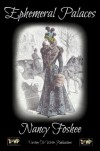
An Editorial Review of “Ephemeral Palaces” by Nancy Foshee
A winsome romantic mystery that takes place in the Gay Nineties or, also known as the Gilded Age of the Robber Barons.
Ephemeral Palaces, by Nancy Foshee, transports us to Chicago, 1893, when the city was hosting the World’s Columbian Exposition (aka the World’s Fair). The magnificence of the exposition was unparalleled in the event’s history with more than 27 million people attending its six month run.
The author unfolds her fast-paced story that deals with the submerged conflicts of the time that are just beginning to erupt to the surface: the emerging labor movement in counterpoint with the Robber Barons, the first Skyscraper emerging from the ashes of the Great Chicago Fire, and the swirling together of cultures from different nations and religions from the European mass migration. People from all walks of life were converging at first to build the exposition, then to work at it, and then to attend it. Different levels of the social strata converged at the exposition, along with the new public parks, sprawling roads and railways, and industrial works that were creating the now great city of Chicago. The women’s suffrage movement was beginning and starting to gain momentum, and the country was starting to finally heal from the American Civil War.
Readers will be swiftly caught up in this story of love at first sight, treachery, family secrets, sabotage, and technological innovations of the time, meshed with the conflicts between the classes, religions, and national origins. Foshee intertwines her cast of characters against the subtext of this backstory to make for a lively novel that historical, cozy mystery and romance fans will enjoy reading.
Shakespearean charades and surprises ensue when one of Chicago’s most prominent and most eligible young heiresses, Alexandra Schaffer, beguiles an up-and-coming young architect, Logan McConnell. They meet when she helps Logan pick up items from a display that he accidentally knocked over in the grandiose Marshal Fields department store. Meanwhile, Alexandra’s brother, Joey, has fallen head over heels in love with the Schaeffer family’s Swedish maid’s daughter Ingrid, but he is forbidden to pursue the relationship by the family patriarch.
Foshee adds elements of mystery and suspense, with a dash of ominous threats to this romantic story that takes place in this volatile time of American history. She deftly explores the dynamics of the Gilded Age and some of the era’s significant events that will impact the future of America and its capabilities to take on the challenges that the future will bring. Ephemeral Palaces is an engaging historical novel of the Gilded Age that was well-researched and well-written and a pleasure for this reviewer to have read.
-
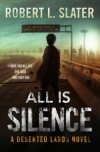
An Editorial Review of “All is Silence” by Robert L. Slater
Well, not actual silence. Okay, there are spells of eerie quiet. But All Is Silence is quite lively, considering ninety- five percent of the Earth’s population is dead in the wake of a lightning-fast viral pandemic. Robert L. Slater’s suspenseful, sensitive debut novel takes a grim subject and characters who face disaster, and somehow creates a thought-provoking yet playful futuristic romp.
Slater juxtaposes the tragic (a young girl singing at a loved one’s deathbed) with the darkly comic (hey! plenty of unused dishes – throw the dirty ones in the backyard!). He grabs our heartstrings even as he keeps us snorting with laughter at the probability that, yes, this is just what a group of random teens would do if suddenly thrust into this Apocalyptic world.
Lizzie, a suicidal teenager whose mother dated jerks, starts the novel with a backlog of abuse and a chip on her shoulder the size of a concrete block. When the family members she loved to hate all die, she ventures into the deserted streets of her midsized Pacific Northwest hometown and begins liberating the neighbors’ pets and collecting cell phones. She discovers that not everyone has died: a few, like herself, are apparently immune, although just as big schmucks as ever. Others survived, but are only half there – the “dog people” – as confused, pathetic, and potentially dangerous as a pack of former pets turned feral.
Devastated and lonely, Lizzie is ready to call it quits, but her final, desperate Facebook post brings childhood friend and would-be flame Zach to the rescue. The two discover their mutual friend Nevaeh has also survived and needs them. From here on out, the novel barely takes a breath as the threesome – with a growing ragtag band of misfits in tow – zooms from snowstorm to wildfire, from Oz-like techno geek to crazed kidnappers, in a cross-country quest to find a stranger from Lizzie’s past who might be the key to her future.
Slater offers a sometimes humorous, sometimes incisive look at human nature, as Lizzie and her friends collide with transitional mini-societies that spring up in the wake of the disaster. Organic gardeners organize for survival in one place, while a paramilitary structure springs up to fill the vacuum in another – and everywhere, people are raiding Walmart for guns and ammo. Slater weaves in current global issues, as we realize with a start there’s no longer a need to worry about the human carbon footprint or issues of scarcity. “You mean all of a sudden there’s enough gas. And enough water,” Nev says. Zach adds: “Now a guy can shower you with diamonds after a quick trip to the jewelry store.”
Slater’s cast of characters occasionally becomes unwieldy, particularly at the end of the book, as new people seem to be drawn in like lead filings to a magnet, while others are thrown off by the centrifugal force of the story’s swirling momentum. Some rough edges, such as punctuation goofs, plus a bit of a cliffhanger ending, may mar for some this otherwise absorbing and satisfying read.
Bottom line: Slater draws us into a familiar-yet-drastically-changed world and makes us care about his cranky, vulnerable, sometimes-exasperating, always-engaging characters. His terrifyingly real dystopia reminds us that, really, the only choice for Lizzie, Zach, Nev, and all the rest of us, is to keep loving one another and find some way forward, even when our future is turned upside-down.
All is Silence by Robert L. Slater earned a 1st in Dystopian Category in the highly competitive Dante Rossetti 2013 Awards for Young Adult Fiction, a division of the Chanticleer Writing Competitions.
“All is Silence” is Book One in the “Deserted Lands” series by Robert L. Slater.
-
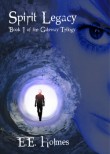
An Editorial Review of “Spirit Legacy” by E.E. Holmes
Spirit Legacy is an engaging Young Adult paranormal/thriller novel that follows a sharp-witted young woman with, as she puts it, “isolationist tendencies,” whose discovery of her psychic talents is only the beginning of her singular coming-of-age journey.
Jess Ballard knows how to survive—she has to, having spent her life on the move with her alcoholic mother, whose personal demons kept them running. When Elizabeth Ballard dies in a fall, Jess heads to Boston to attend St. Matthew’s College, and to shelter in the care of her aunt Karen. All of Jess’s life, Elizabeth had been estranged from her family, including her twin sister, without explanation. Karen proves to be equally elusive, and a visit to Jess’s grandfather in a nursing home leaves the 17-year-old even more uneasy about her family’s history.
For a while, that uneasiness takes a back seat to the busy distractions of college life. Her Goth style and whip-smart attitude serve her well: she brooks no nonsense from rivals nor admirers and is protective of her obsessively neat roommate, Tia. In Jess, Holmes has given us a charismatic character whose dialogue and observations are perceptive and imaginative—Jess is an excellent model for how to value your self-worth and embrace your differences.
She’s also human. Torturous nightmares, in which voices call out to her, plague her sleep, making it difficult to keep up with her coursework. Seeking refuge and quiet study time one night in the library, Jess meets an attractive but enigmatic young man. Mentioning his name to a professor the next day brings surprising consequences and a psychiatric referral—because Evan, the young man, happens to be dead. But taking ghostly form doesn’t keep him from writing a plaintive message in her textbook: “Help me. Find Hannah.”
Jess and Tia search in vain for the mysterious Hannah. Another visitation, this time from a little boy who’d died the previous night, impels Jess to enlist the help of the college’s professor of parapsychology, David Pierce. With his assistants, they conduct a paranormal investigation of the library, which begins like an entertaining episode of “Ghost Hunters” before taking a terrifying turn when Jess, alone in the bathroom, is accosted by a ghost, with many more waiting to pass through her.
When she recovers, Jess learns about the Durupinen, an ancient line of human portals through which restless spirits need to pass in order to reach the other side. With much difficulty, she draws the truth of her family history out of her aunt Karen.
E.E. Holmes’ tale starts out strong and just keeps getting stronger, revealing a storyline that’s believable in large part to its well-drawn characters, its accurate depiction of college life, and the familial compassion that surfaces along with the long-held secrets.
Spirit Legacy is the first book in The Gateway Trilogy by E.E. Holmes. Spirit Legacy won a Dante Rossetti Award for Young Adult Fiction 2013, First Place, Thriller Category.
-
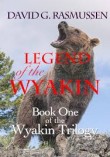
Editorial Review of “Legend of the Wyakin” by David G. Rasmussen
A Nez Perce shaman’s chant about a meadowlark in the prologue draws us into this fascinating, thought-provoking historical novel. The shaman is chanting about “animal spirits…of wyakin…” in 1865. Then the author moves us forward into our time, as teacher/historian/writer John Thompson and his 13-year-old son Steve are exploring along the Missouri River Breaks of central Montana.
Steve strays from his father and encounters a huge silver-tipped grizzly bear. The bear is almost upon him when a strangely dressed boy, about Steve’s age, leads him to safety by taking a zigzag path up the loose shale hill. As they near the top, John hears the boy say, in Spanish, “Es Modrables, El Oso” (That is Modrables, the Bear). John grabs Steve’s hand and pulls him up. When they look around, the boy is gone, and so is the bear! Astonished and confused, they head for their SUV. Steve pauses when he hears a meadowlark and seems to understand its song, “Listen and see. There is more.” But it is John who sees—a group of people, obviously of an earlier time, staring with wonder at the SUV. As Steve catches up, they disappear.
Their shared supernatural experiences compel father and son to research the locale and its history in old ships’ logbooks and personal diaries, revealing the stories of true, historical personages. The writer in John lets his imagination fill in the blanks of the dry historical documents, or perhaps he was inspired by the spirits of the characters—both human and animal—who are brought to life in Legend of the Wyakin.
More than just an enjoyable historical novel, Rasmussen’s respect and curiosity for the teaching and traditions of First Nations Native Americans shine through in his writing. He captivated this reviewer with his insight into their beliefs in a spiritual world not just of people, but of animals, trees, thunder, and much more, including riverboat travel on the Upper Missouri River.
As chapter one begins, Rasmussen takes us back to June 1865 when the Gold Rush was in full swing, as Captain Phillip La Mar, in the wheelhouse of his stern-wheel riverboat, Jupiter, enters the day’s events in the logbook. His major concern is that three crewmen have cholera—the deadly scourge of the riverboats that ply the Missouri River, carrying freight and passengers destined for Fort Benton (Montana) and the goldfields beyond.
In addition to impatient gold miners, eager to claim a stake and make a fortune, the passenger list includes two Jesuit priests—the arrogant and intolerant Father Dolores and his younger colleague, the service-oriented Father Otis; a Jewish family from Spain—the knowledgeable and skilled Dr. Modrables, his beautiful and helping wife Rosa, and their intelligent and curious 13-year-old son Cortez; and others, such as Mr. and Mrs. Campbell—who soon become embroiled in the struggle for needed cholera treatment resulting from Father Dolores’ insistence that Catholic passengers not accept what he contends is the sorcerous treatment offered by the Jewish Dr. Modrables’ medicinal herb teas, despite their proven efficacy with the three crewmen and others.
Legend of the Wyakin vividly portrays the mores of the time: racial and religious bigotry, ignorance blinded by fear and greed, rampant disease, and driving desperation that make so many endure danger as they seek a better life. Small acts of kindness from strangers that stand out like beacons in the night during tumultuous and violent times are also vividly conveyed by the author.
Soon, young Cortez has to draw on the strength and wisdom bestowed upon him by his loving and nurturing parents as he finds himself alone in a strange land. He settles himself into the safety of a cave just below the crest of the sandstone cliffs of the Missouri River Breaks. While exploring the prairie beyond the crest, he encounters, and incredibly befriends, an aging grizzly bear, whom he names Modrables, El Oso.
Cortez soon makes another unexpected friend, a Nez Perce Indian boy, Samuel, just his age, who speaks English. The boys share their thoughts on many things, including the Jewish, Christian, and Indian religions. Samuel tells Cortez of the wyakin, the animal spirits that guide and protect the lives of Indians, and says that El Oso is surely Cortez’s wyakin, a very powerful one, even though he is not an Indian.
When violence erupts again, the young Cortez encounters more challenges that he feels he alone must shoulder. But one morning Cortez sees El Oso’s footprints circling their campsite. His wyakin had been following him, protecting him! In the days to come, Cortez realizes that El Oso will always be with him. And his journey in this new land has just begun. This journey is consistently overshadowed by Cortez’s need for a life-changing decision that he must make—should he accept becoming an adopted Nez Perce with the band’s safety and family or try to return to the white-world with its uncertainty and loneliness.
“There is [fusion_builder_container hundred_percent=”yes” overflow=”visible”][fusion_builder_row][fusion_builder_column type=”1_1″ background_position=”left top” background_color=”” border_size=”” border_color=”” border_style=”solid” spacing=”yes” background_image=”” background_repeat=”no-repeat” padding=”” margin_top=”0px” margin_bottom=”0px” class=”” id=”” animation_type=”” animation_speed=”0.3″ animation_direction=”left” hide_on_mobile=”no” center_content=”no” min_height=”none”][much] more,” as the meadowlark suggests, for Rasmussen’s readers (young and old) to enjoy and learn in this expertly crafted tale of adventure and coming of age. We are looking forward to reading the next book in the “The Wyakin Trilogy” saga by this award-winning Western author.
[/fusion_builder_column][/fusion_builder_row][/fusion_builder_container]
-
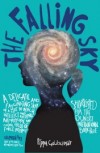
An Editorial Review of “The Falling Sky” by Pippa Goldschmidt
What would it be like to discover two connected galaxies that The Big Bang theory says are impossible?
Not many people have even imagined facing this question, but in The Falling Sky Pippa Goldschmidt takes readers into the mind of an astronomer who not only observes the connected galaxies but can’t find anything wrong with her own work—no matter how hard she tries to refute her findings.
This conundrum creates a human drama as fraught with turmoil and heartache as any found in the best novels of any genre.
Only half of Goldschmidt’s novel is about astronomy, however. The chapter titles alternate between “Now,” in which Jeanette is a young scientist, and “Then,” which focus on her early childhood. Reflections on “Then” are also woven into the fabric of chapters on “Now,” so the reader can understand how Jeanette’s tragic and disturbing childhood has shaped her ambivalent present. This, by the way, is not a story of childhood sexual abuse. Nor does it in any obvious way tie her early childhood experiences to her present sexuality, although I’m sure some readers will find connections.
In an exquisite scene on a Chilean mountaintop in the first “Now” chapter, Jeanette escapes the windowless control room of the telescope to gaze at the night sky the way she did as a child.
“She quickly gets her sea legs as she navigates her way from the jewels of the Southern Cross to the fragile puff of the Large Magellanic Cloud, and on to the crowded centre of the Milky Way. There is a rhythm involved in moving from star to star that she can match to her breathing, so at the peak of each breath she arrives at a star and then swings herself onto the next one, spanning the darkness.”
A paleontologist who finds a fossil inconsistent with the theory of evolution and a climate scientist who discovers a declining temperature trend contrary to global warming are in exactly the same predicament. The controversies surrounding “negative results” in science should make serious readers want to experience the thoughts and feelings of a realistic scientist confronted with a discovery that doesn’t fit the explanation accepted by nearly all trained scientists in their field.
For readers who aren’t scientists, the most important feature of this part of the story, and the most surprising to many, will be the doubt, even disbelief, that follows such a discovery. Back in Edinburgh, Jeanette tackles head on the possible reasons why her observation might have some explanation that is completely consistent with the Big Bang. The average person may even find Jeanette’s tenacious refusal to accept her own painstaking work pathologically perverse. Experienced scientists, however, will empathize completely.
And when Jeanette finally decides to publish her finding, hoping someone else will figure out what’s wrong, the reader sees from the inside what it is like to defend research that is inconsistent with a major theory. Her personal stakes are high because her reputation is sure to be questioned. Her job and long-term future could be on the line, too. Several nicely described scenes of in-house seminars and conference papers add weight to the readers’ understanding of Jeanette’s skepticism and her ambivalence about publishing the observation.
There’s a risk that this review will lead some readers to think The Falling Sky is a cautionary tale about how scientists who deviate from orthodoxy are punished by the scientific establishment. Goldschmidt will quickly disabuse them of this popular misconception.
Jeanette, the protagonist, is very much part of the scientific establishment and fiercely committed to its standards, goals and theories. She wants exactly what her colleagues want: more evidence and evidence from different lines of investigation. The latter is nicely embodied in a space telescope project going on in Edinburgh, as well as a lovely subplot involving a galaxy survey. In these details, Jeanette perfectly embodies how almost every young scientist would behave.
In an important scene Jeanette is pushed into a television appearance that quickly turns into a nightmare that will ring true for any scientist interviewed by the media. Two television “celebrities” misunderstand and ridicule her, and then, ignoring all the qualifications of careful science, they insist on the simpleminded conclusion that one negative finding demolishes a theory that explains tens of thousands of equally careful observations.
The Falling Sky resolves some of Jeanette’s personal conflicts but leaves the scientific mysteries open to further investigation. No other ending could be more appropriate and authentic. To say more about the story would give away the wonderful twists and turns of the plot. Lay readers and scientists alike will find Goldschmidt’s novel entertaining and discover in Jeanette a thoroughly captivating and charming person, one who will resonate in memory long after they have read the last page of the book.
-

The Somerset Awards for Literary & Mainstream Fiction: First in Category Winners
The Somerset Awards recognize emerging new talent and outstanding works in the genre of Contemporary, Mainstream, and Literary Fiction.

The Somerset Awards is a division of Chanticleer Blue Ribbon Writing Competitions. This contest division is named after W. Somerset Maugham (1874- 1965), author of “The Moon and Sixpence,” “Of Human Bondage,” “Razor’s Edge,” and other literary masterpieces. Maugham was trained and qualified as a medical doctor. He served in the Red Cross ambulatory corps in WWI, then was recruited in the British Secret Service. During and after the war, he traveled extensively.
We are honored to post the Official List of 1st in Category Winners for the Somerset Awards 2013.
These 1st Place Category Winners have been read cover to cover and have made it through seven rounds of judging. The authors of the winning titles will receive a Chanticleer Editorial Book Review and promotional package.
First Place Category winners will compete for Overall Best of Somerset Awards for Contemporary, Mainstream, and Literary Fiction 2013. Overall Best Book for the Somerset Awards 2013 will win a $250 purse and will compete for the Chanticleer Blue Ribbon Awards Grand Prize for Best Book 2013 and a $1,000 purse (U.S. Dollars). Awards will be announced and presented at the Chanticleer Awards Banquet on September 20th, 2014.
The Overall First Place Category Winner for the Somerset Awards 2013 is:
Jeremy Bullian, Individually Wrapped
The First Place Category Winners Titles & Authors of the Somerset Awards 2013 are:
- Contemporary: Chocolates on the Pillow by Sean Dwyer
- Satire: Brain: The Man Who Wrote the Book that Changed the World by Dermot Davis
- Mainstream: The Prodigal by Michael Hurley
- Speculative Fiction: Individually Wrapped by Jeremy Bullian
- Adventure/Suspense: Tarnished Hero by Jim Gilliam
- Literary: The Opposite of Everything by David Kalish
- Women’s Fiction: Cheating the Hog by Rae Ellen Lee
- New Adult: Saving Faith by Patrick M. Garry
Congratulations to the Somerset Writing Competition 2013 Finalists and 1st in Category Winners!
The staff and judges at Chanticleer Blue Ribbon Writing Competitions want to thank everyone who participated in the Somerset Awards Writing Competition 2013. The selection process was quite competitive.
We are now accepting entries into the Somerset Awards for 2014. Click here for more info.
CBR — Discovering Today’s Best Books with International Writing Competitions!


