Blog

  • An Editorial Review of “Waking Up Dying: Caregiving When There is No Tomorrow” by Robert A. Duke

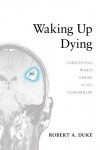
    An Editorial Review of “Waking Up Dying: Caregiving When There is No Tomorrow” by Robert A. Duke

    An intensely personal and compelling narrative, Waking Up Dying offers an insider’s perspective of the passage through cancer beginning with Duke’s wife’s diagnosis of stage IV glioblastoma brain cancertypically a fatal condition.

    Duke found the entire caregiving experience an agonizing, non-stop emotional rollercoaster: unbelievably frustrating, emotionally searing and increasingly chaotic.

    The author’s story of his dedicated and loving role as caregiver entails four phases of this tortuous journey: the couple’s daily coping with the disease; the author’s struggle through the health care system; the emotional reality of caregiving his dying wife; and the carefully documented material put forward as a basis for reforming the care system.

    Duke took on the mantle of caregiver for his wife, Shearlean, with no practical experience, no history of what it is like to take care of a loved one with an acute health condition, or little knowledge of what was involved or to be expected from the U.S. healthcare system, nor from him as her advocate and caregiver.  Nevertheless, Duke immediately committed to her treatment and care. His goal appeared simple:

    She would remain at home throughout the course of her illness and would die at home in her own bed with me beside her when it was time.

    But life in the cancer ward was never about simple. While Shearlean confronted a regimen of powerful medications, facing the effects of radiation and chemotherapy, and piecing together a quality of life, Duke had his own challenges. Over an 18-month period, Duke chronicles his caregiver’s routine:  managing medications, diet, medical bills, schedules, and fights with a never-ending bureaucracy that undermined his every effort to facilitate care. The physical, psychological and financial burdens that he shares with his readers are beyond comprehension.

    Help and encouragement from friends and hired help weren’t all the support the couple needed. Shearlean suffered the effects of aphasia, affecting the brain’s language center, seriously affecting her academic livelihood as a journalist and teacher.  She believed that working with a speech therapist could help repair the damage of cancer and surgery, including a serious loss of skills in reading, writing, speaking, typing and listening.

    There was nothing that the speech therapist could do for her. Her recommendation was only that Shearlean stay out of groups, where language would be more difficult to manage, even for a highly educated person. Over the course of her disease, Shearlean’s language abilities remained, allowing her to continue teaching, although speaking intelligibly was highly dependent on her overall emotional condition and physical strength.

    The author summarizes their life together with terminal cancer. He deemed it…

    A death sentence—[fusion_builder_container hundred_percent=”yes” overflow=”visible”][fusion_builder_row][fusion_builder_column type=”1_1″ background_position=”left top” background_color=”” border_size=”” border_color=”” border_style=”solid” spacing=”yes” background_image=”” background_repeat=”no-repeat” padding=”” margin_top=”0px” margin_bottom=”0px” class=”” id=”” animation_type=”” animation_speed=”0.3″ animation_direction=”left” hide_on_mobile=”no” center_content=”no” min_height=”none”][which] should have obliterated any semblance of normal life. There were days when this was true, like when Shearlean had great pain, but mostly it wasn’t. A balm to our souls was how ordinary life remained… although things were hard, confusing and frustrating; we were also okay in many respects.

     The health care system was another, even more horrendous story, characterized by “bad medicine and underwhelming care” was what Duke said he experienced. Physicians could be inaccessible, indifferent and/or negligent; prescription snafus commonplace occurrences; medication lists impossible to decipher. And, he found insurance companies to be arrogant corporate entities, with a single goal: the bottom line of profit, regardless of patient need. Assertive caregivers felt that they were not welcome, even actively rebuffed, from participating in their loved one’s care or for advocating for their patients’ rights, Duke posits.

    When pursuing essential help, Duke stated that he was often dismissed by doctors and nurses alike: “We have other patients.”  How unbelievably heartless and inhumane.

    Duke is adamant about  how medical personnel should interact with cancer patients:

    “Reception and administration should be limited, efficient, personal, knowledgeable and considerate. They should never preempt the patient’s tranquility, equilibrium, peace of mind or personhood.”

    The author could have written a simpler book, just the story of the final months of his 40-year love affair with Shearlean, his intelligent, accomplished wife. Instead, he took on far more: the intimacy of caregiving and the battle to understand and document why the system was failing him and his loved one.

    Waking Up Dying is a blockbuster; a hit between the eyes. Duke challenges the reader to take those tortuous steps he has—feel his sorrow, elation and pain, walk his walk through the everyday rituals of care, and talk the talk of his analysis of much-needed system reform.

    As a doctor of sociology, a professional caregiver consultant, educator and researcher of caregivers and their patients, I know of no other book on caregiving that details the precise obstacles that caregivers may encounter and must contend with because of a disorganized, broken system. This book is a must-read for caregivers. Be prepared for a mind-blowing, ultimately, illuminating and educational experience.[/fusion_builder_column][/fusion_builder_row][/fusion_builder_container]
  • An Editorial Review of “Measure of Danger” by Jay Klages

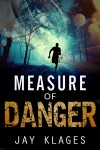
    An Editorial Review of “Measure of Danger” by Jay Klages

    This techno-thriller pitches “The Chapter,” a high-tech, well-organized, and ruthless para-military organization, against a former intelligence officer with a behavioral disorder that makes him an unpredictable anomaly to all sides.

    In Measure of Danger by Jay Klages, The Chapter has infiltrated every level of government, and their financier, a drug cartel, has upped the ante and their demands. The United States is in imminent danger, but no one knows from whom or from what, and the clock is ticking.

    Kade Sims feels he has been unfairly dumped from his former position in Army Intelligence because of out-of-control behavior due to a condition called hypomania. He’s bored, out of shape, and stuck working part-time at Home Depot instead of at the Pentagon. So when the FBI knocks on his door of his Virginia apartment and asks him to go undercover in Oregon to infiltrate a mysterious quasi-militia group called The Chapter, he’s eager to go to work for his country again.

    His training goes well, but on his initial scouting mission into The Chapter’s territory, the plan goes awry when his Jeep hurtles off a muddy mountain road. Kade wakes up strapped to a bed in The Chapter’s compound. He is now inside The Chapter sooner and with a lot less control than he or the FBI planned. To make matters worse, his brutal guards know not only who he is, but where his beloved sister goes to school. When they can’t break him, they decide to use his skills to their advantage, confident they can control him at every step with a computer chip they implanted into his head.

    But Kade’s hypomania proves to be a benefit when it gives him resistance to The Chapter’s hi-tech mind-control methods. He finds creative ways to communicate with the FBI, his roommate, and family, and the game is on as each side seeks to control the situation.

    But there are more than two players in the deadly game. The Chapter is hiding under the banner of an agricultural biotech company called AgriteX, whose most popular crop is bio-engineered marijuana. A drug cartel is its biggest client. However, the cartel believes that AgriteX has violated their contract to supply supercharged marijuana seeds, and the AgriteX leaders are now on the cartel’s hit list.

    The Chapter is dangerous both to its recruits and to the American government along with just about anyone they come into contact with.  As Kade becomes more involved in the shadowy organization, his contacts with outside parties and his resistance to being controlled make The Chapter’s leader suspicious of his loyalty. Will he survive his assignment with mind and body intact? As the suspense builds to a fiery nationwide conclusion with all weapons drawn, thriller readers will be glued to the pages to find out what happens next as the plot twists and spins with unrelenting action and surprise as the pieces and clues come together.

    Measure of Danger, Jay Klages’ debut novel is a page-turning techno-thriller written by a former military intelligence officer and a West Point graduate. Klages experience and expertise is revealed with his believable dialog, details, and operative descriptions. The work features military trained Kade Sims, and his accountant sidekick, Alex Pace; we can’t wait to read what other dangerous puzzles this unlikely dynamic duo will be called on to solve.

  • An Editorial Review of “Dark Seed” by Lawrence Verigin

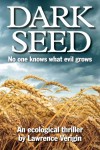
    An Editorial Review of “Dark Seed” by Lawrence Verigin

    Genetic engineering, murder, corporate-conglomerate profiteering, Interpol, and a plot to control humanity make Dark Seed, by Lawrence Verigin, a suspenseful thriller novel.

    When jaded journalist Nick Barnes learns that Dr. Carl Elles has contacted him to say that Barnes’ recent article about the positive contributions of Naintosa Corporation is all wrong, Barnes feels compelled to educate the scientist about information laundering—the strategic planting of false information in the media so the planting organization can quote the media later for their own benefit. “It makes total sense,” Dr. Elles replies. “Naintosa employs that strategy on a regular basis.” Nick was about to explain to the scientist why he needed to check Dr. Elles’ information, when the scientist soon proves to Nick  that the journalist is the lazy dupe who just published Naintosa’s propaganda in a complimentary article.

    Nick Barnes is a likeable, self-deprecating, and disillusioned investigative reporter who has been burned before. He now seems incapable of personally investigating much of the information that falls into his lap, preferring to play it safe. However, the time is 2000, so computerized data and communication systems were not as widely available as they are today.

    Nick agrees to help Dr. Elles write an exposé about the actual results and implications of Naintosa’s genetic engineering projects. Then Elles is murdered and suspicious events cause Nick to realize that both he and Dr. Elles’ daughter Morgan are next on the hit list. They team up and run for their lives.

    Through the data in Dr. Elles’ notebooks and clues revealed through meditations and dreams, they discover terrifying links between corporations that produce genetically engineered foods, agricultural chemicals, and pharmaceuticals. The implications are so wide-ranging and so frightening that soon Nick and Morgan find they can no longer trust anyone. And they become more and more convinced that they cannot event trust the food that they eat.

    The author’s personal knowledge of Seattle and Maui, as well as the city of Vancouver, and other places in British Columbia, Canada, shine through with the vivid and detailed descriptions of these locales as the characters race through them. Morgan and other secondary characters are not fleshed out in great detail, but their roles serve to advance the plot efficiently. Verigin deftly includes enough scientific information to ground this “Lab Lit” novel while keeping the reader entertained and in suspense.

    Dark Seed: No One Knows What Evil Grows, is a strong debut novel by Lawrence Verigin that adeptly tackles the pertinent and socially relevant topic of GMO’s with tight writing and fast-paced action. This thriller’s premise of international corporations controlling the food supply and sacrificing human health for the sake of profits is so plausible that it is horrifying. Readers will find themselves rapidly turning the pages to see what happens next in this disturbing “OMG this could really happen”  novel.

  • The Paranormal Awards 2013 for Supernatural Fiction: First in Category Winners

    The Paranormal Awards 2013 for Supernatural Fiction: First in Category Winners

    The  Paranormal Awards  recognize emerging new talent and outstanding works in the genre of  Supernatural Fiction.

    StrawberryhillThe Paranormal Awards recognize emerging new talent and outstanding works in the genre of  Gothic and Paranormal Fiction as defined as stories that are set in a normal world where there are supernatural or speculative characters  or elements that are beyond the range of scientific explanation that interact in what is otherwise considered a normal construct. Gothic fiction (also known as literary horror i.e., Frankenstein, Dracula, and Poe’s works (not graphic horror) is also another sub-genre of Paranormal Fiction.

    We are honored to post the Official List of 1st in Category Winners for the Paranormal  Awards 2013.

    These 1st Place Category Winners  have been read cover to cover and have made it through seven rounds of judging. The authors of the winning titles will receive a Chanticleer Editorial Book Review and promotional package.

    First Place Category winners will compete for Overall Best of Paranormal Awards for Supernatural Fiction 2013.  Overall Best Book for the Paranormal Awards 2013 will win a $250 purse and will compete for the Chanticleer Blue Ribbon Awards Grand Prize for Best Book 2013 and a $1,000 purse (U.S. Dollars). Awards will be announced and presented at the Chanticleer Awards Banquet on September 20th, 2014.

    The Overall First Place Genre Winner for the Paranormal Awards 2013 is:

    Lisa Voisin, The Watcher

    The First Place Category Winners Titles & Authors of the Paranormal Awards 2013  are:

    • Young Adult: Spirit Legacy by E.E. Holmes
    • Contemporary Gothic: Poe, Nevermore by Rachel M. Martens
    • Angels/Demons: The Watcher by Lisa Voisin
    • Historical: The Immortal American by L. B. Joramo
    • Mystery/Thriller: The Dream Jumper’s Promise by Kim Hornsby
    • Romance: Montana Mustangs by Danica Winters
    • Urban/Edgy: The Third Option by Ben A. Sharpton
    • Supernatural Powers: Witch’s Malice by David Hutchison
    • Vampires/Werewolves: Dancing on the Dark Side by Mairin Fisher-Fleming

    Honorary Mention for Best New Manuscript: Bayview by Penny Page

    Congratulations to the Paranormal Writing Competition 2013 Finalists and 1st in Category Winners! https://www.chantireviews.com/2014/03/26/paranormal-awards-2013-finalists-official-list/

    The staff and judges at Chanticleer Blue Ribbon Writing Competitions want to thank everyone who participated in the Paranormal Awards Writing Competition 2013.

    We invite you to participate in the 2014 Paranormal Awards!  Click here for more info.

    CBR – Discovering Today’s Best Books with International Writing Competitions! 

  • An Editorial Review of “Double or Nothing” by Meg Mims

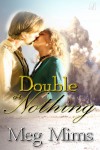
    An Editorial Review of “Double or Nothing” by Meg Mims

    Murder, mystery, intrigue, and romance make “Double or Nothing” by Meg Mims a historical Western page turner. The plot twists, engaging characters, and keen writing will keep you in suspense to the very end.

    The mystery is set during the rough and tumble California mining days of 1869. The author, Meg Mims, vividly brings these times to life with her accurate historical research and her clear and striking imagery of bustling towns, dangerous quicksilver mines, and rugged landscapes.

    Lily, our protagonist, is a spirited and headstrong young woman who is recovering from her two-thousand mile cross-country journey by train (that was not anywhere as safe and luxurious as she had previously read about in newspapers).

    She is still in mourning for her beloved father who died a few days before her twentieth birthday. Lily believes he was murdered in cold blood by one of his trusted business associates whom he was a partner with in a California quicksilver mine. Lily is determined to find the murderer and bring him to justice. She heads out immediately after the burial to Sacramento to her guardian uncle, her father’s brother, who also was a partner in the same mine with her father.

    Upon her arrival, Lily’s Uncle Harrison immediately throws her (Lily will inherit her father’s fortune on her 21st birthday) into socializing, attending soirees and hosting his dinner parties.  She quickly finds out he has a hidden agenda; he is intent on marrying her to a business associate in order to further his political ambitions before she comes of age and becomes independent of his guardianship. Harrison has forbidden her from seeing the one she truly desires, “Ace” Jesse Diamond. He is the ruggedly handsome gunslinger who saved her life more than once on her dangerous journey to Sacramento from her Evanston, Illinois home.

    Lily is  introduced to the man her uncle has planned for her to marry—Santiago—at a formal dinner soiree. Sparks and witty repartee fly when Ace enters the room and is seated next to them. He looks just as dashing in his cutaway coat and fancy white shirt as he did on horseback wearing his trail clothes.  His good looks, southern drawl, and disarming smile reaffirm Lily’s feelings for him.

    Ace, as it turns out, is Santiago’s business partner. Uncle Harrison then announces to the room of two hundred guests that Santiago and Lily are engaged to be  married. Ace leaves the dinner party in a huff after spitting out a toast to “the couple.” And the story has just begun.

    Headstrong Lily plans to use a visit to her friends in San Francisco as a way to escape the clutches of her uncle before he forces her into marrying Santiago. The rebellious Lily decides never to return to her uncle. She is also determined to find Ace so she can explain that she had no idea about the engagement and that she would never marry Santiago.

    Lily’s disappearance sets off a chain of events.  In way over her head, Lily’s strength is tested when she realizes just how deep the devious mine owners’ scams go and how connected they are to the politicians. She discovers just how low they will go to obtain and to keep their wealth and power when they frame Ace for a deadly explosion. And Lily is the only one who can prove his innocence.

    “Double or Nothing” by Meg Mims was awarded the Laramie Awards for Western Fiction First Place for Mystery.  An entertaining Western mystery read with just the right amount of romance. It is the second novel in the Lily Granville Western Mysteries series and we look forward to reading more about more of Lily’s adventures. Thank goodness that Meg Mims leaves her readers with the knowledge there is more to come!


  • Guy Kawasaki, author of “APE: Author, Publisher, Entrepreneur”

    Guy Kawasaki, author of “APE: Author, Publisher, Entrepreneur”

    PageLines- guy-kawasaki-cropped.jpgChanticleer’s review of APE: Author, Publisher, Entrepreneur was a key component of its successful launch. I would recommend CBR to authors who are passionate about their craft.

  • “How to Create a Great Book Cover for Today’s Digital Publishing World” by Argus Brown

    “How to Create a Great Book Cover for Today’s Digital Publishing World” by Argus Brown

    book stacks 0,,480734_4,00Your book cover is one of the first impressions that prospective readers have of your book.


    [fusion_builder_container hundred_percent=”yes” overflow=”visible”][fusion_builder_row][fusion_builder_column type=”1_1″ background_position=”left top” background_color=”” border_size=”” border_color=”” border_style=”solid” spacing=”yes” background_image=”” background_repeat=”no-repeat” padding=”” margin_top=”0px” margin_bottom=”0px” class=”” id=”” animation_type=”” animation_speed=”0.3″ animation_direction=”left” hide_on_mobile=”no” center_content=”no” min_height=”none”][Editor’s Note: We have observed readers scanning book covers at  books stores, book fairs & festivals, and at conferences across North America. The first point of interaction between a potential reader and a book is almost always the cover. So, we asked Chanticleer’s  IT/Computer Wizard, Argus Brown, if he had any ideas about how to help authors step up their designs for book covers. And he does!]

    The cover is almost, if not,  as important as the content of a book for it to get  discovered in today’s visually oriented society. 

    If the cover is a dud, you can expect that the reader will pick the shinier apple out of the bin (no matter that it doesn’t taste as good) or the book with the more enticing cover off the table or shelf.

    At Chanticleer Book Reviews & Media, we get to see thousands of book covers every year and find that most of the covers could use  updating for today’s digital/e-pub book market.

    We have learned that most Indie authors tend to invest their publication dollars into editing and formatting costs, as they should, with little room left in their budgets for hiring  a professional cover designer.

    Canva is a new book cover design tool that  is easy to use.  I’ve created the following article for authors on cover design and a STEP-By-STEP 15 minute video (click for the video) to get you on your way to creating an effective (i.e. a book cover that will increase sales of your book) book cover. And even, if you do hire a professional, this tool will help you stretch your publishing dollars.

    Book Cover Design in the Digital Age of Publishing

    Size Does Matter

    A Trip to the Stars
    Pre-Internet
    A Trip to the Stars
    Updated

    One of the first things to take into account is that websites  are going to take your beautiful book cover and reduce it into a tiny stamp-sized thumbnail. Your cover has to look good when shrunk to 150 pixels (about the size of two postage stamps). On the left  is an example of one of our favorite books that we reviewed whose cover was created before e-book readers.

    Notice that you really can’t make out too much of the cover’s striking design in the thumbnail and you certainly can’t read the title or who the author is.

    Several years ago the publisher updated the cover so that the title and author’s name was more visible at a 150 pixels.

    Pick a Relevant Background

    The background should relate to your book in a meaningful way. I’m not sure if either of the above examples really hits the mark, but the biggest change from the updated example is the inclusion of more testimonials on the front cover (although you can’t see them in the thumbnail). However, the most important change is that readers can read the title and author’s name. The other thing that works well is the high contrast between the title and the background. You want to make sure that text pops out of the image. We suggest to limit yourself to one testimonial on the front cover. You have our blessing to put in as many pages of them before the book’s title page.

    Below is my Step-by-Step explanation or you can watch my 15 minute tutorial video  of how to use this powerful new tool that is easy to use.

    Canva Simplifies Cover Design

    For most of our design work we use Adobe Photoshop or their open source equivalent, Gimp. Both of these programs are a bit of a behemoth in the same way Word is generally overkill for 99% of the things you do. Google tackled Word with their simple online document editor and Canva is taking on Adobe Photoshop in a similar way.

    You can sign-up for Canva for free* (www.canva.com). Canva only charges you money if you use one of their canned images (then it is usually only a buck or so*). Once you login you can take their quick tutorial (or not) and then start designing your cover. Canva has made it easy to design a cover for your ebook. Under Start a new design, click the Kindle Cover icon. If you don’t see the icon, slide the bar under the icons to the left. It is a bit difficult to see but it is there.

    canva1
    Canva Opening Menu

    After you click the icon you will see the Canva editing screen. On the left side of the menu you have a bar with several sample layouts.

    Canva Demo
    Canva Opening Menu

    The layout thumbnails are 234 pixels high, a bit larger than what you will find on a typical Amazon search page but it gives you a good idea what a smaller image might look like. Scroll though the sample layout and pick one that is appealing. I like layouts where you can clearly read the title and author’s name. Also pay particular attention to the fonts. Canva has a ton of fonts. Pick something that is easy to read once it gets turned into a thumbnail. I picked The Meadow Girl example on the left.

    Its all about the image

    canvas-bookdemo3canvas-bookdemo4Canva makes it easy to replace the image in the layout. You can either use their search box and select from one of about a million images or you can upload your own.

    Canva has a set of Instagram- like filters that you can apply to their stock photos to suite the mood of your book (the filter function doesn’t seem to work on uploaded photos).

    In the example to the left, I used their black and white filter and changed the background text for the title. In the example of the right, I searched for Meadow Girl and picked one of their stock photos. Notice how the image changes the overall feel of the book. (FYI: The Canva watermark is removed from their photos you pay the $1 royalty fee.)

    canvas-bookdemo1For my example I uploaded a photo I took early in the morning while sailing across the Bahama Banks. You can see the results on the right. If you click on the image it will open up a larger view. I wasn’t real happy with the thumbnail, so I decided to enlarge the author’s name and center the title. You can see that the thumbnail is quite a bit clearer. (Hint: after you drag a new image or photo to your design, press the Back button above the photo to bring the text “in-front” of the image. If that is confusing, watch the video).

    canvas-bookdemo2 After you get an image you like, click on the Link & Publish button.  Go ahead and select the image option. The next screen is where you would purchase the image. For now go ahead and click the download a watermarked draft link. It should automatically download a draft of your work.

    Create Some Thumbnails of Your Book Covers to Review

    It would be nice had a thumbnail view so you could see what your image would look like on Amazon, Kobo and other sites. For now you can upload your image to an online thumbnail generators such as: jpegreducer. Just upload the file, click Reduce It and the select View the reduced images.  On the final screen you can scroll down to see your thumbnails.

    canvas-bookdemo5
    Thumbnails

    The nice thing about Canva is that it is easy to experiment with a bunch of different images and layout styles. 

    Go ahead and give it a try—you will be inspired! And it’s fun to experiment with creating the perfect cover for your works.

    Look for more of articles and videos about the very latest in publishing and marketing technologies from Chanticleer Book Reviews & Media. If you’d like to subscribe to our channel, click the button below.

    * Free as of June 9, 2014. *Terms are subject to change.

    [/fusion_builder_column][/fusion_builder_row][/fusion_builder_container]

  • The CLUE Awards for Thriller, Mystery, & Suspense Fiction: First in Category Winners

    The CLUE Awards for Thriller, Mystery, & Suspense Fiction: First in Category Winners

    magnifying-glassThe  CLUE Awards  recognize emerging new talent and outstanding works in the genre of  Thriller, Mystery, and Suspense Novels.

    We are honored to post the Official List of 1st in Category Winners for the CLUE Awards 2013.

    These 1st Place Category Winners  have been read cover to cover and have made it through seven rounds of judging.

    The Clue First in Category 2013 Winners will receive:

    • a Chanticleer Editorial Book Review package
    • Digital CBR Blue Ribbon badges
    • CBR SEO package
    • Social media promotion
    • Adhesive stickers
    • Chanticleer 2013 Best Books 1st in Category Listing

    First Place Category winners will compete for Overall Best of the CLUE Awards for Thriller, Mystery, and Suspense Novels 2013.  Overall Best Book for the CLUE  Awards 2013 will win a $250 purse and will compete for the Chanticleer Blue Ribbon Awards Grand Prize for Best Book 2013 and a $1,000 purse (U.S. Dollars). Awards will be announced and presented at the Chanticleer Awards Banquet on September 20th, 2014.

     The Overall First Place Genre Winner for the Clue Awards 2013 is:

    Clyde Curley, Raggedy Man

    The First Place Category Winners Titles & Authors of the CLUE Awards 2013  are:

    • Romantic Suspense: Small Town Storm by Elise K. Ackers
    • Steamy/Action/Thriller: Buried Threads by Kaylin McFarren
    • Debut Novel: The Last Dance by Lonna Enox
    • Historical Mystery: Forevermore by Jim Musgrave
    • Caper/Adventure: Too Many Violins by Mark Reutlinger
    • Private Eye: Fire Trap by Richard Mann
    • Police Procedural: Eleven by Carolyn Arnold
    • Classic Detective: Raggedy Man by Clyde Curley
    • Mystery/Crime: Deadly Recall by Donnell Ann Bell
    • Amateur Sleuth: Death Over Easy by Toby Speed
    • Thriller/Suspense: Grind His Bones by Richard Newell Smith
    • Medical: Without Consent by Bev Irwin
    • Psychological Thriller: The Grave Blogger by Donna Fontenot

    Congratulations, again, to the CLUE Awards 2013 Finalists! 

    The deadline for the Clue Awards 2014 was September 30, 2014.

    We are now accepting entries for the CLUE Awards 2015.

    Click here for more information about how to enter the CLUE Awards 2015 for Mystery/Thriller/Suspense Novels, a division of the Chanticleer Blue Ribbon Writing Competitions.


  • C. Edwards Baldwin, author of “Fathers House” a suspense thriller

    C. Edwards Baldwin, author of “Fathers House” a suspense thriller

    C Edward Baldwin“Great job on the review! You nailed it. Again, thank you for going the extra mile. Chanticleer is a very valuable resource for writers, particularly Indie writers and I wish you guys continued success moving forward.”