Blog

  • The INHERITORS by Judith Kirscht – Literary Fiction, Contemporary

    The INHERITORS by Judith Kirscht – Literary Fiction, Contemporary

    The year is 1980, and our introduction to Alicia Barron’s life begins with tragedy.  Alicia has recently returned to her childhood neighborhood to teach elementary school and her closest friend, Maria Sandoval, has died in a car crash along with her husband and their oldest child.

    Growing up in a largely Latino neighborhood where the cultural and family ties were extremely strong, Alicia always had the nagging doubt that her mother didn’t belong.  When she sided with the protesters against the Viet Nam Conflict, she found herself on the opposite side of many lifelong friends and family members—some who lost loved ones in the Korean War and in Viet Nam. It wasn’t long before Alicia found herself feeling ostracized even by her own mother, Carla.

    When Carla dies, Alicia inherits her grandfather’s house along with keys to unlocking her family’s past. Alicia sets out to learn more about her mother’s family in an effort to achieve greater understanding of her mother and give herself the roots and family history she so desires.  She has already learned and accepted that her mother was white, but what she learns next shakes the foundation of what she holds true—that family heritage may determine a large part of who we are.

    Growing up Alicia craved the kind of roots and dynamics that she thought a big strong family should have–such as the ones she saw growing up. She felt that her mother was unwilling to provide these things. Whenever Alicia would question her mother about who they were her mother would tell her she had a “Latin soul” and that was all that mattered.  Alicia spent the first part of her life believing she was a “Latina princess” while the other children in school whispered she was mestiza.

    Some readers may be unfamiliar with the term mestiza and it is never really defined in the novel.  The term mestiza roughly refers to someone of mixed racial or ethnic heritage and specifically refers to someone with mixed European and Native American heritage. Alicia is Chilean and European and therefore “mestiza” in the eyes of others, most notably the large Mexican population that makes up her neighborhood. Alicia finds herself in limbo feeling that she is not fitting in anywhere.

    Alicia must overcome several hurdles in her journey to learn more about her mother and herself, one of which is her boyfriend, Ricardo Moreno.  Ricardo is conflicted about Alicia’s heritage.  While he loves Alicia’s passion for life and dancing and her Latina heritage, he is unable to accept her “gringa” side.  This is a part of Alicia he wants to ignore completely (along with her mother) or at the very least, avoid as much as possible. But Alicia feels this is a rejection of a part of her that she cannot deny exists.

    Kirscht deftly tackles the sensitive issues of racism, cultural bias, and discrimination from, what may be considered by some, a new and different perspective. She shows through The Inheritors  timeline the ever changing nature of ethnicity, culture, and belonging. Readers are instantly dropped into the changing culture of Chicago under the prism of the 1960s through the 1980s with narrative flashbacks.

    The Inheritors by Judith Kirscht is a novel of one woman grappling to find her cultural and personal identity. Tolerance of others and the need for communication is required from each of us is an overriding theme in this second work of Kirscht’s that explores the complexities of human nature and family bonds.


  • Elizabeth Dimarco presents “Discovery Matters” at CAC

    Elizabeth Dimarco presents “Discovery Matters” at CAC

    Elizabeth-DiMarco-150x150Elizabeth Dimarco, marketing executive and co-founder of the “Books I Love” mobile app and will present a session on “Discovery Matters” at the Chanticleer Authors Conference 2014.

    An accomplished author, technology geek, and marketing guru,  Elizabeth works with with CEOs to think creatively to generate visibility and competitive differentiation in a cluttered marketplace−skills required for book discovery. Elizabeth thrives on audacious ideas that are game-changers.

    As authors,  Elizabeth says, we expend blood, sweat and tears to transform our ideas, plots and characters into readable formats for the world to discover. But, once they’re available in tangible form, how do our books gain their readership?

    Find out how by attending Elizabeth Dimarco’s  session on “Discovery Matters” at the Chanticleer Authors Conference. She was asked to present this topic at the Book Expo of America in NYC this past May. It is a session not to be missed!

    Elizabeth will also demonstrate the “Books I Love” app at the Books By the Book Fair on Sunday, Sept. 21st that is associated with CAC.

    The “Books I Love”  is a “word of mouth” recommendation app that allows readers to recommend books on the go–at home, at work, at play.  The app is free, uber-easy to use, and makes it FUN to recommend a favorite read! The approach is a win-win for readers and for authors/publishers.

    We invite you to meet other members of the Chanticleer International Community of Authors at this fun and informative three day event featuring:

    • CBR Awards Banquet – You don’t have to be a CBR winner to attend this exciting event.
    • Sessions, workshops, and panel discussions
    • Keynote Speakers: Shari Stauch and Diane Isaacs
    • Networking opportunities
    • Prizes and drawings
    • Books By the Bay Bookfair

    Join us at the elegant  Hotel Bellwether on beautiful Bellingham Bay. Register today! 

    Awards Banquet 2014


  • Shari Stauch, Keynote Speaker at CAC

    Shari Stauch, Keynote Speaker at CAC

    Shari_StauchWe are excited to introduce Shari Stauch, CEO of Where Writers Win, as our Saturday keynote speaker at the inaugural Chanticleer Authors Conference.

    Shari is joining us from Charleston, South Carolina, the new literary center of the South.

    At her keynote presentation at Saturday’s CAC luncheon, Stauch will discuss the upheaval between Indie and Traditional publishing, the Hatchette and Amazon issue, bookstores becoming publishers, how  the role of literary agents is changing, and emerging publishing avenues. 

    Shari Stauch has been on the forefront of marketing and public relations for more than 30 years. She conducts seminars on website marketing and author branding and is the CEO of Where Writers Win, a company that “shrinks the web”  and vets services for authors.

    Stauch continues to work with PubSmart and the Pirate’s Alley Faulkner Society as well as with agents, editors, and emerging authors throughout the U.S., using her marketing and PR talents to help authors broaden their audiences, and publishers realize greater sales potential.

    She currently is the president of the Lowcountry Initiative for the Literary Arts (LILA) in Charleston, S.C.  Stauch  is an award-winning essayist and fiction writer, author of four non-fiction books, and has recently completed a novel set in her hometown of Chicago, Illinois.

    Attendees to CAC will have the opportunity to sit-in on two of Shari Stauch’s  informative and engaging workshops:

    • How to Build an Audience of Readers
    • It’s a Blog-Eat-Blog World

    We invite you to meet other members of the Chanticleer International Community of Authors at this fun and informative three day event featuring:

    • CBR Awards Banquet – You don’t have to be a CBR winner to attend this exciting event.
    • Sessions, workshops, and panel discussions
    • Keynote Speakers: Shari Stauch and Diane Isaacs
    • Networking opportunities
    • Prizes and drawings
    • Books By the Bay Bookfair

    Join us at the elegant  Hotel Bellwether on beautiful Bellingham Bay. Register today! 

    Awards Banquet 2014


  • An Editorial Review of “Swamp Secret” by Eleanor Tatum

    An Editorial Review of “Swamp Secret” by Eleanor Tatum

    With a cast of quirky, lovable characters and a unique, small-town setting of southeastern North Carolina country, Swamp Secret, by Eleanor Tatum, delivers an engaging tale of mystery, suspense, and romance. Readers will enjoy revisiting old friends and meeting new ones in this delightful sequel to Swamp Run.

    Suspecting that trouble might be brewing, Sheriff Earl Cunningham orders Deputy Alex Turner to be present at a local town hall meeting. Alex, who had been planning a relaxing evening watching sports on his friend’s large-screen television, is not amused—until he meets Councilman Eugene McLaurin’s niece from Chapel Hill, the lovely Dr. Jillian Royal. Jillian, a medical researcher working on a groundbreaking study into childhood obesity, is instantly attracted to the handsome deputy.

    As it turns out, Sheriff Cunningham was right to be concerned: The locals are up in arms over the exorbitant water bills for the properties surrounding the local lake that is the area’s most popular tourist attraction. Ex-Marine Stephen Kinney has organized a protest at the town meeting, which he disrupts by hinting at corruption and graft by the local council members and demanding answers about missing county revenues from the local liquor store chain. Jillian’s uncle becomes uncharacteristically belligerent—so angry, in fact, that he drops dead of a heart attack.

    A grieving Jillian and Alex both suspect that something was indeed troubling her normally level headed, ethical uncle. When they question her Aunt Muriel, she admits that her husband had brushed aside similar questions about the water bills from her sister Mildred who lives at the lake, saying that she “not concern herself” and that he “would take care of the problem.” Are the lake residents’ suspicions well-founded? Are liquor store revenues lining the pockets of council members and others in their sleepy  town? Or are they just troublemakers?

    The mystery deepens when Police Chief Joseph Sutton from Swamp Run fame breaks up a meeting at Mildred’s house on the lake to discuss the water bills, citing an obscure crowd-control ordinance that forbids more than four cars to be parked at one house on the lake without a permit. He wonders if the sheriff is merely concerned about his re-election, or is he a party to rampant graft? And what—if anything—does his connection to the mysterious Mr. Malacouti have to do with recent events? As more lives are put at risk, Jillian must use her medical investigative skills to help Alex unravel the mystery.

    Clever dialogue, humor, and a healthy dose of romance between Alex and Jillian will surely delight romance readers. Providing a deft balance of romance and mystery, Tatum plants intriguing clues and steadily builds suspense in a way that had this reviewer eagerly turning the pages to discover who is embezzling town funds and endangering the lives of its citizens.

    Swamp Secret by Eleanor Tatum earned First Place for Southern Romance Category, the 2013 Chatelaine Awards, a division of Chanticleer Blue Ribbon Writing Competitions. We look forward to reading the sequel!

  • An Editorial Review of “I Heard a Ram Call My Name” by Diane Duca

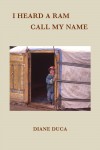
    An Editorial Review of “I Heard a Ram Call My Name” by Diane Duca

    Set in rural Mongolia, Diane Duca’s I Heard a Ram Call My Name sets up a moral standoff between predators and prey by detailing a single hunting expedition for the endangered argali sheep.

    Interweaving human and animal perspectives, this meticulous and detail-rich novel paints a comprehensive portrait of an argali hunt. By following the story of the expedition from beginning to end, it explores every facet of the process from its shady organization to the devastating and lasting consequences for the hunted animals.

    At the novel’s beginning it is centered around a beleaguered German business ambassador working in Mongolia named Helmut. He is desperately trying to make preparations for his company’s executives upcoming hunting trip. Helmut  has personal moral misgivings about the practice of argali hunting, but feels compelled by loyalty to his company to complete the task assigned to him. However, in spite of his desire to organize the expedition and wash his hands of the whole business as quickly as possible, the planning is not going smoothly.

    Only exacerbating Helmut’s conflicted feelings is his flirtatious friendship with a local Mongolian woman named Sheema. An independent artist with a personal history of caring for and interacting with the argali, Sheema feels a strong connection with the sheep and is passionate about their protection from hunters. For Helmut, she serves as a living reminder of the toll organizing the expedition is taking on his conscience, for the reader, of the cultural significance the argali hold for the Mongolian people.

    Helmut’s story is paralleled by that of a wild argali ram named Aries. By following Aries’ life through adolescence and personal conflicts to eventual romance, Duca establishes the argali as people in their own right. They have personalities and relationships that, while somewhat anthropomorphized, are often more engaging than those of the human characters. Although the dialogue between the sheep sometimes feels unnecessary, the story of Aries and his paramour Solongo is compelling, and ultimately culminates in the novel’s most powerful moments.

    I Heard A Ram Call My Name is not a perfect novel. The dialogue is awkward at times, and the sudden switch to a completely different cast of human characters halfway through the novel may make it more difficult for some to stay emotionally engaged by the story.

    However, Duca’s extensive research and knowledge on the subject of the argali and the controversy surrounding them make this an enlightening commentary on the issue, and a persuasive argument for the protection of the argali.

  • An Editorial Review of “Paul, Betty, and Pearl” by Karl Larew

    An Editorial Review of “Paul, Betty, and Pearl” by Karl Larew

    In the summer of 1941, a ship approaches Honolulu. Watching on deck is young Army Lt. Paul Van Vliet, a 1936 graduate of Cornell University who then joined the US Army Signal Corps, in which he was trained in radar and radio/wire communications.

    WWII is well underway in Europe, and Japan has begun its imperial foraging for new territory in the Far East, but where will it stop? Could Japan envision an assault on US territories—or even the United States itself? Stepping up preparedness in Hawaii is underway.

    Karl Larew’s excellent work of historical fiction starts with Paul Van Vliet’s introduction to life and military duty in Hawaii. Paul’s sister Dottie, married to pineapple and sugar plantation owner Sam Lauterbaugh, is delighted to have her younger brother so close and soon invites him to a dinner party.

    Paul is immediately attracted to another guest, Betty Lundstrom, wife of the often absent Navy Lt. Eric Lundstrom. The somewhat melancholy Betty is equally attracted to Paul. However, neither has any intention of a relationship beyond friendship based on a common interest in music and Paul’s offer to give ukulele lessons to six-year-old Rosalie Lundstrom.

    On the duty side, Paul meets his superior officers, Capt. Bascom, as loose with his language as he is with his liquor, and Col. Tothill, very much the diplomat. Paul begins his assigned work—an assessment of what the Army Signal Corps in Hawaii might need to support a war in the Pacific.

    In the months to come, Paul becomes a frequent visitor at the Lundstrom home.  As Rosalie’s lessons progress, however, so does the relationship between Paul and Betty.

    Then, one Sunday morning—to be precise, Dec. 7, 1941—Paul awakes at about 0800 to the sounds of change.  Japan has just hit Pearl Harbor with a disastrous air strike. Soon, the U.S. is at war in both the Pacific and Europe.

    Paul plays a major role in getting radio and wire communications established and coordinated and is promoted to Army Captain. Betty and Rosalie are evacuated—to spend the rest of the war with Betty’s parents in Washington, D.C.

    The story of the “Pearl Harbor surprise attack” and its aftermath is brought to life by its telling through conversation and letters, a technique Larew expertly uses to draw his readers back in time, right into history (and his story). Larew’s personal experience (this book is dedicated to his father, Brigadier General Walter B. Larew [fusion_builder_container hundred_percent=”yes” overflow=”visible”][fusion_builder_row][fusion_builder_column type=”1_1″ background_position=”left top” background_color=”” border_size=”” border_color=”” border_style=”solid” spacing=”yes” background_image=”” background_repeat=”no-repeat” padding=”” margin_top=”0px” margin_bottom=”0px” class=”” id=”” animation_type=”” animation_speed=”0.3″ animation_direction=”left” hide_on_mobile=”no” center_content=”no” min_height=”none”][1904-1973], U.S. Army Signal Corps) greatly enhances his description of Paul’s work, as well as of military communications equipment and operations during WWII.

    When Paul is ordered to Washington, he and Betty cannot resist seeing each other. They become convinced that they are destined to marry. But Paul is sent to Algiers in Sept. 1943, and then to London. Another promotion, to Major, accompanies his assignment to command one of the new JASCO (Joint Assault Signal Company) communications units, destined to land on Omaha Beach on D-Day. Paul’s rising star is assured by his performance on the European front, including during the Battle of the Bulge.

    As we all know, WWII ended in Europe in May 1945 and in the Pacific three months later. But as peace descends on the military fronts, new battles escalate in Washington—between Democrats and Republicans in Congress, as to how (and why?!) Japan was able to approach Pearl Harbor undetected; and between the Army and the Army Air Forces, as to whether the latter should break away to become the U.S. Air Force. Well, that’s history—look it up.

    On the family front, well, that’s Karl Larew’s story of Betty and Paul—read this fascinating and enjoyable book. And don’t stop with “Paul, Betty, and Pearl.” It’s just the first of three.[/fusion_builder_column][/fusion_builder_row][/fusion_builder_container]

  • PNWA Presentation – Why Authors Should Use Google+

    PNWA Presentation – Why Authors Should Use Google+

    whygoogleIt is a big universe out there, so as an author you should consider incorporating Google+ Advantage  into your marketing strategy as a discover-ability tool.


    Google+ should be a pillar in every author’s platform to amplify networking efforts and build relationships with readers.

    We help good books get Discovered!


    This is a copy of the slides that Kiffer Brown presented at the PNWA’s 2014 writers conference. Just click here to see the presentation:  Google Slides


  • An Editorial Review of “Waking Up Dying: Caregiving When There is No Tomorrow” by Robert A. Duke

    An Editorial Review of “Waking Up Dying: Caregiving When There is No Tomorrow” by Robert A. Duke

    An intensely personal and compelling narrative, Waking Up Dying offers an insider’s perspective of the passage through cancer beginning with Duke’s wife’s diagnosis of stage IV glioblastoma brain cancertypically a fatal condition.

    Duke found the entire caregiving experience an agonizing, non-stop emotional rollercoaster: unbelievably frustrating, emotionally searing and increasingly chaotic.

    The author’s story of his dedicated and loving role as caregiver entails four phases of this tortuous journey: the couple’s daily coping with the disease; the author’s struggle through the health care system; the emotional reality of caregiving his dying wife; and the carefully documented material put forward as a basis for reforming the care system.

    Duke took on the mantle of caregiver for his wife, Shearlean, with no practical experience, no history of what it is like to take care of a loved one with an acute health condition, or little knowledge of what was involved or to be expected from the U.S. healthcare system, nor from him as her advocate and caregiver.  Nevertheless, Duke immediately committed to her treatment and care. His goal appeared simple:

    She would remain at home throughout the course of her illness and would die at home in her own bed with me beside her when it was time.

    But life in the cancer ward was never about simple. While Shearlean confronted a regimen of powerful medications, facing the effects of radiation and chemotherapy, and piecing together a quality of life, Duke had his own challenges. Over an 18-month period, Duke chronicles his caregiver’s routine:  managing medications, diet, medical bills, schedules, and fights with a never-ending bureaucracy that undermined his every effort to facilitate care. The physical, psychological and financial burdens that he shares with his readers are beyond comprehension.

    Help and encouragement from friends and hired help weren’t all the support the couple needed. Shearlean suffered the effects of aphasia, affecting the brain’s language center, seriously affecting her academic livelihood as a journalist and teacher.  She believed that working with a speech therapist could help repair the damage of cancer and surgery, including a serious loss of skills in reading, writing, speaking, typing and listening.

    There was nothing that the speech therapist could do for her. Her recommendation was only that Shearlean stay out of groups, where language would be more difficult to manage, even for a highly educated person. Over the course of her disease, Shearlean’s language abilities remained, allowing her to continue teaching, although speaking intelligibly was highly dependent on her overall emotional condition and physical strength.

    The author summarizes their life together with terminal cancer. He deemed it…

    A death sentence—[fusion_builder_container hundred_percent=”yes” overflow=”visible”][fusion_builder_row][fusion_builder_column type=”1_1″ background_position=”left top” background_color=”” border_size=”” border_color=”” border_style=”solid” spacing=”yes” background_image=”” background_repeat=”no-repeat” padding=”” margin_top=”0px” margin_bottom=”0px” class=”” id=”” animation_type=”” animation_speed=”0.3″ animation_direction=”left” hide_on_mobile=”no” center_content=”no” min_height=”none”][which] should have obliterated any semblance of normal life. There were days when this was true, like when Shearlean had great pain, but mostly it wasn’t. A balm to our souls was how ordinary life remained… although things were hard, confusing and frustrating; we were also okay in many respects.

     The health care system was another, even more horrendous story, characterized by “bad medicine and underwhelming care” was what Duke said he experienced. Physicians could be inaccessible, indifferent and/or negligent; prescription snafus commonplace occurrences; medication lists impossible to decipher. And, he found insurance companies to be arrogant corporate entities, with a single goal: the bottom line of profit, regardless of patient need. Assertive caregivers felt that they were not welcome, even actively rebuffed, from participating in their loved one’s care or for advocating for their patients’ rights, Duke posits.

    When pursuing essential help, Duke stated that he was often dismissed by doctors and nurses alike: “We have other patients.”  How unbelievably heartless and inhumane.

    Duke is adamant about  how medical personnel should interact with cancer patients:

    “Reception and administration should be limited, efficient, personal, knowledgeable and considerate. They should never preempt the patient’s tranquility, equilibrium, peace of mind or personhood.”

    The author could have written a simpler book, just the story of the final months of his 40-year love affair with Shearlean, his intelligent, accomplished wife. Instead, he took on far more: the intimacy of caregiving and the battle to understand and document why the system was failing him and his loved one.

    Waking Up Dying is a blockbuster; a hit between the eyes. Duke challenges the reader to take those tortuous steps he has—feel his sorrow, elation and pain, walk his walk through the everyday rituals of care, and talk the talk of his analysis of much-needed system reform.

    As a doctor of sociology, a professional caregiver consultant, educator and researcher of caregivers and their patients, I know of no other book on caregiving that details the precise obstacles that caregivers may encounter and must contend with because of a disorganized, broken system. This book is a must-read for caregivers. Be prepared for a mind-blowing, ultimately, illuminating and educational experience.[/fusion_builder_column][/fusion_builder_row][/fusion_builder_container]

  • An Editorial Review of “Measure of Danger” by Jay Klages

    An Editorial Review of “Measure of Danger” by Jay Klages

    This techno-thriller pitches “The Chapter,” a high-tech, well-organized, and ruthless para-military organization, against a former intelligence officer with a behavioral disorder that makes him an unpredictable anomaly to all sides.

    In Measure of Danger by Jay Klages, The Chapter has infiltrated every level of government, and their financier, a drug cartel, has upped the ante and their demands. The United States is in imminent danger, but no one knows from whom or from what, and the clock is ticking.

    Kade Sims feels he has been unfairly dumped from his former position in Army Intelligence because of out-of-control behavior due to a condition called hypomania. He’s bored, out of shape, and stuck working part-time at Home Depot instead of at the Pentagon. So when the FBI knocks on his door of his Virginia apartment and asks him to go undercover in Oregon to infiltrate a mysterious quasi-militia group called The Chapter, he’s eager to go to work for his country again.

    His training goes well, but on his initial scouting mission into The Chapter’s territory, the plan goes awry when his Jeep hurtles off a muddy mountain road. Kade wakes up strapped to a bed in The Chapter’s compound. He is now inside The Chapter sooner and with a lot less control than he or the FBI planned. To make matters worse, his brutal guards know not only who he is, but where his beloved sister goes to school. When they can’t break him, they decide to use his skills to their advantage, confident they can control him at every step with a computer chip they implanted into his head.

    But Kade’s hypomania proves to be a benefit when it gives him resistance to The Chapter’s hi-tech mind-control methods. He finds creative ways to communicate with the FBI, his roommate, and family, and the game is on as each side seeks to control the situation.

    But there are more than two players in the deadly game. The Chapter is hiding under the banner of an agricultural biotech company called AgriteX, whose most popular crop is bio-engineered marijuana. A drug cartel is its biggest client. However, the cartel believes that AgriteX has violated their contract to supply supercharged marijuana seeds, and the AgriteX leaders are now on the cartel’s hit list.

    The Chapter is dangerous both to its recruits and to the American government along with just about anyone they come into contact with.  As Kade becomes more involved in the shadowy organization, his contacts with outside parties and his resistance to being controlled make The Chapter’s leader suspicious of his loyalty. Will he survive his assignment with mind and body intact? As the suspense builds to a fiery nationwide conclusion with all weapons drawn, thriller readers will be glued to the pages to find out what happens next as the plot twists and spins with unrelenting action and surprise as the pieces and clues come together.

    Measure of Danger, Jay Klages’ debut novel is a page-turning techno-thriller written by a former military intelligence officer and a West Point graduate. Klages experience and expertise is revealed with his believable dialog, details, and operative descriptions. The work features military trained Kade Sims, and his accountant sidekick, Alex Pace; we can’t wait to read what other dangerous puzzles this unlikely dynamic duo will be called on to solve.

  • An Editorial Review of “Dark Seed” by Lawrence Verigin

    An Editorial Review of “Dark Seed” by Lawrence Verigin

    Genetic engineering, murder, corporate-conglomerate profiteering, Interpol, and a plot to control humanity make Dark Seed, by Lawrence Verigin, a suspenseful thriller novel.

    When jaded journalist Nick Barnes learns that Dr. Carl Elles has contacted him to say that Barnes’ recent article about the positive contributions of Naintosa Corporation is all wrong, Barnes feels compelled to educate the scientist about information laundering—the strategic planting of false information in the media so the planting organization can quote the media later for their own benefit. “It makes total sense,” Dr. Elles replies. “Naintosa employs that strategy on a regular basis.” Nick was about to explain to the scientist why he needed to check Dr. Elles’ information, when the scientist soon proves to Nick  that the journalist is the lazy dupe who just published Naintosa’s propaganda in a complimentary article.

    Nick Barnes is a likeable, self-deprecating, and disillusioned investigative reporter who has been burned before. He now seems incapable of personally investigating much of the information that falls into his lap, preferring to play it safe. However, the time is 2000, so computerized data and communication systems were not as widely available as they are today.

    Nick agrees to help Dr. Elles write an exposé about the actual results and implications of Naintosa’s genetic engineering projects. Then Elles is murdered and suspicious events cause Nick to realize that both he and Dr. Elles’ daughter Morgan are next on the hit list. They team up and run for their lives.

    Through the data in Dr. Elles’ notebooks and clues revealed through meditations and dreams, they discover terrifying links between corporations that produce genetically engineered foods, agricultural chemicals, and pharmaceuticals. The implications are so wide-ranging and so frightening that soon Nick and Morgan find they can no longer trust anyone. And they become more and more convinced that they cannot event trust the food that they eat.

    The author’s personal knowledge of Seattle and Maui, as well as the city of Vancouver, and other places in British Columbia, Canada, shine through with the vivid and detailed descriptions of these locales as the characters race through them. Morgan and other secondary characters are not fleshed out in great detail, but their roles serve to advance the plot efficiently. Verigin deftly includes enough scientific information to ground this “Lab Lit” novel while keeping the reader entertained and in suspense.

    Dark Seed: No One Knows What Evil Grows, is a strong debut novel by Lawrence Verigin that adeptly tackles the pertinent and socially relevant topic of GMO’s with tight writing and fast-paced action. This thriller’s premise of international corporations controlling the food supply and sacrificing human health for the sake of profits is so plausible that it is horrifying. Readers will find themselves rapidly turning the pages to see what happens next in this disturbing “OMG this could really happen”  novel.