Blog

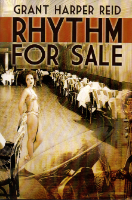
  • An Editorial Review of “Rhythm for Sale” by Grant Harper Reid, Ph.D.

    An Editorial Review of “Rhythm for Sale” by Grant Harper Reid, Ph.D.

    Grant Harper Reid’s  Rhythm for Sale  tells the rags-to-riches story of his grandfather Leonard Harper, an extraordinary entertainer who danced, choreographed and produced his way to stardom in the frenzied years of The Harlem Renaissance, only to be forgotten after the last curtain call of that culturally transforming and iconic chapter in the history of American Musical Theater. Mr. Harper is considered the father of cabaret.

    In this fascinating biography, Dr. Reid’s decades of careful research, has managed to polish nearly a century’s worth of neglect from the image of his grandfather, the remarkable Mr. Leonard Harper. Dr. Reid is eager and happy to share the knowledge that he accumulated about this particular time in American history.

    The book’s tempo is fast-paced as the author condenses an encyclopedic amount of events, entertainers, prohibition gangsters, and the birth of a new genre of show business into its mere 242 pages. The well-documented facts and events often tap dance across the page with a fury, perhaps suggestive of the pace at which Leonard Harper worked his craft: He would often be involved in several stage productions simultaneously!

    Reid tracks his Alabamian grandfather’s career that began at 10 years-old when he was forced to enter show business full-time when his father dies. It was from his father that Leonard was introduced to performing. Prior to his father’s passing, Harper sang in church and danced for appreciative smiles and pennies along side his father. It seemed that young Leonard Harper had a natural talent for entertaining and a passion to perform.

    Reid shares his grandfather’s journey from dancing in broken hob-nailed “tap” shoes to making the Southern Circuit via “country road walking,” to working in Vaudeville, to basement gin-joints, and on to legendary venues such as The Cotton Club and the Apollo Theater. Reid also lets his readers in on the darker side of the Harlem Renaissance, a time of racial segregation, political corruption, and cultural clash that was prevalent during this time period of American history.

    Indeed this book stands tall, not only as a biography but as a reliable document of an important slice of American history. Reid also shares some of the fabulous lost photographs that he uncovered while researching his phenomenal grandfather’s journey in this penetrating work that mirrors the psychology of a nation in transition—one preparing for the coming Civil Rights movement.

    Much of the book’s inner light comes from the author’s, Grant Harper Reid, own, often humorous, observations, supplemented by a simply delightful parade of the celebrities and gangsters with whom Leonard Harper rubbed elbows. However, Reid doesn’t shy away from the deeper underbelly of Harper and his generation—white, black, or mixed.

    Grant Harper Reid, the author himself, was carried on stage as a ‘New Year’s Baby’ at the Apollo Theater by singer Jackie Wilson. And he remembers being around entertainers and show biz as a matter of course when he was a child. Later, the author worked professionally as a location scout and/or crewed for at least 40 films such as Fame, Mississippi Burning, and Do the Right Thing (IMDb). Reid’s latest project is Rhythm for Sale (2013), the biography of his late grandfather, Leonard Harper who came from a life of meager means in Alabama to become one of the great contributors to art and culture in the U.S.

    Like Harper himself, his biography, Rhythm for Sale is a vigorous and highly entertaining read that will transport its reader. Highly recommended.

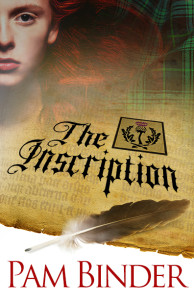
  • An Editorial Review of “The Inscription” by Pam Binder

    An Editorial Review of “The Inscription” by Pam Binder

    Feisty and independent Amber MacPhee has a good teaching job, loving family, and nothing in the least messy, like love, to complicate things. But Amber finds herself smack in the middle of the biggest mess she’s ever been in after she crashes her car into Loch Ness and travels over 400 years into the past. The Inscription by Pam Binder is a heartwarming and sweet romance set in 1500’s Scotland.

    It’s Lachlan MacAlpin, immortal and laird of Urquhart Castle, who rescues Amber from the freezing waters of Loch Ness. He fears she will die like the many others he has pulled from the lake, but it quickly becomes clear that Amber will survive. As he pulls her from the Loch, Lachlan cannot help but notice that Amber, with her hair of “burnished gold” bears an uncanny resemblance to the woman of legend who will possess the knowledge of future generations and lead an immortal man away from the path of darkness.

    As Amber slowly allows herself to realize that she has not merely crashed her car and woken in the middle of an extremely dedicated historical reenactment, that she has in fact, woken up 400 years in the past, she faces an unprecedented set of challenges. She must learn what her place is in this alien world and try to find a way home. An explanation for her sudden appearance is quickly settled upon when Lachlan decides that the best way to keep her safe is to introduce her as his betrothed. As much as Amber hates the idea of relying on a man and false pretense to keep her identity safe, she cannot help but notice Lachlan’s broad shoulders and thick Scottish brogue.

    Amber tries to relax into her new environment and keep her head down while she tries to find a way back to her own time, but old habits die hard. She challenges Lachlan left and right, becomes the tutor to Lachlan’s younger brother, Gavin, and attracts the attention of more than a few men. She fears that there may not be a way for her to go home when she begins to suspect that she is not the first to travel back to this time.

    As Amber recovers and struggles to make sense of her sudden leap through time, Lachlan has his own battles to face. First, his lifelong enemy Subedei is closing in, and word is that he plans to attack and kill the MacAlpin’s for the punishment they bestowed upon him over a hundred years ago. Second, he feels the bloodlust that drove his father mad creeping ever closer and he is terrified of being possessed by it.

    Despite the challenges they face, Amber and Lachlan begin spending time together and soon get glimpses of each other through the walls they have each built around their hearts. Life moves on at a normal pace even as battle creeps closer to the castle. Are they the two the legend speaks of? Can Amber learn to love a man who may never grow old and die? And can Lachlan accept the healing power of love before Amber is sent back to her time, never to return?

    The Inscription is a heartwarming romance with more than one good twist at the end. Readers will find themselves rooting for not only Amber and Lachlan, but the solid cast of characters that supports this novel. This is truly a story of legendary love that spans the ages.

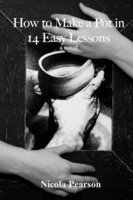
  • An Editorial Review of “How to Make a Pot in 14 Easy Lessons” by Nicola Pearson

    An Editorial Review of “How to Make a Pot in 14 Easy Lessons” by Nicola Pearson

    How to Make a Pot in 14 Easy Lessons by Nicola Pearson is the story of Joe, a potter, and Lucy, the British actress he has fallen in love with. Needless to say to anyone who has attempted pottery, throwing a pot together from lumps of earth is not easy—and that doesn’t take into inconsideration that the pot will survive the firing process! Hence, Pearson’s insightful basis for this delightful and unique love story.

    Lucy and Joe’s lifestyles could not be more different: Lucy is following a plan she has created for herself so she can experience working in theaters around the world, while Joe lives a simple life in the lush countryside of Western Washington, making his clay pots and expecting the unexpected with each firing of the kiln.

    Each phase of their relationship is based on the metaphor of making pots, a process that is as fluid and unpredictable as life.

    The story begins just as Joe has convinced Lucy to abandon her plan to travel to Australia to work as an actress and instead, move to Seattle. Even as Lucy agrees and boards the plane to fly out of Kennedy Airport in New York, she is troubled. One part of her is thrilled to be moving closer to Joe, while another part is worried that she has abandoned her passionate career plans for a man, something she promised herself that she would never do.

    Thus begins the journey of two people, one certain in the beginning that he wants to marry, the other troubled by emotions and impulsive decisions she doesn’t understand.

    While Lucy becomes more certain as time passes that she has made the right decision, Joe becomes less certain, less convinced that their relationship can work. Unpredictable events outside the couple’s control will force clarity on both, pushing them to confront their feelings and their relationship.

    Pearson has painted in vivid detail the lives of these two characters, as well as the ups and downs of a developing relationship. Her elaborate descriptions of the Pacific Northwest immerse the reader in the beauty of the Skagit Valley countryside where Joe builds his pots. Joe’s five acres, his home, and the minutiae of his daily life are depicted in such picturesque fashion as to bring the setting alive as a character in the novel. Readers will also enjoy the entertaining characters who add color and foils to Pearson’s captivating story.

    Pearson’s skill in describing the art of pottery making as a metaphor for the unpredictable nature of one’s life is unique and urges the reader to think about the lessons learned by the characters long after finishing the book. Fans of women’s fiction will certainly be waiting for more stories from this author.

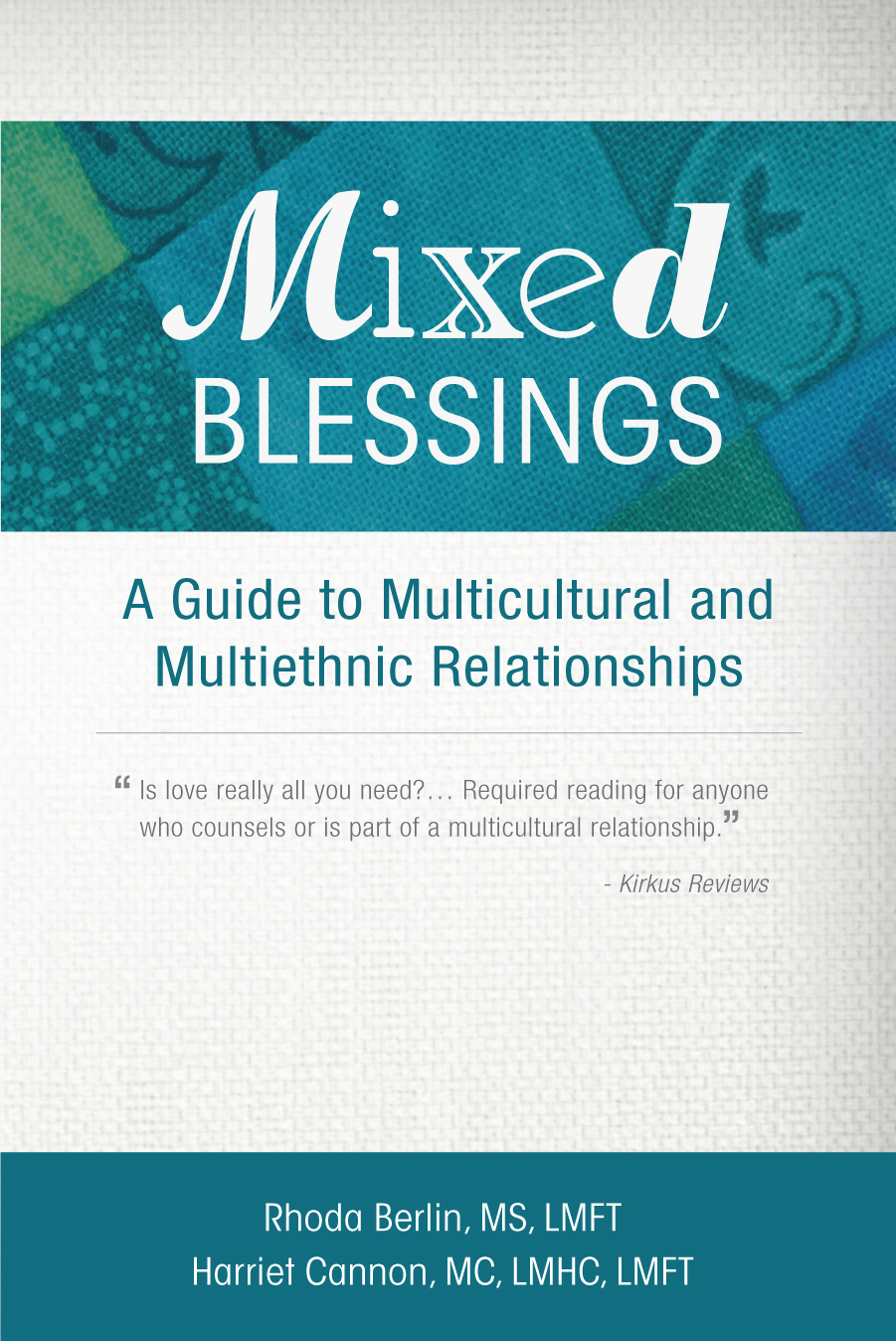
  • An Editorial Review of “Mixed Blessings” by Harriet Cannon and Rhoda Berlin

    An Editorial Review of “Mixed Blessings” by Harriet Cannon and Rhoda Berlin

    What genuinely makes a difference in a couple’s ability and willingness to nurture and maintain their relationship? Rhoda Berlin and Harriet Cannon, both highly insightful psychotherapists, address this significant question through a series of fictional case studies of multicultural and multiethnic couples.

    Each couple’s story demonstrates a crucial concept, such as ethnocentrism, the belief that one’s own culture is always right; cultural universal, an element, pattern or institution that is common in some form to all human cultures, such as age-related roles; and acculturation, adapting to the patterns or customs of a new culture.

    Other impediments to relationship harmony that are illustrated by the couples’ case studies include: cultural loss, the experience of moving out of one’s culture, social class or ethnic enclave resulting in a sense of estrangement; subculture, membership in an in-group within the majority culture, such as the military or a sorority; cultural grieving, the inability to overcome the loss from migrating to another country or marrying into a different type of family culture; cultural identity, the culture we identify with and feel as a “second skin;” and code switching, the ability to move fluently from one language and cultural context to another.

    Children accomplish cultural shifts most easily, code switching from their family’s way of life to a new language or social mores within months. Middle-aged people tend to resist change, hanging on to their traditional life-ways. Older persons may never make a successful shift out of their traditional culture, religion or social class.

    Particularly revealing is the notion that people socialized in an individualistic culture, such as America, Canada, the British Isles, Australia, New Zealand or Western Europe, have a demonstrably different social context for relating than people growing up in a collectivist type society. For instance, the extended family remains a major concern for persons growing up in such areas as rural China, Asia, Eastern Europe or India.

    Rather than cherishing an improved career or making lifestyle improvements through geographic changes, as in individualistic cultures, extended family-oriented persons are unwilling to sacrifice traditional values of support, loyalty and social approval. For example, a partially acculturated wife who grew up with the expectation that she must cater to her culturally grieving mother’s unceasing demands will find her more successfully adapted husband very unsympathetic to such arrangements.

    Multicultural and multiethnic couples get especially hung-up in the shift from early to later stages of their relationship, such as when they encounter the extended family. Let’s highlight one case. William, an American, had an uncle who served in World War II and had returned from that war profoundly impacted by years of internment in a Japanese prison camp. William’s implicit family rule of “never buy Japanese” proved to be a serious drawback for his new companion, Eve, a Japanese-American woman, who had suffered the indignities of living as a child in an American prison camp simply because she was Japanese. Eve experienced “hidden trauma” as she confronted the family’s prejudice and discrimination, contributing to her withdrawal, but William insisted they work out their difficulties. Through counseling, Eve and William developed a “big picture” of their situation, encouraging the extended family to leave their ethnocentrism behind. Now, family members even buy Japanese cars!

    Social class differences can be nearly as disruptive as ethnic or racial distinctions. Take the situation of an Indian couple, one from a Brahmin family and the other from a middle class background. The authors portray how cultural differences in their parents’ cooking, gift giving, household décor or child rearing practices can readily upset a couple’s harmony.

    Mixed Blessings is a fascinating and educational guide to understanding and healing couples’ relationships under pressure from ethnic, geographic, racial, social class and other cultural disparities. Not only do the authors provide incredibly lucid portraits of couples’ differences that make a difference, but they also indicate steps couples can take to minimize or eradicate apparent diversities.

    I strongly recommend this book for its courageous leap forward to elucidate the “hidden culture” that separates and divides loving families and especially for the authors’ substantial skills in showing us the various ways of healing the breaches.

    Travelers, educators and students going abroad, along with business people who want a better understanding of how to recognize and bridge cultural gaps would also benefit from reading Mixed Blessings.  

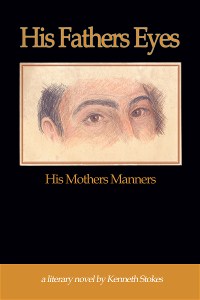
  • An Editorial Review of “His Father’s Eyes, His Mother’s Manners” by Kenneth Stokes

    An Editorial Review of “His Father’s Eyes, His Mother’s Manners” by Kenneth Stokes

    In 2003, an inaugural flight took off from Kuala Lumpur International Airport, Malaysia, bound for Los Angeles. On board was a group of passengers who had nothing in common except that they were on a doomed flight. Few survived the crash on a remote island, but those who did would face the greatest challenge of their lives. His Father’s Eyes, His Mother’s Manners by Kenneth Stokes explores the nature of survival and the theme of inheritance in this literary work.

    The details of the crash and the reasons for it are never revealed to the reader, because they aren’t important to the story. Why the downing of the flight isn’t immediately detected by search and rescue teams, and why, after days, no help has arrived, are inconsequential questions. Rather, the author uses the crash to examine in depth the aspects of each character’s personality characteristics along with revealing past events and experiences. Stokes explores the impact they have on the ability of each character to survive when faced with catastrophic events.

    In the face of such extreme adversity, each character’s personality, their reactions to the situation in which they find themselves, affects the safety and survival of the entire group. Skills that are revered by a modern society are useless in this situation. People who have been led to believe that they are successful and deserving of the accolades they have earned in a more material, commercial society are now virtually helpless.

    Stokes has chosen as his main character Glen Reyes, a man who travels the world in search of rare plants and understands how to survive without the trappings and conveniences of modern society. Reyes is a teacher and a seer, capable of leading others. His constant companion is a small boy who has lost both parents—his father prior to the crash, and his mother as a victim of the crash itself.

    The boy sat next to Reyes during the flight, and from the beginning, he was thrilled to find in Reyes a man patient enough to answer the boy’s questions and to tell him stories from his family’s history. Once orphaned by the crash, he quickly comes to trust Reyes and then entreats Reyes to adopt him once they are rescued.

    Through Reyes’ work to create shelter and sustenance, and to teach the other stranded victims survival skills, he helps them face their own weaknesses and turn them into strengths. As time passes and no one comes to rescue them, those who haven’t learned to assimilate and work together become more at risk, as well as more of a risk to the others.

    The author presents a unique perspective on what might have been a more typical disaster story, weaving together truths taught from the harsh conditions the characters face, and from lessons learned from Reyes’ re-telling of ancient myths and historical events. Through his diverse cast of characters, Stokes reveals truths certain to resonate with his readers in “His Father’s Eyes, His Mother’s Manners.”

  • An Editorial Review of “Tree: One Life that Made a Difference by Norman E. Kjono

    An Editorial Review of “Tree: One Life that Made a Difference by Norman E. Kjono

    It is clear that Norman E. Kjono, author of Tree: One Life That Made a Difference, cares deeply for the interconnected nature of all living things. In his book, he takes us on a journey to a small valley in the Pacific Northwest where the “lifes” of this sacred place are in trouble—the inhabitants of this valley consider themselves to be lifes.

    “In the valley they thought of themselves together as “lifes.” This preserved their individual identity yet acknowledged the plural sense of them together as more than one.”

    The core message in Tree: One Life that Made a Difference, is thought provoking. That all lifes would work toward being the best they can be, and helping others without thought of reward, is ideal. This is a story that mixes form—interspersing prose,  poetry and songs; the poems dispersed through the story are to be read like proverbs.

    Valley culture is built on the idea that all lifes are interdependent, and that by each individual doing his or her best, the purpose of the Cosmos and Creator will be best served. Few characters in this novel are human, and a few are even inanimate, like Stream and Rock. Owls, deer, beavers, mushrooms, frogs, raccoons, and other creatures including Tree and the Ancients (redwood trees) make up the cast of characters in this inspirational work that asserts that one life can make a difference. And that difference begins with one positive act that in turn inspires another and another.

    The valley thrives and draws human visitors who leave their negative energy behind when they return home. All the lifes come together to try and figure out a way to deal with the negative energy produced by visitors to the valley. A toll plan is put forth by Elizabeth Jay and Harvey Crow. At first, this seems reasonable, but soon any life that disagrees with the plan is attacked and threatened by Jay and Crow, showing their intentions to be about controlling Life rather than helping it. The lifes of the valley quickly decide the toll plan is not for them, and the rest of the book takes place largely in dialogue over the best possible way to exist.

    Most of the book deals with examples of why interdependence works best. The tale that best shows this is about Randolph Raccoon, an ambitious life who almost destroyed his people and caused a war. Randolph’s tale shows how greed and the desire for power can destroy a life’s internal spirit and their community as well.

    Kjono shares his core belief of interdependence based on love and compassion with more than 300 pages of philosophical debate that extends from the local lifes of the valley to Arthurian legend told to them by the Ancients to a brief introduction of other-worldly aliens to the valley lifes. What begins as an interesting thought experiment quickly becomes a homily. However, Kjono’s supposition of doing your best to support not only yourself, but others around you, without regard for how you benefit, is a noble one.

    Norman E. Kjono has put forth a beautiful philosophy that if one of aspires to do what is best for one’s world, that others will follow suit. And,  as Tree said, “If we start out thinking it can’t be done, the we’ve lost before we begin!”


  • What is an Editorial Review? And How is It Different from a Review?

    After the post The ABC’s of Making Book Reviews Work Harder at Promoting Your Book, we received several questions about what exactly are “Editorial Book Reviews” and how do they differ from  “reviews.”

    You asked. We answer. 

    There several types of reviews and reviewers:

    • peer reviews by peer reviewers (other authors)
    • editorial reviews by professional reviewers in the publishing industry
    • manuscript overviews – pre-publication editorial reviews
    • consumer reviews by individual consumers (readers)

    An author requires all four to make a professional impression on potential readers because each type of review has its own targeted audience and its own aim. And since there are many shades of gray (no pun intended), authors will benefit from having reviews from all four categories.

    Editorial Reviews

    Editorial reviews tend to focus on the technical aspects (grammar, formatting, spelling, consistency, punctuation, POV, etc.) of a work along with  the writing craft of the author by an editing professional. Other publishing or media professionals use these assessments when evaluating for works purchasing decisions or for distribution purposes.

    Chanticleer Editorial Reviews:

    Here at Chanticleer Book Reviews, our reviews combine an editorial assessment of a work: plot, structure, dialogue, characters, story development, along with grammar and punctuation with the readability of a work. The assessment is written by a professional editor after reading and evaluating the particular work.

    Our review team is comprised of experienced editors selected for their expertise in specific genres and blended genres. It is extremely important that the person reviewing the work understands the genre of the work and what the readers of that particular genre are looking for in a “good read.”  Thriller fans will be bored with cozy mysteries. Cozy mystery fans will be annoyed with the rapid fire of situations found in thrillers. Romance readers typically don’t enjoy the angst of many literary works that are known for not having “satisfactory or happy” endings. Some works overlap and blend genres which would go against the grain of some genre purists. Even though a professional editor can see merit or if there are problems in a work out of their expertise, we try to select the very best fit between a work and the reviewer.  

    Chanticleer Book Reviewers uphold the time-honored publishing traditions that readers have come to appreciate and expect from published works while maintaining an open-mindedness for emergent ideas, talent and creativity in the field of literature, media and publishing.

    Manuscript Overviews 

    Editorial Reviews may also be manuscript overviews. Manuscript overviews are to help the author evaluate his work on a broad spectrum on the following issues before getting a line by line edit.

    Manuscript Overviews editors look for:

    • consistency in story
    • POV
    • grammatical errors
    • style sheet issues
    • character development
    • dialogue issues
    • plotting, plot holes
    • pace of story
    • theme consistency
    • does the work need tightening or is it too staccato

    I always like to ask the manuscript reviewers, “Does the work have a ‘beat to it?’ Does the story move along? Are the characters memorable?”

    A manuscript overview can answer these questions in an objective and unbiased manner. The goal is to help the author work out  issues before she has it line edited and proofed for publication.

    On another note, a work can be technically correct, but a horridly boring read. We know, we’ve read them! Then there are works that are compelling to read even if they are bungled with grammatical and writing craft errors. The decisive point  is that while an editor can correct errors in grammar, punctuation, POV, etc., they cannot “correct” a boring story. Creativity and Content are King and Queen. However, lack of editing or just bad editing can cause the reader to “stumble” over the text and put it down in favor of trying another read, another author. An intriguing storyline can benefit from a developmental editor – the most difficult level of editing. Most works can benefit enormously  from a correct dose of developmental editing.

    Remember:  The editor sees what the author cannot. The story lives in the author’s mind. The editor sees the gaps between the author’s mind and the words on the page. It is almost impossible to “see” your own gaps because your mind automatically fills them in.

    Peer Reviews by Peer Reviewers

    For most fiction authors, this would be a review by another author who writes in the same genre. The most beneficial type of Peer Review would be an “endorsement” from an author in the next tier of sales above you—an author who can validate that your work is worthy of his/herPageLines- not_moliere_1_a.jpg endorsement. This type of review generally bespeaks, “If you like my novels, you will like this author’s work. Give this book a try.”  The author making the “endorsement” is putting her reputation on the line for you. Request author endorsements judiciously and respect the author’s  right to pass on the opportunity.

    Consumer Reviews by Individual Consumers

    Translation: Readers are Consumers!  Authors create content. Readers consume content. Thank goodness!

    The reviews posted on Amazon, or on Goodreads, or on websites are precious! These reviews are from individual readers who  (hopefully) enjoy reading your works. Readers, on the whole, write very few reviews for many reasons: too busy, not really knowing the specifics of why they like the work, not having the background (read vocabulary) to discuss the work, or it is just too much trouble.

    Authors need to make it easy as possible for readers to recommend their books by:

    • creating links
    • making use of editorial (read: professional) reviews that will give recreational readers the vocabulary from which to discuss and share their thoughts about their works
    • thanking the busy reader for any feedback, LIKEs, +1’s etc.
    • Post, comment, LIKE, and +1  on the reviewer’s social media posts and blog-posts.

    Consumer Reviews are instrumental in creating BUZZ! You, the author, should endeavor to do anything that will make it easier for your readers to spread the word about your work.

    Visit  examples of how to use the different types of reviews on your author platform’s website.

    Great sites to emulate are:  Michael Hurley’s website and Alan Brenham’s website.

    You will notice that they list peer reviewers (other authors), professional editorial reviews (Kirkus, Chanticleer, Foreword), and readers’ reviews together making it easy to scan for the preferred reviewer(s).

    Please look for the next article from Chanticleer Book Reviews on Mastering Book Discovery Tools and Methods. 

    PageLines- Rooster-headshot80x80.png


  • The ABCs of Making Book Reviews Work Harder at Promoting Your Book

    The ABCs of Making Book Reviews Work Harder at Promoting Your Book

    Editorial book reviews are one of the most powerful tools available to authors for getting their books before the eyes of readers and media professionals.

    milkyway galaxyMost authors do not take advantage of the opportunities that a book review presents to them–especially Editorial Reviews. Maybe they will read them, maybe they will acknowledge the reviewer, but rarely do they make full use of them. As an editorial book reviewer, I find this frustrating. So, here are my tips to make your book reviews work harder for you!

    So, just what should an author do with reviews, especially editorial reviews? 


    If it is an Editorial Review, the very first thing to do is this:

    A. Post an excerpt of the Editorial Review in the Editorial section on the title’s Amazon page.

    You can do this through Amazon Author Central. Only the author or the publisher can post to the Editorial Reviews section.

    Why should you post in the Editorial Section?

    1) Having an Editorial Review in the Amazon section gives the title a little more “Amazon” awesomeness with Amazon search algorithms. And is there an author who couldn’t use a little more Amazon love?

    2) Some readers only read “editorial reviews.” They do not put any credence into “customer reviewers” because they think that the authors friends and relatives posted the “customer reviews.” Some readers do not read “editorial reviews,” but at least this way you’ve got your bases covered.

    3) Booksellers (indie bookstores) and librarians read the editorial reviews before they make a buying decision. Most professional purchasing agents and buyers do not read “customer reviews” for decision making purposes.

    4) Post excerpts from your title’s positive (hopefully) editorial review in as many on-line places as you can: Barnes & Noble, BAM, Chapters, Smashwords, Kobo, etc. and definitely on Amazon–the world’s largest bookseller.

    B. Post the entire review on your website (remember, you can post an except and then have the excerpt link to the full review). Then link to:

    1. The reviewer’s website (for street cred) and for extra SEO (search engine optimization, i.e. Google ranking) goodness–if possible

    2. Then post an excerpt on Google+ with a link back to your website’s full review

      • this will funnel potential readers to your website — not to your Amazon page! You want your potential reader to establish a relationship with your author brand–not Amazon’s brand!
      • adding another  link will  create more SEO goodness with Google search
      • the G+  post will keep working for you on Google + long after you have made it AND will give you more Google SEO goodness

    3. Post excerpt of the review on Facebook, Twitter, etc. with links back to your website’s review

    C. Group your Editorial Reviews together on your website

    • This will make it easier and faster for publishing professionals to find. Never forget that the first thing that a publishing professional (read: interviewer, librarian, agent, bookseller,  etc.) will do is check out your website for information about you and your title.  Make it easy for them! A good example of this is Michael Hurley’s website:  http://www.mchurley.com/reviews/

    D. Editorial Reviews increase  Reader/Customer reviews 

    • Authors have told us is that Editorial reviews give their readers the language and vocabulary to discuss their works. Editorial reviews also help to set the tone of reader interaction.
    •  Authors have reported back to us that they noticed that after our reviews are posted that their number of their Reader/Customer reviews dramatically increase. Remember writing and crafting a review is hard work. You want to make writing a review for your work as effortless as possible.
    • Authors have noticed that they receive more more comments and social media interaction when they have editorial reviews posted and published.  Posted Editorial Reviews allow for busy readers to  Tweet, Share, Link, and Comment on their favorite Editorial Reviews of  titles.
    • Editorial Reviews give authors something to post, blog, and chat about with their works that someone else has said. Authors can easily re-tweet, share, like, and comment on their Editorial Reviews without sounding “self-promoting.”

    In a nutshell:

    Editorial Reviews provide marketing collateral to authors and publishers, generate press releases, create content for social media posts, enhance author platforms, and drive promotional efforts. 

    Please look for our next Chanticleer Book Discovery article – coming to your email inbox soon! 

    Rooster-headshot80x80

  • An Editorial Review of “Foresight” by Deen Ferrell

    An Editorial Review of “Foresight” by Deen Ferrell

    Willoughby Von Brahmer hates high school, feels restless at home, and fumbles awkwardly around girls, yet is fascinated by the charismatic celebrity violinist his own age, Sydney Senoya. He seems like a pretty typical sixteen-year-old. But when the reader begins to untangle the mysterious web of Foresight, it becomes clear that Willoughby’s life is anything but typical. Foresight is Deen Ferrell’s artful and ambitious first Cryptic Spaces novel.

    Willoughby’s quasi-ordinary life begins to unravel during a routine visit to the barber. Not so ordinary, really: Willoughby is a math prodigy who at twelve solved The Riemann Hypothesis, a puzzle that had stumped mathematicians for centuries. His barber, Antonio Santanos Eldoro Chavez, has extraordinary expertise in architecture. All vestiges of routine evaporate when, during his haircut, Willoughby spies a string of glowing numbers suspended in the air in the corner of Antonio’s shop. Then, everything in the shop freezes except Willoughby himself and a skeletal-faced man appears, nods to Willoughby, and then just as quickly disappears leaving Willoughby shaken but intrigued.

    The story picks its way deliberately through Willoughby’s gradual discovery of a secret society of time travelers, Observations, Inc., apparently headed by the brilliant yet cryptic Hathaway Simon (H. S.), with the support of the enigmatic Sam, who Willoughby has known for years as his family’s chauffeur. Willoughby signs on to join a team of handpicked savants who will explore time itself, but soon learns that Observations, Inc. is not alone in the time-travel business – and their competitors are far less benign.

    The story kicks into high gear during Observations, Inc.’s initial team-building exercise on a “cruise” ship with unusual capabilities, where Willoughby and Antonio meet the talented and mercurial Sydney, as well as James Arthur, an aura-reading healer, and T. K., the cabin girl who, like Sam, is more than she seems. Before the cruise ship’s team embarks on their first mission, a gang of supernatural crooks stages a mutiny.

    Ferrell’s gifted descriptions, from Sydney’s music to the experience of time travel, bring the story to life. The cast of characters is deftly drawn and admirably diverse. Some younger readers may find the density of the plot daunting, but others will revel in the richness of the history and science brought to the subject of time travel and prognostication.

    As the Observation, Inc. team’s voyage of exploration becomes a battle for survival, Willoughby, Sydney and their friends realize they are bound together by more than curiosity. They need each other’s talents, commitment, and compassion if they are to get through time and space alive. Foresight is a rich and complex YA sci-fi story.

     Cryptic Spaces: Book One: Foresight earned  a First in Category position in the Dante Rossetti Awards for Young Adult Fiction, a division of Chanticleer Blue Ribbon Writing Competitions.

  • An Editorial Review of “Daddypaul and the Yo-Yo War” by Karl Larew

    An Editorial Review of “Daddypaul and the Yo-Yo War” by Karl Larew

    It is June 1946. Major Paul Van Vliet turns his 1940 maroon Buick Super sedan into Gunter Army Air Field grounds, just outside Montgomery, Alabama, where he is to teach at the AAF Communications Division. He is welcomed by his superior, Lieutenant Colonel Matt Wentz, who takes him to see the house Paul will occupy with his new bride, Betty, and stepdaughter, 11-year-old Rosalie.

    Thus, Karl Larew introduces Part II of his trilogy, Paul’s Three Wars. In this second installment, Daddypaul and the Yo-Yo War, Larew documents the life of Paul over almost a decade, as he begins a new stage of his life.

    Paul eagerly meets the train bringing Betty and Rosalie to their new home. There is an abundance of love in this new family; Betty and Paul exchange a romantic hello, and Rosie excitedly greets her “Daddypaul!” Not long after the family is settled in, young Rosie is inspired by a concert violinist’s performance of Robert Schumann’s “Violin Concerto in D Minor” to begin violin lessons. But the thrill of learning to play under the tutelage of a Hungarian violinist soon sours. Pre-teen Rosalie must somehow find the courage to tell her family that her violin teacher has molested her. When she does, unforeseen consequences arise and Rosalie is distraught.

    A year later life is again changing for Paul and his family as they move to Falls Church, Virginia so Paul can work at the Pentagon. They also soon welcome a son, Daniel Evan Van Vliet. A healthy mother and son come home from Walter Reed Hospital, but Betty, usually so resilient, falls into post-partum depression. Rosalie, wise beyond her years, one day says, “Daddypaul, I think it’s time Mom talked to a psychiatrist.”

    Soon, it’s Paul’s turn to worry as a creeping fear settles into him that his career might have been jeopardized by the self-serving, gossipy tongue of his former second in command, Major Don Goffe. The worry is soon relieved, but this is not to be the last time that Major Don Goffe appears in Paul’s life.

    In spring 1949, the newly promoted Lieutenant Colonel Van Vliet is assigned to temporary duty in South Korea to assess the ROK army’s communication needs in the “U.N. Police Action” against North Korea and the capability of the U.S. Army Signal Corps to meet them.  He returns home dismayed by the paucity of U.S. communication equipment and personnel.

    North Korean troops cross the 38th Parallel in the spring of 1950 and the “Police Action” intensifies. President Truman orders General MacArthur to send in 8th Army forces from Tokyo. The Van Vliets’ family life is interrupted when Paul is permanently assigned to the Signal Corps in Korea.

    Paul’s job is to “make sense out of the VHF relay radio system…banking radio waves off mountains and bending them around hilltops.” But he finds himself in actual combat at one relay station, attacked by North Koreans in the middle of the night. “Aim low, squeeze slow,” he instructs a young signalman-turned-rifleman. After an injury involving a mine, Paul is sent to Tokyo to recover, and once he has he is assigned to a desk job in Tokyo, only to find that his nemesis, Major Goffe, is again his second in command. Goffe again seeks to jeopardize Paul’s career. Paul learns from a retired Col. Mummert, now working for the Senate Armed Services Committee investigating how Senator Joseph McCarthy is getting military information to support his anti-communist witch hunt, that Goffe is one of McCarthy’s snitches.

    Larew expertly blends fact with fiction, using “letters” between Betty and Paul to keep us abreast of personal events in Falls Church and Pusan, Korea. The well informed and well written narration of historical events and figures blends well with the fictional accounts of Paul’s activity in the Signal Corps. The ROK army’s communication needs in the “U.N. Police Action” against North Korea and the capability of the U.S. Army Signal Corps to meet them.

    What a “yo-yo” war! – UN troops pushed south to the Pusan perimeter, North Koreans routed and driven north almost to the Chinese border, UN forces chased south again, North Korean/Chinese troops forced north beyond the 38th Parallel. The outspoken General MacArthur’s 52-year career ends when he is relieved of his duties by President Truman, and General Ridgway is commanding the 8th Army when Paul leaves for home in mid-summer 1951, returning to the Pentagon as Executive Officer of the Army Communications Service Division.

    Meanwhile, in Falls Church, Rosalie, a high school junior, beautiful with satiny red hair, continues her meteoric rise as a violinist, though her undivided attention to music leads to a slightly problematic social life. Betty has a full schedule of piano students and still makes time for Army wives activities and Danny is thrilled to have his dad home.

    Military and political history buffs, particularly military family members, and even romance lovers will find Karl Larew’s novels engaging reads. Karl Larew introduces Part II of his trilogy, Paul’s Three Wars, which follows “Paul, Betty, and Pearl,” a historical novel set in the WWII era, beginning at Pearl Harbor. Larew’s personal experience, as the son of Brigadier General Walter B. Larew (1904-1973), greatly enhances the accuracy of his description of military life as well as the military and political history of WWII and beyond in this American family saga.