Blog

  • Win a Manuscript Overview for Your RAW NaNoWriMo 2014 Manuscript!

    Win a Manuscript Overview for Your RAW NaNoWriMo 2014 Manuscript!

    Do you have a diamond in the rough with your 2014 NaNoWriMo manuscript?

    If you think that you have written a diamond in the rough during NaNoWriMo 2014:  a  great story, created compelling characters, or have a new twist to a classic theme (think Twilight), then consider entering the Chanticleer RAW NaNoWriMo writing competition.

    NaNoWriMo CertificateThis is the probably one of the few times that an author should not polish a work before submitting it to a contest. Judges are looking for raw storytelling ability and/or originality of story concept. CBR has been contacted by publishers and literary agents to hold a RAW NaNoWriMo contest to search for that next  Water for Elephants by Sara Gruen or Wool by Hugh Howey.

     
    Does your RAW work have a compelling story? Is it original? Does it have an irresistible plot arc? Will your work’s characters resonate with readers?
     
    Here is your chance to find out!

    Enter your official 2014 NaNoWriMo manuscript into the RAW NaNoWriMo 2014 competition.

    • Ten genres to choose from to enter your NaNoWriMo 2014 work:  SciFi, Romance, Historical, Paranormal, YA, Western, Mystery, Thriller/Suspense,  Literary,  and Narrative Non-Fiction
    • Keep in mind that this contest is for UNEDITED works. Judges, editors, and literary agents are looking for RAW writing talent.
    • The number of entries is limited to insure that each work will be seen by the panel of NaNoWriMo 2014 judges. Don’t delay, enter today!
    • Each work submitted will go be seen by NaNoWriMo 2014 CBR judges.
    • A maximum of 11 winners’ slots! One for each genre writing competition that CBR offers. However, winners are selected on merit and not to fill slots.
    • Minimum word count: 50,000.
    • You must be able to supply your 2014 NaNoWriMo Winner’s Certificate upon request.
    • Authors/Publishers maintain all rights to their works submitted to the RAW NaNoWriMo contest. Simple.

    RAW NaNoWriMo 2014 Prize Package

    The Best NaNoWriMo 2014 entry will receive a CBR Manuscript Overview Evaluation ($395).*

    1st Place Genre Winners will receive a complimentary CBR writing novel contest entry gift certificate ($45) along with a Great Beginnings entry gift certificate ($ 15) valid until Feb. 1st, 2016.

    Maximum Prize Package Value upon entering the polished work in the Chanticleer Blue Ribbon Novel Writing Competitions:

    • A chance to take home the $1,000 Chanticleer Blue Ribbon Grand Prize purse!
    • A chance of your work being awarded One of TEN CBR Genre Grand Prize Packages valued at $750
    • Or a chance at a First in Category Chanticleer Review Package!
    • And, most importantly, to have your published work listed in the Chanticleer Best Book Discoveries.

    Winners will be announced before May 1st, 2015. Results will be announced as they come in on Chanticleer’s social media posts. The Official RAW NaNoWriMo 2014 Winners Website Posting will be published by May 15, 2015.

    Submissions will be accepted until Jan. 30th, 2015, midnight PST or until the limit of entries is met.

    Enter your work into the CBR RAW NaNoWriMo 2014 competition rounds for a $35 fee.  This link will take you  to the submissions page.

    Click here for more information.


    Images courtesy of NaNoWriMo. Please click here for more information about how to participate in NaNoWriMo!  By clicking this link, you will be taken directly to the Official NaNoWriMo organization’s website.

    NaNoWriMo Facts and Stats

    National Novel Writing Month was established in 1999. It is also a 501(c)(3) nonprofit that believes stories matter.

    RAW NaNoWriMo

  • THE SHELBURNE ESCAPE LINE by Réanne Hemingway-Douglass

    THE SHELBURNE ESCAPE LINE by Réanne Hemingway-Douglass

    The Shelburne Escape Line begins with MI-9 (British Military Intelligence) announcing “Bonjour tout le monde à la maison d’Alphonse” over the BBC shortwave French language service. The date: January 28, 1944. This announcement was a code for confirming the covert pickup of downed Allied aviators hidden by the French Resistance well within the Nazi occupiers’ patrol range.

    Once you pick up this book by Réanne Hemingway-Douglass, you will not be able to put it down.

    The author attended university in France in 1953. While there, she lived with a French family and heard their amazing stories about the French Resistance.  During subsequent visits, the more accounts were shared with Réanne, the more engrossed she became in the stories about the French Underground with its safe houses for the Allied aviators its members rescued and hid. Réanne also learned of the British Royal Navy’s clandestine pickups of downed airmen, and London’s MI-9 involvement.

    This is not a fictionalized tale of heroics, but one of everyday people who endangered their lives and those of their families, as they answered General Charles De Gaulle’s call to action to regain France and her liberty. And this meant fighting against her occupiers in any way possible. These ordinary people took extraordinary risks in creating an escape organization for the secret evacuation of Allied Forces.

    Escape routes became instrumental as more and more Allied airmen were shot down in Nazi-occupied France. Getting these men back to English soil was more than just humanitarian aid; it was imperative to get these highly trained aviators back into the fight for freedom against the Nazi forces as quickly as possible. We learn that other escape routes had been infiltrated and collapsed due to Nazi-sympathizers.

    The author shares the accounts told to her of the violence committed upon members of the various resistance groups in the Nazi’s effort to infiltrate and destroy them. She tells of the brutal treatment some underwent without revealing their secrets.

    This book is divided into two distinct sections.  Part II deals with a brief history of a small number of World War II French Resistance members and their staggering contributions to the escape and evasion efforts of Allied airmen, as well as the MI-9 agents and French patriots needing to escape to England. The Shelburne Escape Line, although short-lived, was the only such route never infiltrated by the Nazis.

    The author chronicles the selfless giving of assistance by the people who, prior to the war, were bakers, teachers, farmers, and mechanics.  We are reminded of the rationing and scarce food supplies these heroes shared with those they rescued and hid. They did this with the knowledge that, at any moment, their participation in the escape plans could mean their imprisonment in a horrid Gestapo prison camp or their execution as acting as spies for the Allied Forces.

    Part II of the book deals with first person accounts of Allied airmen and their stories of how they were assisted in their escape and repatriation back to England. Several of these stories tell the tale of the airmen from their point of view; about the circumstances of their downing into occupied territory; the hazardous rescues by the French Resistance; the apprehensive time spent in hiding—not knowing if they would be able to escape before being discovered.  The chance of being killed by enemy forces or friendly fire was immeasurable for everyone within the war-torn country.

    We also learn about the harrowing stories of families and children who had their lives turned upside down by the Nazi occupation and the requirements to “work for the fatherland.”  Each of these stories is a well-written account of a small slice of the war and the dangers and hardships, faced and overcome on a daily basis, by average citizens who endured the terrors of war in their own land. These are the unknown and unsung heroes of WWII who were instrumental in securing the freedom we have today.

    As this reviewer stated at the beginning, this is as fast-paced a read as any thriller or suspense novel that I have read. The Shelburne Escape Line: Secret Rescues of the Allied Aviators by the French Underground, the British Royal Navy, and London’s MI-9 is an enthralling and well-researched read about actual events and the real men, women, and children who were involved in them.

    Réanne Hemingway-Douglass has gathered this galvanizing collection of true-accounts, vividly portrayed historical details, and military tactics of these little known, but amazing, slices of WWII history.  Her adept writing reminds the reader of the human elements of war. Highly recommended.

    [fusion_builder_container hundred_percent=”yes” overflow=”visible”][fusion_builder_row][fusion_builder_column type=”1_1″ background_position=”left top” background_color=”” border_size=”” border_color=”” border_style=”solid” spacing=”yes” background_image=”” background_repeat=”no-repeat” padding=”” margin_top=”0px” margin_bottom=”0px” class=”” id=”” animation_type=”” animation_speed=”0.3″ animation_direction=”left” hide_on_mobile=”no” center_content=”no” min_height=”none”][Reviewer’s Note: This book includes:  a documented photo collection, a listing of the author’s interviews and correspondence, a comprehensive bibliography, a glossary of WWII military terms, and pilot accounts of missions flown. It also includes information about the Canadian military war efforts and the French Resistance’s perspectives of WWII. ][/fusion_builder_column][/fusion_builder_row][/fusion_builder_container]

  • “THE BOREALIS GENOME” by Thomas P. Wise and Nancy Wise

    “THE BOREALIS GENOME” by Thomas P. Wise and Nancy Wise

    When technology, genetics, biology, and the quest for eternal life combine, what could possibly go wrong? Quite a bit, it turns out. The Borealis Genome begins as a smooth, ambling tale told through the eyes of some of its characters in vivid detail. Scenes are intricately painted in warm, pacifying colors. However, these scenes are juxtaposed with psychological disconcerting subject matter along with some gruesome and disturbing events. With each turn of the page of this YA/New Adult thriller, the ticking clock speeds up.

    Brutally violent murders are plaguing Philadelphia, perpetrated in zombie-like fashion, mostly by adolescents. We relive a young boy’s torture by two of his own family members before he’s left in a pool to drown.  We see the world through the eyes of an observant 12-year-old boy, Tommy, trying to be tough enough to withstand the rough ‘play’ of the boys he is hanging with. We, the readers, wonder if he’ll meet a similar fate.

    If you listen to the news reports, all these deadly incidents are isolated: There is no zombie-virus; there are no zombies. Meanwhile, Tim has cause to think otherwise. The pursuit of some connection to the seemingly random killings across the Northeast becomes his obsession, involving his fiancée and his best friend via cryptic text messages and secret meetings. Will they find something to link these events together? And if they do, will they be able to do anything about it?

    Dr. Denat is the director of computing sciences at a facility researching cures for Alzheimer’s disease and he is Tommy’s father. Dr. Denat is the mastermind behind an artificially intelligent program that can restore memory function by transplanting those memories to a new “host.” In this way, the company, named Environmental Consciousness Ltd. (E.C.), can sell the means of extending one’s life through an engineered person made from your own DNA and memories, albeit edited – think Eternal Sunshine of the Spotless Mind – but even better. It’s similar in concept to Being John Malkovich – except that you have your own “John Malkovich” after you die.

    Tommy goes happily along with his dad to work, as he has before, and we can see his pride in his father as they enter the research facility. We see the center through Tommy’s twelve-year-old perspective as he fluctuates between being awed by the glass and architecture and his father’s position and then becoming bored when he is reminded by his father to sit quietly while in his office.

    The ancient Mr. Oldham, the owner of the company drops by and invites Tommy to view one of his experiments. Tommy obediently follows him to his lab where he views Dr. Oldham’s experiment, at first, with resignation, then curiosity, and then disgust. Dr. Oldham is pleased with Tommy’s inquisitiveness and patience. Tommy is sweetly naive, but intimidated in the research center’s sterile and laboratory surroundings. However, apprehensive begins to set in as he begins to comprehend what he was just shown by the ancient Dr. Oldham.

    We wish Tommy would have more apprehension—much, much, more.

    From here the story takes off at breakneck speed as we learn about the Dr. Oldham’s secretly intended purpose for the research. And he believes Tommy might just be the missing element that he has been searching for to achieve his own personal goals for his research.

    The reader is given glimpses of E.C.’s rosy marketing efforts to potential elderly clientele Jurassic Park-style – from a moving tram behind a protective barrier. What they don’t see is that sometimes biology throws in a monkey wrench by mutating its viruses, computer programs always have bugs, and human error, and other unpredictable elements come into play. E.C.’s artificially intelligent program, like HAL, becomes a self-protective force corrupted by the uploaded consciousness of many minds. Tim’s friends end up fighting not only for their own lives, but for the future of humanity.

    The Borealis Genome takes on a unique perspective of the zombie vs. humans’ tale. For it is a tale of the ancient quest for eternal life, but one using the latest in high-tech, state-of-the-art scientific research that creates its own type of Black Death.

    Tom and Nancy Wise’s children contributed to the book’s storyline; they provided the clever cover art and, undoubtedly, to the text messaging most adults would find undecipherable but adds credence to the story to YA and New Adult readers. Adults who also enjoy a good zombie story with a twist (that’s a little gory, but also intellectual) will enjoy this YA thriller. It might, just might infect your own thoughts and memories more than you might realize….

     The Borealis Genome won  the Grand Prize Award in the Dante Rossetti Writing Competition for YA and New Adult Fiction, a division of Chanticleer Blue Ribbon International Writing Competitions.

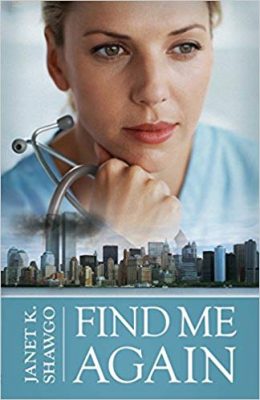
  • An Editorial Review of “Find Me Again” by Janet K. Shawgo

    An Editorial Review of “Find Me Again” by Janet K. Shawgo

    Can true love conquer death? What happens when those that die have unfinished business? Is it possible for those that leave to help those still here with their unsettled endings?   Find Me Again is a story about love that dares to do just that.

    Find Me Again begins just over a year before 9/11; many of the mysteries in the story revolve in some way around that infamous day. Much of the story is not about 9/11, but a key player in the story proves to be tightly involved in the events of that day. The conspiracy theory and mysterious side to this story help make it a great read, but what intrigues me the most is how intricate the people are woven together in this story; most of them oblivious to these associations until well into it.

    Taylor comes home for his Aunt Beatrice’s funeral with a surprise that his uncle who had also passed had willed to him his controlling portion of the family business. The inheritance comes with strings attached, however. Taylor is to settle some unfinished business for his uncle; his request was to research his family history and seek out his ancestor’s (Samuel White) true love, a nurse from the Bowen family.

    Jace is the most recent relative that has chosen to follow in the footsteps of her ancestors of old.  She is a holistic nurse recovering from a bad divorce that left her broke. But Jace was also gifted by her mother’s family history that leaves her to believe that she must help settle the dead as well. Her research leads her to discover that the Bowen and White families are linked. Jace feels a strong obligation to seek the answers to several questions that surface in relation to her mission.

    While Taylor and Jace appear to be the key players in this story, they are far from the only ones. All of the characters developed in this story are intriguing and leave you wanting to know more of their story. From Jace’s cousin Zack with intelligence enough to get her into a high level government job, but country enough to allow her to fly through desert training and surpass expectations of her. Zach also has the unique gift of mind reading and she may also be an empath. Zack alone adds an amazing character to the story and she is just one of many.

    Find Me Again is a mystery, conspiracy theory and an amazing love story that crosses generations—all combined into one amazing read. It leaves you quickly turning the page wondering how each person really plays out in the story, and an ending that tells you this story is far from over. An awesome and entertaining story; this reviewer highly recommends it and is looking forward to reading the first two books in this fascinating and well-researched trilogy from Janet K. Shawgo: Look for Me and Wait for Me.

  • An Editorial Review of “I, James” by Mike Hartner

    An Editorial Review of “I, James” by Mike Hartner

    James Crofter is born in Spain in the early hours of September 21, 1613. Rosalind Caufield is born the same day and same time in London. Their lives, families, and fortunes will forever be intertwined.

    I, James, is the second book in Mike Hartner’s historical young adult saga, a series designed to flow from the 16th century to the present time. It is a story of adventure, hardships, survival, heroics, and sweet romance.

    When Rosalind is just 10 years old, she and her mother are cast out of the family home. Her grandparents have died and her father is away at sea. Rosalind can’t understand how family can turn against family. She and her mother are shipped to Sarat, India, presumably to be met by her father.  Her mother dies and her father cannot be found. Rosalind, now alone in a strange city, is grabbed and trained, readied to be sold as a slave. Instead, her trainer decides to befriend her; she is put on a trade ship where she has some protection; she dresses as a boy and calls herself Sal. She becomes a sailor, a cook, a fighter, growing from child to young woman.

    James is a child of privilege, a prince, the second son of Walter, King of Northern Spain. On his eleventh birthday, James is snatched from his family, transported to Africa, and sold into slavery. James never gives up on the thought of taking revenge the man who took him from his home and made him a slave.

    Hartner takes us on the journey of James and Rosalind who are from these very different walks of life at the time of who rules the sea rules the world. Their lives and stories become entwined as they struggle with pirates, slaves and slavers, cruel masters, and just down-right evil bad guys as they each find their way with the help of compassionate friends, determination, hard work, and quick thinking. It is a book that will transport you back to the time of your childhood daydreams of faraway places and distant times.

    I, James is a captivating tale of survival, of helping others, of not letting others discourage you, and of never giving up hope. Fascinating historical details are woven throughout this classic coming-of-age story adding to its intrigue. Readers will find themselves rooting for Hartner’s feisty and resourceful protagonists. However, I, James, is told in a matter-of-fact tone throughout; the harshness and cruelty of the time period comes through in all its bleakness. During James’ time working on the tobacco plantation, he is whipped many times. James is reminded of his father’s stories but with fuller understanding of the hardships his father actually endured. As a small boy, James enjoyed his father’s stories of adventure, never expecting to experience such things for himself.

     I, James may be categorized as a middle school – young adult novel, but if you enjoy classic adventure stories, it will draw you in, no matter your age. You’ll also want to read the first volume in the series, I, Walter, and watch for upcoming books with new characters and new adventures in Mike Hartner’s Eternity series. Highly recommended.

  • An Editorial Review of “Tightwads on the Loose” by Wendy Hinman

    An Editorial Review of “Tightwads on the Loose” by Wendy Hinman

    Tightwads on the Loose – A Seven Year Pacific Odyssey opens with a map of the Pacific Ocean that showed the voyage of the sailing vessel Velella starting and ending in Seattle. Soon the reader is immersed in the plans of Wendy and her husband, Garth, to set sail on their open-ended adventure. And we wonder how long an introvert, whose motto is always be prepared,  can live in such tight quarters with an extrovert whose motto is let’s just wing it.

    These are not rich dot-com people on a yacht. Nor are they trust fund hippies, or newly retired people with a nest-egg, hence the title. But they are practiced sailors who believe in themselves and each other. Later in the book, Wendy made a statement about why it felt important to take the leap (and the risks); leave behind the meetings, deadlines, and emails; and set sail across the Pacific: “Perhaps the path of least resistance, while it offered a temporary respite from the struggles of life, ultimately held no great opportunity for growth, which was what made life most interesting.”

    And risks there were! The reader departed Seattle with them — against the tide. And then there were the shipping lanes to traverse in the fog; the breakdown of equipment needed to keep them alive in said fog; those squalls and mountainous waves, alternating with a total lack of wind. Then they endured scorching tropical heat; polluted harbors; and the possibility of pirates, fishing nets, rocks, and coral reefs. Did I mention the typhoons? The author shared events in a detached, dispassionate way that belies the sheer terror you would expect one to feel. Having sailed in gales, I found myself inserting my own fear and drama into their many near-death experiences.

    Yet the dangers were offset by countless magic moments and encounters. As they sailed from island to island in the South Pacific, they sometimes sailed naked through silence under silvery moons in perfect winds and temperatures. At each stop they were met with friendly, generous locals. Their days were filled with new friends, hikes, snorkels and dives. They enjoyed the camaraderie of fellow sailors, and found themselves immersed in the international racing scene. Also, while they did not set out on a “history cruise,” they encountered artifacts of World War II on almost every island. Details of those discoveries added interest and context to the account.

    In desperate need of equipment repairs and the funds to pay for them, Wendy and Garth took jobs on a U.S. Army base in the Marshall Islands. As they moved off Velella, worked at their jobs, and explored the island we learn the inside story about life on Kwajalein and those who lived there. Two years later, with their boat seaworthy once again, Wendy and Garth set sail for Japan via Saipan, Hong Kong, the Philippines, and Okinawa. Very few blue water cruisers visit this part of the world, and tourists rarely get to see the remote harbors where Velella stopped. This sets Tightwads on the Loose apart from most sailing narratives and adds value to the reading experience.

    Finally, the couple starts the arduous journey from Japan back to Seattle. They are faced with sailing 5,000 miles at the pace of a fast walk, with limited capacity for water or fuel, even food, and, of course, the possibility of a typhoon. They would have enough of everything —if all went well. This last, long voyage provided ample time on watches for Wendy to ponder what ‘reality’ would be like for them back in Seattle. After surviving the dangers of their ocean quest, how would do they do back on land and in day-to-day working life?

    This is good ol’ straightforward storytelling that doesn’t require literary flourish to be captivating. Just imagine spending 24/7 for months on end with your spouse in a 31’ foot sailboat. Just imagine that your world is always moving or changing in one way or another. Now imagine immersing yourself into post-9/11 America only to discover how much everything has changed when you finally return to your home-port.

    Tightwads on the Loose; a Seven Year Pacific Odyssey vividly details the highs and lows of life at sea and at port. It will definitely appeal to those who are curious about sea voyaging.  Armchair travelers will find a diversity of cultural experiences, historical details, and adventures for their entertainment and education.  Come on board and sail away with the intrepid Wendy Hinman and her humorous and ingenious insights about life at sea.

  • An Editorial Review of “Ray Ryan” by Aiden Riley

    An Editorial Review of “Ray Ryan” by Aiden Riley

    An engaging contemporary coming of age story, Ray Ryan by Aiden Riley, follows and is narrated by the main character, Ray. The writing style is quite conversational and very British in its syntax. As the novel progresses through Ray’s life from childhood to mid-30s, the reader will learn of Ray’s challenges and fears, hopes and dreams that create the choices he must make to find his own way.

    The reader is first introduced to Ray in the year 1994 when he is still in grade school. Riley drops the reader right into the middle of Ray’s life and loves: his mother, Janet, his best friend, Kevin, and his passion for writing. While the love of writing takes a backseat for most of the story, Ray’s relationships, especially with his mother and best friend become central to the novel.

    Flash forward four years:  Ray is now in secondary school, scared out of his wits because not only is his new school enormous and intimidating, but he is still one of the smallest students around. Ray doesn’t let his size dictate passiveness however, and quickly learns that standing up for himself will not only get him left alone a bit, it also feels imperative. For the first time, Ray is not in class with his best friend Kevin, which takes him out of his comfort zone. The first day in class he meets a new friend, Anna, and makes a new enemy.

    The novel continues through Ray’s life and, as he gets older, life becomes simultaneously more rewarding and more challenging. For every bit of happiness there seems to be a bit of sadness or stress to maintain a balance. Ray falls in love. His father makes a reappearance in his life, and not for the better. His mother gives birth to his little sister. His friends get involved in drugs and face some hard times.

    When tragedy strikes unexpectedly, Ray must learn to cope with his new reality. The suddenness of the events may be a bit jarring for the reader, but do ring true to life and how tragedy occurs in the real world. Ray’s life changes forever and, like all of us who have experienced hardship, he runs through a gamut of emotions and comes out the other end the same, but different.

    Three years later, now in 2008, Ray’s life seems to be taking a new path when old relationships and feelings reappear. Ray must once again navigate tragedy, and in so doing, discovers what is truly meaningful to him. Events toward the end of the novel concerning the reappearance of Ray’s father may take the reader out of the story due to their inconsistency with the flavor of the rest of the novel.

    Readers should be prepared for traumatic and dramatic events of the non-cozy type (psychologically disturbing events).  These jarring events reflect vividly circumstances that some people experience in real life and add to the novel’s overall realistic and true-to-life tone. This is a brief hiccup however, as the conclusion of the novel is both satisfying and returns to the previously established voice and feel of a contemporary literary novel.

    Ray Ryan by Aiden Riley is a contemporary genre blending novel that does not follow a typical plot based structure. Rather each section highlights the important, life changing, and character building moments that the main character experiences. Riley’s characters are relate-able and authentic. There are a few of Ray’s cohorts with whom readers may find themselves desiring to shake some sense into—if only they could. At the same time, they will find themselves urging Ray on to follow his dream.

    Ray Ryan is a solid debut novel by Aiden Riley, an engaging contemporary coming-of-age story.

  • An Editorial Review of “Coming Home” by Gloria Javillonar Palileo

    An Editorial Review of “Coming Home” by Gloria Javillonar Palileo

    Coming Home, by Gloria Javillonar Palileo, brings vividly to life the plight of the American born non-white people, and particularly those of mixed blood, who must find a place to exist between diverse cultures. The acute pain of this dilemma is faced by millions of children whose parents are immigrants to North American culture. Palileo is well qualified to enlighten readers about the particular struggle of identity and of the need to fit in that many first generation Americans must grapple as she herself is an immigrant.

    Inspired by the experiences of the children that she and her husband adopted from the Philippines, Coming Home is a story that needs telling.

    Juan de la Cruz, an American-born twelve-year-old with Filipino parents who immigrated. He suffers from the racist barbs of school bullies who call him a “chink,” and then discovers his friends also do not consider him an American. However, Juan likes to go to the mall, play video games, and hang out like his peers. He doesn’t see himself as different. However, some of his classmates do since they don’t quite know where to place him since he isn’t white; he isn’t black. It is here when Palileo broaches the subject of generational racism as the children who mock Juan are picking up their opinions and derogatory name-calling from somewhere. Is it inherent in the culture? Do the children pick it up from their parents? Is it peer pressure?

    The conflict between identities is increased by his parents—his father welcomes being in America, his mother wants to return to the Philippines. She believes her son will never be accepted as an American. Juan, desperate to be an American, insists on being called “John,” asks his mother for plastic surgery on his nose, and, finally asks to be circumcised—a request that causes further crisis in the family.

    When Mrs. de la Cruz decides to take “John” for a visit to the Philippines, Juan decides he will become Filipino, tan himself and begins learning Tagalong. He soon discovers, however, that his Filipino cousins consider him very much an American. Though they take him on their adventures and include him in their games, the poverty and strange customs of his parents’ homeland, plus tales of circumcision practices of the past, convince Juan that he wants to come home to America. It isn’t until he is home that he realizes he, after all, belongs to his family and that is where “home” is for him.

    The book also gives an interesting insight into history and customs of the Philippines, a culture seeking to rid itself of the influence of hundreds of years under oppressive Spanish rule. Coming Home focuses on the effects that a history of oppression and racism could have when it zooms in on one little first generation American boy and his immigrant parents. Those who are intrigued by the story’s backstory of Philippine history may find Palileo’s latest work titled The Indios of great interest.

  • An Editorial Review of “Prepare to Come About” by Christine Wallace

    An Editorial Review of “Prepare to Come About” by Christine Wallace

    Christine Wallace writes with great clarity and honesty–and at times, with humor–about weathering the highs and lows of navigating family, career, and love in her gripping memoir Prepare to Come About.

    Wallace chronicles her wildly successful perinatal business that brought her accolades and awards for business achievement, along with celebrity radio and TV interviews, and other accouterments that come with the lifestyle. As the business garnered awards, it began assuming a life of its own.

    Christine’s professional life skyrockets, while her family life plummets. Christine’s confesses to her readers that her children were often left to fend without their own mother as she worked to help other women become one and the conflict that she internalized. She unflinching shares the other not-so-bright sides that sometimes accompany commercial professional achievement: teenage children in crisis, endless exhausting days, family pressures, work demands, and, seemingly, black holes of chaos.

    Her full-throttle lifestyle comes to a grinding halt at the zenith of her success beginning with the day she received an award at the U.S. Chamber of Commerce Summit from President George W. Bush. The sharp contrasts between motherhood and professional accomplishment culminate during the awards ceremony in Washington, D.C. —thousands of miles away, one of her children must be admitted to the emergency room.

    As the economic tides turn, uncontrollable events broadside her business causing a devastating professional aftershock that amplifies her personal heartaches. Christine and her family struggle with a loss of control of everything in their lives. Christine struggles with her loss of identity as a successful professional, a role model, a caring mother, and a supportive spouse while she battles with the economic recession, personal depression, and, worst of all, her own loss of trust in herself and her capabilities.

    The fractured family makes an unorthodox choice that pivots them all into unfamiliar waters. Their lifeline comes in the form of a tall ship named Zodiac and its enigmatic captain. Life or death challenges and unforeseen moments of wonder and awe await Christine and her family. As they venture forth together in this new venture, the family members reconnect and rebuild their lives.

    This memoir illuminates the struggles and chaotic lives that many contemporary families are challenged with and then goes further. It inspires readers to look beyond society’s conventional solutions and rationalizations to plot their own course.

    Prepare to Come About by Christine Wallace is a story that restores faith in the strength and love of a family and will reaffirm your belief that a life lived on one’s own terms is the truest meaning of “achievement.”