Blog

  • Summer Shorts & Novellas 2015 Official Finalists Listing

    Summer Shorts & Novellas 2015 Official Finalists Listing

    The Finalist results for the 2015 Spring/Summer Short Stories and Novellas are in!

    Shorts & Novellas Writing ContestsWe are pleased to announce the following authors whose works have made it to the Finalist round and will go on to compete for First Place Summer Shorts Award.

    Prize Package for the First Place Summer Shorts Award Winner: A Chanticleer Review Package or a $ 100 purse for Overall First Place for Spring/Summer Reads. The award winner will be recognized at the CBR Awards Banquet 2015.


    Congratulations are in order to the following authors and their works:

    • Robert Cone for Redcoats! 
    • Jianna Higgins  for Destiny’s Alliance
    • Jianna Higgins for Just Waiting
    • L.S. Kilroy for Roma
    • Charles Kowalski for Let This Cup Pass  From Me 
    • Elaine MacPherson for One Twenty-Nine
    • Alix Nichols for Falling for Emma
    • Alix Nichols for You’re the One
    • YA/New Adult: Natasha Tsakos for Colours  
    • Annie Wood for Just a Theory: a Quantum Love Adventure

    We are now accepting entries into the Winter Shorts 2016 writing competition. Please click here for more information or to enter.


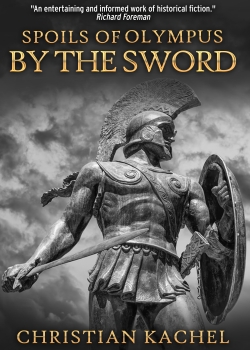
  • Christian Kachel, author of the military historical “By the Sword: Spoils of Olympus”

    Christian Kachel, author of the military historical “By the Sword: Spoils of Olympus”

    ChristianKachelThank you so much for all the hard work that clearly went into the review of my military historical novel. Thank you again for all the great work you do for Indie authors—we need all the help we can get!

  • BY the SWORD: SPOILS of OLYMPUS by Christian Kachel

    BY the SWORD: SPOILS of OLYMPUS by Christian Kachel

    By the Sword is an atmospheric and character driven coming-of-age story that takes place in the years immediately following the untimely death of Alexander the Great. The news of his death traveled quickly throughout the land. He was born to the King of Macedon and was tutored as a noble and later by Aristotle. When he died, his kingdom was one of the largest the ancient world had known—more than 2 million square miles. His unexpected death left a vacuum of power and chaos. Civil wars and power grabs from Alexander’s generals tore this great empire apart. This is when Kachel’s enthralling Hellenic military epic begins.

    Andrikos grew up during Alexander’s rule. Now everything has changed. The story begins in his village when he is an errant adolescent more interested in his next drink or round of sex. He is in no hurry to have the responsibilities of an adult. Kachel illustrates the ages-old influence that peers may have on young men and how they can affect them and their actions—changing their lives forever—for better or for worse. Young Andrikos hangs out with the wrong crowd and is swept up in their illicit behaviors and actions. He finds that he must flee his family and his home to save himself from an unintentional crime—forever changing him and his life.

    Andrikos has no real plans for his life. Suddenly he finds that the only option he has is to join the armies of Alexander to escape his past. However, he was unprepared for the brutal conditioning and the heartlessness of the recruiters whose job it is to ferret out the weak from the strong. Kachel vividly portrays these horrific and brutal experiences through the eyes and heart of Andrikos as he undergoes the physical and mental conditioning that is forced upon him and his fellow recruits. There is no turning back. The only way out is death or fight to live another day.

    Kachel captures what could happen when trained killers are left to their own devices and their own greed and bloodlust without guidance and a chain of command in this satisfying read. He also brings forward the importance of having a mentor can be to the young and inexperienced. Vettias is a confident and self-reliant warrior with a complicated background in gathering intelligence. He recognizes potential in Andrikos and takes on the mantle of becoming his mentor and teacher. Under Vettias’ guidance, Andrikos develops and matures into more than a foot soldier as he learns of honor and integrity, of treachery and deceit, and of friendship and loyalty.

    By the Sword is a well-researched military historical epic where Christian Kachel, the author, portrays the effect that chaotic, warring times have on women and children, on the weak and infirmed, and the men who are caught up in the violent and ruthless swells of battles, and then the heartrending aftermath that follows even on the heels of victory.

    One cannot help but think of the millions of young people who are going through their own coming of age throes in the heat of battles and skirmishes that are taking place at this very moment. Kachel, who has served three tours of duty in Afghanistan and Iraq, writes with compelling adroitness about what Andrikos experiences as he makes his journey from an oblivious youth to a young man whose eyes have been opened to the cruelty of war but still manages to maintain his empathy for his fellow man and holds on to his humanity.

    Be warned that Kachel does not whitewash the horrors of war, nor the rape and brutish treatment of women and children, nor the screams of pain and the blank eyes of starvation in the telling of his epic.

    Christian Kachel’s By the Sword is a fine debut novel that explores the little known, but fascinating, age of post-Alexandrian Greece. Its intriguing interwoven storylines of a young man’s coming of age, of alliances and espionage, and of harrowing battles scenes will be sure to captivate readers and keep them turning the pages even as they wince and grimace with Kachel’s no-holds- barred descriptions in this well-researched historical narrative. We look forward to reading more from Kachel about what awaits Andrikos in his next adventure.

    Historical Fiction: Military, Classical Age
    Targeted Audience: New Adult, military history buffs, Classical Studies

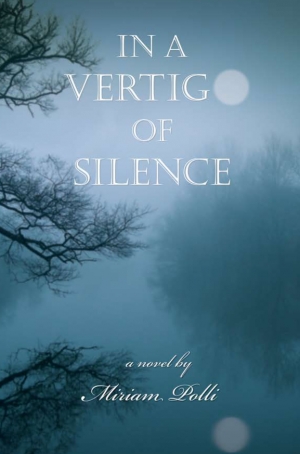
  • IN a VERTIGO of SILENCE by Miriam Polli

    IN a VERTIGO of SILENCE by Miriam Polli

    Debut novelist Miriam Polli has written an interwoven, multi-generational story, spanning four decades from the 1920s to the 1960s, of a grandmother who is a first-generation Polish American immigrant, her daughters, and her granddaughter.

    The novel moves back and forth in time, juxtaposing the granddaughter Emily’s story with those of her mother, her aunts, and her grandmother. As you are drawn into the lives of each of these women and the choices they made, you slowly begin to realize the impact on each successive generation and in particular, on Emily.

    As the grandmother is dying, a terrible family secret, one that dates from when Emily was just six weeks old, comes to light. How will this secret affect Emily’s life, once the truth is revealed?

    This novel deals with difficult subjects, such as alcoholism, abuse, and mental illness, which can damage a family in ways that only become clear after decades. It is an intimate, touching portrait of the daily lives of resilient women who are forced to cope with these problems during a time when such diseases were little understood.

    It is also a heart-warming, emotional depiction of the relationship between the matriarch of the family, the grandmother Marishka, and the granddaughter Emily. Polli has gifted us with exquisitely drawn characters who instantly become real people to us, drawing us into the beauty and tragedy of their lives.

    Readers who enjoy novels spanning several generations of a family, providing glimpses into its collective consciousness, will enjoy this lovingly rendered story with its themes of cruelty, loss and ultimately, tenacity. Anyone who has experienced the fractures that can occur over time in a family will be deeply moved by the stories of these strong, intelligent women.

    In a Vertigo of Silence by Miriam Polli resets the bar of excellence for debut literary women’s fiction.

  • Usability; Part 5 of 5 Things Every Author’s Website Needs

    Usability; Part 5 of 5 Things Every Author’s Website Needs

    The Fifth Post on the Five Pillars of Effective Website Design will Focus on Usability by Readers

    Formatting:
    Break your textual information into bite-sized chunks. Keeping your content in short paragraphs works best for the web – up to four sentences. Longer blocks of text are more likely to be glossed over.

    It is better that your text doesn’t run all the way across the page. Eye tracking studies conclude that it’s easy to lose which line you were reading when jumping to the next line, if the width is more than 500 pixels (a normal sized smartphone is 480 pixels wide horizontally). Ideally, a column width for reading only contains between 45 and 65 characters. Adding small graphics with your content will make the page even more palatable – and if presented to the side, will shorten that column width.

    Just make sure your images are sourced correctly; it’s a violation of copyright to just grab an image off another site and reuse it without permission. Shutterstock and Dreamstime are inexpensive resources for royalty free images. AllTheFreeStock.com has free images you can use commercially.

    Text size:
    Text should be at least 12 pixels. Smaller text will be difficult for your older audience to read, plus Google will consider your site not mobile friendly if the mobile version’s text is not 12 pixels or better.

    Infographics:
    Consider creating a pie graph or other kind of chart to communicate complex data. Especially if you have a large table with a lot of text, translating that data into colors and bars with appropriate labels gets the message across quickly. Here is an article on creating effective information graphics.

    Colors and Contrast:
    Using white text against a colored or black background can emphasize headings, but should be avoided for the rest of the site. Dark grey text on a white background is pleasing to the eye, but the reverse can be more difficult to read. Also consider that some readers have colorblindness. You can see how your site looks to a colorblind person at vischeck.com.

    Of course there are always exceptions; you should research your audience and see what other successful authors in similar genres are doing.

    Navigability:
    Just like you have a proofreader read your work, you need to have someone else look at your website. You’re probably too close to it to see any mistakes or issues. Can your audience find what they’re looking for? How about a screen reader that blind people use? Click here for more details on usability.

    Your links should look different from the rest of your text. The color can be different and/or they can be underlined, or underlined when the user hovers their mouse over the link. The main navigation should be obvious and toward the top of your site. Drop-down menus can allow more links in that area.

    Mobile Friendly:
    More and more users are browsing websites on their mobile devices, and if your site isn’t mobile friendly, you could be losing half your audience. Plus, Google will not rank your site as highly. How do you get a site to look good on a full sized cinema screen AND a tiny cell phone? The answer is responsive design. The backend code will allow your content to either change or flow with various screen sizes. If using WordPress, it helps to choose a theme that is responsive to begin with. If your site is not responsive and you don’t want to redo it, it’s possible to add some code and make it responsive, although it’s best to hire a professional than try it yourself. There are also companies that will create a mobile version of your site for a monthly fee.[fusion_builder_container hundred_percent=”yes” overflow=”visible” margin_top=”40px” margin_bottom=”10px” background_color=”rgba(255,255,255,0)”][fusion_builder_row][fusion_builder_column type=”1_1″ background_position=”left top” background_color=”” border_size=”” border_color=”” border_style=”solid” spacing=”yes” background_image=”” background_repeat=”no-repeat” padding=”” margin_top=”0px” margin_bottom=”0px” class=”” id=”” animation_type=”” animation_speed=”0.3″ animation_direction=”left” hide_on_mobile=”no” center_content=”no” min_height=”none”][fusion_separator style_type=”single|dotted” sep_color=”#e0f5ff” icon=”fa-bookmark” width=”” class=”” id=””/].

    We hope that this series has shed some light on areas where your website can be improved to help you interact with Readers and Media Professionals. The best part is most of these improvements are free if you know how to do it yourself. If not, Chanticleer Reviews offers website assistance and creation as part of their book marketing services targeted specifically for authors.

    Rochelle Parry, Chanticleer Reviews’ Creative Director You are welcome to email me at: RParry@ChantiReviews.com


    Rochelle Parry, webmaster[/fusion_builder_column][/fusion_builder_row][/fusion_builder_container]

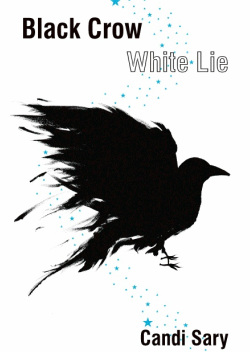
  • BLACK CROW WHITE LIE by Candi Sary

    BLACK CROW WHITE LIE by Candi Sary

    After years of moving from motel to motel with his alcoholic mother, Carson Calley has grown old enough to start questioning his gypsy life. The stories he’s been told – father died a war hero, a past life as a medicine man – slowly unravel as the 13-year-old begins to spread his wings.

    However, of all his mother’s stories (I’d wouldn’t lie,” she assures him, “the gods … plant things in my head”), Carson knew one was true – he did possess the gift of healing. Since his earliest days, his hands would fill with heat and then emit tiny “stars” that soothe his mother’s tortured heart and frequent hangovers. Yet despite this power, Carson also experienced rages that he can’t control, an anger seated in his mother’s frequent long absences. To distract himself, he grabs his skateboard and wanders the streets of Hollywood.

    Author Sary adroitly captures the real Hollywood: streetwalkers, grit and grime, tattoo parlors and head shops and gangs of idle youth. She also portrays its denizens free of stereotype and with a lyric eye: Carson’s mother “had a worn-out kind of beauty – like a thirsty flower.” Of Carson’s few friends, tattoo artist Faris “looked like a live page from a comic book,” while Casper, the albino owner of a local head shop, “looked like he had a light bulb inside of him.”

    Faris gives Carson gruff, fatherly advice, world-weary insight into his mother’s issues and stories, and the boy’s first tattoo: a small black crow to remind him of his father, who, he’s told, killed a crow with his bare hands. Casper offers something else: when Carson heals his deaf ear, the head shop proprietor sets up a back room where the boy can practice healing.

    Accepting her son’s readiness to heal, his mother arranges for him to work with a mentor: Lolo, a healer and an actress. Unfortunately, Lolo digs a little too deep into her part. She puts the idea of raising the dead into the teen’s mind, and he immediately decides to fly to Washington, D.C., and bring his father back to life. He needs to earn some money first, though, so in the meantime, he heals people during the day and skateboards with a gang of stoner kids at night. At school, a classmate, Rose, torments his heart. It’s a tenuous existence, but it’s all life offers Carson.

    And it doesn’t last. His mother’s drinking increases as her longtime boyfriend, Jackson, toys with her heart. When she goes into rehab, Carson questions the truth of all she’s told him. Lies begin to unravel. Carson makes the trip to D.C.’s Cemetery of Heroes, but what he finds is more painful truth, followed by an even greater shock when he returns home. Carson’s faith in all he knows is shaken to the core. Can the healer heal his own heart?

    A writer with a casual but empathetic voice, Sary succeeds in portraying teen angst without melodrama, in depicting compassion without sentimentality, and in creating a world of characters on the margins of society whose depth and complexity outshine any Hollywood hero.

    Black Crow White Lie by Candi Sary earned a First In Category position in the highly competitive Dante Rossetti Awards for Young Adult Fiction, a division of Chanticleer Reviews International Writing Competitions.

  • Web Site Visitor Interaction; Part 4 of 5 Things Every Author’s Website Needs

    Web Site Visitor Interaction; Part 4 of 5 Things Every Author’s Website Needs

    The Fourth Post on the Five Pillars of Effective Website Design will Focus on Visitor Interaction

    [fusion_builder_container hundred_percent=”yes” overflow=”visible”][fusion_builder_row][fusion_builder_column type=”1_1″ background_position=”left top” background_color=”” border_size=”” border_color=”” border_style=”solid” spacing=”yes” background_image=”” background_repeat=”no-repeat” padding=”” margin_top=”0px” margin_bottom=”0px” class=”” id=”” animation_type=”” animation_speed=”0.3″ animation_direction=”left” hide_on_mobile=”no” center_content=”no” min_height=”none”]

    Mail Chimp
    Mail Chimp, free email management

    Building a mailing/contact list is a great way to stay in front of your audience. Using Mailchimp, which is free up to a limited number of subscribers, visitors can sign up to receive news from you. Aweber is another option, but it has a monthly fee.

    Every author needs to have a contact list! How to get people to sign up? Offering something for free – in digital format – is a way to entice people to subscribe to your updates. You can also run a contest to give away a book to one lucky winner during a specific time frame.

    When you own your own website, developing a contact list is much easier to achieve than if you have a blog hosted on WordPress.com, for an example, without owning your own domain name. There is a huge difference between using a WordPress platform for your web site and having your web site hosted within WordPress.com.

    The Importance of Your Own Domain Name

    You might have a Facebook and Twitter account, but do you ‘own’ those websites? Of course not! All you own is your account with them, and Facebook is always discovering different ways to advertise to you and your FB friends utilizing your content in  anyway possible. Plus, their policies for advertising and audience building can change at any time.

    Owning your own domain name allows you to use an email with a matching address, which makes you appear more ‘together’ – your domain name is part of your branding. No one cares if you Yahoo!, Hotmail, Gmail, or AOL: these are all fine for paying bills and ordering online. I personally believe everyone should have a Gmail account to access all of Google’s tools – Google also owns YouTube. If someone sees an email from yourname@yourdomainname.com, they’ll be more likely to open it than one from an anonymous name@everybodysemailer.com.

    If you choose to host your site at GoDaddy, they will charge you for a domain-based email. Setting up a domain-based email through Gmail to avoid these fees while hosting on GoDaddy is only asking for technical trouble. WordPress emailing systems interact in very particular ways with the server on which they are hosted. For web site hosts that do not charge you for email service, click here.

    Social Media

    Another way to interact is to get followers on Facebook, Twitter, Goodreads, etc. By inserting a script, you can allow visitors to ‘like’ you on Facebook directly from your web page. If you are linking to your other accounts, make sure the pages open in a new window.

    Comments

    Allowing your readers to leave comments on your pages or blog entries is the default setting for WordPress page and posts. You can turn this off by toggling “screen options”, check the box for “discussion”, then you’ll have the option of unchecking “discussion”. Why would you want to do that? Well remember the last article about backlinks? A lot of unscrupulous spammers use technology to add their links to your page via comments. The way to stop this is to sign up for a free account at Akismet. Akismet comes with every WordPress installation, but it’s not activated until you get your account.

    Under ‘general settings’, you can also tell your site to not publish any comments until you approve them. If you do this, be sure to check your site often to keep the momentum going. With the correct settings, allowing discussions via comments can be a very fun way to engage your readers.

    Our next post will focus on usability.

    We hope that this article has shed some light on areas where your website can be improved to help you interact with your audience. The best part is most of these improvements are free if you know how to do it yourself. If not, Chanticleer Reviews offers website assistance and creation as part of their book marketing services targeted specifically for authors.

    Read Part Five, the Final Installment, here!

    Rochelle Parry, Chanticleer Reviews’ Creative Director You are welcome to email me at: RParry@ChantiReviews.com

    Rochelle Parry, webmaster[/fusion_builder_column][/fusion_builder_row][/fusion_builder_container]

  • Can a Gorilla Identify the Criminal? Read the 1st in the NEEMA Mystery Series by Pamela Beason for 99cents – Left Coast Crime Special

    Can a Gorilla Identify the Criminal? Read the 1st in the NEEMA Mystery Series by Pamela Beason for 99cents – Left Coast Crime Special

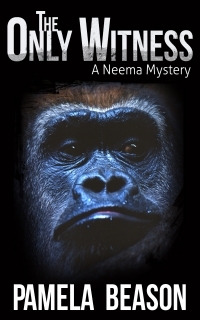
    The Only Witness by Pamela BeasonNeema is a “signing gorilla” that is part of an animal communication research project (think KoKo). She is the only witness to a crime. Lives are at stake and the clock is ticking. Read Chanticleer’s review here.  In honor of Crimelandia Left Coast Crime Scene in Portland, Oregon, Pamela Beason is putting her Chanticleer Grand Prize winner THE ONLY WITNESS  on sale for 99cents.

  • SEO for Authors – Part Three of Five Things Every Author’s Web Site Needs

    SEO for Authors – Part Three of Five Things Every Author’s Web Site Needs

    The Third Post on the Five Pillars of Effective Website Design will Focus on SEO (Search Engine Optimization)

    What good is having a website, if no one can find you?

    Recap

    Does your website have these five essential website pillars to be effective for promoting you and your work?  

    1. Your Branding Message in a Tagline
    2. Calls to Action – Driving Your Audience to Action
    3. Search Engine Optimization (SEO)
    4. Interaction with Your Visitors
    5. Usability and Readability

    3. Search Engine Optimization (SEO) for Authors

    Content must be coded in text, not as a graphic

    It is important for your website to have certain elements in text rather than images so that search engines will be able to find them and then index them (so that your website will come up on browsers such as Bing, Google, Yahoo). Navigation (links that go to other pages on your website), the site title, your book titles, your author name, page titles, and of course, your content needs to be coded in text, not as a graphic with text embedded. Google “indexes” your site following these page links. With so many Google fonts available, it’s almost a crime to use graphics as navigation elements. WordPress automatically uses text for your navigation, and many themes offer background, font and color options to make your navigation menu more interesting visually.

    Translation: Do not only use an image of your text embedded in a graphic in the header of your website or your digital book cover images and expect to have your website found easily by search engines. Make sure that you always use text in addition to the image graphic of your book covers.

    A photo is worth a thousand words

    Did you know that you can make your images work for you in your search results? They just need an appropriate “title” and “alt” text. These tags don’t show up to the reader, but the search engines will track them IF they are tagged with text. WordPress has text fields you can easily fill in with key words when adding your graphic. Don’t leave these valuable tag fields empty! It also helps if your files are named with a word that describes them, rather than the series of letters and numbers a digital camera might give them.

    Use the correct image size for faster web site load time 

    When you use images, make sure they are optimized for the web. Big, high-resolution profile pictures and book covers are great for print, but will slow down your page load times. Images for the web need to be measured in kilobytes (kb), not megabytes (mb). Google considers page load times when ranking your site; the faster the better. Your site will also rank higher if it is mobile friendly (more on Usability coming up in section 5). As of April 21 2014, Google will begin penalizing sites that are not mobile-friendly.

    Fresh content aids in SEO – even a small paragraph

    Fresh content keeps your site on top of the heap. If you have a blog, it should be incorporated into your website. If you’ve been using Blogspot (blogger) or WordPress, another blogging platform, you can easily integrate those into a domain-based website. It’s recommended to update your blog at least every two weeks. If you don’t have time to blog, there’s no shame in it; just don’t have one. It looks worse to have your last post dated from Christmas 2012 prominently displayed than not to have one. But remember consistent short and sweet  blog posts are better than none. It is freshness and frequency that count, not length and complexity.

    Plugs-ins: The special sauce for ramping-up your SEO indexing

    WordPress has some great paid and free plug-ins to help optimize your site for better search results. All in One SEO Pack has a free and a paid version. These plugins make it easier to add your page titles and meta information.

    Part of the process of discovery when setting up a web site is figuring out what people will be searching for to bring them to your site. These words and phrases can be integrated into each page. Individual pages also need their own titles, so that Google and other browsers will index them correctly.

    Use Google Plus Social Media for extra Google SEO Goodness

    We have a handy guide to getting started on Google Plus. Click here for more information.

    Use words in your URLs instead of numerical codes

    These words can be automatically generated in WordPress by going to the “Permalinks” section in the administrative screen and choosing “Post Name”. Think about the words that a potential visitor to your website might type in her browser search window in order to find your web site. For instance, www.mywebsite.com/bookreviews/ is better than www.mywebsite.com/?p=7846, even though they go to the same page.

    When writing your pages, use sub-headings when topics change. Be sure to use the proper tags, such as <h2> and <h3> for subheads, rather than just enlarging and bolding your text.

    Link from other sites

    Having a trusted site like Chanticleer that has your review listed and linked back to your website will increase your search engine rankings. These are called inbound links, or backlinks. When linking to content from your website, make sure that the links open in a new browser window, so that your site stays active in the viewer’s browser.

    Our next post will focus on interacting with your web site’s visitors.

    We hope that this article has shed some light on areas where your website can be improved to help you reach your audience. The best part is all of these improvements are free if you know how to do it yourself. If not, Chanticleer Reviews offers website assistance and creation as part of their book marketing services targeted specifically for authors.

    Read Part Four Here!

    Rochelle Parry, Chanticleer Reviews’ Creative Director   You are welcome to email me at: RParry@ChantiReviews.com

    Rochelle Parry, webmaster

  • THREATEN to UNDO US by Rose Seiler Scott

    THREATEN to UNDO US by Rose Seiler Scott

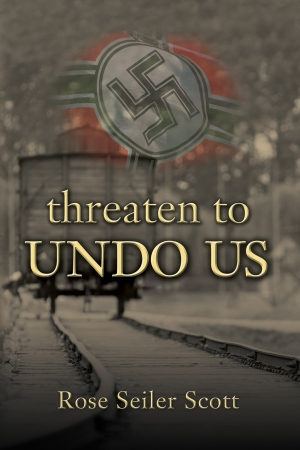
    Born to an ethnic German family in Poland, Liesel Bauer is raised to appreciate the complex cultural differences of her tight-knit rural farming community. Friendships between families are generational, forged in the spirit of cooperation and extending back for centuries. But when politics turn to war Liesel learns that the bonds of shared lives are easily severed.

    Liesel’s story spans nearly three decades – from the time of the Bolshevik reprisals of 1919 through the aftermath of World War II. Her early years take place during a period of political calm, thus enabling the reader to follow Liesel’s growth from a clever and loving child to shy teen and, ultimately, to a woman who draws strength from both her faith and from her role as wife and mother. It’s with this strength that she will arm herself for the times ahead.

    As Hitler gathers his supporters and builds a case for war, Liesel’s town is cleaved in two. Neighbors lose trust in one another and friendships are dissolved.

    For the thousands of German families that have the foresight to leave Poland, an exodus is set in motion. Knowing no other life, Liesel and her family stay and she shows us that the bravest actions in war are rooted in the routines salvaged from everyday life.

    “Threaten to Undo Us” is a novel rich with meticulous historical detail mined from both primary and secondary sources. From the descriptions of daily farm life and cultural customs to the price that shifting political loyalties exacted on the war’s victims, the reader is immersed in a story that rings true on multiple levels.

    Author Rose Seiler Scott has delivered a thoughtful and vivid picture of the plight of ethnic Germans living in Poland during and after World War II. Caught between their birthrights on Polish soil and the call of the German fatherland they were stripped of their human rights and became refugees within their home country.

    Through the struggles of one woman and her family the author has crafted an homage to the millions of ethnic Germans, once living in Poland, who lost their property, their freedom and, in many instances, their lives. With a literary sleight of hand this quiet narrative deftly guides readers outside of their comfort zones, demanding that attention be paid to the follies of the past.

    [Reviewer’s Note: Historical Sources and Quote References are included.]