Blog

  • ENCOUNTERS on the FRONT LINE: CAMBODIA: a MEMOIR by Elaine Harvey

    ENCOUNTERS on the FRONT LINE: CAMBODIA: a MEMOIR by Elaine Harvey

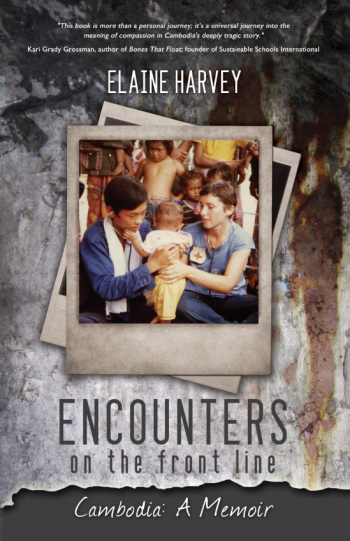
    Encounters on the Front Line is the journey of a Canadian Red Cross nurse who, after traveling in far off reaches of Asia and Africa, finds herself in a refugee camp on Cambodia’s Thai border, in the midst of the war between the Vietnamese and Cambodia’s brutal Khmer Rouge.

    The encounter with the front line becomes a life journey told in three books: her experience in a refugee camp in 1980, a pilgrimage back in 2007-2008 in an effort to reconnect, and a third journey two years later as a mature woman and writer, seeking to pull together the experience that has marked her so deeply.

    The courage and resilience of the Cambodians survivors who serve with her, their beauty in the midst of the horrendous conditions shine through, even as the camp itself becomes torn by war. Harvey draws a vivid picture of contrasts: the abysmal conditions of the camp with the green of the surrounding rice fields, the terrors of the Pol Pot regime with the loyal gentleness of the individual Cambodians who serve with her. Photos increase the reader’s intimacy with these people, as does the poetry that runs through the book.

    Harvey’s return trips to reconnect and unravel the mystery of the land become a more personal search. It is again focused on people, both Cambodian and expats from around the world who have found their life’s work in Cambodia. The second visit focuses on an orphanage, Wat Opot, where she serves, and its American founder. The price of conflict is brought home by the stories of these tragic leftover of war—the children. In a land where poverty and conflict overwhelm, many find peace in Buddhism. Harvey finds that her greatest service lies in the healing touch.

    The honesty of this memoir—Harvey’s conflicting reactions to the filth and vermin—give it an authenticity that is refreshing. The third book in particular, we feel her frustration and grief at her failure to re-establish the personal connections of the first encounter. If it has any defect it is that the first book, given its subject matter, has a tension and intensity the other two do not.  And the personal search of the latter two is, that some readers may find it to be, at times, repetitive as the author reexamines her encounters. Life has moved on beyond her reach, and the intimacy and immediacy of war relationships cannot be reestablished. There is a large quotient of sadness in this last visit, and a once friend tells her that it is a mistake to cling too long.

    This is a very well written memoir and an intimate picture of a Southeast Asia  and its people. Readers will find their horizons broadened by Harvey as she shares her encounters as one who has served in the far reaches of the Third World, grown to love its people, then sought to give the experiences meaning. Harvey’s poetry and photographs add both variety and depth to the work, as they further the reader’s connection to the memoir beyond the power of prose.
  • EDEN’S ORE: REVELATIONS by B. V. Bayly

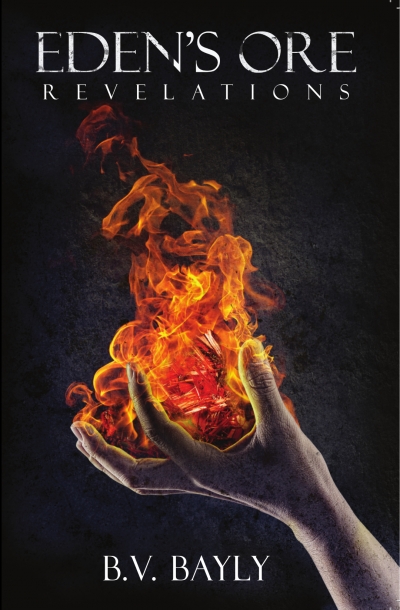
    EDEN’S ORE: REVELATIONS by B. V. Bayly

    An action-packed, dystopian science fiction series, describing a near-future, energy-starved world saved by the discovery of a crystalline ore with powerful properties. Creating the perfect Eden, however, comes with unexpected and dangerous consequences!

    B.V. Bayly has crafted an action-packed story full of mystery and suspense in a near-future, dystopian world. The author has presented an intriguing premise in which an Eden-like Utopian civilization has been created by using an all-powerful ore that replaces depleted energy reserves. However, Eden is an oasis on a planet where many of its inhabitants exist in brutal and barbaric times; human life has little value and savagery runs rampant.

    The core of Eden’s government is the Church of Humanity. The Patriarchs, the Church’s leadership, are under increasing pressure from several outside factions who are actively trying to tear apart or infiltrate them. One of the strongest and most dangerous factions is the corrupt and insanely violent Horsemen.

    As Revelations – Book 2 in the series – begins, Commander Nate Reinhart of The Church of Humanity must come to terms with his own guilt over watching one of his best men, Gabriel, the hero from Book 1, get caught in one the largest explosions the commander has ever witnessed.  The explosion happened at a weapons facility while Gabriel attempted to detonate a shard of black ore.

    Now, Nate puts his entire team at risk of attack from the enemy to rescue Gabriel. When they extract Gabriel from the crater caused by the blast, it is still underdetermined if he is alive or dead. As Nate’s team takes Gabriel into the forest for cover, they come upon the remnants of a second team of wounded soldiers who had been stationed outside the weapons facility. One of the few remaining soldiers reveals to Nate that they’ve been attacked by two squads from their own platoon. Soldiers in their own ranks may have betrayed them, becoming their most dangerous enemies.

    Given Nate’s growing misgivings from his own dealings with the Church, he must now face the fact that he no longer has any confidence in the Church leaders and suspects that their motives aren’t to be trusted. Gabriel may be in mortal danger and unable to protect himself in his current, comatose state. Nate decides to let the Church leaders believe that Gabriel is dead, turning to his most trusted allies for help in healing and protecting the young man.

    As events continue to unfold, Nate realizes that The Horsemen have succeeded in spreading their corruption, infiltrating the leaders of the Church and weakening the Patriarchs. As he waits for Gabriel to awaken, Nate must choose whom he can trust as he battles against the forces of good and evil. Only the Spheres, with their secret sanctuaries and strong desire for independence, can offer an alliance with Nate in this battle for the hearts and souls of humankind. Nate must lead his team into the bowels of the dark and uncivilized zones to find the source of the Horsemen’s power.

    Readers will be drawn into the Eden’s Ore series with its engaging characters, complex relationships, nonstop action, and its strange dystopian world with interesting and powerful new twists.

    Reviewer’s Note: Reading Eden’s Ore: Revelations is like traveling back to a futuristic world to visit old friends and make new ones. I recommend that readers begin with Eden’s Ore: Secrets, the first in this compelling top shelf series, and have Book Two close at hand for immediate immersion into the sequel.

  • BECAUSE of the CAMELS, by Brenda Blair

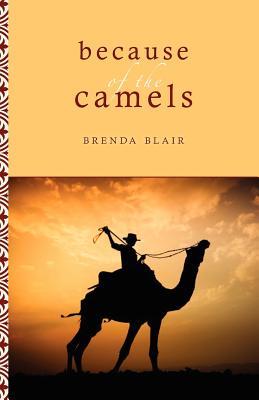
    BECAUSE of the CAMELS, by Brenda Blair

    Because of the Camels is an inspiring story about a little known account of the incredible journey that brought Egyptian camels to rugged Texas in the mid-1800s. This historical novel skillfully weaves more into the story than just a depiction of what happened; it is a story of many cultures, the coming upheaval with the war that changed our nation, and the pioneering of the West and of Texas.

    More uniquely interesting was the portrayal of people from two different cultures, East/Islamic and Western/Christian, encountering their societies and customs for the very first time that is enlightening about the isolation of different cultures before the age of television or radio.

    Elizabeth McDermott, an up and coming socialite from one of Galveston’s most prominent families has no idea of the grand adventure that awaits her when the camels arrive in port. Nor do the three young men Alex, Nate and Hassan who accompany the camels. Their lives will intersect in ways that none of them could have imagined.

    But this is not just Elizabeth’s story, nor is there ultimately one main character; more it is the story of how bringing the camels effected the lives of those half-way around the world, the military men who were in charge of the special mission to procure the animals and then get them back to U.S. for the Army Camel Corps, the brave Egyptian young man who accompanied the camels, the plight of non-whites in ante bellum Texas, and the arrival of German immigrants. Tensions soon mount from the effect of all of these new cultural aspects clashing.

    To counterbalance some more of the gritty scenes that are historically accurate of the time, there are also many delightful scenes.  But readers should be aware that the author did not overlook the racism and subjugation of people of color that was prevalent at that time. I felt that her descriptions were so vivid that they truly took you back to Egypt, to the trans-Atlantic sail, to the crushed covered streets of Galveston, to the beautiful colored bays and its abundance of life that surrounded Saluria; to the vast expanse of the prairie grasses in the unsettled lands near San Antonio. Each scene is so well depicted that one effortlessly travels back in time to become part of the adventures told. U.S. history and military buffs will appreciate this well-researched book. Those looking for an antebellum romance will also enjoy reading it.

    Not only was I captivated by the imagery the author created, but I was taken away by how well each character in the story was developed. The author developed each and every character so well that you can’t help but feel that you are having tea with Elizabeth, riding the camels with Hassan and Alex, sitting around the campfire listing to the tales spun by the camel men, and rocking on the porch with Jeremy.

    The story of the camels’ journey to America and the part they played in American history is one that I found to be most informative and entertaining. Ms. Blair had me turning the pages to find out what will happen to the McDermott family, Hassan and the camel men, Alex and his Uncle Babcock, Nate and his grandfather, as well as the many other characters. This is one story I will not soon forget.

    Because of the Camels was awarded the Laramie Awards First Place for Historical Western Novels. The Laramie Awards is a division of Chanticleer Novel Writing Competitions.


  • The CHAUCER Awards for Historical Fiction – Official 2014 Finalists List

    The CHAUCER Awards for Historical Fiction – Official 2014 Finalists List

    The CHAUCER Awards recognizes emerging new talent and outstanding works in the genre of Historical Fiction Novels. The Chaucer Awards is a division of the Chanticleer International Blue Ribbon Awards Writing Competitions.

    More than $25,000 dollars in cash and prizes will be awarded to Chanticleer International Blue Ribbon Awards Winners annually.

    The Chaucer Awards for Historical Fiction has twelve categories to compete in for First Place Category Positions. The Chaucer First in Category award winners will compete for the Chaucer Grand Prize Award for Best Historical Book 2014. Grand Prize  winners, blue ribbons, and prizes will be announced and awarded on September 29th at the Chanticleer Authors Conference and Awards Gala, Bellingham, Wash.


    cac3

    2013-Chaucer


    We are proud to announce last year’s award winners and this year’s Chaucer finalists at the Historical Novel Society’s 2015 Conference in  Denver, Colorado that will take place on June 27, 2015.


    2015 Historical Novel Society Conference logo

    The CHAUCER Historical Novel Competition Categories are:

    • Women’s Historical Fiction
    • Legacy/Legend
    • Pre-historic
    • Ancient History
    • Medieval, Renaissance, Dark Ages
    • Elizabethan/Tudor
    • 1600s
    • Regency, Victorian, 1700s & 1800s
    • Turn of the 19th century
    • Turn of the 20th century
    • World Wars
    • Young Adult/New Adult
    • World/International History

    Congratulations to following CHAUCER 2014 FINALISTS and good luck to all as they compete for the twelve First In Category positions:

    • Michael S. Pritchett for Saints and Strangers
    • P. Lorraine Buck for By Blood and By Vow
    • J.S. Dunn for Bending the Boyne
    • Mary S. Black for Peyote Fire
    • S. Thomas Bailey for Forest Sentinels: The Gauntlet Runner
    • Kerryn Reid for Learning to Waltz
    • Sandy James for Runaway
    • Michael J. Cooper for The Rabbi’s Knight
    • J. P. Kenna for Beyond the Divide
    • R.N. Vick for Wings of Fury 
    • Patricia Averbach for Painting Bridges
    • Rebecca Lochlann for The Year-God’s Daughter and The Thinara King
    • Jared McVay for The Legend of Joe, Willy, & Red
    • Syril Levin Kline for Shakespeare’s Changeling: A Fault Against the Dead
    • Emma Rose Milar and Kevin Allen for Five Guns Blazing
    • Elizabeth Soloway for The Great Deception
    • Anna Angelidakis for The Icon Thief 
    • T.E. Taylor for Zeus of Ithome
    • J.L. Oakley for Timber Rose
    • Susanne Petito Egielski for Nelson’s Castle: a Bronte Fairy Tale
    • David Brendan Hopes for The One with the Beautiful Necklaces
    • Lilian Gafni for The Alhambra Decree: Flower of Castile
    • Gloria Javillonar Palileo for The Indios
    • William Jarvis for The Partisan
    • Helena P. Schrader for St. Louis’ Knight 
    • Michele Rene for I Once Knew Vincent
    • Jodi Lew Smith for The Clever Mill Horse
    • Catherine A Wilson and Catherine T Wilson for The Lily and The Lion
    • Gregory Erich Phillips for The Love of Finished Years
    • Chelsea Lemon Fetzer for The River Map
    • Ben Sharpton for 7 Sanctuaries 
    • Jeff Ridenour for The Art Procurer
    • Elisabeth Storrs for The Golden Dice: A Tale of Ancient Rome
    • Sharon Short for My One Square Inch of Alaska
    • Ruth Hull Chatlien for The Ambitious Madame Bonaparte
    • Ginger Cucolo for The Knoll and Beyond the Knoll
    • Wendy Roberts for Where the Foxes Say Goodnight
    • Jeff Braun for The Secret of the Just
    • Dr. Evan Mahoney for Nongae of Love and Courage
    • Steph A Amey for Holloway 8632
    • Jeni Renner for Puritan Witch
    • James Zerndt for The Korean Word for Butterfly
    • Michael Hugos for Leptis Magna: Emperor’s Dream on the Edge of a Desert 
    • William Meisheid for The Partisan
    • Donna Scott for Shame the Devil
    • Karleene Morrow for Destinies
    • Gita Simic and G.T. Simm for As for Costanza
    • Michael D. McGranahan for Silver Kings and Sons of Bitches

    Finalists will continue on to compete for a first place category win in their sub-genre, and then for the overall grand prize of the 2014 Chaucer Awards. The First In Category award winners will receive an award package including a complimentary book review, digital award badges, shelf talkers, book stickers, and more.

    We are now accepting entries into the 2015 Chaucer Awards. The deadline is May 31, 2015. Click here for more information or to enter.

    More than $30,000 worth of cash and prizes will be awarded to the Chanticleer Novel Writing Competition winners! Ten genres to enter your novels and compete on an international level.

    Who will take home the $1,000 purse this September at the Chanticleer Awards Gala and Banquet?

    Last year’s Chanticleer Grand Prize winner was Michael Hurley, for The Prodigal.

    Blue Ribbons

    You know you want one! 

  • The WAY of HARMONY: ANCIENT WISDOM for MODERN TIMES

    The WAY of HARMONY: ANCIENT WISDOM for MODERN TIMES

    The Yi Jing, the most ancient of the Chinese classics, is both a book of philosophy and an intuitive divination tool. Its timely wisdom maps the world of change through its sixty-four Hexagrams, each representing a distinct message and point of view. Chinese culture pays deep homage to The Yi Jing as a source of the highest truth. It has many benefits and is especially useful as an intuitive approach for delivering wisdom and understanding. The Yi Jing is also called The I Ching or The Book Of Changes.

    The author makes no claims that his version is either complete or authoritative. Rather the text offers a “sincere attempt to faithfully express the Spirit of the Yi Jing themes.” The Oracle works through the Hexagram, a message in six parts. This is achieved by casting three coins, each with a heads and tails side (or a Yang and Yin side, the two complimentary forces that guide the universe). The seeker throws the three coins at the same time to determine each line of the six line reading.

    Hexagram readings are both simple and practical. They offer specific advice for balance, harmony, and creative action. They run the gamut from advising seekers that the moment is right for powerfully moving ahead, as in “The Creative” (Hexagram 1), to advising on how to deal intelligently with a time of “Conflict” (Hexagram 6). An essential principle found in The Yi Jing is that all human affairs follow a cycle of growth and decay.

    The philosophical voice of Confucius resonates through these pages, adding the message of  “universal benevolence” to the original texts. That Confucian goal is not merely to gratify the self, but rather to create a society where humanity can be harmoniously connected to self, family, community, King, and Heaven. Like many versions of The Yi Jing this one offers some Chinese-style illustrations of the adage “as above, so below” which is a way of describing how earthly nature reflects and compliments cosmic Heavenly influence.

    A brief illustration may show how The Yi Jing speaks to us.

    A recent family crisis led me to seek a Yi Jing Oracle reading for guidance. My first impulse was to move swiftly with little reflection and make rapid changes, such as evicting one of my family members and placing another in care. The Oracle advised me that such a course of action would not work. I received “Restraint” for the first Hexagram and a second Hexagram, “Discipline”, which further clarified the situation. A few weeks later I recognized how appropriate the advice was that the Oracle had given me.  Impulsive action would have destroyed significant relationships, possibly forever. While unresolved, the way has been left open for deeper bonding and mutual understanding among all the conflicting parties.

    The Way of Harmony is clearly and elegantly written while providing a lucid, highly intelligible, and sensitive account of the three thousand-year-old masterpiece The Yi Jing and introducing readers to its spiritual counterpart The Dao De Jing.

    Readers are invited to take the time to explore their own capacity for intuitive wisdom by using The Way Of Harmony as a guide. It is a way to quiet your mind and encourage feelings of deep harmony.

    My advice is to make a cup of tea, take some time to relax, and read The Way Of Harmony, a modern text that draws on ancient wisdom, making it accessible and practical in these hectic and over stimulating times.

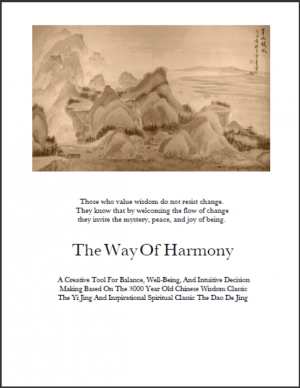
    Note: The Way Of Harmony is available in three versions: as a print book with color illustrations, as a print book with B&W illustrations, and as an ebook with color illustrations where the e-book format display allows for color. There are only three illustrations, each distributed several times through the book. These original creations are meant to evoke a peaceful mood that compliments the Yi Jing experience. We are told that the illustration on the cover of the color books, a misty mountain painted in the traditional Daoist style, was inspired by a famous centuries old handscroll and interpreted by a classical brush and ink artist living in China. It also appears within all the book’s versions.

  • CONFESSIONS of an ASSASSIN by Linda Heavner Gerald

    CONFESSIONS of an ASSASSIN by Linda Heavner Gerald

    Catherine Carnegie, daughter of the Black Sheep of the New York Carnegies, enjoyed the idyllic childhood of wealthy parents. She and her brother Nathaniel attended only the best schools and were cared for by a loving family retainer who made certain they never wanted for anything. However, when Catherine at age eighteen naively asserts her independence, choosing to go to the University of Alabama instead of a northern Ivy League school, her position in the household immediately becomes second-best to her Nat, who has chosen to follow in his father’s footsteps, attending Harvard. And though she has even severely disappointed her beloved grandfather, Catherine holds firm, leaving to attend a southern university to, as she envisions it, become her own version of Scarlett O’Hara.

    Thus begins a series of life-changing mistakes Catherine makes in the name of independence that will cause her heart-wrenching regret in her later years. Once at university, Catherine will come under the influence of a friend who urges her to go to work for a secret government agency. In the beginning, the work is glamorous and exciting. Eventually, though, Catherine will accept the assignment that almost destroys her life.

    Heavner begins this novel as a reminiscence by Catherine who, at fifty years of age, is looking back on a life of bad choices and regrets. She has become a woman who rarely leaves her house for fear of being “discovered” by the agency she worked for, or of taking an action that will cause them to eliminate her. She is tormented by the loss of the only man she has ever loved, and experiences frequent nightmares of the events of her past. As the story unfolds, Heavner hints at the possibility that Catherine’s salvation may come in the form of a package, the contents of which may free her from her pain, regrets, and grief.

    Although Heavner has employed the well-known literary device of telling her story in the style of a memoir, readers may become frustrated with the lack of action in the story, particularly in the early chapters. The story premise is unique and engaging, and many will find it fascinating, though they may become irritated with its obvious craft and editing flaws.

  • The VINEYARD by Michael Hurley

    The VINEYARD by Michael Hurley

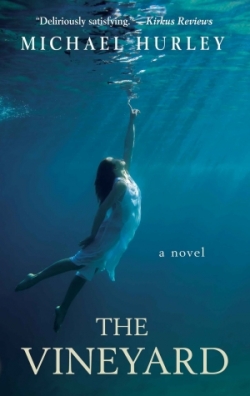
    Martha’s Vineyard, an island located south of Cape Cod, Massachusetts, provides the tradition-laden setting for a summer reunion of three long-time girlfriends, who were roommates in college. Dory, Charlotte, and Turner are now in their early thirties, single, sharing their mistakes and their lives’ courses, which find them alternately in heaps of tears and laughter as they get reacquainted.

    For as pleasant a place as a well-appointed island guest-house should be for a reunion, a cloud of ominousness hovers over it. One of the girlfriends, Charlotte, has a darker purpose for attending the gathering. We, the readers, are accompanied onto the island with Charlotte and her well-thought out plan for self-destruction. Charlotte is distraught over a decision by the Catholic Church over her deceased daughter, and would rather be with her little girl than to try to find purpose or happiness in this life. However, the best laid schemes of mice and men (or in this case, women) often go awry.

    Dory, the host with the Vineyard estate, connections, and an overbearing mother, is staying the course of all familial expectations, driven by decades of what was handed down to her. Turner, the last to join the trio, has reason to doubt her course, but is too ashamed to confront Dory with what she knows.

    Mysteries, both major and minor, are introduced in the form of a stealthy blue-eyed fisherman – the only one who can find shrimp in the area; a glowing red light, and unexplained occurrences that have miraculous results for two of the ladies. The story takes unexpected twists and turns, as it meanders into the history of some of the local men and their relationships with the women.

    Surrounded by wealth, deception, opulent parties, and the high life of summer at the Vineyard, the fisherman stands in contrast as a beacon of innocence and light; a moral compass in a world of selfishness, extravagance and greed – an almost Christ-like figure some presume to be a prophet.  That makes him a target of those with lower impulses and motivations, and one of the women will betray him in an effort to save herself.

    Trust is violated in multiple ways as the women seek justice for some of the wrongs inflicted upon them by those with self-serving motives, motives that are in conflict with the trust their posts should elicit. Intimate situations arise, or in some cases, barely arise, and not always to the satisfaction of both parties.  Blackmail, manipulation, and ulterior motives abound. Meanwhile, one of the three is leaking out the miracles and the oddities of their summer via her blog, causing a stir none of them could have anticipated.

    Michael Hurley’s signature style of metaphor and allegory runs delightfully just below the surface of the storyline adding dimension and intrigue.  Scandal and betrayal juxtapose the idyllic and captivating setting of Martha’s Vineyard in this enigmatic work that encompasses tragedy and hope, human frailties and strengths, of contemporary American society.

    The Vineyard is a multi-layered modern tale of women’s self discovery and coming into their own, of men getting their comeuppance, and mysteries begging to be solved. An exposé of marriage and the Catholic Church drive the events and the histories of the characters and place. But where tradition may be lost, hope is not.  As the final pages approach all too quickly, The Vineyard delivers the satisfaction one hopes for, just as the rising tide carries a beached vessel back to safety of the deep.

    Michael Hurley’s The Prodigal won the Chanticleer Grand Prize for Best Book 2013 and the Somerset Grand Prize for Literary Fiction. The Prodigal was optioned for film rights by Diane Isaacs, executive film producer August 2014. His memoir, Once Upon a Gypsy Moon, is published by Hachette. We are looking forward to reviewing his next work, The Passage, that will chronicle his solo Atlantic Ocean crossing on his 30-foot sailboat, The Prodigal.


  • Top Snippets Overheard at the Winter Conferences by Kiffer Brown

    Top Snippets Overheard at the Winter Conferences by Kiffer Brown

    I am always jotting down little snippets of interesting information that I come across while attending writing conferences.  Friends and colleagues often ask me when I return home did I learn any interesting tidbits that I could share. And I do. This last time, my friend and fellow WWP & Upstart Crows board member, Amanda Hagarty suggested that I should share my take-aways with the Chanticleer Community in a post. So, here we are! 

    I truly wish that I could give specific attribution to each snippet, but please know that this collection comes from Cevin Bryerman (CB), publisher of Publisher’s Weekly, Shari Stauch of Where Writers Win, Porter Anderson of Porter Anderson Media, Claire McKinney, NYC book publicist; and best selling authors: Robert Dugoni, Mike Lawson, Joanna Penn; along with assorted literary agents and publishers. As anyone who has attended a writers conference knows, it isn’t easy trying to stay on top of all the great information garnered.

    So, without further ado, here are some of the “soundbites” that I picked up and would like to share with you, the Chanticleer Community.

    Overheard Snippets

    These snippets are not listed in order of importance or in any order for that matter.

    • “The mass paperback has gone the way of E-book.”
    • Eighty-percent of the readers of Young Adult novels are older adults (who are definitely not young adults).”
    • “Audio is a new format that is gaining popularity with older and younger audiences.”
    • “Remember that in the Digital Age of Publishing, an author’s back list never disappears.”
    • “One-off books are a hard sale. Series are what book sellers want.”
    • Deconstruct what was popular to predict what will be popular in upcoming trends. Look for the core elements.
    • “Take a trending trope and add it to your genre.”
    • “What is considered to be doing ‘extremely well’ in Amazon sales for Indie self-published authors? The top 100 Amazon books sell 5,000 to 10,000 books a month for six months straight. Top ten sub-categories have the potential to bump up to the top 100 to top 1,000 best-selling titles.”
    • Build Your Platform, Build Your Author Career.”
    • “The first thing I do when considering an author is to check out his author platform. Does he have website? Does he have an online presence? Does he participate in social media? If not, I usually pass.”
    • “All roads should lead to an author’s website.”
    • “Each and every reader counts!”
    • “Book reviews are the foundation of every author’s promotional platform.”
    • “Eighty percent of the U.S. population say that they do not ‘read.’ Reading is associated with reading boring school texts. Authors must find a way that their books appeal to people’s interests and hobbies, and never forget that “publishing for the trade” is about entertainment.”
    • “Dialogue is considered the white space on the page.”
    • “Dialogue is action. Action is dialogue.”
    • “Only put in back-story info when the reader needs it and only what is specifically needed at that time.”
    • “The first and last sentences in a chapter are the most important.” 
    • “Publishers Weekly receives more than 50,000 books a year to review–only about fifteen percent are reviewed.” 
    • “The only thing certain in today’s publishing world is continuing change.” CB
    • “Understand who your reader is.” CB
    • Act quickly. Stay relevant with your communications and promotions.” CB

    These snippets were overheard at the PubSense Summit in Charleston, S.C. and the Left Coast Crime Conference in Portland, Oregon that took place in March 2015.

    I invite you to attend the Chanticleer Authors Conference that will take place late September at the Hotel Bellwether located on Bellingham Bay, Wash. Find out more info here. New speakers and sessions along with more information will be added weekly!


    Up-to-date practical, effective marketing and promotional skills for today’s golden age of publishing are Kiffer Brown’s forte.

    Kiffer BrownHoned business experience and an  entrepreneurial spirit, along with a true understanding “that nothing happens until something is sold”  is what Kiffer Brown brings to the table. Kiffer presents at numerous writers conferences and publishing conventions. She is a media scout for executive film producers, literary agents, and publishing houses. She searches for today’s sparkling gems that will become tomorrow’s best sellers. She truly loves what she does and her passion shows.
    She has presented at Writer’s Digest National Conferences in NYC, RWA National Conferences, Emerald City Writers Conferences, PubSense Summits, PNWA conferences, and others. She is the founder and president of Chanticleer Book Reviews and International Writing Competitions, L.L.C. and the publisher of Chanticleer Reviews. She is active in her community’s local writing as organizations and is currently serving as the president of Whatcom Writers and Publishers,  a board member and co-founder of the Upstart Crows Writers Association, an is active in the Salish Sea Writers Consortium. She is the organizer of the Chanticleer Authors Conference, which focuses on the business and marketing side of being an author in today’s world of publishing. You may reach her at KBrown@ChanticleerReviews.com


  • Redirect – MYTHBORN: RISE of the ADEPTS by V. Laksham

    Redirect – MYTHBORN: RISE of the ADEPTS by V. Laksham

    A classically high-fantasy styled novel that is a satisfying layered read full of battles and skirmishes, mages and wizards, dwarves and elves, dragons and royalty, and its own complex lore and magical systems, V. Lakshman’s Mythborn: Rise of the Adepts will leave dark fantasy enthusiasts clamoring for more.

    After a powerful mage allowed a demon named Lilyth to enter the world of EDYN, causing a devastating war, King Galadine declares that all those with magical talent be put to death. For over two hundred years, mages have been hunted down and killed, except for a select few that escape and train to be adepts under the tutelage of the mage council.

    Forced to keep themselves hidden, even the most powerful mages have lost the deepest knowledge of their craft, and their abilities are only a shadow of what the generations before were capable of. When it seems as though the demon Lilyth has begun to stir again, the council is ruthlessly determined to act.

    Arek Winterthorn is an apprentice with a power that even he himself doesn’t understand. Unable to produce even the simplest of spells, he can disrupt the magic of others with a single touch. When his master, Silbane Petracles reluctantly agrees that Arek’s abilities might be the only way to save the world, the two embark on a journey full of twists, violence, intrigue, and even a dragon.

    They seek the kingdom of Bara’cor, where the current King Galadine is under siege by a barbarian horde. Inside the castle walls, we are introduced to his court and advisers, including his teenage son and young niece, next in line to the throne of the neighboring kingdom. All of these diverse threads weave together as the characters clash, attempting to discover the true nature of the demonkind and the heart of the conflict two centuries ago.

    Lakshman’s epic is told in several diverse voices from every side of the conflict, creating a complex web of loyalties and motivations. This leads to some initial confusion, as the reader is introduced to several different point of view characters in rapid succession. Flashbacks, integrated into the narrative under the heading “Histories,” are at first difficult to distinguish from the novel’s present day events. But after the narration settles into a pattern, fans of fantasy will be engrossed in his world and the envelopment of its familiar tropes. As the multi-faceted characters and their motivations are revealed, readers will come to care about what happens to them as they come to understand what motivates them.

    Lakshman’s experience in the game industry and his martial arts background are evident in the novel’s many detailed battle scenes in this fast-action and complex fantasy. The Rise of the Adepts’ cliffhanger ending will leave readers clamoring for the next volume in this fast-paced and suspenseful Mythborn series, the sequel to which is now available.

    First Place Dark Fantasy, 2014 CYGNUS Awards for SciFi and Fantasy Fiction, a division of Chanticleer International Writing Competitions.

  • MYTHBORN: RISE of the ADEPTS by V. Lakshman

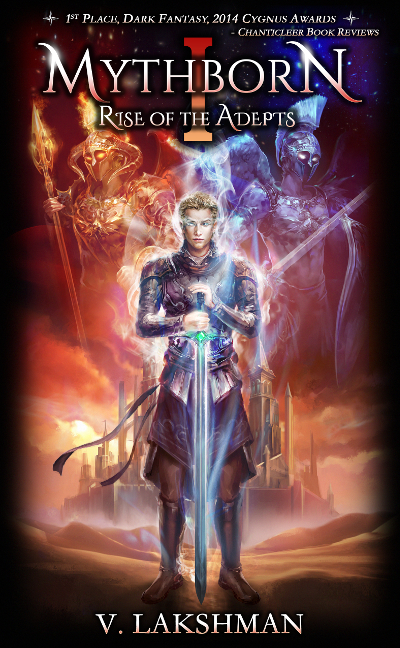
    MYTHBORN: RISE of the ADEPTS by V. Lakshman

    A classically high-fantasy styled novel that is a satisfying layered read full of battles and skirmishes, mages and wizards, dwarves and elves, dragons and royalty, and its own complex lore and magical systems, V. Lakshman’s Mythborn: Rise of the Adepts will leave dark fantasy enthusiasts clamoring for more.

    After a powerful mage allowed a demon named Lilyth to enter the world of EDYN, causing a devastating war, King Galadine declares that all those with magical talent be put to death. For over two hundred years, mages have been hunted down and killed, except for a select few that escape and train to be adepts under the tutelage of the mage council.

    Forced to keep themselves hidden, even the most powerful mages have lost the deepest knowledge of their craft, and their abilities are only a shadow of what the generations before were capable of. When it seems as though the demon Lilyth has begun to stir again, the council is ruthlessly determined to act.

    Arek Winterthorn is an apprentice with a power that even he himself doesn’t understand. Unable to produce even the simplest of spells, he can disrupt the magic of others with a single touch. When his master, Silbane Petracles reluctantly agrees that Arek’s abilities might be the only way to save the world, the two embark on a journey full of twists, violence, intrigue, and even a dragon.

    They seek the kingdom of Bara’cor, where the current King Galadine is under siege by a barbarian horde. Inside the castle walls, we are introduced to his court and advisers, including his teenage son and young niece, next in line to the throne of the neighboring kingdom. All of these diverse threads weave together as the characters clash, attempting to discover the true nature of the demonkind and the heart of the conflict two centuries ago.

    Lakshman’s epic is told in several diverse voices from every side of the conflict, creating a complex web of loyalties and motivations. This leads to some initial confusion, as the reader is introduced to several different point of view characters in rapid succession. Flashbacks, integrated into the narrative under the heading “Histories,” are at first difficult to distinguish from the novel’s present day events. But after the narration settles into a pattern, fans of fantasy will be engrossed in his world and the envelopment of its familiar tropes. As the multi-faceted characters and their motivations are revealed, readers will come to care about what happens to them as they come to understand what motivates them.

    Lakshman’s experience in the game industry and his martial arts background are evident in the novel’s many detailed battle scenes in this fast-action and complex fantasy. The Rise of the Adepts’ cliffhanger ending will leave readers clamoring for the next volume in this fast-paced and suspenseful Mythborn series, the sequel to which is now available.

    First Place Dark Fantasy, 2014 CYGNUS Awards for SciFi and Fantasy Fiction, a division of Chanticleer International Writing Competitions.