Blog

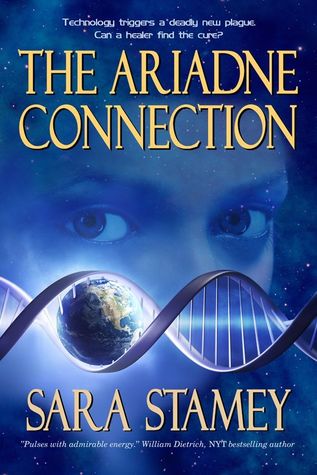
  • The ARIADNE CONNECTION by Sara Stamey, a SciFi Thriller set in Greece

    The ARIADNE CONNECTION by Sara Stamey, a SciFi Thriller set in Greece

    The year is 2027 and planet Earth is angry. Pollution has gone viral, ravaging the global environment while corporate technocracy has invaded all aspects of the media using its sensory-loaded “NeuroLink” productions to commandeer the thoughts and will of the masses.

    Radical climate swings, drought and famine, flood and pestilence take on Biblical meaning. And deep inside its core, the bowels of the earth are being rocked by a violent shift of its geomagnetic poles – a shift paired with cataclysmic seismic activity.

    With planetary life headed for extinction, mankind reaches out to its “Gods,” both secular and non-secular, for salvation. At the same time whisperings on the NeuroLink claim that there is a savior among them. Saint Ariadne.

    With the story of a lifetime in her sghts, NeuroLink celebrity Leeza Conreid calls upon “freelance import expediter” Peter Mitchell to take her into the dark heart of the militarized Mediterranean League’s territory. She’s confident that her history with Ariadne will give her the access she needs, but Leeza has more than a hot story on her mind. Broken promises and a perceived betrayal have warped her soul, launching her on a revenge-driven mission to expose and destroy Ariadne.

    “Saint” Ariadne has her own plan. After pushing into alternative scientific frontiers using pulsed laser, electronic stimulation and a mysterious “tonic” water, she’s on the verge of finding a cure for a rapidly-progressing form of leprosy. But the ongoing electromagnetic upheaval is tapping into something primal in her DNA, and her life’s work as well as her “healing abilities” are under attack. With global salvation at stake, Ariadne must escape from the exile of her father’s house and place her trust in the talents of hard-drinking smuggler Peter Mitchell.

    Destined to be a classic in the Speculative Fiction genre, Sara Stamey’s Cygnus Award-winning novel, The Ariadne Connection, takes the reader on a visual feast through the azure waters and rugged Mediterranean landscape of the Greek Islands while tapping into the deep roots of mythological tradition. And her use of well-defined, believable characters invites us to cinch our seatbelts tight and come along for the ride of a lifetime.

    With a clever nod to movie blockbusters such as “The Fifth Element” and “Transporter,” Sara Stamey’s near-future novel The Ariadne Connection is a rocket-paced thrill ride that delivers complex, engaging characters in a laser-sharp plot.

  • VILLA of DECEIT: a Novel of Ancient Rome by Ron Singerton

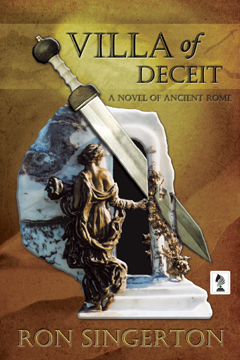
    VILLA of DECEIT: a Novel of Ancient Rome by Ron Singerton

    Ron Singerton’s “Villa of Deceit” cleverly portrays the transition from the Roman Republic, which had a complex constitution with checks and balances, to the rise of the imperial dynasty of the Roman Empire, which would rule the next four hundred years with an iron hand, by using the microcosm of a Roman family to reflect the changes and undercurrents that were beginning to change the course of Western Civilization.

    The book opens with young Gaius, the hero of the story, intending to celebrate the last night of the Ludi Flores festival with his good friend Appian Dio. But that afternoon, he makes the mistake of attempting to intervene on behalf of a young slave Gaius’s tyrannical father, Toronius, is unfairly punishing. Gaius fails, earning the wrath of his father, and is also injured during the altercation. For Gaius, the incident is further proof of what he has known for some time: Toronius is a brutal man with few scruples, and in Gaius’ eyes, unfit to head the family or the family’s trade.

    However, the laws of first century B.C. Rome are of no help in deterring a man such as Toronius. And Gaius’s young mother, who escapes the suffocating rule of her husband by looking after her own interests, is no ally to her son. Not long after the incident with the young slave, Gaius falls in love with a female slave brought into the household. To save her from his father, Gaius convinces her to flee with him and is disinherited as a result. Unfortunately, tragedy strikes, leaving Gaius alone with young son.

    In Gaius, the author gives us a highly sympathetic character who, though young, is intelligent and moral enough to draw conclusions about such unfair treatment of slaves, and brave enough to make difficult decisions in order to strive to live his life by a better standard. Forced into choices that carry consequences by the limited options available in those times, Gaius leaves the infant with a relative and joins the merciless military to try his luck at becoming a Roman Legionnaire.

    Singerton has done his research, and he paints a very accurate portrait of life for young men during first century B.C. Rome. Fathers demand that they come of age early in life, measuring their manhood and stamina by the number of women they bed in one night, and the amount of fear that they are able to strike into the hearts and minds of others.

    In 70 B.C. Rome, slaves and prostitutes are to be used and then discarded when no longer needed. A slave’s life has little value and is easily replaced by more prisoners who would be taken in the next cold-blooded military conquest.  Imported to Roman households from far away lands, slave were young children, and the women who were sorted as to their best use in the eyes of their captors. Those captured who were of little use were instantly put to death. The Roman Empire would continue to conquer and expand its undisputed rule across three continents for the next four hundred years.

    “Villa of Deceit: a Novel of Ancient Rome” by Ron Singerton will keep readers turning the pages as the author vividly conveys the brutality and wanton disregard of life on and off the battlefield in this cleverly plotted historical novel that speaks to a time that would affect Western Civilization for the next millennium.

  • Chanticleer Authors Conference 2015 a photo recap

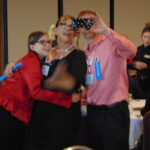
    Many have been asking for the photos from #CAC15 and we have been trying to find a quiet moment to post them, amongst all the review posting, ribbon mailing and preparations for next year’s author conference. Here they are. Thanks for your patience. Enjoy!

    We had a wonderful location right on Bellingham Bay to set the scene for a fantastic conference

    (Photo Credits to our wonderful Lacey Longpré)

    [fusion_builder_container hundred_percent=”yes” overflow=”visible”][fusion_builder_row][fusion_builder_column type=”1_1″ background_position=”left top” background_color=”” border_size=”” border_color=”” border_style=”solid” spacing=”yes” background_image=”” background_repeat=”no-repeat” padding=”” margin_top=”0px” margin_bottom=”0px” class=”” id=”” animation_type=”” animation_speed=”0.3″ animation_direction=”left” hide_on_mobile=”no” center_content=”no” min_height=”none”]

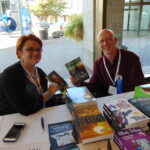
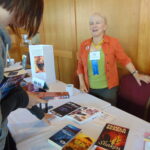
    The Book Fair was a smashing success

    (Photo Credits to our wonderful Lacey Longpré)

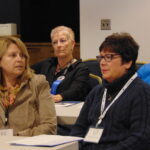
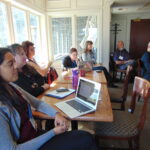
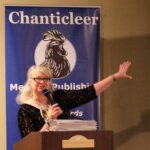
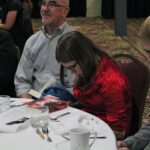
    We had a great line up of speakers and lots of eager students at our sessions

    (Photo Credits to our wonderful Lacey Longpré)

    And let’s not forget the amazing food, entertainment, and fun

    (Photo Credits to our wonderful Lacey Longpré)

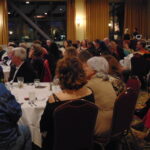
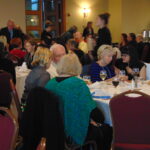
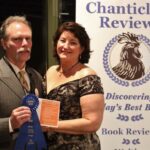
    The Chanticleer Awards Gala and Banquet was a night to remember for many people

    (Photo Credits to the talented Elaine Dillon)

    This Year’s Winning reaction: Jesikah Sundin Dante Rossetti Grand Prize Winner for Legacy: Biodome Chronicles Book 1

    (Photo Credit Myles Sundin)

    Jesikah Sundin Winning Reaction Prize 2014

    Thanks for the great year everyone. Don’t forget to register for CAC16 coming up sooner than you think, in April 2016![/fusion_builder_column][/fusion_builder_row][/fusion_builder_container]

  • The CYGNUS AWARDS for Science Fiction and Speculative Fiction 2015 Official Finalist List

    The CYGNUS AWARDS for Science Fiction and Speculative Fiction 2015 Official Finalist List

    Cygnus

    The CYGNUS Awards writing competition recognizes emerging new talent and outstanding works in the genre of  Science Fiction and Speculative Fiction. The Cygnus Awards is a division of the Chanticleer Awards International Writing Competitions.
    We are pleased to announce the CYGNUS  Awards Official Finalists List for 2015, otherwise known as the “Short List” from all the 2015 entries received. The Official Finalists Listing is comprised of works that have passed the first three rounds of judging from the entire field of entrants. To pass the first three rounds of judging, more than sixty pages of the works below have been read and been deemed worthy by the CBR judges of continuing in competition for the CYGNUS Awards FIRST IN CATEGORY positions and their prize packages.

     Congratulations to the CYGNUS AWARDS 2015 FINALISTS and Good Luck as they compete for the First Place Category Positions:

    • Alex McIntoshThe Limits of Control
    • B.T. JamesThe Tales of New Atlantis: Book One “Summer School” 
    • Bruce CampbellCoyote Calls Down the Gods
    • Arlianne NapierDivine Prophecy
    • Bruce CampbellKidnap City–An ET Love Story
    • C. A. KnutsenJanus Unfolding: Emergence
    • C. Edward BaldwinRememberers
    • Charlotte McGary & Sharon Faiola-PetersenThe Dream Crystals of Gandara
    • Steve LeBel for The Universe Builders: Bernie and the Putty
    • Debra ErfertWindow of Death
    • Deen FerrellCryptic Spaces: Eight Queens
    • Elisabeth HamillSong Magick
    • James WellsThe Great Symmetry
    • Janine A. SouthardCracked! A Magic iPhone Story
    • Jared RinaldiBridge Burner Hyperion
    • Jessica SchaubGateways
    • John YarrowThe Time Forward Project
    • Jon D. ZimmerThe Secret Invasion: Book One of The God Chronicles Trilogy
    • Julian HoxterCutterjunk
    • K. N. SalustroChasing Shadows
    • Karen Musser NortmanThe Time Travel Trailer
    • Earl CragoPrince of Prism
    • Kathrine LeannanFantasy
    • KB ShawNeworld Papers: The Historian’s Tale
    • L.S. KilroyThe Vitruvian Heir
    • Peggy L HendersonYellowstone Heart Song
    • Rhett C BrunoThe Circuit: Executor Rising
    • Rhonda L. DavisPath of the White Wolf
    • S. A. CarterThe Kuthun
    • S.K. HolderThe Quest of Narrigh
    • Rhett C. BrunoThe Circuit: Executor Rising
    • S.M. CoanInnerearth
    • Sabina KhanRealm of the Goddess
    • Sydney M. CooperForsaken Lands Book 1: Tragedy
    • Timothy S. JohnstonThe Freezer
    • Timothy S. JohnstonThe Furnace
    • Tommy PartlMechanized
    • V. LakshmanMythborn 2: Bane of the Warforged
    • Yuan JurCitadel 7:  The Gates of Wrath

    Good luck to all the CYGNUS Awards Finalists who made the Short List as they compete for the First In Category Positions!

    More than $30,000 dollars in cash and prizes are awarded to Chanticleer International Blue Ribbon Awards Winners annually.

    cac16The CYGNUS First Place  Category award winners will compete for the CYGNUS Grand Prize Award for the 2015 Best Science Fiction and Speculative Fiction. Grand Prize winners, blue ribbons, and prizes will be announced and awarded on April 29, 2016 at the Chanticleer Authors Conference and Awards Gala, Bellingham, Wash.

    The First In Category award winners will receive an award package including a complimentary book review, digital award badges, shelf talkers, book stickers, and more.

    We are now accepting entries into the 2017  CYGNUS Awards. The deadline is January 31st, 2017. Click here for more information or to enter. We have split CYGNUS Awards in to two separate competitions: Cygnus for Science Fiction and the OZMA awards for Fantasy. Visit our contest page for more information.

    More than $30,000 worth of cash and prizes will be awarded to the 2015 Chanticleer Novel Writing Competition winners! Ten genres to enter your novels and compete on an international level.

    Who will take home the $1,000 purse this coming April at the Chanticleer Awards Gala and Banquet?


  • Three Spine-Tingling Reads that Will Get Your Heart Racing

    Three Spine-Tingling Reads that Will Get Your Heart Racing

    Three spine-tingling, psychological thriller novels reviewed by Chanticleer Reviews. (Warning: Each one of these novels was assigned to more than two reviewers due to their intensity.)

    Check the locks and turn on the lights when you read these selections:

    Poe:  Nevermore by Rachel Martens

    Poe NevermoreBe warned; Poe: Nevermore is not a cozy mystery. Ms. Martens succeeds at painting dark, suspenseful, sometimes horrific pictures. It is the type of psychological horror that locking the doors and windows and reading with the lights on will not keep out.

    I highly recommend this book for my fellow edge-of-our-seat junkies—those of us who are constantly seeking the book we ever so briefly fear picking up, then can’t put it down in the relentless pursuit of discovering whatever comes next! Martens’ Poe: Nevermore deliciously feeds these cravings along with satisfying those with classical literary interests. – Chanticleer Reviews

    The Grave Blogger by Donna Fontenot

    Grave BloggerThe Grave Blogger is a murder mystery that is not for the faint-hearted. The horrors of the torturings and killings detailed within its pages are definitely not for those who prefer their mysteries to be the cozy kind. This story, complete with a psychotic psychiatrist, takes place in the Deep South where a special kind of macabre is required to send chills up your spine….Fontenot’s style allows the reader to see through the eyes of the main characters, which is especially chilling from the killer’s perspective. Readers’ hearts will be racing as the story twists and turns and the suspense rapidly intensifies in this creepy “OMG-this could really happen” page-turner. Prepare to devour this fast-paced thriller in one sitting with the lights on and the doors locked. – Chanticleer Reviews


    Anonymous by Christine Benedict

    Anonymous by Christine Benedict“No one suspected the things her mother had done,” but Debra Hamilton knows full well what skeletons lurk in her past, and she’s spent a lifetime putting distance between herself and the crimes of her schizophrenic mother.”

    With a new plot twist around every corner, the author delivers a complex story of obsession and jealousy that will keep the reader turning page after satisfying page of this psychological thriller….As to the genesis of the anonymous stalker, his history will leave readers wondering about things that go bump in the night. It’s chilling to know that all the letters in the novel are from the man who stalked the author, Christine Benedict, twenty-plus years ago, and he still remains anonymous as of today.

    You’ve been warned….


  • 17,000 Feet: A Story of Rebirth by Fox Deatry – an adventurous PNW novel

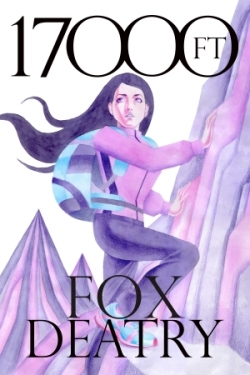
    17,000 Feet: A Story of Rebirth by Fox Deatry – an adventurous PNW novel

    What do you do after you’ve done all you can? Jo Packwood, marine biologist at the top of her professional game, decides to climb Mt. Olympia, all 17,000 feet of it, looking for clues to her blighted childhood and facing the cold mists of her future.

    The book begins on the trail up the mountain. Jo is accompanied by Solomon, nicknamed Squibb, her long-lost uncle, the person most likely to help her reconnect spiritually with her father Papi, or Nelson, who abandoned her and her mother when she was a small child. Why?—Jo has only vague memories to rely on, most of them painting a scurrilous impression of Nelson—a decorated soldier, yes, but a reckless rake and deceiver.

    Jo has recently placed her mother, increasingly isolated by Alzheimer’s, in a nursing home, evoking guilt, as well as frustration at the lack of information about the fractured family. As they ascend, Jo and Squibb spar, share, and commiserate, while he gradually, gruffly, fills in a more human, ameliorative portrait of Nelson, who disappeared, presumed dead in an avalanche, on the very mountain they are climbing.

    Squibb is a reluctant mentor whose advice will reverberate for Jo at a critical moment: “Life isn’t a sprint, sugar pie. It’s about bases: you get to each for the grand slam homerun.” Loss of radio contact with a group of hikers up ahead, hallucinations possibly brought on by oxygen deprivation, and the horrifying discovery of a cache of frozen corpses (could Nelson’s be among them?) stymie the pair, with worse to come.

    Fox Deatry, media executive and author (American Witches: An American Witch in New York City), tells Jo’s story in flashbacks as she hikes up Mt. Olympia: her discouraging visit with her deluded mother; her mentoring moment with a female cleric; an unexpected talk with one of her father’s old war buddies; and her introduction to Solomon/Squibb who will challenge her to conquer the mountain that killed her father (“Up there, you’ll experience unexpected things”).

    Deatry’s descriptive prose shows practiced sophistication, and he conveys ordinary conversation believably. The plot is well constructed, and readers may appreciate the story’s close adherence to the classic concept of the hero’s journey: reluctance at the outset, fateful guidance, life-threatening peril, all leading, as the subtitle references, to rebirth, in a most surprising, cinematic conclusion.

    17,000 Feet, an adventure combining real time, powerful memory and lush imagination, offers a heroine in crisis coming to terms with her life’s big questions by taking courage and, finally, taking charge.


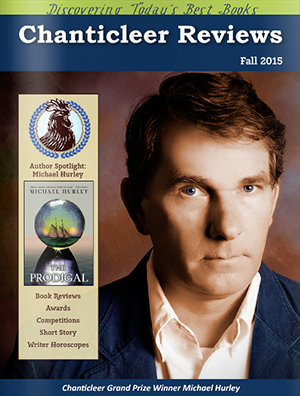
  • Latest Issue of Chanticleer Reviews Online Magazine – 23 Reviews & Horoscopes

    Latest Issue of Chanticleer Reviews Online Magazine – 23 Reviews & Horoscopes

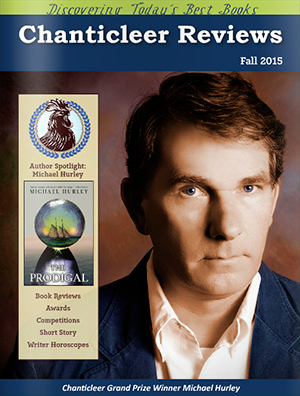
    Have you seen the latest issue of Chanticleer Reviews on-line magazine?


    And take a look at The Prodigal’s new cover! 

    Read your Writer Horoscope for the Fall season!

    • Read and share reviews from your favorite Chanticleer Authors!
    • 2014 Chanticleer Award Winners’ Listing!
    • The award winning short story by Sharon Anderson, The Stone God’s Wife.
    • And much more!


    Sean Dwyer, award winning author of literary works, interviews Michael Hurley, attorney and author  of The Prodigal, overall grand prize winner of the 2013 Chanticleer Writing Competitions for the Author Spotlight in this issue of Chanticleer Reviews!

    If you are an author whose work’s review is published in the magazine, then you can use Issuu’s  “Clipping Tool” to promote your book.

    Chanticleer Reviews online magazine is mobile friendly, also!

    NOTE: The 2014 M&M Award Winners and the 2014 Paranormal Award Winners will be listed in the Holiday issue. So stay tuned for Issue #3 of the Chanticleer Reviews magazine!

    Enjoy and Share!  Click here to download your free copy! 


  • BRAIN by Dermot Davis, a rare species of complete entertainment

    BRAIN by Dermot Davis, a rare species of complete entertainment

    Daniel Waterstone has every intention of writing the Great American Novel, and in doing so, he is going to set the ignorant, crazy mass of modern readers straight on what constitutes great literature.  But, after two improbable, failed “masterpieces,” his publisher, the delightfully savvy Suzanne, has told him that success and recognition will best be served by his authoring a book that some of the “great-unwashed” might actually be interested in reading. Daniel likes the idea but is clueless about how to proceed.

    The product of coldly academic and overprotective parents, Daniel entered adulthood as a cynic with a dislike for people, a fear of women, and a conviction that everyone except him was crazy. He had such strong feelings of loneliness that he often thought of himself as an alien trapped on the wrong planet. Although highly-degreed in literature, the rigidly naïve Mr. Waterstone will soon learn that he is obligated to finish one final course: Life 101. And if he is willing to take his lessons, life just might have a little something up its sleeve for him.

    Daniel quickly finds a theme for the book that will liberate him from poverty and his sense of failure; he enters a bookstore where a flamboyant and somewhat other-worldly writer of self-help books is preaching his gospel to an enchanted crowd. When Daniel calls him out as an opportunistic fraud, the guru challenges him to engage in a “mind-meld” that will supposedly free Daniel from some of his hang-ups.

    Amused and seemingly unaffected, Daniel leaves the store cradling an idea for the book that will please the masses: he will write, under a pseudonym, a satire that exposes the pop-psychology industry for what he thinks it is: a total lie, an insult to crazy people done by crazy people. Ironically, his satire becomes the kind of blockbuster success that brings him riches and fame, but at a cost, as author Dermot Davis is happy to tell us all about in Brain: The Man Who Wrote the Book That Changed the World, his mystical and joyous tale of personal growth and fulfillment in the modern age.  

    “Crazy,” the word, the notion, the concept, is the spine from which flows the energy of  Davis’ often tongue-in-cheek fairy tale, its relevance grounded in the infinite variability of human  experience, and its ability to score a few points for emotion in the seemingly endless skirmish between skepticism and belief. Score more points for the stubborn and ineffective Daniel if he can revise the “me-versus-them” definition of “crazy” that has him strapped to the cheap seats of human experience.  

    And, could there be a better word than “crazy” to carry the torch of enlightenment into the shadows of our increasingly soul-less and programmed culture?  Probably not, at least in Davis’ jauntily addictive narrative, an arena in which he holds court with the majesty of an imaginative, accomplished humorist.

    I was not surprised to learn that the author is also a playwright, as his marvelously crafted characters and sets quickly acquire the kind of three-dimensional believability that one expects to encounter in a live theatrical performance or, according to my mind’s eye, a movie (complete with an endearingly haunting soundtrack and a reincarnated Jack Lemmon in the lead role!).

    Dermot Davis’ Brain is that rare species of complete entertainment that can be both deeply philosophical and buoyantly accessible. Laughs, suspense, intrigue, love, and a gentle thread of the paranormal are all there for you, gift-wrapped in a sweet mist of serendipity.  


  • HIS LIFE THROUGH MY EYES by Gobi Rahimi

    HIS LIFE THROUGH MY EYES by Gobi Rahimi

    In the early ‘90s, up-and-coming artist Tupac Shakur was taking the rap industry by storm. Known for his electric energy and controversial lyrics, his music focused largely on social injustices and oppression. Equally notorious for the brilliance of his music and for his frequent problems with gang violence and the law, he accrued a large and passionate community of listeners and fans. When he was killed in a drive-by shooting at the young age of 25 in 1996, his legacy as a well-known and respected voice within the genre lived on.
    In the book His Life Through My Eyes, filmmaker Gobi Rahimi, who worked continually with Tupac in the months preceding his death, offers a unique glimpse into the artist’s day-to-day life. Sparing no detail, Rahimi takes the reader on an intimate and emotional journey through his memories of the times spent with Tupac, aided by photographs he took during the time. Rahimi tells the story of how he came to work with Tupac and become his close friend.

    This book is shamelessly personal; it is as much about Rahimi’s journey to process Tupac’s  death and honor his legacy as it is about Tupac himself. This is to Rahimi’s credit, though. What might otherwise feel like a series of empty anecdotes is bonded by Rahimi’s laudable honesty and openness with regards to his grief and admiration for Tupac.

    Rahimi touches on the sociopolitical controversy and turmoil that surrounded Tupac during his life, and does not gloss over Tupac’s struggles with racism in the music industry. However, his focus is much more on Tupac as a human being than as a public figure. Rather than recounting details of his friend’s public persona, he centers on portraying the man he knew.

    In many ways, the book reads very much like a series of diary entries. Some may find Rahimi’s accounts somewhat chaotically organized, but overall the stories provide captivating, interesting, and thought-provoking insights into Shakur’s life. Rahimi’s respect and love for his friend ultimately shine through. Engaging, personal, and deeply felt, Rahimi’s tribute to Tupac Shakur will be sure to move those interested in his legacy.

  • BAD VAMPIRES by Karl Larew, a humorous new take on vampires

    BAD VAMPIRES by Karl Larew, a humorous new take on vampires

    Karl Larew is well known for the depth and breadth of his knowledge in the field of military history, both in academic works and in historical fiction.

    Well, as you might imagine, Bad Vampires has nothing to do with world politics and war, or even reality on the home front. Rather, this versatile author has chosen to entertain us by delving into the practices of the netherworld of 19th-century vampirism, BUT, as it exists in the modern world—the difference being that, today, there are both Bad Vampires and Good Vampires. This is a modern fictional account, and one designed to make you chortle instead of scream. It is a hilarious and refreshingly fun read!

    Rather than a single locale in Transylvania, the vampires in this tale travel from New York to our nation’s capital and its Virginia suburbs, then Hollywood, and on to Hong Kong, and back and forth, in multiple trips, logging who knows how many thousands of miles.

    The 19th-century vampire’s vicious bite and suck method has evolved into a variety of means for the nourishment of vampires. Among Bad Vampires, the process can still end in, well, the end for the blood donor. Good Vampires, however, take care not to let this happen. Further, the New York Association of Good Vampires has rules regarding the infliction of mortal wounds by other means (pistols seem to be the most popular). In any case, Good Vampires are the winners, Bad Vampires are the losers. Bad Vampires have no imagination and can’t put a bullet in the side of a barn, whereas Good Vampires are ingenious in their strategies and never miss a target, even with one hand tied behind them.

    This tale is either carried along or interrupted by outrageously corny puns, double entendres, and other linguistic contrivances designed to tickle the characters and amuse the readers. Larew obviously enjoyed drawing these from old TV shows: Bad Vampire Elmer wants to make a movie about vampires in New York City—”Sucks and the City” it gets labelled by a Good Vampire; another Good Vampire calls the Head Vampire about a new idea. The CHIEF tells him, “GET SMART! I could say that 99 times and still not have said it enough!” Do any readers remember “Henry Aldrich” (Hen-reeeeeeee) on the radio? No? Never mind.

    It’s hard to develop the character of a vampire. In this story, some are good and some are bad. Protagonist Lance Blodgett is a good one and smart as well. In his day life, he’s an assistant professor of anthropology at New York University, specializing in East European folklore. He has a tender streak and loving heart, which he very soon gives to Carol Binghamton, who isn’t a vampire.

    Carol, a computer programmer, finds herself reciprocating Lance’s feelings. She even offers him breakfast, if he’ll bite her where it won’t show. Lance tells her that biting is “too painful and leaves a big bruise. We use little spring-powered lancets, like diabetics use for blood sugar tests.” She kindly offers him a rump.

    I wouldn’t want to spoil the story for you—just give you a taste that hopefully will tempt you to try it yourself. You might say, as Lance did after breakfast, “Oh, very good—[it has] a sort of tangy je ne sais quoi.”