Seven-year-old Maria Hoornik already knows more about life than she should, hiding in a curtained alcove whenever her alcoholic prostitute mother, Sien, brings customers home. One day, Sien brings home a different kind of man—an unknown artist, Vincent Van Gogh.
Vincent, longing for stability amidst his frustrations and failures, is determined to create a cock-eyed semblance of family life with Sien, who is pregnant with another man’s child, and her daughter Maria, with whom he immediately bonds, admiring her critical honesty and calling her “Little Cat.”
The three, and then Sien’s baby Wilhelm, form a fascinating ménage in new author Michelle Rene’s speculative novel based on considerable historical fact. Rene depicts Maria as a prodigy who comprehends her mother’s self-destructive habits all too well. Rene elucidates, through Maria’s curious gaze, the made-up family’s grinding poverty, Vincent’s stubborn insistence on doing his art his way despite his lack of economic success, and the constant quarrels over money and morals.
The child unwillingly absorbs the distress when Vincent’s arrogant parents refuse to continue supporting their son’s liaison with a known whore, forcing Sien to revert to her old ways to provide food. Maria’s maturity is underscored in troubling vignettes: she sells her hair so they can all have one Christmas dinner, sacrifices a piece of cake to make a “soup” to feed baby Wilhelm when Sien’s milk runs dry, and rushes home in a thunderstorm to try to stop Vincent from discovering that Sien is once again up to her old tricks.
Rene has designed Maria’s story with verve, splashing colorful images across a well-planned canvas: “Silence crept into the room and pulled up a chair for a nice long visit.” She deftly conveys a child’s perception of Van Gogh’s mental miasma: “Knowing what mood he would be in became a fine art in itself. I quickly became a master of that art.” The text is satisfyingly interspersed with the artist’s actual sketches and paintings of Sien, a notably ugly woman, and Maria, a serious, self-contained little girl rocking a cradle or sitting quietly while her mother sew; a little girl who, like Vincent, clearly wishes for the security of a real family.
Told through the eyes of a child, I Once Knew Vincent offers an imaginative study of a tormented genius who would create some of the world’s most recognized artworks.
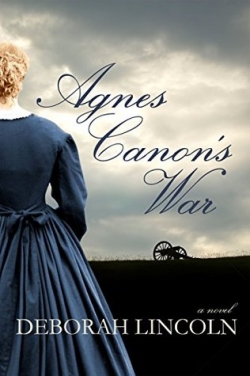
Agnes Canon is too intelligent, and too stubborn, to let others make decisions for her. No matter what the consequences, her choices will be her own.
In this complex historical drama, schoolmarm Agnes Canon, refusing her father’s choice for a husband, leaves the safety of her Pennsylvania childhood home for the wilds of Missouri in the decade before the outbreak of the Civil War.
On the way she meets, and eventually weds, Jabez Robinson, a medical man who has seen the wonders of the world and war at its foulest. Living in a territory with loyalties on both sides as the national conflict heats up, Jabez and Agnes, equally matched in intellect and stubbornness, abhor the Southern institution of slavery, but also despise the greed and interference of the North. Their struggles are real, and the chaos endured will pit their marriage against a dramatically changing civilization.
Agnes is the pivotal character in this multi-layered story. She endures the pangs of childbirth and the deprivations of family life in a war zone. She watches as friends and neighbors go different ways in the war, and good men fight each other on the home front. She supports Jabez even as his publicly stated political ideals open them to harassment from violent, unprincipled militants.
Deborah Lincoln, who has based this novel on the life history of her great grandparents, writes with emotional intensity about dark times in an embattled landscape.
Unlike many Civil War sagas, this one takes no obvious sides. The focus is on Agnes—a vital, strong woman with feminist ideals, and Jabez, the only man smart and determined enough to gain her love. The romance is not overdrawn, though, and there is a complex skein of subplots providing scenes of rousing action and rich historical context.
Agnes Canon’s War reminds us that war produces equal measures of bravery and barbarism, and those in its midst who hang on to their principles are rare and admirable. An excellent read that explores love and societal schisms grown in the roots of cultural and political battles between the North and the South.
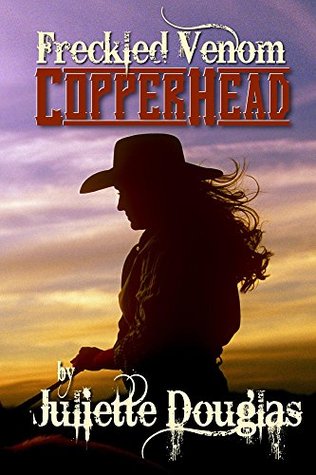
Straddling a big, gray horse, a young boy rides into White River, a small isolated town with few people. A town he fled years before. He is alone and sick. Multiple questions percolate, but the first one is, “How can he carry on?” Readers who seek historical western adventures, will find Freckled Venom by Juliette Douglas a satisfying read to be enjoyed by all ages of readers, youngsters or seasoned.
Juliette Douglas writes with a unique Western voice, full of quirky phrases that establish character, humor, emotional content, and moves the story briskly along. The story is set in 1878, and the narrative revolves around the opposing goals of the town marshal and the obsessed bounty hunter. Its supporting characters are enjoyable, although some lean toward stereotypes, but this old-time Western presents an engaging hero and heroine.
Tension and conflicts are layered and contain some violence. The Marshal Rawley and the venomous woman Lacy suffer as they’re jammed together against vile weather: rain, wind, cold and snow, while hunting three brutal socio-pathic brothers. While the villains provide gripping conflict and suspense, an underlying theme through the story is Lacy’s irreparable childhood damage.
Rawley tries to break through her emotional barricade, but is returned with Lacy’s biting reactions. However, such interactions define these characters as they grow; both of them learning while searching for a way to deal with their dilemma. Two plots climax at the end of the dual hunts: the hunt for the murdering scum brothers and the hunt for a resolution to Lacy’s pain.
As the narrative deepens, internal and external dialogue represents character reflections, and drives home. In almost every conversation with Lacy, Rawley uses a nickname, partly with affection, but also to taunt her, and the nickname becomes tiresome to Lacy and maybe to the reader also. However, the payoff for reading past these bumps is thoroughly enjoying a story that makes the Old West come alive.
Douglas writes the physical senses organically; readers see, hear, touch, and smell everything in the setting, know the season, feel the weather, and can taste the dust. Freckled Venom, Douglas’ debut novel, brings the Old West to life with vivid settings, believable adventures, and suspenseful plotting. She weaves together danger, Lacy and Rawley’s growth, their longing for intimacy, and induces reader empathy for Lacy and Rawley right to the end. Readers wanting to know more can look forward to Douglas’s sequel, Freckled Venom: Copperhead Strikes.
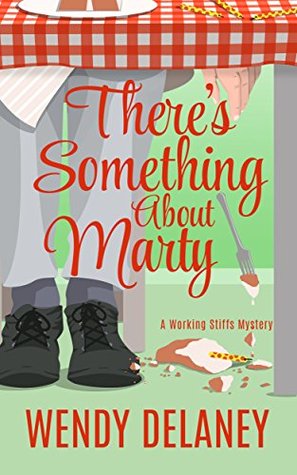
Part-time Deputy Coroner and full-time Prosecutor’s Assistant, Charmaine “Char” Digby has a secret. Her childhood heartthrob, hunky Detective Steve Sixkiller, is back in her life, not to mention under her covers. But the relationship comes with a catch.
Char’s insecurities keep her from telling anyone about it, so it’s no surprise when her matchmaking best friend, Rox, works double time to fix her up with Port Merritt’s eligible and handsome ER doc, Kyle Cardinale. The good doctor goes out of his way to let Charmaine know that he’s up for the chase while Detective Sixkiller questions Char’s motives for keeping their relationship under wraps.
Charmaine’s problems multiply when her boss sends her to interview the bereaved family of Port Merritt’s wealthiest businessman, Marty McCutcheon, who rolled over dead at his 63rd birthday celebration. With a life-long diet of double cheeseburgers and a sultry new wife twenty years his junior it’s no wonder Marty’s heart stopped.
Health issues aside, his ex-wife, Darlene, is pointing fingers and crying “foul play.” Between his greed-driven progeny, a jilted girlfriend, and a last minute decision to change his will, Charmaine’s built-in lie detector is telling her it wasn’t the clogged arteries that took Marty out.
As she pieces together the circumstances surrounding Marty’s “last supper,” Charmaine realizes that nearly everyone in his close circle has something to gain from his death. And when the cause of his death looks more and more like poisoning she presses an unconvinced County Prosecutor to open a formal investigation.
Unable to make her case, and over Detective Sixkiller’s protests, Char takes it upon herself to dig into the McCutcheon family’s personal business. Her determination to learn the truth lands her smackdab in the middle of the killer’s radar, and as she mines the hidden corners of Marty’s past, the information she unearths may never see the light of day.
Tightly written and packed with small town innuendo and gossip, Wendy Delaney’s action-packed novel moves beyond the simple cozy mystery genre. With a wink and a nod to the Shakespearean complexities of a duplicitous, wealthy family, There’s Something about Marty exposes the insatiable cravings and rivalries that arise when blood ties go bad.
This third installment of Wendy Delaney’s “Working Stiffs” mystery series is an engaging, fast-paced read. Through her nimble use of wit and humor Ms. Delaney delivers rich, eccentric characters and clever plot twists that promise to keep the reader turning the page.
Gillgren continues to bring excellent children’s fiction as he combines elements of history, romance, and adventure into a new type of treasure hunt. His second book The Treasure of Ching Shih in The Adventures of the CaliFamily series induces new waves of excitement and mystery.
The Cali Family can’t resist the opportunity to go diving in Honolulu, Hawaii for another treasure hunt experience. After all, who could resist diving for stolen loot left behind by the notorious, female Chinese pirate Ching Shih?
The reader sails into the year 1844 as Gillgren describes that dark, ruthless nature of Ching Shih. While female pirates existed throughout history, she proved herself unstoppable as she took command of her deceased husband’s 1,800 ships and led over 80,000 men. Her thieving knew no bounds as she robbed jewels and opium. However, before the treasure could safely transition to Hawaii, a natural disaster seized the land, and the treasure was lost at sea.
Fast forwarding hundreds of years later, Mr. Chang visits the Cali family in California to ask for their help in finding Ching Shih’s missing treasure. Their treasure hunt journey is anything but easy. The Cali family deals with villains that have the ruthlessness of Ching Shih herself, and no characters are who they appear to be. In spite of the chaos, the family proves that courage can overcome obstacles, and that hardships can’t break the bonds of friendship and love.
Gillgren continues to excel as he blends the realms of history and fiction. Ching Shih’s backstory is carefully woven into the plot, and has a huge impact on the story’s happenings.
What sets this action adventure book apart is its brilliant characters. Carmine continues to be a protective, strong father for his family, and ends up being a great inspiration to his son, Snail, whose bravery allows him to escape when his family is kidnapped. Carmine also doesn’t hesitate to show love to his wife or children, which also inspires Snail to grow a soft heart for Teri, a beautiful Chinese girl connected to the dastardly events of the novel. Mr. Chang also makes a fantastic villain, but the reader can still laugh when Carmine insults him.
Gillgren offers a fun, suspenseful, yet heartfelt read that will engage children and adults in the intriguing wonders of treasure hunting and sea exploration. Highly recommended for readers of any age who enjoy high sea adventures and a fun read. This is the second book in John Gillgren’s The Adventure of the Cali Family series. This reviewer is looking forward to reading and reviewing the third book: The Treasure of Ocracoke Island.
“You have zero privacy anyway. Get over it.” Scott McNealy, CEO, Sun Microsystems, January 1999
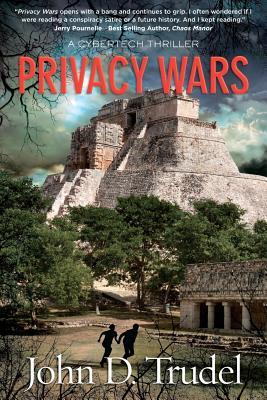
Thrust into a conference room with trigger-happy guards, Privacy Wars opens with negotiations taking place between a software company and one of its clients. The tension is high as this particular client demands special concessions for its privacy software that Cybertech refuses to offer. Fans of Trudel’s work will recognize Cybertech and John Giles from his book Soft Target.
Set in the not-so-distant future, through a series of “astronomical deficits and a dark period of crony capitalism, corruption, socialism, and frequent national embarrassments,” America has lost its strength as a world power, and Asia has taken its place. Desperate for a solution, the U.S. president enters into secret agreements with Japan for a loan, deals which suggest treasonous behavior and abuses of authority. The biggest casualty will be Cybertech, whose software creates problems for those who think no information should be private.
Cybertech realizes that it is being targeted through a series of bogus lawsuits and violation claims, crippling its ability to function. When “Iron John,” Giles’ son, Will, now CEO of Cybertech, realizes the attacks might be personal, he goes into hiding and heads for the hills, leaving everything behind, with minimal resources for surviving in the woods. Will is confronted by a mysterious woman who gives him instructions to ensure his survival, and he has little choice but to trust her.
The attacks on Cybertech escalate from bureaucratic tyranny to an all-out physical war. An organization called the Peace Enforcers, which operates as though they are above any law, conducts acts of war on US soil with no provocation. In conjunction with a martial-arts trained killer named Tanaka, who enjoys torturing and killing, Cybertech staff find themselves at the Peace Enforcer’s mercy, and Will, who has no defensive training, insists on returning to the corporate offices to try to help his staff.
The consequences of this action are a major turning point in the story: our hero finds himself assisted by ancient technologies of advanced civilizations, the Viracocha, who go back to the building of the pyramids. Fortunately for us, Trudel includes well-researched explanations into the theories after the end of the story: what might appear to be fantasy and science fiction may have some real-world credence.
The dogged romantic pursuit of Will by his protector, Becky, who is described in favorable dimensions, complete with advanced degrees and connections in high places, adds a sense of intimacy to the story. Trudel has a mastery of using media’s humorous mis-reportings (as he puts them) that create unintentional heroes. Each section of the book starts with a real attributed quote pertaining to the story line, some going back to ancient times, and others that are there for Trudel to remind the reader of America’s constitutional roots.
Privacy Wars by John D. Trudel, explores and confronts the issues that are involved with absolute privacy in software, corporations and government from several perspectives with the need to balance personal privacy and corporate privacy with the need for national defense. Trudel is known for his catch phrase “Thrillers are fiction…until it happens.” And he knows how to write a thriller!
Kiffer Brown here reporting from the 16th Anniversary Weekend Author Extravaganza in Nacogdoches, Texas, home of the Pulpwood Queens and Timber Guys Book Club — the largest book club in the world’s annual weekend gathering!
The Pulpwood Queens Book Club was founded by Kathy (Patrick) Murphy sixteen years. Dreamworks Entertainment has announced plans to make a movie based on Murhpy’s life, and her book The Pulpwood Queens’ Tiara-Wearing, Book-Sharing Guide to Life along with the development of her international book club that has grownto 600-plus devoted chapters.
The Pulpwood Queens’ Book Club has be written about in the OxfordAmerican Magazine, The Magazine of Good Southern Writing, and along with Oprah Winfrey’s OXYGEN NETWORK feature, to The Oprah Winfrey Show, to kicking off Diane Sawyer and Charlie Gipson’s READ THIS Book Club on Good Morning America, and has been featured in The Los Angeles Times, Time Magazine, Newsweek, and The Wall Street Journal to name a few.
I met Kathy Murphy (formerly Patrick) at a conference last April and we had instant rapport, so we stayed in touch. Of course, I just had to attend the “Once Upon a Time in 2016,” Girlfriend Weekend that is being held right now (Jan. 14 – 17, 2016) in Nacogdoches, Texas.
The authors of the 2016 selections are in attendance for panel discussions, author signings, and meeting their readers. The GREAT BIG BALL of HAIR costume themed ball “Once Upon a Time” will be held this evening and the Timber Guy of the Year and the Ball Queen will be announced at this time.
But, most importantly, the 2016 Pulpwood Queen Book Club Selections will be officially announced at the gathering of authors and readers!
Kathy L. Murphy, the founder of the book club, selects all the books with great care and deliberation from stacks and stacks of books (fiction and non-fiction) that she, herself, has read. She lists selections for each month in five categories:
Main Selection of the Month
Backlist Book: This Is a book she feels did not receive the attention it so deserves and should not be missed.
Bonus Books selection is for voracious readers (like Kathy)
Pinecones: Young Adult & Teen Selections
Splinters: Children’s Selections
Selections have been made for January through September 2016, so far! Selections for October, November, and December 2016 have not yet been made.
And now we are honored and excited to announce: DRUM ROLL, please!
The Pulpwood Queens and Timber Guys just selected Chanticleer Reviews Grand Prize award winner J. L. Oakley’s latest book Timber Rose for their 2016 Book Club Selections for the month of February!
We are excited for Janet Oakley and her Timber Rose novel that is set in 1907 in the great timber forests of the Pacific Northwest and features timber roses, women who hike and climb mountains in skirts breaking rules and barriers.
Congratulations to J. L. Oakley for her historical fiction novel, Timber Rose, being selected for the reading list of the largest book club in the world! Now this is something to CROW about!
PULPWOOD QUEEN herself to attend and present at the Chanticleer Authors Conference 2016!
We are honored and excited that Kathy L. Murphy will be a keynote speaker at the Chanticleer Authors Conference 2016 that will take place on April 29, 30, and May 1, 2016. She will be present at the Chanticleer Awards Ceremony on Saturday evening and will be “Queen of the Books By the Bay Book Fair” on Sunday, May 1st, 2016.
You can read more information about CAC16 here! Don’t delay, seating is limited.
This is Kiffer Brown, founder of Chanticleer Reviews, signing off from The Girlfriend Weekend in Nacogdoches, Texas. [/fusion_builder_column][/fusion_builder_row][/fusion_builder_container]
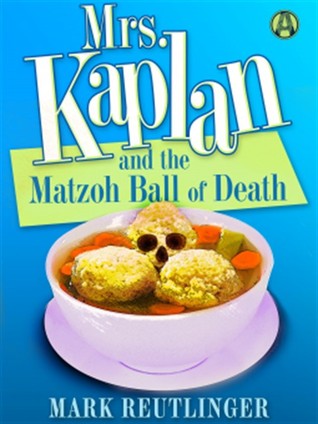
In classic Sherlockian style, author Mark Reutlinger introduces the reader to the clever and keenly observant Rose Kaplan through her side-kick Ida’s narration. At times more Lucy and Ethel than Holmes and Watson, with a soupcon of Miss Jane Marple, these geriatric sleuths manage to poke their noses into the personal and financial business of everyone connected to the senior home, solving minor cases along the way and uncovering, in the process a series of secrets that provide for some highly entertaining twists and turns.
At the Julius and Rebecca Cohen Home for Seniors, Rose Kaplan is somewhat of an anomaly. In a residence fueled by one-upmanship and minor victories, Rose competes for nothing: not for friendship or affection or even a winning hand of cards. And without trying, her renowned Matzoh Ball Soup consistently earns top honors and a place at the home’s annual Seder table.
Sadly, holiday celebrations can deliver unwanted surprises and this Passover serves up a doosey when reclusive resident Bertha Finkelstein is discovered, dead as a pickled herring, face-down in a bowl of Rose’s prize soup.
But Bertha’s untimely demise is the least of Rose’s problem. When it’s determined that Bertha choked on a pilfered earring, Rose is the main suspect in the theft not to mention responsible for Bertha’s death. With more than just her culinary reputation on the line Rose enlists the help of her longtime friend and perennial snoop-in-crime, Ida Berkowitz.
Together they put their unorthodox amateur sleuthing skills to the test and, when one of their most important allies is sidelined, Rose finds herself “bending” the law to get the evidence that she hopes will clear her name.
In “Mrs. Kaplan and the Matzoh Ball of Death” author Mark Reutlinger delivers a well-developed supporting cast of rich, quirky characters. And in Rose Kaplan the author has created an endearing amateur sleuth who reminds the reader of the value of wisdom and knowledge acquired with age.
Filled with wit and clever Yiddish colloquialisms, this delightfully engaging first installment of the Mrs. Kaplan Mystery series is as warm and inviting as it is laugh-out-loud fun!
Authoring Is A Business and this is why Tom Wise Ph.D., project management consultant, advises authors to implement AGILE PROJECT MANAGEMENT METHODS to meet their publishing goals.
Recap of Three Steps to Using Your Writing Time More Effectively – Agile for Authors Article One
In the previous article, we discussed how to build a network to create a team. This requires relationships and understanding the skills and abilities of these people. Part One was setting the stage to prepare to work within a strong network of supporters. In this article, we are going to cover how to apply most effectively your network in your business.
Part 2. Authoring is a Business
Knowns
8,760 hours in a year.
Timelines and schedules are precious commodities. Each of us is given only twenty-four hours in the day and one hundred sixty-eight hours in a week. We only receive fifty-two of those weeks in a year filled with eight thousand seven hundred and sixty hours. We spend almost two thousand nine hundred of those hours in sleep and another one thousand hours commuting, shopping, and general time with family duties.
Hours In A Day Breakdown Of Activities
Note: Hours in the day are an estimate of an average person with a full-time job:
For the knowledge worker, that leaves a mere forty-five hundred hours to split between the remaining activities such as leisure and love, eating and playing, housework and writing. If we are lucky or good, and manage to split our time perfectly, that provides the author seven hundred fifty hours, or two potential hours of precious time to write in a twenty-four hour period. Now, I don’t know about you, but I rarely manage to focus for a full couple hours in a day, let alone seven hundred fifty hours straight.
Rework in authoring a novel or book is very costly in time, money, and confidence. The problem is often not the writing or the mechanics, but rather a process. A life-cycle may not be clear to us, but it does exist. Getting published historically took years to complete, but that has changed.
In the new millennium, some software experts developed a twelve-point manifesto for Agile principles to apply to writing novels. They discovered that a network of invested peers made their writing process more effective.
Realize, there is a difference between content writers and authors. Content Writing tends to be paid position or contracted. Authors, and especially Indie Authors, invest their time and money up front hoping for a return on work at the other end of the process. Authors hunker down, close themselves away, and work until they complete the manuscript. Then polish the work, send it off, and hold their breath, cross their fingers, hoping for someone to send a love letter of acceptance.
Top companies in the world understand the necessity of a more streamlined process. Hired consultants make billions of dollars teaching companies how to create processes for efficiency and economic savings. Experts measure, refine and reduce their product processes into effective work segments to complete the product. These techniques can be employed in your authoring efforts.
Some people have learned a family business, and others seem to instinctively know how to segment out their work and organize others to get work done and goals met. For the rest of us, this can be a learned skill.
Agile Manifesto’s Twelve Concepts
Agile authors have the ability to use the flexible methods. The idea, the method of agile, developed during the 1990’s by software developers with the simple focus of targeting the desires of their customers before the work begins. It includes building a team focused on customer satisfaction, a team with shared mission and participation of quality experts, engineers, analysts, and business people. These software developers gathered at The Lodge at Snowbird Ski Resort in the Wasatch Mountains in Utah and developed what is now known as the Agile Manifesto.
The Agile Manifesto expresses twelve concepts of a well working team that can be applied to the business of authoring.
Customer satisfaction is priority
Welcome changes
Deliver working software frequently
Business and Development work together daily
Motivation, Environment, and trust are needed
Face-to-face is best
Working software is the measure
Maintain a constant pace
Technical excellence and good design
Simplicity – maximize work not done
Self-organizing teams
Regular retrospection and adjustment
A Shift in Paradigm – A to Z no longer applies!
In segmenting work – A to Z no longer applies. Now, working on A to D, R to Z, and then E to H,is possible, getting feedback and input along the way, improving as the work progresses, to a thoroughly edited, refined product.
Consider what can be grouped, or segmented into independent units of work, and the need to include people with these skills in your team:
Division of responsibilities to make your group a team
Division of tasks into short phases of work (Sprints) characterized by division of tasks
Publishers
Cover design
Marketing
Bloggers – who and when
Social media
Beta readers
Developmental and line Editors – who and when
Identify who needs to work on what
Who needs what information – focus on that info with those people
Conferences and author signings
Teams and groups work differently. One of the key differences in the behaviors of teams is due to the separation of responsibilities. When an individual is assigned a unique task or given a goal, he/she can take on the leadership role when it comes to meeting the assigned objective.
When work is segmented into small chunks, called sprints, with a short duration and a clear goal, the team can move quickly to completion of a quality product. Prioritize small sprints of two to three weeks on a specific goal, and with the team members that are needed to complete that small chunk of work.
Short Sprints Win the Race
At the end of each sprint, take the time to discuss the past segment. Ask the team the hard questions. By continuous reassessment, your team will quickly become efficient at turning that crank and churning out quality work.
Frequent reassessment and adaptation
People – are they responsive to you and are you responsive to them, working well together.
Communication – are the tools and behaviors working?
Commitment – are you, and they dedicating the time and focus to getting work completed in the way and time agreed?
Time – are the estimates accurate? Is the time to meet convenient and sufficient to get the work done?
When the opportunity to write presents itself, an author must have options ready and prioritized. This requires the author to have a routine that enables them to move into the zone, one zone or another, quickly.
Creating that “zone” means understanding the priority, and what needs to be available that activates the muse. Identify the psychological triggers that engage your creative abilities.
Have a scent prepared that gets you in the mood to write (coffee? cinnamon? campfire smoke? brandy?)
Know the lighting that is needed to make you comfortable (candles? bright light? darkened writing cave?)
Identify the background sounds that move you (white noise? rain forest sounds? dance tunes? sultry Barry White? Western music?)
Choose a setting (busy coffee shop? attic studio? kitchen table? favorite bookstore? local pub? closed office with the door closed?)
Choosing a time of day is ideal (first thing in the morning? late night after everyone goes to sleep? immediately after exercise?)
Have needed ideas listed. (Always jot down or record anything that you think might be useful for writing projects. Don’t let these muse tidbits dissipate into the air.)
Choosing a specific time of day with no distractions is essential. If the author has a family, often this time is before the family awakens, or after the family retires for the night. Perhaps for you, it is after the children head out to school, or during your lunch break at work. Whatever time that is, set that time aside on your calendar and give it to yourself. Don’t allow excuses to infringe on the task. Perhaps you can arrive to work early, or stay late on a preset schedule. This provides the family, or significant other, the ability to support your time to write.
Stage your work area
Be organized and have everything together (prepared)
Know the psychologically stimulating triggers that jog your muse
Diane Gabaldon’s is lighting candles for her muse.
Robert Dugoni’s is reading the Green Mile by Stephen King — again!
[fusion_builder_container hundred_percent=”yes” overflow=”visible”][fusion_builder_row][fusion_builder_column type=”1_1″ background_position=”left top” background_color=”” border_size=”” border_color=”” border_style=”solid” spacing=”yes” background_image=”” background_repeat=”no-repeat” padding=”” margin_top=”0px” margin_bottom=”0px” class=”” id=”” animation_type=”” animation_speed=”0.3″ animation_direction=”left” hide_on_mobile=”no” center_content=”no” min_height=”none”]“What my Coffee says to me” by Jennifer R. Cook
Moving from one role to another, both physically and mentally takes planning, skill, practice, and agility. As an author, if we have a team of people with unique skills and responsibilities, then your team can take a leadership role when necessary. This gives the author more opportunity to shift roles from writing text to editing, scheduling, and organizing for subjects such as cover designs, reviewing publishers, and marketing.
Parting Words
Allow yourself to have every benefit possible to make the transition to your creative self to take advantage of that precious time when it is just you and your story.
NOTES from the Editor:
The fun picture above titled “What My Coffee Says to Me” is by Jennifer R. Cook, a creative graphic design consultant and illustrator. Ms. Cook has been graciously given Chanticleer Reviews permission to use this picture with Tom and Nancy Wise’s AGILE for Authors series. We absolutely love her artwork and graphic designs!
“What my Coffee says to Me” is a daily, illustrated series which began January 1, 2012 by Jennifer R. Cook a strategic graphic designer and illustrator creating for mental health awareness, please visit www.catsinthebag.com”
Tom holds a Ph.D. in Organizational Management and teaches courses in project management and quality at Villanova University and DeSales University. He is currently developing curriculum at Eastern University based on his books: Agile Readiness and Trust In Virtual Teams.
Tom and Nancy are award winning authors. Their book, The Borealis Genome is the 2013 Dante Rossetti Grand Prize Winner and a 2014 Cygnus Award First In Category winner. Their books have won multiple awards including Finalist with the USA Best Book Awards and The International Book Awards.
The LARAMIE Awards Writing Competition recognizes emerging new talent and outstanding works in the genres of Western Fiction. The Laramie Awards is a division of Chanticleer International Novel Writing Competitions.
More than $30,000.00 dollars worth of cash and prizes will be awarded to Chanticleer Book Reviews 2015 writing competition winners at the Chanticleer Authors Conference April 30, 2016!
The Laramie Awards FIRST IN CATEGORY sub-genres are:
Western Romance
Adventure/Caper
Classic
Civil War/Prairie/Pioneer
Contemporary Western
Western Young Adult
The following titles will compete for the FIRST IN CATEGORY Positions and Awards Packages.
The OFFICIAL LIST of Finalists Authors and Titles of Works that have made it to the Short-list of the Laramie 2015 Novel Writing Contest.
Sara Dahmen – Doctor Kinney’s Housekeeper
Martha Conway – Thieving Forest
Ken Farmer & Buck Stienke for Across the Red
Andy Kutler for The Other Side of Life
Linell Jeppsen for Second Chance
Allen Russell for Crow Feather
Quinn Kayser-Cochran for Silver State
Robert Morgan Fisher for The Long Trample
David M. Jessup for Mariano’s Choice
S. Thomas Bailey for Blood Lines-The Gauntlet Runner
Cheri Kay Clifton for Destiny’s Journey
Kevin Horgan for The March of the Orphans And the Battle of Stones River
Lori Crane for Okatibbee Creek
D W Tarman for A Soldier’s Covenant
Christi Corbett for Tainted Dreams
Laura McMennamin for Winter Shadows
Driskell Horton for Pleasant Hill
JvL Bell for Colorado Gold
C.J. Fosdick for The Accidental Wife
Alethea Williams for Walls for the Wind
Kristy McCaffrey for The Blackbird
Lynda J Cox for The Devil’s Own Desperado
Caroline Clemmons for Winter Bride
Jenna Hestekin for Zeke’s Fate
Miantae Metcalf McConnell for Mary Fields, First African American Woman U.S. Star Route Mail Carrier
Louise Lenahan Wallace for Children of the Day
Ransom Wilcox/Karl Beckstrand for To Swallow the Earth
McKendree Long for Higher Ground
Rebecca S. Nieminen for The White Hart
Christi Corbett for Tainted Dreams
Kevin Horgan for The March of the 18th, A Story of Crippled Heroes in the Civil War
Buck Stienke for Devil’s Canyon
LIST TO CONTINUE — Thank you for your patience. We are working through the 2015 LARAMIE entries.
The Laramie Finalists will compete for the Laramie Awards First In Category Positions, which consists of Four Judging Rounds. First Place Category Award winners will automatically be entered into the Laramie GRAND PRIZE AWARD competition, which has a cash prize of $250 or $500 dollars in editorial services. The CBR Grand Prize Genre Winners will compete for the CBR Overall Grand Prize for Best Book and its $1,000 purse.
All First In Category Award Winners will receive high visibility along with special badges to wear during the Chanticleer Authors Conference and Awards Gala.
First In Category winners will compete for the Laramie Awards Grand Prize Award for the $250 purse and the Laramie Grand Prize Ribbon and badges.
TEN genre Grand Prize winning titles will compete for the $1,000 purse for CBR Best Book and Overall Grand Prize.
A coveted Chanticleer Book Review valued at $345 dollars U.S. CBR reviews will be published in the Chanticleer Reviews magazine in chronological order as to posting.
A CBR Blue Ribbon to use in promotion at book signings and book festivals
Digital award stickers for on-line promotion
Adhesive book stickers
Shelf-talkers and other promotional items
Promotion in print and on-line media
Review of book distributed to on-line sites and printed media publications
Review, cover art, and author synopsis listed in CBR’s newsletter
Default First in Category winners will not be declared. Contests are based on merit and writing craft in all of the Chanticleer Writing Competitions.
As always, please do not hesitate to contact us with any questions, concerns, or suggestions at Info@ChantiReviews.com.
Congratulations to the Finalists in this fiercely competitive contest!
Good Luck to all of the Laramie Finalists as they compete for the coveted First Place Category positions.
First In Category announcements will be made in our social media postings as the results come in.
The Laramie Grand Prize Winner and the First Place Category winners will be announced and recognized at the April 30th, 2016 Chanticleer Writing Contests Annual Awards Gala, which takes place on the last evening of the Chanticleer Authors Conference that will be held in Bellingham, Wash.
We are now accepting submissions into the 2016 Laramie Awards writing competitions for Western Fiction. Please click here for more information or to enter the contests.








 The LARAMIE Awards Writing Competition recognizes emerging new talent and outstanding works in the genres of Western Fiction. The Laramie Awards is a division of Chanticleer International Novel Writing Competitions.