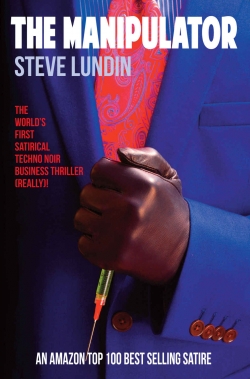
In the very near future, as portrayed in Steve Lundin’s darkly comic satire, The Manipulator, the marketing industry has taken over the world by turning it into a data-driven surveillance ruled technocracy. Jack Vance, Lundin’s protagonist, is the product of this high-tech environment that is socially and morally bankrupt. A smart and worldly guy, Jack prides himself in the kind of quick thinking that can keep him a nanosecond or two ahead of his enemies and competitors.
Jack was on the fast track to becoming the brightest star in New York City’s media universe until a critical lapse in judgement crashes his career and his reputation. However, Jack’s back. This time in Chicago, with his own company and a plan.
As a self-diagnosed sociopath, Jack will be the first to tell you that he’s more than qualified to tangle with the best of this brave new world’s hidden persuader elite. He lives to sell, to conjure up that next bigger and better promotion from which he can get a fix for his addiction to the thrill of closing a deal. And Jack has just taken on the ultimate deal. His new venture, Blowfish, is a winner-takes-all marketing firm run on the premise that the higher the risk the higher the return.
Lundin, the author, draws from his background as a journalist and marketing expert to weave an ultra-contemporary and entertaining story of greed, excess, and the insatiable nature of the human condition. From Jack’s self-designed corporate “War Room” – a “Glen Garry Glen Ross” style employee think-tank where jobs are constantly on the line – to his drug and alcohol-induced decision-making processes, Jack is every inch the anti-hero that readers love to hate, but don’t. Think “Mad Men’s” Don Draper on Ritalin-enhanced premium vodka with an arsenal of the latest black-market techno gizmos, access to the freshly minted data, and, of course, while being smartly attired at all times.
With his Blowfish team grinding numbers and probabilities in the background, Jack devises a scheme to launch their client’s mobile network onto the world stage by using the audience draw of the Super Bowl. In Jack’s mind, pitting the surefire new hit “Some Will Die,” a hyper-reality show– Jack’s brainchild – in which morbidly obese contestants sign on to lose half their body weight in a short period of time, or die trying–against the much “tamer” SuperBowl can’t miss. Or can it? It is a risky gambit that will either put Jack and his staff on the streets, or set them up for life,
Yes, winners receive riches and fame, but it’s the losers, along with the show’s Russian task-master host, Vlad Berber, who provide the entertainment fodder for the show’s twisted audience.
With a fast-paced story line and a rich cast of characters, this award-winning winning novel offers a uniquely hilarious, but scary, perspective on the how the businesses of public relations and marketing can take technology to its precipice to take advantage of a media addicted public. Lundin’s clever blending of fact and fiction alternately tempts and taunts the reader with Vlad’s prophetic question, “Are you comfortable with the edge?” Highly recommended.
The 1800s was the age of expansion in the United States, and railroads played a major part in the efforts to move Americans and industry to the Western shores. By the 1860s, this great country, the American experiment as it was called, became engulfed in a brother versus brother bloody Civil War. As the century drew to a close in the late 1880s and early 1890s, America was still reeling from the emotional and economic damage the war had caused. J.P. Kenna uses this struggle as the backdrop for his book I’ll Take You Home Kathleen, the second in his series titled Beyond the Divide.
Kenna’s novel captures the years 1882 to 1898 with its focal point being the Irish immigrants who were seeking to escape famine, lack of land reform along with desiring religious freedom, came to America seeking a better life and more opportunity. The first wave of immigrants were seeking escape from one of the grimmest periods in Irish history–the Great Famine from 1845 to 1852. Author Kenna follows this hard-working group of immigrants who helped lead America into a post-Civil War, industrial, and economic boom that some have called the Second Industrial Revolution.
Kenna does a magnificent job rooting this story firmly in the time period in which it takes place. He does so by sprinkling some well-known figures of the time throughout the book. He not only touches upon these real-life historical figures, but they become part of the conversation between the stories’ characters. [fusion_builder_container hundred_percent=”yes” overflow=”visible”][fusion_builder_row][fusion_builder_column type=”1_1″ background_position=”left top” background_color=”” border_size=”” border_color=”” border_style=”solid” spacing=”yes” background_image=”” background_repeat=”no-repeat” padding=”” margin_top=”0px” margin_bottom=”0px” class=”” id=”” animation_type=”” animation_speed=”0.3″ animation_direction=”left” hide_on_mobile=”no” center_content=”no” min_height=”none”][See Editor’s Note below]
The enthusiasm for growth is palpable in the conversations held within the book’s pages.
“An empire, Francis! An empire of farms stretching beyond what our small East Coast vision can imagine. And of towns with schools, churches, stores, maybe mills. And beyond the wheat country is timber…and minerals. An empire stretching clear to the Pacific!”
For as much excitement there was for expansion, there was just as much trepidation when it came to the relationship between the workers and their bosses. You will come to experience and understand the struggle between fledgling labor unions (aka Brotherhoods) and the railway owners. It is easy to sense how imperative to the rail workers the labor movement was to establish their rights when you encounter characters in the book making statements as such as these:
“That all our Brotherhood’s will become one big union of all railway men and we shall be able to meet the big bosses, and owners head on, by the Pennsylvania, Central, P & R or the B & O! Or the Lackawanna or the Lehigh Valley or the Vanderbilt or Gould roads – or some monopolizing combine yet unheard of!”
The book as a whole follows the timeline of the fictional James Fitzpatrick-Mary Dolan, as well as the Kathleen and Francis Scanlon families. What plays heavy in the narrative is how these fictional families interact and partake in sometimes heated discussions regarding the very real labor, economic, and social issues of the day which greatly affected their lives.
J.P. Kenna in the aftermath of the book states,
“My goal here has been to enliven the depiction of fictional characters – of ordinary people – using the broad brushstrokes of history, of real people and events. Both inhabit the closing decades of the 19th century – a time period within the living memory of people still alive not so long ago.”
Kenna’s I’ll Take You Home Kathleen, is a gripping tome of historical fiction that follows two families as they face the social, economic, and political currents of the time that portrays the heartache of families enduring war and economic tough times. The perseverance of the hardworking Irish immigrants of the late 1800s in rebuilding a war-ridden county and then doing the back breaking work required for the westward expansion of the United States is brilliantly portrayed within these pages.
Editor’s Note: Related historical figures to the novel’s time period:
James T. Hill, railway mogul and businessman was intent on expanding the railroad to the Pacific and north to Canada; Belva Ann Lockwood, women’s rights activist and one of the first (if not the first) female candidates to run for President of the United States as a National Equal Rights Party in 1884 and 1888; George M. Pullman, the designer of his namesake Pullman sleeping car; and Eugene V. Debs, American union leader and five time candidate of the Socialist Party of America.[/fusion_builder_column][/fusion_builder_row][/fusion_builder_container]
Chock full of brightly colored illustrations and positive messages, Lila and the Dandelion is a captivating story for young children about making friends and how we don’t have to be perfect to be a good friend or to be happy.
Lila is a cheerful young girl who “listens with her heart and speaks with hands” – Lila is deaf. However, even though she can’t hear, one day while she was “listening” to the flowers sing, she senses that she hears a little flower crying. She walks up to a Dandelion flower and signs with her hands to the crying flower, “Why are you crying, little flower?”
The flower cries because the gardener called the Dandelion a “weed.” This made the Dandelion feel useless and lonely. But, Lila shares with her new friend that just because someone says you don’t belong or calls you bad names doesn’t mean it’s true.
Lila’s character is an optimistic role model for children. Her deafness doesn’t hold her back from experiencing life in her own way, and it doesn’t stop her from having a smile her face. She inspires the Dandelion to feel appreciated despite the hurtful words of the gardener. This children’s book teaches its young readers the powerful message of loving yourself no matter what anyone says, and how it is empowering to take that strength and use it to help others in a gentle manner.
The story also encompasses how we can help make the world a better place by being kind and thoughtful of others. Lila shows young readers that everyone can be beautiful when they are compassionate and accepting of everyone. Lila and the Dandelion is an excellent book for parents to read to their children, and it comes with questions at the end of the book to start a conversation about the concepts self-worth and seeing worthiness in others.
Filled with warm, sweet characters and an optimistic outlook, Sheryl Hershey’s children’s book Lila and the Dandelion helps children explore the important message of self-acceptance along with acceptance of others–even if they are different.
What Opens but Never Closes? The Opening Day of Boating Season
[fusion_builder_container hundred_percent=”yes” overflow=”visible”][fusion_builder_row][fusion_builder_column type=”1_1″ background_position=”left top” background_color=”” border_size=”” border_color=”” border_style=”solid” spacing=”yes” background_image=”” background_repeat=”no-repeat” padding=”” margin_top=”0px” margin_bottom=”0px” class=”” id=”” animation_type=”” animation_speed=”0.3″ animation_direction=”left” hide_on_mobile=”no” center_content=”no” min_height=”none”]Opening Day of Boating Season
Here are five of our favorite reads from authors who followed their dreams to sail away.
One couple (with two teenagers in tow – yikes!) started by building their boat in the backyard of their suburban home; two who started only with the love for each other, the support of friends and family, and a dilapidated hull and a three cylinder iron works engine; one whose true story will make you reconsider taking to the tall seas; one whose story will inspire you to look beyond society’s conventional solutions and rationalizations and to plot your own course; and one who shares how an everyday couple made their dream come true of sailing the Pacific Ocean on a 31-foot boat and a tight budget.
[/fusion_builder_column][/fusion_builder_row][/fusion_builder_container][fusion_builder_container backgroundcolor=”” backgroundimage=”” backgroundrepeat=”no-repeat” backgroundposition=”left top” backgroundattachment=”scroll” video_webm=”” video_mp4=”” video_ogv=”” video_preview_image=”” overlay_color=”” overlay_opacity=”0.5″ video_mute=”yes” video_loop=”yes” fade=”no” bordersize=”0px” bordercolor=”” borderstyle=”” paddingtop=”20px” paddingbottom=”20px” paddingleft=”0px” paddingright=”0px” menu_anchor=”” equal_height_columns=”no” hundred_percent=”no” class=”” id=””][fusion_builder_row][fusion_builder_column type=”1_1″ background_position=”left top” background_color=”” border_size=”” border_color=”” border_style=”solid” spacing=”yes” background_image=”” background_repeat=”no-repeat” padding=”” margin_top=”0px” margin_bottom=”0px” class=”” id=”” animation_type=”” animation_speed=”0.3″ animation_direction=”left” hide_on_mobile=”no” center_content=”no” min_height=”none”][fusion_text]Boating season begins in the Pacific Northwest on the first Saturday in May, a tradition which goes back to the 1920’s. To celebrate, we thought we would offer you this superb reading list of true story boating adventures by local northwest authors.
After all, if you are going to be spending time boating this summer, or enjoy dreaming about boating from your lawn chair, stocking your library is just as important as stocking your galley!
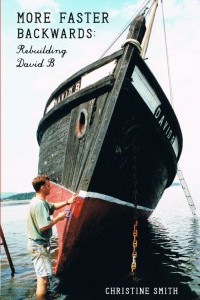
More Faster Backwards: Rebuilding David B by Christine Smith
“Christine Smith and her husband Jeffrey race against time, money, and natural elements to save the David B—the vessel that they bet all of their resources on in hopes of making their dream of owning and operating a small expedition cruise boat in the Pacific Northwest come true.
“More Faster Backwards, Rebuilding David B” seamlessly mixes nautical terms with natural elements and boat builder’s craft. Those who enjoy cooking and baking will also discover it a delightful read. Seafaring people will sail through the narrative like soul mates, but landlubbers might appreciate a glossary of boating terms. The map provides great references and the photo albums heighten the pleasure.
More Faster Backwards, Rebuilding David B by Christine Smith won the Grand Prize of the Journey Awards for Narrative Non-fiction, a division of Chanticleer Book Reviews Blue Ribbon Writing Competitions.”Read full review…
Christine Smith started working on tour and whale watching boats in 2001. It combined her love for nature and her interest in helping others to enjoy it. She is also an avid birder, and has worked as a volunteer interpreter for the Eagle Watchers on the Skagit River from 1997 to 2008, she helps visitors observe the local eagle population. She is also a founding member of the Northwest Wildlife Rehabilitation Center, which became part of Whatcom Humane Society in 2014. She served for two years as a board member and Secretary for the North Cascades Audubon Society in Bellingham, Washington. When not watching birds or cooking on the David B, Christine enjoys running, ice skating and downhill skiing. [/fusion_text][/fusion_builder_column][/fusion_builder_row][/fusion_builder_container][fusion_builder_container backgroundcolor=”” backgroundimage=”” backgroundrepeat=”no-repeat” backgroundposition=”left top” backgroundattachment=”scroll” video_webm=”” video_mp4=”” video_ogv=”” video_preview_image=”” overlay_color=”” overlay_opacity=”0.5″ video_mute=”yes” video_loop=”yes” fade=”no” bordersize=”0px” bordercolor=”” borderstyle=”solid” paddingtop=”20px” paddingbottom=”20px” paddingleft=”20px” paddingright=”20px” menu_anchor=”” equal_height_columns=”no” hundred_percent=”no” class=”” id=””][fusion_builder_row][fusion_builder_column type=”1_1″ background_position=”left top” background_color=”” border_size=”” border_color=”” border_style=”solid” spacing=”yes” background_image=”” background_repeat=”no-repeat” padding=”” margin_top=”0px” margin_bottom=”0px” class=”” id=”” animation_type=”” animation_speed=”0.3″ animation_direction=”left” hide_on_mobile=”no” center_content=”no” min_height=”none”][fusion_text]
Cape Horn: One Man’s Dream, One Woman’s Nightmare by Réanne Hemingway-Douglass
“In Cape Horn: One Man’s Dream, One Woman’s Nightmare,” Réanne Hemingway-Douglass vividly recreates a sailing voyage in which she and her husband Don set out to round Cape Horn. As the reader discovers, they never quite got there. Meanwhile, Hemingway-Douglass shares the heady magic of starlit nights and breathtaking dawns, grueling and toilsome days, emotions ranging from joy to absolute terror, and a determination not to give up hope when all seems lost.” Read full review…
Réanne Hemingway-Douglass is a sailor, writer, cyclist and language teacher. Here articles have appeared in numerous outdoor magazines. Her best-selling book, Cape Horn: One Man’s Dream, One Woman’s Nightmare, has been published in French and Italian and is being translated into Spanish. In the 1980s, Réanne led the first women’s bicycling team to cross Tierra del Fuego at the tip of South America.[/fusion_text][/fusion_builder_column][/fusion_builder_row][/fusion_builder_container][fusion_builder_container backgroundcolor=”#f8fafb” backgroundimage=”” backgroundrepeat=”no-repeat” backgroundposition=”left top” backgroundattachment=”scroll” video_webm=”” video_mp4=”” video_ogv=”” video_preview_image=”” overlay_color=”” overlay_opacity=”0.5″ video_mute=”yes” video_loop=”yes” fade=”no” bordersize=”4px” bordercolor=”#4687bf” borderstyle=”solid” paddingtop=”20px” paddingbottom=”20px” paddingleft=”20px” paddingright=”20px” menu_anchor=”” equal_height_columns=”no” hundred_percent=”no” class=”” id=””][fusion_builder_row][fusion_builder_column type=”1_1″ background_position=”left top” background_color=”” border_size=”” border_color=”” border_style=”solid” spacing=”yes” background_image=”” background_repeat=”no-repeat” padding=”” margin_top=”0px” margin_bottom=”0px” class=”” id=”” animation_type=”” animation_speed=”0.3″ animation_direction=”left” hide_on_mobile=”no” center_content=”no” min_height=”none”][fusion_text]
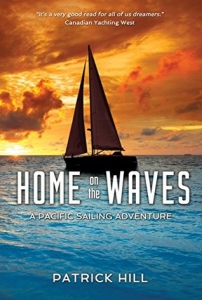
Home on the Waves by Patrick Hill
“Family, love, and adventure are all tied together in Patrick Hill’s alluring travel memoir “Home on the Waves.” It’s a story set in the 1970’s that provides remarkable insight into the lives of a family exploring the open ocean and discovering new cultures and people.
Hill’s memoir is an excellent read for everyone interested in reading about out-of-the-ordinary lifestyles and family adventures, even if they have never set foot on a boat.
“Home on the Waves” brings life to exotic cultures, sailing, and family life in 1970’s America. It’s a true story that will inspire readers to seek their own adventures and find ways of making dreams come true.”Read the full review…
Patrick Hill, with wife Heather and family, have been sailing out of Vancouver, B.C. for years. They’ve owned nine sailboats from a 17′ to a 42′ boat, Sky OneHundred which they built. They have cruised extensively, written articles for magazines, made presentations to yacht clubs, libraries, the Vancouver Aquarium, and a major Alaskan cruise line[/fusion_text][/fusion_builder_column][/fusion_builder_row][/fusion_builder_container][fusion_builder_container backgroundcolor=”” backgroundimage=”” backgroundrepeat=”no-repeat” backgroundposition=”left top” backgroundattachment=”scroll” video_webm=”” video_mp4=”” video_ogv=”” video_preview_image=”” overlay_color=”” overlay_opacity=”0.5″ video_mute=”yes” video_loop=”yes” fade=”no” bordersize=”0px” bordercolor=”” borderstyle=”solid” paddingtop=”20px” paddingbottom=”20px” paddingleft=”20px” paddingright=”20px” menu_anchor=”” equal_height_columns=”no” hundred_percent=”no” class=”” id=””][fusion_builder_row][fusion_builder_column type=”1_1″ background_position=”left top” background_color=”” border_size=”” border_color=”” border_style=”solid” spacing=”yes” background_image=”” background_repeat=”no-repeat” padding=”” margin_top=”0px” margin_bottom=”0px” class=”” id=”” animation_type=”” animation_speed=”0.3″ animation_direction=”left” hide_on_mobile=”no” center_content=”no” min_height=”none”][fusion_text]
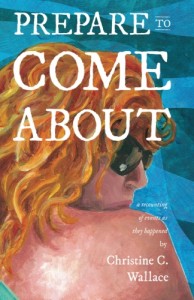
Prepare to Come About by Christine Wallace
“Christine struggles with her loss of identity as a successful professional, a role model, a caring mother, and a supportive spouse while she battles with the economic recession, personal depression, and, worst of all, her own loss of trust in herself and her capabilities.
Her fractured family makes an unorthodox choice that pivots them all into unfamiliar waters. Their lifeline comes in the form of a tall ship named Zodiac and its enigmatic captain. Life or death challenges and unforeseen moments of wonder and awe await Christine and her family. As they venture forth together in this new venture, the family members reconnect and rebuild their lives.” Read full review…
Christine Wallace is the author of two books including The Pocket Doula and Prepare to Come About. Her work has appeared in the literary journal Clover (vol. 3, 2012, vol. 6, 2014). Christine was founder and CEO of “Gracewinds Perinatal”, a nationally award winning business. Christine currently resides in the Pacific Northwest onboard an ex-forestry boat with her husband, youngest daughter and a seaworthy tabby named Lucky Jack. [/fusion_text][/fusion_builder_column][/fusion_builder_row][/fusion_builder_container][fusion_builder_container backgroundcolor=”#f8fafb” backgroundimage=”” backgroundrepeat=”no-repeat” backgroundposition=”left top” backgroundattachment=”scroll” video_webm=”” video_mp4=”” video_ogv=”” video_preview_image=”” overlay_color=”” overlay_opacity=”0.5″ video_mute=”yes” video_loop=”yes” fade=”no” bordersize=”4px” bordercolor=”#4687bf” borderstyle=”solid” paddingtop=”20px” paddingbottom=”20px” paddingleft=”20px” paddingright=”20px” menu_anchor=”” equal_height_columns=”no” hundred_percent=”no” class=”” id=””][fusion_builder_row][fusion_builder_column type=”1_1″ background_position=”left top” background_color=”” border_size=”” border_color=”” border_style=”solid” spacing=”yes” background_image=”” background_repeat=”no-repeat” padding=”” margin_top=”0px” margin_bottom=”0px” class=”” id=”” animation_type=”” animation_speed=”0.3″ animation_direction=”left” hide_on_mobile=”no” center_content=”no” min_height=”none”][fusion_text]
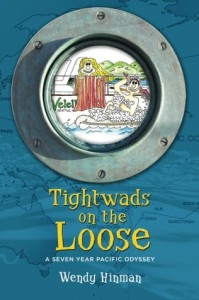
Tightwads on the Loose by Wendy Hinman
“Tightwads on the Loose – A Seven Year Pacific Odyssey” opens with a map of the Pacific Ocean that showed the voyage of the sailing vessel Velella starting and ending in Seattle. Soon the reader is immersed in the plans of Wendy and her husband, Garth, to set sail on their open-ended adventure. And we wonder how long an introvert, whose motto is “always be prepared,” can live in tight quarters with an extrovert whose motto is “just wing it.”
This book will definitely appeal to those who are curious about sea voyaging. Armchair travelers will find a diversity of cultural experiences, historical details, and adventures for their entertainment and education. Come on board and sail away with the intrepid Wendy Hinman and her humorous and ingenious insights about life at sea.” Read full review…
Wendy Hinman, author, editor, and speaker, has shared her sailing adventures through emails and her blog. She is a regular contributor to the Magazines 48 North and Latitude 38. Wendy’s also been featured in Sail, Cruising World, Sailing, CYC Leadline, Hebe Jebees (Hong Kong) and Kazi Magazine (Japan).[/fusion_text][/fusion_builder_column][/fusion_builder_row][/fusion_builder_container]
Enjoy getting to know these intrepid souls by visiting their websites for more information and the latest updates on their adventures.
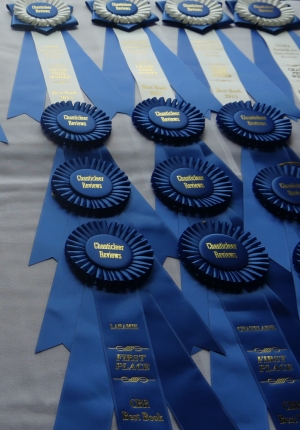
We are excited and honored to have announced the 2015 grand prize award winners at the third annual Chanticleer Authors Conference’s Awards Banquet held on Saturday, April. 30th, 2016 at the Hotel Bellwether by beautiful Bellingham Bay, Wash.
We want to thank all of those who entered and participated in the fiercely competitive 2015 Chanticleer International Writing Competitions.
CBR– Discovering Today’s Best Books with the CBR BLUE RIBBON Writing Competitions!
The Chanticleer Grand Prize Award 2015 for Overall Best Book:
Daughter of Destiny by Nicole Evelina was awarded the Chanticleer Overall Grand Prize for the Best Book in the 2015 Chanticleer International Writing Competitions. Congratulations to author Nicole Evelina.
The Chanticleer Genre Grand Prize 2015 Winners are as follows:
The Cygnus Grand Prize for SciFi and Fantasy Fiction 2015 was awarded to:
Please note that the above awards are for submissions that we received in 2015. The award winners were acknowledge at the 2016 annual Chanticleer Authors Conference and Awards Banquet on Saturday, April 30th, 2016.
The winners of the 2016 Chanticleer Blue Ribbon Writing Competitions (works entered in 2016) will be recognized at the 2017 Chanticleer Authors Conference and Awards Banquet held April 1st, 2017. Reserve your spot now.
We invite you to read the Chanticleer editorial book reviews of these stellar works. The reviews will be published on our website and in the Chanticleer Reviews online magazine. If they are not currently posted, they will be posted as they are reviewed! Congratulations, again, to these award winning authors!
For more information about the Chanticleer International Writing Competitions, please visit our Writing Contests pages.
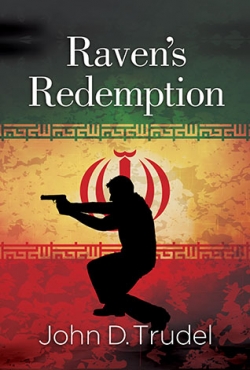
Raven’s Redemption begins where Raven’s Run left off: Josie is recovering in a hospital in Oregon, and Raven, recuperating at a coastal estate in rugged Northern California. He feels responsible for putting her life in jeopardy. Josie is a sensitive paranormal who can do ‘remote viewings’ – but viewings involving violence, remote or otherwise, weaken her to the point of death.
Raven is an undercover operative who tries to protect her. He receives his next mission from Goldfarb, his boss: Josie’s untraceable extraction from the medical facility. What none of them know is that sinister forces are at work to make sure Josie never gets out alive.
Her services are desperately needed again, and this mission cannot fail: she is a non-expendable government asset. It’s a simple grab-the-girl and run – or should be – but when animal activists become involved, chaos reigns, and not everyone makes it out intact.
The story shifts to another hospital – this time the President of the United States is hospitalized in a secret facility after being irreparably poisoned. After a brief period of rest and recuperation for Josie and Raven, Josie is tasked to work her viewings around the condition of the president. While in her viewing state, she encounters a dark force so powerful and evil she cannot penetrate it – and is afraid it would swallow her very life force if she got too close.
Should the president die, this force, aptly named “The Abyss”, will be unleashed on the world, and with no stopping it. Unfortunately, all envisioned paths to the future lead to his death!
Goldfarb’s team is able to use Josie’s information to track down those who want the president dead, but the real problem is knowing who is directing their actions, and why. Some familiar villains appear in this book – we get to be entertained with Vogel’s thick German accent and lack of empathy – and some new ones, who seem familiar enough that we might have read about them in the newspaper or seen a report on television.
In between the heart-stopping, rag-tag, under-funded operations to rescue damsels and flush out the bad guys, Trudel gives us past examples of breaches of security in history to make plausible actions taken in his story. He relates the legend of General Blackjack Pershing’s pig-blood solution to jihad, though the historical authenticity of this event has been challenged where criticism of Islam is politically incorrect. Occurring over a century ago, the incident – which has been neither proven nor disproved – provides a richer backdrop to the actions of an unanticipated (and unwitting) ally during a chilling nighttime raid.
In light of recent terrorist events that leave us wondering “how could this have happened?” Trudel offers up examples of enemies hiding in plain sight, of churches that aren’t the peaceful sanctuaries one might expect, and of plans for evil that are much better funded than their defensive counterparts.
Raven’s character is becoming less rogue. He is listening more to Josie rather than acting brashly every time. She desperately wants out of the business they’re in – “one more mission and we’ll retire” – how many times have you heard that one? This reader doesn’t remotely foresee a true retirement happening any time soon!
Those who read Raven’s Run will be satisfied with this riveting sequel, but those who are new to Trudel’s work will enjoy it on its own if they are a fan of political intrigue, firearms technology – both new and old, espionage and a bit of other-worldliness to make this a true paranormal thriller.
The eBook market is a huge opportunity, especially for indie authors.
If you’re not focusing on eBook sales as a core part of your marketing plan, you’re missing out.
When I published my first novel The Great Symmetry, I printed a few hundred copies and imagined that it would be a great success if I sold them out. I had no idea where I would find the vast majority of my readers.
Just a year later, about 95% of my sales are eBooks. Every day, readers are buying my book on Amazon and other sites from all over the world.
To get traction in the eBook market, I tried out new things, made plenty of mistakes, and then had a series of increasing successes. I’m grateful to the authors who helped along the way. Now I’m distilling the most important lessons to help other authors.
At the upcoming Chanticleer Authors Conference, I’ll be presenting a series of three sessions about eBook publishing. The content won’t focus on mechanics like eBook file formats – that’s boring and you can figure out that stuff easily. Rather, we’ll dig into the most important decisions facing an author in the eBook market. The sessions are:
eBook Publishing 101: Designing your points of sale (such as your Amazon page) to convert browsers into buyers.
eBook Publishing 102: Getting readers to your points of sale. We’ll emphasize the most cost-effective tool around – the discount promotion.
eBook Publishing 103: Advanced topics such as series planning, reader magnets, and more.
An overarching theme of all of these sessions is that your eBooks are a central part of your offering.
For some types of book (especially genre fiction by indie authors), it’s the most important channel for you. This means you should plan ahead for your eBook. For instance, some cover designs look wonderful in print, but are failures online – we’ll discuss how to avoid that pitfall. There may even be reasons to modify the text of your novel to sell well as an eBook.
It’s ironic because I don’t even like reading eBooks myself. I only just gave in and bought a Kindle last week. But my preference doesn’t matter to the market – your priority as an author should be to make your book available, and well positioned, in the channels where the readers are found. These days, that means eBooks.
Did you know that the average self-published book sells about 200 copies?
You’re an author and dialed into the world of books, so you probably did know that. But you didn’t know that most of those authors sabotage their own sales, did you? The thing is, that sabotage has nothing to do with the quality of the final product. It’s all about the attitude they adopt once that Kindle hits the Amazon digital shelves, or that box of freshly printed paperbacks arrives at their door still smelling of toner. With the best of intentions and hope in their hearts, they set out to find readers for their work, but they cut their own throats with some variation on this simple nine-word phrase:
“People are going to be excited about my book.”
We hate to break it to you, but no, they’re not.
Sure, your friends, family members and the folks in your writer’s group will be all up in your business to get a copy and post enthusiastic reviews on Amazon. But unless you’ve built up a loyal readership from a previous book, nobody else is likely to care. That’s not your fault. There are a LOT of books competing for eyeballs. Being an author is a thousand times more competitive than most writers realize. Many don’t even think of themselves as being in a competitive field in the first place! But the harsh truth is, if you can’t compete for readers’ interest and attention, you won’t sell books.
[fusion_builder_container hundred_percent=”yes” overflow=”visible”][fusion_builder_row][fusion_builder_column type=”1_1″ background_position=”left top” background_color=”” border_size=”” border_color=”” border_style=”solid” spacing=”yes” background_image=”” background_repeat=”no-repeat” padding=”” margin_top=”0px” margin_bottom=”0px” class=”” id=”” animation_type=”” animation_speed=”0.3″ animation_direction=”left” hide_on_mobile=”no” center_content=”no” min_height=”none”]The average book store has 7,000 titles
We’ve seen it hundreds of times: new authors so certain that their books are going to set the world on fire that they don’t even do basic marketing or branding, like launching a nice looking website. Armed with that misplaced optimism, they set their books free on Amazon like baby birds leaving the nest…and the books fall to the ground and die in the hot sun. Sales Rank: 2,000,000. Oops.
Don’t be that author. If you want to give yourself a better chance of selling more books, change how you think about the task of selling books and reaching readers.
Ditch that blind optimism and gird yourself for battle.
Be proud of your work, but don’t delude yourself into believing that anyone outside your current circle (including your Facebook friends) cares about buying it. Instead, remember this phrase:
“No one cares about my book, but I’m going to make them care.”
Book-selling is the art and science of figuring out who your ideal readers are, learning what they care about, and then reaching out to them again and again in ways that pique their interest about you and your work. That takes time and persistence, but most of all, it takes understanding that you don’t have a right to readers.
You have to earn readers. You need a platform, a great brand, an execution plan, a lot of patience, and doggedness. If you have those qualities and really connect with your readers to earn their loyalty, you’ll build an audience for your work for the next 20 years.
Note from Kiffer Brown Tim Vandehey and Naren Aryal are the co-authors of How to Sell a Crapload of Books: 10 Secrets of Building a Killer Author Platform, and the founders of BeastSellers.com, which helps authors build powerful marketing platforms and winning brands.
“You can’t become a Jedi at whatever it is you’re doing unless you know it.” Jeni Britton Bauer.
Take book marketing. A lot of students in the writing classes that I teach are really intimidated at the thought of marketing and promoting their book. But it’s not rocket science.
To get started, you can go to writers’ networking meetings, see what other authors are doing—maybe launch a blog or update your existing one, or join Goodreads and run a contest. You can attend events like the Chanticleer conference, and learn more about social media or refresh your marketing skill set—perhaps get up to speed with book clubs or the latest in online retailers’ promotions, or meet experts in book marketing you may want to collaborate with.
Once you’ve assessed your options, you can focus on the strategies that especially resonate with you. If you’re the adventuresome type, you can also try the proverbial “throw spaghetti at the wall and see what sticks” approach. Whatever you choose, you can make the most of your marketing funds if those tools not only fit your budget and available time, but are those you’re most likely to follow up on.
Whether you’ve published your book or you’re an aspiring author, keep your eyes open for inspiration in unexpected places. I recently came across a piece in More magazine about updating your elevator pitch. To take your pitch or tagline from generic to sparkling, don’t begin with your name. Instead, tell a personal mini-story, then use vivid language to briefly describe what sets you apart. (From Robin Hatcher of SpeakEtc., a company that focuses on communication and presentation skills.)
Ms. Bauer (see the Jedi quote, above) is an ice cream impresario, who not only makes ice cream but lives it. She isn’t talking about executing something perfectly, but mastering a skill until it comes organically to you. And having a great time doing it! Which brings us back to writing…
Many authors say the best marketing you can do is to write your next book. So…above all, reserve the mental bandwidth you need for storytelling, keep refining your editing talents, nurture your creativity and have fun! Hopefully, you’ll find a balance between writing, promotion, and cultivating an interesting and creative life.
May the Force be with you!
A note from Kiffer Brown:
I would like to thank Susan Colleen Browne for her guest blog-post. Susan will present several sessions at the Chanticleer Authors Conference that will be held on April 29, 30, & May 1, 2016 in Bellingham, Wash. She writes Irish stories about love, friendship, and family. You can find her books available for purchase at the Books By the Bay Fair that will be held in conjunction with the conference.
We invite you to visit Susan’s delightful website for more information and for links on how to order her books.
When aristocrat Evan Haverfield meets uncommon commoner Deborah Moore, she is in a panicked rush to find her missing son Julian. Evan finds the little boy just in time, near death from exposure, and takes an active, concerned role in his recovery. His escalating involvement with Julian parallels his fascination, perhaps obsession, with Julian’s mother, a reserved, intelligent woman who reads books and speaks with clarity and decorum despite her lowly station in life.
Widow of a cold, fumbling small-town vicar, daughter of a brutal, profligate father, Deborah wants only Julian’s well-being. She is content to live alone, expecting only rejection and cruelty from men. She finds it difficult to smile for anyone except her son, yet Evan’s apparent interest in visiting, chatting, and offering small gifts is undeniably exciting.
Evan insists on paying for the child’s schooling so his obvious mental gifts won’t go to waste; but his fixation remains on the dark-haired Deborah, so different from the wild-eyed, loose-mouthed flirts in his social circle. After she yields, once, to his charms, he impulsively asks her to marry him. Their relationship changes, but not, as he’d hoped, for the better. Deborah is convinced she is no wife for quality. Evan, in a stew of anger, self-pity, and melancholy, hits the road.
Kerryn Reid has set her engaging story in a place and time when the rich are often excessive in their habits, with prolonged house-parties often leading to debauchery, while the poor struggle for survival and find solace in alehouses and alleyways. Everyone tries to keep their place, as Deborah and Evan strive to do, against the yearnings of the heart. It is this social tension that stokes Deborah’s refusal to become Evan’s wife—and in turn, provides the undercurrent that provokes in Evan a fear of how his parents will react to his alliance with a commoner.
Reid’s focus is on her richly developed characters, not just costumes and carriages, though those are not lacking. She has filled her well-conceived saga with a complex and compelling cast: the arrogant well-born beauty who tries in vain to win Evan’s attention, Evan’s grizzled, philosophical “Man Friday” and his goodhearted sisters, Deborah’s earnest, if bumbling, house-helper, and little Julian, the brainy boy who loves books and horses in equal measure.
Learning to Waltz reminds us that our forebearers also grappled with “modern” issues of abuse, angst, and aching hearts. This well-researched and beautiful Regency romance will appeal to anyone who has ever loved and (almost) lost. A stunning and refreshing novel in the Regency genre.