Blog

  • ICE MASSACRE: Mermaids of Eriana Kwai Book 1 by Tiana Warner – a killer twist on mermaid lore

    ICE MASSACRE: Mermaids of Eriana Kwai Book 1 by Tiana Warner – a killer twist on mermaid lore

    Action-packed battle scenes, complex, engaging characters and a “killer” twist on mermaid lore make this award-winning YA fantasy novel a captivating read.

    For generations the people of Eriana Kwai have selected their best warriors for the “honor” of embarking upon an annual assault on the murderous creatures infesting the waters that surround their tiny island. Known as “The Massacres,” this ocean-bound tactical offensive pits 20 rigorously trained young men against the burgeoning army of mermaids that lay siege to the island’s fishing grounds, leaving starvation in their wake. But these are no ordinary mermaids, rather, they’re the Homeric sirens of Greek legend, handmaidens of death and destruction, hell-bent on annihilating the human population of Eriana Kwai.

    With the men failing to return home, a new, unconventional fighting force is ready to take its place in history – a band of 20 young women. Immune to the sensuous allure of the mermaids, the women combatants have a more level battlefield.

    Among the most promising of the new warriors is Meela, an intelligent, thoughtful eighteen year-old whose skills, when harnessed properly, are unsurpassed. But Meela has a secret locked deep within her heart, an Achilles’ Heel that threatens to undermine their “Massacre” and send her entire crew to a watery grave.

    “Ice Massacre,” the first installment of author Tiana Warner’s “Mermaids of Eriana Kwai” fantasy series, introduces a rich and engaging cast of characters. From her main character, Meela, brimming with the fire and passion of her youth to Meela’s arch rival Dani, a self-professed leader with an ax to grind, the author artfully delivers characters that reflect all of the excitement as well as the internal emotional conflicts that drive a woman-child of eighteen. These are characters with whom the YA and NA reader can easily identify. Make no mistake this is not a children’s tale, but a gritty and riveting story of strong female warriors who can be relentless and cold-hearted. Expect graphic violence and brutality. Betrayal, fear, anger, coming-of-age turmoil, and rivalry are portrayed as the story unfolds. 

    The author’s use of older world weaponry and sailing ships rather than our current weapons and communications capabilities creates an odd juxtaposition of technological eras that actually works. Armed with hand-forged iron weaponry and crossbows the women warriors are akin to modern day vampire hunters, straddling two worlds, challenging the reader to step on board “The Bloodhound” and join Meela on her hunt.

    In the tradition of “The Hunger Games,” bestselling author Tiana Warner weaves a clever story of resilience and determination in the face of deadly odds. With riveting battle scenes, complex, enduring characters and “killer” twist on mermaid lore this award-winning, action-packed fantasy novel that is sure to captivate. 

  • AN OUTCAST STATE by Scott D. Smith, a YA dystopian novel

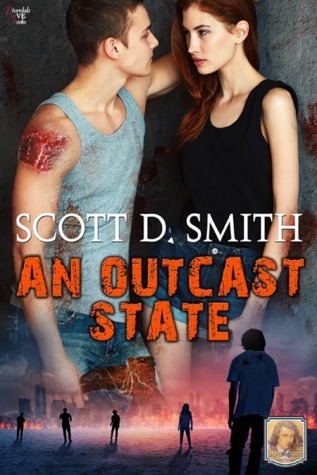
    AN OUTCAST STATE by Scott D. Smith, a YA dystopian novel

    One of the most popular genres out there today is “the zombie apocalypse.” You can find it on TV, in books, in graphic novels, and just about any other media format you can think of. Author Scott D. Smith brings his voice to the genre in his award winning book An Outcast State. It is a fast paced, imaginative, riveting read.  

    Written in the first person, you’ll quickly find out that the world is a different place than it was a few short months prior to the story. The book’s main character, Corbin, is a loner who has honed his survival skills and survived long enough to “live to tell tale.”

    He tells us in the beginning of the book, “In fact, as I write this, an entire herd of them is outside this building trying to claw its way in. The door to this place is reasonably solid, but it won’t hold forever. Doesn’t really matter I guess since I’m planning on opening it soon anyway.”

    The herd he is referring to are the zombies or as they are called in this book “eaters.” Corbin continues:

    “The only comforting thought I have is that I don’t imagine the eaters are going to have any interest in this book. That means there’ll be some kind of record of my having been here, something that could give my death a little meaning. Assuming it even gets found. It’s better not to think about it. I have enough problems for today.”

    Early in the book the loner status was soon to change for Corbin as he obtains a traveling partner. One of the realities of life in this current state of the world is the fact that to survive, one must explore the now empty homes of others. This quest is to gather usable supplies including such treasures as non-perishable good, batteries, and weapons.

    On one such exploration, our main character meets Molly. Inside the home when Corbin arrives, we quickly learn that Molly is searching for her parents and this particular home Corbin chose to explore was hers. This sets off a quest to help Molly find her family, one that leads the duo via bicycle from Texas to Louisiana. This journey is filled with harrowing complications that build suspense.  It is engrossing to see how our main character handles the new partner as this greatly impacts his ability to travel, seek food and defend himself.

    Soon the pair encounters yet another challenging, but unexpected twist in their young lives. The following excerpt is a fine example of an important aspect about this book, the very real human concerns that play out in each of the scenes. Zombies are only the tip of the iceberg in this book. The real depth of the story lies in the interactions of the main characters to each other and those whom they encounter. It is through these interactions and encounters that Scott’s writing skills shine.

    “Some combination of intelligence, intuition, and luck has kept me alive on my own all these years. I’ve learned to trust in each of them, but I usually count on all three working together. Unfortunately, intelligence and intuition had apparently called in sick that day.”

    Luck was going to have to get some overtime, so one spot out in the middle of nowhere being as good as any other for chance to intervene on our behalf, I signaled Molly to follow me, turned my bike off the pavement, and headed for the woods that grew thick and dark just a few feet from the old highway……I have never believed in karma. I have never thought the universe was in favor of my success or my failure.

    Things simply unfolded as they did, and that was that; however, as the events of the next few seconds played out, I was certain that I must have been paying for the accumulated sins of my lifetime.”

    An Outcast State is one of those books that once you finish it, you are left with a desire to return to the world you just left and will want to hang out a little longer with the main characters. Filled with suspense and backed by a solid storyline, this novel is one that is hard to put down. Scott D. Smith has taken a popular modern genre, made it his own, and gives readers a thrilling tale to behold. An Outcast State received the Dante Rossetti Award for YA Dystopian Novel.

  • What is the Single Most Important Publishing Tool for Indie Authors?

    What is the Single Most Important Publishing Tool for Indie Authors?

    The 2nd Must-Have for Independent Authors:

    What is the single most important publishing tool for first-time authors?

    IMG_20160513_115410I was asked by Orna Ross of Alliance of Independent Authors to share what I consider to be the “Seven Must-Haves for Independent Authors” at  UPublishU event that was held at the Book Expo of America 2016 held in Chicago. Of course, I agreed!

    However, the Seven Must-Haves are applicable for all authors whether they are self-published, small press published, traditionally published, or hybrid published. Today, I am addressing the second of the Seven Must-Haves for Authors. 

    What could be almost or maybe more important than the content of a book? THE COVER!

    Now don’t get me wrong—content is KING/QUEEN. However, when it comes to selling books, especially for Indie published authors, it is the cover that will rule.

    Why is the cover the most important publishing tool for first-time authors? 

    The cover is what makes a reader who has never heard of you or read your other works pick up your book, or click on the link, or choose your book’s digital thumbprint on Amazon’s  Customers Who Bought This Item Also Bought carousel of book covers.

    Book covers are so important that major booksellers demand having the final decision in the cover designs of books that they decide to carry so that the covers will appeal to their particular customer demographics.

    Key Concepts in Book Cover Design (digital and print)

    1. Genre placement – the cover should immediately (less than 3 seconds) convey the genre of the book. Is it an intense suspense/thriller novel? or Historical Fiction? Or How-To?
    2. Category within genre – is it Regency Romance? or Contemporary Women’s Fiction with Southern elements?
    3. Does the color scheme work with the genre?
    4. Do the design elements convey an idea of what the story is about?
    5. Is the cover appealing to the readership that you are targeting?
    6. Is it dated? Covers can and should be refreshed and tweaked at least every five years.
    7. Covers should work whether they are enlarged to be 50 feet tall to hang from scaffolding at tradeshows or whether they are reduced to the size of a thumbnail. Keep in mind that cover design may be slightly different for digital and for print. Slightly.
    8. A book cover is its must important piece of retail real estate. Every inch should be considered for maximum visual and emotional impact.
    9. Make sure that the entire book’s “packaging” (typography, formatting, fonts, and layout) is co-cohesive and that all of the elements are complementary to each other.
    10. Color—use color to convey emotion, time period, genre, theme, etc.

    IMG_20160512_161055

    Key Elements in Book Cover Design (digital and print)

    1. Many authors/publishers overlook the spine of their books as a prime selling tool. Since most first time authors’ books will be shelved spine-out instead of front cover out, it is very important to make the spine of your books as appealing as possible to your targeted audience. I recommend that first time authors start the design process from the spine and then move forward to front cover and then the back cover.
    2. Each design element should convey the story within.
    3. Typography is part of the cover design and should not be an afterthought. It should enhance the design image of the book and be legible. Resist using the latest curly cues fonts or “urban decay” fonts UNLESS they are easily readable. Do not ever use more than three fonts. If you use one font with a “serif” then you should use a complementary font without a serif.
      1. Here is an example of a font with serifs (extra flourish): Georgian
      2. Here is an example of a font that is sans serif.
    4. Note – interior copy (the story) should always be printed (digitally or print) with a serif font for ease of readability.
      1. Here is a link to a Huffington Post  on  Type Fonts: A Totally Definitive Ranking of Fonts
      2. A post by Joel Friedlander about picking fonts for self-published books. 

    Here is a great link to examples of fonts for book covers that will inspire you.

    My advice to authors is to begin thinking of your cover concept long before you type The END to your manuscript.

    Here are some before and after covers for your consideration. What do you think:

    The Great Symmetry by James R WellsThe Great Symmetry by James Wells before cover

    Now ask yourself:

    What is the genre of this book? 

    What is the story about? Is it fiction or non-fiction? 

    Are you compelled to find out more about what is inside? 


    great symmetry james wells

    The Great Symmetry by James Wells after cover

    In less than three seconds, a potential reader can see:

    That this is a science fiction novel and the story is action based — the spaceship looks like it is fleeing something and heading into a dangerous place that must be less scary than what it is escaping from.

    The primary color is “tech-blue.”  Notice how much more pleasing the alignment of the title is and what a difference the typography makes–all caps with a more techie type font. I like how the author’s name and and the book title work together to make a singular visual impression.


    Now you pick, which is the before and which cover is the after for The Only Witness by Pamela Beason

    TheOnlyWitness_updated200tallOnlyWitnessCvr-New-copy-e1426269259568.jpg


    Another example

    virtues-of-war-image1.jpg
    virtues-of-war-e14221387917351.jpg


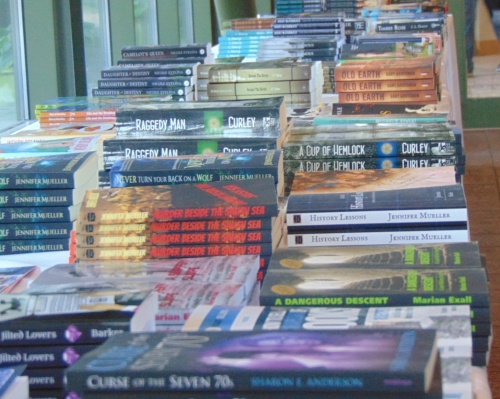
    Here are some photos of book spines to drive the point home about their importance and the 3 second rule of thumb.

    BOOK SPINES MATTER!

    BOOK SPINES MATTER!       Legacy-Cover-w-Spine


       How will your book standout? How to Increase Book Sales in Book Stores


    More exceptional cover designs:

    The Girl and the Clock WOrk Cat - Nikki McCormackNotice  that the reader can immediately tell that this is a steampunk young adult novel that takes place in London,  with a young adult female protagonist and a cat. All of this information is conveyed by the cover design.

    There's Something About MartyCozy mystery readers who like a humorous edge  to their stories can tell immediately that this book may be of interest to them.

    The Treasure of Ching Shih by John GillgrenNo mistaking that this is a children’s book about sea adventures and pirates!


    Farewell to a QUeen

     Yep, I read this book to find out what happened to the Queen of the North!

      Your cover should incorporate your author brand along with some 3rd party P/R.

    STRAIGHT-INTO-DARKNESS-front Award


    Notice how tastefully that this author differentiates himself from the other millions of authors with his designation of being an award winning author.


    Higher Ground by McKendree Long You are probably starting to get the concept….of just how much information a cover is able to convey. Help readers discover your books by using your book’s cover real estate as effectively as possible. Make every little detail work for you. Imagine that your cover is a commercial for your book and make each everyone on those three seconds that you have to hook the potential reader into picking up your book instead of someone else’s or to click on your digital cover instead of someone else’s.

    Covers can sell readers on your first work, but it is the content that will make them come back for book two and three….


    It is the COVER that will sell your books at industry trade shows when book buying professionals pick up your books’ Sell Sheets.  Make your books standout and get noticed. Start working on the cover concept almost as soon as you start working on the story concept. Use it start finding Beta readers, on your website, with your author platform to start lining up book signings for your book launch, and planning promotional materials BEFORE your launch date. Keep in mind hour your cover will influence your marketing materials and web promotions.

    Remember that it doesn’t matter how much time and money that you spend on getting your book in front of potential readers. If the cover isn’t  engaging to the reader, the reader will not pick it up to look at the inside or read the back cover blurb, or click on the image to for more information and all of your time, money, and effort will be for naught.

    Covers should convey an emotion first. The cover should have a visual impact that grabs the potential reader and makes him/her want to know more about what is inside. The cover must be enticing! 

    milkyway-galaxy.jpg

    This is the second blogpost in the Seven Must-Haves for Author series.

    The first article addresses:

    What is the traditional publishing tool that authors can implement to propel their writing careers to new levels and to earn an income from selling their books? Click here to read. 

    The third article in the series asks: What is the corner stone of any author platform?

    Stay tuned! – Kiffer Brown, Head Hen at Chanticleer Book Reviews


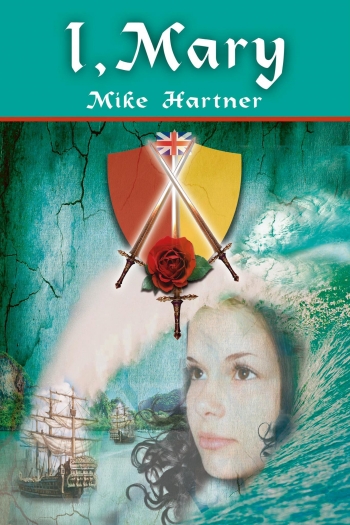
  • I, Mary: Book 3 of the Crofter Family Saga  by Mike Hartner, an historical fiction middle grade book

    I, Mary: Book 3 of the Crofter Family Saga by Mike Hartner, an historical fiction middle grade book

    Heartwarming and inspirational, Mike Hartner’s novel I, Mary is a beautifully-written middle grade children’s novel that captures a young girl’s dreams of becoming a sailor. A fantastic read for children and their families who enjoy fiction set to the background of sailing and historical times. If your middle grade reader loves The Little House on the Prairie series by Laura Ingalls Wilder, then she will love reading I, Mary by Mike Hartner, the third book in the Eternity Crofter Family Saga series.

    The tale takes a reader into a turbulent time in England’s history, when Oliver Cromwell usurps power from the monarchy and plunged England into a civil war. Readers are introduced to the protagonist Mary as a toddler aboard one of her father’s ships. She shows an innate love and connection with the sea. At age eleven, she pleads with her father to allow her to become a sailor. A caring man, he yields. He urges one of his captains to take her on, even though she is still a young girl. Her superior intelligence, reliability, and hard work earns the respect of sailors and their captains who, along with the readers, watch Mary learn and excel in seamanship.

    Mary is a unique, strong, and kind girl existing during a time in history when females were considered by many to be chattel without rights. Readers admire her from the start as they watch her navigate through calm waters and stormy seas. She is a praiseworthy character for her courage and the way she helped or touched so many other characters .

    When the first person narrator changes, a line of three stars above the passage marks the switch. Intimate content is limited to hand holding and kissing, but the growing love story carries emotional impact throughout. The dialogue, though, is still written using some of the authentic dialect of Highland Scotland, such as lass, laddie, and bairn. Hartner’s novel is also an easy, smooth read for children and to read aloud to children.

    Children can also get a history lesson as well, or be inspired to learn more Highland Scotland and clan life. In the author’s note to his readers, Mike Hartner says, “My goal is to provide an enjoyable reading experience and not a historical map.” But admits he’d be pleased if a youngster got motivated to check the book’s historical accuracy regarding the British Crown Hierarchy, the ‘Rump’ parliament, the Great Plague, and the Great Fire in London, all of which are mentioned in the story.

    This reviewer rarely cries during the emotional hits in a story, but Hartner’s ending stirred powerful feelings and brought forth tears. Readers will resonate with Mary from start to finish over the poignancy of her life. An inspiring read that pulls at your heartstrings, I Mary is a brilliant novel that sets the dreams of a young girl to the historical backdrop of a time that was most difficult for women. 

  • Contest Spotlight: The youthful blush of May brings us TWO writing competitions seeking books for young readers

    Contest Spotlight: The youthful blush of May brings us TWO writing competitions seeking books for young readers

    [fusion_builder_container hundred_percent=”yes” overflow=”visible”][fusion_builder_row][fusion_builder_column type=”1_1″ background_position=”left top” background_color=”” border_size=”” border_color=”” border_style=”solid” spacing=”yes” background_image=”” background_repeat=”no-repeat” padding=”” margin_top=”0px” margin_bottom=”0px” class=”” id=”” animation_type=”” animation_speed=”0.3″ animation_direction=”left” hide_on_mobile=”no” center_content=”no” min_height=”none”][fusion_text]Everyone knows April showers bring May flowers, and what better way to celebrate the blossoming of the year than by seeking submissions of books intended for young readers. This year we also celebrate the birth of a brand new award. The Dante Rossetti awards for young adult fiction have grown so large, that we had to create the new Gertrude Warner awards for middle grade fiction. Don’t miss our May 31st Deadline!

    Dante Rossetti Awards

    The Girl and the Clock WOrk Cat - Nikki McCormackThe Dante Rossetti awards have a long and proud tradition of winners. Most recently at our Chanticleer Author Conference Awards Banquet (a Gala event held every year in April) we awarded the 2015 Dante Rossetti Grand Prize to Nikki McCormack, author of The Girl and the Clockwork Cat, a young adult steampunk novel about a feisty teenage thief thrust into a murder mystery involving a clockwork cat. We are so thrilled to award this obviously talented author at the beginning of her, no doubt, successful future in publishing.

    Legacy Jesikah SundinLast year, our Dante Rossetti Grand Prize was also handed out to an author at the beginning of a successful dynasty. Jesikah Sundin and her young adult cyberpunk novel Legacy: Biodome Chronicles, Book One. Jesikah not only wrote a compelling story, but also painted a picture that swept us away into this marriage of two worlds: one a “back to basics” group of pioneers living inside an experimental biodome community, and the other a futuristic world world of high tech and computers.

    Both of these books are part of a series and we look forward to seeing their book two’s in our future competitions!

    Gertrude Warner Awards

    This is the first year that we have been running our Gertrude Warner awards, so we do not have any past winners, but we are looking forward to putting Middle Grade novels into their own contest where they can really shine! Manuscripts and Recently Published Books accepted.

    Your book could earn a place in our hall of fame for 2016.

    All you have to do is enter.[/fusion_text][/fusion_builder_column][/fusion_builder_row][/fusion_builder_container][fusion_builder_container backgroundcolor=”” backgroundimage=”” backgroundrepeat=”no-repeat” backgroundposition=”left top” backgroundattachment=”scroll” video_webm=”” video_mp4=”” video_ogv=”” video_preview_image=”” overlay_color=”” overlay_opacity=”0.5″ video_mute=”yes” video_loop=”yes” fade=”no” bordersize=”0px” bordercolor=”” borderstyle=”” paddingtop=”20px” paddingbottom=”20px” paddingleft=”0px” paddingright=”0px” menu_anchor=”” equal_height_columns=”no” hundred_percent=”no” class=”” id=””][fusion_builder_row][fusion_builder_column type=”1_1″ background_position=”left top” background_color=”” border_size=”” border_color=”” border_style=”solid” spacing=”yes” background_image=”” background_repeat=”no-repeat” padding=”” margin_top=”0px” margin_bottom=”0px” class=”” id=”” animation_type=”” animation_speed=”0.3″ animation_direction=”left” hide_on_mobile=”no” center_content=”no” min_height=”none”][fusion_title size=”2″ content_align=”left” style_type=”single solid” sep_color=”transparent” class=”” id=””]What are the Dante Rossetti & Gertrude Warner Awards?[/fusion_title][/fusion_builder_column][fusion_builder_column type=”3_5″ last=”no” spacing=”yes” background_color=”” background_image=”” background_repeat=”no-repeat” background_position=”left top” border_size=”0px” border_color=”” border_style=”” padding=”” class=”” id=””][fusion_text]Dante Rossetti Awards for YA FictionOur Dante Rossetti awards are the Chanticleer Reviews search for the best young adult fiction books of 2016!

    We are looking for the best books featuring young adult characters & themes in the categories: Contemporary, SFF & Paranormal, Dystopian, Mystery, Historical, Adventure Romance. We will put them to the test and choose the best among them.

    Manuscripts and Recently Published Books (books must be published after Jan. 1, 2013) are accepted into these writing competitions.

    gertrude warner awards 2015Our Gertrude Warner awards, named for the famous author of The Box Car Children Series, are the Chanticleer Reviews search for the best middle grade fiction books of 2016!

    We are looking for the best books featuring young characters & stories appealing to the middle grade audience in the categories: Contemporary, SFF & Paranormal, Mystery, Historical, Adventure. We will put them to the test and choose the best among them.[/fusion_text][/fusion_builder_column][fusion_builder_column type=”2_5″ last=”yes” spacing=”yes” background_color=”” background_image=”” background_repeat=”no-repeat” background_position=”left top” border_size=”1px” border_color=”#606060″ border_style=”solid” padding=”10px” class=”” id=””][fusion_text]

    Our Chanticleer Review Writing Contests feature more than $30,000.00 worth of cash and prizes each year! 

    ~$1000 Overall Grand Prize Winner
    ~$2800 in Genre Grand Prizes
    ~$28,980 in reviews, prizes, and promotional opportunities awarded to Category Winners

    [/fusion_text][fusion_button link=”/services#!/Young-Adult-Novels-Writing-Contest/p/21521206/category=5193080″ color=”darkgray” size=”” type=”” shape=”” target=”_blank” title=”” gradient_colors=”|” gradient_hover_colors=”|” accent_color=”” accent_hover_color=”” bevel_color=”” border_width=”1px” shadow=”” icon=”” icon_position=”left” icon_divider=”no” modal=”” animation_type=”0″ animation_direction=”left” animation_speed=”1″ alignment=”center” class=”” id=””]Enter Your YA Fiction[/fusion_button][fusion_separator style_type=”none” top_margin=”” bottom_margin=”” sep_color=”” icon=”” width=”” class=”” id=””/][fusion_button link=”/services#!/Middle-Grade-Fiction-Writing-Contests-Chanticleer-Book-Reviews/p/58078131/category=5193080″ color=”darkgray” size=”” type=”” shape=”” target=”_blank” title=”” gradient_colors=”|” gradient_hover_colors=”|” accent_color=”” accent_hover_color=”” bevel_color=”” border_width=”1px” shadow=”” icon=”” icon_position=”left” icon_divider=”no” modal=”” animation_type=”0″ animation_direction=”left” animation_speed=”1″ alignment=”center” class=”” id=””]Enter Your MG Fiction[/fusion_button][/fusion_builder_column][/fusion_builder_row][/fusion_builder_container]
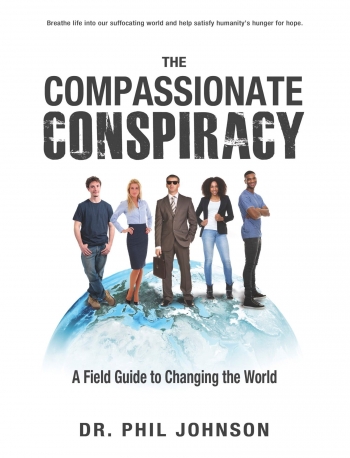
  • THE COMPASSIONATE CONSPIRACY by Dr. Phil Johnson, a practical guide to connect the world

    THE COMPASSIONATE CONSPIRACY by Dr. Phil Johnson, a practical guide to connect the world

    With all of the texting, tweeting, and tapping we do on our smartphones, it’s easy to get distracted from life’s true meaning. Thankfully, to help us find our way, Dr. Phil Johnson has published, The Compassionate Conspiracy: A Field Guide to Changing the World – an inspirational guide to a purposeful existence.

    A lovely mix of his personal stories, along with well-known song lyrics, quotes, and research on world poverty and hunger, the book helps us answer the age-old question: “Why am I here?” Dr. Johnson also includes writing exercises and quizzes for reflection.

    The impetus for the book came from childhood. With a “calm wisdom” and realist world view, Dr. Johnson’s mother, who coordinated a food pantry for families in need, would spin a globe and pose, “Philip, where shall we go today?” As he took “voyages” around the world to places like Bolivia, Brazil, and Greenland, Philip soon realized he was most fascinated by Africa. Eventually in 2005, he traveled with his wife to Kenya where he contracted malaria and typhoid fever. Fortunately, he was quickly cured, but witnessing thousands of Africans suffering from famine and illness, he asked: “What can I do to make a difference?”

    The Compassionate Conspiracy is his answer to helping us all discover our passions and develop a personal plan to help those less fortunate. Dr. Johnson crafted this practical guide to connect the world. Did you know that the Latin origin of “conspiracy” is conspirare, which means “to breathe together.” He wanted to write a book so people could help others by “learning to breathe together for the common good, to breathe life into a suffocating world.”

    In the Conclusion, he states: “My singular purpose in writing The Compassionate Conspiracy is to spark a movement to achieve that compelling vision. At the beginning of the twenty-first century, I believe we have the wealth, the wisdom, and the will to breathe hope into the global family.”

    With more than 40 years working with corporations like Ford and IBM and with nonprofits like the United Way and the Juvenile Diabetes Research Foundation, Dr. Johnson is no stranger to helping people around the world. On top of that, he is an ordained minister and practicing pastor at the New Day Community Church in Grand Rapids, Michigan. Dr. Johnson participated in major international events, including the United Nations World Peace Conference in Israel in 1999.
    You will see the book is organized into four parts: 1) Our World is in Critical Condition, 2) The Compassionate Conspiracy, 3) the Compassionate Conspirators, 4)  and A Guide to Becoming a Compassionate Conspirator.

    The foreword, aptly written by Dr. Nido Qubein, a motivational speaker, author, and chairman of the Great Harvest Bread Co., starts us off:

    “Remember, life is about choices. Decide here and now that you want to make the world a better place, and build a plan that will take you there!”

    Qubein is also President of High Point University in North Carolina. It would be difficult to put the book down at this point.

    As the author of six previous books, Dr. Johnson is familiar with writing and publishing,  so be sure to get The Compassionate Conspiracy on your bookshelf too.

    Dr. Johnson’s other titles include: Time-Out! Restoring Your Passion for Life, Love and Work (Stoddart, 1992); Celebrating the Seasons with Children (Pilgrim Press, 1984); More Celebrating the Seasons with Children (Pilgrim Press, 1985); And More Celebrating the Seasons with Children (Pilgrim Press, 1986); Goodbye Mom, Goodbye (Welch Publishing, 1987); and The Great Canadian Alphabet Book (Hounslow Press, 1981).

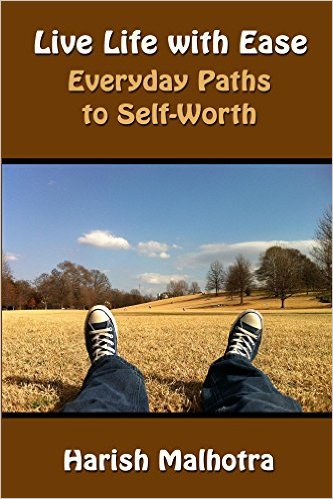
  • LIVE LIFE WITH EASE by Dr. Harish Malhotra, a practical self-help guide on self-healing

    LIVE LIFE WITH EASE by Dr. Harish Malhotra, a practical self-help guide on self-healing

    Readers of Dr. Harish Malhotra’s two previous books (Metaphors of Healing: Playful Language in Psychotherapy and Everyday Life and Pathways to Hope: Innovative Insights for Therapists and Patients) are in for a treat as his third title continues us on the healing path paved with entertaining metaphors. New readers too will enjoy holding Dr. Malhotra’s hand through life’s ups and downs as he takes us on a journey with 55 stories in Live Life with Ease: Everyday Paths to Self-Worth, each tale replete with his amusing touch.

    In chapters like, “Settle Into Your Ideal Lifestyle,” “Pain, Pain, Go Away,” “Overthrowing Fear,” and “The Weight of Eating,” Dr. Malhotra tackles universal themes in a lighthearted, yet practical way. By weaving these humorous metaphors, he blesses us with the way he sees life as we confront fear, worry, addiction, lack of self-worth, sleeplessness, and unhealthy eating.

    Take for example, the chapter “Infatuation,” where Dr. Malhotra advises us to employ the “Sleep on it/24-hour rule.” He compares decision-making to buying a new house – one that seems to boast a gorgeous skyline but is located on a dangerous street. “Let your excitement simmer down before making decisions. Reason may replace infatuation,” he counsels.

    In one of the more playful stories, Dr. Malhotra poses to the reader: “Are you like a fart or a flower?” Despite the silliness, he raises a sincere dilemma: why would we surround ourselves with people who are “toxic” and “seething with resentment,”  rather than those who are “fragrant” with a “pleasant demeanor and gracious words.” Point well taken, Dr. Malhotra, with a nod to our olfactory.
    We have to assume that Dr. Malhotra, a board certified psychiatrist in private practice in Summit, NJ, pulls from his more than 40 years in a white lab coat as many of the sketches include (imaginary?) dialogue between doctor and patient. “Don’t fight the smoke with a sword of worry,” he says to a patient who is anxious about the future.

    Throughout the book’s 304 pages (or 364 pages via e-reader), we feel like he is our own personal guru and we are a better person for it.

    In one of my favorites, “Dating, Inc.” he likens relationships to “Hair Softener or Chewing Gum.” Holding on too tight is like getting chewing gum balled up in your partner’s hair,” he says. “Some hair has to be cut off to get rid of the gum… Some problems in relationships stem from too much contact.”

    Perhaps the book, which makes a delightful gift for a college graduate or a loved one needing inspiration, can best be enjoyed as a bedside reader, referring nightly to the index to locate specific passages in times of stress: “Reframing Problems,” “Risk Taking,” “Welcoming Attitude,” and “Unlearning Habits.”

    For further inspiration, you can see Dr. Malhotra on his YouTube channel, “Helpful Hints for Hangups,” where he acts out the rousing metaphors with members of his family.

  • Top Ten Takeaways from Book Expo of America 2016 by Kiffer Brown

    Top Ten Takeaways from Book Expo of America 2016 by Kiffer Brown

    IMG_20160513_115454Top Ten Takeaways from 2016 Book Expo of America – Chicago

    The Number One publishing industry event in North America and one of the biggest in the world. BEA is the largest gathering of booksellers, librarians, retailers, publishers, rights, licensing, and book industry professionals in North America.

    BEA gave me a press pass that allowed me a carte blanche to walk the show, take in presentations and sessions, attend special events, view the latest products, and meet with exhibitors.

    Here are the ten takeaways that I gathered from overhearing buzz, listening to experts sharing the latest information, and seeing the latest trends at BEA 2016.

    Drum-roll please! 

    The Top Ten Takeaways from BEA 2016

    1. Never ever forget that books for “the trade” (books available to the general public – digital or print) must entertain–even if their purpose is to educate.IMG_20160512_161055
    2. Covers RULE — every spot of a cover whether digital or print is highly valued real estate because it is the number one influencing tool to induce a potential reader to pick-up a book or click on a digital book for more information.
    3. Book buyers for libraries, as a rule, wait to decide on whether or not they will  purchase a book until they can “hold it in their hands” along with requiring that the book has been editorially reviewed (not consumer reviewed). If authors/publishers want to reach librarian book buyers, it behooves them to have their books at the ALA conventions.IMG_20160513_143314 (1)
    4. E-books as a percentage of US wholesale trade market sales are more than 25% of all sales in 2013, 2014, & 2015.  Source: AAP
    5. Readers are “flipping like otters” between e-books and print books.
    6. The publishing market is going global because of E-books. Forty percent of Smashwords/iBooks sales are global. Retail digital platforms (Amazon, Kobo, iBooks, Smashwords, etc.) are global.
    7. Generation Z, X, & Millennials now use YouTube as their Google Search. Keep this in mind when creating channels of book discovery pathways.
    8. Publishers want/need series–not one-offs (single titles)– because that is what bookstores want and, ultimately, what readers want. IMG_20160513_173524
    9. Gen Z, Y, and X want authenticity in engagement. They do not want to be sold to on social media platforms. Gen Z communicates in images — think emoticons.
    10. The nut to crack is to get people to read and buy books rather participate in other kinds of entertainment (gaming, movies, watching TV, etc .) that are competing for their time rather than worrying about Indie vs Traditional publishing.  See Item 1.

    Next year, BEA 2017 will be held in back in New York City and Kiffer Brown of Chanticleer Reviews plans on being there to bring the Chanticleer Community of Authors the latest in publishing news.

    Be sure to check out Kiffer Brown’s marketing blog-post series that she presented at BEA 2016, The Seven Must-Haves for Authors.


  • The Seven Must-Haves for Authors – Unlocking the Secrets of Successful Publishing Series by Kiffer Brown

    The Seven Must-Haves for Authors – Unlocking the Secrets of Successful Publishing Series by Kiffer Brown

    I was asked by Orna Ross of Alliance of Independent Authors to share what I consider to be the “Seven Must-Haves for Independent Authors” at  UPublishU event that was held at the Book Expo of America 2016 held in Chicago. Of course, I agreed!

    However, the Seven Must-Haves are applicable for all authors whether they are self-published, small press published, traditionally published, or hybrid published. I formed the talk based on the following questions:

    What are the Seven Must-Haves?

    1. What is the traditional publishing tool that authors can implement to propel their writing careers to new levels and to earn an income from selling their books?
    2. What is the single most important publishing tool for first-time authors?
    3. What is the cornerstone of any author platform?
    4.  What should every author know about communicating and marketing in the Digital Age?
    5. How can an author set her books apart from the millions of titles that launch each year?
    6. How can an author expand readership?
    7. What should continue to grow and never disappear in today’s new era of publishing?

    Each of one these questions will be answered in the Seven Must-Haves blog-post series.

    1. What is the traditional publishing tool that authors can implement to propel their writing careers to new levels and to earn income from their books?

    Have you ever wondered how best-selling authors can churn out a book or two each year? 

    How they can continue to hit “home-runs” with each new title? 

    They use the tried and true tools that have built the publishing industry. Authors will benefit from taking the best tried and true methods of traditional publishing and combining them with today’s best publishing practices.

    One of the best tools that traditional publishing houses and literary agents make available to their authors is the power of a manuscript overview. Most best-selling authors have great editing and feedback from agents and senior editors from the very beginning of a work. This feedback comes in very early in a work’s process and allows for the author to publish more works and not as an afterthought.

    The Editing Process (when one is working with a literary agent and/or publishing house) goes like this:

    The author works on a rough draft – the early drafts of a novel. He creates the theme, the characters, the setting, the tone, the story, the plot lines, the dialog style, and selects the genre and has an audience in mind (YA or mystery fans, fantasy or Science Fiction readers, etc.). After the author creates the story with a beginning, middle, and end, he then sends this early unedited draft of the story to his editor or agent to read and to get feedback.

    Authors who work within this editing system then begin scratching out the next inklings of story ideas, or they will resume working on other drafts that are further down the editing schedule, while waiting for feedback about the manuscript overview from their agent/editor. Once the feedback (manuscript overview) is received, then the author decides what to incorporate and which suggestions to implement in the next drafts. He then reworks the draft while another work’s manuscript is being over-viewed or is in a separate stage of editing. Some authors who write within this system will have two or three works “in play.”  Also, some authors write in different genres while as the works are in different stages of the editing process.

    Have you ever wished that someone would give you objective feedback about your manuscript? Or that someone would give you the feedback that will take your work from good to great?  

    What is a Manuscript Overview: It is an objective evaluation of a story idea that is fully formed with a beginning, middle, and end, but still in an early draft stage. The MO comes before LINE EDITING and COPY EDITING.

    What is the process:  The entire manuscript is read and evaluated by a top editor for the following:

    • Does the work have a compelling story?
    • Is there more than one story in the manuscript? It is quite common for a manuscript to have two, three, or more storylines.
    • Are the characters engaging? Interesting?
    • Are there too many characters? See above.
    • Are the characters pathetic, sympathetic, or empathetic?
    • Is there inconsistent character development?
    • Are there plot holes? Smoking guns?
    • Does the story wander?
    • Is there “head hopping” or unplanned POV changes?
    • Does it take to long too engage the reader?
    • Does the story stay within its world construct?
    • Does it follow the “laws” of the setting?
    • Does the story sag in the middle?
    • Is the ending satisfying?
    • Does the beginning intrigue?
    • Is the dialog appropriate?
    • Is there too much backstory? Too many details?
    • Does the scenery and setting work with the story?
    • and so forth
    • Or is it spot on and ready for a Line Edit?

    The editor then writes a brief and honest evaluation of the work that addresses the above questions.

    If you do not have an agent or editor, you can still get this type of brutally honest feedback with a manuscript overview from Chanticleer Reviews.

    Remember, that a manuscript overview is NOT a Line Edit or a Copy Edit. It consists of broad sweeping strokes of feedback for the author to consider for the next round of drafts. Incorporating line-editing suggestions can typically shorten a manuscript by at least twenty percent, thereby paying for itself with the savings on copyediting.

    The editor then sends his comments, suggestions, and concerns about the work back to the author in a manuscript overview. It is up to the author to take these recommendations and decide whether or not to incorporate them in the next draft of the manuscript.

    Many of the authors who have used Chanticleer’s Manuscript Overview service have found that their writing was greatly improved and have discovered that the feedback has enabled them to be able to take their next works to a higher level.

    I’m incredibly appreciative of the many positive and helpful things the reviewer had to say in the manuscript overview. The feedback is terrific and more comprehensive than any other I’ve received… Many thanks, again! Brian L.

    All of her suggestions were right and I hope to make them to the best of my ability. It’s like taking a powerful and quick course in advanced writing. Please thank her for me….Working with someone of her caliber would take my writing to another level. – L.V.

     Please thank the editor  for her insightful and pinpoint comments as to how I can make the book better. They were very good and I’ve already incorporated many into the manuscript. –D.S.

    When the author decides that the story is ready (and the lit agent and/or publisher agrees), she may send it off for another manuscript overview with either the same editor or get a second opinion. Or the author may decide that the work is ready for a Line Edit.

    Line Editing is defined as a thorough and focused reading of the manuscript  on a line-by-line basis with suggestions, comments, and remarks noted for the author to consider. For more information about what line-editing encompasses, please visit our Editing Guide.  

    After the author incorporates the line edits, the work then moves to a Copy Edit.

    Copy Editing is a very technical read of a work for flaws in grammar, punctuation, syntax; consistency in spelling, numerals, hyphenation, etc.; flagging any inconsistencies that have made it past the Copy Edit such as eye color, name spelling, location, timing from point A to point B; and tracks any internal inconsistencies in the story (conflicting abilities or inabilities, location inconsistencies), etc.

    After Copy Editing, the work then goes to Final Proofing.

    The manuscript then goes back to the author for final approval to begin the publishing formatting for digital and print.

    To circle back around to the first question:

    What is the traditional publishing tool that authors can implement to propel their writing careers to new levels and to earn income from their books?

    This is how: Each time a work goes back to an editor for evaluation and editing takes time. During these interludes, the author continues to write new works or continues to work on other manuscripts that are further down the editing chain.

    Fundamentally, the manuscript overview allow authors to WRITE and CREATE rather than rework and reword a story idea again and again while trying to get it “right.” The honest feedback gives the author an advantage of the traditional publishing houses where authors continuously get feedback and are under contract to produce. Manuscript overviews allow the author to spend creative time developing stories, characters, unique language, and new plot twists rather than trying to dissect their own works. They also allow for the author to gain fresh perspective.

    The manuscript overview saves the author time and energy, and if the author is self-published, then money in editing fees.

    Each stage of editing brings an entirely new set of fresh eyes and fresh perspective to a work. Imagine the kind of polish that will bring to your work.

    Put the power of traditional publishing’s collaborative expertise behind your work. Begin with a manuscript overview. Our clients, who have taken advantage of the Chanticleer Reviews Manuscript Overview service, swear that they will never go back to writing another novel without first having a manuscript overview conducted on early on.

    How much is the fee for this powerful editing tool?

    $425 for 2,000+  word overview/evaluation from one of Chanticleer’s senior editors for a work under 110,000 words.

    Get objective, honest, and brutal feedback from one of Chanticleer’s top editors who edit for New York Times and Amazon best-selling authors.

    Order your manuscript’s overview today! 

    *If you publish with a hybrid or cooperative publishing house, we can work with their Style Sheets. We work with many authors who publish in a variety of ways, but want honest and objective feedback regarding their manuscripts before they submit them.


  • The OYS & JOYS by Marcia Feldt –  Meet the Oys & Joys Sisterhood

    The OYS & JOYS by Marcia Feldt – Meet the Oys & Joys Sisterhood

    True friendship, like the one these four women share, is one of the greatest gifts one can experience in life. Sure, the honesty can hurt, and situations can get messy, but the unconditional love, so obvious in the telling, make for a binding sisterhood that transcends DNA and cannot be broken apart.

    The author uses a first person point of view for each of the women, alternating chapter titles with the name of the friend doing the sharing. While using this format can be a risk, the author executes it exceptionally. Readers will feel they are right there with each one, hearing what they have to say, and feeling the emotions they are experiencing.

    Before the story begins, the author lists three definitions to prepare readers with references to oy, the word for woe from the Yiddish; bubble bath basket list, so much more feminine than bucket list; and wedgie generation, the part of middle age caught between the past and the future, now closer to the end than the beginning.

    In chapter one, readers meet Lizzie:
    “On my sixty-third birthday, my husband packed his bags, golf clubs, leather recliner and fifty-inch man-cave TV into our pontoon boat. And used it as a moving van.”

    As Sassy, Grace, and Ruby arrive at her house to celebrate her birthday, Lizzie gives readers her view of the three others in their cozy group that has been going strong for six years. Their conversations go in many directions, with readers there to begin picking up clues as to their pasts as well as their futures.

    Chapter two presents Sassie:
    “Before the ink dried on our college diplomas, Louie and I packed his old Chevy with our belongings. …I made the decision to return to Texas decades later with Louie in an urn.”

    Sassie shares her move from New York back to Woodhaven, Texas with us, and she then lets us in about her closeness to Lizzie. To both honor her late husband, as well as to fulfill her own dream, Sassie has opened a modeling and dance studio called Loop de Lou.

    In chapter three, Grace shares:
    Ever since my lumpectomy and radiation treatments eight years ago for breast cancer, I’ve smiled at my oncologist. Because clean mammograms rock…until this year. …And the weekend did not improve….Joy started acting weird….She moseyed in with the rear end of her expanded dachshund back wobbling to and fro … Ohmygosh. Did Joy get into some of Rusty’s stash? … I dreamed of shooting Enron’s Ken Lay for stealing Rusty’s career, his self-confidence, and our retirement savings.”

    A job offer from Sassie causes conflict for Grace as she worries if her cancer has returned. Reduced to tears on the phone, Grace is unable to explain to Sassie, who promptly comes over to her house, to talk to her in person.

    Chapter 4 introduces readers to Ruby:
    When I listened to the receptionist at Weinstein, Porter, and Spencer beg me to cover for her while she ran to Walgreens for an Oh-my-God-I-might-be-pregnant test, I almost refused. I had closing arguments to outline for a senior partner, with a deadline zooming around the corner faster than the last lap of the Indy 500.”

    Ruby relented, which is why she was at the reception desk when Sassie entered the law firm with her outdated will, and the connection began.

    By the end of chapter four, readers will feel completely initiated into the group, ready to learn more of the secrets, sorrows, and joys this novel delivers until its satisfying conclusion. The four women are in different situations. Secrets are revealed, hopes and dreams are shared, close calls are divulged, and fears braved.

    This foursome: one is divorced, another widowed, one is in an abusive marriage, and the fourth single have been long-time friends through thick and thin. Their personalities differ greatly, too, but the mix of all of them together is electrifying as they all find shelter under a common umbrella of their friendship that helps them be there for each other though bad and good times – “the oys & the joys.”

    The story of the four friends is vibrantly told with authenticity and poignancy that will resonate with many. Feldt’s sense of humor makes the adventure of The Oys & Joys entertaining, while her heartfelt anecdotes are captivating and will remain memorable long after the last page has been read. If you liked The Divine Secrets of the YaYa Sisterhood by Rebecca Wells, you will enjoy reading The Oys & Joys, by Marcia Feldt.