Blog

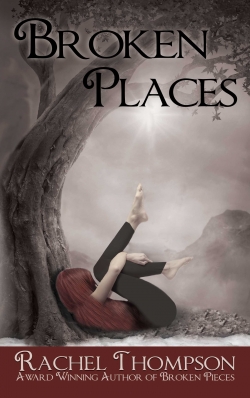
  • BROKEN PLACES by Rachel Thompson, a Memoir of Abuse by Rachel Thompson – Child Abuse, Women’s Poetry, Sexual Abuse, Self-Help

    BROKEN PLACES by Rachel Thompson, a Memoir of Abuse by Rachel Thompson – Child Abuse, Women’s Poetry, Sexual Abuse, Self-Help

    While the incidence* of childhood sexual abuse continues to grow, thankfully there are survivors like Rachel Thompson who have conquered the horror.

    In Broken Places: A Memoir of Abuse, Thompson conveys the facts and feelings of being an 11-year-old at the hands of a trusted neighbor who turns out to be a pedophile. The book dutifully begins with a “Trigger Warning,” notifying abuse survivors that the subject matter could be painfully harsh.

    Through poems, prose, and reflective pieces written with candor and literary charm, she shares how she coped: retreating to her room surrounding herself with books and music, and feeding her already introverted personality. She rarely went out except to earn good grades or do chores. “Because if I did, I faced the glaring, accusatory stares of his wife and children—as if I were the one who committed such ghastly crimes.” Later, she drank, got high, and considered suicide.

    Not until her thirties, depressed, anxious, and following the birth of a daughter, Thompson sought therapy for the first time after a doctor’s visit left her with a PTSD diagnosis and a prescription for an anti-depressant. Therapy was “life-changing,” leading her to the realization that she, not her abuser, was in the driver’s seat of her recovery. “I love, I breathe, I work, I write, I live. What happened does not stop me.”

    Today, in her fifties, she is an advocate for sexual abuse survivors and runs the Twitter chat #SexAbuseChat. She owns a social media and book marketing company and previously wrote the essay collection Broken Pieces, A Walk In The Snark and the more humorous The Mancode: Exposed.

    A talented writer with a journalism degree, Thompson adeptly plays with point of view employing both first person singular (“I”) to convey her experiences, and first person plural (“We”), perhaps to denote a kinship among survivors: “We are no longer whole—we are bits of cells made up of dread, and fear, and shame. We speak in terms that separate us from ourselves because even now, all these many years later, we don’t want to own what happened.”

    Also, she sneaks in literary gems, like alliteration: “The bad thing takes your brain hostage, fills it with the detritus of denial, becomes dead leaves waiting for the deep scratch of the rake.”

    The only weakness of Broken Places is its arrangement, as it seems like a random assortment rather than an intentioned story. Perhaps this organization, or lack thereof, speaks to the uncertainty Thompson faced during a time in her life that was more about second-guessing and doubting rather than chasing butterflies and riding bikes like little girls that age should be doing.

    Most importantly, the book is recommended reading for adults, college students, and youngsters alike as it serves as the impetus for a much-needed culture shift—telling children that it’s okay to report abuse and for grown-ups to hear them.

    Broken Places: A Memoir of Abuse by Rachel Thompson won 1st Place in the CIBAs 2017 JOURNEY Awards for Memoir. 

    *1 in 5 girls and 1 in 20 boys is a victim of child sexual abuse, according to the National Center for Victims of Crime.


  • What’s the big deal with 1750? Contest Spotlight: June brings us TWO historical writing competitions

    What’s the big deal with 1750? Contest Spotlight: June brings us TWO historical writing competitions

    [fusion_builder_container hundred_percent=”yes” overflow=”visible”][fusion_builder_row][fusion_builder_column type=”1_1″ background_position=”left top” background_color=”” border_size=”” border_color=”” border_style=”solid” spacing=”yes” background_image=”” background_repeat=”no-repeat” padding=”” margin_top=”0px” margin_bottom=”0px” class=”” id=”” animation_type=”” animation_speed=”0.3″ animation_direction=”left” hide_on_mobile=”no” center_content=”no” min_height=”none”][fusion_text]June is the perfect time to tidy up your historical fiction novel and submit it to one of our contests. In previous years all of our Historical Fiction was judged under the Chaucer awards. But we had so many entries in 2015 that we had to divide it into two novel competitions. There are too many different categories of Historical Fiction all deserving of their own contest, creating nearly  impossible decisions for the judges. So, we have divided the Chaucer contest in two by a date some might consider arbitrary—1750, and named the categories the Chaucer Awards (pre-1750) and the Goethe Awards (post 1750).

    What is so special about 1750?

    1750 is considered by many historians to be a pivotal date in the history of humankind–in both Western and Eastern history. There are several movements that shaped this new era. Prior to 1750, monarchy was the prevailing form of government. “Citizenry” (as opposed to being a “subject”) was a radical new concept that was taking root due to the British Colonies in America revolting against the British monarchy. The concept that individuals were not just “subjects” of a monarchy, but humans with inalienable rights spread like wildfire throughout Europe leading, to the French Revolution.  The 1750s brought about a completely new way of thinking about governance. With this came the concept of the right to own private property rather than being “entrusted” with it by royalty and subjected to the whims of the monarch granting the property.

    Frodsham_chronometer_mechanismSecondly, the Secular Revolution with its scientific enlightenment  began to take hold in the mid-1700s as an accepted way to see and understand the Universe and our place within it. For the first time in recorded human history, the cultural concepts of religious dominance and doctrine were being challenged. The 1750s brought us the Age of Enlightenment.

    Migrants-to-AmericaNext, the first phase of the Industrial Revolution (1750 – 1914) was brought about by the harnessing of the energy of coal and steam rather than biomass energy (humans and animal muscle power). This lead to mass migrations of humans escaping famine, poverty, and intolerance to take place for the first time in history. Railroads and trains, and steamships, as well as sailing ships with more dependable navigational tools such as the marine chronometer (1748) that allowed for safer passage across the oceans made the migrations possible.

    And so, our Historical Fiction Genre Writing Competition now features the Chaucer Awards (pre-1750) and the Goethe Awards (1750 until 1954).
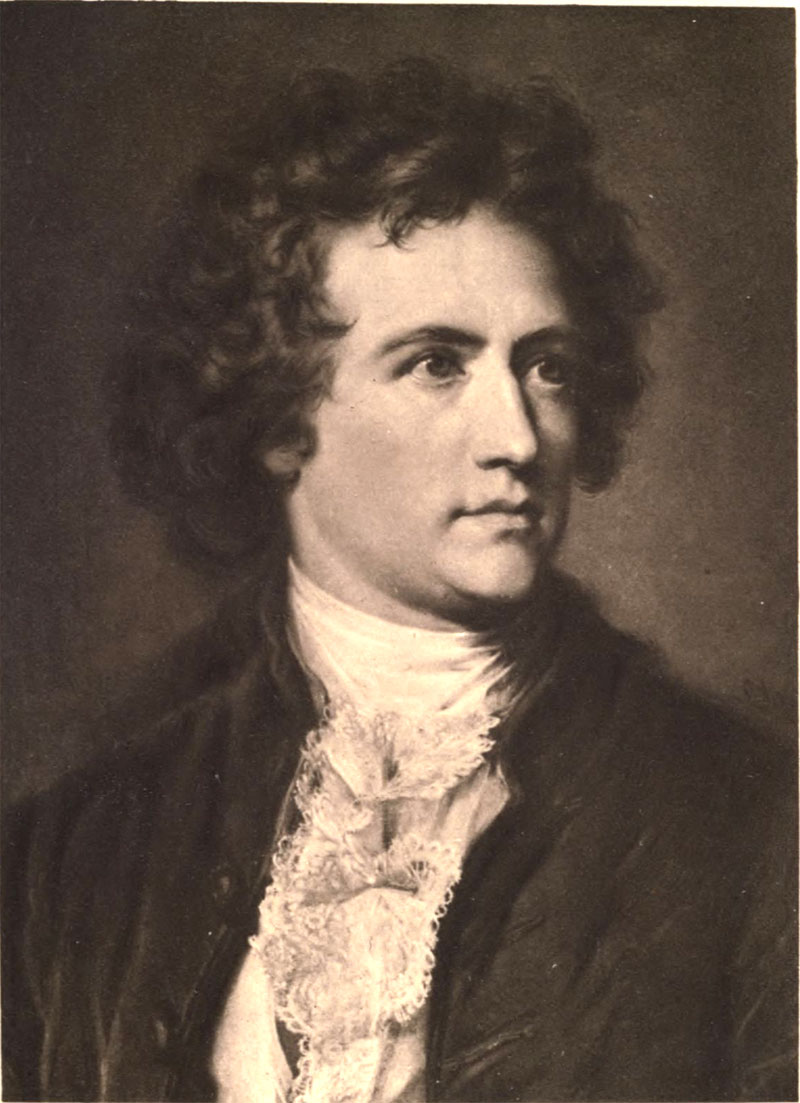
    goethe portrait

    But who is Goethe?

    And why was he selected to represent the post-1750’s historical fiction writing competition? Also, here is a handy link about how to pronounce his name.

    Johann Wolfgang von Goethe was born at the dawn of the new era of enlightenment on August 28, 1749. He is considered to be the last true polymath.

    “Goethe was a contemporary of thinkers—Kant, Herder, Fichte, Schelling, Hegel, Wilhelm and Alexander von Humboldt—who carried out an intellectual revolution that is at the basis of most modern thinking about religion, art, society, and thought itself. He knew most of these people well, furthered the careers of several of them, promoted many of their ideas, and expressed his reaction to them in his literary works.
    The age they helped to make was an age dominated by the idea of freedom, of individual self-determination, whether in the intellectual and moral sphere or in practical politics—the age both of German Idealism and of the American and French revolutions.
    If there is a single theme running through Goethe’s huge and varied literary output, it is his reflection on subjectivity—his showing how in ever-changing ways we make our own selves, the world we inhabit, and the meaning of our lives. Yet he also shows how, without leaving that self-made world, we collide all the time with the reality of things.” Written by Nicholas Boyle for Britannica (2016)

    Geoffrey-Chaucer-9245691-1-402-150x150.jpgThe beloved Chaucer Awards remain, but have metamorphosed into the Pre-1750 Historical Fiction awards. For those authors whose works are on the cusp of 1750 and who need to decide which contest to enter, the Chaucer Awards or the Goethe Awards, we suggest you determine if your work is influenced by the markers of the Industrial Revolution or if it is more to the medieval times and mores to decide which contest to enter–the Chaucer Awards (pre-1750) or the Goethe Awards (post 1750).

    We are excited about our expansion on the Historical Fiction Awards competitions. We eagerly await your submissions into whichever contest suits them best.

    June 30th is the Submission Deadline for the 2016 Goethe and Chaucer Awards!

    Chaucer Awards Hall of Fame

    Valhalla Revealed by Robert A. WrightThe Chaucer awards have a long and proud tradition of winners. Most recently at our Chanticleer Author Conference Awards Banquet (a Gala event held every year in April) we awarded the 2015 Chaucer Grand Prize to Robert A. Wright, author of Valhalla Revealed, a historical thriller set in the post-WWII era weaving intense family drama, survivors guilt, and the mystery of a missing family member into an action packed saga bristling with CIA intrigue and Cold War conspiracies. We were so thrilled to award the author of this astonishing novel a well-deserved grand prize.

    Last year, our Chaucer Grand Prize was awarded to Gregory Erich Phillips for his yet-to-be-published manuscript The Love of Finished Years. This thrilling post-war love story not only won in Chaucer but it went on to win our Overall Grand Prize, and was named Chanticleer’s Best Book of 2014. This was the very first time a manuscript has risen to those height in our contests, and we are very proud to award such a  talented author.

    Watch for The Love of Finished Years coming soon!

    Goethe Awards Hall of Fame

    This is the first year that we have been running our Goethe awards, so we do not have any past winners, but we are looking forward to putting your Late Period Historical Fiction novels into their own contest where they can really shine! Manuscripts and recently Published Books accepted.

    Your book could earn a place in our hall of fame for 2016.

    All you have to do is enter.[/fusion_text][/fusion_builder_column][/fusion_builder_row][/fusion_builder_container][fusion_builder_container backgroundcolor=”” backgroundimage=”” backgroundrepeat=”no-repeat” backgroundposition=”left top” backgroundattachment=”scroll” video_webm=”” video_mp4=”” video_ogv=”” video_preview_image=”” overlay_color=”” overlay_opacity=”0.5″ video_mute=”yes” video_loop=”yes” fade=”no” bordersize=”0px” bordercolor=”” borderstyle=”” paddingtop=”20px” paddingbottom=”20px” paddingleft=”0px” paddingright=”0px” menu_anchor=”” equal_height_columns=”no” hundred_percent=”no” class=”” id=””][fusion_builder_row][fusion_builder_column type=”1_1″ background_position=”left top” background_color=”” border_size=”” border_color=”” border_style=”solid” spacing=”yes” background_image=”” background_repeat=”no-repeat” padding=”” margin_top=”0px” margin_bottom=”0px” class=”” id=”” animation_type=”” animation_speed=”0.3″ animation_direction=”left” hide_on_mobile=”no” center_content=”no” min_height=”none”][fusion_title size=”2″ content_align=”left” style_type=”single solid” sep_color=”transparent” class=”” id=””]Call for Submissions![/fusion_title][/fusion_builder_column][fusion_builder_column type=”3_5″ last=”no” spacing=”yes” background_color=”” background_image=”” background_repeat=”no-repeat” background_position=”left top” border_size=”0px” border_color=”” border_style=”” padding=”” class=”” id=””][fusion_text]Pre 1750 Historical Fiction AwardOur Chaucer Awards are the Chanticleer Reviews search for the best Early Period (pre-1750) Historical Fiction books of 2016!

    We are seeking the best books featuring Pre-1750s Historical Fiction, including pre-history, ancient history, Classical, world history (non-western culture), Dark Ages and Medieval Europe, Renaissance, Elizabethan, Tudor, 1600s, we will put them to the test and choose the best among them.

    Manuscripts and Recently Published Books (books must be published after Jan. 1, 2014) are accepted into these writing competitions.

    Post 1750s Historical Fiction AwardOur Goethe Awards are the Chanticleer Reviews search for the best Late Period (post-1750) Historical Fiction books of 2016!

    We are seeking the best books featuring Late Period Historical Fiction. Regency, Victorian,18th Century, 19th Century, 20th Century, World and other wars, history of non-western cultures, set after the 1750s, we will put them to the test and choose the best among them.[/fusion_text][/fusion_builder_column][fusion_builder_column type=”2_5″ last=”yes” spacing=”yes” background_color=”” background_image=”” background_repeat=”no-repeat” background_position=”left top” border_size=”1px” border_color=”#606060″ border_style=”solid” padding=”10px” class=”” id=””][fusion_text]

    Our Chanticleer Review Writing Contests feature more than $30,000.00 worth of cash and prizes each year! 

    ~$1000 Overall Grand Prize Winner
    ~$2800 in Genre Grand Prizes
    ~$28,980 in reviews, prizes, and promotional opportunities awarded to Category Winners

    [/fusion_text][fusion_button link=”/services#!/Historical-Fiction-Pre-1750s-Writing-Contest-Chanticleer-Book-Reviews/p/21521105/category=5193080″ color=”darkgray” size=”” type=”” shape=”” target=”_blank” title=”” gradient_colors=”|” gradient_hover_colors=”|” accent_color=”” accent_hover_color=”” bevel_color=”” border_width=”1px” shadow=”” icon=”” icon_position=”left” icon_divider=”no” modal=”” animation_type=”0″ animation_direction=”left” animation_speed=”1″ alignment=”center” class=”” id=””]Enter Chaucer[/fusion_button][fusion_separator style_type=”none” top_margin=”” bottom_margin=”” sep_color=”” icon=”” width=”” class=”” id=””/][fusion_button link=”/services#!/Historical-Fiction-Post-1750s-Writing-Contest-Chanticleer-Book-Reviews/p/57936173/category=5193080″ color=”darkgray” size=”” type=”” shape=”” target=”_blank” title=”” gradient_colors=”|” gradient_hover_colors=”|” accent_color=”” accent_hover_color=”” bevel_color=”” border_width=”1px” shadow=”” icon=”” icon_position=”left” icon_divider=”no” modal=”” animation_type=”0″ animation_direction=”left” animation_speed=”1″ alignment=”center” class=”” id=””]Enter Goethe[/fusion_button][/fusion_builder_column][/fusion_builder_row][/fusion_builder_container]

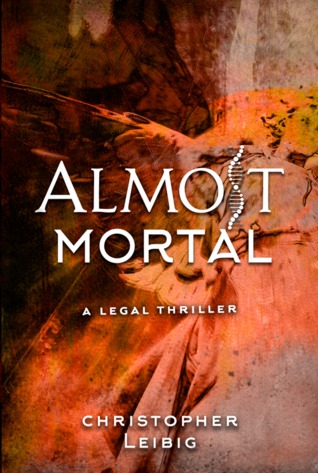
  • ALMOST MORTAL by Christopher Leibig — a high octane legal thriller

    ALMOST MORTAL by Christopher Leibig — a high octane legal thriller

    The physical and metaphysical collide in this award-winning legal thriller that promises to leave the reader hungering for more.

    Part saint, part sinner, Deputy Public Defender Sam Young has an uncanny ability to work the legal system to his best advantage. With a super-human ability to ride the thought waves of others, Sam plays his hand like a mesmerist, planting ideas like seeds in people’s minds, “massaging” their thoughts to suit his needs. But underneath his self-serving agenda is an almost naïve desire to do good – a desire that compels him to take on private cases outside of his overloaded court schedule, not to mention outside of the law.

    Sam’s mastery of the gray areas of the law hits a wall when drop-dead gorgeous Camille Paradisi, a nun from Sam’s former Parish, dumps the proverbial Catch-22 problem in his lap. The Rosslyn Ripper, a serial killer stalking their streets, is confessing. The catch? He’s using the protection of the confessional to unburden his soul.

    With the clock against him Sam must find a way to break through the protective barrier Camille has built around her priest and access the information needed to reveal the killer. The only clue she’s willing to relinquish is a time-worn journal left at the church. Whether its contents reflect the grandiose ramblings of a delusional mind or of the killer himself remains to be seen. But one thing is certain. The DNA recovered from its pages present improbable if not impossible results, propelling Sam into world where the physical and metaphysical collide.

    Attorney Sam Young is clearly a protagonist for the new millennium. Cynical, self-destructive and heroic to a fault, Sam Young is a modern-day standard bearer for the underserved segment of society. But no one in this extraordinary cast of characters is who they appear to be: leaving Sam to juggle conflicting agendas, hidden truths and a reality so mind-bending that it defies everything he believes.

    With equal doses of insight and imagination, author Christopher Leibig draws on his experience as a defense attorney to provide a keen sensory awareness of the hectic and often desperate inner workings of an ego-driven legal system.

    Blending the high-octane thrust of a contemporary legal thriller with the magical realism of Gabriel Garcia Marquez, “Almost Mortal” cleaves a new, inventive niche in the legal thriller genre. This fast-paced legal thriller will leave the reader hungering for more. A terrific read!


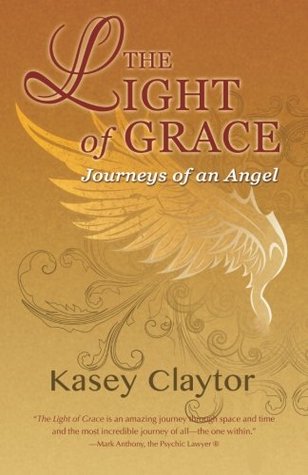
  • The LIGHT of GRACE: Journeys of an Angel by Kasey Claytor – an epic spiritual journey

    The LIGHT of GRACE: Journeys of an Angel by Kasey Claytor – an epic spiritual journey

    “The Light of Grace” by Kasey Claytor begins at the end of Grace’s final material/physical life on earth. She transcends into her angelic form and following a life review, Sophia, her former guardian angel, introduces Grace to the new charges she is to guide.

    During her new role as guard and guide for people assigned to her, Grace continues to evolve. Her charges each live during vastly different time periods on earth. Mumbie, a woman, lives in primitive earth times. Garth, a Christian male, lives in the middle ages. Arnina lives in the technological age of the twenty-first century. Alistair lives in the twenty-ninth century, described as the salubrious Light Age.

    In a surprising twist, the omnipotent narrator introduces himself by writing “And of course there is me. I am not a physical being, but I have been…”. The story teller describes the lives of each of these characters, from birth through life’s experiences until death, including their relationships and sufferings amidst supernatural guidance from Grace. To provide each character with visible and palpable loyalty and unconditional love, a canine spirit takes a physical form and stays by each one’s side.

    Edifying dissertations give readers a smorgasbord of spiritual precepts combining multiple teachings and explanations from both Biblical and Eastern sages. Readers who enjoy the writings of Deepak Chopra or Wayne Dyer will find Grace’s metaphysical journey enlightening as it spans thousands of years both into the past and into the future.

    The characters’ universal life situations trigger recognition of universal truths as they struggle to deal with war, death, love, hate, loss, drug use, jealousy, lust for power, success, failure, self- incrimination, torment, deep love, compassion, peace, and joy. Sufferings are portrayed as necessary stepping stones for the evolution of souls with the spiritual guidance of angels whose main tools are unconditional love and the absence of judgment, trusting that everything is what it must be.

    You may want to gather with others to explore and discuss your observations as you accompany Grace and her special emissary, Aelfraed, on Grace’s spiritual journey crossing planes of existence and enduring trials and tribulations revealed through each character’s telling. The characters’ lives are vividly portrayed via the settings, lifestyles, and beliefs of the eras in which they live.

    The Light of Grace: Journeys of an Angel by Kasey Claytor will make an excellent selection for book clubs interested in reading and discussing works that are spiritually and metaphysically oriented. It also will be a compelling read for anyone seeking answers to the mysteries of life, death, and what lies beyond.


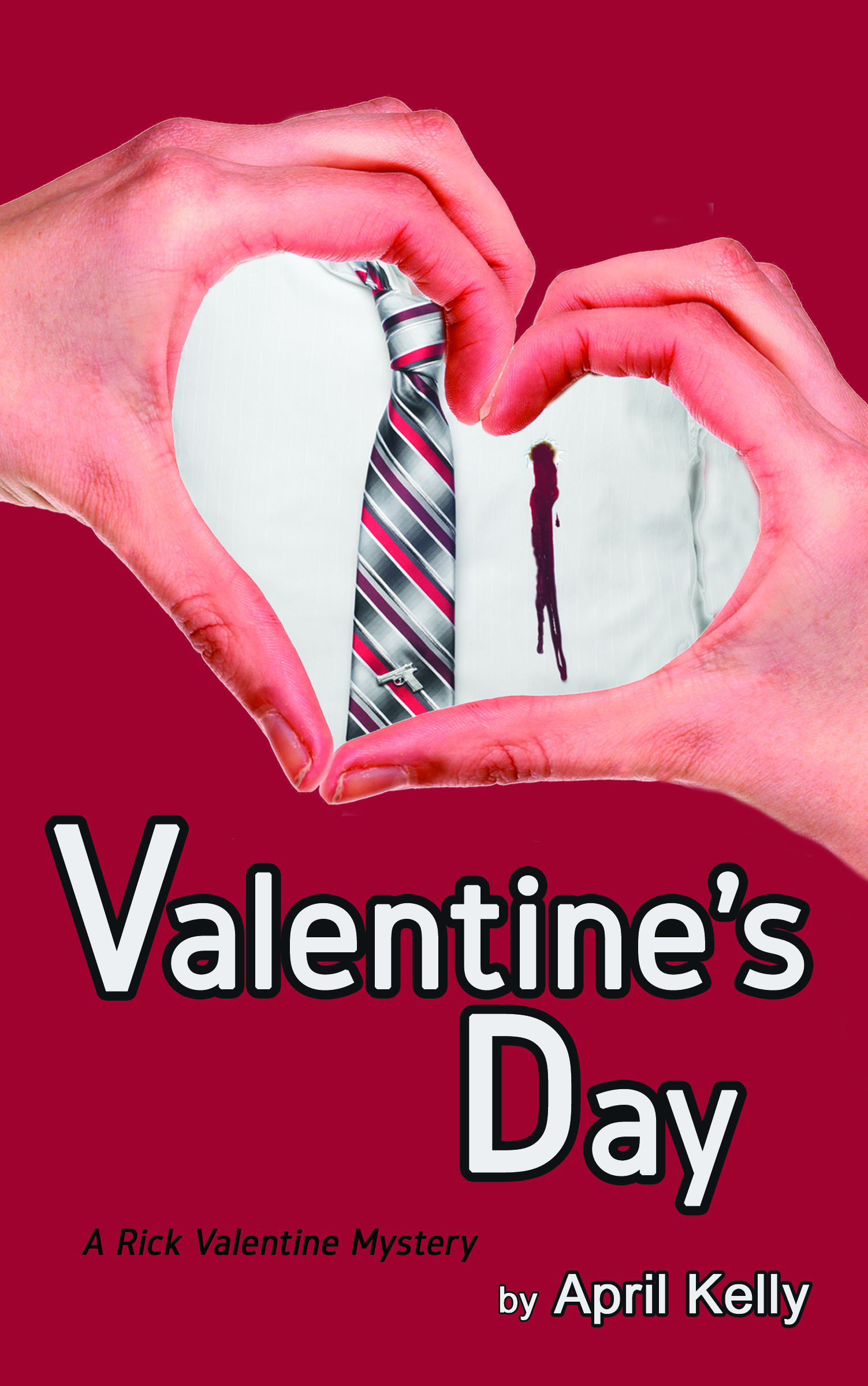
  • VALENTINE’S DAY by April Kelly, — a Rick Valentine Mystery, Book 1

    VALENTINE’S DAY by April Kelly, — a Rick Valentine Mystery, Book 1

    A clever plot, engaging characters, and a solid dose of self-deprecating humor make this detective mystery unique and a highly entertaining read.

    Rick Valentine, a twenty-something, newly minted private investigator, is discovering that setting up one’s own PI business isn’t all that easy.

    Clients aren’t lining up outside his office door and those who do come are more interested in having him find their lost cat than solve a real crime. Rick doesn’t exactly have an instinct for the business, either—once he’s stumbled onto a crime, he’s more likely to dig himself deeper with the bad guys than help put them behind bars. In fact, most of the people in Rick’s life seem to spend their time looking out for him, making sure that he survives to fight another day.

    However, readers don’t make it very many pages into this cleverly written novel before realizing that there is far more going on behind the scenes than first appears to be the case.

    A past employer who keeps Rick afloat by tossing him odd jobs here and there might also be connected with the death of Rick’s father. His “receptionist” no longer acts like a receptionist at all, instead exhibiting an alarming proficiency at handling a very large, very lethal gun.

    Are these two drawing Rick into a life-threatening situation, keeping tabs on him for some reason having to do with his past, or helping him survive as he builds his business? And why are there two truly scary, murderous thugs suddenly looking for him?

    April Kelly begins this first novel in her Rick Valentine Mystery series by gently introducing the reader to quirky, humorous characters and carefully laying the foundation for a more complex plot that is tied to past events in the main character’s life.  After settling into thinking you are reading just another humorous cozy mystery, you suddenly realize you are hooked, thoroughly enjoying yourself, and unable to put the book down. This is fun! Clues pile upon clues, nothing is as it seemed in the beginning; Rick’s past is far more mysterious than it originally appeared to be and all those entertaining people you met early on have become compelling characters you truly care about.

    Kelly has used her background as a television writer to skillfully develop a far more entertaining mystery novel than is typical of the genre. Valentine’s Day is highly recommended for those who love a good whodunit, endearing characters, and some laugh-out-loud moments.

  • Third in the Seven Must-Haves for Authors series by Kiffer Brown

    Third in the Seven Must-Haves for Authors series by Kiffer Brown

    dreamstime_m_51247787What is the cornerstone of any successful author’s promotional platform? 

    Unlocking the Secrets of Successful Publishing!

    I was asked by Orna Ross of Alliance of Independent Authors to share what I consider to be the “Seven Must-Haves for Independent Authors” at  UPublishU event that was held at the Book Expo of America 2016 held in Chicago. Of course, I agreed!

    However, the Seven Must-Haves are applicable for all authors whether they are self-published, small press published, traditionally published, or hybrid published. Today, I am addressing the second of the Seven Must-Haves for Authors. 

    What is the cornerstone of any author platform? Editorial Book Reviews

    Why? Why is it that the big traditional publishing houses have staff and contractors whose main job responsibility is to secure editorial book reviews for their upcoming releases? 

    First a PDQ lesson about the different types of reviews (and, yes, books should have all four):

    • Editorial Reviews by professional reviewers in the publishing industry (required by librarians before purchase)
    • Peer Reviews by peer authors or same genre authors who further up the top-selling list
    • Consumer Reviews by individual consumers (readers)
    • Manuscript Overviews: these are pre-editing, pre-publication evaluations

    Why are Editorial Reviews Important to Traditional Publishers?

    • Editorial Reviews are needed for pre-launch sales, bookseller tradeshows, sales catalogs, distributor catalogs, sell sheets, and to create marketing collateral.
    • Editorial Reviews establish credibility and competence in the publishing marketplace.
    • Editorial Reviews help set the tone for reader interaction.
    • Editorial Reviews give readers the language and vocabulary to write consumers reviews, thereby, increasing the number of consumer reviews a book receives.
    • Editorial Reviews distinguish your work from the millions of other books that are vying for the reader’s attention and help to crystallize what your book is about (book discovery tools).
    • Editorial Reviews support your author platform by adding evidence that your work has been evaluated and validated by publishing industry professionals.
    • Editorial Reviews are critical to your book’s success in today’s digital age of publishing. Many potential readers may never see your book in print at a book store, but your reviews will be easily available on the internet, add credibility to your books in a digital environment.
    • Editorial reviews connect readers and promote discussion on social media, forums, and book clubs.
    • Editorial Reviews give authors and their publicists something to post, blog, and chat about with their works that a publishing professional has said about a work. Authors can easily re-tweet, share, like, and comment on their Editorial Reviews without sounding “self-promoting.”

    Editorial Book Reviews are consistently one of the most powerful tools available to traditional publishers for promoting their books–making them one of the most powerful tools available to Indie authors for the promotion of their books.

    Authors must recognize the need for strong credentials to demonstrate competence to potential readers, book buyers, librarians, and media professionals.To address the question that comes up the most and to clear the air, I ‘d like to answer this question:

    What about “paid” editorial reviews? Are they “wrong?” 

    Chanticleer Reviews is sent Advanced Reader Copies (ARCs) on a regular basis from the Big 5 traditional publishing companies for us to consider to review for “free.” We are sent the ARCs of future releases six months to a year ahead of the scheduled title launches.

    Let me confirm that these big traditional publishing companies never “pay” for editorial reviews and will, most likely, admonish those authors and publishing houses who do pay for editorial reviews.

    However, I am here to set the record straight. All editorial/professional reviews are paid for–one way or the other. Most indie authors and publishers could not afford to pay Chanticleer Reviews what the traditional big publishers pay us in-kind with promotion and publicity.

    Chanticleer at BEA ChicagoWhoa! That’s right. It is just that the big guys don’t pay us in cash or Paypal. They pay us in-kind with advertising, promotional considerations, press releases, having Chanticleer Reviews name appear on covers of thousands and thousands of books, helping us build relationships with the all important book distributors, and helping us (Chanticleer Reviews) to earn prestige among the traditional publishing houses. How much would we have to pay for this type of priceless promotion? I can’t even think about the number of zeros that would follow the dollar sign. Conversely, how much would we have to charge authors and smaller publishers who do not have staff and contractors to run the p/r machine to match the type of compensation that the big guys offer with each ARC that we receive from them in the mail or from Net Galley?

    That being said, editorial reviews must come from objective, trusted, and unbiased professional editors and reviewers. 

    Chanticleer Book Reviews was established in 2010 when independent authors were still treated unfavorably by many in the book industry, including editorial review companies. Chanticleer was founded on the principle that all authors deserve an equal chance at success. Today, indie authors are finally winning the respect they deserve and Chanticleer remains the young upstart, championing the new, the innovative, and the leading-edge of the book industry.

    “Chanticleer Reviews has quickly risen to the ranks of the premier, respected trade reviews in the industry. Their opinion is highly valued by independent and traditional publishers alike. They have been a wonderful resource for me as an unknown, indie author trying to obtain recognition for my work.” Michael Hurley, author of The Prodigal, The Vineyard, The Passage, and others.

    What do editorial book reviewers look for when evaluating a book?

    • Is the story compelling?
    • Professionalism of editing and formatting
    • Characterization
    • Pacing
    • Continuity of story-line
    • Intriguing opening
    • Satisfying ending (not necessarily “happy”)
    • Uniqueness of story
    • Writing craft
    • Plotting craft
    • Other genre specific criteria

    At Chanticleer Book Reviews, if your work is not well-received, our editors will write a “evaluation” that addresses the major issues and problems found so that the writer may work on improving the quality of the work in question. 

    We do not publish “negative” reviews, but we do give constructive feedback to those who submit their works for an editorial review.

    Positive reviews generate content for:

    • Social Media Posts
    • Point of Sale Marketing Materials
    • Shelf Talkers
    • Press Releases
    • Author Platforms and Websites
    • Meta-data
    • Blogging
    • Interviews
    • Book Discovery
    • Distribution Reviews
    • Increasing Book Sales

    Chanticleer Book Reviews are for the serious author ready for professionally reviewed, unbiased, objective assessments of their work.  

    Does your book to have this “big 5” advantage?

    IF not, submit your work today for the Chanticleer Editorial Review package!

    For more information about the editorial review process at Chanticleer Reviews, please click here.

    To find out how to submit your book for a Chanticleer Editorial Review, please click here.

    SPECIAL DISCOUNT OFFER for Chanticleer Reviews e-news subscribers: 

    And, as a special for those who have read all the way to the end of this article, please accept this discount code for a $50 discount off from the standard $345 rate which includes a two-year digital promotion campaign from date of review posting to the Chanticleer Reviews website.

    $50 Discount Code:  $50CRDISCBEST

    #1 Must Have:

    What is the traditional publishing tool that authors can implement to propel their writing careers to new levels and to earn an income from selling their books?  Click here to read the post: #1 Must-Have 

    #2 Must Have:

    What is the single most important publishing tool for first-time authors? Click here to find out

    Kiffer-Brown-CBR-132x150.jpgAs always, please do not hesitate to contact us with any questions, concerns, or suggestions at KBrown@ChantiReviews.com
    Best, Kiffer Brown

    Inform, Involve, Engage! 

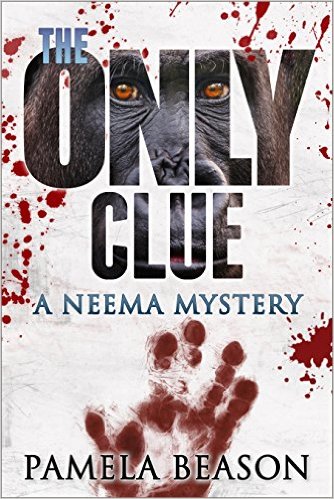
  • The ONLY CLUE — The Neema Mystery Series, Book 2 by Pamela Beason – a gorilla mystery

    The ONLY CLUE — The Neema Mystery Series, Book 2 by Pamela Beason – a gorilla mystery

    When three gorillas disappear, Dr. Grace McKenna stands to lose not only her livelihood and her professional reputation, but also three close friends, in this lively new novel by animal advocate and author Pamela Beason.

    Grace, assisted by a crew of young advocates from the Animal Rights Union,  reluctantly fulfills a request from her project funders to hold a public exhibit of Neema, a mother gorilla, her baby Kanoni, and Neema’s giant, grumpy mate, Gumu. A dedicated cop, Matt Finn, supplies the project’s security protection (and Grace’s romantic interest).

    After the public event,  the apes vanish, a huge pool of blood on the floor of the gorilla compound is “the only clue” to what might have happened. Did they escape into the wild?  Were they “liberated” by ARU operatives, or captured by exotic animal traders?

    Grace can’t believe Neema would desert her, because the two have a close kinship based on their mutual use of sign language. Matt is sure someone connected with the project freed the gorillas on principle, or stole them for cash. He focuses on Tony Zyrnek, father of Jon, Grace’s most trusted assistant. Tony just got out of prison, is charming to a fault, and has a slew of highly questionable, greedy associates.

    The project goes on lockdown, with Grace justifiably fearful of the consequences if word of the disappearance gets out. Matt and Grace are torn apart by the calamity, making it harder for both to function.

    Matt’s investigations become increasingly complicated by crimes outside the compound, but his thorough police work gradually uncovers important evidence about the fate of the missing apes. Major revelations also result from Grace’s desperate delving into the bizarre international underworld where rare animals are bred and sold for profit.

    Beason’s book, the second in her “Neema” series, will excite, enchant, and educate. Readers unaware of the innate intelligence of apes may be surprised to learn that Neema’s rather sophisticated communication abilities are based on verified fact. Beason skillfully shows us the human world through gorilla eyes.

    Both dedicated animal rights proponents and people new to the dynamics of ape/human interaction will empathize with Gumu, Neema, and Kanoni’s struggles; while fans of the “locked room mystery” genre will fix their attention on the plight of the humans and their efforts to find more clues before it’s too late.

    The Only Clue is a well-crafted mystery to inform as well as intrigue and captivate, opening an engaging realm of fictional exploration and speculation—the special bond that can happen between gorillas and people. Highly recommended.

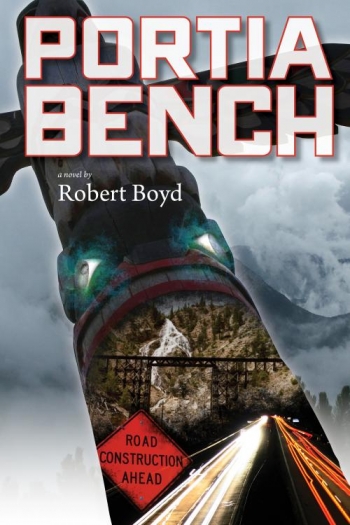
  • PORTIA BENCH by Robert Boyd, a horror thriller novel

    PORTIA BENCH by Robert Boyd, a horror thriller novel

    Ill-fated Clint Matheson. He lands what looks like the stellar job of his career—managing construction of a new highway across British Columbia, in time for the Expo 86 World’s Fair in Vancouver—only to find the highway must cross Portia Bench–a tableland that is ideal for a roadway. 

    However, it is actually a graveyard. Centuries ago, a First Nations chief lost his bride there in an earthquake, and in his grief he forever cursed the land. Later, a horrible train wreck took more lives, including those of circus animals. So when Clint’s team starts surveying this cursed ground, spirits awake, and start fighting back.

    Survey teams are slaughtered when crew members suddenly go berserk. Surviving crew members see bewildering visions and hear incomprehensible noises. Clint, who learns of the legends from a contemporary chief and his daughter, plus a museum director knowledgeable about the Kootenay Central Railway, finds that maybe he shouldn’t have been so quick to dismiss the legend of the curse, especially once he starts seeing some of the visions himself.

    But Clint can’t make his bosses believe, and they refuse his begging to reroute the highway. He has to find some way to stop the spirits from going crazy and get the road built. Meanwhile, crew after crew comes to grief. Even nature conspires to set back the project, with harsh winters and mysterious wildfires.

    The story takes on a Grade-B-horror-movie flavor as the body count rises as an entire work crew is murdered. The plot of this story is about supposed progress interfering with a cursed landscape and unleashing primeval forces. Clint has to wrestle with some serious conflicting interests along with finding himself romantically distracted by Chief Edwin’s daughter, Cindy. 

    The most intriguing aspect of Portia Bench is the regional history brought to life by the author, who clearly has done his homework, and knows from experience the hardships of building roads across the high backcountry of western Canada. The central mystery of the story is: Will Clint be able to come up with a solution, or will the spirits wipe everyone out? The odds are against Clint and he must risk all to find a way.

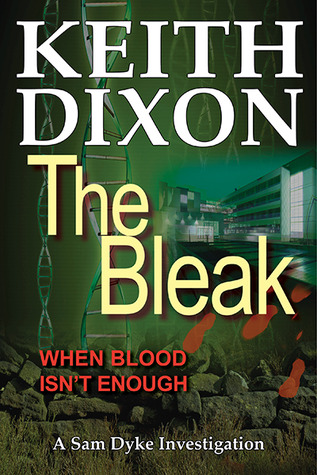
  • THE BLEAK: a Sam Dyke Investigations, Book 4 by Keith Dixon

    THE BLEAK: a Sam Dyke Investigations, Book 4 by Keith Dixon

    “The ninth rule of private detection states that you should never take on a client you think might be nuts. I wasn’t entirely convinced this was the case with the woman who’d called me that morning, but I was certainly tending that way.”

    Sam Dyke is a private investigator whom you can’t help but enjoy getting to know. Readers will quickly get to understand Dyke’s character by his sharing of his detective tenets.

    The case involves a distraught female named Margaret, who is deeply concerned over the recent behavior of her boss Nathan. Though apprehensive, Dyke takes on her case anyway even if it goes against his better judgement.

    What unfolds is a fast-paced thriller based in England, specifically in Crewe, where a number of questionable suicides have taken place. One of these suicides turns out to be Margaret’s boss.

    Dyke shares more of his detective axioms: “I’ve found that once I start a case it tends to move quickly. I hadn’t exactly started on this— whatever “it” turned out to be— but things still moved along at a click.”

    Sam’s focus rests upon the research facility where Nathan worked. In fact, Sam is asked by the CEO of the company to look into Nathan’s death as well. This was not well received by some of the employees. “Why are you letting Dyke into all this? He’s a little toe-rag who shouldn’t be truffling around looking for something that he won’t find.”

    Sam faces near silence and some pretty stiff push-back from some of those whom he interviews: “What do you think you’re going to find, exactly? What do you think people are going to tell you?”

    Sam counters with “I won’t know until they tell me. That’s the way it is in this game. One minute, complete ignorance, the next, enlightenment. Private detection is almost a spiritual act.”

    A real sense of danger and suspense culminates in some fairly intense moments for our main character. At times you are left wondering if Sam Dyke has taken on his last case.

    When Sam interview’s Nathan’s wife, Isobel, what she tells him gives him grave reason for concern. “In the last eighteen months I watched my husband change from someone who enjoyed his life, enjoyed his work and enjoyed whatever spare time he had left to spend with me. He changed into someone whom I barely recognized. He didn’t eat well. He didn’t sleep well. He spent more time at the office than any sane man should.”

    As the story progresses you learn of the bleak. Who or what is the bleak? You’re going to have to read this well-crafted detective tale to find out. Keith Dixon has given readers a thrill ride in this fast-paced story of hidden truths waiting to be discovered.

    Keith Dixon’s winning protagonist is Sam Dyke; a gritty British detective who can take as well as give. Fans of hard-boiled detective series are going to revel in following the cases of Sam Dyke, Investigations.

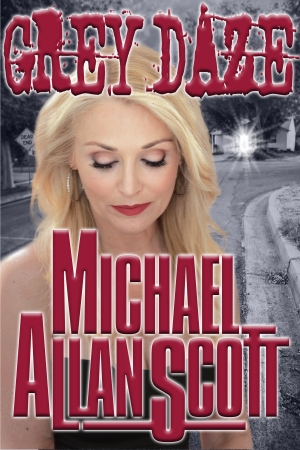
  • GREY DAZE: a Lance Underphal Mystery by Michael Allan Scott

    GREY DAZE: a Lance Underphal Mystery by Michael Allan Scott

    Disturbed by psychic powers and whisperings from his dead wife Sonja, freelance photographer Lance Underphal finds himself caught in a web of evil.

    When Lance’s lady friend Callie asks him to investigate the disappearance of her reclusive uncle, he and Jake Jacobs, a PI and former Navy SEAL, are on it. What seems like the natural death of a lonely old man reveals itself as murder. As Jake tracks the suspects, he discovers a pattern leading to government corruption at the highest levels—drug dealing and gun running involving biker gangs and the U.S. Dept. of Alcohol, Tobacco, and Firearms.

    Lance is jailed, arrested on felony charges for Sonja’s death, all the while plagued with paranormal visions of the murderer. Hit from all sides, he suffers a heart attack.

    Sonja’s ethereal guidance and Lance’s innate toughness put him back on track, and after he and Jake deal with everything from a shyster lawyer to a drug-addicted killer to a biker gang covertly supplied weapons by the ATF, the story could be over. But further psychic insights into a cache of stolen gold and murdered souls crying for release force Lance and crew to press on.

    The third in the Lance Underphal Mystery series by Michael Allan Scott, Grey Daze dishes out action on every page. Scott clearly loves language and uses it deftly, depicting vicious battles to the death, steamy sex, and disgusting doings in a drug dealer’s den with equal zest and a refreshing absence of four-letter words.  He has created credible, multi-dimensional characters, using them as glue for his sudden scene switches and dizzying plot twists.

    Lance is an empathic anti-hero beset by middle-age aches and angst; Callie has her own sixth sense and is poised to accept a new romance; Sonja contributes unearthly messages ranging from wise, to wifely, to downright spicy; Jake is half muscle, half guts, and all heart. The circle is completed by a huge but affectionate pooch rescued from a life of crime.

    This murder mystery/thriller, based on real events (as per the author), is layered with plot twists and alarmingly vivid details, along with voices of the dead and visions of imminent peril, make Grey Daze an action-packed page turner. It is sure to please already entrenched Underphal fans and draw new ones to the fold. Highly recommended for thriller/suspense fans.