Blog

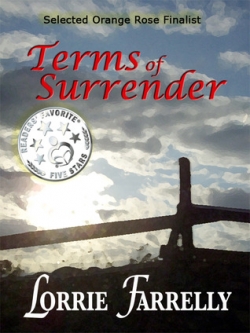
  • TERMS OF SURRENDER by Lorrie Farrelly, a historical romance emerging from war

    TERMS OF SURRENDER by Lorrie Farrelly, a historical romance emerging from war

    Readers will experience a strong onslaught of emotions as they come to grips with the horrific battles that were fought in Gettysburg, PA during the Civil War. Lorrie Farrelly’s historical romance Terms of Surrender carries the spirit of a post-war nation expertly throughout its pages; a superb read for fans of love stories set on the rugged background of the Western Frontier.

    The plot follows the very real struggle of former Confederate Captain Michael Cantrell. As with many post-Civil War veterans, he’s unsure what to do with himself in a nation ripped apart by a war that left behind broken homes.

    Michael ends up in Wind River Basin, Wyoming, where he suffers a severe gunshot wound while coming to the aid of a young woman, Annie Devlin, and her younger brother, Robbie. The siblings are running their small horse farm on their own while trying to keep their land from people with less than kind intentions. What plays out in the remaining pages of the book is a love story over the course of a year and a half. As he is nursed to health, Michael and Annie fall in love.

    From the first page, Farrelly draws on the genuine emotions experienced during the era. The authentic dialogue spoken in choked whispers from the characters tug at your heartstrings and hooks you for the rest of the story.

    Farrelly devises a narrative that illustrates the heartbreak of a man who pledges his life to a cause that was lost; he was a soul who had witnessed a lifetime of war and death. However, despite the tragedy, the story provides the hope that most veterans lose in trying to re-acclimate a peaceful life; the hope of finding your soulmate. Love becomes the anecdote to heal Michael’s battered heart. No matter how wild the West may be, love will lasso it again and again.

    This author brings back to life an era that is long gone. Terms of Surrender is a brilliant historical romance with a healing love that is much needed in the aftermath of  destructive Civil War.

  • It’s SHOWTIME – Deadline for Trade Show Representation Fast Approaching

    It’s SHOWTIME – Deadline for Trade Show Representation Fast Approaching

    Theater-spotlight-clipart-image[Editor's note: Chanticleer no longer offers these services]

    It’s Showtime!

    Get your books in the SPOTLIGHT!

    The deadline to reserve your place in our Chanticleer Collection, get discovered, and get exposure at trade shows is August 5th, 2017.

    MPIPA

    PNBA

    nciba bear


    This deadline will allow us enough time to create our on-line catalog for these fall shows:

    Please click the links above to reserve your spot on our table at each.

    What is the big deal about a bookseller trade show?

    Booksellers, librarians, book distributors, Indie and small presses, along with the big-five publishers participate in regional trade shows  to make their book purchasing and business decisions.  These shows are for the trade–not open to the general public. They are an amazing opportunity for books to vastly increase distribution and to gain visibility and book buzz.

    OLYMPUS DIGITAL CAMERA

    Why go with Chanticleer? Why not buy your own table?

    Lone authors sometimes pay the exhibitor fees for a booth at these shows, but there are two problems with that. First, the fees can be very high. Second, they are obvious self-promoters. Book buyers often avoid or skim past single author booths. It doesn’t matter if the book is fantastic, all they can see is that someone is paying a lot of money to bring their book to the trade show…and the implication is that the book could not be there otherwise.

    Avoid this stigma by reserving a place for your book on the Chanticleer Reviews Table at regional trade shows. Let someone else tell these buyers that your books are worth reading. This is the power of referral. Also, it is known that Chanticleer Reviews only allows books that have been vetted through our editorial book reviews and/or writing competitions. Chanticleer’s reputation as a professional editorial reviewer  is at stake, so only the best books that meet our requirements are allowed to be on the table. This means we are a trusted source!

    01Faherty

    Hand-selling Books is Alive and Well at Bookseller Trade Shows

    Make sure that your books do not end up on a shelf with hundreds of other books without any sort of old fashion salesmanship going on. We have seen many a book displayed as promised on shelf without the benefit of a human anywhere in sight to connect with or ask questions about the offerings. These sections are usually separated off unto themselves in some low-traffic area of the tradeshow. Books are neatly displayed without regard to genre or interest. Sale sheets are kept in a separate area in a notebook.

    Kiffer Brown and Diane Sillan Isaacs will be hand-selling the Chanticleer Collection right along side of Sillan Pace Brown Publishing + Production books at each tradeshow. They are also collaborating with other publishers to group together for a bigger footprint in the tradeshows.

    Sell Sheets will be displayed beside of the related book for easy pick-up by interested parties instead of being off to the side in a notebook.

    Also, we are happy to work with authors of the Chanticleer Community to set-up and collaborate on specific promotional opportunities with each trade show as a liason. Just make a note in the comment field on the registration form.

    What are the requirements to have a book represented by Chanticleer Reviews Collection? 

    Only titles that have been vetted through Chanticleer Editorial Reviews or through the Chanticleer Writing competitions are eligible for Trade Show Representation. 

    Books must have been awarded a four or five starred review and/or placed as a First-in-Category position in the hanticleer International Writing genre competitions.

    It is recommended you have a distribution channel that bookstore buyers use commonly available for orders (such as Ingram Spark, etc.)

    Each title must have its own Sell Sheet.

    Sell Sheets must be 8 1/2 by 11 inches with the following information:

    • Complete title, author name
    • Genre and sub-genres
    • Publication Date
    • ISBN designation
    • Number of pages for  print versions
    • Cover photo
    • Retail Price
    • Brief synopsis
    • Author brief bio and author photo
    • Marketing blurbs & Editorial Review excerpts
    • Concise awards information
    • Description of available formats
    • Distributor
    • Author website or contact information
    • All on one sheet, so be concise

    See a Sample Sell Sheet. This is what bookstore buyers will be taking with them to place their order from when they are back in their store. Chanticleer does not take orders for books.

    If you want us to design and print your customized Sell Sheet for an extra charge, please ask.

    Distribution channels and offset printing services for the Chanticleer Collections are available. Please contact us at Distribution@Chantipub.com for more information.

    Learn more about Chanticleer Trade Show Representation.

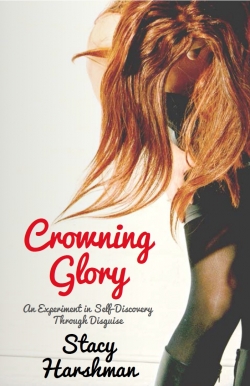
  • CROWNING GLORY by Stacy Harshman, an adventure memoir about self-image and anxiety

    CROWNING GLORY by Stacy Harshman, an adventure memoir about self-image and anxiety

    Hairstyles can speak volumes about your personality, or at least, that’s the idea Stacy Harshman explores in Crowning Glory: An Experiment in Self-Discovery through Disguise. A heartfelt portrayal of Harshman overcoming anxiety, her memoir is for anyone looking to read an uplifting story that’s also a sheer delight.

    Harshman spends weeks in New York City running an outrageous experiment: she records people’s reactions to the different colored wigs she wears. Her hairstyles range from a fiery redhead to a raven-haired goth. Her obsession with hair goes back to her adolescence:  “…my hair has been my archenemy since seventh grade. There was never enough of it, and what I had was wimpy.”

    In addition to the unusual experiment, readers are drawn to the author’s motivation to continue and complete her venture. Readers connect to not only the book’s premise, but to Harshman herself; readers advocate for her to succeed.

    However, beneath the hilarity of the experiment, readers see the author’s vulnerability:

    “I didn’t have a job to give me some sense of being a productive human being… I wanted to get one, but just the idea freaked me out…Before the depression, I had rehearsed and performed music…not being able to play out with my band killed me…just being around people was tough to impossible…I spent the rest of the day fighting panic attacks.”

    Readers also cheer for Harshman’s bravery to face and conquer her anxiety through finding her true self.  Her courage elevates the writing of this memoir, definitively distinguishing it from a self-absorbed story. The narrative reduces the stigma of mental illness that plagues so many people. The story offers hope and encouragement to those who have a mental illness, while bringing awareness and understanding to those who do not.

    The memoir demonstrates that appearance does play a role in social interactions to varying degrees. People’s feelings about their looks can become a determining factor in how others perceive them; a better understanding of self goes a long way in relationships.

    Some may find that the impact of the story is too diluted due to Harshman’s retelling of the experiment as she explores different looks. However, the book still resonates with emotion throughout, while still providing readers with a candid and fun experience.

    Readers get to embrace the past and present life of Harshman, sharing in her laughs, fears, and tears as she plays out her social experiment. An adventurous journey from start to finish, Crowning Glory provides fresh perspectives and insights about anxiety and self-image that might just inspire readers to conduct their own experiments with image in today’s society.

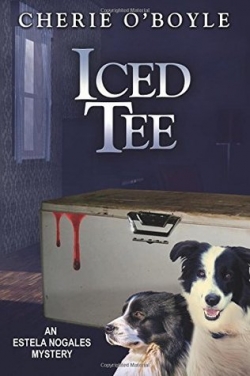
  • ICED TEE by Cherie O’Boyle, second installment of the Estela Nogales Mystery Series

    ICED TEE by Cherie O’Boyle, second installment of the Estela Nogales Mystery Series

    A freezer with blood trickling down the side. An inquisitive border collie. Cherie O’ Boyle stirs these intriguing images to bring readers another engaging mystery with Iced Tee: An Estela Nogales Mystery, the second book in her popular series. Boyle doesn’t fail to bring another fantastic narrative for cozy mystery fans.

    Readers are introduced to the quirky little community of Arroyo Loco located in the coastal mountains of California. A diverse community complete with its own obligatory Home Owners Association, filled with people you probably recognize from your own neighborhood: you have busybodies, town gossips, the obligatory community grouch, and the person who leads the association but no one really cares for them leading. Definitely a slice of California pie in this book!

    Our ensemble of quirky characters is topped off by one Estela Nogales who with her border collies Shiner and Scout, “live here happily in our weathered house under a big blue oak.” Estela is an amateur sleuth and psychologist by trade. At times self-deprecating, yet charming with a wry sense of humor, Estela really drives the story forward. Cherie O’Boyle crafts a character that makes the reader want to do two things: never put the book down until it is finished and pick it back up once completed.

    Estela’s perspective of the community is priceless and epitomizes the author’s desire to create a community that appears like any other real-life counterpart. Her descriptions are intimate and cozy, making readers feel right at home in the community in a feel-good type of way.

    The mystery unfolds rather quickly and humorously. Community member Tee is found dead, but this is certainly not your run of the mill death. Tee is discovered in a chest freezer. What ensues is a frankly hilarious exchange of community members on what resulted in poor Tee’s demise.

    The wild running theory is that Tee was killed over stolen ice cream; perhaps she was the ice cream thief. Did she fall backwards into the freezer, bumping her head, during this act of thievery? Was she startled by a fellow community member who caught her in the middle of this horrendous crime? After all, a broken camera was found in pieces on the floor near the chest freezer!

    You will have to pick up Iced Tee to find out what happens next. The narrative abounds with smaller challenges popping up in the background of the freezer mystery. If you enjoy puzzles presented in the form of a laugh out loud whodunnit, than this is this book for you. Cherie O’Boyle crafts another good old cozy mystery that will certainly appeal to a wide variety of readers and keep them guessing until the final page.
    Reviewer’s Note: This mystery was awarded the 2015 Chanticleer Book Reviews “Small Town Cozy” for Mystery and Mayhem Awards.

  • The JOURNEY AWARDS for Narrative Non-fiction Book Awards 2016 Official Finalist List

    The JOURNEY AWARDS for Narrative Non-fiction Book Awards 2016 Official Finalist List

     journey-126x1501.gifThe JOURNEY Awards writing competition recognizes emerging new talent and outstanding works in the genre of  Narrative Non-fiction. The Journey Awards is a division of the Chanticleer Book Awards & International Writing Competitions.

    We are pleased to announce the JOURNEY Awards Official Finalists List for 2016,The Official Finalists Listing is comprised of works that have passed the first two rounds of judging from the entire field of entrants. These authors and their titles will now compete for the SHORT-LIST of the 2016 Journey Awards for Narrative Non-fiction.

    NOTE: This list is now Complete as of January 28, 2017. Congrats and good luck everyone.

    Congratulations to the JOURNEY AWARDS 2016 FINALISTS and Good Luck to them as they compete for the Short List Positions:

    • Roni McFadden – The Longest Trail
    • Richard SouthallHaunted Plantations of the South
    • Cyndy Sheldon –  Gestalt as a Way of Life
    • Sean-Michael GreenThe Things I Learned in College
    • Monica Sucha VickersMy Extraordinary Life
    • Robin Suerig Holleran, Lindy PhilipBracing for Impact: True Tales of Air Disasters and the People Who Survived Them
    • Michael Anthony Turpin53 Is The New 38
    • Phillip BuchanonNew Money: Staying Rich
    • Sean Dwyer The Year without Tears
    • Nick K. AdamsMy Dear Wife and Children: Civil War Letters from a 2nd Minnesota Volunteer
    • Abbe RolnickCocoon of Cancer: An Invitation to Love Deeply
    • Christopher OelerichMerry Christmas and a Happy PTSD
    • Viviana AgostiniThe True Sense of Life
    • Gretchen WalkerThe Silver Lining: Encounters with Angels
    • Christie MussoHope Knows Your Name
    • Hazel J. MagnussenThe Moral Work of Nursing: Asking and Living with the Questions
    • Destiny AllisonThe Romance Diet: Body Image and the Wars We Wage on Ourselves
    • L. Darlene Another Thirty-(Seven) Days (The Aftermath)
    • Scott KiersztynMetamorphosis, Notes from a stay-at-home dad naturalist
    • J.E. RothA Fine Line
    • Judy LytleA Mile in Her Shoes
    • Gwen MillerEchoes of Silence: Letters to a Drug Addicted Mother from the Woman Who Took Her Place
    • Peter GibbWalking Straight, Down A Crooked Path

    Good luck to all the Journey Awards Finalists who made the Finalist List as they compete to be Short Listed!

    More than $30,000 dollars in cash and prizes are awarded to Chanticleer International Blue Ribbon Awards Winners annually.

    cac17 logoThe Journey Short Listers will then compete for 5 First Place  Category positions that will be announced  and awarded on April 1, 2017 at the Chanticleer Authors Conference and Awards Gala, Bellingham, Wash.

    The First In Category award winners will receive an book award package including a complimentary book review, digital book award badges, shelf talkers, book stickers, and more.

    We are now accepting entries into the 2017 JOURNEY Awards. The deadline is January 31st, 2017.  Click here for more information or to enter.

    More than $30,000 worth of cash and prizes will be awarded to the 2016 Chanticleer Novel Writing Competition winners! Check out out fifteen genres to enter your works into to compete on an international level and distinguish your books from the two million new titles hitting the market this year.

    Who will take home the $1,000 purse this coming April at the Chanticleer Awards Gala and Banquet?

  • S. Thomas Bailey Author of the Gauntlet Runner Series

    S. Thomas Bailey Author of the Gauntlet Runner Series

    sthomasbaileyThank you for your great (review) service. Looking forward to being a part of your future growth in the future.

    S. Thomas Bailey, Author of Blind Faith: The Gauntlet Runner Book IV

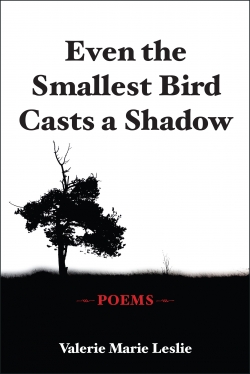
  • EVEN THE SMALLEST BIRD CASTS A SHADOW by Valerie Marie Leslie, a collection of youthful poetry

    EVEN THE SMALLEST BIRD CASTS A SHADOW by Valerie Marie Leslie, a collection of youthful poetry

    Spanning adolescence to the murky adulthood of the early thirties in each thematic chapter, Even the Smallest Bird Casts a Shadow also casts a light on the familiar struggles of maturity, romance, independence, doubt, depression, and further into the experiences of growing at the end of the last century. Altered little from their original creation, preserving the “dysfunctional integrity” of the youthful poems, Leslie varies the breathless experience with free form, rhyme, and lyrical verse.

    While plainly written for privacy and self-revelation, Leslie’s poems in nearly every form capture experience that might be known to any reader. Although each chapter covers roughly the decade and a half, there is a progression through the chapters that resembles the evolution of the narrative persona of Leslie. Back-to-school senses are evoked in the ramble of “During Science,” and there’s an affection to the poem “Hey Teacher,” which surely every high school writer has rendered some way. Heartbreak and romantic hope extend cover to cover but the early poems preserve the innocence of first attempts, culminating in the proud assurance of “The Ave Maria.”

    As the collection advances, the reoccurrence of life’s distresses, financial struggles, social pressures, miscommunication, failed expectations, and romantic disappointments, couple with resilience, ambition, and determination to reveal turmoil that’s as close as scented memory. The fallibility of human intention is confronted in Leslie’s poems at the same time as the loss of certainty in what she, we, seek from a life of surviving.

    The final chapters of supposedly reached adulthood still question the definition of that idea, and are laced with the aspirations and confusion of high school and college. The bitterness appears with simple sharp lines, “I didn’t get my degree for nothing,” and a young adult struggling to settle their purpose in life can find their frustration spoken from beginning to end in Leslie’s collection.

    Many of Leslie’s poems are untitled, and several throughout question, explore, or verify a sense of spirituality, connection, and security in God. These chapters plunge into the despair of doubt, guilt, and depression. In a life seeking love, Leslie expresses from an emotional pain felt in ages beyond the experience of her poems.
    Reading Leslie’s collection invited me to look back at memories and experiences of exactly the same time frame depicted, to question how I would define what I witnessed and learned then. The purpose of Even the Smallest Bird Casts a Shadow is to end a silence of self-doubt and shame, but it may easily motivate readers to delve into their past and youth for strength and inspiration.

  • What Works in Hollywood: The < 33 Principle

    What Works in Hollywood: The < 33 Principle

    diane-isaacs-brings-dominant-experience-from-movie-industry-to-wutznxt-222x300Our Guest Post today is written by Diane Sillan Isaacs. Diane brings more than two decades of experience in film and television industries as an executive film producer, president of production for Don Johnson Productions at Universal and Paramount pictures, president of development and production for Green Moon Productions where she produced films for Antonio Banderas and Emma Thompson.

    Most recently, Diane has joined the Chanticleer Team as Creative Director, and also partnered with Kiffer & Andy Brown to form SillanPaceBrown Publishing + Production, a new publishing platform that specializes in global rights and vertical product integration for intellectual properties based on stories.


    What is a Writer’s Prerequisite to Admission to Tinseltown?

    Seems like every writer you meet in Hollywood has a HOT! script in their bag, eager to pitch their story to producers and anyone with media contacts.

    Random hems and haws, kindas, umms and ya-knows have left many a talented writer with their script curbside. These short storylines, known as loglines, are essential in the film industry and working screenwriters (key adjective) have their magic bullet in the chamber ready to fire off with every handshake and chance meeting to first, spark a reaction, second, be asked to tell more, or third, be invited to send their script in for a read.

    Most have learned to prepare and practice a quick one-liner of their story to hook fast and furious interest before the elevator doors open, or the valet pulls the Tesla around. The fast pitch of their +/- 100 page script [with a lot of scenes and dialogue] is the prerequisite to Tinseltown’s admission.

    hollywood-sign-mulholland-highway

    The <33 Principle

    I call it the < 33 principle. Tell me your story in less than 33 words to give me a sense of genre, main characters, obstacles, twists and high concept, and you got my attention. Of course, the script has to live up to the logline, but a well-constructed logline is the first key to get in the door. Turns out the stories that hold up under the strict discipline of time and words are the ones with the best Velcro and have a better chance to go the distance.

    At a recent literary conference, a number of authors approached me to tell me about their [hot!] book. Used to streamlined loglines, I was taken back at the oftentimes meandering descriptions about the story, the opening scene, side stories, past lives, psychological thinking, flash forwards and more. While authors enjoy a literary license to write as the please, the story still needs the discipline of a succinct logline. Like screenwriters, authors need to be able to tell his or her story in less than 33 words with all the elements to seduce me and have me ask for more. “Me” is code for your potential readers, agents, publishers, colleagues- audience of any and all kind!

    Clapboard-BW

    The Origin of the Logline in Hollywood

    As a film producer, I appreciate the value of the logline vetting process. Given the amount of material [did I mention every writer has a hot script in their bag?], the slushing process comes in the form of a logline. It started in the early studio days, where contracted readers would write the logline on the binder of the vaulted scripts for producers to get a quick sense of the story at a glance. Loglines are also an amazing tool for the writing process to make sure all the elements of the book are aligned with the story foundation.

    There may be the rare exception of someone that asks for the long, drawn-out, over-explained and complicated version first, but you already have a few versions of that in the archives. Now, let’s get you lean and memorable.

    What works in Hollywood…works in Publishing.

    Log in. Log on. Logline!  Here’s the Logline Challenge:

    Go to a mirror, set your timer for :15 seconds. Imagine the image staring at you just asked you what your book/story. Start Jeopardy music for added anxiety.

    A _____hero does___ when ____happens and then____ but the world_______ [your own Mad Libs variation]

    Time’s up. Did you have to think about it? Did you false start a few times? Did you fudge things around until you cobbled together a line or two? Did you forget the best part? Was it nearly impossible to distill your massive story down to a concise sound bite?

    Or did it have a zesty punch that piqued curiosity and imagination of your mirror image? [Thumbs up, Thumbs up?!]

    So even if you got a positive reaction from your alter ego, know that he or she is biased. It’s time to create a logline, or perfect the one you started- one that seamlessly rolls off your tongue at a mere thought of your book.

    It’s time to brand your story with a compact package of words that will astonish and delight. It’s a craft of its own!

    It’s probably the most important tool to pitch your book, sell your book and, oh yeah, write your book. Your logline should be with you before, during and after writing your story. Without it like a business without a plan, a charity without a mission or an ad campaign without a hook. Pointless.

    Take the time to streamline it down. Count the words (<33, please), time the statement (< :15, thank you), and practice it so that it comes across as off-the-top-of-my-head casual when a friend, colleague, stranger, hairdresser, neighbor, flight attendant, future fan, or agent asks ‘what’s your story about?’.

    Note from Kiffer Brown:

    Diane will present two Logline workshops (one on Friday, March 31st and one on Saturday, April 1st) at the 2017 Chanticleer Authors Conference. The workshop is included in the registration fee. Participation is limited to 12 attendees at each session. Signup is encouraged at time of registration.

  • The SILK and the SWORD by Ron Singerton – an epic journey from Rome to the Great Wall of China

    The SILK and the SWORD by Ron Singerton – an epic journey from Rome to the Great Wall of China

    Tacitus, the rebellious son of Gaius Septimus, learns too late that the temple that his gang has desecrated was his mother’s chosen holy place. Barely able to contain his murderous rage, Gaius issues an ultimatum to his son: Tacitus can spend the rest of his life as a slave, or he can work to redeem himself through military service.

    However, Tacitus has little time to absorb the shock of his punishment and his decision to join the military. Behind closed doors, Caesar’s consul, Marcus Crassus, makes a case for war and creating the need for many of the legionnaires. Tacitus is called to action, answering directly to the leadership of his centurion father, Gaius, who is Julius Caesar’s chosen “First Spear.”

    Cursed by his own arrogance and greed, Marcus Crassus’s military mission crumbles, leaving Gaius, Tacitus and a small band of surviving legionnaires to navigate uncharted foreign lands and savage cultures in their quest to return to Rome. With betrayal and deceit at every turn the soldiers suffer enormous physical and emotional beatings.

    Their survival, much less their success, hinges on the unlikely chance that Tacitus, an unrepentant son, and Gaius, an unforgiving father, will cast aside their differences and work shoulder-to-shoulder to restore order, hope and honor to their men.

    In this well-crafted follow-up to his first historical novel, “The Villa of Deceit,” author Ron Singerton delivers a cast of fresh, flawed, and completely believable characters through which he illuminates the universal strengths and weaknesses in all of us.

    Building upon the life story of his original main character, Gaius, the author invites the reader to investigate the events that have created a chasm between father and son. As Tacitus sheds his underdog status and takes the spotlight, we become invested in his trials and triumphs. And, as his respect for himself and his father grows, he becomes a hero worth rooting for.

    From the battlefields of Carrhae (now modern day Turkey), to the towering mountains and sweeping expanse of ancient Asia’s “Silk Road,” and on to the Great Wall of China, “The Silk and the Sword” is packed with vibrant historical and tactical detail.

    Culled from primary historical references as recorded by Plutarch, Pliny and Julius Caesar, the author illuminates the fascinating, multi-faceted private and public worlds of the Roman legionnaire. Fans of both historical fiction as well as Roman history will find Ron Singerton’s “The Silk and the Sword” to be a highly engaging, satisfying read about one of the most detrimental defeats in Roman military history.


  • BLIND FAITH: THE GAUNTLET RUNNER BOOK VI by S. Thomas Bailey, a powerful historical fiction novel

    BLIND FAITH: THE GAUNTLET RUNNER BOOK VI by S. Thomas Bailey, a powerful historical fiction novel

    Blind Faith: The Gauntlet Runner Book VI by S. Thomas Bailey is the latest in his award-winning series. This historical novel does well in carrying its readers through a part of the French and Indian War in 1759. We gain powerful insights, feeling the emotional swings and hazards faced by the characters. The author, a brilliant historian, weaves characters amidst historical facts, giving readers a view of the war’s colonist trackers and focuses on their leader, Jacob Murray––his tenacious endurance––and his dilemmas.

    The side story of his wife Maggie establishes her as a pioneering heroine. Their deep characterization inspires admiration when we consider the many folks who came before us––to settle North America. The underlying current of love gives us hope as we traverse through the agony of war and the challenges of the wild.

    Reader interest is captured on the first page. After the latest demoralizing battle defeat, Jacob’s compassion and disgust rises when he sees the pathos caused by inept British Officers. Jacob agonizes over his dilemma–stay and fight–or desert his men, including his son, to try to find his beloved wife, presumably lost to the north while searching for their child.

    Commissioned by the British Army, Jacob, and his fellow colonists operate as trackers gathering vital information for the British. He’s not a military man, but a settler who must fight in a British war. He leads his men using wisdom and strength but obeys commanding officers because he must. The secondary characters weave into the story either to support Jacob and Maggie or to be their foes––all characters have their own unique journey.

    The author truly resurrects the history of this war, making it alive and vivid. Readers are gripped within the reality of the fight. We feel the honor, courage, fear, horror, despair, and hope.

    Readers slog with Jacob and his men through the wilderness. Utilizing body language and dialogue, the author shows emotion and moves the story ahead. We feel their fatigue. We witness the unrelenting threat of attacks from the French and native warriors.

    In addition to battling human enemies, the men withstand rugged overgrown terrain and impassable waterways. They must obey officers of doubtful ability and endure the prejudice of the British against the lowly colonists. We see Jacob’s genius when he and his men work feverishly to prepare for the brutality of an advancing Canadian winter.

    Maggie engages readers in her own chapters. She forges through the wilderness amidst hostile Indians, searching for her two-year-old son.  Knowing she must shoot and kill to survive, Maggie pushes forward––on foot and in stolen canoes––against overwhelming odds. When hope waxes thin and she’s a captive of her circumstances, she ignores her suspicions and must trust others.

    We experience her vivid trials (similar to Jacob’s) in the wild tangled forests leading along the St. Lawrence River. She must reach Quebec City. We navigate the trails, get stuck in the waterways, and feel the impact of weather. We sympathize with her exhaustion and isolation. We can hear her smacking the swarms of mosquitoes and black flies.

    Jacob and Maggie can only groan inwardly, wondering about the fate of each other. Readers expect opposing forces during this mid-seventeen hundred French and Indian War. But a unique formidable foe arises––a traitor obsessed with revenge. He morphs within his growing depravity, turning into a deadly enemy spreading havoc and death.

    When we read the last words of the story, we are pointed to the next book in the series; we are left hanging in the midst of a crisis. So close, but not quite done. This reviewer is willing to wait for the next book for the outcome.

    Blind Faith by S. Thomas Bailey is an outstanding historical novel in its accuracy, craft, and ability to resurrect dynamic characters who are struggling to live another day.