Blog

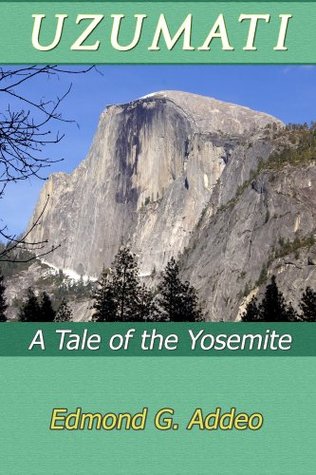
  • Uzumati: The Tale of the Yosemite by Edmond G. Addeo – Historical Fiction

    Uzumati: The Tale of the Yosemite by Edmond G. Addeo – Historical Fiction

    Three thousand years of epic historical reach, Edmond G. Addeo presents Uzumati: A Tale of the Yosemite, an exceptionally well-crafted novel. The author’s enthusiasm and deep love for his subject matter pay off in a big way.

    Edmund G. Addeo is a master storyteller, talented in weaving historical figures with fictional and displaying the vast stage of the Yosemite Valley for all to enjoy. Readers will be both captivated and entertained by this fascinating story brimming with memorable characters.

    Uzumati is the name given by the Indians 1,200 years ago to the area commonly known as the Yosemite Valley. The book details how the valley was discovered by the Native Americans and then re-discovered by white settlers in the 19th century. This valley, striking in its beauty, proved to be a safe and plentiful site for those fortunate enough to find it and settle there.

    Although Addeo’s story focuses on a time period spanning 3,000 years, his skill as a storyteller is evident. Uzumati is both engaging and easy to read, especially when one considers the amount of time and work invested into bringing this story to print. Addeo spent 50 years researching animals, plants, Native American oral history, and news reports from the later years of the era to ensure the story’s accuracy.

    The book focuses on Choluk, “the discoverer” and his family tree which includes Chief Tenaya who plays an important role. Another memorable player is Major Jim Savage, of the US Army. As the story reaches its climactic conclusion, both Tenaya and Savage are well aware that tensions between the Native American inhabitants and the settlers will likely end in conflict. Readers will find it a struggle to choose a side, and in the end, witness a breathtaking conclusion of betrayal and political treachery.

    Heartbreaking and beautiful, Uzumati: The Tale of the Yosemite is a novel any reader will find hard to put down.

  • THE UGLY by Alexander Boldizar  – Contemporary Satire

    THE UGLY by Alexander Boldizar – Contemporary Satire

    Words thrown as hard as boulders are easy to catch – if you’ve had practice. Just ask our hero, Muzhduk the Ugli the Fourth in Alexander Boldizar’s new release, The Ugly.

    In the great tradition of existentialism, Boldizar brings us a book that is hard to classify. It has aspects of the existential with a fair amount of satirical wordplay and a bit of theater of the absurd thrown in.

    An interconnected story of a Siberian Slovak tribal leader looking for a way to save his land and his people, via Harvard Law School and the Tuareg uprising in Africa. Oh, and there’s dark magic and Winnie the Pooh thrown in as well.

    Muzhduk the Ugli the Fourth is a mountain of a man who comes from a tribe of Siberian Slovaks where honor is found in throwing boulders-yes, actual boulders-and either causing great damage to one’s opponent or catching said boulders without physically breaking.

    When his tribe has their land taken through the clever use of legal wrangling by an American lawyer, Muzhduk heads (on foot) to Boston to attend Harvard Law School. On the way, he floats on an iceberg to the Bering Sea, plays rugby for a college in Canada, and gets a perfect LSAT, which ushers him into Harvard where he hopes to learn the words that will help him win back his land for his tribe.

    It is during this part of the story that the wordplay and Muzhduk’s obvious lack of “sophistication” are most enjoyable. In this first year in law school, Muzhduk observes how words are used to challenge and crush the students, much like the boulder throwing at home. This extended metaphor of words as boulders that can be thrown and cause damage, especially in the world of law where words can be twisted and used within the multiple connotations, is where the book finds its best rhythm and is most enjoyable. It is also where Muzhduk meets an odd assortment of professors and students.

    Interspersed throughout the third person, past tense narrative of Muzhduk’s first year as a One-L at Harvard, is the first person account of his travels in Africa, looking for Peggy, his American girlfriend who has been kidnapped (or perhaps not) by the Tuareg in their war with the government.

    This part of the novel unfolds like layers of an onion. As the One-L year continues chronologically, Muzhduk’s journey in Africa and his reason for being there unfolds with new layers of complexity. Even now, Muzhduk discovers that the dangerous game of words as crushing boulders still is in play, but there are added dangers as well.

    There were times in this novel that it felt reminiscent of Heller or Beckett, as Muzhduk is challenged to understand the strange culture of Harvard Law and also navigate his way through a tribal uprising to accomplish his goals. In both places, Harvard and Africa, the story abounds in wordplay and existential ponderings. Just like reading Beckett or Heller or Buber (there’s a reference to his I-Thou theory in the book), or any other existential writer, The Ugly isn’t for everyone and it’s not an easy read. This eccentrically irreverent work, absurd in the very best sense of the word, will amuse and enlighten.

    Alexander Boldizar is the first post-independence Slovak citizen to graduate with a Juris Doctor degree from Harvard Law School. Born in Czechoslovakia (now the Slovak Republic) in 1971, he resides in Vancouver, British Columbia Canada where he writes, works his mad skills in the economic community of Wall Street, and brings meaningful commentary as an art critic. His writing has won the PEN / Nob Hill prize, represented Bread Loaf as a nominee for Best New American Voices, and been shortlisted for a variety of other awards. He has published over one hundred articles in a variety of venues. He states that his freelance writing pays for his son’s circus school.

  • The LITTLE PEEPS 2016 Book Awards for Early Readers & Children’s Picture Books –Official Finalist List

    The LITTLE PEEPS 2016 Book Awards for Early Readers & Children’s Picture Books –Official Finalist List

    Middle Grade and Children's Fiction AwardsThe LITTLE PEEPS Writing Competition recognizes emerging new talent and outstanding works for Early Readers and Children’s Picture Books.

    The Little Peeps Awards is a division of Chanticleer International Writing Competitions.


    More than $30,000.00 dollars worth of cash and prizes will be awarded to Chanticleer Book Reviews 2016 writing competition winners!

    The Little Peeps Book Awards for FIRST IN CATEGORY sub-genres are: Early Reader Chapter Books, Story Books, Picture Books, Activity Books, Educational Books.

    The following titles will compete for the FIRST IN CATEGORY Positions and Book Awards Packages.

    The Finalists Authors and Titles of Works of the Little Peeps Early Reader Book Awards 2016 Writing Contest are:

    • Simon Calcavecchia – The Adventures of Frank and Mustard: Stuck in the Mud
    • Kneko Burney – Rikki & the Rocket Twins Adventure 1: Discovering the Solar System
    • Barbara Layman – Day Dreamer and the Sleeping Giants
    • Becky Thaldorf Latka – My Grandma Makes Lefse
    • Pam Atherstone – The Dog in Wolf’s Clothing: Anya Faces Her Fears and Finds a Friend
    • Cris Harding – Wee Scarlet
    • Denise Ditto – The Tooth Collector Fairies, Batina’s Best First Day
    • Donna Washington – The Mouse, The Mole, and the Magnificient, Moss-Covered House
    • Sara Dahmen – The Blue Beetle
    • Phillip Buchanon – Little Phil’s New Money Friends #2
    • Phillip Buchanon – Jenny Meets Penny #9
    • Doretta Elaine Wilson – Chocolate Gravy on Dragon Creek

    The Little Peeps 2016 Finalists will compete for the Little Peeps Short List.

    As always, please do not hesitate to contact us with any questions, concerns, or suggestions at Info@ChantiReviews.com. 

    Good Luck to all of the 2016 Little Peeps Finalists as they compete for the coveted Short List positions.


    The Little Peeps Grand Prize Winner and First in Category Winners will be announced at the April 1st, 2017 Chanticleer Writing Contests Annual Awards Gala, which takes place on the last evening of the Chanticleer Authors Conference that will be held in Bellingham, Wash. 

    We are now accepting submissions into the 2017 Little Peeps Book Awards writing competition. The deadline for 2016 submissions was May 31st, 2016. We are now accepting submissions into the 2017 Little Peeps writing competition. Please click here for more information. 

  • Chanticleer Author Marketing Primer: Hashtag How-To

    Chanticleer Author Marketing Primer: Hashtag How-To

    Authors marketing their books on social media need know how to use hashtags. Hashtags are a fairly simple concept, an effort to index categories among posts, but for the newcomer to social media they can be intimidating. Even those who know about hashtags may not be aware of the intricate ways to maximize their benefits.

    Hashtag Types:

    • Organic/Topics
    • Promotion (brands, products, people, events, etc.)
    • Discussions/Issues
    • Activities (Day-of-the-Week/Themes)
    • Asides (humor, reflection of emotions, feelings, states of minds related to the post)

    Why do we use hashtags?

    There are many reasons to use hashtags, but keep in mind that our most important reason for using a hashtag is to enhance our exposure among people who don’t follow us. Even if you have one Twitter follower, using #amwriting has the effect of increasing your followers for that one post by showing it to anyone who is searching on that topic.

    If you are using a hashtag that is unique or has very little exposure–which you might do to create a branding effect, or spawn a new social activity (like #YouMightBeAWriterIf)–you would pair it with a hashtag with higher exposure to give your post better support.

    Basic Hashtag etiquette:

    • Don’t go overboard. Use two, maybe three. More than that will communicate “this is spam” to people.
    • Use clear and concise hashtags, generally. Long hashtags are not easy to read. So keep them to a minimum and know that if you do use one some eyes will slip past without comprehension.
    • Use hashtags that are relevant to your post and help people find the posts they want to find. Think of it like creating an index at the back of a cook book. If cream puffs were listed under #shrimp that would confuse and possibly upset a lot of people.

    Where to Place Hashtags

    Hashtags may be used on any social media, and are typically found within a post in an #organic fashion, or at the end of the post like an index word. Twitter is a platform where the hashtag is so endemic that it often becomes like punctuation, performing its function while remaining nearly invisible to readers, as long as it’s not overdone.

    Using a hashtag as part of a sentence is understood and accepted on Twitter, probably due to the character limit. But on Google+ and Facebook the hashtags are used less and can be intrusive in the middle of sentences. When in doubt on Facebook and Google+, add your hashtags to the end of your post, even on a separate ending line.

    If your hashtags sticks out like a sore thumb, it may communicate “this is spam”, especially on some platforms, and that may create a negative reaction to the post.

    How to vet a Hashtag

    Always run a search of the hashtag on Twitter or the platform you will be using, to make sure the other posts using it will be good company for your posts. You don’t want to accidentally use a hashtag that has a lot of inappropriate content under it–or worse, co-op a hashtag meant to promote an important social issue for your own self-promotion.

    Next use https://ritetag.com/hashtag-search to look up your hashtags to see how well they will serve as promotional tools. RiteTag will give ratings to guide you.

    These results will change over time, but here are a few examples of the different ratings that RiteTag uses to vet hashtags:

    #Free shows up as red with a “!” and a message “Don’t use this hashtag or you will get lost in the crowd”. The statistics show that people are tweeting over 5000 times an hour under that hashtag–lost in the crowd is right!

    #Writing shows up as green with a lightning bolt and the message “Use this hashtag to get seen now”. The statistics show it’s being used nearly 300 times an hour, but over 3.5 million people are seeing those posts. But keep in mind whats hot today could be gone tomorrow.

    #Pubtips shows up as blue with an hourglass and the message “use this to be seen over time”. The current stats don’t look very impressive, but the history shows that it has regular and consistent surges in activity.

    #Pubtip (I intentionally used this one to demonstrate how one little letter can make a difference) shows up grey with a crossed circle and the message “don’t use this, very few people are following it”. The stats are almost empty and the history shows very low usage.

    Enjoying these tips? Learn how to market and sell more books at our upcoming Chanticleer Authors Conference. #SeriousAuthors register for #CAC17

  • Spotlight on: Books By the Bay Book Fair

    Spotlight on: Books By the Bay Book Fair

    [fusion_builder_container hundred_percent=”yes” overflow=”visible”][fusion_builder_row][fusion_builder_column type=”1_1″ layout=”1_1″ background_position=”left top” background_color=”” border_size=”” border_color=”” border_style=”solid” spacing=”yes” background_image=”” background_repeat=”no-repeat” padding=”” margin_top=”0px” margin_bottom=”0px” class=”” id=”” animation_type=”” animation_speed=”0.3″ animation_direction=”left” hide_on_mobile=”no” center_content=”no” min_height=”none” last=”no” hover_type=”none” link=”” border_position=”all”][fusion_text]

    A Unique Book Fair for a Unique Conference

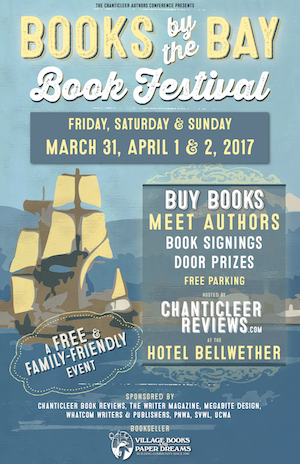
    bbb poster 2017 smallIf you know one thing about the Chanticleer Author Conference, you know it is unique. We specifically cater to already published authors and teach the tools they need to successfully sell and market their books.

    Books by the Bay is also a unique book fair. Many conferences offer book rooms to sell the books of their presenters. At CAC the book room is for everyone! All attendees books may be sold in the book room!

    And it is OPEN to the General Public for 3 days! 

    Books by the Bay Facts:

    1. The book room is fully staffed by Village Books – one of the top five best Independent Booksellers (rated by Publisher’s Weekly)
    2. The book room is open to the public all three days of the conference
    3. It stays open late on the night of the awards gala
    4. Some of our big winners have sold out completely and gone on to receive special placement in the Village Books store long after the conference is over.
    5. Other authors buy a lot of books, and bring friends to buy books, so a good elevator pitch is essential to bring along to the conference.

    villagebooksEveryone who registers for the conference will receive instructions, closer to the date, of how to enter books into the Village Books system for the event. The book room will be open all weekend for sale, and on the last day, Sunday, from 1pm to 4 pm, when conference sessions have ended the book room will transform into a festival of authors meeting and greeting the public, signing books, performing readings and more.[/fusion_text][fusion_text]

    History of Books by the Bay and the Chanticleer Author Conference

    books&brews_logo_edit
    Our First Poster

    September 14, 2014 Chanticleer held the very first Books by the Bay, then known as the Books & Brews Book Fest, at Boundary Bay Brewery in Bellingham Washington. This was our very first Book Fest. And the inaugural Chanticleer Author Conference #CAC14 followed days later on September 19th. Looking even further back, the very first seed of the Chanticleer Author Conference was planted when we held our first awards gala in the summer of 2013.

    In the second year of our book fest it was rebranded as Books by the Bay and relocated to the Hotel Bellwether, so that it could coincide with #CAC15 in September 2015. In the third year, we did something crazy and moved everything up to April 2016 (leaving us only 6 months to organize), so that we could give our awards out in a more timely fashion.

    And here we are at #CAC17, our fourth conference, fourth book fair, and fifth awards gala. Whew! It’s been quite the ride.

    We invite you to join us! Either by attending the conference and making your books available for purchase in the book room, or by dropping by to see what the book room has to offer, meet a few authors and support the creative community by buying some books.[/fusion_text][/fusion_builder_column][fusion_builder_column type=”1_2″ layout=”1_2″ last=”no” spacing=”yes” center_content=”no” hide_on_mobile=”no” background_color=”” background_image=”” background_repeat=”no-repeat” background_position=”left top” hover_type=”none” link=”” border_position=”all” border_size=”0px” border_color=”” border_style=”” padding=”” margin_top=”” margin_bottom=”” animation_type=”” animation_direction=”” animation_speed=”0.1″ animation_offset=”” class=”” id=”” min_height=””][fusion_text]

    Books by the Bay is held at the Ballroom of the Hotel Bellwether. The Book Room, from Friday to Sunday, is in the atrium and the Book Fest, on Sunday from 1-4, will be in and around the main Ballroom. Will you be there? Let us know on our Facebook Page.

    Will your books be there? Register for the conference today!

    [/fusion_text][/fusion_builder_column][fusion_builder_column type=”1_2″ layout=”1_2″ last=”yes” spacing=”yes” center_content=”no” hide_on_mobile=”no” background_color=”” background_image=”” background_repeat=”no-repeat” background_position=”left top” hover_type=”none” link=”” border_position=”all” border_size=”0px” border_color=”” border_style=”” padding=”” margin_top=”” margin_bottom=”” animation_type=”” animation_direction=”” animation_speed=”0.1″ animation_offset=”” class=”” id=”” min_height=””][fusion_button link=”https://www.chantireviews.com/services#!/EARLY-BIRD-2017-Chanticleer-Authors-Conference-3-Day-Pass-and-2016-Entries-Awards-Banquet-Register-Today-Seating-is-limited/p/37335633/category=9758702″ color=”darkgray” size=”large” target=”_self” icon_position=”left” icon_divider=”no” animation_type=”shake” animation_direction=”left” animation_speed=”1″ alignment=”left”]Register for CAC17[/fusion_button][/fusion_builder_column][/fusion_builder_row][/fusion_builder_container]

  • CROSSING PATHS (Geneva Shores Book 2) by Kate Vale

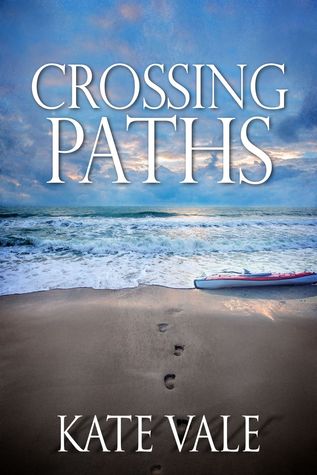
    CROSSING PATHS (Geneva Shores Book 2) by Kate Vale

    Two lovers reunited after decades apart, after they were tragically separated, find they can’t pick up where they left off, but love is always worth fighting for.

    Kate Vale fans will be pleased with her latest book in the Geneva Shores romantic fiction series that takes place in the Pacific Northwest. It features soon-to-be divorced Trish who is overjoyed to be reunited with Denis, the father of her grown son, after a boating accident decades earlier tore them apart. But trying to renew their relationship is made complicated by the great distance between them as well as her pending divorce with Richard. She is also intent on maintaining good relationships both with her son, Chet, and her stepson with Richard, Ed.

    To make things harder for Trish, Richard does not want the divorce and he is willing to go to great lengths to stop it from happening. Meanwhile, Trish and Denis are falling deeper and deeper into love. Trish is a character who many will relate to as she struggles to dig her way out of a mess that leaves her vulnerable. Though her relationships are not always easy, she is a kind-hearted individual who fights to keep her family together as much as she can.

    Richard’s son Ed, who helps run Richard’s real estate business, starts learning that Richard does not always close deals by the book. And Ed is already unable to connect with his father as he is afraid to reveal a detail about himself that may destroy their relationship. Trish and Denis struggle to make it as complicated family relationships and meddling from Richard threaten to undermine their newly rekindled love.

    Crossing Paths is a novel about the struggles of real and difficult connections that are glorified and demonized and reflects the conflicts and rapport of myriad relationships, romantic, familial and otherwise. Kate Vale excels at writing classic romance novels. Readers who are wanting steamy sex scenes or action/adventure tales should look elsewhere. Vale delivers real-life scenarios and characters that real-life women can identify with and then supplies the hopeful endings that avid romance readers desire. Pour yourself a cup of tea or a glass of your favorite wine and enjoy.


  • 10 New Year’s Resolutions for Authors to Improve Marketing and Book Sales

    10 New Year’s Resolutions for Authors to Improve Marketing and Book Sales

    What are your next moves?
    What are YOUR Next Moves in 2017?

    Five Free Action Items to Strengthen your Author Platform in 2017

    1. Spiff up point of sale information on Amazon Author Central – Read our handy how-to article on using Author Central.
    2. Create your author media kit – A page on your website which contains, at the very least, your official bio, both long and short versions written in third person, your official author image, nice and large, with a good quality resolution.
    3. Write your book club questions – Read our article on how to write your questions and pitch to book clubs, written by two of our speakers for the upcoming Chanticleer Author Conference.
    4. Create an editorial calendar for 2017 – Plan your blog and social posts ahead so you never miss an important time sensitive topic. Make a spreadsheet to track holidays and days devoted to important social issues which you might want to post about such as: Banned Books Week, or Independent Bookstore Day, or Indie Author Day (celebrated by local public libraries).
    5. Make an appointment to meet with your local book store’s buyer – If your books are not on the shelf of your local book store, often all it takes is making an appointment with the right person. If your books are on their shelf already, it’s a good idea to touch base now and then, ask about special display opportunities and events you can get involved in.

    Five Ways to Invest in your Author Career Business in 2017

    1. Commission your professional head-shot – Have you been using an assortment of photos taken with your phone for your author photo? A professional photo will boost your confidence and give the impression to potential readers that you are serious about your craft. Show them they can expect your books to be worth the time and money you are asking them to invest, by making a little investment yourself.
    2. Hire a professional cover designer – Take a hard look at your book cover. A good cover can make or break your book sales. Don’t make the mistake of thinking any good artist can make a book cover. There are subtle and even subliminal cues for each genre that communicate to readers through your book cover. Read our article on the concepts professional designers use to create book covers that can mean the difference between hundreds or thousands of book sales per year. It is worth the investment.
    3. Improve your book with editing services – even if your book is already published. The digital age allows for tidying up those little typos and “orphans and widows.” The editorial process is an essential tool for authors. There are a range of services available and every one of them can help improve your book. A better book means more book sales. Satisfied readers will be create buzz, write reviews and become dedicated fans for future book sales. Investing in editing is not as simple as hiring an editor, most editors specialize in one specific type of editing. Read our article on the 5 different types of editing services to understand what you are getting when you hire your editor.
    4. Invest in your author website – If you don’t have an author website yet, you need to get one. If you have a website, when was the last time you refreshed it’s look and design? Website fashions come an go, keeping your site design fresh tells visitors that you are still “there” and they can expect fresh content if they come back often, or a response if they comment.
    5. LEARN – Professional development for authors is never ending. More information exists about writing than one person can probably absorb in a lifetime. You can read books, sign up for classes, get a coach, go out with publishing professionals for lunch or an after work drink to make connections and build relationships, and attend author conferences and stay in contact with those you meet. Make a professional development budget for 2017 to improve your craft as well as your business skills.

    What are your next moves? We’d love for you to share them with the Chanticleer Community of Authors!

    HAPPY NEW YEAR!

  • WALLS for the WIND by Alethea Williams – The Orphan Trains of Hell on Wheels

    WALLS for the WIND by Alethea Williams – The Orphan Trains of Hell on Wheels

    A poignant tale set in the post-Civil War era of the United States in the rough-and-tumble boomtowns that follow the transcontinental railway as it was being built. The author focuses heavily on the often-forgotten plight of orphaned and immigrant children from the crowded cities of the East where they disembarked from the “coffin ships.” Many were packed on “orphan trains” heading west. The book leads off in New York City and eventually heads to Dakota Territory as readers learn about the plight of these orphans.

    Several children’s welfare movements began to deal with the thousands of homeless children of indentured servants and impoverished immigrants. One of these programs was a welfare program that transported orphaned and homeless children from the highly populated Eastern cities and placed them in foster homes located throughout the rural Midwest. These trains operated from 1854 to 1929 and relocated some 200,000 orphaned, abandoned or homeless children. Their plight is the core of Alethea Williams’ historical fiction titled Walls for the Wind.

    Kit Calhoun’s character, the protagonist, was created to portray one youngster among the estimated 34,000 children roaming the streets of New York City, enmeshed in despair and hopelessness in the 1850s. Kit eventually finds herself in the care of the influential Reverend Howe, founder, and director of the Immigrant Children’s Asylum. Kit is fortunate as she is given education and training as a young ward. As time passes and Kit grows older, she takes a job as assistant to the elderly director, Rev. Howe. Having felt the genuine love and care from a person to redirect the course of her own life, Kit passionately goes about the task of rescuing other homeless children.

    Kit finds the work empowering and important, but she also faces an inner struggle at times that the author, Alethea Williams, expertly develops. The author is adept at weaving historical fact, vivid descriptions of the times, and an engrossing plot-line through a young woman’s perspective in this male dominated time.

    The pace of the novel picks up when Kit heads west on an orphan train to help place children with farm families on the frontier. Obviously, Kit would like to see the children adopted by loving parents, but what she quickly discovers is the families the children are being placed with, treat the children as little more than indentured servants who are forced to pay for their room and board as farmhands and laborers with little nurturing or no time for education.

    Not being able to accept this fate for four particular children, Kit decides to adopt them herself when the Orphan Train reaches its destination in Colorado.

    Though her actions are noble, supporting her newly adopted children is a struggle. They live out of a tent and Kit must take in laundry to earn money. But it’s never enough. To make matters worse, she is assaulted by a gambler. At this point, Kit has total disdain for men as she has come to the belief that all men are users and want women for only one thing. When she finally encounters a man that breaks this mold she openly struggles with trust issues.

    A vivid and multi-layered take on the turbulent post-Civil War times that examines with wide open eyes the Wild West environs and the human cost of the “Manifest Destiny” that lead to Transcontinental railway and the U.S. expansion west.

    Author Alethea Williams’ characters portray the difficulties and challenges of these hard scrabble times with a refreshing perspective from a young woman who is trying to make her way. The closing chapters of this powerful tale play out this struggle in breathtaking fashion. An enlightening and informative read of the United States’ not so distant past.


  • S is for Safari: An Alphabetical Adventure with Quickly, the Magic Spatula by Jeryl Abelmann and Miriam Kronish

    S is for Safari: An Alphabetical Adventure with Quickly, the Magic Spatula by Jeryl Abelmann and Miriam Kronish

    Quickly, the Magic Spatula has returned in an engaging new book by award-winning authors, Miriam Kronish and Jeryl Abelmann. Illustrator Daniel J. Seward playfully portrays Quickly in white sneakers sporting a bright red ‘Q’ and brings Quickly, PanDora, and their new friend Ponnie to life with sparkling eyes and action poses. His animal illustrations are both accurate and charming.

    After greeting us with a big “Hello!” Quickly explains that Ponnie, a spatula that he and his old friend PanDora met last year, has invited them to visit his country, South Africa. He will be their safari guide, driving their smiling green jeep as they make their way around the land to “visit the animals and learn their names” [each one representing a different letter of the alphabet] and “see the country [with sights representing a letter] and play some games.”

    Kronish and Abelmann’s alphabet stories, which proffer a few simple facts about the animals and places, are written in the most delightful verse. Rhyming words are here, there, and everywhere! For example: “B stands for Buffalo…If you look at its back, you’ll find a tiny bird. No, it’s not absurd to find a bird. The oxpecker is its name. What a wonderful word! And the buffalo loves to be part of the herd.” Another favorite, “H stands for Hippo—Hippos love to play in water. Don’t you think they oughtta?” Then there is “Victoria Falls—where the water never stops falling, and the mists never stop rising. It’s not so surprising.” Finally, the safari party meets the Zebra, which “gallops like a horse, and is related to a donkey, of course!”

    The safari is over. It’s time to go home. As a parting surprise, Ponnie gives his friends a recipe for the South African Pannekoek, or pancake, which Quickly shares with us.

    Quickly’s safari adventure is a delightful way to introduce children to new vocabulary words, geographic information, and learn about African animals. The handy games make learning this new information fun and entertaining. And the captivating rhymes will have young readers giggling as they repeat the verses.

    Next, children and adults will have a lot of fun with “Quickly’s Safari Adventure Coloring & Activity Book.” And, if you haven’t already read them, “Quickly, the Magic Spatula” and “Quickly’s Magical Pancake Adventure” will fill you in on the story of how Quickly came to life and his earlier adventures.

    Quickly, the Magic Spatula

    A surefire way to make a children’s book a favorite is to mix a bit of truth with a bit of magic, and that’s just what Jeryl Abelmann and Miriam Kronish have done in the award winning “Quickly: The Magic Spatula.” Chason Matthams’s illustrations further enliven the story with their unique design and bright color.

    Big sister and younger brother, all grown up, are searching for mementos in the attic of their childhood home when they come upon a dusty box marked ‘kitchen utensils’. Pulling the cardboard flaps open, something catches their eyes, and they both shout “Quickly! It’s Quickly!” An old spatula—its metal bent and dulled, and the green paint on its handle almost peeled off. But in an instant, brother and sister are young again, once more in Mommy’s sunny kitchen.

    Mommy’s delicious pancakes are sizzling in the pan, as always on Sunday mornings, and the children eagerly awaiting a plateful. Suddenly Mommy cried “Jeffrey! Please bring me the spatula—quickly!” Jeffrey grabs the sparkly, green-handled spatula and, running across the kitchen, hollers “Here’s Quickly, Mommy!” Four-year-old Jeffrey thinks the spatula was named Quickly!

    Discovering that he has a name brings the spatula magically to life. Quickly, the spatula is now convinced that he possesses the magic to make Mommy’s pancakes taste better than ever. And sure enough, Quickly’s magic works!

    For children as well as adults, giving life to an inanimate object can create magic in a story—or two or three. Quickly, the Magic Spatula gives us pause to consider the beloved objects in our daily lives that create magical memorable moments—a great way to start a conversation with children! The story is also a much needed reminder to busy adults just how special simple rituals can be to children and the memories that create can last a lifetime.

    Be sure to follow Quickly’s continuing story in “Quickly’s Magical Pancake Adventure” and “S is for Safari: An Alphabetical Adventure with Quickly, the Magic Spatula.” Then have fun with “Quickly’s Safari Adventure Coloring & Activity Book.”

    Quickly’s Magical Pancake Adventure

    Miriam Kronish and Jeryl Abelmann’s lovable character, Quickly, the Magical Spatula, returns in Quickly’s Magical Pancake Adventure. In this story, his magic extends beyond helping Mommy make Silver Dollar pancakes in her sunny kitchen. Quickly decides to see the world and meet other spatulas who make different kinds of pancakes. But there is more magic at work in this book, with the power to pique young readers’ interest with not just an engaging story, but also what could become an enjoyable activity for the whole family!

    Eager to begin his next adventure, Quickly wiggles out of the frame in which Jeffrey and his sister had placed him. He hops out the window and sets off on his adventure. Soon he meets up with a friendly fellow spatula, who introduces himself as Backburner, the Pancake Turner, or just Bernie. He is a pancake historian, on the lookout for new facts about pancakes, and invites Quickly to join him.

    The new friends head down the road until they see a large colorful sign: “Calling All Spatulas to the First Annual Spatula Camp.” Heading for the Grand Exhibition Hall, they join a crowd of spatulas—of all shapes and colors—deciding which sessions to attend: pancake recipes and tips, pancake songs and stories, pancake makeup (like cherry cheeks and blackberry brows), or Great Chefs’ Pancakes, at which each chef will share a special recipe.

    While at the camp, Quickly collects recipes from the chefs, while Bernie picks up griddling tips. Then they join a group of spatulas listening to PanDora tell the story of Pancake Day in the UK. Quickly muses about a world in which all people belong to one big, happy pancake-eating family. Inspired, he writes “A Pancake Poem” to share with his new friends.

    Quickly suddenly realizes it is time to go home. In less time than it takes to say ‘Quickly, the Magic Spatula’, he lands on the kitchen counter (where, as you will see, the book’s respected illustrator, Chason Matthams, has laid out all the ingredients for Mommy’s Silver Dollar pancakes). Before Quickly climbs back into his frame, he compiles his collection of famous pancake recipes just for his readers including one from one of my favorite chefs, Jacques Pepin.

    Young readers will be happy to know that “Quickly, The Magic Spatula” and the new (2016) “S is for Safari: An Alphabetical Adventure with Quickly, the Magic Spatula”, and the beautiful coloring/activity book, “Safari Adventure Coloring & Activity Book” are available for more fun and adventures.

     

  • Spotlight on: Susan Conrad, CAC17 Speaker, Author & Graphic Designer

    Spotlight on: Susan Conrad, CAC17 Speaker, Author & Graphic Designer

    You wrote a book, you sent it out to some editors and agents…and it wasn’t accepted. Are you feeling like giving up? Are you wondering if its possible to do it all on your own? Do you need some inspiration and encouragement?

    Meet Susan Conrad, someone who knows a little bit about persistence and going it alone after her 1,200-mile solo kayaking journey to Alaska, as well as how to get out and tour with her book in unique ways that reach today’s audiences.

    And you can find her at the upcoming Chanticleer Author ConferenceCAC17March 31st to April 2nd where she will be teaching My Life as an Unconventional Book Tour and be around to talk about the many things she has learned and experienced.

    As part of our spotlight series, we asked Susan our five questions to get her perspective on professional success.

    1. When did you know what you really wanted to be?

    Well… I’m 55 now and I’m still pondering what I’ll be when I grow up. When I was a little girl, my best friend and I had these reading contests to see who could read the most books in any given week. She always won, but I devoured every adventure book I could get my hands on: Trixie Belden, Nancy Drew, Huck Finn, Tom Sawyer, The Hardy Boys, you name it! That same friend and I also had feverish letter-writing contests. That was back in the day when people actually wrote letters, with a spiral notebook and Bic pen! We’d even get out an old-fashioned envelope, lick a stamp, and send our ridiculously lengthy letters off with the mailman. I had such a confusing childhood that I don’t think I saw myself as growing up and being much of anything, but the magic of words—and the places they could transport me—definitely consoled me.

    2. What was the biggest challenge you faced?

    Not believing in myself.

    3. How do you define success?

    I’ve never embodied the traditional view of success: money, big job, material possessions, etc. When I’m doing what I love, when my heart zings, and I feel good about myself, when I feel I’ve connected with others and contributed to something bigger than myself, I feel I’ve been successful. It’s a personal thing.

    4. How long did it take to achieve your success?

    “Achieving success” is an ongoing process. It takes time, patience, and hard work to achieve our biggest dreams. Somedays it’s being successful at simply feeling content with where I’m at in life. Other days it’s not leaving my keys in the refrigerator. Will I feel I’ve achieved success when Ellen Degeneres calls me (move over Oprah)? Hell yeah!

    5. What is the best advice you have ever received?

    If you’re going through hell, keep going!

    If you have not registered for CAC17 yet, what are you waiting for? Susan Conrad and more fantastic speakers (including yourself possibly, if you register before the schedule is full) will be sharing their experience and knowledge about writing books, selling books, and everything to do with being a successful author.


    About Susan

    Susan Conrad is an author, adventurer, and speaker who has paddled extensively throughout the Salish Sea—and beyond. On an early spring morning in 2010, Susan dipped her paddle into the water near Anacortes, WA and began a 1,200-mile solo journey of the sea and soul to Juneau, AK. Her debut memoir Inside: One Woman’s Journey Through the Inside Passage is the story resulting from that life-changing journey. (released May 2016)
    Susan’s tenacious exploration by sea kayak has fueled her stories and images of the natural world for decades. Her articles and photographs have appeared in Sea Kayaker, Canoe and Kayak, Adventures Northwest, Figure magazines, and more. Wielding her graphic design skills, Susan is keen on helping other authors create visually-polished book proposals, media kits, cover designs, and websites.

    Susan’s class:

    My Life as an Unconventional Book Tour – Gone are the days where an author simply reads, opens the floor to Q&A, and then signs books. Your audience craves engagement, and you want them to leave with your book in their hands—and with vivid memories in their minds. Learn how to: find your audience, generate clever promotions and land the venues you want, organize and present a killer book tour and not go broke doing it, set the mood, engage and dazzle your audience, and more.

    Check out all the classes and sessions we have scheduled!

    Register for CAC17 NOW!