Blog

  • Love, Loss, and Awakening: (Mis)adventures on the Way Back to Joy by Dennis Freed – Non-Fiction/Memoir

    Love, Loss, and Awakening: (Mis)adventures on the Way Back to Joy by Dennis Freed – Non-Fiction/Memoir

    A heartfelt and profound account of confronting the death of a beloved spouse, Love, Loss, and Awakening combines pathos, humor, and gutsy truth from a survivor’s direct vantage point.

    When Dennis Freed married Hope, they were young. They had two sons, lived in the same house for years, and weathered many crises—until Hope contracted cancer and after several years of struggle, passed away. This is Freed’s frank, heart-rending tale of bereavement and recovery, and as such, it is also a paean to his devotion to Hope.

    As can be seen, even the names are charged with significance. Hope was a person with a positive nature who enjoyed helping others; who was determined to avoid discouragement even as her body was ravaged by disease, and who after her passing seemed able to advise and comfort her grieving spouse. But Dennis knew that in order to be truly “freed” he must, somehow, move on.

    At first, he battled with suicidal ideations, bouncing from despair and loneliness to anger–why did his wife “leave” him? Tormented by memories of Hope, he seized, perhaps prematurely, perhaps to excess, on the notion that other women could save him from his hellish grief state. This wasn’t easy for him because he’d met Hope at age 21 and married her soon after; he had to relearn the art of dating. He took on the search for women like a job. He visited dating websites, studied how to create a profile, and took pictures of himself in various poses and outfits. He had problems with his sexual apparatus and sometimes turned to a certain kind of female to relieve his aches and longings. He experimented with hair removal products to re-image himself for dating.

    Yet, as he remembered Hope, he knew what he wanted: not just a date – but a real partner. He went through all the recommended rituals: writing a letter of apology to Hope and burning it, scattering her ashes, connecting with his old memories and new aspirations through music and meditation, attending focus groups.

    In an especially poignant segment, he describes in vivid detail his wife’s one last tear. At times he even believed he had “seen” Hope, or “heard” her counseling him. But widower Freed finally realized that he had to take life as it came at him, not try to orchestrate the next moves; it was then that he found a new companion, someone he could accept and love fully, without guilt or regret.

    Freed, a developer, construction executive, and part-time university lecturer displays a remarkable gift for creating rich, emotionally tinged prose. Anyone who’s been through, or envisions ever having to go through, even a small part of what Freed experienced, will be moved because his story elicits vividly painful and, ultimately, a broad redemptive spectrum of emotions.

    Too personal to be a how-to manual, Love, Loss, and Awakening is more akin to a vivid portrayal of someone desperately stumbling in the dark desperately fumbling for a light switch, a flashlight, even a match to show the way out despair and hopelessness, and, then after a lot of bumps and scrapes, finally finding what he was seeking–happiness.

    5 Star Best Book Chanticleer Reviews round silver sticker

  • The Breast is History: An Intimate Memoir of Breast Cancer by Bronwyn Hope – Inspirational Non-Fiction

    The Breast is History: An Intimate Memoir of Breast Cancer by Bronwyn Hope – Inspirational Non-Fiction

    A realistic, up-close look at life as a cancer patient and survivor. The Breast Is History is a strong tool of hope and humor in the darkest days of any woman’s life.  

    In September 2011, Bronwyn Hope received her initial diagnosis of breast cancer; by March 2013 she had had both breasts removed, had gone through numerous chemo and radiation treatments, taken thousands of pills, and come out of it with a gritty, positive philosophy.

    When she was first diagnosed, a close friend advised her to start a blog, something very far from her mind at that moment. But, her friend reasoned, she could inspire others with her story. This was not a fanciful idea, given that Bronwyn was and is a powerhouse—an avid athlete, media maven, entrepreneur, activist, mother, and writer. She took her friend’s advice and this book is the result, a sometimes day-by-day journal of her battle with a disease she admits we often think of as a death sentence.

    Through the blog and, one suspects, because of her generally extroverted nature, Bronwyn discovered a very positive aspect of her illness: the immediate outpouring of warmth, good wishes, gifts and visits from a host of friends and family members. But as time passed, and her treatments, especially chemo, took their toll, she records many days of lonely suffering, struggling with nausea, pain in every part of her body, the loss of all body hair, and feelings of profound weakness and despair.  Yet she constantly, remarkably, tries to recoup her pre-cancer strength and endurance.

    A visit to a Catholic church and a later whirlwind trip to India provide spiritual insights. During her own cancer challenge, Bronwyn’s sister Fiona was also diagnosed with cancer. Helping Fiona through what she had already experienced became a sustaining factor for Bronwyn.

    The author does not shy away from tough issues, or from the occasional use of profanity when appropriate. She displays a secure knowledge of many complex medications and their effects and side effects. By detailing how her illness progressed, she provides a guideline for others. Her account is not without humor: she had been a large-breasted woman and had named her breasts Nicky and Paris. Nicky was the first to go, early on, and Paris about two years later. Photographs show the author with her once-straight hair, then hairless (with husband and dog getting a shave in sympathy) and then with the incongruously curly hair that grew in later.

    There will be no doubt as one reads this honest account, that Hope has walked the walk and is also very capable of talking the talk. Her wisdom, based on a long, harrowing experience, is anything but saccharine. She concludes, “I am not angry or depressed or saddened by what cancer has taken away from me. I am instead, empowered and strengthened by what it has given me: lessons that are priceless.”

    5 Star Best Book Chanticleer Reviews round silver sticker

  • Gateways by Jessica Schaub – Y/A Fantasy

    Gateways by Jessica Schaub – Y/A Fantasy

    Mind bending is one thing, but when teenager Victoria Nike paints her landscapes – and then falls through them into another dimension – you know you’re in for a treat in this charming and intelligent fantasy, Gateways.

    There are many similarities between Victoria’s story and that of Dorothy Gale: the emerging of special powers, real or imagined; companions both human and beast; an ultimate confrontation with a wicked witch.

    That said, in Gateways, Jessica Schaub has created a wonderful fantasy that takes readers on a journey into parallel worlds, where mages – beings who can invoke the elements and use their energy – coexist with sphinxes and other fantastic beasts. It’s also a tale of self-discovery, of innocence lost and wisdom gained. Schaub succeeds in placing teenagers into a story of mystic powers and magical without her characters losing their modern savvy and their wisecracker-y. This refined skill in storytelling keeps the elements of this story believable.

    When Victoria sees her mother’s growing distress, she notices her world changing in subtle ways as well. She retreats into the art room at school, where she paints. When she abruptly finds herself inside of her painting, she has no idea of how to climb out. Her art teacher, Anna Witherspoon, comes to her rescue. Anna is a Painter of gateways, and so, apparently, is Victoria.

    When she returns home, Victoria and her twin best friends, Tucker and Bobby Martin, are told by their parents to flee. “No matter what,” Mr. Martin tells his boys, “keep her safe.” Victoria takes Tucker to hide with her inside a painting of a forest.

    But that particular painting holds a prisoner, Lucian – a fallen mage accused of murder. Lucian wastes no time in escaping with the painting – the portal leading back to Victoria’s world – and so she, Tucker, Bobby, and Anna have no choice but to set off to recapture him in order to stop him from perpetrating further harm.

    This is a coming-of-age novel, and much like Dorothy in the Wizard of Oz, Victoria learns that things aren’t always as they seem. Bad people turn good, and good turn bad. Family history enlightens and relationships shift. But that is life and Victoria realizes that though her world has suddenly opened into ever-expanding opportunities, there truly is no place like home.

    A great read with a magical – air-bending quality that will draw the reader in and not allow them to leave until the very last page.

    5 Star Best Book Chanticleer Reviews round silver sticker

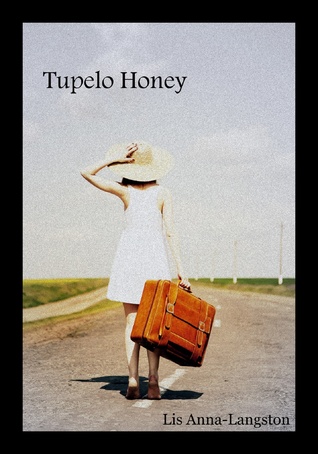
  • Tupelo Honey by Lis Anna Langston – Y/A

    Tupelo Honey by Lis Anna Langston – Y/A

    A stick-to-the-ribs portrait of an extraordinary girl who overcomes the deck stacked against her in the deep South. Tupelo Honey is one of our favorites.

    When you read more than a hundred books per year, it’s exciting to find one that surprises you. Tupelo Honey by Lis Anna Langston is one of those, sneaking up quietly to bust expectations and leaves you thinking about the story long after closing the book.

    Part of the surprise comes from being able to read on multiple levels. On the surface, it’s a sardonic YA adventure through tough modern times. Underneath, a unique and subtle paranormal story grounded in today’s world. At the deep level, a poignant coming-of-age tale about what it’s like to be a neglected child in a twisted family, and how spirit and smarts let one avoid a doom that seems inevitable.

    Tupelo Honey is a preteen girl in Mississippi whose mother is an abusive junkie. Her father is unknown but his place is filled by a compassionate drug dealer; her grandmother can offer only love and shelter; her uncles are both crazy; her best friend is suppressed by severely religious parents. Then there’s Mooshi, her invisible pal—half human, half dog—who comforts and helps through his silent presence. Only Tupelo Honey can see him.

    She accepts his existence (and others’ disbelief) without question, just as she accepts the poverty, insecurity, and frequent illegality of her life. While she’s wise beyond her years, she’s also still a child who craves loving parents and safe routine. There are so many abnormal people in her world that she takes them as normal, so her emotional reactions are low key where more privileged and conventional people would be freaked out.

    This gives the book a sort of creepy, quiet tone from the opening page that seduces the reader onward. Tupelo Honey simply tells her story as she grows through the year that turns her life around.

    The author has mastered the art of showing versus telling, giving just enough information so the reader can figure out what’s going on without having to back up or skip forward. Nothing about Tupelo Honey’s story is familiar enough to guess what’s going to happen next, making it an understated page-turner for youth and adults.

    5 Star Best Book Chanticleer Reviews round silver sticker

  • Western Fiction SHORT LIST for the 2016 LARAMIE AWARDS

    Western Fiction SHORT LIST for the 2016 LARAMIE AWARDS

    Western Pioneeer Civil War Fiction AwardThe LARAMIE Awards Writing Competition recognizes emerging new talent and outstanding works in the genres of  Western Fiction, Prairie & Pioneer Fiction, and Civil War Fiction. The Laramie Awards is a division of Chanticleer International Novel Writing Competitions.

    More than $30,000.00 dollars worth of cash and prizes will be awarded to Chanticleer Book Reviews 2016 writing competition winners at the Chanticleer Authors Conference April 1, 2017!

    The Laramie Awards FIRST IN CATEGORY sub-genres  are:

    • Western Romance
    • Adventure/Caper
    • Classic
    • Civil War/Prairie/Pioneer
    • Contemporary Western
    • Western Young Adult

    This is the OFFICIAL LIST of Semi-Finalists Authors and their  Titles of Works that have made it to the SHORT LIST for Laramie 2016 Novel Writing Contest.

    The following titles will compete for the 2016 Laramie First Place Category Positions:

    • T.M. Hinton – The Judas Steer
    • Dorothy Wiley – Frontier Gift of Love
    • Jacquie Rogers – Hot Work in Fry Pan Gulch (Honey Beaulieu – Man Hunter #1)
    • Sara Dahmen – Becoming Doctor Kinney
    • Barbara Salvatore – Big Horse Woman
    • Scott Eldon Swapp – Clevenger Gold: The True Story of Murder and Unfound Treasure
    • Harlan Hague – A Place for Mei Lin
    • Ken Farmer & Buck Stienke – Bass and the Lady
    • David Selcer – Lincoln’s Hat
    • Ashley E Sweeney – Eliza Waite
    • Jared McVay – Stranger On A Black Stallion
    • Jeffrey Price – Improbable Fortunes
    • Lynda J Cox – Seize the Flame
    • Ronald E. Yates – Finding Billy Battles
    • Miantae Metcalf McConnell – Deliverance, Mary Fields, First African American Woman Star Route Mail Carrier in the United State
    • Julia Robb – The Captive Boy
    • Juliette Douglas – Perfume, Powder, and Lead: Holy Sisters
    • Bert Entwistle – The Taylor Legacy
    • David G. Rasmussen – The Man Who Moiled for Gold

    The Laramie Semi-Finalists will compete for the First In Category Positions. First Place Category Book Award winners will automatically be entered into the Laramie GRAND PRIZE AWARD competition, which has a cash prize of $200 dollars. The CBR Grand Prize Genre Winners will compete for the CBR Overall Grand Prize for Best Book and its $1,000 purse.   

    • All Short Listers will receive high visibility along with special badges to wear during the Chanticleer Authors Conference and Awards Gala.

    As always, please do not hesitate to contact us with any questions, concerns, or suggestions at Info@ChantiReviews.com. 

    Congratulations to the Finalists in this fiercely competitive contest! 

    Good Luck to all of the Laramie Semi-Finalists as they compete for the coveted First Place Category  positions.

    The Laramie Grand Prize Winner and the First Place Category winners will be announced and recognized at the April 1, 2017 Chanticleer Writing Contests Annual Awards Gala, which takes place on the last evening of the Chanticleer Authors Conference that will be held in Bellingham, Wash. 

    We are now accepting submissions into the 2017 Laramie Awards writing competitions for Western Fiction. Please click here for more information or to enter the contests.

  • Rhythm and Cadence and Beats, Oh Yes! by Margie Lawson – Taking Your Writing to the Next Level

    Rhythm and Cadence and Beats, Oh Yes! by Margie Lawson – Taking Your Writing to the Next Level

    Rhythm Cadence and Beats
    Note from Kiffer Brown:  Margie Lawson is a psychologist-turned-editor. She uses her psychological expertise to analyze more passages and chapters than most people read in ten lifetimes. She developed deep editing techniques that help writers add power to each paragraph.

    Reading a book with flat-lined cadence is like watching a movie on mute. – Margie Lawson


    Most writers know about the power of rhythm and cadence and beats. But most don’t use that power in every sentence.

    A compelling cadence is more than varying sentence lengths. More than using ­­­­­standalone words.

    A compelling cadence carries power on the page. It propels readers through paragraphs and passages and pages.

    Read your work out loud, with feeling, and you’ll hear what beats work well, and what beats are missing.

    Many rhetorical devices are cadence-driven. Knowing which rhetorical devices boost cadence, pick up pace, make the read imperative, and 947 more cool things, loads your writing toolbox with super-powered tools.

    Check out these cadence-driven examples.

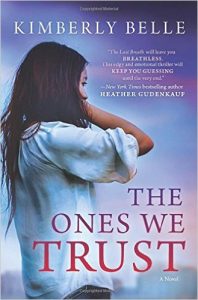
    The Ones We Trust, Kimberly Belle, Award-Winning MIRA Author, Multi-Margie-Grad
    1. Gabe’s good looks are real and rugged and raw, and now that I’ve seen both brothers up close, I’d choose Gabe over Zach any day.

    RD Combo: Polysyndeton (multiple conjunctions, no punctuation) and Alliteration

    2. The silence that spins out lasts forever. It’s the kind of silence that wraps around you like a shroud, the kind that turns the air thick and solid, the kind that makes you want to hear the answer as much as you dread it.

    Kimberly Belle could have written: The room went silent.

    I’m glad she decided to empower that emotionally-loaded scene dynamic.

    Rhetorical Devices: Amplification (silence) and anaphora (the kind, the kind, the kind)

    3. My heart races and my skin tingles and my blood pressure explodes like a grenade.

    Rhetorical Devices: Three visceral responses are powered with polysyndeton (multiple conjunctions, no punctuation) and a simile.

    The Blessing of No, Megan Menard, Multi-Margie-Grad

    1. Luke had a machine-gun laugh that fired about every third word.
    1. I picked up a French fry. It was a slender blonde, tall and weepy. I named the fry Tanya and chomped off its head.

    Those examples carry interest and power and are perfectly cadenced. The second example uses a metaphor and structural parallelism. It reveals a truth in a humor hit that could make us laugh or cry.

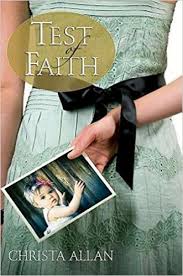
    Test of Faith, Christa Allan, Award-Winning Author, Multi-Margie-Grad 
    1. “If. Faith. Can. Come. Live. With Me?” I heaved every word out of my brain and into my mouth. I felt like someone regaining consciousness in an unfamiliar room or house or life.

    Christa Allan stylized that dialogue by using a Period. Infused. Sentence. That’s what I named it. Her dialogue cue is amplified, amplified, amplified stellar.
    She used an RD combo in the last sentence: polysyndeton and zeugma.

    What’s zeugma?

    I’ll SHOW not TELL. I know you’ll get it.

    My teaching-zeugma sentence:

    Margie grabbed her purse, her keys, and her steely resolve.

    You got it!

    This 2-point version is an example of zeugma too:

    Margie grabbed her purse and her steely resolve.

    Now you know the rhetorical device zeugma.

    1. This dinner was the Indy 500 version of returning to the track after a pit stop, except that the finish line was Logan, and there was only one first place.

    Ah… Metaphors and power words and hope all themed, propelled by a compelling cadence.

    Red-Headed Stepchild, Jaye Wells, USA Today Bestseller
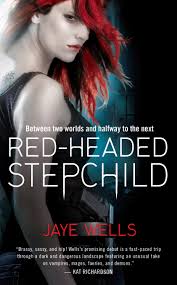
    Jaye Wells wrote this paragraph when she was in a full day workshop I taught for Dallas Area Romance Authors in 2007. I asked all the participants to write an example of anaphora.

    Anaphora — Repeating a word or phrase at the beginning of three or more successive phrases or clauses or sentences. The first three must be in a row.

    The paragraph she wrote in class became the first paragraph in the first chapter of Red-Headed Stepchild, her debut Urban Fantasy.

    Digging graves is hell on a manicure, but I was taught good vampires clean up after every meal. So I ignored the chipped onyx polish. I ignored the dirt caked under my nails. I ignored my palms, rubbed raw and blistering. And when a snapping twig announced David’s arrival, I ignored him too.

    Deep Edit Analysis:

    Anaphora: I ignored, I ignored, I ignored, I ignored

    Three Humor Hits:

      • Digging graves is hell on a manicure
      • good vampires clean up after every meal
      • I ignored him too

    Power Words — Words that carry psychological power: graves, hell, vampires, clean up, ignored, ignored, dirt, ignored, raw, blistering, arrival, ignored him

    What does the reader learn in those 53 words?

    1. She’s digging a grave. We can infer she killed someone.
    2. She’s a vampire.
    3. She gets manicures.
    4. She’s Goth.
    5. She’s been digging that grave for a while.

    She’s not concerned about David catching her digging a grave.

    In that one short, opening paragraph, Jaye Wells deepened characterization, shared a strong and fun voice, and made the reader want to read more. That’s smart writing. The kind that impresses agents and editors and readers and reviewers.

    Every example in this blog carries a compelling cadence. That pleasing cadence speaks to the reader’s subconscious. Cadence has the same impact on the reader that a movie sound track has on a viewer.

    Read the first sentence of this blog OUT LOUD:

                Reading a book with flat-lined cadence is like watching a movie on mute.

    Do you hear those perfect beats?

    I could have written:

                It is critical to pay attention to cadence.

    No cadence-driven power.

    Deep Editing Caveat:  Most of the examples I shared in this blog were amplified. I’m not suggesting that every sentence should be powered up, or made special in some way. That would be gag-ifying

    Not a word. But it carries the punch I wanted to share.

    We need plain writing. Writing that does it’s job without any amplification.

    We need fun, quirky, deep, stylistic, and tug-your-heart writing too.

    I teach writers how to add psychological power to their writing in hundreds of ways. No hype. No hyperbole. I’m just sharing what I do.

    I teach writers how to empower emotions.

    • How to avoid clichés and clichéd phrasing.
    • How to write fresh faces and voices and visceral responses.
    • How to use advanced stimulus-response patterns.
    • How to use my Four Levels of Powering Up Emotion. How to have the right emotional intensity in the right place.
    • How to create emotional authenticity on the page. How a character can act in an out-of-character way, and get the reader to buy it.
    • How to use six rhetorical devices to finesse backstory. Succinct, un-skimmable, beautifully cadenced backstory.
    • How to use my 20 Point Checklist for Openings, my 15 Point Checklist for Endings, my 12 Visceral Rules for Fiction Writers, my 10 Gems for Not Writing Your Mama’s Character Descriptions, and more.
    • How to deep edit analyze your scenes. I developed The EDITS System so writers can see what’s working, what’s not working, and what’s missing.

    I used to teach college. Graduate level psychology courses. I back up every teaching point with plenty of examples from a variety of genres.

    I shared a few of the twenty rhetorical devices I teach fiction writers here. I’ll cover all twenty in about 75 minutes in my full day master class. Some, like polysyndeton (…photographed and bagged and carried away…, The Last Breath, Kimberly Belle) may be new to you, but they’re easy to learn, and use. Handouts help.

    I’m looking forward to having fun in my Master Class on March 30. Join me, and you’ll leave with deep editing tips and techniques that will add power to your WIP.
    FIND OUT HOW TO ENTER Margie Lawson’s Contest to WIN a LECTURE PACKET by clicking here!

  • Deep Editing Power with Margie Lawson, CAC17 Master Class Presenter, Editor, and International Speaker

    Deep Editing Power with Margie Lawson, CAC17 Master Class Presenter, Editor, and International Speaker

    Have you registered for our #CAC17 Master Class yet?
    Margie Lawson will present a full day Master Class on March 30th, the day before the conference. Make sure to plan to come early for this special session and REGISTER NOW.
    Enrollment is limited, and seats are starting to fill up.
    Margie has presented over a 150 full day master classes in the U.S., Canada, Australia, and New Zealand. Writers credit her innovative deep editing approaches with taking their writing to publication, awards, and bestseller lists.

    Margie took time out of her busy schedule (teaching around the world) to write a guest post on some of the topics she will cover in the #CAC17 full day Master Class.

    Do you have a question, a comment, or an editing experience to share? Post a comment and you have TWO CHANCES to WIN a lecture packet! 

    Scroll down below the related posts, and you’ll see the comments section.


    Rhythm and Cadence and Beats, Oh Yes!

    By Margie Lawson Editor, International Presenter

    Reading a book with flat-lined cadence is like watching a movie on mute.

    Most writers know about the power of rhythm and cadence and beats. But most don’t use that power in every sentence.

    A compelling cadence is more than varying sentence lengths. More than using ­­­­­standalone words.

    A compelling cadence carries power on the page. It propels readers through paragraphs and passages and pages.

    Read your work out loud, with feeling, and you’ll hear what beats work well, and what beats are missing.

    Many rhetorical devices are cadence-driven. Knowing which rhetorical devices boost cadence, pick up pace, make the read imperative, and 947 more cool things, loads your writing toolbox with super-powered tools.

    Check out these cadence-driven examples.

    The Ones We Trust, Kimberly Belle, Award-Winning MIRA Author, Multi-Margie-Grad

    1. Gabe’s good looks are real and rugged and raw, and now that I’ve seen both brothers up close, I’d choose Gabe over Zach any day.

    RD Combo: Polysyndeton (multiple conjunctions, no punctuation) and Alliteration

    2. The silence that spins out lasts forever. It’s the kind of silence that wraps around you like a shroud, the kind that turns the air thick and solid, the kind that makes you want to hear the answer as much as you dread it.

    Kimberly Belle could have written: The room went silent.

    I’m glad she decided to empower that emotionally-loaded scene dynamic.

    Rhetorical Devices: Amplification (silence) and anaphora (the kind, the kind, the kind)

    3. My heart races and my skin tingles and my blood pressure explodes like a grenade.

    Rhetorical Devices: Three visceral responses are powered with polysyndeton (multiple conjunctions, no punctuation) and a simile.

    The Blessing of No, Megan Menard, Multi-Margie-Grad

    1. Luke had a machine-gun laugh that fired about every third word.
    1. I picked up a French fry. It was a slender blonde, tall and weepy. I named the fry Tanya and chomped off its head.

    Those examples carry interest and power and are perfectly cadenced. The second example uses a metaphor and structural parallelism. It reveals a truth in a humor hit that could make us laugh or cry.

    Test of Faith, Christa Allan, Award-Winning Author, Multi-Margie-Grad 

    1. “If. Faith. Can. Come. Live. With Me?” I heaved every word out of my brain and into my mouth. I felt like someone regaining consciousness in an unfamiliar room or house or life.

    Christa Allan stylized that dialogue by using a Period. Infused. Sentence. That’s what I named it. Her dialogue cue is amplified, amplified, amplified stellar.
    She used an RD combo in the last sentence: polysyndeton and zeugma.

    What’s zeugma?

    I’ll SHOW not TELL. I know you’ll get it.

    My teaching-zeugma sentence:

    Margie grabbed her purse, her keys, and her steely resolve.

    You got it!

    This 2-point version is an example of zeugma too:

    Margie grabbed her purse and her steely resolve.

    Now you know the rhetorical device zeugma.

    1. This dinner was the Indy 500 version of returning to the track after a pit stop, except that the finish line was Logan, and there was only one first place.

    Ah… Metaphors and power words and hope all themed, propelled by a compelling cadence.

    Red-Headed Stepchild, Jaye Wells, USA Today Bestseller

    Jaye Wells wrote this paragraph when she was in a full day workshop I taught for Dallas Area Romance Authors in 2007. I asked all the participants to write an example of anaphora.

    Anaphora — Repeating a word or phrase at the beginning of three or more successive phrases or clauses or sentences. The first three must be in a row.

    The paragraph she wrote in class became the first paragraph in the first chapter of Red-Headed Stepchild, her debut Urban Fantasy.

    Digging graves is hell on a manicure, but I was taught good vampires clean up after every meal. So I ignored the chipped onyx polish. I ignored the dirt caked under my nails. I ignored my palms, rubbed raw and blistering. And when a snapping twig announced David’s arrival, I ignored him too.

    Deep Edit Analysis:

    Anaphora: I ignored, I ignored, I ignored, I ignored

    Three Humor Hits:

      • Digging graves is hell on a manicure
      • good vampires clean up after every meal
      • I ignored him too

    Power Words — Words that carry psychological power: graves, hell, vampires, clean up, ignored, ignored, dirt, ignored, raw, blistering, arrival, ignored him

    What does the reader learn in those 53 words?

    1. She’s digging a grave. We can infer she killed someone.
    2. She’s a vampire.
    3. She gets manicures.
    4. She’s Goth.
    5. She’s been digging that grave for a while.

    She’s not concerned about David catching her digging a grave.

    In that one short, opening paragraph, Jaye Wells deepened characterization, shared a strong and fun voice, and made the reader want to read more. That’s smart writing. The kind that impresses agents and editors and readers and reviewers.

    Every example in this blog carries a compelling cadence. That pleasing cadence speaks to the reader’s subconscious. Cadence has the same impact on the reader that a movie sound track has on a viewer.

    Read the first sentence of this blog OUT LOUD:

                Reading a book with flat-lined cadence is like watching a movie on mute.

    Do you hear those perfect beats?

    I could have written:

                It is critical to pay attention to cadence.

    No cadence-driven power.

    Deep Editing Caveat:  Most of the examples I shared in this blog were amplified. I’m not suggesting that every sentence should be powered up, or made special in some way. That would be gagifying. 

    Not a word. But it carries the punch I wanted to share.

    We need plain writing. Writing that does its job without any amplification.

    We need fun, quirky, deep, stylistic, and tug-your-heart writing too.

    I teach writers how to add psychological power to their writing in hundreds of ways. No hype. No hyperbole. I’m just sharing what I do.

    I’m a psychologist-turned-editor. I used my psychological expertise to analyze more passages and chapters than most people read in ten lifetimes. I developed deep editing techniques that help writers add power to each paragraph.

    I teach writers how to empower emotions.

    How to avoid clichés and clichéd phrasing.

    How to write fresh faces and voices and visceral responses.

    How to use advanced stimulus-response patterns.

    How to use my Four Levels of Powering Up Emotion. How to have the right emotional intensity in the right place.

    How to create emotional authenticity on the page. How a character can act in an out-of-character way, and get the reader to buy it.

    How to use six rhetorical devices to finesse backstory. Succinct, unskimmable, beautifully cadenced backstory.

    How to use my 20 Point Checklist for Openings, my 15 Point Checklist for Endings, my 12 Visceral Rules for Fiction Writers, my 10 Gems for Not Writing Your Mama’s Character Descriptions, and more.

    How to deep edit analyze your scenes. I developed The EDITS System so writers can see what’s working, what’s not working, and what’s missing.

    I created seven online courses for writers:

    1. Empowering Characters’ Emotions
    2. Deep Editing, Rhetorical Devices, and More
    3. Writing Body Language and Dialogue Cues Like a Psychologist
    4. Defeat Self-Defeating Behaviors
    5. A Deep Editing Guide to Make Your Openings Pop
    6. Visceral Rules: Beyond Hammering Hearts
    7. Fab 30: Advanced Deep Editing, A Master Class

    The first four classes each have 250+ pages of lectures. The next three classes have 180 – 230 pages of lectures.

    I used to teach college. Graduate level psychology courses. I back up every teaching point with plenty of examples from a variety of genres.

    I shared a few of the twenty rhetorical devices I teach fiction writers here. I’ll cover all twenty in about 75 minutes in my full day master class. Some, like polysyndeton (…photographed and bagged and carried away…, The Last Breath, Kimberly Belle) may be new to you, but they’re easy to learn, and use. Handouts help.

    I’m looking forward to having fun in my Master Class on March 30. Join me, and you’ll leave with deep editing tips and techniques that will add power to your WIP.


    About Margie

    Margie Lawson —editor, and international presenter – teaches writers how to use her psychologically-based editing systems and deep editing techniques to create page-turners.

    Margie has presented over a hundred fifty full day master classes in the U.S., Canada, Australia, and New Zealand. Writers credit her innovative deep editing approaches with taking their writing to publication, awards, and bestseller lists.

    Margie developed seven online courses she teaches through Lawson Writer’s Academy on her website. LWA has over 30 instructors and offers five courses most months.

    Margie also teaches fifteen 5-day Immersion Master Classes a year. Enrollment is limited to seven. In 2017 she’s teaching Immersions in Atlanta, Denver, Dallas, Amarillo, Calgary, Washington D.C., and in Melbourne, Sydney, Brisbane, Coffs Harbour, Canberra, and Hobart, Australia.

    What’s the Buzz? 

    Randy Ingermanson, Ph. D., award-winning author of Writing Fiction for Dummies:

    In the twenty years I’ve been writing fiction, two teachers have astounded me with their insights and taught me something radically new: Dwight Swain and Margie Lawson. Margie taught me new ways to empower my writing.

    Melanie Milburne, USA Today Bestseller

    I had 40 books published before I met Margie Lawson. It wasn’t until I started using her deep editing techniques that I won several writing awards. I have a library of how-to books, but none top Margie’s expertise.

    Laura Drake, RITA Winner, The Sweet Spot

    When I took my first Margie Lawson class, the paradigm shift I experienced was more like an earthquake — I saw everything differently. I took more of her classes and I got a three book deal with Grand Central. A few months later I got a contract for a fourth book. Several months after that, I got contracted for three more books! I sold seven books in fifteen months—before my first book was released. I have Margie to thank for teaching me how to deep edit to get power on every page.

    Allison Brennan, NYT Bestseller:

    Margie Lawson, a brilliant psychologist, teaches a class on editing that, ahem, truly tested me. She uses color-coding to dissect writing in order to empower your stories. I learned from Margie how to fix my prose. I think about her editing system and techniques, ways to add power, finding the emotional key of the scene. I use her lessons to add power to my writing.

    Romily Bernard, RITA Winner, Find Me

    Your classes (both online and at the Georgia writing conference) changed my life!! My YA debut sold in a three-book, pre-empt to Harper Collins. Phoebe was so very complimentary about the way I render emotion and tension on the page and I know I have you to thank!

    Alex Ratcliff, Daphne Finalist

    Margie’s online courses and Immersion Master Class have strapped me into a skill-building machine for writers. With her help, in one year I moved from a can’t-write-a-fresh-line beginner to a Daphne finalist. Wow!

    Karin Tabke, Bestselling author

    I had so many epiphany moments Saturday my head was twitching. It’s still twitching! I wish I had attended Margie’s Empowering Characters’ Emotions master class earlier. My writing is stronger, more vivid, more emotional. The effects of the workshop were immediate. I highly recommend if you have the opportunity to take Margie’s workshop in person, do it.

    Colleen Coble, CEO of ACFW and Bestselling author

    “The workshop I went to last month was the best I’ve ever been to, bar none. And I’ve been to plenty. Margie’s workshop was so awesome, I’m going over my notes from what she taught before I start my next book. She’s a genius, pure and simple.”

    Elizabeth Essex, RITA Finalist, The Danger of Desire

    I’ve attended one of Margie’s all-day seminars, taken all her online classes; attended her workshops at RWA conferences, flown to Colorado to attend her four-day Immersion class, and hosted an Immersion class in Dallas. Margie taught me to challenge and push myself to make the hard changes from the first page of a manuscript until the very last. Working with Margie, you’ll have the tools to make every single word count.

    Comment Contest Details

    Post a comment and you have TWO CHANCES to WIN a lecture packet!

    You’ll win the lectures (250+ pages) from one of Margie Lawson’s online courses listed here:

    1. Empowering Characters’ Emotions
    1. Deep Editing, Rhetorical Devices, and More
    1. Writing Body Language and Dialogue Cues Like a Psychologist

    The drawings will be Sunday, Feb. 5th, 8:00 PM Mountain Time.  

    Drawing reschedule due to SUPERBOWL! Time extended until Thursday, Feb. 9, 2017 at 6 p.m. PST.

    The winners names will be posted here.

    See you on the blog!

    KEEP SCROLLING DOWN UNTIL YOU GET TO THE COMMENTS SECTION ON THIS PAGE (the place to leave your comments for Margie’s  contest).  

    All smiles…………….Margie

  • CHATELAINE Book Awards for ROMANCE Novels – the 2016 SHORT LIST

    CHATELAINE Book Awards for ROMANCE Novels – the 2016 SHORT LIST

    Romance Fiction AwardThe CHATELAINE Writing Competition Book Awards recognize emerging new talent and outstanding works in the genres of  Romantic Fiction and Women’s Fiction. The Chatelaine Awards is a division of Chanticleer International Novel Writing Competitions.
    More than $30,000.00 dollars worth of cash and prizes will be awarded to Chanticleer Book Reviews 2016 writing competition winners at the Chanticleer Authors Conference April 1, 2017!

    The Chatelaine Awards FIRST IN CATEGORY sub-genres  are:

    • Contemporary Romance
    • Historical Romance
    • Adventure & Suspense
    • Romantic Steamy/Sensual (Not Erotic)
    • Inspirational/Restorative

    The following Semi-Finalists will compete FIRST IN CATEGORY Positions and Book Awards Packages.

    This is the OFFICIAL SHORT LIST of SEMI-FINALISTS of the 2016 CHATELAINE Novel Writing Competition & Book Awards.

    • Regan Walker – The Refuge: An Inspirational Novel of Scotland
    • Nicola Italia – Love in the Valley of the Kings
    • Vicki Volden – Both
    • M A Clarke Scott – The Art of Enchantment
    • F. E. Greene – The Never List (Love Across Londons)
    • Lucy Carol – Stiff Competition
    • Ashlinn Craven – Building Mr. Darcy 
    • Diana Forbes – Mistress Suffragette
    • Nicole Evelina – Been Searching for You
    • Darby Karchut – Stone’s Heart
    • Lucinda Brant – Dair Devil: A Georgian Historical Romance #2
    • Gail Avery Halverson – The Boundary Stone
    • Dorothy Wiley – The Beauty of Love
    • Toby Neal – Somewhere in St. Thomas 
    • Kate James – When the Right One Comes Along #2
    • Kate James – When Love Matters Most
    • Jayne Castel – The Breaking Dawn
    • Gillian M. Mercurio –Kisimba
    • Karen Fitzpatrick – After the Rain
    • Laura W. Chance – To Cornwall, with Love
    • Susan Boles – Fated Love
    • P. A. Estelle – Hannah: Bride of Iowa
    • Elise K. Ackers – One For the Road
    • Rebecca Lochlann – The Sixth Labyrinth
    • Nate Gagon – Breaking Dad

    IF your name is on this list, please follow us on Twitter (@ChantiReviews)  and LIKE and Comment on our Facebook page so that we can tag you in our announcements.

    https://www.facebook.com/chantireviews/

    This list is the Official Posting of the 2016 Chatelaine Semi-Finalists who have made the SHORT LIST for the 2016 Chatelaine Awards.  Good luck to all in one of our most competitive novel competitions!

    The Chatelaine Semi-Finalists will compete for the Chatelaine Awards First In Category Positions, which consists of Four Judging Rounds.  First Place Category Book Award winners will automatically be entered into the Chatelaine GRAND PRIZE AWARD competition, which has a cash prize of $200 or $500 dollars in editorial services. The CBR Grand Prize Genre Winners will compete for the CBR Overall Grand Prize for Best Book and its $1,000 purse.   

    • All Short-Listed Authors will receive high visibility along with special badges to wear during the Chanticleer Authors Conference 2017 and Awards Gala. Register now for CAC17 to be there when your name is called!
    • Digital book award stickers for on-line promotion
    • Adhesive book stickers
    • Shelf-talkers and other promotional items
    • Promotion in on-line media

    As always, please do not hesitate to contact us with any questions, concerns, or suggestions at Info@ChantiReviews.com. 

    Congratulations to the Semi-Finalists in this fiercely competitive contest! 


    If your name is on this list, be sure to check out: 7 Things to do if you are a finalist or winner in the Chanticleer International Writing Competitions on our Winner Circle page.

    The Chatelaine First Place Category Winners and Grand Prize Winner will be announced at the April 1, 2017 Chanticleer Writing Contests Annual Awards Gala, which takes place on the last evening of the Chanticleer Authors Conference that will be held in Bellingham, Wash. Register now for CAC17 to be there when your name is called and accept your blue ribbon on our stage.

    We are now accepting submissions into the 2017 Chatelaine Awards writing competitions for Romantic Fiction. Enter the 2017 Chatelaine Awards Today! 

  • High Touch Marketing: The Secret Sauce of Book Promotion by Susan Colleen Browne, CAC17 Presenter

    High Touch Marketing: The Secret Sauce of Book Promotion by Susan Colleen Browne, CAC17 Presenter

    Susan Colleen Brown, Writing instructor and author will be teaching at CAC17 and took a little time out of her busy schedule to tell us more about the session she will be teaching:

    High Touch Marketing in a Digital World – As technology migrates into more aspects of our lives, forging personal connections with readers is crucial to an author’s success. In this session, we’ll discuss high-touch approaches and incorporating them into your marketing efforts. We’ll explore authors’ communities and how you can enhance your book events. We’ll also brainstorm ways to bring more of a personal touch to online interactions and look at authors who have mastered high-touch outreach. 

    Register for CAC17 NOW!


    Have you been riding the social media book promotion train without getting much traction? Maybe it’s time to try “high-touch” marketing strategies—making real-world connections to share your book.

    I first heard about high-touch marketing from Chanticleer’s fearless leader, Kiffer Brown, at one of her talks to a local writers’ group. Coined by Tesla CEO and game-changing thinker Elon Musk, the phrase “high touch” has taken on a new resonance as the publishing industry continues to shift and evolve more rapidly than ever. So how can we leverage high-touch to our advantage?

    When I published my first book, a backyard farming/follow your dreams memoir, face-to-face, hands-on reaching out was standard: visiting and/or phoning bookstores and libraries, lining up lots of author talks and events, getting into print media and distributing hard copy marketing materials. These venues took lots of time, energy, and money, but they were effective!

    Two years later, publishing my second book, I was dealing with a different genre (women’s commercial fiction) and an entirely new publishing landscape. With the exploding popularity of ebooks, who needed all that promotional heavy lifting? Even unknown authors could release a good story with a halfway decent cover online, and voila! Ebook sales happened organically! Several glorious years passed in which ebook sales overall rose steadily. All you had to do was sit back and let the good times roll while you worked on your next book.
    As they say, all good things must come to an end. The last two years or so, the publishing world has taken another ground-shifting turn. Authors are now releasing their books into a market flooded with titles, and reaching out to consumers inundated with entertainment choices. Social media content continues to explode. Tried and true marketing strategies are losing effectiveness as authors scramble to find the next magic book-promotion pill.

    So, how do we authors distinguish ourselves, our brands and our books in this crowded marketplace? Refocusing on high-touch tools, whether online or off—might be the “special sauce” you’re looking for! In the CAC17 session I’m leading, “High Touch Marketing in a Digital World,” we’ll share and discuss both face-to-face and digital marketing venues, how to cross-pollinate the two, and how high touch can help you negotiate the publishing industry’s ever-changing new normal.

    I look forward to meeting you at the Chanticleer Author’s Conference 2017!


    About Susan

    Susan Colleen Browne weaves her love of Ireland and her passion for country living into her Village of Ballydara series, novels and stories of love, friendship and family set in the Irish countryside. She’s also the author of an award-winning memoir, Little Farm in the Foothills, as well as the Morgan Carey fantasy-adventure series for tweens. A community college creative writing instructor, Susan runs a mini-farm in the foothills of the Pacific Northwest. Coming up: Book 4 of the Ballydara series, and a sequel to Little Farm in the Foothills!

    Register for CAC17 NOW!

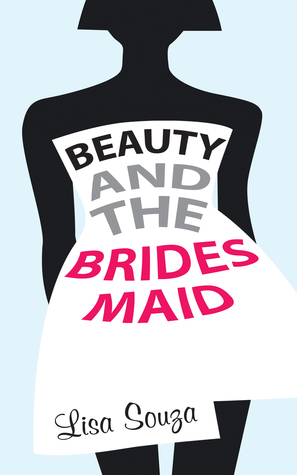
  • Beauty and the Bridesmaid by Lisa Souza – Chick-lit

    Beauty and the Bridesmaid by Lisa Souza – Chick-lit

    Beauty takes a different a form in Lisa Souza’s page-turning debut novel, Beauty and the Bridesmaid.

    Dorothy (Dot) Lindell tags herself as a “relationship black hole.” An overweight software geek with a loser love life whose only wish is to not die a virgin.

    At her cousin’s wedding, displayed in a tightly molded purple-ish taffeta gown, Dot feels she wins the award for the ugliest bridesmaid. To add injury to insult, Dot has lost hope of an amorous hookup since her escort, Kennedy J Kennedy is gay – and the life of the party. But when he offers to trade his image consulting services for her software know-how, Dot checks the box for a complete image overhaul.

    What she doesn’t realize is that her extensive overhaul is bigger, financially and physically and emotionally, than she could ever have imagined. If facial acid applications through a dermatologist aren’t enough, Dot’s personal trainer works her to death. Although it only takes her three and a half months to lose the weight through rigorous exercise program and her spanking-new meal plan, it all pales in comparison to the painful aftermath of plastic surgery.

    As a result of her hard work and her surgeon’s skill, Dot is NOT the same person, anatomically speaking, than before. Changing her moniker to her middle name, Alana (Dot) enters a new world of attraction. Among her many admirers, the first person to ask her on a date is none other than her heart-throb who didn’t know she existed – even though they worked in the same office.

    As told through Dot, Souza’s first person narrative describes a young woman whose involvement as a bridesmaid is less than stellar for several reasons, hideously unflattering dresses near the top of the list. Beauty and the Bridesmaid is a fascinating story that will hit the nerve of women who have ever felt or been told that their physical appearance just isn’t enough.

    Souza’s distinct cast encompasses a wide range of personalities. From the down-and-outers and geeks to the haughty, and those that are purely villainous, Souza has designed much of her figures to function as foils for the main purpose of shaping Dot’s persona. Scenes continually alternate between Dot’s work, home life, friendships, and attendance at weddings as she transforms from an unattractive heavyset woman to a slim drop-dead gorgeous diva. An appealing feature of Dot’s character is her snarky comebacks, which as comedic as they are, function as her defense mechanism. Underneath her callous demeanor is actually a very humble and compassionate side that remains consistent even though she changes outwardly.

    Souza slowly but steadily builds her plot with various elements to keep the story fluid. Aside from cliffhanging chapter endings and scenes replete with copious amounts of unexpected everything, Souza eliminates monotony by sprinkling the storyline with Dot’s therapy appointments, her Barbara Cartland romance reads, and bridal excerpts from Sarah Stein and Lucy Talbot’s The Bridesmaid’s Manual.

    Beauty and the Bridesmaid is a perfect read with broad audience appeal for both Chick Lit and Romance aficionados.

    5 Star Best Book Chanticleer Reviews round silver sticker