Blog

  • Fit to be Dead by Nancy West – Cozy Mystery for clue fans

    Fit to be Dead by Nancy West – Cozy Mystery for clue fans

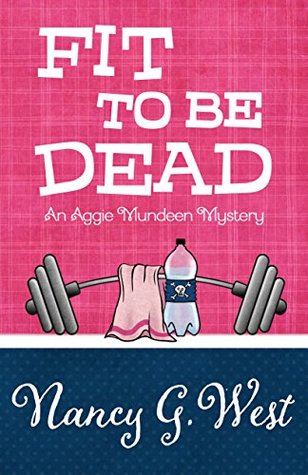
    Aggie is the author of the “Stay Young with Aggie” column and today she decides to follow her own advice. After all, she’s well over 30, admits to a few extra pounds, and looks ahead to growing old with sheer fear. She pulls into the Fit and Firm Fitness Center with the thought that she might be able to improve her social life along with her figure. Once inside, she receives a guest pass and another kind of pass – from a gorgeous blond who introduces himself as Pete Reeves and offers her a tour of the club. She declines the latter and heads for the locker room.

    As she enters the swimming area, however, she spots something strange at the far end of the pool. It’s a body. And it isn’t moving! Aggie rushes to the rescue and not a minute too soon. Her yell for help brings instructor Sarah Savoy to revive the young woman, Holly. To their combined horror, the women spot an electric cord snaking across the pool. Hard to say what would have happened to Holly first – drowning or electrocution – if Aggie hadn’t been there. Was it an accident or…? Such questions always make Aggie’s feet itch.

    The next day at the gym Holly confesses to Aggie that she had recently given her newborn baby girl—born out of wedlock—to an adoption agency. Trying to swallow her concern and sorrow, Aggie goes to the locker room to shower and dress. But soon she’s hearing screams. She rushes outside just as the medics arrive. Aggie knows two things: it’s Holly and she’s dead.

    Aggie decides she owes it to Holly to find out what happened. She’s certain that the hit and run was a second—this time successful—attempt on Holly’s life. But questions remain: Who? Why? As the column writer becomes sleuth, her spunk and determination return, along with her unique madcap approach to life.

    As Nancy West finished her award-winning Nine Days to Evil (2012), something about one of the supporting characters, Aggie Mundeen, wouldn’t let her rest. This character seemed to demand that West make her the protagonist of a new book. Thus, Fit to Be Dead was created!

    West crafts her characters with considerable expertise and an extensive vocabulary. West knows how to turn a phrase and how to keep you turning the pages. Additionally, this author has the keen knack of slyly tucking in clues so that they slip past readers at first, then pop up later. Thank you, Nancy West for crafting the Aggie Mundeen mysteries!

  • JUMP OFF the SHELF – HOW to MAKE YOUR WORKS GET NOTICED by Diane Sillan Isaacs

    JUMP OFF the SHELF – HOW to MAKE YOUR WORKS GET NOTICED by Diane Sillan Isaacs

    BASIC MAXIMS for CREATING COMPELLING CONTENT

    With 25 years in the film production world, I worked with scripts as the blueprints. I am now focusing on books, but story is story is story.

    The same guidelines I used in Hollywood, apply in publishing. 

    How can you stand out in a sea of new releases- scripts or books- estimated to be 2 million each year? 

    How can you entice readers to find your book, pick it up and read it?

    Whether you are published by the Big 5, hybrid houses, indie imprints or by self, start with these basic maxims for creating compelling content to increase your odds of being discovered:

    Start with a bold, big idea/a high concept– something bold, a twist, an irony. Imagine its own movie poster. Are you asking a profound question, setting forth a new reality,  diving deep into the human psyche, setting up a comedic situation, writing a biography – know your hook and build from there.

    Write the log line <33 words. Your story reduced to its essential core. Try out versions with friends/colleagues to test if they get the true meaning of your book.  Once it has been vetted, memorize it. Practice in the mirror so when someone asks you about your book… voila! without hesitation, you have this compact, crafted and compelling logline. Then, put the logline in a prominent position in your writing space.  As you are writing, the logline acts as the guardrails to keep your stream of consciousness on track. All satellite storylines revolve around that core statement.

    Walk in the skin of your main character. Before writing your book, imagine your character in different scenarios and challenging dilemmas that are outside the projected book’s storyline.  Just observe how he/she reacts to trauma, betrayal, falling in love, danger, as  it informs how your lead character thinks and acts in the world. Crawl inside his/her skin.

    Oftentimes, writers observe a character as if from across the room and paint the characters from the outside. Instead, start on the inside until you really know your protagonist- and antagonist too. These imaginings create an unspoken backstory and uniquely color the voice and reactions of your lead, thereby making him/her memorable and distinct. Characters are why people turn pages, so intrigue your readers with a rich and nuanced characters.

    Front load your story with intrigue, conflict, tension, wonder, the oh-my-goodness. Don’t hold back on the first paragraph or the first chapter. Today’s world is accustomed to videos under 5 seconds and interactions less than 140 characters. The story needs to hook the reader from the first sentence. To that point, no prologues or backstories to start your book off.  Jump on the train that is leaving the station. Backstories that are necessary to drive the story forward can be worked in later, but only if they are relevant and essential to knowing the character today.

    Create a GREAT Cover.  Yes, we do judge a book by its cover. Humans are judging machines and first impressions run deepest. Not that we are superficial all the time…but we definitely are when browsing bookstores and online titles. Covers project the books’ genre, emotion, energy and attract different types of readers. Successful covers are provocative: ironic, funny, intriguing, emotional, brash, curious, colorful- whatever emotions are congruent to your book. You are writers, not graphic artists. Your cover needs outside help. I see far too many times, authors are worn out and at wallet’s end when they get to the cover expense, but it is your most valuable sales force.

    At the upcoming CAC 17, I have a spicy session on how to make a great Story Cocktail- the ingredients to shake, stir and add a twist to light up your story and ultimately, your book sales. Hope to see you there! – Diane  

    Diane is the Creative Director at Chanticleer Reviews & Media.

    Diane Sillan Isaacs brings more than two decades of experience in film and television industries as an executive film producer, president of production for Don Johnson Productions at Universal and Paramount pictures, president of development and production for Green Moon Productions where she produced films for Antonio Banderas and Emma Thompson.

    Diane is also the executive creative director of Luna Design NYC. She and Kiffer Brown co-founded SillanPaceBrown Publishing + Production + Agency, LLC.


  • The Spider and the Stone: A Novel of Scotland’s Black Douglas by Glen Craney – Historical Fiction/Scottish War of Independence

    The Spider and the Stone: A Novel of Scotland’s Black Douglas by Glen Craney – Historical Fiction/Scottish War of Independence

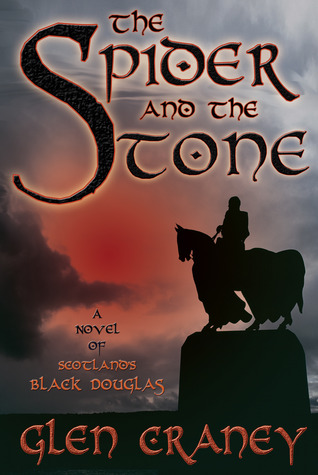
    Steeped in the early struggles for Scottish independence, Glen Craney’s The Spider and the Stone combines fact, folklore, and imagination to recreate the life of one of the country’s most storied heroes, James Douglas.

    As a young teenager, James was confronted with the barbaric cruelty of the English occupiers. King Edward, known as Longshanks, would stop at nothing to quell Scottish rebellion—humiliating, torturing, and slaughtering innocent civilians along with Scottish combatants striving for the freedom and the right to rule themselves.

    Just as he begins to grapple with the reality of his country’s plight, he meets and falls in love with a girl named Isabelle Macduff and determines to win her, despite the fact that she is promised in marriage to a rival of the Douglas clan.

    The book opens in the middle of scenes depicting the exploits 0f William Wallace – Braveheart, followed by a heartbreaking loss to Longshanks at Falkirk, ending with the gruesome murder of Wallace.

    Cue the return of James, who is back from France where he learned the art of war from the Knights Templar and is ready to fight. He and Robert the Bruce step into the breach and continue the assault on the English invaders.This is the stuff legends are made of, and Glen Craney does an excellent job bringing the tale to life. Written in lush prose with battle’s gore informed by the historical record and a scattering of erotic scenes with the decorum appropriate to the times, Craney’s offering keeps the reader solidly immersed in the late 1300s-early 1400s. He deftly crafts the coldness of the castles and the warmth of campfires sprinkled with colloquialisms redolent of the time and place.

    Craney admits having taken some liberties with the known facts, which are few, about the Scottish Wars of Independence and the major players; he has matched Isabelle with James, for example, though others have postulated an affair between her and The Bruce.

    The book’s title references two important elements of Scottish lore: the Stone of Scone, a necessity for the crowning of monarchs and sometimes said to be the Biblical Jacob’s Pillow; and the “spider” whose industry and apparent refusal to stop spinning her web no matter what obstacles she encountered so impressed and inspired Bruce (and in this version, James also) while in captivity.

    Craney’s attention to detail in both high concepts and simple conversations, make history come alive.

    “Cinematically enthralling and historically compelling, Glen Craney’s The Spider and the Stone is a must read for lovers of James Douglas, the fight for Scottish Independence, Braveheart, or Robert the Bruce.” – Chanticleer Reviews

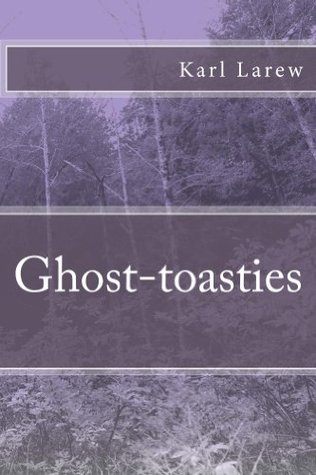
  • Ghost Toasties (Good Vampires Book 4) by Karl Larew – Humour/Satire, Vampires, Literary

    Ghost Toasties (Good Vampires Book 4) by Karl Larew – Humour/Satire, Vampires, Literary

    Volume 4 of a trilogy? That’s no typo! It’s just that those Bad Vampires had more mischief up their sleeves—and of course our Good Vampires couldn’t let them get away with it, especially when it seemed the Baddies had a Plot to Destroy Civilization as We Know It! Readers of Volumes 1-3 know that author,  Karl Larew couldn’t leave his readers in the dark…he had no choice but to write a Volume 4. Say hello to Ghost Toasties!

    You Newbies, who haven’t YET read the first three volumes, need to know that there are, indeed, vampires on our planet. The Bad Vampires engineer criminal plots to get human blood (which they cruelly gorge on, leaving their victims dead), creating really weird sorts of mayhem throughout the globe. Even Good Vampires have a metabolic need for small amounts of blood, but they have good human friends or, in some cases, human spouses who willingly, even lovingly, meet their needs in a sexy way – and sometimes by serving real Bloody Marys!

    The Good Vampires do their damnedest to halt the Baddies’ criminal schemes and to extinguish the Bad Vampire population. That’s why the Association of Good Vampires was created. It’s headquartered in New York City, in the Manhattan mansion of their chief, millionaire Mr. Arleigh Granville. The New York Association’s highest-ranking special agents are Mr. Granville’s vampire wife Inge (converted from Bad to Good Vampirism), Lance and his human wife Carol, and Nigerians Nigel and wife Becky, who are aided by bodyguards Gladdy and Dizzy, along with their wives, twins Helovah and Delivah.

    This cast of characters was considerably expanded at the end of Volume 3 by the arrival of five(!) babies—Arleigh Jr., Mary Jane, Reginald, and Pixie and Trixie—born within minutes of each other to the three special agent couples and the two bodyguards and their wives!

    Our story begins with Lance wakening Carol from a nightmare. As Lance tries to calm her, they hear a knock at the door. It is their friends and fellow agents, Nigel and Becky, inviting them to go out for a drink. But, as often happens, the phone rings. Inge, Arleigh’s assistant as well as wife, asks the agents to attend an emergency meeting the next morning. “Bring the babies,” she tells them. “Miss Overy (Arleigh’s secretary) can take care of them.” (Isn’t that what secretaries are for?)

    Somehow the Baddies have learned about the meeting and two men with pistols kidnap the two couples as they walk to HQ with their babies in strollers. Gladdy and Dizzy, of course, come to the rescue, followed by their wives and babies. Once at the meeting, they learn that at least part of the Baddie plot is in its early stages in Hawaii. But how can the special agents go to Oahu when they have babies needing to be fed and diapered?! It is decided that only the two primary agent couples, and Becky’s pet wolf, Wolfie, will fly to Hawaii in Mr. G’s private plane, leaving Mary Jane and Reginald at the mansion with the Granvilles and Miss Overy. Once in Honolulu, they will enlist the aid of Molly Houlihan and her mother, Holy Moly (friends of the Good Vampires from earlier adventures who now run a whore house called the Ukelele Girl) and Beatrice, a prostitute with a heart of gold (well, maybe silver).

    But first they visit the laboratory of Dr. Lester Griswold, Ace Scientist of the Good Vampire Association, who presents them with his newest gadgets, including an Ectoplasmic Dissolver Ray Gun that toasts ghost ectoplasm to a crisp, turning it into “ectoplasmic ghost-toasties” (Aha!). It can also destroy the electronic triggers of nuclear bombs, which the Baddies are apparently collecting for their plot to blow up special targets around the world.

    After the agents pick up their reinforcements at the airport, they head for Bernie Ernie’s house near Opana, where they find a machine labeled Ectoplasmic Synthesizer. When Bernie unsuspectingly arrives, they capture him. He agrees to help, spilling the beans, including news that the Big Boss is called Mr. Very Big (big help!). But who is Mr. Very Big, where is he, and will he continue with his plan to destroy the world? There’s only one way for you, dear reader, to find out, and will you ever be surprised!

    No need to bite your fingernails, however. You know you can trust Karl Larew’s Good Vampire special agents to complete their assignment and get home to their BABIES, especially after an urgent call from Chief Granville:  “All the diapers are dirty, and the washing machine’s broken down… COME HOME AT ONCE!”

    “The Bad Vampires strike again, but this time our Good Vampires have a secret weapon to make Ghost Toasties in the much anticipated and hilarious fourth “spooks and spoofs” book in Karl Larew’s Good Vampire trilogy.” –Chanticleer Reviews

  • Spotlight on Non-Fiction Book Awards

    Spotlight on Non-Fiction Book Awards

    We are excited to announce the expansion of Chanticleer International Book Awards to include Non-Fiction Book Awards focusing on Instruction and Insight.

    Do you have a Non-Fiction Instructional or Insightful book or manuscript that the world needs to know about?

    Look no further! Your category has arrived.

    Chanticleer International Reviews is proud to announce our latest Book Awards for:

    Instructional and Insightful Non-Fiction:

    Alternative Remedies
    Art & Photography
    Business & Money
    Craft & Hobby
    Culinary
    Entertainment
    Garden & Home
    Health & Fitness
    Lifestyle
    Nature & Environment
    Politics & Social Issues
    Psychology
    Religion & Spirituality
    Science, History, & Education
    Self-Help
    Sports & Outdoors
    Technical & How To Guides
    Travel Guides

    We know you have it – so, polish up your work and send it in for the 2017 Chanticleer Non-Fiction Book Awards! We will begin accepting  your book or manuscript submissions starting on April 30, 2017. Please check back in mid-April for more information.

    Narrative Non-Fiction authors — not to worry, we still offer our original JOURNEY Book Awards for Narrative Non-fiction! 
    Don’t delay! Enter today!   Manuscripts and Published Novels Accepted.


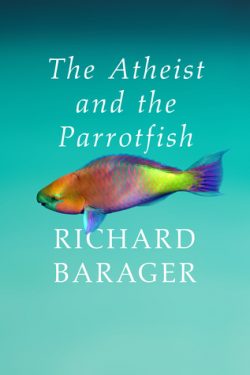
  • The Atheist and the Parrotfish by Richard Barager – Religious/Spiritual Fiction/Literary/Medical

    The Atheist and the Parrotfish by Richard Barager – Religious/Spiritual Fiction/Literary/Medical

    Can the souls of the departed live on in their transplanted organs? Read Richard Barager’s edgy novel, The Atheist and the Parrotfish, and find out!

    Dr. Cullen Brodie receives word that a donor is available for one of his patients, Ennis, a sixty-three-year-old cross-dresser desperately in need of a new heart and kidney. Cullen learns that the donor happens to be his boss’s daughter-in-law, Carla, who never recovered from a car accident.

    At his three-month follow-up appointment, Ennis declares that his donor came to him in a dream and that Carla’s organs have exerted influences on him “beyond their intended bodily functions,” such as unexplained sweating and flushing, chattiness, a love for jazz as well as beets.

    The possibility of Carla’s transmigration (passage of a soul into a living body) sends chills through Cullen. How can this be?

    The uncanny “spiritual” experiences in Ennis’s life spark religious questions within Cullen’s mind, particularly ones directed toward an unresolved conflict embedded in his past.

    Ennis has some other issues, as well. But his (or more correctly, Carla’s) take shape in an obsession with locating the donor’s family. When he does, however, that familial connection stirs up personality clashes between Ennis and Elaine (Ennis’s feminine side), and Carla.

    Amid the turmoil, Ennis is aware of Carla desperately trying to relay a critical life-changing message to her family, but he needs Cullen’s help to deliver it. The real trick will be whether or not Ennis can convince Cullen before Carla destroys Ennis altogether.

    Coming-out-of-the-closet late produces in Ennis a multitude of inner struggles and unsettling childhood memories. In the midst of his personal chaos, Ennis has amazing moments of clarity (with the help of Carla) to see through people and their faults.

    Cullen, on the other hand, finds himself between a rock and a hard place dealing with Ennis’s ongoing commentary about Carla. “When all else fails, listen to your patient” is Cullen’s default motto to identify patients’ diagnoses. With Ennis however, Cullen finds this motto difficult to live by, especially since it is both extremely unusual and disconcerting for Cullen to even consider the possibility of life after death – or the very existence of a soul. As a result, Cullen’s attempt to apply reason to an unreasonable situation leads him to revisit conflicts from his own past.

    Contradiction is a key narrative theme in this work. One story coiled within another builds while Barager slowly and masterfully weaves the two seemingly opposing accounts together. Chapters alternate between characters dealing with past and present situations, and scenes that include shocking, and at times, heart-stopping endings.

    Pages are replete with rich descriptions of religious and ethical conundrums, philosophy, and theological ambiguities. The latter, readers may not recognize until much later in the story.

    Rising author Richard Barager pulls from his daytime job experience as a nephrologist to create a gripping human-interest account packed with complex characters and spiritual paradoxes.

    “A fascinating story, The Atheist and the Parrotfish, which merges age-old spiritual questions with the latest in modern medicine, is replete with complex characters and riveting pages that brim with religious and ethical conundrums, making Richard Barager’s novel a thought-provoking top-of-the-line read.”  – Chanticleer Reviews


    5 Star Best Book Chanticleer Reviews round silver sticker

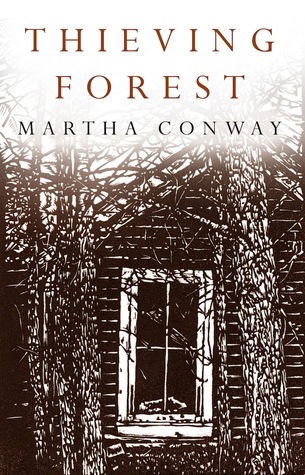
  • Thieving Forest by Martha Conway – Women’s Historical Fiction

    Thieving Forest by Martha Conway – Women’s Historical Fiction

    The story is set in 1806 and follows five sisters who are on their own after the recent passing of their parents. The five are faced with the choice to remain and run the family store in the tiny settlement along the edge of Ohio’s Great Black Swamp or pull up stakes and join the youngest sister living with their aunt in Philadelphia.

    By the banks of the Great Black Swamp, one woman fights to save her sisters caught between two cultures in Martha Conway’s tale, Thieving Forest.

    The world is filled with such events that when the right author develops characters and plunges them into a real-world timeline, history comes alive. Martha Conway has succeeded in doing this in her debut novel, Thieving Forest.

    Conway turns the story up a notch early as four of the older girls are kidnapped by a band of Potawatomi Indians who raid their home. Seventeen-year-old Susanna is left behind, and though shaken deeply, quickly comes to her senses and determines to rescue her siblings.

    Trust is the theme as the story unfolds. The kidnapping is somewhat of an unexpected occurrence as the family had good relations with the natives. The issue is complex and Susanna finds herself questioning who she can trust along with the sad realization that sometimes people are not always who they claim to be. The sisters are eventually reunited, but as is true in real life, things can never be the same.

    Martha Conway paints a stunning portrait of life in the early days of the United States expansion into the West. She has done her research, and it shows as she delves into Native American tribes and the relationship they have with the European settlers.

    Detailed descriptions of day-to-day life, including the hardships experienced, are fleshed out with complex and engaging characters. A tale of self-discovery, personal growth, romance, family ties, loyalty and more in this book readers will find hard to put down.

    5 Star Best Book Chanticleer Reviews round silver sticker

  • A River Divides by Michael J. Roueche – Historical Fiction/Civil War

    A River Divides by Michael J. Roueche – Historical Fiction/Civil War

    Like the first book in Beyond the Woods Series, the second, A River Divides, offers a complex view into life during the Civil War era. This multifaceted book has the same engaging characters found in the first and includes a few new ones, that when combined, will keep readers riveted to the pages.

    The story resumes in winter of 1864, where Betsy Henderson remains outside Staunton, Virginia with a freshly bruised face, worrying whether she’s revealed too much. Will the sheriff find out about her affair with Union soldier Hank? Does the sheriff have enough evidence to capture Walthorpe, the man who gave her the bruise and nearly made away with her fortune? Walthorpe, meanwhile, has another plan up his sleeve, one that will force Betsy to grapple with her southern loyalties, including the secret she’s keeping from Hank—one she won’t be able to hide for long.

    Author Michael J. Roueche does a great job introducing esoteric terms while giving them proper context, thereby helping present-day readers immerse themselves in the historical tapestry he’s created. All the characters in this story demonstrate authentic shades of good and bad, making their choices (and their consequences) even more intriguing. Especially William, the former slave from Betsy’s plantation, whose bond with a new family makes his objective of joining the Union Army a lot more complicated.

    Reading the first in the series isn’t required here but doing so will certainly enhance the experience. Roueche’s ability to sprinkle in enough detail to keep the interest of readers of Beyond the Wood while enticing those who are yet to pick through its pages makes this bittersweet story more than palatable. The sheriff’s point-of-view not only enlightens new readers to the necessary backstory found in the first book but also offers some surprises along the way. Readers will also get a glimpse into Walthorpe’s past and gain insight into his character that will suggest his villainy isn’t as cut-and-dried as it originally appears.

    Roueche writes each character’s voice so distinctly that the reader may not notice the point-of-view shifts within the scenes, a small, but present, distraction. On the whole, Roueche’s beautifully written imagery and ability to immerse readers in place and time will delight and hook readers from the very beginning to the very end.

    By the close of A River Divides, it’s clear that a river divides no more. And the cliffhanger in the final chapter will whet readers’ appetites for the next book in the series.

  • Ghost Horse by Thomas McNeely – Literary Fiction

    Ghost Horse by Thomas McNeely – Literary Fiction

    With a firm sense of place and time, Thomas McNeely creates a tableau of class and race segregation juxtaposed with the frailty of youth: One young boy exists in the tormenting forces of his own personal hurricane of a broken family and a broken society that throws him down and swirls him around without regard to their tragic effect on him.

    Eleven-year-old Buddy Turner’s understanding of what it means to be normal hangs in the balance. He’s facing the trials of growing up and a family unit in shambles and his whole world is about to change. It’s the 1970s, Houston, and most kids don’t expect to be thrown into the nasty realities of a broken home. However, this is Buddy’s reality in Thomas McNeely’s debut novel, Ghost Horse.

    Buddy’s mother spends much of her time working in a hospital laboratory while his absentee father comes back to town leaving Buddy with a fresh set of empty promises and his mother with a request for a divorce.

    Buddy’s only escape is working on an animated film with his best friend, Alex Torres. Together, the boys create a film about a ghost horse. Entering into the work helps Buddy avoid the painful realities at home and serves as a buffer for his heartache. Indeed, the movie the boys create is a metaphor for the upheaval Buddy is experiencing in the real world.

    McNeely expertly weaves an intricate and darkly complex story of a boy trying to gain a foothold in a world–a raw, and sometimes, painful coming-of-age story. The book took ten years to pen through the author’s own turbulent waters and his father’s untimely death and at points the reader can see his internal battle emerging in his writing in this heart-rending coming-of-age tale set in the turbulent  1970s.

    In the broader spectrum of the novel, McNeely unleashes his questions about class and racial prejudices, and how adult behavior informs children who are expected to follow suit. Ultimately, however, McNeely’s storytelling is rich with texture and the soulful portrayal of a lost boy, who is un-moored by those whom should care for him the most. Ghost Horse has the weighted emotional cache and heartfelt pertinence that enables the tale to tug at the reader for a very long time.

    5 Star Best Book Chanticleer Reviews round silver sticker

  • The Nitty Gritty – Business Growth Strategy Applied to Authorship & Beyond by Sara Dahmen

    The Nitty Gritty – Business Growth Strategy Applied to Authorship & Beyond by Sara Dahmen

    What more does it take to be a successful author?

    Whether you’re represented or self-published or somewhere in between, using overarching business tools are a huge assistance in building success.

    How can the tools commonly manipulated by marketers, large and small companies, and retailers help you create a successful ‘business plan’ as an author?

    From multi-pronged approaches, to developing a tiered ‘clientele’, to organization and presence, business is business, whether you’re an author or the manager of Apple. Use those same tools that business marketers use to create your multi-pronged marketing approach.

    If you’re an author, you’re also, by default, a self-employed business owner. I know many of us don’t take out LLC’s or even own our own URL, but the fact remains, if only on paper, that we are all business owners.  There’s a resounding ring to that.

    Business owner.
    Self-employed.
    My own boss.
    The plotter of my own destiny.

    Excellent.  So, once we’ve all recognized that fact…now what?

    Being a successful author is more than simply selling some (or a lot!) of books. Even getting 20,000 books out there is not going to be a sustainable career. Once those 20,000 books have been read (and unless you continually churn out best-sellers), you’re left with a bit of a hangover and half-formed additional ideas. None of these bode well to continue the business of “you.”

    Success is measured both by income and by long-term growth. It’s a bit hard, and not nearly as wonderfully artsy to say, but it’s the truth. If you’re going to be a successful small business owner, you need to pull up a chair with the left side of your brain and get to work.

    A multiple pronged approach is best, and each person’s strategy will vary widely depending on your audience, which should always be broader than a singular author’s platform. There are a myriad of business tools out there – some expensive, and some free – that can be harnessed to create a wide-scale business bigger than a book.

    A business owner will always have a product or a service. You have that already: your book. And a business owner will also have a marketing strategy (and we all know many of those…but many are also often forgotten or overlooked or we get in a rut and forget to think outside the box) that encompasses far more than a blog, a website and some social media. And a business owner will think long-term. A one-hit wonder will be lovely, but after that advance is gone and the shine has worn from those book covers, you’ll need to ask yourself: what now?

    Business is business, and books are business in many more ways than getting some readers and a publisher. Whether you write it down (pun intended!) or not, writers need some sort of a business plan that goes beyond writing the words “the end” and I’m not just talking about plastering a Twitter page with a bunch of book launch announcements.

    Authors should walk into the arena equipped with answers to the questions:

    What do you believe: about yourself, your book, your future plans?
    What are you going to do to make those future plans happen – and how?
    Who do you need to know to help you?
    And what kind of wacky ideas can you dream up for yourself…and then do?

    I plan to tackle much of this in a presentation (Bigger Than Books: Business Growth Applied to Authorship & Beyond) at the Chanticleer Author Conference in Bellingham WA the weekend of March 31 – April 2 where I promise I will be far less vague and incredibly specific.

    Looking forward to seeing you there! – Sara Dahmen