Blog

  • PRINCE of the BLUE CASTLES by Timothy Vincent – Crime Thriller, Suspense

    PRINCE of the BLUE CASTLES by Timothy Vincent – Crime Thriller, Suspense

    Wilson Ames will always offer you a deal of a lifetime – your lifetime, that is in Timothy Vincent’s suspense/thriller, Prince of the Blue Castles.

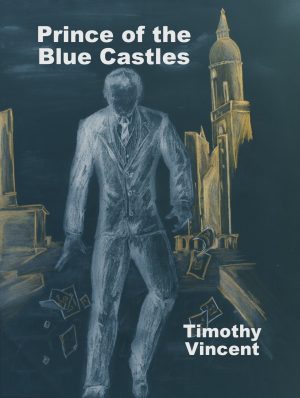
    Highly suspenseful and carefully penned, this is a thinking person’s novel that will grab you from the get-go. Castles come into play, but they comprise a book within this book, a small sketchbook to be precise. Our protagonist, Wilson Ames, is never without it since he never knows when he’ll feel the need to draw a castle, using an old-fashioned mechanical pencil filled with dark blue lead.

    Yes, it may seem odd that someone in Ames’ line of work carries a sketchbook rather than a gun or a high-tech electronic device to help extricate himself from dire situations. But, then, Ames is not your typical hero. A slight, quiet, fastidious man who speaks with utmost clarity and precision, his power rests in not being a James Bond type. His opponents don’t know what to make of him, and his size and demeanor cause them to underestimate him, a miscalculation that works to Ames’ advantage.

    So, what exactly does he do? As the founder and only employee of Suadela Consulting Agency, he’s a messenger who delivers the most sensitive of communications.  In doing so, he negotiates, arbitrates, and manages to persuade clients to undertake specific actions if they want to avoid disastrous consequences.

    Although he maintains a very low profile, his skills are well-known to Haines, an old college friend who hires Ames to contact various people. While negotiating with clients, Ames is unflappable. Even when being questioned by brutal, sadistic men who torture him, Ames maintains a clarity of thought and never discloses his consuming desire for the safety of his wife. The cost may be his life, but such is his devotion to her that any concern for himself is abandoned.

    Vincent provides just enough tantalizing information about Ames’ past, via flashbacks, to allow the reader to regard him in the present with escalating curiosity and admiration. When Ames is boxed in by circumstances, his values about to be compromised beyond repair, he meets a worthy opponent, Mr. Yoto, and learns that life sometimes offers options that can’t be anticipated.

    And what of the castles, described in such inviting and lovely language? Is the reader just privy to a relaxing pastime for someone whose life often takes harrowing turns? There’s more to quiet little Wilson Ames than meets the eye, and the same is true of his drawings. They clue the reader to Ames’ thoughts and plans. They are, in a sense, maps that he uses to navigate his work and his overall life. And just when the reader believes all to be resolved, a bit of dark red literally enters the picture, and all is forever changed. Overall, Ames’ opponents are foolhardy to underestimate him, and readers should not make the same mistake.

    A thinking person’s psychological thriller – twists & turns,worthy opponents, conspiracies & deceptions abound–exquisitely intriguing.

    5 Star Best Book Chanticleer Reviews round silver sticker

  • A QUICK GUIDE to PUBLISHING LESSONS that YOU NEED NOW by Sharon Anderson & Kiffer Brown

    A QUICK GUIDE to PUBLISHING LESSONS that YOU NEED NOW by Sharon Anderson & Kiffer Brown

    Writing is not the same as publishing.

    That may seem obvious to most. However, imagine a new writer, a hopeful author, with a lot to say – this person writes and writes, day after day. The diligent writer amasses 283,472 words exactly. This person then believes that everyone will want to read her story. Why not? The story is sent off to a literary agent – maybe two. Okay, the manuscript is sent off to five dozen literary agencies with query letters and synopsis. Our dear writer is no sloth; she has done her due diligence!

    And then the wait commences. Six weeks, three months, six months, a year later… no replies. No responses. Nothing – not even a generic letter or automated email response. Not unreasonable—really— when one considers more than two million new works are created each year in the English language. We can tell you this: The slush pile takes no prisoners. Only the best of the best will be noticed.

    Our author is crushed, heartbroken. Vows to never write again….

    THERE IS  A BETTER WAY! Below is a Quick Guide that outlines the crucial steps involved in successful publishing (read book sales). These mimic, for the most part, the tried and true methods of traditional publishing houses that work for Indie and Small Press authors—especially when the advantages of today’s new world of publishing are added into the mix.

    Let’s back up a minute and examine what our aspiring author could have done to have a better chance at succeeding in today’s publishing market: 

    1. Manuscript Overview. You’ve spent many hours writing your manuscript – It’s time to invest in a Manuscript Overview (MOV). What’s that? It’s a process whereby you send your work off to a trusted, experienced editor. This editor will read your work and give you professional, genre-specific feedback: tell you what’s good, what needs work, if your manuscript is ready to publish. If you have a literary agent or work with an acquisitions editor at a publishing house, you would send if off to them for feedback. If you don’t have one of these (yes, it is like trying to get a loan from a bank, the bank will loan you the money if you don’t need it…), then you may want to consider our manuscript evaluation service. It can be painful, but every author who has used it says that it is the only way to go. Most of our authors consider it like taking graduate courses in storytelling. A MOV really helps to hone a work.
    2. Build Your Online Digital Presence. At the same time as the Manuscript Overview is going on, begin strengthening your on-line presence through interactive social media. These days, even Fiction authors need a platform. Facebook is still a good way to do this, as is Instagram. If your book is science fiction, maybe you should try Reddit. Whatever you do, invite your targeted readership community into a relationship on the platform where they can be found. The thing to understand is publishers are looking for authors who already have a following who can be motivated to purchase books.
    3. Line Edit. After you’ve incorporated the suggestions from your Manuscript Overview into your work, and have had several trusted brutally truthful beta readers to thumbs up the story line and characters, it’s time to send it off to a Line Editor. What? Yes, you heard me. Your work will require a LINE EDIT that insures that each and every sentence makes the story move forward. Line Editing is defined as a thorough and focused reading of the manuscript on a line-by-line basis with suggestions, comments, and remarks noted for the author to consider. Take the extra time and send your work off to a professional, experienced editor who will examine your work to make sure you’ve hit all of the plot points, your characters are believable, your story is solid, that it doesn’t sag anywhere, and that the opening is a grabber. Take the time. Do this step.
    4. What’s next? While your work is with the Line Editor, we hope that you are developing  the next work in your series or researching your next story idea. Every agent, every publisher will want to know what you are working on next. Series sell.
    5. Cover Concept. Begin developing cover concepts for your work in progress (WIP) by selecting key elements of it. Your cover should convey time period, location, genre, targeted audience, and story elements. These cover elements should be reflected in your marketing collateral (biz cards, website background, social media elements, etc.).
    6. Fresh Eyes. After incorporating the LINE EDITS that were suggested, we advise that you have another set of fresh eyes read the work. Perhaps, a second independent manuscript overview. This can also fall under the responsibility of your literary agent or publishing house’s acquisitions editor. If you don’t have either of these, then use an independent consultant. See Item 1 above. Professional Fresh Eyes are the Traditional Publishing Houses secret weapon.
    7. Copy Edit. Now that the story is solid, it is time for a COPY EDIT. Copyediting is a very technical read of a work for flaws in grammar, punctuation, syntax, consistency in spelling, numerals, hyphenation, etc.; flagging any inconsistencies that have made it past the Copy Edit such as eye color, name spelling, location, timing from point A to point B. Copy editing also tracks any internal inconsistencies in the story (conflicting abilities or inabilities, location inconsistencies), etc. This is where the story is held accountable to the publisher’s style guide and to the story’s individual world building construct.
    8. Cover Design. If you are indie-publishing or even hybrid publishing, you will need to seriously consider investing in your cover design. Your book has less than 3 seconds – that’s THREE seconds to attract a potential buyer. If you have the chops to do this yourself, that’s awesome. But most authors don’t. Think about it. You have an awesome book. You’ve spent time and money making certain of it. Why wouldn’t you want to put as much time and attention into a cover that will work for you instead of against you? A good cover doesn’t have to cost thousands of dollars, but you do need to hire a professional cover designer who understands your genre. The cover will sell your first book. Your content will sell the second the book.
    9. Author Brand. Create your bio’s. You will need a 100-word, a 200-word, and a 500-word biography to send to agents and publishers, to slap on your sell sheets, to place on the back of your book. The three bio’s will work for different applications. Have these ready to go. You will need professional head shots that reflect your author brand. Get it done.
    10. Proofing. Proofreading is the final step of the writing process. It looks for purely grammatical errors, typos, and spelling errors only.
    11. ISBN Designation. BISAC CODES. Meta Data. The “alphabet soup’ part is extremely important in getting your books into the hands of booksellers and into libraries — more on this in a later post.
    12. Professional Formatting. This is a mystical process that takes your manuscript and transforms it into a book, digital and print. Lack of professional formatting is the reason booksellers can spot a self-published book (besides the cover). They can spot it at a hundred paces. It is best left to professionals—in our not-so-humble-opinion.
    13. ARCs. Advanced Reader Copies for Publishing Industry Professionals and for your Beta Readers. These are needed for launch reviews and for regional independent bookseller trade shows (SIBA, PNBA, NCBA, MPIPA, GLIBA, —more alphabet soup). Use your ARCs to start lining up book-signings, author events, promotional tours, and to create book buzz.
    14. Advance Reviews – make sure that you have professional publishing industry reviews ready to go for the launch (press releases, industry news, etc.) and for the cover blurbs (front and back!).
      Before you hit the publish button, send your work off for a professional, unbiased review. Traditional publishing houses know that advance professional reviews set the tone for consumer reviews. Reviews are considered to be the cornerstone of any book’s marketing strategy.
    15. Trade Shows & Distribution – Do you want your book to be available to independent book stores across the nation? Then it must be available in traditional distribution channels and on display at the regional independent bookseller tradeshows.  This cannot wait until the last minute. Shelf space is hard to come by and shows are not inexpensive.
    16. Proof and Edit again! Formatting issues discovered in the ARCs taken care of?
    17. Publish and Launch- Digital and Print! Do you have your promotional events on the calendar? Your social media postings calendar ready to go? See item 13.  How is that website looking? That is the first place any publishing professional (read literary agents, acquisition editors, etc.) will check if you garner their interest. What will they find when they google your name and the title of the book? Will they find a flurry of posts or will your info be on the eighth page down on a Google search?

    Imagine the polish that following these tried and true methods of traditional publishing will bring to your published work!

    The Secret to Successful Publishing

    Honestly, there are even more things an author can do to ensure that her book has the best chances for publishing success. Enter a writing contest, go to book events for other authors, arrange a signing at some place other than a bookstore, talk to people, take workshops, participate. It may feel overwhelming when you start, but when the connections and preparations start compounding and spreading, it can be life—and career—changing! You will be thankful that you took the extra effort. And your work will be ready for whatever may come its way!

    ***************************************************************************************

    Chanticleer Editorial Services (CES) is proud to have some of the best line editors, copy editors, proof readers, world construct editors, indexers, book formatting professionals, and others in the publishing business on our team. We have secured some of the best from the Big 5. All CES editorial work must start with a manuscript overview. It is the only way that our professional editors will proceed to edit a manuscript (that is how important they believe manuscript overviews are to a work’s commercial and literary success).

    Sharon E. Anderson is an award-winning author and Chief Reviews Editor for Chanticleer Reviews and International Book Awards. Creating and editing content – as well as editing/writing reviews – and outreach are just a few skills she brings to the table. She writes dark comedy, horror, short stories, articles, and essays whenever she gets the chance. She lives in Skagit Valley with her husband, two children, two dogs, a couple of cats, and a sketchy Guinea pig. We are so fortunate to have someone with her talent and experience on the Chanticleer Team! Contact: editor@chantireviews.com

    Kiffer Brown, founder of Chanticleer Reviews, is also founding partner in SillanPaceBrown Publishing + Production + Agency, LLC. SPB uses these tried and true traditional publishing methods to prepare intellectual properties to become fully actualized in the extremely competitive entertainment industry.

  • CYGNUS BOOK AWARDS for Science Fiction 2017 – Slush Pile Survivors

    CYGNUS BOOK AWARDS for Science Fiction 2017 – Slush Pile Survivors

    Cygnus Award for Science FictionThe Cygnus Book Awards recognize emerging new talent and outstanding works in the genre of Science Fiction, Steampunk, and Speculative Fiction.  The Cygnus Book Awards is a genre division of Chanticleer Book Reviews Blue Ribbon Awards Writing Competitions.
     

    The following titles and their authors have made it past the initial “Slush-Pile Rounds” and will compete in the next rounds to see which titles will make it to  the 2017 CYGNUS Book Awards Short-List.

    • Lou Dischler – Meet Me Under the Comet
    • Jim Cronin – Hegira
    • Elizabeth Crowens – A Pocketful of Lodestones
    • Michelle Bryan – Strain of Resistance
    • Sara Stamey – Wild Card Run
    • Andrew P. Blaber – Fallow
    • MWAnderson – Breaching The Parallel
    • John Yarrow – The Future’s Dark Past
    • Pamela LePage – Virtuous Souls
    • Darrell Lee – The Gravitational Leap
    • Victoria Vass – Eleven: 1
    • David Neuner – Fear Factory
    • Chris Rasmussen – The Cat & The Fiddle
    • Rhett Bruno – From Ice to Ashes
    • Elizabeth Crowens – Silent Meridian
    • Magnus Victor – Oort Rising
    • Brian Cohn – The Last Detective
    • Julian North – Age of Order
    • Wende Dikec – Starr Valentine
    • Jerry Amernic – The Last Witness
    • Candace Sams – Galaxy Man
    • Leonard S. Tate – Journey to Nirvana
    • Cathy Parker – The Power of Three: The Novel of a Whale a Woman, and an Alien Child
    • Matthew Buscemi – Schrodinger’s City
    • Darren D. Beyer – Casimir Bridge
    • Marcus Julian Carbo – The Path to Arcadia: The Great Crisis
    • KB Shaw – Neworld Papers: The Warrior’s Tale
    • Andrew Craven – Moshiah 
    • Alexander Weinstein – Children of the New World
    • Carl S. Plumer – Demon Days 
    • Sencer Turun- Requiem for Ignorance
    • Andrew Craven – Wintercity Crossing
    • Michael Simon – First Command
    • Michele Fogal – Root of the Spark
    • Sydney M. Cooper – Forsaken Lands Book II: Sacrifice
    • Dayna Ingram – All Good Children

    Good Luck to each of these Science Fiction writers! 

    We are accepting entries into the 2018 Cygnus Awards Novel Competition for Science Fiction Works.

    To compete in the 2018 CYGNUS Awards or for more information, please click here.

    THE DEADLINE TO ENTER THE 2017 CYGNUS Novel Writing Competitions was April 30, 2017.

    Chanticleer Book Reviews & Media, L.L.C. retains the right to not declare “default winners.” Winning works are decided upon merit only. Please visit our Contest Details page for more information about our writing contest guidelines.

    CBR’s rigorous writing competition standards are why literary agencies seek out our winning manuscripts and self-published novels. Our high standards are also why our reviews are trusted among booksellers and book distributors.

    Please do not hesitate to contact Info@ChantiReviews.com about any questions, concerns, or suggestions about CBR writing competitions. Your input and suggestions are important to us.

    Thank you for your interest in Chanticleer Book Reviews International Writing Competitions.

  • MAKE NO BONES ABOUT IT by Ann Charles – Action/Adventure, Mystery, Romance, Thriller

    MAKE NO BONES ABOUT IT by Ann Charles – Action/Adventure, Mystery, Romance, Thriller

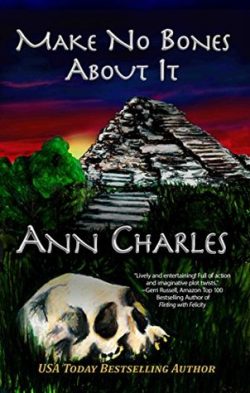
    Ann Charles has another true winner on her hands as she reunites the intrepid band of archeologists led by Angélica García for the second installment of her crackerjack series A Dig Site Mystery. From the very first sentence, Make No Bones About It is an entertaining thrill ride of the first order.

    Top-notch archaeologist, Angélica García, admits that after her divorce she “suffered from trust issues—as having no faith in her own ability to judge character.” She leaves her university teaching job for a change of pace and heads to Mexico where she is hired by the National Institute of Anthropology and History to clean up and prepare derelict dig sites (ruins) for the current tourism boon— archaeo-tourism.

    Angélica’s latest project has a few challenges she must overcome. It is located in a remote part of Mexican jungle infested with a myriad of hazards: scorpions, spiders, toxic fauna, bloodthirsty insects, hungry Jaguars, mounds of skeletal remains, and a seemingly endless supply of deadly rattlesnakes. Oh, and it is the same place where her mother, a top archaeologist in her own right, was killed in a helicopter crash—some say because of a curse.

    To accomplish her mission, Angélica is joined by her father, Juan, a brilliant man nursing a leg injury who is saddled with his fair share of superstition anxiety. Quint Parker, a handsome photojournalist that jets off across the globe on assignments on short notice, but returns to lend a hand and tug on Angélica’s heart strings: she is ready with open arms and a razor-sharp machete! Pedro, her quasi-adopted brother and helicopter pilot, and several others round out a solid cast that adds color, context, and pathos to the story.

    Angélica leads the team to unlock and document the secrets of the ruins, but she is consumed by a quenchless drive to complete her mother’s unfinished work. As the team delves deeper into labyrinth warning signs abound and it becomes clear that they are in mortal danger. The book’s first sentence states, “The Mexican jungle had devoured the remains of the dead, bones and all,” and so for those who ignore history could become history.

    At the beginning of the book, Ann Charles discusses her extensive research, which pays off tremendously and adds incredible depth and texture to a well-crafted story. Additionally, C.S. Kunkle’s fabulous illustrations are dramatic, prescient and add substance to the story.

    Make No Bones About It, simply put, is one of those books you pick up and cannot put down.

    5 Star Best Book Chanticleer Reviews round silver sticker

  • PAYTON’S PURSUIT, The WINTERS SISTERS, BOOK TWO by Joanne Jaytanie – Paranormal/Military Romance

    PAYTON’S PURSUIT, The WINTERS SISTERS, BOOK TWO by Joanne Jaytanie – Paranormal/Military Romance

    A diabolical plot brews in the midst of a steamy romance in author Joanne Jaytanie’s second Winters’ sisters’ novel, Payton’s Pursuit.

    Continuing where book one left off, Victory and Tristan marry, and Morgan and Collin—Lawrence Braxton’s DNA guinea pigs—join forces with Tristan’s team and the Winters Corporation in Washington State for book two. Payton Winters, one in a set of triplet sisters, learns from Victory that her ability to detect and inadvertently calm Collin’s unstable emotional levels has something to do with the specially formulated fertility drug their mother used for conception.

    Concurrently, Braxton, his company Biotec, and the clandestine Kaleidoscope Group remain at large, which means that Victory (and quite possibly all of the sisters) is still a prime target because of her powerful telepathic ability to communicate with animals.

    Payton attends dog shows with the last person she would want assigned to be her bodyguard: Collin McBain, the very same man who kidnapped Victory when she was held captive at Biotec (in book one).

    During one of the dog shows, Collin finds out that his young stepsister, Emma, may be in trouble and assigns a team to keep an eye on her. After connecting the dots, he and Payton learn that the Kaleidoscope Group runs the boarding school for specialized students, and that the group has chosen Emma for more reasons than Collin and Payton realize. What’s even worse is Victory’s discovery of their mother’s fertility research, which has ties to none other than Biotec.

    Needless to say, close quarters breeds love, and Collin and Payton fall in love. Amid their burgeoning romance, Braxton relentlessly searches for Emma. Providing for Emma’s safety, however, turns out to be a more complex problem than Collin and Tristan’s crew thought.

    Many returning characters, as well as a new supporting cast, grace the pages of Jaytanie’s second book in the Winters series. Punctuated with aspects of book one, Chasing Victory, Payton’s Pursuit clearly can function as a stand-alone, yet, it is highly recommended for readers new to Jaytanie’s Winters series to start with book one to appreciate the series’ plot dynamics. One of the most important plot dynamics is in understanding how telepathy plays into the sisters’ lives. This begins with Victory who first discovers that her gift—which is heightened when she meets her future husband Tristan—goes well beyond working with animals. Of course, Jaytanie does not dwell on the details of Victory’s story—kidnapping and romantic ties to Tristan. So, first-time readers will miss out on those nerve-racking and spicy tidbits.

    Payton’s Pursuit plot tension builds slowly while throwing in a whole bunch of twisty turns that will have your engines racing until the very end. Consistent with her series is Jaytanie’s writing style, including a well-defined cast, woven together with engaging dialogue and riveting scenes.

    5 Star Best Book Chanticleer Reviews round silver sticker

  • CRACKED! A MAGIC iPHONE STORY by Janine A. Southard – Seattle, Cyber-Punk, Fantasy

    CRACKED! A MAGIC iPHONE STORY by Janine A. Southard – Seattle, Cyber-Punk, Fantasy

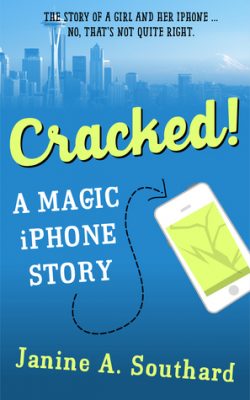
    Can a middle-aged, hip statistician find the perfect boyfriend in Washington’s Emerald City? Maybe with the help of her magic iPhone!

    On this quirky journey through and around Seattle our heroine, Morena’s accompanied by two strange, but well-meaning sidekicks. Morena’s best friend/roommate, Suzyn, a twenty-something, aspiring photographer from New York, who likes to dance, get drunk, and get high; Magic Man, is an undercover, 6,000-year-old elf, who only wants to fit it with the humans around him. Also, a mysterious Green Man, who seems to be nearby wherever Morena goes, but whom she never notices, adds a note of mystery.

    After a breezy false start in which the narrator chats the reader up, like a neighbor over mid-morning coffee and Danish, the real story begins.

    One morning, Morena discovers a package on her kitchen table. Her ex-boyfriend, who “never sent her a single gift,” before their “horrid break-up,” has now sent her an iPhone—and it just so happens the phone is magic. It has only one app, designed for finding the right mate—and Morena, with her biological clock ticking, longs for love. She is searching for a soul mate—as long as it doesn’t take a lot of effort. She enjoys her current lifestyle, so, the right man would have to not only conveniently drop into her life, but also fit into her life. That iPhone may have been the perfect gift.

    The reader journeys with Morena, her magic phone in hand, on Seattle’s buses and light rail, into various neighborhoods, coffee shops, pubs, and restaurants, as well as to neighboring communities. Cracked! . . . introduces a plethora of geeks, freaks, “funky hipsters,” story gamers, “hipsters playing at being gamers  . . . ,” anonymous drug dealers, and more. Along the way, the reader may learn some street slang while being apprised of the go-to (for whatever you want) places in that urban area.

    Particularly entertaining and interesting are the forays into the story gaming world, where the gaming part counted as a respectably nerdy pursuit, and the story part counted as creative . A fun feature of the story is that it is a microcosm of Seattle life: giving its readers a chance to interact with some odd characters, but still not have to be friends with them.”

    While some may find Cracked! to be somewhat thin on plot, it’s heavy on atmosphere and setting, which is captivatingly authentic. Southard’s hip and cool characters are multi-dimensional and memorable. As a stylistic technique, the intrusive and opinionated omniscient narrator is sometimes informative and amusing, but at other times, can be distracting. However, always fun!

    Overall, Cracked! A Magic iPhone Story provides an insider view of Seattle, its denizens, and some of their various activities and belief systems, that contribute to its unique culture. It’s a fun read in a much too serious world.

  • KATHY MURPHY the PULPWOOD QUEEN is Coming to Bellingham, Wash!

    KATHY MURPHY the PULPWOOD QUEEN is Coming to Bellingham, Wash!

    It will be Kathy L. Murphy, the Pulpwood Queen herself, all the time — at least in Bellingham, Wash. from Thursday, July 13th through July 15th, 2017.
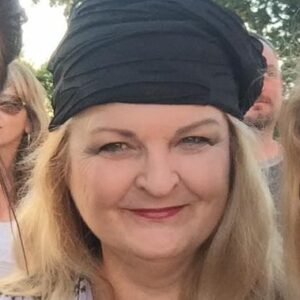
    Kathy is headlining the following three events, along with some surprise ones, when she visits the Pacific Northwest this summer for a long weekend sponsored by Chanticleer Book Reviews.


    1. The TimberRose and Timber Guys Chapter of The Pulpwood Queens International Book Club will meet on Thursday, July 13th. Check out the chapter’s Facebook event page 
    2. An Evening with Kathy L. Murphy at Village Books, Saturday, July 15th at 7 p.m. All Book Groups and Clubs are welcome!
    3. A Very Special WORKSHOP Creating Book Buzz and Building Your Author Brand – Saturday, July 15th, Kathy will present a three hour workshop and share her secrets of success from 9:30 in the morning until 12:30 in the afternoon. $55 per seat. Reservations required. Click here for more info and to register.

    TimberRose Queens and Timber Guys Chapter of the Pulpwood Queens Book Club

    We are pleased as punch to announce The TimberRose and Timber Guys Chapter of Kathy Murphy’s The Pulpwood Queen’s Tiara-Wearing, Book-Sharing Guide to Life Book Club is welcoming the Queen, herself, to the club’s first-ever meeting to discuss the books of the month and other important news on Thursday, July 13, 2017.

    The Pulpwood Queen Book Club began when Kathy Murphy wanted a seat in a local book club, but alas, there was no room. And apparently, there would not be one available for some time….

    Did that stop her?

    No way, no how! Kathy L. Murphy created her own book club – a fun, tiara wearing, book loving, festival of reading called The Pulpwood Queens, which now spans the continental United States plus Alaska and 15 foreign countries!

    Meet the Queen and become a member of the TimberRose and Timber Guys Chapter of the Pulpwood Queens at Nikki’s Bella Marina Bar & Restaurant from 7 – 8:30 pm.  Of course, there will be food and drink available for purchase. New members are always welcome!

    Seating is limited for the chapter meeting. Members who  have made reservations via the Facebook page will be given priority upon check-in. Reserve your seat today!


  • The FLYING BURGOWSKI by Gretchen Wing – YA, Social & Family Issues, Fantasy

    The FLYING BURGOWSKI by Gretchen Wing – YA, Social & Family Issues, Fantasy

    In many ways, Gretchen K. Wing’s protagonist in The Flying Burgowski, Jocelyn Burgowski (Joss, for short) is a typical teenager.  She admires and appreciates a favorite teacher, argues with her older brother, Michael (in an awkward rebellious stage), and hangs out with her friends, the popular Savannah and the sweet social misfit, Louis. She loves to relax with a good book, usually one in the Harry Potter series. The third is her favorite.

    Then there are the atypical aspects of Joss’s life.  She lives off the coast of Washington, on Dalby Island, beautiful with its tall fir trees and surrounding water, although not a mall or a MacDonald’s in sight. Her father runs the all-purpose store and shocks his children when he abruptly marries Lorraine, the seemingly stereotypical librarian.  Joss’s mother abandoned the family nine years earlier for mainland life and has struggled with alcoholism and pill addiction.

    And then there’s Joss’s very vivid dreams, dreams in which she takes flight and soars over the island.  Unlike Harry Potter, she doesn’t need a broom.  No, she flies as freely as a bird.  On her fourteenth birthday, which occurs on the summer solstice, she discovers that the dreams were preparation for the real thing.  She instinctively takes off from The Toad, a large rock on the island, and life will never be the same.  How could it?  Even if she and Michael (in trouble again for driving his father’s truck into a ditch and smoking pot) weren’t sent to the mainland to spend time with their mother, Joss’s life is forever on a new course, one that is mapped against the sky.

    To Wing’s enormous credit, the novel never loses its convincing realism despite the main character’s spending a good portion of it in the sky, her arms outstretched, her body turning as she banks left and right, her lungs filling with the scent of lilies. The author weaves these scenes seamlessly, beautifully into the narrative.  We root for Joss as she plans her flight sessions, catch our breath when she takes a rough landing, her skin scraped, and worry with her that she’ll be sighted by someone who happens to look up at the evening sky. The realism is complemented, however, by the exhilaration of these scenes. Joss is so thrilled by the experience of flight that the reader wants to take her hand and witness what she does as a human bird, to feel that rush of air swim against our skin.

    Joss’s gift for flight, of course, is mired in old and interesting secrets that involve her mother and even her new step-mother. Her aerial talent is tested when she adjusts to a new school, unkind classmates, her mother’s substance abuse relapses, and the surprising but welcome maturation of her brother. Wing’s poignant and sensitive handling of Joss’s and Michael’s time on the mainland underscores the protective power of sibling relationships in the face of parental weakness or failure. The self-growth that they experience as a result stays with them when they return to Dalby Island and resume life as they knew it, but with far greater self-awareness.

    The Flying Burgowski isn’t your typical young adult book and that’s a very good thing.  Wing infuses realistic teen life, with all its problems, with a hefty dose of magic realism, and the result is an engaging and captivating fusion.  After reading it, don’t be surprised if you find yourself looking up at the sky, ready to sight the lucky human endowed with the gift of flight.

    5 Star Best Book Chanticleer Reviews round silver sticker

  • ASTROLOGER’S PROOF by David John Jaegers – Metaphysical Techno-Thriller Fiction

    ASTROLOGER’S PROOF by David John Jaegers – Metaphysical Techno-Thriller Fiction

    David John Jaegers’ Astrologer’s Proof is all about the steps leading to utopia, involving both ephemeral and cosmic mechanisms, balancing on the edge of an ethical paradox.

    The science fiction/fantasy author Orson Scott Card wrote a book titled “Characters & Viewpoint” in which he posited that all novels divide broadly into four different story types: Milieu, Idea, Character, and Event. He dubbed these categories the “MICE” Quotient, and each sets up specific expectations in the reader.

    Within that framework, Astrologer’s Proof qualifies as an Idea novel. It is Book 2 of the Astro-theologian Series, a metaphysical techno-thriller trilogy in which a Big Idea is explored.

    What’s the Big Idea? Simply put, it’s the search for an empirical proof that astrology is a valid science that defines and guides human nature and destiny, dovetailing with all religions into a unified cosmic truth that can positively change the world.

    That’s a lofty promise which author David John Jaegers delivers.

    Of course, proving the premise takes serious work – and a lot of illegal maneuvers to gather the necessary data. Astrologer’s Proof thus becomes an end-justifies-the-means story, where honest, moral, well-intentioned philanthropists break laws, invade privacy, deceive their loved ones, and establish front organizations, all to gather the information they need to demonstrate they’re right—in scientific, indisputable terms.

    Some series fiction forms the continuing adventures of one or more characters. Astrologer’s Proof, conversely, is the middle segment of a grand epic covering the Big Idea. Book 1 (Astrologer’s Apprentice) establishes the situation and players; Book 2 (Astrologer’s Proof) describes the process of making the Big Idea happen, and Book 3 (A Virtual Life) will reveal the repercussions. In other words, this book is the fat juicy middle of a delicious Po-boy, worth every bit of effort to digest.

    In Astrologer’s Proof, Jaegers unfolds the Big Idea and patiently tells us how it is transformed into action. Here the author demonstrates his depth of knowledge with the material and impresses the reader with the story’s thoroughness, technical veracity, rationality, and fascinating possibilities.

    In many ways, this book is an experimental novel, with the traditional elements of storytelling over-arching the trilogy, spreading across multiple characters in the telling. Jaegers brings his skill to the forefront here and invites his audience deeper, into a complex world that he skillfully weaves.

    For sophisticated readers who yearn for a multifariously inspired scenario that stretches the psychic mind and challenges beliefs, look no further. Astrologer’s Proof is your perfect match. This is a story with exceptional intelligence and visionary quality. It cleaves to the author’s heart, and those who read the book will be affected by its positive energy.

  • MY EXTRAORDINARY LIFE by Monica Sucha Vickers – Memoir, Inspirational

    MY EXTRAORDINARY LIFE by Monica Sucha Vickers – Memoir, Inspirational

    Monica Sucha Vickers was born in 1954, her parents’ first child. Their love for her overcame the shock they experienced when they saw that she was severely handicapped.

    Born without legs and missing her right arm, Vickers was probably a “thalidomide baby,” although her mother’s medical records are mysteriously lacking the proof of that speculation. Advised by doctors to institutionalize their tiny daughter, her parents took her home instead, and, without discussing their secret sorrows, they raised Monica with courage and without barriers.

    Her father pushed her to try new things—navigating stairs and participating in sports. Initially sent to a special needs school, she complained that she was out of place there, so she was transferred to typical schooling.

    In college she and a roommate took a long trip out west in the author’s hand-controlled auto, inspiring her to move from the Midwest of her birth with its icy winters to sunny California. She became an expert medical transcriptionist, typing twice as fast with one hand as most of her co-workers could with two. It was here she met and eventually married a construction engineer who designed a special office space for her home business. Together they happily entertained their large extended families.

    After her rather sheltered upbringing, the author gradually saw that the world can be cold and hurtful to people with handicaps; she speaks out boldly on that subject. She states that her grandmother, who taught her to bake, prepare fresh garden veggies, ride a tricycle, even sew and embroider, provided the impetus for this memoir. Her grandmother was, and still is, her hero.

    Vickers writes with a rare combination of gusto and aptly chosen phrasing, reflecting her own spirited but well-planned approach to life’s adversities, of which she has had more than her fair share. Her prose is plain and her observations frank, showing her creative talent along with the ability to objectify her experience in an unusually balanced manner.

    The book contains many photographs showing not only the extent of her disabilities, especially in early childhood, but also the means she has used to overcome them over the course of her tough but courageous life: the heavy but cosmetically sculpted artificial legs, the various wheelchairs, her hand-operated car, her athleticism as a swimmer, her unconventional but very effective typing method. Here, Vickers admonishes readers about what not to do and say to handicapped and wheelchair bound persons, which is enlightening and edifying.

    Avoiding any temptation towards bitterness, especially in the matter of the probable cause of her disabilities, Vickers has boldly included numerous honest appraisals penned by family members and friends about growing up with and knowing her. This willingness to see herself as others see her sometimes brings her back to the awareness of the adage, “People will see your disability before they see you,” a hard lesson that took her a long time to absorb.

    This is an important memoir that serves to bridge a gap between people of all shapes and sizes – no matter what their condition. An honest and courageous chronology of a life that truly deserves to be called “extraordinary.” Monica can be reached via her Facebook page or her website, which is listed at the top of this review.

    5 Star Best Book Chanticleer Reviews round silver sticker