Blog

  • INTERVIEW with Grand Prize LARAMIE AWARD-WINNER, JACQUIE ROGERS!

    INTERVIEW with Grand Prize LARAMIE AWARD-WINNER, JACQUIE ROGERS!

    In honor of the Laramie Awards month, we decided to interview one of our very favorite authors, Jacquie Rogers. It should come as no surprise that Jacquie won the Laramie Grand Prize in 2016 for her rip-roaring, shooting, tooting, humorous Western that features Honey Beaulieu, Man Hunter!

    Jacquie Rogers is a regular contributor for the Western Fictioneers blog. She presents at RWA conferences and workshops, Chanticleer Authors Conferences, and  Western Writers of America. Her works are known for their hilarity, adventure, mistaken identities, and romance. Rogers’ books are  a hit for anyone who has a penchant for classic Westerns and Shakespearean comedies. She lassos the genres together in a most enjoyable way making her tales a true pleasure to read. From saddles sores and thorns from the trail, to finally being able to breathe when the last binding on the corset is released, even the most die hard Western readers will be impressed with Roger’s knowledge and expertise she portrays as she takes you back in time to the Old West.
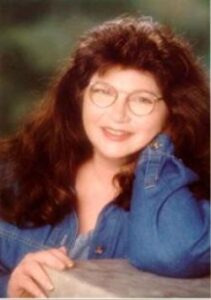
    Jacquie Rogers: Thanks for inviting me to the Chanticleer blog.  I’ve been privileged to be part of the Chanticleer family right from the get-go, so that makes it extra special for me to be here.  I had help, though—the folks at the Pickle Barrel Bar and Books on Facebook choose my questions, so here we go!

    Chanticleer: We’re so glad you have some time to spend with us. Let’s jump right in…What areas in your writing are you most confident in? What advice would you give someone who is struggling in that area?

    Rogers: Dialogue and chaos.  For dialogue, the advice is easy—listen to people talk.  Two nuances I’ve noticed is they rarely speak in complete sentences and seldom use the other person’s name.  More specifically, listen to people who are similar to your characters.  In the case of Honey Beaulieu, I draw strength from the old Missourians in our family, and mix in a little Owyhee County speak.  As for chaos scenes, the main thing to remember is that the first thing you think of is also the first thing the reader will expect, so turn left when expected to turn right.

    Chanticleer: That’s really good advice, Jacquie. How do you keep track of all the… left turns? Do you work with a storyboard? 

    Rogers: When a character turns left and it’s a better idea than what you’d planned, then it’s best to go with them.  However, that does cause a ripple effect on that particular thread, and sometimes several or all threads.  I try to veer into position so I don’t have to go back and change things, but very often that simply can’t happen.  Either way,  from the turn-left point forward, the whole plot needs to be tweaked.  I’m happy to take the fun route to the end, but I do have to know where and how the story is going to end, and all the characters need to be in the right spot for that to happen, and all (or most, in the case of a serial type series such as Honey Beaulieu – Man Hunter) threads need to be tied in a neat bow.  So it’s a matter of connecting the dots in a logical but relatively unpredictable manner that allows the reader to play along with you.  Because books are really a group activity—the interaction of characters, readers, and the author.

    Even with all that, continuity errors can and do occur.  My first line of defense is Your WorldKeeper, Diane Garland.  She has an eagle eye for continuity and can take me all the way through the thread so I can see what needs fixing  Or sometimes it can’t be fixed (e.g., in a previously published book), and we have to come up with a logical explanation for how things are in the current book.  I work with her as I’m writing, so she usually nails my hide to the wall before even the editor sees the story.

    Rogers: An author can’t keep writing unless readers buy the books—simple economics.  Books are expensive to produce.  So telling others about the author’s books is absolutely gold.  There are a variety of ways to do this, including sharing the author’s posts on social media, reviews (many advertising sites require a certain number of reviews before the author can purchase ads), and telling all your friends in real life to buy the book.  Visibility is the name of the game.  And keep reading!  Your enjoyment is a gift to me.

    Chanticleer: Thank you for mentioning the social media aspects and sharing. Very important. What are you working on now? What can we look forward to seeing next from you?

    Rogers:  My next book will be Hearts of Owyhee #6, Much Ado About Mail-Order Brides.  If you’ve read the third and fifth books of the series, you’re acquainted with the McKinnon brothers.  This book will be Bram’s book.  He’s the oldest brother and the hardest to place because he’s perfect.  Flawed heroes are much, much easier to write.  But since he’s perfect, he has to end up in an impossible situation, and I’ve definitely got him in a big to-do.  Believe me, he has a lot more help than he wants.  I’ll start writing next week and hope to have the book done by the end of the year.

    Chanti: Oh, we’ll be looking forward to that! We love it when characters get knocked around! Let’s move on to craft… It’s important to work on your craft. What do you do to grow your author chops?

    Rogers: I try new techniques.  For instance, I wrote I Heard the Brides on Christmas Day in four points of view—and it’s only a 15,000-word story.  I think I pulled it off but believe me, I won’t be doing that again!  Also, the Honey Beaulieu series is in first person point of view, and the narrative is written in Honey’s vernacular just as if she were actually speaking.  I did this because we think the way we talk, so the narrative can’t be in modern correct grammar.  My Hearts of Owyhee series is in the third person.  So I’m always switching back and forth, writing one book in first and one in third.  That gives me the opportunity to remember the strengths in each and apply them in both series.

    When I first started writing, I read a ton of craft books.  I was so hung up on the rules that I couldn’t write a word for nearly a year, so I tossed it all out and decided the only way to write is to let my hair down and go for it.  Then I heard an interview with Johnny Depp where he remarked that actors had to be brave enough to look stupid (paraphrasing).  I think that goes for writers, too.

    Chanti: We love that you were naturally brave enough to follow your gut on this one. And we love that Johnny Depp backed you up on this one… because, you know, Johnny Depp! Let’s switch gears a bit – give us your best marketing tips, what’s worked to sell more books, gain notoriety, and expand your literary footprint.
    Western Pioneeer Civil War Fiction Award

    Rogers: Depends on what year, month, time of day.  This business is changing fast.  When MySpace was king, I had a strong presence there.  I’ve never had much success on Twitter and only go there because I feel like I should.  Facebook is the place to be right now, which isn’t to say that it’ll still be popular next year.  It’s important to have a presence on social media that is personable (notice I didn’t say “personal”), where people see you and want to be your friend.  This is what marketing is all about these days—the personal touch.  Frankly, I think we’re moving on from social media to real people in the real world contact.  The pendulum is swinging back.  That’s why I put on the Silver City event every year, and try to get out as much as possible to meet my readers.

    I also think it’s important to hang out with other industry professionals—reviewers, publishers, and other authors.  Getting a Chanticleer review and entering the Chanticleer contest is great for raising the discoverability of your books.  Attend the conference and blast pictures all over social media.   The added bonus is that these conferences are lots of fun as well as informative.


    Chanticleer: Talk a little more about the Silver City event… What was that like? Who came? How did you set it up – C’mon, Jacquie! Spill the beans!

    Rogers: I enjoy getting together with my readers and fellow book lovers, and I had this bright idea that it would be fun to meet where the Hearts of Owyhee series is set, which is in Owyhee County, Idaho.  (Owyhee is pronounced oh-WYE-hee, and is the original anglicized spelling of Hawaii.)  Most of the books in the series have scenes in Silver City, and two of them are set there for most of the story.  Silver City is a treasure that few people know about.  It’s a genuine Old West town that still exists as it did in the 19thCentury.  There’s no power or telephones—although they did have telephones in the early 1880s.  The Idaho Hotel is a gem and staying there is like spending the weekend in a living museum, although it’s a soft landing because they did install flush toilets and showers.  The hotel restaurant has always been known for its fine cuisine and believe me, the current owners are living up to the historical standards.  Jerri Nelson’s pies are simply divine.

    There’s a lot more to say about the place, but I’ll go on to the event.  Keep in mind that Silver City is not a tourist town.  You won’t find staged shoot-outs or slot machines (that work).  People there live like folks did in the 1800s.  So visitors live like that, too.  What does it mean?  It means that whatever we do, we have to create ourselves.  If we want music, then we need to play it.  I can’t play anything so I enlisted the aid of fiddler Daria Paxton and her dad, Matt Paxton, who plays guitar and sings.  They’re both talented musicians and old family friends—my dad and Matt’s parents were in the same class.  Relationships were everything in the old days, and there, they still are today.

    The event in Silver City is for everyone, young and old.  In the olden days, families would come to a dance.  The musicians would play and everyone would dance, including the kids.  Then the kids would play and dance until they got tired, and the parents would put them to bed on the pile of coats while they continued to party into the night.  That’s the feeling I wanted to create at our event and we succeeded.  Wildly.  Some of us dressed in costume, others didn’t.  No one really cared because we all were there to have a rip-snortin’ good time.  Which we did.

    Poet Roberta Whittemore joined me at the book signing and that was fun.  Everyone raved about the melodrama, billed as the worst melodrama in history, which had a terrible script (I wrote it), and bad actors (except for Ichabod—he was great, and so were Curtain Rod #1 and Curtain Rod #2).  But the audience participated and had a great time.  The cool thing was that half the audience were walk-ins, not part of the event, and they loved it.  After that, we had an auction for charity.  Sherry Walker chaired the auction with Ken Walker as the auctioneer.  The gals in the kitchen soon learned not to bang pans or he’d call their bid.  We raised over $300 for the Children’s Tumor Foundation to find a cure for neurofibromatosis.

    So I’d like to invite everyone to join us next year.  The tentative date is July 20-21, 2018.  Information will be on my website at http://www.jacquierogers.com/silvercityevent.html.

    Chanticleer: What a terrific event! Thank you for letting us in on Silver City! What do you do when you’re not writing? Tells us a little about your hobbies.

    Rogers: Reading is my first love, make no mistake about it.  I was a reader long before I ever wrote a single word of fiction.  Other than that, I like rodeo, cooking (but not doing the dishes), and baseball.

    Chanticleer: Tell us more! What’s your favorite rodeo event? If we came to your house for dinner, what would you cook? and Who’s your favorite baseball team? 

    Rogers: Favorite rodeo event—well, that would be hard to pick.  Of course, I love the bull-riding but all of the events are fun to watch.  I like all the rough stock events, but then I’m amazed at the ropers, too.  And I know how hard it is to run the barrels without knocking one over.  I also look forward to the specialty acts they bring in.  At the Snake River Stampede, they had the Stampeders—a horseback drill team that performs in the dark so all you see is the lights on the horses and rides.  It’s pretty spectacular.

    If you came to my house for dinner, you’d get down home cookin’.  I cook everything from scratch—even yogurt and salad dressing.  I do buy mayonnaise, though, because we eat too much of it when I make it myself.  So what’s on the menu?  How about homemade bread bowls filled with genuine Idaho potato soup, salad with ranch dressing, and strawberry shortcake (with real shortcakes hot out of the oven) for dessert?  Or maybe you’d like Thai fried rice, spring rolls, and bok choy stir fry.  I’m willing to give just about anything a go.

    As for baseball, I’m a Mariners fan, unfortunately.  Go M’s!

    Chanticleer:  That all sounds good! What led you to write in the western humor genre?

    Rogers: Writing westerns was a simple choice—I grew up where the Old West is still alive so I didn’t have much to research.  Also, in light of the urbanization of our country and the vast change in communications, I want to do my part to keep the culture in people’s awareness.  It’s hard to explain to someone how people lived in the late 1800s without television and cell phones, and that’s why we have so much fun at the Silver City event.  We’re not connected, so we have to create our own entertainment and [gasp] actually visit with one another face to face.

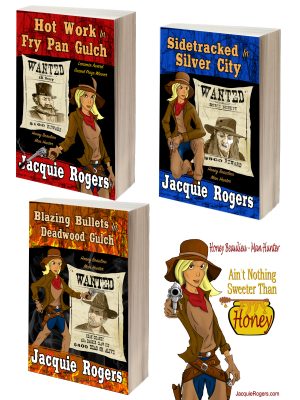
    Humor?  I don’t actually write humor.  Every time I do, no one laughs.  There’s one line in Blazing Bullets in Deadwood Gulch (Honey Beaulieu #3) that absolutely cracked me up, but not one person has laughed or even noticed it. [Update: one person finally got it!  Made my day.]

    Chanticleer: Really, no humor? Well, certainly situational, character driven humor. We love your books and love how you put your characters in situations they can’t possibly imagine! How structured are you in your writing work?
    Rogers: Horribly unstructured and unfocused.  My marbles are rattling around somewhere and they’re not even in the same room, or house, or state.  How I ever manage to finish a book is beyond me.  But when the deadline looms, I do hunker down and git ’er done.

    However, my approach to writing a novel is quite structured.  I don’t write a single word until I know the main and secondary characters inside and out.  The better I know the characters, the easier it is to throw obstacles in their way (that’s also called plotting).  I always have one scene in mind for the opener.  But I confess that the opening scene very rarely stays the opening scene.  The first scene I wrote in the Honey Beaulieu series will be in book #5.  The first scene I wrote in Much Ado About Miners is now in chapter 7.  I always start too far in, probably because I have little tolerance for backstory and I want to get on with things.

    Chanticleer: We appreciate that, Jacquie. How do you approach your writing day?

    Rogers: I always try to leave off in the middle of a scene so I don’t have to figure out what I’m going to write.  So after that scene is finished, then I check with my plot bones chart to see if I’m on track.  If not, I turn left.  Actually, I turn left a lot because sometimes things happen on the page that are too fun to throw out, so then I have to make it work with the rest of the story.  An example is Louie Lewie in Blazing Bullets in Deadwood Gulch.  He was supposed to be a throwaway character, but he kept coming into the story, so I resigned myself that he’s now part of it.  In fact, he’ll probably be in the next book, too.  So a lot of my day is thinking and while I’m thinking, the best way to come up with new ideas is to bake bread.  My extended family gets a lot of bread.

    Once everything’s figured out for the day, I fire up my laptop and use speech recognition to rough out a scene.  Believe me, “rough” is the right word considering when I said “bustier” it typed “buzzard ears.”  I end up with about 90% dialogue.  Then I send the scene to my desktop computer and edit using the keyboard.  If the scene starts out at 500 words, it’ll be 1,000 by the time I’m done adding the narrative.  A side note: I detest description and always skip it when I’m reading for pleasure, which means I have to make an extra effort to make sure I’ve created a picture for the reader.  This is by far my weakest area.

    Chanticleer: Ah, bread. Here’s the part where we wish we lived closer! The idea of using speech recognition software is pure genius – and time-saving, too. How do you come up with your ideas for a story?

    Rogers: I actually don’t know.  Usually, some phrase, prank, or predicament makes me laugh.  Then I put characters to it and voila! We have the concept for a new book.  Honey helps me out because I know that if I dig a hole big enough, she’ll keep me entertained.

    My entertainment is the determiner as to whether I use an idea or not.  If I’m entertained, then I hope the readers are, too.  But on the other hand, if I get bored writing, then you can bet that readers will also be yawning.
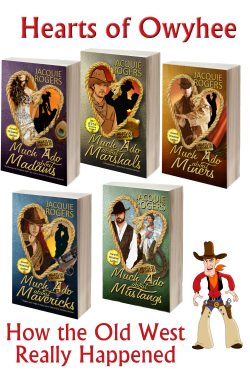
    A few of my ideas for books are identifiable, though.  In Sleight of Heart, I wanted to write a heroine who was as good at math as Aunt Grace, and I always wondered how she’d get along with Maverick.  So Lexie Campbell and Burke O’Shaughnessy were born.  The idea for Much Ado about Mustangs came from an article I read in The Owyhee Avalanche about the local theater group booking a national star to headline their local production.  Hence, we have Lady Pearl Montford and local rancher Josh McKinnon, whose heart’s desire was to raise Friesians.

    The next book I’m going to write, Hearts of Owyhee #6: Much Ado About Mail-Order Brides, came from the fact that the hero, Bram McKinnon, is perfect.  Perfect is boring.  Perfect makes for no conflict.  Unless he’s put in a situation where there’s absolutely no solution.  Bwahahaha.  Naughty me.

    As for Honey Beaulieu, what happens isn’t much of a surprise.  What’s interesting about her is the journey, so I’m always on the lookout for incidents that aren’t exactly your usual bill of fare.  Honey obliges by reacting in ways that surprise me every time.  Of course, she constantly changes the plot, too, which can get frustrating.  But I learned just to go along for the ride and let Honey take me with her.  We get along much better that way.

    Chanticleer: And what a ride! Thank you, Jacquie, for being our first interview of the year! We love what you do and love how you do it.

    Rogers: Thanks again for inviting me here today!
     

  • CYGNUS Book Awards Long Listers for 2017

    CYGNUS Book Awards Long Listers for 2017

    Cygnus Award for Science FictionThe Cygnus Awards recognize emerging new talent and outstanding works in the genre of Science Fiction, Steampunk, Alternative History, and Speculative Fiction.  The Cygnus Awards is a genre division of Chanticleer International Book Awards and Novel Competitions.
    These titles have moved forward in the judging rounds from SLUSH pile to the 2017 Cygnus Book Awards LONG LIST. We incorporate the Long List when the judges request an additional round of judging to accommodate the number and/or quality of entries received.  These entries are now in competition for 2017 Cygnus Semi-Finalists List known as the SHORT LIST. Short Listers will compete for the limited First  Place Category Positions of the 2017 Cygnus Book Awards in the last rounds of judging and will be announced at the Awards Gala on Saturday, April 21st, 2018. 

    Chanticleer Book Reviews is looking for the best books featuring space, time travel, life on other planets, parallel universes, alternate reality, and all the science, technology, major social or environmental changes of the future that author imaginations can dream up. Hard Science Fiction, Soft Science Fiction, Apocalyptic Fiction, Cyberpunk, Time Travel, Genetic Modification, Aliens, Super Humans, Interplanetary Travel, and Settlers on the Galactic Frontier, Dystopian, we will put them to the test and choose the best among them.

    These titles are in the running for the SHORT LIST  the 2017 Cygnus Book Awards novel competition for Science Fiction!

    • Pamela LePage – Virtuous  Souls
    • Lou Dischler – Meet Me Under the Comet
    • Elizabeth Crowens – A Pocketful of Lodestones, Book 2 of The Time Traveler Professor 
    • Sara Stamey – Wild Card Run
    • M. W. Anderson – Breaching The Parallel
    • John Yarrow – The Future’s Dark Past
    • Darrell Lee – The Gravitational Leap
    • David Neuner – Fear Factory
    • Chris Rasmussen – The Cat & The Fiddle
    • Rhett Bruno – From Ice to Ashes
    • Elizabeth Crowens – Silent Meridian
    • Magnus Victor – Oort Rising
    • Brian Cohn – The Last Detective
    • Julian North – Age of Order
    • Wende Dikec – Starr Valentine
    • Dayna Ingram – All Good Children
    • Sydney M. Cooper – Forsaken Lands Book II: Sacrifice
    • Michele Fogal – Root of the Spark
    • Michael Simon – First Command
    • Andrew Craven – Wintercity Crossing
    • Andrew Craven – Moshiah
    • Alexander Weinstein – Children of the New World
    • Darren D. Beyer – Casimir Bridge
    • KB Shaw – Neworld Papers: The Warrior’s Tale
    • Cathy Parker – The Power of Three: The Novel of a Whale a Woman, and an Alien Child
    • Jerry Amernic – The Last Witness
    • Matthew Buscemi – Schrodinger’s City
    • Michelle Bryan – Strain of Resistance
    • Andrew P. Blaber – Fallow
    • Jim Cronin – Hegira

    Good Luck to All as they compete for the 2017 Short List!

  • MYSTERY & MAYHEM Book Awards for Cozy and Not-So-Cozy Mysteries 2017

    MYSTERY & MAYHEM Book Awards for Cozy and Not-So-Cozy Mysteries 2017

    Cozy Mystery Fiction AwardThe M&M Book Awards recognize emerging new talent and outstanding Cozy and Not-So-Cozy Mysteries. The M&M Book Awards is a division of the Chanticleer Book Reviews International Book Awards.
    The following titles and their authors have made it past the initial “Slush-Pile Rounds” and will compete in the next rounds to see which titles will  be Short Listed for the 2017  M&M  Book Awards.

    Good Luck to All! 

    D. J. Adamson – Suppose

    M. K. Graff – The Golden Hour: A Nora Tierney English Mystery

    Kathleen Kaska – Run Dog Run

    Susan Breen – Maggie Dove’s Detective Agency

    Michelle Cox – A Ring of Truth

    Amy Boyles – Scared Witchless

    Debra Sue Brice – Danni Girl Mysteries: The Complete Series

    Jeanette Hubbard – Chasing Nathan

    Kara Lumbley – As the Ribbons Fall

    Susan Boles – Cherry Cake and a Cadaver

    Fred Shackelford – The Ticket

    Dennis M. Clausen – The Sins of Rachel Sims

    M. Louisa Locke – Deadly Proof: A Victorian San Francisco Mystery

    J. L. Skirvin – Jaguar Ravenz King

    Elizabeth Crowens – Memoirs of an American Butterfly (Or how I learned to stop worrying and love Alfred Hitchcock)

    Mollie Hunt – Cat’s Paw

    Catherine Bruns – Baked to Death

    Libi Astaire – The Moon Taker

    Cindy Sample – Dying for a Donut

    Valerie Tate – Scapegoat

    Valerie Tate – Frog Legs

    Susan Boles – Death of a Wolfman

    Betty Jean Craige – Fairfield’s Auction

    Nancy G. West – River City Dead

    Kim Hunt Harris – Unsightly Bulges, A Trailer Park Princess Cozy Mystery

    Jennifer Mueller – Never Turn Your Back on a Wolf

    Anna Castle – Moriarty Meets His Match

    Cherie O’Boyle – Missing Mom

    Sherrie Todd-Beshore – The Count Of Baldpate

    David Selcer – The Dream Catcher Murders

    Carol June Stover – Kenmore Square

    Vee Kumari – DHARMA

    Cody Schlegel – Junction

    Lonna Enox – Striking Blind

    Carl and Jane Bock – Coronado’s Trail:An Arizona Borderlands Mystery

    Jeanne Burrows-Johnson – Prospect for Murder: A Natalie Seachrist Mystery

    Suzette Hollingsworth – Sherlock Holmes and the Chocolate Menace

    Traci Andrighetti – Amaretto Amber

    Gary D Lewellyn – The Bluff

    Susan Boles – Death Of A Wolfman

    RD Vincent – Donbridge: The Ring, The Legend and The Midwife

    Diane Weiner – Murder is Collegiate

    Diane Weiner – A Deadly Course

    Lucinda Brant – Deadly Peril: A Georgian Historical Mystery

    Beth Wareham and Jason Davis – Hair Club Burning

    Amy S. Peele – CUT

    Richard T. Ryan – The Vatican Cameos: A Sherlock Holmes Adventure

    Lynn Bohart – Novel (No title given)

    Loretta Jackson and Vickie Britton – Murder and the Good Old Boys’ Club

    Betty Jean Craige – Dam Witherston

    J.L. Newton – Oink. A Food for Thought Mystery

    Elaine L. Orr – Demise of a Devious Neighbor

    J.G. Harlond – Local Resistance

    These titles will compete to be SHORT LISTED in the next rounds.

    We are accepting entries into the 2018 M&M Book Awards for Cozy and Not-So-Cozy Mysteries.

    To compete in the 2018 M&M Book Awards or for more information, please click here.

    Chanticleer Book Reviews & Media, L.L.C. retains the right to not declare “default winners.” Winning works are decided upon merit only. Please visit our Contest Details page for more information about our writing contest guidelines.

    CBR’s rigorous writing competition standards are why literary agencies seek out our winning manuscripts and self-published novels. Our high standards are also why our reviews are trusted among booksellers and book distributors.

    Please do not hesitate to contact Info@ChantiReviews.com about any questions, concerns, or suggestions about CBR writing competitions. Your input and suggestions are important to us.

    Thank you for your interest in Chanticleer Book Reviews International Writing Competitions and Book Awards.

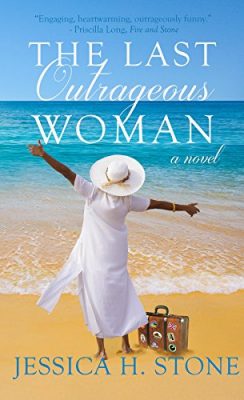
  • THE LAST OUTRAGEOUS WOMAN by Jessica Stone – Contemporary Women’s Fiction

    THE LAST OUTRAGEOUS WOMAN by Jessica Stone – Contemporary Women’s Fiction

    Life is meant for living – outrageously in Jessica Stone’s latest novel, The Last Outrageous Woman.

    Eighty-six-year-old Mattie’s life is dwindling away at Florida’s Restful Palms Retirement facility but she has a plan—an outrageous plan. And it just might work. Taking advantage of a crisis situation, Mattie tricks a staff member into signing a release paper that will be their ticket out.

    Each woman has a secret longing to be fulfilled. For Mattie, it’s a sea voyage as described to her by a long-lost lover; food-obsessed Dolores wants to honor her Irish heritage by kissing the Blarney Stone; quiet, easily dominated Edna has a dream of riding a camel—in Egypt; Rose never got to say goodbye, her way, to her deceased brother buried somewhere in Wisconsin; and Helen remembers how her two sons, both killed in military service, loved Australia, leaving her with the desire to go there and pet a kangaroo.

    To accomplish their mad scheme, the women who will become known to the world as “the grannies” enlist the help of Edna’s young bohemian niece Katie, who will make connections for them—not just on flights, but with people in all the places they touch down. Sneaking out of Restful Palms with passports and very little luggage (they share necessities and take only one change of clothing each) the grannies head first for Wisconsin.

    By the time they reach Ireland they have become a phenomenon on Facebook, and once their trek takes them to Australia, they have hundreds of thousands of “friends” who watch their exploits and cheer them on via YouTube. They become so admired by global social media fans that a dance is invented in their name, hoisting them to overnight Facebook fame—even though none of them quite understand what Facebook is, or even exactly how to use a cell phone.

    But not all their adventures are fun. The grannies are hunted by a pair of greedy sisters trying to make sure their aging mother does not waste “their” inheritance and are swindled by con men who see them as easy marks. Their ramblings wind down in Cairo, but the reader senses that for Mattie, the “last outrageous woman,” the trip will never really end.

    Each woman finds what she seeks, but in ways very different than anticipated, in this rollicking tale of spirit and spunk. One of them enjoys true love for the first time; one will get long-sought revenge; one will find herself while getting lost; one will let the experience of reunion with her departed loved ones carry her away; and Mattie will discover that the sea can have a far different look and meaning than she had expected.

    Told by best-selling author (Doggy on Deck) Jessica H. Stone, The Last Outrageous Woman transports the reader along with the grannies, to exotic locales that Stone herself has explored. Both a skilled and imaginative writer, the author surely knows that her own exploits, borrowed for this amusing, fast-paced yarn, would give her the well-earned title of “outrageous woman.”

    She also deserves extra kudos for showing that older folks are still fully human—capable of dancing, loving and celebrating life—while not side-stepping some of the undeniable pitfalls of aging—aches, fears, and memory loss.

    Five run-away grannies prove that dreams are worth pursuing, life is worth celebrating, and you’re never too old for true love in Jessica H. Stone’s engagingly fun and poignant tale of women pursuing their hopes and dreams in spite of society’s so-called best intentions.

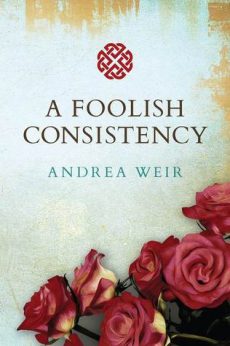
  • A FOOLISH CONSISTENCY by Andrea Weir – Women’s Literature, Family Drama, Romance

    A FOOLISH CONSISTENCY by Andrea Weir – Women’s Literature, Family Drama, Romance

    The course of true love almost never runs in a true straight-line, and this is certainly the case in Andrea Weir’s lovely romantic novel about second chances, A Foolish Consistency.

    Although Fate seems to have smiled on Dr. Will Tremaine and Callie Winwood, former sweethearts a couple of decades ago, when they meet again in an emergency room, their second chance at love is problematic. Will is a widower in Westin, a community in the East, and Callie is a divorcée in California. It’s not just the entire country that separates them, but the events of the last twenty-five years. Their attraction to each other is undeniable, however, and as feelings reawaken, they take the first steps to reconnect and build something new, something they hope will last.

    Inevitably, they have obstacles to overcome. Will’s children, Lizzy and Wiley, are thirteen and eleven, respectively, and still grieving the death of their mother, Joanna, two years earlier. Their maternal grandparents behave almost as if their mother were still alive, and they never acknowledge that Joanna suffered from mental health issues. While Lizzy reacts to her father’s new girlfriend with typical adolescent angst and anger, her grandparents completely overreact and plot to gain custody of their grandchildren. Their motives for doing so blind them to the reality of the situation and pit Will and his children against Callie and her grown children, especially her son, Ben, in his early twenties.

    Considerable depth is added to the narrative by Callie’s understanding of Lizzie’s feelings.  Having lost her own mother at an early age, Callie vividly recalls how difficult it was to accept her father’s new girlfriend who eventually became her stepmother. Although Callie loves Will deeply and wants a future with him, she also understands that Lizzy’s feelings are a priority, one that requires a great deal of patience and sensitivity. These qualities make Callie even more attractive to Will who reassures his children that his girlfriend is not seeking to take their mother’s place.

    Most scenes alternate between Callie’s first-person point of view and Will’s third-person outlook. This interchange between the female and male experiences of the romance gives the novel an intimate robustness, very appropriate for the narrative. The author handles the pacing just right, and the reader roots for the outcome one always wants in a romance. Still, the protagonists have much to learn about each other and themselves, and the author does not settle for a too easy denouement.

    Love once lost is not always easy to regain, even when the couple in question are like peas and carrots. Andrea Weir brings memorable characters, shimmering and confident prose, and realistic dialogue to her stellar contemporary romance of mid-life star-crossed lovers seeking a second chance in A Foolish Consistency.


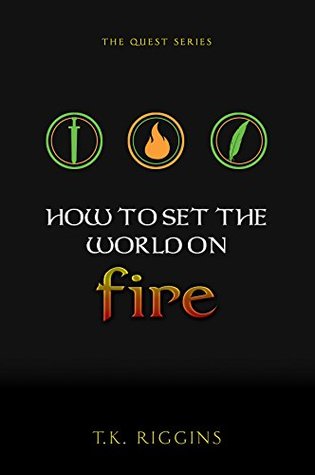
  • HOW to SET the WORLD on FIRE by T.K. Riggins – Middle Grade/Young Adult,  School of Magic, Fantasy

    HOW to SET the WORLD on FIRE by T.K. Riggins – Middle Grade/Young Adult, School of Magic, Fantasy

    Are you looking for a magical read? Pick up the award-winning Young Adult book, How to Set the World on Fire by T.K. Riggins and sink into a worthy example of the “school of magic” sub-genre sparked by the Harry Potter series.

    In this fast-paced, good-humored story, Kase Garrick, grandson of legendary warrior Roman Garrick, takes up residence in the Warriors castle at The Academy, reuniting with his older sister Cali, a member of the school’s Scholars branch. From his first day, Kase gains an enemy in Cali’s boyfriend Niveous. Sent to the Disciplinary Room thanks to Niveous’s trickery, Kase makes fast friends with the two girls also in detention: Talen, a sweet but awkward savant, and rebellious Lenia, whose control over fire tends dangerously toward pyromania.

    Kase hones his skills in weaponry while he and Lenia flirt themselves into love, while everything is building in anticipation to the Quest Series, the annual Academy competition. The teams are usually made up of four students from a single school, but Cali, Kase, Lenia, and Talen bend the rules to form their own team. They find support from the Grand Master and Professor Bright, the elements instructor, both of whom see the unusual potential in these four students.

    When the Quest Series begins, the plot coalesces into an exciting journey, not only into the four corners of the realm but also into the students’ psyches. Each of the five Events poses mental, physical, and emotional challenges for Cali’s team, The Liberati. Each student’s mental aptitude and fortitude are tested, as well, but not only by their ordeals—some teams join with Niveous’s crew to hamstring the favored four. Their malice, however, turns to alarm when it becomes apparent that The Liberati–Kase and Lenia in particular—have powers far beyond those developed by The Academy.

    Being a school of magic sub-genre, of course, one would be right in expecting the same feel and some of the same elements setting the stage as one would find in Harry Potter. For example, in this book, you’ll find former students turned evil, a headmaster, various schools within the larger school, an exciting and dangerous competition, Kase’s singular magic, and spiders. Another similarity fans will rejoice in, like Harry Potter, the author has just disclosed that this is indeed Book One of a series!

    More impressively, the story holds up very well on its own, and author Riggins manages to create a world that has one foot in fantasy and the other in up-to-the-minute reality. Sage mirrors, for instance, are only slightly more magical than smartphones and the kids take selfies to prove their accomplishments. Very smart.

    What Riggins also gets very right is the way he integrates words of wisdom into the competition. In one instance, the Grand Master exhorts them to: “Know who you are, but don’t be discouraged by who you are not.” And in another: “Sometimes the hardest part about finding something beyond your reach, is finding yourself first.” But avid readers will find The Liberati’s call to arms the best advice of all: “To the library!”

    A fast-paced, magical, and beautifully penned Middle Grade/Young Adult novel packed full of familiar plots and engaging characters, How to Set the World on Fire, will have you begging for more from debut author, T.K. Riggins.

    5 Star Best Book Chanticleer Reviews round silver sticker

  • THE GALICIAN PARALLAX by James G. Skinner – Spies & Politics, Thriller, Terrorism

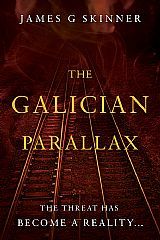
    THE GALICIAN PARALLAX by James G. Skinner – Spies & Politics, Thriller, Terrorism

    Lieutenant Sergio Quiroga of the Civil Guards has smelled something fishy brewing in the northwestern autonomous community of Spain known as Galicia for some time, and it’s not the world-renowned Port of Vigo.

    Not directly, anyway. It’s the cartels that are using the port to funnel drugs into Europe via the yachting enterprise, but what’s worse, the cartels have ties to the terrorist faction known as Al-Qaeda. The deeper Sergio delves into the latter organization by way of the former, the more he learns of their shifting plots to attack on European soil. Without the support of his superiors, Sergio must immerse himself in the Galician underworld in order to stay ahead of this thing. He eventually enlists the aid of British consul Stan Bullock to decipher exactly where and when the onslaughts are to take place.

    Largely set against the backdrop of northwest Spain following the 9/11 attacks, Skinner capitalizes on factual events to craft his narrative, such as the Madrid train bombings of 2004 and the bombings in London of 2005, to name a couple. And even more often he peppers in smaller-scale acts of aggression dually to punctuate the characterizations of Sergio and Stan and keep the looming threat they both face alive and machinating. To that point, Skinner also fills in the blanks of his international playing field by briefly focusing on the subsidiary parties such as the cartel leaders, Sergio and Stan’s superiors, and even the then President George W. Bush and Osama bin Laden.

    The Galician Parallax is certain to make a shrewd birthday gift for your diplomatically savvy uncle who likes to read about the second Bush administration and the concurrent War on Terror as if he were reading a series of dailies. The author maintains that he uses information based on facts to inform his readers rather than just trying to keep them entertained. On the other side of the coin, those readers more inclined to pick up a tight-knit character drama with some thrills here and there may be left wanting. Ultimately, Skinner, in his didactic world-building, challenges his readers and forces them to decide if they want to be informed or entertained. On the fiction side of things, Skinner imbues Sergio and Stan with their own personal struggles and desires to keep the reader caring about the story’s primary focal points.

    Make no mistake, The Galician Parallax is strong message serving to expose the cartel involvement in well-known terrorist organizations around the world. A timely and informative thriller set in Galicia, Spain. Shrewd writing about the international playing field of cartels by James G. Skinner!

  • JOURNEY Book Awards for Narrative Non-Fiction – 2017 Slush Pile Survivors

    JOURNEY Book Awards for Narrative Non-Fiction – 2017 Slush Pile Survivors

    The JOURNEY Book Awards recognize emerging new talent and outstanding Narrative Non-fiction works. The JOURNEY Book Awards is a division of the Chanticleer Book Reviews International Book Awards.
    Chanticleer Reviews International Book Awards also offers Non-Fiction Book Awards focusing on Instruction and Insight, Guides, How-To, and Self-help. Click here for more information.

    The following titles and their authors have made it past the initial “Slush-Pile Rounds” and will compete in the next rounds to see which titles will  be Short Listed for the 2017 Journey Book Awards.

    Good Luck to All! 

    • Kari Rhyan – Standby for Broadcast
    • Patricia Walkow – The War Within, the Story of Josef
    • Marilynne Eucgubger – Lives of Museum Junkies
    • Roni McFadden – The Longest Trail
    • Theresa Mathews – Fishing With Hyenas
    • Bruce Rettig – Refraction
    • Karen Elizabeth Lee – The Full Catastrophe: A Memoir
    • Pattie Welek Hall – A Mother’s Dance: One Step Back, Two Steps Forward, Full Circle
    • Alice Grant Bingner – Some Steps Back in Time
    • Dennis P Freed – Love Loss and Awakening
    • Donna LeClair/Emma Baker – Immunity
    • Susan Marie Conrad – Inside: One Woman’s Journey Through the Inside Passage
    • Judith Works – Coins in the Fountain
    • Valerie Gardener – Chapunza: Witch doctor, Ax-In-Head and Pink Baboons, Memoir of a Nurse in the African Bush
    • Lou Lesko – The Ghost of Communism
    • W. Hock Hochheim – Don’t Even Think About It
    • Dr. Scot Hodkiewicz – Getting to Heaven By Going Through Hell
    • Tommy Donovan – The Rail: What Was Really Doin’ in the 60’s Bronx
    • Deeann Callis Graham – Head-On, Stories of Alopecia
    • Kevin M Maher – No Couches in Korea
    • Rachel Thompson – Broken Places: a  Memoir
    • Frank Iszak – Freedom Flight
    • Joseph William Simmons – Dirty Motel Shenanigans

    These titles will compete to be SHORT LISTED in the next rounds.

    We are accepting entries into the 2018 Journey Book Awards for Narrative Non-fiction works.

    To compete in the 2018 Journey Awards or for more information, please click here.

    Chanticleer Book Reviews & Media, L.L.C. retains the right to not declare “default winners.” Winning works are decided upon merit only. Please visit our Contest Details page for more information about our writing contest guidelines.

    CBR’s rigorous writing competition standards are why literary agencies seek out our winning manuscripts and self-published novels. Our high standards are also why our reviews are trusted among booksellers and book distributors.

    Please do not hesitate to contact Info@ChantiReviews.com about any questions, concerns, or suggestions about CBR writing competitions. Your input and suggestions are important to us.

    Thank you for your interest in Chanticleer Book Reviews International Writing Competitions and Book Awards.

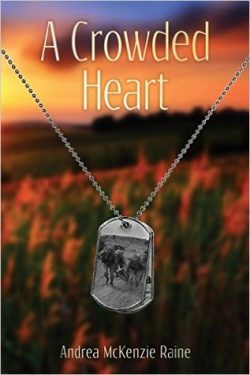
  • A CROWDED HEART by Andrea McKenzie Raine – Literary, Historical Fiction, Veteran/PTSD

    A CROWDED HEART by Andrea McKenzie Raine – Literary, Historical Fiction, Veteran/PTSD

    Willis Hancocks survives fighting in Western Europe during World War II but faces continuing battles of the mind at war’s end in Andrea McKenzie Raine’s poignant study of the plight of the former soldier in her historical novel, A Crowded Heart.

    Willis decides to remain in London rather than return to his native Canada where his parents and sister live near Vancouver. Eager to put the war behind him, he marries Ellie, an intelligent young woman who has studied art at Cambridge University. Her affluent parents approve of Willis, and her father offers to finance his new son-in-law’s study of law at Cambridge. The newlyweds’ future could not look rosier.

    This is, however, the story of a man who is haunted by the terrors of the battlefield. Life cannot proceed smoothly for someone who wakes from sleep in terror, who is plagued by survivor guilt, anxiety, and depression. Willis struggles to find his footing but repeatedly fails as he fights personal battles with alcohol, infidelity, and deception.

    Admittedly, these are poor weapons of choice to face the daily struggle of postwar life, and although he has periods of relative calm and sobriety, his sins and regrets continue to multiply. He recognizes his inadequacies as a husband and a father of two sons, one born out of wedlock to a mistress. Although Willis manages to earn his degree in law and launch a practice with his war buddy, Sam, he is never victorious at achieving inner peace.

    Raine wisely expands the narrative of the novel to reveal the wide net of war. Willis is not the only victim; the people in his life experience the after-shocks of fighting as well. Ellie is a dutiful wife but she is alone in her marriage, painting in secret because she can’t share her work with her emotionally remote, often absent husband. Willis spends years away from his family in Canada, neglecting them, and returns only when summoned after his mother’s death. He doesn’t engage with either of his sons and arranges to abandon the younger one altogether. It’s clear that the war will leave its mark on the next generation as well.

    The ending of the novel is not surprising, but it is powerful and deeply affecting. One is left thinking of all the soldiers who escape death but are nonetheless robbed of their lives. Standing beside them are loving, distraught family members and friends, people who fervently hope for a cure – some miracle that will return traumatized veterans to their former selves. Not to give up on those who have already given up on themselves is the challenge. Raine reminds us that doing so requires a full heart, indeed, a crowded heart.

    5 Star Best Book Chanticleer Reviews round silver sticker

  • GUILTY DEEDS by Scott D. Smith – Police Procedural, Mystery, Thriller

    GUILTY DEEDS by Scott D. Smith – Police Procedural, Mystery, Thriller

    What would you give if you could add to your memories – say, load your brain with pleasant, peaceful memories on top of the violent ones you live with every day? What would you do if the memories you were promised actually turn out to be those of a sadistic serial killer?

    Memories are at the heart of this fascinating detective thriller, Guilty Deeds, by Scott D. Smith. The plot involves the transplanting of memories from one person to another and the result is an intriguing set of concentric mysteries and a very good read.

    Stephanie Monroe, a young, smart and sarcastic detective working in Houston has a seemingly open and shut case when one Robert Grayson, a veteran who saw a good deal of violence in the Middle East, arrives at the police station with blood-stained hands and confesses to the murders of several women. He’s terrified he’ll kill again and begs to be incarcerated before he can do so.  Investigations don’t get much easier for a homicide detective, but Stephanie has been on the job long enough to know that life is never that simple.

    Enter Happy Memories, a company that buys and sells memories for your pleasure – and their profit. When Stephanie uncovers the fact her self-proclaimed killer is one of Happy Memories’ clients, she turns her investigation to the very affluent Dr. Lawrence Mead the owner of the company whose practices range from the unethical to the sinister. With the help of the police psychiatrist and Robert, Stephanie works to unravel this ever-deepening mystery before Robert’s sanity becomes the next victim.

    Tension is ripe throughout the well-written scenes and the dialogue is unexpectedly fun and engaging. The affectionate and quick-witted banter between Stephanie and Robert, whose attraction to one another grows as they become more deeply mired in the investigation, is solidified when they share their own sets of memories. This establishes a trust that will connect them in ways they could never have anticipated – and hooks the reader from the start.

    The conclusion leaves the reader hoping for a sequel. How fortunate, then, that there’s an epilogue that manages a perfect and surprising finish for a novel that probes the essence of the human condition. Thought provoking and entertaining, this thriller will have you second guessing yourself.

    5 Star Best Book Chanticleer Reviews round silver sticker