Blog

  • Synopsis Writing Tools Checklist by Jessica Page Morrell

    Synopsis Writing Tools Checklist by Jessica Page Morrell

    Jessica Page Morrell
    Jessica Page Morrell

    SYNOPSIS Tools Checklist by Jessica Page Morrell  Part 2 of a Two-Part Blog Post

    Jessica is a top-tier developmental editor. Jessica is teaching the Master Writing Classes at the Chanticleer Authors Conference on Sunday, April 22, 2018. 

    Here is the second half of a two-part series on How to Write a Synopsis. The first Synopsispart deals with synopsis development and the second part will discuss the mechanics of a synopsis.

    Here is the link to Part 1:

    Part 1 of Jessica Page Morrell’s Writer’s  Toolkit series on How to Write a Synopsis

    A quick recap of Part One: 

    A Synopsis Is:

    • Part Bare Bones  Story Recap (but not too bare)
    • Part Pitch
    • Part Illustration of Your Writing Style

    Every sentence matters and pushes your story forward. 

    Typically a synopsis completes a sales package that includes your first three chapters and sometimes a letter of introduction. Since at times editors read the synopsis first, it must be comprehensive, comprehensible, and compelling, forcing them to then peruse your chapters. Hopefully, your synopsis will be read not only by an agent and editor but if it passes muster, the marketing and art department will read it too. A synopsis will also be used in the publishing house meetings where decisions are made about what titles will be published in an upcoming season.

    SYNOPSIS CHECKLIST 

    A synopsis is written in the same order as the novel and is written in the style and tone of the manuscript—a witty, fast-paced novel requires a witty, fast-paced synopsis. If the story is literary, your synopsis will be more serious, but keep in mind that your dazzling prose goes into the manuscript, not the synopsis. Don’t leave major questions unanswered such as who killed the victim, as well as how Malcolm solves his internal conflict, and how the subplot was resolved after he lost his job when he was arrested. A synopsis keeps the reader’s interest, but it’s not a tease and is not written with cliffhangers and such devices. It’s particularly important to demonstrate that your ending provides a satisfying conclusion to the plot and ties up loose ends.

    A synopsis demonstrates that your characters are in jeopardy and what is at stake and why this matters. It introduces your main characters and their conflicts and agendas. It is not a list of characters or character sketches, and it usually does not describe physical attributes of characters, although the main characters are given some sort of tag. For example, you might want to refer to a character as the leading citizen in a small Southern town, or a respected doctor or frustrated novelist. Antagonists are always introduced, but secondary characters are mentioned only if they are involved with the protagonist’s inner or outer conflict.  A synopsis is also written with a careful attention to flow—ideas follow each other logically and one paragraph leads to the next. This means that transitions will be important in connecting the dots.

    Is or Does Your Synopsis Questions:

    • Is it reflective of a thoughtful writer at work?
    • Is it reflective of the mood and tone of the manuscript submitted?
    • Does it portray an enthralling story?
    • Does it highlight a gripping main conflict?
    • Does it highlight the intriguing motivations of the main players?
    • Does it lead the reader logically from inciting incident to end with:
      • major plot points along the way?
      • turning points along the way?
    • Does it provide a satisfying conclusion to the plot and ties up loose ends?
    • Does it connect the dots and progress logically?

    Mechanics

    • Write the synopsis in the present tense
    • The first time you introduce a character, type his or her name in ALL CAPS
    • The synopsis should be written in the same order as the novel
    • The synopsis should be written in the same style, tone, and pace of the manuscript

    HEADER  PAGE should be single-line spaced

    • On the first page in the upper-right hand corner write Synopsis
    • The next line should state the type of Genre
    • The next line should state the Word Count
    • The left-hand margin first line should state your name followed by your contact information (digital, voice, and delivery address)
    • Do not number your first page

    TITLE PAGE 

    Don’t number your first page, but scroll down to about one-third of the page and center your title in ALL CAPS. Then leave four lines after the title and begin with your hook. 

    BODY of MANUSCRIPT FORMATTING

    • Use 1-inch margins
    • Do not justify the right margin
    • After the first page use a header (or slug line) on the upper left-hand corner that looks like this: MORRELL/DOOMED FOR DEATH/Synopsis
    • The page number goes on the same line as the header
    • Do not use fancy fonts
    • Remember that you are summarizing, not copying
    • Begin a new paragraph if you are introducing a new scene or plot twist
    • You may want to note one or two short dialogue exchanges to illustrate a point
    • Rule of thumb for spacing: over two-pages, double-spaced is preferred; if it’s one or two pages, single space

    LENGTH 

    Since most agents and editors are notoriously pressed for time and read so much for their jobs, the five-page synopsis is appreciated by most. However, in the past, the wisdom about length went like this: one double-spaced page of synopsis for each 10,000 manuscript words. If you wrote an 80,000-word manuscript you’d write an 8-page synopsis.


    Finally, here’s a checklist that you might want to use to verify that you’ve covered all these points:


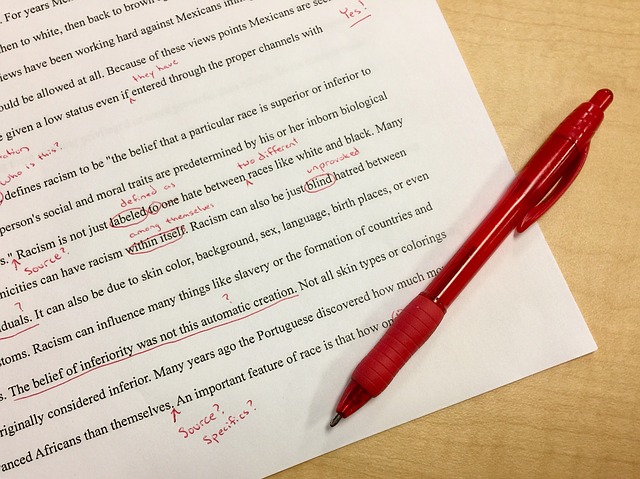
    • Have you printed it out and then edited it for spelling, grammar and punctuation mistakes?
    • Does the opening paragraph contain a hook that raises a question and forces the reader to keep reading?
    • Does the synopsis prove that the story is based around a single, dramatic question?
    • Have you shown the protagonist taking charge of events, making choices and decisions, but also stumbling and dealing with internal conflict?
    • Have you introduced your main characters and defined their conflicts, desires, and motivations? Are the protagonist’s dominant traits demonstrated?
    • Have you covered the major scenes and plot points?
    • Are reversals, twists, and surprises depicted?
    • Is the setting and timeframe of the story clear?
    • Does the synopsis include the places in the story where the protagonist changes? If your characters are changing, are you briefly explaining why?
    • Have you shown the protagonist’s darkest moment that comes near the end of the story? Does he or she hit bottom or is there a moment of truth? Are emotional or internal changes evident during this dark moment?
    • Is the ending revealed and does it clarify how the main conflicts are resolved? Have you briefly explain what the protagonist has won or lost?

    Resources:   Jack and Glenda Neff and Don Prues, authors of Formatting & Submitting Your Manuscript, suggest double spacing. 

    LINKS and other INFO

    Instructional and Insightful Books by Jessica Page Morrell to add to your Writer’s Toolkit. Click here. 

    Click here if you would like more information about Jessica Morrell’s Master Writing Classes that will be held on Sunday, April 22, 2018, Bellingham, Wash.

    Click here for information about the 2018 Chanticleer Authors Conference. 

    Click here for Jessica Page Morrell’s website.

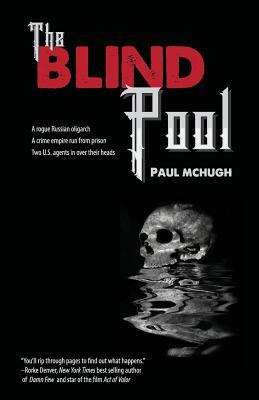
  • The BLIND POOL by Paul McHugh – Political Thriller, Hard-Boiled Mystery, Organized Crime

    The BLIND POOL by Paul McHugh – Political Thriller, Hard-Boiled Mystery, Organized Crime


    The Blind Pool won First Place in the 2018 CIBAs in the CLUE Awards. Congratulations!


    Blue and Gold Clue 1st place badgeImagine you’re stuck in traffic on a hot Florida Overseas Highway when you notice a group of rough-looking motorcyclists roaring down the highway between the cars. Irritating and enviable. But then, the leader of the group suddenly stops at a Cadillac and smash in the driver’s side window with his helmet. What would you do? Would you step in? Would you pretend you didn’t see it?

    Meet Dan Cowell, the man who steps in, and his girlfriend, Linda Parker, who cannot stand idly by while bullies terrorize the elderly couple inside the car.

    Heroes. But, now our heroes are in trouble. And just like Anton Chekov was so fond of saying, “Where there’s water, someone’s gonna go in…” * our heroes plummet over the railing and into the waters below. Welcome to the opening scenes of Paul McHugh’s thriller, The Blind Pool.

    The rest of the novel keeps up the thrilling and suspense-filled pace.  Dan and Linda survive the fall, but their adventures are far from over. The leader of the gang understands that Dan and Linda survived the fall, which means they can identify him. His identity is at the center of interlaced mysteries, each a jagged puzzle piece on a deadly board.

    Our heroes need professional protection. Enter Carl Blackadar, Dan’s buddy from his service days, a guy with more military and federal connections than anyone on the planet. His girlfriend, Melanie Olson, as sassy as she is smart, is a journalist who has recently been dismissed from the FBI for insubordination. Before that, she was the wife of a U.S. congressman, a position that still enables her to wield political clout. A moment in her company and no one is surprised about the insubordination charge; no one tells this feisty fireball what to do, and heaven help the misguided fool who tries.

    Dan’s and Carl’s investigations about the motorcycle gang take them to Ecuador where they discover a retired Russian general turned top-level gangster following the fall of the Soviet Union.  His office is an extravagant yacht, and here McHugh delivers exemplary scenes of crimes committed on the water in the dark of night. Meanwhile, Linda and Melanie undertake their own investigation in Texas, posing as a journalist and photographer, where they scrutinize a privately-owned prison with highly suspect practices and uncover the prison’s most notorious prisoner, Ted James Burnett, a man who murdered his parents in an insidious fashion. The women also take in the local color, including running interference with an annoying and odd tattoo artist who has ties to the prison. How does all of this relate to the motorcycle gang on the highway? In myriad and intricate ways that will have readers guessing and holding their collective breath until almost the last pages of the book.

    The action takes place in the present tense, giving an immediacy and added suspense to already alarming situations. Much of the plot is moved forward by dialogue, and what dialogue it is!  Witty, snappy, satiric, funny, anything but dull. Each of the four main characters has a distinctive conversational style, but the women especially shine. From Linda’s broken English to Melanie’s fluid charm, each can deliver a verbal punch when the situation calls for it. It’s a pleasure to read a novel that so celebrates the intricacies and art of the verbal take-down.

    This can’t be the end for these characters—Paul McHugh must carry on and give us more! At a time when the interference of foreign governments and gangsters in American life is much in the news, those who spend time with The Blind Pool will want a sequel. Not only that, but it would be a pleasure to read a prequel. Given the bits and pieces we know about our four main characters and how they came to know each other, I’d love to read a book that sets The Blind Pool in motion. It’s rare that a reader roots for a before and after, but, to his credit, Paul McHugh leaves us wanting just that.**

    *Chekov actually said, “Remove everything that has no relevance to the story. If you say in the first chapter that there is a rifle hanging on the wall, in the second or third chapter it absolutely must go off. If it’s not going to be fired, it shouldn’t be hanging there.” 
    **Hot off the press! Mr. McHugh just informed us that a prequel is forthcoming. Also, he is hard at work on a sequel!

    “A thrilling ride!” Chanticleer Reviews

     “From Florida’s Overseas Highway to Ecuador, our heroes are hot on the trail of organized corruption that may spell their doom. A hold-your-breath thrill-ride that does not disappoint.” – Chanticleer Reviews

    • Writing:  Excellent
    • Sex: Nudity, sexual violence
    • Violence:  Several scenes involve physical violence and torture
    • Narration:  Third Person
    • Tense: Present
    • Mood:  Highly suspenseful


  • GESTALT as a WAY of LIFE: Awareness Practices as Taught by Gestalt Therapy Founders and Their Followers by Cyndy Sheldon – Gestalt, Self-Help, Psychotherapy, TA & NLP

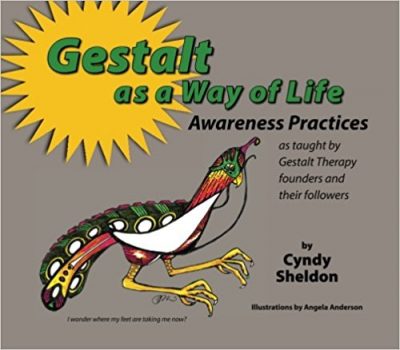
    GESTALT as a WAY of LIFE: Awareness Practices as Taught by Gestalt Therapy Founders and Their Followers by Cyndy Sheldon – Gestalt, Self-Help, Psychotherapy, TA & NLP

    Word of warning: I’m a bit of a self-help junkie, so Cyndy Sheldon’s Gestalt as a Way of Life is right up my alley. As one of the movement’s founders, Ms. Sheldon provides a valuable and instantly useable advice in this approachable introduction to Gestalt Therapy.

    The word Gestalt derives from the German word for “form.”  The group’s antecedents intended to create a holistic way of attending to human potential by, in Sheldon’s words, “… attending to the whole human being, including the physical, emotional, mental and intuitive or spiritual aspects.”

    The book came out of a series of seminars that the writer had been offering beginning in 2007 in the Pacific Northwest. It became clear to her that recording the information and making it available to a wider audience would allow not increase exposure to the ideas, but would allow people to refer back to sections of value as needed.

    Ms. Sheldon’s time spent among the Navajo Tribe, over ten years, clearly impacted the work. The overlap between Buddhist teachings, Navajo spiritualism, and Gestalt practices make an intriguing mix. The varying influences appear to really ground the suggested exercises or “experiments” as the author refers to them. Those experiments are intended to help the reader fully realize the benefits of the program as if one had attended the seminars as a participant. It’s in the experiments where the book shines, offering real-world practices the reader can revisit.

    The book is broken up into six sections with letter identifiers A through F: Awareness, Growing Up, Get Out of Your Head, Authenticity, The Magic and Sacred in Gestalt, and Final Thoughts. I found the section on Authenticity (D) particularly apropos. As the reigning Queen of Conflict Avoidance (Ask my friends! Okay you can ask absolutely anyone who has ever met me!), the exercises intended to assist with becoming more direct in interactions with other people target my style of using nearly any tactic to prevent trouble from brewing – even if it leaves me furious, frustrated, angry and resentful. The sample experiment below helped me recognize some of my favorite dodging language, used when trying to avoid hurt feelings at the cost of being clear:

    EXPERIMENTS (p. 83)

    1. Watch people in restaurants, in parks, wherever you can hear them, and listen for their qualifiers.
    2. Listen for your own. Exaggerate using qualifiers with good friends—see if they notice. Then experiment with not using them.
    3. What other ways do you use to be indirect? Exaggerate these, which will help you become more aware of doing this…
    4. Now be direct and clear without judging.

    That last instruction alone proved so valuable. Being clear without indulging in a knee-jerk urge to start a self-shame-athon (at my deplorable display of selfishness) helped increase my awareness of the automatic pilot way my mind works when trying to avoid hurting others’ feelings.

    Like most books of the genre, you benefit to the extent you are willing to engage in the suggested experiments. Gestalt as a Way of Life delivers on two levels: it provides a fine introduction to the Gestalt movement and a gentle method for applying it in your life.

    5 Stars! Best Book Chanticleer Book Reviews


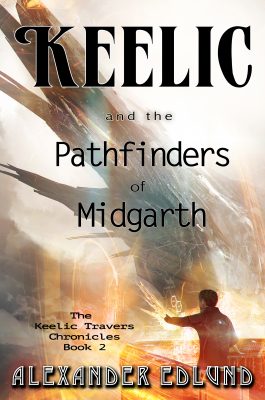
  • KEELIC and the PATHFINDERS of MIDGARTH (The Keelic Travers Chronicles Book 2) by Alexander Edlund – Science Fiction, Middle-Grade Coming of Age, Action/Adventure

    KEELIC and the PATHFINDERS of MIDGARTH (The Keelic Travers Chronicles Book 2) by Alexander Edlund – Science Fiction, Middle-Grade Coming of Age, Action/Adventure

      When it comes to high-adventure Science Fiction, why should adults have all the fun?  Alexander Edlund’s novel, Keelic and the Pathfinders of Midgarth proves that younger readers want in on the action.

      Twelve-year-old Keelic Travers has adults all around him dropping their jaws because he has just defeated the evil pirate Jaw Take-ta-Kua in battle and taken possession of the outlaw’s ancient battleship. In doing so, he rescues his parents from Jaw’s clutches, reversing the traditional scenario of parents protecting their child. Surely all the survivors of this recent war are eternally grateful to Keelic and will follow his every order?

      Well, no.

      Imagine how his parents and most of the other adults feel about taking orders from a 12-year-old, even one who can pilot a starship. While Keelic does his best to present a mature and confident facade, the reader witnesses his private moments of self-doubt, nightmares, and even adolescent jealousy when Leesol, a lovely and intelligent girl, converses with other boys. He may only be twelve, but Keelic is already struggling to balance the responsibilities of his professional life with the challenges of adolescence.

      Plot and characterization fit nicely together in this novel as Keelic decides he wants to train to be a Pathfinder, a member of a highly elite team of people who explore the galaxy. To become a Pathfinder requires an extensive study with a curriculum of topics such as route finding, alliance and negotiation, threat identification range, vector speeds and energy signatures, as well as astrophysics, and planetary geophysics, among other subjects. This schooling gives Keelic a chance to interact with classmates close to his age, including a pair of twins who offer comic relief from time to time. The group, known as Keelic’s “Complement” engages in challenging and exhausting training that will test them individually and as a team. While the Pathfinders-in-training learn to trust one another implicitly, Keelic has another plan in mind.

      It’s a dynamic of good versus evil with a bit of David and Goliath thrown into the mix. And while Keelic doesn’t have a slingshot, he does have the intelligence and battle skills needed to consider slaying the most destructive menace in space.

      To Edlund’s great credit, the dazzling technology of the future is believable and inspires awe with prose that often merges the empiricism of science with the ethereal mysteries of space, resulting in beautiful, resonating language.

      Keelic and the Pathfinders of Midgarth will appeal to a broad age range of readers – in much the same manner as the Harry Potter series continues to capture the attention of all.

      And while Keelic and Harry may be growing up in vastly different places, they both begin as adolescents who realize special gifts and undertake an atypical education to develop and hone those gifts. If Keelic and his classmates found themselves at Hogwarts instead of the Pathfinder Academy, they likely would have fit right in with the other brave and loyal Gryffindors. Star Wars and Star Trek enthusiasts, as well, won’t want to miss this book or any others in The Keelic Travers Chronicles.

      Luckily, outer space is large enough to fit every single fan.

      A futuristic YA Science Fiction pick that will capture readers’ imaginations and entertain them for years to come. Keelic and the Pathfinders of Midgarth belongs in the hands of those who yearn for a great read with enchanting lands, fantastical adventures and a hero with a lot of heart.

      5 Stars! Best Book Chanticleer Book Reviews


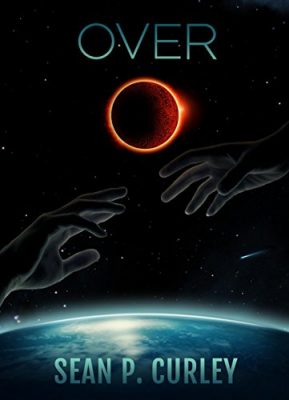
    • OVER by Sean P. Curley – Post-Apocalyptic, Sci-Fi/Fantasy, Environmental

      OVER by Sean P. Curley – Post-Apocalyptic, Sci-Fi/Fantasy, Environmental

      Over is a sci-fi novel of big ideas: the scourge on the future by today’s environmental negligence, the effects of biological warfare, even the development of a faster-than-light warp drive that opens the door to a future among the stars.

      In this dystopian future, humankind must grapple with the repercussions from a technological advancement that essentially imparts immortality: immortality to a very few. Less than 30,000 of the world’s inhabitants, the privileged class, Overs, and the resentment of the billions of people who don’t fit into that category, aptly named, Unders.

      Not only do the Overs have eternal life as their trump card, they also have a lock on the world’s economy, technology, medicine, and the ultimate say on who gets the benefits of their largesse, and who do not. There is even a global robotic “mind” that helps the Overs control every aspect of the planet—and that “mind” secretly gives birth to a “daughter.”

      To say that the Overs rule is a benign dictatorship would be putting it mildly.

      But the Overs must kowtow to the ruling familias who base their operations from Sri Lanka. These overlords do not respond kindly to threats against their near absolute rule.

      Into this frothy brew comes Jaames (cq), a rebel leader in Denver where most of the action takes place; Demetrius, the Over’s boss of bosses for The Americas; and Anika, Demetrius’ comely daughter who has a mind of her own and a relentless and ultimately fatal attraction to Jaames.

      Over is not a typical plot-structured, character-driven novel. Curley sets the planet up as the primary character and everything else falls secondary. While this may be jarring to some in regard to traditional plot, characters who are not fully fleshed out, and linking cause and effect in a character-rich and technologically-advanced society, Over stands strong as a powerful read – especially for its meditations on how our actions endanger our planet and our future, and for the author’s take on the upsides and downsides of a benign Immortal dictatorship. There’s much to think about, and no easy answers.

      Curley plans at least two more books based on the plot and characters in Over and we wait with anticipation as to what this master-geo-political-environmentalist author comes up with. In a world where the rich obtain immortality, a forbidden love can either bridge the gap of unimaginable inequity or drive the disparaging classes even farther apart. A science-fiction novel with an earthly conscious.

      5 Stars! Best Book Chanticleer Book Reviews


    • RANDY SUSAN MEYERS Gets Popped Out | On Word

      [fusion_builder_container hundred_percent=”no” equal_height_columns=”no” hide_on_mobile=”small-visibility,medium-visibility,large-visibility” background_position=”center center” background_repeat=”no-repeat” fade=”no” background_parallax=”none” enable_mobile=”no” parallax_speed=”0.3″ video_aspect_ratio=”16:9″ video_loop=”yes” video_mute=”yes” border_style=”solid” padding_top=”20px” padding_bottom=”20px”][fusion_builder_row][fusion_builder_column type=”1_1″ spacing=”” center_content=”yes” link=”” target=”_self” min_height=”” hide_on_mobile=”small-visibility,medium-visibility,large-visibility” class=”” id=”” background_color=”#3a3a3c” background_image=”” background_position=”left top” undefined=”” background_repeat=”no-repeat” hover_type=”none” border_size=”0″ border_color=”” border_style=”solid” border_position=”all” padding_top=”” padding_right=”” padding_bottom=”100px” padding_left=”” margin_top=”” margin_bottom=”” animation_type=”” animation_direction=”left” animation_speed=”0.3″ animation_offset=”” last=”no”][fusion_imageframe image_id=”18961″ max_width=”” style_type=”none” stylecolor=”” hover_type=”none” bordersize=”” bordercolor=”” borderradius=”” align=”center” lightbox=”no” gallery_id=”” lightbox_image=”” alt=”On Word” link=”” linktarget=”_self” hide_on_mobile=”small-visibility,medium-visibility,large-visibility” class=”” id=”” animation_type=”” animation_direction=”left” animation_speed=”0.3″ animation_offset=””]https://test.chantireviews.com/wp-content/uploads/2018/08/On-Word-header-1104xx209-1.jpg[/fusion_imageframe][fusion_youtube id=”JhvoF2E7tG8″ alignment=”center” width=”” height=”” autoplay=”false” api_params=”” hide_on_mobile=”small-visibility,medium-visibility,large-visibility” class=”” /][fusion_text]

      Subscribe:

      [/fusion_text][/fusion_builder_column][fusion_builder_column type=”1_1″ layout=”1_1″ spacing=”” center_content=”yes” hover_type=”none” link=”” min_height=”” hide_on_mobile=”small-visibility,medium-visibility,large-visibility” class=”” id=”” background_color=”” background_image=”” background_position=”left top” background_repeat=”no-repeat” border_size=”0″ border_color=”” border_style=”solid” border_position=”all” padding_top=”” padding_right=”” padding_bottom=”” padding_left=”” dimension_margin=”” animation_type=”” animation_direction=”left” animation_speed=”0.3″ animation_offset=”” last=”no” element_content=””][fusion_text]Randy’s novels live in Dark, Dysfunctional, Domestic Drama: quadruple Ds– that with an undercurrent of humor to get through all the mishegas. She pulls from her years working with battered victims and inmates- she drives in to discover light in the dark moments.[/fusion_text][/fusion_builder_column][/fusion_builder_row][/fusion_builder_container]

    • Synopsis Writing Tools – a Two Part blog post by Jessica Page Morrell

      Synopsis Writing Tools – a Two Part blog post by Jessica Page Morrell

      Jessica Page Morrell
      Jessica Page Morrell

      SYNOPSIS Development by Jessica Page Morrell

      Jessica is a top-tier developmental editor. Jessica is teaching the Master Writing Classes at the Chanticleer Authors Conference on Sunday, April 22, 2018. 

      Here is the first half of a two-part series on How to Write a Synopsis. The first part deals with synopsis development and the second part will discuss the mechanics of a synopsis.

       

      Part 1 of Jessica Page Morrell’s Writer’s  Toolkit series on How to Write a Synopsis

      I’ve got a book in progress now, but I’m planning to write several nonfiction projects, so I’ll be crafting proposals to sell these projects. Now, I’d rather yank out my fingernails one by one or undergo a series of root canals than write a proposal—there’s just something about them that fills me with dread and the worst case of procrastination this side of the Rockies. I know proposals are a top-drawer tool in my toolbox of writing skills, but I still loathe writing them. And I’ve heard this same sort of dread about writing a synopsis from fiction writers, so if you’re fortunate enough to be finishing a novel, here are some ideas for this next crucial step.

      First, if you’re not fond of writing a synopsis, this doesn’t strike me as abnormal. After all, you’re summarizing about 400 pages into the briefest possible form while introducing the major players and situation and somehow leaving no questions unanswered, while not disclosing everything that happens in the story. A synopsis is part bare bones of your story (however, not too bare), part pitch, and part illustration of your writing style. And every sentence matters and must push the story forward.

      Typically a synopsis completes a sales package that includes your first three chapters and sometimes a letter of introduction. Since at times editors read the synopsis first, it must be comprehensive, comprehensible, and compelling, forcing them to then peruse your chapters. Hopefully, your synopsis will be read not only by an agent and editor but if it passes muster, the marketing and art department will read it too. A synopsis will also be used in the publishing house meetings where decisions are made about what titles will be published in an upcoming season. In your synopsis, these professionals want to see a thoughtful writer at work—one who has crafted an enthralling story, with a gripping main conflict and intriguing motivations in the main players. They also want to understand how the story moves logically from the inciting incident in the opening chapters to the end, with major plot points and turning points along the way.

      These days there seems to me no grand consensus on the ideal length of a synopsis. If you’ve written a saga, chances are you might weigh in at 10 pages or more and if you’ve written a fairly simple tale, you might get away with a one-page shortie. Since most agents and editors are notoriously pressed for time and read so much for their jobs, the five-page synopsis is appreciated by most. However, in the past, the wisdom about length went like this: one double-spaced page of synopsis for each 10,000 manuscript words. If you wrote an 80,000-word manuscript you’d write an 8-page synopsis.

      Synopsis

      If you’re new to the task of synopsis writing you might want to read the back cover copy of your favorite paperback novels and the inside jacket of hardcover novels. Notice how enticing the copy is and how the story question is revealed. Notice also the verbs and the level of specific detail. Then make a list of all the major characters and events that you need to include in your synopsis.

      Start your synopsis with a hook—such as in:

      When JAMES MALCOLM, an insurance adjustor, awoke in a strange basement wearing women’s clothing, he knows it won’t be an ordinary day, but could scarcely have imagined that the clothes he wore belonged to MELINDA DAVIS who had been recently murdered. Wrongly suspected of her murder, Malcolm is forced to discover who murdered Davis and why and why he was fingered for the crime.

      Write in the present tense and the first time you introduce a character, type his or her name in all caps. A synopsis is written in the same order as the novel and is written in the style and tone of the manuscript—a witty, fast-paced novel requires a witty, fast-paced synopsis. If the story is literary, your synopsis will be more serious, but keep in mind that your dazzling prose goes into the manuscript, not the synopsis.

      Don’t leave major questions unanswered such as who killed the victim, as well as how Malcolm solves his internal conflict, and how the subplot was resolved after he lost his job when he was arrested. A synopsis keeps the reader’s interest, but it’s not a tease and is not written with cliffhangers and such devices. It’s particularly important to demonstrate that your ending provides a satisfying conclusion to the plot and ties up loose ends.

      A synopsis demonstrates that your characters are in jeopardy and what is at stake and why this matters. It introduces your main characters and their conflicts and agendas. It is not a list of characters or character sketches, and it usually does not describe physical attributes of characters, although the main characters are given some sort of tag. For example, you might want to refer to a character as the leading citizen in a small Southern town, or a respected doctor or frustrated novelist. Antagonists are always introduced, but secondary characters are mentioned only if they are involved with the protagonist’s inner or outer conflict. A synopsis is also written with a careful attention to flow—ideas follow each other logically and one paragraph leads to the next. This means that transitions will be important in connecting the dots.

      The Part 2 will discuss the mechanics and formatting of a synopsis and her handy checklist (by Jessica Page Morrell).

      LINKS

      Instructional and Insightful Books by Jessica Page Morrell to add to your Writer’s Toolkit. Click here. 

      Click here if you would like more information about Jessica Morrell’s Master Writing Classes that will be held on Sunday, April 22, 2018, Bellingham, Wash.

      Click here for information about the 2018 Chanticleer Authors Conference. 

      Click here for Jessica Page Morrell’s website.


    • USING SOUND and SIGHT to REVISE YOUR WORK by Craig Anderson – Writing Instruction, Editing, Author Toolkit

      USING SOUND and SIGHT to REVISE YOUR WORK by Craig Anderson – Writing Instruction, Editing, Author Toolkit

      When it comes to selecting an approach to review and revise their work writers have plenty of options. They can read it forwards; backward; silently; out loud to themselves, a friend, or even the family pet.


      Regardless of the choice, a writer can end up reading it so many times their eyes cross, blur, or melt.

      I found reading my work aloud was beneficial, but because I sometimes missed simple mistakes, I wasted valuable time going back over the material time and again. It took repeated face plants against the keyboard to uncover my problems.

      Will anyone see my cry for HELP?

      Reading too fast: My brain would fill in a missing word or skip over an unnecessary word: What was supposed to be written versus what I’d actually written.

      Fast eyes; slow mouth: I found my eyes would be five to ten words ahead of my mouth.

      Boring:  Finally, and a most painful realization, I soon became bored at hearing my own voice read something aloud I knew inside and out. Thus, my attention wavered. I remembered my parents complained about my attention— hey, look at the puppy.

      Several years back, I found a cure after listening to a book on my old 3G reader and its Text-to-Speech option. The author overused different iterations of the word grimace throughout the book, which the computerized voice pronounced as ‘gri-moss.’ I reread some of the text and grimace was not as noticeable as hearing it. I knew it was a time for a change.

      Text to Speech (TTS) is a computerized program that turns text (words) into speech and is available on most Windows-based and Mac systems. (FYI: I use a Windows system, which translates into I’m Mac-challenged.) There are commercial TTS programs, free or fee-based, that you can load onto your system.

      I personally prefer the TTS, Windows-based, free program Balabolka for all of my editing and revision. There are different ways to use the program, but I run it on one screen and listen to the words while I follow along with the manuscript on another screen.

      Whenever I find an issue or, more importantly, discover a sentence, paragraph, or scene that is grammatically correct but doesn’t sound quite right or could be sharpened, I’d stop the voice and make the correction.

      The effect is both amazing and humbling.

      I like Balabolka because it’s easy to use; you can adjust volume, pitch, and rate of speech; insert pauses; adjust the pronunciation of words, so you avoid gri-moss and it remembers the change; and, what I think is the best feature, is you can create an MP3 file (similar to a music file) of your work—a sentence, paragraph, or an entire manuscript. Now you can take your work with you and listen to it on a phone, music player, in your car, or send it to a friend for a critique. It’s like an instant audiobook of your own work. Here’s a word of caution. You may not want to listen to your work while on a treadmill because if you hear a mistake and stutter step, you’ll ricochet yourself against another machine and hit the wall. It’ll leave a mark.

      For those who may be skittish about the electronic voice of a TTS program, I urge you to stick with it. For me, I no longer hear it. You can purchase professional programs (for Windows and Mac systems) that offer different languages with regional accents or dialects in adult male, female, and children voices such as: American English—Southern, English—Irish or Scottish, Russian, German, French, Japanese, etc., which can cost between twenty-five and forty bucks. Some companies run periodic sales.

      Some authors I know use the professional voice options to hear their genre-specific manuscripts. For example, a kid or teenager’s voice for Children/Young Adult; southern drawl for a Civil War-era piece; Texan for Western, and so on.

      TTS is a permanent part of my writing toolkit, which means I no longer get bored listening to myself talk.

      Priceless.

      Here are some links to tutorials that you may want to consider:

      Balabolka: An Introduction and Overview

      Balabolka: Text to Speech and Saving Text to MP3

      Balabolka: Importing the Dictionary and Word Pronunciation

      How to use Balabolka for Accessible Textbooks


      A note from the Editor: Craig’s Bio:

      Craig Anderson served for twenty-six years in the US Air Force, completed an MFA in Creative Writing for Fiction, and a Graduate Certificate in the Teaching of Writing. He is a professional book reviewer, manuscript evaluator, mentor, and book editor for nonfiction and multiple fiction genres with Chanticleer Reviews and Editorial Services.  An avid writer, he’s authored the forthcoming thriller Grabbed and Gone. He, his wife, and five large dogs dwell in Eastern Washington State.

      Craig after a cup of coffee...

        Craig Anderson before a cup of coffee…


    • The BOATHOUSE CAFE: Book One of FIRST LIGHT by Linda Cardillo – Intercultural Romance, Literary, Historical Fiction

      The BOATHOUSE CAFE: Book One of FIRST LIGHT by Linda Cardillo – Intercultural Romance, Literary, Historical Fiction

      Mae Keaney is looking for a way back to her childhood, back to safety, and finds it in a property on Chappaquiddick Island. A wind-tattered cottage and an old boathouse she envisions as a café will be her haven, as long as she can keep her regrets and sorrows hidden.

      With determination, she brings her talents as cook and waitress to bear, attracting locals and tourists alike with her hearty sandwiches, delicious cakes, and teas. She has her privacy and her shelter, and that is all she craves – until she meets Tobias, a quiet, kind, dark-skinned fisherman who begins the difficult process of enflaming her cold heart. Tobias is the son of the chief of the island’s Wampanoag tribespeople and scurrilous rumors begin to fly about Mae and her lover.

      Set during the Second World War years and beyond, The Boathouse Café reminds us of a time when an unwanted pregnancy could ruin a woman for life and prejudice against Native Americans was status quo. These factors affect the star-crossed, inter-cultural relationship between Mae and Tobias, twisting it into a complex carpet of unanswered–and unanswerable–questions. Only strong, sincere, honest love can hold them together to face the storms that will beset them before their union can be secured.

      This is a story that breaks through the barriers of race and challenges tradition and social mores for love.

      Award-winning writer Cardillo planned out this stunning family saga with extreme care. Though the motivations and histories of her well-constructed characters may be mysterious at first, the author will thoughtfully tie up every thread as the story progresses. Her setting, a tiny dot of land hanging out in the Atlantic Ocean, subject to torments of both harsh weather and human weakness, gives the tale great power, somehow presenting more potential for drama than similar yarns spun on safe, dry land. When a fire rages on Mae’s property or a vindictive enemy vandalizes her cozy home, there will be people on “Chappy” who value the land and the traditions of the island and will step in to help and widen the circle of Mae’s support. The island, in Cardillo’s skilled hands, becomes not just an enthralling environment but a shared ethos.

      Ultimately, this beautifully written, passionate, page-turning adventure of a blended family history and a romance of grand proportions will have readers yearning to continue the series with The Uneven Road and Island Legacy

      5 Stars! Best Book Chanticleer Book Reviews

    • Scott Steindorff, A-List Executive Film Producer at the Chanticleer Authors Conference

      Scott Steindorff, A-List Executive Film Producer at the Chanticleer Authors Conference

      THIS JUST IN!

      Scott Steindorff has agreed to come back for CAC 19 – for two full days!

      We are beyond excited to announce that Scott Steindorff, A-List Executive Film Producer will be joining us again at #CAC19

      Robert Scott Steindorff is an American film and television producer who is known for adapting literary works into film works. He works with some of the top people in the entertainment industry such as Natalie Portman, Nicole Kidman, Matthew McConaughey, Ewan McGregor, Robert Downey Jr., Scarlett Johansson, Jon Favreau, John Leguizamo, Will Farrell, Jack Black, and others.

      Scott has produced Chef, Jane Got A Gun, Las Vegas, The Lincoln Lawyer, Penelope, Empire Falls (TV Series), The Human Stain, Love in the Time of Cholera, and other works.

      Michele Miron, Editor for Press Publications wrote that When producer Scott Steindorff buys rights to a book, there’s a good chance that story will show up on the big screen.” She continues to report that “he makes two to three movies each year.” 

      Known as Hollywood’s bookman – Scott has chosen the books from these authors to adapt into movies include Philip Roth, Richard Russo, Gabriel Garcia Marquez, T.C. Boyle, Nicholas Sparks, as well as Michael Connelly’s “Lincoln Lawyer” and Mikhail Bulgakov’s “Master and Margarita”.

      And yes, I am going to say it again!

      SCOTT STEINDORFF is COMING BACK to the Chanticleer Authors Conference!!! He will be here for two days at CAC19 to discuss books and the entertainment industry.


       Special Topics – Scott Steindorff

      • The Art of Developing Books to Film
      • Deconstructing a Novel into Three Acts
      • The Dangerous Task of Turning Beloved Bestsellers into Film or TV
      • The Hook in a Book

      On Word 

      Join Scott in an Actor’s Studio-style Interview with Diane Sillan for the Chanticleer Reviews video series, On Word.

      Scott’s upcoming projects are mostly “based on a novel” as he continues to develop and produce commercially successful and award-winning television series and films. “…books that are so well developed with their stories and characters that they attract top writers, actors, and directors for film and TV.”

      Click here for more information about the 2018 Chanticleer Authors Conference and Int’l Book Awards Banquet and Ceremony.