Portrayals of bums and hobos in American culture are often comic (Red Skelton’s “Freddie the Freeloader,” carefree (Rodgers and Hart 1932 song, “Hallelujah, I’m a Bum,”) or sociological (“Hobos, Hustlers, and Backsliders” by Teresa Gowan).
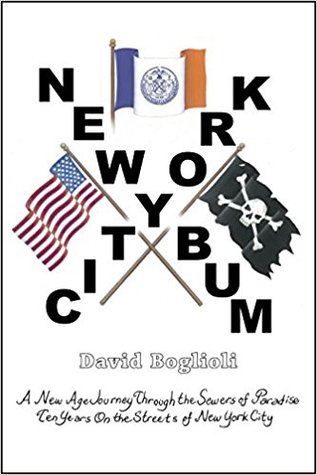
Not so in David Boglioli’s first-person narrative of ten years spent on the streets in his aptly titled New York City Bum (Midway Books, 2017): in turn a memoir, guidebook, and first-person exploration of Dante’s Inferno, 20th-century style.
Readers may want to listen to Lou Reed’s classic street ode, “Walk on the Wild Side” to get into the mood for this book.
Boglioli started using crack cocaine in the mid-1980s. A highly successful chef (New York’s Ritz Carlton Hotel, among others) from an affluent background, well educated, living the life in a luxurious apartment, he was dissatisfied with his well-appointed life. The “netherworld,” as he calls it, fascinated him: “The street was the gutter, the very bottom of the barrel, always a trek through new territory where experience, caution and instinct are one’s only guide… A long way from anyplace with places that might not even exist. Such was my challenge; my catharsis. My escape.”
He becomes a bum by choice, with his crack habit as his mentor, releasing the person inside—the person trapped by his Middle-class American roots. He offers no apologies nor excuses for his downward spiral. Instead, he embraces his desire for more, always more of the life. Whether it is trashing several apartments, a methodical listing of all the places for him to score dope, his seemingly endless friendships with hookers that were more about using drugs together than sex, and the sheer paranoia interwoven with his lifestyle of choice, he sets out on his newly chosen life with the intimacy of a diary and the mindset of a reporter.
The greatest surprises of this book may be his portrayal of how he and his fellow bums find shelter and work in the often-squalid streets of Manhattan. He describes every conceivable way that people survive, from cardboard “houses” to charitable housing provided by churches and other institutions. It is possible to be a bum and yet find life’s basics—provided, of course, that the self-destructive behavior on his part and at the hands of others that went with The Life didn’t destroy these respites from the streets.
He also shows the many jobs that street people have access to, from fast food places to hotel services, putting enough cash in their collective pockets so they can score more dope. “One’s entire waking existence, which was often incessant for days at a time, was directed towards getting high. Get the money, cop, get off.” He shows how selling stuff, often his own as well as someone else’s, provides a steady cash flow. At one point he makes money by renting out his apartment by the half-hour to crack users or whores. The jobs are there if you know how to find them.
With all the lengthy description of his life of choice, he is somewhat chaste while describing his personal cravings. He gives us all-too-brief glimpses of his coming out as a cross-dresser and some vague references to his pansexuality, but he gives us few glimpses of his intimate relationships. A typical peek-a-boo remark on the women in his life goes something like this: “Although my steady girlfriends were top of the line, I too enjoyed the scuzziest of skanks, depending on my current level of degeneracy. From five star to closed by order of the Board of Health.”
Whether he is describing his many walkabouts in New York’s streets or detailing the many ways that people ingest crack, he writes with an almost manic level of detail. He wants us to see his world precisely as he sees it. And while he mostly paints his life and his fellow bums with broad strokes, there are some downright frightening gems, such as the whores who are happy to have contracted AIDS so they can have a warm, safe place to stay and get off the hustle—for a while, that is.
There is no simple way to explain how his street life ends for him, other than the reality that he had lived it as much as he could. There is no magic friend, family member or therapist, only a bird, some hamsters and his discovery of “the kid” within him that takes him from his mean streets to the streets where most of his readers are only too happy to live.
A gritty, hard-knocking plunge into the gutters of New York City in Boglioli’s self-inflicted journey to hell and his subsequent rise. A Dante’s Inferno for the 21st century.
Meet Paul Aertker, 2017 Grand Prize Winner in the
Chanticleer Gertrude Warner Awards
I first met Paul Aertker when we were in Portland Oregon last year. My first impression: Dynamic, Intelligent, Generous. In short, I am so glad we met! When I found out he was coming to our Chanticleer Authors Conference, CAC18, and that he was indeed in the running for an award – I was thrilled.
Paul is an amazing human being – but don’t take my word for it! Find out for yourself! Read on and be sure to comment at the end – and share if you like.
Chanticleer: Paul, tell us, how did you start writing?
Aertker: I started writing on September 12th—the day after 9/11. I guess I saw what the world had become or rather, what adults were capable of doing, and I thought maybe I should focus on kids and maybe kids could make things better. So that’s how I got started writing.
Chanticleer: That’s amazing, Paul. Thank you for taking action in this way. What led you to the middle-grade crowd?
Aertker: I write middle-grade books mostly because I act like an 11-year-old. No, but seriously, I do. I enjoy working with and writing for the middle grades for several reasons. Nine to twelve-year-olds are at a perfect stage in life—before the challenging ages of young adult, yet they are still old enough to understand what’s going on in the world, and most importantly, they get my jokes!
Chanticleer: You’re right! What inspired you to write this particular series, The Crime Travelers? I hear, by the way, that this series is doing quite well…
Aertker: I think most everything I write is about travel. The Crime Travelers series is about international action adventure—”like the Bourne Identity but for kids.” What’s more, this new book Posthumous is about an American family in Paris, and the mother dies, and the dad and daughter move back to the US. I think of travel as a catalyst for writing, a means of generating ideas mostly because I see reading and writing as a form of travel.
Chanticleer: Oh, good answer! Reading is the best form of escapism. Give us five authors whom you would love to meet on your travels – and tell us how they have influenced your work.
Aertker: What I’ve done is a little different from most children’s book writers. I love Roald Dahl and Margaret Peterson Haddix and Rick Riordan and Gordon Korman and the rest. However, most of my influence comes from the adult authors who write international and action adventure novels—specifically, James Patterson, Robert Ludlum, Lee Child, John Grisham, etc. I like these guys, and I like their work. In the Crime Travelers series, I bring the action and adventure of adult novels into the kid world.
Chanticleer: I think Middle-Grader readers are ready for these books. Look at their video games! Tell us a little about areas of writing you feel most confident in – and what advice you can give someone who is struggling in this area.
Aertker: I’ve gotten much better at getting the words on the page. I used to struggle to create a lot of volume of pages. But, I have a trick that has helped me. I think we all struggle with the internal critic telling us that we are not good enough or whatever we’ve done is terrible. We all have this. Sometimes I find that I cannot sleep so instead of tossing and turning, I will get up, put on my glasses, and sit at my desk. I’ll write in the middle of the night for hours. And what I’ve learned is that my internal critic doesn’t get up with me! He’s too tired to criticize. So I write for a while and then go back to sleep. In the morning I wake up and notice that someone has written in my document! Yes, sure it needs work, but editing seems to be easier than cranking out the first draft.
Chanticleer: Good advice – If your inner critic is too loud, wait until it passes out, and then write. So, I hear you sell a lot of books… Which business books have helped you the most?
Aertker: I think one of the best business books for writers is Tim Ferriss’s 4-Hour Work Week. We all know that we will not work just four hours a week. Writing has no end. We know this. What I took from this book was that it’s important to delegate tasks. You need to hire an excellent cover designer, and you need a good interior designer for your book… You also need a developmental editor, a copy editor, and a proofing editor. Then you need to assemble a team of beta readers. And, and, and. The point being: ask (or hire) others to help.
Chanticeer: What do you do in your community to improve/promote literacy?
Aertker: I frequently speak at local schools whether I’m in my hometown or traveling to a new place. I love speaking to classrooms and bringing excitement to books and reading. I promote reading for the sake of reading. Period. I think it’s important for kids to enjoy the activity. If we want kids to read great literature and to be healthy adult readers, we have to get them to like reading, first.
Chanticleer: Love your passion for reading and helping kids discover the joy of reading. Give us your best marketing tips, what’s worked to sell more books, gain notoriety, and expand your literary footprint.
Aertker: The single best marketing tip for me has been to give my books away. I give mostly to teachers, fourth, fifth and sixth-grade teachers, and to librarians. If you’re a teacher, please write me, and I will send you a set of books for free. Yes for free! The reason being that a set of books in a teacher’s classroom is without question the best calling card I could ever have. I often have teachers write me back and say, “Oh thank you so much for sending the books. The kids are fighting over them!” That is awesome marketing. (Reach Paul at https://www.paulaertker.com/)
Chanticleer: Wow! Well done. So, what are you working on now? What can we look forward to seeing next from you?
Aertker: I am super excited about this next book coming out called, Posthumous. It’s a book about a 12-year-old girl who wants to publish her late mother’s stories. It’s one of those books that I wrote in the middle of the night, and I think it’s the best thing I’ve ever written. It’s sad and sweet, and it’s all about the kids making things right.
Chanticleer: I think we will all want to read this one. Please keep us updated. What is the most important thing a reader can do for an author?
Aertker: The most important thing a reader can do for an author? That’s easy. Write a review! I am amazed at how critical getting reviews are, and how difficult it can sometimes be to get people actually to go on Amazon and write the review.
Chanticleer: Paul, it’s been a pleasure. Thank you for spending some time with us. You are a bright star in the universe!
Okay, now it’s your turn… If you have a question for Paul Aertker, please feel free to comment on this post or reach him directly through his website https://www.paulaertker.com/. If you enjoyed this interview, please SHARE it! Sharing is Caring, baby.
Paul won the 2017 Grand Prize Gertrude Warner Award for Middle-Grade Books because he entered the contest! If you have a middle-grade book the world needs to see, enter the competition here. The deadline is fast approaching – May 31, 2018.
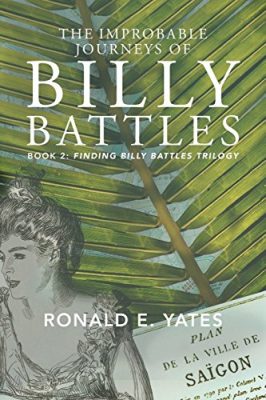
Ronald E. Yates continues the robust adventures of a lawman, gunslinger, and journalist in The Improbable Journeys of Billy Battles, the second volume in his trilogy about the title character.
As in the first volume of the trilogy, William “Billy” Battles addresses the reader, but Ted Sayles, Billy’s great-grandson, is the one who compiled Billy’s life story through studying his great-grandfather’s journals, letters, newspaper articles, tapes, and other materials. And what an adventurous life it is! Living a full one hundred years, William Fitzroy Raglan Battles was born in Kansas in 1860 but eventually travels the world. Readers familiar with the first volume will no doubt want to continue William’s journey with the second book which begins in 1894. The Improbable Journeys, however, can function as a stand-alone volume because Yates takes great care to bring the reader up to speed with what has already taken place.
The opening chapters of Book 2 find William aboard the SS China, bound for French Indochina although the ship will make stops along the way. He is grieving the loss of his beloved wife and seeks to assuage that grief with travel, leaving behind his mother and young daughter, Anna Marie. However, the Pinkerton Detective Agency is hot on his trail, investigating William’s part in the deaths of members of the Bledsoe family back in Kansas.
His future is also set in play when he meets Baroness Katharina von Schreiber, a brilliant intellectual who, despite her aristocratic German title and surname, was born and raised in Chicago. Like William, her spouse is dead but the circumstances involving Rupert’s death are suspicious, and she takes great pains to avoid questioning by the authorities. William learns that some officials believe she’s in possession of top-secret German documents that she confiscated from her husband. There’s much political intrigue, but Katharina and William delight in each other’s company, and he feels the first stirrings of romance since his wife’s death.
William’s journeys bring him face to face with the realities of late 19th-century colonialism. As an American traveler and journalist, native peoples expect that he will sympathize with their struggles against colonial powers. After all, America set the example for the rest of the world by throwing off the chains of England more than one hundred years earlier. In the Philippines, Katharina’s brother, Manfred, supports a secret organization that seeks to overthrow colonial rule and establish independence for the nation. And while William has great admiration for the Philippine revolutionary leader, Aguinaldo, William is coaxed into military service. He fights alongside American soldiers from Colorado and Kansas – even though he knows all too well that McKinley’s “Proclamation of Benevolent Assimilation” is not truthful; the U.S. ultimately annexes the Philippines not as “friends” but as invaders and conquerors.
These fascinating chapters are narrated with an experienced journalist’s objective and encompassing eye. Yates, also a journalist, does an exemplary job of having William note every angle of the despotic nature of colonialism and the vast and complex difficulties involved in native peoples achieving independence.
The book is not without humor. William is witty and candid, occasionally sliding into cowboy-speak, and he knows a cast of characters, real and fictional, who provide surprising hilarity throughout the book. Bat Masterson is on hand, as is Jefferson Randolph “Soapy” Smith. We leave William anticipating more dangerous exploits, one involving Francisco Villa, better known as “Pancho Villa.” Thank heavens this is a trilogy because it’s clear Billy Battles adventures are far from over.
Ronald E. Yates won first place in the 2016 Chanticleer International Book Awards for Somerset, Literary category.
Meet Denise Ditto Satterfield, 2016 Grand Prize Winner of the Chanticleer Little Peeps Awards
I first met Denise at CAC17 and was impressed by her passion for writing and her ability to encourage those around her in their craft. Much like her Children’s books, she seemed to be spreading her charm and charisma (#fairy_dust) everywhere she went!
Recently, we had a chance to chat and here’s what she said about her writing life and life in general. I hope you enjoy getting to know Denise Ditto Satterfield a little more through this interview.
Chanticleer:Tell us your story, Denise, how did you start writing?
Denise Ditto Satterfield: At the ripe old age of 44, I decided to go to college. My friends teased me, jokingly asking, “Why didn’t you go to college when you were supposed to?” You see, I started life the old-fashioned way … the way my dad said it had to be done. Graduate high school, get married and have kids. No college in the picture … especially not for girls. So, that is what I did. You ask, “How did that work out for you?” Not very well. Fast forward – I got divorced, my kids grew up, I got remarried and then I went to college. In my first English class, my love for writing was reignited. At the encouragement of one of my teachers, I submitted a story to the school’s literary magazine. I won first place in the competition and the rest is history. From that day forward I knew that one day I would quit my job and write full-time.
Chanticleer: What a journey! It takes a lot of strength to break out of the mold and do something else. Follow your heart. Good for you! Let’s talk a little aboutyour chosen genre.
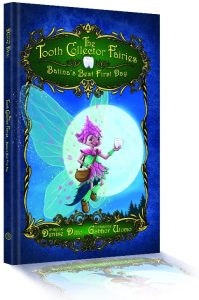
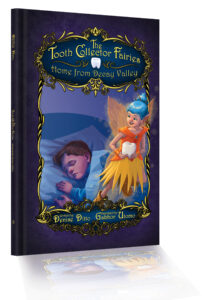
Ditto Satterfield: My genre, for the moment, is children’s chapter books. I am also working on a Tooth Collector Fairy handbook which will be a companion book to the chapter books. When I take a break from fairies, I’m working on a middle-grade book. I love writing for children because I think like a child. I know that sounds crazy, but it’s the truth.
Chanticleer: That’s perfect. I find your work marvelously relateable. Maybe I think like a child as well… Do you find yourself following the rules or do you like to make up your own rules?
Ditto Satterfield: Well, it’s funny you ask this question. The handbook I’m working on consists of the rules and guidelines that the tooth fairies must follow. The main character, Batina, is a hardcore rule follower. As for me … I would say that I am a rule follower when it comes to most things. My husband says more specifically that I don’t follow the rules because they are rules. I follow the rules because they make sense. If I find that the rules don’t make sense, I will tweak … or bend … or ignore rules – whichever makes the most sense.
Chanticleer: I agree – things have to make sense. Easier to remember that way! What do you do when you’re not writing? Tells us a little about your hobbies.
Ditto Satterfield: Up until May 2017, my hobby was motorcycling. I rode a Harley for 27 years. My road name was Wonder Woman which was later shortened to WW. I got this name when my husband and I rode to Raleigh, NC for a Marine Corp reunion about 18 years ago. I was meeting a group of old Marines whom I had never met before. When the word got around that Skipper (my husband, Frank) had arrived at the hotel where the event was being held, all the guys filed outside to greet him. When they saw me they couldn’t believe I, a girl, rode all the way from Texas with him on my own bike. What made it even better is that, at the time, I rode a Softail painted like the American flag. That was the day I got my name.
When I quit my job to write full time, I became a joiner. I joined writing clubs, attended conferences, workshops, etc. I thought maybe I should learn how to blog so I went to a Leisure Learning class called, “Blogging for Dollars.” At that workshop, I heard something very interesting. The teacher said it was important for writers to build a platform. She suggested that for those in the class that didn’t have a website or blog should start one. She went on to say, “All you have to do is write about something you know.” I decided to take her advice – I started writing a motorcycle blog focusing on women riders. I gave tips in the form of videos. Honestly, they are a hoot. If you want a good laugh, visit www.motorcyclemommablog.com. Here are a few of my favorite videos – Blue Jean Shirts – Oct 2013; Bad Coffee – Apr 2013; Listening to music on the Motorcycle – March 2014.
Chanticleer: You are hysterical! Great blogs – I hope this is something you can continue. Maybe add a Children’s Book Blog to your impressive platform? So now, how do you come up with your ideas for a story?
Ditto Satterfield: When I was working everyone knew that I was going to quit my job one day and write full-time. When people know that they all have an idea of what you need to write about. I had one girl come to work one day and tell me that her daughter lost her tooth. The daughter wanted to know if all tooth fairies were girls. She told her no. Her request was that I write a story about tooth fairies that included boy tooth fairies. I thought that sounded like a pretty good idea. I wrote Batina’s Best First Day but didn’t have any tooth collector fairies that were boys, so in book two, Home from Decay Valley, I incorporated a boy tooth collector fairy. (He’s real cute … and very inquisitive … and I love him. He makes me laugh.)
Chanticleer: I love it when your characters are so deeply developed you can’t help but fall in love with them! How structured are you in your writing work?
Ditto Satterfield: I am not structured at all with my writing. I go in spurts and sometimes I work best under pressure. For example, when I was working on, Home from Decay Valley, I set a date for completion. The rough draft spilled out pretty fast. It was the revision stage that bogged me down. I would talk about how I had to finish the manuscript and then find something else to work on. I think this is what some might call procrastination. But I’m the farthest thing from being a procrastinator. I’m the one that has to have all my ducks in a row and the sooner the better. When it comes to creativity, it’s just hard to turn it off and on.
Chanticleer: It is hard! And it’s also important to let others know that the process isn’t easy. Thank you for sharing that. It’s important to work on your craft. What do you do to grow your author chops?
Ditto Satterfield: I find that the best way to grow my author chops is to attend workshops and social events with other writers and conferences. I always get fired up after a great conference. I also conduct a critique group at my house twice a month.
Chanticleer: Good answers. What do you do in your community to improve/promote literacy?
Ditto Satterfield: I have presented my book at schools and libraries. In addition, I visit the Ronald MacDonald House in House annually and read to the kids and sign and give away books.
Chanticleer: You are truly amazing! Okay, before I start to cry because you’re too awesome, please give us your best marketing tips, what’s worked to sell more books, gain notoriety, and expand your literary footprint.
Ditto Satterfield: I love the marketing part of being an author. I believe an author must find his/her target audience first. Once the audience is identified, hit the road running. In my case, my target audience is 1. Children in the tooth losing age and their parents/grandparents, and, 2. People in the dental field i.e. dentist and dental hygienists. What I’ve done to sell my books is a little bit different than most. Besides the usual avenues (libraries, schools, bookstores) I sell my books at different types of festivals. People love to shop at all the different vendor tables because they can get unique gifts not usually found in stores.
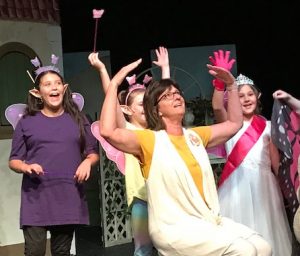
Denise onstage!
I gained a tiny, wee bit of notoriety when a children’s theatre group picked up my story and made it into a musical. This is how I did that. I pitched the idea to a children’s theatre group. They liked the idea and made it into a musical. This performance gave me a lot of mileage on sales prior to the Premier Performance date. I was able to hit events all over town promoting the musical and selling my book. Since the first performance, I have packaged the musical and am now taking it on the road. It was performed again this month, May 2018, in Conroe, TX by the C.KIDZ Theatre School. Lucky for me I was able to get the C.KIDZ Theatre School into the Children’s Museum of Houston to perform the musical again on May 27th. I will also be launching my second book at the museum on May 27th directly after the musical so that should increase sells.
Chanticleer: You are blowing me off the page right now! What are you working on now? What can we look forward to seeing next from you?
Ditto Satterfield: Right now I’m working on the Tooth Collector Handbook. It will outline the rules and guidelines for the Tooth Collector fairies.
Chanticleer: That makes perfect sense – and smart, too. I can imagine kids will love this. Who’s the perfect reader for your book?
Ditto Satterfield: Children between the ages of 5-10 and their parents and grandparents.
Chanticleer: What is the most important thing a reader can do for an author?
Ditto Satterfield: I know that reviews are very important to most authors. I think that should be number as the most important thing a reader can do but … for me, the most important, rewarding thing a reader can do for me is tell me what they think about the story. I had a school visit a couple of months ago and there was a little girl in the class that had my book. She jumped up and told the class all about it. It was crazy fun. She was so excited to meet me and she told me she love, love, loved the book. That made my day.
Chanticleer: I’ll bet it did! Denise, thank you for taking the time to share a little bit about yourself and your writing life with our community. You are a treasure!
For those of you in the Houston, TX area, Denise will be launching Home from Decay Valley that will include an onstage performance of Batina’s First Day on May 27, 2018, at the Children’s Museum of Houston. A not-to-miss event! Denise will donate $1 for every book sold on May 27 to the Barbara Bush Literacy Foundation.
I would love to invite our readers to visit Denise’s website for her children’s books. It’s an education in marketing. https://toothcollectorfairies.com/
For her books, you can purchase them from her website, or your favorite retailer.
We’ve asked 10 questions, now it’s your turn! What question would you like to ask Denise Ditto Satterfield?
Denise won Grand Prize in the Little Peeps Awards for Children’s Books by entering the contest. Do you have a Children’s Book? The deadline for entering Little Peeps is September 30, 2018. Enter here today!
You can read The Tooth Collector Fairies: Batina’s Best First Day Chanticleer Review here.
1. The writing style is flowery, cluttered with modifiers, or sloppy. Overuse of modifiers is one of the most obvious indicators of an unsophisticated or sloppy writer at work. The simple solution is to limit your use of modifiers and use them only when they contain information that a noun or verb cannot.
2. Mechanical errors such as spelling mistakes, grammar slip-ups, poorly constructed sentences, or punctuation problems. In an increasingly competitive marketplace, these errors will knock you out of the running. Editors and agents are only interested in professional, polished and error-free writing.
3. The conflict is weak or boring.Conflict ignites and powers a story. Your protagonist must be up against powerful opposition at every turn and must fight these forces with an all-out offensive.
4. The opening does not contain a hook.The opening of a story is a gathering of forces to be unleashed. Stories always open with a change in the protagonist’s circumstances and this change is usually threatening. Openings also introduce a question that needs answering.
5.The story and the individual scenes do not have a sense of tension building and suspense. Readers need a reason to keep turning the page and all stories need growing intensity until the climax or resolution. A story where the tension does not rise, without unanswered questions and a series of surprises and reversals, won’t captivate readers.
6. The manuscript is plagued with dialogue disasters:overly long exchanges; characters giving speeches; or, the dialogue contains no tension or conflict. Other problems: each character does not sound distinct, characters talk about mundane topics not relevant to the story, or speech tags are distracting and filled with adverbs. Properly utilized dialogue defines characters, provides information and pushes the plot forward.
7. There is too much telling, not enough dramatization. Whenever appropriate bring the story to your readers in scenes, where they can witness it unfold in real time. “Show, don’t tell” is a useful guideline for writers, but fiction is actually ‘told’ and ‘shown.’ A combination of both techniques creates the most effective fiction. Scenes are most effective when you’re revealing characters or complicated interactions between characters. Exposition is most effective when you’re filling in background information or moving quickly between two scenes. Too much showing or too many scenes makes the story too drawn out just as too much exposition makes it static. The best stories usually move back and forth between scene and description.
8. Characters are underdeveloped.In the best fiction the reader has a sense that the characters have existed before the story began and will carry on after it ends. Memorable fictional characters are richly drawn, consistent, with dominant traits throughout.
9. The ending doesn’t deliver or satisfy.The best endings are not contrived or convenient. They are the logical and highly dramatic culmination of the proceeding events. The climax is the highest emotional pitch of your story, a decision, a collision of forces, and settling of scores.
10. The point of view is muddled or inconsistent.The point of view is the filter or lens which we see the story through. It is crucial that you understand who is telling the story and why. Viewpoint characters are generally those who will be most affected by the events of the story. If you’re using a multiple point of view, strive for a logical and consistent pattern.
Another note from Kiffer Brown,
One way to make sure that your work is the best that it can be before LINE EDITING and COPY EDITING, is to have a professional manuscript evaluation or manuscript overview assessment of your work-in-progress. This assessment will alert you to any of the above issues before you have your work edited.
and finally, Number 11 – FORMATTING ERRORS and Erroneous Submissions
11. The manuscript format is inappropriate or contains errors.There are no exceptions to the guidelines for manuscript submission. Margins, line spacing, fonts, and formats must be adhered to or your manuscript will be ignored.
11a. The manuscript has been sent to the wrong person or house.For example, you send a category romance to a publisher that only publishes mainstream. Submissions require meticulous research and care. Whenever possible, make contacts in the industry and in general, send brief inquiries before sending any manuscript pages.
Jessica Page Morrell
Jessica Page Morrell is a top-tier developmental editor and a contributor to Writer’s Digest magazine, and she teaches Master Writing Craft Classes at the Chanticleer Authors Conference that is held annually.
Jessica understands both sides of the editorial desk–as a highly-sought after content development editor and an author. Her work also appears in multiple anthologies and The Writer and Writer’s Digest magazines. She is known for explaining the hows and whys of what makes for excellent writing and for sharing very clear examples that examines the technical aspects of writing that emphases layering and subtext. Her books on writing craft are considered “a must have” for any serious writer’s toolkit.
Chanticleer Reviews and OnWord Talkswill interview Jessica for more of her writing tips and advice. Stay tuned! ~ Chanticleer
We are planning a writing craft workshop soon that will be taught by Jessica.
Why are all these GDPR emails landing in your email inbox?
And why all of a sudden are these Privacy Policy Updates appearing all over the Internet?
Why have the regular websites that you routinely visit (like Chanticleer Reviews) appearing with requests such as ours:
“We use cookies to offer you a better browsing experience, analyze site traffic, … Read about how we use cookies and how… If you continue to use this site, you consent to our use of cookies.”
Why? Because of the European Union General Data Protection Act goes into effect on May 25, 2018.
“The EU General Data Protection Regulation (GDPR) is the most important change in data privacy regulation in 20 years.” – www.eugdpr.org
The EU GDPR is a law covering any organization of anywhere in the world that handles the personal data of EU residents (emails, credit card info, addresses, phone numbers, comments, etc.).
And we at Chanticleer Reviews believe it is a good thing–protecting your data privacy. It is a duty that we take most seriously. We respect your privacy. Chanticleer Reviews has embraced and complied with the GDPR.
What about YOUR websites, dear Chanticleerians?
Even though, you may not live in the European Union (Oh! to have a second house in the Algarve! Or a cozy hut in the Alps!), but if you interact on your website with people who do live in the EU and the U.K., you may want to make sure that your website is compliant with the GDPR.
And what about your United Kingdom website subscribers?
Well, now that you have asked, this is what the Queen has to say:
The Queen’s Speech has confirmed that the General Data Protection Regulation will form part of UK law following the country’s withdrawal from the European Union. … Once the UK has left the European Union, the legislature will be able to make changes to the GDPR framework as it sees fit. June 22, 2017
Here are a few links if you wish to learn more about the EU GDPR and what it means to you, your website, and your digital information:
SPECTRUM IEEE (the professional electrical and electronics engineer’s organization and magazine) article titled: “What Developers Need to Know About Europe’s Data Privacy Rules”
A Summary of the EU General Data Protection Regulation
Updated to consider the ePrivacy Directive review and how this will align with the General Data Protection Regulation, refresh your understanding of GDPR and what it means for your business with our handy summary – the most-read item on the site.
And finally, a recommended site for small business owners (and, ahem, authors) about information security is the Electronic Frontier Foundation.
So without further ado,
Dear Chanticleerians,
As you are probably aware, the General Data Protection Regulation (GDPR), which comes into effect on the 25th of May, will soon have a major impact on European privacy law.
We have now updated our online Terms & Conditions and Cookies & Privacy policies that align with our commitment to the GDPR.
You can find our updated documents in the links below, which may also be found on the homepage of the Chanticleer Reviews website:
These updates will come into effect immediately for all existing and new customers. For those of you who have not heard of GDPR, please do not worry, the key message you can take from this email is that the changes we have made are all positive as they offer increased protection to your personal data. The changes will not prevent you from entering the book awards, obtaining manuscript overviews and editorial services, or purchasing shiny new stickers from us!
If you are a subscriber to the Chanticleer Reviews e-Newsletters and you would like to opt out of emails you can do this by clicking UnSubscribe or Change your preferences. Just remember that if we can’t email you we won’t be able to send you our informative tips to help you achieve your publishing goals or the latest book reviews or OnWord videoblogs or discounts…
We also want to take this opportunity to remind you that your data is kept securely and that you can unsubscribe from our emails at any time.
Many thanks,
Chanticleer Book Reviews
Team Chanticleer
We do hope that this blog post, with its handy links, has been helpful and informative. Afterall, protection of data is a good thing to have!*
*As usual, we are not attorneys nor do we pretend to be attorneys or specialists in this area. Please seek professional counsel and advice.
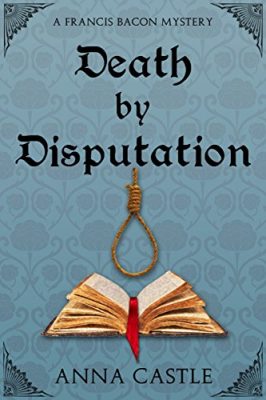
Bartholomew Leeds interrupts the young men’s studies at Corpus Christi College, Cambridge University in 1587 when he is found hanging from a roof beam. Is it suicide or murder? He sent warnings to His Lordship about the rising Puritan rebel underground. Were his communications intercepted somehow? Thomas Clarady, a spy in their midst assigned to investigate the Puritans, must now ponder and debate this Death by Disputation by author Anna Castle. Fascinating suspects abound at the college, and beyond its borders.
Philosopher, statesman, orator, and spymaster Francis Bacon is anxious to determine and jail the instigator, the suspected head of the Puritan rebels, as well as track any connection to “Barty” Leeds untimely demise. He’s impatient for resolution and demands daily, written updates from Tom Clarady, his recruited spy. Posing as a student, Tom methodically follows clues while chased by three enamored women, dogged by well-meaning friends, diligently turning in his homework, and risking his own life more than once. Tom is enthusiastically determined to catch a killer, and to solve the mystery, as he plunges into this grand adventure. But this mystery has ominous layers, uncovering one leads to a more dangerous set of clues.
As Tom follows leads, he finds that the victim had interesting curricular and extracurricular activities, any of which could make him a target. Tom takes his undercover duties to heart as he masks himself as a student who is swayed by Puritan ways and infiltrates the local group. He decides “in order to stop them he has to become one of them.” But will they discover his de facto assignment? He becomes such an ardent follower that the apparent changes in his personality and lifestyle concern his friends and even his spymaster. Tom treads carefully, but has he gotten in over his head? As he examines clues and analyzes suspects, the reader participates in working out theories and ultimately guessing a villain.
The delightful dimension to this mystery is the fascinating characters the author showcases. Along with the smart spy who sleuths along a tightrope between warring factions, the highlight is the fictionalized historical figure of Christopher Marlowe, a treasured rogue. Marlowe’s loyalties are continuously in question, but his wry humor and dramatic actions hit their marks. The three romantic women also particularly surprise with their hidden skills, knowledge and vibrant personalities. References to the historical period setting naturally weave into the plot and dialog, and enhance rather than detract from the pacing of this thrilling spy tale.
For author Anna Castle, writing fiction combines her lifelong love of stories and learning. She chose the Elizabethan period for her Francis Bacon series, seeing it as one of the most colorful periods of all times and places. Retired from one of the world’s great research libraries, the University of Texas at Austin, the author enjoys the extensive research she does for the series and the details of the historical period that she shares with her readers.
There’s no debate – Anna Castle brings to life a page-turning thrill of a mystery where “there are hazards other than jail or bodily harm” in Death by Disputation.
Death by Disputation is the 1st Place Winner in the 2015 Chanticleer International Book Awards in Chaucer, the Early Historical Fiction category.
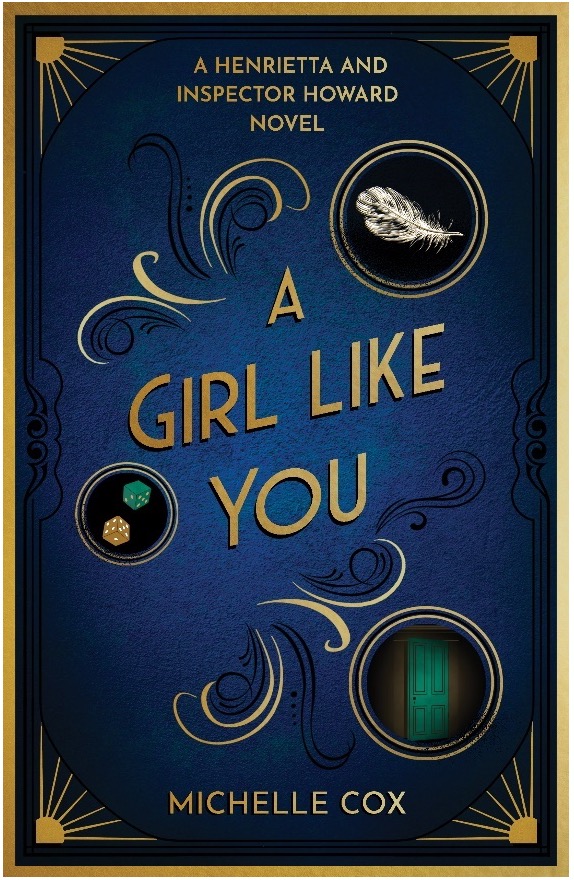
Welcome to Chicago, 1935 in the midst of the Great Depression where the beautiful and vivacious Henrietta Von Harmon, the oldest of eight children, fights to save her family and solve a crime. Her father has recently committed suicide, and her mother is bitter and fretful about making ends meet. Henrietta does all she can to help, working at a local tavern and then in a dance hall as a “taxi girl,” dancing with any man who has the price of a ticket. She’s earning a modest salary when the job ends abruptly because her boss, the formidable and acerbic Mama Leone, is murdered.
Opportunity knocks when the detective working the case, Inspector Howard, suggests that Henrietta apply for work as an usherette at a burlesque theater, The Marlowe. He needs someone on the inside to report back to him on shady activities. The pay is twice that of a taxi girl, but the job is far more dangerous. Some of the dancers and an usherette have gone missing—and all the employees are afraid of Neptune, the theater’s owner.
Because one of the missing girls is a friend’s sister, and because Henrietta wants to prove her worth to the detective, she agrees to the job. Detective Howard, a handsome but inscrutable man, is secretive about his personal life. In his mid-thirties, Henrietta fears he couldn’t possibly be interested in her the way she is interested in him, unless, of course, she could dazzle him with her amateur detective skills.
It’s a challenge given Henrietta’s naivety. She sees things at The Marlowe that make her jaw drop. The dancers perform a seductive choreography in scanty costumes, and some of the usherettes are sexually intimate with one another, though none of these scenes are graphic in nature. She learns fast, however, and presents herself as more assured than she feels. There’s a marvelous camaraderie amongst the usherettes, sweet women who look out for one another and are also trying to put two and two together about the missing girls. They caution Henrietta about “the green door,” each believing there are goings-on behind it that point a link to the disappearances. Determined to crack the mystery and impress Inspector Howard, Henrietta is willing to put herself in the most dangerous of situations.
There is so much to admire about Cox’s romantic mystery novel and even more to enjoy. Readers will feel that they’re walking the streets of Chicago in the 1930s, the author conveys the neighborhoods, the people, the sights and sounds so convincingly. She’s equally adept with her portrayal of a large family living in cramped conditions, Henrietta, a substitute mother to her youngest siblings because her own mother is often emotionally absent. Even if a mystery didn’t enfold, this would be a thoroughly satisfying novel because of the historical details and the excellent characterization of the very sympathetic main character. The embedded mystery, however, takes this book to another level, a feat of successful merging of genres.
A Girl Like You will appeal to those who relish romances, mysteries, historical fiction, and especially to those for whom all three hit the jackpot! Great news for fans of Henrietta and Inspector Howard, two more titles in the series, A Ring of Truth and A Promise Given, already grace the booksellers’ shelves.
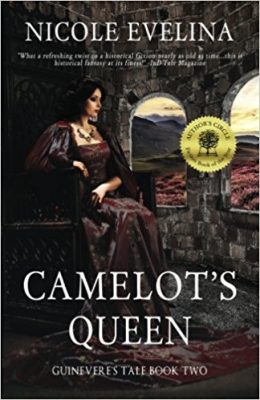
Meet Guinevere: a sage military adviser, a priestess of Avalon, and the mother of a dynasty. In Nicole Evelina’s Camelot’s Queen: Guinevere’s Tale (book two), Guinevere must learn to reconcile her past with her future; what she was with what she must become.
No longer a young lover with dreams of a home with her former betrothed, Guinevere must quickly learn how to be a queen and to navigate the rocky waters of marriage to the high king, Arthur Pendragon. Over time, Guinevere proves a great success until she cannot give Arthur the heir he needs.
Kidnapped by a ruthless man bent on revenge, Guinevere must find the strength to hold tight to her sanity while regaining her rightful place. Upon returning from her horrific ordeal, she finds her position as queen in jeopardy and her once-strong relationship crumbling as she struggles to hold her growing restlessness and loneliness at bay.
Book two of this series, which includes a map for easy reference, explores the nature of Guinevere’s struggle with duty: to self and her country. Once a girl with fanciful dreams of a quiet life, Guinevere must learn to put aside what she wants for what her country needs. After swearing to protect her people as Arthur’s queen, she knows that she must always sacrifice desire for obligation, even when the choice breaks her heart.
As a powerful Avalonian priestess capable of manipulating the elements with a literal flick of her finger, she must subjugate herself to a man who seeks her wisdom. And while Arthur respects her as the stronger of the two, Guinevere still suffers for her gender, legally equal as a ruler but never quite enough to command without her husband.
Hemmed in by the historical perimeters of this mythical queen, the author creates a surprisingly unique character. Fans of the original stories will enjoy this reimagined Guinevere with her priestess markings and battle-tested body. She is no damsel in distress. Familiar characters like Tristan, Gawain, and Bors, come to life, but this time, the Combrogi (aka Knights of the Round Table) take a backseat to the fairer sex who dominate the storyline. Lancelot will have readers swooning. And though the reader knows Guinevere seals her fate from the moment she chooses Lancelot as her champion, they will be cheering her on for taking charge of her happiness.
Camelot’s Queen, the second book in Nicole Evelina’s Guinevere’s Tale series, casts Guinevere as a jealous wife, a grieving mother, a capable priestess, and an exemplary military strategist, all as she juggles the ever-changing world she finds herself in.
Lovers of historical fiction, as well as those who enjoy fantasy, will delight in this gem.
Riley Ozaki is eighteen and trying desperately to find a way out of her reality as a recent social pariah. With her reputation at rock bottom, she decides that only a huge gesture can repair her social standing, win back her father’s approval, and gain her some new friends. She decides to participate in a reality tv show. What could go wrong?
Reality Gold by Tiffany Brooks features the behind the scenes reality of reality tv—everything from love triangles and mind games to real life buried treasure and murder. This novel is a fast-paced romp through tropical jungles and into deep, dark caverns where allies may not be who they say they are and legends abound.
Riley arrives at Black Rock Island off the coast of Brazil, her home for the next few weeks, ready to put in the work needed to repair her reputation. But there is a darker side to the reality show that Riley wasn’t expecting. When cameras turn up destroyed and fellow castmates suffer injuries, Riley quickly realizes the mind games began the minute the cast landed on the beach.
Not only will the group of contestants be competing for a cash prize, but the producers of the show have added an extra challenge—whoever can find the hidden treasure rumored to be on the island will receive an additional cash prize—and it soon becomes clear that the games may turn deadly. Legend has it that seven must die before the island reveals the treasure. Six have died in the past, including Riley’s close family friend, Miles Kroger.
Tiffany Brooks has crafted an incredibly readable, fast-paced, YA coming of age adventure novel where everyone has a secret, and no one is who they seem. The first-person narration and short chapters make this a compelling read, one where readers will find themselves thinking ‘just one more chapter.’ The setting is lush and captivating, the characters are intriguing, and Riley Ozaki is a protagonist for today’s readers—she’s smart and resourceful, and smack in the middle of a journey to self-discovery. She must embrace life’s realities, including loss and deceit, to discover for herself what she truly wants in life and who she is.






 Ronald E. Yates continues the robust adventures of a lawman, gunslinger, and journalist in The Improbable Journeys of Billy Battles, the second volume in his trilogy about the title character.








 If you are a subscriber to the Chanticleer Reviews e-Newsletters and you would like to opt out of emails you can do this by clicking UnSubscribe or Change your preferences. Just remember that if we can’t email you we won’t be able to send you our informative tips to help you achieve your publishing goals or the latest book reviews or OnWord videoblogs or discounts…
 Meet Guinevere: a sage military adviser, a priestess of Avalon, and the mother of a dynasty. In Nicole Evelina’s Camelot’s Queen: Guinevere’s Tale (book two), Guinevere must learn to reconcile her past with her future; what she was with what she must become.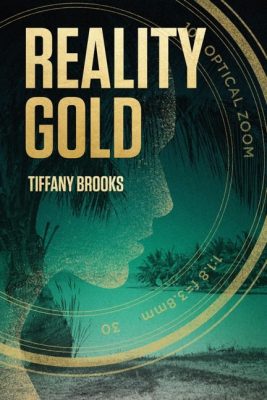
 Riley Ozaki is eighteen and trying desperately to find a way out of her reality as a recent social pariah. With her reputation at rock bottom, she decides that only a huge gesture can repair her social standing, win back her father’s approval, and gain her some new friends. She decides to participate in a reality tv show. What could go wrong?