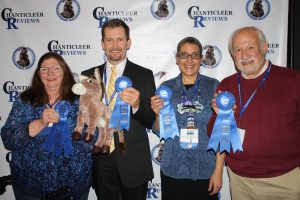
The Goethe Book Awards recognize emerging new talent and outstanding works in the genre of Late Historical Fiction set after the 1750s. The Goethe Book Awards is a genre division of Chanticleer International Book Awards (#CIBA).
Chanticleer Book Reviews is looking for the best books featuring Late Period Historical Fiction. Regency, Victorian,18th Century, 19th Century, 20th Century, World and other wars, history of non-western cultures, set after the 1750s, we will put them to the test and choose the best among them. (Looking for Chaucer Pre-1750 Book Awards or Laramie Western/Pioneer/Civil War Book Awards, just click on the links.)
Information about the #CIBA Long Lists and Short Lists
These titles have moved forward in the judging rounds from SLUSH pile to the 2018 GOETHE Book Awards LONG LIST (aka the Slush Pile Survivors). We incorporate the Long List when the judges request an additional round of judging to accommodate the number and/or quality of entries received. These entries are now in competition for the 2018 GOETHE SHORT LIST. Short Listers will compete for the Semi-Finalists positions. Semi-Finalists will compete for the coveted First Place Category Winners of the 2018 GOETHE Book Awards in the final rounds of judging. The First Place Category winners will automatically be entered into the Goethe GRAND PRIZE AWARD competition. The 16 CBR Grand Prize Genre Winners will compete for the CBR Overall Grand Prize for Best Book and its $1,000 purse. First Place Category and Grand Prize Awards will be announced and recognized at the Chanticleer Awards Banquet and Ceremony on Saturday, April 27th, 2019, Bellingham, Washington.
These titles are in the running for the SHORT LIST of the 2018 GOETHE Book Awards novel competition for post-1750s Post Historical Novels.
Peter Curtis – Cafe Budapest
Michelle Cox – A Promise Given
Bruce Joel Brittain – Brother Daniel’s Good News Revival
Patricia Suprenant – Behind the Scarlet Letter
Patricia Suprenant – Journey to the Isle of Devils
Harold Coyle – No Small Thing, A Novel of the American Revolution
John Hansen – Unfortunate Words
Trevor D’Silva – Fateful Decisions
K. M. Sandrick – The Pear Tree
John Thomas Everett – No Slave To Reason
Tom Edwards – Jane Sinclair
Jackie Jobe Haines – Little Mill on Beaver Creek
Ruth Hull Chatlien – Blood Moon: A Captive’s Tale
Richard Alan – American Journeys: From Ireland to the Pacific Northwest (1854-1900) Book 2
Richard Alan – A Female Doctor in the Civil War
J.P. Kenna – Allurement Westward
Jocelyn Cullity – Amah & the Silk-Winged Pigeons
J.L. Oakley – Mist-chi-mas: A Novel of Captivity
Ellen Notbohm – The River by Starlight
J. R. Collins – Living Where the Rabbits Dance
Josanna Thompson – A Maiden’s Honor
Carol M. Cram – The Muse of Fire
Noelle Clark – Stone of Heaven and Earth
Rosalind Spitzer – Anna’s Home
Neal Katz – Scandalous, The Victoria Woodhull Saga, Volume II: Fame, Infamy, and Paradise Lost
Rita Dragonette – The Fourteenth of September
Sharon Hart-Green – Come Back for Me: A Novel
Meredith Pechta – The Prejudice That Divides Us
Jeffrey K. Walker – Truly Are the Free
Jeffrey K. Walker – None of Us the Same
Ronald E. Yates – The Lost Years of Billy Battles (Book 3, Finding Billy Battles Trilogy)
J. Victor Tomaszek – The Tatra Eagle
Pat Wahler – I am Mrs. Jesse James
R. S. Rowland – Portrait of a Bitter Spy
Kit Sergeant – 355: The Women of Washington’s Spy Ring
All Short Listers and SemiFinalists will receive high visibility along with special badges to wear during the Chanticleer Authors Conference and Awards Gala.
Good Luck to each of you as your works compete for the GOETHE Awards Short List.
2017 Goethe Book Awards Winners Joe Vitovic & Peter Greene Grand Prize
To view the 2017 Goethe Book Awards winners, please click here.
The Goethe Grand Prize Winner and the First Place Category Position award winners will be announced at theApril 27th, 2019 Chanticleer Book Awards Annual Awards Gala,which takes place at the Chanticleer Authors Conference that will be held in Bellingham, Wash.
We are now accepting submissions into the 2019 GOETHE Book Awards writing competition. The deadline for submissions is June 30th, 2019. Please click here for more information.
As always, please do not hesitate to contact us with any questions, concerns, or suggestions at Info@ChantiReviews.com.
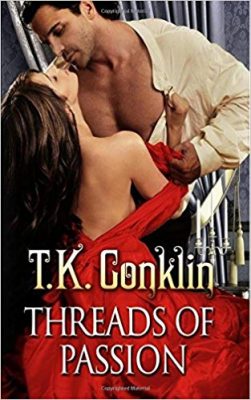
The frontier town of Rimrock, deep in Wyoming Territory, is a usually a quiet little place, at least it has been for the past two years since Willow and Skye Strykes settled there to be close to their brother. The sisters stay busy with their successful dress shop, the occasional town dance breaking the monotony, but when Willow’s would-be suitor nearly hangs for a murder he didn’t commit, their lives are altered forever.
In a desperate bid to save the man she doesn’t even realize she loves, Willow does a crazy thing that ends with the two in a forced marriage, but the young couple’s problems don’t end at the wedding alter. Willow and Skye have their own secret, the secret which compelled them to run from New Orleans in the first place. Before long, Skye and Willow realize their secret has caught up with them, and they must find a way to escape it again before it consumes the entire town.
The Southern-transplanted sisters, Willow and Skye, are far from the typical romance novel heroines. Both women carry their own scars, Willow on the outside, Skye on the inside. Willow’s limp, the product of severe child abuse, isn’t a focus in the novel but is a definite reflection of the kind of protagonist Willow is. Her strength despite her weakness carries both herself and her sister for a time, and though Skye seems weak and damaged beyond repair, she manages to find a tenacity she never knew she had. Her ordeal is terrifying and devastating, but her love for Willow proves stronger than her memories and the pull of her suicidal thoughts. She must literally face her demons, and with her sister, she manages to do exactly that. Though initially, the number of familial relationships described are daunting, the connection between siblings, both with the women and the men, prove to be a major theme in the novel.
Logan, the barroom brawler, on the surface appears to be the typical romance hero. But he is more than tall, dark, and handsome. Both Logan and Rafe, his cousin who loves Skye, are gentle and loving. These men help the sisters find the courage to not only share their story but to challenge it head-on. The withholding of physical relationships by these characters creates a strong sexual tension which greatly enhances the plot, and for all those readers who love a touch of the paranormal, Logan’s family will add that, too.
With threats on all sides and action galore, the mystery will keep you guessing. The almost dual storylines give readers two loves stories for the price of one, and with the potential for a series, more great adventures are likely to come for the McCords and the Strykes.
Threads of Passion won First Place in the 2017 LARAMIE Awards for T.K. Conklin!
I don’t know how you feel about it, but the entire holiday season makes me itchy. I love the lights, I hate the stress. I love the extra time with family and friends, but I really hate the hustle, bustle, crowds. During this time, I need my quiet place more often – which is hard to find, because, you know, it’s the holiday season.
So, I’m walking through the mall the other day and see this sign. You know which sign I’m talking about…
“Christmas in July!”
Besides the fact that it takes a great deal for me to even think about shopping — at all — having to think about Christmas shopping any earlier than, I don’t know, a week before the actual date requires an extra dose of anti-anxiety medication.
While this is unnerving, to say the least, I began thinking about it in another way. What can we, as authors, do to increase our sales around the holidays?
Several of you are very clever and write stories based at or around the holidays. Very smart. Others, just as smart, write novellas or short stories and join forces with a merry band of like-minded authors, create an anthology, put on a snappy cover and #HelloSanta!
Still, others participate in holiday book fairs and craft shows where books are expected. This all takes work – the organizational kind of work – and a clear plan of attack.
What do I mean? Let’s take a look:
As you’re participating in your author community – either online or in person – simply ask authors you admire if they ever thought of participating in a holiday book event. If they haven’t, but would like to, you may have just tapped the beginnings of a powerful planning team.
It takes three things to pull off an event: Energy – Everyone is busy. Consider carefully if you have the energy to plan and execute one more thing. Enthusiasm – Positive people pull off the most remarkable things, don’t you think? Enthusiasm deals with zeal, and zeal deals with passion, and passion gives us the energy we need to complete any task. Participation – You cannot do this alone! The importance of finding like-minded people cannot be overstated.
Now is the time to contact your brick and mortar stores, your libraries, your community and begin reversing dates and times to present writing workshops, readings, and book signing events. Start with a piece of paper and write out locations you think would be good: hotels, grocery stores, tack shops, festivals, libraries, you get the idea.
Prioritize that list:
Where are you most likely going to find your readers?
What locations are easy for you to get to?
Is there a fee involved in reserving the space?
Are wine, beers, whiskey, or other drinks and refreshments allowed to be served at these venues?
Try to think of 3-4 places that you can book now. Spread them out throughout the holiday season, be strategic in your plan. If your book is a middle-grade novel about a young ballerina – I would try to book an event wherever The Nutcracker is performed. Perhaps contact the event planner of the ballet and let them know you would like to consign your book in their store – or on their website. Think outside the box!
Now that you have 3-4 places booked, it’s time for your social media campaign to gear up. Talk about it online. Design a flyer for the event. Create a separate Facebook page. Contact your newspapers and television stations and let them know what you will be doing and when. Whether it be a book signing or reading, let your community in on the party.
A book promoter friend of mine advised to never go it alone! Always try to invite other authors – perhaps better-known authors to participate in your event.
Think about what you’re going to give those people who show up to your event. Hors-d’oeuvres are good, alcohol is even better. Just ask Kate Lebo and Samuel Ligon, who found this to be true when promoting their anthology, Pie & Whiskey: Writers Under the Influence of Butter & Booze. Check out their book page – their events are fun and delicious!
I suppose what I’m trying to get across is this: If you want holiday sales to spike in an upward direction, plan for it. Track it and put some effort into it. The payoff can leave you laughing with a “Ho, ho, ho!” instead of lamenting with a “No, no, no!”
What are you going to do today to boost your book sales in the months to come? Comment and share!
Sam had been a curious, resourceful child growing up in a family torn apart by a contentious past. At a very young age, he’d discovered a fascination with killing. Now almost an adult, he’s anxious to find his little sister who he’s sure is living somewhere with their mother. The mother who had abandoned him. Although he was young when they were separated, Sam remembers his sister well, including the cute green ribbons she always wore in her hair. Now author Kara Wolfe shows readers what Sam really thinks in As the Ribbons Fall.
Until he can find the original object of his desire to kill, Sam tries to satisfy his murderous hunger by stalking and attacking substitutes. These girls are carefully chosen for their look and demeanor as he eerily watches them. The third book in the Savannah series, As the Ribbons Fall, draws to a conclusion the mystery of the Dark-Eyed One, exposing horrors of Sam’s secret past. Is it the past that drives his murderous rage? Or as Sam says, was this desire to kill something that he was born with, an innate part of his being?
The fate of Senior Detective Jordan Kinsey and medical examiner Jena Greene of the Savannah Police Department is darkly in question when they are caught off guard and captured by Sam. Now Detectives Vance and Michael are leading the police team to find their colleagues, and to stop this serial killer once and for all.
The chilling portrait of this killer’s thoughts as the author brings you along to one of his murders saturates the pages with terror and horror. The dimensions of desperation in both the killer and the victim are tangible, making this is terrific writing that takes the reader on a step by step journey to the coldest and darkest purgatory of human nature.
At the same time, the author brilliantly contrasts this evil with dynamic writing about the resourcefulness, intelligence, and tools used by the heroes fighting against the killer.
A passionate and talented author, Kara Wolfe excels at the art of suspense as she offers an unforgettable glimpse into the mind of a serial killer.
As the Ribbons Fall made the Shortlist for the 2017 CLUE Awards!
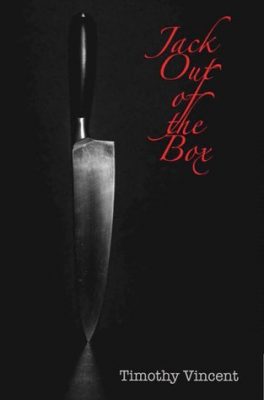
LongPost captain Benjamin Lasak has been making deliveries for over 100 years, an unheard-of feat for his fellow postmen. During his time in pre-programmed space travel on the Pelagius, he usually enjoys the solitude, his outdated paper books, and the cryo-sleep, which keeps him looking twenty years old, but when Lasak wants to distract Mic, his floating game console, from her imminent win at their favorite game, he decides to ignore LongPost protocol and follow the suspicious appearance on his screen.
Suddenly, Lasak finds himself stranded on a planet both familiar and unique. His first contact is with a sadistic alien known on Earth as Jack the Ripper, whom Lasak inadvertently releases from his prison vault. Lasak and Mic must join forces with Michael Carlin, Jack’s original imprisoner, to recapture Jack before he can destroy this world or worse, return to Earth.
Jack Out of the Box is an “Alice in Wonderland” journey down the rabbit hole, a marriage between steampunk, paranormal, dark fantasy, and alternate reality. Jack’s world is a mixture of the old and the new, where Victorian lamplighters and high-tech control panels existent in the same plane. From a village stuck in nineteenth-century England to Elysian Fields where Mother Nature becomes corporeal, every corner presents a new, intriguing environment.
However, the planet entrapping Ben’s ship isn’t all fun and games. It is, in part, a dark prison world, where Jack once reeked more havoc than he ever did on Earth, holding and breeding his human victims. The graphic descriptions of his previous violence darken the beauty of the landscape and its mostly rural residents. At times, the description of violence is disturbing, especially when juxtaposed against the idyllic.
This complex novel includes both metaphorical and concrete imagery in Jack’s world, including representations of Heaven and Hell, demons, and even Lilith. Jack introduces himself as Bell, but he doesn’t “ring true,” and later the reader will see the destruction of the pristine countryside by Jack’s animalistic creations, a fitting metaphor of man’s destruction of the beauty in the world.
Mic’s existential journey to awareness is the real story of the novel. Created by an MIT professor, she is more than just an unbeatable gamer sidekick. The fate-like, “accidental” purchase of Mic seems like a play on destiny, and when she is given her forbidden awareness, Mic steps into that metaphorical area where she begins to question her existence. The exploration of Mic’s consciousness is short-lived but is indeed an interesting discussion; perhaps, it will continue into the sequel.
Dark fantasy and paranormal/alternate reality lovers alike will enjoy the unusual world that Timothy Vincent offers in Jack Out of the Box. It’s a journey from which the reader may never wish to return.
Recommended.
“Timothy Vincent’s out of this world dark fantasy/thriller, Jack Out of the Box takes readers on a fantastically frightening voyage where choices matter – and one wrong choice releases dark and violent chaos back into the world.” – Chanticleer Reviews
FromLiberty to Magnolia: In Search of the American Dream, a timely and important book, won GRAND PRIZE in the 2018 CIBAs in the JOURNEY division for Memoir.
As a black woman on a cotton farm in Mississippi in the 1960s, Janice Ellis could have resigned herself to a life full of status quo: never speaking up for herself, never speaking out against injustice or racism. Instead, she never let unsettling times define her or hold her back, even as a witness to some of the ugliest racial violence this country has seen. In her candid and thought-provoking memoir, FromLiberty to Magnolia: In Search of the American Dream, Ellis vividly depicts her life in the South during the height of the Civil Rights and Women’s Rights movements.
Through fluid and skillful writing, Ellis recounts the battles she encountered due to her skin color or due to her gender: an abusive husband, discouragement to further her education, sexual and racial discrimination in the workplace, a lack of support from friends and family when she runs for election. Despite these mounting obstacles, she goes on to earn her Ph.D., lands leadership roles and furthers her career, and even runs for mayor in a major US city. Her faith in God and her unwavering belief that the American Dream should be accessible and attainable to everyone are what lead her.
The story is hopeful and inspirational, yet there are painful passages for both writer to recount and reader to absorb. One such incident occurs on a Saturday afternoon in Mississippi when two little white boys spit at her parents as they exited a store. Most hurtful about the event for Ellis was seeing her parents flee to their car for safety; for blacks lived in fear as racial violence was targeted and prevalent during the 60s. Of course, there was the added fear of being female. While she lived fully aware of the color of her skin, she often wondered which came first: her race or her gender.
Ellis is fascinated with the writings of both CBS Newsman Eric Sevareid and political commentator Walter Lippmann, and in Chapter 6, she dives in deep explaining the theories of Lippmann in particular. But she also shares the pivotal moment in her career, and in her life, when she meets Sevareid at his home for an interview. Ellis has gone on to become a political and social commentator and is a prolific columnist to this day, writing about race and gender. Her premise is that race is a modern construct and that we all belong to the human race.
Interestingly, the title of the book comes from the names of two surrounding towns where she grew up. Liberty and Magnolia are stand-in metaphors for freedom and the American Dream, something that seems unattainable to a portion of the American population.
Despite her struggles, she believes the country has come a long way in racial and gender relations. Her overarching message is to stay true to oneself and continue to follow your heart, no matter how unpopular or uncomfortable your choices.
Anyone facing adversity will be moved by this tenacious woman’s account, which serves as a historical record amid one of the most tumultuous yet empowering eras in American history. Complete with a discussion guide in the Appendix, the book can serve as a text for a college course or a community book club exploring themes of race and gender.
Certainly, FromLiberty to Magnolia: In Search of the American Dream is a timely and important book. Highly recommended.
I first met Joe Collins at CAC18 this last April. He’s a tall, quiet man who carries himself with a certain nuance, a particular look in his eyes that lets a person know he’s looking for fun. He writes from the heart and although he won 1st Place in the Goethe Awards for 2017, his book could have done just as well in the Laramie Awards.
I am honored that Joe took the time to participate in our 10 Questions Interview Series. He has a lot to say and I hope you enjoy this piece as much as I do.
Let me introduce you to J.R. (Joe) Collins:
Chanticleer: Tell us a little about yourself: How did you start writing?
Collins: I was raised in the Southern Appalachian town of Blairsville, GA. Our whole county had a population of around eight thousand at the time of my birth, 1962. I spent my growing up years helping my father farm beef cattle and attending the local school for my education. I went to church as a kid. Learned a deep respect for a love that would sacrifice itself for me. I believe I was considered normal by the local folks. You knew everybody in my confined, little world, and their business, too, whether you wanted to know it or not. News traveled fast because of how the telephone worked. Most all the homes were on a “party line,” if you had a telephone at all. You knew folks’ business because you could listen in on your neighbor’s phone conversations over that “party line.” The older generation was judgmental to a point. That mattered to families. You didn’t want folks thinking bad of you or yours.
My trail after high school began by following the same path many of the kids from my area walked. College, job, then family. I couldn’t stay on that trail long, though. I discovered competitive golf after a couple years in college and turned pro after obtaining an Associate degree. Spent many years beatin’ that little ball trying to catch a break while working at different golf courses here, there, and yonder. I loved it. Did okay for a small-town, mountain-born boy. I got no regrets. Won a few good tournaments. Maybe I should’ve been a caddie?
Met my wife at the ripe old age of thirty-five. We have two kids, Alex and Emma, they’re twins. Fortunately, we all get along for the most part with little tension outside of normal weekly stress. We like the outdoors but have regrettably had little time over the years to enjoy vacationing there because of work and the crash of the economy. I do regret that.
I started writing because I wanted to tell a story. A story of my heritage to some degree. A story to enlighten those who read it about a frontier that came and went with little recognition outside a state of confusion about the grave mis-justice done to the native Cherokee. I won’t claim all that is in (or will be in) my books as actual, but I can guarantee you they are based on fact in my imagination. I love that about writing. I’ve always enjoyed a good “yarn” be it a ghost story that will haunt my nights, a mystery that challenges my intuition or an adventure that will take me to someplace I may never see. Introduce me to people I would never meet otherwise. It is a true blessing when I learn someone has enjoyed my work. Somebody give me a hug!
Chanticleer: We do love you, Joe! When did you realize you that you were an author?
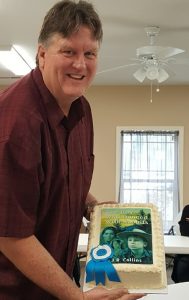
Collins: That’s an easy one. It’s when I heard my name called out for First in Category at the Chanticleer Awards Gala. I for sure knew I belonged behind the scenes writing when I broke protocol and absent-mindedly went for the ribbon Kiffer was holding without shaking Gregory’s hand first. “What a stupid I am” — I feel terrible about that. I hope he understood. Accepting that ribbon was extra special to me. That’s the moment I knew I could actually think of myself as a writer. Thank you guys soooo much!
Chanticleer: Those of us who have won awards know what it’s like to be in that is-this-really-happening? moment. I’m sure Gregory Erich Phillips knows exactly what that’s like! What genre best describes your work?
Collins: Historical Fiction for sure. I love learning about history that is based in the lives of those who actually lived it. I respect heritage, so I enjoy creating stories combining the two. Those aspects wound together give me great pleasure when I write. My publisher told me early on in the publishing of my first book, “Write from your heart when you write, Joe. Don’t force it if it doesn’t fit.” I follow that. I want my reader to enjoy their trip back in time to a place they will never see outside of my book, and to be comfortable with the journey. I want them to experience the surroundings of each scene like they are actually standing there watching in person. To taste the smells, feel the air, hear the sounds and to comprehend the emotion I want them to feel. I love taking them back as they read. I’ve heard it said that history repeats itself. I believe history stays with us if we as authors write it, understand it, feel it; then our readers can believe and be transported. I want folks to escape to a world I completely understand. All they need do is be willing to go inside my mind for a while. It’s not such a bad place, really.
Chanticleer: That’s wonderful, Joe. Can you tell us a little more about it?
Collins: I grew up in a part of the Southern Appalachian that holds a rich history of ancestral heritage for those who were founded there. I basically grew up an only child as my siblings are much older than me. Being the only child on a big cattle farm surrounded by mountains and forest is heaven for a boy of my put together. My imagination had unlimited boundaries. I hunted constant when game was in season. I fished when hunting wasn’t allowed or whenever I got a hankerin’ for some fresh, juicy cold-water trout. One stream I would fish regular produced a lot of Brown Trout, another produced more Rainbow Trout. Just depended on which flavor I had a taste for as to where I’d go try and catch fish. Those days are gone. The fish have lost their flavor. The creeks and rivers now polluted with housing and folks. What a shame.
We got little in the way of television reception where I lived growing up, so entertainment had to be something other than watching TV. On some evenings after we’d worked hard on the farm all day, Dad would take Momma and me and we’d go visit the old-timers at their original family homes where they were born, then raised their own kids, and still lived in then. Some were family, others not so much. I loved goin’ with my dad and doing that. Sittin’ out on the porch rocking in a chair made right there in the work shed of whatever elder we were visiting. I’d rock and listen to their tales while they smoked or chewed tobacco. Spitting dark, brown burley tobacco juice out between their fingers while thinking on thoughts about the tale they were spinning. You had to watch where they spit that stuff because it would splatter in all directions when it landed. Get all over your feet and ankles if you were in too close. I heard stories from the days of old that sank into my soul. Are they in my book? Some, maybe. Remnants, mostly. The ideas? – for sure.
Of course, where I grew up was rich in Indian ancestral heritage as well. As a kid, I hunted the plowed bottoms up and down the river Notla whenever I got the chance hoping to find Indian made artifacts. After a good rain was the best time. We found some unbelievable things, too. Seriously, you wouldn’t believe a body could make such as we found on occasion from just the natural resources right where whatever it was you found was laying. I could live like settlers did back in those days. I can relate. I guess that’s why I like historical fiction so much. It takes me back to a time in my life where I had no worries. We all need a little of that from time-to-time. I miss it. #GroupHug.
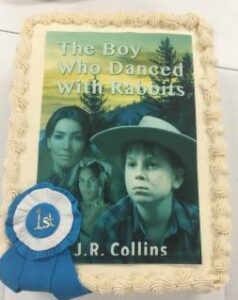
Joe received this beautiful cake from his work family. #GroupHugJoe showing off his beautiful cake! Sure looks good!
Chanticleer: Do you find yourself following the rules or do you like to make up your own rules?
Collins: I don’t like rules. I trust myself and my judgment more than I do most folks who make the rules. Politicians and government folk are prime examples of rule makers who care little for the common folk — ask the Native American. Being a person of faith, and knowing what lies ahead, I get confused as to why we have locks? Or why we hire our own to protect us from ourselves? I prefer a time when folks looked after them and theirs. In writing, I follow that same train of thought. Conversation can be lawless!
Chanticleer: You’re giving us a lot to think on, Joe. Thank you! How do you take all of these memories, all of these stories, and come up with a full-length novel?
Collins: If I can live it in my mind, I can make it into a story. I try to pull everyday occurrences and mix those with any corresponding relative history that I know about. That concoction has to settle in my center for me to know it’s something I can focus on. But, the difficulty comes when I try to pinpoint the objective of why I want to write about that particular subject. It has to satisfy my soul. If it ain’t there, it ain’t to write. But, God.
Chanticleer: How structured are you in your writing work?
Collins: Aghhhhhhhhhh! Hahahahahahaha! STRUCTURED? Don’t even know what that means. I write when I can feel the words going on to the paper (screen). I need to work on this area of my “authorshipness” profile. Hahahaha! I love you guys! I know y’all are structured. I saw it first hand in Bellingham back in April.
Chanticleer: [Don’t you just love this guy? #GroupHug]How do you approach your writing day?
Collins: That all depends on where I am in the writing process of the particular thing that I am writing. For a novel, I can spend a lot of time with story content and character development or I can work on the comfort of the read if I’m well enough along. The priority status of either of those two aspects will designate the attempts I will make for any particular day. Stories have to flow to achieve [the desired] effect. A story written poorly does not catch the imagination of the reader even though the topic is of interest. I prioritize where I believe a reader would want to be in the progression of what is taking place at a certain point in the story. Then, of course, you sit down to write and it all comes crashing down. No reason just crashes. Your mind shuts off. That’s when you reach for something other than your pencil (laptop) . . . like bourbon. No more writing that day. Sometimes intention to write and creative juices are way too far apart for my simple mind. I try to plan and prioritize, but it doesn’t always go the way I want. On those kinds of days, we all need a hug.
Chanticleer: [#Group Hug] What are you working on now? What can we look forward to seeing next from you?
Collins: Right now, I’m finishing the final book in the trilogy I call, “Home from Choestoe”, that I’ve been working on for the last few years. Originally, I’d planned on four books but I’m ready to move on. I want to start something else. Being raised in the Southern Appalachian Mountains offers many different opportunities to write about interesting topics. I haven’t fully decided on what my fourth book will be about as of yet, but it will come to me before long. I have some ideas, but nothing has settled with me that would spur me on to write a novel.
Chanticleer: What is the most important thing a reader can do for an author?
Collins: Enjoy what we write, then tell others so they can hopefully enjoy it as well. Give us reviews that we can share. Selling books is important, sure, but most all good stories have an underlying point of concern. If a reader finds that and is moved by it, then that is all we can hope for as authors. That, to me, is the most important consideration for what we do. Is the reader touched by what we write? Do they feel, then understand what we are saying? Let’s hope they get it because that’s why we do what we do. It sure ain’t for the money.
Love you guys! Take care, and God Bless . . . Joe
We certainly love you back, Joe! Thank you for spending some time with us today.
If you liked this interview with author J.R. Collins, please leave a comment below. We love being connected to our amazing author community, don’t you?
Book Reviews are tools every author can use – wisely!
TYPES OF REVIEWS
Generally speaking, there are four types of reviews you will encounter. Here they are:
Trade/Editorial Reviews – These reviews are written by professionals in the publishing industry – quality matters here.
Peer Reviews – Done by other authors or professional peers
Manuscript Overviews – The professional writer’s first step in the editing process.
Consumer Reviews – These are written by readers – quantity is what counts here search engine operations and algorithms.
Editorial Book Reviews
Each type of review serves a specific purpose, and each type resonates with different kinds of book buyers and serves different purposes.
Editorial Reviews
Editorial Reviews aka Professional Trade Reviews provide useful information for publishing professionals for preparing for book launches.
Post Launch: Traditional Publishers and Book Publicists also know that editorial reviews set the tone for consumer reviews.
Publishing Professionals know that editorial reviews give readers (and consumers) the language and terms to discuss books, thereby, making it easier for readers and fans to write reviews. Because more reviews generate more book buzz and trust me, book buzz is what you want, you will want to make it extremely easy for readers (aka book consumers) to leave a review.
Make sure that blurbs of your book’s editorial reviews are listed in the Editorial Reviews section of your book’s Amazon page. Blurbs from Editorial Reviews are also handy to have when uploading your book’s information in the ISBN forms and in the information upload page of your book on digital platforms. Review blurbs also help Indie bookstores to determine if your book would sell in their stores.
PEER REVIEWS
Peer reviews have run into some problems lately. While it’s tempting to trade review for review with your author friends, be careful where you post them. Some large retailers have caught onto the review-for-review and have subsequently pulled reviews they suspect come from other authors. I’m not saying you shouldn’t review your friends’ books – you should! In fact, you need to be fostering those relationships with other authors. But don’t be surprised if your reviews are pulled from the giant’s webpage. So, when you seek reviews, don’t just seek peer reviews only. Go for a mix!
And remember to get peer reviews, you must give peer reviews. Make it part of your marketing checklist to read your peer writers’ books and then review them. Remember the reviews do not have to be long — 25 -to- 50 words for a consumer review will work and will be just as effective as a 250 -to- 500-word review. Quantity is what counts here.
One hundred consumer reviews are what we hear it takes to get on Amazon’s radar for SEO and algorithms.
A final word of advice regarding consumer reviews: If you do receive an unfavorable review or even a scathing review (it happens to even the most successful authors), do not react or respond especially if they fall into the “troll” category. Never interact with a “troll” — just don’t. No good will come from it. As hard as it may be to do, focus on the positive reviews. If writing craft issues (changing POV, grammatical errors, typos, etc..) are mentioned in the review, address the issues and correct them. In today’s digital world, there is no reason not to.
MANUSCRIPT OVERVIEWS
Manuscript Overviews is dollar for dollar, one of the best writing tools you can utilize. Traditionally published authors receive great editing and feedback from agents and senior editors on early drafts, a benefit that most self-publishing authors never receive. When feedback comes early in a work’s progress it allows the author to not only create a more polished final product but also publish more works and build their backlist.
When working with an agent or publishers, the author works on a rough draft – the early drafts of a novel. He creates the theme, the characters, the setting, the tone, the story, the plot lines, the dialog style, and selects the genre and has an audience in mind (YA or mystery fans, fantasy or Science Fiction readers, etc.). After the author creates the story with a beginning, middle, and end, she then sends this early unedited draft of the story to his editor or agent to read and to get feedback.
Editing a Manuscript
This is exactly what a Chanticleer Manuscript Overview is: An objective evaluation of a story idea that is fully formed with a beginning, middle, and end, but still in an early draft stage. The Manuscript Overview comes before LINE EDITING and COPY EDITING.
CONSUMER REVIEWS
Consumer Reviews are awesome. Don’t we all like to hear what total strangers think of our work? I mean, cringe-worthy as these types of reviews can be, they are important. How do you get them? That’s an interesting question. My statistics show that for every 100 queries you send out to review your book, you may get 8-10 actual reviews in return. I’m talking about sending your books out to bloggers, reviewers and the like. But those reviews do drive the Average-Joe reviews. The more you get of one, the likely you will increase the other. This is where your mailing list comes in handy – a topic for another blog… sorry.
Now that we’ve got the four types of reviews covered, what do you do with
a review once you have it?
After getting your reviews, make sure you are using them effectively. By that, I mean, use them everywhere! Post them on your websites and your book covers. Splatter them all over your social media! Share them with your friends – use snippets of them in your marketing collateral. Use them as a way to introduce your book to your local libraries and brick and mortar stores.
Let’s break it down.
Online retailers (Amazon, Kobo, Apple) have specific places for you to insert editorial review blurbs. Many brick-and-mortar stores will place shelf-talkers with trade review excerpts near your displayed books.
Have a REVIEWS page on your website where you place quotes – or entire reviews. Insert links to the original reviews and always give attribution!
The book cover is the place for trade/editorial and peer review blurbs. (It’s a cover – don’t cram an entire review on there!) Choose the top or bottom of your front cover to place awards, book stickers – some piece of information that draws the book reader to your book. Put the review blurbs on the back cover or if you have a lot of meaningful blurbs, you can use the first couple of pages of your book to place these. Again, don’t overwhelm the reader with the entire review. Be selective. It will pay off.
What’s so different about a Chanticleer Editorial Review?
You may have known I was going to talk about Chanticleer Reviews, right? I mean, that’s what we do…
Here’s the deal, a Chanticleer Editorial Review is professional, unbiased, and fair. We don’t compare cozies to thrillers. We compare the work, put it to the test, and write the review. We always send our authors a “Not for Publication – Awaiting Comments from Author/Publisher” copy. This way the author and publisher can read the review and approve it or kindly ask us to not publish. It’s your choice. Simply put, we are not in the business to embarrass anyone – only help. We love to help authors. It’s what we do.
And one more thing… if you’re in need of a review and you would like to order a Chanticleer Review, here is our special offer for July. I repeat this offer is good until July 31, 2018 – midnight. Here’s what to do:
Share this article THREE TIMES on three different social media sites
Take a screenshot of your shares and post those in the comment section of this article with the phrase “I would like a $50 discount on my next Chanticleer Editorial Review!”
OR tag us using @ChantiReviews on Twitter and Facebook or Instagram!
We will message you with your discount coupon code.
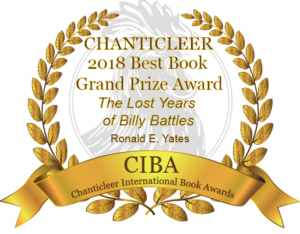
Congratulations to Ronald E. Yates for winning the 2018 CIBAs
OVERALL GRAND PRIZE – BEST BOOK of the YEAR
for The Lost Years of Billy Battles!
Reviewer’s Note:I’ve begun few books as eagerly as I did this one. Having read the first two volumes of Ronald E. Yates’ extraordinary trilogy, Finding Billy Battles, I couldn’t wait to continue his story in the final volume, The Lost Years of Billy Battles. The third installment lived up to the exceedingly high standard set in the first two volumes. Billy Battles is as dear and fascinating a literary friend as I have ever encountered. I learned much about American and international history, and you will too if you read any or all of the books. Each is an independent work, but if read in relation to the others, the reader experiences that all too rare sense of complete transport to another world, one fully realized in these pages because the storytelling is so skillful and thoroughly captivating. Trust me; you’ll want to read all three volumes.
For those not familiar with the series, Yates presents his books as works of “faction,” a story “based in part on fact” but also “augmented by narrative fiction.” The protagonist, William Fitzroy Raglan Battles, born in Kansas in 1860, lives a full 100 years and takes part in some of the most significant events of his time. He encounters key figures of the day (Bat Masterson Wyatt Earp, President Wilson, Francisco “Pancho” Villa, among others), gives us their backstories, and quietly appraises them.
Yates, a journalist with a keen eye for nuance and subtlety, has created a protagonist with superb critical thinking skills. William, a journalist, and occasional soldier examines people and transactions from every angle. Just as at ease in a Kansas saloon as he is at the captain’s table on a grand ocean liner on the Pacific, Billy Battles is also ruthlessly honest about his shortcomings and feels tremendous guilt when he acts impulsively or inadvertently causes harm to others. Yates has crafted a fully human character who is easy to admire, perhaps because he is admirably cognizant of his own flaws.
This installment of the trilogy opens with William enjoying middle age in Chicago with his second wife, his beloved Katharina, a former German baroness, and his daughter, Anna Marie, now a student at Northwestern University. It is 1914 and World War I is raging in Europe. Germany, late to the spoils of colonialism, is seeking to make up for lost time with its policy of Weltpolitik that advocates for imperialist expansion.
When William is contacted by his friend and former military associate, General Freddy Funston, who informs him that a German merchant ship is bound to Mexico to deliver arms and munitions to its dictator, General Victoriano Huerta, William and Katharina travel to Mexico and pose as tourists while trying to find out as much as possible about the shipment. They learn that in addition to weapons, the ship is carrying a fortune in gold and silver bars. Further investigations reveal that Germany hopes to convince Mexico to engage in skirmishes along the U.S. border, creating enough havoc that America will sit out the war in Europe and thus allow Germany expansionist gains there.
Although in Mexico at the behest of the U.S. military, William and Katharina readily understand why Mexicans feel hostile to Americans; a significant portion of the Southwest used to belong to Mexico. However, President Wilson does not recognize Huerta and is all too eager to engage in big stick diplomacy when he chooses. Also, many Mexicans are desperately poor, the Campesinos working as virtual slaves on haciendas for no pay. It’s not surprising that they cheer on Venustiano Carranza, leader of the Northern opposition Constitutionalists charismatic lieutenants, the intense, intelligent Zapata who yearns to bring about land reform for the poor, and the wild but charismatic Pancho Villa who sparks outrage when his men murder 17 Texas mining engineers.
The U.S. military decides to intervene and, once again, William is impressed into service, this time with General Pershing and the General’s aide-de-camp, George S. Patton. While the U.S. Army has the latest in weaponry and travels with motorized vehicles and untrustworthy aircraft, the new technology causes a lot of noise, making it difficult to sneak up on Villa and his light-footed army, one that’s thoroughly familiar with the terrain and beloved by the people. William’s observations and reporting on all of this for his Chicago newspaper are riveting and wryly amusing.
Following this Mexican adventure, William barely has time to catch his breath when his past once again catches up with him. Mason Bledsoe, the son of the man William killed due to complex circumstances when he was just nineteen, abducts Katharina. With the help of his cousin, William determines his wife’s whereabouts and attempts to free her, as well as seek vengeance on those who kidnapped her. The results of his actions necessitate his leaving the country for his safety and, more importantly in his mind, the safety of his family. Over the next decades, he will spend time in the Philippines and Indochina, where he will again grapple with the blatant injustices of colonialism, aggrieved by the plight of native men working 16-hour days on French rubber plantations in intense heat, their flesh bitten and eaten by mosquitoes, oxflies, and army ants.
While abroad, William’s personal life takes some shocking turns that motivates him to return to the U.S. in 1936. His final years in Kansas, his birthplace, are the quietest of his life. Billy often muses on all he has seen and experienced. When he meets his great-grandson, Ted Sayles, he decides to bequeath him his guns, uniforms, journals, and correspondence. In the Epilogue, Ted addresses the reader and shares his thoughts about some shocking surprises he finds amongst William’s papers. It’s a most satisfying conclusion to an extraordinary trilogy.
At his behest, William’s grave includes the simple statement, “He did his best.” The same is undoubtedly true of the author, Ronald E. Yates. The research involved in putting William’s story on the page had to have been immense. In addition to a careful plotting of history, the details he weaves into his prose regarding fashion, food, weather, social class, and technology make this the richest account of a life imaginable.
Please join us in congratulating and (reading) these top works in this classic American genre—the Western.
Chanticleer Book Reviews is looking for the best books featuring cowboys, the wild west, pioneering, civil war, early North American History, and the Contemporary West! Submit your works today and we will put them to the test and choose the best among them in the LARAMIE BOOK AWARDS, a division of the Chanticleer International Book Awards (CIBA).
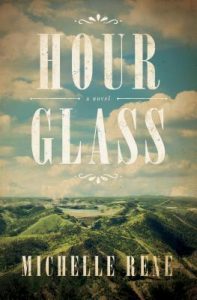
Michelle Rene’s HOUR GLASS took home the Laramie Grand Prize Ribbon for 2017 and the OVERALL Grand Prize Ribbon for the Chanticleer Int’l Book Awards
CIBA Overall Grand Prize Winner and Laramie Grand Prize, Michelle ReneClick on the cover for the Amazon link.
Click on the Hour Glass book to order from Amazon
LARAMIE BOOK AWARD WINNERS for 2017, a division of the CIBA.
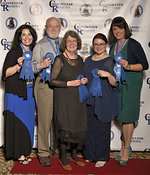
LARAMIE BOOK AWARDS Winners T.K. Conklin, Nick K Adams, J.L. Oakley, Michelle Rene, Kiki Watkins
The 2017 books have all won a Chanticleer Book Reviews package!
The Hour Glassby Michelle Rene ***LARAMIE GRAND PRIZE WINNER*** and OVERALL BEST BOOK Chanticleer Reviews
Away at War: A Civil War Story of the Family Left Behind by Nick K. Adams
Threads of Passion by T.K. Conklin
Desertion by Michael Aloysius O’Reilly
Death in the Black Patch by Bruce Wilson
Jacquie Roger’s HOT WORK IN FRY PAN GULCH: Honey Beaulieu Man Hunter Series took home the 2016 Laramie Grand Prize. Click on the cover for the Amazon link:
Laramie Grand Prize – JACQUIE ROGERS
First Place Category Winners for 2016 are:
Click on the hyperlinks to read their Chanticleer awarded reviews
The Laramie Grand Prize Winner for 2015 was WIDOW: Flats Junction Series by Sara Dahmen (Originally titled Doctor Kinney’s Housekeeper)
Sara Dahmen awarded Laramie Grand Prize for DR. KINNEY’S HOUSEKEEPER — now WIDOW 1881 (Book One of the Flats Junction Series)WIDOW: Flats Junction, Book One – Click on the cover for the link to Amazon
Women’s Historical:Sara Dahman – Doctor Kinney’s HouseKeeper ***Grand Prize Winner*** (Retitled: WIDOW 1881 – Book One of the Flats Junction series)

 The Goethe Book Awards recognize emerging new talent and outstanding works in the genre of Late Historical Fiction set after the 1750s. The Goethe Book Awards is a genre division of Chanticleer International Book Awards (#CIBA).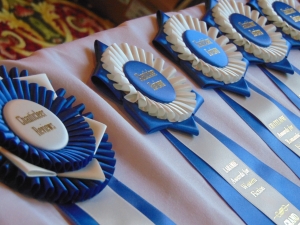


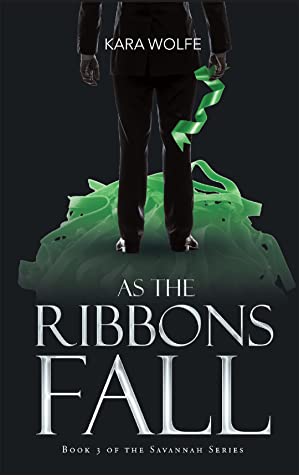
 Sam had been a curious, resourceful child growing up in a family torn apart by a contentious past. At a very young age, he’d discovered a fascination with killing. Now almost an adult, he’s anxious to find his little sister who he’s sure is living somewhere with their mother. The mother who had abandoned him. Although he was young when they were separated, Sam remembers his sister well, including the cute green ribbons she always wore in her hair. Now author Kara Wolfe shows readers what Sam really thinks in As the Ribbons Fall.
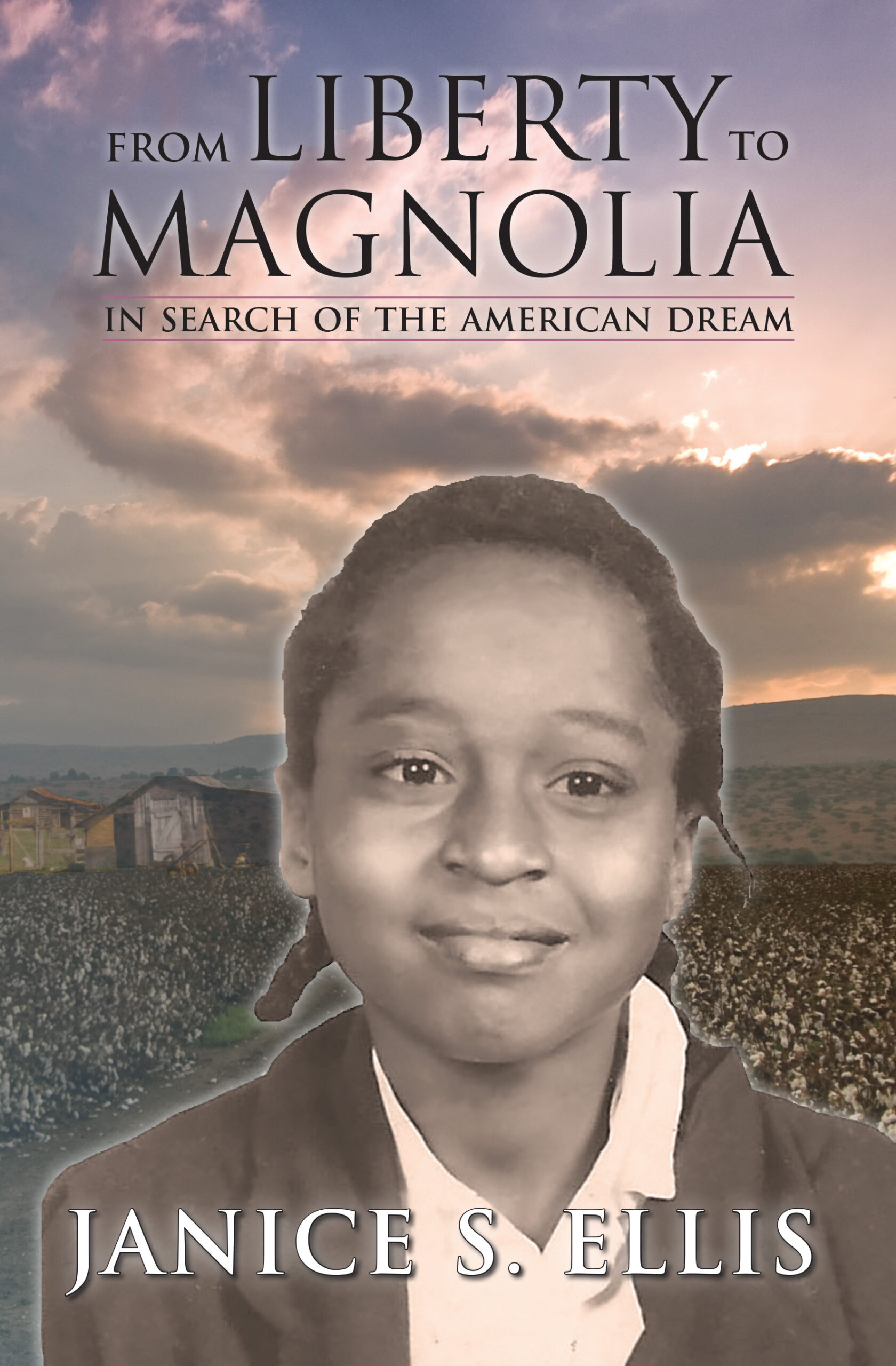
 As a black woman on a cotton farm in Mississippi in the 1960s, Janice Ellis could have resigned herself to a life full of status quo: never speaking up for herself, never speaking out against injustice or racism. Instead, she never let unsettling times define her or hold her back, even as a witness to some of the ugliest racial violence this country has seen. In her candid and thought-provoking memoir, From Liberty to Magnolia: In Search of the American Dream, Ellis vividly depicts her life in the South during the height of the Civil Rights and Women’s Rights movements.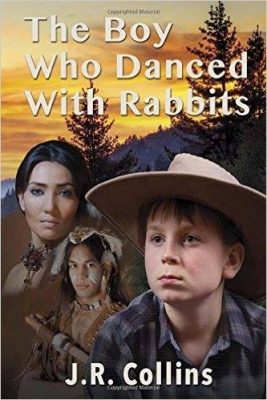
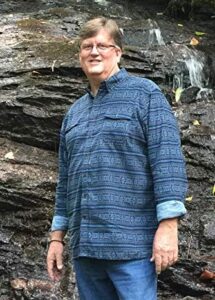 I first met Joe Collins at CAC18 this last April. He’s a tall, quiet man who carries himself with a certain nuance, a particular look in his eyes that lets a person know he’s looking for fun. He writes from the heart and although he won 1st Place in the Goethe Awards for 2017, his book could have done just as well in the Laramie Awards.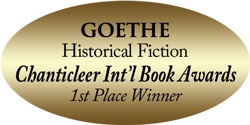





 For those not familiar with the series, Yates presents his books as works of “faction,” a story “based in part on fact” but also “augmented by narrative fiction.” The protagonist, William Fitzroy Raglan Battles, born in Kansas in 1860, lives a full 100 years and takes part in some of the most significant events of his time. He encounters key figures of the day (Bat Masterson Wyatt Earp, President Wilson, Francisco “Pancho” Villa, among others), gives us their backstories, and quietly appraises them.
 Chanticleer Book Reviews is looking for the best books featuring cowboys, the wild west, pioneering, civil war, early North American History, and the Contemporary West! Submit your works today and we will put them to the test and choose the best among them in the LARAMIE BOOK AWARDS, a division of the Chanticleer International Book Awards (CIBA).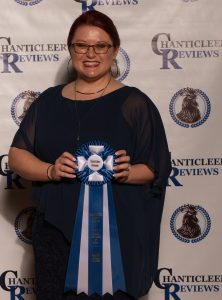
 Jacquie Roger’s HOT WORK IN FRY PAN GULCH: Honey Beaulieu Man Hunter Series took home the 2016 Laramie Grand Prize. Click on the cover for the Amazon link: