Blog

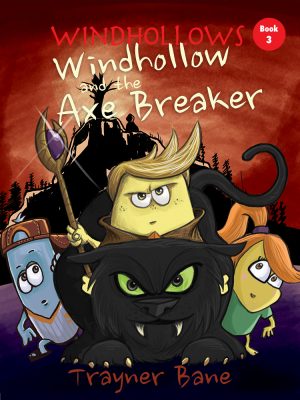
  • WINDHOLLOW and the AXE BREAKER, Windhollows Book 3 by Trayner Bane – Children’s Books, Action/Adventure, Fantasy

    WINDHOLLOW and the AXE BREAKER, Windhollows Book 3 by Trayner Bane – Children’s Books, Action/Adventure, Fantasy

    Part Three of the Windhollows series takes off with a bang, as we find an evil female on our hero’s trail and a sneaky scientist up to his old nefarious tricks.

    The book opens with a stirring encounter between the glimmering being who was once Billy Molskin’s girlfriend, Skylar, in a contest of wills with Nila Windhammer. Nila previously transformed the schoolgirl into a monster called the Spent of Jealousy, using Dr. Rip Stinker’s toxic Essence of Ripinum.

    Into the fray comes Blast, a once-powerful creature who had been given the task of guarding Skylar. His failure makes him more determined than ever to intervene, but Nila forces him out into the Formidable Fields where he is doomed to lose his memory or his freedom. To accomplish his banishment, Nila wields the Malus wand, a gift from her father and her weapon of eternal vengeance against those who killed her parents.

    Meanwhile, Stinker and his faithful pet Pootrick are entering the Silent Pass where Stinker plans to enslave its inhabitants, the nomadic Silencians. But after disabling some of them with Ripinum, he is confronted by Nila, who informs him that they have a far more important mission. They must locate Billy, who is on a quest to find a mystical staff that contains powers she wants for herself.

    Billy, with help from his friends Teddy and Wendy, is indeed looking for the staff, finding clues from ancient books and soon realizes he also needs to get possession of four magic stones. Could these be connected to a bracelet of three orange cubes found by Stinker when he attacked the Spent of Hatred? Could they be the work of the immortal Stonehammer?

    Billy’s determination is temporarily sapped by the lingering illness of his father, who may have a clue to the missing stone collection. When his father passes away, Billy will finally access the inner strength he needs to put the legendary weapon, Axe Breaker, to its proper use and win a momentous victory.

    Fans of the Windhollows series will note this story is taking on topics of significant proportions. Themes of the death of a parent, the coming-of-age of the young hero and the hard-fought triumph over evil give this volume greater gravitas, perhaps moving it towards a perception of Billy as a kind of Beanian Hobbit: ready to take up the call to duty, even if it means putting himself in harm’s way.

    All in all, this is a perfect read for those seeking adventure!


    *Special note: Author Trayner Bane has a delicious recipe for BackFire Cookies on his website! He’s requesting his readers try the recipe and post a photo on the Windhollows Facebook page: https://www.facebook.com/TheWindhollows

    This book can be ordered here.

    Please follow the links to read the Chanticleer Reviews for Air of Vengeance and Darkness Falls

  • GLOBAL THRILLERS Sharing NOVEMBER SPOTLIGHT! – Writing Competition, Thrillers/Suspense, Int’l Mystery & Crime

    GLOBAL THRILLERS Sharing NOVEMBER SPOTLIGHT! – Writing Competition, Thrillers/Suspense, Int’l Mystery & Crime

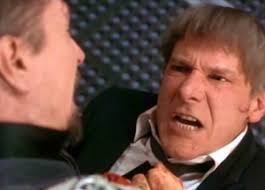
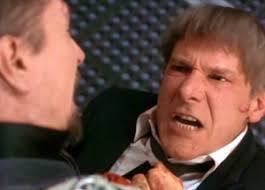
    Scene:  President James Marshall (played by Harrison Ford) “Get off my plane!” —  Air Force One (the 1997 film).

    Now just imagine…

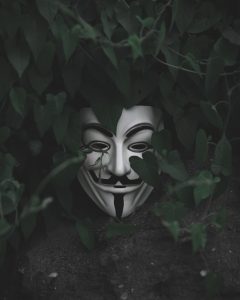
    The President’s motorcade is stopped by a mob dressed in black wearing Guy Fox masks. The leader jumps onto the limousine’s hood and exposes an explosive-loaded torso with a pressure release in his hand. He starts counting down from five. From out of nowhere, Spiderman swoops down, shoots a web around the assailant’s fist and takes him out. But now, the rest of the Guy Foxes reveal their explosive-ready torsos…

    ~~~


    An international human trafficking consortium is meeting in Belguim and you get wind of it. It’s your job to capture as many individuals as possible,  but you can’t kill them because any one of them may know the whereabouts of a group of children taken from a school bus in Maine. Your six-year-old daughter was on that bus…

    ~~~

    Welcome to the Global Thrillers Awards, a category of literature where life as we know it hangs in the balance – and when bad things happen, the fallout is global. 

    We’re talking James Bond-worthy.


    We’re talking it’s time to call in the X-Men and X-Women.


    We’re talking about Global Thrillers!


    This is the category for Science Fiction that is set – or really could be set in our understanding of how things work. This is called “Lab Lit” in the industry. Even Star Wars and Star Trek are good examples because Global Thrillers covers Science Fiction and BIG Storytelling, EPIC Storytelling.

    Here are what we are looking for: 

    Photo by Huie Dinwiddie from Pexels

    stories that rock us right out of our seats, where the suspense is so strong we cannot put the book down. Something that will have us saying these lines to our poor hungry families,  “Dinner? Are you crazy? The world is about to end in the next chapter!”


    Thrill us. Chill us. Make us believers in your masterpiece or published novel. We read every single submission that is sent in and we relish in the good stuff.


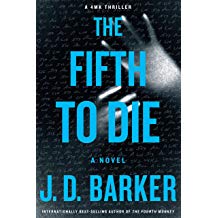
    International Bestselling Thriller author J.D. Barker (aka Master of Suspense) to present at CAC19. 

    Our Global Thriller Book Awards categories are:

    So, does your thriller have what it takes?

    Find out by entering the GLOBAL THRILLER AWARDS because time is running out!


    The deadline for submissions the  GLOBAL THRILLERS Book Awards  is

    November 30, 2018.


    We are honored to recognize the  Global Thrillers Book Awards Hall of Fame Grand Prize winners!

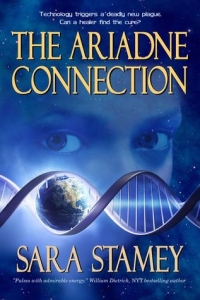
    The Ariadne Connection by Sara Stamey took home the 2017 Grand Prize for the GLOBAL THRILLERs Book Awards.


    The Ariadne Connection by Sara Stamey

    As radical climate swings, drought, famine, flood, and pestilence take on Biblical proportion, deep inside the earth’s core, a violent shift of its geomagnetic poles – a shift paired with cataclysmic seismic activity commences. With planetary life headed for extinction, mankind reaches out to its “gods,” both secular and non-secular, for salvation. At the same time whisperings on the NeuroLink claim that there is a savior among them—Saint Ariadne.


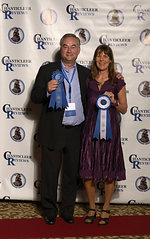
    Global Thriller Winners Lawrence Verigin & Sara Stamey


    Because the GLOBAL THRILLER Awards is a new division in the CIBAs, we also recognize the following kicking novels that won their category in the 2017 Global Thrillers Awards: 

    • The Han Agent by Amy Rogers
    • What They Don’t Know by K.V. Scruggs
    • Stormfront by James Tacy Cozad
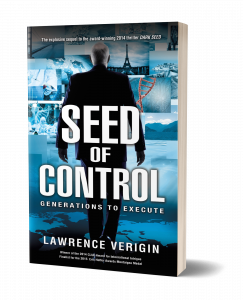
    • Seed of Control by Lawrence Verigin
    • The Kafir Project by Lee Burvine


    Here are some winners that came before: 

    From the 2016 CLUE Awards:


    From the 2015 CLUE Awards:

    • Blended Genre: Timothy S. Johnston – The Tanner Sequence: The FurnaceThe Freezer, The Void
    • Espionage/Spy: Michele Daniel  The Red Circle

    We also had Cybertech Thrillers and Political Thrillers such as John Trudel’s Raven’s Resurrection and the Raven’s Series.

    Now you know why we had to add the GLOBAL THRILLERS division to the Chanticleer International Book Awards (The CIBAs). 

    The Global Thriller Awards ~ Thriller and Lab Lit Fiction Novel Writing Contest ~2018
    The search for 2018’s best Thriller & Suspense Fiction Books

    Deadline November 30, 2018

    Chanticleer Book Reviews is looking for the best books featuring suspense, thrilling stories that put the balance of world power or that will end the world as we know it. We include with Global Thrillers the Lab Lit genre. Lab Lit is when Fiction Meets Real Science and Research or stories that are based on real science and research up to a certain “what if” point.

    Examples from www.LabLit.com:

    • Enigma by Robert Harris; A brilliant mathematician struggles to crack German codes in the second world war. Historical Fiction
    • The Highest Tide by Jim Lynch; A budding marine biologist has an unforgettable summer.
    • Arrowsmith by Sinclair Lewis; A scientist/medic leans the hard way that pure research is nobler – and cures plague in the process.

    GLOBAL Thriller examples:

    • Best examples of these are James Bond books, X-Men, Tom Clancy novels, and Star Wars/Star Trek where humankind is at stake or the planet is doomed.

    (For light-hearted, cozy, or classic Mystery and Suspense entries see our Mystery & Mayhem Awards and for Thriller/Suspense/Hardboiled-Detective series, please see the CLUE Awards)

    Don’t delay! Enter today!

    Tick Tock…


  • Story Prep:  Atmosphere, Overall Tone and Mood by Jessica Morrell – Writing Toolbox  –  Words

    Story Prep: Atmosphere, Overall Tone and Mood by Jessica Morrell – Writing Toolbox – Words

    Plan for an overall tone and mood from the get-go. — Jessica Morrell, editor

    Writing Toolbox Series

    I’m not suggesting you skip plotting or structure, I’m suggesting you plan for an overall tone and mood from the get-go. I’ve rarely given this advice for a first draft before, but then I started reading Dean Koontz’ Jane Hawk series. And I’ve been giving a lot of thought to why the novels are bestsellers, what works and what doesn’t quite work.

    In this thriller series, Jane Hawk, a rogue FBI agent, takes on government agencies including the FBI and a cabal of villains with a deadly conspiracy. The stories are dark, brutal, and scary.  As you read along, you feel prickly and practically queasy because evil is everywhere.  And the more you read, the more you realize how the author is also inserting real-life horrors into the mix. Because we’re living them in contemporary America.

    Why use atmosphere in your first draft?

    • Because it will affect your mood and approach to your story.
    • It will make you focus on creating unease–a necessary ingredient not always considered in early drafts.
    • Unease contributes to writing a page-turner.
    • Atmosphere underlines themes–even if you don’t have your themes nailed down yet.

    Editor’s Note: Although Jessica is using a thriller as an example, her insightful writing advice may be applied to other genres as well.

    While Jane Hawk spends a lot of time driving across the country searching for answers, a lot of the series is set in California. Now California isn’t exactly Transylvania in the dead of winter, right?  But Koontz is a writer’s writer, and he makes most settings spooksville and dangerous. If Jane reaches a haven or safety, it’s always a look-over-your-shoulder situation and she needs to move on, not rest. And she never ever relaxes. Too much is on the line, including the safety of her beloved 5-year-old Travis.

    The story is set in the near future and the country is sliding into chaos and lawlessness. It opens with a deadly terrorist attack in Pennsylvania as the backdrop and citizens countrywide are uneasy and fearful. Here’s a typical setting description as she’s driving.

    Editor’s Note:  Scott Steindorff, the A-List film producer who presents at the Chanticleer Authors Conference, states that “near-future” is the film industry’s favorite time period. To watch our On WORD Talks with Storytellers 3 minute video with Scott click here. 


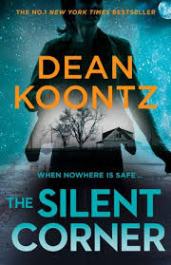
    When the wipers swept the blearing stain from the windshield, she saw the nearby Pacific, storm-lashed and misted, rolling toward the shoreless like water and more like a sea of gray smoke pouring off the fires of a nuclear holocaust. The Silent Corner

    Throughout the series, the weather is used in scene after scene, often as bookends. Jane is off the grid so uses public libraries to find information.   From  The Silent Corner before she visits a library: 

    Still, the storm had not broken. The sky over San Diego loomed heavy with midday dark, as if all the water weight and potential thunder stored over distant Alpine had in the last few hours slid unspent toward the city, to add pressure to the coastal deluge that was coming. Sometimes both weather and history broke far too slowly for those who were impatient for what came next.

    In the park adjacent to the library, following a winding path, she saw ahead a fountain surrounded by a reflecting pool, and she walked to it and sat on one of the benches facing the water that flowered up in numerous thin streams, petaling the air with silver droplets.

    This place sounds lovely, doesn’t it? And don’t you wish you’d come up with petaling the air with silver droplets? In case you’re imagining the park as a place or peace or safety, forget about it. Because in fiction it really works to stage danger in benign or lovely settings.

    Let’s check out the same park later when Jane is about to be attacked and run for her life.

    On the flanking streets to the north and south, traffic passed: grumble of engines, swish of tires, hiss of air brakes, rattle of a loosely-fitted manhole cover, the traffic noise seemed curiously muffled, as if the park were encased with insulated dual-pane glass.

    The air remained under pressure, the sky full of iron-dark mountains that would soon collapse in a deluge, the city expectant, the windows of buildings shimmering with light that normally would be faded by the sun at this hour, drivers switching on headlights, the vehicles gliding through the faux dusk like submersibles following undersea lanes.

    Jane had taken only a few steps from the fountain when she detected a buzz like swarming wasps. At first, it seemed to come from above her, and then from behind, but when she turned in a circle and faced again the grove of palms toward which she had been moving, she saw the source hovering twenty feet away: drones.

    Did you notice how the most important word is placed at the end of the paragraph?

    Emulate this. Notice the choice of language: hiss, deluge, collapse, faux dusk, loomed, thunder, grumble, rattle. These words stir the reader’s emotions.

    Remember:

    • Atmosphere underlines themes.
    • Determine the atmosphere of your story: the color, the tone, the mood.
    • Word usage will affect your mood as to how you approach your story.
    • Word usage will affect the mood of your story.

    Stay tuned:  Don’t be afraid of potent backstory (more to come).

    Keep writing. Keep dreaming. Have heart.


    Jessica Page Morrell
    Jessica Page Morrell

    Jessica Page Morrell is a top-tier developmental editor and a contributor to Writer’s Digest magazine, and she teaches Master Writing Craft Classes at the Chanticleer Authors Conference that is held annually along with teaching at Chanticleer writing workshops.

    Jessica has confirmed that she will teach  Master Writing Classes and advanced writing craft sessions at CAC19.

    Jessica understands both sides of the editorial desk. She is known for explaining the hows and whys of what makes for excellent writing and for sharing very clear examples that examines the technical aspects of writing that emphases layering and subtext. Her books on writing craft are considered “a must have” for any serious writer’s toolkit. For links for her writing craft books, please click on here.

    Chanticleer Reviews and OnWord Talks will interview Jessica for more of her writing tips and advice. Stay tuned! ~ Chanticleer (who hails from Chaucer’s Canterbury Tales).


  • NOVEMBER SPOTLIGHT on SOMERSET Awards – Literary Works, Women’s Fiction, Contemporary Novels

    NOVEMBER SPOTLIGHT on SOMERSET Awards – Literary Works, Women’s Fiction, Contemporary Novels

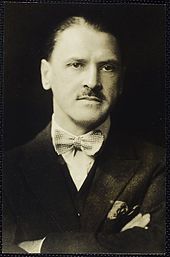
    The Somerset Book Awards are named for the prolific writer W. Somerset Maugham

    A quote from the Irish Times 

    Permeated with cynicism from a blighted childhood onwards, Maugham had few illusions about himself or his work. In his 1938 memoir, The Summing Up, he acknowledged: “I am a made writer. I do not write as I want to; I write as I can . . . I have had small power of imagination . . . no lyrical quality . . . little gift of metaphor I had an acute power of observation, and it seemed to me that I could see a great many things that other people missed.” W. Somerset Maugham

    Have you seen the films inspired by his books?

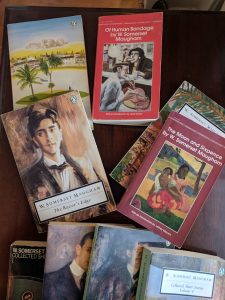
    Some of Kiffer’s collection of Somerset Maugham’s books

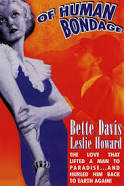
    With Bette Davis 1934

    Of Human Bondage

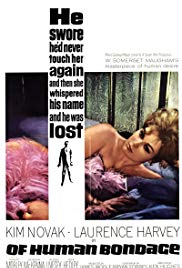
    with Kim Novak 1964

    Of Human Bondage

    A young medical student finds himself attracted to a beautiful but ambitious unfeeling waitress who ultimately may destroy them both. 


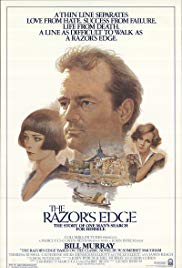
    The Razor’s Edge

    with Bill Murray 1984

    The Razor’s Edge 

    An adventuresome young man goes off to find himself and loses his socialite fiancée in the process. But when he returns 10 years later, she will stop at nothing to get him back, even though she is already married.

    He had everything and wanted nothing. He learned that he had nothing and wanted everything. He saved the world and then it shattered. The path to enlightenment is as sharp and narrow as a razor’s edge.

    The Moon and Sixpence debuting Lawrence Olivier  1959  Written 1919 at the end of WWI

    “The Moon and Sixpence is not, of course, a life of Paul Gauguin in the form of fiction. It is founded on what I had heard about him, but I used only the main facts of his story and for the rest trusted to such gifts of invention as I was fortunate enough to possess.” W. Somerset Maugham

    Maugham describes the idea for the book arising during a year that he spent living in Paris in 1904: “…I met men who had known him and worked with him at Pont-Aven. I heard much about him. It occurred to me that there was in what I was told the subject of a novel.” The idea remained in his mind for ten years, until a visit to Tahiti in 1914, where Maugham was able to meet people who had known Gauguin, inspired him to start writing.

    The film adaptions of W. Somerset Maugham’s works are too lengthy to list here. However, you can find them on the IMBD and on Wikipedia.

    Writing advice from Somerset Maugham

    Every writer hits now and then upon a thought that seems to him so happy, a repartee that amuses him so much, that to cut it is worse than having a tooth out. It is then that it is well to have engraved on his heart the maxim:  If you can cut, cut.


    William Somerset Maugham, better known as W. Somerset Maugham was a British author who wrote plays and short stories and novels. He was a dashing and daring man who did not wish to follow the other men in his family to practice law. Imagine, an individual in the Victorian Era… He was born January 25, 1874, in Paris (at the British Embassy) and died on December 16th, 1965, Nice, France. 

    During the First World War, our Somerset proved his valor by serving with the Red Cross in the ambulance corps (remember his earlier medical training) and was recruited by the British Secret Intelligence Service right before the October Revolution in 1917.

    Somerset dove into medicine and was fairly good at it until he wrote his first novel, Liza of Lambeth (1897) and all bets were off. The book flew off the shelves and people were reportedly wrestling in the streets for copies to gift their loved ones as gifts. (*Creative license at work – however, you don’t know that this did not happen…) He was known to say, “I took to it (writing) as a duck takes to water.”

    At the age of sixty-six, he had to flee with only a suitcase from the encroaching Nazis as they advanced across Europe. He escaped to England and then on to South Carolina, in the U.S. where he continued to work on the screenplay for Razor’s Edge. He moved to Hollywood and then eventually back to France.

    Did we mention that W. Somerset Maugham was repudiated to be the highest paid author of the 1930s?

    Is it any wonder why we chose Somerset to represent our Literary & Contemporary Fiction Awards?

    Oak Ridge High School Cheer Leaders 1946


    Somerset, Somerset,

    He’s our man!

    If you didn’t know him

    Now you can! 


    Somerset Cheer by Sharon Anderson


    Welcome to the Somerset Awards where we comb through entries dealing with contemporary stories, literary themes, adventure, satire, humor, magic realism, women and family themes. We will put them to the test and choose the best among them.

    You might notice that the connection between the works below is that they are commentaries on society. Time frames may differ, but the human condition is central to the story.

    Here is a listing of the Somerset Book Awards Hall of Fame Grand Prize winners!

    The Rabbi’s Gift by Chuck Gould

    Somerset Grand Prize Winner

    Babylonian astrology and Jewish mysticism combine with Roman history to create a timeless story of passion and fate in Chuck Gould’s The Rabbi’s Gift.  Babylonian astrology and Jewish mysticism combine with Roman history to create a timeless story of passion and fate in Chuck Gould’s The Rabbi’s Gift.


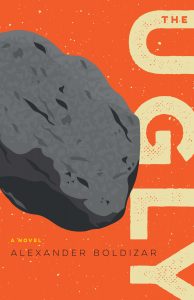
    The UglyThe Ugly by Alexander Boldizar 

    Words thrown as hard as boulders are easy to catch – if you’ve had practice. Just ask our hero, Muzhduk the Ugli the Fourth…In the great tradition of existentialism, Boldizar brings us a book that is hard to classify. It has aspects of the existential with a fair amount of satirical wordplay and a bit of theater of the absurd thrown in.


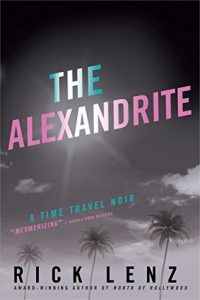
    Alexandrite by RIck LenzThe Alexandrite by Rick Lenz

    Marilyn Monroe, time travel, second chances – all steeped in mid-Century Hollywood history, culture, and magic.


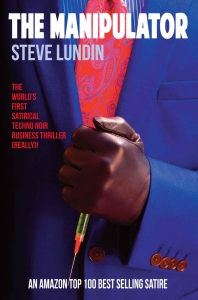
    The Manipulator by Steve LundinThe Manipulator by Steve Lundin

    With a fast-paced storyline and a rich cast of characters, this award-winning winning novel offers a uniquely hilarious, but scary, perspective on the how the businesses of public relations and marketing can take technology to its precipice to take advantage of a media addicted public.


    Individually Wrapped by Jeremy Bullian

    Individually Wrapped tells us the bizarre tale of Sam Gregory’s descent over the condensed course of a couple of days. Set in a 21st-century futuristic city, technology has permeated every aspect of the city dwellers’ lives… Self-delusion is an interesting state of mind because everyone can see it except yourself, as it propels you ever deeper into oblivion, where not even technology can save you.


    We would be amiss by not featuring and recognizing Judith Kirscht, our very own Pacific Northwest Somerset inspired author. Judith specializes in family sagas and societal issues.

    Judith was born and educated in  Chicago during the Great Depression and then WWII. She taught school during the upheavals of the Vietnam protests and the Civil Rights movement. Later in life, she found herself in California, divorced and with two daughters. Judith taught creative writing at universities of very different cultures: University of Michigan and U of California, Santa Monica. Her novels continuously are awarded CIBA First Place Category ribbons for the Somerset Book Awards for Literary and Contemporary Fiction.

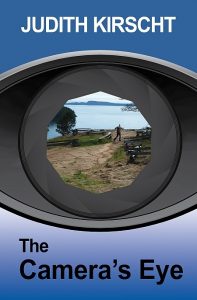
    The Camera’s Eye  by  Judith Kirscht

    In a world where too many rocks are thrown at those who represent anything other than the norm in middle-class white America, two friends decide to take matters into their own hands and stand up to the hatred with which they are targeted in order to save their home and ultimately their lives.


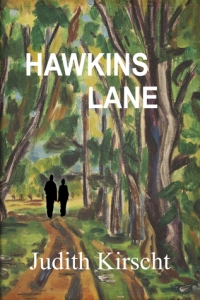
    Hawkins Lane CBR Review
    Hawkins Lane Cover


    Hawkins Lane by Judith Kirscht

    Hawkins Lane is excellent and, ultimately, a redemptive story about the heart-wrenching tragedies a family can survive, and about the healing powers of nature and friendship. The characters and the story will linger long after the last page is read and you will be captivated from the first page.


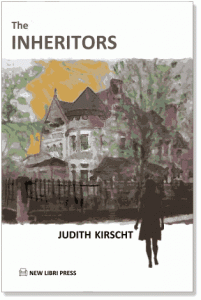
    The Inheritors   by Judith Kirscht

    “The Inheritors” by Judith Kirscht is a novel of one woman grappling to find her cultural and personal identity. Tolerance of others and the need for communication is required from each of us is an overriding theme in this latest work of Kirscht that explores the complexities of human nature and family bonds.


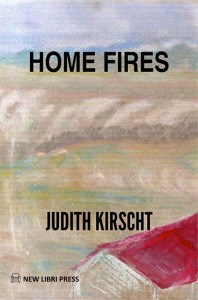
    Home Fires  by Judith Kirscht

    “Home Fires” is an intelligently written, fast-paced family drama that unfolds into a suspenseful page-turner. Although this novel masterfully renders the emotional hardships and tragedies that are sometimes part of dysfunctional relationships, it is not a depressing read.


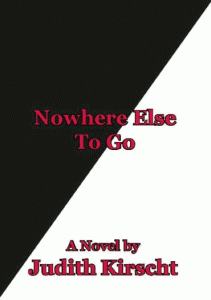
    Nowhere Else to Go by Judith Kirscht

    “Nowhere Else to Go” is a tightly woven and insistently engaging novel about racial prejudice and the blackboard jungle of the 1960s.


    LOOKING TO HAVE YOUR BOOKS RECOGNIZED? Submit them to the Chanticleer International Book Awards – Click here for more information about The CIBAs! 

    The last day to submit your work is November 30, 2018. We invite you to join us, to tell us your stories, and to find out who will take home the prize at CAC19 on April 27th.

     As our deadline draws near, don’t miss this opportunity to earn the distinction your literary novel deserves!  Enter today!

    The SOMERSET Book Awards is a division of the Chanticleer International Book Awards – the CIBAs.

    The winners will be announced at the CIBA  Awards Ceremony on April 27, 2019,  that will take place during the 2019 Chanticleer Authors Conference. All Semi-Finalists and First Place category winners will be recognized, the first place winners will be whisked up on stage to receive their custom ribbon and wait to see who among them will take home the Grand Prize. It’s an exciting evening of dinner, networking, and celebrations! 

    First Place category winners and Grand Prize winners will each receive an  awards package. Whose works will be chosen? The excitement builds for the 2018 SOMERSET Book Awards competitions.

    [fusion_builder_column type=”2_5″ last=”yes” spacing=”yes” background_color=”” background_image=”” background_repeat=”no-repeat” background_position=”left top” border_size=”1px” border_color=”#606060″ border_style=”solid” padding=”10px” class=”” id=””][fusion_text]

    Our Chanticleer Review Writing Contests feature more than $30,000.00 worth of cash and prizes each year! 

    ~$1000 Overall Grand Prize Winner
    ~$30,000views, prizes, and promotional opportunities awarded to Category Winners

    [/fusion_text][fusion_button link=”/services#!/Contemporary-&-Mainstream-Novel-Writing-Contest/p/21521214/category=5193080″ color=”darkgray” size=”” type=”” shape=”” target=”_blank” title=”” gradient_colors=”|” gradient_hover_colors=”|” accent_color=”” accent_hover_color=”” bevel_color=”” border_width=”1px” shadow=”” icon=”” icon_position=”left” icon_divider=”no” modal=”” animation_type=”0″ animation_direction=”left” animation_speed=”1″ alignment=”center” class=”” id=””]Enter Now![/fusion_button][/fusion_builder_column]

    Don’t delay! Enter today! 


  • Semi-Finalists for the GERTRUDE WARNER Book Awards for Middle-Grade Readers – 2018 CIBAs

    Semi-Finalists for the GERTRUDE WARNER Book Awards for Middle-Grade Readers – 2018 CIBAs

    Gertrude Warner Children's Chapter BooksThe Gertrude Warner Book Awards recognize emerging new talent and outstanding works in the Middle-Grade Readers Children’s books division. The Gertrude Warner Book Awards is a genre division of the Chanticleer International Book Awards (The #CIBAs).


    These titles have moved forward in the judging rounds from Long Listers (Slush Pile Survivors) to the SHORTLIST and have now moved on to the SEMI-FINALISTS list of the 2018 Gertrude Warner Book Awards.

    All Semi-Finalists in attendance of the Chanticleer Authors Conference and CIBA ceremony will receive special name-tag ribbons to wear during the conference and will be recognized.

    The limited  First Place Category Positions for the 2018 Gertrude Warner Book Awards will be selected from the  Semi-Finalists and will be announced at the 2019 Chanticleer Authors Conference CIBA Ceremony and Banquet on Saturday, April 27th, 2019.

    Deadline for 2018 Gertrude Warner  Book Awards submissions was May 31, 2018. We are now accepting entries into the 2019 Gertrude Warner Awards.

    We looking for the best books featuring stories of all shapes and sizes written to an audience between the ages of about eight to twelve. Science Fiction, Fantasy, Mystery, Paranormal, Historical, Adventure. Our judges will put them to the test and select the best Middle-Grade Books among them.

    Chanticleer Book Reviews discovers today’s best books!

    Congratulations to the 2018 Gertrude Warner Book Awards Semi-Finalists!

    • Aric Cushing – Vampire Boy
    • Alexander Edlund – Keelic and the Pathfinders of Midgarth
    • M. P. Follin – Dakota Joy and the Traveling Stones
    • Joanna Cook – The Life of Bonnie Dickens
    • Victoria Adler – Emma and Mia
    • Cheryl Carpinello – Guinevere: At the Dawn of Legend
    • K. B. Shaw – From the Shadows
    • Jules Luther – The Portals of Peril 
    • Diane Rios – Bridge of the Gods
    • Kay M. Bates – The Adventures of Rug Bug: The Revolution
    • Gloria Two-Feathers – Tallulah’s Flying Adventure

    Thank you to all who entered their works into the 2018 Gertrude Warner Book Awards. It is always tough to decide which titles move forward and which ones must fall away. Thank you, again, for participating.

    Good Luck to each Semi-Finalist as your work competes in the 2018 Gertrude Warner Book Awards. 

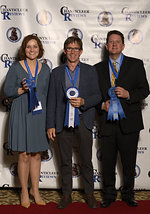
    2017 Gertrude Warner Award Winners Bek Castro, Paul Aertker, and Murray Richter

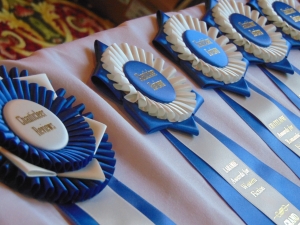
    Grand Prize and First Place Ribbons!   You know want one! 

    We are now accepting submissions into the 2019 Gertrude Warner Book  Awards writing competition. The deadline for submissions is May 30th, 2019. Please click here for more information and to enter.

    As always, please do not hesitate to contact us with any questions, concerns, or suggestions at Info@ChantiReviews.com. 

  • Books for Veterans Day –  Honoring Those Who Have Served in the Armed Forces

    Books for Veterans Day – Honoring Those Who Have Served in the Armed Forces

    Veterans Day honors and celebrates the service of all U.S. military veterans.
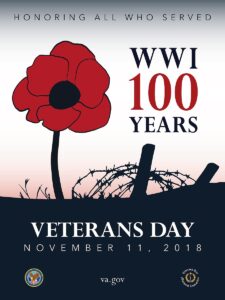
    November 11th, 2018, Veterans Day,  also celebrates the 100th anniversary of the end of World War I. The hostilities were formally ended at the 11th hour of the 11th day of the 11th month of 1918. 

    Honoring those who are serving, have served, and those who have fallen while in military service is a tradition here at Chanticleer Reviews.

    We here at Chanticleer Reviews have had the honor of reviewing top novels by written by outstanding authors whose stories enlighten, remind,  empathize, and creates a better understanding with those who have served in the armed forces.

    It is our pleasure to share these titles with you that bring important moments in history along with poignant storytelling to their readers.
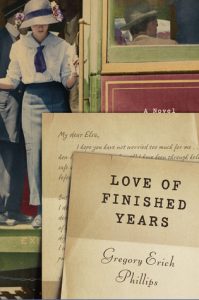
    Love of Finished Years by Gregory Erich Phillips,  WWI, Immigration, sweatshops

    Chanticleer International Book Awards Grand Prize Winner 

    From the riveting opening that takes place in NYC’s Lower East Side’s sweatshops until its gripping conclusion after World War I, this enthralling novel vividly portrays the desperate times of German immigrants landing at Ellis Island in search of a better life intertwined with the story of a young man and his heroic military service during WWI.
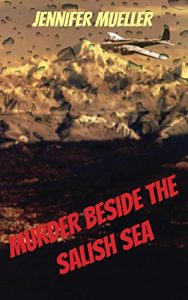
     

     Murder Beside the Salish Sea by Jennifer Mueller  WWII, Japanese Internment, PNW

    A Mystery & Mayhem Book Award First Place Winner

    Brock Harker, World War II fighter pilot returns home to the Pacific Northwest on leave. He’s searching for a little peace once he finds his half Japanese wife who vanished while he was away. What he finds is Murder Beside The Salish Sea by author Jennifer Mueller, who artfully pulls Brock into an intriguing plot that hides the darkest of secrets.
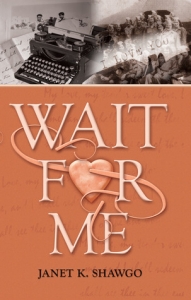
     

    Wait For Me – Janet Shawgo      WWII and Historical Romance

    Goethe (formerly Chaucer) Book Awards First Place Winner

    The often-unknown role of women in wartime as travel nurses and pilots, as well as the use of herbs for natural healing, add interesting and relative historical content to this engaging American saga.
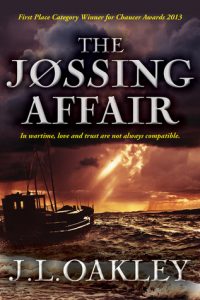


    The Jøssing Affair by J.L. Oakley  – WWII, Norway, Resistance Fighters

    Goethe Book Awards Grand Prize winner for Historical Fiction

    A profound work of historical fiction recounting the Norwegian Resistance to the Nazi Occupation. A testimonial to the underground heroes who put aside personal safety for a cause much bigger than themselves. Their courage is acknowledged in this superbly gripping novel.


    A Crowded Heart by Andrea McKenzie Raine   PTS, Veterans, Military, Social Issues

    Shortlisted for the Somerset Book Awards

    The wide ensnaring net of the aftershocks of war is poignantly portrayed here — powerful and deeply affecting!

    Raine wisely expands the narrative of the novel to reveal the wide net of war. Willis is not the only victim; the people in his life experience the after-shocks of fighting as well. 

    Not to give up on those who have already given up on themselves is the challenge. Raine reminds us that doing so requires a full heart, indeed, a crowded heart.

    Watch Over Me by Eileen Charbonneau   WWII, Espionage, Code Talkers, Thriller

    Chatelaine Book Awards First Place Award Winner

    In a world of half-truths, crooked policemen, spies, and impersonators, the real question is who to trust. Watch Over Me shows a living portrayal of 1940s New York spinning wildly in the madness of espionage, where secrets and sacrifices threaten the bond of love and the hope of family.


    Non-Fiction Works that were written by Veterans
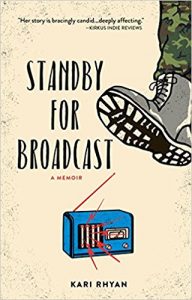
    Standby for Broadcast by Kari Rhyan     PTSD, Wartime nursing, Social Issues

    I & I Book Awards – Grand Prize Winner

    Rhyan served nearly twenty years in the US Navy as a nurse, her final deployment taking place in Afghanistan to a medical unit run by the British where Rhyan upheld her duties to aid others, while inwardly feeling unprotected and helpless. After witnessing the many tragedies of war, primary among them multiple amputations, she comes home scarred in mind. Her trauma becomes so obvious that she is sent to a special private unit.

    Rhyan’s memoir is frank, insightful, and a powerful reminder of the toil taken by those who wrestle with the fallout of the carnage of war. She also reminds us of the resiliency of the human spirit and the power of hope.
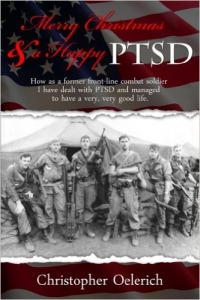
    Merry Christmas and a Happy PTSD by Christopher OelerichMerry Christmas and a Happy PTSD by Christopher Oelerich, author & Vietnam Veteran

    Shortlisted for the Journey Book Awards

    “A very personal, no-holds-barred yet ultimately empowering discussion of PTSD and its effects on those who suffer from it.” – CBR

    The book has been written in a ‘How To’ format for combat soldiers which is reflected in examples and language.

    “I went away to war one person and came back another, and in my wildest dreams would never have chosen to be the one who came back…I was a twenty-year-old Warrant Officer Helicopter Pilot fresh out of flight school when I arrived in South Vietnam in May of 1969 and was assigned to B Troop 7/17 Air Cav in Pleiku.  I joined the Scout Platoon and spent my entire tour as a Scout Pilot in the Central Highlands, and in that time saw my friends killed, captured, wounded and lose their minds.
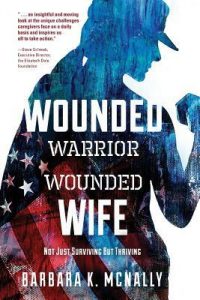
    Wounded Warrior, Wounded Wife by Barbara McNally

    This ground-breaking initiative offers advice and hope to those who are trying to understand and cope with war’s many aftershocks.

    “The critical issues surrounding post-traumatic stress among America’s wounded warriors is expanded here to include the challenges and concerns of military wives and families.

    Barbara McNally was working as a physical therapist when she watched helplessly as a man jumped off a bridge to his death. Feeling involved in his tragedy, she learned he was a wounded veteran. The experience spurred her to find out more about PTS and its effects on those who have participated in war. Gradually her attention focused on the plight of the wives of these wounded military survivors.”

    If you have a moment, take time to watch this video that offers an intimate look into the chaotic and demanding lives of military spouses as they adjust to living with mentally and physically injured combat veterans. Please feel free to share.
    Some interesting current statistics regarding U.S. Veterans*

    • 22 veterans, on average, commit suicide every day.
    • The suicide rate for younger veterans (18 -29) is 7 times higher than their civilian peers.
    • The rate of suicide among veterans is 21 percent higher than the rest of the country.
    • The suicide rate of among female veterans is a 140 percent higher than their civilian peers.
    • No one knows how many military spouses and families members commit suicide.
    • There are 18.8 million veterans living in the United States.
    • 3.8 million of these veterans are disabled (2014).
    • U.S. military is the world’s second largest (China’s army is the largest) and troops are deployed across the globe.
    • It is believed that 45 percent of all veterans who served in the Middle East are disabled.

    And another interesting and enlightening link from the PEW RESEARCH CENTER – The FACT TANK regarding Veterans in today’s society.

    Honoring those who are serving, have served, and those who have fallen while in military service is a tradition here at Chanticleer Reviews.

    With Appreciation and Gratitude to Veterans who are actively serving and have served. THANK YOU! 

    *Sources: U.S. Department of Veterans Affairs, American Community Survey 2015, United States Census Bureau.

    Just a Note from the blog post author, Kiffer Brown:

    On a personal note, many of my family members have served their country (many of whom have passed) and are serving their country: my father (deceased), my brother (with us but 100% disabled), my nephew Robert is currently serving in the Air Force,  my dear Aunt Ellen (WWII nurse – she passed away recently), my cousin Billy Wayne (first 100 to die in Vietnam), and many other cousins to numerous to mention here.

    This is my small way of honoring and recognizing my relatives for their service to our country.

    Thank you for taking the time to read my annual Veterans Day blog post.

    Semper Fi – Kiffer



  • RESUMED INNOCENT (A Sam Tulley Novel, Book 1) by Rene Fomby – Legal Thriller, Mystery/Suspense, Contemporary Literature

    RESUMED INNOCENT (A Sam Tulley Novel, Book 1) by Rene Fomby – Legal Thriller, Mystery/Suspense, Contemporary Literature

    Rene Fomby’s gripping novel, Resumed Innocent, is both a courtroom drama and a personal drama. In the book’s forward, Fomby tells readers that the story is “semi-autobiographical,” noting that as a criminal law attorney, he has found that “The reality of day to day criminal practice in Texas is simply too unreal to be believed.”  And, yet, he manages to convince the reader of the gruesome reality of crime scenes as well as the harsh reality of courtroom politics.  The guilty aren’t always those being held in jail cells; attorneys and judges don’t escape Fomby’s scrutiny, and the reader is made aware of just how complicated criminal law in Blair County, Texas, truly is.

    Fomby opts for a female protagonist to relay what’s just and unjust in a criminal law attorney’s daily life. Samantha Tulley, Sam for short, a widow with a small daughter, is as sharp as they come. She’s savvy enough to detect when a defendant is being railroaded or a judge is being underhanded. Her intelligence and wit, however, put her at risk for reprisals, acts of vengeance that will put her life at risk and have the reader turning pages as quickly as possible to keep up with a plot that escalates with action and suspense.

    Her clients, people accused of heinous crimes, are beyond fortunate to have Sam representing them. She defends a woman accused of plunging a knife into her former boyfriend multiple times and a man accused of murdering his wife and two small children. In one of the most riveting chapters of the book, the reader observes voir dire, jury selection, and witnesses Sam calculating who will and won’t support her client, all the while maintaining an expression that would sink her most formidable opponent at the poker table. This chapter alone would make the book a worthy read, but it’s packed with fascinating nuggets of courtroom drama throughout.

    Sam’s personal life is equally fascinating but also fraught with danger. Her deceased husband was the son of an eccentric member of the Catholic Traditionalist Movement, a group that rejects Vatican II and believes mass should be celebrated only in Latin. William Tulley didn’t approve of his son’s marriage to Sam, a Jewish woman, and is now demanding that a paternity test to be done on Sam’s young daughter. His first wife, Luke’s mother, resides in Italy and holds information that will enlighten Sam as to her father-in-law’s motives. Sam has enough enemies, in and out of the court system, to keep the reader guessing who is attempting to harm – even kill her. She has an advocate, however, in Harry, her intern who is a law student at Baylor University and whose family has had their own run-ins with Sam’s father-in-law.

    This book will certainly appeal to lawyers and law students, but also to anyone who loves a good courtroom drama. It’s also for readers drawn to strong female characters. Sam Tully is a working mother, a widow, an advocate for the wrongfully accused, and the friend you’ve always wanted.  You’ll finish this novel eager to continue her adventures in a forthcoming book.


  • TWELVE SECULAR STEPS: AN ADDICTION RECOVERY GUIDE by Bill W. – Twelve-Step Program, Addiction/Recovery, Self-Help

    TWELVE SECULAR STEPS: AN ADDICTION RECOVERY GUIDE by Bill W. – Twelve-Step Program, Addiction/Recovery, Self-Help

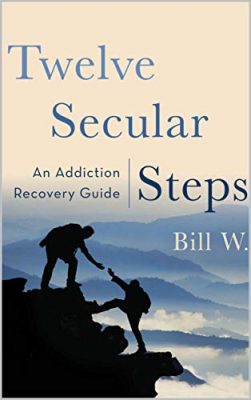
    If you’re familiar with Alcoholics Anonymous, then you’ve heard the phrase, “One day at a time,” “Keep it simple,” and “This too shall pass” – slogans designed to help the alcoholic resist the urge to drink. Borrowing another popular AA slogan, “Take what you need and leave the rest,” alcoholic Bill W. (not the co-founder of AA) lays out his version of the AA steps in Twelve Secular Steps: An Addiction Recovery Guide.

    A biologist with a Ph.D. and 20 years in research and education, Bill W. knew he needed help with his addictions. He followed the AA program but was uncomfortable with the “God” language, so he created his own path, rejiggering the steps as a secular version shifting the focus from a “Higher Power” to himself. In Chapter 1, he explains his critical moment: “I froze when I looked into the mirror, for I didn’t recognize the face looking back. The veil of denial was lifted, and I saw clearly what I had become: a pathetic addict, slowly killing myself day by day. I realized that the problem, truly, was ME.”

    Unfortunately, some folks who enter “the rooms” of AA or other 12-Step recovery programs are turned off by the spiritual connection required. In this thought-provoking and well-designed guide, Bill W. tries to show that by altering the faith-based language of the traditional AA steps, there is incredible value for anyone wanting to get a grip on their addiction. The latter part of the book is devoted to the design and implementation of such a plan, getting the addict or alcoholic to build 90 days of sobriety.

    Twelve-Step recovery was introduced in 1939 when Bill Wilson published a primary text Alcoholics Anonymous, often called “The Big Book.” Of course, detractors have argued that the secular version is not considered the AA program, but Bill W. (author of this book) knew the value of the work as he was surrounded by alcoholics and addicts who desired a non-religious version or pre-existing relationship with God.

    Drawing from his science and medical background too, Bill W. devotes an entire chapter to the Biology of Addiction, showing an illustration of how dopamine affects the brain and explaining how the brain’s limbic system and frontal cortex change significantly during an addiction spiral.

    The conversational tone peppered with personal anecdotes from the author’s life makes for an easy read. After reviewing the 90-day plan and how to work the traditional steps with a secular flair, this reviewer had hoped the author might supply a final word of encouragement. Instead, Twelve Secular Steps ends with a challenge, which when all is said and done, is appropriate.

    This book is intended for anyone uncomfortable with the religious aspect of AA’s fundamentals yet ready to take personal responsibility for their recovery. Bill W. assures his readers that the three ingredients to successful recovery are adhering to a “One day at a time” attitude, following the steps and leaning on a support network of family and friends.

    Twelve Secular Steps is an alternative path rooted in the individual rather than God, and has been helpful for some recovering addicts assembling a recovery toolbox. Friends and family members with a loved one suffering from addiction can also benefit greatly by learning how gut-wrenching yet wonderful the lifelong path of recovery can be.

  • Dumb Politics: The Political Rhetoric and Blissful Ignorance of a Generation by Tanner T. Roberts

    Dumb Politics: The Political Rhetoric and Blissful Ignorance of a Generation by Tanner T. Roberts

    In these days of turmoil and bickering in Congress, far too little time is being spent on the job for which citizens elect their senators and representatives—working cooperatively to make sensible laws to guide our country toward reasonable progress. The Capitol Building itself seems to have become a battleground of clashing voices, with violence waiting on its flanks.

    What do Americans think of this? Some are angry, whether at one political party or the other. Others have given up, because of the absolute mess of politics in general, seeing it as nothing but rhetoric, with little concern for the future of the United States or its citizens. Many citizens become apathetic; feeling they have no power to change the situation, they choose to ignore it.

    In Dumb Politics: The Political Rhetoric and Blissful Ignorance of a Generation, Tanner T. Roberts focuses on the people he calls the “blissfully ignorant,” whom he says merely do not understand what is happening. These people—seemingly with little knowledge of our country’s history, the content and meaning of its Constitution, the functions of its government, the workings of its politics, or the practices of its business and financial institutions—respond emotionally to whatever someone, guided by ‘dumb politics’, tells them is the right or wrong way to run things, and then act and vote accordingly.

    The “blissfully ignorant” include people of all ages, races, religious beliefs, cultural backgrounds, and degrees of education. Roberts seeks to show his readers that large numbers among the younger generation dominate this group’s ranks today. From among those now being educated under the precepts of ‘dumb politics,’ he tells us, will emerge many of tomorrow’s leaders. He hopes to turn this situation around.

    Roberts defines ‘dumb politics’ as “the act of promoting policies and ideas that subsidize groups[sic] at the expense of others”; it becomes “hypocritical in equity and equality… uses emotional responses over rational analysis… and uses derogatory vernacular to promote class and social warfare.” In the first chapter, he illustrates his definition by applying it to the Women’s March 2018 founders’ official Twitter contending that the shutdown of “Backpage” classified ads was an “absolute crisis for sex workers.” He points to their apparent ignorance that “some [Backpage] ads included minors as young as 14 and women forced into sex trafficking,” labels their action as “the epitome of what I call ‘dumb politics,’” and pointedly remarks that “recognizing the irony of this situation requires cognitive thinking.” He names many Democrats and liberals as exemplifiers of dumb politics, but also acknowledges that its practice is far from absent among Republicans.

    A primary focus of the book is the comparative examination of the principles of individualism and collectivism. Noting how these reflect conservative vs. liberal ideologies; Roberts then points out that dumb politics prefers the collective approach, and its adherents seek to assimilate groups willing to follow a collective norm.

    Chapters 2-6 examine how the precepts of dumb politics turn up in the practices of Dumb Name Calling (e.g., fascists), Dumb Immigration (loose borders), Dumb Economics (tax strategies), Dumb Education (ideology imposition), and Dumb Culture (media tactics), and spell out the dangers of these practices for our future well-being.

    Roberts is passionate about his subject, which may leave some readers with information overload. Dumb Politics will undoubtedly attract conservatives, and it offers considerable food for thought for liberals with an open mind who might like to (re)consider their understanding of what is tearing our government, and our nation, apart.

  • THE BUBBLE: Everything I Learned as a Target of the Political, and Often Corrupt, World of Youth Sports by Maya Castro – NonFiction, Youth Sports, Soccer

    THE BUBBLE: Everything I Learned as a Target of the Political, and Often Corrupt, World of Youth Sports by Maya Castro – NonFiction, Youth Sports, Soccer

    Maya Castro, the daughter of a Puerto Rican father and Anglo mother, mixes memoir and personal essay styles in a passionate narrative describing her experiences as a minority soccer player on an elite, mostly white, high-school soccer team.

    Castro joined her middle-school soccer team in seventh grade, in order to avoid dodgeball in regular PE. She soon finds playing soccer better than “roller-coaster rides, a sugar-rush, or a present on Christmas day.” From that innocuous beginning, playing the game becomes her passion, and by the end of middle school, she develops advanced skills in the sport.

    At the end of eighth grade, Maya opts to transfer to a high school in a different part of town which has a highly-rated soccer program, where she hopes to learn more about the sport and further improve her skills. That decision leads to personal growth as an athlete but also results in a painful, profound loss of innocence relative to the roles and motives of adults associated with this program dominated by school politics, “entitled” students, and hints of racism.

    Castro cites detailed descriptions of events and her perceptions. These often engender reader empathy and raise reader awareness of the emotional fragility of early adolescence. They also suggest that a “wink and a nod” are still alive and well in many areas of competitive team sports.

    This story works well and carries with it a social statement. The voice is strong and unique, often written in vernacular. It reveals interesting aspects of the author’s personality—passion, humor, and a well-defined sense of right and wrong–someone the reader would like to know, and someone we will want to hear from again.

    Maya relates her experiences to those of other athletes whose stories have recently been “front page” news. She provides a strong indictment of individuals who “… overlook misconduct (for their own personal gain) rather than correct it.”

    Her concluding words will resonate with many parents, coaches, and fans. “The sooner the ‘grown-ups’ on the sidelines understand that to overlook corruption, in all of its stages of severity is to enable it, the safer and more meaningful the youth athletic environment will be.”

    The Bubble:  Everything I Learned as a Target of the Political, and Often Corrupt, World of Youth Sports by Maya Castro is a strong statement, reflective of one young woman’s experience in youth sports, a treatise that coaches, parents, and young players will do well to note. Recommended.