In this enticing second installment of D. J. Adamson’s Lillian Dove Mystery series, big city problems wind up in a small town in the Midwest threatening not only the safety and integrity of the community, but bringing imminent danger to the life of one woman who is just trying to move beyond her rocky past and navigate toward a more positive future.
Trying to get your life back on track may be a little tricky when you’re a recovering alcoholic five years sober, and you’ve just inherited a house and the local AAA Discount Liquor Store. Here in Frytown, Iowa, Lillian Dove is clearly aware that “life has its ironies,” but she’s determined to make the best of recent circumstances. With her cat Bacardi, she’s been residing at her mother Dahlia’s condo in Lake’s Edge Senior Residential Complex, while the feisty woman is in a nearby convalescent home hell-bent on getting out.
Lillian’s also been involved with the local Frytown Police Chief, a man she felt offered love and security, though unfortunately he also happens to be married. While sobriety and the unexpected new business acquisition have boosted her spirits, Lillian is haunted by the suicide of her best friend Cressie, a former addict who forced Lillian to face her own issues.
Suddenly, Cressie’s onetime ne’er do well boyfriend is threatening to blackmail Lillian, claiming to have video proof that she was responsible for Cressie’s death. Lillian knows his demands are bogus, but when his dead body is discovered at the condo, she’s determined to uncover the truth and clear her own name.
Within this well-crafted storyline, the murder investigation is linked to a border-crossing drug operation that stems from a multi-million-dollar Chicago firm, and a CEO involved in illegal money laundering. As Federal Agents and the local Police Department unite to catch the criminals, Lillian finds herself in harm’s way when she’s unwittingly dragged into the high-risk probe. From murder and a suspicious flash drive to vandalism, kidnapping, and surprise revelations, Lillian embarks on a winding, roller-coaster ride.
For those unfamiliar with Adamson’s evolving mystery series, a passing mention of Lillian’s having been a prior witness to an arson case that resulted in near dire consequences for both Lillian and her mother, helps bring readers up to speed and also confirms Lillian’s seemingly magnetic draw to trouble.
While chapter/segment titles indicate this story plays out over a short span of a few days, Adamson broadens the platform with a full range of characters and action. From the local mayor being accused of bigamy and a dispatch operator who equates to “Town Gossipedia”, to the ghost of Lillian’s benefactor assuring her that “everything will be fine” and the pirate-costumed nurse just trying to keep the ornery senior patients in line, all add engaging humor and lightness to the narrative in contrast with the greater tension and drama.
Like all good mysteries, Adamson creates a tale riddled with questions. Intertwined with bantering dialogue and heated conversations, Lillian’s self-imposed ponderings about recent events help draw us into the heart and mind of the central character. As a soul-searching individual coming to grips with the past, Lillian’s dream states offer a glimpse of her lost childhood and her fractured life. Adamson clearly has an eye for detail. Whether exposed in the sharp visuals of a crime scene, or revealed in the aromatic constants of a nursing home environment perfumed by the fragrance of “urine, unwashed bodies, and the Wednesday night meatloaf special,” the writing paints a colorful, and vivid picture.
Through the character of Lillian Dove, readers are introduced to a flawed, but tenacious female heroine who is genuinely likable. Suppose is a mystery filled with small-town heart, yet big city edge, unexpected excitement, and a touch of humor. Together they prove a smart, and winning combination.
There are so many hopefuls gearing up for the United States 2020 election, what’s one more?
Meet Lloyd Bruce Miller, 75-year-old who wants your vote. Or not. You see, Mr. Miller is a complicated man. Crazy, some may say – and why not, for he calls himself ‘crazy’ several times throughout his bid for the presidency.
In all actuality, it is uncertain whether or not Mr. Miller is indeed throwing his hat into the ring for 2020. He realizes he’s a “nobody” but goes on to comment that if “Trump could win, I don’t see why I, or anyone for that matter, couldn’t be a valid candidate.” By the way, Mr. Bruce did make a run for mayor of New York City back in 2009, he even registered, but Michael Bloomberg stole the election from underneath him. It’s as simple as that.
Reading through his 10,962-word bid for the 2020 Presidency (this is, the point of fact, what Mr. Miller’s book is all about), we begin to wonder who this man is. Where did he come from? He helps us out on page 24 by stating that “…(he) doesn’t really want to be president. (He’s) a fictional character in a story or novel.” We should all think of him in this way.
And yet, he has these thoughts… “I am a lunatic of some sort, a screwball in a novel. My name is Harold. That’s enough for you to know, at least for now.” He goes on to say, “The man who wrote something called ‘Utopia’, Thomas Moore I believe, must have been also a little crazy, like me.” Further along, he gives himself the title, “Harold the madman.”
From my perspective, there is nothing unusual for a politician to be a ‘madman.’ Most politicians have to be a little off in order to open themselves up to ridicule and public display. That being said, should you wish to cast your vote for Harold the Madman in 2020, you should know what he stands for, what his policies are, and how he approaches things.
Here’s a head’s up, Harold the Madman is not ‘politically correct’ in any fashion. Reading through his bid, here is what I’ve discovered:
Criminal Justice System. Criminals should be treated with respect and reasoned with. Therefore, no prison terms in years; prison terms should be measured by if the individual has had a real change.
Bullies have a right to bully. It’s a matter of protecting their Freedom of Speech. Victims of the so-called bullying should “toughen up.” (I warned you…) But, even so this is the age of “Jordan Petersen” and his penchant for political incorrectness that attracts both support and criticism.
#Metoo. It is, according to Harold the Madman, wrong for a woman to ruin a man’s career simply because he touched her. It’s up to women to tell men what behavior is right or wrong. He arrives at this because “100 French actresses came forward opposed to the Me, too, movement*.” Also, according to HtM, “women and men play sexually with each other.” He is also from the “Mad Men” era, much like that uncle we all have and care for but disagree with at Thanksgiving dinner. Perhaps Harold the Madman isn’t a misnomer after all, but perchance a lingering after effect?
Freedom of speech is the foundation of a free society; therefore, people have the right to talk about wanting to kill themselves, wanting to kill other people, etc. Because the only way to help these people is to talk to them and reason with them. HtM is opposed to the Suicide Hotline, and they are monitored by the government, and the government is more interested in collecting information about you to aid in your arrest**.
Foreign policy. Because HtM doesn’t have a lot of experience with foreign policy, he is going to leave it in the hands of the military. He believes in compromise and Manifest Destiny. This allows for the policy he proposes next: Because we cannot fit “the entire population of the whole world into the area of the current United States… you are welcome to join us, but now, your land is our land, part of the United States under the jurisdiction of our federal government.” At first, HtM will focus on friendly democracies like “… Mexico, Canada, Israel, South Korea, Taiwan, Japan, France, Germany…” and extend the invitation to become part of the United States. Undoubtedly, HtM will find support for his foreign policy platform as I did see a red truck the other day with “I LOVE WALLS” painted across both sides of it.
“Compromise is actually the force which enabled the human race to survive over the centuries. Without compromise, no nation could even be formed or last a day. Compromise, more than anything else, is the basis of human society.” This is when HtM starts to make some sense and I found myself nodding my head in agreement—just when I was shaking my head in confoundedness on some of his other platforms.
While it is true that there certainly is much in his proposition to scratch your head about and ponder over, the true beauty of The 2020 Candidate is the freedom by which its author can express his opinions. That, after all, is the American Way.
And then in his closing remarks, he recommends that we all need to talk to each other and get to know each other on an individual basis. Because there are so many variations of us communication is key—if not the most important agenda of his bid.
In closing, if you choose to read Harold the Madman’s bid for the presidency, please read it through to the end. It’s not so “mad” after all…
All things considered, Lloyd Bruce Miller, a.k.a. Harold the Madman, is a unique character and perhaps someone with whom one might like to sit down for a conversation and a pint at Samwise Gamgee’s Old Gaffer’s table at the Green Dragon.
**This is not our view at Chanticleer Reviews. Suicide Hotline is a vital service in our society, one we could scarcely do without. So if you are thinking of doing something dangerous to yourself or someone else, we strongly encourage you to reach out to this service at: https://suicidepreventionlifeline.org/ or call them at 800-273-8255
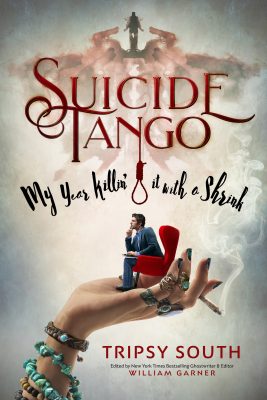
A novelistic look at the serious issue of teen suicide, Suicide Tango walks us through the relationship between a young woman who wants to end it all and the psychiatrist who wants to keep her alive.
Doctor Jon Moore, a-just-okay-psychiatrist considers himself an expert on the issues surrounding teen suicide. One day a tall, beautiful girl, Tripsy South, strolls into his office without an appointment, lights a hooter (a joint) and tells him she has only a year to live. She intends to get rid of herself sometime soon. Her attitude is defiant with the overarching theme apparent: she is sick of her life.
Exploring who South is and who she might become takes one year, 52 sessions all recorded, even the ones South sleeps through. Moore points out that going from infancy to physical adulthood in only fifteen years is a massive endeavor that some may view as cataclysmic. The notion of suicide might provide solace to someone trapped in that maelstrom, especially since, to the young, it’s hard to envision a future beyond the moment. There is much opposition expressed to over-medicating and “big pharma,” and a leaning toward a simpler, more eclectic view of mental deviation through the vexing, ever-changing personality of South.
She is styled as an “indigo child,” more perceptive than her peers and more intelligent. These differences cause her to experience painful social alienation. At times the doctor becomes the student, and the patient becomes the teacher. South suggests, for example, that people like her need to talk to people like her – potentially suicidal peers. And by the time her therapy year has been successfully completed, Moore’s life has been upturned and needs examining.
This is a well-written book that slaps the reader upside the head with the snark of a young woman thinking of doing the most devastating act possible. And while the Suicide Tango is classified as Satire, it must be noted that Tripsy’s longing to commit suicide and her observations about it seem intensely honest and therefore able to speak to teen readers.
South presents a few practical ideas that may resonate with those who are at war with themselves. She is brash, unapologetic, and in-your-face in a way that demands and holds your attention, uncomfortable as that may be.
The best observation is from the dedication page: “…for Every Beautiful Soul who struggles with personal demons and, on occasion, slays the fuck out of ‘em.” Amen, Tripsy South. A-men.
The suspense in Larry Temple’s excellent, haunting, global thriller, 100 Days of Terror, begins as a seed planted in the minds of the main characters and the reader. A torched car is found in a field in New Jersey. Residents in a town in Idaho wake to find green water gushing from their faucets. A small college town in West Texas is vandalized. And, then, three trucks explode on a highway in Los Angeles, and the clues linking the explosion to the other incidents are undeniable. The FBI knows that these aren’t random acts of isolated violence but an escalating series of terrorist incidents designed to disrupt life in America. During the next few months, multiple bridges will be bombed, airports will close, many highways will be unnavigable, communities will suffer power outages, and groups of children will stop attending school. The Dow Jones Industrial Average will steadily drop and the entire nation will be wondering what and where the next attack will be. Who is wreaking this havoc on America? To determine that answer, however, another question must be asked: Why?
At the heart of it all is Noah Reardon, an FBI agent in his thirties who saw plenty of violence during three years in Afghanistan with the Joint Special Operations Command. It is in America, though, where he has suffered egregious personal loss and is now getting through his days in an alcoholic haze. His boss, the gruff, no-nonsense McCullum has his reasons for not firing Reardon. Laura Spencer, Reardon’s partner, is protective of him, even while she chastises him for constantly over-sleeping and reeking of booze. Reardon has a personal connection to the events at hand; it was his stolen car that was found torched and abandoned in New Jersey. Could this have something to do with his liaison officer and close friend in Afghanistan, Abdul? After all, it was Abdul who told him, “Anyone who attempts to contradict or interfere with America’s drive for money and power are terrorists in your mind.” But, no; this can’t have anything to do with Abdul, the man who died in an explosion, the man who saved Reardon’s life. Or can it? Temple does an extraordinary job of keeping the reader guessing. Clues, the name of the game, are planted, but what to make of them? A sinister series of riddles are at play.
As a whole, the novel is a thoroughly engrossing meditation on what people can survive. The attacks aren’t leveled at the entire nation; they take place in an exact time and region of the country. Citizens will learn that they can keep going after local destructions. That doesn’t mean they emerge unscathed, however. They are forever changed by suspense-filled days, by hours wondering where and when the next attack will occur. If an explosion occurs nearby, can they relax for a moment and assume the next one won’t happen in their city, on their street? What is the true aim of terrorism? To eliminate people or to make fear such a constant in their lives that they stop living; they exist only to run for cover when the next attack occurs. When there is no end in sight for certain yet unpredictable violence, people are trapped in a cycle of action and reaction. “Normal” is no longer part of the national vocabulary.
The ending packs a huge wallop, a kick to the gut that will leave you gasping for breath. It causes the reader to stop and reconsider every question raised in a narrative that moves forward and back in time, giving us a composite of Reardon’s life, a mosaic of the good and the bad, the wonderful and the painful. Like the best fiction, it will leave the reader asking the question, “What would I do?” Read this powerful thriller for yourself and see if you can supply the answer.
Tom and Sarah are best friends who reside in a dilapidated English orphanage housed in a 16th-century castle. Only this castle isn’t the kind that inspires romance or chivalry; Weatherly orphanage is run like a maximum-security prison where children are forced to work, creating goods that are sold in the local village.
Many orphans have tried to get beyond Weatherly’s gates and have failed. Mr. Speckle, a scurrilous caretaker, prowls the grounds, keeping constant surveillance, ensuring the children are working and staying in their place. But Tom is a daring lad, often going on “raids” to steal books from the private library of Weatherly’s owners for his friends to read. Mr. and Mrs. Grievous, a dreadful pair who frown upon any sort of learning, run the orphanage.
One day, Tom and Sarah resolve to get out of Weatherly – forever. Ahead of them, the path is long, twisting, and dangerous, filled with a whirlwind tour through the English countryside. Here, author Stewart sharpens his focus and showcases the beauty and mystery of Great Britain. Readers will discover the places that are dear to the author’s heart as Tom and Sarah travel far and wide, including places such as the Midlands, Canterbury, Windsor Castle London and many more. But trouble is always nipping at Tom and Sarah’s heels, and when the renowned Detective Gowerstone takes up the case, the pair are nearly captured. They only escape by commandeering a hot-air balloon!
As we follow them on their clandestine route, we begin to learn more about who Tom might be—and why some highly placed operatives would like to see him eliminated altogether. It all goes back 150 years to the disappearance of the mysterious Britfield dynasty and the ascendancy of Queen Victoria, leaving one to wonder, Did the wrong person get the crown?
Britfield and the Lost Crown delivers as a detailed and intriguing first-in-series read that is sure to capture the attention of the middle grade and young adult crowd and those who love the Y/A action and adventure genre. Readers journey through the English cities and countryside beautifully rendered in the narrative. The book also includes maps and intelligent background information about the setting and history with access to online illustrations and commentaries on castles, villages, and towns where our heroes visit. Overall, Britfield weaves plot, texture, storytelling, and fascinating characters into a winning combination and enriching experience for adventure fans.
The best fiction touches the deep layers in us. A writer achieves this effect by embedding dozens of techniques into his or her story. – Jessica Page Morrell
Dramatic Question
Compelling fiction is based on a single, powerful question that must be answered by the story climax. This question will be dramatized chiefly via action in a series of events or scenes. If you are writing a romance, the question always involves whether the couple will resolve their differences and declare their love. In a mystery the dramatic question might be will Detective Smith find the serial killer in time to prevent another senseless death? InThe Old Man and Sea, the dramatic question is will Santiago catch the big fish and thus restore his pride and reputation?
An Intimate, Simmering World
An intimate world isn’t created by merely piling on details. It means your story world has the resonance of childhood memories, the vividness of a dream, and the power of a movie. It’s filled in with shadows and corners and dogs and ice cubes and the sounds and smells of a dryer humming on wash day and a car blaring past, rap music shaking the windows. These details lend it authority, potency, and a palpable physical existence.
An intimate story takes us to a specific place and coaxes us to remain there. An intimate story is lifelike and feels as real and complicated as the world the reader inhabits. When he finishes the final pages and leaves the story world, he should feel the satisfaction of the ending, but also a huge sense of loss. Like a friend has moved to another town just when the friendship had reached a level of closeness and trust.
Characters Built from Dominant Traits
Create main characters with dominant and unforgettable traits as a foundation of personality. These traits will be showcased in the story events, will help him achieve or fail at goals, and will make the story person consistent. For example, Sherlock Holmes’ dominant traits are that he is analytical, Bohemian, opinionated and intelligent. These traits are showcased in every story he appears in along with secondary and contrasting traits. When the character first appears in the first scene, he arrives in the story with his dominant traits intact.
Emotional Needs
Protagonists and the main characters are people with baggage and emotional needs stemming from their pasts. These needs, coupled with motivation cause characters to act as they do. For example, inSilence of the LambsClarisse Starling is propelled by childhood traumas to both succeed and heal the wounds caused by the death of her father.
Significance
The storyline focuses on the most significant events in the protagonist’s life.
Motivation Entwined with Backstory
Motivation, the why?of fiction, is at the heart of every scene, fueling your character’s desires and driving him to accomplish goals. It provides a solid foundation for the often complicated reasons for your character’s behaviors choices, actions, and blunders. Motivating factors provide trajectories for character development, as a character’s past inevitably intersects with his present. Your character’s motivations must be in sync with his core personality traits and realistically linked to goals so that readers can take on these goals as their own.
Desire
Desire is the lifeblood of fictional characters. Not only do your characters want something, but they also want something badly. Santiago, inThe Old Man and the Sea desperately wants to restore his reputation and also wants his friendship and partnership with the boy to resume. And in the lonely hours when he is far out at sea, desperately struggling to hang on to the fish and fighting off sharks, we see his fierce desire acted out and the price he pays for it.
You can bestow on your character flaming red hair, an endearing, crooked grin and a penchant for chocolate and noir movies, but if she doesn’t want something badly, she’s merely a prop in your story, not a driving force. But if she wants to win the Miss Florida contest, take over her boss’ job, or become the first female shortstop for the Atlanta Braves, then you’ve got a character who will make things happen and a story that will be propelled by desire.
Threat
Fiction is based on a series of threatening changes inflicted on the protagonist. In many stories, these threats force him or her to change or act in ways he or she needs to change or act. Often too, what the protagonist fears most is what is showcased in a novel or short story. It can be fear of losing his family, job, or health with this dreaded outcome providing interest, action, and conflict.
Causality
Events in fiction are never random or unconnected. They are always linked by causality with one event causing more events later in the story, which in turn causes complications, which cause more events, which cause bad decisions, etc.
Inner Conflict
A fictional character doesn’t arrive at easy decisions or choices. Instead, he is burdened by difficult or impossible choices, particularly moral choices, that often make him doubt himself and question his actions. Inner conflict works in tandem with outer conflict—an physical obstacle, villain or antagonist–to make the story more involving, dramatic, and events more meaningful.
Complications A story builds and deepens by adding complications, twists, reversals, and surprises that add tension and forward motion. Plots don’t follow a straight path, instead, there are zigzags, dead ends, and sidetracks. Complications create obstacles and conflict, cause decisions to be made, paths to be chosen.
Midpoint Reversal
The middle of a novel comprises more than half its length. At about the midpoint of most novels, a dramatic reversal occurs. The hunter becomes the hunted; a second murder occurs proving the detective has been wrong in his suspicions; a former lover arrives in town to complicate a budding romance. This reversal keeps the middle from bogging down and becoming predictable and also breathes new life and often a new direction into the story.
Satisfying Ending
every story needs an ending that satisfies the reader while concluding the plot. The final scenes, when the tensions are red hot and the character has reached a point of no return, must deliver drama, emotion, yet a logical conclusion. This is not to suggest that every plot ends with a shoot-out or physical confrontation because some endings are quieter, more thoughtful. Some endings are ambivalent, some a dramatic or a violent clash of wills. But there is always a sense that all the forces that have been operating in your story world have finally come to a head and the protagonist’s world is forever changed.
The end is just the beginning…
A Note from the Editor: A satisfying ending is one of the top, if not the top, reasons why books go viral and what will make your reader want to read your next work. Make sure that the you put as much effort in to a satisfying ending as you do into your opening hook—if not more. Kiffer Brown
Jessica Morrell is a top-tier developmental editor and a contributor to Writer’s Digest magazine, and she teaches Master Writing Craft Classes at the Chanticleer Authors Conference that is held annually along with teaching at Chanticleer writing workshops.
Workshops and Sessions Jessica will teach at the 2019 Chanticleer Authors Conference:
Immersive Fiction: Writing Fiction so Readers Land Amid Your Story and Don’t Want to Leave. Ever.
We live in a clattering, distracting world that pulls at readers’ attention and senses. To compete your fiction needs be immersive, as in an alternate reality that your reader can enter into. Thus your readers are experiencing it, not simply reading it. An immersive story is an intimate, sensory story. It takes place in a world that a reader can see, smell, feel, and hear and it’s based on characters readers come to know and care deeply about. With the opening pages, readers are swept into a world that is so resoundingly real and intricately constructed that they leave their ordinary lives to venture forth and live daily along with the characters.
Immersive Fiction Part 1: Atmospherics
Readers want to feel as if they’re part of a story world interacting with viewpoint characters. Fictional worlds that are immersive are nuanced, intricate, and alive with significant details. We’ll sort through what makes details significant and necessary. Plan to delve into atmosphere and tone, often under-appreciated techniques in a writer’s toolbox, yet they can be so effective to heighten suspense, create reality, and underline emotions and key moments. We’ll highlight how to use weather, lighting, interiors, unsafe places, and what I call “surround sound.” Finally, we’ll also discuss the key elements needed of world build in realistic genre fiction such as historical, sci-fi, and fantasy, and to make your stories memorable and immersive.
Immersive Fiction Part 2: Your Sometimes Heart-breaking, Sometimes Messed-up, Sometimes Heroic Fictional Cast
For many writers, the most fun of creating a story is fleshing out characters who battle, grow, and plop into heaps of trouble. Because readers need relatable, yet irksome, yet potent story people to follow and fret over. Their flaws and mistakes drive us crazy, their choices and moral dilemmas worry us sick, their triumphs feel as sweet as our own.
Characters first need to be intriguing and readers need to meet them at a pivotal, irreversible moment. From there they’ll tread where we dare not, fall in love with losers and sometimes winners, and take on monsters when we’d be cowering. But still characters, including secondary characters, need a vivid essence and need to be bigger than life. And by story’s end they need to grow, also called an arc. This workshop will delve into the more intricate aspects of character building and creating arcs, the art of creating characters who will live in the reader’s heart and memory.
Immersive Fiction Part 3: Stakes and Motivations
One major reason that people ‘buy into’ storytelling of all types is that there are serious stakes involved. Readers need to feel as if they also have a stake in the story. Stakes create tension, but most of all dread in a story because a character’s happiness, perhaps even his life, depends on them. The stakes might mean saving a vulnerable child snatched by a creepy predator, or saving the galaxy, or defeating Voldemort and his Deatheater.
Motivations are the reason characters attempt any action in a story. You’ll learn that motivations are deeply felt, drive a story, and will require a character’s chief personality traits to fulfill. We’ll discuss how motivations reveal backstory and a character’s inner world, create goals, and will exact a cost as the story progresses. We’ll discuss a variety of stakes, motivations, and goals so that you’ll learn clear examples of how all are entwined with plot and character.
In The Serpent and the Eagle, Edward Rickford details Hernan Cortes’ 1519 expedition to explore and secure the interior of Mexico for colonization, fleshing out known facts with the human factor—it is, to the typical depiction of Cortes’ exploration of the Yucatán peninsula, what a chorus is to a solo or a tulip to a bulb. Primarily narrated by individuals who were actual members, or may have been members, of this expedition, Rickford has crafted a fascinating tale of intrigue, love, lust, greed—essentially all seven of the deadly sins—within two diametrically opposed political and cultural systems.
The story follows the fates and fortunes of these individuals as they explore the Yucatán Peninsula before Cortes’ march on Tenochtitlán, the capital of the expanding Aztec empire in the 16th century. It has five major narrators and several minor narrators:
Captain Hernán Cortés was a Spanish adventurer, who left Cuba with a small fleet of ships manned by soldiers and slaves for the mainland of the New World, purportedly to “…find gold and serve God and King.” He rescues Father Aguilar, a Catholic priest, on Cozumel Island where the priest had suffered years of enslavement by an indigenous tribe. Vitale, a New Christian of Jewish descent, is a crewmember on the Santa María de la Concepción. He befriends Solomon, a Moorish slave, who grew up in the Emirate of Granada Al-Andalus when Muslims, Jews, and Christians all lived there in peace. Doña Marina is a slave girl who rose from obscurity to power and ultimately became Cortes’ confidante and consort.
Through the eyes of various tribal leaders, including, in particular, Motecuhzoma, the Aztec Huey Tlatoani, and several of his trusted counselors, the story takes the reader into the complex socio-political-religious system of the Aztec, and other indigenous tribes of pre-Colonial Mexico.
The Serpent and the Eagle is rich with historical and cultural detail and faithfully follows the events as recorded at that time. The multitude of narrators and situations can be challenging to follow. We suggest reading this novel with a pen and paper handy for inevitable note taking.
Rickford has written a book that forces the reader to reflect on the influence of history on the present, the possibilities when two cultures collide, and the impact of conflicting belief and ethical systems on human behavior.
Not a fast read, but well worth the time it takes. Prepare to be entertained, educated, and challenged to think.
Betsy Graziani Fasbinder speaks at writers’ conferences all over the country and coached writers for their book launches, agent pitches, media interviews and book promotions. She is known for “demystifying” public speaking for them and showed them how to gain the confidence needed to talk with passion about their books and their ideas. Teaching fellow writers, offering them practical skills, inspiration, and a way to playfully overcome stage-fright is a passion of hers.
She has been a public speaking trainer speaking skills for more than twenty years with Fortune 500 companies, with non-profit organization leaders, along with artists and authors.
Betsy will teach these sessions at CAC19:
From Page to Stage: Inspiration, Tools, and Public Speaking Tips for Writers
Memoir Writing Craft
FROM PAGE to STAGE:
Manage and often overcome their fears of public speaking
Launch their books, projects, and businesses with a confident, authentic voice
Discuss their passions with authenticity and impact
Use a simple storytelling structure to design their content efficiently, and tailored to their goals and specific audiences
Engage listeners by creating memorable content and meaningful connection to listeners
Prepare to participate on panels, in media interviews, and other “conversational” presentations
Adapt their content for workshops or conference talks
Speak comfortably in virtual environments: conference calls, video, audio presentations, and podcasts
Handle challenging questions and strong opposition from listeners by defending their position without getting defensive
Master the use of visuals like PowerPoint or whiteboards to enhance their message, rather than compete with it
Learn to value being “present” over being “perfect” so that authentic connections are made with listeners
Memoir Writing Craft:
Whether working with a memoirist facing a troubling memory or a fiction writer experiencing the loud voice of the “inner critic”, Betsy offers structure and support techniques to writers in overcoming the obstacles of fear and doubt as they write.
Tom Edwards grew up rough and never lost his yen for travel and new adventures, as shown in this wide-ranging portrait that spans numerous years and continents.
The author depicts himself through the eyes of an omniscient observer, growing up as a sailor’s son in and around the city of Portsmouth, England during the Depression era. Many scenes of his childhood speak to the poverty in which the family, his mother, sister, and brother, lived in as they rarely saw the father/husband who was mostly away at sea.
But the boy never realized they were poor until one Christmas when the better-off folk visited his neighborhood with boxes of fruit, cakes, and toys for the children. Vivid historical touches including everything from famous buildings, castles, and ships in the harbor are wrapped around childhood memories of the flannel vests slaked in camphor that children were forced to wear all winter, to the sports cards sold with cigarettes that children prized, saved, and fought over. Yet despite an absent father and a mother who seemed happy to have the old man gone, Tom chose the seafaring life.
Born in 1929, Tom was accepted at Portsmouth Technical High School, and as the war was ending, he joined the Royal Navy, beginning his roving lifestyle. He was often punished in his training stint for being a daring young man, but he also managed to compete in various sports – swimming, boating, sailing, and once – but only once, boxing.
Stationed in Ireland, he was then transferred to Malta, his first experience of a truly foreign place. That was followed by years in various countries of southern Africa and finally Australia. In those years he was married, twice, had daughters whom he loved but rarely saw as his wife kept returning to England, while he couldn’t bear the boredom of home for long.
He mined for semi-precious gems, learned to fly gliders, played water polo, started a camera magazine, headed a rescue team, battled and won a fight against tuberculosis, worked in a dynamite factory, sailed around the world, and was shipwrecked three times, became a surveyor, a painter and ran art groups in three countries, and immigrated to Australia when independence movements in Africa began to make existence difficult for the former English colonizers.
Edwards is known for his writing, his first book compellingly titled If I Should Die, composed after he joined an anti-terrorist unit in Rhodesia. His prose is colorful and well organized, and his interjections of significant events in the world add a stirring background – the abdication of Edward VIII, the coronation of Elizabeth II, the war and all its terrors told both by the history book and from the observant memory of a growing boy in a critical seaport city. Small details overlap the larger scheme of things, including a great deal of humor surrounding young men’s constant longing for, and occasional securing of, female companionship. He is careful to admit his flaws, such as his weaknesses as a husband, his incurable need to seek new adventures in new climes, and his now waning physical powers after a youth and manhood of grit and occasional glory.
Edwards has made a comfortable name for himself in several spheres and here delivers a memoir that combines the larger historical picture and a plethora of nostalgia, revealing him as both gutsy and tenderhearted.
Lloyd Augustine Clausen has but one early memory of his real mother, in which she hugs him tightly displaying a deep love for him. Everything that follows is chaos and fear. He is handed over to an orphanage and by the time he is four or five years old, Lloyd knows two things: his adoptive Pa and Ma do not love him, and his role on the farm is to shut up and do as he is told. He takes Pa’s lunch pail out to him daily and tries to stay out of Ma’s way. For her part, Ma simply ignores him unless he does even the smallest thing wrong, inciting her evil temper.
Had it not been for the daring protection of the farm’s two dogs, Buster and Minnie, Lloyd might well have been seriously injured or even killed by his adoptive mother. For example, one day he trips and falls down, breaking some eggs. Unconcerned whether or not he is hurt, Ma attacks him with a frying pan, only to be stopped by Buster. Another time, when Pa is in town playing cards, his Ma has a mysterious visitor come to the farm. When she locks Lloyd in the cellar, a place of total darkness, Buster finds a way to get his nose into the small space and offer comfort. Buster and Minnie, in fact, behave more like parents than the ones with whom he’s stuck.
A friendly, mostly silent farmhand stays for a while and teaches Lloyd the art of machine repair and other skills needed to tend the farm, as Pa is increasingly lackluster in that regard. When the Great Depression hits, the family is often on the verge of starvation.
Lloyd’s bright moments come when he spends time with a fellow orphan, Delores, condemned like him to be tricked, spat on and called “bastard” by the other, un-adopted children. A wandering cowboy once offers him a ride on his horse. Gypsies make him a fishing pole. And occasionally, neighbors, seeing the boy’s plight, step in to assure that Ma and Pa treat him better.
Despite his terrible existence, Lloyd sometimes finds inspiration in the world of nature or the random kindness of others. As Lloyd grows older, he begins to research his past and through a series of serendipitous events, begins to find the answers he seeks.
In 1979, author Dennis Clausen learned that his father Lloyd, who had been a distant but loving figure for him, was dying of cancer. He encouraged his father to write his memoir. The old man’s words, painfully written out on a few notepads, displayed a great talent for storytelling. Those words form the basis of this luminous coming-of-age saga of sorrow upon sorrow and the will of one little boy to keep looking for a better way.
Bleak scenes of a weeks-long blizzard, a plague quarantine, and a tornado worthy of The Wizard of Oz provide lowering drama, as if the boy’s personal woes – being socked around by Ma, belted by Pa, and almost thrashed by school children until a local bully took his side – were not severe and frustrating enough. The direct effects of the Depression and then, rumors of World War II through the tinny voice of Roosevelt on the radio, fill out the historical picture. And, happily, the book’s ending is a kind of victory for the tough, lonely fighter.
Clausen has skillfully woven his father’s handwritten pages into a riveting story worthy of Steinbeck, a cinematic setting redolent of fundamental American community values, and a paean of hope for all orphaned children.


 In this enticing second installment of D. J. Adamson’s Lillian Dove Mystery series, big city problems wind up in a small town in the Midwest threatening not only the safety and integrity of the community, but bringing imminent danger to the life of one woman who is just trying to move beyond her rocky past and navigate toward a more positive future.


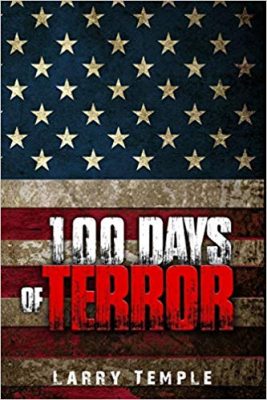
 The suspense in Larry Temple’s excellent, haunting, global thriller, 100 Days of Terror, begins as a seed planted in the minds of the main characters and the reader. A torched car is found in a field in New Jersey. Residents in a town in Idaho wake to find green water gushing from their faucets. A small college town in West Texas is vandalized. And, then, three trucks explode on a highway in Los Angeles, and the clues linking the explosion to the other incidents are undeniable. The FBI knows that these aren’t random acts of isolated violence but an escalating series of terrorist incidents designed to disrupt life in America. During the next few months, multiple bridges will be bombed, airports will close, many highways will be unnavigable, communities will suffer power outages, and groups of children will stop attending school. The Dow Jones Industrial Average will steadily drop and the entire nation will be wondering what and where the next attack will be. Who is wreaking this havoc on America? To determine that answer, however, another question must be asked: Why?






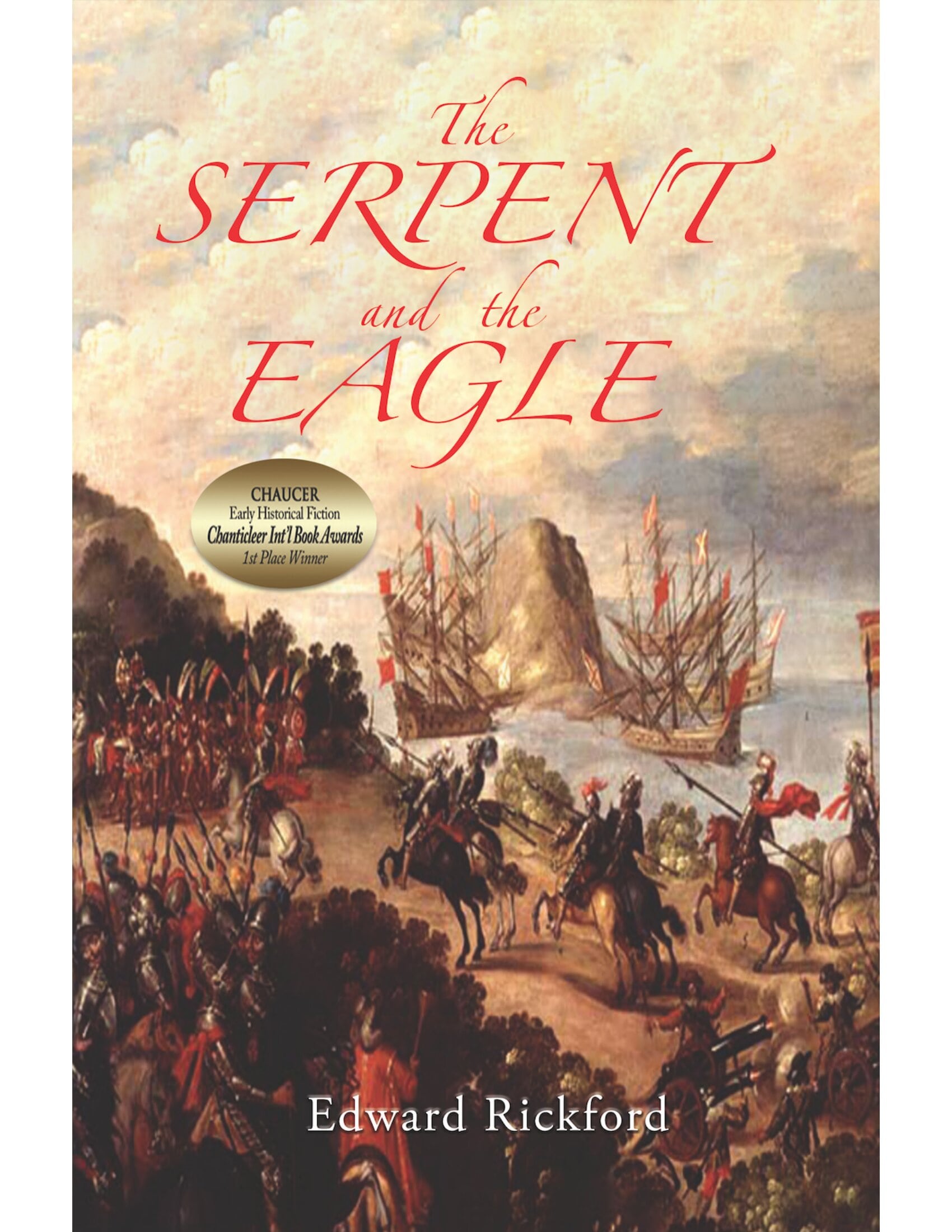
 In The Serpent and the Eagle, Edward Rickford details Hernan Cortes’ 1519 expedition to explore and secure the interior of Mexico for colonization, fleshing out known facts with the human factor—it is, to the typical depiction of Cortes’ exploration of the Yucatán peninsula, what a chorus is to a solo or a tulip to a bulb. Primarily narrated by individuals who were actual members, or may have been members, of this expedition, Rickford has crafted a fascinating tale of intrigue, love, lust, greed—essentially all seven of the deadly sins—within two diametrically opposed political and cultural systems.
 Betsy Graziani Fasbinder – Speaking Coach & Memoirist