Blog

  • Creative Tools for Gaining Media Attention by Allison Vborva, Publicist

    Creative Tools for Gaining Media Attention by Allison Vborva, Publicist

    Pitching Your Book Release to the Press: Creative Tools for Gaining Media Attention

    “Is it even worth my time to send out a press release for my book launch?”

    This question came up during a kaffeeklatsch at last year’s Chanticleer Authors Conference and judging by the lively discussion at the table, it was a dilemma on the minds of many participants that weekend. In today’s flooded media landscape, is it still possible for small press and indie authors to get press for their book releases? And if so, how?

    My answer that day? Yes, but…

    As an indie or small press author, you can still gain earned media attention (print and digital) for your book launch. But if you think you’re going to get there with a run-of-the-mill press release, think again.

    In preparation for this year’s conference, I want to expand on the answer I gave that day, along with a few new pieces of advice to help authors gain earned media attention with a little luck and a whole lot of creativity.

    There are four to seven thousand new titles released daily. Your book release is not the headline.

    Your Book Release Is Not the Headline

    When I sit down to work with an author on a press release or an earned media package, here is the first thing I tell them: your book release is not the headline. To get the attention of the press, we need to hand them news that goes beyond “Author Releases New Book.”

    Think about it: editors and bloggers get sent dozens of press releases every day. Unless you’ve just written the sequel to a New York Times bestseller, you need to give them a reason to care about you and your book above all the others. In other words, you need to present them with an angle that will help them place your book release as part of a larger story. What makes you stand out and why will their readers care?

    Brainstorming Your Media Angle

    It can be difficult to step back from your book and look at the bigger picture. But that’s what you have to do if you want to create a human interest story around your book release.

    Here are a few questions to get you brainstorming:

    • What compelled you to write this book?
    • How is it different from other books in your genre?
    • Was your process for writing or researching the book unusual? If so, how?
    • Is the subject of your story particularly relevant to current events?
    • Is the subject or setting of your book particularly relevant to a niche group of people?
    • Is there anything about your personal story that would interest readers? For example are there obstacles you’ve overcome, or an unusual current or former profession?

    Targeting Your Message to Your Audience or Come Up  “Crickets”

    Once you’ve brainstormed all of the things that make your book release unique, it’s time to dial down and refine your message.

     Remember though: when it comes to media pitches, one size doesn’t fit all. The surest way to guarantee zero response for your news is to send a blanket email to the media that contains a formulaic press release. I can promise, you’ll hear crickets in return. 


    Your media pitch should change depending on the outlet and the intended audience. For example, a regional print magazine featuring notable women might be interested in how your memoir ties to current events or why your novel is set in a particular location. A book blogger, on the other hand, will probably care more about the background story of how you became an author or the quirky methods you use when you research historical fiction.

     I usually recommend writing two or three different press releases — one for industry-specific press like book blogs; one for local and one for regional presses; and if it applies, one for a niche audience. The more targeted you get — both in your press release and in the personalized emails you send to the media — the better your chances of getting your news featured.

      Don’t come up “crickets”  in your press releases and book launch strategy.

    More Tips On Getting Media Attention – Session at Chanticleer Authors Conference

    If you plan to attend the 2019 Chanticleer Authors Conference, I will have even more tips and plenty of time for questions during my session, “Getting Media Attention as a Small Press or Indie Author.” You’ll walk away with concrete tools for writing press releases, pitching to the media, and preparing for press interviews.

    Allison Vrbova, Two Willows PR & Marketing


    Publicity and marketing consultant Allison Vrbova has helped countless small press authors, independent artists, and entrepreneurs beat the odds to gain media attention in regional and national publications. You can learn more about her consulting work at www.twowillowseditorial.com


  • Ronald E. Yates, Award-winning Author, Professor, & Foreign Correspondent  — Panel Moderator and Interviewer at CAC19

    Ronald E. Yates, Award-winning Author, Professor, & Foreign Correspondent — Panel Moderator and Interviewer at CAC19

    Ronald E. Yates is an award-winning author of historical fiction and action/adventure novels, including the popular and highly-acclaimed Finding Billy Battles trilogy. His extraordinarily accurate books have captivated fans from around the world who applaud his ability to blend fact and fiction.

    Ron is a former foreign correspondent for the Chicago Tribune and Professor Emeritus of Journalism at the University of Illinois where he was also the Dean of the College of Media.

    His award-winning book, The Improbable Journeys of Billy Battles,” is the second in his Finding Billy Battles trilogy of novels and was published in June 2016. The first book in the trilogy, “Finding Billy Battles,” was published in 2014. Book #3 in the trilogy (The Lost Years of Billy Battles) was published by Mill City Press in June 2018. All three books have placed in the Chanticleer International Book Awards.

    He is also the author of The Kikkoman Chronicles: A Global Company with A Japanese Soul, published by McGraw-Hill. Other books include Aboard the Tokyo Express: A Foreign Correspondent’s Journey through Japan, a collection of columns translated into Japanese, as well as three journalism textbooks: The Journalist’s Handbook, International Reporting and Foreign Correspondents, and Business and Financial Reporting in a Global Economy.

    Ron lived and worked in Japan, Southeast Asia, and both Central and South America where he covered several history-making events including the fall of South Vietnam and Cambodia; the Tiananmen Square massacre in Beijing; and wars and revolutions in Afghanistan, the Philippines, Nicaragua, El Salvador, and Guatemala, among other places.

    His work as a war correspondent resulted in several awards, including the Inter-American Press Association’s Tom Wallace Award for coverage of Central and South America; the Peter Lisagor Award from the Society of Professional Journalists; three Edward Scott Beck Awards for International Reporting, and three Pulitzer nominations. Ron is a proud graduate of the William Allen White School of Journalism at the University of Kansas and a veteran of the U.S. Army where he served in the Army Security Agency.

    Ron Yates will moderate panels and conduct interviews at the 2019 Chanticleer Authors Conference. 

  • TAPPING the EXPERTS – Researching for Your Works in Progress by Carol M. Cram

    TAPPING the EXPERTS – Researching for Your Works in Progress by Carol M. Cram

    Guidelines for Connecting with Sources and Experts While Researching Novels

    Editor’s Note: Whether or not you write Thrillers, Science Fiction, Mysteries, Contemporary Social Themes, YA,  Historical, or any genre, these guidelines for connecting with sources and tapping experts will come in handy.

    One of the questions I get asked frequently when people discover I like to write historical novels is “How do you do your research?” I don’t have a pat answer (I wish I did!). The reality is that I “do my research” as I’m writing a novel and that, for me, it’s my least favorite part of the process. There, I said it!

    I know many historical novelists who adore research, who like it even more than writing, but I’m not one of them. I like research. I enjoy prowling through dusty libraries and doing endless Internet searches and reading stacks of books, but most of the time I’d rather be writing my story.

    That said, I have picked up some techniques over the past few years that I’ll share in this blog to help you find your feet when you’re researching and writing a novel set in the past. Getting the facts right is very important. You discover that the first time a reader finds a mistake (and tells you about it).

    In my novel set in early 19th Century London, I had a character refer to the third season of the year as “Fall.” A British reader set me straight, in no uncertain terms. Thank goodness she was a Beta reader and I was able to catch the error before the novel was published!

    Books are great, the Internet can’t be beaten for looking up and verifying facts quickly, and libraries are awesome. But even better are the academics who write all those books and articles. In other words, the experts. Many experts are happy and eager to share what they know with you. And many go well beyond just answering questions.

    Following are some tips and advice for reaching out and working with subject matter experts.

    Do your homework before contacting a subject matter expert. You don’t want to waste an expert’s time asking questions that you could easily answer yourself with a bit of reading. Consult books and articles to become as conversant as you can with the subject and then prepare a list of specific questions to focus the discussion. Experts who see that you’ve made an effort to understand their field are usually very generous with their time and interested to hear about your Work in Progress.

    Keep the number of questions reasonable. A half-hour interview is about right, although if your expert wants to go on longer, sit back and enjoy! You never know what great information you’ll get—often on a subject you weren’t looking for but that will fit beautifully into some part of your story. Experts are often fascinated by the creative process and may suggest plot ideas based on their more in-depth understanding of the period. When an expert says something like “What if you have your character do such and such…”, listen up!

    Experts care a great deal about their fields of expertise and as a result, most welcome the opportunity to work with a novelist to bring their knowledge to a wider audience. An academic I consulted for The Muse of Fire told me how thrilled he was that someone apart from his students was interested in early 19th Century British theater.

    Make sure you end an interview with a request for additional book and research recommendations. Most experts are happy to provide you with more references than you’ll probably have time to read.

    Find experts by looking up faculty lists at universities, consulting bibliographies, conducting searches for specialist groups, and asking for recommendations. You can click the Ask a Librarian link on any Library website to get all sorts of academic questions answered. Before contacting experts—generally by email—familiarize yourself with their credentials and read at least some of their articles and books. When you take the time to read their writing, you’re more likely to ask intelligent questions.

    Photo Credit: Myrabella / Wikimedia Commons
    Soldiers in front of the wood of Hougoumont during the reenactment of the battle of Waterloo (1815)

    Another place to find experts, particularly in specific historical eras, is to seek out re-enactment groups and themed events such as Renaissance Fairs. Here you’ll find experts who have really steeped themselves in your period and are eager to share what they know.

    Approach experts with a polite email that includes a short description of your Work in Progress and a few sample chapters. In my experience, experts are most eager to help when I give them an opportunity to first read my work. Many want to be sure they are associating their names with writing that they personally like.

    For all three of my novels, I’ve been fortunate to have experts give me advice during the writing process and then to read drafts of my novel to catch stray errors. Several of them became almost as invested in the accuracy of my novel as I was and are now fans!

    In your introductory email to an expert, make sure you include your own web address in your signature line and a short summary of your own background and credentials. I know that several of the experts I’ve reached out to told me they checked out my website before replying to my request. They understandably wanted to verify my background and learn about my books before connecting with me.

    Thank experts in your acknowledgments. I always include historical notes at the end of my novels to cite books I consulted while writing. I also personally thank experts with whom I’ve connected personally. Everyone appreciates being thanked.

    Send complimentary copies of your novels to experts who have provided you with significant help. I think it’s money well spent to let the people who have helped me know how much I appreciate them.

    We are incredibly fortunate as novelists to be able to easily connect worldwide with experts in a dizzying array of subjects. I’ve visited with the curator of the Narrenturm—an anatomical museum housed in Europe’s first insane asylum in Vienna; taken tea in London with an expert on 19th Century women composers; become good friends with a professor of medieval art history, and connected with several wonderful specialists in early 19th Century British theater. Each of them did much more than just answer my questions. They actively contributed ideas about plot and character motivation appropriate to the era I was writing in and inspired me to explore all sorts of new ideas.

    You never know what might come from your interactions with experts once you get the nerve to approach them – respectfully and after having done your homework.

    And then all you need to do is weave what you’ve learned into a compelling novel that people will not want to put down. Easy, right?


    Carol M. Cram, CIBA Award-Winning Author (both Goethe and Chaucer Historical Book Awards) for these outstanding novels:

    Carol M. Cram will announce the new CHAUCER Book Awards winners on Saturday, April 27, 2019, at the Chanticleer International Book Awards ceremony. She is also presenting at the sixth annual Chanticleer Authors Conference. Her award-winning historical fiction books will be available in the CAC19 Books By the Bay Book Fair hosted by Village Books on April 27 & 28, 2019.


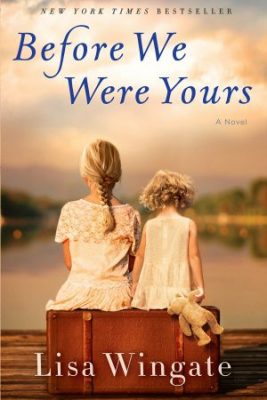
  • BEFORE WE WERE YOURS by Lisa Wingate – Historical Fiction, Child Trafficking, Family Saga

    BEFORE WE WERE YOURS by Lisa Wingate – Historical Fiction, Child Trafficking, Family Saga

    For three decades (1920-50), the Tennessee Children’s Home Society (Memphis) appeared to be an above-board adoption agency but was actually a center for child trafficking. Under Georgia Tann’s greedy leadership, dozens of impoverished children were literally snatched from their mothers’ arms at birth, provided forged identify papers and sold to the highest bidder. What could be the harm? These “river rats” would have lives they could never have dreamed of in their affluent new homes.

    In this historical fiction novel, Lisa Wingate has done the world a great service by laying bare the life-long abuse, trauma, and despair that the “orphans” and their helpless parents endured (through large doses of willful blindness, the remaining records were not unsealed until 1995 – far too late for most chances of reunion).

    Wingate readily spans the generational gap by employing two women, bouncing back and forth between what was and what is. Rill Foss (eventually to become May Weathers and finally May Crandall) relives the brutal abduction from the Arcadia (riverboat home) to the grim reality of the children’s home before ending up after a long life in a nursing home. Living a life of privilege due to family pedigree, Avery Stafford uses her considerable legal skills to ferret out the truth as to why her dementia-suffering grandmother seems to be holding back a family secret – one that could well scuttle her father’s chances for re-election to the Senate.

    With that narrative technique put into play, readers will be intrigued to see if they can put the pieces of this familial puzzle together before the principals do.

    Real-life Georgia Tann is fictionally recreated and given a most believable tone as the ruthless baby-snatcher-for-cash. Her staff members include a nasty mix of Mrs. Murphy, a vicious matron who delights in all manner of threats and punishment alongside her pathetic cousin, Riggs, who tries to lure the prettiest of the girls into his lair and bed. All three of these failed humans can turn on the charm at the drop of a potential “buyer.” Not surprisingly, even forced adoption seems better than staying in the squalid conditions of their “rescue” home.

    By the time the skeletons finally escape the closet, it is truly disturbing what those who ought to have known better and have never gone to bed hungry will do in the name of “improving” the lives of our most vulnerable souls. Surely those days are over…

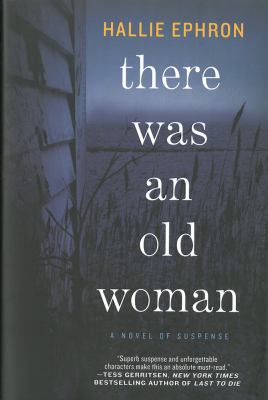
  • THERE WAS AN OLD WOMAN by Hallie Ephron – Literary Mystery, Family Saga, Aging Parents

    THERE WAS AN OLD WOMAN by Hallie Ephron – Literary Mystery, Family Saga, Aging Parents

    Evie Ferrante is busy assembling her first exhibit as Senior Curator of the Five Burroughs Historical Society. It’s a big deal and she’s up for the challenge. She’s overseeing the placement of a B-25 airplane engine which had been found at the bottom of an elevator shaft in the Empire State Building. It happened to land there after a crash in the ’40s. The theme of the exhibit is how fire and disaster shaped New York City.

    As Fate would have it, that’s when disaster pays Evie a call in the form of a text message from her sister Ginger, It’s Mom. Call me.

    And what a disaster it is.

    Evie must drop everything to fly out and help her sister sort through their dysfunctional alcoholic mother’s life. As Ginger deals with Mom at the hospital, Evie deals with her mother’s house, which is much worse than she feared. Outside, it’s tagged with graffiti and the stairs have almost rotted through. Inside, it’s like a homeless encampment, filled with garbage, dead food containers, empty liquor bottles, cockroaches, moths, spiders, and reeking of decay. Evie digs in. As she cleans, she searches her mother’s records trying to assess her financial and insurance situations and stumbles upon envelopes stuffed with cash, thousands of dollars just lying around.

    Where did the money come from, and why is it just sitting there?

    Ephron is a talented writer and does a splendid job of creating a sense of place with richly drawn characters embroiled in realistic predicaments. At its heart, the story is a mystery wrapped around an issue so many now face, caretaking for parents in physical and mental decline, and the burden and stress it puts on families. We feel it, we recognize it, we understand it. Ephron is writing fiction with a gravitas rooted in reality and that’s why her books are so good.

    The story unfolds naturally and isn’t force. One mystery seems to lead to another linking the lives of the two main characters and none of their problems are trivial or easily solved. And as in most good stories, things only seem to get worse the deeper you dig, until it seems there’s no way out.

    There was an Old Woman is a contemplation of where we are in a society, our relationships within our families, and the struggle we all face.


  • Cami Ostman – psychotherapist, editor, writing coach

    Cami Ostman – psychotherapist, editor, writing coach

    Cami Ostman holds a B.Ed. in English from Western Washington University and an M. S. in Marriage and Family Therapy from Seattle Pacific University. She is the author of Second Wind: One Woman’s Midlife Quest to Run Seven Marathons on Seven Continents, co-editor of Beyond Belief: The Secret Lives of Women in Extreme Religions, a contributor to Adventures Northwest and to her own blog, 7marathons7continents.com. Cami is also the founder of Red Wheelbarrow Writers, a community of writers in Western Washington and a blogger for psychologtoday.com. She has been profiled in Fitness Magazine and her books have been reviewed in O Magazine, The Atlantic, and Washington Post. Having spent fifteen years as a psychotherapist, and now serving as a writing coach and editor, Cami specializes in helping authors “figure out what they really have to say.” She is currently working on a novel and on her second quest memoir.

    Cami has long been interested in how the words we use to describe ourselves actually serve to CREATE our identities. Her experience in writing supports this, as does her work as a psychotherapist for the past fifteen years. When she wrote about turning herself into a runner on a quest to do a marathon on every continent, she became a runner on a quest to do a marathon on every continent.

    Cami will present the following sessions on Sunday, April 28th

    Making Money with Back End Programs: How to take the content of your non-fiction book and create programming people will pay you for.

    Master Mind Your Book: Using the Story Spine as a tool to move you forward when your writing gets stuck.
  • 10 Question Interview with Multi-Award-Winning Author, MICHELLE RENE – Book Discovery, AuthorLife, Book Marketing

    10 Question Interview with Multi-Award-Winning Author, MICHELLE RENE – Book Discovery, AuthorLife, Book Marketing

    * On the weekend of her new release, The Dodo Knight, we invite you to get to know one of our favorite authors, the incomparable, Michelle Rene!
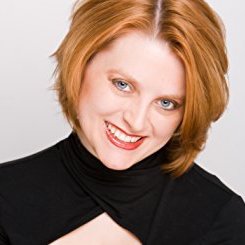
    Recently I had the opportunity to interview the creative advocate and the 2017 CIBA Overall Grand-Prize Winning Author, Michelle Rene, in our 10 Question Interview Series. It is no wonder her novels, short stories, and articles are consistently gaining recognition and winning awards. She is not only over-the-top talented, she is also generous with her time.

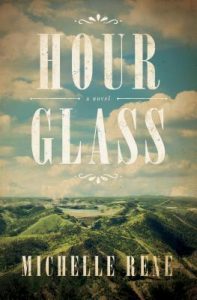
    Michelle Rene won the CIBA Overall Grand Prize in 2017 for her novel, Hour Glass, a unique and entertaining twist on the Calamity Jane legend, complete with engaging characters and extraordinary storytelling! A novel we highly recommend.

    Chanticleer: Tell us a little about yourself: How did you start writing?

    Michelle Rene: I’ve been writing since I was a kid. I actually spent a whole summer vacation hand-writing a two-hundred-page novel when I was thirteen. However, I was also very invested in art. I had my first artist job in video games at age sixteen, so when it was time to choose my career/college path, I chose to go to art school.

    While art was paying the bills, I continued to write, honing my craft and learning all I could about
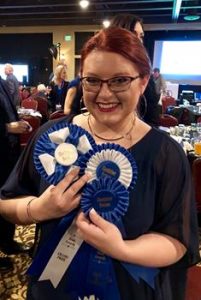
    this ever-changing literary world. It was in 2014 that my first novel was published. I Once Knew Vincent went on to receive several indie awards, including Chanticleer’s First in Category for the Chaucer Award.

    Since then, I’ve had numerous novels, novellas, short stories, and essays published. Several went on to win significant indie awards. I’m extremely proud to say my novel, Hour Glass, won Chanticleer Review’s Best Overall Book Award for 2017.

    Chanticleer: We are very proud of your Overall WIN, as well! Congratulations! Let’s talk about genre. What genre best describes your work? And, what led you to write in this genre?

    Michelle Rene: I have a love/hate relationship with genre. The necessities of it are obvious. In the world of marketing, we have to know how to market a story and who to market it to. As far as my reading habits, I just look for a good story. I don’t really care what kind of story. In writing, I like that same freedom.

    That being said, I would say I write historical fiction and speculative fiction. Every once in a while, they overlap. I call myself a creative advocate, and most of my life has been in the pursuit of creativity. Writing speculative fiction quenches that thirst.

    As for historical fiction, I’m a huge museum buff, and history fascinates me. I count it a duty to try to make time periods and historical figures come to life as something more than names and dates on a page.
    Chanticleer: That’s what we love about you – and that’s why Hour Glass won! Do you find yourself following the rules or do you like to make up your own rules?

    Michelle Rene:  I’m not a fan of writing rules. The idea is rather rigid for something as creative as writing. I think there are good practices and guidelines to be aware of, but I always cringe when I hear someone say, “you can’t…” when criticizing someone’s stylistic choice. For every hard-and-fast writing rule, there is someone who broke it beautifully.

    My advice for emerging authors who ask for my “rules” is rather unimpressive. Don’t give up. That’s my only rule for writing. Keep going. Write more. Figure out your voice through trial and error.

    Chanticleer: Really, that’s the best advice anyone could give. Don’t Give Up. We should make t-shirts… What do you do when you’re not writing? Tells us a little about your hobbies.

    Michelle Rene: I’m a trained artist, so I like to paint, sculpt, draw, etc. I’m a firm believer in the idea that all creative ventures work toward telling a story in some way. I adore museums, reading, audiobooks, and learning new things. I’m also a belly dancer and occasionally perform at festivals and Renaissance fairs.

    Chanticleer: I’ve seen your costumes! You’re serious about everything you do. That’s very impressive. Where do your story ideas come from?

    Michelle Rene: I have no idea. Get it?

    Seriously, I tell everyone that my muse is extremely abusive. I once read that an author pictured her muse as this quiet girl who whispered beautiful, creative things to her through the bars of a vent.

    Mine is a sledgehammer-wielding jerk who shows up when I’m trying to sleep and regularly bashes in my head until I write the story. Sometimes, I see something interesting at a museum or a get inspired by a painting, but the story I want to tell hits hard and is a nuisance until I write it.

    Chanticleer: Good for you to pay attention to that muse. I mean, how could you help but pay attention! Name five of your favorite authors and describe how they influence your work.

    Michelle Rene: I have an extremely eclectic taste in reading, so this will look like a random list. Harper Lee because To Kill a Mockingbird was one of the first books I read over and over again. She showed me how to inject poetry in your prose in a simple way. David Sedaris because I’ve never laughed so hard in my life, and he taught me about humor in the absurd. Mary Roach because I never knew I liked reading or writing nonfiction until I read Stiff. Neil Gaiman because he has the same skeptical beliefs I do about genres and writes that way. Finally, Charlaine Harris because she’s one of the only authors who can write about vampires, shifters, and fairies, and I’ll eagerly read every book in her series.

    Chanticleer: Great list of authors. I, too, love Mary Roach for Stiff, but I suppose that’s no surprise to those who know me… Give us your best marketing tips, what’s worked to sell more books, gain notoriety, and expand your literary footprint.

    Michelle Rene: There are two things I’d list here. One is a slow burn marketing technique, and the other is a quick one. The quick boost is to run a sale (either discounted or free) and blast it through every social media and subscription channel you can for the day the sale begins. I’m not a believer in keeping your book discounted for more than a few days though.

    The slow burn technique takes a lot more effort but has the longest tail of benefit. Go to conferences, enter contests, and teach classes where you can. If you do those things, you will connect with amazing people who can help you along the way in ways you can’t imagine yet.


    Some of Michelle Rene’s other books for you to explore!


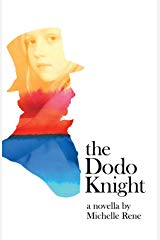
    Alice Liddell was the muse for Lewis Carroll’s Alice in Wonderland. But before the book was published, a rift opened between Carroll and the Liddell family. Also dubbed the “Liddell Riddle,” historians still speculate as to what happened to separate the famous author and his muse. Michelle Rene has imagined a beautiful and heart-breaking story of a special friendship and its unfortunate end. Told from the viewpoint of Alice herself, The Dodo Knight will transport you to Victorian England… and into the heart of a very special little girl. Pick up your copy of The Dodo Knight today!


    Chanticleer: Good tips. Thank you for those. What are you working on now? What can we look forward to seeing next from you?

    Michelle Rene: I’m working on two projects. One is a sci-fi mystery series about a psychoanalyst who can go into peoples’ minds. Currently, I have the first book done and am working on number two in the series.

    The other project is a historical fiction novel based Dr. Mary Edwards Walker. She was a Civil War surgeon when women weren’t allowed to do that, and she was the only woman to be awarded the Medal of Honor.

    Chanticleer: Oh, both sound delicious! I cannot wait to read them. Speaking of readers, what is the most important thing a reader can do for an author?

    Michelle Rene: Rate our books, review our books, tell your friends, and share our posts. In today’s literary world, there is a sea of books coming out every day. Word of mouth is our best long-term sales generator. If you tell people you liked my book, they are more likely to believe you than any advertisement I put out there.

    Chanticleer: This is so true. Thank you for saying that. What excites you most about writing?

    Michelle Rene: It is a powerful and equalizing force in the world. As long as you can string sentences together, you have a voice. Your story can be told. It doesn’t matter how old or young you are. Your wallet and waistline have no bearing. You don’t even have to be formally educated. Everyone’s story is possible, and stories change the world.

    Chanticleer: Thank you, Michelle, for participating in our 10-Question Author series. You are delightful! 


    Don’t you want to follow and like everything Michelle does? I do! Please check out her links – and share this interview with your friends!

    https://twitter.com/MRene_Author

    https://www.michellereneauthor.com/

    https://www.facebook.com/mrene.author/

    https://www.instagram.com/mrene_author/

    mewing_arts@yahoo.com

    Michelle’s Bio:

    Michelle Rene is a creative advocate and the author of a number of published works of science fiction, historical fiction, humor and everything in between. She is the author of novels, short stories, essays, and video games.

    She has won indie awards for her historical fiction work. Her novel, Hour Glass released to rave reviews from Kirkus and Publisher’s Weekly. It won Chanticleer Review’s “Best Book of the Year” award in 2018. Her experimental novella, Tattoo, released with a starred review in Publisher’s Weekly and was listed in Foreword Reviews top eight sci-fi/fantasy books this spring.

    When not writing, she is a professional artist and all-around odd person. She lives as the only female, writing in her little closet, with her husband, son, and ungrateful cat in Dallas, Texas.

     

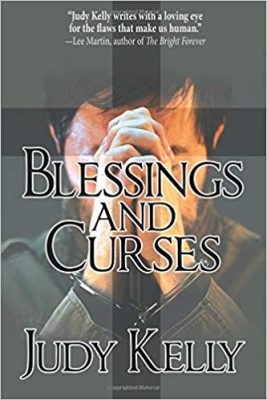
  • BLESSINGS and CURSES by Judy Kelly – Christian Mystery, Mystery/Suspense, Contemporary Romance

    BLESSINGS and CURSES by Judy Kelly – Christian Mystery, Mystery/Suspense, Contemporary Romance

    Olivia Douglass has completed her college coursework in religious education and is set to graduate. Her adoptive parents and sister and will be on hand for the occasion along with her steady beau, Claude. But she harbors a painful secret: contrary to their expectations, she has decided not to go on to become a priest, even though she has been preparing to do so for several years.

    Since childhood, it seems, Olivia has felt a curse upon her, some wickedness that follows her, making her unworthy of a religious profession. That feeling has returned at this crucial juncture to cast a shadow over her plans. Understanding, but unsure she should give up her plans, Olivia’s parish priest sends her on an errand of mercy – to pray with Leon, a man on death row with only two weeks to live.

    Assisted by fellow church member Wesley Johns, meeting the prisoner proves far more difficult than Olivia had imagined. She persists, though, and tries to access the spiritual nature of this hate-filled man who kidnapped and slaughtered numerous women and children. As Olivia gets to know Leon better, she simultaneously forms a friendship with Wesley, and they discover that they have a link, Wesley shares in the curse that envelops her—and like her, longs for a way out.

    At the same time, her parents’ reaction to Olivia meeting and praying with Leon is odd and rather disturbing. On top of that, her sister begins to reveal signs of her own cursed and tormented life. Finally, Olivia will confront her ghosts, and theirs, in a brave and daring move.

    Author Judy Kelly writes with skill and intelligence, building her plot step by step so that even when the reader begins to think that the outcome is inevitable, a twist crops up to turn the tale in yet a new direction. Visits to the prison have a knowledgeable feel, and the character of Leon is vividly depicted as he at first crudely and violently rejects Olivia’s help, then gradually comes to accept and welcome her, and finally accedes to her spiritual support on the next to last day of his life.

    Kelly draws her characters with depth, from the twisted psychology of a serial killer to Olivia’s growing tenderness toward Wesley, and with it, the revelations prodding her about Claude’s dark side.

    Blessings and Curses combines themes of romantic love, family ties, religious aspirations and coming of age with a slowly unfolding, at times terrifying glimpse of genuine evil.


  • SUPPOSE: A Lillian Dove Mystery by D. J. Adamson – Mystery, Amateur Sleuth, Female Lead

    SUPPOSE: A Lillian Dove Mystery by D. J. Adamson – Mystery, Amateur Sleuth, Female Lead

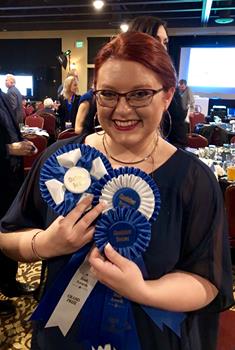
    M&M Blue and Gold 1st Place Badge ImageIn this enticing second installment of D. J. Adamson’s Lillian Dove Mystery series, big city problems wind up in a small town in the Midwest threatening not only the safety and integrity of the community, but bringing imminent danger to the life of one woman who is just trying to move beyond her rocky past and navigate toward a more positive future.

    Trying to get your life back on track may be a little tricky when you’re a recovering alcoholic five years sober, and you’ve just inherited a house and the local AAA Discount Liquor Store. Here in Frytown, Iowa, Lillian Dove is clearly aware that “life has its ironies,” but she’s determined to make the best of recent circumstances. With her cat Bacardi, she’s been residing at her mother Dahlia’s condo in Lake’s Edge Senior Residential Complex, while the feisty woman is in a nearby convalescent home hell-bent on getting out.

    Lillian’s also been involved with the local Frytown Police Chief, a man she felt offered love and security, though unfortunately he also happens to be married. While sobriety and the unexpected new business acquisition have boosted her spirits, Lillian is haunted by the suicide of her best friend Cressie, a former addict who forced Lillian to face her own issues.

    Suddenly, Cressie’s onetime ne’er do well boyfriend is threatening to blackmail Lillian, claiming to have video proof that she was responsible for Cressie’s death. Lillian knows his demands are bogus, but when his dead body is discovered at the condo, she’s determined to uncover the truth and clear her own name.

    Within this well-crafted storyline, the murder investigation is linked to a border-crossing drug operation that stems from a multi-million-dollar Chicago firm, and a CEO involved in illegal money laundering. As Federal Agents and the local Police Department unite to catch the criminals, Lillian finds herself in harm’s way when she’s unwittingly dragged into the high-risk probe. From murder and a suspicious flash drive to vandalism, kidnapping, and surprise revelations, Lillian embarks on a winding, roller-coaster ride.

    For those unfamiliar with Adamson’s evolving mystery series, a passing mention of Lillian’s having been a prior witness to an arson case that resulted in near dire consequences for both Lillian and her mother, helps bring readers up to speed and also confirms Lillian’s seemingly magnetic draw to trouble.

    While chapter/segment titles indicate this story plays out over a short span of a few days, Adamson broadens the platform with a full range of characters and action. From the local mayor being accused of bigamy and a dispatch operator who equates to “Town Gossipedia”, to the ghost of Lillian’s benefactor assuring her that “everything will be fine” and the pirate-costumed nurse just trying to keep the ornery senior patients in line, all add engaging humor and lightness to the narrative in contrast with the greater tension and drama.

    Like all good mysteries, Adamson creates a tale riddled with questions. Intertwined with bantering dialogue and heated conversations, Lillian’s self-imposed ponderings about recent events help draw us into the heart and mind of the central character. As a soul-searching individual coming to grips with the past, Lillian’s dream states offer a glimpse of her lost childhood and her fractured life. Adamson clearly has an eye for detail. Whether exposed in the sharp visuals of a crime scene, or revealed in the aromatic constants of a nursing home environment perfumed by the fragrance of “urine, unwashed bodies, and the Wednesday night meatloaf special,” the writing paints a colorful, and vivid picture.

    Through the character of Lillian Dove, readers are introduced to a flawed, but tenacious female heroine who is genuinely likable. Suppose is a mystery filled with small-town heart, yet big city edge, unexpected excitement, and a touch of humor. Together they prove a smart, and winning combination.

    Suppose won First Place in the  2017 CIBA M&M Awards!


  • The 2020 CANDIDATE by Lloyd Bruce Miller – Political, Presidential Bid, Non-Fiction

    The 2020 CANDIDATE by Lloyd Bruce Miller – Political, Presidential Bid, Non-Fiction

    There are so many hopefuls gearing up for the United States 2020 election, what’s one more?

    Meet Lloyd Bruce Miller, 75-year-old who wants your vote. Or not. You see, Mr. Miller is a complicated man. Crazy, some may say – and why not, for he calls himself ‘crazy’ several times throughout his bid for the presidency.

    In all actuality, it is uncertain whether or not Mr. Miller is indeed throwing his hat into the ring for 2020. He realizes he’s a “nobody” but goes on to comment that if “Trump could win, I don’t see why I, or anyone for that matter, couldn’t be a valid candidate.” By the way, Mr. Bruce did make a run for mayor of New York City back in 2009, he even registered, but Michael Bloomberg stole the election from underneath him. It’s as simple as that.

    Reading through his 10,962-word bid for the 2020 Presidency (this is, the point of fact, what Mr. Miller’s book is all about), we begin to wonder who this man is. Where did he come from? He helps us out on page 24 by stating that “…(he) doesn’t really want to be president. (He’s) a fictional character in a story or novel.” We should all think of him in this way.

    And yet, he has these thoughts…  “I am a lunatic of some sort, a screwball in a novel. My name is Harold. That’s enough for you to know, at least for now.” He goes on to say, “The man who wrote something called ‘Utopia’, Thomas Moore I believe, must have been also a little crazy, like me.” Further along, he gives himself the title, “Harold the madman.”

    From my perspective, there is nothing unusual for a politician to be a ‘madman.’ Most politicians have to be a little off in order to open themselves up to ridicule and public display. That being said, should you wish to cast your vote for Harold the Madman in 2020, you should know what he stands for, what his policies are, and how he approaches things.

    Here’s a head’s up, Harold the Madman is not ‘politically correct’ in any fashion. Reading through his bid, here is what I’ve discovered:


    1. Criminal Justice System. Criminals should be treated with respect and reasoned with. Therefore, no prison terms in years; prison terms should be measured by if the individual has had a real change.
    2. Bullies have a right to bully. It’s a matter of protecting their Freedom of Speech. Victims of the so-called bullying should “toughen up.” (I warned you…) But, even so this is the age of “Jordan Petersen” and his penchant for political incorrectness that attracts both support and criticism.
    3. #Metoo. It is, according to Harold the Madman, wrong for a woman to ruin a man’s career simply because he touched her. It’s up to women to tell men what behavior is right or wrong. He arrives at this because “100 French actresses came forward opposed to the Me, too, movement*.” Also, according to HtM, “women and men play sexually with each other.” He is also from the “Mad Men” era, much like that uncle we all have and care for but disagree with at Thanksgiving dinner. Perhaps Harold the Madman isn’t a misnomer after all, but perchance a lingering after effect?
    4. Freedom of speech is the foundation of a free society; therefore, people have the right to talk about wanting to kill themselves, wanting to kill other people, etc. Because the only way to help these people is to talk to them and reason with them. HtM is opposed to the Suicide Hotline, and they are monitored by the government, and the government is more interested in collecting information about you to aid in your arrest**.
    5. Foreign policy. Because HtM doesn’t have a lot of experience with foreign policy, he is going to leave it in the hands of the military. He believes in compromise and Manifest Destiny. This allows for the policy he proposes next: Because we cannot fit “the entire population of the whole world into the area of the current United States… you are welcome to join us, but now, your land is our land, part of the United States under the jurisdiction of our federal government.” At first, HtM will focus on friendly democracies like “… Mexico, Canada, Israel, South Korea, Taiwan, Japan, France, Germany…” and extend the invitation to become part of the United States. Undoubtedly, HtM will find support for his foreign policy platform as I did see a red truck the other day with “I LOVE WALLS” painted across both sides of it.
    6. “Compromise is actually the force which enabled the human race to survive over the centuries. Without compromise, no nation could even be formed or last a day. Compromise, more than anything else, is the basis of human society.” This is when HtM starts to make some sense and I found myself nodding my head in agreement—just when I was shaking my head in confoundedness on some of his other platforms.


    While it is true that there certainly is much in his proposition to scratch your head about and ponder over, the true beauty of The 2020 Candidate is the freedom by which its author can express his opinions. That, after all, is the American Way.

    And then in his closing remarks, he recommends that we all need to talk to each other and get to know each other on an individual basis. Because there are so many variations of us communication is key—if not the most important agenda of his bid.

    In closing, if you choose to read Harold the Madman’s bid for the presidency, please read it through to the end. It’s not so “mad” after all…

    All things considered, Lloyd Bruce Miller, a.k.a. Harold the Madman, is a unique character and perhaps someone with whom one might like to sit down for a conversation and a pint at Samwise Gamgee’s Old Gaffer’s table at the Green Dragon.

    **This is not our view at Chanticleer Reviews. Suicide Hotline is a vital service in our society, one we could scarcely do without. So if you are thinking of doing something dangerous to yourself or someone else, we strongly encourage you to reach out to this service at: https://suicidepreventionlifeline.org/ or call them at 800-273-8255