
When a character is introduced in a story he or she needs to make a strong impression. (Walk-on and minor characters are sometimes the exceptions.) This means when you create characters after you make decisions about physical appearance and their essential role in the story, then start refining his or her essence and key personality traits. Some of the decisions about your character will happen without you making decisions because characters have a way of emerging and evolving in our deeper consciousness.
- Fiction equals characters.
- Characters make us care, worry, empathize.
- Characters need to be knowable.
No matter your process, it’s crucial to nail a character’s humanity and complexity on the page. And to nail his or her essence from the first breath he/she takes in your story.

Within the personality spectrum, there are endless possibilities. There are also layers to one’s personality, and it seems to me that the inner layers are a character’s essence.
Let’s list some possibilities: quiet, serious, boisterous, buoyant, innocent, worldly, full of laughter, cautious, always ready for adventure. Let’s consider other options: practical, frivolous, introverted, extroverted, questioning, plays by the rules, respects the status quo, rebellious, rigid, creative, uptight, light-hearted.

Virgil Wander
I recently read Leif Enger latest beautiful novel, Virgil Wander. It’s now number one on my Top 10 Favorite Novels of All-time list. One thing I like best about Enger’s stories is that he creates fascinating and sometimes oddball characters you’ve never met before and will never forget. He toes the line between creating ordinary-extraordinary story people you want to spend a lifetime with.

And while complicated, they’re knowable They typically face uncommon, vexing problems and dilemmas and seem as human as my next-door neighbor. Virgil Wander, the protagonist of this wending tale, is no exception. I don’t want to give away too much, but he starts the story with a head injury and owns a failing theater in a small town.
The failing town is perched on the ever-changing and blustery Lake Superior and skies, wind, and storms play a big role in the story. If you’ve never visited Lake Superior, the largest body of fresh water on the planet, it’s a primal, massive inland sea.

Toss in a pipe-smoking, kite-flying Norwegian, a mysterious prodigal son millionaire, a missing baseball player, several boys who need a father, and a local handyman on a downward arc. The setting is tightly woven into all aspects of the tale, but it’s the characters who will live in me forever.
Here’s an example of how Enger introduces a character, the aforementioned missing ballplayer, while capturing his essence and adding to the mystery of his disappearance: Most people knew about Alec Sandstrom, or thought they knew, could be traced to a silken Sports Illustrated article published on the anniversary of his death.
The magazine’s expenditure of four thousand words on a failed minor-league pitcher testifies to Alec’s magnetism. In two seasons of small-time baseball, Alec was often compared to eccentric Detroit phenom Mark Fyrich, who is remembered for speaking aloud to the ball itself as though recommending a flight path. Alec didn’t talk to baseballs–his quirk adored by fans of the Duluth-Superior Dukes, was to break out laughing during games. Anything could set him off: an elegant nab by the second baseman, a plastic bag wobbling like a jellyfish across the diamond, a clever heckle directed at himself. His merriment was unhitched from his success. Sometimes he laughed softly while leaning in for signs. His fastball was a blur, its location rarely predictable even to himself. Sprinting on-field to start the game, limbs flailing inelegantly, Alec always seemed sure his time had arrived.
“Reality wasn’t strictly his deal,” Beeman recalled. “My God he was fun to watch.”
Engaging as Alec could be, he’d never have received the elegiac Sports Illustrated treatment had he not strapped himself into a small plane at dawn, lifted off in a light westerly, and banked over Lake Superior never to return.
Untethered from his success. Sigh. Pardon me while I indulge in writer’s envy. As you can tell, Alec is an original. And notice how his essence is joyful? Stay tuned, I’m going to reveal a few more of his characters’ essence in an upcoming post.
Keep writing, keep dreaming, have heart. Jessica

Jessica Morrell is a top-tier developmental editor and a contributor to Chanticleer Reviews Media and to the Writer’s Digest magazine. She teaches Master Writing Craft Classes at the Chanticleer Authors Conference that is held annually along with teaching at Chanticleer writing workshops that are held throughout the year.
Did you know that Chanticleer offers editorial services? We do and have been doing so since 2011.

And our professional editors are top-notch and are experts in the Chicago Manual of Style. They have and are working for the top publishing houses (TOR, McMillian, Thomas Mercer, Penguin Random House, etc.) and elite indie presses.
We work with a small number of exclusive clients who want to collaborate with top-editors on an on-going basis.
Contact us today! If you would like more information, we invite you to email Kiffer or Sharon at KBrown@ChantiReviews.com or SAnderson@ChantiReviews.com
A Chanticleer Reviews – Writer’s Toolbox blog post on Character Development by Jessica Page Morrell 
Writer’s Toolbox





































 A manuscript titled The PORTALS of PERIL by Jules Luther took home the Gertrude Warner Book Awards for Middle-Grade Readers

 The GOETHE Book Awards GRAND PRIZE WINNER for Post-1750s Historical Fiction
 The LARAMIE Book Awards GRAND PRIZE WINNER for Western Fiction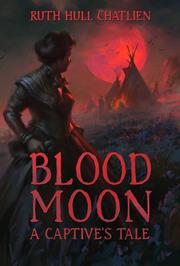
 The CHATELAINE Book Awards GRAND PRIZE WINNER for Romantic Fiction
 The LITTLE PEEPS Book Awards GRAND PRIZE WINNER for Early Readers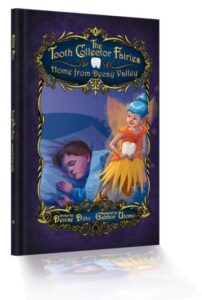
 The
The 
 The OZMA Book Awards GRAND PRIZE WINNER for Fantasy Fiction Novels
 T
T The Madwoman of Preacher’s Cove, a manuscript by
  The Global Thriller Book Awards GRAND PRIZE WINNER for Lab Lit & High Stakes Thrillers
 The SOMERSET Book Awards for Contemporary, Literary, Satire Novels
 T
T







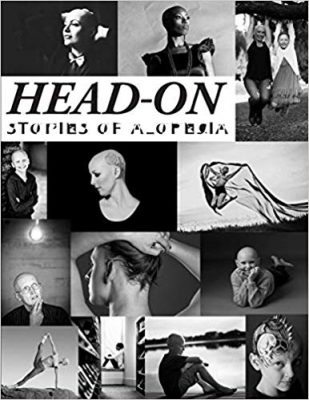
 More than 10 years ago, when Deeann Callis Graham went through a second bout of alopecia areata (AA), the first was when she was seven years old, she wondered where she could find pictures and read stories of people who were also losing their hair. She wanted to embrace positive messages amid a society that equates baldness with cancer and sickness. Yearning to relate to people who looked like her, she started writing her own story and soon she had connected with others with alopecia wanting to tell their stories.