The Cygnus Book Awards recognize emerging new talent and outstanding works in the genre of Science Fiction, Steampunk, Alternative History, and Speculative Fiction. The Cygnus Awards is a genre division of Chanticleer International Book Awards and Novel Competitions (CIBA).
Chanticleer International Book Awards is looking for the best books featuring space, time travel, life on other planets, parallel universes, alternate reality, and all the science, technology, major social or environmental changes of the future that author imaginations can dream up. Hard Science Fiction, Soft Science Fiction, Apocalyptic Fiction, Cyberpunk, Time Travel, Genetic Modification, Aliens, Super Humans, Interplanetary Travel, and Settlers on the Galactic Frontier, Dystopian, our judges from across North America and the U.K. will put them to the test and choose the best among them.
CYGNUS Book Awards Alumni – The Stakes Are Out of This World!
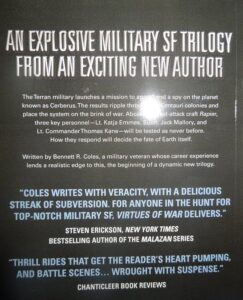
Bennett R. Coles, a CYGNUS Grand Prize award winner for VIRTUES OF WAR, his debut novel, landed a sweet 3 book deal from Titan UK and he has just landed another from Harper Collins Voyager for his science fiction works.
Bennett Coles CYGNUS Grand Prize for VIRTUES of WAR (2013)
We love having the CYGNUS awards and Chanticleer quotes on the covers! #justsaying
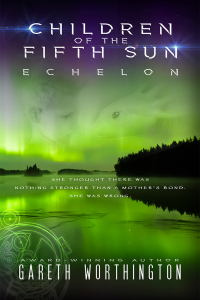
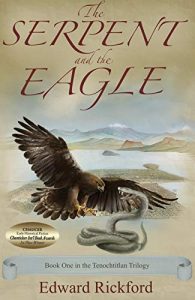
CYGNUS 1st Place Winners CHILDREN of the FIFTH SUN and IT TAKES DEATH to REACH a STAR by Gareth Worthington and Stu Jones were picked up by VESUVIAN Media Group.
Please email us about your work’s progress! We love to brag about CYGNUS Award-Winning Science Fiction
These titles have moved forward in the judging rounds from SLUSH pile to the 2019 Cygnus Book Awards LONG LIST. These entries are now in competition for 2019 Cygnus Shortlist. The Short Listers will compete for the Quarter-Finalist positions. The Quarter Finalist works will compete for the Semi-Finalists positions. Semi-Finalists will be announced and recognized at the CAC20 banquet and ceremony. The First Place Category Winners, along with the CIBA Division Grand Prize winners, will be selected from the 16 CIBA divisions Semi-Finalists. We will announce the 1st Place Category winners and Grand Prize Division Winners at the CIBAs Banquet and Ceremony on Saturday, April 18th, 2020 at the luxurious Hotel Bellwether in Bellingham, Wash.
These titles are in the running for the SHORT LIST of the 2019 Cygnus Book Awards novel competition for Science Fiction!
Good luck to all as your works move on the next rounds of judging.
Lawrence Brown – David: Savakerrva, Vol. 1
Mart Sander – The Goddess Of the Devil
Jim Cronin – Aeon Rises
William X. Adams – Intelligent Things
Erick Mars & Mike Wood – A Legacy of Wrath
Richard Mann – Purpose
Brett A. Lawrence – Shadow Seers
Callie Smith and Maura Smith – Fort Snow
Andrew Lucas McIlroy – Earthling
Charis Himeda – CRISPR Evolution
Paul Ian Cross – The Lights of Time
Jenn Lees – Stolen Time: Community Chronicles Book 2
Robert M. Kerns – It Ain’t Over…
J. I. Rogers – The Korpes Agenda
D. D. Wolf – Orchids Ablaze
Bryan K. Prosek – Paradoxal
William T. Kenny – The Conscious Whole
Alison Lyke – Forever People
Paul Werner – Mustang Bettie
V.L. Arias – The Expiration Date
Adam Boostrom – Athena’s Choice
Monica Harte – San Francisco
Jay Ashkinos – Hypergiant – Compendium One
Rey Clark – Titan Code: Dawn of Genesis
Trever Bierschbach – Embers of Liberty
Tim Cole – Insynnium
Sandra J. Jackson – Playing in the Rain
Samuel Winburn – Ten Directions
Grace Goodwin – Rogue Cyborg
J. Steven Young – Trumpery Resistance
Robert Sells – Revelations
Ken Hart – It was a Small Affair
Jacques St-Malo – Cognition
Timothy S. Johnston – The War Beneath
Thomas McDaniel – Rekindled
John Bowie – The Houses of the Curious
Shami Stovall – Star Marque Rising
D G Lamb – The Deepest Cut (Driven to the Hilt Book 1)
Terry Persun – BIOMASS Rewind
N. Matthias Moore – CLOUD 9
Darrell Lee – The Apotheosis
William X. Adams – Reluctant Android
David C. Crowther – City of Drowned Angels
Stephen Martino – The Final Reality
K.N. Salustro – Light Runner
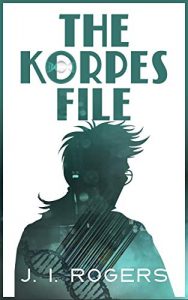
Congratulations to J. I. ROGERS for the KORPES FILE taking home the 2018 CYGNUS Book Awards Grand Prize Ribbon
All Semi-Finalists will receive high visibility along with special ribbons to wear during the Chanticleer Authors Conference and Awards Gala.
As always, please do not hesitate to contact us with any questions, concerns, or suggestions at Info@ChantiReviews.com.
The CYGNUS Grand Prize Winner and the Five First Place Category Position award winners along with the Semi-Finalists will be announced at theApril 18th, 2020 Chanticleer International Book Awards Annual Awards Gala,which takes place at the Chanticleer Authors Conference that will be held in Bellingham, Wash.
We are now accepting submissions into the 2020 CYGNUS Awards writing competition. The deadline for submissions is April 30th, 2020. The winners will be announced in April 2021.
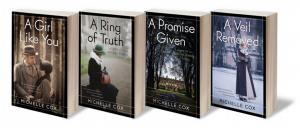
Mystery & Mayhem Book Awards Grand Prize winner Michelle Cox graciously shares her writing life and knowledge with us along with some hot marketing tips and tools! Read on!
“When I finally decided to try writing, the creativity within me, that divine essence, finally found its true home. I’m happiest when I’m creating, and I hope I can keep writing for a long time.” – Michelle Cox
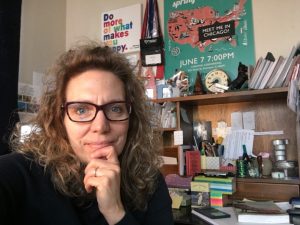
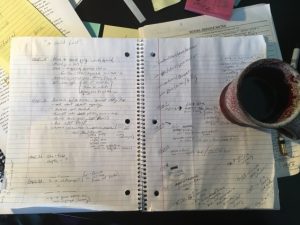
Michelle Cox, award-winning author, at work in her writing lair
Chanticleer: Thanks for coming by, Michelle. Tell us what genre best describes your work? And, what led you to write in this genre?
Cox: Well, that’s a great question! I usually at least place as a semi-finalist in three different categories at the Chanticleer awards, for example, so that should be a pretty good indication.
My series is set during the 1930s in Chicago, so that qualifies it to be historical fiction, but it’s also mystery and romance. I guess “romantic-suspense” would be the best way to describe the series, but without the bare-chested guys on the cover.
They always say to write what you would want to read, and this is it! I set the series set in my favorite era; added a little bit of mystery, a little bit of romance; flavored it with the haves- and the have-nots of the era, as well as a touch of the English aristocracy; and then stocked it with lots of characters and subplots weaving in and out . . . sheer heaven!
Chanticleer: And that’s why we love you and your books! What do you do when you’re not writing? Tells us a little about your hobbies.
Cox: I no longer have any! I used to have hobbies before writing took over my life. If I do have a few minutes here and there, I still love to garden and bake, but my real love, however, is board games. I’m a fanatic and have become a sort of a collector now.
Playing games with Michelle Cox! Did the butler do it?
Chanti: That sounds like a lot of fun! So, how do you approach your writing day?
Cox: As soon as my kids get on the bus at 6:50 am, I make my second cup of coffee and sit down at my desk. I’m not allowed to do any social media, though I do always do a quick email check to see, you know, if I won the Pulitzer or something (it’s always no), and then I start working on whatever manuscript I’m currently on. My brain is its crispest early in the morning, so I have to use that time for the work that takes the most concentration. There’s something to be said about productivity when you know you only have a limited time to write. There’s no room for writer’s block or procrastination. When you know you only have so much time, you have a way of just sitting down and doing it.
When I reach whatever my writing goal is for that day, I spend the next five to seven hours (until the kids come home) doing marketing and PR—anything from writing the blog or the newsletter or articles or interviews, taping podcasts, setting up events, answering email, attending to social media, etc. It’s really a full-time job, though, sadly, the actual writing, the part I love, is the part I get to spend the least on.
Chanti: Marketing pays off, right? Name five of your favorite authors and describe how they influence your work.
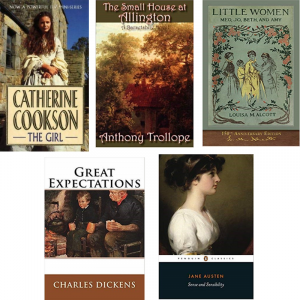
Cox: My series is known for the plethora of rich characters scattered throughout and the big saga-like plots. I was definitely influenced in this by my early favorites: Louisa May Alcott, Catherine Cookson, and Charles Dickens. My other two favorites would be Anthony Trollope and Jane Austin for their subtlety in character and their overall ability to use language so beautifully.
Chanti: I cannot argue with your choices. These are delicious authors – and novels!
I know you gave us a snapshot of your work-day earlier, but could you give us your best marketing tips, what’s worked to sell more books, gain notoriety, and expand your literary footprint.
Cox: Wow! That’s a great question, but so hard to answer. All marketing is pretty elusive, isn’t it? It’s a constant process of throwing things at the wall and seeing what sticks. It’s also important to remember that what works for one person, might not work for everyone. It’s not an exact science. If it were, we’d all be rich!
But, in general, here are some good marketing tips that I have found to work:
Try to figure out where your readers are. Most of my readers, for example, are on Facebook, so that’s where I spend most of my social media time.
Think of yourself as a brand and try to match your posts accordingly. I post things about myself or the book or writing, but mostly old recipes, period drama news, or old stories from the past (which constitute my blog). Also, I’m very careful never to post anything religious or political. This is a business, and the more you see yourself that way and follow basic business protocols, the more successful you’ll be.
Try to build your newsletter list by offering a freebie (such as free story, writing tips, a webinar, a prequel). Personally, I do it by running contests with really big prize packages. I make sure to state that the contest winner will be picked only from my newsletter subscribers. I pay a designer to create a beautiful graphic of the prizes, post it on FB, and then boost the post. Not only does this get me a lot of new subscribers (sometimes up to 1,000!), but it exposes the series to new readers as well!
Build your network. Join online author groups (I am part of a fabulous private FB group organized by my publisher, She Writes Press. We all share ideas, marketing tips, and offer support and advice, especially to the newer authors just coming on board. It’s a collective wealth of information.) or real-world groups in your area. Don’t be jealous of the success of others, but help each other as much as possible. As my publisher, Brooke Warner has said, “There’s room for everyone at the table.”
Show up at other authors events, write reviews, help promote whenever possible. Go to conferences to meet not just readers, but other authors who can potentially help you. Remember that you are a business, and you need to do work within your community to begin standing out.
For example, my publisher and I overprinted Book 2 of my series, so, as per my contract, when the first year of publication had passed, I was faced with having to pay a storage fee for these extra books (a couple of thousand), have them shipped to my garage, or have them destroyed. I decided, instead, to send them to libraries and conference organizers. It was a lot of work and expense, but it got my book into the hands of hundreds, if not thousands, of potential readers, and hopefully, they’ll come back for more and buy the rest of the series. You have to be willing to take risks.
Also in this category would be to try to get a Bookbub deal, which, as we all know is really tough. Again, for Book 2 of the series, we submitted four times, trying to get a deal with the book being priced at .99 cents. I finally decided to offer it for free, and we cleverly put a buy link to book 3 at the end of Book 2. Bookbub then offered me a deal, and I had over 55,000 downloads in one day! Hopefully, a lot of those people will go on to buy Book 3 at full price.
Lastly, if the first book of your series is free, either permanently or occasionally, you can join Book Funnel, in which you “bundle” your book with others of a similar genre with each author promoting the bundle to their social network, which exposes your series to a whole new crop of readers. Readers are able to download your free book in exchange for their email address. So not only are you getting readers hooked on your series (hopefully!), but you’re building your subscriber/newsletter list.
Chanti: You could teach a Master Class on this at CAC20! Let’s chat about this later.
Chanti: What are you working on now? What can we look forward to seeing next from you?
Cox: Book 5 of the series is currently in production and scheduled to be released in Spring 2020. I said I was going to take a break from the series after that, but I admit, I’ve already started sketching out Book 6 – I can’t help it!
But what’s really exciting is a new stand-alone novel, The Love You Take, that I wrote, also based partially on a true story and set in Chicago in the 1930s. It’s a really fabulous book if I do say so, about a “backward” girl who has to go and live at a home for “bad girls” after she unwittingly becomes pregnant. I’m currently querying agents for it.
Chanti: Sounds intriguing. Please keep us updated. Who’s the perfect reader for your book?
Cox: Though some men enjoy my books, the primary audience is women. Anyone who loves Downton Abbey;Upstairs, Downstairs;Miss Fisher’s Murder Mysteries, the old black and white films, like The Thin Man . . . basically any period drama or old movie . . . will love my series. I can’t tell you how many people have written to me to tell me that the series is so visual, that reading it was like watching a movie. It’s delightful escapism; people tell me all the time they feel like they’ve been transported back in time after reading them.
Chanti: I know that’s why we read your books #delightful! What is the most important thing a reader can do for an author?
Cox: Tell a friend! Research shows that the number one thing that influences people to buy books is word-of-mouth. If you like a book, recommend it to friends or your book club. The second best thing is to write a review! People seem wary of doing this, telling me that they’re nervous about what to write.
“Nonsense!” I say.
A review can be one sentence: “This was a great book; I enjoyed it!”
There. Done.
You don’t have to go into a lengthy reworking of the synopsis (why do people do this?) or delve into symbolism or themes or whatever. Just give your one-sentence opinion!
Chanti: I’ve been telling my non-writing friends this for years… Do you ever experience writer’s block? What do you do to overcome it?
Cox: Not really! I have a lot of story ideas in my head, and thus I usually have the opposite problem. This is where outlining can really help. If you have a pretty weighty outline sketched out, then when you sit down to write each day, you pretty much already know what you’re supposed to write that day. Likewise, I enjoy taking an evening walk (or I try to, anyway!), during which I think about tomorrow’s chapter and what needs to go into it. Sometimes I even voice record if I have a really good idea or some strands of dialog. There’s something about walking—moving the legs back and forth, back and forth—that seems to stimulate something in the brain. They say that Dickens used to walk the streets of London for hours in the wee hours of the night. Now I know why!
Chanti: Time to reflect and let your mind wander. Movement really does help with this. What excites you most about writing?
Cox: Creating something out of nothing. I’ve always been a really creative person. Looking back, I see now that I’ve always been striving to create, and for a long time it took on many different forms. As a kid, I was always trying to illustrate Louisa May Alcott’s books or write little fan fiction stories based on Jo March. As I got older, it took the form of gardening and decorating the house, and then baking and then creating elaborate kids’ birthday party invitations! When I finally decided to try writing (long story), the creativity within me, that divine essence, finally found its true home. I’m happiest when I’m creating, and I hope I can keep writing for a long time.
Chanti: We hope you do, too, Michelle. What a fabulous interview! Thank you for sharing your story with us.
Speaking of sharing, if you like what you’ve read, please “like, comment, and share!” Sharing is caring, baby!
The CIBA Grand Prize Winners
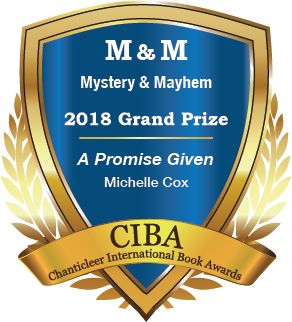
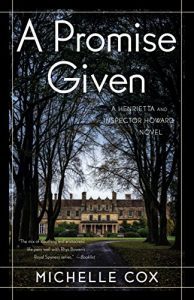
Michelle Cox is a multi-award-winning author who recently spent some time with us at CAC19. This year was particularly special because Michelle won the CIBA 2018 Grand Prize for Mystery & Mayhem Awards!
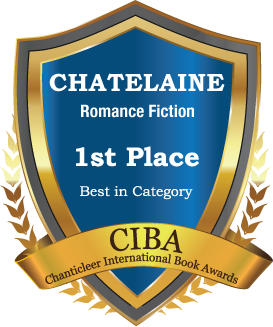
and took 1st Place in the Chatelaine Awards for Romantic Fiction – both awards are in honor of her book, A Promise Given. We will probably never stop celebrating this – it’s just too much fun!
To find out what Michelle’s up to next, Find and Follow her here:
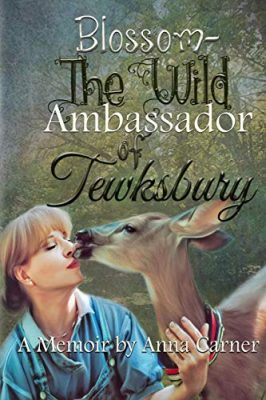
Author Anna Carner was living in a horse-friendly farming area of New Jersey in 1999, when she encountered a newborn fawn, barely breathing, near her home. The animal seemed to be communicating its need to her, and, with some experience of animal and human care, Carner set out to revive the fawn.
She took the baby deer into her house and nursed her back to health. When she and her husband, Pino, saw the fawn curled up asleep with the family dog, the couple knew they had a new pet. Her name, Blossom, seemed suited to her sweetness and soft, gentle beauty.
But the couple lived in an area where some people consider the deer population a problem; pests to be eliminated, hunting a necessary and enjoyable sport. As Blossom grew and began to range out with other, wilder kin, Carner realized she would have to take extreme methods to shield her from danger.
Carner and Pino created posters with the animal’s picture and a plea not to hurt Blossom. Some neighbors were sympathetic, but others were cynical. Some even made a practice of stalking Blossom and harassing Carner. One man claimed to have the deer in captivity, demanding a ransom for her return. Carner’s efforts to protect Blossom gradually took root in the community and soon neighbors joined in; other stray deer were saved and adopted. A widespread movement was started that included the possibility of spaying by vaccination to limit the deer population without the violence of hunting.
In writing her memoir of the years with Blossom, Carner revisits her own past and the violence she suffered as a baby at the hands of her father; injuries that required hospitalization and subsequent treatment for much of her youth. These recollections give her empathy for Blossom and other suffering creatures, and no doubt the reason she is passionate about her role as a rescuer.
Blossom, as she so vividly describes her, was an ideal patient and pet that seemed to speak at times, and to obey commands almost like a canine. The deer’s sensitivity to her human caregivers is perhaps extraordinary or may reflect what many “wild” creatures are capable of, given a chance. The chapters are interspersed with poems by Jeanne Hamilton Troast, a fellow animal enthusiast. Through action and rich, well-crafted dialog, Carner highlights her endeavors to promote better care of all animals based on the experience she and Pino shared as they cherished their time with Blossom.
Carner writes both for convinced animal lovers and, additionally, for those who may never have given the issues much thought, offering strong evidence of the worth of living in harmony with deer and other creatures whose perceived harmfulness has been to some extent created by our human rules and boundaries, not by their natural inclinations.
Not just a sweet deer with a fantastic story, Blossom is the subject for the Nat’l Geographic NATURE documentary. To view a 4-minute video of Blossom’s story please click here. Blossom was also featured in National Geographic’s Nature presentation, “The Private Life of Deer.” Please click here to see the film.
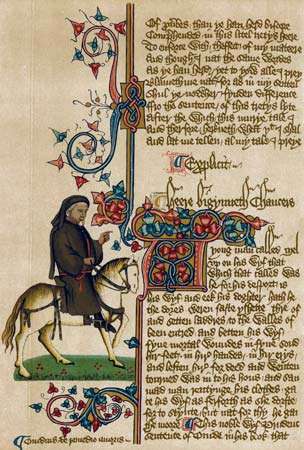
We titled the Chanticleer International Book Awards (CIBAs) division for Pre-1750s Historical Fiction the Chaucer Awards, after the English poet and author of the Canterbury Tales.
Chaucer’s The Canterbury Tales is considered one of the greatest works in the English language. It was among the first non-secular books written in Middle English to be printed.
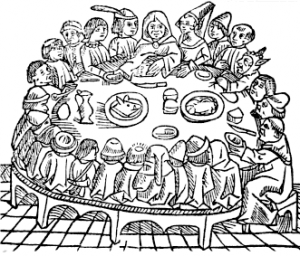
A woodcut from William Caxton’s second edition 0f the Canterbury Tales printed in 1483
The framing device for the collection of stories is a pilgrimage to the shrine of Thomas à Becket in Canterbury, Kent. The 30 pilgrims who undertake the journey gather at the Tabard Inn in Southwark, across the Thames from London. They agree to engage in a storytelling contest as they travel, and Harry Bailly, host of the Tabard, serves as master of ceremonies for the contest. Most of the pilgrims are introduced by vivid brief sketches in the “General Prologue.” Interspersed between the 24 tales are short dramatic scenes (called links) presenting lively exchanges, usually involving the host and one or more of the pilgrims. Chaucer did not complete the full plan for his book: the return journey from Canterbury is not included, and some of the pilgrims do not tell stories.
The use of a pilgrimage as the framing device enabled Chaucer to bring together people from many walks of life: knight, prioress, monk; merchant, man of law, franklin, scholarly clerk; miller, reeve, pardoner; wife of Bath and many others. The multiplicity of social types, as well as the device of the storytelling contest itself, allowed presentation of a highly varied collection of literary genres: religious legend, courtly romance, racy fabliau, saint’s life, allegorical tale, beast fable, medieval sermon, alchemical account, and, at times, mixtures of these genres.
The stories and links together offer complex depictions of the pilgrims, while, at the same time, the tales present remarkable examples of short narratives in verse, plus two expositions in prose. The pilgrimage, which in medieval practice combined a fundamentally religious purpose with the secular benefit of a spring vacation, made possible extended consideration of the relationship between the pleasures and vices of this world and the spiritual aspirations for the next.
Source: The Brittanica Encyclopedia
The Canterbury Tales consists of the General Prologue that sets the story and 24 tales and ends with “Chaucer’s Retractions” (probably a CYA (cover your a&@) move on his part).
Some interesting tidbits about Geoffrey Chaucer
born c. 1342/43 probably in London. He died on October 25, 1400
his father was an important London vintner
His family’s finances were derived from wine and leather
Chaucer spoke Middle English and was fluent in French, Latin, and Italian
He guided diplomatic missions across the continent of Europe for ten years where he discovered the works of Dante, Petrarch, and Boccaccio whose The Decameron had a profound influence on Chaucer’s later works
He married well as his wife received an annuity from the queen consort of Edward III
His remains are interred in the Westminster Abbey
Kiffer Brown, the founder of Chanticleer Reviews, was introduced to Geoffrey Chaucer’s Canterbury Tales when she was studying medieval history at university. If you press her on the matter, she will confess that she and her classmates read the work in Old English (of which she is very proud to have done). And yes, she is fond of The Decameron by Boccaccio. Don’t be surprised if one of the next division of the Chanticleer International Book Awards is named after Boccaccio.
Want to be a winner next year? The deadline to submit your book for the Chaucer awards is June 30, 2019. Enter here!
Grand Prize and First Place Winners for 2019 will be announced on April 18, 2020.
Any entries received on or after June 30, 2019, will be entered into the 2020 Chaucer Book Awards. The Grand Prize and First Place for 2020 CIBA winners will be held on April 17, 2021.
As our deadline draws near, don’t miss this opportunity to earn the distinction your historical fiction readers deserves! Enter today!
The CHAUCER Book Awards is a division of the Chanticleer International Book Awards – the CIBAs.
The 2019 winners will be announced at the CIBA Awards Ceremony on April 18, 2020, that will take place during the 2020 Chanticleer Authors Conference. All Semi-Finalists and First Place category winners will be recognized, the first place winners will be whisked up on stage to receive their custom ribbon and wait to see who among them will take home the Grand Prize. It’s an exciting evening of dinner, networking, and celebrations!
Sailing along – making great time! Fair waves and following seas! All is good!
Your book baby is still alive and has weathered its first month on the rough seas of self-publishing. The holds of your ship are taking on coin. The sky is blue, the waves choppy, and for the most part you have beat back the sharks.
You got this, right?
Month two arrives, and the crest of the wave you have been sailing vanishes. Your sales drop. You attempt to prop up those sales by spending some of that hard-earned gold in the hold, on flags to fly atop your central mast. Surely everyone will see your flag and flock to it, to buy your book baby.
Month two expires and with it, your sales. Your ship takes on water and sinks, as it sails over the sixty-day new release cliff, leaving you with one oar on a shrinking raft.
Sharks are everywhere!
This close-up view of the seas shows you the truth. The sharks were swimming below the surface and already made off with the coin that should have been tumbling into your sea chests. Your book has been pirated, and no one is paying attention to the wildly flapping flag, tied to the peak of your tattered sales. (See what I did there? 😊)
Before you sink into obscurity you try one last time, to stopper the holes sliced into the deck by the shark’s fins. You throw money at every advertising platform you have ever heard, spending the last of your once-shiny piles of gold to prop up your sales. Not to be outdone, you send cease and desist emails to every site that has your book baby illegally uploaded for sale. Of course, they ignore you. The pirate’s code trumps all.
Nothing you do can save you. You decide to ignore the pirates because there is nothing you can do about it.
Depressing, eh?
There must be a better way, right?
What can a lonely self-published author do to prevent the theft of their hard work, and sink the pirate ships before they can even toss a grappling hook into your manuscript?
Are you ready to hear about one possible future for publishing?
Then read on.
Cryptocurrency. Let’s break down that term.
According to Dictionary.com, “Crypto” comes from the Greek word Kryptos, which means “secret, or hidden.” The English language derives the word ‘crypt’ from this root word.
The word “currency” has a wider range of definitions, which all help to illustrate its meaning. “something that is used as a medium of exchange; money,” and “the fact or quality of being widely accepted and circulated from person to person,” and the British dictionary also defines it as “the act of being passed from person to person.”
Cryptocurrency is a hidden form of exchange, defined as “a digital currency or decentralized system of exchange that uses advanced cryptography for security.” Simply put, cryptocurrency is a hidden form of currency that is able to be passed from person to person in complete security.
“But wait,” you say, “cryptocurrency isn’t coin. It isn’t even touchable. It exists only in cyberspace. How does that work?”
I am so glad you asked.
The beauty of a cryptocurrency universe is that the pirates can’t get to it.
It’s not floating around in some bank (ship’s hold), waiting to be stolen by a card skimmer or password bot, nor is it in grandma’s safe bolted to the basement floor, or held in an investment firm’s dubious clutches, where sticky fingers skim coin all too often.
Cryptocurrency is held virtually and is not in any one place. The currency itself is decentralized and encrypted. There is no Fort Knox to break into. There is no place to send a trojan horse, to sneak behind the secure walls.
Instead, the currency is distributed in code bits across servers located around the world. At last count, the number of cryptocurrency servers numbered over twenty thousand.
Cryptocurrency is riding the wild seas of any startup, but there is no doubt that it is here to stay.
As the currency gains in popularity and is adopted by more and more companies, it will become one more way to pay for goods and services in this digital age. I dare say that in time, it will become the currency to which all “paper” forms of currency are tied. It will become the central pillar to which all regional currencies are pegged like the USD is used for now. But no nation wants to be tied to another nation’s rise and fall, for their own currency values. Anyone outside of the United States understands this point of pain.
And payments made with cryptocurrency are more secure than any form of payment we presently use. No one can steal the currency as it is not laying around to be stolen. Transactions are secure because they are undertaken by large mathematical calculations that only computers can solve.
What does this mean for you, as an author, you ask?
It means, that in the near future, cryptocurrency will be a way of digitally selling and receiving payment for our books, that cannot be corrupted or stolen by an outside party.
But wait, what about the books themselves? They can still be stolen, right?
…. And that is the perfect segue to the last article in this series by Susan Faw:
“Chaining Piracy: How To Save Your Damsel / Damoiseau In Distress”
“…the most highly anticipated slide deck in Silicon Valley”
SOURCE: byline Rani Molla for RECODE on Vox Media @ranimolla
This information that I am sharing with Chanticleerians has been gleaned from the annual Internet Trends Report, a 333-page slideshow delivered by Mary Meeker who is dubbed “Queen of the Internet.” Ms. Meeker was a renowned Wall Street analyst and is now a general partner in Bond Capital, a top echelon venture capital company that has invested in companies such as Facebook, Pinterest, Airbnb, Twitter, Stripe, Slack, Twitter, etc. Her report touches on every important internet trend that has recently taken place and what we may expect in the near future.
Ms. Meeker gave her talk on June 11, 2019, at the Code Conference 2019 held in Silicon Valley. It is considered to be the world’s premier technology conference. RECODE has made this information available online with Rani Molla’s analysis via VOX Media if you want to dig down more into the report and to hear and see the presentation.
WHY READ THIS BLOG POST?
“Publishing is at the epicenter of digital disruption.” Paul Michelman, MIT & MIT SLOAN
“This explains why authors and publishers feel the shocks of technology almost immediately, making publishing content the bellwether for the Internet of Things and the Digital Age.
It behooves us in the publishing industry to pay heed and close attention to digital trends if we are concerned with increasing sales and understanding the content market. ” Kiffer Brown
…Code is where the world’s most important leaders in tech are faced with hard-hitting questions and candid conversations about what’s next for their companies.
The annual by invitation-only Code Conference brings together a global community of the biggest names in the business — executive leaders and startups with bright futures — for networking and in-depth conversations.
Editor’s Note: those presenting include: the VP of Original Content for Netflix, CEO of PBS, CEO of Amazon Web Services, Head of Instagram & Facebook, the New York Times publisher, Chairman of Goldman Sachs…
Below are the Take-Aways that I thought would be of special interest to authors and publishers. Some are not surprising but it always good to have hunches confirmed- IMHO (in my humble opinion). And there is the need of being aware of what is the latest in the tech and publishing industries since they go hand in hand. Also, there is something about seeing things in black and white…
Chanticleer’s Takeaways for Authors and Publishers from the 2019 Internet Trends Report
For your consideration from Mary Meeker’s 333-page report:
51 percent of the world’s population are internet users in 2018. (3.8 billion people).
In 2009, 24 percent of the world’s population were internet users.
China has the world’s largest market of internet users with 53 percent of its population (just shy of one billion).
89 percent of North America’s population are internet users.
78 percent of Europe’s population are internet users.
62 percent of Latin American & Caribbean’ population are internet users.
Smartphones are the primary internet access point in 2018 rather than computers, laptops, or tablets.
Americans spent 6.3 hours a day in 2018 with digital media. Up from 7 percent the year before.
Leisure time spent on smartphones has increased while the leisure time spent on computers has decreased. 3.6 hours a day are spent on smartphones by Americans.
In 2008, Americans spent 2.7 hours a day with digital media with most of this time on a desktop or laptop.
The latest numbers for 2019 are finding Americans spending less time on TV and more time on smartphones. 20 minutes a day in 2009 were spent on smartphones while 2019 finds Americans at 226 minutes a day.
Images have become a standard means to communicate. More than 50 percent of Twitter impressions have images, video. Remember, Twitter used to be text only when it started in 2006.
Social Media Usage Global Trends:
Facebook usage has remained constant and in an overwhelming lead with 2.2 billion users
Youtube has had the most gain with 1.9 billion active users
Instagram follows Youtube’s growth closely with 1 billion active users
Instagram monthly active users have grown from zero in 2010 to more than 1 billion active users in 2018.
Pinterest has 250 million active users
Twitter has 326 million active users with 500 million tweets per day (6/18)
Podcast listeners in the USA have increased from 22 million in 2008 to 70 million in 2018.
Smart Speakers ( Amazon’s Echo, Okay Google, Siri) makers will sell about 94 million devices in 2019 increasing the installed base to 207.9 million by year-end 2019.
The U.S. will continue to be the largest global market with sales growth at 46%. (Voicebot.ai)
Smart Speakers are driving audiobooks sales.
Google’s smart speaker is “in effect evolving Google from an ad platform to a commerce platform.”
Social Media is becoming the number one “discovery tool” for products. *Remember J.D. Barker’s reminders that books are products from CAC19.
Social Media allows consumers to discover products 24/7 non-stop. Product discovery is increasingly social.
YouTube has more than one billion views of daily how-to & learning videos.
Lifelong learning content is one of the fastest growing areas.
2.4 billion people are interactive active computer gamers.
Privacy, access, and distribution are major concerns. Encryption and blockchain are options for solutions online communications and content safe.
This report along with 2018’s encompasses detailed information about China’s Economy & Growth Trends, global trends in Artificial Intelligence, along with global advances in data collection and sharing, household spending, costs of living, population densities, job growth, consumer confidence, healthcare & insurance, new technologies, technology disruptions, transportation, cost of shelter, e-commerce, interactive gaming, data privacy, cyber attacks, online education, and much more.
STAY TUNED…
PUBLISHING IS BUSINESS
The next articles will deal with interpreting this information and how authors and publishers can put it to use to increase book discovery, branding, increasing sales, and protecting your intellectual property.
We will continue to drill down the proverbial rabbit holes to find out information to help authors and publishers determine the best ways to promote their books and brands. So, stay tuned!
Below are related links from the Chanticleer website that may of interest:
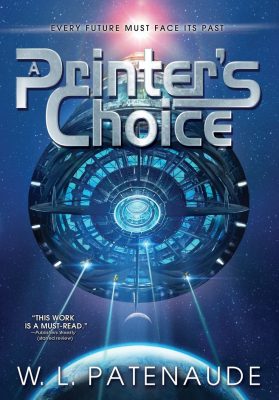
W. L. Patenaude’s suspenseful and philosophical novel, A Printer’s Choice, opens in the near future, 2088, and not all is well in the universe.
Earth is plagued with famine, war, and violent religious extremism. Oceans have risen to deadly levels, and wildfires and storms continue unabated. The world’s resources are being strained and no recovery is in sight. In fact, things are so dire that parents can opt to have themselves euthanized in exchange for the government’s providing for their children’s health and education.
Elsewhere in the cosmos, a murder has rocked “upside,” a conglomeration of locales in space that are being rapidly developed through a tense and volatile collaboration between engineers and builders. This murder is a first in the “New World” and the circumstances surrounding it set the stage for an investigation that will not only uncover the murderer but also will cause readers to ponder the very essence of human existence.
Enter Father John Francis McClellan, a Roman Catholic priest in this thirties with a military background. He has been summoned by the Archbishop of Boston and the Vatican to travel to the New World to investigate the homicide. From the outset, the case presents enigmatic details. For example, the victim, Father Tanglao, a Dominican priest, had inexplicably been working as a laborer in the orbits.
Like everyone else, Father McClellan wonders why a priest was upside where any expression of any faith is strictly prohibited. Was Father Tanglao’s murder connected to one of the engineers or a fellow builder? Could there be a connection to the murderous zealot with a messianic complex, Juan Carlos Solorzano?
McClellan does know that Father Tanglao had dealings with a high-tech 3D printer, a machine with recesses of “Deep Intellect.” McClellan has his own history with these sentient machines, encounters that have given him the experience necessary to delve into relations between people and devices possessing artificial intelligence.
The printers have the ability to design their own upgrades as well as reproduce themselves. “New Athens” was built easily and rapidly by the printers and, given the disasters on Earth, there is an imminent need for worlds to be built in space as quickly as possible.
The engineers argue that the checks and balances those in charge wish to implement will only hold progress back because they believe they can regain control over the machines down the road. The question will arise, what separates a human programmer from a mechanical one capable of critical thinking? And who “programmed” people? What transpires between McClellan and a specific machine includes a riveting and deeply thought-provoking discussion of trust and free will.
Clearly, Patenaude is well versed in the readings of Aristotle, St. Thomas, St. Augustine, and Descartes, for starters, and likely a host of philosophers and theologians. His ability to draw upon multiple disciplines and to weave religious and philosophical allegories into characterization and plot put him at the forefront of literary thinkers. Suffice to say, this novel is profoundly deep and thought-provoking.
While this book will appeal to sci-fi lovers and anyone game for a murder mystery in outer space, it should also spark the interest of anyone interested in grappling with theories of existence and the ultimate power of free will. A priest traveling to an entirely new world in the cosmos and finding that it’s still necessary to wrestle with the age-old questions of faith make for a powerful tale.
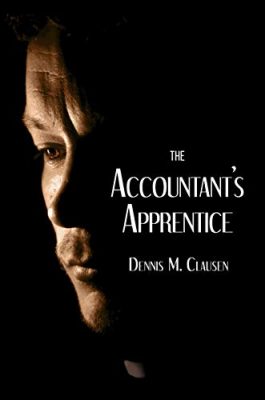
Philosophically sophisticated, the supernatural mystery of Dennis M Clausen’s The Accountant’s Apprentice is reminiscent of the classic apocalyptic comedy Good Omens while bringing its own unique and serious take on the fight against good and evil.
Justin Moore is a priest on leave after witnessing a murder in his parish office. He is haunted by the events and struggles with making sense of what happened and why the assailant spared him.
Living in a small rundown studio apartment, Justin makes ends meet by becoming the driver of a mysterious neighbor who calls himself A.C. and claims he is an accountant. But Justin quickly becomes suspicious of his new employer when he fails to find any information about A.C or his company. To make matters worse, Justin attracts the attention of local police after not one, but two neighbors die while living in the apartment across the hall from him.
As Justin investigates the strange events he is connected to, he begins to question his state of mind, unable to pinpoint the agenda and motives of his mysterious employer. Whenever Justin finds answers, several more questions appear as more and more people connected to him end up dead. In the end, Justin learns that there are forces at work above his understanding and that he has an important part to play in it all.
Dennis M Clausen is a masterful writer that creates a full and multi-faceted story in a relatively small package. In what starts out as a mystery with a spiritual backdrop, the plot quickly brings in philosophical questions about the good and evil of our capitalistic society and what effects artistic genius has on the world. There are also touches of the supernatural that come into play as Justin tries to make sense of the mysteries around him.
Clausen develops Justin Moore with a level of mystery to the character, who can arguably be seen as an unreliable narrator. Not much is known about Justin and his life before the traumatic incident he witnesses, and the details of that event change ever so slightly every time he goes back to those memories. These changes and other events cause Justin to question his reality and make him an interesting narrator. Even less is known about the characters A.C. and Ilsa, but they both undergo their own satisfying character development by the story’s end.
A compelling novel, The Accountant’s Apprentice, leaves many areas of the story unexplored and underdeveloped in a way, perhaps to maintain a mysterious atmosphere. Certainly, its effect will leave readers longing to know what happens next. Perhaps a sequel? (We hope!)
Clausen employs multi-genre storytelling here, and this approach makes the book a screaming success. In that complexity, there is a literary feast. It is spiritualistic, philosophical, supernatural, mysterious – and apocalyptic. In other words, this story has a charismatic appeal for everyone.
In fiction there’s a hierarchy when it comes to characters: the protagonist, antagonist, secondary characters, minor, walk-on, and stock characters. Let’s focus more on minor characters, shall we? Writers who neglect minor characters are neglecting essential ingredients to their works. It would be like omitting garlic or oregano from pasta sauce or cumin from a pot of chili.
Minor characters, like secondary characters, operate in a strictly supporting role.
They are rarely viewpoint characters.
Don’t take up a lot of ‘stage time’ and readers generally don’t care about them a lot.
Do not have a subplot.
This means they’re usually ‘flat’ that is, they won’t change over the course of the story and they’re not fully dimensional. (There are exceptions to this.)
Just a pinch makes all the difference!
HOWEVER: Minor characters add color, verve, spice, eccentricity.
Make things happen, help advance the plot.
Establish the setting.
Provide insights or information about major characters. Without secondary and minor characters the protagonist would be isolated.
Prove that the protagonist has grown or changed.
Support the mood or atmosphere in a scene.
Breathe life into the story.
Disprove stereotypes.
Support themes.
Examples:
To Kill a Mockingbird: Heck Tate, Calpurnia, Judge John Taylor, Miss Maudie Atkinson, Dolphus Raymond
A Christmas Carol:Tiny Tim, Belle, Scrooge’s former fiance, Fred, Scrooge’s nephew, Fezziwig
Harry Potter series:Colin Creevey, Katie Bell, Pansy Parkinson, Padmil & Parvati Patil, Neville Longbottom, Cho Chang (to name but a few)
Hunger Games series:Madge Undersee, Katniss’ friend who gave her the mockingjay pin, Caesar Flickerman the television host, Effie Trinket, the District 12 escort, other tributes–Cato, Thresh, Clove, Foxface, Glimmer, Marvel, (Rue is a secondary character)
A few more tips:
While a minor character can be quirky or sexy, he or she shouldn’t distract readers from the main events and characters. Generally, the more you tell your reader about a minor character, the more you elevate his or her importance.
Use minor characters for humor or breathers in the story.
Minor characters should complete the story, create verisimilitude.
Give them a ‘job’ to do, such as a witness in a crime novel. In The Hunger Games, Marvel, the tribute from District 1 kills Rue with a spear through her stomach. Later Katniss kills him. Although she’s already taken out several competitors, she is now a hunter, not the hunted, a significant shift in the story.
Emulate J.K. Rowling and Charles Dickens and grant your minor characters silly, memorable, or suggestive names. As in Martin Chuzzlewit and Sophronia Akershem, and Uncle Pumblechook.
Use minor characters to reveal class, ethnicity, culture, and the milieu of the story world.
A poignant example from Shawshank Redemption
Don’t be afraid to give them a poignant role or to motivate another character as Brooks does in Shawshank Redemption. Poor Brook is elderly when he’s paroled from Shawshank. Problem was, he didn’t have the youth or skills to cope on the outside and ends up hanging himself. He serves as Red’s ‘anti-mentor’ in the story. Later, when Red the narrator is also paroled after spending years in prison, readers and movie viewers are reminded of Brooks’ fate. Will Red follow him?
Tolkien reveals volumes about his Middle Earth with the different minor characters and their kind in Lord of the Rings.
Examples of Lord of the Rings’ Minor Characters that come to mind are:
Barliman Butterbur, a man of Bree and a forgetful innkeeper where Gandalf frequented
Shagrat, an Uruk orc (role of villain)
Haldir, Elf of Lothlorien – He spoke the Common Tongue fluently so he was able to communicate with the Fellowship and to learn of their loss of Gandalf.
Rosie Cotton, a hobbit who patiently awaited Samwise Gamgee’s return to the Shire
Ugluk, a villain who was a leader of the Uruk-hai scouts and trusted servant of the evil wizard Saruman
Theodred, Prince of Rohan – a nobleman of birth and bravery
Goldberry, a female who embodied the spirit of Nature
Notice that I didn’t need to use images for LOTR minor characters; their names practically describes them and their roles.
If you are a fan of George R.R. Martin’s The Song of Fire and Ice series, you are well aware of his use of minor characters to move his series forward.
Stop back by for Part Two — Minor Characters – The Spice of Fiction from the Writers’ Toolbox Series
Writer’s Toolbox Series
Keep writing, keep dreaming, have heart. Jessica
Jessica Morrell is a top-tier developmental editor and a contributor to Chanticleer Reviews Media and to the Writer’s Digest magazine. She teaches Master Writing Craft Classes at the Chanticleer Authors Conference that is held annually along with teaching at Chanticleer writing workshops that are held throughout the year.
Did you know that Chanticleer offers editorial services?We do and have been doing so since 2011.
And our professional editors are top-notch and are experts in the Chicago Manual of Style. They have and are working for the top publishing houses (TOR, McMillian, Thomas Mercer, Penguin Random House, etc.) and elite indie presses.
We work with a small number of exclusive clients who want to collaborate with top-editors on an on-going basis.
Contact us today! If you would like more information, we invite you to email Kiffer or Sharon at KBrown@ChantiReviews.com or SAnderson@ChantiReviews.com
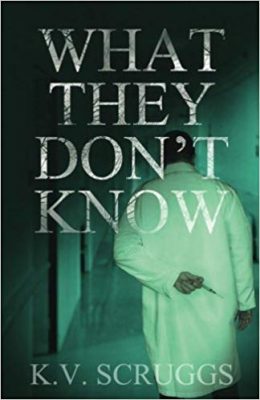
Author K. V. Scruggs proves that What They Don’t Know can kill. When left unchecked, public policy propelled by the best of intentions is still subject to the greed and corruption of those with the power to implement it. Scruggs takes us on a frightening journey where pervasive technology paired with behind-the-scenes corruption can hide grave results from the trusting, and now vulnerable, citizenry.
Cheyenne Rose lives a glamorous life as a Talk Show Host who sensationalizes the stories of the guests interviewed on her program titled, ‘The Stories That Matter.’ The unexpected adventures of one family on her show irrevocably touch Cheyenne’s heart. She has no idea that her own life is about to be inextricably tied to them and their troubles.
This young family’s infectious innocence and zest for life spread through Cheyenne and her audience. They attribute their blessings to the new government health care system that has implemented complete access to health care for all – including a life-saving surgery for one of their sons. Cheyenne reports that streamlined efficiencies built into this medical care solution are celebrated by patients, doctors, nurses, and practitioners. It almost seems too good to be true.
In order to have the peace of mind that comes with such effective health care, small intrusions into individual privacy, hardly noticeable, are necessary. For example, the technology tracking your vital medical signs can dispense pharmaceuticals you may need. In addition, this miracle tech monitors an individual’s activities to ensure they get enough sleep, exercise, and, well, maybe also keeps track of other personal information.
When an ugly surprise lay ahead for the guest family on Cheyenne’s show, events prompt her to ask questions that government officials don’t want to answer. But how can she stay one step ahead of a political adversary who knows her perhaps better than she knows herself? Now Cheyenne is plunged into the midst of a dangerous struggle that threatens the lives of those close to her, and ultimately her own.
The author, a physician by day, threads her mastery of medical knowledge throughout this thrilling novel, making it terrifyingly believable. Her writing is suspenseful and exciting, with dynamic characters who heighten the fast-paced mystery. K.V. Scruggs enjoys writing about thought-provoking medical issues, and the outcome is nothing short of a heart-pounding thriller.
This dramatic tale explores what can be hidden within the deep, dark crevices of getting what you want.
What They Don’t Know won 1st Place in the 2017 CIBAs in Global Thrillers Awards!




 We are now accepting submissions into the 2020 CYGNUS Awards writing competition. The deadline for submissions is April 30th, 2020. The winners will be announced in April 2021.

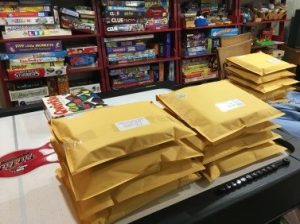
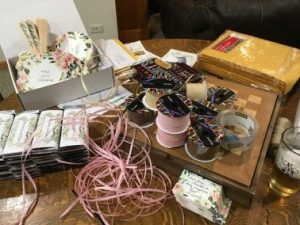


 For example, my publisher and I overprinted Book 2 of my series, so, as per my contract, when the first year of publication had passed, I was faced with having to pay a storage fee for these extra books (a couple of thousand), have them shipped to my garage, or have them destroyed. I decided, instead, to send them to libraries and conference organizers. It was a lot of work and expense, but it got my book into the hands of hundreds, if not thousands, of potential readers, and hopefully, they’ll come back for more and buy the rest of the series. You have to be willing to take risks.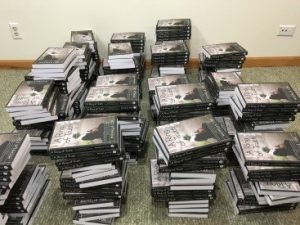





















 Ms. Meeker gave her talk on June 11, 2019, at the




 Author K. V. Scruggs proves that What They Don’t Know can kill. When left unchecked, public policy propelled by the best of intentions is still subject to the greed and corruption of those with the power to implement it. Scruggs takes us on a frightening journey where pervasive technology paired with behind-the-scenes corruption can hide grave results from the trusting, and now vulnerable, citizenry.