

Blog

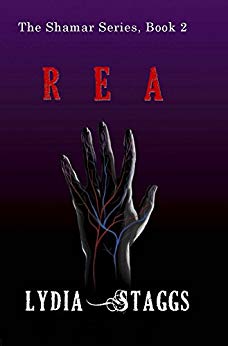
  • REA: The Shamar Series, Book Two by Lydia Staggs – Paranormal & Urban Fantasy, Dark Fantasy, Romantic Action/Adventure

    REA: The Shamar Series, Book Two by Lydia Staggs – Paranormal & Urban Fantasy, Dark Fantasy, Romantic Action/Adventure

    Rea is a fast-paced paranormal romance featuring a super-sexy supernatural male lead and a career-minded young woman who are madly in love with each other; and, as it happens, each with their own demons to face. Gabriel and Juliet must each learn to confront their pasts and honor each other’s strengths if they are to not only continue their love but to survive their fate. Rea is book two in the Shamar series by Lydia Staggs.

    Rea is the continuation of Gabriel and Juliet’s love story and showcases the struggles of not only a human romance, but a paranormal one as well. Gabriel is Shamar while Juliet is human. The Shamar are a race of rigidly hierarchical, supernatural creatures who can transform into wolves and are sworn to protect humans. Gabriel, constantly aware of his dual nature as both man and wolf, struggles with how his wolf, a pair-bonding, aggressive creature, would prefer to interact with Juliet, the woman he is sure he wants to spend the rest of his life with. The wolf side of Gabriel often causes him to be jealous and possessive and he grapples with Juliet’s need for personal space and time.

    Juliet is a veterinarian, hoping to get into her dream residency. On a tour at the hospital however, she realizes that a man from her past works there, a man she would give almost anything to avoid—Ryan. Ryan is involved with the Amoveo, vampire-like former humans who can shapeshift and ruthlessly control human thought. They are the Shamar’s sworn enemies as they delight in violence and destruction.

    Ryan, it turns out, has been involved in experiments on captive Shamar. Gabriel takes it upon himself to find out what these experiments entail and what he discovers is nothing short of horrifying. But does he dare tell Juliet what he’s discovered?

    Juliet and Gabriel quickly realize that if they are to deepen their relationship, they must each let the other one in—they must share what they have been trying so hard for so long to hide. For it is only together that either one can succeed.

    Rea by Lydia Staggs won First Place in the 2017 CIBAs for Paranormal Fiction.


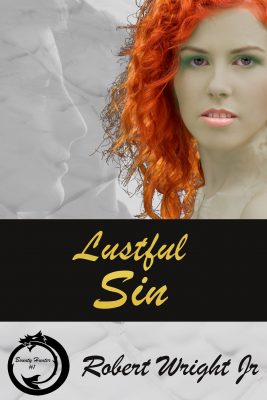
  • LUSTFUL SINS (Bounty Hunter Book One) by Robert Wright, Jr. – Paranormal Romance, Romantic Fantasy, Paranormal & Urban Fantasy

    LUSTFUL SINS (Bounty Hunter Book One) by Robert Wright, Jr. – Paranormal Romance, Romantic Fantasy, Paranormal & Urban Fantasy

    Humans have been overthrown by supernatural beings for nearly destroying Mother Earth. The hierarchy of supers has created a planet where humans are commodities to be used as slaves and food, but Queen Velocity, a vicious and cruel fairy, doesn’t just want to enforce her will on humans. She hates any creature – orc, vamp, were, or goblin – who undermines her authority, and the best way to bring these beings to heel is Sin, the toughest bounty hunter on the planet.

    Sin wants gold, as much as she can get. Besides pride, it’s the only thing dragons like her value. Her kind are rare in the “fae” world, but they are the strongest and toughest creatures in the kingdom, and even though she hates the queen, she is well paid for her unique skill set. Being a dragon, she has enough strength in her tiny, humanlike body to do serious damage to most supers, but her newest bounty may prove too much even for her.

    A mysterious, vanishing creature has killed an alpha Were and the king of the vamps after stealing the very essence of her victims. Even with the help of her partner Sebastian, an imp with advanced magical skill, Sin fears she’ll disappoint the queen, a typically lethal predicament. Being paired with Queen Velocity’s super-hot son Fallon is not helping her concentration, and the closer they get to the killer, Sin realizes she must risk her life to face the creature who turns dreams to nightmares.

    Lustful Sin is the first in a new supernatural series with exceptional world-building. It combines the common conventions of crypto creatures like vampires and werewolves but shows them in a new light. In this world, humans are–or were–the monsters, and the traditional monsters are now minding the store. All human conveniences like cars and electricity have been banished, and in their place are magic and might. Even the gun Sin carries is a monitored commodity given only by special permission of the Fairy Council. Darkened cities ruled by orcs and goblins create an apocalyptic world different than those typically seen in an “end of times” novel and create a frightening, intense mood lightened by the comic interaction of Sebastian and Sin.

    Sin’s fortitude and determination are stars of the novel. Though Sin is a powerful, rare super, she must bow to the will of the fairies, who look down on all other supers. This ruling-class has created many enemies, including the creature who is murdering other supers for revenge. In spite of the crushing power of the fairies, however, Sin refuses to be anything less than herself. Ruled by her love of gold and her dragon pride, she usually does as she pleases, much to the disapproval of her partner and her great-grandfather (many times over) Igmun who is an advisor to the queen.

    Pride won’t let her give up on seemingly impossible challenges even an ancient vamp on a kamikaze mission. Though she knows her pride will probably be her downfall, she won’t allow any creature to insult her dragon heritage and live to tell about it. This pride also keeps her from becoming Fallon’s mistress though it would mean a cushy existence “out of the gutter” that is her current life. But this hard-as-nails attitude hides a much softer heart. Sin saves Sadie, a half-breed fairy who is the forced pet of the vamps, from her life of perpetual servitude. She also often retaliates against supers who hurt humans, leading to a bounty on Sin’s own life, and when she has the choice to join the human resistance against the tyrannical fairy rule, she realizes it is her destiny no matter the cost.

    This highly erotic adventure features a strong female protagonist with a warm heart and an HBIC attitude. Lovers of all things supernatural and sizzling will not be able to put it down. [Editor’s Note: This is a five-alarm adult read. This is not a YA read.]


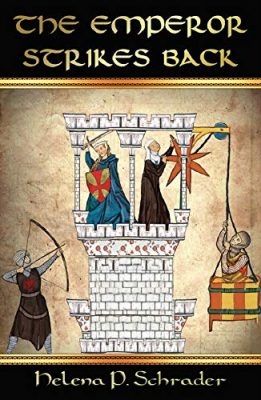
  • The EMPEROR STRIKES BACK: Frederick II’s War Against His Vassals by Helena P. Schrader – Medieval Historical Fiction, 13th Century Politics, Early Historical Fiction

    The EMPEROR STRIKES BACK: Frederick II’s War Against His Vassals by Helena P. Schrader – Medieval Historical Fiction, 13th Century Politics, Early Historical Fiction

    Welcome to the 13th century Beirut, Kingdom of Jerusalem, where chivalry is alive and well—along with treachery, greed, and the lust for power and control.

    The Emperor Strikes Back has a cast that would put Cecile B. DeMille to shame. Helena P. Schrader has successfully fleshed out historical characters and events, bringing them to life in the reader’s mind. She depicts a conflict that occurred in the Outremer during the first third of the 13th century when Frederic II, the ambitious Holy Roman Emperor, sought to usurp John d’Ibelin, the Lord of Beirut, and lay claim to his fiefdom.

    Schrader breathes life into the resulting, historically documented events, using the multiple voices of the Ibelin family, cohorts, and supporters, each of which reflects his or her own social status, belief system, and loyalties. As these characters share their experiences, the reader can almost smell the offal and blood, feel the pain of wounds, the effects of hunger, hardship, and fear, the taste of stale bread and sullied water, and the bittersweet taste of victory. Schrader’s detailed rendering of the ill-fated first marriage of Balian, Ibelin’s eldest son, and heir, to Eschiva de Montbéliard, a cousin by marriage, will capture readers hearts.

    In order to marry, Balian and Eschiva must receive a papal dispensation, which their family friend, Gerold of Lausanne, Patriarch of Jerusalem and Papal Legate, provides. The trouble comes when Pope Gregory learns of this from an Ibelin political rival whose support he seeks, and the pope excommunicates the young couple. The effects create emotional and social rents in the fabric of their lives and the lives and fortunes of their family and supporters in unimaginable ways.

    The Emperor Strikes Back gifts readers with a careful account of actual recorded events as told by the players involved, and at times utilizing their very own words. The wealth of details, characters, and situations, while true to life, can be confusing to those who have not read the foreword, research notes, and familiarized themselves with the glossary. In other words, we recommend familiarizing yourself with these fascinating additions to the novel before you dive right in. You will be greatly rewarded!

    A good book for a long winter weekend—put the teapot on, stoke the fire, and plan on spending some time in the 13th century. Odds are, you will find yourself searching for Schrader’s previous works to read in this series while impatiently waiting for the next installment. Here are just a few that we adore: Envoy of Jerusalem, Defender of Jerusalem, Knight of Jerusalem, and The Last Crusader Kingdom.


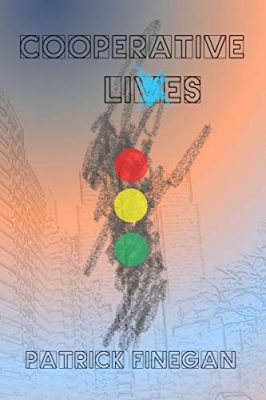
  • COOPERATIVE LIVES by Patrick Finegan – Literary Fiction, Mystery, Thriller & Suspense Literary Fiction, Romance Literary Fiction

    COOPERATIVE LIVES by Patrick Finegan – Literary Fiction, Mystery, Thriller & Suspense Literary Fiction, Romance Literary Fiction

    How well do people really know their neighbors? More importantly, or perhaps more sinisterly, how well do those neighbors know each other – and each other’s secrets?

    Cooperative apartment buildings may exist everywhere, but in the U.S., they are frequently imagined as a distinct creation of the densely populated New York City landscape – the location of Cooperative Lives.

    This is the story of one particular co-op on Central Park South, a desirable address that is home to a number of seemingly affluent, mostly middle-aged and older residents who look as if they lead rather comfortable and downright dull lives.

    Of course, there wouldn’t be a story if that were the case.

    As the novel shifts from apartment to apartment, from resident to resident, readers glimpse the secret hurts, the poorly hidden grievances, and the deeply held griefs that inhabit each resident – and the ways that these seemingly casual acquaintances are linked by suddenly exposed lies.

    We are drawn into the maze of interconnectedness, slowly but inexorably, beginning with one lonely tenant sleeping on a park bench during one of New York City’s infamous blackouts. From this one life derailed by divorce, the story spirals outwards to the couple whose seemingly perfect life slalomed out of control after a skiing accident that links the first resident’s ex-wife to the one who may spend the rest of hers in a wheelchair.

    Who is, in turn, saved from a fatal bus collision by yet another tenant who lapses into a coma and, in his delirium, imagines events that he and his caregivers come to believe must really have happened. This winds up embroiling the cooperative in a shocking televised scandal.

    Cooperative Lives is a story told in multiple shifting perspectives, as each resident links to another, to another, and to another. The changes in point of view are often abrupt, but the reader who follows from person to person, lie to lie, and secret to secret will find themselves at the heart of a dark web that stretches well beyond the building to a case that almost seems ripped from the headlines of the late 2000s and early 2010s when this story takes place.

    While the author describes this work as extremely recent historical fiction, this character-driven story is most definitely a work of exquisite literary fiction that uses the exploration of its characters to drive the narrative. As the story opens, readers are introduced to the status quo of the residents, mundane lives that, on the surface, are not terribly interesting. But this is far from the case.

    Finegan does an excellent job of drawing us inside these seemingly tiny lives, and the deeper we go, the more significant these lives seem, and the greater the impact they have on each other as well as those who have been drawn into their well-written and extremely sticky web.


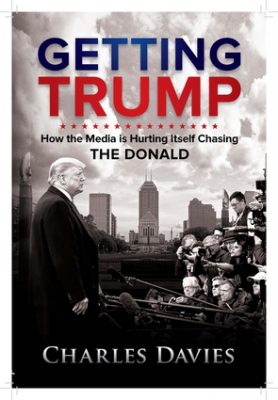
  • GETTING TRUMP – How the Media is Hurting Itself by Chasing the Donald by Charles Davies – Political Parties, Media & Internet in Politics (Books), Elections

    GETTING TRUMP – How the Media is Hurting Itself by Chasing the Donald by Charles Davies – Political Parties, Media & Internet in Politics (Books), Elections

    Charles Davies, an African-British journalist, offers a fresh, outsider’s view of the American President and his on-going battles with mainstream media.

    Donald Trump was not a typical political candidate when he ran for the US presidency in 2015. As Davies points out, few thought he would become the nominee, and many considered his attempt to succeed in politics to be a joke. However, when Mr. Trump won the election, the media spun in disbelief. By attacking his every move publicly, the liberal press played into the President’s hands as he quickly took to social media; much to the admiration of his followers and the frustration of his foes.

    Davies observes the notable contrast between Trump and his predecessor: Obama was well-spoken and discreet but kept news sources on a strict rein; where tough-tweeting Trump is tirelessly open-mouthed in his battle with the media, pursuing an “anything goes” attitude. Yet Trump’s accomplishments while in office have often been ignored or downplayed by the newsmakers.

    All media sources have their own bias, of course, but the campaign to destroy Mr. Trump has been launched mostly from the American mainstream, liberal press. Everything Trump says in whatever forum is quickly picked apart for evidence of some “ism” – sexism, racism, and so on. Many examples are given of the President’s actions and policies and the corresponding reactive negativity expressed in the media. Though advised during his campaign to become “more presidential,” Trump persisted in being “brash and blunt.” Those who support him like him that way, and now enjoy seeing him tweeting out his feelings and talking tough to reporters in person.

    This is a fact-dense treatise with many supporting resources. Davies has clearly made an intensive study of the words and deeds of the President and the media forces that have gathered against him. Following suit, the author reveals the many ways that even an innocuous event may be misreported. When Trump moved the Martin Luther King bust in the Oval Office, for example, it was reported by a media outlet that the statue had been removed entirely.

    The most contentious, and longest-lived fake news, according to Davies, concerns the Russia probe. For several years, the Special Counsel and his team conducted their investigation with no collusion charges actually having been brought to light.

    Although Davies recognizes that Trump is known for his straight talk and his disrespect for the hypercritical mainstream media, he suggests that both sides could strive for improvement. Trump should focus on his policies and simply ignore the media, so that, “like school bullies,” they will grow discouraged and move on. The media, for its part, could straightforwardly report on those policies, demonstrating a lack of bias by giving credit where it is due, “reporting facts as fairly as possible…and providing good quality opinion, clearly labeled as such.”

    Those who read Davies’ well-researched work will learn a great deal about the current American political scene and Trump’s war with the media. And for those who take the time, will discover the ideas and opinions contained within the work stem from the author’s wide range of knowledge and acute attention to detail.


  • The 2019 CHAUCER Book Awards for pre-1750s Historical Fiction–the Long List for the CIBAs

    The 2019 CHAUCER Book Awards for pre-1750s Historical Fiction–the Long List for the CIBAs

    The Chaucer Awards for Historical NovelsThe CHAUCER Book Awards recognize emerging new talent and outstanding works in pre-1750s Historical Fiction. The CHAUCER Book Awards is a division of the Chanticleer International Book Awards (The CIBAs).

    The Chaucer Book Awards competition is named for Geoffrey Chaucer the author of the legendary Canterbury Tales. The work is considered to be one of the greatest works in the English language. It was among the first non-secular books written in Middle English to be printed in 1483.


    Chanticleer International Book Awards is seeking for the best books featuring Pre-1750s Historical Fiction, including pre-history, ancient history, Classical, world history (non-western culture), Dark Ages and Medieval Europe, Renaissance, Elizabethan, Tudor, 1600s, we will put them to the test and choose the best among them.

    These titles have moved forward in the judging rounds from SLUSH pile to the 2019 CHAUCER Book Awards LONG LIST. These entries are now in competition for 2019 CHAUCER Shortlist. The ShortListers’ works will compete for the Semi-Finalists positions. Semi-Finalists will be announced and recognized at the CAC20 banquet and ceremony. The First Place Category Winners, along with the CIBA Division Grand Prize winners, will be selected from the 16 CIBA divisions Semi-Finalists. We will announce the 1st Place Category winners and Grand Prize Division Winners at the CIBAs Banquet and Ceremony on Saturday, April 18th, 2020 at the luxurious Hotel Bellwether in Bellingham, Wash.

    These titles are in the running for the SHORT LIST of the 2019 CHAUCER Book Awards for pre-1750s Historical Fiction. Good luck to all as your works move on to the next rounds of judging.

    • James Conroyd Martin – Fortune’s Child: A Novel of Empress Theodora
    • Gail Avery Halverson – The Skeptical Physick
    • William S. Roberts – Hatchepsut, Female Falcon Over Egypt
    • Susanne Dunlap – Listen to the Wind
    • JC Corry – The Storyteller’s Reputation
    • K.M. Pohlkamp – Shadows of Hemlock
    • E. L. Diamond – The Wolf of God
    • Linda Cardillo – Love That Moves the Sun: Vittoria Colonna and Michelangelo Buonarotti
    • Alexander Geiger – Flood Tide: An Epic Novel of the Greek Invasion of Persia
    • Stephanie Renee dos Santos – Cut from the Earth
    • Cryssa Bazos – Severed Knot
    • Kate Murdoch – The Orange Grove
    • June Hall McCash – Eleanor’s Daughter: A Novel of Marie de Champagne
    • Michelle Toohey – Dark Madonnas
    • Catherine Mathis – Death in Coimbra
    • Patricia J. Boomsma – The Way of Glory
    • Brianna Nichole – The High Priestess and the Half-Blood Prince
    • A.L.Cleven – 26.2
    • C. K. Ruppelt – From Darkness – A Novel of the Ancient Roman World
    • Alexandrea Weis – Realm
    • F. Scott Kimmich – The Magdalene Malediction
    • Susan Heldt Davis – The Mother’s Tale
    • James Hutson-Wiley – The Sugar Merchant
    • Vince Pantalone – Incident on the Road to Canterbury
    • Robert Cole – The Falcons of Gebtu
    • Anna Belfrage – The Cold Light of Dawn

    Which of these works will move forward in the judging rounds for the 2019 Goethe Book Awards for post-1750s Historical Fiction?

    The 16 divisions of the 2019 CIBAs’ Grand Prize Winners and the Five First Place Category Position award winners along with recognizing the Semi-Finalists will be announced at the April 18th, 2020 Chanticleer International Book Awards Annual Awards Gala, which takes place at the Chanticleer Authors Conference that will be held in Bellingham, Wash. 

    We are now accepting submissions into the 2020 CHAUCER Book Awards for pre-1750s Historical Fiction. The deadline for submissions is June 30, 2020. The  2020 winners will be announced in April 2021.

    As always, please contact us at Chanticleer@ChantiReviews.com with any questions, concerns, or suggestions!
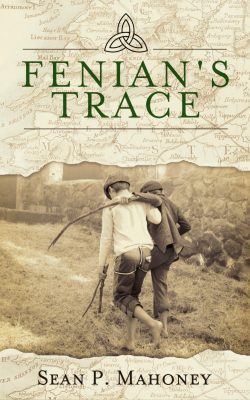
  • The OPTICAL LASSO: Beware of Neptune’s Dark Side by Marc Corwin – Space Opera, Sci-Fi Adventure, Fantasy Action/Adventure

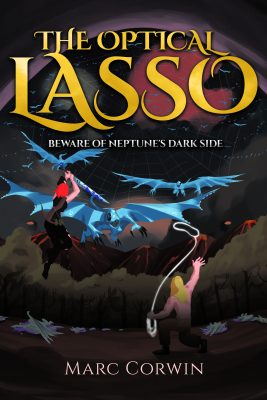
    The OPTICAL LASSO: Beware of Neptune’s Dark Side by Marc Corwin – Space Opera, Sci-Fi Adventure, Fantasy Action/Adventure

    Marc Corwin’s non-linear novel is jam-packed with science from the present era and over a century into the future. The wide-ranging tale of good versus evil overflows with wormholes, various iterations of the “dark side,” a truly miraculous invention (the lasso), shape-shifters, creatures that would not be out of place in Jurassic Park (notably the deadly goth, bringing literal meaning to “bat out of hell”), and all manner of spacecraft. It’s a veritable buffet for sci-fi devotees!

    At the center of it all is Jason Cody who nearly dies from what appears to be an incurable malady before reaching his seventh birthday, when a chance meeting with a puss-spewing creature immediately turns his fortunes around. The boy genius follows in his father’s footsteps into the U.S. space program and soon becomes the star astronaut. Using the science of his own invention while braving a treacherous wormhole on the way to Neptune and beyond, the incredible journey is accomplished in astonishing time, but Cody appears to have simultaneously vanished from the universe.

    Along for the ride in every sense of the word, is Lieutenant Janet Miles (a.k.a., Cat), the famed leader of the Fighting Fury (an all-female rescue team taking on harrowing assignments in the 22nd century). Incredibly, she teams up with Supreme Commander Cody to break out of a torturous prison. The escape itself is almost as fantastic as the fact that her sudden partner ought to be well over a century old and is as buff as the day he hurled away from Earth.

    The nemesis of nearly everyone in the book comes in the frequently altered shapes (evil incarnate predicted in the Centurions). Yet, it soon becomes apparent that this crimson entity who desperately wants to steal Cody’s lasso and put it to work for his own foul intentions is also the devil that wreaks havoc on Earth. Satan’s lair is the “now you see me, now you don’t” planet, Vixus, fully able to change its rotation and fueled by a mysterious force.

    Corwin has set himself an enormous task creating this multi-layered narrative aided by a large supporting cast filled with god-fearing troops and leaders alongside heartless liars who covet power and glory at any cost. The timeline shifts and backstory excursions, aided by the chapter headings, work very well.

    Finally, the ending is bound to produce mixed reactions, but without a doubt, readers will have a devil of a time getting there.

    5 Star Best Book Chanticleer Reviews round silver sticker

  • The QUEEN and KNIGHTS of NOR: Legends of Nor Book 1 by R.L. Stelzer – Children’s Fantasy, Sorcery/Magic, Epic Fantasy Series

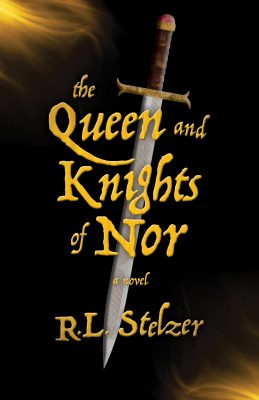
    The QUEEN and KNIGHTS of NOR: Legends of Nor Book 1 by R.L. Stelzer – Children’s Fantasy, Sorcery/Magic, Epic Fantasy Series

    Micha, Princess of Nor, can’t wait for her twenty-second birthday celebration. She wants to laugh with her sister, Olive, and their best friend and cousin, Dillip, and perhaps spend time with Percival, a prince from the nearby Mur. But her celebration is cut short when a messenger arrives at the manor with news that all of the inhabitants of the city of Valde, including her parents, have been enchanted by an evil witch Draka, who has escaped from her centuries-old mountain prison.
    Though she has trained her entire life to pick up the mantel of a ruler, Micha isn’t ready to command armies and save her people; however, when Draka allies with the southern dragons and eastern goblins, she has no choice but to take up arms and defend her land. Micha soon enlists the help of Susa, a strange old woman of the forest who is more than she appears. With Susa’s wisdom and the bravery of their father’s captain, Demetrius, Micha and Olive pursue Draka’s horde.

    There is one problem, they quickly learn that Draka can only be killed by a sword imbued with the blood of a great conqueror and wielded by his direct descendent. As the sacrifices pile up, Micha questions her ability to rule and wonders if anything will remain of the home she loves.

    The world of Nor is an enchanted land where birds and bears offer much-needed help to the worthy, and giants roam the land. It is a place where goblins attack heroes, pirates plague coastal cities, and talking rats the size of horses walk upright. In all of this fantastical world-building, heroes still ride in on valiant steeds, and goodwill defeat evil no matter the cost.

    Of these heroes, Micha is supreme. Her uncertainty in her abilities makes her a very human character. She doesn’t step into challenges knowing victory is certain. Micha questions her knowledge and sometimes feels the pull of Percival’s insistence that she shouldn’t have to shoulder all of the burdens that have been thrust upon her. She readily admits her fatigue and uncertainty but never shirks from her responsibilities.

    Percival’s fun-loving ways are a direct foil to Micha’s dynamic character growth. With a father who ousted giants and a mother who quelled a pirate rebellion, Micha has big shoes to fill; yet, even in youth, her wisdom shines. She also has the good sense to know her limitations. Often, she turns to Demetrius for help, and in a sense, they become partners who find their strength in each other. Putting the kingdom above herself, Micha willingly sacrifices whatever is needed to defeat the greedy hubris of Draka.

    Though Micha sacrifices much, many of the characters make similar sacrifices. Willing to die doing what’s right rather than live with the consequences of not fighting, these characters add to the righteousness of the novel’s message. Abbott, a half-breed giant, risks his life in warning Micha and then again by going to his giant family who ostracized him. Dillip suffers a significant loss when he fights the oldest dragon in Nor. Demetrius willingly faces off against Draka herself. All who see Micha’s bravery readily defend her and the kingdom, choosing action over complacency.

    Middle-grade students and those who love fantasy will quickly fall in love with the land of Nor and its heroic queen.

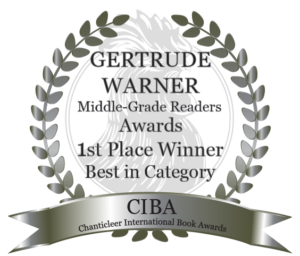
    The Queen and Knights of Nor won 1st Place in the CIBA 2017 Gertrude Warner Awards for Middle-Grade Fiction.


  • DEATH in the BLACK PATCH by Bruce Wilson – Historical Fiction, Tragic Plays, Family Saga

    DEATH in the BLACK PATCH by Bruce Wilson – Historical Fiction, Tragic Plays, Family Saga

    Drawing on fact, fable and inherited lore, author Bruce Wilson has created an imaginative, at times unsettling view of upheaval in southern American history and its effects on local culture, economy and family ties.

    With a large brood to care for, Wes Wilson grows tobacco in a region known as the Dark Patch, a cluster of counties in Kentucky and Tennessee. Their way of life suddenly comes under threat when the greedy reach of the newly burgeoning American Tobacco Company seeks a monopoly on the crop.

    In a powerful pushback, zealous local farmers form an Association sworn to combat ATC’s grip on their livelihood. To join the Association, or to ally with ATC, becomes Wes’s obsessive dilemma. Day by day he calls on his brother, cousin, and friends to see which way they are tending. Night by night he and his son Anthie keep vigil with firearms, lest their property becomes one of the targets of the Association, which menaces, even destroys, farms whose owners, like Wes, are still uncommitted in their loyalties. Wes’s steadfast wife Zora carries on the ceaseless round of women’s tasks, worrying and praying as she sees Wes more likely to take comfort from whiskey than from the Lord. The situation grows daily more perilous until Wes realizes that someone he believed he could trust with his secrets has turned traitor, and hell finally breaks loose.

    Author Wilson, a History Teacher by trade, has pieced his novel together from tales told by his father and a few snippets of evidence detailing his forebears’ involvement in what became known as the Black Patch Tobacco Wars of 1904-1909. Wilson’s settings and dialog are well rooted in the time and region. His ability to delve into the minds of his characters is a notable strength.

    Wes is introspective but gutsy—willing to step outside the comfort of his culture to examine all sides of the questions he faces while defending his homestead and family at any cost. Zora is the long-suffering partner who knows her husband as both a hard-drinking man with a deep well of anger and a hero who will put himself at risk to maintain his responsibilities. Their oldest boy, Anthie, is in love, and, seeking more time to pursue romance, often resents his father’s domination, while stolidly obeying him. Others add to the suspenseful plot creating depth and intrigue that will likely thrill readers.

    Wilson’s Death in the Black Patch is historical fiction at its best, melding a little- known patch of the big American picture with an exploration of one man’s willingness to fight corruption, destruction, and greed with the few weapons at his disposal—weapons that include a dogged determination to do what is right.

    Death in the Black Patch by Bruce Wilson won 1st Place in the 2017 CIBAs for American Western Fiction, the Laramie Awards.


  • What Literary Agencies and Acquisition Editors are Seeking in Manuscripts – Refreshing your Writer’s Toolbox from Jessica Morrell’s Editor’s Desk

    What Literary Agencies and Acquisition Editors are Seeking in Manuscripts – Refreshing your Writer’s Toolbox from Jessica Morrell’s Editor’s Desk

    What is it about a particular manuscript that makes it interesting to a literary agent (or the agent’s slush pile reader), acquisition editor, or professional reviewer?

    While it may take more than a crystal ball to figure out exactly what lit agents and publishing houses acquisition departments want and let alone reviewers, guidance can be had.  Line editors do understand what these gatekeepers want to see and, perhaps more importantly, what they do not want to see in a manuscript.

    Advice from line editors can be an author’s first line of defense in climbing out of the slush pile to gaining a gatekeeper’s interest. No crystal ball required.

    Jessica Morrell, a top-tier developmental editor for major authors and publishing houses, knows what these gatekeepers are seeking along with what makes them cringe.

    Editors, agents, and reviewers are word people, most were English or journalism majors in college and have a great love and respect for the written word. They will notice your level of craft within the first sentences, so your efforts must be polished, vivid and exceptional.

    Craft Tips & Techniques by Jessica Morrell, Editor

    (with Added Comments, from Kiffer Brown, publisher of Chanticleer Reviews magazine)

    • Your manuscript lives or dies on your opening sentences and each word must be perfect, precise, and weighted with meaning. 
      • (Most slushers (who work for agents and acquisition departments) do not read past the few pages of a manuscript. Don’t blame them for not reading more of your manuscript. Slushers have more works than they can possibly read in a month but have to slush in a given day. It is the writer’s job, neigh duty, to keep the slusher engaged. Slushers are professional readers who are panning for “gold and gems in the raw.”  This system is by design, btw.) 
    • Editors notice and are turned off by passive voice and wimpy verbs.
      • (Enough said.) 
    • Editors notice when the viewpoint jumps or shifts within a scene.
      • (This is a pet peeve of professional reviewers—an indication of lack of writing craft and skills.)
    • Editors notice too much telling (reporting or summary) and not enough showing in all types of writing including essays and memoir.
      • (A line editor can help with too much telling with comments and questions.) 
    • Editors notice when emotions are announced instead of dramatized.
      • (Reviewers call this “lazy writing.”)
    • Editors notice the frequent use of names in dialogue. Generally, leave out names.
      • (Multiple names, especially names that are similar, are irritating to reviewers. When the reviewer has to make notes about who is whom it had better be for furthering the plot significantly.) 
    • An editor notices sloppy punctuation such as excessive use of exclamation points, quote marks around inner thoughts, improper use of semicolons and ellipsis.
      • (Reviewers see this as the author not being professional about the work  (or his or her writing career) to have it professionally proofed – the most basic type of editing.) 
    • Editors notice protagonists who are not proactive, heroic in some way, and bigger than life. (
      • Reviewer’s Mantra – Novels are depictions of life without the boring bits.) 
    • Editors notice characters with a limited emotional range and expression.
      • (One-dimensional character and cardboard characters are uninteresting.) 
    • Editors notice large and small inaccuracies and inconsistencies—when the character has blue eyes on page 23 and green eyes on page 57; when a character drives an old, beat-up, pick-up truck that is inexplicably equipped with airbags; when an animal, plant, or species of any sort is misnamed or shows up in the wrong region of the country.
      • (Did the author care enough to do the background research for the work? These technical details’ correctness can make or break the construct of a story.)
    • Editors notice when technical details don’t ring true—such as in a mystery when police don’t follow standard arrest procedure; or when a yacht sinks from a single bullet hole; or explosive materials are used haphazardly.                  (See comment above.)
    • Editors notice vague descriptions (plant instead of ivy, a tree instead of oak) and generalities instead of details that bring the reader into a specific time and place.
      • (Vague descriptions are perceived as lazy writing which is not a reputation that an author would want to be known for.) 
    • Editors notice when writers don’t write for all the senses, especially leaving out smells.
      • (This is called the white room syndrome and it makes a manuscript about as boring to read as an old school telephone book.)
    • Editors notice small confusions such as misusing it’s and its, that and which, affect and effect, compliment and complement, lay and lie.
      • (With tools (apps) such as Grammarly and Grammar Girl, there is no reason for these misuses to occur. Additionally, these basics are covered thoroughly in The Elements of Style, a slim tome that is indispensable writers.) 
    • Editors notice overly long paragraphs and a general lack of white space. Generally, paragraphs are five or six sentences long and as taught in grade school introduce a topic, develop a topic, then conclude or lead on to the next paragraph.
      • (Edit, delete, cut your word count—as Stephen King says, “Kill your darlings.” The rule of thumb is that most manuscripts can be cut by 20 percent.)
    • Editors notice a lack of transitions—the words and phrases that announce a change in mood or emotion, time, and place so the reader can easily follow. They also know excess transitions as when you follow your characters across every room and along every sidewalk.
      • (Use transitions as you would salt and pepper—just enough but not too much. The correct amount of transitional phrases are the hallmark of solid writing.)  
    • Editors notice excess modifiers, purple prose, and too much description. The best writing is lean and economical and every word in every sentence has a job to do.
      • (Yes! Every word must move the story forward.) 
    • Editors notice a voice that is flat, inappropriate, or boring. Voice, whether it is the writer’s voice in an essay or the viewpoint character or narrator in fiction, must breathe life into the piece and hint at the person behind the words.
      • (Writing styles can mimick the guests at a cocktail party. There is always the bore who goes on and on and usually in too much detail also. The bore is the one guest who is the least tolerated even more so than the boisterous, the chatty, the tipsy, and even the know-it-all. But everyone loves the one who can tell a good story, or the who has a bit a mystery, and the one who is interested in others and respects others is always invited back. Respect your readers with your writing and your writing will earn respect.)


    Chanticleer Editorial Services

    Did you know that Chanticleer offers editorial services? We do and have been doing so since 2011.

    Our professional editors are top-notch and are experts in the Chicago Manual of Style. They have and are working for the top publishing houses (TOR, McMillian, Thomas Mercer, Penguin Random House, etc.). If you would like more information, we invite you to email Kiffer or Sharon at KBrown@ChantiReviews.com or SAnderson@ChantiReviews.com for more information, testimonials, and fees.

    We work with a small number of exclusive clients who want to collaborate with our team of top-editors on an on-going basis. Contact us today!

    Chanticleer Editorial Services also offers writing craft sessions and masterclasses. Sign up to find out where, when, and how sessions being held.

    Writer’s Toolbox


    Thank you for reading this Chanticleer Writer’s Toolbox article.

    Keep writing, keep dreaming, have heart. Jessica

    Keep on creating magic! Kiffer