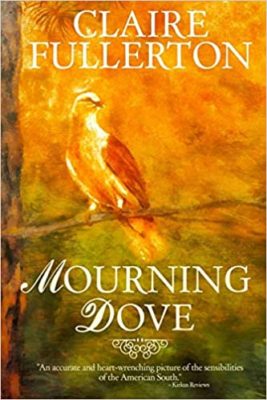
Camille Crossan appears to be living an idyllic life in Claire Fullerton’s poignant, evocative novel, Mourning Dove. Living in a superbly appointed mansion in “magnolia-lined and manicured” Memphis during the 1960s and 1970s, Camille’s family life shimmers with Southern charm. Her mother, Posey, usually outfitted in a Lily Pulitzer shift, Pappagallo shoes, and a signature shade of pink lipstick, is a beauty with the wryest sense of humor and steel determination.
As a young girl, Camille, known as Millie, sees how those in her mother’s social orbit are captivated by her aura, how men are easily seduced by her flirtatious charm. Society is a game played by those who know its rules, and Posey means to win. Every time. She, however, isn’t even the charismatic one in the family – that’s Finley, Millie’s older brother, who brims with intelligence, startling good looks, and messianic magnetism. A peek beneath the shiny surface of gracious Southern living, however, reveals enormous cracks in the foundation of the Crossan family. One of the first things the adult Millie tells us about her brother is that he is dead. She takes the reader back, though, to their childhood and coming of age, a tumultuous journey that both binds and separates the siblings.
During her first decade, Millie’s family was living in Minneapolis with her tender-hearted, intellectual father who succumbed to alcoholism. Loss of money and, worse, the accompanying loss of social status, motivates Posey to uproot her children and move them to her childhood home in Memphis, a palatial mansion filled with antiques and portraits of forebears. It’s a volatile time, inside and outside the house, as centuries-old Southern traditions clash with the youth counterculture.
Millie watches as her mother holds court during daily cocktail hours, a prospective second husband soon on the reel, and Finley, a gifted guitarist, plunges into the local music scene. But what role will she play? It’s difficult for her to see herself entirely separate from her brother for whom she has, “…a love devoid of envy, tied up in shared survival and my inability to see myself as anything more than the larger-than-life Finley’s little sister.” Millie will grapple with her identity and question her destiny, whether she’ll be a bride in the Southern belle mode of her mother or if she’ll be the blossom that falls far from the magnolia tree. Meanwhile, Finley’s charisma both explodes and implodes in shocking and dangerous ways as he becomes revered by a group of people with no connection to the gentrified life. Like Millie, the reader is transfixed and apprehensive about where this less-traveled road will take Finley. Although the reader knows his grim fate from the outset of the book, his storyline is so engrossing that no drama is lost.
Author, Claire Fullerton, is an enchantress with prose. The writing in this novel will cause you to stop, reread sentences, savor them, and note their architecture. Scenes sparkle as she masterfully summons moods and atmosphere. The reader can see Millie’s lovely but haunting home, and smell the rich fragrance of dogwood on a soft spring day. Fullerton has a keen ear for witty, authentic dialogue, and she deftly reveals much about personalities via conversation. It’s difficult to take leave of such a vivid, fully realized world. Fortunately for readers, Fullerton has written several books, opportunities to spend more time in her richly crafted worlds.
Mourning Dove won First Place in the CIBA 2018 Somerset Awards for Literary Fiction.
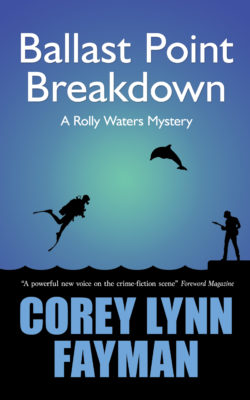
Secrets buried at sea have a grave tendency to resurface in time. The incident happened twenty years ago. A Naval exercise has gone wrong at a rocky point near San Diego. Not just wrong, it was a complete Ballast Point Breakdown. Butch Fleetwood participated in that Naval exercise. He was a rebel. After so many years, Butch Fleetwood is an urgent problem for P.I. Rolly Waters now, even though Butch Fleetwood is dead.
There’s a well-attended party at the San Diego Bay Admirals Club. Guests are enjoying a celebration of the Navy’s top-secret dolphin divers program on the brink of its retirement, and the pending release of the trained dolphins. The sounds of music and conversation fill the air. Then the sound of a motor dominates. A speedboat traveling the Bay approaches fast and crashes the party, right through the frontage windows. Janis Withers crawls out from the explosive blaze, and with her last breath, shouts that Arion has returned.
P.I. Rolly Waters wasn’t at the party, but heard about it from a fellow musician who was playing the gig. Rolly is hired to investigate and soon connects Butch Fleetwood’s dog tags to Janis. He had been one of the first Navy divers working in the secret dolphin program. The local police and the FBI are wary as Rolly uncovers clues about several prominent, and also some shadowy individuals. The Navy is not happy that Rolly is asking questions about Arion. With so much against him, Rolly incurs insults and much worse. He views the abuses as expressions of the other person’s fears. What’s worse are the dire threats he faces. Despite the questions and deterrence from the authorities, this determined musician/P.I. follows the trail to its exciting crescendo.
This is the fourth novel in the Rolly Waters mystery series, and author, Corey Lynn Fayman paints fascinating glimpses into the world of music and into the contrasting world of Navy programs. This book is a refreshing and contemporary remake of the classic P.I. Genre, including a thrilling and diverse group of supporting characters and suspects. The narration is crisp and bold and is part of the driving force that moves the plot forward at a high velocity.
Building suspense into a real page-turner is this author’s forte, and the resolution at the end is nothing short of breathtaking. Rolly Waters reveals that what can be seen on the surface may be a mere reflection of what someone designs. He digs deep to uncover what really happened so long ago. Seeing through the murky water of lies, he finds a wave no one was prepared to ride.
Let me introduce you to J.I. Rogers, one of our favorite authors here at Chanticleer Reviews!
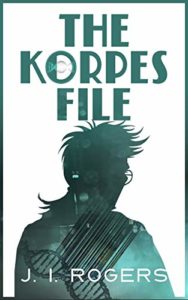
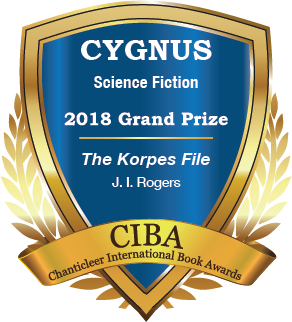
In 2019, J.I. Rogers was awarded the 2018 GRAND PRIZE in the Chanticleer International Book Awards for CYNUS – our Science-Fiction Division for her Space Opera, The Korpes Files, a cyber-punk sci-fi, dystopian space opera, and nothing has been the same since.
We asked J.I. Rogers to take part in our 10-Question Author Interview series to share with us her journey of becoming a CYGNUS Grand Prize winner.
Chanticleer: Tell us a little about yourself, how did you start writing?
Rogers: Well, the biography on my website starts off like this: I am a green-eyed, ginger-haired, caffeine addict who is currently working on The Korpes File Series.
When not acting as a conduit for the voices in my head or pursuing something artistic, I’m a poster child for Generation X and the Queen of most boondoggles that lead to eye-strain and tinnitus.
Ancient History: I’ve always had a love of science fiction, mythological, and fantasy themes. I attended Emily Carr Institute of Art and Design back in the 80s, studying film animation when it was still a college, and I have been working as a professional artist for over thirty years. My love of writing dates back just as far as my artistic ventures. I even had a small Fantasy APA/Fanzine called “Northwest Passages.”
Recent History: The Korpes File Series is my first foray into writing science fiction. The core concept for the series came to me thirty years ago, and it was then that I began the process of world-building. In that time the idea behind my series has shifted from being hard science fiction to space opera, to finally come to rest in the middle as a hybrid between dystopian and science fiction.
How did I start writing? In 2012, I was working as a concept wrangler for a couple of game design studios and was put in charge of world development for one of the projects. I wrote two cut-scenes based on situations that the players would encounter as an experiment. When that project concluded, the short stories were released back to me, and the encouragement I received was what prompted me to continue writing. I decided to expand on what I’d created and that’s when the Muse struck. NaNoWriMo followed a week later, and at the end of that November I had enough core material to know where I was going with my story.
Chanticleer: Rock on #NaNoWriMo! When did you realize that you were an author?
Rogers: Honestly? The first time it sank in was when someone had purchased a paperback copy of The Korpes File then traveled to meet me and asked if I would sign it.
Chanti: That always feels good, right? And now, you have the second in series! Please tell us more about the genre shifts that your work has made and what led you to write in this genre?
Rogers: The closest definition I could come up with for The Korpes File Series would be that it’s a blend of dystopian and science fiction elements. As I said earlier, the series began as hardcore science fiction then transitioned to Space Opera and then into what is now dystopian with science fiction elements with a healthy dollop of space opera mixed in as well. I’m a fan of character-driven plot. What led me to write in this genre? My Muse kept sending me love notes in the form of characters quotes and world-building concepts.
Chanti: I love it when that happens. Do you find yourself following the rules or do you like to make up your own rules?
Rogers: Life rules? I’m unconventional, but I’ve managed to get away with things thus far by waving the ‘eccentric artist’ banner over my head. In writing? I follow the rules in non-dialogue portions of my writing, mostly (I do use Oxford commas, adjectives, and past tense when appropriate). The only place you’ll see me play fast and loose is in dialogue; this flexibility allows characters to sound unique.
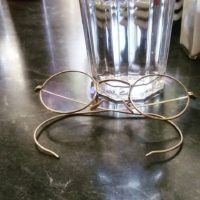
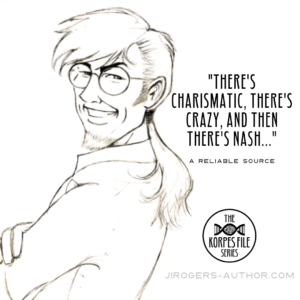
Nash’s glasses
Chanti: How do you come up with your ideas for a story?
Rogers: I find inspiration via many portals. I’ve discovered that downtempo psy-bient electronica, industrial, and angsty bands from the late 90s and early 2000s inspire my dystopian Muse. My Pinterest folder is bursting with images on everything from flora and fauna to human culture, science, geology, tech, space… You get the idea. I also save links to new and emerging technology there. Even the characters in my story have suggested elements to me… when they go off-road.
(Chanti: I think Pyewacket and Tannith have to take some credit here, too, don’t you?!)
Chanti: Name five of your favorite authors and describe how they influence your work.
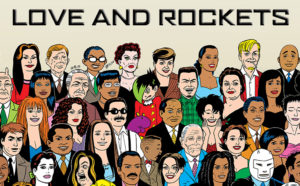
Rogers: My list is eclectic and includes artists: Jaime Hernandez – I’ve been a fan of Jaime for over thirty years. He and his brothers have demonstrated time and time again that you can tell a provocative, epic story with dimensional characters using both words and images. Love & Rockets is a masterpiece and I aspire to create something as beautiful.
Winner of the 2014 LA Times Book Prize! Image from the Publisher.
Barbara Hambly – While her storylines are great it was Barbara’s characters that spoke to me, and they grounded me into every event in the plot. I have re-read certain books just to re-experience these ‘old friends.’ When I finally decided to write, I made a point of finding the personality touchstones in all of my protagonists and antagonists.
Neil Gaiman – There’s a definite ‘other-worldly’ quality to his work; it’s like he exists somewhere between here and the twilight realm of Faerie and can translate that experience back. While I was designing aspects of Tamyrh and the aliens that hide in plain sight, I reflected on Mr. Gaiman’s “Sandman” series and allowed the ambiance to run its course.
James S.A. Corey – He recently displaced my favorite go-to for science fiction for the simple reason that he’s created a modern dystopian sci-fi epic that hasn’t fallen into the usual pitfalls of mocking itself or weighing itself down with unnecessary angst. If I want to escape my world but stay in the mood to write, I read Mr. Corey’s work or catch an episode of “The Expanse.” I don’t know if I’d call him an influence, rather a reminder that dystopian sci-fi can be done well.
Philip K. Dick – Our styles are different, but we definitely gravitate toward the same themes; his work lit a fire under my Muse back in high school. I’d like to add something about film here. I read Do Androids Dream of Electric Sheep before I saw the film Blade Runner, but the latter was what firmly cemented the love of noir, dystopian sci-fi in my soul. It was one of the first sci-fi films I’d seen that didn’t inject ‘comic relief buffoonery’ or ‘cute fuzzy creatures’ in order to expand its appeal. Alien, Logan’s Run, and 2001: A Space Odyssey are other fine examples that inspire.
Chanti: Give us your best marketing tips, what’s worked to sell more books, gain notoriety, and expand your literary footprint.
Rogers: Honestly, I haven’t reached the point where I’m selling millions of books; part of that may be due to my advertising budget, which is microscopic. This advice is aimed at those like me. I maintain an active presence on social media (the usual free ones – Facebook, Instagram, and Twitter) and I operate a Patreon page, where potential readers and fans can find out what I’m up to, ask me questions, get special offers and swag, etc. My Patreon page is now at the point where it covers my website fees as well as the production costs of book-related items like the limited-run character sketchbook.
I owe my modest notoriety as an author to the fantastic people who interact with me, both online and in real life. They have acted as my ‘street team’ and encouraged their friends to buy my books. I estimate that 70% of my sales are due to their efforts and I’m very grateful… now to find a way to get everyone to leave reviews too.
If you’re on a tight budget like me, my advice is:
Share posts with other authors and leave comments
Support your creative community
Create engaging content
Leave reviews
Shamelessly promote others
Chat with fans, and
Be positive without looking for direct evidence of karmic return. In other words, treat people the way you’d like to be treated. This seems to be working for me.
Also – treat your author time on social media like a job or it’ll become a time sink and you’ll not get any writing done.
Chanti: That’s great advice! What is the most important thing a reader can do for an author?
Rogers: I have two answers to this question.
A). If they enjoyed the book, then I’d encourage them to leave a review saying so. B) If they didn’t like the book, I’d ask that they offer some feedback via the author’s website. Simply saying it was bad isn’t helpful; no one improves without constructive criticism.
Chanti: Do you ever experience writers’ block? What do you do to overcome it?
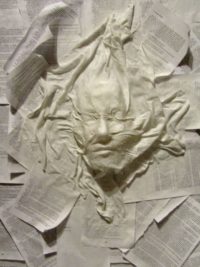
“Emerging Words” (which is a 18″ x 24″ artwork made from a mold of my face, silk, and pages from the proof copy of The Korpes File).
Rogers: My writing Muse sometimes takes an impromptu vacation and leaves me home, staring at the screen. When that happens, I’ll swap over to another project – usually art. Right now, I’ve got two illustration commissions on the go as well as Patreon projects. If that fails, there’s always gardening or my secret vice… MMORPGs like World of Warcraft.
Chanti: I think dialogue is where it’s at as far as character development – for sure. What do you do when you’re not writing? Tells us a little about your hobbies.
Rogers: I think my hubby would argue that I’m always writing as my ‘office’ pins down territory around the house depending on my mood. I draw, paint, sculpt, and garden (weather dependent on that last one – we get a lot of snow in the winter).
Chanti: Thank you, J.I. Rogers, for sharing your author journey with us. I am looking forward to seeing you at the next Chanticleer Authors Conference.
J. I. Rogers won the CYGNUS 2018 Grand Prize because The Korpes Files rock! And also, because she dared to enter the work into the CYGNUS division of the Chanticleer International Book Awards…
In other words, if you don’t enter, you will never know how your work stacks up against the other entries.
If you want a shot at the HONOR of CYGNUS SciFi Book Awards for 2020, don’t delay, enter the CYGNUS B00k Awards today!
The Cygnus Book Awards recognize emerging new talent and outstanding works in the genre of Science Fiction, Steampunk, Alternative History, and Speculative Fiction. The Cygnus Awards is a genre division of Chanticleer International Book Awards (The CIBAs).
Chanticleer International Book Awards is looking for the best books featuring space, time travel, life on other planets, parallel universes, alternate reality, and all the science, technology, major social or environmental changes of the future that author imaginations can dream up for the CYGNUS Book Awards division. Hard Science Fiction, Soft Science Fiction, Apocalyptic Fiction, Cyberpunk, Time Travel, Genetic Modification, Aliens, Super Humans, Interplanetary Travel, and Settlers on the Galactic Frontier, Dystopian, our judges from across North America and the U.K. will put them to the test and choose the best among them.
Chanticleer Book Reviews & Media, L.L.C. retains the right to not declare “default winners.” Winning works are decided upon merit only. Please visit our Contest Details page for more information about our writing contest guidelines.
CBR’s rigorous writing competition standards are why literary agencies seek out our winning manuscripts and self-published novels. Our high standards are also why our reviews are trusted among booksellers and book distributors.
Please do not hesitate to contact Info@ChantiReviews.com about any questions, concerns, or suggestions about the Chanticleer International Book Awards. Your input and suggestions are important to us.
Click here for more information about the Chanticleer Book Reviews International Book Awards.
The Cygnus Book Awards recognize emerging new talent and outstanding works in the genre of Science Fiction, Steampunk, Alternative History, and Speculative Fiction. The Cygnus Awards is a genre division of Chanticleer International Book Awards and Novel Competitions (The CIBAs).
Chanticleer International Book Awards is looking for the best books featuring space, time travel, life on other planets, parallel universes, alternate reality, and all the science, technology, major social or environmental changes of the future that author imaginations can dream up for the CYGNUS Book Awards division. Hard Science Fiction, Soft Science Fiction, Apocalyptic Fiction, Cyberpunk, Time Travel, Genetic Modification, Aliens, Super Humans, Interplanetary Travel, and Settlers on the Galactic Frontier, Dystopian, our judges from across North America and the U.K. will put them to the test and choose the best among them.
The 2019 CIBAs received an unprecedented number of entries making this book awards program even more competitive. More entries along with more competitive works makes the final rounds of judging even more demanding. The judges have requested a new level of achievement to be added to the rounds to acknowledge the entries that they deemed should receive a high level of recognition.
We decided that this was the time to incorporate the new level – The FINALISTS – as requested by the CIBA judges. This new level will be incorporated into the 2019 CIBAs Levels of Achievement. The FINALISTS were selected from the entries that advanced to the 2019 CYGNUS Semi-Finalists level.
Congratulations to the 2019 CYGNUS Book Awards FINALISTS!
David C. Crowther – City of Drowned Angels
William X. Adams –Intelligent Things
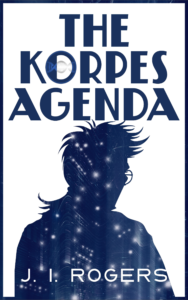
J. I. Rogers –The Korpes Agenda
Erick Mars & Mike Wood –A Legacy of Wrath
Rey Clark –Titan Code: Dawn of Genesis
Trever Bierschbach –Embers of Liberty
Tim Cole –Insynnium
Shami Stovall –Star Marque Rising
Sandra J. Jackson –Playing in the Rain
Samuel Winburn –Ten Directions
Andrew Lucas McIlroy –Earthling
Paul Werner –Mustang Bettie
Jacques St-Malo –Cognition
Timothy S. Johnston –The War Beneath
Robert M. Kerns –It Ain’t Over…
Paul Ian Cross –The Lights of Time
Lawrence Brown –David: Savakerrva, Vol. 1
Congratulations to all whose works have advanced to the FINALISTS level.
All Semi-Finalists and Finalists will be recognized at the 2020 Chanticleer Authors Conference and the 2019 CIBA banquet and ceremony.
Good luck to all as your works move on the next rounds of judging for the limited 2019 1st Place Category Positions and the 2019 CYGNUS Book Awards Grand Prize.
The 2019 CYGNUS Grand Prize Winner and the Five First Place Category Position award winners along with the FINALISTS and Semi-Finalists will be recognized at the Sept 5, 2020 Chanticleer International Book Awards Annual Awards Gala,which takes place at theChanticleer Authors Conference, Bellingham, Wash.
Because of the COVID-19 pandemic, CAC20 has been rescheduled from the original date in April to September 4 – 6, 2020 with Master Classes to be held on Thursday, September 3. The CIBA Banquet and Ceremony is scheduled for Saturday, September 5, 2020.
We are now accepting submissions into the 2020 CYGNUS Awards writing competition. The deadline for submissions is April 30th, 2020. The winners will be announced April 2021.
As many of you know, we announce the coveted First Place Category Winners and Division Grand Prize Winners of the Chanticleer International Book Awards on the Saturday evening of the annual Chanticleer Authors Conference (CAC). CAC hosts the CIBA banquet and ceremony at the luxurious Hotel Bellwether, located on Bellingham Bay, Washington state. Attendees hail from around the globe and across North America.
CAC20 was scheduled to happen the weekend of April 17-19, 2020 with the Master Classes scheduled for Thursday, April 16.
Because of the COVID-19 pandemic, CAC20 has been rescheduled to September 4 – 6, 2020 with Master Classes to be held on Thursday, September 3. The CIBA Banquet and Ceremony is scheduled for Saturday, September 5, 2020.
Alas, now with the highest spikes in new COVID-19 confirmed cases, we have decided to go VIRTUAL with ZOOM
NEW DATES: Tuesday, Sept. 8th daily through Sunday, Sept. 13th, 2020.
This post was updated on July 14, 2020. Kiffer Brown
We rescheduled the conference on March 11, 2020 and notified registered attendees by email. We then announced the postponement on the Chanticleer website, social media, and with a direct email blast.
If you have ever attended a CIBA banquet and ceremony, then you know already just what a special evening of celebration it is. Many of you are looking forward to this evening and want to experience the anticipation that the gala affair brings to the Chanticleer Writing Community.
CIBA Grand Prize Winners
We have received many emails and messages requesting that we wait to announce the CIBA winners until the planned September gala evening on scheduled for Saturday, Sept. . We have also received a few emails requesting that we announce the winners closer to the originally scheduled event. DATES HAVE BEEN CHANGED as of July 9, 2020. The conference and ceremonies will be held VIRTUALLY due to the recent high spike levels in the new confirmed cases of the coronavirus. New DATES are: Tuesday, Sept. 8th daily through Sunday, Sept. 13th, 2020.
This is what we decided to do:
All CIBA Semi-Finalists are recognized at CAC and at the CIBA banquet and awards ceremony. This year we have added to their recognition by promoting the Semi-Finalists in the Spring Issue of the Chanticleer Reviews magazine that will feature international bestselling thriller author Robert Dugoni and Dr. Janice S. Ellis, Journey Grand Prize Winner and Civil Rights Journalist. (Available for purchase in print and digital on Wed. April 20th) – visit this page on the website for more info if you have not already subscribed.) We will also recognize any 2019 Semi-Finalists in attendance at CAC20 in September at the CIBA banquet and ceremony.
Read the New Information Below about the 2019 and 2020 CIBAs!
The 2019 CIBAs received an unprecedented number of entries making this book awards program even more competitive. More entries along with more competitive works makes the final rounds of judging even more demanding. The judges have requested a new level of achievement to be added to the rounds to acknowledge the entries that they deemed should receive a high level of recognition.
New Information: We decided that this was the time to incorporate the new level – The FINALISTS – as requested by the CIBA judges. This new level will be incorporated into the 2019 CIBAs Levels of Achievement. (See the info-graphic below.)
The 2019 CIBA Finalists for each division will be announced over the next few weeks. The CIBA First Place Category Winners, Division Grand Prize Winners, and Overall Grand Prize Winner will be determined from the CIBA Finalists and announced from n September 5, 2020 at the CIBA Banquet and Ceremony scheduled for Sept. 5, 2020 during CAC20. DATES HAVE BEEN CHANGED as of July 9, 2020. The conference and ceremonies will be held VIRTUALLY due to the recent high spike levels in the new confirmed cases of the coronavirus. New DATES are: Tuesday, Sept. 8th daily through Sunday, Sept. 13th, 2020.
Each CIBA Division will have its own digital badge and badges for print! Links to badges will be available in the FINALISTS official notification email. An example of the badge is below for the CYGNUS Book Awards division.
New Information: The NewDeadline Dates for Submissions into the 2020 CIBA Divisions have been changed to give the judges more time to work through the entries and allow more time for tabulation. We hope that this will give the 2020 CIBA participants more time to consider attending the awards banquet and ceremony. (CAC21 is scheduled for April 16-18, 2021)
New Information: New CIBA Divisions have been added!
New Division for Fiction: The Mark Twain Book Awards for Satire and Allegory Fiction.
New BOOK AWARDS for FICTION BOOK SERIES: As requested, the CIBAs now included the Fiction Series Book Awards.
And Three New Non-Fiction Divisions have been added for the 2020 CIBAs. Be sure to visit the web page with the new divisions.
We are accepting entries into the 2020 CIBAs! Don’t Delay! Enter Today!
So without further ado, we are honored to announce the next round in the 2019 Chanticleer International Book Awards – The CIBA FINALISTS!
Below is an info-graphic of the CIBAs Levels of Achievement
There are 17 divisions in the 2019 CIBAs. We will announce each division’s FINALISTS during the next few weeks starting this weekend – April 18, 2020.
Be sure to stay tuned for the 2019 FINALISTS Announcements!
A note from Kiffer and Sharon
It seems to us that everyone is and has been overwhelmed with the general scrambling around to try to batten down the hatches for the storm named COVID-19 while trying to make sense of what is happening on different fronts, taking care of loved ones, along with trying to procure supplies for self-isolation. Many of us are working remotely, some of us have to home school children, and if you are like me you find yourself cooking and cleaning up more than e-v-e-r. Sheltering-in-place takes a lot of energy and focus, wouldn’t you agree?
We thank you for patience and understanding during these unprecedented times. It is much appreciated by Sharon and me and the entire Chanticleer Team of Editors, Reviewers, CIBA Judges, Contributors, Graphic Designers, Student Interns, Admin Assistants, and Andy – the wizard who heads up all of the “under the hood technology.”
We encourage you to stay in contact with each other and with us during this stint of practicing physical distancing to prevent the spread of COVID-19.
Let us know how you are doing, what is going on where you live, how are you progressing on your writing projects.
I invite each of you to join us atThe Roost– a private online Chanticleer Community for writers and authors and publishing professionals.
We are active onFacebook,Twitter, and Instagram. You can find us by using our social media handle @ChantiReviews
Minimize physical contact! Maximize social connecting!
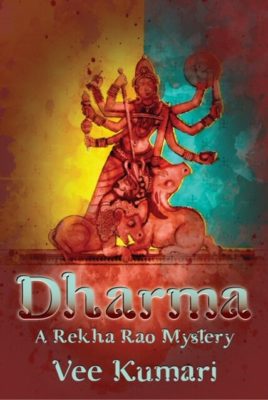
A complex murder mystery always requires a little spice. In Dharma, A Rekha Rao Mystery, that extra seasoning is provided by the casting of an Indian American woman as the amateur sleuth, despite her realistic fears for her personal safety.
Professor Rekha Rao is no Bollywood Mighty Girl. She’s a whip-smart American-born 32-year-old college instructor who must deal with her own PTSD after the murder of her father and her unstoppable passion for releasing the man wrongly convicted of her father’s slaying. That obsession is the reason Rekha was dismissed from her old teaching position. The scene is set for deep, personal involvement in the murder of a colleague, a fellow professor who is killed. And a rare, centuries-old statue excavated from an archeological dig in India is the murder weapon.
When Rekha, an expert in the art of ancient India, is asked by the Pasadena police for some background on the statue of Durga, a well-known goddess in India’s rich religious tapestry, she’s not content to limit her investigation to the narrow role assigned to her. Despite the handsome police detective’s warning to not continue the investigation, she turns over every rock to look for answers. She soon uncovers a galaxy of possible suspects: friends, colleagues, and students – many of whom may have motives to see harm done to the seemingly beloved professor. Art theft, a closeted gay man, a hidden affair, and even a little cross-dressing make their way into the mountain of evidence as Rekha works through territory that the police have not yet uncovered.
Rekha Rao is a well-drawn character with many facets to her personality. Her Indian heritage is evident in her food tastes, decorations, and family values. Still, she is clearly a modern American woman making her way in a very different culture. Rekha sets out to solve the mystery despite the fear that someone is stalking her – even as she stalks them.
Dharma, A Rekha Rao Mystery will also provide readers with a glimpse into the religious history of India’s gods and rich mythology. This is one of the hidden treats that makes the novel an enjoyable read for mystery lovers everywhere.
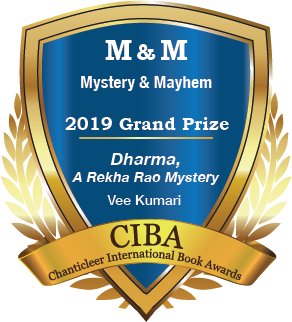
Dharma, A Rekha Rao Mystery won the Grand Prize for Mystery & Mayhem in the 2019 CIBAs!
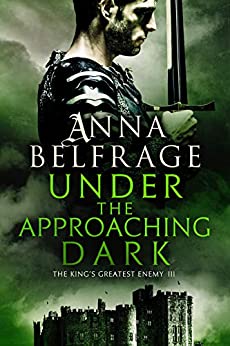
Christopher Marlowe’s The Tragedy of Edward the Second (1592) and Derek Jarman’s film (Edward II, 1991) fans will want to sit up and take notice of how Anna Belfrage navigates her way through this installment of the Under the Approaching Dark, the third book in The King’s Greatest Enemy series. With a vast cast and two kings from the same family to deal with, the challenges were immense. And she’s succeeded.
The narrative is built around two males – decades apart – who may or may not be alive or dead. Four-year-old Tom arrives at the home of his mother, Kit, and father, Adam – a knight of the realm – in a recently exhumed coffin. No one wants to believe the lad is dead, and William (a vicar; Adam’s brother) recommends not opening the lid to view the rotting remains but assures one and all that the corpse is most certainly the couple’s eldest boy. But Kit never gives up hope.
The second male, King Edward II, also has difficulty staying alive or dead. Deposed for outlandish behavior in the bedroom and at court, his long-suffering wife Isabella teams up with Roger Mortimer to rule the country and place Edward III on the throne while yet a teenager. To add further twists to the plot, Edward of Carnarvon – after reportedly being killed while under arrest – is provided a resurrection and exile to France.
Enemies to both Edwards abound. Henry of Lancaster is afraid of losing a considerable amount of land if peace is reached with the Scots and Godfrey of Broseley delights in inflicting pain and torture on anyone who would dare stand in his way to power and riches – man or woman. Kit’s half-sister Alicia is deft at playing both sides to her advantage. But her sibling is not fooled.
History buffs and devotees of political intrigue will enjoy this generously written account of the royals struggling to stay on the throne even as some of those in their court change allegiances whenever they see an opportunity for personal gain. Belfrage’s sense of pace, in-depth characterization of the principals – coupled with a few surprises along the treacherous journey to safety and security with the minimum of bloodshed – is a remarkable achievement. Her ability to convincingly weave together so many people and narrative threads will keep readers’ interest high and encourage them to snap up the next volume in the series.
Under the Approaching Dark won first place in the CIBA 2018 CHAUCER Awards for Early Historical Fiction.
Five young friends from then-English Newfoundland and Ireland together join a regiment to serve in the war, as does a young nurse from Dublin. At first, a reader might be lulled into thinking this is a light-hearted Irish dialect-filled romp a la Finian’s Rainbow, but the novel takes us deep into the lives of its characters as they serve in the bloody trenches, convalesce, and try to live normal lives despite the physical and emotional damages they suffered.
Diedre, the tough but emotionally scarred nurse, Jack, who left “bits” of him on the battlefield, Will, with his invisible yet no-less devastating wounds—these are a few of the complex yet wholly identifiable characters who become alive through this novel’s pages. These are no simplistic people. Their humanness, their frailties confronted by the awfulness of the war, gives the book its special heart.
As much as we live through the late 1910s and early 1920s, there are few strictly historical passages. The characters live in those times, not declare them. There are no “war is over” scenes, only the heartbreaking aftermath of the war’s end on the characters. Yet, the book ends with the central characters’ futures well in hand, moving through the post-war era with the 1920s, Prohibition, and the foreshadowing of “the Troubles” beginning to play a part in all their lives.
Above all, the book is about enduring friendships and the nature of being human. The author compels us with his characters and how they rally together in times of crises and stand up for one another when the going gets tough. There is no sugar-coating what happens to them, and yet their long-standing bonds are what pulls them through for readers to form a special connection with one and all of them. The reader may be better for having met them all. Certainly, None of Us the Same will stay with the reader long after the book is put down.
None of Us the Same is the first of three novels in the series entitled “Sweet Wine of Youth,” and won First Place in the CIBA 2018 GOETHE Awards for Historical Fiction.
The plot should always somehow scar or wound the protagonist and put something valuable at risk.
Protagonists suffer. Period. Paying heavy costs make characters relatable. I swear by these statements. Jessica Morrell
Making protagonists suffer in storytelling creates stakes, motivation, and tension.
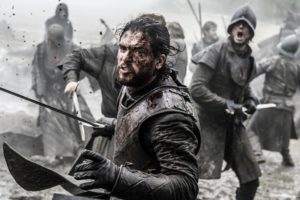
Jon Snow – Game of Thrones
Remember that fictional characters must take more risks than ordinary humans. But as in real life, not all risks pay off, but the cost should always be much higher in fiction. Along the way friendships, allies, freedom or safety might be lost. Such is the cost of fiction.
Even in comedies and cozy mysteries…
How much will the protagonist suffer? Sacrifice? Regret?
Before I go further, it’s important to point out this doesn’t mean your protagonist will always be a martyr or your story ends in tragedy. But everything can be on the line in the fictional universe: friendships and allies, family, love, prestige, honor, trust, hope, money. Betrayals might happen. Long-held secrets revealed. Obviously these possibilities create emotional distress.
The Harry Potter novel series is a prime example of making your protagonist suffer from getting used mixed match socks for his birthday to betrayals to long-held secrets revealed.
Just How Much Trouble Can this Kid Get Into?
Not to mention to physical costs like pain, injuries, and body parts. Think Katness fighting for her life in The Hunger Games and going deaf in one ear. Then she’s forced to fight for Peeta’s life because he’s been badly injured. (In the book, not the film series, he loses a leg)
Speaking of body parts: remember the suffering doled out by psychotic fan Annie Wilkes in Misery by Stephen King?
Gulp.
Misery by Stephen KingBecause bad things happen to our favorite characters. Really bad things. Your character’s suffering will always reveal his or her depths and strengths. Suffering always advances the plot. If it doesn’t, leave it out of your story. Allow me to say it slightly different: any suffering, sacrifice, regret, betrayal, pain, or loss must advance the plot.
Let’s look at some examples:
Jem Finch loses his innocence when he realizes the depth of racism in his small town in To Kill a Mockingbird.
Rocky Balboa is brutally beaten and loses to Apollo Creed. But he goes the distance and wins love.
Juno MacGuff not only gives up her baby, but learns that the adoptive father-to-be is a man-child. She’s forced to risk giving her baby to a single mom instead of the stable couple she’d hoped for.
Woody of the Toy Story series loses friends, risks his pride, leadership role,and life, battles greed and heartlessness. All these costs bring him maturity and wisdom.
Woody of Toy Story
In The Godfather the Corleone family loses their oldest son in the mob war that breaks out. Unfortunately it was Sonny’s impetuousness that started the war. The inciting incident, or catalyst in the story is a meeting between the Corleone family and are representative for the Tattaglia family. This issue on the table is investing a million dollars to get into heroin-trafficking business. Sonny, going against protocol, reveals his interest in the money-making scheme.
After an attempt on the godfather’s life, and with the body count rising, Michael, the youngest son, commits murder and is forced into hiding. The story follows his profound character arc from war hero and college graduate to cold-hearted mob boss. He loses his humanity with each power move and act of revenge.
Michael Corleone and the Godfather
Bad decisions often make things worse. Because fictional characters screw up a lot. Which brings on more misery, self-doubt, and need for more risks.
Questions to consider when plotting:
Is the cost justified?
Will readers realize the cost or sacrifice is too great before the protagonist will?
Does the protagonist understand the cost involved or is he or she naive? Untested?
Can you make the toll affect several aspects of the protagonist’s life? Can the plot exact physical, emotional, financial tolls?
Will the cost involve another character? A vulnerable character?
Will the protagonist be exposed, peeled bare while paying the cost?
Will other characters try to dissuade the protagonist from paying the price?
Can you make the cost or sacrifice or pain visceral and believable?
Moral Dilemmas to consider when plotting:
Principled choices and decisions will always create actions and consequences. They always drive the story forward.
Unprincipled choices and decisions typically cause chaos, pain, and also propel the story ahead. An example fromJurassic Parkhappens when the park employee-computer whiz leaves the grounds to sell off dinosaur DNA. His actions, taken during a horrendous storm, opens a Pandora’s box of disasters and life-and-death consequences.
The ramifications from all important decisions should be long lasting.
The higher the stakes, the higher the drama.
The choices often underline the genre type. A suspense story is often based on finding justice so decisions will hold a lot of weight and consequences.
Don’t provide characters easy answers. Corner them, stress them out, push them past their limits.
Know your fictional casts’ moral codes.
Search out the important dilemmas in stories, noticing the enormous variety and possibilities. Are there shades in right from wrong? Is the crime story about sorting real justice from mob justice; truth from lies? Are actions based on loyalties, faith, science, passion?
Homework
Your homework this week: Can you identify the cost in stories you read and films you watch?
Keep writing, keep dreaming, have heart. Jessica
Our next marketing posts will be on SOCIAL MEDIA and PROMOTION TIPS for Selling Books ONLINE and New Selling Platforms.
Our next editorial posts will be on Character Development. So, please stay tuned…
Jessica Page Morrell
Jessica Page Morrell is a top-tier developmental editor for books and screenplays. Her articles have appeared in Writer’s Digest and The Writer magazines. She is known for explaining the hows and whys of what makes for excellent writing and for sharing very clear examples that examine the technical aspects of writing that emphases layering and subtext. Her books on writing craft are considered “a must have” for any serious writer’s toolkit.
Jessica will teach theMaster Craft Writing Classesat theChanticleer Authors Conferenceon Thursday, Sept. 3, 2020 and will present sessions during the conference. She and Kiffer will also host a fun kaffeeklatch for Word Nerds at CAC20.
Did you know that Chanticleer offers editorial services?We do and have been doing so since 2011.
And that our professional editors are top-notch and are experts in theChicago Manual of Style.They have and are working for the top publishing houses (TOR, Macmillan, Thomas Mercer, Penguin Random House, etc.) and award-winning independent presses. If you would like more information, we invite you to email Kiffer or Sharon at KBrown@ChantiReviews.com or SAnderson@ChantiReviews.com.
We work with a small number of exclusive clients who want to collaborate with our team of top-editors on an on-going basis. Contact us today!
Writer’s Toolbox
Thank you for reading this Chanticleer Writer’s Toolbox article.
We encourage you to stay in contact with each other and with us during this stint of practicing physical distancing to prevent the spread of COVID-19.
Let us know how you are doing, what is going on where you live, how are you progressing on your writing projects.
I invite each of you to join us atThe Roost– a private online Chanticleer Community for writers and authors and publishing professionals. You are welcome to email me for more info also.
We are active onFacebook,Twitter, and Instagram. You can find us by using our social media handle @ChantiReviews
Minimize physical contact! Maximize social connecting!
Ruth Hull Chatlien’s historical novel Blood Moon: A Captive’s Tale shines a light on two worlds trying to coexist in the 1860s Minnesota, that of Westward Expansion and white settlers, and that of the complex network of Sioux tribes dealing with starvation and disease. We follow her protagonist, Mrs. Sarah Wakefield, as she is thrust unwillingly into the midst of the Indian Wars.
Based loosely on the life of real captive, Sarah Wakefield, Chatlien explores both sides of this conflict, through the eyes of our terrified hero, who does what she must to save her life and the lives of her two small children. The first-person narrative in present tense places us in the thick of Wakefield’s narrow escapes, and the presence of the constant threats to her and her children.
Sarah Wakefield has one goal, to save her children, and if that means dressing like a Sioux and helping her captives gather water, forage and cook food, and set up the teepee, so be it. Her fellow captives, mostly women and children maintain their prejudiced and racist attitudes, but Wakefield does not. She sees her captives as human beings, not “savages,” who are trying to survive just as she is.
Chatlien expertly exposes the mindset between members of the Sioux tribe who had converted to Christianity and those who refused to convert. She exposes the injustices of an American Government that defaulted on treaty promises, causing starvation, illness, and death among the tribes, and the solution that many tribal warriors felt was their only recourse—war.
Wakefield sees the dichotomy of those warriors who want to fight and those who have converted to Christianity and become farmers. She feels the losses endured by those who didn’t want to fight because of their beliefs, but she realized that death would be their penalty if they refused.
The underlying themes in Chatlien’s novel provide us a complex and multidimensional read that captivates. Sarah is married. But her marriage is rocky—okay. Rumors of her past don’t help her present situation. But the woman she becomes as she survives her terror and provides for her children is a woman who will go to battle for a Sioux warrior in a court of law, even if it means losing her marriage and becoming a social pariah. At times readers may wonder if Wakefield might be an unreliable narrator suffering from “Stockholm Syndrome.” Nevertheless, she fights for the warrior who protected her and fights to save his life as he had saved hers.
The injustices Chatlien shines her fictional light on are bound to grate on the progressive-minded reader of 2020, and the conclusion to this narrative based on real events will undoubtedly leave us wondering how little has changed in race relations in the USA. Chatlien shows how simple gossip and the petty mindsets of the “normal” Christian women were as big a detriment to Wakefield’s survival in the Indian Wars.
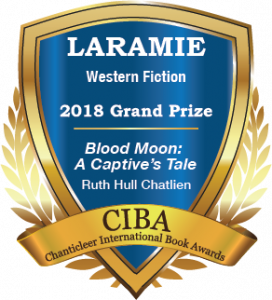
Blood Moon: A Captive’s Tale won Grand Prize in the CIBA 2018 LARAMIE Awards for American Fiction.

 Camille Crossan appears to be living an idyllic life in Claire Fullerton’s poignant, evocative novel, Mourning Dove. Living in a superbly appointed mansion in “magnolia-lined and manicured” Memphis during the 1960s and 1970s, Camille’s family life shimmers with Southern charm. Her mother, Posey, usually outfitted in a Lily Pulitzer shift, Pappagallo shoes, and a signature shade of pink lipstick, is a beauty with the wryest sense of humor and steel determination.
 Secrets buried at sea have a grave tendency to resurface in time. The incident happened twenty years ago. A Naval exercise has gone wrong at a rocky point near San Diego. Not just wrong, it was a complete Ballast Point Breakdown. Butch Fleetwood participated in that Naval exercise. He was a rebel. After so many years, Butch Fleetwood is an urgent problem for P.I. Rolly Waters now, even though Butch Fleetwood is dead.
 The Cygnus Book Awards recognize emerging new talent and outstanding works in the genre of Science Fiction, Steampunk, Alternative History, and Speculative Fiction. The Cygnus Awards is a genre division of Chanticleer International Book Awards and Novel Competitions (The CIBAs).


 Christopher Marlowe’s The Tragedy of Edward the Second (1592) and Derek Jarman’s film (Edward II, 1991) fans will want to sit up and take notice of how Anna Belfrage navigates her way through this installment of the Under the Approaching Dark, the third book in The King’s Greatest Enemy series. With a vast cast and two kings from the same family to deal with, the challenges were immense. And she’s succeeded.
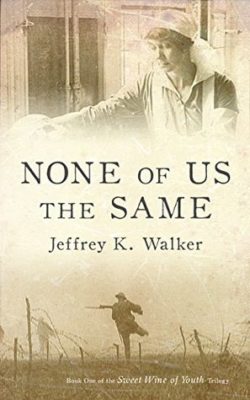
 Five young friends from then-English Newfoundland and Ireland together join a regiment to serve in the war, as does a young nurse from Dublin. At first, a reader might be lulled into thinking this is a light-hearted Irish dialect-filled romp a la Finian’s Rainbow, but the novel takes us deep into the lives of its characters as they serve in the bloody trenches, convalesce, and try to live normal lives despite the physical and emotional damages they suffered.








 Ruth Hull Chatlien’s historical novel Blood Moon: A Captive’s Tale shines a light on two worlds trying to coexist in the 1860s Minnesota, that of Westward Expansion and white settlers, and that of the complex network of Sioux tribes dealing with starvation and disease. We follow her protagonist, Mrs. Sarah Wakefield, as she is thrust unwillingly into the midst of the Indian Wars.