 During World War II “quisling” became a byword for a particular type of traitor, one who not only betrays their own country but also actively collaborates with the invaders. The origin of the term was taken from an actual person, a Norwegian named Vidkun Quisling, who didn’t merely cooperate with the Nazis but actually headed a collaborationist regime in his own country.
The Quisling Factor takes place in the immediate post-war period, as the Nuremberg Trials are gearing up in Germany. Norway is conducting its own post-war legal purge of collaborators at all levels of government.
The story is a direct follow-up to the author’s award-winning World War II novel, The Jøssing Affair. This second novel focuses on the physical and emotional toll of war, and its precarious weight of peace on the survivors.
While the events of J. L. Oakley’s latest novel directly relate to those in The Jøssing Affair, each book is quite capable of standing alone. The first one deals directly with the dangers of war, particularly for those who were part of the anti-Nazi resistance. The Quisling Affair is a peacetime story. While the novel definitely deals with the war’s aftermath, it also sits on the chilling crossroad between a spy thriller and Nordic noir, as the dangers faced by former intelligence officer, Tore Haugland, his wife Anna and his Norwegian family face in two directions.
During the war, Tore was captured by the Gestapo, then tortured by Henry Oliver Rinnan, a Norwegian who ran a notorious organization that targeted resistance organizations in the Trondheim region. He is now scheduled to testify against Rinnan and his vicious gang. While those leaders are in prison, someone on the outside clearly does not want Tore to testify. His family is being threatened to perhaps block his testimony. There is also the possibility of betrayal from within. Not all of Tore’s Norwegian family is willing to accept his half-German, half-American wife as they are unable to separate their suffering at the hands of the Nazis from her heritage.
This meticulously researched historical epic delves deeply into the traumas of all the survivors, whether military, resistance, or civilian, as well as peering into the abyss that lies between the horrors behind them and the hopefully brighter future ahead. The reader sees into Tore’s mind and empathizes with the way that his war continues to eat at him – and his heart that has chosen not just to survive but to love again.
We highly recommend The Quisling Factor for readers looking for an exceptional post-WWII story, for a fantastic thriller with both espionage and domestic elements, and for anyone who loves Nordic noir and would like to see it set in another era. This book is a winner.


 It’s as if a large chunk of her heart was wrenched away in an instant. Celia’s twin sister died suddenly in a terrible accident. Now Celia is haunted by this dear sister who is gone forever. Moreover, the emotional distance between herself and her parents, the only family that’s left behind, is painful. From her hell on earth, she yearns for her own, Celia’s Heaven, where all could be right again. But the road to Heaven is paved with broken promises and a shattering revelation.
 In this stirring, coming of age saga by J. R. Collins, an old man shares his recollections of a time when the good old life was turning bad in his home region of the Tennessee mountains.
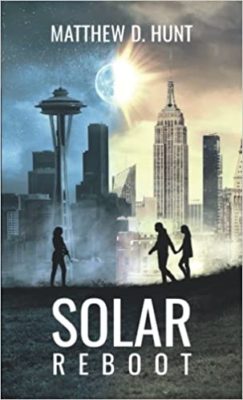
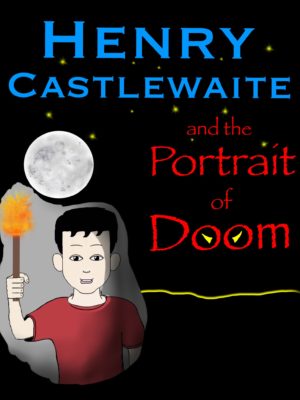
 There’s a lot about life on earth that we take for granted. Most of us go about our daily lives, but what would happen if the sun shot out a gigantic solar flare. Would we survive? What would happen to us?

 The SOMERSET Book Awards recognize emerging talent and outstanding works in the genre of Literary, Contemporary, and Satire Fiction. The Somerset Book Awards is a genre division of the Chanticleer International Book Awards (The CIBAs).



 The I & I Book Awards recognize emerging talent and outstanding works in non-fiction for instruction, guidance, self-help, how-to, and insight. The I & I Book Awards is a division of the Chanticleer International Book Awards (The CIBAs).


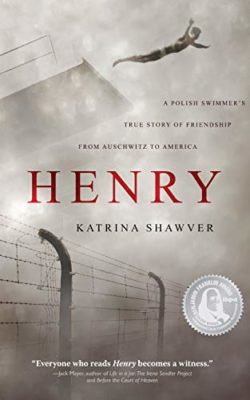
 Katrina Shawver, a journalist for a Phoenix newspaper, was seeking a story for her weekly column. She had heard from a friend that a Holocaust survivor named Henry Zguda and his American wife, Nancy, lived in Phoenix. She called Zguda and was invited to come to his home, only a few blocks from her own. Shawver quickly bonded with both Henry and Nancy. Then she and Henry decided to have a series of weekly interviews, which she would draw on for her column and, later, for a book—this biography.