In a future Los Angeles, a terrorist group called the Stay Ready Soldiers (SRS) has declared war on seemingly everyone. The city is on the verge of martial law, with political and corporate corruption everywhere in a city all but collapsed. Anti-establishment groups roam L.A. with advanced weaponry virtually matching the powers of the federal government. People in endless numbers, both good guys and bad guys, are blown to bits throughout the novel with the blood and violence found in the most-venal video games. Yet, themes of systemic injustice come to bear in the experiences and emotions of the central cast of characters while facing daunting opposition to their cause.
In a country described by the media in the book as being on the verge of collapse, with issues including unemployment, crime, healthcare, education, immigration, and climate change quickly eroding, viewers are asked to decide whether the SRS is either a force of freedom fighters or domestic terrorists. Which are they? You get a chance to choose as the book opens with a bloody attack on a police unit by two SRS soldiers, Geronimo and Kali, who are as close as a love interest as any two people in the book.
The pair must keep their wits (and guns) about them to cross the dilapidated streets of a neglected stretch of L.A., meeting with allies in the fight for justice and change. They face hired killers and the U.S. government’s agents, as well as crises of faith and the threat of a conspiracy that could overturn their very mission.
A Night in Babylon is full of larger-than-life action scenes in which bullets fly, fires burn, and explosions rock the night. From the beginning of the book, this action sets up the stakes: the Stay Ready Soldiers’ lives hang in the balance of one night, as they hunt and are hunted. The narrative flows in and out, taking the reader smoothly from tense scenes to calm and emotionally intimate ones, and back to the action yet again. There’s time to breathe with this story, but the sense of danger is never far away. The action takes surprising turns within the various firefights, and though sometimes there isn’t enough time spent setting up details that become important later in the scene, the well-paced prose keeps the fights exciting.
The LAPD and U.S. federal agents are the distinct villains, painted as more than just cruel individuals but as part of a massive unjust system that shoves people of color down, especially in cities like Los Angeles. A Night in Babylon shows abuses of power like those that exist in the real world, and even though the action scenes are extravagant, the violence and injustice that drives the SRS are drawn from reality. The story critiques not only how authority reacts to resistance against violence with a heightening of violence, but also how authorities can exploit unstable times and places to expand their power and control over people.
Viewing this novel strictly as violence porn would be a mistake. Woven into it are dystopian themes that are now inescapably part of today’s America taken to extremes. At the same time, it does not shrink from asking questions about the nature of today’s violence. Embedded in the story are questions about the role of corporations in bed with the government. What do we really know, the book asks, about the intertwined interests of politicians and corporations? Questions like these used to be relegated to comic books and/or the Internet’s dark side. With credible news reports on similar issues in today’s headlines in newspapers and on T.V., it is undoubtedly fair games for novels such as this one to take these discussions into literature and let readers decide their relevance.
What is A Night in Babylon ultimately trying to say? Is it entertainment, a political tract, or a warning? The cynicism expressed in this relatively short novel is too blatant to ignore, but it does not seem to cut to the left or the right. In that sense, it is a Rorschach test for readers to determine its point of view. Whichever way readers respond, it’s a book that is hard to ignore.
Elements of successful fiction layer and fold back in on each other to create resonance, nuance, subtext, and undercurrents of great storytelling. – Kiffer Brown
In this enlightening and instructional blog post by top-tiered editor and one of Chanticleer’s exceptional Master Writing Craft teachers, Jessica Morrell, will expand on the following components of exceptional fiction.
Elements of Successful Fiction
The Dramatic Question
An Intimate Simmering World
Characters Built from Dominant Traits
Emotional Needs
Significance
Motivation Entwined with Backstory
Desire
Threat
Causality
Inner Conflict
Midpoint Reversal
Satisfying Ending
Dramatic Question
Compelling fiction is based on a single, powerful question that must be answered by the story climax. This question will be dramatized chiefly via action in a series of events or scenes. If you are writing a romance, the question always involves whether the couple will resolve their differences and declare their love. In a mystery the dramatic question might be will Detective Smith find the serial killer in time to prevent another senseless death? InThe Old Man and Sea, the dramatic question is will Santiago catch the big fish and thus restore his pride and reputation?
An Intimate, Simmering World
An intimate world isn’t created by merely piling on details. It means your story world has the resonance of childhood memories, the vividness of a dream, and the power of a movie. It’s filled in with shadows and corners and dogs and ice cubes and the sounds and smells of a dryer humming on wash day and a car blaring past, rock and roll music shaking the windows. Details lend your story authority, potency, and a palpable physical existence.
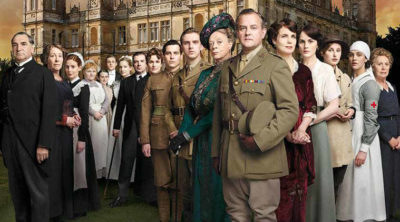
Downton Abbey by Julian Fellowes — definitely an “intimate simmering world”
An intimate story takes us to a specific place and coaxes us to remain there. An intimate story is lifelike and feels as real and complicated as the world the reader inhabits. When a reader finishes the final pages and leaves the story world, the reader should feel the satisfaction of the ending, but also a huge sense of loss. Much like a friend has moved to another town just when the friendship had reached a level of closeness and trust.
Characters Built from Dominant Traits
Create main characters with dominant and unforgettable traits as a foundation of personality. These traits will be showcased in the story events, will help him achieve or fail at goals, and will make the story person consistent. For example, Sherlock Holmes’ dominant traits are that he is analytical, Bohemian, opinionated, and intelligent. These traits are showcased in every story he appears in along with secondary and contrasting traits. When the character first appears in the first scene, the character should arrive in the story with dominant traits intact.
Sherlock Holmes and Jim Moriaty – enduring characters since 1892.
Emotional Needs
Protagonists and the main characters are people with baggage and emotional needs stemming from their pasts. These needs, coupled with motivation, cause characters to act as they do. For example, inSilence of the LambsClarisse Starling is propelled by childhood traumas to both succeed and heal the wounds caused by the death of her father.
The EXPANSE by James S.A. Corey went from a Sci-Fi book series to one of Amazon’s top video series. One reason is that the characters have some major emotional baggage.
Significance
The storyline focuses on the most significant events in the protagonist’s life.
Kiffer’s Note: As we were taught in journalism school, this is the “So what?” that our professors would continuously ask us. What were, are, and will be the significant events? Your story will show the “why and how.” Make your readers care. Make your readers interested and keep them caring.
Crazy Rich Asians by Kevin Kwan – 3 Perspectives Cubed makes for a complex story.
Motivation Entwined with Backstory
Motivation, the why?of fiction, is at the heart of every scene, fueling your character’s desires and driving him to accomplish goals. It provides a solid foundation for the often complicated reasons for your character’s behaviors choices, actions, and blunders. Motivating factors provide trajectories for character development, as a character’s past inevitably intersects with his present. Your character’s motivations must be in sync with his core personality traits and realistically linked to goals so that readers can take on these goals as their own.
See The Expanse SciFi series above. It said to be the current Game of Thrones of TV series streaming.
Names convey emotional baggage and foreshadowing
Desire
Desire is the lifeblood of fictional characters. Not only do your characters want something, but they also want something badly. Santiago, inThe Old Man and the Sea desperately wants to restore his reputation and also wants his friendship and partnership with the boy to resume. And in the lonely hours when he is far out at sea, desperately struggling to hang on to the fish and fighting off sharks, we see his fierce desire acted out and the price he pays for it.
The classic A League of Their Own – to be rebooted on Amazon 2021
You can bestow on your character flaming red hair, an endearing, crooked grin, and a penchant for chocolate and noir movies, but if she doesn’t want something badly, she’s merely a prop in your story, not a driving force. But if she wants to win the Miss Florida contest, take over her boss’ job, or become the first female shortstop for the Atlanta Braves, then you’ve got a character who will make things happen and a story that will be propelled by desire.
Threat
Fiction is based on a series of threatening changes inflicted on the protagonist. In many stories, these threats force him or her to change or act in ways he or she needs to change or act. Often too, what the protagonist fears most is what is showcased in a novel or short story. It can be fear of losing his family, job, or health with this dreaded outcome providing interest, action, and conflict.
The Martian by Andy Weir – one big ticking clock on so many different levels.
Causality
Events in fiction are never random or unconnected. They are always linked by causality with one event causing more events later in the story, which in turn causes complications, which cause more events, which cause bad decisions, etc.
Causality – the physics of writing
Inner Conflict
A fictional character doesn’t arrive at easy decisions or choices. Instead, he is burdened by difficult or impossible choices, particularly moral choices, that often make him doubt himself and question his actions. Inner conflict works in tandem with outer conflict—a physical obstacle, villain, or antagonist–to make the story more involving, dramatic, and events more meaningful.
Complications A story builds and deepens by adding complications, twists, reversals, and surprises that add tension and forward motion. Plots don’t follow a straight path, instead, there are zigzags, dead ends, and sidetracks. Complications create obstacles and conflict, cause decisions to be made, paths to be chosen.
12 Years A Slave – based on the memoir of Solomon Northrup, published in 1854
Midpoint Reversal
The middle of a novel comprises more than half its length. At about the midpoint of most novels, a dramatic reversal occurs. The hunter becomes the hunted; a second murder occurs proving the detective has been wrong in his suspicions; a former lover arrives in town to complicate a budding romance. This reversal keeps the middle from bogging down and becoming predictable and also breathes new life and often a new direction into the story.
Mid-point Reversal of Bride and Prejudice, an adaptation of Jane Austen’s Pride and Prejudice. Published in 1813, it is still relevant.
Satisfying Ending
Every story needs an ending that satisfies the reader while concluding the plot. The final scenes, when the tensions are red hot and the character has reached a point of no return, must deliver drama, emotion, yet a logical conclusion. This is not to suggest that every plot ends with a shoot-out or physical confrontation because some endings are quieter, more thoughtful. Some endings are ambivalent, some a dramatic or a violent clash of wills. But there is always a sense that all the forces that have been operating in your story world have finally come to a head and the protagonist’s world is forever changed.
Below is a scene from The Martian that heralds that maybe—just maybe—our protagonist may make it home—alive. It is a fun and creatively acted scene. What a scene stealer! – Kiffer Brown
A reversal of fortune in The Martian by Andy Weir
The end is just the beginning…
A Note from the Editor: A satisfying ending is one of the top, if not the top, reasons why books go viral and what will make your reader want to read your next work. Make sure that the you put as much effort in to a satisfying ending as you do into your opening hook. Kiffer Brown
I hope that you found the visual examples enlightening. Determining and then searching for my favorite ones was fun! – Kiffer
Jessica Page Morrell
Jessica Page Morrell is a top-tier developmental editor for books and screenplays. Her articles have appeared in Writer’s Digest and The Writer magazines. She is known for explaining the hows and whys of what makes for excellent writing and for sharing very clear examples that examine the technical aspects of writing that emphasizes layering and subtext. Her books on writing craft are considered “a must have” for any serious writer’s toolkit.
Jessica will teachMaster Craft Writing Classesat theChanticleer Authors Conference VIRTUAL Conference that will be held from Tuesday, Sept 8 – Sunday, Sept. 13, 2020. She will present sessions and Master Classes on September 17, & 18, 2020 in conjunction with the virtual conference. She and Kiffer will also host a fun kaffeeklatch for Word Nerds at VCAC20.
Did you know that Chanticleer offers editorial services?We do and have been doing so since 2011.
And that our professional editors are top-notch and are experts in theChicago Manual of Style.They have and are working for the top publishing houses (TOR, Macmillan, Thomas Mercer, Penguin Random House, etc.) and award-winning independent presses. If you would like more information, we invite you to email Kiffer or Sharon at KBrown@ChantiReviews.com or SAnderson@ChantiReviews.com.
We work with a small number of exclusive clients who want to collaborate with our team of top-editors on an on-going basis. Contact us today!
Writer’s Toolbox
Thank you for reading this Chanticleer Writer’s Toolbox encore edition article.
We encourage you to stay in contact with each other and with us during this stint of practicing physical distancing to prevent the spread of COVID-19 — especially at this time of re-opening.
Let us know how you are doing, what is going on where you live, how are you progressing on your writing projects.
I invite each of you to join us atThe Roost– a private online Chanticleer Community for writers and authors and publishing professionals. You are welcome to email me for more info also.
We are active onFacebook,Twitter, and Instagram. You can find us by using our social media handle @ChantiReviews
Minimize physical contact! Maximize social connecting!
Be well. Stay safe. Keep writing! Keep Creating! Kiffer
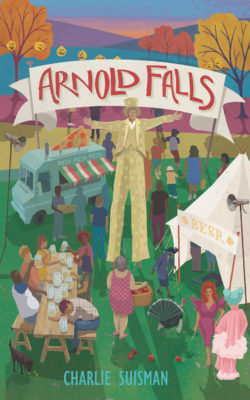
Charlie Suisman’s debut novel is a wonderful escape to a small fictional community in upstate New York. Here a melting pot of quirky residents brings Arnold Falls to life, a town with a unique history and charming inhabitants whose lives are intimately intertwined.
Settled in 1803 by the unscrupulous Hezekiah Hesper, the town for unknown reasons was named after Benedict Arnold. Adding to the oddities, the closest waterfall is twenty miles away. The area is known for sudden bursts of crab apple-size hail pelting the landscape without any scientific explanation. Hence the incentive for “Hail Pail Day,” a neighborly tradition surrounding the distribution of galvanized bucket head-coverings.
Suisman engagingly presents Jeebie Walker as the story’s primary narrator. A gay man in his early 40s, he moved north of the city in the hopes of a quieter life with his partner, Miles. Though things didn’t work out, Jeebie has settled into his fixer-upper, Queen Anne-style abode, and now seems a positive fixture in this hamlet.
The creative narrative quickly draws us into multiple storylines. First, there’s Jenny Jagoda’s mayoral campaign against a clueless incumbent who has inadvertently shipped bomb-making supplies to a city in Romania. There’s an all-out effort to save a beloved and amorous turkey from the chopping block of a local celebrity chef looking to up her ratings. Of course, there must be a fight to thwart the construction of an environmentally destructive tire factory proposed by a shady developer. Readers will quickly realize that Arnold Falls is a kaleidoscope of hilarity, one that we may like to visit over and over.
As a character-driven piece, Arnold Falls thrives as a friendly place filled with eccentrics, old guard, hipsters, artists, drug dealers, and reclusives. Among the eclectic menagerie a talented henna-headed pickpocket/talent agent, a knowledgeable record store owner whose legendary music and weed pairings have brought “harmonic convergence” to the community, a Motown chanteuse determined to steer her friends to newfound love, and the flatulent plagued, 93-year old daughter of a successful madam, likened to “a walking piece of history.” Suisman shines in his delivery of these characters. Here details offer a colorful array of ages, ethnicities, backgrounds, and sexual orientations, all just trying to make the best of their given circumstances and situations. Amidst snappy dialogue and genuine heartfelt conversations, members of this tight-knit community openly reveal their human foibles and frailties. Above all, there is a commonality of compassion and caring that feels authentic.
As town residents continuously interact, whether in casual run-ins, hopeful dating, town meetings, or planned gatherings, Suisman makes it easy to get to know those finding refuge in this town. While each new scene takes on a vignette-like quality, the overall thread of human connection eases them into the continuous storyline.
Some unexpected revelations in the latter chapters of the book brightly showcase the true depth of these individuals and their lifelong hold to the community. In this rare enclave, the story’s feel-good wrap-up proves the perfect celebratory testament to an all welcoming sanctuary filled with food, wine, music, merriment, and love. In short, a place we’d like to visit!
Politics is a deadly game in the days of Kings and their competing 14th-century B.C. Egyptian factions. Official diplomat, Lord Hani, is on a royal assignment when he discovers even the king’s motives are suspect. Hani begins to fear for the welfare of his family and himself, as he gets a sinking feeling that the hunter has become the hunted. He’s the live bait, the Bird In A Snare.
Can Lord Hani find out who is responsible for the mysterious assassinations and the shifting armies’ alliances before becoming the one they target next?
The sands under the royal family’s feet are precarious. The investigation must be thorough but also quick. There is no time to waste in this seething era where a wave of change could bring dire consequences. Lord Hani knows he must stop the murderer to save himself and his family, but can he also act to protect the larger target, the fate of the Egyptian New Kingdom?
Lord Hani is summoned by the king to the Royal Palace and assigned a secret, specific investigation to complete on his majesty’s behalf.
The king suspects not only murder but also betrayal. He decries what he sees as political manipulations that touch pockets of power, self-serving coalitions, and religious beliefs. The king knows not all his countrymen are honest, but he trusts Lord Hani. For help, Hani turns to his young secretary Maya, who is eager for adventure and dedicated to serving Lord Hani to his utmost capability. This mystery will undoubtedly test his skills. If he impresses, will he have the courage to voice his love for his boss’ daughter, and ask for her hand in marriage?
The extensive travel required to visit scenes of crimes and associated places of interest takes a prolonged time by boat and overland, leaving Lord Hani’s family unprotected.
He’s concerned for the safety of his children and wife in his absence. There is good reason to worry. Threats arise from people of the royal court, and also people from the uprising new religion. A risk even exists from within Lord Hani’s own family, namely, his eldest son. Time is not on his side as Hani and his secretary Maya follow clues, interview suspects, and analyze motives. The action reaches a crescendo, and Lord Hani will have to confront his most dreaded fears.
Bird in a Snare by N. L. Holmes is beautifully descriptive, with details that bring the historic period and the fascinating characters to vibrant life. Suspense builds as an intricate web of intrigue is spun. Readers will be delighted to learn that this is the first of a series set in the ancient Egypt of Akhenaten’s reforms.
Chanticleer Book Reviews is seeking today’s best books featuring romantic themes and adventures of the heart, historical love affairs, perhaps a little steamy romance, we will put them to the test and choose the best among them.
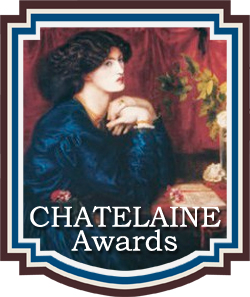
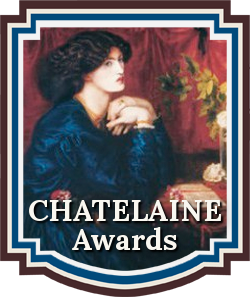
Find out more about the stunning beauty that Dante Rossetti painted, Jane Morris, at the end of this blog post.
Do you have a romance novel or manuscript ready for readers?
Do you want to see how it stands up to others in its category?
Then don’t delay! The CHATELAINE Book Awards division is accepting submissions from both recently published and complete manuscripts in romance and romantic fiction. But this year we’ve moved our deadline – to keep you on your toes!
The new deadline for the Chatelaine Awards is AUGUST31, 2020!
That’s right, the last day for submissions into the 2020 Chatelaine Book Awards is August 31, 2020. So, if you love Piña Coladas – and getting caught in the rain… I mean, if you like writing about those things, and other things having to do with matters of the heart, including these:
Insiders’ Tip: Other genre divisions of the Chanticleer International Book Awards have romance categories as well. Multiple submissions of the same work to a variety of CIBA writing competitions divisions are accepted. Check out our divisions here.
Please join us in congratulating and reading these top works in this diverse range of all reads Chatelaine: Romance, Chick-Lit, Women’s Fiction, Inspirational, Suspenseful, and, of course, Steamy and Sensual in the
CHATELAINE HALL of FAME!
Jane Austen Inspired:Pulse and Prejudice by Colette Saucier
Paranormal:Crimson Flamesby Ashley Robertson
Christian Inspirational Romance: Chasing Charlieby C. M. Newman
Restorative: A Path through the Gardenby Nancy LaPonzina
Classic Bodice Ripper:To Dare the Duke of Dangerfieldby Bronwen Evans
Who will win the CHATELAINE Book Awards Blue Ribbons for 2020?
The judging rounds will commence in August! Submit your works today!
The last day for submissions into the 2020 Chatelaine Book Awards is August 31, 2020. Winners will be announced at our CAC21 conference – scheduled for April
And remember our Insiders’ Tip: Other genre divisions of the Chanticleer International Book Awards have romance categories as well. Multiple submissions of the same work to a variety of CIBA writing competitions divisions are accepted. Check it out here!
A little information about the Chatelaine Book Awards icon:
We feel that Dante Gabriel Rossetti’s Pre-Raphaelite painting of Jane Morris (muse and wife of William Morris) in aBlue Silk Dress captures the many moods of the Chatelaine division of the Chanticleer International Book Awards. Jane Morris (nee Jane Burden—little is known about her childhood but that it was poor and deprived) was known for her keen intelligence. William Morris fell in love with her when she sat for him as a model. She was privately tutored to become a gentleman’s wife upon their engagement. It is said that she was the inspiration for George Bernard Shaw’s character Eliza Dolittle of My Fair Lady fame. The Blue Silk Dress was painted in 1868 by Rossetti and it currently resides in the Society for Antiquaries of London. She was 29 when Rossetti painted it. Rossetti and Jane Morris became closely attached until his death in 1882. To read more about the fascinating Jane Morris, click on this Wikipedia page.
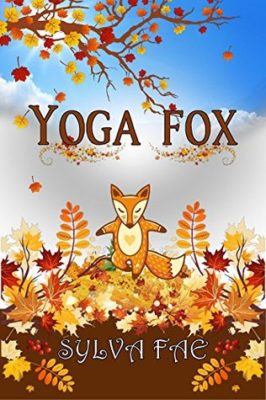
Self-respect and determination provide the themes for this cheerful children’s book by English author Sylva Fae.
When he was little, Scaredy Fox was scared of everything: the dark, his shadow, thunder. But now he’s older and the only animal in the forest with a negative nickname. There’s Funny Bear, Bright Owl, Running Deer, and even Scaredy’s own brother, Lucky Fox. Lying at the edge of a park, Scaredy spies some girls doing something they call “yoga.”
The young fox is inspired. He returns to the forest and begins to assume strange postures, naturally inciting curiosity among the animals. He invents what he calls the Swaying Willow posture, boldly imitates a charging position he calls Warrior Wolf, and many more. It isn’t long before his wish comes true: his animal companions rename him Yoga Fox.
Fae has constructed this vibrant tale imaginatively. The yogic postures depicted, with simple cartoon illustrations, are so engaging that once they are part of the story, readers will want to see what strange shape comes next. This sense is enhanced with a final page in which all poses are repeated, inviting children to try them and invent their own names for each one. Fae’s creation makes a genuinely satisfying read for youngsters and for their parents or grandparents. The central idea – striving for self-improvement – can be discussed in the process, making this a multi-layered experience for all.
Yoga Fox won First Place in the CIBA 2018 Little Peeps Awards for Early Readers Books.
Due to COVID-19 sweeping across continents, travel restrictions are at an all-time high. With the general population being placed on lockdown, the need for social distancing, and hunkering down moving towards an indefinite timeframe, some much-needed armchair travel adventures couldn’t come at a better time.
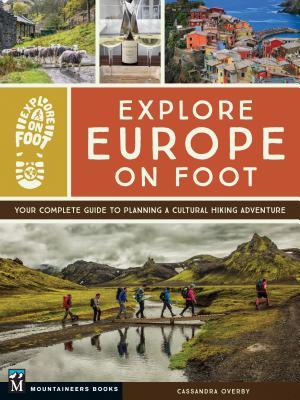
Here in Cassandra Overby’s encyclopedic guide Explore Europe On Foot, readers are taken through a step-by-step process of dreaming, planning, and hopefully soon experiencing memorable, slow travel ventures of a lifetime. Whether it’s choosing a route and destination, deciding what to pack, finding appropriate accommodations and food options, or dealing with inevitable challenges, Overby supplies a world of information in this colossal foot travelers’ bible.
A personalized introduction draws us into Overby’s early disillusionment with travel, and what she felt was its all-too-often focus on the inauthentic global itinerary. A 2015 extended European tour with her now-husband, Mac, soon changed her mind. The trip filled with long walks and opportunities to live like locals ultimately rekindled her traveling desires and made her realize this slower, off-the-beaten-path journey mode offered a much more genuine and rewarding experience, and truly “opens the door to trail magic.” Along with the best natural beauty a region has to offer, Overby showcases such travels as an opportunity to glimpse varied cultures up close and personal. Foot travel is a chance to learn the rhythm of a region’s daily life and participate in everything from the likes of a shared meal to chores on a farm, or sing-a-longs at the local watering hole.
The book includes specifics of 15 hand-picked walks from classics like the Tour du Mont Blanc in France and Italy, to lesser-known routes like King Ludwig’s Way in Germany and Portugal’s Rota Vicentina, as well as options for shorter wanderings. A planning section covers everything from travel companions and arranging transportation, to obtaining passports and plane tickets, to making reservations and buying travel insurance. Pre-trip exercises for both body and mind, along with detailed packing information offer shared knowledge for a positive travel experience. Beautiful interspersed photographs help take us around the globe. Whether the “meres” of England’s Lake District or the dunes of Eng Chebbi in the Sahara Desert, whirling dervishes in Turkey or a special message of “Joy” spelled out in stone along Scotland’s West Highland Way, all capture the heart of Overby’s enthusiasm.
The rich narrative is woven throughout with poetic descriptives. Consider the beauty of an Icelandic trek rendered as ” … intricate designs swirled in the earth by crawling and cooling lava, brave wildflowers that don’t mind a challenge.” Even a simple Spanish proverb of “On a long journey, even a straw weighs heavy”, highlights an important message about the need for light, versatile packing. Clearly the author’s smart advice about bringing home the best souvenir from a trip coincides with the less incumbrance sentiment in suggesting travelers return to their homeland with the practical nuance of a new custom or attitude, i.e. perhaps enjoying the lingering dinners practiced in France, or realizing the importance of family as viewed in the Italian culture.
Overby’s shared anecdotes and experiences provide a nice change-up amidst the facts and figures featured throughout the chapters, particularly if the book is read from start to finish. Readers will find the information overwhelmingly beneficial in terms of necessary specifics for trip planning. Also, the book’s easily followed design allows readers to meander through chapters and dream of where they will go when they can.
Overby’s own foot-travel enthusiasm ignited similar passions with family and friends, and ultimately became the impetus for a new life’s calling and writing this book. In the resulting Explore Europe On Foot, this walking aficionado now serves as both guide and inspirational cheerleader to help all wannabe hikers turn their dreams into reality someday.
Explore Europe On Foot won the CIBA 2018 GRAND PRIZE Insight & Instruction Awards and remains one of our favorites.
I once taught a workshop when a writer proudly announced that he’d written an entire novel where none of the characters had names. It’s a story I never want to read. All plants, animals, objects, places and people have names that identify them.
Naming people and things in fiction has a practical purpose because it appeals to the reader’s logic, imagination, and memory. We name characters to differentiate them, to suggest their age, social standing and personality, to make them solid and distinctive, and signal readers that the story person is worth noting.
Jessica Page Morrell
Since the reader will encounter your characters’ names again and again, bestow names with care, and add subtle layers of meaning to a story via their names. Generally, the more complicated your character, the more distinct his or her name should be, (think Ebenezer Scrooge or Hannibal Lector) keeping in mind that names, like characters evoke a response in readers.
Toolbox Tip:
All fiction writes need to collect names in a writer’s notebook or story bible, starting with the standard methods of gathering names by perusing phone books, obituaries, and baby name books.
Be especially careful with a villain’s name, and don’t choose a name that works against type. You wouldn’t select a name for an arch villain that suggests a softie, nor would you give a good guy a name that has dark connotation.
Kiffer’s Note: Although, one of my favorite Firefly characters is named Jayne. He is a bad-ass, no-neck, muscular guy who named his favorite weapon in his arsenal Vera. No one would dare make fun of his name to his face and live to tell about it. Also he wore (proudly) an absurd orange knit cap with ear flaps, that his mother made for him. And speaking of names, the ship he served on was named Serenity. Life was anything but serene on Serenity.
Jayne’s favorite hatJayne was good to have on your side in a fight.
If your story has a true villain, his name should reflect menace, coldness, and/or strength. You might consider using hard consonants and sounds to suggest menace or other characteristics. For example in Stephen King’sThe Dark Half, a writer’s villainous alter ego is named George Stark. Then there is Tolkien’s Gollum and Ian Fleming’s Auric Goldfinger. Conversely, good guys will have names that suggest goodness, or perhaps strength, such as Tolkein’s characters Frodo, Sam, Merry, and Pippin.
The best names reflect the genre and suggest the character’s traits such as Voldemort in the Harry Potter series. On the other hand, the head master is Albus Dumbledore. Albus is from the Latin wordalba, white, and his last name is Old English for bumblebee. So the headmaster’s name suggests honor and a hard-working nature. Sirius Black is Harry’s godfather. His first name is the dog star, appropriate for a wizard who can transform into a black dog.
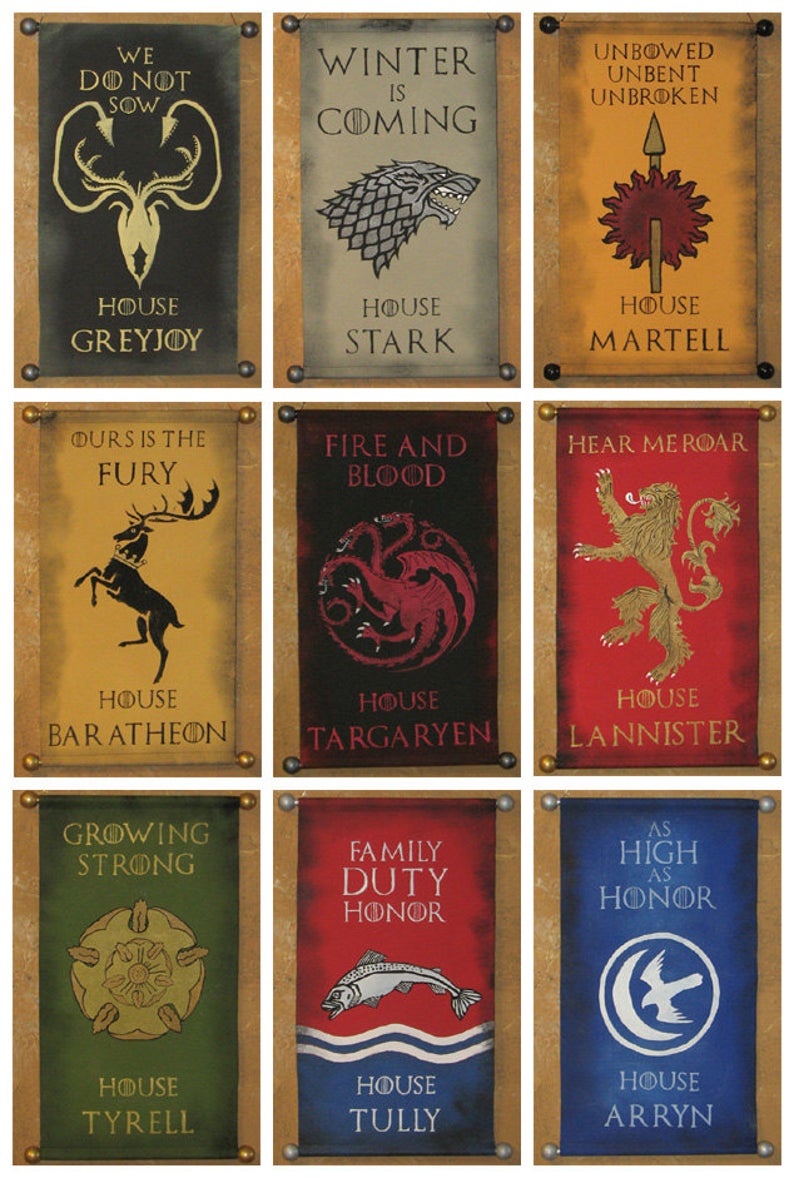
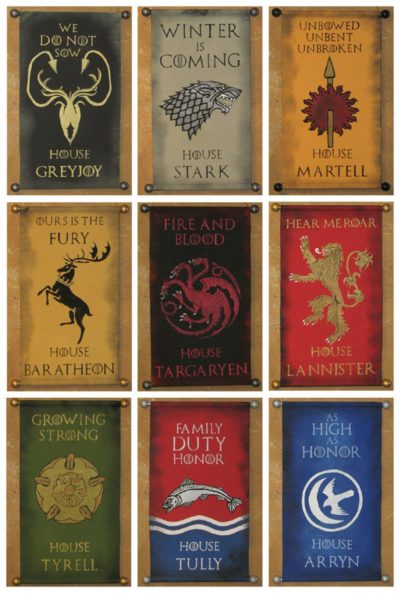
George R.R. Martin’s fantasy seriesA Song of Ice and Fireis replete with terrific and memorable names: Mance Rayder, Tywin Lannister, Walder Frey and Jon Snow. In fact, the series has such a crowded cast it comes with an appendix cataloging names. One royal family is also named Stark. The family is from a kingdom of the north, Winterfell and the Starks are tough and cunning and hardened, with a lower hall filled with the bones of their ancestors.
It often works best to give tough, plain spoken, or unsentimental types, equally unsentimental names. Thus, your straight-shooting, beer-loving cop likely wouldn’t be named Julian or Florian, (no offense to the Julians and Florians of the world) but instead might be Jake or Jesse or Max. An alpha type needs an alpha-sounding name as does James (Jamie) Fraser in Diana Gabaldon’sOutlanderseries. Of course this works for women too as shown in Ma Joad ofThe Grapes of Wrath. Many writers use names that are suggestive such as Romeo suggesting romance, Holly Golightly suggesting a light hearted nature, and Scarlett O’Hara a beautiful flirt.
In Dean Koontz’sForever Oddhe gets the names just right and the villainess is called Datura which reflects her kinkiness, coldness, and cruelty. However, Koontz cleverly has chosen a name with layers of meaning, something fiction writers are always striving for. Datura is a flowering plant that is also called Devil’s Trumpets and Angel’s Trumpet. The Datura species, which has beautiful trumpet-like flowers exudes a narcotic-like scent, especially at night and is considered a sacred visionary plant. Datura plants have been used in many regions and by many cultures for medicinal and spiritual reasons, especially by shamans who use it for its clairvoyant powers. It is also interesting to note that all the Datura species contain potent alkoids which when taken in sufficient quantity have the power to kill.
Of course, like all parts of fiction sometimes writers go awry when naming characters. One problem is that they take this technique too far. Examples are naming a macho private eye Rod Magnum or Sam Blaster or naming a seductress Jezebel Flower.
Choose a character name that is age-appropriate and don’t make the mistake of choosing a name that is popularnowfor an adult character but wasn’t popular at the time of the character’s birth. To research the etymology and history of first names go towww.behindthename.com. If you’re writing historical fiction, it’s crucial that your names are historically accurate. Thus you wouldn’t name a 16thcentury character Tiffany or Shawna. But Geoffrey, Humphrey, and Giles have an authentic ring as do Eleanor, Phillipa, and Thomasina. And while Hester Prynne works for moniker of the scarlet woman of seventeenth century, her name wouldn’t work for a contemporary woman.
Kiffer’s Note: In The Twilight series by Stephanie Meyer, naming characters had its own special conundrums. The characters exist in contemporary U.S.A. but may be from the 1918 such as Edward Cullen or Carlisle Cullen who was born in the 1640s. Meyer wanted the names to appropriate for the time period when they were born and that would not seem weird in contemporary America. Cullen is the name that Carlisle gave his Olympic coven.
Edward Cullen, born 1901Carlisle Cullen, born 1640
What to avoid in naming
Another problem is featuring a story with too many names that sound alike—Jana, Jen, Jed, and Janine. Or names that rhyme like Ted and Ned. Or names that share the same vowels sounds like Sean and Dawn. So you want your cast names to have contrast and variety. Other problems are naming a character after a real person as in William Washington Clinton, Prime Minister of the Federated Territories.
Avoid also cutesy spellings or the alphabet soup syndrome most often found in science fiction or fantasy where the reader is left wondering how to pronounce oddball names like Aarghe or Zyyxr or T’muhra. You might try combining two contemporary names or twisting a contemporary name to change it somewhat, or use mythological names or simply ones that are easy to pronounce like Bilbo Baggins fromLord of the Rings.
Other TIPS:
Avoid androgynous names (unless that is part of your story)
Do pair unusual first names with simpler last names (Clark Bartholomew)
Or simple last names with complex first names (Reginald Clark)
Don’t use a name where the last letter of the first name is the first letter of the last name (Thomas Sinclair)
The more populated the story, the more the names should differ. (GOT examples – Jon Snow, Daeneys, Arya Stark, Cersei Lannister, Tormund Giantsbane…)
Avoid pairing characters with obvious names such as a bad guy named Damon or Rafe and a sweet heroine named Angela.
Names are a terrific way to anchor a story with authenticity as Mario Puzo did inThe Godfatherwith the Sicilian immigrant Don Vito Corleone and his sons, the tough quick-tempered one is Santino, Frederico is the weaker son, and Michael, the good son. Well, at least he starts out the story as the good son. Then there was Lucca Brazi who ended up sleeping with the fishes and Johnny Fontane, the singer whose name suggests the era.
It’s also helpful to know how your character feels about his name. Many people don’t like their names, don’t believe their names suit them, or shorten or change their names—James is called Jim, Margaret shorten end to Meg, Jerome to Jerry. And that in itself can lend sub-context to your story.
TITLES — that is an entirely different subject… Just imagine if the Twilight Saga kept its working title Forks. So stay tuned. If you haven’t subscribed, we invite you to do so!
Keep writing, keep dreaming, have heart. Jessica
Keep creating magic! Kiffer
HANDY LINKS to Other Chanticleer Writers Toolbox blog-posts on Character Names and Language in Fiction.
Jessica Page Morrell is a top-tier developmental editor for books and screenplays. Her articles have appeared in Writer’s Digest and The Writer magazines. She is known for explaining the hows and whys of what makes for excellent writing and for sharing very clear examples that examine the technical aspects of writing that emphases layering and subtext. Her books on writing craft are considered “a must have” for any serious writer’s toolkit.
Jessica will teach theMaster Craft Writing Classesat theChanticleer Authors Conference VIRTUAL Conference that will be held from Tuesday, Sept 8 – Sunday, Sept. 13, 2020. She will present sessions and Master Classes during the conference. She and Kiffer will also host a fun kaffeeklatch for Word Nerds at CAC20.
Did you know that Chanticleer offers editorial services?We do and have been doing so since 2011.
And that our professional editors are top-notch and are experts in theChicago Manual of Style.They have and are working for the top publishing houses (TOR, Macmillan, Thomas Mercer, Penguin Random House, etc.) and award-winning independent presses. If you would like more information, we invite you to email Kiffer or Sharon at KBrown@ChantiReviews.com or SAnderson@ChantiReviews.com.
We work with a small number of exclusive clients who want to collaborate with our team of top-editors on an on-going basis. Contact us today!
Writer’s Toolbox
Thank you for reading this Chanticleer Writer’s Toolbox article.
We encourage you to stay in contact with each other and with us during this stint of practicing physical distancing to prevent the spread of COVID-19 — especially at this time of re-opening.
Let us know how you are doing, what is going on where you live, how are you progressing on your writing projects.
I invite each of you to join us atThe Roost– a private online Chanticleer Community for writers and authors and publishing professionals. You are welcome to email me for more info also.
We are active onFacebook,Twitter, and Instagram. You can find us by using our social media handle @ChantiReviews
Minimize physical contact! Maximize social connecting!
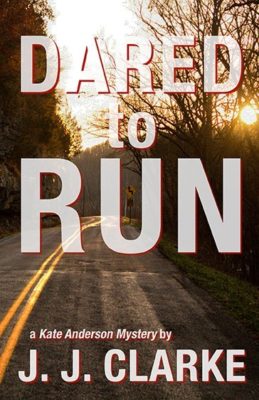
In this stirring whodunit by writer J. J. Clarke, a young woman flees from an evil-minded stalker and finds herself in an underground of female supporters who know how to protect her.
Kate Anderson is tough – tough enough to work in law enforcement and use a gun if she has to, but she is being pursued by a man named O’Dell who has her number – and may have her cornered. O’Dell is crafty, determined, and never loses sight of his prey.
Only a few people know about Kate’s dilemma – a former workmate, her new boss, and the grandfather who took her in (and taught her to stand up for herself) after the accidental death of her parents long ago. With some unusual advice and training from a women’s consortium that includes Dennis/Denise and a big, protective dog named Sic’em, Kate feels safe most of the day but knows that at night, her stalker is out there somewhere, watching and waiting. When her grandfather is threatened, all her strategies fall apart. O’Dell is found dead, and she has no choice but to flee. Luckily she now has the backup of experienced, similarly maltreated women who work in tandem to whisk her out of the state, give her a new name, new home, and new purpose. It is only when an old friend passes away that Kate realizes she has to go back home, no matter what the consequences.
Clarke writes this thriller novel like she was born to the task, inventively including in her lively cast of characters a cadre of Dolly Parton lookalikes and some very fierce nuns. She allows her heroine to be both a dead-on shootist and a first-rate pie chef. The men in her wildly twisting story are equally complex, from Dennis/Denise to the kindly granddad who may have a few scurrilous skeletons in his closet. All these freaks, friends, and feisty females will show Kate their true colors when push comes to shove.
With action on every page and a gift for conveying disturbing realities, Clarke quickly sweeps the reader into Kate’s perils, showing her leading lady’s strengths, bravado, and resilience. In fact, Clarke’s professional background in law enforcement gives her work extra punch, from inside knowledge of police procedure to the punchy dialogue. Readers will surely enjoy all members of the ensemble, from nuns to hard-boiled cops.
Dared to Run is the first book in the Kate Anderson Mystery series, Dared to Return is the second. Clarke weaves her magic in this new must-read series for women seeking to be, as Kate’s grandfather says, “fiercer and smarter” – and for anyone who likes gritty mysteries with a keep-you-guessing-until-the-very-end. Dared to Run is currently a CIBA 2019 CLUE FINALIST for Suspense/Thriller Fiction. Recommended!
Welcome to our SPOTLIGHT on LARAMIE Book Awards, the stories that stick!
The Laramie Book Awards recognize emerging new talent and outstanding works in the Americana / Western, Pioneer, Civil War, Frontier, and First Nations Novels. The Laramie Book Awards is a division of the Chanticleer International Book Awards.
Charles M. Russell painted the cowboy scene on Chanticleer’s very own Laramie Book Awards badge. It is one of many such paintings he did that encompassed the Old American Wild West. He was an advocate for the Northern Plains Indians. Charles M. Russell also helped establish a reservation in Montana for the Chippewa people.
*More interesting facts about Laramie, Wyoming, and its historical icons are immediately after the Laramie Hall of Fame listing below. A fun read!
The Laramie Book Awards for American Western Fiction Hall of Fame First Place and Grand Prize winners!
Want to be a winner next year? The deadline to submit your book for the 2020 Laramie awards is July 31, 2020. Enter here!
Grand Prize and First Place Winners for 2019 will be announced during our Virtual Conference in early September 2020.
Any entries received on or after July 31, 2020, will be entered into the 2021 Laramie Book Awards. The Grand Prize and First Place for 2020 CIBA winners will be held on April 17, 2021.
As our deadline draws near, don’t miss this opportunity to earn the distinction your American Western readers deserve! Enter today!
The LARAMIE Book Awards is a division of the Chanticleer International Book Awards – the CIBAs.
The 2020 winners will be announced at the CIBA Awards Ceremony, which will take place during the 2020 Live/Online Chanticleer Authors Conference. All Semi-Finalists and First Place category winners will be recognized, the first place winners will be virtually whisked up on “stage” to receive their custom ribbon and wait to see who among them will take home the Grand Prize. Covid19 has made our celebrations a bit different this year, but we still will celebrate!
As always, please do not hesitate to contact us with questions, concerns, or suggestions at Chanticleer@ChantiReviews.com
[20] McDougall, Walt, “Pictures in the Papers,” American Mercury, 6:21 (September 1925), 72.
What’s a Laramie?
We thought you’d never ask!
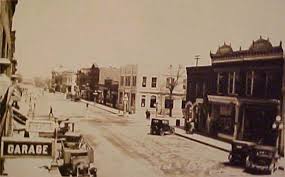
We titled the Chanticleer International Book Awards (CIBAs) division for Western American Fiction and all things that gather around the campfire singing a lonesome tune, the Laramie Awards, after the county and city in Wyoming. You know the one, tucked into the lower right-hand corner of the state between the Snowy Mountain Range and the Laramie Mountain Range.
Yes, but why Laramie?
The small outpost was changed almost overnight when the Union Pacific Railroad moved their “Hell on Wheels” tent town from Cheyenne, Wyoming to Laramie after building the rails over the Sherman Summit at an elevation of 8,200 feet all the way to Laramie on May 4, 1868. Lawlessness and the Wild West ruled in Laramie. Luckily, “Hell on Wheels” moved on West as more track was laid down.
But where did that name Laramie come from?
Laramie was named after Jacque LaRamie, a French or French-Canadian trapper who disappeared in the mountain range that was later named for him in the early 1810s. LaRamie was one of the first Europeans to visit the area. Laramie is a French name much like DuBois, Wyoming. And, yes, it is pronounced Doo – Boys (and NOT Du Bwai).
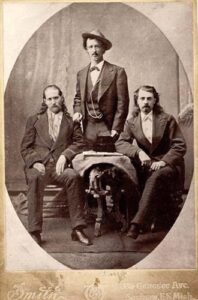
There are several reasons we chose Laramie for our iconic Americana Book Awards. For us, and those in the know, Laramie, Wyoming immediately calls to mind the image of a Wild West town filled with rough-and-tumble cowboys. At one point, the only law in Laramie was “lawlessness. Wild Bill Hickok was even known to visit from time to time.
Here’s a picture of the man, himself, on the left with his friends, Texas Jack Omohundro (center), and Buffalo Bill Cody on the right.
Butch Cassidy and the Wild Bunch robbed trains and passengers with the first recorded train robbery taking place on June 2, 1899 in Wyoming. Butch was known to be very polite and dislike violence.
But that’s not the only reason we chose Laramie.
And, yes, there is yet one more reason we love Laramie!
The WOMEN!
Calamity Jane hails from Laramie, Wyoming – a skilled sharpshooter who was born to a gambler and a prostitute. She cared for her five younger siblings in Utah before traveling on to Wyoming in search of a better life. There she found work as a dance hall girl and then as a prostitute at Fort Laramie. It was there that she reinvented herself by wearing buckskins and dressing like a man. She was also known for her swearing and hard-drinking ways, but Calamity Jane was also known even more for her kind heart and helping folks out of calamities–thus her nickname.
Calamity Jane — She was the inspiration for Michelle Rene’s HOURGLASS novel.
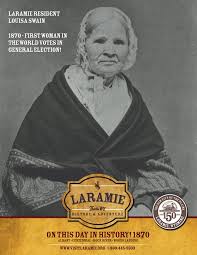
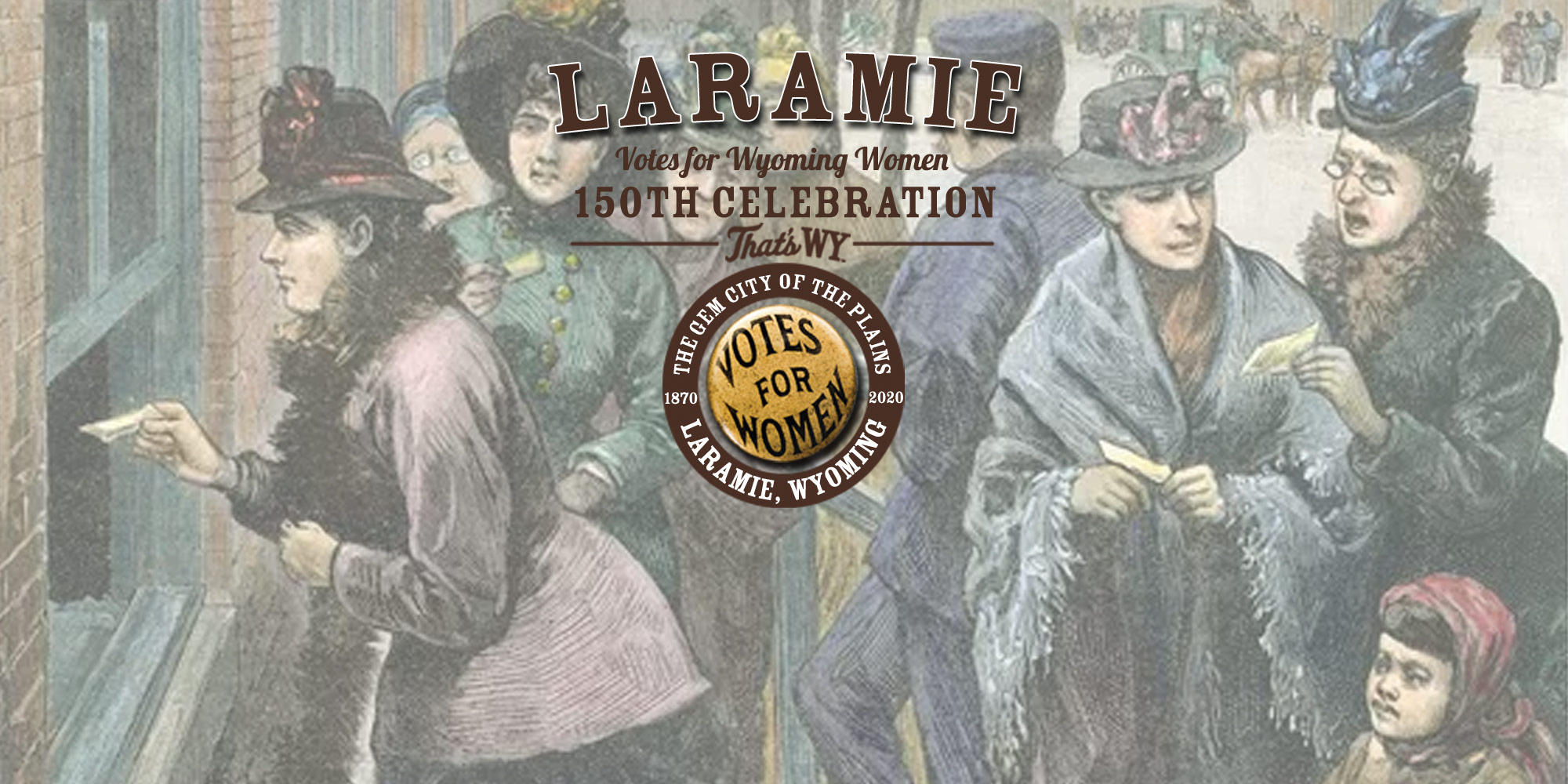
While the men were wrestling in the streets and shooting up the place, it was really the women who brought civilization to Laramie and Wyoming Territory. They established the first school in 1869, served on a formal jury in the Spring of 1870, and were the first to gain the vote; which is exactly what Louisa Swain and 92 of her friends did on September 6, 1870 –150 years ago!
Louisa Swain, the first woman to cast a ballot and she did it in Laramie, Wyoming!
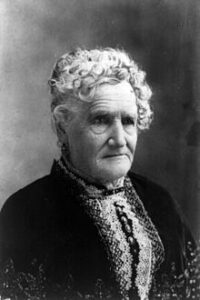
Louisa Swain – she was made of stern stuff!
Early in the morning on September 6, 1870 in Laramie, Wyoming Louisa Swain became the first woman in the world to cast a ballot under democratically enacted laws granting women equal political rights with men. In the fall of 2008, 138 years later, the U.S. Congress passes a resolution proclaiming September 6th as “Louisa Swain Day” in recognition of this historic event.The Louisa Swain Foundation
In 1870, Esther Hobart Morris (59 years old) became the first female Justice of the Peace. She served in South Pass City, Wyoming, which is to the northwest of Laramie.
Esther Morris, first female Justice of the Peace — Wyoming
Esther Morris “to pettifoggers she showed no mercy.” Wyoming Tribune
The Union’s first all-female jury was assembled in Wyoming in 1870.
Later, in 1894, Estelle Reel Meyer became Superintendent of Public Instruction, the country’s first female statewide elected official.
And the grand coup d’etat was when in 1889 when Wyoming vied for statehood—and refused to join the Union if the laws giving equality to women were not upheld, telling Congress (which wanted the suffrage law rescinded) via telegram,
“We will remain out of the Union 100 years rather than come in without the women.”
Wyoming is also the first state in the USA to allow women to own property and sign legal documents.
In 1910, Mary Godat Bellamy became the first woman to be elected to the Wyoming Legislature. Two other western states, Colorado and Idaho, elected women legislators in 1895 and 1899, respectively. Wyoming was third in the nation.
Quotes are from the Smithsonian Magazine
Read more: https://www.smithsonianmag.com/travel/women-voting-wyoming-150-years-here-how-state-celebrating-180971263/#6UKzMfMeCQsmbIIQ.99
Give the gift of Smithsonian magazine for only $12! http://bit.ly/1cGUiGv
Follow us: @SmithsonianMag on Twitter
















 Charlie Suisman’s debut novel is a wonderful escape to a small fictional community in upstate New York. Here a melting pot of quirky residents brings Arnold Falls to life, a town with a unique history and charming inhabitants whose lives are intimately intertwined.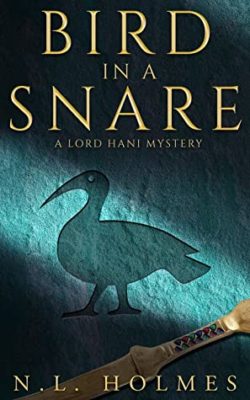
 Politics is a deadly game in the days of Kings and their competing 14th-century B.C. Egyptian factions. Official diplomat, Lord Hani, is on a royal assignment when he discovers even the king’s motives are suspect. Hani begins to fear for the welfare of his family and himself, as he gets a sinking feeling that the hunter has become the hunted. He’s the live bait, the Bird In A Snare.
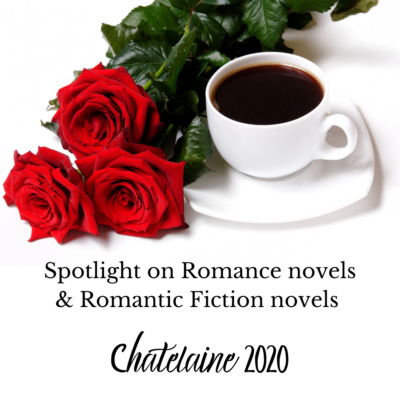
 Chanticleer Book Reviews is seeking today’s best books featuring romantic themes and adventures of the heart, historical love affairs, perhaps a little steamy romance, we will put them to the test and choose the best among them.







 Self-respect and determination provide the themes for this cheerful children’s book by English author Sylva Fae.
 Due to COVID-19 sweeping across continents, travel restrictions are at an all-time high. With the general population being placed on lockdown, the need for social distancing, and hunkering down moving towards an indefinite timeframe, some much-needed armchair travel adventures couldn’t come at a better time.




 In this stirring whodunit by writer J. J. Clarke, a young woman flees from an evil-minded stalker and finds herself in an underground of female supporters who know how to protect her.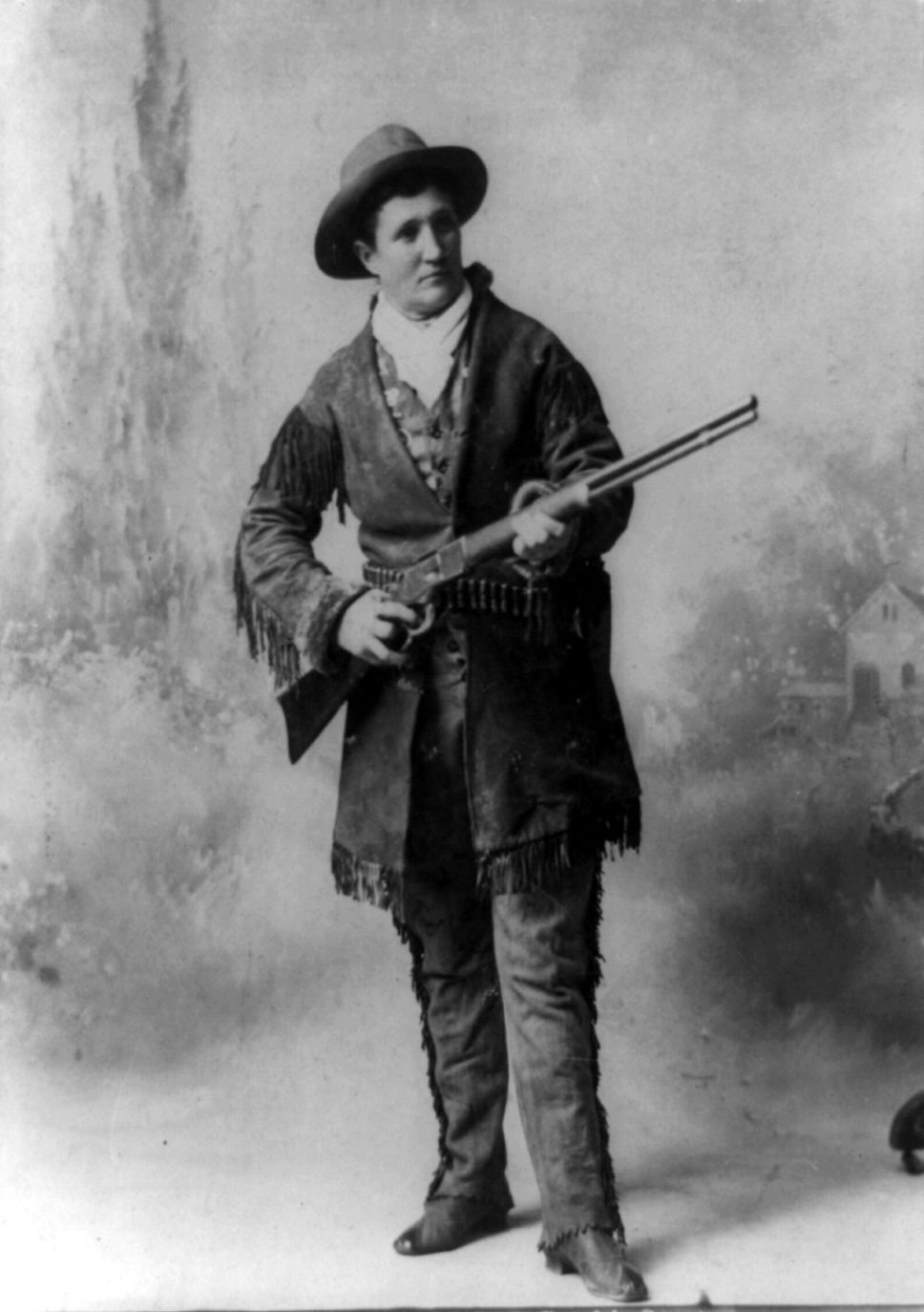






 What’s a Laramie?