Blog

  • HOMAGE to the SUFFRAGE CENTENNIAL – Women’s Rights, Voting Rights, Suffrage, the 19th Amendment

    HOMAGE to the SUFFRAGE CENTENNIAL – Women’s Rights, Voting Rights, Suffrage, the 19th Amendment


    Suffragists parade down Fifth Avenue, 1917.
    Advocates march in October 1917, displaying placards containing the signatures of more than one million New York women demanding the vote. The New York Times Photo Archives.

    On August 18, 1920, the Nineteenth Amendment to the United States of America Constitution was ratified and signed into law on the 26th that same month.

    We are celebrating the 100th anniversary of the Nineteenth Amendment’s adoption into the U.S. Constitution: the amendment that guarantees citizens the right to vote regardless of their gender, and the victory of the American Suffrage Movement. It took more than seventy years of protesting, picketing, and struggles for women to gain the civil right to vote in US elections. And many more decades passed before other disenfranchised groups  were systematically denied the right to vote.

    The Nineteenth Amendment was the capstone of that fight, but it took over seventy years to achieve it.

    And still, the vote was not granted to Black women and men. That right came about much later than most people realize, June 6, 1965, when President Lyndon Johnson signed the Voting Rights Act, which outlawed the discriminatory voting practices that some Southern states adopted after the Civil War.

    During this election season, we call all Chanticleerians to Vote Your Conscious and to not let anything get in your way!

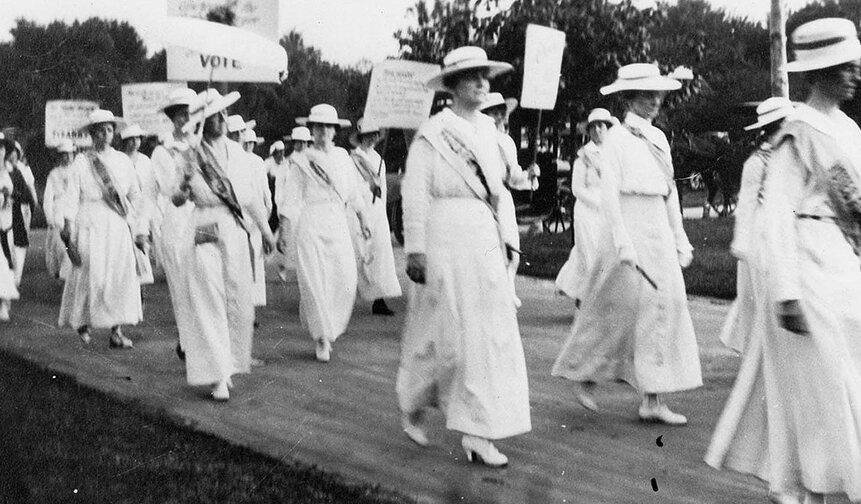
    Women’s suffrage was not just a long fight, but one taken on by many pivotal figures. But the story of the suffrage movement is best told by remembering many of its impactful suffragists, such as Alice Stone Blackwell, Elizabeth Cady Stanton, Matilda Joslyn Gage, Ida B. Wells, Mary Church Terrel, and Josephine St. Pierre Ruffin.

    Suffragists were physically attacked by mobs of angry men and boys while police looked the other way. They’d been roughly arrested; been held in fetid, cold, vermin-infested cells; been shackled to the wall; and endured abuse and even torture in jail. When they went on hunger strikes, they were force-fed, tubes rammed up their noses. The Christian Science Monitor. 
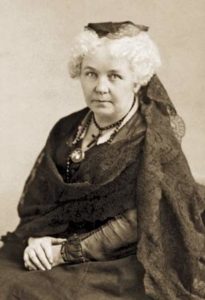
    Elizabeth Cady Stanton, c. 1880

    Elizabeth Cady Stanton was one of the women who first crystallized the Suffrage Movement, having helped organize the Seneca Falls Convention. Her unique background was pivotal in formulating the first demand for women’s suffrage in 1848.

    As the movement grew and drew public attention, Stanton proved herself to be a skilled orator and writer, working closely with Susan B. Anthony throughout the years; Stanton actually wrote some of the speeches that Anthony delivered, and– along with Anthony– was one of the founders of the National Woman Suffrage Association. Stanton wrote for a more equitable future in more than voting; in addition to the question of suffrage, she championed a broader view of women’s freedoms, supporting labor rights, property rights, and the right to divorce. She saw that women should have the chance to lead their own lives, taking part in all aspects of society equally to men.

    Movements don’t just happen, they come alive when a group of people decides to take action against injustice, and even small beginnings can lead to sweeping change.

    Elizabeth Cady Stanton came from a privileged background and used her position and means to propel her views. Her father was a prominent attorney, Congressman, and a judge. He also was a slave owner. Elizabeth was exposed to the study of law and the government mechanisms that govern by her father. She was particularly against how religion was used to justify the oppression of women. She penned The Woman’s Bible to tackle misogynistic traditions rooted in religious dogma after being sent to a seminary at the age of sixteen.

    She became an adamant abolitionist to end the practice of slavery in the United States in 1839 at the age of 24. Many historians believe that the Abolitionist Movement to End Slavery experiences and lessons were essential to pave the way for the Women’s Suffrage Movement.

    Stanton wasn’t the only suffragist who saw the reality of sexist injustice throughout her society, and one of her contemporaries joined her in drawing attention to these wrongs. Matilda Joslyn Gage was considered a radical in her time, having fought against traditionalist views as Stanton had. Matilda was on the revising and editing committee for Elizabeth’s  highly controversial The Woman’s Bible. 

    Matilda Electa Joslyn
    March 24, 1826

    This right to vote was a battle, fought and won 100 years ago by women we will never know, but by what they have written, what others have written about them, and what they have done for all of us.
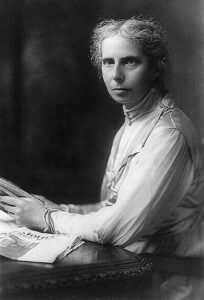
    Alice Stone Blackwell

    One of the women who played a significant role in uniting these two groups was Alice Stone Blackwell. She was in a position to do so because of her connection to the AWSA: her mother was Lucy Stone. Along with Alice’s father, Henry Browne Blackwell, they were some of the primary organizers of the group. As Alice Stone Blackwell grew up, she worked with her parents on their paper, the Woman’s Journal, and eventually ran the paper. Once the AWSA and NWSA had merged, Blackwell served as the NAWSA’s recording secretary.

    While the centennial celebrates the federal adoption of women’s suffrage, we shouldn’t forget the smaller victories and works that punctuated the movement’s length, those who spoke out against injustice in many forms, while seeking the vote. One such woman was Ida B. Wells, who played an active role in the suffrage movement of Chicago. The city had given partial suffrage to women. Wells, along with a fellow suffragist Belle Squire, started the Alpha Suffrage Club to advance women’s suffrage further and educate women on civic involvement.
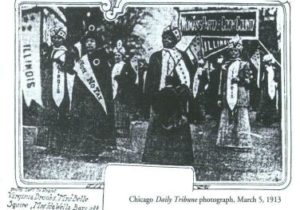
    Wells & Squire marching in 1913

    The club especially supported African American candidates for the city’s elections, working to break down multiple unjust barriers in politics. Wells participated in one of the NAWSA’s best-remembered marches, set in Washington D.C. the day before the inauguration of President Woodrow Wilson. At the beginning of the rally, she was told to walk at the back, but she refused. Ida B. Wells marched with her sister suffragists from Illinois at the front. The power of social change comes from unified work between many people, and Wells refused the idea that she, as a suffragist, could be divided from anyone else.

    Along with women like Wells and Ruffin, Mary Church Terrel was an advocate for racial equality. She was entwined with gender equality, which shows throughout her work with the NAWSA, where she frequently met with Susan B. Anthony and Elizabeth Cady Stanton. She insisted that the movement fight for the rights of black women alongside those of white women, and spoke highly of the suffragists who fought for everyone oppressed by the political and social systems of the time. She spoke at NAWSA meetings, delivered speeches, and called for the suffragists to remember all of the women whose vote they worked so hard to gain.

    Ida B. Wells

    Let’s not allow their work to be forgotten – and let us never give up our full Rights as U.S. Citizens to carry out this all-too-important privilege.

    Despite the NAWSA’s issues with racism, some black women did act within that organization, such as Mary Church Terrel, who was an advocate for racial equality entwined with gender equality, which shows throughout her work with the NAWSA, where she frequently met with Susan B. Anthony and Elizabeth Cady Stanton. Mary insisted that the movement fight for the rights of black women alongside those of white women, and spoke highly of the suffragists who fought for everyone oppressed by the political and social systems of the time. She spoke at NAWSA meetings, delivered speeches, and called for the suffragists to remember all of the women whose vote they worked so hard to gain.
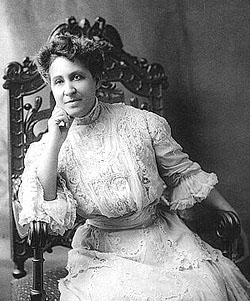
    Mary Church Terrel September 23, 1863

    Women’s suffrage had a complex relationship with black civil rights in large part thanks to the period of history in which the suffrage movement began: the Seneca Falls Convention took place in 1848, seventeen years prior to the abolition of slavery. This meant that the women’s rights movement was progressing and focusing at the same time that black people across were achieving freedom and directing themselves in a country that, while changing dramatically, still marginalized them.

    Harriet Tubman’s work is an example of how black women fought on both fronts; she’s a figure best remembered for her work as a liberator, freeing slaves prior to and during the civil war, but she took part in the suffrage movement as well. During the time of the NAWSA, she traveled to meetings and demonstrations to give speeches, telling of her experiences fighting for freedom and facing down oppressive and dangerous power structures during the time of slavery, and how important the struggle for freedom is. She bridged her advocacy for equality into the fight for the vote, and during this time, Ruffin’s The Woman’s Era wrote a profile on Tubman, as the country’s attention was once again drawn to her fight.
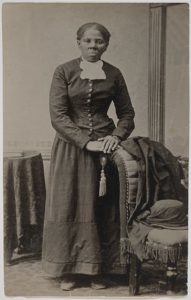
    Harriet Tubman after the Civil War

    All of these histories show that the suffrage movement’s victory– the adoption of the nineteenth amendment– was the result of disparate people, dedicated and idealistic people coming together and fighting hard for their rights. They gave time, energy, and passion to a movement that would, eventually, provide them with the right to participate in the democracy of their country. The fact that the suffrage movement stayed strong for 70 years united its two significant organizations, tackled legislation at both the national and local levels, is a testament to the people who refused to give up, and whose worked– together– to win the fight.
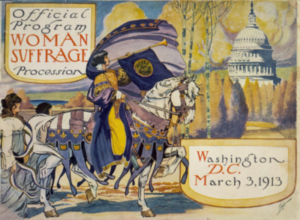
    It’s been a century since women won the right to vote, and more than 170 years since the American suffrage movement started in earnest. This movement has a lot it can teach us: the value of working together, across the country, to bring about change; the importance of remembering that there is always more than one fight for progress and rights, that we should listen to the voices of everybody who’s been pushed down and denied their rights and opportunities; and, of course, that even in the face of a power structure that calls rebellion and the fight for equal freedoms’ radical’, that fight is a good one, and worth taking on.

    At the Seneca Falls Convention, the call for women’s suffrage rang out in America, whereas before it had been considered a fringe idea, or even impossible. The fight was long, but after seventy-two years, the suffragists made what was ‘radical’ a reality.

    So, in the spirit that the right to vote is something that all people deserve, and should never have been restricted to any one group over another, let’s celebrate the centennial of a victory that brought America one step closer to the ideals of equality, freedom, and the rights of all. The power of the vote has shaped America’s history. We must all understand the importance of voting, and today we recognize those who fought for our rights. We are thankful for those brave suffragettes, for it is their struggle that has given us the right to participate in our democracy regardless of gender.

    It required three generations of fearless activists over a span of more than seven decades working in more than 900 state, local, and national campaigns to finally win the vote for American women. And that active verb – win – is important: Women were not given the vote; they were not granted the vote. As one commentator so aptly describes it: “They took it.” Christian Science Monitor

    Links to articles and sources are listed at the end of this blog post.

    We want to thank Scott Taylor, our newest member of the Chanticleer Team, for his research for the blog post in this collaborative effort of honoring and remembering the women who struggled and worked for ratifying the 19th Amendment on August 18, 1920.


    We thought you might enjoy viewing some of our very favorite books about Suffrage and Strong Women we admire: 
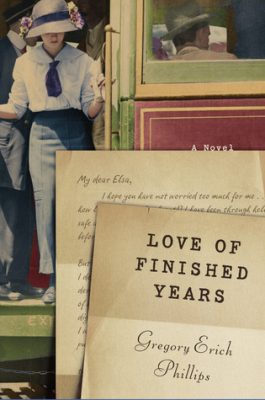
    Love of Finished Years by Gregory Erich Phillips

    Love of Finished Years is one of Kiffer’s favorite novels as it tackles workers rights, women’s suffrage, the looming shadow of World War One, the plight of immigrants, and the horrors of wars from the trenches. Phillips reminds us that love, light, and perseverance can help us find a way to overcome almost any obstacle. Love of Finished Years won the Chanticleer Overall  Grand Prize for Best Book while it was still in manuscript form. 
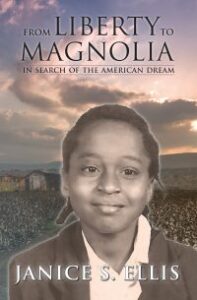
    From Liberty to Magnolia: In Search of the American Dream by Dr. Janice S. Ellis

    This pivotal work serves as an historical record which serves as a historical record amid one of the most tumultuous yet empowering eras in American history. Complete with a discussion guide in the Appendix, the book can serve as a text for a college course or a community book club exploring themes of race and gender.

     Janice’s overarching message is to stay true to oneself and continue to follow your heart, no matter how unpopular or uncomfortable your choices. From Liberty to Magnolia was awarded the Journey Book Awards Grand Prize. 
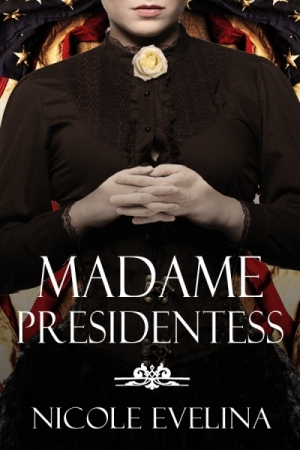
     

    Madame Presidentess by Nicole Evelina

    A story based on the mysterious, mystical Victoria Woodhull, a free-thinking woman well ahead of her time with a rags to riches story. Woodhull was the first woman to run for president of the United States, at a time when, with the full support of the law, most American men did not even regard their mothers, wives and daughters as citizens. She was also the first woman to own a brokerage firm on Wall Street. Nicole Evelina brings Victoria Woodhull vividly to life in this award winning novel. 

    Chanticleer Non-fiction Award-winning Books — just click on the link to read our reviews.
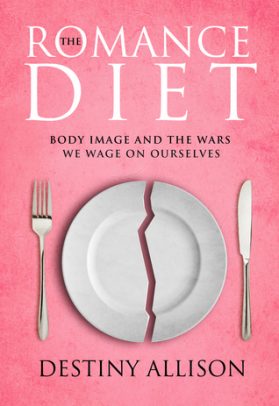
    The Romance Diet: Body Image and the Wars We Wage on Ourselves by Destiny Allison
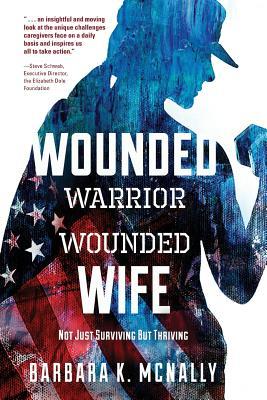
     

    Wounded Warrior, Wounded Wife: Not Just Surviving, but Thriving by Barbara McNally

     

    Inside: One Woman’s Journey Through the Inside Passage by Susan Marie Conrad
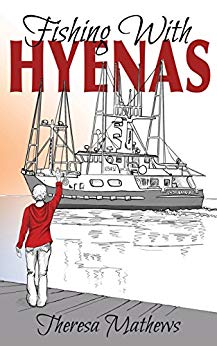
     

    Fishing With Hyenas  by Teresa Matthews


    Links to Sources and Resources:

    A Timeline of Voting Rights Actshttps://www.businessinsider.com/when-women-got-the-right-to-vote-american-voting-rights-timeline-2018-10#1965-congress-passes-the-historic-voting-rights-act-removing-discriminatory-barriers-that-kept-many-people-of-color-from-voting-12

    Sources: US Department of Justice Brennan Center for Justice, Business Insider

    19th Amendment: The six-week ‘brawl’ that won women the vote https://www.csmonitor.com/USA/Politics/2020/0803/19th-Amendment-The-six-week-brawl-that-won-women-the-vote

    Why Celebrate the Centennial of the 19th Amendment?

    Britannica https://www.britannica.com/biography/Elizabeth-Cady-Stanton

    History.com

    https://www.history.com/topics/black-history/abolitionist-movement

    https://www.history.com/topics/womens-history/elizabeth-cady-stanton

    https://www.history.com/topics/womens-history/the-fight-for-womens-suffrage?li_source=LI&li_medium=m2m-rcw-history

    Brooklyn Museum – Alice Stone Blackwell: https://www.brooklynmuseum.org/eascfa/dinner_party/heritage_floor/alice_stone_blackwell

    Americans Who Tell the Truth – Elizabeth Cady Stanton   

    https://www.americanswhotellthetruth.org/portraits/elizabeth-cady-stanton

    https://socialwelfare.library.vcu.edu/woman-suffrage/gage-matilda-joslyn/

    NPS – Ida B. Wells

    https://www.nps.gov/people/idabwells.htm

    Blackpast – Josephine St. Pierre Ruffin

    https://www.blackpast.org/african-american-history/ruffin-josephine-st-pierre-1842-1924/

    Wikipedia – Josephine St. Pierre Ruffin

    https://en.wikipedia.org/wiki/Josephine_St._Pierre_Ruffin

    National Womens’ History Museum – Mary Church Terrell

    https://www.womenshistory.org/education-resources/biographies/mary-church-terrell

    Blackpast.org – Mary Church Terrell

    https://www.blackpast.org/african-american-history/terrell-mary-church-1863-1954/

    Harriet Tubman Historical Society – Harriet Tubman

    http://www.harriet-tubman.org/women-rights-suffrage/

    National Parks Foundation – Harriet Tubman

    https://www.nationalparks.org/connect/blog/beacon-resilience-and-love-harriet-tubman

    Alice Stone Blackwell, between 1880 and 1900
  • The Last Official Announcement for the 2019 CIBAs Awards until After the CIBA Ceremonies

    The Last Official Announcement for the 2019 CIBAs Awards until After the CIBA Ceremonies

    Announcement and Recognition of the Chanticleer International Book Awards Winners will take place  at the 2019 CIBA Ceremonies as hosted by the  Virtual Chanticleer Authors Conference. #VCAC20

    2018 Chanticleer Grand Prize Winners at CAC19

    Virtual Chanticleer Authors Conference 

    Learn from the Best at VCAC! 

    Featuring:

    Robert Dugoni, J.D. Barker, Chris Humphreys, Scott Steindorff, and Paul Cutsinger

    Tuesday – Sunday, September 8 – 13, 2020

    Hindenburg Workshops

    Audiobook Creation and Podcasting

    Wednesday, September 16, 2020

     Master Writing Classes

    with

    Top Development Editor – Jessica Morrell 

    and Top Literary Agent – Donald Maass

    Thursday, Friday, and Sunday  September 17  &  18, and 20, 2020

    The 2019 CIBA Ceremonies

    All 2019 CIBA Finalists will be recognized at the daily CIBA ceremonies that will announce 3 or 4 of the seventeen CIBA Divisions each day on Tuesday – Saturday at 5:00 p.m. PST.

    The First Place Category Awards Winners whose works have advanced from the premier Finalists Level of  Achievement will be announced the daily ceremonies.

    The 2019 Grand Prize Winners for all 17 Divisions of the CIBAs plus the Overall Best Book will be announced on Sunday, September 13, 2020. The Sunday CIBA Ceremony will begin at 5:30 p.m. PST.

    The CIBA Ceremonies will be  ZOOMed Live and recorded at the Hotel Bellwether, Bellingham, Wash.

    The CIBA Ceremony Schedule of Announcements is at the end of this post along with a downloadable WORD Doc  file that may be printed for your convenience.


    The Links to the 2019 CIBA Finalists –

    This will be the LAST ANNOUNCEMENT BEFORE THE 2019 CIBA CEREMONIES that will take place at VCAC 20.

    We have tried to email each author/publisher whose works have advanced to the Premier FINALISTS LEVEL in the 2019 Chanticleer Int’l Book Awards – at least twice. This is final notification before the 2019 CIBA Ceremonies.

    Congratulations to ALL!

    CYGNUS Book Awards for Science Fiction

    OZMA Book Awards for Fantasy Fiction

    PARANORMAL Book Awards for Supernatural Fiction

    DANTE ROSSETTI Book Awards for Young Adult Fiction

    GERTRUDE WARNER Book Awards for Middle-Grade Readers

    Little PEEPS Book Awards for Early Readers and Picture Books

    LARAMIE Book Awards for Americana and Western Fiction

    CHAUCER Book Awards for Pre-1750s Historical Fiction

    GOETHE Book Awards for Post-1750s Historical Fiction

    NELLIE BLY Book Awards for Investigative and Long Piece Journalism

    M&M Book Awards for Mystery & Mayhem Classic and Not-So Cozy Mysteries

    CLUE Book Awards for Suspense Thrillers

    GLOBAL THRILLERS for High Stakes Thrillers & Lab Lit

    CHATELAINE Book Awards for Romantic Novels

    SOMERSET Book Awards for Contemporary and Literary Fiction

    JOURNEY Book Awards for Narrative Nonfiction – Memoirs/Biographies

    I & I Book Awards for Insight and Instruction, How-To, and Guide Books

    Grand Prize Ribbons! Whose works will one?

    The CIBA Ceremony Schedule of Announcements

    Hashtags #CIBAs   #CYGNUSawards   #OZMAawards etc.

    FIRST PLACE CATEGORY ROUNDS of the 2019 CIBAs

    Tuesday, September 8, 2020 at 5 p.m. PST LIVE –

    • CYGNUS Book Awards for Science Fiction – Presenter:  Elana Mugdan – OZMA Grand Prize Winner
    • OZMA Book Awards for Fantasy Fiction – Presenter:  Sara Stamey – Global Thriller Grand Prize Winner 2017
    • PARANORMAL Book Awards for Supernatural Fiction – Presenter: Chris Leibig – Paranormal Grand Prize Winner

    Wednesday, September 9, 2020 at 5 p.m. PST LIVE

    • DANTE ROSSETTI Book Awards for YA Fiction – Presenter:
    • GERTRUDE WARNER Book Awards for Middle-Grade – Presenter: Peter Greene – Goethe Grand Prize 2017
    • LITTLE PEEPS for Early Readers – Presenter: Denise Ditto Satterfield – Little Peeps Grand Prize Winner 2018

    Thursday, September 10, 2020 at 5 p.m. PST LIVE

    • LARAMIE Book Awards for Americana Fiction – Presenter: Jacquie Rogers – Laramie Grand Prize Winner 2016
    • CHAUCER Book Awards for pre-1750s Historical Fiction – Presenter:  TBD
    • GOETHE Book Awards for post-1750s Historical Fiction – Presenter: TBD
    • NELLIE BLY Book Awards for Investigative and Long Form Journalism Non-Fiction: TBD

    Friday, September 11, 2020 at 5 p.m. PST LIVE

    • M&M Book Awards for Mystery & Mayhem Novels – Presenter: Wendy Delaney
    • CLUE Book Awards for Suspense & Thrillers Novels – Presenter: Pamela Beason
    • GLOBAL THRILLERS for High Stakes Suspense Thrillers – Presenter: TBD

    Saturday, September 12, 2020 at 5 p.m. PST LIVE

    • CHATELAINE Book Awards for Romantic Fiction – Presenter: TBD
    • SOMERSET BOOK Awards for Contemporary, Literary, and Satire Fiction – Presenter: TBD
    • JOURNEY Book Awards for Memoir and Narrative Non-Fiction – Presenter: Janice Ellis -Journey Grand Prize Winner 2018
    • I & I Book Awards for Instruction and Insight Non-Fiction – Presenter: TBD

    The CIBAs GRAND PRIZE ROUNDS  (Dress to Impress!)

    Sunday, September 13, 2020 at 5:30 p.m. PST LIVE

    • CYGNUS
    • OZMA
    • PARANORMAL
    • DANTE ROSSETTI
    • GERTRUDE WARNER
    • LITTLE PEEPS
    • LARAMIE
    • CHAUCER
    • GOETHE
    • NELLIE BLY
    • MYSTERY & MAYHEM
    • CLUE
    • GLOBAL THRILLER
    • CHATELAINE
    • SOMERSET
    • JOURNEY
    • INSTRUCTION and INSIGHT

    And we will culminate the 2019 CIBA Ceremonies with announcing the 2019 OVERALL GRAND PRIZE for Best Book!

    Have your favorite bubbly and appetizers ready! 

     Cheer your favorites on! 

    Please check back often in thee crazy times! We keep posting updates!

    LEARN FROM THE BEST at VCAC20!

    Don’t delay. Register TODAY! 

    The OFFICIAL POSTING of the 2019 CIBA announcements of the 17 Divisions’ award winners will start on Wed. Sept 16, 2020.

    DOWNLOAD and PRINT the 2019 CIBA Awards Ceremonies ScheduleThe-CHANTICLEER-INTERNATIONAL-BOOK-AWARDS (4)

    You will see it download. Then open the Word Doc and then print it.


  • PATH of the HALF MOON by Vince Bailey – Historical Fantasy, Supernatural Thrillers, Historical Thrillers

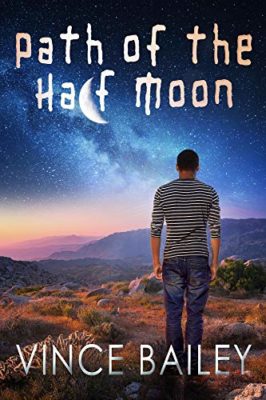
    PATH of the HALF MOON by Vince Bailey – Historical Fantasy, Supernatural Thrillers, Historical Thrillers

    Paranormal Supernatural Fiction 1st Place CIBAAfter being charged with burglary and attempted arson, fifteen-year-old African American boxer, Curtis Jefferson, has been sent to Fort Grant, a juvenile detention area in Arizona in Vince Bailey’s Path of the Half Moon.

    All of the creepy stories and whispered warnings about the former US military outpost used by the US cavalry to eliminate the Apache a hundred years ago pale in comparison to the truth Curtis finds there. Curtis faces racism from both inmates and guards, to make matters worse, he is also very aware of the presence of something not of this world. He quickly discovers (though he doesn’t want to admit it) that he is sentient to the fort’s bloody past atrocities. As the site where Pinal and Aravaipa Apaches were slaughtered, the fort seems to be a crossroads where past and present meet. From mournful coyotes to hundreds of circling vultures, Curtis can’t escape the strange visions and events inside and outside the fort. When he attracts the unwanted attention of Harvey Huish, an inmate with unusual abilities, Curtis creates a powerful enemy bent on revenge and humiliation.

    A major theme of the novel is the power of language.

    It appears in numerous aspects of the plot from the Apache cursing the white man’s cunning use of his complicated and deceitful tongue to Randy’s appreciation of Howard Cosell’s elevated vocabulary. The frame-story technique within the novel establishes the concept of storytelling and the influence of words. Curtis’s story is narrated by Vince, Curtis’s new friend, who relays it to the reader at the same time Curtis is telling him. As a natural-born storyteller, Curtis is the storyteller in town, and Vince sees the story as a treasure, a jewel, that Curtis has seen fit to share with him and thus sees himself as somehow honored in receiving the tale. Vince values the story as more than just words; it makes him more significant for having heard it. Though the story is unbelievable at times, Curtis does what all great storytellers do – he creates a suspension of disbelief, granting the listener the right to believe, to feel that “[a]ll things are possible,” an idea repeatedly given by various characters within the story. Through the telling, Curtis finds solace in giving his outlandish tale an authentic voice.

    The theme of language also appears later in the character of Will Farnsworth, Harvey’s tortured attorney. As the newest and most talented attorney in the firm that represents the Huish family, Will has been given the unachievable task of pacifying Harvey during his imprisonment at Fort Grant. Like many lawyers, Will uses words in “purposed profusion,” trying unsuccessfully to befriend Harvey and later intimidating him with language. He attempts to use his words as weapons, rather than tools for communication, a failure which leads to his enslavement to the abhorrent Harvey.

    Another aspect of the novel is the blurring of time.

    The sinister fort itself is one part of this theme because it seems to exist in two time periods, its tragic past and its purposeful present. Curtis repeatedly sees images of days past that cross into his present-day 1960s. In fact, his first day at the fort, he witnesses a hanging from the Indian uprising days. Later, Curtis crosses this boundary himself and crosses paths with a murdered Apache boy. The Headmaster, Roy Whitcomb, known by all as the Lieutenant, never leaves the fort but is stuck it seems within Fort Grant’s time loop, effectively becoming “the man in the maze,” the Pima tribal emblem. He is forever trapped within the maze’s limitations and obstacles, unable to make the right choices and find his way into the next plane, the gift of a better existence. The very retelling of Curtis’s story symbolizes this blurring of time as well. During the entire story, Vince’s watch remains fixed when Curtis begins his tale, time seemingly suspended along with his disbelief.

    Path of the Half Moon won First Place in the CIBA 2018 Paranormal Awards for supernatural novels.


    Paranormal 1st Place Winner Sticker

    5 star book award sticker


  • BLIND SPOTS by Patrick Garry – Thriller/Suspense Urban Life, Courtroom Drama, Inner City Life

    BLIND SPOTS by Patrick Garry – Thriller/Suspense Urban Life, Courtroom Drama, Inner City Life

    In a rundown Minneapolis neighborhood, a woman and her three children are shot to death by someone using an automatic weapon. The city is shocked. The police department goes on full alert.

    It isn’t long before the police discover the actual killer is a 12-year-old. The identity of the killer doesn’t change the civic pressure on the police to come up with a suspect that could have put an automatic weapon in the hands of a child. An early suspect turned out to be Milo Krantz, a despised rent collector for the slum lord who owns the building where the killings occurred, a nasty piece of work with a criminal record.  Now it’s up to police detective Gunther Mulvaney to build the case against Milo, but he soon discovers that there’s not much of a case against him. Nevertheless, Milo is taken to court where the judge sets bail at $200,000 and is sent back to jail.

    The judge is Donna Davis, a smart, glamorous attorney married to Steven Davis, the state’s attorney general who is also a candidate for the U.S. Senate. But Donna and her marriage are not without complications. Coping with her husband’s ongoing unfaithfulness, and she with a lover of her own, Donna nonetheless recognizes the value of her relationship to her husband and the necessity to keep all the pieces of her life together for both of their careers. With Steven’s success, there might be a federal judgeship waiting for her.

    The couple understands her handling of Milo Krantz will be heavily scrutinized in view of the prominence of the case and the possible impact on the future of the power couple’s mutual careers.

    Unexpectedly, Milo throws a bombshell into his case. He will not testify. He declares he is guilty and refuses to attend any further hearings. Police detective Gunther is blind-sided. He knows Milo is innocent but cannot understand why Milo is willing to destroy his life when justice would demand he be set free.

    This is where Blind Spots finds its unique voice. It becomes the story of a chance meeting in a hospital where one of them is healing following a devastating car accident. Two people from different worlds to explore a pure love, a chance for each to become someone better than they were before they met and a closeness that heals both of them on multiple levels. But for reasons best left to reading the novel, it is both real and unreal, life-changing and yet impossible. It is temporary. It ends abruptly. It only reemerges when Milo is about to go on trial, with Shakespearean consequences on them both that no one could have foreseen.

    This well-crafted, clear-eyed novel will make you wonder anew about the power of love, both good and bad, and ask you to consider what your heart, mind and, yes, ethics would have you do under similar circumstances. Blind Spots is a gem. Highly recommended.

    Blind Spots by Patrick Garry won First Place in the 2015 CLUE Awards for suspense and thriller novels.


    Blind Spots is available in paperback format. Please click here for more information.

    Patrick Garry is a law professor with a Ph.D. in Constitutional History. He has written fifteen scholarly and popular audience books in the areas of law, history, politics, and religion. Those books have received numerous awards and have been featured in hundreds of media interviews, academic conferences, and book reviews. His general audience books alone have been the subject of dozens of radio and television news programs.

    In addition to his works of nonfiction, he has also published eight highly acclaimed books of fiction. Garry’s novels have not only been reviewed by hundreds of professional book reviewers, but they have also received more than 75 different literary awards.

    Learn more about Patrick Garry here.


  • FACING the DRAGON: A Vietnam War Mystery Thriller by Philip Derrick – Serial Killers, Military Crime Thrillers, Vigilante Justice Thrillers

    FACING the DRAGON: A Vietnam War Mystery Thriller by Philip Derrick – Serial Killers, Military Crime Thrillers, Vigilante Justice Thrillers

    Facing the Dragon by Philip Derrick explores the Vietnam War era through the eyes of an extraordinary high school student named Jim Peterson, who at fifteen made the varsity football team as a freshman. He’s intelligent as well as physically fit as he begins his journey in the backseat of a station wagon with his sister on their way to a family vacation, seemingly a typical teenager.

    In the first couple of pages, his dad picks up a hitchhiker in an Army uniform, and the story takes off from there. Jim ends up separated from his family and tries to reunite with them in the Carlsbad Caverns; instead, he is the only witness to their murders.

    Jim watches in horror as their bodies are disposed of in the Deep Pit of the Carlsbad Caverns, and shortly thereafter makes the decision to become the young soldier and follow the murderer to Vietnam where he will enact his revenge for his family.

    Thus begins the shift to the extraordinary world of military life for our high school freshman, from a boy on vacation with his family to a young man on a mission as sleuth and soldier. The seamless way Derrick identifies the patches and medals given by the military provide clues about Jim’s father, PFC Travis Nickels, and the mystery man Ross, in a unique and interesting manner.

    We learn about the importance of a crossed-double sword and a parachute on a patch. We learn a great deal about paying attention to the tiniest detail on a patch to help find clues, which our hero does several times. These subtle clues build interest in the story. The stakes are high for Jim, who takes matters into his own hands and follows the suspect to Vietnam, believing that based on the man’s patches, finding him in Vietnam won’t be an issue.

    It seemed implausible for a fifteen-year-old to be deployed with the paperwork of another soldier. Jim Peterson becomes PFC Travis Nickels. Our quick-minded protagonist lies when he has to and loses important fingerprint documents at crucial checkpoints. If a corporal thinks he’s an imbecile, he doesn’t care as long as he obtains his objective.

    Derrick takes us through bases and onto transports that finally bring us to the landscape of the Vietnam War, up close and personal. We are with Jim as mines are exploding all around him, as Huey helicopters are blown out of the sky right above his head, as he catches malaria and is assigned the foulest job for getting sick, which Sargent Strode believes he’s done on purpose.

    We can feel the sweat trickling down backs, smell the foul orders, and see the bark split as bullets hit the trees around him.

    Derrick splits the POV between Ross and the man who Jim is impersonating, taking us back to WWII Germany. The research Derrick had to do to pull this off is mind-boggling. Ross, a German soldier, the same age/era as Jim’s father, lies about who he is to escape Germany, enlists in the US military, and begins a quest to enact revenge for his brother. He is the foil to Jim who takes Nickel’s place, goes to Vietnam, to seek revenge for his family.

    Theirs becomes a twisted relationship of coincidences, but a fascinating one as the truth unfolds in the tiniest hints and innuendos. The tension on every page is palpable, as Nickels finds himself fighting in a war, where race riots in Vietnam erupt off the page like something off our news feeds today. The unpopularity of the Vietnam War and the soldiers who fought in it are also examined, as well as the division in attitudes the war caused at home. The author leaves no controversial topic left unexamined.

    This novel will keep readers turning pages and reading into the night. Derrick sprinkles so many interesting facts about the US military, the Vietnam War, WWII after the fall and the liberation of one concentration camp in particular. Derrick shows the daily grind of humping through the jungle, the mind-numbing boredom of waiting for battle, and then the chaos in the very-all-too-real life or death battles.

    Philip Derrick does not disappoint in this military thriller. He takes us on a wild ride that hangs just this side of “what the hell?” He’s a talented author with a deft ability to capture the historical and logistical aspects of this story without losing credibility or the reader’s confidence. Facing the Dragon is a book for all readers, not just those who love a great mystery/thriller or historical war story. One of our favorites!

    Facing the Dragon won First Place in the CIBAs 2018 CLUE Awards for mystery/thriller novels.

  • BETWEEN the LINES: Mastering the Subtle Techniques of Fiction – by Jessica Morrell, Top-Tiered Editor – a Chanticleer Writer’s Toolbox post

    BETWEEN the LINES: Mastering the Subtle Techniques of Fiction – by Jessica Morrell, Top-Tiered Editor – a Chanticleer Writer’s Toolbox post

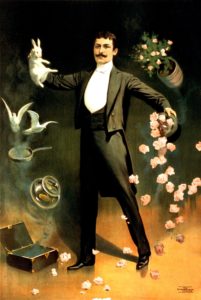
    The best fiction touches the deep layers in us. A writer achieves this affect by embedding dozens of techniques into his story. The process is artful, and, I’m  to report, often sly. In fact, fiction writers employ the sort of sleight-of-hand used by a magician; he distracts with patter; whispers so that we lean in to hear his low, confiding tone; surprises us when we least expect to be surprised, produces flourishes that awe with their boldness. And somehow he makes it look easy, although we know that it has taken years for him to master.

    But of course, writing fiction is not easy or merely a matter of employing tricks.

    Fiction writing means applying craft and artifice, and, like a conjurer’s lightening-speed maneuvers, it can be learned. You’ll look beyond the magician’s charming grin and focus on his ever-moving fingers, on the devices tucked up his sleeves, and then peer into his bag of gadgets. You start by mastering a few card tricks and then move on to a more difficult step: disassembling the magician’s contraptions, applying them to your understanding, and finally adding them to your stories.

    Explore

    Let’s begin with this understanding: Stories explore how interesting people act while dealing with significant problems at an important time in their lives.

    Stories explore human vulnerabilities and strengths and are usually focused on a character’s goals and dilemmas.

    Photo by @alessandroerbetta

    Stories inquire into why people act, react, struggle and change as they do.

    Stories are shaped from techniques that make the narrative lifelike and involved, complicated, and tense. And these fundamentals saturate the story with meaning which result in a deep, multi-layered world.

    It seems that there are as many types of fiction configured into novels, novellas, and short stories, as there are stars in a shimmering summer sky. There are comedies, tragedies, happily-ever-after stories, horror stories, historical re-creations, fantasies, young adult stories and novels that roller-coaster along with pathos, black humor, and grim portrayals of humanity. Some novels track the affairs of the heart; others track a murderer to his hideout or a monster to his lair. Fiction can be of a serious or literary bent or can be as fluffy as cotton candy. Short stories come in all sizes, and novels weigh in at a mere 60,000 words or ramble on to 200,000 words, while most lie in between.

    So the first choice of a would-be fiction writer is to choose the type and scope of the story (short, novella, novel, series, or epic?); then comes the reality of crafting it. That’s when a word-slinger-to-be discovers that creating a compelling narrative is complex and difficult. Or, that the idea for a story that seemed so dazzling and original when he first imagined it becomes flat and predictable when translated onto the page.

    Adding to this reality, beginning writers are often daunted by rules and advice about how fiction is constructed. I’ve noticed that writers tackle fiction in several ways. Some writers simply ignore advice, preferring to wing it or write guided by instinct and intuition, claiming that guideline are a straight jacket to plotting and creativity. Then there are writers who take the opposite path and slavishly read every book written on the topic, outline obsessively, and work with archetypes and mythic structure. The writers in the second group often spend five, six, ten years on a manuscript, revising it so many times that it bears little resemblance to their original concept. Perhaps the healthiest approach to writing fiction lies somewhere in between.

    He may be on to something…

    You see, it’s impossible to write fiction without understanding its underpinnings such as conflict, scene structure, and character development. Without this understanding , you might write two or three or four hundred pages, but you won’t end up with a story; instead you’ll produce a lot of words on a lot of pages or a haphazard pile of scenes loosely clustered around characters who never quite
    come to life.

    A story of any length can never be haphazard or based on predictable characters. Readers want to be haunted by characters and specific scenes that linger in their memory. They want to carry their story within and as they go about daily activities. They want to be transported to another time and place. Let’s begin adding to our understanding, so that you too can create a haunting story.

    Ingredients for Success

    Writing fiction means you’ll be entering another realm because fiction writing requires an intense immersion into your character’s lives and your story world. And because a novel is the sum of many parts, you learn how these parts work together, then once mastered, you can add the delicate layers of techniques that are covered in these chapters.

    It’s difficult to find the perfect analogy for writing fiction, but you can compare it to another kind of artistry—an elaborate meal prepared with precision by a master chef. Every element of the meal will entice, from the aromas to the presentation to the last savored morsel. There will be an array of flavors, textures, and colors all meant to beguile and satisfy, a constellation of delights. The same with works of music or art that resonant.

    While a magician’s tricks happen at lighting speed and thus are difficult to discern, you can witness a chef at work, a composer hammering out her next piece, or an artist trying to capture the light or test for the perfect brushstroke, and learn from their practiced approach. For purpose of illustration, we will use the chef! You can take note of the ingredients he works with—extra-virgin olive oil and aged balsamic vinegar, fresh oregano, the finely minced garlic or ginger. You can witness how he sears the flank steak to seal in flavors and deglazes the pan to create a sauce. If you suspect that his seemingly effortless approach took years to acquire, you’d be right. But luckily, his recipe can be followed and his techniques emulated.

    When it comes to fiction, think of these elements as your ingredients, not formulas. Remember, too, that cooking is a physical activity and requires forethought and analysis, as does fiction writing. When you cook a dish such as paella, you use a whole list of ingredients, but if you don’t add the correct ingredients at the correct time and fail to allow the ingredients to simmer until the flavors have melded, the dish will fail. Or, if you omit a crucial ingredient like saffron, it won’t taste authentic. Similarly, ingredients in fiction are the raw materials that combine to create a finished product, but they don’t necessarily create an involving story.

    Good stories come from the vibrancy of your characters, along with the subtler aspects found between the lines. – Jessica Page Morrell

    LEARN FROM THE BEST at VCAC 20!

    Jessica will teach Master Writing Classes for Intermediate to Advanced Writers at VCAC20! 

    Jessica Page Morrell
    Jessica Page Morrell

    Jessica Page Morrell is a top-tier developmental editor for books and screenplays. Her articles have appeared in Writer’s Digest and The Writer magazines. She is known for explaining the hows and whys of what makes for excellent writing and for sharing very clear examples that examine the technical aspects of writing that emphases layering and subtext. Her books on writing craft are considered “a must have” for any serious writer’s toolkit.

    Jessica will teach Master Craft Writing Classes at the Chanticleer Authors Conference VIRTUAL Conference that will be held from Tuesday, Sept 8 – Sunday, Sept. 13, 2020. She will present sessions and Master Classes on September 17, & 18,  2020 in conjunction with the virtual conference. She and Kiffer will also host a fun kaffeeklatch for Word Nerds at VCAC20.

    Master Classes are discounted for VCAC20 attendees. Or you may register for only the Master Writing Classes.

    Did you know that Chanticleer offers editorial services? We do and have been doing so since 2011.

    And that our professional editors are top-notch and are experts in the Chicago Manual of Style. They have and are working for the top publishing houses (TOR, Macmillan, Thomas Mercer, Penguin Random House, etc.) and award-winning independent presses. If you would like more information, we invite you to email Kiffer or Sharon at KBrown@ChantiReviews.com or SAnderson@ChantiReviews.com.

    Click here to read more about our Editorial services: https://www.chantireviews.com/services/Editorial-Services-p85337185

    A great way to get started is with our manuscript evaluation service. Here are some handy links about this tried and true service:

    https://www.chantireviews.com/manuscript-reviews/

    We work with a small number of exclusive clients who want to collaborate with our team of top-editors on an on-going basis. Contact us today!

    Writer’s Toolbox

    Thank you for reading this Chanticleer Writer’s Toolbox encore edition article. 

    We encourage you to stay in contact with each other and with us  during this stint of practicing physical distancing to prevent the spread of COVID-19 — especially at this time of re-opening.

    Let us know how you are doing, what is going on where you live, how are you progressing on your writing projects.

    I invite each of you to join us at The Roost – a private online Chanticleer Community for writers and authors and publishing professionals. You are welcome to email me for more info also.

    We are active on Facebook, Twitter, and Instagram. You can find us by using our social media handle @ChantiReviews

    Minimize physical contact! Maximize social connecting!

    Be well. Stay safe. Keep writing! Keep Creating! Kiffer 


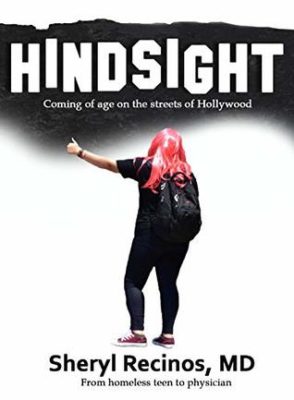
  • HINDSIGHT: Coming of Age on the Streets of Hollywood by Sheryl Recinos, MD – Medical/Professional Biographies, Memoir, Teen Abuse/Homelessness, Mental Health/Family

    HINDSIGHT: Coming of Age on the Streets of Hollywood by Sheryl Recinos, MD – Medical/Professional Biographies, Memoir, Teen Abuse/Homelessness, Mental Health/Family

    Hindsight: Coming of Age on the Street of Hollywood by Sheryl Recinos presents a childhood fraught with family dysfunction caused by mental illness and emotional and psychological abuse. The two formative figures in Recinos’ life were negligible participants instead of the supportive, loving parents all children need to grow and thrive into adulthood.

    While this memoir takes place in the 1980s and 90s, we can only hope the services that support runaways and dysfunction within families have improved. For example, her father’s main go-to plan for dealing with his daughter was to commit her to an asylum instead of doing the hard work of parenting.

    Homelessness, a significant theme in this memoir, is continuously in the news, an issue that plagues every major city in America and occurs even in small towns and rural settings. Homelessness is one of those issues that many in America turn a blind eye to and ignore, but Recinos shines a light, bright and clear, on this issue, and knowing her story helps us understand this issue in a new way. It brings a face to embody homelessness and a possible answer to the question, why?

    Why do people choose the street? Why do people refuse shelter? Why do some kids become flight risks? The answers may surprise you.

    Recinos never places blame, of which there seems plenty to go around. Never blames her mentally ill mother, who, during a psychotic episode, put her and her brother in danger. She never blames her father and portrays him as a figure that we can sympathize with at times. She never blames the legal system that failed her time and again, penalizing her but never breaking her spirit. And she never condemns any of the men that rape or attack her. She doesn’t blame drugs or alcohol or any “friends” she meets along the way who rob her or worsen her situation.

    Instead, Recinos tells the story of her teen-years with a pragmatic focus on the events. She never imposes her adult understanding of this world but focuses on her mental state at the time. What she produces is a raw and unapologetic story of a girl misunderstood, trying to survive in a world of neglect and abuse.

    That she survives is a miracle. That she finds her way out of homelessness to become a successful contributing member of society, becoming a loving parent with no role model for such a thing is another.

    Recinos breaks the cycle of abuse that drove her to the streets. She has become a champion of homeless teens. Her ability to see the injury she suffered through an unfiltered lens, and not accept it or be shaped by it, is why we love Dr. Recinos and her story.

    This memoir is a page-turner, a tour de force, a blockbuster read that will have you laughing, crying, cringing, and hoping for something better for this young woman. You won’t be disappointed. Recinos delivers, and she does so with grace and talent. We highly recommend this intense and eye-opening memoir.


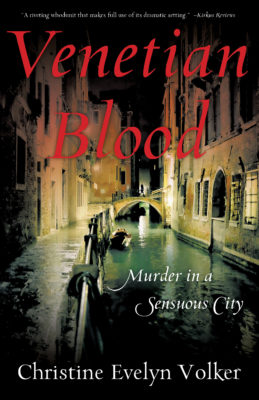
  • VENETIAN BLOOD: Murder in a Sensuous City by Christine Evelyn Volker – Suspense/Thriller, Amateur Sleuth, International Mystery & Crime

    VENETIAN BLOOD: Murder in a Sensuous City by Christine Evelyn Volker – Suspense/Thriller, Amateur Sleuth, International Mystery & Crime

    Venice has a long and intricate history and is best known as “The Floating City.” Tourists from across the world come to marvel at its beautiful architecture and walk over its countless bridges. Getting lost in time among the splendors of Venice can be seductive. Visitors will recognize the undercurrent of romance and mystery to the city, and make no mistake, Christine Evelyn Volker captures it in her novel, Venetian Blood: Murder in a Sensuous City.

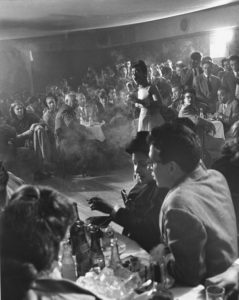

    Anna Lucia Lottol is on vacation in Venice, trying to forget about her failed marriage. Soon after arriving, Italian authorities detain her and name her suspect number one in the murder of the Venetian businessman, Count Sergio Corrin. Anna’s innocence quickly becomes murky, and she enlists the help of her friend Margo to unearth the truth and clear her name before it is too late.

    As the women investigate the elite circles of art and finance, there is a persistent suspicion towards Anna’s involvement. From the beginning, she presents herself as somewhat of an unreliable narrator. Her dishonesty creates an interesting parallel between what she is hiding from the detective and everything she hides from herself. As she dives deeper and deeper into Sergio’s secrets, her sanity comes into question. At night, she hears unexplainable sounds from an abandoned building, has dreams of stabbing Sergio, and believes she’s being followed whenever she is alone. But when an unknown assailant attacks, who can she trust?

    Within the first few pages, Volker’s writing paints an enticing picture of mystery and murder that ferries readers far beyond Venice’s touristy parts into the Venetians’ winding alleyways. The way Volker develops her plot is like piecing together an elaborate puzzle. The pieces are all there, but readers will only unravel the mystery when the picture is complete and the last page is finished.

    In Venetian Blood, Volker draws inspiration from her own life, which adds layers of individuality and artistry to the novel. She grew up with a passion for languages, and her career in the global financial industry eventually brought her to Venice, the first of many visits. In addition to writing mysteries, Volker also uses her writing to advocate for environmental sustainability.

    Venetian Blood: Murder in a Sensuous City is the perfect summer must-read mystery and reached the highly competitive level of Semi-Finalist in the CIBA 2018 M&M Awards for Mystery novels. Get ready to journey into the allure of romance and mystery that awaits among the canals of Venice.

    Readers can enjoy the Venetian Blood: Murder in a Sensuous City book trailer here.


  • Putting More Character into Your Characters – by Skip Ferderber – a Chanticleer Writer’s Toolbox Post

    Putting More Character into Your Characters – by Skip Ferderber – a Chanticleer Writer’s Toolbox Post

    Maybe it’s just me, but I often find myself lost when it comes to keeping track of multiple characters in a book I’m reading.

    Sometimes I’ll find myself about two-thirds through a novel when someone named Betty or Steve pops up in a conversation with my protagonist with an important piece of detail about the plot or a character development. Instead of taking in that information and using it to hurtle further into my novel, I find myself wondering who that character was, whether I’d seen him or her before and feeling a bit inadequate and frustrated that I can’t remember anything at all about the character.

    What I should consider instead is getting annoyed at the writer for not making the character memorable enough.

    Not every character in a book carries the same weight. You have your protagonists, your supporting cast, and possibly a boatload of tertiary characters. When it comes to the first two groups, you probably labor hard at making them distinguishable. But what about those pesky extras, the ones who are roughly the equivalent of chair-fillers in a night club in a ‘30s movie? You can’t waste your precious words on giving everyone a character workup . . . or can you?

    Consider this a good rule of thumb when you write about any character, large or small: If they’re in your book, you’ve got to know them well enough to tell your readers about them.

    “If you’re going to have a character appear in a story long enough to sell a newspaper, he’d better be real enough that you can smell his breath.” ~ Ford Madox Ford

    In an otherwise excellent novel I read recently, a career woman in her late 30s is talking at lunch to three girlfriends from her high school years. It was clearly meant as exposition about the woman, her struggles as a high-school non-entity to her present-day role as a prominent society all-star with three people from her past giving some much-needed context to that transition. But the author uses them as props. She might as well have been talking to three empty chairs.

    She might has well been talking to three empty chairs…

    If one of them had looked disbelieving at their friend, exchanged glances with each other, hastily taken a sip of wine, idly played with her silverware, etc., the scene would have had greater weight. If the central character had noted any physical differences from each or any of her friends, had an intense one-on-one exchange with any of them, turned that small discussion into a more personalized exchange, I would have known more about how the protagonist functioned.

    All I can recall in retrospect is that four women had lunch.

    So much can be done with characterization to make even the smallest “extra” memorable. One of my favorite examples comes from Daphne du Maurier’s “My Cousin Rachel.” As Philip travels to Tuscany to visit Ambrose, his troubled benefactor, he sees Italy not as a festive but as a sad, decaying land.

    He sees a young woman with a baby in her arms, apparently a beggar. Instead of using her clothes to show her situation, du Maurier writes,

    “She was young, not more than nineteen or so, but the expression on her face was ageless, haunting, as though she possessed in her lithe body an old soul that could not die; centuries in time looked out from those two eyes, she had contemplated life so long it had become indifferent to her.”

    Then she is gone. Poof!  But that brief moment on which she appears on du Maurier’s stage is a memorable detail in moving the story and its dark mood forward.

    One way to think about how you enhance your characters, large and small, is to consider the direct and indirect tools every writer has at hand.

    Direct tools are the most obvious: a person’s looks, clothes, their home, their family, their choice of music, books, the food they eat, etc. Indirect tools may include the way they look at someone (e.g., eyes narrow or open in pleasure or dismay), how they wipe their mouth after eating, a speech characteristic such as a small pause or a stutter. Their speech, how they approach their read, listen to music or watch movies, the way they sit, awkwardly gesture, lightly tighten their lips when they hear something they don’t like, a distracting memory . . .

    Your implementation of these tools will be important as you develop your story. It will help you elevate even the most mundane tale and make for a more enjoyable experience and hopefully increase your readership.

    It’s always worth your while to read the works of well known writers to see what characterization tricks they employ. But beware the trap of depending on them as a substitute for your own imagination. The maxim about writing itself being the only way to learn writing must be your truth. Try, fail and rise again. It’s the job, isn’t it.


    About Skip Ferderber 

    We are honored and proud that Skip is vital member of the Chanticleer Team of Professional Reviewers.  He has been a staff writer  for The Los Angeles Times, editor at Millimeter —a magazine that specialized in motion picture and television post-production, and has worked at several LA magazines during his career.  He is also a contributor to Geekwire, Puget Sound Business Journal, Sound Publications, and other Seattle-based media outlets.

    When not reviewing for Chanticleer Reviews & Media, Skip works on his second novel. He is an avid and intrepid traveler who has visited more than 20 countries including mainland China, Nepal, and Brazil with a journalistic eye for detail and subtext.


    HANDY LINKS to CHARACTER DEVELOPMENT Articles in the Chanticleer Writers Toolbox Series:

    ESSENCE of CHARACTERS – Part One – From the Jessica Morrell’s Editor’s Desk – Writer’s Toolbox Series

    CREATING UNFORGETTABLE SECONDARY CHARACTERS – Part Two of ESSENCE of CHARACTERS from Jessica Morrell’s Editor’s Desk – Writer’s Toolbox Series

    MINOR CHARACTERS – the SPICE of FICTION – Part One – From Jessica Morrell’s Editor’s Desk – Writers’ Toolbox Series

    MINOR CHARACTERS – the SPICE of FICTION – Part 2 From Jessica Morrell’s Editor’s Desk – Writers Toolbox Series

    CHARACTER NAMES are SIGNIFICANT in FICTION – Part Three: LANGUAGE and NAME-CRAFT in WRITING FICTION – a Chanticleer Writers Toolbox Blogpost by Jessica Morrell

    Did you know that Chanticleer offers editorial services? We do and have been doing so since 2011.

    And that our professional editors are top-notch and are experts in the Chicago Manual of Style. They have and are working for the top publishing houses (TOR, Macmillan, Thomas Mercer, Penguin Random House, etc.) and award-winning independent presses. If you would like more information, we invite you to email Kiffer or Sharon at KBrown@ChantiReviews.com or SAnderson@ChantiReviews.com.

    Click here to read more about our Editorial services: https://www.chantireviews.com/services/Editorial-Services-p85337185

    A great way to get started is with our manuscript evaluation service. Here are some handy links about this tried and true service:

    https://www.chantireviews.com/manuscript-reviews/

    We work with a small number of exclusive clients who want to collaborate with our team of top-editors on an on-going basis. Contact us today!

    Writer’s Toolbox

    Thank you for reading this Chanticleer Writer’s Toolbox article. 

    We encourage you to stay in contact with each other and with us  during this stint of practicing physical distancing to prevent the spread of COVID-19 — especially at this time of re-opening.

    Let us know how you are doing, what is going on where you live, how are you progressing on your writing projects.

    I invite each of you to join us at The Roost – a private online Chanticleer Community for writers and authors and publishing professionals. You are welcome to email me for more info also.

    We are active on Facebook, Twitter, and Instagram. You can find us by using our social media handle @ChantiReviews

    Minimize physical contact! Maximize social connecting!

    Be well. Stay safe. Keep writing! Keep Creating! 

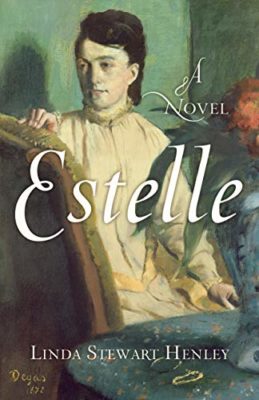
  • ESTELLE: A Novel by Linda Stewart Henley –  American Historical Romance, Southern Fiction, City Life Fiction

    ESTELLE: A Novel by Linda Stewart Henley – American Historical Romance, Southern Fiction, City Life Fiction

    Twenty-two-year-old museum intern and unknown artist, Anne Gautier, has undertaken a significant project, restoring an elegant house on one of the most beautiful streets in New Orleans. The grand old Creole home has been in her family for many generations, and, when her grandfather died, he left her the house on Esplanade Avenue, where all the best French Creole families once lived.
    There’s only one stipulation: She must restore the property or ownership will revert to the city. Even though the house is not in the best part of town, Anne is determined to celebrate the historical home not only because of her own family, but also because it was an integral part of New Orleans’ history during the visit of Edgar Degas in 1872. In fact, in Anne’s attic, Degas’s notebook gives her the money she needs to begin the restoration.

    Her plans go sideways when someone breaks in and vandalizes the home, leaving behind a threatening note and a mystery to solve. On top of this, Anne is trying to reconcile her feelings about Stella, the half-sister Anne recently met. Is Stella behind the vandalism? She was left out of their grandfather’s will. Anne tries to rely on her new boyfriend, Sam, for advice, but he has begun acting strangely, sneaking around behind her back and hedging his answers to her questions. With no one to lean on, a demanding job, and her own artistic-inspiration waning, Anne may never see her beautiful home and its essential history revived.

    The dual settings of New Orleans in 1870 and 1970 give this novel a unique perspective. The juxtaposition of the Musson and De Gas families’ issues to the modern trials of Anne and her own family provides perspective and education for the reader. Though their struggles seem completely unalike, the parallel stories are paradoxically similar. Estelle De Gas, sister-in-law and cousin of Edgar Degas, is a strong woman trying desperately to hold her marriage to a cheating husband together. At the same time, maintaining the expected appearance of a well-to-do Creole family while knowing the family’s fortunes have fallen.

    Anne is struggling to find her place in the world and to hold together what family she has left while dealing with her own untrustworthy partner, Sam. Though Sam admonishes her for refusing to look at the practical realities of life, she seeks to make her surroundings beautiful, just as Estelle does in encouraging Degas to find his inspiration in la Nouvelle-Orléans. Anne wants desperately to make her own way in the world. Though Estelle isn’t an unmarried young woman, she understands the integral role she plays within her sphere of familial influence. The more Anne learns about Estelle, the more she realizes she needs to take a leaf from her ancestor’s playbook and find her own strength.

    Art plays a huge role in this novel. Edgar and Anne share a similar notion that the life of an artist is not one easily shared with another. Both are suffering from a lack of inspiration and direction. During the time Degas spent in America, he had achieved little recognition, and his brothers hoped he would take an interest (and make an investment) in the family cotton business. Anne has given up her art for her busy internship and her flailing love life. Though the museum job isn’t her dream, she understands art is not an easy way to make a living. She avoids facing the truth just as Degas begins to feel he must help his family by selling his work and sending them much-needed money. Eventually, New Orleans offers both a new subject matter for their art. Anne, with her new-found sympathy for the poor of the city and Edgar with his own family’s business.

    The growth of Anne’s relationship with her half-sister, Stella, is an interesting subplot in conjunction with Anne’s realization about the struggles of poverty-stricken New Orleanians. Anne has only recently learned of her sister’s existence because Stella, the product of a teenage dalliance, was given up for adoption immediately after her birth. Anne’s overwhelming guilt over her half-sister’s lost inheritance haunts her, and though she wants to share, giving up a portion of her estate is not the easiest thing to do. But the hard truth is, Stella is facing eviction from a Section C housing, a slum where the houses are more like shacks. Anne could offer Stella a home in their grandfather’s former home, but will she?