Blog

  • The 2020 CYGNUS Book Awards for Science Fiction – The Short List for the CYGNUS Division of the 2020 CIBAs

    The 2020 CYGNUS Book Awards for Science Fiction – The Short List for the CYGNUS Division of the 2020 CIBAs

    Cygnus Award for Science FictionThe Cygnus Book Awards recognize emerging new talent and outstanding works in the genre of Science Fiction, Steampunk, Alternative History, and Speculative Fiction. The Cygnus Awards is a genre division of Chanticleer International Book Awards and Novel Competitions (The CIBAs).

    Chanticleer International Book Awards is looking for the best books featuring space, time travel, life on other planets, parallel universes, alternate reality, and all the science, technology, major social or environmental changes of the future that author imaginations can dream up for the CYGNUS Book Awards division. Hard Science Fiction, Soft Science Fiction, Apocalyptic Fiction, Cyberpunk, Time Travel, Genetic Modification, Aliens, Super Humans, Interplanetary Travel, and Settlers on the Galactic Frontier, Dystopian, our judges from across North America and the U.K. will put them to the test and choose the best among them.

    The Short Listers’ works will compete for the Semi-Finalists positions. Semi-Finalists will be announced and recognized at the CAC21 banquet and ceremony. The Finalists will be selected from the Semi-Finalists. 

    The 22 divisions of the 2020 CIBAs’ Grand Prize Winners and the Five First Place Category Position award winners will be announced at the April 25th, 2021 Chanticleer International Book Awards Annual Awards Gala, which takes place at the Chanticleer Authors Conference that will be held in virtually Bellingham, Wash. 

    Congratulations to the 2020 Cygnus Book Awards SHORT LISTERS!
    • Brent Golembiewski –Flat Earth
    • Jonas Saul –The Immortal Gene
    • Tiffany Meuret –A Flood of Posies 
    • R. Welsh – The Great Filter
    • Mark T. Sneed – Bully Nation
    • Brooke Skipstone – Some Laneys Died
    • B.T. Keaton – Transference
    • Mark D. Owen – Impact
    • JL Morin – Loveoid
    • Charis Himeda – CRISPR Evolution
    • Bryan K. Prosek – Paradoxal
    • R.S. Harmon – Captain’s Covenant
    • Liam King – Grit
    • Jim and Stephanie Kroepfl – Merged
    • Timothy S. Johnston – The Savage Deeps
    • Alex McIntosh – Upstream Revolt #6
    • Samuel Finn – A Voice From The Moon
    • Mike Meier – JoinWith.Me
    • Palmer Pickering – Moon Deeds 
    • Ted Neill – Reaper Moon: Race War in the Post Apocalypse
    • C. Hofsetz – Enemy of the Gods #4
    • Dr. Anay Ayarovu – STAZR the World Of Z: The Dawn of Athir
    • PA Vasey – Trinity’s Fall
    • Rhett C. Bruno & Jaime Castle – The Luna Missile Crisis
    • William X. Adams – Alien Body
    • KeJo Black – A Kingdom in Shards
    • Denis Olasehinde Akinmolasire – The Mission to End Slavery
    • C.M. Aquavella – Transformation: The Circusity
    • J.T. Blossom – Lenore and the Problem With Love – When You Go to College Save the Planet
    • Alexander Usher – Experience Extracted
    • Russ Colson – The Arasmith Certainty Principle
    • Zach Fortier – Volk: Book one of The Overseer series
    • Cary Allen Stone – SEEDS: The Journey Begins
    • Susan Wingate – The Lesser Witness
    • Dennis M. Clausen – The Accountant’s Apprentice
    • Courtney Leigh Pahlke – Life Force Preserve
    • Marc Corwin – The Optical Lasso
    • Alan J. Steinberg – To be Enlightened
    • Michelle Tanmizi – Late Dawn

    Good luck to all as your works move on the next rounds of judging.

    The next round of judging will decide which books move on to the Semifinalist positions for the 2020 CYGNUS Book Awards for Science Fiction novels.
     

    The ShortListers’ works will compete for the Semi-Finalists positions. Finalists will be selected from the Semi-Finalists, and then all Finalists will be recognized at the VCAC21 ceremonies. The First Place Category Winners, along with the CIBA Division Grand Prize winners, will be selected from the 22 CIBA divisions Finalists. We will announce the 1st Place Category Winners and Grand Prize Division Winners at the CIBAs Ceremonies April 21-25th, 2021 live at the luxurious Hotel Bellwether in Bellingham, Wash.


     

    We are now accepting submissions into the 2021 CYGNUS  Awards writing competition. The deadline for submissions is April 30th, 2021. The winners will be announced in April 2022.

    Don’t wait! Click here to enter today!
  • Supporting Cast – Taking Risks with Your Secondary Characters – From the Editor’s Desk of Jessica Morrell – A Chanticleer Writers Toolbox Post

    Supporting Cast – Taking Risks with Your Secondary Characters – From the Editor’s Desk of Jessica Morrell – A Chanticleer Writers Toolbox Post

    Character, not plot, is what chiefly interests the reader because he translates and feels the character’s actions, desires, and passions from his own data bank of experiences and emotions. – Jessica Morrell

    Long after the intricacies of a fictional plot fade from a reader’s memory, the characters linger with an almost physical presence, a twinkle of personality, unforgettable actions, and their happy or sad fates. Fictional characters whisper their secrets, allow us to witness their most intimate moments and sorrows, and trust us with their messy emotions, bad decisions, and longings. They penetrate our aloneness, populate our imagination by starring in our inner cinema, and slip their hands in ours and transport us to another place, another time. And while all this is going on, often they teach us what it means to be human complete with all the troubles, heartaches, and mysteries.

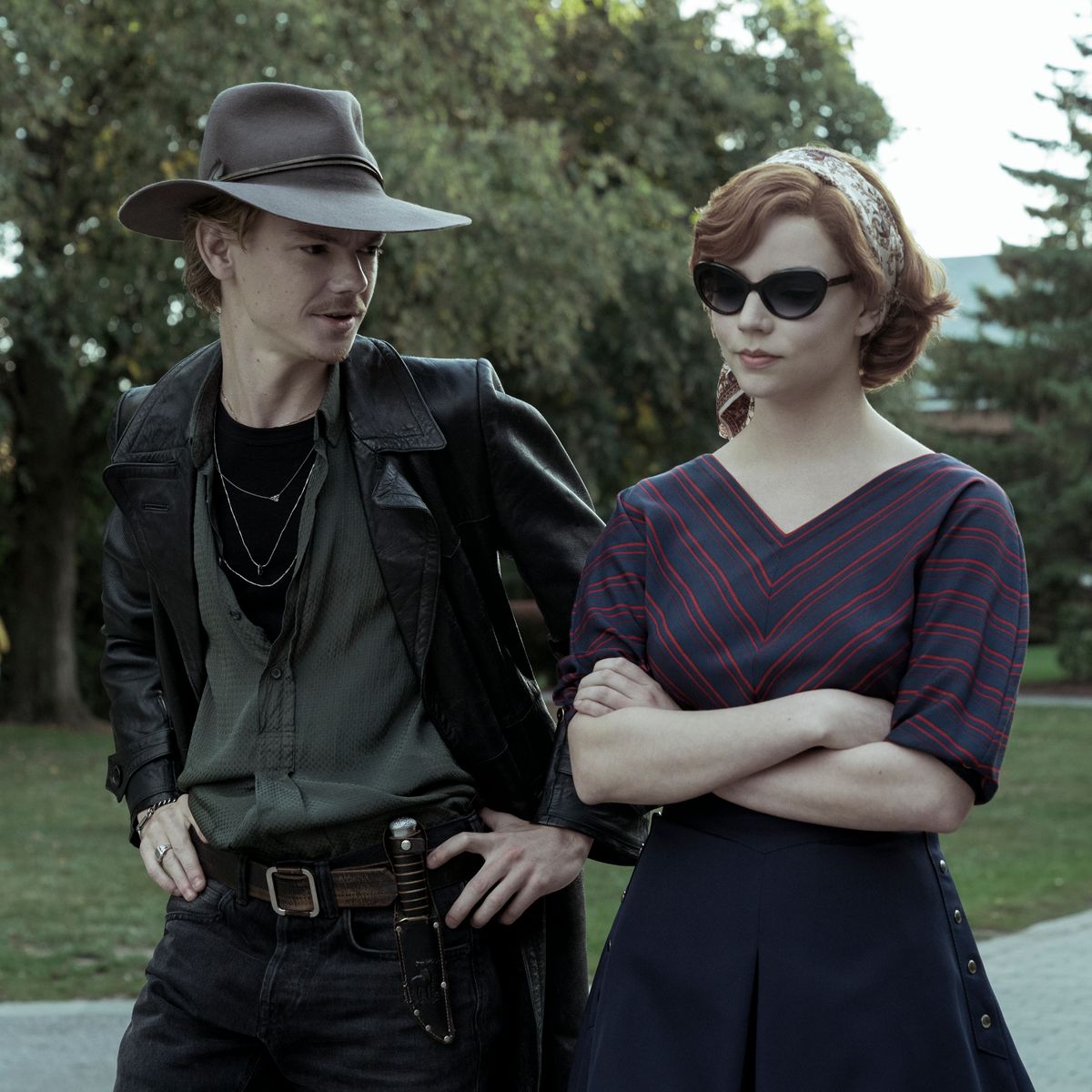
    Benny, the unforgettable secondary character in “The Queen’s Gambit” by Walter Tevis

    Characters that leave a lasting footprint in our memory range the gamut from stuck-on-themselves divas and difficult drama queens, to aging Italian billionaires and lonely singletons, along with knights and spies and waifs and dwarfs. It’s simple reallyCharacter, not plot, is what chiefly interests the reader because he translates and feels the character’s actions, desires, and passions from his own data bank of experiences and emotions.

    This is the opening to my book Bullies, Bastards & Bitches: How to Write the Bad Guys in Fiction. 

    However, the book isn’t only about ‘bad guys’. It covers character roles and types including protagonists, heroes, unlikable protagonists, unreliable narrators, and a slew of information to add to your understanding.

    I’ve been thinking about my book and all I’ve learned since I wrote it, because I’m creating a presentation on secondary characters for a virtual workshop I’m teaching  at the Chanticleer Author’s Conference.  Before I delve into techniques for creating secondary characters, I’m explaining the roles, hierarchy, development, and purposes of fictional players. Because the more you know about the many uses for characters –the enormous scope and weight they can bring to a story–the more tools you wield when playing God.

    When I wrote my Bullies book as I sometimes call it, my main objective was to urge writers to take risks with their characters. To use shills and scapegoats and flamboyant loudmouths. Demon lovers, homicidal stalkers, criminal politicians. Stir in trolls, punks, bad asses, weirder-than-weird nerds, smarter-than-smart geeks, callous grifters, hard-to-believe they’re so foul-mouthed not-so-sweet old ladies.

    A not-so-sweet old lady – Chrisjen Avasarla, UN Secretary – General of The EXPANSE SciFi series. She is always full of surprises.

    Bring it on.

    The same is true for your supporting cast. Sure you’ll add bit players, stock players, and archetypal players. Royals, innocents, mentors, warriors, and confidants. Burned-out cops, cranks, frenemies, crappy stepparents, and obnoxious neighbors. Familiar types with many valid, solid uses in storytelling.

    And who could forget SPIKE from Notting Hill (1999) 

    It is said that the screenplay by Richard Curtis is funnier than the movie and more charming — if that is possible. -kb

    Creating co-stars can be one of the great joys of storytelling. They can be outrageous, hilarious, freaky, maddening, sex-driven, drug-addled, and vapid. They can lie, steal, betray, enchant, and embolden. They sometimes get the best lines, spout the best snark. Give the best shade. They can drive their co-stars crazy and they can also drive the plot. They can star in their own subplots and often support the protagonist’s goals. Or thwart the protagonist’s goals. Or lie about supporting the protagonist while actually backstabbing the poor sod.

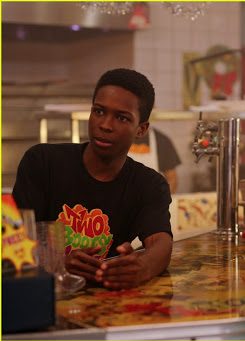
    Boomer of “Dash and Lily’s Book Dares” – as acted by Dante Brown in the Christmas Mini-Series DASH and LILY BOOK of DARES

    But like protagonists and antagonists, they can never be dull or commonplace. Never a pale footnote. Never thinly sketched unless the character has a walk-on part. But even bit players can possess physical characteristics. A lisp. A limp. An arresting voice. Inappropriate wardrobe choices and whisky breath.

    I’m having a lot of fun thinking about this topic. Does it show?

    Keep writing, keep dreaming, have heart. Jessica

    Jessica Page Morrell
    Jessica Page Morrell

    Jessica Morrell is a top-tier developmental editor and a contributor to Chanticleer Reviews Media and to the Writer’s Digest magazine. She teaches Master Writing Craft Classes at the Chanticleer Authors Conference that is held annually along with teaching at Chanticleer writing workshops that are held throughout the year. 


    Chanticleer Editorial Services – when you are ready

    Did you know that Chanticleer offers editorial services? We do and have been doing so since 2011.

    Tools of the Editing Trade

    Our professional editors are top-notch and are experts in the Chicago Manual of Style. They have and are working for the top publishing houses (TOR, McMillian, Thomas Mercer, Penguin Random House, Simon Schuster, etc.).

    If you would like more information, we invite you to email Kiffer or Sharon at KBrown@ChantiReviews.com or SAnderson@ChantiReviews.com for more information, testimonials, and fees.

    We work with a small number of exclusive clients who want to collaborate with our team of top-editors on an on-going basis. Contact us today!

    Chanticleer Editorial Services also offers writing craft sessions and masterclasses. Sign up to find out where, when, and how sessions being held.

    A great way to get started is with our manuscript evaluation service. Here are some handy links about this tried and true service: https://www.chantireviews.com/manuscript-reviews/

    And we do editorial consultations. for $75.  https://www.chantireviews.com/services/Editorial-Services-p85337185

    Writer’s Toolbox

    Thank you for reading this Chanticleer Writer’s Toolbox article.

    Writers Toolbox Helpful Links: 

    The INCITING INCIDENT: STORY, SETBACKS and SURPRISES for the PROTAGONIST – A Writer’s Toolbox Series from Jessica Morrell’s Editor’s Desk

    ESSENCE of CHARACTERS – Part One – From the Jessica Morrell’s Editor’s Desk – Writer’s Toolbox Series  

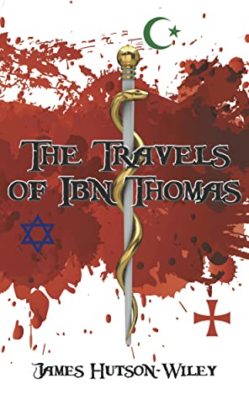
  • The TRAVELS of IBN THOMAS by James Hutson-Wiley – Historical Fiction, Religious Historical Fiction, Multi-Cultural Ancient World

    The TRAVELS of IBN THOMAS by James Hutson-Wiley – Historical Fiction, Religious Historical Fiction, Multi-Cultural Ancient World

    In an ancient world split in three by religion, a conflicted young man seeks the truth about his past and builds his future in this colorful panorama created by author James Hutson-Wiley.

    Ibn Thomas, the book’s narrator, taken from his boyhood home In Aegyptus after his father and mother disappeared, lives in a monastery where he is mocked for his name and his knowledge of Arabic. At age 12, the monks send him from England to Salerno, Italy, where he will study medicine, supported, he learns, by considerable wealth to which he is heir from the commercial activities of his father, a trader in Al-Sukkar, or sugar, considered a precious commodity at the time.

    After successfully completing his studies, he is sent to Sicily, where he will be appointed chief physician by the queen after saving her son Ruggerio’s life. But the monks have given him a secret assignment, a role that his father also undertook – to spy on certain members of the Sicilian leadership. He will also ally with the Islamic and Jewish family members, cordially doing business with his loving Uncle Assad, a Muslim, and with Jusuf, a Jew who considers himself the boy’s uncle. All of them hope to discover their friend and relative, the missing sugar merchant, alive.

    As Ibn Thomas travels through the Mediterranean region beset by pirates, massacres, plagues, and intrigues, he has a personal goal: to reach the Holy Land, where the great religions that seem so far apart as to cause war and hatred, and that live so strongly within him, have their roots.

    Author Hutson-Wiley has fashioned his sequel to The Sugar Merchant with an eye to the smallest detail. In this vibrant tale, the inner workings of the early Roman Catholic Church can be seen as it quells rebellion within its own ranks and battles fiercely with Islamic forces. The mysterious, almost magical realm of medicine, combining science and spiritualism, has been clearly researched to the last detail, in a way that modern readers, now used to herbal remedies as an alternative to scientific pharmacology, will find fascinating.

    In an amusing episode, Thomas and a school friend decide to experiment with the drugs they give their patients, one of them being a weed called “kanab.” Not surprisingly, they wind up thoroughly stoned. Importantly, the author deftly puts us solidly inside the mind of his protagonist, a man who knows his profession, tries to reconcile his intermingled religious beliefs, and often berates himself for his pride even as his perspicacity allows him to save many lives. Hutson-Wiley has traveled the regions he so vividly depicts in his career in international trade and, through the engaging perspective of Ibn Thomas, gives readers a fresh look at how some of the paradigms of our current geopolitical landscape came into being.


  • The Third Blogpost of 2021 — Mastering the Zoom Meeting and Hosting! – A Chanticleer Writers’ Toolbox Post

    The Third Blogpost of 2021 — Mastering the Zoom Meeting and Hosting! – A Chanticleer Writers’ Toolbox Post

    Thankfully, Zoom is an intuitive program for most people, at least if you’ve had your morning coffee. These tips will cover more advice for people who are ready to take their Zoom meetings to the next level and even start hosting meetings!

    Author Events, Book Club Meetings, Book Launches, Socials – Just to Stay in Touch, Presentations, and More are just a few of the Interactive Activities that Authors and Publishers can facilitate using ZOOM! 

    Morning Coffee Music for your morning coffee: 2 hours of Morning Coffee Music Playlist - YouTube

    1. Framing

    Some people have discussed a rather strange problem with all these virtual conversations we have nowWhen talking put their face right next to the camera, filling up the entire camera and giving them an impressive head size. Then, when they see each other in person for some safe social distancing, their heads look extraordinarily tiny.   

    Do you remember Big Head Todd and the Monsters? 

    Big Head Todd and the Monsters – I’ve met him in person. He does have a big head. Nice guy! – Kiffer

    To fight big-head-syndrome you can work on framing yourself. With friends, there’s of course plenty of wiggle room here, but in more professional settings, it seems that from the shoulders up is the recommendation.  

    David speaking from Chanticleer's offices with several ribbons and logos behind him
    A proper ratio and perspective of David!

    Even better is if you move your hands up into the frame when you talk. This provides a helpful hint to watchers of who is currently talking, and it helps give us a better understanding of the body language you’re trying to convey than if your hands are hidden somewhere beneath the frame.  

    2. Manage Your View

    If there are fewer than 10 people in your meeting, you can probably stay in “Gallery View.” However, if you often find your mind wandering during the meeting, try to set up “Speaker View,” which will have the screen focus on whoever is the last person to have spoken (though it well never focus on you). The options for these can often be found on the top right of your screen on desktop.  

    Drop down menu of Speaker View and Gallery View


    The Brady Bunch

    Or sometimes you can have more people on the Gallery View—also know as the “Brady Bunch” view like we do when we have Happy Hours at the Roost! We  try  to  make  room  for  everyone.

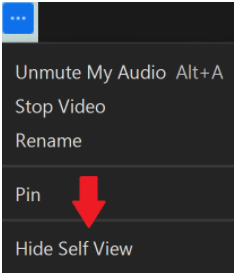
    The next thing that will help anyone who has trouble looking away from her or his reflection is to “Hide My Self View.” Make sure to do this after you set up your framing, and remember that others can still see you! You can usually hide your self view by clicking on the three little dots in the top right of your image box, and then to show it a new button will appear in the top right of your screen to start showing your self view again.  See the three little dots in the blue box below. Yeah, it is sort of like a secret code…

    Drop down menu that allows you to hide self view

    Remember, you never need to appear in a Zoom meeting if you don’t want to, but with these tips and tricks, you’ll be able to look professional while still staying comfortable. 

    The Following Tips Will Help You HOST your OWN ZOOM MEETINGS for Book Launches, Book Clubs, Author Events, and Outreach to Your Readers and Potential Readers  

    3. Set up a Meeting (for PC)

    While these are fairly similar processes, if the instructions for a PC doesn’t work for your Mac, read the instructions here about hosting from an Apple or Mac computer (from the Zoom website).

    For PCs, you’ll want to look in the top right of your screen once you log into your Zoom.us account. In the top right corner you’ll see the following three options:

    The option for “Join a Meeting” of course allows you to join a meeting. You might think that “Host a Meeting” is the next natural option, but really that only allows you to host a meeting immediately instead of later. What will allow you to plan and schedule a meeting for your book release or the next meeting with your publisher is when you click on the “My Account” link.

    Remember, Zoom only offers unlimited meeting times to people who pay for an official account, but anyone can have a meeting with a free account. If your 40 minute free meeting runs out of time, people can rejoin the meeting using the same link that they used to get into the meeting in the first place.

    Once you click on “My Account” you will see a list of options on the left side of the screen.

    As highlighted in the image above, you’ll want to click on “Meetings”

    Once “Meetings” are selected, you’ll see all the meetings that you’ve set up in the past, and there will be a button on the far right that says “Schedule a Meeting”

    From this screen there are a few sections to focus on.

    • Topic — This is the title of your meeting. It’s more important to have this labeled if you are using it for a big marketing event like a book release event. Less important for an individual meeting with somebody.
    • When — While technically you can join a Zoom meeting at anytime provided the host hasn’t closed the meeting, setting the time is a great way for people who try to join at the wrong time to double check when you’re actually supposed to be there.

    Download Meme Unicorns Missed The Ark | PNG & GIF BASE

    • Registration — This can be a handy way to ensure people sign up with their email and makes it so they’ll receive a reminder email for your event. This works better for more formal meetings.
    • Security
      • Passcode: We always recommend using a password. You can set your own or use the one randomly generated by Zoom.
      • Waiting Room: Waiting Rooms are great if you want to screen who comes into your meeting, but make sure you keep an eye on your participant’s tab. Keep reading to learn more about the participant’s tab.
    • Meeting Options
      • Allow participants to join anytime: Yes, check this box.
      • Mute participants upon entry: Yes, check this box.
    • Save! At the very bottom is the “Save” button. Always click Save once you’ve finished making a meeting so as to not lose it!

    4. Always include a link to the meeting with the date and time.

    Something about digital information lets information slip out of everyone’s head. Instead of sending out an email that says “See you at the next meeting, here’s the link!” If you include the date and time of each meeting you have, that will save you several replies (maybe even a feared “Reply All”) that will make your meeting run a little smoother.  

    5. Always include the password if there is one.

    This one is simple. Like the date and time, always including this will help streamline people’s ability to join your meeting. 

    If you’re the host, you can find information about the Meeting ID and password by clicking on the ⓘ symbol on the top left of your screen to see this information.  

    A menu with the Meeting ID and Password information

    6.The Waiting Room

    A Zoom Participant window with one participant labeled in the Waiting Room

    If you decide to use a “Waiting Room” make sure you have the “Participants” tab open at all times to let people in. If you need help managing the “Participants” tab, feel free to assign a responsible party in your meeting the “Co-Host,” and they will have the power to admit people, too.  

    A symbol of two people labeled Participants

    7. Post the instructions on how to join the meeting by phone. 

    You can find the long version of that here on the Zoom support site, but the quick version as is follows. 

    Audio conferencing participant will need to call: (415) 762-9988 or (646) 568-7788. AND follow the verbal instructions. 

    Enter the meeting ID, 11 digits long followed by the # key. 

    You will be asked to enter your participant ID. If you do not know your participant ID, simply press the # key. 

    As the person logs in to the Zoom call using their phone, they will be given instructions on how to mute and unmute themselves.  

    Zoom Meetings Review | PCMag

    8. Manage the Mute

    If someone wants to make a comment every now and then, that’s fine, but if their spouse is watching the big game and yelling behind them, it may be worth it to just click that “Mute” button. No need to call attention to it, most people will think the person realized that their sound was a distraction and muted themselves. There’s no shame in being muted.  

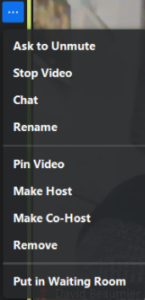
    A Dropdown List of Controls related to Zoom attendees

    As a related note, occasionally it might be good to turn off someone’s video, but this is usually not necessary. I did attend one writer social where an author who worked an early morning shift fell asleep partway through. Not a huge issue, but probably something the host could have hidden to keep the energy level up instead of letting everyone really consider whether they, too, wanted a nap. 

    SOMETHING FUN for YOU to WATCH! The Official ZOOM Song (an anthem for quarantine ZOOM meetings) song to the theme of The Brady Bunch

    ENJOY! And please leave your comments below (or your fav YouTube videos). 

    https://www.youtube.com/watch?v=wEDksgXpGeU&ab_channel=TheWarpZone

    And that’s it! You are now a new Zoom Meeting expert! Go forth and be digital.  


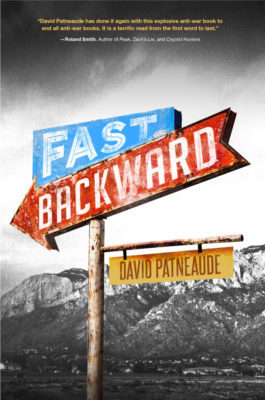
  • FAST BACKWARD by David Patneaude – Y/A Time Travel Fiction, Y/A Apocalyptic & Post Apocalyptic Fiction, Y/A Coming of Age Fiction

    FAST BACKWARD by David Patneaude – Y/A Time Travel Fiction, Y/A Apocalyptic & Post Apocalyptic Fiction, Y/A Coming of Age Fiction

    In Fast Backward, David Patneaude’s most recent YA novel, fifteen-year-old Bobby sets out on his morning newspaper route, but what happens next blows his shorts off, literally. First, he witnesses a blinding light that grows into a mushroom cloud, but no one on the military base where he delivers papers will talk about it. Then, on his ride home, a dot in the distance takes on the shape of a girl, a naked girl in the middle of the desert at the side of the road. Thus begins Patneaude’s novel that brings WWII to life through the eyes of a young man torn by his father’s anti-war sentiments, and his uncle’s military patriotism.

    Bobby realizes that this girl, Cocoa, is somehow tied to the blinding explosion. What does Bobby do? He offers the girl his carrier bag, his shorts, and a ride home. After some preliminary conversation, Cocoa realizes where she is, and what she must do.

    She has knowledge she must deliver a message to those in charge in the hope of stopping nuclear bombs that decimated her world.

    Are we concerned yet? Bobby is. He can hardly believe Cocoa’s crazy story, but Cocoa’s knowledge of dates, towns, and ship names make him a believer. They convince his parents and, with some effort, Bobby’s Uncle Pete. Cocoa has enough knowledge to capture the attention of some high-ranking military officials, but she also receives serious skepticism. When a bombing that she’d predicted actually happens, the Generals start listening.

    Cocoa’s premonitions are a torment to her, and when she remembers something that involves Robert’s dad, a journalist and pacifist and conscientious objector, Robert’s world is turned upside down. His ideas of the world are forever changed by Cocoa, Future Girl, the girl who will save the world.

    Award-winning YA author, David Patneaude effectively suspends our disbelief as he deftly crafts a world where nuclear bombs, Nazi submarines, the bombing of US cities, with two kids coming of age stuck in the middle, becomes a reality. Patneaude’s world explodes on the page in this post-apocalyptic war story that is plausible, terrifying, and quite satisfying to the spectacular end.

    Fast Backward is highly recommended for young and old alike – and won First in Category in the CIBA 2019 Dante Rossetti Awards for Young Adult fiction.


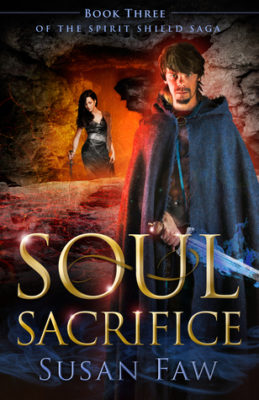
  • SOUL SACRIFICE: Book Three of Spirit Shield Saga by Susan Faw – Teen & YA Greek & Roman Myths and Legends, YA Epic Fantasy Novels, YA Wizards & Witches Novels

    SOUL SACRIFICE: Book Three of Spirit Shield Saga by Susan Faw – Teen & YA Greek & Roman Myths and Legends, YA Epic Fantasy Novels, YA Wizards & Witches Novels

    Evil has taken hold of Cathair and the surrounding lands, and only the Spirit Shields can save both the living and the dead. Cayden and Avery, human twins housing the spirits of the godling children of Morpheus, have been tasked with stopping their sister Helga. She is hellbent on wiping out humanity and controlling the spirits of both man and beast.

    Separated by missions unique to their abilities, Avery and Cayden are frantically searching for a way to defeat Helga. Cayden, the keeper of the Well of Souls, is connected to all spirit life. He can feel the life literally draining from the land but is nearly powerless to stop it because he is Soul Fetched, his mind imprisoned by Helga. He knows he must fight her insidious commands but is weakening mentally and physically. Avery must find a way to commune with their father and beg his help in defeating Helga since only a god’s power can destroy her minion army of Charun, souls of former warriors returned to ethereal bodies. She is also fighting against the Daimon, creatures born of hatred and fire who consume the souls of men before they can return to the river of souls awaiting reincarnation.

    Their sister, Artio, recently reborn as a half-bear, half-human woman, joins Avery in her quest. Her motives, though, are personal because Helga stole the body and soul of Artio’s lover in a past life. The three siblings must find a way to unite the clans, defeat Helga, and save the souls of man.

    Duty is more than a job. It is a soulful need to fulfill a purpose, either sworn to another or intrinsic.  Many characters within this novel are driven by that intense, all-consuming duty. Both the major and minor characters are consumed by it to the point they are willing to make the ultimate sacrifice to it. Ryder, commander of the Kingsmen and close friend of Cayden, is a prime example. A fixture in the Saga, Ryder and his men have previously been tasked with defending the Well of Souls. Having been taken captive by Helga, he refuses to swear allegiance to her. Even when his own loyalty is used to imprison him, Ryder cannot give up his oath to protect his king, still feeling the swell of pride at knowing his friend has ascended to his rightful place in Cathair. He is willing to befriend a Charun formerly known as Captain Brennan and even endure Helga’s unwanted physical attention to find a way to defeat her and help Cayden from the Underworld.

    As a commander of the Kingsmen in his former service, Captain Brennan cannot deny his duty, though refusing at first to give in. Perhaps the ultimate example of his oath is Cayden’s need to protect the Well of Souls.

    Connected to the well by a mental bond that becomes physical, Cayden must guard the souls awaiting new bodies. As the river that flows into the well diminishes, so does Cayden. His soul drains as surely and swiftly as the river. He knows his human life is the only thing that can heal the rift. If he fails in his duty, all of humanity will suffer for eternity. His birthright is to remain faithful in his charge even though he knows he will have to make the ultimate sacrifice.

    Another theme of the novel is that of sacrifice. Nearly every character is forced to sacrifice some part of themselves. Morpheus begins the cycle when, centuries earlier, he was forced to give up his family or leave them to the other gods’ fury. The sacrifices continue for his children, all of whom sacrifice, whether willingly or not. Artio surrenders her lover to a fate worse than death while Avery and Cayden, the twins, must offer their closeness, their twin bond, nearly severed by distance and strife. Even Helga, in all her evil glory, has made sacrifices, being forced long ago to the darkness of the Underworld. Those connected to the siblings endure hardships as well. Ziona, sworn protector of Cayden and his truelove, must give him up. She is also willing to do whatever it takes to protect the Well of Souls, even if that means taking his life. Denzik, Nelson, and Fabian, Kingsmen, try to protect Cayden, and all make sacrifices to bring their men back to Cathair. Lovers of the series will experience a shocking, jaw-dropping twist that only a master-storyteller like Susan Faw could pull off. And we are so ever delighted she did!

    Soul Sacrifice won First Place in the CIBA 2018 Dante Rossetti Awards for Young Adult fiction.  Click on the links to read our reviews of books one, Seer of Souls, and two, Soul Sanctuary.

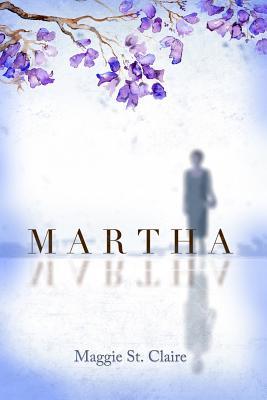
  • MARTHA by Maggie St. Claire – Small Town Crimes, Contemporary Social Issues, Literary

    MARTHA by Maggie St. Claire – Small Town Crimes, Contemporary Social Issues, Literary

    In the unique and compelling voice of an aging woman teetering on the edge of financial ruin, Maggie St. Claire’s debut novel, Martha, takes the reader from affluent residential areas of Los Angeles to its urban streets of despair, shadowing a 71-year-old, retired bank teller as she comes to grips with the challenges and adversities that threaten her existence.

    This is the story of Martha Moore, many years divorced, estranged from her only child, and living a lie, as she enters her golden years. The most important things in her life, outside her pride in her desirable Hancock Park bungalow, are her book club friends. She attends their meetings dressed in her finest, projecting what she hopes is the image of a well-educated, well-to-do, Los Angeles dowager. The three wealthy women who comprise the remainder of the group are her best, perhaps only friends, and sometimes that’s a stretch.

    In reality, anxiety and fear permeate her psyche as Martha struggles with uncertainty, failing health, food insecurity, and dwindling finances. Impoverished and alone, she is learning to live by her wits, filching food from many sources and raising money in unorthodox ways.

    Martha’s handbag is filled with things from the kitchen that will never be missed when she leaves book club meetings and after times she volunteers at her church—she helps with the food bank and clothing donations, earning stars in her crown. She’s the sweet little old lady schmoozing her way to the buffet at local weddings and/or funerals, or the seasoned businesswoman whose nametag has been misplaced at conventions and rallies—a chameleon in sheep’s clothing, one might say.

    Such events are her food sources. Of course, they don’t pay the overdue bills or the taxes. She worries how long it will be before she loses her home.

    Then, seemingly, the planets align.

    After finding her friend’s large emerald and diamond ring on the bathroom counter at a book club meeting, Martha sticks it in her pocket, intending to return it. Later, at home, she finds it still in her pocket. She had intended to return it—hadn’t she? Conflicted, she vacillates between fears of losing face or being thought of as a thief, and the urge to keep the ring until she can sell it and raise some badly needed cash. When she decides, the die is cast. She’ll sell the ring somewhere in one of the many jewelry venues abounding in the city.

    Because she doesn’t dare, doesn’t know-how, and fears being found out, it was a fruitless decision until an indigent, young woman with her own problems enters Martha’s life. Then, everything changes …

    Throughout the story, the direction of Martha’s life has been dictated by both changing circumstances and the choices they engendered. Ultimately, she must make a choice that will permanently change the rest of her life.

    While the reader may “bump” out of the story by grammatical and formatting errors, they are drawn back in by the author’s complex characters, vivid imagery, and authentic dialogue and setting. In Martha, Maggie St. Claire has deftly chronicled troubling social issues that often go unnoticed in today’s world, within the context of one woman’s life.

    More than just a good read, Martha is a relevant, provocative, and memorable story that lingers long after the book is closed.

     Martha won First in Category in the CIBA 2019 Somerset Awards for Literary fiction.


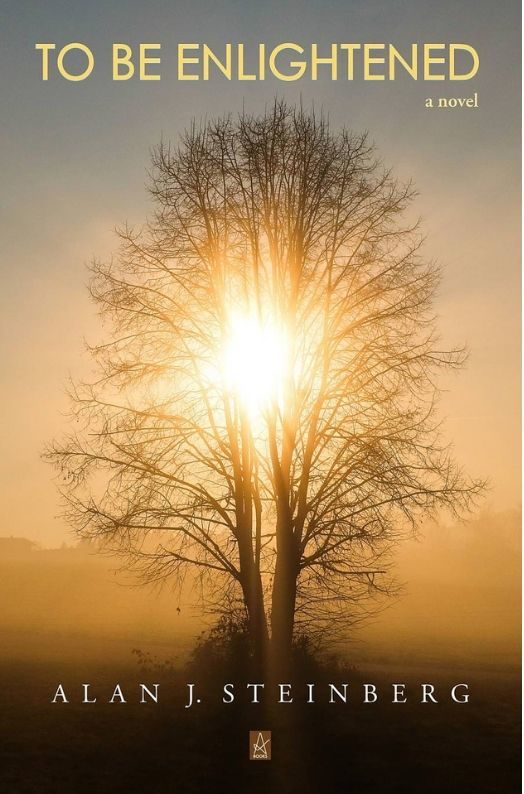
  • TO BE ENLIGHTENED by Alan J. Steinberg, MD – Metaphysical Science Fiction, Magic Realism, Metaphysical and Visionary

    TO BE ENLIGHTENED by Alan J. Steinberg, MD – Metaphysical Science Fiction, Magic Realism, Metaphysical and Visionary

    If you have never read a work of philosophical fiction, be prepared—it’s not fluff.

    Dr. Alan J. Steinberg’s latest work in some ways echoes other works with similar themes, e.g., Nietzsche’s Thus Spoke Zarathustra, or Siddhartha by Herman Hesse. But To Be Enlightened provides a distinctive, twenty-first-century take on setting and characters, giving it a uniquely California flavor.

    In a tale of ambivalence and obsession that would captivate a Freudian psychologist, Steinberg uses the main character, Abe Levy, a conflicted philosophy professor at a Southern California college, as a vehicle to recount the philosophical underpinnings of Transcendental Meditation, relating the tenets of Indian Vedic philosophical beliefs to those of Western and Middle Eastern civilizations over the ages.

    Abe’s conflict is both spiritual and mundane, affecting every aspect of his life.

    When he was fifteen, Abe experienced an inexplicable, life-altering event. At that time, two strangers transported him to another plane of existence—heaven, if you will—on another planet. There he lived a joyful, perfect life without the complications of sex, avarice, or any of the seven deadly sins, with a soul mate whom he had known forever. One day, when he was very old, the same two strangers returned him to his previous adolescent existence on earth.

    From that time, Abe’s obsession has been to return.

    Stuck in 21st century California, he is ambivalent toward his wife, Sarah, whose anxiety and panic attacks, along with her healthy libido, both distract from and interfere with the meditations that will transport him back. Abe is happiest when teaching The Insider’s Guide to Our Self, which allows him to escape his worldly concerns and responsibilities and focus on enlightenment. When Sarah masters the technique and joins him in advanced night meditations, Abe is delighted. However, he doesn’t anticipate what comes next.

    A well-crafted book, To Be Enlightened is weighted with philosophical thought from multiple sources, documented with citations and footnotes worthy of a doctoral dissertation. Most of this, presented in classroom scenes, slows the pace—only the repartee between/among the students and professor save it from a complete stall. However, quirky characters and unexpected events, while stretching credulity, keep it alive.

    Worthy of finishing—the reader should be prepared to set aside the time and patience it demands. To Be Enlightened is sure to illuminate the unenlightened readers, expanding their understanding of eastern philosophy and religion.


  • Robert Wright Jr. — Author of Mummy in the Museum

    Robert Wright Jr. — Author of Mummy in the Museum

    Author photo for Robert Wright Jr. a white man with gray hair in a black poloI’m so excited to have this award.  The conference was very informative, well executed and worth every penny. 

    — Robert Wright Jr, Author of Mummy in the Museum

  • Kizzie Jones — Author of A Tall Tale About Dachshunds in Costumes!

    Kizzie Jones — Author of A Tall Tale About Dachshunds in Costumes!

    Kizzie Jones Media Kit - Kizzie Jones, AuthorI am so proud to be awarded First in Place in Little Peeps for, “A Tall Tale About Dachshunds in Costumes!” Thanks to ALL involved to make the Chanticleer Conference and Awards top notch! 

    — Kizzie Jones , author of A Tall Tales About Dachshunds in Costumes!