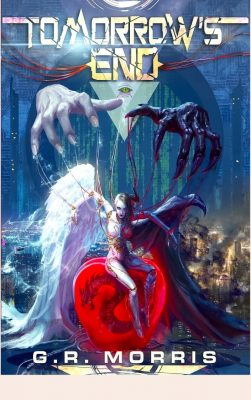
A cosmic force of evil is rising, come to consume whole worlds and plunge them into darkness. Earth is next, and the only chance for humanity to survive is a pair of young, destined heroes who have no idea what dangers lurk in their future.
Kevin Knight is a sixteen-year-old savior, the warrior foretold in an alien prophecy who will combat the Dragon. He’s also afraid of the dark and suffers the routine abuse of his stepdad. Though his mother Sara insists her son will have a bright future, Kevin refuses to believe it until the day his life is shattered. Kevin comes face to face with aliens, monsters, and a staggering truth about humanity. He must follow Robert’s teachings, an alien Changeling who reveals just as much as he keeps hidden. Oh, Kevin must also face down the very forces of Hell.
At the same time, an orphaned Changeling girl named Daren tries to find her place amongst the children who shun her and the adults in her life who have anything but her best interests at heart. As Daren grows and stumbles into the powers of her species, her desires are simple: to protect her only friend, Thomas, and find a mysterious figure whose destiny is bound to hers. But the more powerful she becomes, the more significant her trials, and the danger surrounding her surrounds the orphanage as well. Can she muster her strength fast enough to keep the powers of darkness at bay?
The characters of Tomorrow’s End are vibrant, each one driven by their own desires and philosophies. Kevin and Daren’s stories are focused on their internal struggles, with the fate of the world resting on their shoulders. Kevin must decide who to trust when he’s surrounded by mysterious people and morally dubious mentors. Daren must make do with no teachers at all. In time, both Kevin and Daren fight against bombastic, over-the-top enemies with ties to demonic power.
G.R. Morris fills this story with fantastic descriptions. The aliens and monsters are painted with inventive designs, creating visuals that are wholly unique and distinctive. The creatures, in particular, and the places they come from are visceral depictions of roiling, hellish things, all cast in darkness. The villains of Tomorrow’s End are intensely evil characters who commit graphic violence against nearly everyone around them—even innocent children, which Morris never shies away from showing.
The characters create and break illusory worlds, intricately shown in displays of light and color. These surreal mindscapes help illustrate the thoughts and desires of those meeting within them. Despite all of the otherworldly imagery in this dark science fiction, the regular lives from which Kevin and Daren originate are built with just as much care. Within the settings, expansive action scenes stretch for pages on end, mixing advanced technology with dangerous supernatural power, creating fight scenes larger than life.
Tomorrow’s End sets up its bizarre settings quickly, giving the characters space to breathe and ask questions ─ and their questions abound. This story’s world is full of mysterious societies and convoluted plans that stretch back and forth through time, involving cosmic beings, societal control, and Matrix-like technological constructs. Morris painstakingly develops the storyline, and, at times, the pacing of the novel seems to slow a bit. Things pick back up when the villains make their appearance. Morris shows the turmoil of individual characters as they understand what they should do and who they should choose to be.
Tomorrow’s End centers on a philosophy of free will and choice in every conflict. Evil and good are chosen rather than innate, and situations that appear random are always driven by earlier choices. Kevin must choose truth and have faith in his own purpose if he will have any chance to win the battle against the darkness. Daren learns that she’ll have to fight, to be defiant if she wants to keep those around her safe. And they both will have to understand that belief can change reality, that the choice to suffer could teach them the lessons they need, and that it’s not always so easy to pick light over darkness. All in all, readers will more than likely line up for Book II!
The CLUE Book Awards recognize emerging new talent and outstanding works in the genre of Suspense and Thriller Fiction. The Clue Book Awards is a division of the Chanticleer International Book Awards (The #CIBAs).
Chanticleer International Book Awards is seeking the best books featuring suspense, thrilling adventure, detective work, private eye, police procedural, and crime-solving, we will put them to the test to discover the best! (For lighter-hearted Mystery and Classic Cozy Mysteries please check out ourMystery & Mayhem Awards, and for High Stakes Suspense Novels please check out our Global Thriller Awards).
These works have advanced from the 2020 Long List to the Shortlist They will compete in the next rounds of judging for the CLUE 2020 Semi-Finalists.
Congratulations to these authors whose works have advanced to the Short List!
Chuck Morgan –Crime Denied, A Buck Taylor Novel
Toni Bird Jones –The Measure of Ella
Grahame Shannon –Bay of Devils
Mike Langan –North Country
Kari Bovee –Bones of the Redeemed
Hal Malchow –42 Million to One
Avanti Centrae –Kiss of the Cobra – An M2 Action Thriller
Kari Bovee –Folly at the Fair
Dana J. Summers –Downhill Fast
Rafael Amadeus Hines –Bishop’s Law
Ken Farmer –Three Creeks
Kevin G. Chapman –Lethal Voyage (Mike Stoneman Thriller)
J.P. Kenna –The Anarchist Girl’s Confession
Elizabeth Crowens –Dear Mom, The Killer is Among Us
Chuck Morgan –Crime Conspiracy: A Buck Taylor Novel
J. L. Oakley –The Quisling Factor
Sheila McGraw –The Knife Thrower’s Wife
Martin Roy Hill –The Fourth Rising
Chris Karlsen –A Venomous Love
Christopher Leibig –Almost Damned
Brooke Skipstone –Someone To Kiss My Scars
Brooke Skipstone –Some Laneys Died
J.J. Clarke –Dared to Run
Laura Wolfe –Top Producer
Megan Allen –The Meat Hunter
Michelle Cox –A Child Lost
Valerie J. Brooks –Revenge in 3 Parts
Corey Lynn Fayman –Ballast Point Breakdown
Kevin G. Chapman – Deadly Enterprise (Mike Stoneman Thriller)
Shanessa Gluhm –Enemies of Doves
Chris Karlsen –A Venomous Love
Chuck Morgan –Crime Denied, A Buck Taylor Novel
Suanne Schafer –Hunting the Devil
E. Alan Fleischauer –Sherlock & Tiger
Steve Bassett –Payback: Tales of Love, Hate and Revenge
Tina Sloan –Chasing Cleopatra
John DeDakis –Fake
Which of these works will move forward in the judging rounds for the 2020 CLUE Book Awards? Stay tuned!
These titles are in the running for the Semi-Finalists of the 2020 Clue Book Awards for Thriller and Suspense Novels.
The 22 divisions of the 2020 CIBAs’Grand Prize Winners and the Five First Place Category Position award winners will be announced at theApril 25th, 2021 Chanticleer International Book Awards Annual Awards Gala,which takes place at the Chanticleer Authors Conference that will be held in virtually Bellingham, Wash.
The ShortListers’ works will compete for the Semi-Finalists positions. Finalists will be selected from the Semi-Finalists, and then all Finalists will be recognized at the VCAC21 ceremonies. The First Place Category Winners, along with the CIBA Division Grand Prize winners, will be selected from the 22 CIBA divisions Finalists. We will announce the 1st Place Category Winners and Grand Prize Division Winners at the CIBAs Ceremonies April 21-25th, 2021 live at the luxurious Hotel Bellwether in Bellingham, Wash.
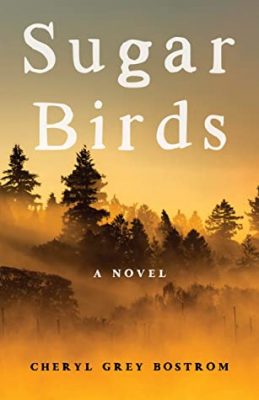
Sugar Birds by Cheryl Grey Bostrom is a heart-pounding coming-of-age story about two heartbroken girls who land at crossroads during one treacherous summer, as one runs to a dangerous forest and the other to a dangerous relationship in the Pacific Northwest.
As the story opens, Aggie, aged 10, and Celia, 16, have something in common: anger at their parents. That anger takes each of them on roads through very dark places – roads from which they barely manage to escape.
Aggie accidentally lights her family home on fire, then watches in horror as firefighters extract her unresponsive parents from the burning structure. She loses herself in the woods, practicing the survival techniques her father taught her, afraid that she caused her parents’ death and certain that she will be sent to jail if she is caught. But the arrest, she soon learns, is the least of her worries, as dangers imperil her survival and as guilt threatens to undo her. She is desperate and in constant danger – not from the searchers who only want to help her, but from being alone in the woods that she has never truly faced without her father’s protection.
Celia is angry with her parents for lying to her about pretty much everything involved with her summer exile to her grandmother’s farm. It’s when she joins the hunt for Aggie that Celia meets autistic savant Burnaby and charismatic, sensual Cabot. As her relationships with both grow, she must choose between the one who can help her understand herself and the one determined to claim her.
Aggie’s story is one of survival, while Celia’s is a more typical story of rebellious adolescence – or so it seems at first. Despite the difference in their ages, Aggie and Celia start from similar places. They have both lost trust in the adults in their lives and don’t know where to turn. Neither is mature enough to deal with the situations facing them.
Both girls are lost – until they come together just in time to save one another.
Readers who like survival stories will love Aggie’s journey, while those who enjoy coming-of-age stories featuring heroines who learn to rescue themselves will resonate with Celia’s path. Bostrom takes her readers gently by the hand and plunges them into an immersive tale straight from page one. Sugar Birds is a powerful coming-of-age story of betrayal and loss, rebellion and anger, friendship, forgiveness and redemption, all woven into a testament to the wondrous natural world.
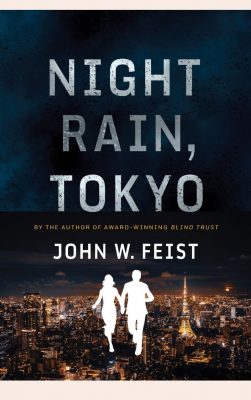
A fast-paced political thriller, Night Rain, Tokyo is more than just bureaucratic intrigue. Brad Oaks is in Washington D.C. trying to get the Wishbone Pipeline project off the ground for Elgar Steel. Before he can make much progress in his task, he is called home by the news of the death of his boss and mentor, Ernie Elgar. Twin sisters Sarah and June Elgar are at odds about the Wishbone pipeline project. After their father’s death, the sisters have inherited control over Elgar Steel. But soon, they discover they have another sister in Tokyo. Brad is then sent across the world to meet with Amaya Mori to buy her Elgar Steel shares, but he quickly becomes caught in the crosshairs of international politics and his own heart.
Night Rain Tokyo is a heart-pounding, pulse-racing, political thriller that deals with the importance of family, identity, and love in an ever-increasingly complex world. John Feist pulls from his own experience in law and government relations, adding in the realities of bureaucratic hurdles, and this gives the plot a great touch of authenticity. In short, readers searching for an international, high-stakes political crime thriller that hits all the marks, look no further. Feist’s storytelling is smart. However, Feist understands there is more to an authentic political story than lobbying politicians and negotiating international business deals.
At the heart of Night Rain, Tokyo, are the personal struggles of its characters. Amaya has lived her whole life as an outsider in her own culture, while Brad is opening his heart again years after a significant loss. The Elgar sisters are at odds and struggle to maintain their familial bond at the cost of achieving their desired outcome for the Wishbone pipeline project. In real life, thereis always more than just what is on the surface, and Night Rain, Tokyo is much more than the international Wishbone project.
Night Rain, Tokyo is the first book in his political thriller series, and he sets the bar high. Readers will not want to miss the next book, Blind Trust, and the just-released third book, Debt and Doubt.
Appreciating International Women’s Day and looking at Women’s Fiction
The theme for 2021’s international Women’s Day is Choose to Challenge. We thought an excellent challenge to offer to our wonderful Chanticleerians would be to read more women’s fiction. To read more about International Women’s Day, click here. To jump into it though, we first want to define the genre.
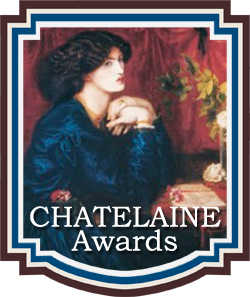
While one might the that the Chatelaine Awards would be the location of Women’s Fiction, especially with the image of Jane Morris being used when her story could be written as an excellent example of women’s fiction. If you’re interested in entering the Chatelaine Awards you can click here, and if you want to read more about our most recent Spotlight for the Awards, click here.
Jane Morris’ life is often said to be the inspiration for Eliza Doolittle in George Bernard Shaw’s My Fair Lady. Morris trained herself into being a lady, learning French and Italian while reading anything she could get her hands on. She was a renowned embroiderer, even running an embroidery company that did quite well. She was also the muse of pre-Raphaelite artist Dante Rossetti (the model for our Rossetti Awards). By the end of her life, she even managed to purchase the home she lived in so that her daughters would have an inheritance to support them after her death.
Audrey Hepburn as Eliza Doolittle
While Morris could be a great subject for a book of women’s fiction, her story is often peppered with romantic narratives, even in fictional retellings like My Fair Lady. It’s true that her husband and Rossetti all rented an apartment together, which allowed for Morris and Rossetti to have an affair while her husband was in Iceland, presumably with her husband’s knowledge as the painter and the subject were considered an open secret, though it seems a painful one for William Morris.
Surrounded by so much romance and intrigue, we couldn’t help but have Jane Morris’ portrait by her lover be the representation of the Chatelaine Awards, which leads us to the use of William Somerset Maugham as the representative of the Somerset Awards.
The Somerset Awards focuses on:
Contemporary Theme
Adventure/Suspense
Literary
Women’s Fiction + Family Themes
Satire/Allegorical
Magic Realism
Action/Adventure
Connections
Social/Psychological Themes
To read more or to enter the Somerset Awards, click here.
Of course, here we want to focus on the women’s fiction portion of that, though there is overlap. Somerset’s first novel that won him critical acclaim was Liza of Lambeth, (1897) which propelled him to become one of the highest paid authors of the turn of the century. He was inspired to write this novel while he was working as an obstetric clerk and medical student at a hospital in a working-class district of London. Somerset is known for his “shrewd understanding of human nature.Britannica
In the novel, Liza, like many women in novels of this era, has her life dictated by the men who surround her, unable to break free of the desires and expectations that surround her, ultimately leading to her death. This examination of consent and the harmfulness of denying women agency can be seen reflected in the urgency of the suffrage movement.
With his story of Liza, Somerset focuses on the hardships women face, especially concerning domestic violence and abuse. He highlights the lack of consequences men face for treating women like animals, and the ways in which people ignore clear signs of abuse as something that isn’t their problem or maybe even deserved. The novel Somerset writes is a critique of the time in which he lives, but is it women’s fiction?
Almost there…
Probably not by today’s standard.
Women’s fiction is difficult to define. Generally, we think Amy Sue Nathan did a good job in this article here, but our take is a little more personal. First, we do think that for a book to be considered in the genre of women’s fiction, it obviously has to focus on women. The next point is that the plot progresses alongside the narrator’s self, whether that be self-discovery, self-preservation, or even perhaps self-destruction (though storylines with a negative outcome can be difficult to fit into this genre).
Since Somerset’s telling of Liza’s story focuses on the ways in which she is denied agency rather than the ways in which she can focus on the self
The struggle with whether or not a book is women’s fiction resolves around the fact that the protagonist must be the one who, as Nathan says, “saves herself.”
The driving force of women’s fiction is the motivation of the main character to get herself from point A to point B to point C, learning and changing and growing and making mistakes along the way. What makes a women’s fiction main character tick is the methods by which she learns and changes and grows and makes mistakes. – Amy Sue Nathan
Even a little growth
Since the focus of women’s fiction is often growth, unhappy endings don’t always necessarily fit. Of course, endings that aren’t unhappy won’t automatically be happy, and women’s fiction often ends up with a complex ending that leaves the reader thoughtful and reflective on their own growth as they read along with the main character.
Of course a book that is considered women’s fiction can have many other themes, and could even fit into other Chanticleer International Book Awards (CIBAs) beyond the Somerset Awards. You can see the different genres in the books below:
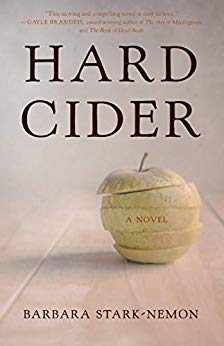
HARD CIDER by Barbara Stark-Nemon
Women’s Literature, Literary, Women’s Fiction
Grand Prize Winner in Somerset Awards (2018)
Abbie Rose Stone is a woman determined to follow her newly discovered dream of producing her own craft hard apple cider while navigating the ups and downs of family life with her grown sons and husband.
Abbie Rose knows how to deal with adversity, and dives headfirst into this new chapter of her life with energy and passion. She describes her early adulthood years of infertility struggles and the hardscrabble way she built her young family through invasive medical procedures, a surrogate attempt, and adoption barriers.
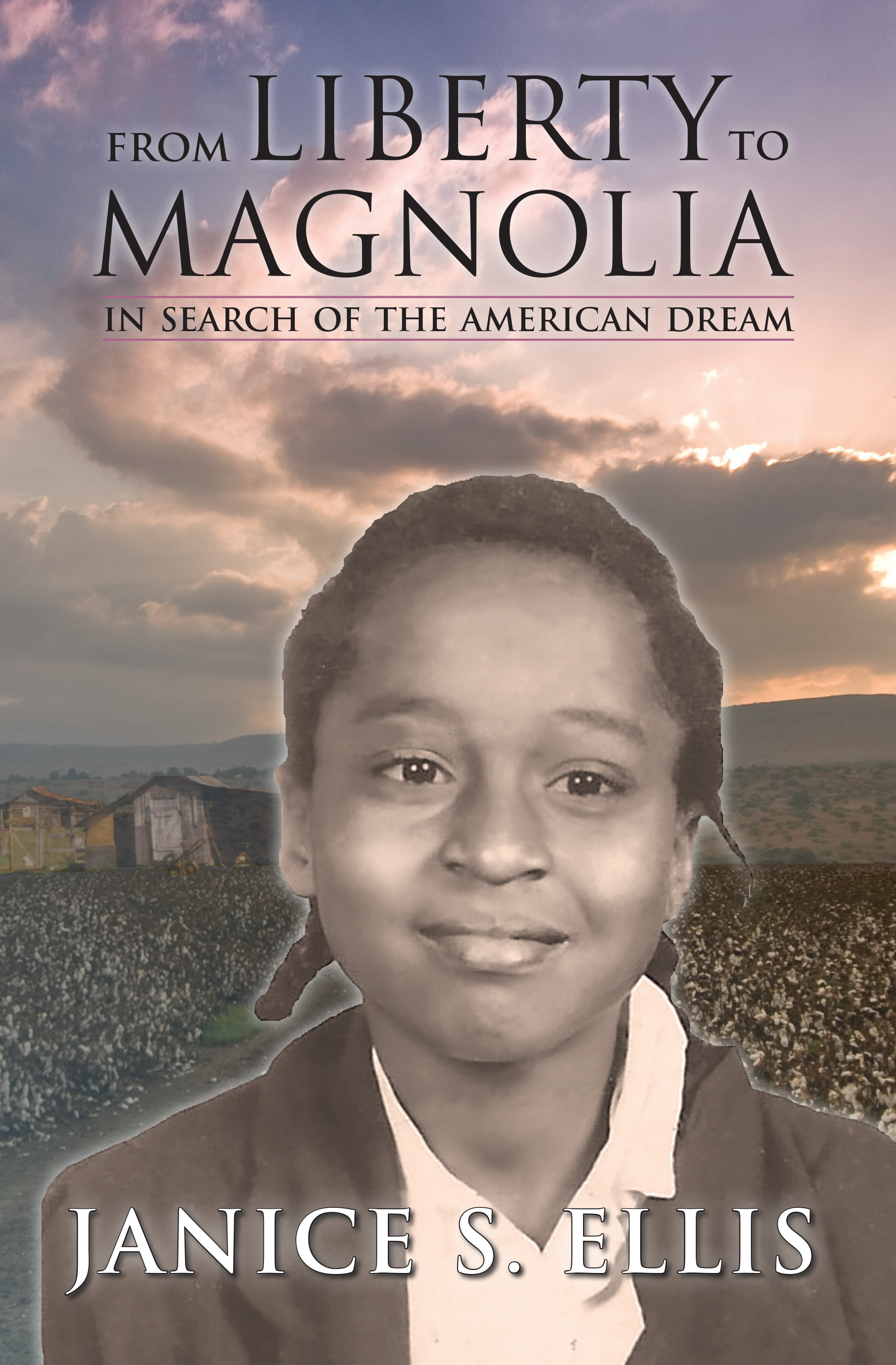
FROM LIBERTY to MAGNOLIA: In SEARCH of the AMERICAN DREAMby Janice Ellis, Ph.D.
Black History, Discrimination & Racism, Memoir, Non-Fiction
Grand Prize Winner in Journey Awards (2019)
As a black woman on a cotton farm in Mississippi in the 1960s, Janice Ellis could have resigned herself to a life full of status quo: never speaking up for herself, never speaking out against injustice or racism. Instead, she never let unsettling times define her or hold her back, even as a witness to some of the ugliest racial violence this country has seen. In her candid and thought-provoking memoir, From Liberty to Magnolia: In Search of the American Dream, Ellis vividly depicts her life in the South during the height of the Civil Rights and Women’s Rights movements.
Through fluid and skillful writing, Ellis recounts the battles she encountered due to her skin color or due to her gender: an abusive husband, discouragement to further her education, sexual and racial discrimination in the workplace, a lack of support from friends and family when she runs for election. Despite these mounting obstacles, she goes on to earn her Ph.D., lands leadership roles and furthers her career, and even runs for mayor in a major US city. Her faith in God and her unwavering belief that the American Dream should be accessible and attainable to everyone are what lead her.
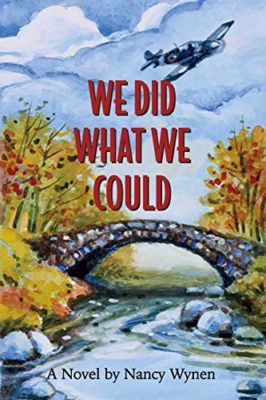
WE DID WHAT WE COULD by Nancy H. Wynen
Historical Fiction, WWII Women’s Fiction, Literary Fiction
Nancy Wynen’s We Did What We Could is a well-conceived, smart, character-driven novel set across a grand European landscape. Here a formidable trio of young women groomed for mere social status demonstrates their strength, endurance, and courage as they move beyond the walls of academia to experience careers. The three must also deal with relationships, family expectations, and life issues amidst the often devastating and upending climate of war.
Lady Archer is a widow from the Great War. As Assistant Head Mistress at St. Martin’s School, she feels girls should receive solid educations and prepare for real professions. With her high level of social ties, Archer looks for “future perfect leaders” within each new graduating class, possessing ideal traits of intelligence and creativity. In May of 1936, Archer sets her sights on three such proteges whose memorable antics foretell their potential for more significant life accomplishments.
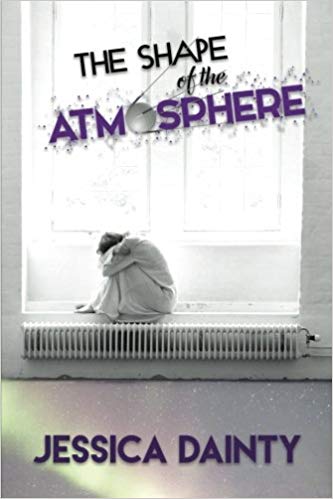
The SHAPE of the ATMOSPHEREby Jessica Dainty
Literary, Psychology, Women’s Fiction
Jessica Dainty’s, The Shape of the Atmosphere is remarkable for its startling realism, its gritty young heroine, and its hopeful conclusion.
When Gertie’s father and sister are killed in an accident on Gertie’s sixteenth birthday in 1957, she is left with one cherished memory: viewing the heavens with her father on the night of the world-changing Sputnik flight.
After the funerals, Gertie wounds herself as a way of coping with her inner anguish, after which her alcohol-addicted mother commits her to an insane asylum. Such institutions were considered modern and scientifically advanced for their time, but as author Jessica Dainty frankly depicts, Gertie’s new home is a combination prison and torture chamber. The naïve but intelligent girl soon becomes acquainted with such therapies as immersion in icy cold water and electroshock (both designed to calm the inmates), as she gradually gets to know her fellow patients, the women on Ward 2.
DISOWNED – The RED-HEELED REBELSSeries Novel One by Tikiri
Women’s Adventure, Thriller/Suspense, International Crime
Spanning three continents and taking on crucial issues of child marriage and human trafficking, Disowned features a brave teen heroine struggling against international criminality with nothing but her wits and grit.
Asha, born in Tanzania, is still a child when her parents are tragically killed while on a family safari in Kenya. Within a short period of time she is transported to Goa, India, to live with relatives she has never met. Her grandmother is an angry, culture-bound crone, her aunt and cousin living, as Asha now must, under the old woman’s seemingly heartless sway.
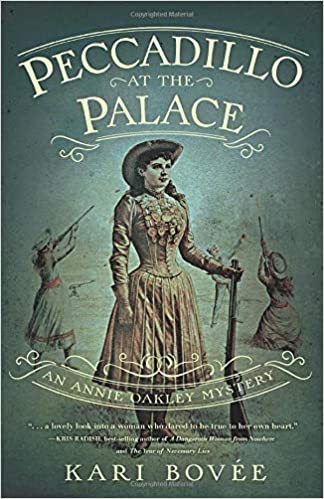
PECCADILLO at the PALACE: An Annie Oakley Mystery by Kari Bovée
Historical Thrillers, Women’s Historical Fiction, Biographical Fiction
Grand Prize Winner in Goethe Awards (2019)
Kari Boveé’s Peccadillo at the Palace, the second book in the Annie Oakley Mystery series, is a historical, mystery thriller extraordinaire. Fans of both genres will thrill at Boveé’s complex plot that keeps us guessing from its action-packed beginning to the satisfying reveal at the end.
The book opens with the Honorable Colonel Buffalo Bill Cody’s Wild West Show to England on a voyage to perform for Queen Victoria. They are not on the high seas long, when Annie’s beloved horse, Buck, jumps overboard. Her husband and the Queen’s loyal servant, Mr. Bhakta, jump in to save the horse, or was Mr. Bhakta already dead before he reached the water? Thus, begins the mystery of who killed Mr. Bhakta, leaving all to wonder, is the Queen safe?
We appreciate you spending time with us in celebration of International Women’s Day!
Looking to join the Chanticleer family?
Register for VCAC 21 here! Registration will include access to video recordings of the conference. April 21- 25, 2021. Multichannel Marketing for Authors and Intermediate and Advanced Writing Craft
See all our Chanticleer International Book Awards here.
Chanticleer’s own online community offering a private place to discuss craft and marketing with authors, in addition to receiving steep discounts on many Chanticleer services. Read more here.
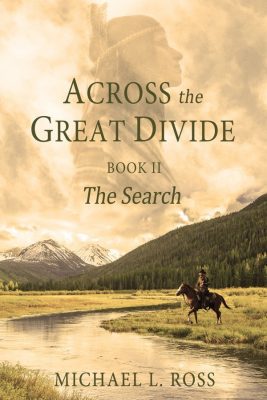
The Search (Across the Great Divide: Book II)by Michael L. Ross brings to life the history and events of the Westward Expansion in a post-Civil War US. In this sequel to The Clouds of War (Book I), we once again follow Will Crump, now a young Confederate Veteran, a POW survivor, and a sufferer from what must be PTSD. With the war over, nightmares and tension with the family disrupt his life and plans to marry his pre-war sweetheart. He wants to get away from civilization, build a little cabin in the mountains, and live in peace.
Will strikes out on his horse Dusty and soon picks up a stray dog he names Lightening. Both animals play essential roles in Will’s survival throughout his journey, and readers will worry for and root for them as much as for Will as they face the wild west head-on.
Early on, Will witnesses a native woman trying to escape two native men who seem to be holding her captive. When he realizes her life is in jeopardy, Will jumps into action and puts his sharpshooting skills to work. At this point, Will struggles to control his incapacitating panic amidst the flashbacks brought on by firing his rifle. He rescues the young woman, Dove, and they travel together.
The last thing Will finds is peace, and he begins to think that coming west might have been a mistake. Nevertheless, he and Dove reach Fort Laramie, where Will grows to respect and even love a native woman. Nevertheless, he has made a vow to return her to her people, and he will not rest until he has done so.
There are a host of characters surrounding Will, many of whom come directly from history. Through extensive research into the events of the time, Ross has developed a plot and narrative that is believable and entertaining. History comes alive with his expert storytelling prowess, and he does not shy away from incorporating the brutal attitudes of the US government and its citizens toward Indigenous peoples.
Ross remains true to his story, and the result is a read that will not disappoint. This book can easily be read as a stand-alone book but might inspire readers to go back and read Book I and anticipate Book III’s release. For fans of Ross and stories set around the Civil War-era, or those new to the historical fiction of the Westward Expansion, this novel informs and entertains in a fast-paced, page-turner that is stunning in its descriptions and satisfying to the very end.
Ross uses one character, Gabe, as a sympathetic lens to expose the subtle differences between the tribes and that of the whites that overrun native hunting lands. Gabe serves as a go-between for Will in his pursuit of returning Dove to her father and in negotiations for the couple’s marriage.
Within the context of the settlers’ infringement on the migratory nature of indigenous people, the story unfolds. The Indigenous peoples’ very way of life is threatened and pressed to acts of desperation, leaving readers to wonder if Will and Dove’s story will ever come to fruition.
The PARANORMAL Book Awards recognize emerging talent and outstanding works in the genre of Paranormal and Supernatural Fiction. The Paranormal Book Awards is a genre division of the Chanticleer International Book Awards (The #CIBAs).
Chanticleer International Book Awards (the CIBAs) is looking for the best books featuring magic, the supernatural, weird otherworldly stories, superhumans (ex. Jessica Jones, Wonder Woman), magical beings & supernatural entities (ex. Harry Potter), vampires & werewolves (ex. Twilight), angels & demons, fairies & mythological beings, magical systems and elements. They will be put to the test and the best will be declared winners of the prestigious CIBAs.
The following fantasy fiction works have advanced to the SHORTLIST from the Long List of the 2020 Paranormal Book Awards:
The Short Listers for the Paranormal Book Awards, a division of the 2020 CIBAs
Christopher Leibig –Almost Damned
K.A. Banks –Seven Sisters Road
E. Alan Fleischauer –Just Die
Lydia Staggs –Azrael
Brooke Skipstone –Someone To Kiss My Scars
James Kirst –Magic Once Removed
Meg Evans –Enthrallment
Blaise Ramsay –Blood Law
Endy Wright –The Omicron Six
Kaylin McFarren –Soul Seeker
Joy Ross Davis –The Magnificent Celestine
Stephanie Alexander –Charleston Green
Franklin Posner –Boston Betty
R.B. Woodstone –Chains of Time
Sheryl M. Frazer –When She Touches
Ryan Young –The Shepherd’s Burden
David W. Thompson – ‘Possum Stew
Carissa Andrews –Secret Legacy
Shane Boulware –Soulstealer
Neil Chase –Iron Dogs
S.K. Andrews –Bay of Darkness
Matt Tompkins –Odsburg
Randy Overbeck –Blood on the Chesapeake
Nellie H. Steele –Shadows of the Past: A Shadow Slayers Story
T. L. Augury –What’s Brewing Now? (Witches Brew Series)
Information about the #CIBAs Long Lists and Short Lists and Announcement Rounds.
The 22 divisions of the 2020 CIBAs’Grand Prize Winners and the Five First Place Category Position award winners will be announced at theApril 25th, 2021 Chanticleer International Book Awards Annual Awards Gala,which takes place at the Chanticleer Authors Conference that will be held in virtually Bellingham, Wash.
The ShortListers’ works will compete for the Semi-Finalists positions. Finalists will be selected from the Semi-Finalists, and then all Finalists will be recognized at the VCAC21 ceremonies. The First Place Category Winners, along with the CIBA Division Grand Prize winners, will be selected from the 22 CIBA divisions Finalists. We will announce the 1st Place Category Winners and Grand Prize Division Winners at the CIBAs Ceremonies April 21-25th, 2021 live at the luxurious Hotel Bellwether in Bellingham, Wash.
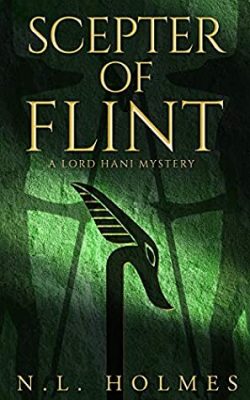
The yearning for justice is a heartfelt sentiment that has stirred people through the ages. The price for justice can be high, and it’s not always predictable who will pay. In this third Lord Hani mystery of ancient Egypt, Lord Hani is confronted with a puzzling dichotomy. It’s a pool of two truths that cannot coexist. And for Lord Hani, neither truth has the desired outcome. Yet, the King has assigned him to solve this mystery of the stealthy tomb robbers. They have broken into several sacred resting places and stolen valuable contents meant to sustain the spirits of those who passed on. Lord Hani must uncover the secret leader to stop these villains, the one determined to wield a Scepter of Flint to spark fires of division, suspicion, desperation, and greed.
As Lord Hani begins the investigation with his reliable assistant and son-in-law Maya, longtime enemy Mahu the police chief continually shows up looking for trouble and looking to get Hani off what Mahu sees as his case. However, Hani continues to puzzle out the mystery of the tomb robbers, why their crimes have started now, and where they may strike next. As he follows the clues, he finds more to this spree than robbery – much more. And now, it’s not just property that is threatened. Now lives are at stake.
Interviewing suspects and witnesses keeps Hani busy between the political new capital and the beloved old capital, a boat ride apart. He and Maya are not alone in their pursuit for the truth; generations of his passionate family, including his father, brother, dear wife, and daughter, join in. From their diverse interests and work Hani gleans insightful information. To make matters even more dire, a terrifying plague sprouts in the capital. So extra care must be taken, and their days are surrounded by the tragedy of the illness.
What Hani ultimately uncovers is shocking, and in the end, the reach of the scepter will put his family and many other innocents at risk. Hani’s trust in others – even his boss – will be tested. If he makes the wrong choices, more innocent victims will suffer. If Hani can’t complete his fight for justice in time, will they all succumb to the Scepter of Flint?
While tomb robberies serve to remind all that nothing on this earth is guaranteed to last, and political forces are turning intolerant toward divergent views, those connected to Lord Hani have the company of a true and trusted friend. Hani and his wife keep a house that is as busy as ever with family and friends coming and going. It often feels like a safe harbor, where all are welcome.
N.L. Holmes arms her fascinating characters with motives and dreams that tug at the heart and places them in a world of highly relatable circumstances. Because Holmes masterfully lays out the unique story and situation of each character, there are no real minor characters. She contrasts the very human foibles with the stunning descriptive passages of the natural beauty surrounding these characters, if only they appreciate it. The reader certainly does. The author’s poetic depictions capture the spirit and renders us helpless in her grasp, then she draws us back to conspiracies, machinations, and perilous plot twists that spark fears of the Scepter of Flint.
The third book in the Lord Hani mysteries, Scepter of Flint, will keep readers glued to the page – and dying for the next book in the series, The North Wind Descends. Those who are new to the series will undoubtedly want to read the first two books, Bird in a Snare and The Crocodile Makes No Sound.
An intricate mystery set in a small fictional town in northern Michigan, End of the Race is contemporary fiction at its finest. Annika Wolfson is a young mother and accomplished swimmer that has faced adversity in many areas of her life. Growing up in the Berglund household was rarely quiet for Annika because her father struggled with mental health and his unwavering feud against the affluent Wolfson family. Despite the long feud between the two families, Brian Wolfson and Annika bond as kids over swimming and their dream of the Olympics. Fast-forward a handful of years, Brian and Annika are now married and have a daughter. Their dreams of Olympic gold have been close to reality but always just out of reach.
After facing defeat in Athens a few years prior, Annika dives back into training for one last shot at Olympic gold, but then tragedy strikes. While in a low and vulnerable place, her husband Brian leaves to go on a sailing trip with friends from college and ends up missing. As Annika tries to unravel what has happened to her husband, she begins to suspect that the Wolfsons are not all they appear on the surface. Navigating a complicated family dynamic, she races to find answers as her life comes crumbling down around her and her daughter.
Kirscht keeps readers on the edge of their seats as she delicately deepens the mystery of Brian Wolfson’s disappearance. This mystery is far from the only one within the story. What happened that caused Annika to miss the Sydney and Athens Olympics? What happened all those years ago between Tom Berglund and Karl Wolfson that has created an almost Shakespearean divide between their houses? As the story progresses, Kirscht answers these questions bit by bit as the narrative alternates between the past and present. Towards the end of the novel, the timelines catch up with one another. There are still many things left unsaid and plenty of room for interpretation after the novel’s conclusion.
The mystery is presented mostly through Annika’s eyes, so readers only learn what she does. The full picture of the Wolfson family and their secretive attitude towards any outsiders is never fully explained. Even though Annika is a Wolfson by marriage, she is an outsider to her in-laws and her own family. The frustration and confusion she feels as a result adds complexity to the story as a whole.
Journey to the rustic setting of northern Michigan, where the idea of family may not be as simple as it seems. End of the Race is a quiet and refreshing story that will have readers longing for a trip out on the water.
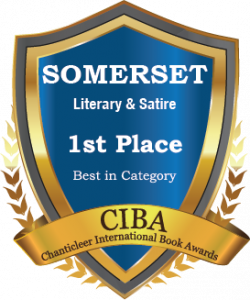
End of the Race won First in Category in the CIBA 2019 Somerset Awards for Literary novels.
Into every writer’s life problems rear their snaggley heads.
At times we lapse into dullness, we lean on crutch words, we make typos and gaffs. We write with clichés.
Punch Almanack 1885
Our plots wander, our characters confuse, and our endings fall flat.
Because writing is hard. Yep.
And writers are at a natural disadvantage because we use computers and the familiarity of our words on the screen breeds a kind of blindness. Sometimes the more often you read your own words, the less you’re able to identify their strengths and weaknesses.
With that in mind, I want to call your attention to a simple technique in writing fiction:
Using characters’ eyes to reveal emotion and meaning.
This is a reminder to pay more attention to how your characters look, stare, and express emotions.If eyes are the windows to the soul, then match your characters’ expressions to the exact emotion or reaction needed. – Jessica Morrell
Here are some suggestions for getting your characters’ eyes to reveal emotion and meaning:
Figure out your crutch phrases and go-to moves. A few that appear too often are eyes widening, teary eyed, blank stares, blurred vision, stared straight ahead, watched like a hawk, she looked him straight in the eye, eyes darting, piercing stares, blinking back tears, eyes narrowing, smoldering looks, deep-set eyes, and steely-eyed. Avoid also cliched colors like baby blue, emerald, and chocolate.
Make certain that the character’s eyes are appropriate to the scene. Too often characters gaze down at the floor or at their hands. Now, these gestures typically indicate discomfort or avoidance, but sometimes writers just sow them into a scene when that’s not the intended effect.
Don’t. Feature. All. Your. Characters. Reacting. The. Same. Way.
Avoid strangeness and viewpoint slips such as His eyes smiled at me or Her face fought against tears. Three words to keep in mind – POINT OF VIEW.
Ditch the hobbit staring.Hobbit staring is a term I learned from a movie buff friend. He coined it from theLord of the Ringsfilms when the camera lingers too long on stares between two characters as if that demonstrates some deep meaning or message. Because often it does not. We’ve all seen this in films. Imagine how this will have your readers skimming the pages.
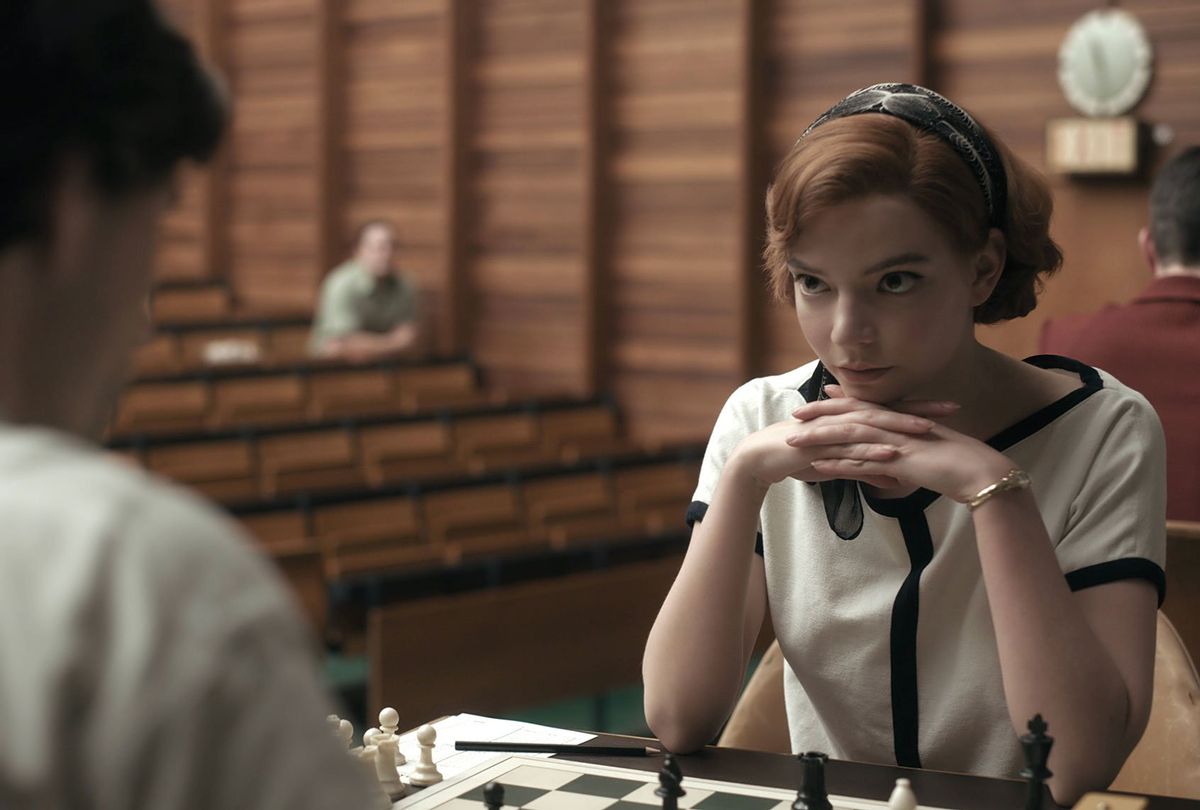
Because they’re seated a few feet across from each other in earnest and sometimes excruciating combat. Because they’re often trying to psych each other out. And the onlookers are staring intently at the board trying to guess the next moves of the two players.
Question every tear. I sometimes ask writers to count every scene where a character ends up weeping, wet-eyed, or with tears leaking down wet cheeks. This request comes from noticing how weeping and sobbing are overused resulting in melodrama, excess sentimentality, or depicting a character as too emotional for her own good. And the good of the story. Too much weeping and the story gets soggy and dull. And please, just forget single tears. Please.
Mix it up. Often a writer’s most used crutch words are look and see. However, in real life people gape, squint, spot, gander, gawk, ogle, stare, gaze, study, inspect, scan, scout, spy, study, inspect, notice, note, peek, peep, peer, and rubberneck.
Expand your repertoire of descriptions: haunting, beckoning, steady, stormy, mocking, mournful, lifeless, sultry, goopy, teasing, pitiless, glassy.
Stir in a little weirdness. Many people have mismatched eyes. Then there are droopy eyes, people with different colored eyes, bloodshot eyes, Rasputin eyes, lazy eyes, buggy eyes, one working eye, wandering eyes, piggy and close-set eyes.
Study how and when successful authors use close-ups. If you never focus the camera lens on a character’s face during an emotionally-charged scene, then readers cannot enter the moment and feel what the characters are feeling.
Study actors. Notice how their eyelids raise a bit to show interest or droop to indicate the lack of interest. Note how they leer, seduce, flash anger, hide their true feelings.
Beth Harmon knows she will win several moves out in this scene of Queen’s Gambit
If you’re serious about writing, you must notice subtext and how to convey it. And that often begins with the eyes.
Keep writing, keep dreaming, have heart. Jessica
Jessica Page Morrell
Jessica Morrell is a top-tier developmental editor and a contributor to Chanticleer Reviews Media and to the Writer’s Digest magazine. She teaches Master Writing Craft Classes along with sessions at the Chanticleer Authors Conference that is held annually along with teaching at Chanticleer writing workshops that are held throughout the year.
This year the CAC21 will be held virtually. Registration will include access to video recordings of the conference.
April 21- 25, 2021. Multichannel Marketing for Authors and Intermediate and Advanced Writing Craft
Chanticleer Editorial Services – when you are ready
Did you know that Chanticleer offers editorial services?We do and have been doing so since 2011.
Tools of the Editing Trade
Our professional editors are top-notch and are experts in the Chicago Manual of Style. They have and are working for the top publishing houses (TOR, McMillian, Thomas Mercer, Penguin Random House, Simon Schuster, etc.).
If you would like more information, we invite you to email Kiffer or Sharon at KBrown@ChantiReviews.com or SAnderson@ChantiReviews.com for more information, testimonials, and fees.
We work with a small number of exclusive clients who want to collaborate with our team of top-editors on an on-going basis.Contact us today!
Chanticleer Editorial Services also offers writing craft sessions and masterclasses. Sign up to find out where, when, and how sessions being held.

 The CLUE Book Awards recognize emerging new talent and outstanding works in the genre of Suspense and Thriller Fiction. The Clue Book Awards is a division of the Chanticleer International Book Awards (The #CIBAs).









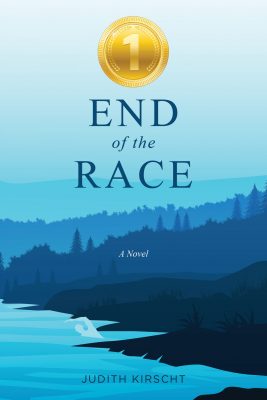
 An intricate mystery set in a small fictional town in northern Michigan, End of the Race is contemporary fiction at its finest. Annika Wolfson is a young mother and accomplished swimmer that has faced adversity in many areas of her life. Growing up in the Berglund household was rarely quiet for Annika because her father struggled with mental health and his unwavering feud against the affluent Wolfson family. Despite the long feud between the two families, Brian Wolfson and Annika bond as kids over swimming and their dream of the Olympics. Fast-forward a handful of years, Brian and Annika are now married and have a daughter. Their dreams of Olympic gold have been close to reality but always just out of reach.