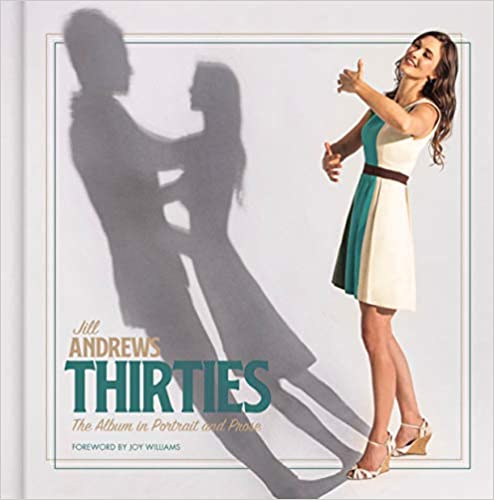
Thirties: The Album in Portrait and Prose is a companion book to the album “Thirties” by Indie-folk singer Jill Andrews and both are very personal and poignant.
Thirties: The Album in Portrait and Prose features lush photography that illustrates the prose as any good coffee table book should. But it is more than a book of pictures and writing to add to your décor. The album was written during Jill’s transformative third decade of challenge and change, of love and loss. The book came from the feeling that there was more to tell that would “go deeper than a three-minute song” could take the singer/song writer and the listener and so the book idea was born to share the journey. There are times it feels like we are reading a personal journal as Jill struggles to come to terms with the ideals and dreams of her younger years, that in her “thirties” she would have all those things one imagines should be in place as an adult, a family, career, and a loving relationship.
The cover of both the book and the album hint at what is to come, a picture of Jill dancing, her arms around no one, but her shadow silhouette dancing with a partner.
The book starts after the birth of a new baby girl with a second partner, and the growing dark clouds of alcoholism and absence that are threatening to end this relationship. “He sleeps when it’s bright and beautiful outside, long after the baby’s first morning cry for milk.” As Jill navigates her journey through this crumbling relationship and all of the pressures of, once again, being a single mom, her joy and sadness are tangible.
Each chapter corresponds with a song on the album and lyrics are sprinkled throughout. The photographs are both glossy color and brilliant black and white, each choice enhancing the chapters they illustrate. Some of the photos harken back to a bygone era, with Jill in Vintage Riding clothes astride a beautiful horse (My Own Way) or in a 40’s style polka-dot two-piece in the river with dazzling red lipstick (River Swimming) to a haunting “evolution” photo of infant girl to Jill now (The Way to Go). Although the book is about separation and loss, readers (and listeners) will also find a deep longing and hope for the future, hope that there is still a chance for love.
Fans of Jill Andrews will find this book to be a perfect companion to the album and find the same hopefulness in the book as in her lyrics and those who pick up this book to read it may find themselves going to the “book extras” on the web page to listen to samples of the album and find a richer experience for it.
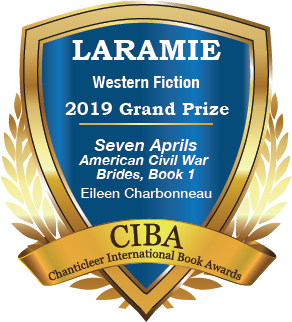
The Laramie Book Awards recognize emerging talent and outstanding works in the genre of Western, Pioneer, & Civil War Historical Fiction and First Nation Novels. The Laramie Book Awards is a genre division of the Chanticleer International Book Awards (The CIBAs).
Chanticleer International Book Awards is looking for the best books featuring, the wild west, pioneering, Civil War, North American History, and First Nation Novels.. These books have advanced to the next judging rounds. The best will advance. Which titles will be declared as winners of the prestigious Laramie Book Awards?
These titles have moved forward in the judging rounds from SLUSH pile to the 2020 Laramie Book Awards LONG LIST and now have progressed to the 2020 SHORTLIST.
Congratulations to the following titles who have advanced to the 2020 Laramie Book Awards SHORTLIST!
Fred Dickey –Days of Hope, Miles of Misery
David Fitz-Gerald –She Sees Ghosts? The Story of a Woman Who Rescues Lost Souls
DL Fowler –The Turn
JR Collins –Legend of Swell Branch
John W. Bebout –The Cause of Darkness- A Story of the Civil War
Eileen Charbonneau –Mercies of the Fallen
James Kahn –Matamoros
Gerry Robinson –The Cheyenne Story
J. Palma –The Chaffee Sisters
Susan Higginbotham –The First Lady and the Rebel
Barbara Salvatore –Magghie
J.C. Graves –Death is a Sharpshooter
J.B. Richard –Jesse
Terry D. Heflin –Scarlet Hem
Mike Shellenbergar –Quail Creek Ranch
Mike Shellenbergar –Refuge
T.K. Conklin –Promise of Spring
Van Temple –Whisperwood: A Confederate Soldier’s Struggle
Rebecca Dwight Bruff –Trouble the Water, a Novel
John Hansen –Elk Meadows
E. Alan Fleischauer –Hunted
Daniel Greene –Northern Wolf
W. Hock Hochheim – Rio Grande Black Magic
Elizabeth St. Michel –Surrender to Honor
These titles are in the running for the Semi-Finalists of the 2020 Laramie Book Awards for Western, Pioneer, & Civil War Historical Fiction and First Nation Novels Fiction.
Which of these works will move forward in the judging rounds for the 2020 Laramie Book Awards for Western/Pioneer Fiction?
Good luck to all as your works move on to the next rounds of judging.
The ShortListers’ works will compete for the Semi-Finalists positions. Finalists will be selected from the Semi-Finalists, and then all Finalists will be recognized at the VCAC21 ceremonies. The First Place Category Winners, along with the CIBA Division Grand Prize winners, will be selected from the 22 CIBA divisions Finalists. We will announce the 1st Place Category Winners and Grand Prize Division Winners at the CIBAs Ceremonies April 21-25th, 2021 live at the luxurious Hotel Bellwether in Bellingham, Wash.
We are now accepting submissions into the 2021 Laramie Book Awards. The deadline for submissions is July 31st, 2021. The winners will be announced in April 2022.
Katy Novacs is haunted, both by her past and the laughing specter that reminds her of it. When her friends bring her to Niagara-on-the-Lake in the hopes of lifting her spirits, she finds that their inn has a ghost of its own who has a tale that might save her.
Katy comes to the Niagara Inn in a mire of sorrow, fear, and trauma. Though her friends try to help her move forward with her life, to fall in love and open herself up to other people again, Katy’s stay at the inn only seems to drain her further. Both she and her friends question her sanity as she becomes certain that she’s sharing a room with the spirit of a dead woman, but when Abigail eventually reveals herself, it is to tell Katy a story that she needs to hear—that of Abigail’s life.
One hundred and fifty years ago, Abigail Kirby finds her own love in Will Bender. They cross the lines of class to be together, but Abigail’s story doesn’t end when she wins Will’s heart; there are far greater struggles, sorrows, and the dark shadows of the past waiting to fall upon her. What strings have fate wrapped around Abigail, and will Katy be able to find the message that she so desperately needs?
Abigail’s Window is threaded through with evocative descriptions. The cold and snow of Niagara-on-the-Lake surrounds the Niagara Inn, which is built up with foreboding and emotional energy that suffuses parts of the old house. Abigail’s story is even more expansive in its description, building the whole town as it was long in the past; this old picture gives the reader a strong sense of Abigail and the world that she lived in, from the small social circles of Niagara-on-the-Lake to an exploration of the far-reaching American Civil War.
Susan Lynn Solomon creates animated, complex characters whose personalities show through in everything they do and say. Katy’s emotional exhaustion is palpable on the page, shading the entire beginning of the story; her narration is intimately understandable even at its most troubled. Her experiences show a deep alienation from the people around her and draw the reader into her world which is, at least early on, truly private. Among that fear and isolation from Katy’s struggles, the story introduces a slow, powerful development of the friendship and emotional connection that Abigail and Katy share as they tell each other what they’ve both been through; their life stories carry parallels that help them understand one another while remaining distinct characters with their own voices and ways of seeing the world.
The reader learns the mysteries of Katy and Abigail at the same time the two women learn them, their stories interwoven. The pacing of Abigail’s Window is excellent. The story takes its time revealing Abigail, giving space for Katy to settle into the house and teach the reader about herself. Katy’s fear of the ghost doesn’t change to comfort all at once, but over time as Abigail becomes more and more present. Once they begin sharing, both of their stories are given the space they need to be told, to explore the feelings within them and show the reader who these characters were before they came to share a bedroom in the Niagara Inn. Those stories come together as Abigail’s Window picks up the pace for a tense and affecting climax.
Common themes connect Abigail and Katy. Abigail’s story is marked by fate, how what happened to her before could only have led to what came after, and how she tried to fight against it. Katy struggles to accept the love that’s waiting for her because of her own past. Abigail’s Window doesn’t shy away from the deep emotional pain of its characters, but the story is strung together with the idea that a true connection with someone else has the power to heal the soul, and the trust that love will survive, no matter what else.
Abigail’s Window is a touching, fascinating story of two wonderful characters, and the connection they form across a century and a half. This novel by Susan Lynn Solomon won Grand Prize in the CIBA 2019 Paranormal Awards for supernatural fiction.
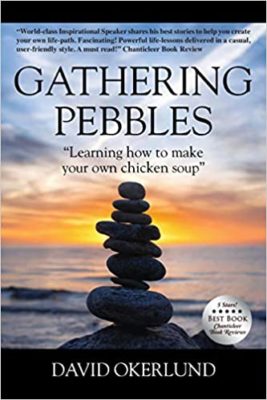
Inuit of the Canadian Arctic are known for creating stone structures used as navigational points and message centers for fellow travelers. Some of these directional monuments provide a spiritual connotation meant to enrich the journey.
Gathering Pebbles is David Okerlund’s own “inukshuk” of sorts, a book filled with stories, recollections, and memorable life events that have become part of his personal road map for living. Okerlund, a world-class inspirational speaker, shares his best stories to help you create your own life-path. He shares this collection of nuggets in the interest of helping others along their chosen path and hoping to encourage their own “gathering” and sharing of valuable knowledge.
Okerlund directs his writing in a casual, user-friendly style. Each of the book’s chapters is highlighted as a pebble gathered on his winding life’s path. Titles are effectively posed as questions to help draw readers into the topic at hand. Each chapter is formatted with a variable mixture of contemplative quotes, poetry, recaptured historical moments, and personal experiences, to showcase qualities such as perseverance, retaining a sense of childhood wonderment, the importance of faith, and following your dreams.
Whether referencing the words of Pablo Picasso, Chuck Norris, Colin Powell, or Mario Andretti, Okerlund taps into thought from the world at large. From Presidents and self-help gurus to business moguls and religious leaders, the inclusion of such a broad range of sentiment represents a treasure trove of relatable wisdom. In a chapter on self-esteem and learning to be content with your present situation, even troubled starlet Marilyn Monroe’s ponderings ring true, “Wanting to be someone else is a waste of the person that you are.”
In a similar light, included poems, primarily authored by Okerlund, often provide a whimsical complement to a chapter’s focus. Whether the narrative rhyming verse of “A Single Arrow” that emphasizes a need to stay on target to reach our goals, or the musings of “The Child Within” suggesting we retain the charms of our childlike curiosity and resilience. The messages are clear and heartfelt. “My Legacy” proves a down-to-earth embodiment of sincere gifts like smiles, laughter, dreams, and blessings.
Okerlund weaves many of the classic and time-honored lessons amidst his storytelling.
One narrative about efforts to avoid traffic pointedly entertains a “stop and smell the roses” philosophy. Additional directives to readers include being responsible for your actions, how to approach situations with a balanced head and heart when making decisions, and realizing that failure is often a prerequisite to success. The book has an interactive appeal with questions to ponder and simple exercises to help in assessing the likes of values, priorities, and needs vs. desires in our daily lives. A touching story about an unexpected friendship between a student with down-syndrome and a star athlete focuses on the importance of little things and how simple efforts can create positive change.
While the core messages of this book may not be new, the shared information of Okerlund’s own deconstructed “inukshuk” proves an inspiring worthwhile effort to help others navigate life’s winding path. Such positivity is always a good thing.
Happy St. Patrick’s Day my dear Chanticleerians! We love all the myriad topics that this holiday brings to mind, Irish History, Mystery, Magic, Romance, and maybe a little beer!
A few fun facts about the holiday:
St Patrick’s is held on the traditional Day of Death, not St. Patrick’s Birthday
Singing happy birthday to St. Patrick is a great idea, but the actual date of his birth is unknown?
Interestingly enough, the color associated with St. Patrick used to be blue!
Why all the beer?
St. Patrick’s Day is often seen as a religious tradition, but a holiday in the middle of Lent can be a little prohibitive in terms of how it’s celebrated. So, the Church would actually lift the restriction on alcohol consumption and meat for the day, so bring on the green beer and Rueben sandwiches!
Why the clover?
The supposed history of the shamrock is that St. Patrick used the three leaves of the clover to explain the Holy Trinity when he preached.
Closer to Home
The US hosts the largest St Patrick’s Day Parade in the World in New York City, though of course that is postponed due to the pandemic. Oddly though, St. Patrick’s Day is only recognized as an official holiday in Suffolk County, Massachusetts, despite people all around the country choosing to celebrate it. However, we have declared March Irish Heritage Month since 1991.
It’s not easy being Green
Maybe skip the leprechaun outfits—no one likes to be a stereotype. Many Irish people, when they first migrated to the US during the potato famine of 1845-49, faced discrimination like most new arrivals here do to this day. They fought for both cultural and religious acceptance.
And Now!
Some of our favorite books we like to curl up with before the weather truly transitions to Spring.
Historical Fiction
To submit to one of our Historical Fiction Awards see the Chaucer Awards (pre-1750s Historical Fiction) here, the Goethe Awards (post-1750s Historical Fiction) here, and the Laramie Awards for Western Fiction here.
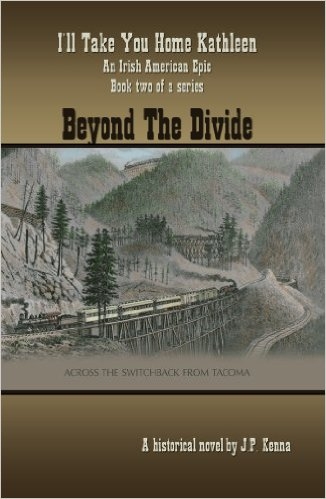
I’ll TAKE YOU HOME KATHLEEN by J.P. Kenna
Grand Prize Winner in the Goethe Awards
The 1800s was the age of expansion in the United States, and railroads played a major part in the efforts to move Americans and industry to the Western shores. By the 1860s, this great country, the American experiment as it was called, became engulfed in a brother versus brother bloody Civil War. As the century drew to a close in the late 1880s and early 1890s, America was still reeling from the emotional and economic damage the war had caused. J.P. Kenna uses this struggle as the backdrop for his book I’ll Take You Home Kathleen, the second in his series titled Beyond the Divide.
Kenna’s novel captures the years 1882 to 1898 with its focal point being the Irish immigrants who were seeking to escape famine, lack of land reform along with desiring religious freedom, came to America seeking a better life and more opportunity. The first wave of immigrants were seeking escape from one of the grimmest periods in Irish history–the Great Famine from 1845 to 1852. Author Kenna follows this hard-working group of immigrants who helped lead America into a post-Civil War, industrial, and economic boom that some have called the Second Industrial Revolution.
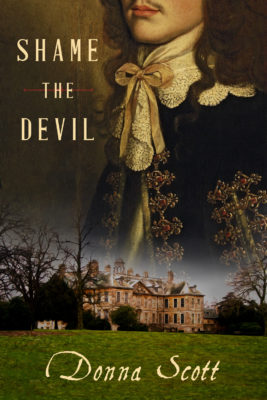
SHAME the DEVIL by Donna Scott
First Place Winner in the Chaucer Awards
Colin and Roddy Blackburne are sent into indentured servitude in England in 1643 with their father. Gavan Blackburne supported the divine right of King Charles I. Still, after the tragic death of his wife that both Colin and Roddy witnessed, he relinquishes his efforts to protect the remainder of his family.
The Blackburnes become stable hands at Appleton Hall, where the viscount’s daughter Emma quickly catches the eye of young Colin. Emma is curious about the young Scots in the stable and drags along Alston, the son of Lord Stillingfleet. The four children start a friendship that intertwines their lives forever.
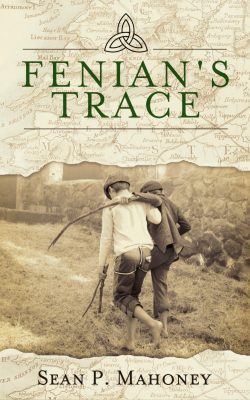
FENIAN’S TRACE by Sean P. Mahoney
First Place Winner in the Goethe Awards
Rory McCabe and Conor O’Neill are hard-working 12-year-olds, whose exploits and progress are narrated by the namesake of Clancy’s Pub who’s taken a liking to them. At times, he rewards the boys’ efforts with tales of their shared Irish heritage, its heroes and its glories. The boys have very different personalities, as Clancy discerns from their reactions to his lore. Rory is outraged as he hears of Ireland’s treatment by the British, while Conor accepts the information more quietly, studiously.
The two boys will soon meet a beautiful girl, Maria, the daughter of a well-to-do neighbor secretly aligned with a revolutionary resistance movement. Both will fall in love, but of the two, Rory will be the more open about his interest, while Conor will hold back, respectful but clearly smitten.
To submit to one of our Mystery or Thriller Fiction Awards see the Mystery & Mayhem Awards here, the Clue Awards here, and the Global Thriller Awards here.
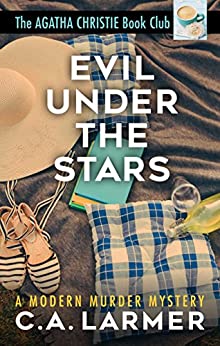
EVIL UNDER the STARS: The Agatha Christie Book Club (Book 3) by C.A. Larmer
First Place Winner in the Mystery & Mayhem Awards
Who commits a murder in a crowd of a hundred people relaxing in a park, and how did the Agatha Christie Book Club miss the entire thing from only a few feet away? In the trendy Sydney suburb of Balmain, Kat Mumford, social media interior design star, has been murdered during the inaugural Cinema Under the Stars. Her distraught husband, Eliot, is clearly the prime suspect, but at the time of Kat’s strangulation, he is nowhere near her. In fact, no one was sitting near Kat, and the crowd seems to have been so absorbed by the movie, Agatha Christie’s Evil Under Sun, that no one saw a thing out of the ordinary.
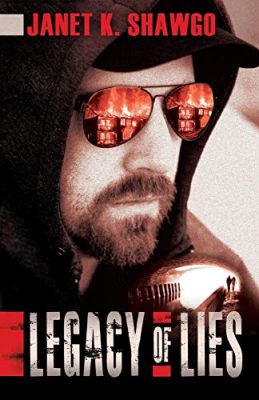
The question is not if history will catch up with you but instead, when will it attack with a vengeance. Characters with a Legacy of Lies discover they can run, but they can’t hide from past actions. When Caren Johnson sees her family and life literally explode in flames, her uncertain future falls into the hands of a mysterious Irishman. His name is Declan Malone, and he claims he’s been sent by her brother to save her from assassins determined to kill her too. How can that be when her brother’s death was reported ten years ago? Declan’s reasons for a hasty departure from Ireland appear suspect and put a target on his back too.
To submit to one of our Romance or Contemporary Fiction Awards see the Chatelaine Awards here and the Somerset Awards here.
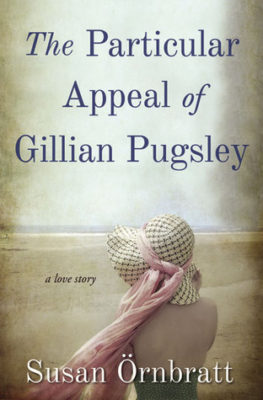
The PARTICULAR APPEAL of GILLIAN PUGSLEY by Susan Örnbratt
First Place Winner in the Chatelaine Awards
Irish-born Gillian McAllister knew she was meant for bigger things than a quiet life among her large extended family. Leaving home at seventeen against her protective father’s wishes, Gillian is looking for adventure – and that’s exactly what she finds. She was a nanny for a maharaja, a caretaker for WWII internees, and a nurse on the Isle of Man before finally becoming a wife, mother, and grandmother in London, Canada, where she spent the majority of her eighty-nine years.
However, with only weeks to live after being stricken by cancer, she knows her time with her beloved granddaughter and namesake is truly precious. Before she goes, she wants to pass on the poems that capture her long, adventurous life to the junior Gilly in hopes the girl will use the poems to write about her adventure – her hidden love story.
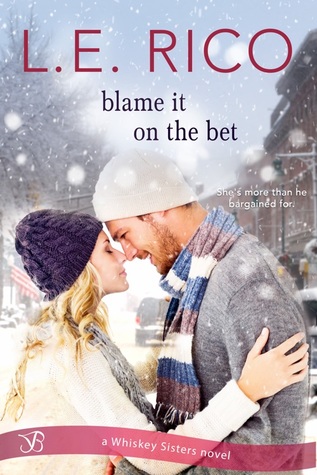
BLAME it on the BET (Whiskey Sisters, Book 1) by L.E. Rico
First Place Winner in the Chatelaine Awards
Twenty-six-year-old Hennessy O’Halloran should have it all. She should be enjoying her overpriced apartment in St. Paul, Minnesota, her successful legal career, and her “friends with benefits” neighbor, but in the month since her father’s sudden death, all of those things have become unimportant.
She thought she and her sisters had some time to figure out what to do with Jack’s legacy, an Irish pub he and their deceased mother built from scratch. Still, when they discover a substantial loan agreement secreted away in Jack’s belongings, they realize they only have six weeks to come up with over $100,000, money he borrowed against the business to help finance various expenses on his daughters’ behalves. She finds herself back home in Mayhem, Minnesota, living above the pub and trying desperately to find the funds to save the business.
Choileach, Chanticleer’s Irish cousin, wishes you this:
May your heart be light and happy, may your smile be big and wide, and may your pockets always have a coin or two inside!
Happy St. Patrick’s Day from Sharon & Kiffer & David and the whole Chanticleer Team!
And Remember! You can join the Chanticleer Family Anytime!
Sign up for our Newsletter here! Join our online community, The Roost, here for discounts and special offers!
Join us at our (Virtual) Chanticleer Authors Conference April 21-25, 2021. Read more about our headliners and workshops for that here!
VCAC 21 will feature Bestselling Crime Author Cathy Ace, J.D. Barker – Master of Suspense, C.C. Humphreys – Historical Fiction with a twist, Jessica Morrell – Top-tiered Developmental Editor, and more!
Check out our Editorial Services here and our Manuscript Overviews here, OR, if your work is already polished to a fine shine, it’s time to submit to our Editorial Reviews here and our Chanticleer International Book Awards (CIBAs) here!
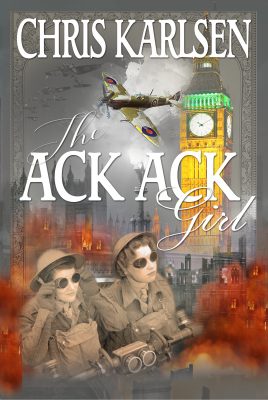
Chris Karlsen’s new work, The Ack-Ack Girl, is the first in her World War II series, Love and War, and serves up plenty of story on both sides of that equation in its portrayal of Ava Armstrong, the “Ack-Ack” girl of the title. And what a story it is!
Bombs are dropping on London in the heat and fire of the infamous Blitz. Shells are falling, as are the buildings that surround them, while fires spring up in the wake of the bombs that never seem to end. But when they finally stop, Ava and her friends are determined to get their loved ones somewhere safe and to find a way to serve up some revenge on the Germans.
The action follows Ava as she enlists in the Auxiliary Territorial Service, the women’s branch of the British Army. She hopes to do more than just “her bit,” but to do it in one of the new ways that become available to women as the men are called to war.
Through Ava’s eyes, we experience her training as one of the “Ack-Ack Girls,” the women who crewed the anti-aircraft batteries placed on the English coasts. In her duties as a spotter, a predictor (calculator), and a gunner, Ava garners respect, pride in her accomplishments and those of her crew – both male and female. One day, love blooms between Ava and an RAF pilot. The new relationship thrills and frightens her at the same time, loving a man who has a dogfight with death every other day.
There are and will be, plenty of World War II stories.
In recent years there has been a plethora of such books featuring the contributions of women to the world-wide war effort, contributions that have frequently gone unsung until now. What makes The Ack-Ack Girl stand out above the crowd is the freshness of its voice and the world as it is seen through the perspective of its titular character.
Ava Armstrong is neither a pampered princess nor a bird in a gilded cage when the story opens. She’s respectably middle-class and has no pretensions. Ava’s doing her best to balance her love and respect for her widowed mother with her strong desire for independence and the need to make something of herself for herself.
The description of the selection and training process for the Ack-Ack crew is both fascinating and delightful because Ava is such a realist. It’s a treat to read about someone who discovers a job, learns they are good at it and is proud of their accomplishments. Nevertheless, Ava struggles over whether to marry or stay in her position where the need could not be greater. Her struggle feels authentic and, therefore, will likely resonate with 21st-century readers.
Chris Karlsen is a master at weaving pulse-pounding action scenes of battle into the heartwarming story of one woman who follows her heart and takes us with her. The Ack-Ack Girl is superb storytelling and one World War II-era novel we highly recommend.
Henry Cavill stealing our hearts as Sherlock in the movie Enola Holmes. He definitely stole Kiffer’s.
When we look at writing craft, it can help to start general and then move on to specifics. Start with questions to help orient yourself toward how you will edit the work:
What do you see as the genre?
What is the climax?
How do you imagine the story’s structure?
What is the heart of the story?
The heart of the story can be more generally understood as theme, but it really boils down to where does the blood flow in the veins of the writing. I make sure that is always in my mind when editing for an author, and I recommend it for any writer who is working on a piece.
Write down the heart of your story somewhere you can always look at it—on a sticky note near your writing area, at the bottom of the document you’re working in, anywhere you can see it. Having the heart of the piece as an easy reference point lets us keep an eye on the destination as we write or edit toward the end.
The Evolving Nature of Structure
Get ready for book recommendations! In terms of structure, David recommends Jane Alison’sMeander, Spiral, Explode, whichsets the bar for how we can reimagine the shape of our books. Most stories won’t tell their author what their structure is supposed to look like until they are nearly finished.
Most of the time when we think of the structure of a story, we think of the Aristotelian spear. But story structure can look like anything! A spiral, a flower, a canoe, an inverted spear. Of course, there’s nothing wrong if your story structure does fall into this classic description, but keep in mind that doesn’t mean we close ourselves off to all other structures.
Aristotelian Spear story structure
Alison takes the idea of seeing the structure literally, recommending that writers draw out the shape of the story. To do this, she recommends visualizing summary like this “__” a scene like this “–” and a still spot (interiority or a moment where the narrator pauses and explains events) as “·”. This is the example of the structure she sees when blocking out a section of Vikram Chandra’s “Shakti”
__ __ __ __ — — — · —
You can see the pattern beginning to form, four moments of summary, followed by three scenes, a still spot, and then finishing with a scene. What do your own stories look like?
Again, usually this structure becomes visible as the story reaches completion, allowing the author to see the images and metaphors that really shape it.
Narration in Four Parts
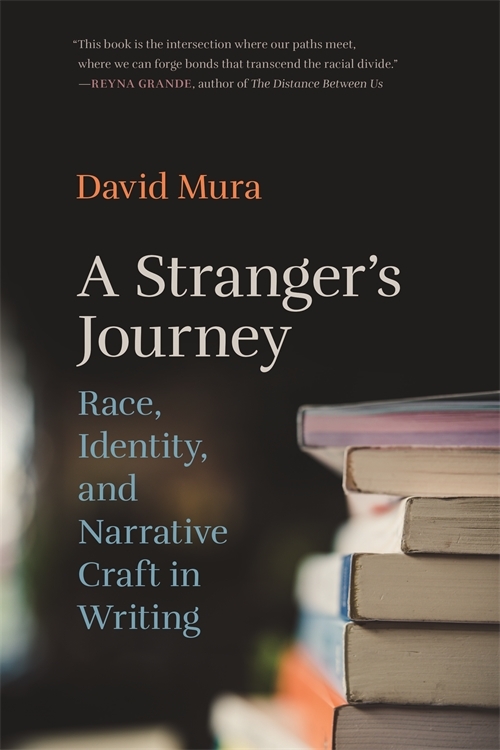
The next section here owes much to David Mura’s Book A Stranger’s Journey. At the start of his chapter “Four Questions Concerning the Narrator” Mura simply asks:
Who is the narrator?
Whom is the narrator telling her story to?
Where is the narrator telling the story?
Why is the narrator telling the story?
These simple questions open up most stories in wonderful ways that surprise and delight their authors. It changes the idea of the narrator just being the main character in their present (if so, is the narration in present first person, and does the reader only get information the main character knows?). Or perhaps the narrator is you, the author; remember you are a living, breathing, ever changing being, while your narrator becomes fixed in time the moment you put down your pen and stop the editing process. Understanding this allows the writer to slow down and understand the perspective of narration in their story.
From Avengers: Infinity War
Let’s look at a short story attributed to Ernest Hemingway to better understand these questions of narrator. The story is as follows:
For sale: baby shoes, never worn
Who is the narrator? We could say a newspaper or even the person who wrote the advertisement, possibly the parent of this child. We could also say that Hemingway is telling the story since he was asked to write a six word story.
Who is the narrator speaking to? Anyone who might want to buy baby shoes. If Hemingway is the narrator, then it’s also with the secondary desire to make the reader sad since the tragedy implied by baby shoes that have never been worn weighs heavily on us.
Where is the narrator telling the story? In the newspaper? A sign in a window?
Why is the narrator telling the story? Hard question. Maybe honestly just to sell the baby shoes. Maybe to find closure and remove the last reminders of their loss. Maybe in the hopes that someone will reach out.
In examining the narrator and understanding the relationship the narrator has with the reader, we create work with richer tone, voice, and a better understanding of what information needs to be shared.
All in Good Measure
The next book recommendation is Renni Browne and Dave King’s Self-Editing for Fiction Writers. While many of their chapters are excellent, their fourth one, “Proportion” stands out among many craft books as a unique topic. The quickest way to say this is to simply ask the writer to say what they mean to say, and then move on without spending too much time repeating the point. Often, this repetition breaks the sense of proportion needed for the story, leaving the weakest repeat to carry the weight of the scene in which it appears.
An example of this would be if the sunset was described as two Polaroids being jammed together to make the sky and land, and then describing again how the rocky cliffs were at odds with the soft clouds of sunset. Remember, choose which one seems stronger and cut the weaker one.
Most craft books touch on this as the idea of trusting the reader. Write the best story you can imagine writing, and then, after showing it to readers, you’ll understand if the way you wrote it made sense or not. Taking too much time to belabor your point will make it seem overwrought and overwritten to the point that the reader might lose interest (something I always fear when writing about proportion).
All Together
So, the key parts of craft I’m looking at here are: Heart, Structure, Narration, and Proportion. Of course, there are the traditional ones that we hear about everywhere:
Dialogue
Character
Plot
Voice
Beat
The ever present struggle between show and tell.
Of course it’s important to have a good grasp of the basics, you can’t have the four elements above without them! But understanding how you’ll put it all together in the end is what makes a work really sing.
When we finish our first draft our work suddenly transforms into a behemoth that’s impossible to approach. We’ll give you some great advice here, though if you’re at the point where you’ve done all this the next step is to find some extra eyes for your work. For an unbiased evaluation that will help you better understand what works and what needs to be improved in your book, check out our Manuscript Overviews editorial service here. Remember Kiffer’s advice to have a manuscript assessment prior to beginning line editing or copy editing. A manuscript overview/evaluation will save you time, money, and will improve your work-in-progress.
The CIBAs – Discovering Today’s Best Books and Authors
If you’ve read through this and think “I’ve done all this, and I’m ready for the next step!” Congratulations! We would recommend putting some positive attention on your book at this point. You can enter it in a Chanticleer International Book Award Contest here or submit it for a professional Editorial Review here. And remember, it never hurts to do both.
Looking for more story structure? You can find many articles here from a search of our site.
Chanticleer Editorial Services – when you are ready
Did you know that Chanticleer offers editorial services?We do and have been doing so since 2011.
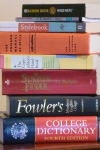
Tools of the Editing Trade
Our professional editors are top-notch and are experts in the Chicago Manual of Style. They have and are working for the top publishing houses (TOR, McMillian, Thomas Mercer, Penguin Random House, Simon Schuster, etc.).
If you would like more information, we invite you to email Kiffer or Sharon at KBrown@ChantiReviews.com or SAnderson@ChantiReviews.com for more information, testimonials, and fees.
We work with a small number of exclusive clients who want to collaborate with our team of top-editors on an on-going basis.Contact us today!
Chanticleer Editorial Services also offers writing craft sessions and masterclasses. Sign up to find out where, when, and how sessions being held.
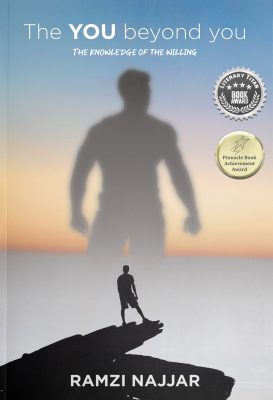
In The YOU beyond you – The knowledge of the willing, Ramzi Najjar addresses his audience with the contemplative calm of a mystic guru and the fervor of an old-time evangelist, in a how-to guide to good health, happiness, and inner peace as a personal philosophic treatise addressing the physical and spiritual quality of life in the 21st century.
In the Preface, Najjar quickly captures readers’ attention with the question, “In a chaotic world, and a life of prevalent restlessness, how can we make sense of the non-sensical [sic]?”
Who doesn’t relate to that?
In seeking an answer to that question, rather than asking the who, what, when and whys of traditional philosophy, Najjar accepts that negative and “nonsensical” life conditions are a given and asks the question how.
How can one change the negative impacts of these conditions upon one’s own being?
Najjar contends, “… you become what you perceive … and what you permit to enter your body…,” and this is the underlying premise upon which the book is based.
The author developed the rationale for his guide from personal experience, learning, observations, and understandings, along with widely accepted, common-sense information, uncited hypotheses, and research from various disciplines. In addition to ideas borrowed from areas of psychology, metaphysics, and epistemology, the author includes some concepts found in Eastern religions. The author weaves these bits and pieces together to create a new paradigm for 21st-century spiritual enlightenment.
At 137 pages, The YOU beyond you is not a long book or a difficult read.
Ramzi Najjar provides detailed explanations, relevant metaphors, and personal anecdotes to support his conclusions. Along with a preface, lengthy forward, and conclusion, he presents his ideas in six chapters: “Body Pollution; Mind Pollution; Restoring our body and mind; Getting imprinted with the correct memory; The Source and how to access it; and, Letting the right Memory run our life.”
The first three chapters are relatively short and provide a fairly comprehensive review of the benefits of common-sense behaviors and choices, and of proven healthy practices that can pave the way to personal transformation. The latter chapters dip into metaphysics and spiritualism integrated with historical and current scientific thought regarding genetic memory found in contemporary neuroscience, energy medicine, and integrative physiology. If one follows the suggestions in Najjar’s latest guide, there is no doubt the outcome will lead to motivational and spiritual growth.
The YOU beyond you may appeal to a varied audience. While at times verbose and loquacious, the intensity of Najjar’s arguments keeps the reader engaged. Many readers will relate to his friendly sometimes pedagogical, first-person voice and will find the book motivating and inspirational. All in all, The YOU beyond you is an interesting and provocative read.
The OZMA Book Awards recognize emerging talent and outstanding works in the genre of Fantasy Fiction. The OZMA Book Awards is a genre division of the Chanticleer International Book Awards (The #CIBAs).
Chanticleer International Book Awards discovers the best books featuring magic, the supernatural, imaginary worlds, fantastical creatures, legendary beasts, mythical beings, or inventions of fancy that author imaginations dream up without a basis in science as we know it. Epic Fantasy, High Fantasy, Sword and Sorcery, Dragons, Unicorns, Steampunk, Dieselpunk, Gaslight Fantasy, Urban Fantasy, or other out of this world fiction, they will be put to the test and the best selected as winners of the prestigious CIBAs.
The following fantasy fiction works have advanced from the Long List to the Shortlist of the 2020 OZMA Book Awards:
Christopher Leibig –Almost Damned
Susannah Dawn –Battle for the Armor of God
Christopher Russell –Divinity’s Twilight: Rebirth
T. Cook –Shin
Brooke Skipstone –Someone To Kiss My Scars
David Fitz-Gerald –She Sees Ghosts: The Story of a Woman Who Rescues Lost Souls
Michelle Rene –The Canyon Cathedral: The Witches of Tanglewood, Book Two
Amy Wolf –The Twelve Labors of Nick
Robert C. Feol –A Journey to Mouseling Hollow
MG Wilson and Phil Elmore –Ninja Girl Adventures
J. Nell Brown –Orphan Tree and the Vanishing Skeleton Key
Gordon Preston –Zendragon
H.J. Ramsay –Ever Alice
Alison Levy –Gatekeeper: Book One in the Daemon Collecting Series
Jeny Heckman –The Warrior’s Progeny
Sandra A. Hunter –Daughter of Earth & Fire, The Fledgling
James G. Robertson– Afterworld (Next Life, #1)
LaVerne Thompson –Wild Child
D.L. Jennings –Awaken the Three
Derrick Smythe –The Other Magic
Brian Phillips –A Necromancer’s Apprentice
K.N. Salustro –Cause of Death
KC Cowan & Sara Cole –Everfire
Jacob Andrew Emrey –Inferno Dawn
Dr. Anay Ayarovu –STAZR The World Of Z: The Dawn Of Athir
Glenn Searfoss –Cycles of Norse Mythology: Tales of the AEsir Gods
T. K. Thorne –House of Rose
Lee Hunt –Dynamicist
Shortlist stickers are available
Good Luck to all of these works as they compete for the Semi-Finalists positions!
These titles have moved forward in the judging rounds from SLUSH pile to the 2020 Long List (aka the Slush Pile Survivors) and have now advanced to the SHORTLIST. These entries are now in competition for the 2020 OZMA Semi-Finalists positions.
The coveted First Place Category Winners of the 2020 OZMA Book Awards will be selected from the Semi-Finalists in the final rounds of judging. The First Place Category Winners will be announced at the Chanticleer Awards and Ceremonies.
The ShortListers’ works will compete for the Semi-Finalists positions. Finalists will be selected from the Semi-Finalists, and then all Finalists will be recognized at the VCAC21 ceremonies. The First Place Category Winners, along with the CIBA Division Grand Prize winners, will be selected from the 22 CIBA divisions Finalists. We will announce the 1st Place Category Winners and Grand Prize Division Winners at the CIBAs Ceremonies April 21-25th, 2021 live at the luxurious Hotel Bellwether in Bellingham, Wash.
The CHAUCER Book Awards recognize emerging new talent and outstanding works in pre-1750s Historical Fiction. The CHAUCER Book Awards is a division of the Chanticleer International Book Awards (The CIBAs).
The Chaucer Book Awards competition is named for Geoffrey Chaucer the author of the legendary Canterbury Tales. The work is considered to be one of the greatest works in the English language. It was among the first non-secular books written in Middle English to be printed in 1483.
Chanticleer International Book Awards is seeking for the best books featuring Pre-1750s Historical Fiction, including pre-history, ancient history, Classical, world history (non-western culture), Dark Ages and Medieval Europe, Renaissance, Elizabethan, Tudor, 1600s, we will put them to the test and choose the best among them.
These titles have moved forward in the judging rounds from SLUSH pile to the 2020 Chaucer Book Awards LONG LIST and now have progressed to the 2020 SHORTLIST.
These titles are in the running for the Semi-Finalists positions of the 2020 CHAUCER Book Awards for pre-1750s Historical Fiction.Good luck to all as your works move on to the next rounds of judging.
James Hutson-Wiley –The Travels of ibn Thomas
Patrick E. Craig –The Mennonite Queen
Regan Walker –Summer Warrior
N.L. Holmes –Bird in a Snare
Leah Angstman –Out Front the Following Sea
Thoren Syndergaard –Ripley of Valor
Seven Jane –The Isle of Gold
Edward Rickford –The Bend of the River: Book Two in the Tenochtitlan Trilogy
Helena P. Schrader –The Emperor Strikes Back
B.L. Smith –The Fall of the Axe
Dave & Steve Curliss –To Give Thanks – Our Pilgrim Ancestors
Brook Allen –Antonius: Son of Rome
Sherry V. Ostroff –Caledonia
Amy Wolf –A Woman of the Road and Sea
Marilyn Pemberton –Song of the Nightingale: a Tale of Two Castrati
Robert Wright –The Stone Gardner’s Fire, Second Book of the Before They Awaken Trilogy
Jim Fuxa –At War with Mars
Wendy J. Dunn –Falling Pomegranate Seeds: The Duty of Daughters
Denis Olasehinde Akinmolasire –The Mission to End Slavery
Indra Zuno –Freedom Dues
Janet Wertman –The Path to Somerset
Which of these works will move forward in the judging rounds for the 2020 Chaucer Book Awards for pre-1750s Historical Fiction?
Good luck to all as your works move on to the next rounds of judging.
The ShortListers’ works will compete for the Semi-Finalists positions. Finalists will be selected from the Semi-Finalists, and then all Finalists will be recognized at the VCAC21 ceremonies. The First Place Category Winners, along with the CIBA Division Grand Prize winners, will be selected from the 22 CIBA divisions Finalists. We will announce the 1st Place Category Winners and Grand Prize Division Winners at the CIBAs Ceremonies April 21-25th, 2021 live at the luxurious Hotel Bellwether in Bellingham, Wash.
We are now accepting submissions into the 2021 CHAUCER Book Awards for pre-1750s Historical Fiction. The deadline for submissions is July 31, 2021. The 2021 winners will be announced in April 2022.
As always, please contact us at Chanticleer@ChantiReviews.com with any questions, concerns, or suggestions!

 We are now accepting submissions into the 2021 Laramie Book Awards. The deadline for submissions is July 31st, 2021. The winners will be announced in April 2022.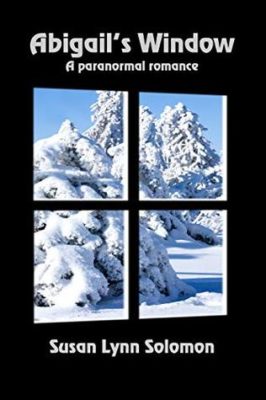
 Katy Novacs is haunted, both by her past and the laughing specter that reminds her of it. When her friends bring her to Niagara-on-the-Lake in the hopes of lifting her spirits, she finds that their inn has a ghost of its own who has a tale that might save her.










 The CHAUCER Book Awards recognize emerging new talent and outstanding works in pre-1750s Historical Fiction. The CHAUCER Book Awards is a division of the Chanticleer International Book Awards (The CIBAs).