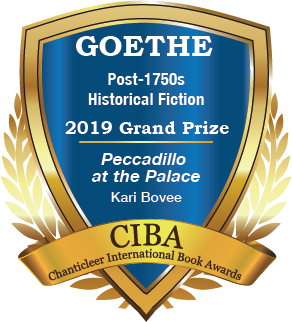
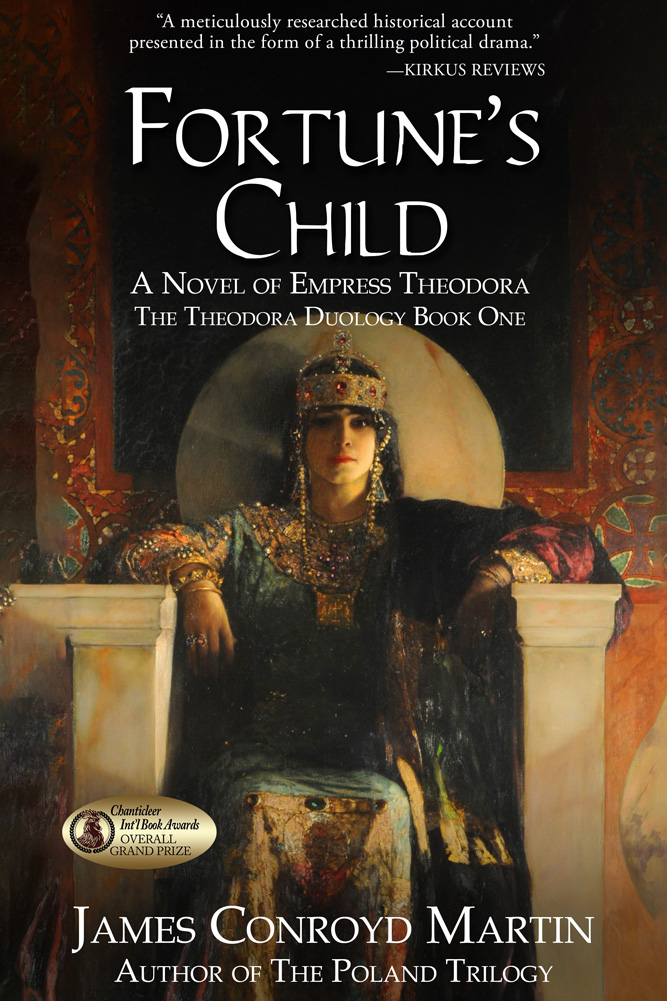
James Conroyd Martin brings to life one woman we should all know better in his multi-award-winning, epic novel, Fortune’s Child: A Novel of Empress Theodora.
Like Cleopatra, Empress Theodora was a legend in her own time. And also, like Queen Cleopatra before her, Empress Theodora’s life and accomplishments were distorted and maligned by the male historians of her own time. Even after death, men who couldn’t bear or couldn’t believe that a woman, particularly a woman of the lower classes as Theodora was, could possibly have accomplished the things she did or wield the power she had.
Fortune’s Child, the first book of a projected duology, Theodora, near death, determines to leave behind an accurate chronicle of her life and work. She’s desperate to get a step ahead of the official biography already being written by a man who hates her, everything she came from, and everything she stands for.
What’s an empress to do?
As Claudius does in Robert Graves’ landmark I, Claudius, Theodora intends to tell her own story before it is too late. A terrible cancer that will eventually claim her life significantly weakens Theodora. She lacks the strength to write the biography herself. So she commissions an old friend, the scribe, historian, and palace eunuch Stephen, to write it for her.
After all, he was there for a great deal of it. So much of it, in fact, that Theodora placed him into prison to keep him quiet about it all and has now released him to have him set the record straight.
An empress in the making.
As Theodora tells Stephen details of her past, both before they met and after, the reader experiences her hardscrabble childhood. One comes to understand that before all else, Theodora was a survivor.
Everything she did, every decision made, every hard path she took, points to a woman who wanted to survive. In the truest form of survival, Theodora wanted to make a better life for herself, and if possible, for the women who came after her.
James Conroyd Martin masterfully brings the 6th century Eastern Empire to life. From Africa to the Levant to the glittering gem of Constantinople, the reader sees the sprawling successor to the Roman Empire through the eyes of a woman whose story began at the bottom as an actress and a prostitute. Despite the humble background, the Empress determines to rise to the top by any – and every – means available to her.
Empress Theodora’s story will resonate with modern readers.
The determination to make a far better life for herself, based on her own gifts and on her own, Theodora’s proto-feminism makes her an easy character for contemporary readers to identify with as she rises to dizzying heights and unprecedented power. As she discovers loyal friends and makes desperate enemies on all sides.
The facts and figures of Martin’s masterpiece are not hidden. They are for all to uncover. Theodora’s life and accomplishments are not nearly well enough known. The adventure, the danger, the drama, and the glitter swallow readers whole into this recreation of a world that is long gone and an empress who should be better remembered.
Fortune’s Child is a brilliant historical biography rendered in full color, vibrantly animated by its author, James Conroyd Martin. Theodora’s life story is so significant, in fact, that it will take more than one volume to tell all there is to tell. And that is simply glorious.
James Conroyd Martin won the Overall Grand Prize in the 2019 CIBA Awards, the Best Book of the Year, for Fortune’s Child: A Novel of Empress Theodora.
April Fools’ Day is this week! Will you be a prankster or end up with egg on your face?
A surprisingly old tradition, historians trace the April Fools’ Day Celebration to the change in the calendar after the Council of Trent in 1563, moving the start of the New Year to January and beginning to celebrate Spring in late March rather than at the beginning of April. Those who were slow to adapt and celebrated the wrong holidays at the wrong time were knows as April Fools. For those of you who love a deep dive, you can read more here.
Of course, there have been other traditions of dressing up in costumes and pranking people, but the real question we want to look at is what’s funny in writing?
Humor Writing
At first blush, Chanticleer only has The Mark Twain Award that appears to cater to humor writing, but we all know that humor is key for almost any story. What better way to keep the reader engaged than those laugh out loud moments?
Interested in learning more about the Mark Twain Awards? Click here for more information and here to submit!
We can think of a few common times of humor in writing:
Satire (obviously)
Dark Humor
Situational Humor
Self-Deprecating Humor
Let’s go deeper!
Satire
One of the big keys to Satire is to always punch up. Making fun of people who are already having a tough time often leaves a bad taste in the reader’s mouth.
One classic example of Satire is George Orwell’s Animal Farm which critiques the fascist re-envisioning of Communism by Joseph Stalin through the lens of barnyard animals. This is a darkly told satire with the intention of speaking truth to power.
For lighter Satire, you can always look at Saturday Night Live and see their most recent jokes about whoever holds political power in the US.
Satire often ends up with someone adopting a role they don’t actually believe to expose parts of that belief that don’t hold up well, such as Jonathan Swift’s “A Modest Proposal.”
Dark Humor
Also known as Gallows Humor, Dark Humor looks at terrible situations and finds the irony in them.
This often pops up when someone says “Well, at least it can’t get any worse!”
Situational Humor
This happens when the character’s position in a scene happens to be very funny. For example, in Who Mourns for Morn from Star Trek: Deep Space 9, the Ferengi bartender Quark is harangued by 4 different thieves, all looking for a cut of the estate of Quark’s best customer (now deceased). At one point, all four of them, not knowing the others are there, arrive in Quark’s quarters where he hides each of them from the previous until he has a full house!
Quark at the center of attention with 4 phaser pistols pointed at his head
Self-Deprecating Humor
This often can be seen in Non-Fiction work. Self-Deprecation can make people feel less intimidating and put the reader at ease with a speaker. Possibly one of the best examples of this comes from the prologue of a 1910 Calculus Textbook.
Be careful though! A little Self-Deprecating Humor is a lovely introduction, but too much will quickly tire a reader out.
Final Tips:
Be Personal:
You know what’s funny in your own life. Start there with retelling those stories to see how it works out.
Subvert expectations:
We’ve all seen cliches, and those have their place in all stories, but think about times when a scene did not go the way you expected. One great example is in The Last Jedi when Rey returns Luke’s lightsaber and he immediately tosses it.
Such hope immediately dashed
Rule of Three
This is one of the big places to subvert expectations. You offer two regular, expected ideas, and then follow it up with a third option that surprises
Ex: “What are you up to today? Work? Day off? World domination?”
Obviously, there’s often a little more time between the appearances.
Chanticleer Book Reviews to make you laugh and cry
INSYNNIUM by Tim Cole
Grand Prize Winner for the Cygnus Awards
The dramatic premise explored in a new novel,Insynnium, is a wild, immersive leap into a world-changing (but fictional) drug. In other hands, what could be a dystopian thriller goes one step further in author Tim Cole’s capable hands. He focuses on the humans who first discover and use the drug and weaves his story with a devilish charm.
This is somewhat Bill Murray/“Groundhog Day” territory, a film exploring one man’s reliving a day in his life over and over until he learned new behaviors, new skills and came out of it a better man. Unlike “Groundhog,” Max McVista takes multiple doses of the drug against all advice, then somehow expands time itself in what he calls an “AUE” or “Alternative Universe Experience,” enabling him to spend months and sometimes years becoming or experiencing whatever he wishes. When returning real-time, he’s only missed a day or two. (For E=MC squared fans, it’s basically reverse engineering of Einsteinian physics.)
First Place Winner for the Mystery & Mayhem Awards
Who commits a murder in a crowd of a hundred people relaxing in a park, and how did the Agatha Christie Book Club miss the entire thing from only a few feet away? In the trendy Sydney suburb of Balmain, Kat Mumford, social media interior design star, has been murdered during the inaugural Cinema Under the Stars. Her distraught husband, Eliot, is clearly the prime suspect, but at the time of Kat’s strangulation, he is nowhere near her. In fact, no one was sitting near Kat, and the crowd seems to have been so absorbed by the movie, Agatha Christie’s Evil Under Sun, that no one saw a thing out of the ordinary.
When Alicia Finlay and her book club realize the murder occurred right under their noses, there is no way they can just let the police handle it. When Alicia’s boyfriend, Detective Inspector Liam Jackson, actually calls her for information, she and her club decide to do a little investigating of their own. Despite being told to butt out, Alicia, Lynette, Claire, Missy, and Perry go undercover to find the killer, but the twists, in this case, will lead them down a strange path to find a crafty killer. The club must sift through the suspects: a smarmy barman, a detestable reverend, a pregnant domestic abuse victim, a mystery mustached man, a dead junky, and a hipster hubby. With few clues but many dead ends, the club will meet their most challenging mystery yet!
A bitingly funny collection of life-stories from Christie Nicholls – stand-up comedian, actor, and writer – made all the more piquant by her repeated insistence that she has no short-term memory. Fortunately for us, her long-term reminiscences more than make up the deficit.
Nicholls has divided the book into four parts. In the first, “A Broad Abroad,” she recalls her experiences of traveling to far-flung places, beginning with a summer in Belém, Brazil as a child. She and her brother, for some reason nicknamed Beluga, slept in hammocks and played in a swimming pool, but much of her cherished time involved a German Shepherd named Ferdinand, from whom she learned dog talk. Raucous family bowling in Bologna, Italy, is contrasted with attendance at a staid English wedding. At a later period, Nicholls and her mother went to Sweden, where the budding comic tried her hand at stand-up in newly acquired Swedish, leading to an amusing mix-up of jargon.
Chanticleer Editorial Services – when you are ready
Did you know that Chanticleer offers editorial services?We do and have been doing so since 2011.
Tools of the Editing Trade
Our professional editors are top-notch and are experts in the Chicago Manual of Style. They have and are working for the top publishing houses (TOR, McMillian, Thomas Mercer, Penguin Random House, Simon Schuster, etc.).
If you would like more information, we invite you to email Kiffer or Sharon at KBrown@ChantiReviews.com or SAnderson@ChantiReviews.com for more information, testimonials, and fees.
We work with a small number of exclusive clients who want to collaborate with our team of top-editors on an on-going basis.Contact us today!
Chanticleer Editorial Services also offers writing craft sessions and masterclasses. Sign up to find out where, when, and how sessions being held.
The SOMERSET Book Awards recognize emerging talent and outstanding works in the genre of Literary and Contemporary Fiction. The Somerset Book Awards is a genre division of the Chanticleer International Book Awards (The CIBAs).
Chanticleer International Book Awards is looking for the best books featuring contemporary stories, literary themes, adventure, magical realism, or women and family themes. These books have advanced to the next judging rounds. The best will advance. Which titles will be declared as winners of the prestigious Somerset Book Awards?
These titles have moved forward in the judging rounds from SLUSH pile to the 2020 Somerset Book Awards LONG LIST and now have progressed to the 2020 SHORTLIST.
Congratulations to the following titles who have advanced to the 2020 SOMERSET Book Awards SHORTLIST!
Susan Dobson – Boomerang
Sara Stamey –Pause
R Barber Anderson –Jumeau
Gregory Erich Phillips –A Season in Lights
Candi Sary –Magdalena
Kathleen Reid –Sunrise in Florence
Ivy Cayden –Everything All At Once (Book 1, Chorduroys and Too Many Boys™)
Lauren J. Sharkey – Inconvenient Daughter
Amy L Cleven –Look Up
Kasie Whitener –After December
T P Graf –As the Daisies Bloom
Patrick M. Garry –The Donor
Katherine Johnson –Grit & Granite
Jennifer Gold –Keep Me Afloat
Catherine Hamilton –Victoria’s War
Jessica O’Dwyer –Mother Mother
Lauren J. Sharkey –Inconvenient Daughter
Pierce Koslosky Jr. –A Week at Surfside Beach
John Danenbarger –Entanglement: Quantum and Otherwise
Julie Weary –Knowing Marjorie Thane
B. K. Stubblefield –Scars of the Past
Dan V. Jackson –Rainbow Bridge
Kathleen M. Rodgers –The Flying Cutterbucks
Abbe Rolnick –Founding Stones
Liana Gardner –Speak No Evil
Susan Wingate –How the Deer Moon Hungers
Lainey Cameron –The Exit Strategy
Barbara Linn Probst –Queen of the Owls
Alice Early –The Moon Always Rising
Judy Keeslar Santamaria– Jetty Cat Palace Cafe
Joanne Kukanza Easley –Sweet Jane
NOTE: Some titles have been transferred to the Mark Twain Book Awards for Satire, Allegory, Humor, and Alternative Histories (non-SciFi).
These titles are in the running for the Semi-Finalists of the 2020 Somerset Book Awards for Contemporary and Literary Fiction.
Which of these works will move forward in the judging rounds for the 2020 Somerset Book Awards for Contemporary and Literary Fiction?
Good luck to all as your works move on to the next rounds of judging.
The ShortListers’ works will compete for the Semi-Finalists positions. Finalists will be selected from the Semi-Finalists, and then all Finalists will be recognized at the VCAC21 ceremonies. The First Place Category Winners, along with the CIBA Division Grand Prize winners, will be selected from the 22 CIBA divisions Finalists. We will announce the 1st Place Category Winners and Grand Prize Division Winners at the CIBAs Ceremonies April 21-25th, 2021 live at the luxurious Hotel Bellwether in Bellingham, Wash.
We are now accepting submissions into the 2021 Somerset Awards Book Awards. The deadline for submissions is November 30th, 2021. The winners will be announced in April 2022.
If ever a love letter could be written in the context of a solid how-to guide in the antique business, Dennis Kotchmar has done a marvelous job in The Joy of Searching, Buying and Selling Antiques and Home Décor from France and England.
Dennis recalls his beloved wife Laura and the remarkable life they shared as they traveled the world locating, buying, selling, and displaying household treasures from candles to couches to credenzas.
Dennis met Laura (now passed away) in 1971 when he was in the military, and she was an assistant elementary school principal in the Virginia Beach school system in Virginia. They shared a love for sporty cars and soon, for each other. Laura had already begun to demonstrate a zeal for collecting and selling interesting objects. With Dennis at her side, she grew this interest into a full-scale business, Chelsea Antiques. It began close to home, going to local auction sales seeking items of unusual interest. With no business experience, they took advantage of the development of Brightleaf Square, a former tobacco warehouse district converted into a charming marketplace in downtown Durham. The Kotchmars secured a space there and began building inventory.
Laura had an eye for décor and arrangement, and before long became a display artist with a fine instinct for desirable products that seemed to come naturally to her.
Her enthusiasm soon led the couple farther afield; noting that antiques and art objects from the English countryside were enjoying popularity, they made reliable contacts there and traveled to and from London where they resided at the time several times a year. From there, they began to buy and sell, remotely at first and then by on-site visits, in France. The work was a continually growing success and, as Kotchmar notes, a continual surprise. Travel could be a joy – or a problem. Laura was once stuck on a plane whose engines were attacked by a flock of birds; there were unavoidable delays for such things as airline strikes; and perhaps most memorable, ten days spent trapped in France and England, just after 9-11.
Kotchmar’s vivid color photos grace the narrative, with a stand-out being views of Monet’s garden including the famous lily pond; he and Laura were touched and amazed that ordinary folk can still visit such storied sites. His book also contains nitty-gritty details of the business, including the contacts made and lost, back roads explored, and the truly spectacular range of items to be discovered, marketed, and enhanced.
Kotchmar composed this memoir as a paean to Laura.
In doing so, he has come to appreciate her intelligence and intuition all the more. He concludes that Laura did what she loved, and working together, they created an aura of romance and adventure that few couples can even dream of. His book will be of interest to fans of antiques and the antique business, as well as to North Carolinians, who will admire the ambition and artistry of Laura Kotchmar, one of their own.
The Goethe Book Awards recognize emerging new talent in post-1750s Historical Fiction. The Goethe Book Awards is a division of the Chanticleer International Book Awards (The CIBAs).
The Goethe Book Awards competition is named for Johann Wolfgang von Goethe who was born at the dawn of the new era of enlightenment on August 28, 1749.
Chanticleer International Book Awards is looking for the best books featuring Late Period Historical Fiction. Regency, Victorian,18th Century, 19th Century, 20th Century, World and other wars, history of non-western cultures, set after the 1750s, we will put them to the test and choose the best among them. The Short Listers’ works will compete for the Semi-Finalists positions. Semi-Finalists will be announced and recognized at the CAC21 banquet and ceremony. We will announce the 1st Place Category winners and Grand Prize Division Winners at the CIBAs Banquet and Ceremonies April 21-25th, 2021 at the luxurious Hotel Bellwether in Bellingham, Wash. at the 2021 Chanticleer Authors Conference–whether virtual, hybrid, or in-person.
These titles have moved forward in the judging rounds from SLUSH pile to the 2020 Goethe Book Awards LONG LIST and have now progressed to the 2020 SHORTLIST.
The 2020 Shortlist for the Goethe Book Awards
James Hockenberry –Send The Word
Helena P. Schrader –Where Eagles Never Flew: A Battle of Britain Novel
Conor Bender –Jubilee
Linda Ulleseit –The Aloha Spirit
Eileen O’Finlan –Erin’s Children
Jon Duncan –Heart of the Few
Grahame Shannon –Bay of Devils
Leslie K. Barry –Newark Minutemen
T. Matt Ryan –One Hell of a Shipmate
Richard Alan Schwartz –Wind Chimes, War and Consequence A Novel of the Vietnam War Era
Kari Bovee –Folly at the Fair
James Padian –A Patriot’s Challenges
Betty Bolte – Becoming Lady Washington
Kit Sergeant –The Spark of Resistance: Women Spies in WWII
J.P. Kenna –The Anarchist Girl’s Confession
Jomo Merritt –Sons of a Mauffen King
J.L.Oakley –The Quisling Factor
Brigitte Goldstein –Babylon Laid Waste-A Journey in the Twilight of the Idols
D.V Chernov –Commissar
Gail Noble-Sanderson –The Lavender Bees of Meuse
Michelle Cameron –Beyond the Ghetto Gates
Kathryn Gauci –The Poseidon Network
Dorothea Hubble Bonneau –Once in a Blood Moon
Nancy H. Wynen –We Did What We Could
Pamela Jonas – Beneath a Radiant Moon
John Hansen –Secrets of the Gros Ventre
Eileen Harrison Sanchez –Freedom Lessons – A Novel
Elizabeth St. Michel –Lord of the Wilderness
Donna Scott –The London Monster
Jerena Tobiasen –The Crest, Book I of The Prophecy
James Ross –Hunting Teddy Roosevelt
Jule Selbo –Breaking Barriers: A Novel Based on the Life of Laura Bassi
Linda Stewart Henley –Estelle: A Novel
Gregory Erich Phillips –Guilty as Angels
Vicky Oliver –Love and Suffrage in Manhattan
Roger Newman –Will O’ the Wisp: Madness, War and Recompense
Theo Czuk –Hastings Street: Boulevard Of Blues
Sandra Perez Gluschankoff –Thorns for Raisel
Ben Wyckoff Shore –Terribilita
Carmela Cattuti –Between the Cracks: one woman’s journey from Sicily to America
Wendy Long Stanley –The Power to Deny
David Selcer –The Old Stories, a.k.a Da Alt Geshikhtem
Pyram King –Destiny’s War – Part 1: Saladin’s Secret
Lucinda Brant –Deadly Kin: A Georgian Historical Mystery
Cris Harding –Red Wing
These titles are in the running for the Semi-Finalists of the 2020 Goethe Book Awards for post-1750s Historical Fiction.
The 22 divisions of the 2020 CIBAs’Grand Prize Winners and the Five First Place Category Position award winners will be announced at theApril 25th, 2021 Chanticleer International Book Awards Annual Awards Gala,which takes place at the Chanticleer Authors Conference that will be held in virtually Bellingham, Wash.
Good luck to all as your works move on to the next rounds of judging.
The ShortListers’ works will compete for the Semi-Finalists positions. Finalists will be selected from the Semi-Finalists, and then all Finalists will be recognized at the VCAC21 ceremonies. The First Place Category Winners, along with the CIBA Division Grand Prize winners, will be selected from the 22 CIBA divisions Finalists. We will announce the 1st Place Category Winners and Grand Prize Division Winners at the CIBAs Ceremonies April 21-25th, 2021 live at the luxurious Hotel Bellwether in Bellingham, Wash.
We are now accepting submissions into the 2021 Goethe Book Awards for post-1750s Historical Fiction. The deadline for submissions is July 30, 2020. The 2021 winners will be announced in April 2022.
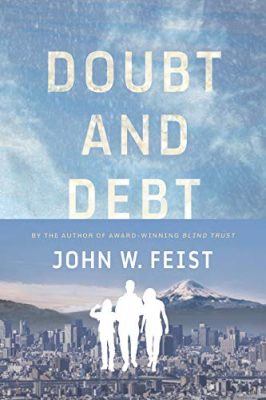
Pipelines—large industrial pipelines through which pour oil, gas, and other natural elements—are not the usual stuff that writers tackle for intelligent, sophisticated international high-stakes spy novels. But then again, most writers aren’t John Feist, whose lawyering background in, yes, global pipelines and related industries such as steel, coal, and shipping companies make him the perfect choice to turn these typically pedestrian subjects into absorbing books. His work introduces us to complex issues involving international trade at the highest level, greed, murder, and above all, the intricacies and rewards of multinational, prominent, and sometimes multiracial families.
In Doubt and Debt, lawyer Brad Oaks is now the president and CEO of California-based Elgar Steel.
He and his wife Amaya have adopted an 11-year-old Canadian girl, Kozue, whose parents died in a mass shooting in Toronto. She is a perfect fit for the Oakes, both in their mid-40s, both in business and personal relations in Japan. Amaya is the half-sister of the two sisters who own the steel company which manufactures high-grade steel pipes through which the mineral wealth of nations pours. She is half-Japanese, grew up with the racial issues of her home country, and is also best friends with Japan’s current woman premier.
In the first two books, the family-owned business was vital in developing the Wishbone Pipeline that brings water and oil from Canada to the U.S. (Any similarity to the now real-world defunct Keystone XL pipeline is purely coincidental.) That project, and the international consortium necessary to build it, involved players including Oaks, the chief architect of the complex trade pact, Japan’s prime minister, her steel-manufacturing brother, secret agents from China, a red-headed femme fatale who is also an engineering brainiac, etc.
Brad Oaks is once again the target of a murder attempt.
In this third volume, the same players face a new challenge: a proposed pipeline that would send Iranian oil money to North Korea, both blacklisted players on the international scene, and violate sanctions imposed by the United States and Japan. Brad’s life is threatened—he thinks by someone involved in the new pipeline negotiations. In other words, if he’s out of the way, then a potential block to the illicit deal disappears.
As the investigation commences, one of the Elgar sisters, June, becomes involved with a scheming, unscrupulous businessman, Bob Hager. He charms her into a business decision that puts her in debt, positioning her to potentially delivering her significant portion of the company to Hager and his greedy associates and thus wresting control of the family-owned business into the hands of absolutely the wrong people. Can there be a solution that will keep the Elgar business in the family and not subject to the business predators that want to tear it apart?
Feist pays attention to the importance of multi-cultural understanding in business.
Underlying it all, Feist delivers a multi-part dialog that runs through all three books about family, commitment, cultural differences, and ethics. Virtually every central character in the series finds him or herself conscious of the morality of their decisions, whether it be Brad’s wife’s constant tug between her new life in America and her old life in Japan, Japanese Prime Minister Yuko Kagono relationship with her steel-magnate brother Iseo, Iseo’s secret relationship with red-headed American Cynthia and his clinging to the glory of old Japan, and June’s flakiness and twin sister Sarah-Jane’s steadfastness.
The business negotiations between the various parties are of a high order, both complex and yet intriguing. They offer insights into how the Great Game between multinational companies and governments plays out, written clearly from the position of someone who has been there as a player. The multiple discussions between the characters, whether American to Japanese or American to American or Japanese to Japanese, have the ring of truth.
In parallel to all this are the intricate relations between the various characters on a personal and business basis. These are people whose lives require thinking on multiple levels, as their decisions about how they live affect them personally, socially, and globally. They live a three-dimensional chess-world life and must live up to the standards of the game.
Do yourself a favor and pick up the first two books in the series, Night Rain, Tokyo, and Blind Trust before you dive into Doubt and Debt, and find out for yourself why John Feist writes novels we love.
Understanding What Makes Good Character Development
Character Development is a tricky matter. In this article we’ll go through the basics of setting up what your character does and how you describe them, coupled with the idea of beats in dialogue.
Artists all over use character models!
Consider the following excerpt from a recent work in progress from a friend of Chanticleer:
In the guest room we have spider plants that have often refused to die in the past. They grow everywhere and propagate like mad, their white and green spear-like leaves overflowing any pot we put them into. We keep them trimmed back carefully, letting them give us plenty of fresh oxygen while at the same time making sure our space isn’t entirely overrun.
This description comes in the middle of getting something for another character, and there are 4 paragraphs of plant and room descriptions. Four! That’s too much narrative description that adds little to the story and does nothing to build tension. Now look at the revision of all those paragraphs:
I head out to the kitchen. I don’t see Mom, but this is the week we’re supposed to water the plants, so I fill up our yellow watering pail with a comically long spout that aids in watering closer to the base on the plants. The red and green leafed crotons in the kitchen next to the sink are first, then the fishtail palm in the bathroom that always wants more water despite the wetness of its location, the spider plants in the office, my kalanchoe was watered last week, and then I finish with the lemon tree. The lemon trees petals are almost all gone, which means we’ll have meyer lemons soon, but any sweet smell it had recently is gone.
Now, in addition to understanding that the character is looking for their mother. The plants appear in a flash, coupled with the action of being watered, and we end on the lemon tree, which promises something good, but right now seems rather lackluster, which mirrors the mood of the overall scene. This quick summary helps the story move from prolonged description that will make the reader’s eyes glaze over, and instead moves us from one point to the next.
Interested more in secondary characters? Learn more about them from the one and only Jessica Morrell here. For more that focuses on general background characters, try this article from Skip Ferderber here.
So when do we put in a little summary for the character?
Renni Browne and Dave King say the following in their book Self-Editing for Fiction Writers:
If your characters actually act the way your summaries say they will, the summaries aren’t needed. If they don’t, the summaries are misleading. Either way, your fiction is likely to be more much effective without the character summary
In terms of time progression in a story summary is a way of storytelling where a little is described to cover a large period of time. It helps to have it balanced with scenes where action and time are equivalent, or moments of interiority where a lot happens in almost always a slow point in the narrative. However you choose to do it, make sure there’s a good balance in terms of time in your work, and that scene is often the driving force.
Looking for tips to streamline your dialogue? Make it more potent with tips from Jessica Morrell here.
Unobtrusive ways to develop Character
Learn their history so that when you write them it will come out intuitively
Show how other characters react to them directly.
Show how the world interacts with them as they move through it.
That’s well and good, but how do you measure your character development? Well, we’re glad you asked:
How much time do you spend describing characters?
Are you telling us characteristics that will show up later in dialogue and action?
How much of the character’s history have you explored with the reader? Does the reader need all of that information, or does the story read well without it? If so, when do they need to know it
Dialogue Mechanics
A famous author once called dialogue the purest form of scene.
Obviously there are moments where this is wrong, such as when the dialogue is done as a form of telling.
“Hi Joe, I haven’t seen you since the divorce with June after you came back from the war!”
You may remember plays where it starts out with someone answering the phone and setting up the plot by responding to the person on the other end.
However, the idea of telling that sneaks its way most prominently into dialogue mechanics is the dialogue tag, often accompanied by an adverb. Consider Newgate Callander of The New York Times Book Review take on the wildly successful Bourne Ultimatum series:
Mr. Ludlum has other peculiarities. For example, he hates the “he said” locution and avoids it as much as possible. Characters in “The Bourne Ultimatum” seldom “say” anything. Instead, they cry, interject, interrupt, muse, state, counter, conclude, mumble, whisper (Mr. Ludlum is great on whispers), intone, roar, exclaim, fume, explode, mutter. There is one especially unforgettable tautology “‘I repeat,’ repeated Alex.’
The book may sell in the millions, but it’s still junk.
Let’s take it further and look at even more examples of redundant or overemphasized dialogue tags:
“I’ll kill your whole family,” he hissed maliciously.
“You can’t be serious,” she said in astonishment.
“Give it to me,” she demanded
“Here it is,” he offered.
“Is it loaded?” she inquired?
These all share one thing—they fear the use of “said.” Sure, sometimes a word other than “said” will help break things up for variety’s sake, but “said” is almost always proper and good to use.
“Said” is essentially a punctuation mark for readers. It serves the purpose of helping them track who said what in a dialogue.
See what Peter Greene says about realistic dialogue in his interview here.
Adverbs: Friend or Foe
To be or not to be
Adverbs are the enemy much of the time in dialogue. There is almost always a better word to use. Putting in a prop like the dreaded -ly will make your dialogue seem weak, even if it isn’t.
The only real exception to the rule is with the dialogue tag “said” because it’s so ubiquitous that it can allow for some extra description on occasion. Remember, the dialogue will often do the work of setting the tone for you.
Gabriel García Márquez would eliminate all adverbs from his writing, choosing instead to use the word in another form.
For example, instead of “he said softly” I would write “he said, his voice soft”
A few general tips:
Pronoun substitutions are fine
Renaming the character can be wonky. Dave, Mr. Winchester, The Sheriff, the officer, the lawman, CHOOSE!
New speaker/new action means a new paragraph!
Ending with a dialogue tag uses a comma. Ending with an action uses a period. Ex: “Hey there,” he said. vs “Hey there.” He scratched his chin.
This indicates interruption: “Now wait just—”
This indicates trailing off: “Now wait just a second…”
Again, consider how you measure these things.
Check your dialogue for explanations. Consider bringing a highlighter for this job.
Cut the explanations and reread your dialogue. If it reads worse, you may need to rewrite your dialogue.
Mark every adverb related to dialogue. How many of them are based on adjectives describing emotion? Which ones can you cut?
Beats in Character Development
Let’s pause here to talk a little bit about beats and figure out how to us them to balance out dialogue. Again, using an example from Self-Editing:
“But didn’t you promise…” Jessie said.
“I did nothing of the sort,’ Tyrone said.
“Now, look, you two—” Dudley said.
You stay out of this,” Tryon said.
VS.
“But didn’t you promise…” Jessie said.
“I did nothing of the sort,’ Tyrone said.
Dudley stepped between them and held up his hands. “Now, look, you two—”
Tyrone spun on him. “You stay out of this.”
Just like the saids, there can be too many beats, so be careful how you balance it.
Think about white space in a sketch for a painting. All the lines that make up the body of the work are the dialogue of your piece–it gives the plot, characters, and conflict a structure to work within. The beats are the color the fill it in, showing the reader a complete picture of what’s taking place. As you write, ask yourself if you’re better at overwriting and then trimming back or underwriting and fleshing out. Play to your strengths for your first draft, and then come back ready to adjust for any areas you know you’ll be weak.
The beats tie your dialogue together. Map them by marking the descriptions you have interspersed within your dialogue.
Make your beats sing by seeing what Margie Lawson has to say about rhythm and cadence here.
Chanticleer Editorial Services – when you are ready
Did you know that Chanticleer offers editorial services?We do and have been doing so since 2011.
Tools of the Editing Trade
Our professional editors are top-notch and are experts in the Chicago Manual of Style. They have and are working for the top publishing houses (TOR, McMillian, Thomas Mercer, Penguin Random House, Simon Schuster, etc.).
If you would like more information, we invite you to email Kiffer or Sharon at KBrown@ChantiReviews.com or SAnderson@ChantiReviews.com for more information, testimonials, and fees.
We work with a small number of exclusive clients who want to collaborate with our team of top-editors on an on-going basis.Contact us today!
Chanticleer Editorial Services also offers writing craft sessions and masterclasses. Sign up to find out where, when, and how sessions being held.
Cathy Ace is an entertaining speaker; over the years she’s chatted engagingly, made complex Powerpoint presentations, and read her work or hosted and been Master of Ceremony for various events and conferences. She’s done this at venues as diverse as a plant nursery in Canada, a dazzling Livery Hall in the City of London, and a grade 12 schoolroom.
Having run her own post-graduate marketing communications training company in the UK for a decade, and having traveled the world as a management trainer, she’s now able to take all that experience and be an “edu-taining” speaker who is funny, insightful, knows her stuff and can speak about topics ranging from the broad base of The History of Mystery, to more intimate and personal topics such as how she plans, plots and writes her bestselling mysteries.
BIG NEWS FOR CATHY…Her Cait Morgan Mysteries have been optioned for TV by the UK production company Free@Last TV, which is responsible for the hit TV series based on MC Beaton’s Agatha Raisin books (Hamish MacBeth series). The same company has optioned The Wrong Boy, with plans for it to be broadcast as a three-part miniseries, in Welsh and English.
Below are the titles for the Cait Morgan Mysteries in all their glory! A fraction of the books Cathy Ace has written!
And forthcoming from Cathy Ace: Book 10 of the Cait Morgan Mysteries, The Corpse with the Iron Will
Welsh criminal psychologist and globetrotting sleuth, Cait Morgan, and her retired-cop husband Bud Anderson, are enjoying some well-deserved peace and quiet at home, in moody, mountainous British Columbia. The sudden death of a neighbor is a significant loss for them both, so Cait’s honored when Gordy Krantz’s “unusual” will requests that she eulogize him at his memorial.
However, delving into the dead man’s background becomes a pressing priority when a puzzling theft, and some surprising discoveries, put our favourite sleuths on high alert. Might someone living in their seemingly tight-knit – and certainly off-beat – rural community have wanted their neighbor dead? And if so, are more people they know at risk?
The tenth Cait Morgan Mystery from Bony Blithe Award-winning author Cathy Ace, The Corpse with the Iron Will, forces Cait and Bud to use the skills they’ve honed tackling cases around the world to unmask a killer who’s too close to home for comfort!
ISBN print: 9781999223076 (will be available for pre-order from your local bookstore or library from mid-May 2021)
ISBN e-book (all platforms): 9781999223083 (will be available for pre-order for platforms other than amazon from late-March 2021)
Click here for more information about the 2021 Chanticleer Authors Conference and Int’l Book Awards Banquet and Ceremony.
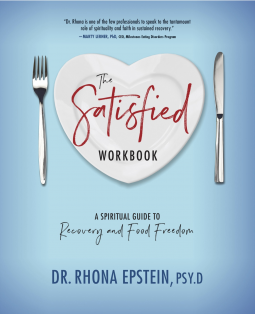
Dr. Rhona Epstein, PsyD, CAC is the leading expert on Food Addiction Recovery.
She is a therapist who has recovered from the problems she now focuses on, seeking to help those who suffer from food addiction to recognize their problem and solve it with spiritual guidance.
Epstein has based this manual around the 12 Steps, a program originally geared to alcoholism and based on Christian principles, but gradually secularized to facilitate outreach to a broader group. The 12 Steps take the addict, of whatever sort, through a series of deepening inner questions and resolutions. Initially, the addict must admit he or she has an addiction – in this case, to food and overeating, resulting in bingeing and other disorders such as bulimia. From that point, there will be a diligent search for relief, aided by faith in God’s care, and concluding with the possibility of helping others with the same problems.
Epstein has organized her book extremely carefully, each chapter considering one of the steps.
The chapters contain an initial Overview followed by Real Talk by Dr. Rhona, who speaks with two voices. As a psychologist, she recounts case studies concerning people whose problems illustrate the need for the steps. As a former food addict, she recalls her ways of dealing with, or dodging, the issues. It took her several years to conquer her overeating and related compulsions, and, as she reminds her readers, the need for diligence, or what she calls “daily housekeeping,” is a constant. For each step, she offers Recovery Questions, makes challenges, and sometimes presents multiple pages of Scriptural Meditations since her work and wisdom are heavily steeped in a Christian viewpoint. Throughout the book, she will urge her readers to give their burdens to God while also suggesting some secular solutions such as meditation and music, attendance in group therapy, and individual counseling, both professional and friend-and-family based.
The author, who has a doctorate in clinical psychology and many years of experience counseling in the field of food-related addiction, references food as both a physical poison that can lead to and perpetuate addiction and as a symbolic spiritual satisfaction when it comes, as healing, from the grace of God.
As a recovered addict, Dr. Rhona is frank about the work it may take at times to acknowledge and overcome food obsessions fully. It is precisely this perspective that gives her strategies credibility. Anyone experiencing food or other addiction problem may benefit from reading Epstein’s highly relevant work. The questions and exercises contained within the book would make an excellent tool for therapeutic workshops.
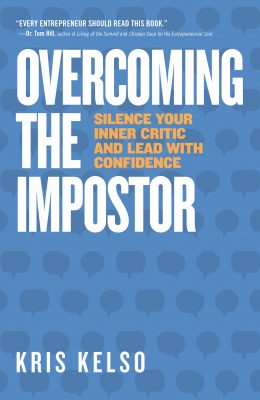
Author and entrepreneur Kris Kelso made a discovery about himself that he shares with others in his book, Overcoming The Impostor: Silence Your Inner Critique and Lead with Confidence.
The author was surprised in a first meeting at a new job to be referred to as an “expert.” It raised doubts in his mind about whether he had earned such a title, but it also forced him to do things he’d never done before and succeed in the process. But the voices in his head persisted, even as he went from accomplishment to accomplishment. His shadow, The Impostor, told him he didn’t know how to do a certain thing; moreover, he was making it up. The Impostor relentlessly mocked him, saying that just been lucky, he wasn’t a “real” businessman at all. When he learned about “Impostor Syndrome” – “a psychological pattern in which people doubt their accomplishments” – he realized that we all have an “Inner Impostor” that needs to be recognized, dealt with, and banished.
Kelso often faced “figure-it-out moments” for problems he’d never encountered before. That’s when The Impostor would creep in. But gradually, Kelso began to see that in those critical moments, hidden abilities came to light. Analyzing his past business history, he soon realized that those moments where The Impostor spoke the loudest were the most pivotal, positive steps in his career.
Soon, it became clear, challenges are often the pathways to growth.
At a meeting with new work colleagues, Kelso introduced himself and then gave a brief picture of the syndrome, and others quickly chimed in, expressing their own experience of it. He studied other people’s approaches to their Impostors, learning that even high achievers may be quite susceptible to The Impostor’s negative voice. Entrepreneurs are often beset by The Impostor’s negative messages. Instead of feeling proud of their unique abilities that lead to their successes, they often categorized their accomplishments as an anomaly.
In addition to numerous examples of the syndrome from his cohort of businesspeople, Kelso offers a ten-step process for dealing with and silencing The Impostor. First, Identify its presence; Remember that failure is part of success; Recognize that learning on the job is a strength; Avoid the trap of comparing yourself to others; Trust those who believe in you. Then act: Accept compliments, Say “I don’t know,” when appropriate, Find mentors, Be open and vulnerable, and, Share your own story. He advises focusing on one step at a time until your success becomes a habit.
Kelso’s dynamic, well-thought-out methods to revise and revitalize one’s inner self-confidence will undoubtedly be a wellspring of hope and encouragement, not just in the business world but to anyone seeking a fresh, creative approach to new projects and lifelong aspirations. Recommended!

 James Conroyd Martin brings to life one woman we should all know better in his multi-award-winning, epic novel, Fortune’s Child: A Novel of Empress Theodora.








 We are now accepting submissions into the 2021 Somerset Awards Book Awards. The deadline for submissions is November 30th, 2021. The winners will be announced in April 2022.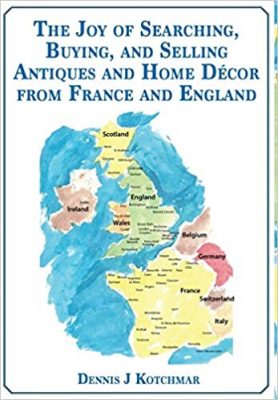
 If ever a love letter could be written in the context of a solid how-to guide in the antique business, Dennis Kotchmar has done a marvelous job in The Joy of Searching, Buying and Selling Antiques and Home Décor from France and England.
 The Goethe Book Awards recognize emerging new talent in post-1750s Historical Fiction. The Goethe Book Awards is a division of the Chanticleer International Book Awards (The CIBAs).