Kay M. Bates delivers an inspiring middle-grade reader focusing on a young girl who suffers a severe injury that takes her life in a new and surprising direction in B is for Baylee. Along the way, she faces opposition, ridicule, and challenges. Still, she discovers the importance of determination and the actual value of friendship and acceptance when life throws you an unexpected curve.
Twelve-year-old Baylee Harker plays first base in a Stoutland city league softball game when an errant ball strikes her. The unfortunate incident sets in motion a series of events that take her on a physical and emotional roller coaster ride of dealing with sudden vision loss and its life-changing repercussions. Between the hospital, emergency surgery, and subsequent visits with eye specialists who offer little hope for improvement, Baylee’s diagnosis: legally blind. Though she can see illumination and washed-out color with her right eye, she lacks visual acuity. The left eye offers fuzzy vision with black splotches across her visual field. Soon she’s wondering, “Will I be like this the rest of my life?”
At home, Baylee is a typical “tween,” but her blindness compounds frustrations. Bates presents loving, though sometimes over-protective parents and close-knit siblings who help Baylee adjust to the situation. Bates smartly delivers Baylee’s mix of emotions and allows readers to feel it all: angst, fear, and exhilaration. Baylee’s disappointed at the closing of a favorite taco eatery; she’s concerned about descending a staircase on her own, and her anger at the disastrous results in attempting to make mac & cheese drives the story forward. But it’s joining a family sledding excursion that revives her exhilaration for the outdoors.
Returning to school may be fun.
A return to school and the world-at-large soon has Baylee realizing the frailties of human nature. Comments from a hair-flipping, so-called friend Margaux like, “Poor thing” and “… just faking it,” or a tense but ultimately humorous encounter with a parking lot bully emphasize the lack of knowledge and often little respect towards physically challenged individuals. In counterpoint, encouraging comments from a teacher suggest that Baylee’s injury might lead to other opportunities. “Keep your chin up, stay tough,” prove well-meaning words with an advantageous edge. With the help of a compassionate braille instructor and classmate, a mentoring track coach, and newfound friends, Baylee learns to navigate both life’s literal and figurative hurdles as she works to regain the parts of her identity she lost along with her eyesight.
The story is heavy on conversational dialogue, which seems appropriately reflective of the subject matter. With limited vision, Baylee must adapt to a world where sound is now at the forefront of her life. Here a moment of sitting against an amplifier proves a stress reliever. She even turns her reliance on audio/verbal cues into a game by matching the voice of a person.
Bates drew on her own experience to write a story that focuses on the main character’s loss of sight. Bates herself once dealt with severe vision impairment due to rare complications occurring after eye surgery. She now has full vision.
While visually impaired individuals must face their unique journey, this book offers particular insight and perspective for those newly coping with such a sudden life change, as well as those around them. Triumphantly ”B” is for Baylee reflects not only the harsh realities of a blindness diagnosis, but it positively showcases the opportunity for hope and winning achievement.
”B” is for Bayleeplaced semi-finalist in the CIBA 2019 Gertrude Warner Awards for Middle-Grade Fiction.
Young readers with a penchant for math, science, and engineering are sure to fall in love with David Horn’s new Eudora Space Kid series. With the premiere story of The Great Engine Room Takeover, readers meet a precocious third-grader and her mad-cap adventures in outer space.
Eudora Jenkins lives aboard a multi-level Astroliner called the Athena and hopes to be its chief engineer someday. The Athena is the flagship of the Astrofleet, a science and defense force for the Planetary Republic, which comprises twenty planets working together to make the galaxy a better place for all living things. Early on, we learn that aliens adopted both Eudora and her older sister Molly. Their new Mom resembles a beautiful gray wolf from the dog-like species of the planet Pox, and their father, Max, looks like an octopus and hails from planet Pow.
Through an imaginative first-person narrative, this “most awesome girl” draws us into her space domain.
Looking for more than a typical childhood existence aboard this flying craft, Eudora’s latest desire is to figure out how to increase the speed of the Athena. After hacking into the spaceship’s PA system, Eudora’s enticing birthday party announcement works as a ploy to empty the engine room. Here she applies her formulas and makes adjustments at the computer terminal in an attempt to break the Astroliner’s speed record.
In Eudora’s funtastic, futuristic world, we meet all types of innovative technology and fabulous new friends.
For example, her pet drago named Bologna appears as a cross between a bunny and a dragon. Young readers will discover electropad devices that hold all the students’ books, notes, and work – and hear tales of exploding pumpkins that wreak havoc on a fuel storage chamber. Not only is this a book that fits in well with the STEM programs now in many educational curriculums, but the story quickly touches on an array of themes, from sibling rivalry and family variations to lessons about learning from our mistakes.
Laced with humor, Eudora comments to her audience, “And you thought your parents were weird!”
An opening illustration by Talitha Shipman sets the stage with a spaceship flying amidst a star-studded galaxy.
Readers will see lion and octopus-headed creatures and a being with Spock-like pointed ears. Details in the artwork throughout the book capture the extreme facial expressions of these spacecraft residents. Eudora’s gleeful look while destroying an asteroid at the push of a button changes to a disgruntled frown when the captain reprimands her. The final pages offer a creative word search puzzle, and the audience also learns that more cosmic adventures with Eudora are on the way.
Eudora Space Kid: The Great Engine Room Takeover will indeed win an audience among inquisitive, inventive-minded youngsters who like to push boundaries and reach for the stars.
—Readers Want to Spend Time Immersed in Other Permeable Realities
Add Fuel to Your Characters’ Fires
Always know the forces that shaped your main characters. And then give them inner demons to overcome, such as intense abandonment fears, or a lie they’ve been telling themselves. While many stories are fueled chiefly by external conflict, when internal conflicts are staged alongside external conflict mucking up things, the whole story gets more realistic and deeper.
Top-ranking fictional characters need to be uncomfortable most of the time. Better yet, miserable. Now, of course, your story can’t be a waterfall of tears and teeth-gnashing angst in every scene. That could lead to melodrama. But varying levels of misery should be trickling through causing tension, conflict, and uncertainty. And characters can be rattled, twitchy, discombobulated, awkward, uneasy, troubled and disturbed.
Tips and Tricks for Shaping Your Protagonists
One trick to increase tension is to keep track of the number of your scenes, then track how many feature your protagonist in some kind of discomfort. Aim for high percentages. Make your protagonist worry and fear the worst.
Misery can be writ large–he loves me; he loves me not. It can happen in high-stakes battles or life and death circumstances, royal rivalries, ugly divorces, or the murder of a loved one. Your character can be lonely, unloved, and unappreciated. And whenever possible, in over his or her head.
Years ago I studied psychology and sociology in college because I was planning to go into law and I wanted to understand why people turned out the way they did. It took a few years to realize that I needed to return to my first love, stories, poetry, and all things writing. But in one sociology class an instructor mentioned it’s likely that at least one out of three people won’t like you. This insight, true or not, stuck with me.
Growing up and feeling pretty insecure much of the time, I wanted people to like me and was easily hurt when they didn’t. With age that’s diminished, but of course, it’s not fun if someone dislikes you for no good reason, or a perceived hurt that didn’t happen, or for the many reasons humans just don’t get along.
In fiction, this is magnified to create conflict, pain, and troubles. ~ Jessica Morrell
Amplify
A few more tips.
Small miseries amplify larger ones. Protagonists cannot always be in top form, primed for the next challenge. Sap their strength, will, confidence, and resources thus creating more uncertainty. Shape obstacles that wear down and weaken characters.
Create insecurity–immigrants struggling to survive in their new country, business owners striving against impossible odds, a farm family trying to endure during years of drought, an unstable and volatile home life, grinding poverty that seems inescapable. Often these stories will showcase the protagonist’s main personality traits and growth.
Stir in emotional hardships. These typically come from your character’s connective tissue to his or her past. If your main characters don’t have baggage, they’re flat. Typically, your character’s fears or weaknesses will stem from trauma, failure, or a troubled or difficult past. And whatever the baggage, it must be relatable.
A few more ideas for your stories:
Createsituationaltroubles. Coming-of-age stories generally focus on the main character’s emotional growth, typically moving into adulthood. However, growth is never easy, andthe character is often forced into challenges beyond his or her maturity levels. And the lessons learned will always be hard, harsh, or scary. The Finch siblings inTo Kill a Mockingbirdare a good example of this.
Adult characters can be coping with bitchy, hormonal teenagers going through a bad phase, demanding, uncaring bosses, impossible deadlines, a bad news relative showing up on your protagonist’s doorstep looking for a place to crash—with a grimy, pathetic-looking toddler and an aggressive dog.
Classic Plot Devices
Classic plot devices can be the perfect setup for this. An example is a character moving into a new place–the new kid in school {Harry Potter and the Sorcerer’s Stone}, or the newly hired personal assistant {The Devil Wears Prada}, boss, police chief {Robert Parker’s Jesse Stone series} or sheriff.
Offred (known as June before she was captured trying to escape into Canada) in The Handmaid’s Taleby Margaret Atwood
Women are to be silent and are not allowed to read or be taught to read or write (only the Aunts are taught but only to keep control over the handmaids.)
Even the “blue Gilead wives” are not allowed to read or write.
Same for the ‘fish out of water’ scenario–the device the Back to the Future franchise exploited as Marty McFly moves around in time. So-called ‘fishes’ don’t know the rules or standards or the pecking order in the new environment. And definitely poor Arthur Dent of The Hitchhiker’s Guide to the Galaxy by Douglas Adams.
Hitchhiker’s Guide to the Galaxy protagonist, the last known Earthling – Arthur Dent
Your story might center around a Florida native taking a district attorney job in Alaska or a small town girl moving to Paris. Your character will always have a lot to prove and master, so naturally he or she can get off on the wrong foot and things can go downhill from there.
Which is where antagonists and secondary characters come into the picture to stir up trouble. It’s pretty simple: fictional characters shouldn’t get along. In fact they should clash. Often. The mayor doesn’t trust the new sheriff, the cop who’s been with the force for ten years and wanted the chief of police job is sabotaging the new guy, and the 911 dispatcher just doesn’t care for him because he’s a dead ringer for a best-forgotten ex. Now, of course, protagonists need friends and allies, but if he or she doesn’t have frenemies and backstabbers, lying witnesses, out-for-revenge enemies, and other antagonists you’re overlooking a major source of conflict. The story will flatten and fizzle without these folks.
Can you imagine Harry Potter without Draco Malfoy? Or Lord (He Who Shall Not be Named) Voldemort
Draco Malfoy of the Harry Potter Series – He enjoyed making Harry’s life miserable.
At the same time don’t overlook piling on smaller, everyday, annoying, makes-life-harder miseries. And never overlook the potency of physical hardships to boost tension: Sleepless nights or a shocking homicide case so there’s no time to sleep. Headaches, hangovers, thirst, hunger, sweltering heat waves, freezing temperatures, aching backs, old injuries acting up. Stir in claustrophobia, fear of heights, and never been comfortable in the dark. Pile it on.
Jessica Morrell is a top-tier developmental editor and a contributor to Chanticleer Reviews Media and to the Writer’s Digest magazine. She teaches Master Writing Craft Classes at the Chanticleer Authors Conference that is held annually along with teaching at Chanticleer writing workshops that are held throughout the year.
Keep writing, keep dreaming, have heart. ~ Jessica
Chanticleer Editorial Services – when you are ready
Did you know that Chanticleer offers editorial services?We do and have been doing so since 2011.
Tools of the Editing Trade
Our professional editors are top-notch and are experts in the Chicago Manual of Style. They have and are working for the top publishing houses (TOR, McMillian, Thomas Mercer, Penguin Random House, Simon Schuster, etc.).
If you would like more information, we invite you to email Kiffer or Sharon at KBrown@ChantiReviews.com or SAnderson@ChantiReviews.com for more information, testimonials, and fees.
We work with a small number of exclusive clients who want to collaborate with our team of top-editors on an on-going basis.Contact us today!
Chanticleer Editorial Services also offers writing craft sessions and masterclasses. Sign up to find out where, when, and how sessions being held.
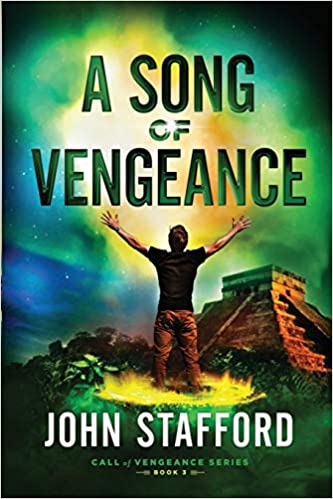
A Song of Vengeance: A Novel (Call of Vengeance book 3) by John Stafford begins right on the tail of where A Sword of Vengeance left off. In this novel, much like the two before, Stafford displays his talent for weaving in real-world individuals into his Global Thriller tale.
Reeling from the damage inflicted on the Forces of Darkness by Brady, the young American master of The Light and his compatriots, the Evil One seeks revenge. It is now 1980. The Temple Mount in Israel, now consecrated with Christ’s blood after Brady’s successful mission, literally vaporizes any soldier of the Darkness who enters its doors. At a meeting at the Temple Mount, Iranian loyalists—in this telling, Iran seems to be the headquarters of the Devil on Earth—receive instructions by the Darkness to hunt down Brady, capture or kill his wife, Michelle, and kidnap her unborn baby.
One of those at the meeting is a young Imam named Rouhani. Current events fans will recognize the name as the powerful former President of Iran. Also attending is the Banker, a treacherous Vatican priest who controls funds purloined from the Holy See used to fund Darkness missions across the globe.
A new agent of the Darkness emerges.
Meet Gudren Himmler, daughter of Nazi leader Heinrich Himmler, a historical figure who assisted Nazis on the run after World War II. In this book, she connects Nazis and anti-Israel Arabs. Among her many activities, she accuses Saudi Arabia of desecrating Mecca, which she hopes will bring about the fall of the Saudi family and its ties to the United States. She explains this to an Arab who will deliver her messages to the appropriate people and whose lover, unfortunately, winds up being a barbecued lunch for Gudren and her guest.
Such are some of the forces of evil arrayed against Brady and his friends. In this newest volume, quite literally, the Devil is in the details.
Meanwhile, back in Ohio, Brady and company now live on a fortified farm, with detailed plans for their protection that include both military-like fortifications as well as assistance from their Heavenly protectors.
For the first time in the series, Brady’s grandfather, Giovanni, one of the many ongoing characters in the series, helps Brady understand his role as the leader of the anti-Darkness forces. Giovanni spells out the historical war between the forces of good and evil. He directs Brady’s attention to recovering mystical stones that fell from heaven at the same time the angels fell. The quest for the stones becomes the main adventure in the remainder of the book. As the men ready for their journey, the Army of Darkness cooks up plans of their own.
In contrast to the Darkness followers, Stafford develops Brady’s circle of supporters with strength, mission, and clear focus of purpose.
Brady’s family expands as other people join their Catholic family, including growing support from the Mighty Men of King David, an Israeli militant group. The daughter of its commanding officer has now married one of Brady’s brothers. Marriages and details of rich family life take the edge off some of the novel’s more violent passages. There’s even a surprise visit at one of the weddings from a VIP. Since this is a Catholic-themed book, it’s not hard to guess who shows up.
All the books in the series relay credible details, whether in the construction of Brady’s fortified farm, military-style attacks by the forces of both good and evil, or acts of vitriolic violence by the Darkness. As the Devil wages war on human society and uses major historical events and figures to do his vile deeds, readers will be relieved to know that the Evil One may have met his match. Fans of Paranormal Global Thrillers will surely devour this series. Start at the beginning with A Prayer of Vengeance.
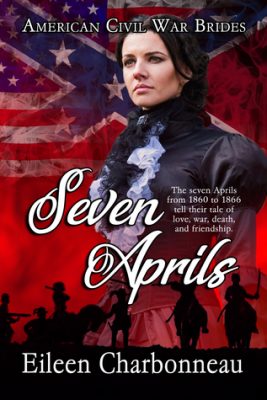
Disguised gender identities, warfare, and thwarted romance all play a role in this many-layered novel, Seven Aprils, by award-winning fiction author Eileen Charbonneau.
When Tess Barton, a hardscrabble farm girl, saves the life of a man attacked by a panther, she and he little realize how fated this encounter will prove. Ryder Cole, the man she saved, moves on, pursuing a medical career just as the United States seems destined for war. Intrepid Tess will move on, too, when she learns that her widower father sells her in matrimony to an old, brutish shopkeeper. A wise crone cuts Tess’s hair and garbs her in men’s attire. Reborn as Tom Boyde, who will soon, strangely, meet up with Ryder and become one of his “men,” conscripted into Lincoln’s armies. Tess/Tom shows promise as a medical assistant with some undeniable cooking skills, and together with two other conscripts, they make the team in the Union’s army hospital units.
Things change again for Tess when she and the others visit a brothel in Washington, DC.
The madam spies a young woman in Tess/Tom right away. She dresses and perfumes Tess and sends her to Ryder. As for Ryder, he’s not stopped fantasizing about the huntress “Diana,” who saved him from the panther. As this strange link develops, Tom helps Ryder write to his “sister” Tess since Ryder has feelings – for Tom – that can only be assuaged by the hope of meeting the young man’s female twin someday. Meanwhile, their sexual affair blooms. Diana/Tess will meet Ryder only in darkness, though, and Tom/Tess serves mysteriously as their go-between. When the war ends, Ryder, assuming Tom to have been killed, feels compelled to seek out Tess, who has meanwhile met the Underground Railroad founder, Harriet Tubman, and has more than one surprise for her former lover and comrade-in-arms.
Seven Aprils feels a lot like the mistaken identities and disguises found in a romping romantic Shakespeare comedy.
The plot, undeniably complicated, appears in seven phases – beginning in 1860 with Tess and Ryder’s first encounter and concluding in 1866. When done with subterfuge, the two can finally see each other in complete honesty. The novel abounds with what is clearly the author’s deep commitment to historical fact. Many women disguised their physic to serve in the war. The scenes of army medical care, savage as it had to be under the harrowing circumstances, are founded on real accounts. And the background of noted battles and locations is drawn from the annals of recorded history.
If the tale seems a bit too fanciful, how could Ryder not see that Tom was a female at some point in their mixing? Held together by the reader’s own wish to have it so, readers have a chance to sit back and enjoy the show. So long as Tess/Tom can sustain her/his deception, there will be a gripping war chronicle and a sensual love story on the boil. And in the end, Charbonneau deftly ties up all the threads, leaving an opening (this being Book 1) for more such dramas to play out in the future. Seven Aprils took home the CIBA Laramie Grand Prize for the Best Western Romance novel in 2019.
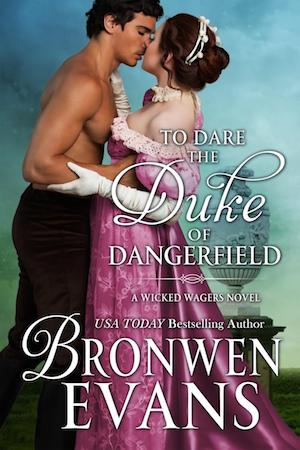
Lady Caitlin Southall wants to save her home in Bronwen Evan’s first novella in the Wicked Wager Trilogy, To Dare the Duke of Dangerfield.
According to her deceased mother’s will, Caitlin inherits the estate upon her marriage or her twenty-fifth birthday, whichever occurs first. Since she’s twenty-three with no suitors on the horizon, Caitlin’s estate falls under the care of her father, the Earl of Bridgenorth. When her father loses Mansfield Manor in a faro game to the Duke of Dangerfield, Caitlin’s hopes of independence seem lost.
Harlow Telford, a rakish devil, determined to see Caitlin’s father ruined, rejoices when he finally succeeds in divesting the Earl of Bridgenorth of his family home.
Harlow vowed revenge fourteen years earlier when Bridgenorth seduced his recently widowed mother and left her pregnant. His half-brother Jeremy had been paying the price of that betrayal his whole life. Harlow swore he would give Jeremy what should have been his birthright, Mansfield Manor.
But when the beautiful Caitlin marches into his home, demanding its return, Harlow’s captivated by her spirit. Caitlin’s undaunted in determination, and the two agree to a best of three challenges. If Caitlin wins, she gets her house back. If Harlow wins, he’ll get Caitlin in his bed. As the two face off against each other, they soon find much more at stake than they initially realized.
Harlow Telford may seem like the typical, lust-worthy hero, but there’s much more.
After suffering a broken heart at the hands of a cheating fiancé, Harlow swore off love. He spent his adulthood bedding women and gambling, but readers may suspect that Harlow possesses a conscience. Even while making the scandalous bargain with Caitlin, Harlow vows to propose marriage before Caitlin’s reputation falls into ruin. Though he should hate her for the sins of her father, he cannot ignore the lessons learned through watching his mother’s suffering at the hands of a rigid Victorian society.
Harlow sees the injustice of Caitlin not inheriting her mother’s estate and makes numerous plans to rectify the mistake without compromising the promise he made to his half-brother. Harlow cannot take advantage of anyone hurt by the very man who hurt his mother. He finds himself wanting her respect, something he never expected to need from a woman.
Lady Caitlin Southall, on the other hand, possesses an iron will and a salty disposition.
Growing up motherless with a derelict father forced Caitlin into a keen awareness of her financial situation. Her bravery and fire make her a fantastic character, especially when she slaps the arrogant, albeit perfect, face of Harlow.
Caitlan doesn’t hesitate to take matters into her own hands, even though that could mean destroying her reputation. Despite giving in to Harlow’s lecherous designs, she remains determined to find a husband who sees her as a true partner, not an heir-bearer. Her home means more than a place to live. For Caitlin, the manor embodies her security, a chance at financial independence from her father and husband. Retaining Mansfield Manor would prevent her from being sold off to the man who can fill her father’s empty purse.
A simple theme for the novel revolves around the idea of what makes a house a home.
Caitlin’s overwhelming desire to retain Mansfield Manor nearly becomes her undoing when she risks not just her reputation but also her life. Harlow’s love for his brother causes him to take revenge upon the man responsible for the unfortunate situation. His actions almost cost him the woman he loves. Both must learn that people make a house a home – not the stones with which it’s built.
To Dare the Duke of Dangerfield won First in Category in the CHATELAINE Book Awards, a division of the CIBAs, for Romance novels.
Now that you’ve completed your beautiful manuscript and have made several draft revisions, you are ready for the next move.
You know, the one that comes before starting the editing process.
A writer before having a manuscript overview terrified about what comes next for their work-in-progress. Don’t let this happen to you.
Now for some Real-Life Ruthless Editorial Terms:
Reconciliation or Go Separate Ways
Search and Destroy (SAD)
Cull and Extract
Wrench Out Passive Voice – Mistakes Were Made
Clichés, Platitudes, and Banalities – Oh NO!
Kill Your Darlings – Stephen King
Are You Listening to How You Sound?
Are You Listening to How Your Work-in-Progress Sounds? Really?
Continue reading to the end of this post if you would like more information about these scary but necessary editing tactics.
Some writers like to put their draft into a drawer for six weeks or so to allow themselves fresh eyes before endeavoring on one more draft revision as Stephen King recommends in his On Writing: A Memoir of Craft.
Here at Chanticleer, we see basically two camps that writers fall into.
Writers who rework every sentence before moving on to the next sentence trying to reach perfection. If this is you, (And you know who you are.) then we advise you to click on this link to read an article by the multiple award-winning author, Michelle Rene.
OR
Writers who bang out work and then think they are ready to publish with perhaps just a quick once over for typos. (And you know who you are.) Just upload to Amazon and you are done. Au contraire, mon ami!, as Q from Star Trek notoriety might say.
Q from the Star Trek Next Generation Deja Q episode – Of course, the excerpt is on YouTube.
Is this conundrum the same as the age-old question of writing style: Are you a plotter or pantzer?
No, it isn’t. Writing styles are deeply personal. What we are discussing here is the editing process for novels.
So, what’s a writer to do?
Emulate what has worked successfully for traditional publishing houses.
After your draft, but before you begin the editing process, have a manuscript overview (MOV) – an evaluation performed on your work by a professional editor. If you are with a literary agent, or if you work with a traditional publisher or acquisitions editor, this is the time to turn it over to them for their feedback.
We hear you, “Well, if I had a literary agent or was working working with a traditional publishing house, I wouldn’t need to read this article.”
If you don’t have any of these professionals on your team, then consider using a professional manuscript evaluation service such as Chanticleer’s. A manuscript evaluation will save you time and money and it will give you feedback about your work’s pacing, plotline, characters, atmosphere, P-O-V structure, dialog, and if you have a compelling story—one that will keep your targeted reader engaged.
Here at Chanticleer Reviews, we come across many published works that skipped over this vital step. The work might have been copy-edited and proofed before clicking the publish button, but the story just isn’t compelling, or it has a saggy middle, or the characters are flat, or dialog stilted, or there is no “voice.” It is almost impossible for the author to “see” these issues because the story lives in the author’s head. The authors’ who receive this feedback generally exclaim to us, “But I’ve paid to have it edited. There are no typos.”
No typos, does not a story make. However, authors and writers can create story magic. But it is difficult to get the story out of the writer’s mind and into words that communicate the “mind-film” that many authors see. This is where having an unbiased reading of your work with feedback will make your work shine. kb
Others know there are choices they made at the end of the book that will require changes earlier in the book (maybe it started in 3rd person and the moved to 1st person). Whatever your process is, this article will help your work shine!
The Editor – going over the ms with an MOV.
1. Reconciliation or Go Separate Ways
Getting Ready to Polish Now that Your Work-in-Progress has had a MOV
There’s no universal way to use writing tools. As always, remember these are recommendations that have worked well for many of our authors, though it’s okay if they don’t work for you.
Consider the Following for when you receive your manuscript’s MOV
First off, give yourself time after reviewing notes from your MOV editor/agent/publisher. After receiving feedback try the following:
Consider recommended changes from your second pair of fresh eyes. It is good to keep in mind, that each one of the readers who decide to read your published book will be reading it with fresh eyes also.
Address issues. The editor will have made suggestions where needed. Deal with the biggest issues first.
Save a clean draft of your copy where the suggested changes don’t stand out. (Of course, you’ll want to save one where they do stand out as well, just in case.)
Wait two weeks.
Revisit the work. Ask yourself if anything stands out as odd or a change in voice.
And, yes, sometimes, we do receive a ms that is ready to move on to either a line-edit or a copy-edit. It does happen. If this is the case, won’t you breathe easier knowing that it is ready to invest editing and shining.
Rarely will suggestions from professional readers and editors let you down–just see the difference yourself!
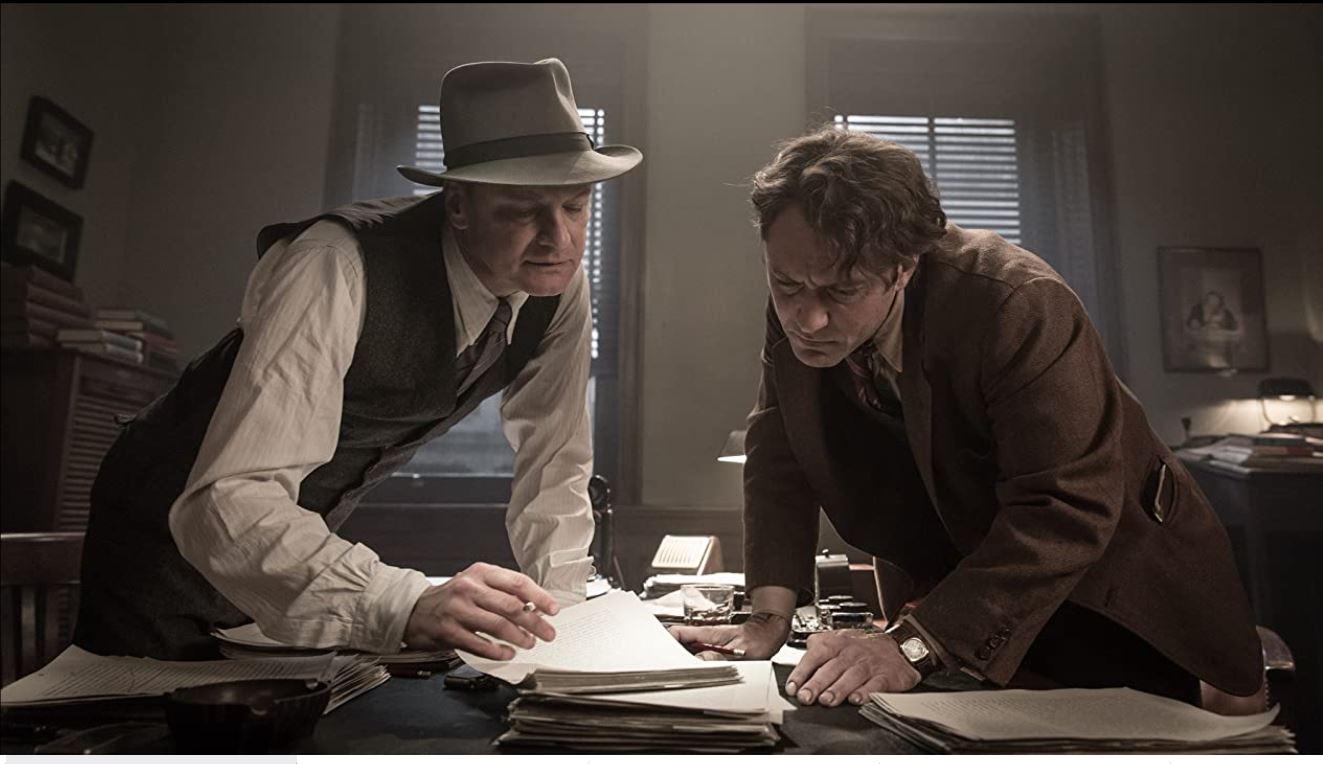
The Editor film is based on award-winning book Max Perkins: Editor of Genius by A. Scott Berg. “Max Perkins discovered Ernest Hemingway and F. Scott Fitzgerald. But he never met anyone like Thomas Wolfe.” The film’s tagline. Yes, even great authors such as these benefited from working with an editor.
When you are satisfied that you have a compelling story—the work has had a manuscript overview and then you have reconciled the w-i-p with the advice given, it is now the time to begin the Self- Editing Process! (Do the following before line editing or copy editing.)
2. Search and Destroy (SAD)
When we’re inspired by outside work, we love to tell you about it. The best line editing tools we know about come from Brenda Miller and Susan Paola’s book on creative nonfiction Tell It Slant, which features clear and direct steps to make your writing stronger. First, identify all your “to be” verbs. If you can think of a comfortable, easy replacement, use it. Obviously, not all of them need to go (just glance through this article and you’ll see plenty), but a “to be” verb, while almost always the easiest choice, is not always the best choice.
For example, here’s a piece of the short story Medusa by David Beaumier. First, with “to be” verbs shown in bold:
She isn’thappy about it, but she had beenencouraged to join Visitation to help people, not because it waspersonally comfortable for her. So she issent into decontamination, followed by the sound of a seal behind her as the hermetic vacuum in front of her isopened. Her hair isonly a little fluffed up by the experience, and iseasily coiffed back into place after the blast of ionization that would bedeadly to any foreign compounds in the air.
Sometimes fluffier hair can be dangerous.
And now revised without the repetitive verb choice:
She doesn’t like it, but she joined the Visitation to help people, not for her own personal comfort. So into the decontamination room she goes, followed by the locking of one hermetic seal behind her and a second one in front. Her hair only needs to be patted down a little bit after the blast of ionization that should kill any foreign compounds in the air.
3. CULL and EXTRACT
Second, find your adverbs and adjectives. These can be the condiments and spice of your piece that really give it life, but too much mayonnaise is never a good thing, so look at each of them and see if there’s a weak verb or noun that’s being propped up by them.
Hopefully someone has a napkin
Consider your proportion here, too. In one YA urban fantasy dredged up from the out of print pile was this unforgettable villainous dialogue spoken to the protagonist: “‘I’ll kill your whole family,’ he hissed maliciously.” While the intent is clearly to be evil, we can also see that the author didn’t trust the reader to understand that the villain wasn’t very nice.
Yes, evilly gnashing malignant teeth angrily with malintent
4. Wrench Out Passive Voice
The last suggestion from Miller and Paola is to look for passive voice, often indicated using “have” or “had.” A favorite trick for finding passive voice is to see if you can add “by zombies” to the end of the sentence. Like the previous rules, knowing why we use active and passive voice is important. Active voice tells us who does what to whom. Passive voice tells us what actions are done to whom, but not necessarily who did them.
Looking to get more weasel words? Check out this article here by Jessica Morrell on decluttering your sentences.
For a great example on passive voice, see this video below. (It is non-partisan, we promise.)
5. CLICHES, PLATITUDES, and BANALITIES — Oh NO!
Taking Advice from the Best: Jessica Morrell – Top-Tiered Developmental Editor
Jessica Page Morrell
Those who attended VCAC21 will know, Jessica Morrell is one of our favorite contributors. In her two workshops, Jessica goes deeper discussing the idea of “junk” words for writers. Maybe you’ve avoided all the pitfalls so far, but do you notice your characters do a lot of the following?
Jessica’s advice on eliminating junk words can be found on the link below:
Notice how all of those are also adverbs? Keep an eye on your work!
6. KILL YOUR DARLINGS and TOO MUCH EXPOSITION – TMIF
Show vs Tell
Showing and telling goes well with the debate about active and passive voice. In my mind, there is almost no writing rule more contentious or less understood than the rule that writers should always show rather than tell. Dialogue is often the heart of showing, but be careful! Occasionally dialogue can sneak in as a form of telling when it’s being used to explain something the characters probably already know for the sake of the reader.
Another video on the potential pitfalls of too much exposition and when dialogue tells too much. TMIF.
We dare you to see just how long you last watching Too Much Exposition. (Kiffer lasted about 30 seconds)
Go ahead, give it a try. We double dare you.
So how should we define Show and Tell? Well, Showing is an example of narrative scene—something happens in real time! Meanwhile, Telling is an example of narrative description where there’s either a moment of summary or interiority, something that probably isn’t happening in real time. Like passive and active voice, there’s a time and a place for each.
Consider the structure of your work. Has there been quite a bit of showing happening as characters flit from scene to scene? Even in a thriller, the reader will need a moment to rest, to have the narrator examine the main character’s interiority and explain a little bit of the backstory or the connection the hero makes just before solving the mystery.
The moment where everything clicks into place often isn’t a show, but a tell, directly informing the reader that the most important discovery of the book has been made. That lets it happen fast rather than laboring to show each and every scene.
We are quite proud of the articles on our website and to be a leading resource for writers, and you might also like some of what these websites say about writing craft:
The last secret here is one of the most useful things we’ve heard of for any writer or editor, and that is read your work aloud. You can ask a friend or loved one to do this for you, or you can find a screen reader that will take you through your story, but words always sound different when they’re vocal vibrations rather than fixed to a page.
Recording yourself can also let you play back your story and, no you do not need a fancy microphone like this.
Reading aloud, especially for dialogue, can help you better understand your tone, and it helps you find where words may have been repeated more than necessary. Sometimes, especially if writing a play, it can help to highlight the piece with different colors based on whose speaking. If there’s an emotion that should be conveyed in the story, assign colors to each emotion and highlight lines with how they should land. Then, while reading it aloud, you can check to make sure that the assigned tones fit.
Jessica Page Morrell has an excellent article on Glissando And Wordcraft you can read here.
If you’re looking for voice recording software beyond Voice Memos on your phone, consider the following programs:
In Conclusion, Remember that the Work is Always Yours
In the end, remember that you are the author of your work, which means you get final say. Peer review is excellent, and, as said above, it can be helpful to practice accepting all feedback and then reading your work after you’ve given it some space.
Remember, the earliest time we recommend submitting your work to one of our Twenty-Three divisions for the Chanticleer International Book Awards here or for a much sought after Editorial Review here is once you’ve reached the proofreading stage of your manuscript. Again, that’s the earliest we recommend sending your work in.
For further reading on what we’ve said in the past at Chanticleer, check out parts one and two of articles written by Jessica Page Morrell here and here, plus a bulleted list of tips she put together here.
Looking to demystify even more of the editing terminology? Learn about it here from Kiffer Brown herself.
Chanticleer Editorial Services – when you are ready
Did you know that Chanticleer offers editorial services?We do and have been doing so since 2011.
Tools of the Editing Trade
Our professional editors are top-notch and are experts in the Chicago Manual of Style. They have and are working for the top publishing houses (TOR, McMillian, Thomas Mercer, Penguin Random House, Simon Schuster, etc.).
If you would like more information, we invite you to email Kiffer or Sharon at KBrown@ChantiReviews.com or SAnderson@ChantiReviews.com for more information, testimonials, and fees.
We work with a small number of exclusive clients who want to collaborate with our team of top-editors on an on-going basis.Contact us today!
Chanticleer Editorial Services also offers writing craft sessions and masterclasses. Sign up to find out where, when, and how sessions being held.
Janice S. Ellis, Ph.D., introduces the journalistic theories of Walter Lippmann in her new non-fiction work, Shaping Public Opinion: How Real Advocacy Journalism™ Should be Practiced.
Walter Lippmann, considered one of the foremost journalists in the field over the last 100 years, was a mentor in absentia of Dr. Ellis in the art of advocacy journalism. During Lippmann’s 40+ year career, his columns were syndicated in over 250 newspapers nationwide and over 25 other international news and information outlets. Lippman focused on the ethical dissemination of information, especially about communities, society, and the world. A theory, which Dr. Ellis calls Real Advocacy Journalism™.
Real Advocacy Journalism™ theory pertains to foundational behavior and ethical standing for those who report on, translate, and share information with the masses. This theory identifies the tension between individualism and collectivism, the private sector and public sector, the ruling elite, and the dormant masses.
Real Advocacy Journalism™ eschews demagoguery and tribalism for a belief that reason, logic, facts, truth, and clear graphic language are the most effective instrument of public persuasion.
Remarkably well researched, Dr. Ellis shows throughout the book how Lippmann identified challenges to factual sharing of information and how he spoke to the importance of choosing words wisely.
Three tasks every journalist must consider in the pursuit of Real Advocacy Journalism, 1—separate words and their meanings in order to disentangle complex ideas, 2.-be effective at creating a visual picture to explain the words and concepts used, and, 3.-have a good understanding of the traits and characteristics of the target audience.
Lippmann knew the impossible task of considering everything that the typical listener may utilize in their life as a filter of information. As the audience grows, the number of common words and references diminishes. The information becomes more abstract, lacking a distinct character of its own. This phenomenon leaves the general audience to interpret the message as they see fit, not necessarily equal to the original information. Age, race, gender, social standing, mood, and “his place on the board in any game of life he is playing” inform how information is understood. The journalist must set the highest goal to clarify, evaluate and draw conclusions for readers and listeners too preoccupied or too removed from the actual events to judge clearly for themselves.
The problem occurs when the constant feed of partial information is based on opinion and not wholly on facts.
Information in its most proper form may be perceived as dull and uninteresting. To gain viewers, “opinion news” sources have become increasingly personal and deliberately dramatic to stop the viewer from tuning out or turning the channel. Not having the time, energy, or understanding to draw their conclusions, the listener accepts this partial information as truth.
Ellis cites Robert O. Anthony as saying, “The secret to Lippman’s ability to reach such a wide audience lay in his expert understanding of the information, his reasonableness of temper, his complete honest and profound attachment to the principles of liberty.”
Lippman’s “survivors,” Kennedy, Schlesinger, and others claim Lippman taught them how to think.
He perfected a rare ability to impose verbal order on chaos. Even when wrong, corrected, or later expanded on, the goal was not to be the only voice but to be like “the village light post.” Ellis’ book exposes the dangers of “opinion news” and how very counterproductive “celebrity journalism” truly is, as it puts profits and popularity (ratings) over actual truth.
Ellis encourages readers to research and discover the meaning of the words being used to grasp the whole picture of what any news source presents. Shaping Public Opinion: How Real Advocacy Journalism™ Should Be Practiced won Grand Prize in the 2019 CIBAs, Nellie Bly Awards for Longform Journalism.
Set in the Pacific Northwest in the 1970s, Joel Emmanuel by JP Kenna rewards its readers with the story of a boy coming of age and how he understands the changes around him. Kenna’s style echoes the English novels of the 19th century.
Young Joel Emmanuel Webber, named for a Wobbly executed long ago in 1915, lives with his mother, Nance Raindance, in a cabin on the Skagit River near Seattle before it was a technopolis. Their world is antiquated even for the 1970s and defined by farming, fishing, and basics like a woodburning cookstove, kerosene lamps, and candles. Joel calls his mother by her given name, doesn’t know his father, and lives an open life free of school and, even occasionally, clothing. He is sensitive and easily succumbs to tears.
His small world includes a nearby septuagenarian farmer who is the cabin’s landlord; an Indian from “the Rez” named Billy Sampson and his daughter; and Bruce, a suitor of his mother’s who has become the town’s hustling (and overextended) entrepreneur. This unique upbringing affects how Joel sees the world, as he comes face-to-face with adult matters, while other children his age are happy and oblivious to the difficulties of adulthood.
As the world away from rural Washington slides from President Carter to President Reagan, young Joel’s life changes when his actual father, George, shows up unexpectedly at his ninth birthday dinner.
Of course, George has past transgressions, as we all do. Still, the boy bonds with his father, assisting in his coal business while his mother’s relationship with Bruce becomes complicated. The family takes an apartment in town as Nance moves from selling vegetables at a roadside stand to helping run Bruce’s real estate office. Joel is content with his time on boats and bicycles and at ease with hard work such as splitting wood. However, the interactions between the men in his mother’s life warp his understanding of the world.
Bruce’s precarious financial position – or perhaps his non-Native capitalistic thinking – leads him to repossess his old fishing boat from Billy’s cousin Gerald. The repercussions of this one decision pit Native Americans against townies, and forces Joel to choose sides in the subsequent murder trial.
Kenna weaves his literary suspense like a true master, making farms and equipment come alive, all while using them to represent the flow of change and time. Each place, each scene, each vehicle, and each tool is imbued with meaning. Kenna’s characters have strong relationships with their place in the world, which makes it easy for the reader to internalize. In fact, Kenna captures a way of life that seems impossible today, focusing on the human story and systems of the time, and makes them universal and accessible to contemporary readers.
J.P. Kenna’s story of changing and butting cultures beats at the heart of Joel Emmanuel, and readers will surely enjoy it. Joel Emmanuel won 1st in Category in the Somerset Awards for Literary Fiction and the Clue Awards for Suspense Fiction.
The protagonist and all-around decent guy, Boone Daniels, is in a heap of hurt in JW Zarek’s new Young Adult novel, The Devil Pulls the Strings.
One would think being plagued by an evil spirit wendigo since age six would be enough inconvenience to last a lifetime, but when Boone jousts with his best bud at a Ren Faire and accidentally deals a mortal blow, the hurt he experiences suddenly lands on a sliding scale of 1 to 1 million. And Boone Daniels becomes a millionaire, so to speak.
No ordinary guy, Boone makes a living as a handyman and swashbuckling knight at Renaissance Faires around Missouri. He’s also uniquely gifted with a form of eidetic memory coupled with synesthesia. What’s that? Simply put, synesthesia allows people to see colors and taste things when they hear music – and an eidetic memory allows folks to memorize whatever they’ve seen or heard one time. But that’s not all. Boone can time-travel, make friends with almost any feline or shapeshifter, and convince a certain immortal he’s worth more as an ally than a snack. No kidding, Baba Yaya loves human meat.
After wounding his best friend, Boone promises to fill in for him as lead vocalist in the band, The Village Idiots, for a major gig in New York City.
The gig caps off the Dragons and Nymphs Annual Charity Ball – a blood drive. (The irony of this will make readers chuckle.) After the band plays, a mysterious score of music by Niccolò Paganini will be played by the best violinist of the time, who also happens to be Boone’s fast-friend-confidant-maybe-girlfriend-we’ll-have-to-see, Sapphire Anjou. Sapphire, the French Ambassador’s daughter, has connections that tie her deeply to the Lavender and Rose Society. There’s more to these societies. The Dragons and Nymphs want nothing but destruction and chaos, while the Lavender and Rose Society maintain order and work to keep people alive. And both societies seek the magical score. You see, no one actually has the Paganini sheet music. It’s a mystery and plenty of people die and get maimed in the pursuit of the piece, but finally, just in the nick of time, Boone and Sapphire obtain it.
What’s so special about this piece of music?
It’s magic, of course! Whoever plays the Paganini score can summon anyone they want. The Dragons and Nymphs want it to summon Ambrogio, their Vampire All-Father, who now resides in Hell. One immortal wants it to free her sister, who’s been caught in a pocket universe (you’ll have to read the book to figure out what that means). And then there’s the nefarious all-around baddie, Ambrozij Sinti, humiliated as a young boy, who now seeks his revenge by using the Paganini piece to summon the Devil himself and destroy the world. The stakes are high, and there’s no time to lose.
Told in first-person by hero Boone Daniels, J. W. Zarek spins an epic fantasy with tons of action, adventure, and folklore.
His writing peppers readers with alliteration in trios, that serve to tighten phrasing to speed up action scenes, evoking visceral responses. Readers feel the panic Boone feels as the world closes in around him. Does it work? Like a charm. Almost perfect, readers will surely love this first in series, epic fantasy world and fall in love with Zarek’s leading man because of it.
Somewhere between The Librarians meets The Magicians – mixed with the flawed hero archetypes of Jim Butcher’s Harry Dresden and Harold Hearne’s Atticus O’Sullivan, Zarek’s hero brings fans of the genre something new to dig their teeth into – and that’s an excellent thing. Fans will be thrilled to learn that the novel will release in Graphic Novel format soon!










 Disguised gender identities, warfare, and thwarted romance all play a role in this many-layered novel, Seven Aprils, by award-winning fiction author Eileen Charbonneau.









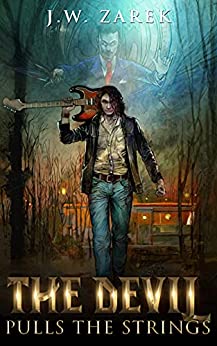
 The protagonist and all-around decent guy, Boone Daniels, is in a heap of hurt in JW Zarek’s new Young Adult novel, The Devil Pulls the Strings.