Author: Skip Ferderber

  • Putting More Character into Your Characters – by Skip Ferderber – a Chanticleer Writer’s Toolbox Post

    Putting More Character into Your Characters – by Skip Ferderber – a Chanticleer Writer’s Toolbox Post

    Maybe it’s just me, but I often find myself lost when it comes to keeping track of multiple characters in a book I’m reading.

    Sometimes I’ll find myself about two-thirds through a novel when someone named Betty or Steve pops up in a conversation with my protagonist with an important piece of detail about the plot or a character development. Instead of taking in that information and using it to hurtle further into my novel, I find myself wondering who that character was, whether I’d seen him or her before and feeling a bit inadequate and frustrated that I can’t remember anything at all about the character.

    What I should consider instead is getting annoyed at the writer for not making the character memorable enough.
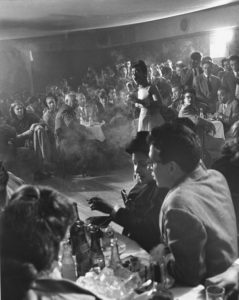
    Not every character in a book carries the same weight. You have your protagonists, your supporting cast, and possibly a boatload of tertiary characters. When it comes to the first two groups, you probably labor hard at making them distinguishable. But what about those pesky extras, the ones who are roughly the equivalent of chair-fillers in a night club in a ‘30s movie? You can’t waste your precious words on giving everyone a character workup . . . or can you?

    Consider this a good rule of thumb when you write about any character, large or small: If they’re in your book, you’ve got to know them well enough to tell your readers about them.

    “If you’re going to have a character appear in a story long enough to sell a newspaper, he’d better be real enough that you can smell his breath.” ~ Ford Madox Ford

    In an otherwise excellent novel I read recently, a career woman in her late 30s is talking at lunch to three girlfriends from her high school years. It was clearly meant as exposition about the woman, her struggles as a high-school non-entity to her present-day role as a prominent society all-star with three people from her past giving some much-needed context to that transition. But the author uses them as props. She might as well have been talking to three empty chairs.

    She might has well been talking to three empty chairs…

    If one of them had looked disbelieving at their friend, exchanged glances with each other, hastily taken a sip of wine, idly played with her silverware, etc., the scene would have had greater weight. If the central character had noted any physical differences from each or any of her friends, had an intense one-on-one exchange with any of them, turned that small discussion into a more personalized exchange, I would have known more about how the protagonist functioned.
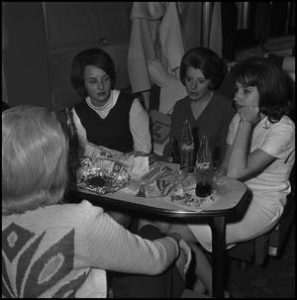
    All I can recall in retrospect is that four women had lunch.

    So much can be done with characterization to make even the smallest “extra” memorable. One of my favorite examples comes from Daphne du Maurier’s “My Cousin Rachel.” As Philip travels to Tuscany to visit Ambrose, his troubled benefactor, he sees Italy not as a festive but as a sad, decaying land.

    He sees a young woman with a baby in her arms, apparently a beggar. Instead of using her clothes to show her situation, du Maurier writes,

    “She was young, not more than nineteen or so, but the expression on her face was ageless, haunting, as though she possessed in her lithe body an old soul that could not die; centuries in time looked out from those two eyes, she had contemplated life so long it had become indifferent to her.”

    Then she is gone. Poof!  But that brief moment on which she appears on du Maurier’s stage is a memorable detail in moving the story and its dark mood forward.

    One way to think about how you enhance your characters, large and small, is to consider the direct and indirect tools every writer has at hand.

    Direct tools are the most obvious: a person’s looks, clothes, their home, their family, their choice of music, books, the food they eat, etc. Indirect tools may include the way they look at someone (e.g., eyes narrow or open in pleasure or dismay), how they wipe their mouth after eating, a speech characteristic such as a small pause or a stutter. Their speech, how they approach their read, listen to music or watch movies, the way they sit, awkwardly gesture, lightly tighten their lips when they hear something they don’t like, a distracting memory . . .

    Your implementation of these tools will be important as you develop your story. It will help you elevate even the most mundane tale and make for a more enjoyable experience and hopefully increase your readership.

    It’s always worth your while to read the works of well known writers to see what characterization tricks they employ. But beware the trap of depending on them as a substitute for your own imagination. The maxim about writing itself being the only way to learn writing must be your truth. Try, fail and rise again. It’s the job, isn’t it.


    About Skip Ferderber 

    We are honored and proud that Skip is vital member of the Chanticleer Team of Professional Reviewers.  He has been a staff writer  for The Los Angeles Times, editor at Millimeter —a magazine that specialized in motion picture and television post-production, and has worked at several LA magazines during his career.  He is also a contributor to Geekwire, Puget Sound Business Journal, Sound Publications, and other Seattle-based media outlets.

    When not reviewing for Chanticleer Reviews & Media, Skip works on his second novel. He is an avid and intrepid traveler who has visited more than 20 countries including mainland China, Nepal, and Brazil with a journalistic eye for detail and subtext.


    HANDY LINKS to CHARACTER DEVELOPMENT Articles in the Chanticleer Writers Toolbox Series:

    ESSENCE of CHARACTERS – Part One – From the Jessica Morrell’s Editor’s Desk – Writer’s Toolbox Series

    CREATING UNFORGETTABLE SECONDARY CHARACTERS – Part Two of ESSENCE of CHARACTERS from Jessica Morrell’s Editor’s Desk – Writer’s Toolbox Series

    MINOR CHARACTERS – the SPICE of FICTION – Part One – From Jessica Morrell’s Editor’s Desk – Writers’ Toolbox Series

    MINOR CHARACTERS – the SPICE of FICTION – Part 2 From Jessica Morrell’s Editor’s Desk – Writers Toolbox Series

    CHARACTER NAMES are SIGNIFICANT in FICTION – Part Three: LANGUAGE and NAME-CRAFT in WRITING FICTION – a Chanticleer Writers Toolbox Blogpost by Jessica Morrell

    Did you know that Chanticleer offers editorial services? We do and have been doing so since 2011.

    And that our professional editors are top-notch and are experts in the Chicago Manual of Style. They have and are working for the top publishing houses (TOR, Macmillan, Thomas Mercer, Penguin Random House, etc.) and award-winning independent presses. If you would like more information, we invite you to email Kiffer or Sharon at KBrown@ChantiReviews.com or SAnderson@ChantiReviews.com.

    Click here to read more about our Editorial services: https://www.chantireviews.com/services/Editorial-Services-p85337185

    A great way to get started is with our manuscript evaluation service. Here are some handy links about this tried and true service:

    https://www.chantireviews.com/manuscript-reviews/

    We work with a small number of exclusive clients who want to collaborate with our team of top-editors on an on-going basis. Contact us today!

    Writer’s Toolbox

    Thank you for reading this Chanticleer Writer’s Toolbox article. 

    We encourage you to stay in contact with each other and with us  during this stint of practicing physical distancing to prevent the spread of COVID-19 — especially at this time of re-opening.

    Let us know how you are doing, what is going on where you live, how are you progressing on your writing projects.

    I invite each of you to join us at The Roost – a private online Chanticleer Community for writers and authors and publishing professionals. You are welcome to email me for more info also.

    We are active on Facebook, Twitter, and Instagram. You can find us by using our social media handle @ChantiReviews

    Minimize physical contact! Maximize social connecting!

    Be well. Stay safe. Keep writing! Keep Creating! 

  • SOLAR REBOOT by Matthew D. Hunt – Post-Apocalyptic Science Fiction, Action/Thriller, Dystopian Fiction

    SOLAR REBOOT by Matthew D. Hunt – Post-Apocalyptic Science Fiction, Action/Thriller, Dystopian Fiction

    There’s a lot about life on earth that we take for granted. Most of us go about our daily lives, but what would happen if the sun shot out a gigantic solar flare. Would we survive? What would happen to us?


    In Solar Reboot, a giant solar flare destroys the world’s power grids, disrupts the Internet, television, and radio communication, and is an all-around nightmare for air traffic controllers. Add tidal waves and gigantic storms to the mix, and it becomes evident that life on earth will change profoundly.

    Alex Robinson, his wife Cameron, and daughter Piper get to find out how tough it will become. On a trip to New York City, Alex and Piper expect to be home in Seattle in a few days. For Alex, a park ranger, flying back will be a relief from the hustle and bustle of Manhattan. But when the sky turns purple, power disappears. Internet and broadcast communication all but ceases, and there are multiple reports of planes crashing to earth all over the planet, Alex quickly discovers the only way he’ll be able to return home will be to drive. It turns out that even driving is its own form of hell.

    Meanwhile, Cameron in Seattle is also experiencing the effects of the solar flare. An ER nurse with military experience, she’s urged by her husband to pack up and leave the city with as much food and medical supplies as possible. She has indulged Alex’s survivalist leanings with some skepticism, but as tension mounts at home, she wonders if he may not have been right. Finally, she decides to leave for their well-stocked mountain cabin, accompanied by her older next-door neighbor, Bettie, who decides that life in the mountains might be safer than dealing with a frightened, angry citizenry at home.

    Life is difficult for both halves of the separated Robinson family. There is no easy way to find a way home for Alex and Piper. Driving becomes undependable. Picking up rides, finding horses, and even back-packing become the only means they have of completing their journey. However, that doesn’t help when blinding rainstorms wash away roads, bridges, and, on more than one occasion, the vehicles they’re using. If that weren’t bad enough, other people whose lives have been disrupted often turn ugly as they forage for food and supplies, hunker down with weapons to protect their hoards and homes.

    Of equal importance is Piper’s diabetic condition. It’s not a problem in society as it once was, but what happens when the insulin she and her father carry runs out and pharmacies are virtually all closed?

    Cameron’s trip to their mountain cabin community might seem to offer her a more comfortable life. Don’t count on it. When she and Bettie reach the mountains, they find contentious, sometimes dangerous people. Some would love to invade their community and others inside their boundaries, intent on doing things their own way. Some even kill to get what they want. She becomes the de facto leader in the compound and forced to make difficult decisions of life and death.

    Hunt has delivered a solid punch to our collective solar plexus. The pressure doesn’t let up as this separated family use their physical and mental resources to reunite, each half fighting against the elements and their fellow human beings to survive until they can be together. While some might consider this a science fiction novel, it is grounded in life as we know it makes it more of a book on survival. Solar Reboot is a testimony to the human spirit under virtually impossible conditions, and a tribute to people’s ability to survive under the most challenging conditions.

    Solar Reboot won First Place in the 2018 CIBAs for Science Fiction novels.

  • A FEMALE DOCTOR in the CIVIL WAR by Richard Alan – US Historical Fiction, Civil War Fiction, Female Doctors Civil War

    A FEMALE DOCTOR in the CIVIL WAR by Richard Alan – US Historical Fiction, Civil War Fiction, Female Doctors Civil War


    Imagine a fearless, hard-as-nails contract surgeon hired by the Union Army who often works 48-hour shifts in battlefield medical tents amputating limbs, healing previously inoperable gut wounds, sewing up children’s hare lips, and diagnosing what we now call PTSD as critical in military patient care as patching physically wounded bodies.
    Meet Dr. Abby Kaplan. And yes, she’s a woman.

    A native of the Pacific Northwest, Dr. Abby stands six feet tall and exchanges her dresses for breeches, totes a gun on her hip, engages in military defensive maneuvers, and is wounded multiple times for her efforts. Dr. Kaplan takes no guff from anyone and uses the language of soldiers appropriate to the situation. In a time when men are in charge and women are not, she wins the respect of her male colleagues in the most gruesome medical cases, winning over even those who could not fathom a woman examining a man’s most private parts.

    Even more remarkable, despite the prejudices of her times, she finds ways to celebrate her Jewish heritage and even finds a man unafraid of her enough to become her occasional lover, but virtually only at her request.

    A woman as strong, complex, and dedicated to medicine probably existed somewhere during that time. A small number of women doctors did work on soldiers during the Civil War. Richard Alan develops his lead with guts and gumption, so much so, that readers will likely fall in love with Dr. Kaplan.

    A Female Doctor in the Civil War pays little attention to romance or sentimentality. Dr. Kaplan’s issues in pre-suffrage America are more about stopping male prejudice from interfering with her work than self-conscious screeds about being a female in a man’s world. We learn little about her past. Her more reflective moments are about the medical debacle she sees as she stitches and saws and mends the broken bodies that fill her medical tents, as well as her reflections on how much more the minds of these soldiers need to be treated during the war.

    When she does find a lover, he is a momentary respite from the battlefield, not a “rescuer.” Their discussions about the differences between men and women are by two adults who respect each other. Others in that period of our history may see Dr. Kaplan’s sex and religion as problems. She sees them at worst as inconveniences that sometimes prevent her from doing her job as well as she thinks she can. Her one weakness, the nightmares that keep plaguing her after her work is done, are those any adult would suffer after working in the carnage she witnesses that is her life.

    In other words, Dr. Abby Kaplan is a strong, capable, and uniquely modern physician working within the social and medical limitations of her time. She is there to do a job only a handful of doctors have the stomach to undertake.

    A Female Doctor in the Civil War won First Place in the CIBAs 2018 Laramie Awards for American Fiction.


  • POSTHUMOUS by Paul Aertker – Children’s Death & Dying Books, Children’s Books about Death, Grief & Bereavement, Children’s Books about Libraries & Reading

    POSTHUMOUS by Paul Aertker – Children’s Death & Dying Books, Children’s Books about Death, Grief & Bereavement, Children’s Books about Libraries & Reading

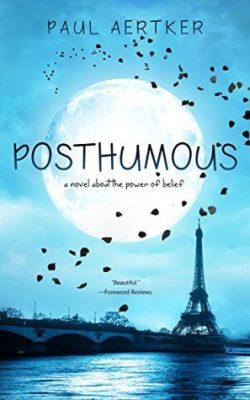
    Can a book about a loved one’s death be life-affirming and uplifting? If it comes from the award-winning, middle-grade author, Paul Aertker, the answer is a resounding yes.

    Sometimes, occasionally, life is perfect. So it is for 12-year-old Ellie Kerr who lives with her mother and father in a Paris apartment with a view of La tour Eiffel and attends an international school. Her wealthy, well-connected father manages the vast financial interests of a former King of France. Her talented, glowing mother, a writer, has an ambition to see her little novels called “Explore the World” published. The household is completed with Munda, their Au pair/nurse from the French West Indies whose charm and worldliness adds additional warmth to the already close family.

    A perfect life indeed, until the mother is diagnosed with incurable ovarian cancer.

    From the beginning, we know about Ellie’s mother’s condition, but this is not what the book is about. Instead, it’s the story of how Ellie deals with her mother’s illness and her commitment to seeing her mother’s books published posthumously, a promise that is central to the strength and wisdom of Paul Aertker’s latest middle-grade novel.

    After the death of her mother, the family moves from Paris to the other side of the Atlantic. Ellie’s mission to get her mother’s books published become central to her ability to heal from the devastating loss. Few words are wasted on the process of healing itself. Aertker focuses his attention on Ellie’s quest to recover her mother’s books from a password-protected computer.  Thankfully, she doesn’t have to do this alone. The friendship from Ellie’s classmates in her new school helps her find the courage to get the book published. This is ultimately a celebration of one mother’s life and the fire she lit in the mind and heart of her remarkable young daughter.

    Reading about the death of a loved one, much less writing about it, can be painful. Posthumous succeeds admirably in its depiction of that process by telling it straight-forward with little gush or unwarranted drama. Aertker tells Ellie’s story with exactitude and dignity, honoring his audience with the handling of a very difficult subject. The details of how, and how well, the family copes with the loss of life are keenly drawn in a manner that celebrates the life of the mother while pointing out the path through life that her daughter will follow.

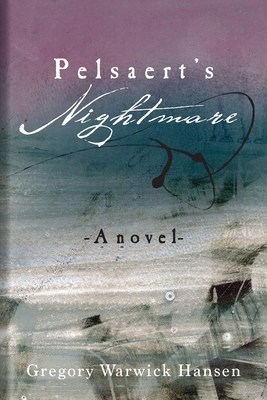
  • PELSAERT’S NIGHTMARE by Gregory Warwick Hansen – Maritime Historical Fiction, Mutiny & Shipwrecks, Biographical Historical Fiction

    PELSAERT’S NIGHTMARE by Gregory Warwick Hansen – Maritime Historical Fiction, Mutiny & Shipwrecks, Biographical Historical Fiction

    To fully understand this rich immersive novel about a 17th Century mutiny and its murderous aftermath – a prime candidate for a “crime-of-the-century” label – it’s best to understand the true story of what happened in 1629 off the coast of what is now Indonesia.
    The Batavia was a treasure-laden fleet ship of the powerful Dutch East India Company, the global Amazon of its time, with more than 300 men, women, and children on board. But the Batavia’s fate was sealed by a greedy captain and a mysterious pharmacist who hijacked the ship for its booty and crashed it on a speck of an island off the Australian coast.

    When survivors of the shipwreck landed, Jeronimus Cornelisz the pharmacist, and his followers were said to have murdered upward of 100 of them. Historians believe that some were brainwashed to kill one another, take women survivors as sex slaves, and slaughter several children. Some individuals place Cornelisz in the same evil company as serial killers Charles Manson, Ted Bundy, and Jeffrey Dahmer.

    The most complete historical record of the massacre came from Francisco Pelsaert, the Company’s senior representative on board the wrecked ship. His diary, written shortly after the Batavia tragedy occurred, is the basis for this novel.

    We are taken deep into Pelsaert’s story who is dying as the book opens. We get to know him as a Company man, no less dedicated to commerce than any globe-traveling corporate soldier of our own times. But as the story of the Batavia unfolds, we also see the politics of the era, an understanding of the competing political forces in the 1600s ransacking the world for treasure and spices – the Dutch, Spanish, and English – entities no less complicated but far more vicious and venal than today’s international trade warriors. The truth be told, these times were hellish. Deaths, almost unimaginable tortures, and barbarism were rampant in this era, and the novel spares the reader few details of them.

    Even as Pelsaert provides us with a detailed accounting of the Batavia disaster, written in graphic and often profane language, he also stares deeply into his own complex past, jumping in time from past to present and back again. We see how a road warrior of those times thought and acted, as unsparing of himself as he is of his contemporaries. You may not ultimately like the Company man, but he will treat you to a reading experience of a world both far removed from our own and yet sadly familiar.

    Pelsaert’s Nightmare won First-Place in the CIBAs 2018 Chaucer Book Award for pre-1750s historical fiction.

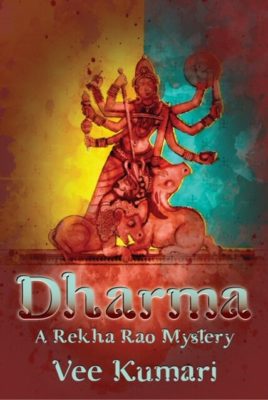
  • DHARMA, A REKHA RAO MYSTERY by Vee Kumari – Cozy Mystery, Female Sleuth, Multi-Cultural Mystery

    DHARMA, A REKHA RAO MYSTERY by Vee Kumari – Cozy Mystery, Female Sleuth, Multi-Cultural Mystery

    A Blue and Gold Badge for M & M Mystery and Mayhem 2019 Grand Prize Dharma A Rekha Rao Mystery

    A complex murder mystery always requires a little spice. In Dharma, A Rekha Rao Mystery, that extra seasoning is provided by the casting of an Indian American woman as the amateur sleuth, despite her realistic fears for her personal safety.

    Professor Rekha Rao is no Bollywood Mighty Girl. She’s a whip-smart American-born 32-year-old college instructor who must deal with her own PTSD after the murder of her father and her unstoppable passion for releasing the man wrongly convicted of her father’s slaying. That obsession is the reason Rekha was dismissed from her old teaching position. The scene is set for deep, personal involvement in the murder of a colleague, a fellow professor who is killed. And a rare, centuries-old statue excavated from an archeological dig in India is the murder weapon.

    When Rekha, an expert in the art of ancient India, is asked by the Pasadena police for some background on the statue of Durga, a well-known goddess in India’s rich religious tapestry, she’s not content to limit her investigation to the narrow role assigned to her. Despite the handsome police detective’s warning to not continue the investigation, she turns over every rock to look for answers. She soon uncovers a galaxy of possible suspects: friends, colleagues, and students – many of whom may have motives to see harm done to the seemingly beloved professor. Art theft, a closeted gay man, a hidden affair, and even a little cross-dressing make their way into the mountain of evidence as Rekha works through territory that the police have not yet uncovered.

    Rekha Rao is a well-drawn character with many facets to her personality. Her Indian heritage is evident in her food tastes, decorations, and family values. Still, she is clearly a modern American woman making her way in a very different culture. Rekha sets out to solve the mystery despite the fear that someone is stalking her – even as she stalks them.

    Dharma, A Rekha Rao Mystery will also provide readers with a glimpse into the religious history of India’s gods and rich mythology. This is one of the hidden treats that makes the novel an enjoyable read for mystery lovers everywhere.

    Dharma, A Rekha Rao Mystery won the Grand Prize for Mystery & Mayhem in the 2019 CIBAs!


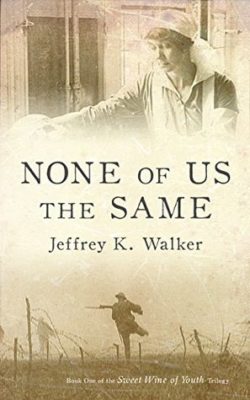
  • NONE OF US THE SAME by Jeffrey K. Walker – Literary, WWI, Friendship

    NONE OF US THE SAME by Jeffrey K. Walker – Literary, WWI, Friendship

    Five young friends from then-English Newfoundland and Ireland together join a regiment to serve in the war, as does a young nurse from Dublin. At first, a reader might be lulled into thinking this is a light-hearted Irish dialect-filled romp a la Finian’s Rainbow, but the novel takes us deep into the lives of its characters as they serve in the bloody trenches, convalesce, and try to live normal lives despite the physical and emotional damages they suffered.


    Diedre, the tough but emotionally scarred nurse, Jack, who left “bits” of him on the battlefield, Will, with his invisible yet no-less devastating wounds—these are a few of the complex yet wholly identifiable characters who become alive through this novel’s pages. These are no simplistic people. Their humanness, their frailties confronted by the awfulness of the war, gives the book its special heart.

    As much as we live through the late 1910s and early 1920s, there are few strictly historical passages. The characters live in those times, not declare them. There are no “war is over” scenes, only the heartbreaking aftermath of the war’s end on the characters. Yet, the book ends with the central characters’ futures well in hand, moving through the post-war era with the 1920s, Prohibition, and the foreshadowing of “the Troubles” beginning to play a part in all their lives.

    Above all, the book is about enduring friendships and the nature of being human. The author compels us with his characters and how they rally together in times of crises and stand up for one another when the going gets tough. There is no sugar-coating what happens to them, and yet their long-standing bonds are what pulls them through for readers to form a special connection with one and all of them. The reader may be better for having met them all. Certainly, None of Us the Same will stay with the reader long after the book is put down.

    None of Us the Same is the first of three novels in the series entitled “Sweet Wine of Youth,” and won First Place in the CIBA 2018 GOETHE Awards for Historical Fiction.


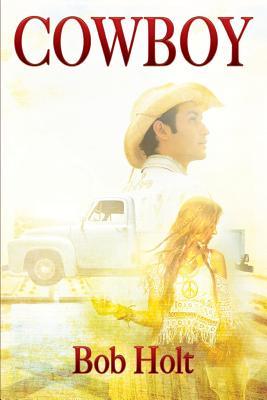
  • COWBOY by Bob C. Holt – Literary Fiction, Vietnam Era Coming of Age, Literary

    COWBOY by Bob C. Holt – Literary Fiction, Vietnam Era Coming of Age, Literary

    Love is at the center of Cowboy, a novel set in the turbulent 1960s. Love of family, friends, country, love of exploring your personal freedoms, and of course, the love you can experience when you’re young that hurts so bad you can taste it.



    Jim Davis is a Texan, born and bred, who knows early on he must sample life away from the insular farm life of his small home town. Life at home is complicated by the turbulent relationship with a highly religious hard-driven father and a younger, football-star brother. Love of country and love of God are never far from the life of his family, but neither is Jim’s love of girls and sex, which carries a level of complexity all its own.

    Jim’s plans for his own future become even more problematic when his father insists that he join the military. When he enlists in the Army, Jim becomes an officer, and, thanks in part to his completion of a dangerous mission—and his girlfriend, the daughter of a general—a successful life in the military seems all but assured.

    Except he’s not biting. What else does the world offer? Jim leaves the military, winds up as a student at an eastern university, and discovers for the first time the drugs, sex, anti-war sentiments and other new feelings that became everyday experiences to others of his generation. All that becomes secondary to his relationship with Trish, the girl he falls in love with, who provides him with even greater complexities and harder choices that he could have ever foreseen. Can he allow her emotional roller coaster to control his life? Then again, can he truly live without her?

    While their relationship is the centerpiece of Cowboy, the novel also provides a sketchbook of the times as seen by a young man who doesn’t necessarily buy into the social revolution in the glowing terms as do many of his contemporaries. Setting aside all that, Jim’s willingness to wait out the twists and turns of Trish’s life will ring true for anyone of any generation who has entered the country of love and discovered there are no paved roads and no roadmap.

    To 21st Century readers, this is a historical novel. It takes place more than a half-century ago when so many of the social mores were first challenged by millions of young people across the world. How people talk to each other sometimes feels stagy. But it still rings true, both to the times and to the emotional makeup of the many characters who appear throughout the novel.

    While Cowboy has the shape and feel of a memoir, it’s a worthwhile read for anyone who wants to remember the ‘60s or has a curiosity about that fabled era that their parents and/or grandparents lived through. More important, however, is the love story of Jim and Trish. The dynamics of their fragile love ring true for anyone of any age.

    Cowboy by Bob Holt won CIBA 2018 Somerset First in Category in the SOMERSET Awards for literature.


  • MORE THAN JUST WEATHER and MUSIC: 200 Ways to Use Alexa by Bradley Metrock

    MORE THAN JUST WEATHER and MUSIC: 200 Ways to Use Alexa by Bradley Metrock

    So you think you know Alexa?

    A new book on the ubiquitous Amazon-created voice assistant, Amazon Alexa: More than Just Music and Weather  will convince you otherwise within its first few pages.

    Start by looking at the table of contents. There are 226 different commands you can say to your voice-activated gadget. Some are certainly the basics: latest news, weather, access to your favorite music, and more. Those you would expect. But then there’s “baby sleep white noise,” “Yes, Sire (an Alexa game, not a 50 Shades of Gray manual), the ability to control your Rhoomba vacuum or Braava jet mop, and so much more.

    It’s not only a great list of suggestions of the many things you can do with your Alexa device, it’s also an impressive education in the many ways in which voice-activated assistants are becoming a vital part of daily life.

    We’re well accustomed to the way that our mobile phones have become essential to our daily lives. Alexa—more accurately, the Amazon Echo device with the Alexa voice assistant—debuted in late 2014. It was followed shortly by the Google Home system, making Google’s legendary information treasure trove available in the home, and Microsoft’s Cortana voice system for Windows. Alexa’s system, however, came out of the chute with a greater number of Alexa-centric services and a more comprehensive list of vendors whose products and services were already linked to Alexa. It’s these impressive listings that this book brings into focus for everyday readers.

    Each service is listed on its own graphic page that explains the service and presents the voice command you say to Alexa that will get you there. It’s a fun experience and a helpful guide to get the most out of this useful technology.

    5 Star Best Book Chanticleer Reviews round silver sticker

  • CHASING CLEOPATRA by Tina Sloan – Espionage, Romantic Suspense Thriller, Mystery

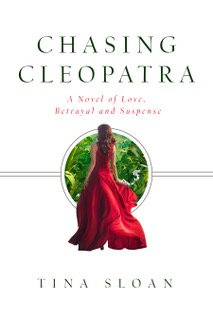
    CHASING CLEOPATRA by Tina Sloan – Espionage, Romantic Suspense Thriller, Mystery

    Was there ever a woman as glamorous and complex as Cleopatra Gallier? She’s 44, drop-dead gorgeous, charmingly clever, fabulously wealthy, a martial arts expert, and she lives in a luxurious villa on a stretch of Hawaii’s coastline.

    All would seem perfect in Cleo’s world and she puts on her “best game face,” but sadly we learn, she’s traumatized for life after a horrendous childhood assault. Since then, she has kept her distance from others, particularly, men. Well, except for one.

    But as Chasing Cleopatra opens, the new novel by American actress Tina Sloan, Cleo’s undercurrents of pent up passion are going to vent. She literally crashes into a young man―a much younger man―with her car―a minor accident, actually. But Cleo finds herself inexplicably and uncontrollably sexually attracted to the young handsome rogue and he is more than willing to reciprocate. Raging hormones on both sides of the sexual divide take over making for some torrid romancing.

    So, you think, this is going to be that kind of novel.

    Clearly, from the first words, you suspect there is going to be a lot more than “that” in Chasing Cleopatra and you will not be disappointed.

    Cleopatra’s lustful affair with young Jake Regan becomes more complex as she discovers his presence in Hawaii is due to a Christmas holiday vacation with his (Norman Rockwellesque) family. Mother and his two brothers have arrived. Jake’s dad is expected to arrive at any moment from yet another far-flung business trip. But the coup d’état is that Jake’s longtime girlfriend, who also is en route, is expecting wedding bells to be announced at the gathering. It becomes obvious that Cleo and Jake’s unrelenting passion will have an impact on the Regan family.

    What neither of them can anticipate is how their relationship over the next few days will also force the other members of his family to reveal their own secrets, some of which will open old wounds and create some life-changing events.

    One of those secrets will reveal a pending Al Qaeda attack on Pearl Harbor. The other will delve deeply into Cleo’s past and touch her most challenging moment: the death of the only man she ever truly loved. Who would think that one of the Regan family’s secrets would become an existential threat to the life and purpose of Cleopatra Gallier and the Regan family?

    The writing is lush, with the perfect amount of details, and the storytelling had this reader turning the pages. The intriguing backstory seems to presage a series of books on the life and times of Cleopatra Gallier. If so, they would make a great addition (with a more contemporary slant) to the reading list for devotees of Miss Fisher’s Murder Mysteries and Catriona McPherson’s Dandy Gilver series.

    Combining a romance novel with a thriller is not easy, but Chasing Cleopatra delivers the goods with plotting as intricate as a silver spider’s web.

    5 Star Best Book Chanticleer Reviews round silver sticker