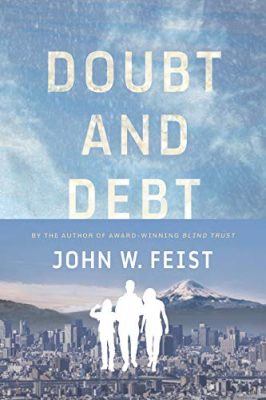
Pipelines—large industrial pipelines through which pour oil, gas, and other natural elements—are not the usual stuff that writers tackle for intelligent, sophisticated international high-stakes spy novels. But then again, most writers aren’t John Feist, whose lawyering background in, yes, global pipelines and related industries such as steel, coal, and shipping companies make him the perfect choice to turn these typically pedestrian subjects into absorbing books. His work introduces us to complex issues involving international trade at the highest level, greed, murder, and above all, the intricacies and rewards of multinational, prominent, and sometimes multiracial families.
In Doubt and Debt, lawyer Brad Oaks is now the president and CEO of California-based Elgar Steel.
He and his wife Amaya have adopted an 11-year-old Canadian girl, Kozue, whose parents died in a mass shooting in Toronto. She is a perfect fit for the Oakes, both in their mid-40s, both in business and personal relations in Japan. Amaya is the half-sister of the two sisters who own the steel company which manufactures high-grade steel pipes through which the mineral wealth of nations pours. She is half-Japanese, grew up with the racial issues of her home country, and is also best friends with Japan’s current woman premier.
In the first two books, the family-owned business was vital in developing the Wishbone Pipeline that brings water and oil from Canada to the U.S. (Any similarity to the now real-world defunct Keystone XL pipeline is purely coincidental.) That project, and the international consortium necessary to build it, involved players including Oaks, the chief architect of the complex trade pact, Japan’s prime minister, her steel-manufacturing brother, secret agents from China, a red-headed femme fatale who is also an engineering brainiac, etc.
Brad Oaks is once again the target of a murder attempt.
In this third volume, the same players face a new challenge: a proposed pipeline that would send Iranian oil money to North Korea, both blacklisted players on the international scene, and violate sanctions imposed by the United States and Japan. Brad’s life is threatened—he thinks by someone involved in the new pipeline negotiations. In other words, if he’s out of the way, then a potential block to the illicit deal disappears.
As the investigation commences, one of the Elgar sisters, June, becomes involved with a scheming, unscrupulous businessman, Bob Hager. He charms her into a business decision that puts her in debt, positioning her to potentially delivering her significant portion of the company to Hager and his greedy associates and thus wresting control of the family-owned business into the hands of absolutely the wrong people. Can there be a solution that will keep the Elgar business in the family and not subject to the business predators that want to tear it apart?
Feist pays attention to the importance of multi-cultural understanding in business.
Underlying it all, Feist delivers a multi-part dialog that runs through all three books about family, commitment, cultural differences, and ethics. Virtually every central character in the series finds him or herself conscious of the morality of their decisions, whether it be Brad’s wife’s constant tug between her new life in America and her old life in Japan, Japanese Prime Minister Yuko Kagono relationship with her steel-magnate brother Iseo, Iseo’s secret relationship with red-headed American Cynthia and his clinging to the glory of old Japan, and June’s flakiness and twin sister Sarah-Jane’s steadfastness.
The business negotiations between the various parties are of a high order, both complex and yet intriguing. They offer insights into how the Great Game between multinational companies and governments plays out, written clearly from the position of someone who has been there as a player. The multiple discussions between the characters, whether American to Japanese or American to American or Japanese to Japanese, have the ring of truth.
In parallel to all this are the intricate relations between the various characters on a personal and business basis. These are people whose lives require thinking on multiple levels, as their decisions about how they live affect them personally, socially, and globally. They live a three-dimensional chess-world life and must live up to the standards of the game.
Do yourself a favor and pick up the first two books in the series, Night Rain, Tokyo, and Blind Trust before you dive into Doubt and Debt, and find out for yourself why John Feist writes novels we love.



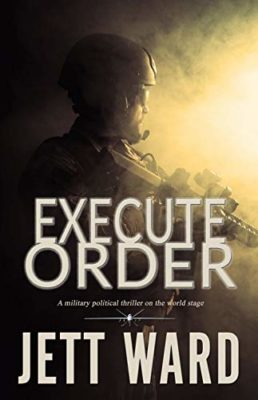
 On a military base outside Las Vegas, Lieutenant Brent Parker sits in a bunker in a darkened room looking to an outsider to be playing a sophisticated aerial combat video game. But this is no game. People live and die with Parker in control of a lethal drone nicknamed the Reaper flying over forbidden Syrian air space in 2011, striking American enemies on the ground with killer missiles from several miles in the air.


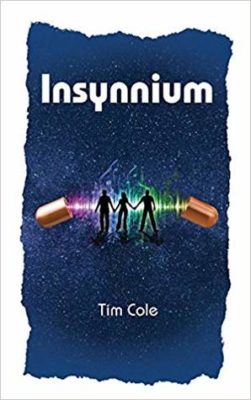
 The dramatic premise explored in a new novel, Insynnium, is a wild, immersive leap into a world-changing (but fictional) drug. In other hands, what could be a dystopian thriller goes one step further in author Tim Cole’s capable hands. He focuses on the humans who first discover and use the drug and weaves his story with a devilish charm.
 Something really nasty is afoot in the world as the Russians attempt to build a super quantum computer so powerful that it will be able to hack into America’s computer capabilities, bypassing even our most advanced protection and control or shut down every computer in the U.S.

 In the first several pages of Chasing Demons, a novel of the Old West not long after the American Civil War, the following happens to U.S. Army Private Gus O’Grady: he kills two Apache Indians, saves the lives of a troop of U.S. soldiers, kills two more Indians, kills a bad guy, winds up being mistaken for a man who may have robbed a bank of $20,000 in gold, and gets arrested for possibly being the man who raped a lass in an Arizona town populated by Mormons, and meets a woman he thinks is far too good for him. Oh yes, and he deserts the Army after 13 years.





 In a rundown Minneapolis neighborhood, a woman and her three children are shot to death by someone using an automatic weapon. The city is shocked. The police department goes on full alert.