Author: S. J. Stanton

  • BAD VAMPIRES by Karl Larew, a humorous new take on vampires

    BAD VAMPIRES by Karl Larew, a humorous new take on vampires

    Karl Larew is well known for the depth and breadth of his knowledge in the field of military history, both in academic works and in historical fiction.

    Well, as you might imagine, Bad Vampires has nothing to do with world politics and war, or even reality on the home front. Rather, this versatile author has chosen to entertain us by delving into the practices of the netherworld of 19th-century vampirism, BUT, as it exists in the modern world—the difference being that, today, there are both Bad Vampires and Good Vampires. This is a modern fictional account, and one designed to make you chortle instead of scream. It is a hilarious and refreshingly fun read!

    Rather than a single locale in Transylvania, the vampires in this tale travel from New York to our nation’s capital and its Virginia suburbs, then Hollywood, and on to Hong Kong, and back and forth, in multiple trips, logging who knows how many thousands of miles.

    The 19th-century vampire’s vicious bite and suck method has evolved into a variety of means for the nourishment of vampires. Among Bad Vampires, the process can still end in, well, the end for the blood donor. Good Vampires, however, take care not to let this happen. Further, the New York Association of Good Vampires has rules regarding the infliction of mortal wounds by other means (pistols seem to be the most popular). In any case, Good Vampires are the winners, Bad Vampires are the losers. Bad Vampires have no imagination and can’t put a bullet in the side of a barn, whereas Good Vampires are ingenious in their strategies and never miss a target, even with one hand tied behind them.

    This tale is either carried along or interrupted by outrageously corny puns, double entendres, and other linguistic contrivances designed to tickle the characters and amuse the readers. Larew obviously enjoyed drawing these from old TV shows: Bad Vampire Elmer wants to make a movie about vampires in New York City—”Sucks and the City” it gets labelled by a Good Vampire; another Good Vampire calls the Head Vampire about a new idea. The CHIEF tells him, “GET SMART! I could say that 99 times and still not have said it enough!” Do any readers remember “Henry Aldrich” (Hen-reeeeeeee) on the radio? No? Never mind.

    It’s hard to develop the character of a vampire. In this story, some are good and some are bad. Protagonist Lance Blodgett is a good one and smart as well. In his day life, he’s an assistant professor of anthropology at New York University, specializing in East European folklore. He has a tender streak and loving heart, which he very soon gives to Carol Binghamton, who isn’t a vampire.

    Carol, a computer programmer, finds herself reciprocating Lance’s feelings. She even offers him breakfast, if he’ll bite her where it won’t show. Lance tells her that biting is “too painful and leaves a big bruise. We use little spring-powered lancets, like diabetics use for blood sugar tests.” She kindly offers him a rump.

    I wouldn’t want to spoil the story for you—just give you a taste that hopefully will tempt you to try it yourself. You might say, as Lance did after breakfast, “Oh, very good—[it has] a sort of tangy je ne sais quoi.”   

  • GRAN’PAUL’S FAMILY: Book 3 of the PAUL’S THREE WARS TRILOGY by Karl Larew

    GRAN’PAUL’S FAMILY: Book 3 of the PAUL’S THREE WARS TRILOGY by Karl Larew

    Gran’paul’s Family, the third volume of Karl Larew’s trilogy of the life of Paul Van Vliet and his family, as well as the wars he fought in as a member of the U.S. Army, is true to its title. While the first two volumes introduced readers to his family, we were often following Paul’s experiences in WWII and the Korean War.

    Part III, however, allows us to join the family circle, which grows considerably, as families usually do. Many of their experiences are similar to those of most of us, but some are quite unique, especially the musical careers of Paul’s wife Betty and her daughter Rosalie, and the military intelligence exploits of Paul’s nephew Ted Lauterbaugh (whose mother Dottie is Paul’s sister).

    I must describe Larew’s work as a fictional family biography–one that is variously romantic, exciting, cozy and warm, hurtful and cold, tragic and sad, but mostly always interesting although there are always a few plodding times that as a member you just have to get through. Remember, like actual biographies, this fictional one doesn’t have a plot but is a story that weaves together the characters and events.

    The story begins with Ted Lauterbaugh reminiscing about meeting his cousin (by marriage), Rosalie, when they were both 14. He immediately fell in love with this beautiful girl with the satiny red hair–who played the violin, accompanied by her mother, on Christmas Day. Just as happens for most 14-year-olds, their relationship dwindled, in their case, to that of cousins, exchanging Christmas cards at best.

    The novel is a written kaleidoscope of personal connections that span time and datelines across the globe. Paul’s own son Danny, who refuses to be drafted or leave the country, must deal with his family’s military history and find his own way. His protesting against the Viet Nam conflict creates estrangement within the family. Danny becomes the embodiment of the intersecting point of the fracturing that many families faced during this time of upheaval.

    Spying, philandering, homosexuality in a time of appalling repression, NSA sleuthing, the Viet Nam conflict and the 60s protests against it, the Civil Rights movement, Soviet espionage, and the ushering in of psychiatric sessions for those seeking help and happiness with many more story threads of the “Paul” family. Will the family be able to withstand the strains and stresses that the turbulent Sixties force upon them?

    This reviewer isn’t going to give away any more of this remarkable story. You know these people now—their character, their strength. You’ll want to find out how their lives evolve from this point. It is an evolution—with oldsters passing on and youngsters assuming family roles. Karl Larew has an important story for almost anyone to read–to learn and to enjoy.

    Gran’Paul’s Family  is preceded by two other compelling volumes that some may find to be faster paced reads:  Paul, Betty and Pearl (that’s Pearl Harbor and WWII) and  Daddypaul and the Yo-Yo War (the Korean War).

  • An Editorial Review of “Daddypaul and the Yo-Yo War” by Karl Larew

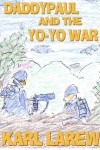
    An Editorial Review of “Daddypaul and the Yo-Yo War” by Karl Larew

    It is June 1946. Major Paul Van Vliet turns his 1940 maroon Buick Super sedan into Gunter Army Air Field grounds, just outside Montgomery, Alabama, where he is to teach at the AAF Communications Division. He is welcomed by his superior, Lieutenant Colonel Matt Wentz, who takes him to see the house Paul will occupy with his new bride, Betty, and stepdaughter, 11-year-old Rosalie.

    Thus, Karl Larew introduces Part II of his trilogy, Paul’s Three Wars. In this second installment, Daddypaul and the Yo-Yo War, Larew documents the life of Paul over almost a decade, as he begins a new stage of his life.

    Paul eagerly meets the train bringing Betty and Rosalie to their new home. There is an abundance of love in this new family; Betty and Paul exchange a romantic hello, and Rosie excitedly greets her “Daddypaul!” Not long after the family is settled in, young Rosie is inspired by a concert violinist’s performance of Robert Schumann’s “Violin Concerto in D Minor” to begin violin lessons. But the thrill of learning to play under the tutelage of a Hungarian violinist soon sours. Pre-teen Rosalie must somehow find the courage to tell her family that her violin teacher has molested her. When she does, unforeseen consequences arise and Rosalie is distraught.

    A year later life is again changing for Paul and his family as they move to Falls Church, Virginia so Paul can work at the Pentagon. They also soon welcome a son, Daniel Evan Van Vliet. A healthy mother and son come home from Walter Reed Hospital, but Betty, usually so resilient, falls into post-partum depression. Rosalie, wise beyond her years, one day says, “Daddypaul, I think it’s time Mom talked to a psychiatrist.”

    Soon, it’s Paul’s turn to worry as a creeping fear settles into him that his career might have been jeopardized by the self-serving, gossipy tongue of his former second in command, Major Don Goffe. The worry is soon relieved, but this is not to be the last time that Major Don Goffe appears in Paul’s life.

    In spring 1949, the newly promoted Lieutenant Colonel Van Vliet is assigned to temporary duty in South Korea to assess the ROK army’s communication needs in the “U.N. Police Action” against North Korea and the capability of the U.S. Army Signal Corps to meet them.  He returns home dismayed by the paucity of U.S. communication equipment and personnel.

    North Korean troops cross the 38th Parallel in the spring of 1950 and the “Police Action” intensifies. President Truman orders General MacArthur to send in 8th Army forces from Tokyo. The Van Vliets’ family life is interrupted when Paul is permanently assigned to the Signal Corps in Korea.

    Paul’s job is to “make sense out of the VHF relay radio system…banking radio waves off mountains and bending them around hilltops.” But he finds himself in actual combat at one relay station, attacked by North Koreans in the middle of the night. “Aim low, squeeze slow,” he instructs a young signalman-turned-rifleman. After an injury involving a mine, Paul is sent to Tokyo to recover, and once he has he is assigned to a desk job in Tokyo, only to find that his nemesis, Major Goffe, is again his second in command. Goffe again seeks to jeopardize Paul’s career. Paul learns from a retired Col. Mummert, now working for the Senate Armed Services Committee investigating how Senator Joseph McCarthy is getting military information to support his anti-communist witch hunt, that Goffe is one of McCarthy’s snitches.

    Larew expertly blends fact with fiction, using “letters” between Betty and Paul to keep us abreast of personal events in Falls Church and Pusan, Korea. The well informed and well written narration of historical events and figures blends well with the fictional accounts of Paul’s activity in the Signal Corps. The ROK army’s communication needs in the “U.N. Police Action” against North Korea and the capability of the U.S. Army Signal Corps to meet them.

    What a “yo-yo” war! – UN troops pushed south to the Pusan perimeter, North Koreans routed and driven north almost to the Chinese border, UN forces chased south again, North Korean/Chinese troops forced north beyond the 38th Parallel. The outspoken General MacArthur’s 52-year career ends when he is relieved of his duties by President Truman, and General Ridgway is commanding the 8th Army when Paul leaves for home in mid-summer 1951, returning to the Pentagon as Executive Officer of the Army Communications Service Division.

    Meanwhile, in Falls Church, Rosalie, a high school junior, beautiful with satiny red hair, continues her meteoric rise as a violinist, though her undivided attention to music leads to a slightly problematic social life. Betty has a full schedule of piano students and still makes time for Army wives activities and Danny is thrilled to have his dad home.

    Military and political history buffs, particularly military family members, and even romance lovers will find Karl Larew’s novels engaging reads. Karl Larew introduces Part II of his trilogy, Paul’s Three Wars, which follows “Paul, Betty, and Pearl,” a historical novel set in the WWII era, beginning at Pearl Harbor. Larew’s personal experience, as the son of Brigadier General Walter B. Larew (1904-1973), greatly enhances the accuracy of his description of military life as well as the military and political history of WWII and beyond in this American family saga.

  • An Editorial Review of “Paul, Betty, and Pearl” by Karl Larew

    An Editorial Review of “Paul, Betty, and Pearl” by Karl Larew

    In the summer of 1941, a ship approaches Honolulu. Watching on deck is young Army Lt. Paul Van Vliet, a 1936 graduate of Cornell University who then joined the US Army Signal Corps, in which he was trained in radar and radio/wire communications.

    WWII is well underway in Europe, and Japan has begun its imperial foraging for new territory in the Far East, but where will it stop? Could Japan envision an assault on US territories—or even the United States itself? Stepping up preparedness in Hawaii is underway.

    Karl Larew’s excellent work of historical fiction starts with Paul Van Vliet’s introduction to life and military duty in Hawaii. Paul’s sister Dottie, married to pineapple and sugar plantation owner Sam Lauterbaugh, is delighted to have her younger brother so close and soon invites him to a dinner party.

    Paul is immediately attracted to another guest, Betty Lundstrom, wife of the often absent Navy Lt. Eric Lundstrom. The somewhat melancholy Betty is equally attracted to Paul. However, neither has any intention of a relationship beyond friendship based on a common interest in music and Paul’s offer to give ukulele lessons to six-year-old Rosalie Lundstrom.

    On the duty side, Paul meets his superior officers, Capt. Bascom, as loose with his language as he is with his liquor, and Col. Tothill, very much the diplomat. Paul begins his assigned work—an assessment of what the Army Signal Corps in Hawaii might need to support a war in the Pacific.

    In the months to come, Paul becomes a frequent visitor at the Lundstrom home.  As Rosalie’s lessons progress, however, so does the relationship between Paul and Betty.

    Then, one Sunday morning—to be precise, Dec. 7, 1941—Paul awakes at about 0800 to the sounds of change.  Japan has just hit Pearl Harbor with a disastrous air strike. Soon, the U.S. is at war in both the Pacific and Europe.

    Paul plays a major role in getting radio and wire communications established and coordinated and is promoted to Army Captain. Betty and Rosalie are evacuated—to spend the rest of the war with Betty’s parents in Washington, D.C.

    The story of the “Pearl Harbor surprise attack” and its aftermath is brought to life by its telling through conversation and letters, a technique Larew expertly uses to draw his readers back in time, right into history (and his story). Larew’s personal experience (this book is dedicated to his father, Brigadier General Walter B. Larew [fusion_builder_container hundred_percent=”yes” overflow=”visible”][fusion_builder_row][fusion_builder_column type=”1_1″ background_position=”left top” background_color=”” border_size=”” border_color=”” border_style=”solid” spacing=”yes” background_image=”” background_repeat=”no-repeat” padding=”” margin_top=”0px” margin_bottom=”0px” class=”” id=”” animation_type=”” animation_speed=”0.3″ animation_direction=”left” hide_on_mobile=”no” center_content=”no” min_height=”none”][1904-1973], U.S. Army Signal Corps) greatly enhances his description of Paul’s work, as well as of military communications equipment and operations during WWII.

    When Paul is ordered to Washington, he and Betty cannot resist seeing each other. They become convinced that they are destined to marry. But Paul is sent to Algiers in Sept. 1943, and then to London. Another promotion, to Major, accompanies his assignment to command one of the new JASCO (Joint Assault Signal Company) communications units, destined to land on Omaha Beach on D-Day. Paul’s rising star is assured by his performance on the European front, including during the Battle of the Bulge.

    As we all know, WWII ended in Europe in May 1945 and in the Pacific three months later. But as peace descends on the military fronts, new battles escalate in Washington—between Democrats and Republicans in Congress, as to how (and why?!) Japan was able to approach Pearl Harbor undetected; and between the Army and the Army Air Forces, as to whether the latter should break away to become the U.S. Air Force. Well, that’s history—look it up.

    On the family front, well, that’s Karl Larew’s story of Betty and Paul—read this fascinating and enjoyable book. And don’t stop with “Paul, Betty, and Pearl.” It’s just the first of three.[/fusion_builder_column][/fusion_builder_row][/fusion_builder_container]

  • Editorial Review of “Legend of the Wyakin” by David G. Rasmussen

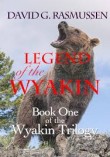
    Editorial Review of “Legend of the Wyakin” by David G. Rasmussen

    A Nez Perce shaman’s chant about a meadowlark in the prologue draws us into this fascinating, thought-provoking historical novel. The shaman is chanting about “animal spirits…of wyakin…” in 1865. Then the author moves us forward into our time, as teacher/historian/writer John Thompson and his 13-year-old son Steve are exploring along the Missouri River Breaks of central Montana.

    Steve strays from his father and encounters a huge silver-tipped grizzly bear. The bear is almost upon him when a strangely dressed boy, about Steve’s age, leads him to safety by taking a zigzag path up the loose shale hill. As they near the top, John hears the boy say, in Spanish, “Es Modrables, El Oso” (That is Modrables, the Bear). John grabs Steve’s hand and pulls him up. When they look around, the boy is gone, and so is the bear! Astonished and confused, they head for their SUV. Steve pauses when he hears a meadowlark and seems to understand its song, “Listen and see. There is more.” But it is John who sees—a group of people, obviously of an earlier time, staring with wonder at the SUV. As Steve catches up, they disappear.

    Their shared supernatural experiences compel father and son to research the locale and its history in old ships’ logbooks and personal diaries, revealing the stories of true, historical personages.  The writer in John lets his imagination fill in the blanks of the dry historical documents, or perhaps he was inspired by the spirits of the characters—both human and animal—who are brought to life in Legend of the Wyakin.

    More than just an enjoyable historical novel, Rasmussen’s respect and curiosity for the teaching and traditions of First Nations Native Americans shine through in his writing. He captivated this reviewer with his insight into their beliefs in a spiritual world not just of people, but of animals, trees, thunder, and much more, including riverboat travel on the Upper Missouri River.

    As chapter one begins, Rasmussen takes us back to June 1865 when the Gold Rush was in full swing, as Captain Phillip La Mar, in the wheelhouse of his stern-wheel riverboat, Jupiter, enters the day’s events in the logbook. His major concern is that three crewmen have cholera—the deadly scourge of the riverboats that ply the Missouri River, carrying freight and passengers destined for Fort Benton (Montana) and the goldfields beyond.

    In addition to impatient gold miners, eager to claim a stake and make a fortune, the passenger list includes two Jesuit priests—the arrogant and intolerant Father Dolores and his younger colleague, the service-oriented Father Otis; a Jewish family from Spain—the knowledgeable and skilled Dr. Modrables, his beautiful and helping wife Rosa, and their intelligent and curious 13-year-old son Cortez; and others, such as Mr. and Mrs. Campbell—who soon become embroiled in the struggle for needed cholera treatment resulting from Father Dolores’ insistence that Catholic passengers not accept what he contends is the sorcerous treatment offered by the Jewish Dr. Modrables’ medicinal herb teas, despite their proven efficacy with the three crewmen and others.

    Legend of the Wyakin vividly portrays the mores of the time: racial and religious bigotry, ignorance blinded by fear and greed, rampant disease, and driving desperation that make so many endure danger as they seek a better life. Small acts of kindness from strangers that stand out like beacons in the night during tumultuous and violent times are also vividly conveyed by the author.

    Soon, young Cortez has to draw on the strength and wisdom bestowed upon him by his loving and nurturing parents as he finds himself alone in a strange land. He settles himself into the safety of a cave just below the crest of the sandstone cliffs of the Missouri River Breaks. While exploring the prairie beyond the crest, he encounters, and incredibly befriends, an aging grizzly bear, whom he names Modrables, El Oso.

    Cortez soon makes another unexpected friend, a Nez Perce Indian boy, Samuel, just his age, who speaks English. The boys share their thoughts on many things, including the Jewish, Christian, and Indian religions. Samuel tells Cortez of the wyakin, the animal spirits that guide and protect the lives of Indians, and says that El Oso is surely Cortez’s wyakin, a very powerful one, even though he is not an Indian.

    When violence erupts again, the young Cortez encounters more challenges that he feels he alone must shoulder. But one morning Cortez sees El Oso’s footprints circling their campsite. His wyakin had been following him, protecting him! In the days to come, Cortez realizes that El Oso will always be with him. And his journey in this new land has just begun. This journey is consistently overshadowed by Cortez’s need for a life-changing decision that he must make—should he accept becoming an adopted Nez Perce with the band’s safety and family or try to return to the white-world with its uncertainty and loneliness.

    “There is [fusion_builder_container hundred_percent=”yes” overflow=”visible”][fusion_builder_row][fusion_builder_column type=”1_1″ background_position=”left top” background_color=”” border_size=”” border_color=”” border_style=”solid” spacing=”yes” background_image=”” background_repeat=”no-repeat” padding=”” margin_top=”0px” margin_bottom=”0px” class=”” id=”” animation_type=”” animation_speed=”0.3″ animation_direction=”left” hide_on_mobile=”no” center_content=”no” min_height=”none”][much] more,” as the meadowlark suggests, for Rasmussen’s readers (young and old) to enjoy and learn in this expertly crafted tale of adventure and coming of age. We are looking forward to reading the next book in the “The Wyakin Trilogy” saga by this award-winning Western author.

     [/fusion_builder_column][/fusion_builder_row][/fusion_builder_container]

  • An Editorial Review of “Leptis Magna” by Michael Hugos

    An Editorial Review of “Leptis Magna” by Michael Hugos

    Have you ever had an experience of déjà vu so strong that you not only see, but also hear, feel, and even smell a scene from an earlier time and place? Michael Hugos tells us that a series of such experiences inspired this book. For him, Leptis Magna, an ancient port city in the Roman province of Tripolitania (present-day Libya), is “a lens through which I see a period in history when one world died and another world emerged.” Leptis rivaled Alexandria and Carthage in its beauty and buildings. It is now considered one of the most grand and unspoiled Roman ruins sites in the Mediterranean.

    For historical dates, names, and events, Hugos draws on the legacy of Ammianus Marcellinus. Marcellinus, a Roman soldier and historian (325/330-post-391 A.D.), served several Roman emperors.  Some of his records still exist, providing the most comprehensive and accurate historical account of Late Antiquity in existence. The latest edition of Leptis Magna includes maps.

    However, Michael Hugos tells us a more intimate story, that of another source for his book. It came in the form of  a presence and a voice that he first encountered when he was eight, visiting the ruins of Leptis Magna with his family in 1961. The presence that only Michael Hugos was aware of  followed his family through the ruins. Hugos even heard a whispering voice, which seemed to be saying something important, but he could not understand.

    The Hugos family visited Leptis several times during their two-year stay in Libya, and each time the presence joined Michael. He came to sense that it was a man who had lived in Leptis a long time ago. After the family returned to the United States, Michael didn’t feel that presence for more than a decade. One autumn day, while walking along the shore of Lake Michigan, the sound of the waves  washing up on the beach draws him back to Leptis. He becomes obsessed with discovering who that man was. Once into his research, relevant clues practically throw themselves at him, often invading his unconscious mind.

    Michael learns who the man was, what he stood for, and the trajectory of his life, and comes to see him and the ruined city of Leptis as “a bridge to another time.” The story of what happened in Leptis and to the Roman Empire that gave the city reason to exist becomes an allegory for understanding what is happening in the world today.

    After letting his knowledge rest for awhile,  like the dough for good bread, Hugos gives voice to Septimius Lucius (b. 341 A.D.), descendent of former Roman Emperor Septimius Severus and surviving heir of the leading family in Leptis Magna. In 384 A.D., Lucius begins to write his autobiography—the story of his life and the role of Leptis Magna in the history of the later Roman Empire.

    Lucius’s autobiographical narration is replete with stories of his happy young years in the family’s Villa  Selene on the Mediterranean Sea, the colorful years of his formal education in the Forum of Severus  at Leptis Magna, and his training in the family business exporting olive oil, wheat, slaves, ivory, and gold under the tutelage of his uncle, Jovinus.

    The youth’s coming of age, unfortunately, begins  during the time of African tribal raids against Leptis, corrupt Roman officials, and the fading of the Roman Empire.

    “Any civilization, whether that of the Roman Empire or that of our world today, exists first and foremost to channel the strivings of powerful people into socially constructive ends. When a civilization no longer performs that function, it must, and will die.”

    Michael Hugos suggests that this is the important message Lucius sought to give him, as a child and then as a young man: Rome didn’t have to fall, and neither does the world of today, if its citizens can learn the lessons offered by history.

    Hugos vividly brings to life the upheaval of those caught in the decline of one of the world’s most powerful empires. This is no dry read of ancient history. Leptis Magna is an account of one family’s history during this time. He reveals how civilization can be altered by deals made with the devil one at a time, one incriminating act a time, one lie at a time, one act of desperation at a time. Hugos draws marvelously intriguing parallels that show patterns that have repeated themselves time and time again in history.

    Elegant prose and impressive accumulation of knowledge focused on one thread of history  guides the readers through this fast-paced read of imperial Roman history: its cultural fascination with death; the depth and breadth of its bureaucracy; the military machine with its soldier emperors; and the use of force and intimidation to hold the empire together that fueled Rome’s insatiable need for taxation to maintain its bureaucracy and power base.

    For those who saw the film Gladiator and want to know more about the Roman Empire after Aurelius Commodus  inherited the title of Roman Emperor (at the age of 18 rather than earn the position as his father Marcus Aurelius had), or for those who want understand more about this pivotal time in Western civilization, you will be pleased to discover Leptis Magna, an enlightening work by Michael Hugos.


  • An Editorial Review of “The Blue Virgin” by M. K. Graff

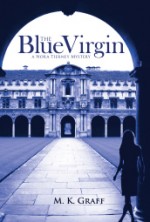
    An Editorial Review of “The Blue Virgin” by M. K. Graff

    Being very fond of British murder mysteries, in print and movies, and on PBS Mystery Theatre (most relevantly, the Inspector Lewis series), I was immediately drawn to M. K. Graff’s The Blue Virgin. Thanks to her personal experience while studying literature at Oxford University, Graff is able to set her first published novel in the historical university town with great accuracy.

    Graff’s considerable literary talent enables her to develop an intriguing cast of British characters—with one national exception: the feisty, attractive, and pregnant protagonist, Nora Tierney, an American writer. Having recently lost her fiancé in an accident, Nora’s spirits are raised by winning, as an essay contest prize, the opportunity to collaborate with British artist Simon Ramsey as an illustrator for her children’s book about fairies.

    As the story begins, the murder victim is still very much alive: Bryn Wallace, a gorgeous former fashion model turned talented photographer, is enjoying a glass of Merlot in The Blue Virgin, Oxford’s favorite alternative-lifestyle spot. Her lover Valentine Rogan, a textile artist, joins her, and the two soon head to Bryn’s trendy flat. Despite the excellent gourmet dinner Bryn concocts, the two later argue about their plans to move in together, and a morose Val leaves. A bit later, Bryn interrupts her kitchen cleanup to answer a knock at the door. “What…?” she exclaims. “You’d better come in….”

    Dawn is breaking when Detective Inspector Declan Barnes is called to Bryn’s flat and finds her lifeless body seemingly artfully arranged in the blood-spattered kitchen. After a bit of investigation, it isn’t long before he calls on Val Rogan as a suspect,

    Later that morning, Val calls her American friend Nora, who is staying at Ramsey Lodge in Bowness-on-Windermere, Cumbria. Her host, illustrator, and admirer, Simon, insists on driving her to Oxford to stand by Val. Much to his dismay, Nora immediately turns sleuth, determined to clear her friend Val of murder charges.

    The pace quickens as the plot thickens, when not just one but two more bodies are discovered! Nora is determined to continue sleuthing; Declan is equally adamant that she not intervene in his work, and Simon is plainly worried about Nora’s safety. The tension builds as the plot twists and turns on its way to a surprising ending.

    You’re in for a pulse-raising solid read that will leave you eager to delve into Graff’s next Nora Tierney mystery—with hopefully more to come!  Graff’s sophisticated writing interweaves eccentric characters, visually rich locales, epigraphs, and well-crafted dialog that together create a delightfully clever and intriguing mystery.

    “The Blue Virgin” by M. K. Graff is a First Place Category winner for British Cozy Mysteries in the Mystery & Mayhem Awards for Cozy Mysteries 2013, a division of Chanticleer Writing Competitions.

  • An Editorial Review of “Shadow Guardians” by Brett A. Lawrence

    An Editorial Review of “Shadow Guardians” by Brett A. Lawrence

    Shadow Guardians is a science fiction novel that steps away from warring aliens and warp drives to delve into individual potential.  The premise focuses on how one would react if extracted from normal life and inserted into a totally new construct of so-called “life” while retaining all of your previous life’s memories.  Would you take death instead?

    Lawrence starts his story with Abigail and Dennis Webster who have just celebrated their anniversary with a special dinner at a fine restaurant, ensconced in the warmth of their closeness in the cockpit of their Piper aircraft. They are taking off from Tacoma, Washington, toward their temporary home in Everett. Abby and Dennis’s affectionate reflections are interrupted by the raucous noise of another craft’s intrusion in their airspace. There is scarcely time for thought before a crash sends them heading downward into the frigid Puget Sound.

    That same evening, Lindsey Maguire, a beautiful but self-serving and arrogant bank executive, is abducted by a hired killer, destined to be pushed over a bridge railing to her death.

    Instead of dying, the would-be victims find themselves groggily awakening in the alien confines of an interstellar spaceship, the “Starlight Mistress.” Each reacts differently to the news that they have been rescued and transported by two representatives of the distant planet of Majora—Milankaar (or Mil), a humanoid born there, and his companion Miriam, a human rescued from Earth some time ago, who has joined Mil in his mission of learning more about Earth and its people.

    The fascinating difference between Lawrence’s captivating sci-fi novel and most others of this genre is his focus on the personalities and feelings of the rescued beings of our era and their reactions to the knowledge that their lives will be continued on the planet Majora. Their initial shock and disbelief evolve in different ways, which Lawrence deftly paints.  The survivors are offered an impossible choice that, regardless of their decision, ensures their old life is over. But Mil—an intelligent, generous, and thoughtful character—seeks to help his guests deal with their present reality and look forward to a new life on the relatively peaceful and pleasant planet of Majora—especially Dennis and Abby whose marriage threatens to crumble under the strain.

    The interspatial action heats up when a Chelonite slave-abducting ship attacks the “Starlight Mistress.” The pages fly by as fast as the spaceships when Mil draws the slavers to the rocky surface of the moon in an effort to evade or destroy their attackers. Lawrence’s precise descriptions of the lunar landscape, skillfully drawn from America’s moon landings and explorations, lend reality to the death-defying chase, skimming over mountains and diving through the Valles Alpes.  If Mil can’t out fly the Chelonite vermin, he’ll have to outwit them.

    As Brett Lawrence says in his bio, if all goes well for the Shadow Guardians, we might just see a sequel to this, his first published novel. This reviewer, for one, certainly hopes so, because Shadow Guardians gave me an exciting ride and a thought-provoking great read!

  • An Editorial Review of “The Starlight Fortress” by Fiona Rawsontile

    An Editorial Review of “The Starlight Fortress” by Fiona Rawsontile

    Courage, love, and loyalty are counterpoised with intrigue, hatred, and betrayal—in settings ranging from intimate dinners to royal banquets, seaside walks to interplanetary voyages and galactic space battles in this highly entertaining and fast moving debut novel by Fiona Rawonstile: The Starlight Fortress.

    After reluctantly turning the last page of this mesmerizing and unpredictable tale of love, life, and war, I looked out my window to see the solid shape of a bright quarter moon and the twinkle of the “Evening Star” that is Venus against a deep azure sky. I wished I could see further into the galaxy and find the Renaisun solar systems, with their widely differing planets, countries, and cities—but of course they don’t exist (yet?) except in the pages of The Starlight Fortress.

    Spectacular battles in the Stony Band of asteroids, the interstellar pathways, and even on-the- ground maneuvers provide plenty of fast-paced military action, conducted with imaginative space-age techniques, weapons, and ships of all shapes and sizes—the most spectacular being the RA allied forces’ enormous five-armed Starlight Fortress, coveted by Emperor Pompey. Artfully interwoven with the military battles are the interpersonal relations among the royals, the military officers, and ordinary citizens.

    Despite their future sci-fi existence in the universe, Rawsontile’s characters and their language, lifestyles (with a few tweaks), hopes, and desires—as well as their darker natures of envy, jealousy, hate, prejudice, and war—will resonate with readers. The young Queen Geneva of Sunphere, the primary country on the RA-4 planet of the Renaisun A system, is unlike any queen, past or present, on Earth. Elevated to her post after the untimely death of her father, she would rather go shopping on one of the moon malls with her friends than rule the country, but duty calls and the stakes are high.

    Geneva may be queen, but her elders question her judgment when she selects as her military assistant not an experienced officer, but Commander Sterling Presley, on the basis of a speech he delivered at his graduation from Sunphere’s Space Force Academy just four years earlier.  However, they are betting that age isn’t everything when it comes to creating new battle strategies.

    Sometimes singly, and sometimes together, Geneva, with her chubby cheeks, and Sterling, resembling a junior college professor, face some hard work if they are to earn the respect of Sunphere’s citizens and Space Force—not to mention that of their allies of Renaisun A, as well as their enemy Emperor Pompey with his colonial forces of Renaisun B.

    Joining Geneva and Sterling is a full cast of colorful, multifaceted characters—Sir Lloyd, Geneva’s uncle and Secretary of Defense; the handsome, aristocratic, young officer Charlie Swinburne of Rainprus; Prince Edwards of the neutral Renaisun C, who could be a good ally; military diamond-in-the-rough; and more, all artfully crafted by Rawsontile.

    Dangerous, sticky, and amorous situations intensify as hostilities mount and battle fleets are amassed. Be sure to strap in, hang on tightly, and enjoy Rawsontile’s exhilarating ride into the future. This reviewer really didn’t want the story to end. Please, Fiona, give us a sequel to The Starlight Fortress! 

  • An Editorial Review of “Tea Leafing” by Weezie Macdonald

    An Editorial Review of “Tea Leafing” by Weezie Macdonald

    In her debut novel, Tea Leafing, Weezie Macdonald demonstrates extraordinary skill in deftly weaving the multifaceted personalities and lives of a quartet of friends—exotic dancers (or strippers, as you will) at a high-end gentlemen’s club in Atlanta. It is an intriguing thriller of local graft, mafia-style murder, international drug rings, money laundering, and revenge.

    Juxtaposed with the shadier side of  Tea Leafing is the story of these women’s’ loyalty to each other, clever sleuthing, and determination not to let their co-worker and friend’s unjust and gruesome death go un-avenged.

    Macdonald masterfully develops the rich and distinctly different characters of Sam, Grace, Mary Jane, and Birdie both on and off stage at the Pink Pussycat, yet enables them to mesh within the close bonds of their friendship, especially when they resolve to face the dangers of joining forces to solve Lena’s murder. Tears of loss and compassion flow as they mourn their friend’s death, though they purposefully maintain a discreet distance from Lena’s high-society Savannah family and friends—all except her younger sister Amanda, who provides a key clue.

    Chunks of humor lighten the story—in the shenanigans and uninhibited dialog of the feisty-tongued, Irish-born, Manchester-raised Birdie, and vignettes of the club manager’s outlandishly dressed and coiffed mother, Pietra Maria Speranza DiFrancesco, who sails through the crowded club like a battleship, bellowing for her son Gio. Macdonald’s colorful descriptions enable us to smell the smoky air of the club, the whiskey, the perfume, even the sweat. We feel ourselves to be a part of the scene, and of the lives of those within it. Her multifaceted characterizations make us aware that people are not only, or perhaps not at all, what or who they appear to be.

    The story accelerates at a heart-stopping pace, as the clues build and the quartet construct their plan of action. Additional colorfully drawn characters join the cast, and the scene explodes to cover the globe—the Caribbean, Russia, Switzerland, Japan, Singapore. The suspense builds as money launderers, the Russian mob, and the underworld of Atlanta come into play. The urge to turn the pages faster and faster fights the need to absorb the intricate detail of the story. Heed that warning, readers, or you’ll find yourselves back in Atlanta not quite sure what happened.

    Tea Leafing by Weezie Macdonald is an entertaining and captivating mystery that will take you on a great ride on the wild side.

    [fusion_builder_container hundred_percent=”yes” overflow=”visible”][fusion_builder_row][fusion_builder_column type=”1_1″ background_position=”left top” background_color=”” border_size=”” border_color=”” border_style=”solid” spacing=”yes” background_image=”” background_repeat=”no-repeat” padding=”” margin_top=”0px” margin_bottom=”0px” class=”” id=”” animation_type=”” animation_speed=”0.3″ animation_direction=”left” hide_on_mobile=”no” center_content=”no” min_height=”none”][Editorial note: If you, like this reviewer, feel as though you’ve made some very good friends only to have to tell them goodbye, Weezie Macdonald is not going to let that happen. This quartet will entertain us again in the next book of Macdonald’s series. And, yes, you will discover what “tea leafing” is all about.]

     [/fusion_builder_column][/fusion_builder_row][/fusion_builder_container]