Author: S. J. Stanton

  • Dumb Politics: The Political Rhetoric and Blissful Ignorance of a Generation by Tanner T. Roberts

    Dumb Politics: The Political Rhetoric and Blissful Ignorance of a Generation by Tanner T. Roberts

    In these days of turmoil and bickering in Congress, far too little time is being spent on the job for which citizens elect their senators and representatives—working cooperatively to make sensible laws to guide our country toward reasonable progress. The Capitol Building itself seems to have become a battleground of clashing voices, with violence waiting on its flanks.

    What do Americans think of this? Some are angry, whether at one political party or the other. Others have given up, because of the absolute mess of politics in general, seeing it as nothing but rhetoric, with little concern for the future of the United States or its citizens. Many citizens become apathetic; feeling they have no power to change the situation, they choose to ignore it.

    In Dumb Politics: The Political Rhetoric and Blissful Ignorance of a Generation, Tanner T. Roberts focuses on the people he calls the “blissfully ignorant,” whom he says merely do not understand what is happening. These people—seemingly with little knowledge of our country’s history, the content and meaning of its Constitution, the functions of its government, the workings of its politics, or the practices of its business and financial institutions—respond emotionally to whatever someone, guided by ‘dumb politics’, tells them is the right or wrong way to run things, and then act and vote accordingly.

    The “blissfully ignorant” include people of all ages, races, religious beliefs, cultural backgrounds, and degrees of education. Roberts seeks to show his readers that large numbers among the younger generation dominate this group’s ranks today. From among those now being educated under the precepts of ‘dumb politics,’ he tells us, will emerge many of tomorrow’s leaders. He hopes to turn this situation around.

    Roberts defines ‘dumb politics’ as “the act of promoting policies and ideas that subsidize groups[sic] at the expense of others”; it becomes “hypocritical in equity and equality… uses emotional responses over rational analysis… and uses derogatory vernacular to promote class and social warfare.” In the first chapter, he illustrates his definition by applying it to the Women’s March 2018 founders’ official Twitter contending that the shutdown of “Backpage” classified ads was an “absolute crisis for sex workers.” He points to their apparent ignorance that “some [Backpage] ads included minors as young as 14 and women forced into sex trafficking,” labels their action as “the epitome of what I call ‘dumb politics,’” and pointedly remarks that “recognizing the irony of this situation requires cognitive thinking.” He names many Democrats and liberals as exemplifiers of dumb politics, but also acknowledges that its practice is far from absent among Republicans.

    A primary focus of the book is the comparative examination of the principles of individualism and collectivism. Noting how these reflect conservative vs. liberal ideologies; Roberts then points out that dumb politics prefers the collective approach, and its adherents seek to assimilate groups willing to follow a collective norm.

    Chapters 2-6 examine how the precepts of dumb politics turn up in the practices of Dumb Name Calling (e.g., fascists), Dumb Immigration (loose borders), Dumb Economics (tax strategies), Dumb Education (ideology imposition), and Dumb Culture (media tactics), and spell out the dangers of these practices for our future well-being.

    Roberts is passionate about his subject, which may leave some readers with information overload. Dumb Politics will undoubtedly attract conservatives, and it offers considerable food for thought for liberals with an open mind who might like to (re)consider their understanding of what is tearing our government, and our nation, apart.

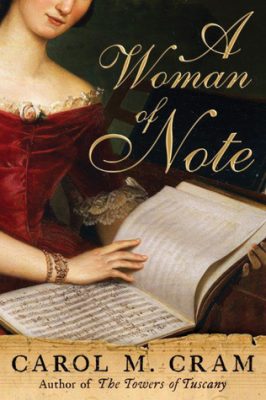
  • A WOMAN of NOTE by Carol Cram – Historical Fiction, Literary, Vienna

    A WOMAN of NOTE by Carol Cram – Historical Fiction, Literary, Vienna

    Isabette Gruber is in a panic. If only her sister were still with her to steady her hands on the keyboard as she plays Beethoven’s Eighth Sonata, known as the “Pathetique,” in her first public concert at Vienna’s Hofburg Palace. Then she hears Johanna’s voice in her head, and her poise and confidence return. The nineteen-year-old Isabette raises her hands, shapes her fingers above the keyboard, and launches into the “Pathetique.” Her powerful performance thrills the audience, whose applause continues through a third bow, and does honor to its composer, Ludwig van Beethoven, whose funeral took place in Vienna that very day, March 29, 1827.

    Filling Isabette’s heart more than the applause, however, are the words of praise from her beautiful, new American friend, eighteen-year-old Amelia Mason, who received four bows for her extraordinary vocal performance. Afterward, Amelia asks the young virtuoso pianist to become her accompanist. Isabette is eager to hear more about this enticing proposition, but Mama arrives with her cloak. Herr Dietrich (her indecorous manager) is waiting with their carriage. “Hurry, Isabette!”

    In A Woman of Note, Carol Cram has crafted a second brilliant female artist, this time a pianist and composer in 19th-century Vienna. Isabette must fight to establish her position in the male-dominated European world of classical music, much as Cram’s Sofia had to do in 14th-century Italy’s world of painting, in The Towers of Tuscany (2014). Cram’s precise, colorful writing enables us to hear the young Isabette playing the “Pathetique” in Hofburg Palace, see her enjoying a stroll with Amelia in the Prater, feel her pain over the loss of father and sister, and appreciate her determined efforts to convince music publisher Herr Weissel to accept her compositions, under the pseudonym of Anson Kruetzer. (Weissel roars with laughter, but agrees!)

    Once home from the Hofburg, Isabette thinks back to her practice session that morning in the small, dusty parlor of the apartment where she lives with her mother. With a heavy heart, she remembers what a happy home this had been when her sister Johanna and she shared both a talent and a love for music and were skillfully taught to play and compose by their proud father. Now Papa is dead, Johanna is in an asylum, and Mama seems to think of Isabette more as a means to an income than as her younger daughter. The tall, lanky girl with a plain face and dull, straight hair never gives a thought to her social life or the possibility of marriage and children. Her every moment is devoted to practicing. Tonight, though, she thinks of a new life with Amelia in it. Soon, they are together every day practicing, but also developing their friendship as they go for long walks around Vienna.

    When piano teacher Josef Hauser, who fancies himself a superior composer, meets the two young women, the story’s complexity grows. Josef is enamored with Amelia’s beauty but enthralled with Isabette’s talent. (In fact, he agrees to become her teacher if she revises his compositions so they will be accepted for publication.) Isabette treasures every minute she spends with the vibrant, cheerful Amelia, but feels uncomfortable when Amelia strokes her arms and kisses her neck. Amelia is jealous of Josef’s attention to Isabette during her piano lessons. Isabette realizes she could love Josef but knows that he is passionate about Amelia and could never feel that way about her. Then Josef’s flutist/poet friend Daniel Leitner joins the threesome. Gentleman that he is, he maintains a discreet distance from the ladies at least for a time.

    Readers will love Carol Cram’s colorful writing and attention to the minute details of daily life at this time in European history. Even more enjoyable, however, will be finding out where her intertwining love stories lead as the characters mature. The book never loses its pace. and readers will be rapidly turning the pages until the very end.

    While the cameo appearances and mentions of such famous musicians as Johann Hummel, Carl Czerny, Franz Schubert, Fredric Chopin, Robert Schumann and his wife Clara, and Louise Farrenc are of course fictional, they add drama and reality to the story, which is based on Cram’s meticulous research. An Author’s Note provides background on actual women composers of the time and place.

    A young virtuoso pianist rises above the many musicians of her time, blazing a path of passion for music and love that is hers and hers alone in nineteenth-century Vienna.

    5 Star Best Book Chanticleer Reviews round silver sticker

  • The TOWERS of TUSCANY by Carol Cram – Literary, Historical Fiction, Pre-Italian Renaissance

    The TOWERS of TUSCANY by Carol Cram – Literary, Historical Fiction, Pre-Italian Renaissance

    Powerful written and richly depicted, historical fiction novel, The Towers of Tuscany by Carol Cram brings to life 14th century Sophia, a talented artist who must find a way to continue her art in secret or have her life put in danger.

    “The bells for nones caught her by surprise…,” drawing Sofia’s mind away from the panel of the Nativity she is painting. She rises, steps over to the narrow tower window, and gazes out across the towers of San Gimignano, in central Tuscany. It is mid-afternoon of a day in March 1338.

    In little more than a page, Carol Cram’s expertly crafted prose transports us across time and space to Sofia’s world. But what we find is not exactly what we might have expected—at least, not I. Sofia is assailed by the pounding of hammers and clanging of iron tools deriving from the endless construction in this rapidly growing town. The air is filled with dust, causing her to squint. Her tower view is so filled with other towers that she has but a tiny, oblique view of the countryside beyond the city walls. She longs to escape the cacophony.

    Hearing her husband below, Sofia does not smile. He was once her Romeo, but not after their marriage. Now she longs to escape Giorgio’s brutish sexual assault on her body night after night, as well as his rigid control over her daily life. At this moment, his angry voice assaults her sensibility: “Wife! What the devil are you doing up there?” She gasps, fearful that Giorgio will learn she is painting and destroy her work! (In the fourteenth century, well-married women were forbidden to engage in “manual” activities.) She hurriedly wipes her hands and scrambles down the tower ladder.

    Thus begins the saga of Sofia, daughter of a master painter who, behind closed doors, taught her from early childhood how to draw and paint. Still in secret, she now works as his apprentice. While Maestro Antonio Barducci is often overtly critical of her work, he is aware that her skill might one day surpass his own, though how she could continue to employ it after he is gone is a quandary contemplated by both. That time arrives sooner than either expected when local political violence leads to Barducci’s death.

    Her father’s dying words reveal a way forward for Sofia, though it turns out to be not an easy one. Leaving Giorgio through subterfuge, she escapes to Siena disguised as a boy (named Sandro, from Alessandro), and her artistry continues in the painting workshop of her father’s friend, Maestro Manzini. Sofia/Sandro lives with few amenities and no small danger of discovery, which could end her life. But, she is painting again, and nothing else matters—at least not for the time being.

    Cram cleverly takes advantage of the workshop setting to share with us some of the techniques and practices of pre-Renaissance painting, which was usually done on wooden panels (carefully smoothed and prepared with gesso), rather than canvas. Paints were made with pigments from natural substances—usually plants—mixed with urine and other materials, some of them poisonous. Painting in 14th century Italy could be dangerous work! Certain techniques are described by Maestro Barducci, whose fatherly voice Sofia often hears in her head, guiding her work as well as her life.

    The best and worst parts of this dramatic, spellbinding work of historical fiction, with its many intriguing characters, deserves of your private reading—every word of it. Readers will find delight in a delicious love story, horror in a representation of the deadly bubonic (black) plague that decimated a large part of the European population of that time, and, in the end, a hint of peace and hope for the future.

    Carol Cram, the author of The Towers of Tuscany and A Woman of Note, is lauded for her skillful and colorful writing, intricate weaving of a many-faceted plot, and minute attention to the details of daily life in a Europe approaching the Renaissance—all in a read you’ll not forget.

    One woman clandestinely practices her art, risking not only her reputation but her life, in pre-renaissance Italy. Carol Cram presents a masterpiece in prose with historical fiction novel, The Towers of Tuscany. A must read!

    5 Star Best Book Chanticleer Reviews round silver sticker

  • TIGER and the ROBOT by Grahame Shannon – Thriller/Suspense, Mystery, Women’s Adventure

    TIGER and the ROBOT by Grahame Shannon – Thriller/Suspense, Mystery, Women’s Adventure

    Chandler (Chan) Gray, recent president of a “rags to riches and back to rags again” app development start-up, is the good-looking, good-hearted protagonist. He was left with enough money to buy the 50-year-old vintage yacht, “Blue Rose,” his home of the moment.

    Tiger is the childhood nickname of the feisty, but gorgeous billionaire Gina Lee, owner of the 120-foot yacht, Aphrodite (aka Afro).

    The Robot is an Android app, the female persona of which is named Saga, created and programmed by the tech savvy Chan. Little does Chan know of the extent of Saga’s AI, its development continuing autonomously way beyond what he programmed, leading to her role as cyber-sleuth private investigator on the trail of Gina (aka Tiger) after she is kidnapped on the morning of the prestigious Swiftsure yacht race.

    “Aphrodite” skipper Billy Taylor, used to his boss’s eccentricities, nonetheless wonders where Gina might be when the race countdown begins. However, he knows that it is his job is to make sure Afro wins the Swiftsure. Chan, previously asked by Gina to join the Afro crew, isn’t as sanguine as Billy, but manages to do his share of the crewing, is caught up in the excitement of waves and wind especially as the sleek vessel is poised to win position among the parade of more than 150 competing yachts racing toward the finish line. Putting a dampening on the thrill is that Gina, the yacht’s owner, is still mysteriously missing. Billy advises Chan to let the police handle her disappearance, but Chan, who recently spent a most memorable night with her at the Empress Hotel, can’t do that. Billy agrees, and Chan search begins, with cooperation from the police.

    Saga (the Android app developed by Chan) enters the story big-time at this point. Chan is the private investigator on the case to the rest of the world, but Saga—operating as an app in Chan’s Android mobile phone while observing the scene via the tiny cameras built into Chan’s sunglasses—is operating behind the scenes.

    Right at home in the world of complex, inventive, and daily changing high-tech communications and electronics, the author Grahame Shannon knows his way around technology. Also, he is a well-known designer of racing yachts as well. In fact, Shannon is a well-known yacht designer. And, for someone born in the Caribbean (Grenada), he’s quite at home in Victoria, Vancouver, and coastal and rural British Columbia, as well as the mariner’s highway along the B.C. and Alaska coast.

    The combination of the authors background and expertise makes the Tiger and the Robot  an entertaining and plausible read for those who are fans of sailing, cyber thrillers,  and for those who simply enjoy a good whodunit mystery. Shannon has created a page-turner of a thriller and carved a small world’s worth of fascinating and unique characters, pulled out of both high places and dark corners.

    5 Star Best Book Chanticleer Reviews round silver sticker

    Special Note: The Swiftsure International Yacht Race Week of 2017 began in Victoria, B.C., over Memorial Day weekend. While the reviewer penned this review of Grahame Shannon’s exciting fictional search for the fictional kidnapped owner of a fictional entry in (and fictional winner of) the Swiftsure race of 2016! The fact of the actual race (sponsored by the Royal Victoria Yacht Club every Memorial Day weekend) in real-time late May 2017 lends a touch of reality to Tiger and the Robot, especially if you’re familiar with Victoria, Vancouver, British Columbia, and possibly even the annual Swiftsure event.

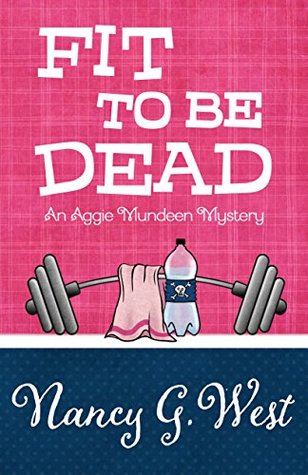
  • Fit to be Dead by Nancy West – Cozy Mystery for clue fans

    Fit to be Dead by Nancy West – Cozy Mystery for clue fans

    Aggie is the author of the “Stay Young with Aggie” column and today she decides to follow her own advice. After all, she’s well over 30, admits to a few extra pounds, and looks ahead to growing old with sheer fear. She pulls into the Fit and Firm Fitness Center with the thought that she might be able to improve her social life along with her figure. Once inside, she receives a guest pass and another kind of pass – from a gorgeous blond who introduces himself as Pete Reeves and offers her a tour of the club. She declines the latter and heads for the locker room.

    As she enters the swimming area, however, she spots something strange at the far end of the pool. It’s a body. And it isn’t moving! Aggie rushes to the rescue and not a minute too soon. Her yell for help brings instructor Sarah Savoy to revive the young woman, Holly. To their combined horror, the women spot an electric cord snaking across the pool. Hard to say what would have happened to Holly first – drowning or electrocution – if Aggie hadn’t been there. Was it an accident or…? Such questions always make Aggie’s feet itch.

    The next day at the gym Holly confesses to Aggie that she had recently given her newborn baby girl—born out of wedlock—to an adoption agency. Trying to swallow her concern and sorrow, Aggie goes to the locker room to shower and dress. But soon she’s hearing screams. She rushes outside just as the medics arrive. Aggie knows two things: it’s Holly and she’s dead.

    Aggie decides she owes it to Holly to find out what happened. She’s certain that the hit and run was a second—this time successful—attempt on Holly’s life. But questions remain: Who? Why? As the column writer becomes sleuth, her spunk and determination return, along with her unique madcap approach to life.

    As Nancy West finished her award-winning Nine Days to Evil (2012), something about one of the supporting characters, Aggie Mundeen, wouldn’t let her rest. This character seemed to demand that West make her the protagonist of a new book. Thus, Fit to Be Dead was created!

    West crafts her characters with considerable expertise and an extensive vocabulary. West knows how to turn a phrase and how to keep you turning the pages. Additionally, this author has the keen knack of slyly tucking in clues so that they slip past readers at first, then pop up later. Thank you, Nancy West for crafting the Aggie Mundeen mysteries!

  • Ghost Toasties (Good Vampires Book 4) by Karl Larew – Humour/Satire, Vampires, Literary

    Ghost Toasties (Good Vampires Book 4) by Karl Larew – Humour/Satire, Vampires, Literary

    Volume 4 of a trilogy? That’s no typo! It’s just that those Bad Vampires had more mischief up their sleeves—and of course our Good Vampires couldn’t let them get away with it, especially when it seemed the Baddies had a Plot to Destroy Civilization as We Know It! Readers of Volumes 1-3 know that author,  Karl Larew couldn’t leave his readers in the dark…he had no choice but to write a Volume 4. Say hello to Ghost Toasties!

    You Newbies, who haven’t YET read the first three volumes, need to know that there are, indeed, vampires on our planet. The Bad Vampires engineer criminal plots to get human blood (which they cruelly gorge on, leaving their victims dead), creating really weird sorts of mayhem throughout the globe. Even Good Vampires have a metabolic need for small amounts of blood, but they have good human friends or, in some cases, human spouses who willingly, even lovingly, meet their needs in a sexy way – and sometimes by serving real Bloody Marys!

    The Good Vampires do their damnedest to halt the Baddies’ criminal schemes and to extinguish the Bad Vampire population. That’s why the Association of Good Vampires was created. It’s headquartered in New York City, in the Manhattan mansion of their chief, millionaire Mr. Arleigh Granville. The New York Association’s highest-ranking special agents are Mr. Granville’s vampire wife Inge (converted from Bad to Good Vampirism), Lance and his human wife Carol, and Nigerians Nigel and wife Becky, who are aided by bodyguards Gladdy and Dizzy, along with their wives, twins Helovah and Delivah.

    This cast of characters was considerably expanded at the end of Volume 3 by the arrival of five(!) babies—Arleigh Jr., Mary Jane, Reginald, and Pixie and Trixie—born within minutes of each other to the three special agent couples and the two bodyguards and their wives!

    Our story begins with Lance wakening Carol from a nightmare. As Lance tries to calm her, they hear a knock at the door. It is their friends and fellow agents, Nigel and Becky, inviting them to go out for a drink. But, as often happens, the phone rings. Inge, Arleigh’s assistant as well as wife, asks the agents to attend an emergency meeting the next morning. “Bring the babies,” she tells them. “Miss Overy (Arleigh’s secretary) can take care of them.” (Isn’t that what secretaries are for?)

    Somehow the Baddies have learned about the meeting and two men with pistols kidnap the two couples as they walk to HQ with their babies in strollers. Gladdy and Dizzy, of course, come to the rescue, followed by their wives and babies. Once at the meeting, they learn that at least part of the Baddie plot is in its early stages in Hawaii. But how can the special agents go to Oahu when they have babies needing to be fed and diapered?! It is decided that only the two primary agent couples, and Becky’s pet wolf, Wolfie, will fly to Hawaii in Mr. G’s private plane, leaving Mary Jane and Reginald at the mansion with the Granvilles and Miss Overy. Once in Honolulu, they will enlist the aid of Molly Houlihan and her mother, Holy Moly (friends of the Good Vampires from earlier adventures who now run a whore house called the Ukelele Girl) and Beatrice, a prostitute with a heart of gold (well, maybe silver).

    But first they visit the laboratory of Dr. Lester Griswold, Ace Scientist of the Good Vampire Association, who presents them with his newest gadgets, including an Ectoplasmic Dissolver Ray Gun that toasts ghost ectoplasm to a crisp, turning it into “ectoplasmic ghost-toasties” (Aha!). It can also destroy the electronic triggers of nuclear bombs, which the Baddies are apparently collecting for their plot to blow up special targets around the world.

    After the agents pick up their reinforcements at the airport, they head for Bernie Ernie’s house near Opana, where they find a machine labeled Ectoplasmic Synthesizer. When Bernie unsuspectingly arrives, they capture him. He agrees to help, spilling the beans, including news that the Big Boss is called Mr. Very Big (big help!). But who is Mr. Very Big, where is he, and will he continue with his plan to destroy the world? There’s only one way for you, dear reader, to find out, and will you ever be surprised!

    No need to bite your fingernails, however. You know you can trust Karl Larew’s Good Vampire special agents to complete their assignment and get home to their BABIES, especially after an urgent call from Chief Granville:  “All the diapers are dirty, and the washing machine’s broken down… COME HOME AT ONCE!”

    “The Bad Vampires strike again, but this time our Good Vampires have a secret weapon to make Ghost Toasties in the much anticipated and hilarious fourth “spooks and spoofs” book in Karl Larew’s Good Vampire trilogy.” –Chanticleer Reviews

  • S is for Safari: An Alphabetical Adventure with Quickly, the Magic Spatula by Jeryl Abelmann and Miriam Kronish

    S is for Safari: An Alphabetical Adventure with Quickly, the Magic Spatula by Jeryl Abelmann and Miriam Kronish

    Quickly, the Magic Spatula has returned in an engaging new book by award-winning authors, Miriam Kronish and Jeryl Abelmann. Illustrator Daniel J. Seward playfully portrays Quickly in white sneakers sporting a bright red ‘Q’ and brings Quickly, PanDora, and their new friend Ponnie to life with sparkling eyes and action poses. His animal illustrations are both accurate and charming.

    After greeting us with a big “Hello!” Quickly explains that Ponnie, a spatula that he and his old friend PanDora met last year, has invited them to visit his country, South Africa. He will be their safari guide, driving their smiling green jeep as they make their way around the land to “visit the animals and learn their names” [each one representing a different letter of the alphabet] and “see the country [with sights representing a letter] and play some games.”

    Kronish and Abelmann’s alphabet stories, which proffer a few simple facts about the animals and places, are written in the most delightful verse. Rhyming words are here, there, and everywhere! For example: “B stands for Buffalo…If you look at its back, you’ll find a tiny bird. No, it’s not absurd to find a bird. The oxpecker is its name. What a wonderful word! And the buffalo loves to be part of the herd.” Another favorite, “H stands for Hippo—Hippos love to play in water. Don’t you think they oughtta?” Then there is “Victoria Falls—where the water never stops falling, and the mists never stop rising. It’s not so surprising.” Finally, the safari party meets the Zebra, which “gallops like a horse, and is related to a donkey, of course!”

    The safari is over. It’s time to go home. As a parting surprise, Ponnie gives his friends a recipe for the South African Pannekoek, or pancake, which Quickly shares with us.

    Quickly’s safari adventure is a delightful way to introduce children to new vocabulary words, geographic information, and learn about African animals. The handy games make learning this new information fun and entertaining. And the captivating rhymes will have young readers giggling as they repeat the verses.

    Next, children and adults will have a lot of fun with “Quickly’s Safari Adventure Coloring & Activity Book.” And, if you haven’t already read them, “Quickly, the Magic Spatula” and “Quickly’s Magical Pancake Adventure” will fill you in on the story of how Quickly came to life and his earlier adventures.

    Quickly, the Magic Spatula

    A surefire way to make a children’s book a favorite is to mix a bit of truth with a bit of magic, and that’s just what Jeryl Abelmann and Miriam Kronish have done in the award winning “Quickly: The Magic Spatula.” Chason Matthams’s illustrations further enliven the story with their unique design and bright color.

    Big sister and younger brother, all grown up, are searching for mementos in the attic of their childhood home when they come upon a dusty box marked ‘kitchen utensils’. Pulling the cardboard flaps open, something catches their eyes, and they both shout “Quickly! It’s Quickly!” An old spatula—its metal bent and dulled, and the green paint on its handle almost peeled off. But in an instant, brother and sister are young again, once more in Mommy’s sunny kitchen.

    Mommy’s delicious pancakes are sizzling in the pan, as always on Sunday mornings, and the children eagerly awaiting a plateful. Suddenly Mommy cried “Jeffrey! Please bring me the spatula—quickly!” Jeffrey grabs the sparkly, green-handled spatula and, running across the kitchen, hollers “Here’s Quickly, Mommy!” Four-year-old Jeffrey thinks the spatula was named Quickly!

    Discovering that he has a name brings the spatula magically to life. Quickly, the spatula is now convinced that he possesses the magic to make Mommy’s pancakes taste better than ever. And sure enough, Quickly’s magic works!

    For children as well as adults, giving life to an inanimate object can create magic in a story—or two or three. Quickly, the Magic Spatula gives us pause to consider the beloved objects in our daily lives that create magical memorable moments—a great way to start a conversation with children! The story is also a much needed reminder to busy adults just how special simple rituals can be to children and the memories that create can last a lifetime.

    Be sure to follow Quickly’s continuing story in “Quickly’s Magical Pancake Adventure” and “S is for Safari: An Alphabetical Adventure with Quickly, the Magic Spatula.” Then have fun with “Quickly’s Safari Adventure Coloring & Activity Book.”

    Quickly’s Magical Pancake Adventure

    Miriam Kronish and Jeryl Abelmann’s lovable character, Quickly, the Magical Spatula, returns in Quickly’s Magical Pancake Adventure. In this story, his magic extends beyond helping Mommy make Silver Dollar pancakes in her sunny kitchen. Quickly decides to see the world and meet other spatulas who make different kinds of pancakes. But there is more magic at work in this book, with the power to pique young readers’ interest with not just an engaging story, but also what could become an enjoyable activity for the whole family!

    Eager to begin his next adventure, Quickly wiggles out of the frame in which Jeffrey and his sister had placed him. He hops out the window and sets off on his adventure. Soon he meets up with a friendly fellow spatula, who introduces himself as Backburner, the Pancake Turner, or just Bernie. He is a pancake historian, on the lookout for new facts about pancakes, and invites Quickly to join him.

    The new friends head down the road until they see a large colorful sign: “Calling All Spatulas to the First Annual Spatula Camp.” Heading for the Grand Exhibition Hall, they join a crowd of spatulas—of all shapes and colors—deciding which sessions to attend: pancake recipes and tips, pancake songs and stories, pancake makeup (like cherry cheeks and blackberry brows), or Great Chefs’ Pancakes, at which each chef will share a special recipe.

    While at the camp, Quickly collects recipes from the chefs, while Bernie picks up griddling tips. Then they join a group of spatulas listening to PanDora tell the story of Pancake Day in the UK. Quickly muses about a world in which all people belong to one big, happy pancake-eating family. Inspired, he writes “A Pancake Poem” to share with his new friends.

    Quickly suddenly realizes it is time to go home. In less time than it takes to say ‘Quickly, the Magic Spatula’, he lands on the kitchen counter (where, as you will see, the book’s respected illustrator, Chason Matthams, has laid out all the ingredients for Mommy’s Silver Dollar pancakes). Before Quickly climbs back into his frame, he compiles his collection of famous pancake recipes just for his readers including one from one of my favorite chefs, Jacques Pepin.

    Young readers will be happy to know that “Quickly, The Magic Spatula” and the new (2016) “S is for Safari: An Alphabetical Adventure with Quickly, the Magic Spatula”, and the beautiful coloring/activity book, “Safari Adventure Coloring & Activity Book” are available for more fun and adventures.


  • ZOOMBIES from PLANET X by Karl Larew – Vampire Special Agents to the Rescue!

    ZOOMBIES from PLANET X by Karl Larew – Vampire Special Agents to the Rescue!

    Another madcap adventure of the Good Vampires—especially the hilarious special agents of the New York Good Vampire Association—battling the mean old Bad Vampires to save the world from mayhem comes to us from university history professor and author of wacky spoofs, Karl Larew. Good Vampire-loving readers you know who you are! Prepare for a spookin’ and spoofing good time with this one. To newbies, join the party. You’ll have a rollicking good time. Larew has come through again with a fun read for adults who’ll surely appreciate this mash-up between James Bond, Inspector Clouseau, and Buffy the Vampire Slayer.

    This third volume in the Good Vampire Trilogy commences, not surprisingly, with Lance and Carol snug in bed. Lance pats Carol’s bare bottom before using his spring-powered lancet to make two neat little holes in one nicely rounded cheek and begins to suck her blood. The humanly handsome Good Vampire Lance Blodgett, now married to totally human Carol, leaves no bruises, causes his beloved partner little if any pain, and takes care not to be greedy. After all, Carol must produce more blood for her own needs now that she is pregnant. However, Lance (a professor of vampire lore at a university in New York City) has been away at an academic convention and requires at least a few sucks to appease the vampire’s metabolic need for a ‘nip’ of human blood now and then.

    Once satisfied, he applies a Band-Aid to Carol’s rear-end, and the loving couple turns toward each other with a passionate kiss. But no sooner has their love-making begun when the door buzzer sounds. Punching the intercom button, Lance learns that Nigel and Becky, their friends and New York Good Vampire Association special agent partners, have urgent news. As Lance lets them in the apartment, he can see the excitement in their lustrous, dark Nigerian faces—especially the pregnant Becky’s. (Yes, these newlyweds are expecting also!) Nonetheless, Lance and Carol can’t help but grumble about the exquisite timing of their friends’ unexpected arrival.

    “Sorry, Old Boy,” Nigel apologizes and snickers a bit. But, he explains, they’ve got to burn rubber and get to Headquarters. Their leader, Mr. Granville, needs them NOW. As they leave the building, they discover the legendary Arnold Robertson, Ace Special Agent of all Good Vampire branches in Europe, crumpled up on the floor by the mailboxes in the foyer. Robertson is barely able to mumble a message for Mr. Granville—“pyramid in Egypt-Nubia area…secret of mummies…chemicals for zombies…find pluh, an, et, X”—before dying. The NYC agents call a Good Vampire ambulance to come for Robertson’s body before heading out.

    Arleigh Granville’s Good Vampire hit men, Gladdy and Dizzy, admit the four special agents to the mansion, and they are soon closeted with their leader. Mr. Granville is saddened by Robertson’s death but realizes that it must be related to a new Bad Vampire plot in Europe and, apparently, Egypt, to overcome the Good Vampires and conquer the world. Noticing Carol’s and Becky’s ‘baby bumps’, he wonders if they’re up to accompanying their husbands to Europe to quell the plot (of course they are!), and proceeds to tell them that his wife Inge (a reformed Bad Vampire) is expecting also. Then Gladdy and Dizzy exclaim that their new wives (also reformed Bad Vampires), twins Delivah and Helovah, are suffering morning sickness. The group soon discovers that all five babies are due in October (just possibly on the 9-month anniversary of a super party celebrating the last victory of the Good Vampires over the Bad ones?). Then Lance, rubbing his chin, breaks the happy spell with the thought that perhaps Robertson was trying to say “Planet X” (wherever that is!).

    After a visit to the Good Vampire Laboratory of Doctor Lester Griswold—who presents them with his latest James Bond-like secret weapons: a pen enclosing a long poison-tipped ‘toothpick’ that can pierce mummy bindings; a pistol that shoots a hardening goo that can stop and stick a mummy or a zombie in its tracks; and another pen that is actually a laser gun, whose light makes these critters turn away in pain and might also set them on fire—the four special agents are soon flying across the Atlantic on their way to Paris. Annette in Paris (a Good Vampire) has reported that the Son of Elmer (a very bad vampire) is vowing revenge on all Good Vampires.

    With this news, the special agents’ task is spelled out. Although they team up with Annette and the Paris branch, the agents share a sneaking suspicion that the European group has perhaps been infiltrated by Bad Vampires. (It has happened before!) So, they decide to head to Egypt alone, where they team up with Mr. Granville’s contact, Professor Anwar Jones of the Egyptological Institute. They learn that the fiendish Son of Elmer has discovered a chemical formula that can turn mummies into zombies, who will be sent out to eliminate not only Good Vampires but also many good humans. Their bodies (even un-mummified) will be transformed by the chemical formula into more zombies, who will join the other zombies and the Bad Vampires in their maniacal plan to conquer the innocent human world—unless, that is, our special agents cunningly devise a way to stop them!

    As seasoned readers of Volumes I and II can guess, and newbies will soon discover, the two special agent couples and the professor make their way from one sticky adventure to another by every means of transport imaginable (even roller skates?)—cleverly skirting danger and generally dispatching their enemies with the aid of Dr. Griswold’s ingenious arsenal of James Bondish devices. Exploring a pyramid, they run into both mummies and zombies. The dummy mummies and lumbering zombies aren’t too hard to escape from until they meet up with a zombie on roller skates—he’s soon zooming right on their tails. By golly, he’s a ‘zoombie’!

    Cunningly escaping from the Egyptian zoombies, they head back to France—Alsace and Reims, then to the Rhineland in search of the Son of Elmer (aka “Ralphie”), back to the Paris branch (YES, there HAS been a Bad Vampire infiltration), and once more to Egypt—always remaining a RAT-A-TAT-TAT ahead of the zoombies, not to mention Ralphie and his henchmen.

    Don’t bite your fingernails too short reading all about that, because you’ll soon follow our agents to Nashville, TN. Why? A new venue for zombie business, that’s why, this time involving Vampire Cows, and Ralphie, of course. “Who writes this stuff?” (a voice out of nowhere asks). Enough!

    Remember all those babies due in October? Well, all five mothers-to-be go on maternity leave at a bucolic boondocks mansion in upstate NY, under the care of Dr. Griswold. Needless to say, the boondocks don’t remain bucolic, but you can read all about that, then join our agents in the maternity ward, and, finally, learn why this wild tale ends with a single, innocent-sounding word…breadsticks?

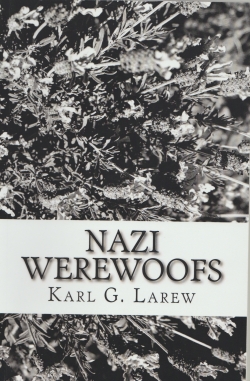
  • NAZI WEREWOOFS by Karl Larew — a zany and fun vampire spoof for adults

    NAZI WEREWOOFS by Karl Larew — a zany and fun vampire spoof for adults

    In Karl Larew’s second humorous and highly entertaining vampire spoof, the battle continues in which the Good Vampires seek to protect their own (and all good people) against the greedy aspirations of the power-seeking Bad Vampires.

    The Good Vampires, Lance Blodgett and sidekick Nigel, along with their normal human and gorgeously sexy girlfriends Carol and Becky, are called to action again.  The book has refreshingly laugh-out-loud humor with a smidge of the burlesque for the middle-age and over set who appreciate the irreverent early James Bond flicks, the original Wild Wild West and Star Trek series as opposed to the angst of the Twilight’s vampire and werewolf stories.  All in all, a hoot of (or should I say a “woof”) of a read to be enjoyed with your favorite cocktail.

    (If you’ve read Larew’s Bad Vampires, you already know of course that Good Vampires, while human in most respects, have a metabolic need for a periodic sip of human blood. [fusion_builder_container hundred_percent=”yes” overflow=”visible”][fusion_builder_row][fusion_builder_column type=”1_1″ background_position=”left top” background_color=”” border_size=”” border_color=”” border_style=”solid” spacing=”yes” background_image=”” background_repeat=”no-repeat” padding=”” margin_top=”0px” margin_bottom=”0px” class=”” id=”” animation_type=”” animation_speed=”0.3″ animation_direction=”left” hide_on_mobile=”no” center_content=”no” min_height=”none”][Carol has become Lance’s quite willing donor, as well as very human lover.] Bad Vampires, on the other hand, are common and uncommon criminals in every respect, not only hungering for money and power, but also cruelly biting and killing innocent humans to gorge on their blood.)  

    This second tale, an especially furry one, begins exactly where the first left off, with Lance and Carol snug in bed…that is, until they are abruptly interrupted by a pounding on their door. Lance finds a disheveled and distraught Becky, crying that she has been attacked and bitten by a Bad Vampire in Central Park. Lance and Carol get the tall, beautiful Nigerian to the Good Vampire Dr. Griswold. Seeing fleas on Becky, Dr. Griswold tells the three that he has just been informed by Arleigh Granville, head of the New York Association of Good Vampires, that a Bad Vampire in Germany has concocted a drug to turn people into werewolves (good hosts to fleas), who then infect their victims with ‘werewolfism’. Becky must be such a victim—a diagnosis immediately confirmed when she appears to be transforming into a werewolf. Becky, however, turns out looking more like a Labrador retriever and is soon recognized as a ‘werewoof’, wagging her tail. Fortunately, the good doctor Griswold has an antidote, injections of which return Becky to normal—thank goodness!

    When Mr. Granville learns what has happened, he explains to the foursome that a Bad Vampire in Bavaria, Baron Wolfgang von Verdammte, is behind the werewolf plot. He appoints the four as Good Vampire secret agents, and they are soon on their way to Europe, tasked with squelching the werewolf plot and its aim of a Bad Vampire takeover of the world!

    Starting in Paris, the action moves on to Germany, with Carol ending up at the Baron’s castle in Bavaria (perhaps Mad King Ludwig’s Summer Palace).  One incredible (believe it!) adventure follows another for the secret agents, with more human-werewolf or werewoof transformations, double agent and mole (not that little rodent) infiltrations of both the Good and Bad Vampire contingents (until neither side is sure who’s which!), a one-upmanship struggle over a coffin purportedly containing the remains of the Baron’s mentor, no other than Adolph Hitler (no kidding!), wild goose and car chases, one-sided shootouts (guess who always wins), and pussy galore (with even the werewoofs wanting their share). Be it known, however, that no matter how hard the Baron, aka Wolfie, craves Carol, both as his “little ginger snap” and as “the most Aryan uterus conceivable” (for his planned Fourth Reich), this sexy secret agent is one skillful evader whose heart belongs to Lance.

    If you’re not willing to join in this cock-eyed parody between the Vampires and cheer the Good Vamps on to victory, go find some other book (something by Mary Shelley, perhaps?). But if you’d like to laugh yourself to sleep, Larew’s zany tales—both Nazi Werewoofs and Bad Vampires—will offer you a fun and entertaining diversion.  Then you can ponder how this retired college history professor came to write these amusingly unconventional tales.  

     [/fusion_builder_column][/fusion_builder_row][/fusion_builder_container]

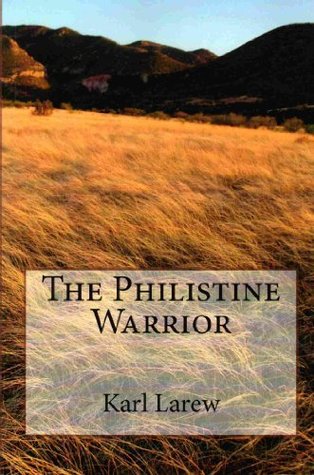
  • THE PHILISTINE WARRIOR by Karl Larew, Ph.D. – War, love, politics, and the emergence of chariots

    THE PHILISTINE WARRIOR by Karl Larew, Ph.D. – War, love, politics, and the emergence of chariots

    There is definitely something for everyone in Larew’s The Philistine Warrior—war, love, politics, and history in the Middle East just before the rule of King David (c. 1,000 – 960 BCE).

    Many readers have enjoyed Karl Larew’s Paul’s Three Wars, the trilogy of U.S. Army Signal Corps officer Paul Van Vliet, and his family, from WWII through the Vietnam War. Larew is quite adept at giving his readers a portal into the very different lives of active military officers and their families (as in contrast with civilian life).

    In The Philistine Warrior, Larew  carries his exemplary skill in this subgenre of historical fiction to the portrayal of the military exploits and family life of an army officer further back in history—way back—to 1115-1110 B.C. While the chariots, arrows, and javelins of that era have been supplanted by tanks, rifles, and bombs, the camaraderie and rivalry among officers and the disruption of their families have remained much the same, changing only in form over the millennia.

    Captain Phicol, trying to escape the humid heat of Askelon, along the Mediterranean coast of Philistia (part of the territory of Canaan, later called Palestine), goes for an early morning swim in the sea. He spies a beautiful young maiden engaged in the same pursuit and watches from a distance as she emerges from the sea totally naked.  As she proceeds to enter the palace of his Uncle Zaggi, Phicol realizes that she is his young cousin Delai.

    Later called to Zaggi’s palace himself, Phicol encounters another officer just leaving. Meeting with his uncle, he learns first that the officer is Major Warati, a new protégé (hmm), and then that Zaggi has received a letter from Melek (King) Nasuy saying that Delai is desired as a bride for his younger brother, Ekosh, who is now a general in the service and the court of Egyptian Pharaoh Ramses IX. Phicol is to escort her to Thebes.  Over the lengthy trip, his feelings for Delai come to surpass those of a cousin, but of course he keeps them to himself, just as 16-year-old Delai does hers regarding marriage to the 45-year-old general.

    Phicol’s rivalry with (newly promoted) Colonel Warati escalates. Larew skillfully draws on his military knowledge to describe the military tactics (as he sees them) of the Philistine ground forces and charioteers, especially those led by Phicol. Returned to Askelon, Phicol is rebuked for engaging in a row with Warati by his uncles Maoch and Zaggi—the Sheren (Lord) and Chancellor, respectively, of Askelon, one of the sovereign cities that comprise Philistia.

    Meanwhile, back in Egypt, Delai has given birth to a healthy son, Akashou. She is convinced that the infant was protected in utero and at birth by the Goddess Inanna of a secret cult, in whom she was led to believe by the temple priest, Ibbi. The role of religion in this time and place, pervaded by politics, makes for a fascinating story in itself.

    When Ekosh’s elder brother, Melek Nasuy, dies, Ekosh is elected (in absentia) Melek of Philistia. Phicol travels to Egypt a second time, carrying this news to the royal couple. Ekosh worries about leaving the Pharaoh—weak as all the Ramses descendants have been since the great Ramses II and Ramses III.  A group of conniving priests will likely seize power, leaving the Pharaoh as a figurehead on the throne.

    When the Danites put the plains city of Ekron under siege, Ekosh, with his aide-de-camp, Phicol, lead the Philistine armies to the rescue. In the aftermath of a minor skirmish, the giant Danite leader Samson escapes in the confusion. An intriguing version of the biblical story of Samson and Delilah ensues that lays the foundation for more political intrigue, betrayal and subterfuge, and plot twists, which leads to more battle strategies and political and personal intrigue. Larew is excellent at giving his readers more insight into how religious dogma affects culture and government along with an interesting history lesson about the rise of nations in the Middle East and Northern Africa– long before the Roman or Greek Empires existed.

    After considerably more horror and sorrow, not to mention political twists and turns, including exile in Assyria, the matured Philistine warrior, his beautiful, loving, and supportive wife, their baby son Achish, and Ibbi—still with them as friend, priest, medical adviser, and not so accurate seer—find themselves welcomed back to a relatively peaceful Philistia.

    The author has come through again with the attention to detail he is known for, though perhaps more of it than some readers like, but fans of historical fiction will relish. His characters are drawn with precision, whether they are good, bad, or downright evil. My personal favorite is Ibbi. Two not mentioned in this review are Rachel, Delai’s slave, then servant, as well as friend and companion. Another is Amphimachus, the venerable yet unassuming High Priest of Dagon, always there when Phicol needs him most.

    Karl Larew, Ph.D. is a retired history professor, so readers should approach this novel (412 pages) as a comprehensive account of the times with introduction of new war technologies such a chariots and organized battle tactics, the long history of the numerous nations/tribes that been warring for centuries, and the events of the time. Larew’s telling from the eyes of a heroic young Philistine nobleman living in ancient Palestine gives readers a new perspective of this time and place in history. However, true to Larew’s style (He can write as deftly about passion and love as he does about battle tactics and military politics.), passion and romance is juxtaposed against the battle tactics and court intrigue, proving that the more things change, the more they stay the same.