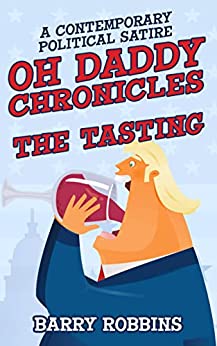
For those of you who still have heartburn from the last administration, Barry Robbins, sharp-as-a-whip satirist, has come to our rescue with his new short work lampooning Donald J. Trump, #45, in his uproarious short story, Oh Daddy Chronicles – The Tasting.
This book draws from two earlier books, Oh Daddy Chronicles and Oh Daddy Chronicles 2: Return of Covfefe. These enlightening and downright hysterical parodies place readers squarely in the Oval Office and at Mar-a-Lago, respectively.
Oh Daddy Chronicles: The Tasting samples each previous book plus some new material. They come together in a hands-down, laugh-out-loud lampooning of #45 – and everyone else in sight. From Ivanka to Jared, Vladimir to White House staffers, Robbins pulls no punches and hits his target every time. Even Elizabeth Warren and Bernie Sanders are fair game along with Fauci and the Cheneys.
Robbins sees the funny everywhere, and thanks to him, so do we.
With episode titles like Hydroxy and Me, Billy Bob and Bobbie Sue, Cheneys vs. Trumps, to name a few, Robbins gives readers material in which we can frame those years and put them in a manageable perspective. We learn how much #45 hates the color blue – and why. Readers also learn why his special relationship with the Russian dictator may be more worrisome than any of us previously thought, and oh so much more.
Robbins’ unique and engaging short work will no doubt drive readers to the first two books.
Another way Robbins engages his readers is via a poll. Readers get to choose which answer they like best from a number of possibilities given by political figures mentioned in the book to the question of, “Why did the chicken cross the road?” Simply brilliant.
CHANTICLEER 10 Question Author Interview Series with
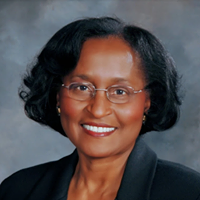
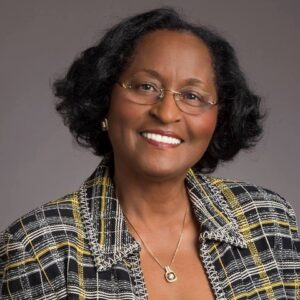
Dr. Janice Ellis
Dr. Ellis has written columns for newspapers, magazines, radio commentary, presented internationally across the U.S., and now online. For the past 30 years she analyzes educational, political, social and economic issues across race, ethnicity, age and socio-economic status. She continues her important work in these challenging times.
Dr. Janice Ellis, columnist, author, journalist, radio commentator, and advocate of social justice and Women’s Rights.
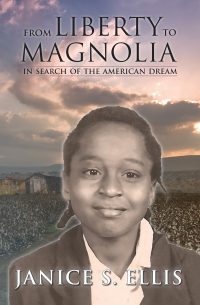
Dr. Janice Ellis entered her book From Liberty to Magnolia In Search of the American Dreaminto the 2018 Journey Book Awards for Narrative Non-fiction, a division of the Chanticleer International Book Awards (CIBAs). Her stellar memoir was awarded the 2018 Journey Book Awards Grand Prize. The award winning memoir is a truly remarkable book telling what it is like to be Black in America.
We are honored that Dr. Ellis presented The Critical Role Authors Play in Fostering a Better Society at Chanticleer’s first virtual conference, VCAC20. Her presentation was inspirational and thought provoking. Janice S. Ellis has been an author for over 30 years and has written a column for newspapers and radio throughout her career about education, politics, race and socioeconomics. Janice Ellis holds a Ph.D. in Communication Arts, and two Master of Arts degrees, one in Communications Arts and a second in Political Science, all from the University of Wisconsin, Madison, Wisconsin.
Dr. Ellis is one of our favorite authors—and truly a joy to get to know. She reminds us that the pen is mightier than the sword!
Now, let’s get better acquainted with Dr. Janice Ellis.
Chanticleer: Tell us a little about yourself: How did you start writing?
Dr. Ellis: A native daughter of Mississippi, I grew up and came of age during the height of the Civil Rights Movement and the Women’s Liberation Movement. Born and reared on a small cotton farm, I was influenced by two converging forces that would set the course of my life. The first was the fear and terror felt by blacks because of their seeking to exercise the right to vote along with other rights and privileges afforded whites. The second was my love of books, the power of words.
I began writing as a radio commentator for a large radio station right out of graduate school and continued to write commentary for newspapers and radio throughout my career. I also published articles professionally in trade journals. I began writing because I thought the need was great for a good political columnist to help the public better understand those issues that affected their daily lives. A good columnist can impact policy and help shape public opinion to support what Aristotle calls the “greater good.”
Chanticleer: When did you realize that you were an author?
Dr. Ellis: I gave it a fleeting thought when I was exempted from an English composition course as a freshman in College after writing some essays during a summer program. But the desire to become an author became more compelling in graduate school in my preparations to become a columnist/commentator. Personal and professional experiences inspired me to become an author of books. From Liberty to Magnolia: In Search of the American Dream is my first book.
Chanticleer: That book has won quite a few awards! In fact, it took home the CIBA 2018 Grand Prize in the Journey Awards for Memoir and Narrative Non-Fiction, From Liberty to Magnolia: In Search of the American Dream. I hear it is collecting other awards, as well. Congratulations!
Dr. Ellis: I wrote my book because there are lessons from my life journey through poverty, racism, sexism, and sexual harassment that I believe can directly benefit girls and women, blacks, and other minorities. It addresses many of the issues around racial and gender inequality that America continues to grapple with.
Chanticleer: Thank you for being a graceful and astute voice of authenticity in our world today. We need you! Do you find yourself following the rules or do you like to make up your own rules?
Dr. Ellis: I basically follow the rules. I have a strong sense of wanting to do the right thing. When that becomes difficult, I still figure out, follow my own path to achieve goals and desired results.
Chanticleer: What do you do when you’re not writing? Tells us a little about your hobbies.
Dr. Ellis: I love reading the Bible and religious commentary, and political and historical nonfiction. When not reading I like to play scrabble and other word games. I also enjoy watching cable news, dramas, thrillers, espionage and action films, some romance and comedy shows. Walking, gardening and fishing are rejuvenating hobbies that I find very fulfilling and satisfying.
Helpful Sources from Dr. Ellis:
* Dr. Ellis writes about her life experiences and enjoys sharing about how she navigated common challenges.
* The writing craft books that have helped her the most are William Zinsser, On Writing Well and Writing About Yourself * The books about the business of writing that have been most beneficial are Writer’s Digest, Literary Agents, How to Write a Book Proposal, and How to Market Your Book
Chanticleer: What are you working on now? What can we look forward to seeing next from you?
Dr. Ellis: I am working on two shorter books, Realizing Your Dream: A Handbook Based on Experience, and Overcoming Racism and Sexism During Your Lifetime. Hopefully, one of the above books to be released later this year.
Chanticleer Aside: Dr. Ellis won the Nellie Bly Grand Prize for her upcoming journalistic book, Shaping How Public Opinion: How Real Advocacy Journalism Should be Practiced.
Chanticleer: How structured are you in your writing work?
Dr. Ellis: I have always wanted to be able to write something every day but have yet to achieve that goal. The need to write fresh content on my website has helped the frequency of writing short pieces. In working on books, I usually write until I cannot write anymore, sometimes for 10-14 hours segments. What I have learned that if I stop in mid-sentence, it is easy for me to resume when I begin again.
Chanticleer: J.D. Barker does that, too. It’s good advice. How do you approach your writing day?
Dr. Ellis: For a long time, I would begin writing as soon as I awaken and get a cup of coffee. Happily, now, I write anytime during the day. I sit at my computer and open to a blank page, if I am beginning a new article or chapter, it motivates me to begin putting my thoughts down. If I am in the middle of a piece, I pick up where the incomplete sentence stops.
Chanticleer: Name five of your favorite authors and describe how they influence your work.
Dr. Ellis: Former President, Jimmy Carter. The simplicity, yet elegant way he writes about his life, his work, and his values in making things better for humanity. Former President, Barack Obama. His vivid way of writing about his life and the American experience and his vision, hope, and optimism for a better America. Maya Angelou. Her cinematic description and compelling call of attention to the not-so-flattering aspects of humanity and highlighting the need for us to change and move toward our higher selves. Robert Ludlum. His command of the intrigue and complexity of characters and storyline. Kings Solomon and David. For the power, poetry, and wisdom in their books of Proverbs, Ecclesiastes, and Psalms.
Chanticleer: Great choices! What areas in your writing are you most confident in? What advice would you give someone who is struggling in that area?
Dr. Ellis: I think I am most confident in my ability to analyze and assess a situation and put forth a thoughtful perspective; and the ability to help the reader see, feel, and experience what I am writing about as if they are there with me.
“You must love the craft of writing. It is a craft. You must be dedicated and believe that what you have to say will make a difference. Be willing to write, re-write, and re-write again and again until your words convey the meaning that is intended.” – Dr. Ellis
Chanticleer: Do you ever experience writer’s block? What do you do to overcome it?
Dr. Ellis: Yes, usually a few days after I have completed a writing project. If I must begin a new article or chapter, I pull up a blank page. Sooner or later, I feel compelled to fill the page with words that make sense, that are impactful. Sometimes, I do some activity totally unrelated to writing and find that something occurs to make me begin writing.
Chanticleer: What excites you most about writing?
Dr. Ellis: Sharing thoughts, ideas, experiences, and hopefully solutions that will enlighten, inspire, enable, and encourage someone.
Chanticleer: I admire how your motives are outward – helping others understand their world and how to navigate it. Well done! What do you do in your community to improve/promote literacy?
Dr. Ellis: I donate copies of my book to libraries, and give signed copies to individuals. I speak about the power of reading and try to encourage children and young people within my sphere of influence to read, encouraging them to read to others at every opportunity.
Chanticleer: I love that answer. Give us your best marketing tips, what’s worked to sell more books, gain notoriety, and expand your literary footprint.
Dr. Ellis: I think each author should do a book tour, with TV and radio appearances, if possible. Even if you cannot physically travel from city to city, technology today can allow you to do a lot from our home our local studios.
Also, make use of social media. Posting frequently on Facebook, Twitter, Instagram, and blog posts are a must. Speaking engagements are great to keep your book relevant.
Chanticleer: Especially true today in the face of a global pandemic. What are you working on now? What can we look forward to seeing next from you?
Dr. Ellis: I am working on two shorter books, Realizing Your Dream: A Handbook Based on Experience, and Overcoming Racism and Sexism During Your Lifetime. Hopefully, one of the above books to be released later this year.
Chanticleer: We will be looking for those! Who’s the perfect reader for your book?
Dr. Ellis: Teenage girls, women, minorities who are trying to navigate racism and sexism in reaching and fulfilling their purpose, goals, and dreams in life. And, for all who are concerned about America’s future and who want America’s children of all colors to realize their full potential. It will inform the racists and non-racists, the sexists and non-sexists. It will inspire and empower men and women who are in positions that can make a difference and have the will to do so—parents, teachers, policymakers, social and human rights activists, journalists, business leaders, faith leaders, and many others. Caring Americans, working together, can break the chains of racism and sexism that keep America bound.
Chanticleer: I believe it! What is the most important thing a reader can do for an author?
Dr. Ellis: Write a review and express what the book means to them. Recommend the book to family, friends, and colleagues.
Chanticleer: As always, it is a pleasure spending some time with you today. Be well and keep the good work coming!
If you would like to know more about Dr. Janice Ellis – make sure you pick up her memoir, From Liberty to Magnolia: In Search of the American Dream and her soon to be published ground- breaking work Shaping Public Opinion: How Real Advocacy Journalism Should Be Practiced at your local book store – or other retailers
Also, be sure to like and follow Dr. Ellis on her social media sites:
When I think of “Hindenburg,” I immediately think of the disaster, when the LZ 129 Hindenburg Zepplin caught fire while docking in early May of 1937. It was the first transatlantic passenger flight of the year the famous vessel that had already flown from Germany to Brazil.
Airship LZ 129 Hindenburg Disaster on May 6, 1937. 97 onboard; 36 fatalities. New Jersey, USA
Interesting Facts about the Airship Hindenburg (sourced from the Smithsonian Magazine, May 4, 2017)
The Airship Hindenburg was the world’s largest airship and was roughly the size of the RMS Titanic.
It was to make 10 crossings from Frankfurt, Germany to America (aircraft crossings of the Atlantic were still impossible at this time).
The Hindenburg was moored to the ground when it caught fire.
The entire disaster lasted 40 seconds.
The mystery as to why the Airship Hindenburg caught fire remains unsolved to this day according to the Smithsonian.
As I stated previously, audiobooks and podcasts were not what I thought about when the word Hindenburg was mentioned…
That was up until last fall at the 2018 Digital Book World conference. It was there when Kiffer and I met Chris Mottes, the CEO of Hindenburg Systems for Audiobooks, Podcast Audio Editing software, and Radio Broadcast Software.
I had not thought of the cutting edge technology and communications innovators headquartered in the beautiful and ancient nordic city of Copenhagen, Denmark—Hindenburg Systems.
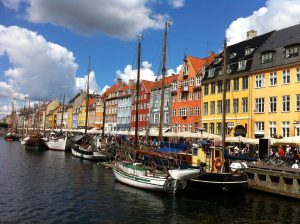
Colorful Copenhagen, Denmark
You may be confused at this point.
Why, you may ask, would a company want to be named after such a disaster?
Oh, that is a very good question!
On the ground that fateful day many observers and journalists were standing by to witness the landing of the Airship Hindenburg. Camera operators were recording the event. After all, it was 1937, things were starting to get tense. We needed something that would capture our collective attention and create a feeling of wonder.
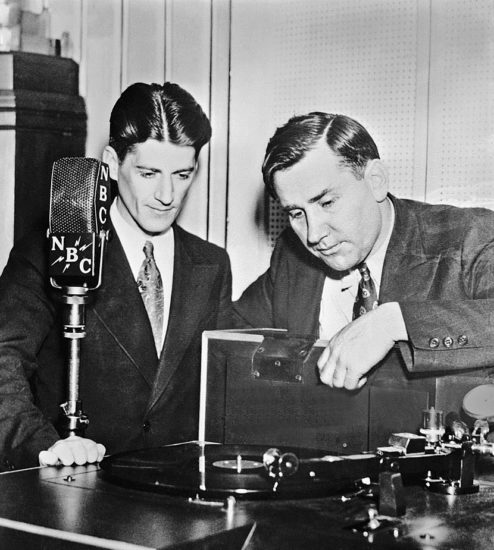
Herbert “Herb” Morrison (May 14, 1905 – January 01, 1989), a radio journalist working for WLS in Chicago had with him the latest in technology, the PRESTO Direct Disc Recorder, to record the Hindenburg’s first landing in America.
Herbert Morrison and Charles Nehlsen with the PRESTO recording equipment.
And then things went horribly wrong.
It is Morrison’s voice we hear rising above the chaos, this one reporter whose voice and name would be forever linked to the Hindenburg disaster as he stuck with his broadcast, relaying what he was seeing until the emotional toll and the horrible smoke overtook him. It was Herb Morrison’s voice that sadly proclaimed, “… Oh, the humanity…”
Morrison was using the very latest in recording technology, the Presto, that allowed this historical account to be broadcasted and archived—at the Smithsonian. It was the world’s first recorded eyewitness news report.
This is the segue to my story:
Bringing timely and important news at record speed is what Hindenburg Systems is all about.
And that is why the Hindenburg Systems team decided on the Hindenburg moniker.
“The Hindenburg Disaster marked the birth of mobile reporting and expanded the possibilities for global communication,” said Chris Mottes, CEO, Hindenburg Systems. “This is why we pay homage to the Hindenburg Disaster.”
“Radio Touches Our Hearts,” Chris Mottes, Hindenburg Systems.
Now, when I think of Hindenburg Systems, I think innovation, Scandinavian ingenuity, and a product that is both timely and necessary for today’s author (and for the Library of Congress–read on to the end of this article for more info).
After all, authors are being called upon to shoulder more and more of the burden of book discovery and marketing, whether indie-published or traditionally published. Most of us understand it’s necessary, but I’m not sure how many of us like it.
Hindenburg Systems makes the task of discoverability much easier.
Hindenburg Systems offers a platform by which authors can create, enhance, and edit their own audiobooks in the ABC Narrator. This product is not new, Libraries for the Blind have been using Hindenburg for years, and they’re not the only ones.
The same is true for the podcasting platform, Journalist Pro. Countries and organizations, schools, radio stations, colleges, and universities have been making use of Hindenburg products for a number of years, for the innovative technologies built into their systems and the ease of operation.
These are just two of the nine systems Hindenburg offers, and it was these two products that Chris Mottes and Martin Swanholm graciously awarded to our CAC19 attendees (who took his class) and the first place winners as well as our Grand Prize winners of our 2018 CIBAs.
This is Hindenburg Systems’ mission statement:
to tear down the technical divide between storytellers and their audience.
Every day 4 billion radio sets are turned on and tuned in. Stories are spread through the airwaves from the Artic to Antarctica. Podcasts are increasing this number.
From cities to rural areas. Radio gives voice to street children in Tanzania, indigenous journalists in Nepal and war correspondents covering the darkest corners of our world.
Radio touches our hearts.
The stories we hear change our perspective.Radio can strengthen communities and build nations. But despite radio being the most widespread media on the planet, there can still be a long way from storytellers to their audience.
Our mission is to close that gap! – Chris Mottes
So, when I sat down with the HS CEO the other day, I had some questions. Chris Mottes is a tall man, who speaks with a deep, accented voice. One might say he has a perfect radio voice. Charismatic and inspiring innovation aside, I thought if someone put a sword in his hand and gave him a shield, he would fill a role on the set of The Vikings rather nicely.
Chris Mottes, CEO of the global Hindenburg Systems
Being that Hindenburg Systems is a global concern, how does he do it?
Well, Mottes being a practical man, engages those who are currently working with a Hindenburg Systems product and brings them along to conferences where he exhibits his goods. The “experts” are from all over the world. When we were in Chicago, Johnathan Hurley was Mottes’ go-to guy. Hurley teaches music at a high level (over 15 years) utilizing Hindenburg Systems podcaster in his work.
We met at a greasy diner in Chicago, I believe he had the pancakes, I’m not sure what was on my plate. (Sorry Chicago! We couldn’t find the riches of your acclaimed breakfasting establishments.) Afterward, we found a gem of a coffee shop to sit and chat. The first thing I found out about Chris he is passionate about radio, coffee, rugby, and his family, not in that order.
At heart, Chris is a family man, and although his job takes him on the road nearly 80 percent of his time, he is able to recharge back in Denmark with his wife and three daughters – sometimes meeting up with them in remote locations from time to time.
Because his parents were offered work at the Royal Swazi Inn in Ezulwini, Swaziland, Chris grew up with a wider world view than most of his Scandinavian neighbors. He speaks several languages, including three Swazi dialects, and calls the world his home. When asked what his favorite places to visit are, he responds immediately: It’s a tie between South East Asia and South Africa.
Chris has been involved with several innovative companies, from noir Game Media to documentary films. But the most impressive thing Mottes told me that day was what attracts him to a business in the first place. Given that Mottes is driven to make a positive difference in the world, it’s the vision of a company that is paramount in Chris’s book. It has to be something other than making a lot of money. So, really, it is no surprise that Hindenburg Systems caught his eye and joined the team as CEO and Partner in 2011.
Hindenburg is the brainchild of CTO, Preben Friis, and Creative Director, Nick Dunkerley. Onboard as the software designer is Martin Swanholm, who along with Chris attended CAC19
Try out Hindenburg Systems for FREE — Yes, absolutely for FREE (no credit card needed)
These are the two Hindenburg System Products that authors, publishers, and podcasters absolutely should check out and take for a test drive!
Hindenburg Systems are friendly with Apple & Windows platforms! Both work equally well with the Hindenburg Systems’ software programs.
You can even exchange sessions between the two.
Hindenburg Audio Book Creator is for creating audio and talking books. It’s the ideal combination of a highly intuitive interface and sophisticated audiobook production tool. Creating audiobooks has never been simpler.
– Epub3 – DAISY 2.02 – NLS DTB – Audio Book
Hindenburg Journalist is a multitrack audio editor designed for podcasters, audio producers and radio journalists.
It might look like any another audio editor – but it’s not.
The design and features are tailored for spoken-word productions.
Hindenburg Journalist’s focus is on storytelling.
Record voice & interview
Add sound & music
Organize the material
Edit the audio
Publish the story
★★★★★
“It does the things that a journalist or podcaster needs better than other programs and almost seems magic at times. Many things that must be learned through trial and error in other programs are performed automatically in Hindenburg.”
-MarkinRussia.com
Did You Know?
The Library of Congress produces thousands of audiobooks annually using Hindenburg.
“Why did the Library of Congress choose Hindenburg?”
Prior to Hindenburg, the Library of Congress used between three to five different software packages in the audiobook
production chain, requiring highly specialized staff to serve each area. The process typically took a week of post-production per book and involved a lot of manual intervention to ensure compatibility between the different tools on the slow slog
to completion.
In 2013, when the Library of Congress was looking for an integrated, end-to-end solution —that allowed them to record and produce a complete audiobook or magazine in a streamlined environment while improving quality and reducing the number of mistakes— Hindenburg was a natural fit.
In fact, Hindenburg had already developed an audiobook creator in conjunction with the Danish and Norwegian Talking Book Libraries that solved many of the same challenges faced by the Library of Congress.
In the end, by switching to HABC, the Library of Congress was able to introduce more flexible workflows and prepare for the future with text and audio formats like EPUB3.
What is the Hindenburg Audio Book Creator?
HABC is a modern tool for fast, end-to-end production of audio and EPUB3 books. HABC allows narrators to intuitively record high-quality books and leverage automated sound engineering.
With double-digit growth in audiobooks and radio being the most widespread media on our planet (and growing), why not check out these informative links?
LINKS to other Chanticleer articles published on this extraordinary company:
While mothers are as varied and diverse as the many varieties of flowers in the world, none of us would be here without them! When I think of the word “mother,” there is no possible way I can disassociate the word from my mother. She is strong-willed, strong-minded, and strong-opinioned. And her love rivals the strength of the greatest army the world has ever known. She is my mother. She is the one person who loves me enough to tell me when I am wrong and, yet, loves me anyway.
How and When was “Mother’s Day” Started
As all things of Western Civilisation seem to have started in ancient Greece it seems (reference: My Big Fat Greek Wedding), so did Mother’s Day. Well, sort of, honoring the goddess, Cybele/Rhea (depending on time and region). The early Christian Church co-opted the day, calling it “Mothering Sunday,” a festival day in which the faithful would return to the church of their birth.
When is Mother’s Day Celebrated Around the World?
Mother’s Day is celebrated on thesecond Sunday in May, in the USA, Canada, most European countries, Australia, New Zealand, India, China, Japan, the Philippines, and South Africa.
The UK and Ireland celebrate Mother’s Day on the fourth Sunday in Lent.
Most Arab countries celebrate Mother’s Day on March 21st (vernal equinox).
Most East European countries celebrate Mother’s Day on March 8th. For a complete overview of the dates of Mother’s Day around the world see Mother’s Day on Wikipedia.
The Rise of Mother’s Day in America
Before the Civil War, Ann Jarvis and her friend, Julia Ward Howe decided to set up regional clubs, “Mothers Day Work Clubs” designed to teach young mothers how to care for their infants. Their involvement and the clubs continued throughout the Civil War and once the war ended, they held a Mothers’ Friendship Day and invited both Union and Confederate soldiers and their mothers to attend. Big strides toward reconciliation were made through the efforts of these women.
The women who inspired Mother’s Day were social activists, abolitionists, suffragettes, and educators who wanted to make their world – and their children’s world a much better place. And that is something to celebrate!
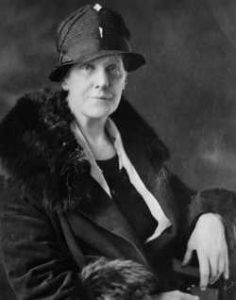
It was all made a legal holiday when Anna Jarvis, inspired by her social activist mother, Ann Maria Reeves Jarvis, decided to memorialize a day in which to celebrate her mother. In 1907, three years after her mother’s death, she did just that. She chose a white carnation to inspire people to remember their mothers and what they sacrificed for them.
“Its whiteness is to symbolize the truth, purity and broad-charity of mother love; its fragrance, her memory, and her prayers. The carnation does not drop its petals, but hugs them to its heart as it dies, and so, too, mothers hug their children to their hearts, their mother love never dying. When I selected this flower, I was remembering my mother’s bed of white pinks (flowers)…” – Anna Jarvis (quote)
It wasn’t until 1914 that Woodrow Wilson signed a decree that designated the second Sunday in May as the United States official day to celebrate Mother’s Day. Of course, Mother’s Day is celebrated all over the world (in at least 49 countries) on different days.
It should be noted that Anna Jarvis wasn’t very happy with the commercialization of Mother’s Day and she fought long and hard to try and get it withdrawn as a national holiday, but we all know how that ended. And if you don’t, well, let’s just say it is a most intriguing mystery…
Suggested Reads
Because mothers are incredibly diverse in their habits and reading lists, we invite you to dive into our reviews and choose what’s you think your mother would like to read most and to perhaps enjoy the books yourself.
Chanticleer Mother’s Day Reading List!
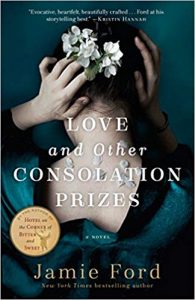
Jaimie Ford‘s Love and Other Consolation Prizes is powerful storytelling from a master storyteller! Jaimie Ford breathes to life a little-known piece of Seattle history spanning the early to the mid 21st century. And a truly unique story of the many ways a mother’s love can manifest itself.
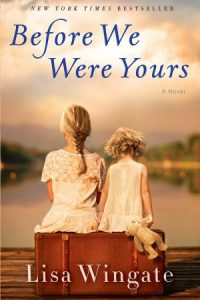
Before We Were Yours by Lisa Wingate is a disturbing look into what those who should know better, choose to do to society’s most vulnerable during the 30-years between 1920 and 1950 at the Tennessee Children’s Home Society.
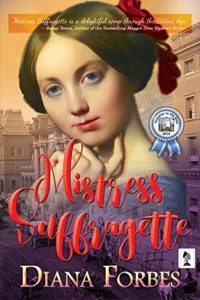
Diana Forbes‘ Mistress Suffragetteexamines the facts of life, the challenges of social restrictions, and the woes of youthful love through the eyes of a sharp-minded, sharp-shooting young woman. Mistress Suffragette is now available on Audible!
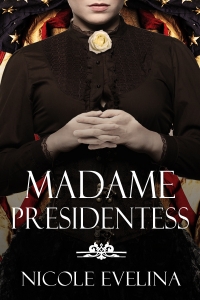
Nicole Evelina‘s Madame Presidentessis a fascinating story of a woman’s meteoric rise from rags to riches, from subservience to achievement – based on a true story that was instrumental in propelling the Suffragette Movement.
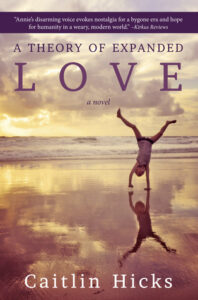
A Theory of Expanded Love by Caitlin Hicks is a bold, authentic, & captivating –a young teen in the 1960s confronts doctrine when it threatens to outweigh compassion.
Caregiving Our Loved Ones by Nanette Davis, Ph.D.Dr. Davis passes on her knowledge to caregivers for dealing with the ongoing emotional, financial and health toll of taking care of someone who will never get better.
Nick Adams‘ Away at War: A Civil War Story of the Family Left Behind is a rich and fascinating account of day-to-day life in rural America in the mid-19th century set against the backdrop of the Civil War. Taken from primary sources, this narrative brings to life all that was loved and all that was lost.
This is just the beginning of our list! To find more amazing reads in every genre, please click here to discover our favorites!
We would like to wish all mothers, mothers-to-be, stand-in mothers, and those who possess the mothering instinct, a very Happy Mother’s Day!
It’s that time of year when we ask veiled questions to try and discern the perfect gift for our loved ones.
And writers, you know when we drop not-too-subtle hints about what we would like to see under the tree come December 25th.
There is a lot weighing on us during the season!
Not only is there shopping to be done, but there’s a whole sleigh full of baking to manage, parties to attend, promotions to muster, people to cheer, songs to sing…
It can stress a person out!
This year, I want to share with you the top dozen gifts that the writer in your life will want—
Are you ready?
Handy links to Chanticleer’s Holiday Marketing Blog posts are at the end of Sharon’s blog post.
The Twelve Days of a Writers’ Holiday
(with some handy gift ideas!)
On the First Day of Christmas, my true love gave to me:
Six-year-old Sarah Salas blurts out a piece of information she could not have known at a friend’s birthday party. The neighbors begin to gossip about this, calling wee Sarah “evil” and “witch.” In a jiffy, things get uncomfortable. So uncomfortable, in fact, Sarah’s parents to sell their home and relocate to protect their daughter.
From that moment on, Sarah’s parents beg her to ignore and suppress her natural psychic abilities. Completely. What’s a six-year-old to do?
Sarah, eager to please her parents, buries her abilities throughout her life. As a consequence of suppressing such a strong aspect of her character, Sarah inhibits the most essential part of herself: the ability to be transparent, intimate with another living soul. So much so, that her first fiancé leaves her at the altar. Suffering the humiliation, she shuts down another part of herself: her sexuality.
And the story would end there, but for the fact that upon her early retirement, Sarah heads out to parts unknown, driving with a purpose, but lacking conscious intent. She is, for the first time in decades, allowing that ‘other’ part of her to lead the way. It is only when she truly lets go of the restraints set upon her in childhood that she finds herself in the foothills of the Cascade Mountain Range in Washington state.
Following a private path, she stops her car in front of a beautiful and compelling home. The house has a note attached to the door indicating it is for sale.
This house, she knows, must be the reason why she’s here.
What follows is a whirlwind of characters, both living and deceased, that import their stories into a meaning narrative that forms the basis of the book. And there are a lot of stories to be told: from forbidden love to murder and more. As Sarah opens up to her long, supposedly dormant psychic talents, she creates a path toward understanding the people who once lived in this house – and its twin – and how they wove their DNA into the rooms, floors, and wall, and moreover, how they affect the lives of those still living. The gift is in the telling, and how love conquers all.
Husband and wife writing team, David and Victoria Povall, bring their talents to the page to introduce the characters in book one of The Perils of a Reluctant Psychic series. The writing is fine with a sweet romance set in the middle of it that lovers of paranormal romance books of a certain age will relish. What is clear, is there are plenty more storylines and adventures in store for Sarah Salas and her rediscovered psychic abilities – and more romantic adventures with her handsome soulmate. A paranormal romance with a happy ending and a promise of more to come! A win!
The Gift of the Twin Houses by V&D Povall is also available on Barnes & Nobles and iBooks.
I don’t know how you feel about it, but the entire holiday season makes me itchy. I love the lights, I hate the stress. I love the extra time with family and friends, but I really hate the hustle, bustle, crowds. During this time, I need my quiet place more often – which is hard to find, because, you know, it’s the holiday season.
So, I’m walking through the mall the other day and see this sign. You know which sign I’m talking about…
“Christmas in July!”
Besides the fact that it takes a great deal for me to even think about shopping — at all — having to think about Christmas shopping any earlier than, I don’t know, a week before the actual date requires an extra dose of anti-anxiety medication.
While this is unnerving, to say the least, I began thinking about it in another way. What can we, as authors, do to increase our sales around the holidays?
Several of you are very clever and write stories based at or around the holidays. Very smart. Others, just as smart, write novellas or short stories and join forces with a merry band of like-minded authors, create an anthology, put on a snappy cover and #HelloSanta!
Still, others participate in holiday book fairs and craft shows where books are expected. This all takes work – the organizational kind of work – and a clear plan of attack.
What do I mean? Let’s take a look:
As you’re participating in your author community – either online or in person – simply ask authors you admire if they ever thought of participating in a holiday book event. If they haven’t, but would like to, you may have just tapped the beginnings of a powerful planning team.
It takes three things to pull off an event: Energy – Everyone is busy. Consider carefully if you have the energy to plan and execute one more thing. Enthusiasm – Positive people pull off the most remarkable things, don’t you think? Enthusiasm deals with zeal, and zeal deals with passion, and passion gives us the energy we need to complete any task. Participation – You cannot do this alone! The importance of finding like-minded people cannot be overstated.
Now is the time to contact your brick and mortar stores, your libraries, your community and begin reversing dates and times to present writing workshops, readings, and book signing events. Start with a piece of paper and write out locations you think would be good: hotels, grocery stores, tack shops, festivals, libraries, you get the idea.
Prioritize that list:
Where are you most likely going to find your readers?
What locations are easy for you to get to?
Is there a fee involved in reserving the space?
Are wine, beers, whiskey, or other drinks and refreshments allowed to be served at these venues?
Try to think of 3-4 places that you can book now. Spread them out throughout the holiday season, be strategic in your plan. If your book is a middle-grade novel about a young ballerina – I would try to book an event wherever The Nutcracker is performed. Perhaps contact the event planner of the ballet and let them know you would like to consign your book in their store – or on their website. Think outside the box!
Now that you have 3-4 places booked, it’s time for your social media campaign to gear up. Talk about it online. Design a flyer for the event. Create a separate Facebook page. Contact your newspapers and television stations and let them know what you will be doing and when. Whether it be a book signing or reading, let your community in on the party.
A book promoter friend of mine advised to never go it alone! Always try to invite other authors – perhaps better-known authors to participate in your event.
Think about what you’re going to give those people who show up to your event. Hors-d’oeuvres are good, alcohol is even better. Just ask Kate Lebo and Samuel Ligon, who found this to be true when promoting their anthology, Pie & Whiskey: Writers Under the Influence of Butter & Booze. Check out their book page – their events are fun and delicious!
I suppose what I’m trying to get across is this: If you want holiday sales to spike in an upward direction, plan for it. Track it and put some effort into it. The payoff can leave you laughing with a “Ho, ho, ho!” instead of lamenting with a “No, no, no!”
What are you going to do today to boost your book sales in the months to come? Comment and share!
Meet Paul Aertker, 2017 Grand Prize Winner in the
Chanticleer Gertrude Warner Awards
I first met Paul Aertker when we were in Portland Oregon last year. My first impression: Dynamic, Intelligent, Generous. In short, I am so glad we met! When I found out he was coming to our Chanticleer Authors Conference, CAC18, and that he was indeed in the running for an award – I was thrilled.
Paul is an amazing human being – but don’t take my word for it! Find out for yourself! Read on and be sure to comment at the end – and share if you like.
Chanticleer: Paul, tell us, how did you start writing?
Aertker: I started writing on September 12th—the day after 9/11. I guess I saw what the world had become or rather, what adults were capable of doing, and I thought maybe I should focus on kids and maybe kids could make things better. So that’s how I got started writing.
Chanticleer: That’s amazing, Paul. Thank you for taking action in this way. What led you to the middle-grade crowd?
Aertker: I write middle-grade books mostly because I act like an 11-year-old. No, but seriously, I do. I enjoy working with and writing for the middle grades for several reasons. Nine to twelve-year-olds are at a perfect stage in life—before the challenging ages of young adult, yet they are still old enough to understand what’s going on in the world, and most importantly, they get my jokes!
Chanticleer: You’re right! What inspired you to write this particular series, The Crime Travelers? I hear, by the way, that this series is doing quite well…
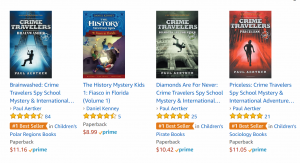
Aertker: I think most everything I write is about travel. The Crime Travelers series is about international action adventure—”like the Bourne Identity but for kids.” What’s more, this new book Posthumous is about an American family in Paris, and the mother dies, and the dad and daughter move back to the US. I think of travel as a catalyst for writing, a means of generating ideas mostly because I see reading and writing as a form of travel.
Chanticleer: Oh, good answer! Reading is the best form of escapism. Give us five authors whom you would love to meet on your travels – and tell us how they have influenced your work.
Aertker: What I’ve done is a little different from most children’s book writers. I love Roald Dahl and Margaret Peterson Haddix and Rick Riordan and Gordon Korman and the rest. However, most of my influence comes from the adult authors who write international and action adventure novels—specifically, James Patterson, Robert Ludlum, Lee Child, John Grisham, etc. I like these guys, and I like their work. In the Crime Travelers series, I bring the action and adventure of adult novels into the kid world.
Chanticleer: I think Middle-Grader readers are ready for these books. Look at their video games! Tell us a little about areas of writing you feel most confident in – and what advice you can give someone who is struggling in this area.
Aertker: I’ve gotten much better at getting the words on the page. I used to struggle to create a lot of volume of pages. But, I have a trick that has helped me. I think we all struggle with the internal critic telling us that we are not good enough or whatever we’ve done is terrible. We all have this. Sometimes I find that I cannot sleep so instead of tossing and turning, I will get up, put on my glasses, and sit at my desk. I’ll write in the middle of the night for hours. And what I’ve learned is that my internal critic doesn’t get up with me! He’s too tired to criticize. So I write for a while and then go back to sleep. In the morning I wake up and notice that someone has written in my document! Yes, sure it needs work, but editing seems to be easier than cranking out the first draft.
Chanticleer: Good advice – If your inner critic is too loud, wait until it passes out, and then write. So, I hear you sell a lot of books… Which business books have helped you the most?
Aertker: I think one of the best business books for writers is Tim Ferriss’s 4-Hour Work Week. We all know that we will not work just four hours a week. Writing has no end. We know this. What I took from this book was that it’s important to delegate tasks. You need to hire an excellent cover designer, and you need a good interior designer for your book… You also need a developmental editor, a copy editor, and a proofing editor. Then you need to assemble a team of beta readers. And, and, and. The point being: ask (or hire) others to help.
Chanticeer: What do you do in your community to improve/promote literacy?
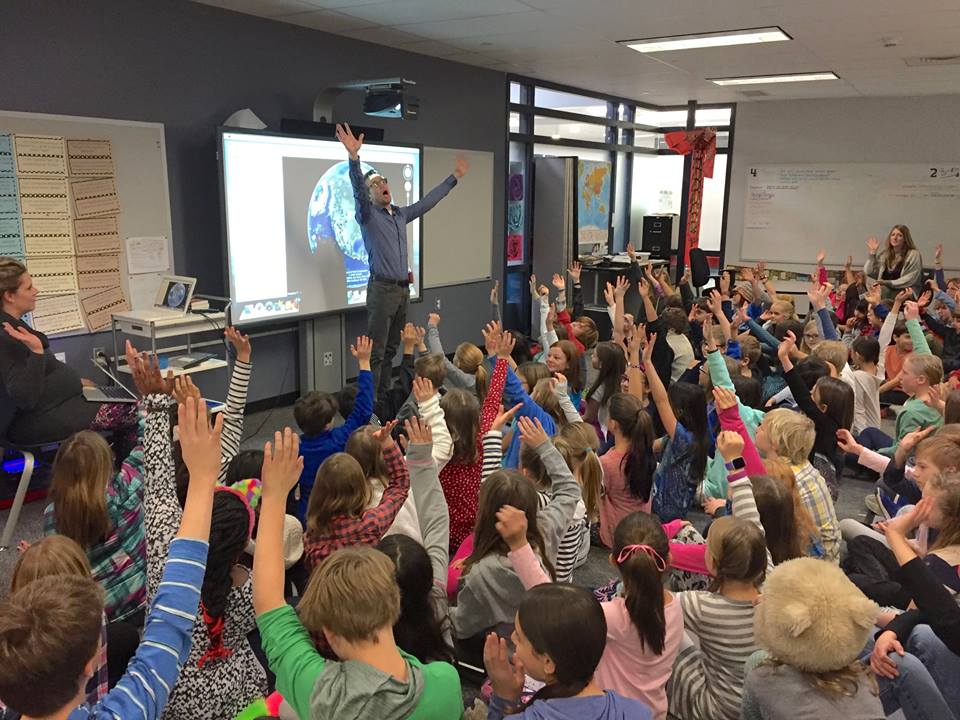
Aertker: I frequently speak at local schools whether I’m in my hometown or traveling to a new place. I love speaking to classrooms and bringing excitement to books and reading. I promote reading for the sake of reading. Period. I think it’s important for kids to enjoy the activity. If we want kids to read great literature and to be healthy adult readers, we have to get them to like reading, first.
Chanticleer: Love your passion for reading and helping kids discover the joy of reading. Give us your best marketing tips, what’s worked to sell more books, gain notoriety, and expand your literary footprint.
Aertker: The single best marketing tip for me has been to give my books away. I give mostly to teachers, fourth, fifth and sixth-grade teachers, and to librarians. If you’re a teacher, please write me, and I will send you a set of books for free. Yes for free! The reason being that a set of books in a teacher’s classroom is without question the best calling card I could ever have. I often have teachers write me back and say, “Oh thank you so much for sending the books. The kids are fighting over them!” That is awesome marketing. (Reach Paul at https://www.paulaertker.com/)
Chanticleer: Wow! Well done. So, what are you working on now? What can we look forward to seeing next from you?
Aertker: I am super excited about this next book coming out called, Posthumous. It’s a book about a 12-year-old girl who wants to publish her late mother’s stories. It’s one of those books that I wrote in the middle of the night, and I think it’s the best thing I’ve ever written. It’s sad and sweet, and it’s all about the kids making things right.
Chanticleer: I think we will all want to read this one. Please keep us updated. What is the most important thing a reader can do for an author?
Aertker: The most important thing a reader can do for an author? That’s easy. Write a review! I am amazed at how critical getting reviews are, and how difficult it can sometimes be to get people actually to go on Amazon and write the review.
Chanticleer: Paul, it’s been a pleasure. Thank you for spending some time with us. You are a bright star in the universe!
Okay, now it’s your turn… If you have a question for Paul Aertker, please feel free to comment on this post or reach him directly through his website https://www.paulaertker.com/. If you enjoyed this interview, please SHARE it! Sharing is Caring, baby.
Paul won the 2017 Grand Prize Gertrude Warner Award for Middle-Grade Books because he entered the contest! If you have a middle-grade book the world needs to see, enter the competition here. The deadline is fast approaching – May 31, 2018.
Chanticleer: Give me a little bit about your background – Who is Jessica Morrell?
Jessica Morrell: I’m the author of six traditionally-published books, five which teach authors how to write. I’ve written hundreds of columns, articles, blog posts, and my work appears in 8 anthologies about writing. I’ve been teaching writers for more than 25 years and work as a developmental editor. This means a writer or author sends me a manuscript and I dissect it and then help him or her put it back together so it’s publishable. I bring a discriminating, ruthless eye to manuscripts, and fix plot holes and wayward dialogue and everything in between. I learn each time I work on a manuscript and some days my brain feels close to bursting. I love what I do.
Chanticleer: Tell me a little bit about the Master Class you will be offering next Sunday during #CAC18, Learning from the Greats. Who would benefit most from taking this class?
Jessica Morrell: Any fiction writer can benefit from this workshop. Writers have 2 main tasks: writing whenever possible and reading often. But reading as a writer requires a special focus and analysis. You need to understand why authors make choices and decisions along the way; why their details are important, how the ending resonates or doesn’t quite satisfy. Close reading teaches us narrative and scene structure, how to create authentic dialogue, how to insert tension and subtext, and how themes underscore drama.
Chanticleer: This is going to be an important class for all authors. Tell me, what’s the best way to prepare for this class?
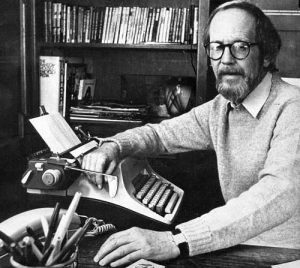
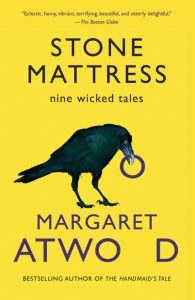
Jessica Morrell: The workshop will open by outlining the many techniques that writers have at their disposable. From there we’ll be discussing Harper Lee’s To Kill a Mockingbirdand 3 contemporary short stories (Silver Water, Amy Bloom, For Something to Do, Elmore Leonard, and Stone Mattress, Margaret Atwood.)
Chanticleer: At the end of this article, Jessica has provided us with titles and links to these stories. It would be wise to familiarize yourself with these works before class next Sunday. So, Jessica, why these authors? Why these books?
Jessica Morrell: Mockingbird, also a film, has remained a beloved American classic over the decades. We’re going to dissect why it’s so esteemed and memorable. The other authors Elmore Leonard, Amy Bloom, and Margaret Atwood are simply fabulous writers with techniques we can all emulate. Or at least try to.
Chanticleer: Jessica, our attendees will learn so much from your workshops. Your classes are unlike any other I’ve seen. You really do put authors to work – and the payoff is exponential!
Jessica Morrell: To paraphrase Stephen King, reading is your job. Or a big part of your job. If you breeze through stories without thought or analysis, you’re missing both the joys of insider knowledge and the lessons you’ll always need. Reading inspires and is a cheap, private pleasure. And because writers never stop learning.
Learning from the Greats
A Master Writing Craft Class taught by Jessica Morrell
To succeed as a writer you need to write a lot and read from a writer’s perspective. Without this level of analysis writers simply don’t have all the tools at their disposal. In this workshop, we’ll work together to uncover the secrets of great authors, reveal the intricacies of craft, and trace authors’ influences and habits. We’ll further analyze how great authors reflect their time period and find fresh ways to manipulate language.
Amy Bloom has been a fresh, urgent voice in American fiction since her first collection of short stories; Come to Me was published in 1998. Bloom is also a novelist, but her short stories are particularly insightful in their brevity and often track marginalized people and uncomfortable issues like sexual identity and mental illness. A former psychotherapist, she brings keen insights into her characters, imbuing them with tiny, yet penetrating brushstrokes that nail their struggles and psyches. Writers can learn her art of compression, her authentic character voices, featuring flawed but fascinating characters.
An American classic, To Kill a Mockingbird is the story of a Southern family and small-town embroiled in a racially-charged scandal and trial. Readers can learn so much from the story—a searing history lesson, how to teach your kids valuable life lessons, how outsiders and kids see society. Through analysis, writers can learn how to capture a child’s sensibility, how to teach morality without being preachy or gooey, and how to stage a surprise ending. Other techniques we’ll study: the role of the narrator POV, writing a compelling static character, and how coming-of-age meets character arc with young characters.
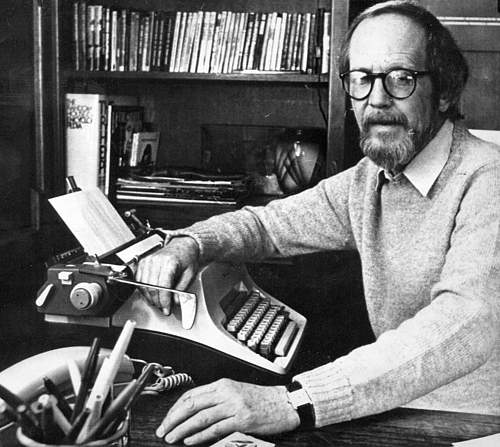
Elmore Leonard was a wildly popular writer who wrote more than 40 novels, dozens of short stories, movie adaptations, and a popular TV series including, Justified. Stephen King called him, “The great American writer,” and The New York Times called him, “The greatest crime writer of his time, perhaps ever.” He’s known for tightrope tension, crackling, realistic dialogue, and memorable, bad ass characters up to their ears in serious trouble. But a closer look reveals other techniques worthy of emulating: how to depict pathos in a character, how honor and morality can found in unexpected places, how subtext works in a dialogue scene, how to stage twists, and how conflict is layered and always simmering.
Besides her many novels, some now turned into televisions series, Atwood is a prolific short story writer. In this story, a woman meets an old friend 50 years after their high school days, she plots his murder. Or will she go through with it? We’re going to analyze this story for its delicious use of details, suspense, and subtext, along with her deft inclusion of backstory, and an overall tone of disquiet. We’ll discuss how Atwood pulls us in from the first sentence: “From the onset, Verna never intended to murder anyone. What she had in mind was a vacation, pure and simple.”
Chanticleer Editorial Book Reviews for #SeriousAuthors
Why do you want to post reviews on your book’s Amazon page in the Editorial Reviews section?
Kiffer Brown chimes in here:
It is well-known and believed that part of Amazon’s secret sauce search algorithm crawls the Editorial section of each book’s Amazon page. It is believed that the more individual blurbs attributed from different sources, the better. Be sure to leave a blank line between review blurbs along with giving attribution to the reviewer will attract the notice of the “crawler” program.
And having review blurbs in the Editorial Reviews section gives your title a certain cachet and panache that will separate it from the other books (read millions) that do not have them.
Editorial reviews help to garner more “consumer reviews” (reader reviews). They do this because they give readers the language to discuss your book and reaffirms the readers’ opinion. This is why traditional publishers spend a lot of time, effort, and money on getting reviews for pre-released books.
It’s a numbers game.
To get on Amazon’s radar, even more, your title will need at least 100 consumer reviews. Notice I didn’t say one hundred 5-starred reviews. It is the quantity that counts here. And the more mixed the better.
Why do you want your title to get on Amazon’s “good books radar?”
When a reader does a search on Amazon for a particular genre to read, Amazon “ranks” which books will be shown to the searcher (reader) as a potential selection that he or she might want to purchase. And Amazon is in the business of selling things (consumer goods). Books for “the Trade” (genre fiction) are consumer goods.
Now back to Sharon Anderson…
Most authors sell their books on Amazon.com because that’s where a fair share of the reading public goes to purchase their books. If an author has worked hard at conditioning their audience – or if enough people have read an author’s work, soon reviews will be added. Good or bad.
Sidenote:We all like good reviews, right? I mean, who doesn’t? But bad reviews can be just as helpful. Believe it or not, bad reviews (1-2 stars) are instructive. They will tell you about formatting issues, grammar issues, plot failures and more. Pay attention to them! Besides, if all you have are 5-star reviews – well, that’s a little unbelievable.
Back to our topic…
That’s all well and good, however, what do you do with your Chanticleer Editorial Review?
Update 3/20/2020: We just noted that we have not updated this paragraph. Our apologies. Kiffer: We are no longer allowed to post our reviews on Amazon since summer 2018 or so. It is Amazon’s policy not ours –even though Amazon ranked us highly and gave us special recognition. <<We will post the entire review on your book’s Amazon page Consumer Reviews>>
But there IS something that only you can do and that is to post a blurb of it in the Editorial Reviews section.
Posting Your Chanticleer Book Review to the Editorial Review Section
You cannot do this from Amazon.com. You first have to log in to your Author Central account.
You do have a fully functional Amazon Author Central account—don’t you.
Back to posting a review blurb in the Editorial section on your title’s Amazon page…
The welcoming page should look like this:
Click on Books:
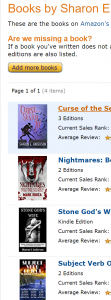
Your books will pop up and the screen should look something like this:
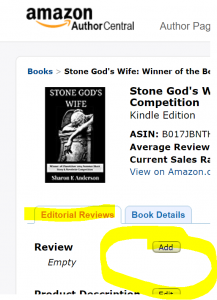
Click on the book you wish to add a Chanticleer Review to:
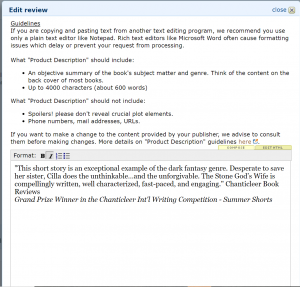
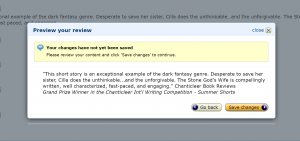
Hit the “add” button and place the Chanticleer quote you wish to use. Preview it, and if it looks good, click on “save changes.”
In a few days, you will see the Chanticleer quote appear under the Editorial Reviews section on your book’s Amazon.com page.
Another chime in from Kiffer:
For a professional look, do not post the entire review. A well-selected blurb will do nicely. Be sure to use ellipses if you are taking a section out. And always give attribution!
Example:
…Readers who are new to Larew’s series are in for a fabulously thrilling, nail-biting, page-turning, edge-of-their seats ride. Marilynn Larew’s writing style is smooth, engaging, and well-paced. Her ability to craft vibrant settings against the backdrop of exotic and gritty Hong Kong is exceptionally well-delivered. To sum it all up, Hong Kong Central is an absolute win. —Chanticleer Book Reviews






 Dr. Ellis: I donate copies of my book to libraries, and give signed copies to individuals. I speak about the power of reading and try to encourage children and young people within my sphere of influence to read, encouraging them to read to others at every opportunity.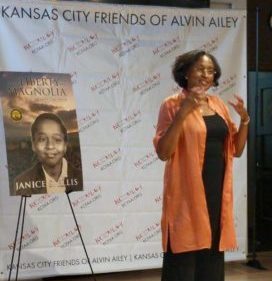

















 Happy Holidays from all of us at Chanticleer Reviews!









 For Something to Do, Elmore Leonard
 Stone Mattress, Margaret Atwood